Tag Archives: royalty

Most powerful African kingdoms

African history contains some of the most powerful, wealthy, and intellectually advanced kingdoms in world history. These civilizations were not isolated or primitive; they were deeply connected to global trade, knowledge systems, and political structures that influenced regions across Europe, Asia, and the Middle East. Understanding these kingdoms restores balance to how African history is viewed globally.

One of the earliest major African powers was Ancient Egypt (Kemet), located along the Nile River. Kemet developed advanced systems of mathematics, engineering, medicine, and architecture. Its pyramids, temples, and written hieroglyphic records demonstrate a highly organized and intellectually sophisticated civilization that lasted for thousands of years.

Closely connected to Egypt was the Kingdom of Nubia (Kush), located in present-day Sudan. Kush was a powerful military and trade empire that at times ruled over Egypt during the 25th Dynasty. Its capital cities, including Napata and Meroë, were centers of iron production, wealth, and royal authority.

The Kingdom of Axum (Aksumite Empire) in present-day Ethiopia and Eritrea was another dominant African power. Axum was one of the earliest civilizations to adopt Christianity and was a major trading empire connecting Africa to the Mediterranean and Indian Ocean worlds. Its monumental obelisks remain symbols of its engineering mastery.

In West Africa, the Ghana Empire (not modern Ghana) became powerful through control of trans-Saharan gold and salt trade routes. Its wealth was so significant that Arab scholars referred to it as the “land of gold,” highlighting its economic dominance in medieval Africa.

The Mali Empire succeeded Ghana and became one of the most famous African civilizations. Under rulers such as Mansa Musa, Mali gained global recognition for its immense wealth, Islamic scholarship, and architectural development. The empire’s influence stretched across West Africa and into North Africa.

Mali’s capital, Timbuktu, became a world-renowned center of learning. It housed universities, libraries, and scholars who studied mathematics, astronomy, law, and theology. Manuscripts from this period show that African intellectual traditions were deeply developed and widely respected.

The Songhai Empire later rose to power after Mali, becoming one of the largest African empires in history. Songhai controlled key trade routes along the Niger River and expanded military organization, governance systems, and educational institutions across West Africa.

In Central Africa, the Kongo Kingdom emerged as a highly organized state with a structured monarchy and diplomatic relations with Portugal and other European powers. The kingdom developed complex political systems and engaged in long-distance trade networks.

The Benin Kingdom (in present-day Nigeria) was known for its artistic achievements, particularly its bronze sculptures. These works of art reflect advanced metallurgy and cultural sophistication, as well as a strong centralized government under the Oba (king).

The Oyo Empire, also in present-day Nigeria, was a powerful Yoruba state with a strong cavalry-based military system. It maintained political control over large territories and developed a sophisticated system of governance involving checks on royal authority.

The Great Zimbabwe Kingdom in Southern Africa is one of the most remarkable archaeological sites on the continent. Its stone structures were built without mortar, demonstrating advanced engineering and urban planning. It served as a major center of trade and political power.

Great Zimbabwe controlled trade routes that connected Africa’s interior to the Swahili Coast. Gold, ivory, and other goods moved through these networks, linking African economies to Indian Ocean trade systems.

The Swahili Coast city-states, including Kilwa, Mombasa, and Zanzibar, were wealthy trading hubs influenced by African, Arab, and Persian cultures. These cities thrived on maritime trade and became cosmopolitan centers of commerce and culture.

The Kanem-Bornu Empire, located around Lake Chad, was one of the longest-lasting African empires. It developed strong administrative systems and maintained Islamic scholarship and trade relations across North and Central Africa.

The Hausa city-states of West Africa were independent yet interconnected centers of trade, craftsmanship, and Islamic learning. Cities such as Kano and Katsina became important hubs for commerce and education.

The Zulu Kingdom in Southern Africa, under leaders like Shaka Zulu, developed highly organized military strategies and expanded regional influence through disciplined warfare and political consolidation in the 19th century.

These kingdoms were not isolated developments but part of interconnected African and global systems. Trade routes across the Sahara, Nile, Indian Ocean, and Atlantic regions allowed goods, ideas, and technologies to circulate widely.

African kingdoms also developed sophisticated governance systems, including councils of elders, divine kingship structures, and legal traditions. These systems ensured political stability and cultural continuity over centuries.

Religious and philosophical systems played an essential role in legitimizing leadership and shaping social order. Indigenous beliefs, Islam, and later Christianity all influenced different African kingdoms in unique ways.

The wealth of African kingdoms came from agriculture, mining (especially gold and iron), and long-distance trade. These economic foundations supported urban development, military strength, and cultural achievements across the continent.

Africa has one of the richest and most powerful historical legacies in the world. Long before colonization, the continent was home to advanced civilizations, wealthy empires, and influential trade networks. These kingdoms shaped global history through culture, education, religion, and economics.


1. The Mali Empire

The Mali Empire (1235–1600s) was one of the wealthiest empires in history. It was known for:

  • Vast gold resources
  • Strong trade networks across the Sahara
  • Centers of learning like Timbuktu

Mansa Musa, its most famous ruler, is often considered the richest man in history.


2. The Songhai Empire

The Songhai Empire replaced Mali as a dominant West African power. It was known for:

  • Strong military organization
  • Trade along the Niger River
  • Centers of Islamic learning and scholarship

3. Great Zimbabwe

Located in Southern Africa, Great Zimbabwe was a powerful civilization known for:

  • Advanced stone architecture
  • Trade with Asia and the Middle East
  • Economic control of gold and cattle

4. The Kingdom of Kush

The Kingdom of Kush (modern Sudan) was one of the earliest African civilizations. It was known for:

  • Strong military leadership
  • Trade with ancient Egypt
  • Pyramids and architectural achievements

5. The Benin Kingdom

The Benin Kingdom (in modern Nigeria) was famous for:

  • Highly skilled bronze artwork
  • Organized government structure
  • Trade with European nations before colonization

Conclusion

African kingdoms played a major role in shaping world history. They were advanced, wealthy, and culturally rich societies that contributed significantly to global development long before modern times.

Ultimately, the most powerful African kingdoms demonstrate that Africa was not on the margins of history but at its center. Their legacies continue to shape global history, identity, and cultural pride today.


References

Ehret, C. (2002). The civilizations of Africa: A history to 1800. University Press of Virginia.

Shillington, K. (2018). History of Africa (4th ed.). Palgrave Macmillan.

Fage, J. D. (2013). A history of Africa (4th ed.). Routledge.

Vansina, J. (1990). Paths in the rainforests: Toward a history of political tradition in equatorial Africa. University of Wisconsin Press.

Insoll, T. (2003). The archaeology of Islam in sub-Saharan Africa. Cambridge University Press.

Connah, G. (2001). African civilizations: Precolonial cities and states in tropical Africa. Cambridge University

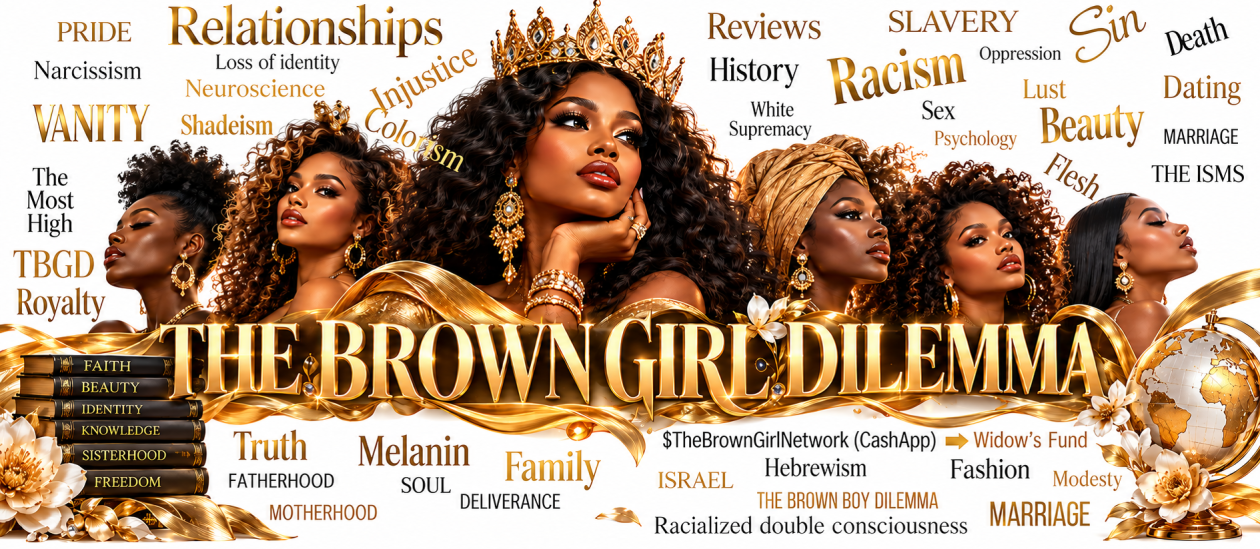
👑 Royalty in Our Shades: 🤎Brown Skin and the Image of God. #TBGD

Photo by Jaycee300s on Pexels.com

Brown skin has always carried a story—one of survival, one of glory, and one of divine intention. In a world where colonization and white supremacy have often painted darker skin as something to hide, the act of loving one’s own shade becomes a holy defiance. To affirm brown skin is to affirm the Creator’s masterpiece, to say, “I am fearfully and wonderfully made” (Psalm 139:14, KJV). ✊🏾

The Bible teaches that humanity was created in the image of God (Genesis 1:27, KJV). This means that the variety of human skin tones is not a mistake but a reflection of divine creativity. Brown skin, with its richness and depth, is a testament to the God who formed man from the dust of the ground (Genesis 2:7). Dust is not pale—it carries the tones of the earth: cocoa, bronze, and deep mahogany. 🤎🌍

Throughout Scripture, there are clues that the chosen people of God were melanated. Solomon proudly declared, “I am black, but comely” (Song of Solomon 1:5, KJV), affirming that his dark complexion was beautiful and worthy of admiration. The prophet Daniel described the Ancient of Days with a woolly head (Daniel 7:9), and Revelation describes Christ’s feet as “burnished brass” (Revelation 1:15, KJV), imagery that points to a complexion kissed by the sun. ☀️🏾

Historically, European art distorted these images, presenting a pale Christ that aligned with colonial ideals rather than historical evidence (Freeman, 2010). For many brown-skinned believers, this created a theological crisis: if God looks nothing like them, do they still reflect His image? Reclaiming the truth of a multiethnic, brown-skinned biblical world is critical for restoring spiritual dignity to communities of color (Ortiz, 2021). 👑✊🏾

Brown skin is not merely a shade; it is a shield. Melanin is a biological gift that protects against harmful UV rays and is linked to the resilience of African and Afro-diasporic peoples (Jablonski, 2012). Spiritually, this protection can be seen as a metaphor: brown skin is armor, a covering placed by God to endure centuries of heat, labor, and oppression without erasing identity. 🛡️🏾

Psychologically, embracing one’s skin shade strengthens self-concept and combats the effects of colorism. Studies show that positive racial identity correlates with higher self-esteem and lower levels of anxiety and depression among Black youth (Neblett et al., 2012). When brown-skinned individuals see their shade as regal and God-ordained, they reject the lie that proximity to whiteness equals holiness or beauty. 🙌🏾🤎

Colonialism taught generations to despise their own reflection. Enslaved Africans were taught that their skin marked them as cursed (often misusing the story of Ham in Genesis 9:25). This false teaching was used to justify centuries of subjugation. Theologically, we must confront this heresy and declare that brown skin is blessed, not cursed. The curse was not on Ham but on Canaan, and Scripture never ties melanin to divine punishment (Goldenberg, 2003). ✊🏾📖

To call brown skin royal is to place it back in its rightful narrative. Royalty is not just about crowns and thrones—it is about lineage, dignity, and inheritance. In 1 Peter 2:9 (KJV), believers are called a “chosen generation, a royal priesthood, an holy nation.” Brown-skinned believers are heirs of this promise, carrying spiritual royalty in their very bodies. 👑🤎

Representation matters deeply. When children see images of Christ, angels, and biblical figures who look like them, they begin to internalize that they, too, are divine reflections. Artistic movements that depict Black Madonnas, Ethiopian saints, and Afrocentric biblical art are acts of cultural restoration (Bennett & Moss, 2020). 🎨🏾

Brown skin also carries memory. It remembers the sun of Africa, the soil of Eden, the dust of Jerusalem. It remembers the pain of chains but also the joy of emancipation. It is a living testimony that God preserves His people. Each freckle, each undertone, is a chapter in a sacred story of survival and triumph. 📜🤎

The celebration of brown skin should not exclude others but should correct an imbalance. For centuries, whiteness has been upheld as the spiritual and aesthetic standard. To center brown beauty is to bring the pendulum back to truth—where all shades are honored, but none are erased. ⚖️🏾

Practically, loving brown skin means caring for it. It means embracing natural hair, choosing healthy skin care practices, and rejecting harmful bleaching products. It means speaking affirmations over oneself: “My skin is royal. My shade is holy. I bear the image of God.” 🪞👑

Community affirmation is also vital. Churches, schools, and media outlets must intentionally celebrate brown-skinned leaders, saints, and scholars. Doing so heals the intergenerational wounds caused by erasure and teaches the next generation that there is no shame in their shade. ✊🏾🙌🏾

In the end, the royal image of God is not reflected in one hue but in the spectrum of humanity. Brown skin is a jewel in that spectrum, a reminder that the Creator paints with every color in the palette of creation. When the brown-skinned believer walks with head held high, she preaches a sermon without words: “I am God’s masterpiece.” 🖌️👑

Royalty, then, is not something to aspire to—it is something already present. It is in the melanin, in the history, in the reflection staring back from the mirror. The world may try to dim it, but heaven recognizes its glow. Truly, brown skin is more than beautiful—it is divine. 🤎👑🙌🏾

References

  • Bennett, L., & Moss, H. (2020). Four hundred souls: A community history of African America, 1619–2019. One World.
  • Freeman, C. (2010). Adam and Eve after the pill: Reclaiming a God-given vision of sexuality. Ignatius Press.
  • Goldenberg, D. M. (2003). The curse of Ham: Race and slavery in early Judaism, Christianity, and Islam. Princeton University Press.
  • Jablonski, N. G. (2012). Living color: The biological and social meaning of skin color. University of California Press.
  • Neblett, E. W., Rivas-Drake, D., & Umaña-Taylor, A. J. (2012). The promise of racial and ethnic protective factors in promoting ethnic minority youth development. Child Development Perspectives, 6(3), 295–303.
  • Ortiz, J. (2021). Decolonizing theology: Reimagining Christ in color. Journal of Black Theology, 19(2), 134–152.

A Queen Worthy of the Crown

A queen worthy of the crown is not merely defined by outward beauty, status, or admiration from others; rather, her true identity is rooted in her relationship with God. Throughout Scripture, the imagery of crowns symbolizes honor, righteousness, and divine reward bestowed upon those who walk faithfully with the Lord. The spiritual crown is not earned through worldly prestige but through obedience, humility, and devotion to God. For the woman who desires to be a queen in God’s kingdom, the journey begins not with a man but with the King of Kings, whose guidance shapes her character and purpose.

The Bible teaches that believers will one day receive crowns as a reward for faithful living. The apostle Paul wrote that a “crown of righteousness” is laid up for those who love the appearing of Christ. This crown represents victory over sin, perseverance in faith, and steadfast commitment to God’s calling. Therefore, the woman who prepares herself spiritually is not merely preparing for earthly recognition but for eternal honor before God.

To be a queen in the kingdom of God requires a mindset that transcends cultural definitions of femininity. Society often encourages women to seek validation through relationships, social status, or physical appearance. However, a queen with God understands that her identity is secured in divine purpose. She sees herself as a daughter of the Most High, carrying dignity, wisdom, and grace in every aspect of her life.

Central to this identity is what may be called the “princess mentality.” This does not imply entitlement or arrogance, but rather a sacred awareness of one’s value before God. A princess mentality encourages a woman to treat herself with honor, protect her purity, and refuse environments that compromise her spiritual integrity. She understands that the way she carries herself reflects the kingdom she represents.

Seeking God daily is foundational to the life of a spiritual queen. Through prayer, meditation on Scripture, and worship, she cultivates intimacy with the Lord. This relationship becomes the source of her wisdom, strength, and peace. Rather than chasing worldly validation, she seeks the approval of God, knowing that divine affirmation surpasses human applause.

Fasting and prayer are also powerful disciplines that shape the heart of a queen. Biblical fasting is not simply abstaining from food but a spiritual practice that humbles the soul and sharpens spiritual sensitivity. Through fasting, a woman learns dependence upon God and gains clarity about her calling, relationships, and future direction.

Walking with God requires consistency and discipline. A queen worthy of the crown understands that spiritual maturity develops over time through obedience. She studies the Word, listens to the guidance of the Holy Spirit, and seeks wisdom from godly mentors. In doing so, she grows in character and becomes a reflection of divine wisdom.

Within God’s kingdom, queenship is closely tied to service and humility. Jesus Himself taught that greatness in the kingdom is measured by the willingness to serve others. A spiritual queen therefore uses her gifts to uplift her family, community, and church. Her influence is not domineering but nurturing, reflecting the compassionate nature of Christ.

Scripture offers a profound portrait of the virtuous woman in Proverbs 31. This woman is industrious, wise, compassionate, and deeply devoted to God. She manages her household with diligence, speaks with wisdom, and is clothed with strength and honor. Her worth is described as being far above rubies, emphasizing the rarity and value of such character.

Purity is another cornerstone of a queen’s spiritual preparation. The Bible encourages believers to honor God with their bodies and maintain holiness in their relationships. A woman committed to God guards her heart, understanding that intimacy is sacred and designed to flourish within the covenant of marriage.

Keeping oneself for marriage reflects both faith and patience. In a culture that often trivializes commitment, the woman who waits demonstrates profound trust in God’s timing. She recognizes that her body and heart are precious gifts, and she chooses to honor God by preserving them for a covenant relationship.

Waiting on God, however, does not mean living passively. During seasons of singleness, the queen continues to grow spiritually, intellectually, and emotionally. She invests in her purpose, builds meaningful relationships, and develops her talents. Her life remains fruitful even while she awaits the partner God may provide.

The Bible often emphasizes that a godly man finds a virtuous woman rather than the other way around. This principle suggests that the woman focuses primarily on becoming who God has called her to be. When the time is right, the godly king will recognize her character, faith, and dignity.

In the meantime, her devotion belongs first to the King of Kings. Christ becomes the center of her life, guiding her decisions and shaping her identity. Through this spiritual union, she experiences fulfillment that transcends romantic relationships.

Commitment to God also protects a woman from unhealthy relationships. When her standards are shaped by Scripture, she learns to discern character rather than charm. She values integrity, faith, and spiritual leadership above superficial attraction.

A queen worthy of the crown cultivates inner beauty. The apostle Peter wrote that the hidden person of the heart, characterized by a gentle and quiet spirit, is precious in the sight of God. Such beauty does not fade with time but grows stronger through faith and maturity.

Humility also defines the character of a spiritual queen. She recognizes that her gifts, beauty, and opportunities come from God’s grace. Rather than boasting, she expresses gratitude and uses her blessings to serve others.

Faith is essential during seasons of waiting and preparation. At times, a woman may feel overlooked or misunderstood, yet faith reminds her that God’s plans unfold according to divine wisdom. The crown prepared for her life will arrive in God’s perfect timing.

Ultimately, the promise of wearing a crown extends beyond earthly relationships. The faithful believer anticipates the eternal crown given by Christ to those who remain steadfast. This spiritual reward symbolizes victory, righteousness, and eternal fellowship with God.

Therefore, a queen worthy of the crown lives with purpose, purity, and devotion. She honors herself as a daughter of God, seeks the Lord through prayer and fasting, walks in wisdom, and patiently waits for God’s direction. Above all, she remains committed to the King of Kings, knowing that true royalty begins with a heart surrendered to God.

References

The Holy Bible, King James Version.
Clinton, J. R. (2012). The Making of a Leader. NavPress.
Foster, R. (2018). Celebration of Discipline: The Path to Spiritual Growth. HarperOne.
Stanley, C. (2010). How to Listen to God. Thomas Nelson.
Willard, D. (2014). The Spirit of the Disciplines. HarperOne.

The Representation of Black

The representation of Black people has never been neutral; it has been shaped by power, history, and ideology. From colonial narratives to modern media, images of Blackness have been constructed to serve political, economic, and psychological agendas rather than truth. Representation functions not merely as visibility, but as meaning-making—determining who is seen as human, valuable, intelligent, dangerous, beautiful, or disposable.

Historically, Western representation of Black people emerged through the lens of enslavement and colonial domination. Early depictions framed Africans as primitive, savage, and inferior, providing moral justification for conquest and exploitation. These narratives were not accidental but foundational to the racial hierarchy that undergirded the modern world-system (Fanon, 1952; Said, 1978).

During transatlantic slavery, Black bodies were represented as labor units rather than persons. Art, literature, and pseudoscience portrayed Black people as biologically suited for servitude, stripping them of complexity, spirituality, and intellect. These portrayals reinforced dehumanization and normalized violence against Black communities (Davis, 1981).

Biblical misrepresentation also played a role. Scripture was selectively interpreted to portray Blackness as cursed, despite no such racial designation existing in the biblical text. This theological distortion shaped Western Christian consciousness and cemented racialized representations that persist today (Haynes, 2002).

Post-emancipation representation did not immediately improve. Minstrelsy, caricatures, and early film continued to depict Black people as comic relief, criminals, or hypersexual figures. These images reassured white audiences of racial superiority while limiting Black social mobility (Bogle, 2016).

The rise of mass media in the twentieth century amplified these portrayals globally. Hollywood became a powerful tool for exporting distorted images of Black life, often disconnected from lived reality. Representation became repetition, and repetition hardened stereotype into assumed truth.

Black women faced a distinct burden within representation. Tropes such as the Jezebel, Mammy, Sapphire, and Welfare Queen confined Black womanhood to narrow, degrading roles. These images justified both sexual exploitation and social neglect while erasing vulnerability and dignity (Collins, 2000).

Black men were similarly constrained through representations of hypermasculinity, aggression, and criminality. Media narratives disproportionately linked Black male identity to violence and threat, shaping public perception and policy, including over-policing and mass incarceration (Alexander, 2010).

Representation also operates through absence. The exclusion of Black people from narratives of intellect, leadership, romance, and innocence communicates inferiority just as powerfully as negative imagery. What is not shown can be as damaging as what is shown.

In response, Black communities have consistently resisted imposed representations. From slave narratives to the Harlem Renaissance, Black creators reclaimed authorship and asserted humanity through literature, music, art, and theology. Representation became a site of survival and self-definition.

The Civil Rights and Black Power movements challenged not only legal inequality but symbolic domination. Slogans like “Black is Beautiful” directly confronted Eurocentric standards and re-centered Black aesthetics and self-worth. Representation shifted from apology to affirmation.

Contemporary media has seen increased Black visibility, yet representation remains contested. Tokenism, colorism, and commodified diversity often replace genuine inclusion. Visibility without power risks reproducing the same hierarchies under new language (hooks, 1992).

Colorism remains a critical issue within representation. Lighter skin, looser hair textures, and Eurocentric features continue to be privileged in media portrayals, reinforcing internalized anti-Blackness and stratification within Black communities (Hunter, 2007).

Social media has democratized representation, allowing Black individuals to tell their own stories outside institutional gatekeeping. However, it has also intensified surveillance, commodification, and performance pressures, complicating authenticity and agency.

Representation affects material outcomes. Studies show that media portrayals shape public opinion, educational expectations, employment opportunities, and criminal justice outcomes. Representation is not symbolic alone—it is structural (Entman & Rojecki, 2000).

Spiritual representation also matters. Depictions of God, holiness, and virtue overwhelmingly coded as white distort theological imagination and alienate Black believers. Reclaiming sacred representation is central to psychological and spiritual liberation.

Authentic representation requires more than inclusion; it demands narrative control. Who writes, directs, edits, funds, and distributes stories determines how Black life is framed and understood. Power behind the image is as important as the image itself.

True representation must reflect complexity—joy and pain, faith and doubt, intellect and emotion. Black people are not a monolith, and any representation that flattens diversity perpetuates harm, even when well-intentioned.

Decolonizing representation involves interrogating whose standards define excellence, beauty, and normalcy. It requires dismantling Eurocentric frameworks and honoring African diasporic histories, epistemologies, and aesthetics.

The future of Black representation depends on sustained cultural literacy, institutional accountability, and community self-definition. Representation must move from reaction to creation, from correction to sovereignty.

Ultimately, the representation of Black people is a moral issue. It reflects how society understands humanity itself. When Black life is represented truthfully and fully, it expands the moral imagination and affirms the dignity of all people.


References

Alexander, M. (2010). The new Jim Crow: Mass incarceration in the age of colorblindness. The New Press.

Bogle, D. (2016). Toms, coons, mulattoes, mammies, and bucks: An interpretive history of Blacks in American films. Bloomsbury.

Collins, P. H. (2000). Black feminist thought: Knowledge, consciousness, and the politics of empowerment. Routledge.

Davis, A. Y. (1981). Women, race & class. Vintage Books.

Entman, R. M., & Rojecki, A. (2000). The Black image in the white mind: Media and race in America. University of Chicago Press.

Fanon, F. (1952). Black skin, white masks. Grove Press.

Haynes, S. R. (2002). Noah’s curse: The biblical justification of American slavery. Oxford University Press.

hooks, b. (1992). Black looks: Race and representation. South End Press.

Hunter, M. (2007). The persistent problem of colorism. Sociology Compass, 1(1), 237–254.

Said, E. W. (1978). Orientalism. Pantheon Books.

Black History: Queen Charlotte of Mecklenburg-Strelitz – The First Black Queen of England.

Queen Charlotte of Mecklenburg-Strelitz remains one of the most fascinating and contested figures in European royal history, particularly within discussions of Black presence in premodern Europe. While often portrayed in traditional British narratives as a conventional white European queen, growing historical scholarship and portrait analysis suggest that Charlotte may have been Britain’s first biracial monarch, with documented African ancestry embedded within her royal lineage.

Queen Charlotte of Mecklenburg-Strelitz was born in 1744 in the German duchy of Mecklenburg-Strelitz, a small but politically significant principality within the Holy Roman Empire. She married King George III of Great Britain in 1761 at the age of seventeen and immediately became Queen Consort of Great Britain and Ireland, later also Queen of Hanover.

Charlotte was the daughter of Duke Charles Louis Frederick of Mecklenburg-Strelitz and Princess Elisabeth Albertine of Saxe-Hildburghausen. Her family belonged to the minor German nobility, but through intermarriage with Iberian royal houses, her bloodline extended into Portuguese and Moorish ancestry. It is this lineage that forms the basis of arguments for her African heritage.

The strongest historical claim regarding Charlotte’s African ancestry comes from her descent from Margarita de Castro y Sousa, a noblewoman of the Portuguese royal court. Margarita herself was a descendant of King Afonso III of Portugal and Madragana, a Moorish woman described in historical documents as having African features and Muslim heritage. Through this line, Queen Charlotte inherited traceable African ancestry approximately fifteen generations back.

Portuguese royal records and genealogical studies show that Madragana was referred to as a “Moor” — a term used in medieval Europe for North African and sub-Saharan Africans, especially Muslims of African descent. This makes Charlotte genetically biracial by historical definition, even if diluted through centuries of intermarriage.

What makes Queen Charlotte particularly unique is not only her lineage, but how she was visually represented. Several contemporary portraits painted during her lifetime depict her with visibly African facial features: a broad nose, full lips, darker complexion, and tightly curled hair. Artists such as Allan Ramsay and Sir Thomas Lawrence painted Charlotte in ways that differed significantly from the idealized European beauty standards of the time.

Allan Ramsay, a known abolitionist, intentionally emphasized Charlotte’s African traits in his royal portraits. This was a political act, as Ramsay believed art could challenge white supremacist ideologies by showing Black presence in elite European spaces. His portraits stand in contrast to later revisions that whitened her appearance.

British society during the 18th century was deeply racialized, yet paradoxically fascinated by Blackness. While enslaved Africans existed in England, the presence of a biracial queen was never publicly acknowledged or celebrated. Instead, her African ancestry was quietly ignored, softened, or erased in official royal discourse.

Queen Charlotte herself never publicly claimed African identity, which would have been politically impossible in a monarchy built on white European supremacy. Her legitimacy depended on assimilation, not racial visibility. Thus, her Black ancestry existed as an unspoken truth hidden within aristocratic genealogy.

Despite this silence, many contemporaries commented on her appearance. Some British courtiers privately referred to her as having a “mulatto face,” while foreign diplomats described her features as “unusual for a German princess.” These coded racial descriptions reveal that her difference was noticed, even if never openly discussed.

Charlotte gave birth to fifteen children, making her the matriarch of modern European royal bloodlines. Through her descendants, African ancestry entered nearly every royal house in Europe, including the current British monarchy. This fact alone radically challenges the myth of racial purity in European royalty.

Her influence extended beyond race into culture, education, and abolitionist politics. She was a patron of Black composers, supported the education of poor children, and advocated for anti-slavery reforms through private influence on King George III.

Queen Charlotte’s story disrupts the dominant narrative that Black history exists only in Africa or the Americas. Her existence proves that Africans and their descendants have always been embedded in European power structures, even at the highest levels of monarchy.

Modern historians increasingly recognize Charlotte as a symbol of erased Black presence in European history. Her whitening in textbooks and portraits reflects a broader pattern of historical revisionism designed to maintain white exclusivity in narratives of power.

The popular television series Bridgerton did not invent the idea of a Black Queen Charlotte — it revived a truth long buried by racial politics. While dramatized, the concept is grounded in legitimate historical research.

Queen Charlotte stands today as a powerful reminder that Black history is not marginal, peripheral, or modern. It is ancient, royal, and deeply woven into the foundations of Western civilization itself.


References

Adams, G. (2019). The Queen’s Hidden Heritage: African Ancestry in the British Royal Family. Journal of Black Studies, 50(3), 234–251.

Ramsay, A. (1762–1780). Royal Portraits of Queen Charlotte. Royal Collection Trust.

Oliveira, M. (2008). Moorish Lineages in the Portuguese Royal House. Lisbon Historical Review.

Fryer, P. (1984). Staying Power: The History of Black People in Britain. Pluto Press.

Jeffries, S. (2018). “Was Queen Charlotte Black? The Real History Behind Bridgerton.” The Guardian.

BBC History. (2020). Queen Charlotte: Britain’s First Black Queen? British Broadcasting Corporation.

Royal Collection Trust. (2021). Queen Charlotte of Mecklenburg-Strelitz: Portraits and Legacy.