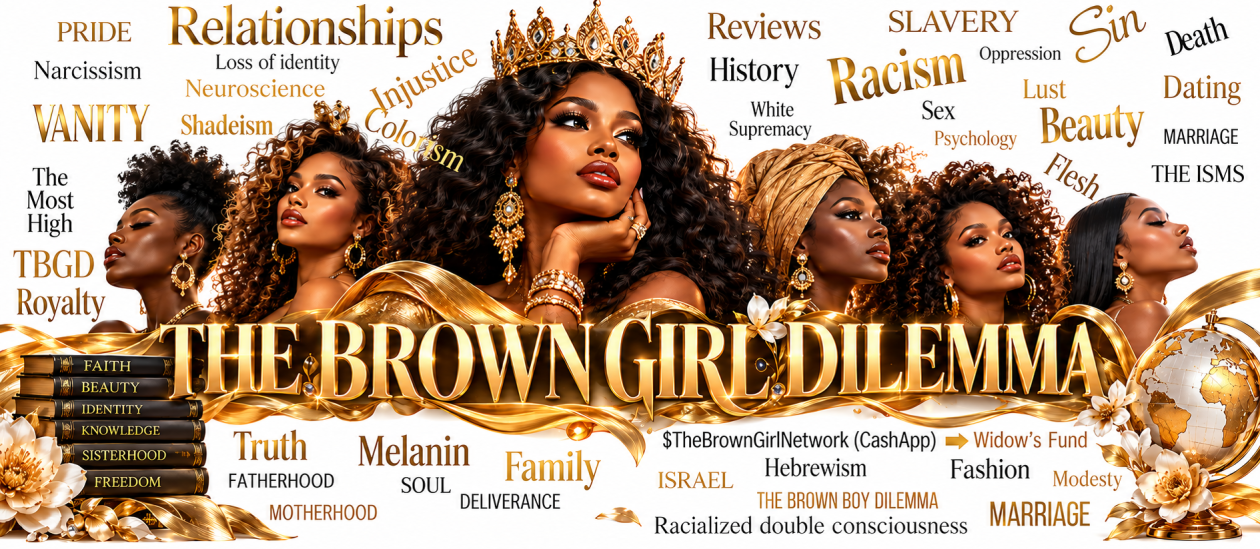
There are questions that follow us throughout our lives. Questions about who we are, why we are here, what we believe, what we fear, whom we love, and what ultimately gives our lives meaning. Some questions have easy answers. Others have been debated for generations. And then there are the dilemmas—the questions that force us to look deeper, think harder, and sometimes reconsider everything we thought we knew.
Today, I am pleased to introduce my book, Dilemmas, written under my author name, T. Janelle. This book was born from something I have always loved to do: question, examine, research, reflect, and explore the complexities of the human experience. Those who have followed The Brown Girl Dilemma know that this website has never been afraid of difficult conversations. Dilemmas carries that same spirit beyond the website and into the pages of a book.
We live in a world overflowing with information, yet information does not always give us understanding. We can search for an answer in seconds and still spend years trying to understand what that answer means for our lives. Technology has changed. Cultures have changed. The way we communicate has changed. But humanity continues to wrestle with many of the same fundamental questions about existence, morality, relationships, identity, purpose, beauty, suffering, faith, society, and the meaning of life.
That is the territory of Dilemmas.
I did not write this book because I believe that I possess every answer. I wrote it because I believe there is tremendous value in asking the right questions. Sometimes a question can reveal more about us than an answer ever could. It can expose our assumptions, challenge our beliefs, deepen our compassion, and make us examine why we think the way we do.
I also wanted Dilemmas to invite conversation. You may agree with some of my conclusions and disagree with others. You may close a chapter completely convinced, or you may close it with even more questions than when you began. That is perfectly fine. A thoughtful book should not merely tell a reader what to think. It should encourage the reader to think.
There is something uniquely human about our need to understand. We want to know why people behave as they do. We want to understand love and betrayal, beauty and prejudice, goodness and evil, success and failure, life and death. We search for purpose in our experiences and meaning in our pain. Across civilizations, cultures, religions, philosophies, and generations, human beings have continued asking the great questions because somewhere inside us is the belief that the answers matter.
Perhaps they do.
And perhaps some questions were never meant to produce one universal answer. Perhaps their importance lies partly in the journey they require us to take—the research, introspection, conversations, disagreements, discoveries, and moments of realization that occur along the way. Dilemmas is my contribution to that journey.
For longtime readers of The Brown Girl Dilemma, this book is also another chapter in something we have been doing together for years. Thousands of articles have allowed us to examine beauty, culture, womanhood, relationships, faith, society, history, identity, and the many contradictions of being human. A website allows a conversation to continue day after day. A book gives us an opportunity to sit with those ideas differently—to slow down, turn the page, reflect, and return to a thought long after we first encountered it.
I hope Dilemmas finds its way into the hands of readers who are curious. Readers who question things. Readers who have lived enough life to realize that the world is rarely as simple as it appears. Readers who enjoy exploring an idea from more than one direction. And perhaps most of all, readers who understand that admitting “I don’t know” is sometimes the beginning of discovering something extraordinary.
So today, I introduce you to Dilemmas.
Not simply as another book with my name on it, but as an invitation: to question, to examine, to challenge, to discover, and to think.
Thank you to everyone who has read my work, shared an article, returned to The Brown Girl Dilemma, encouraged my writing, or simply taken a moment to consider one of the questions I have placed before you over the years. Every writer hopes that somewhere, someone will open her work and find something worth thinking about.
Don’t get me wrong, ladies—there is nothing wrong with appreciating the extraordinary beauty of a Black man. Black male beauty can be breathtaking: the strength of his features, the richness of his complexion, the shape of his face, his eyes, smile, stature, and masculine presence can be genuinely captivating. I can speak about this appreciation personally because my late husband was one of the finest men ever. His beauty was something I cherished, but what made him meaningful to me was far greater than his appearance was his love for God and me. There is a profound difference between admiring a beautiful man and entrusting your heart, body, and future to him.
Black men are masculine perfection and can embody a remarkable expression of masculine beauty and presence. There is something powerful about seeing masculinity expressed through different complexions, facial structures, hair textures, physiques, personalities, and styles. Black male beauty does not have to be minimized in order to discuss discernment. We can celebrate the beauty of Black men while simultaneously reminding women that a beautiful exterior does not automatically reveal the condition of a man’s heart. The two conversations can exist together: Black male beauty deserves appreciation, but Black male character deserves examination.
A handsome man can make a woman’s heart skip a beat, but he cannot be selected as a husband simply because he is physically irresistible. His face cannot tell her whether he will be faithful. His physique cannot tell her whether he will be responsible. His smile cannot tell her whether he will protect her heart. His eyes cannot tell her whether he fears God. His charisma cannot tell her whether he possesses self-control. These things must be demonstrated over time. Physical attraction may introduce a woman to a man, but his character should determine whether she allows the relationship to progress toward something deeper.
That is why women should never confuse masculine beauty with masculine maturity. A man can look exceptionally masculine while lacking discipline, responsibility, integrity, or emotional maturity. Conversely, a man may become even more attractive as his character is revealed. His kindness can make his smile more beautiful. His wisdom can make his presence more compelling. His faithfulness can make his face more familiar and precious. His ability to keep his word can create a kind of attraction that physical beauty alone cannot manufacture. There is a beauty that the eye sees and another beauty that the heart discovers.
So, ladies, appreciate the handsome Black man. Admire his beautiful features. Appreciate his complexion, his stature, his style, his smile, and yes—even those captivating eyes. 😂 But do not let beautiful eyes make decisions that your wisdom should be making. Those “bedroom eyes” can be powerful, but a seductive look is not a marriage covenant. Attraction can be intense, but intensity is not necessarily intimacy, and chemistry is not character.
Before you take a handsome man into your bedroom, make sure that he is your husband in marriage and take the time to discover who he is outside of it. Before marriage –Does he honor God? Does he respect your boundaries? Is he responsible? Does he work toward something meaningful? Does he keep his promises? How does he treat people who cannot benefit him? Can he apologize? Can he control himself? Does he demonstrate genuine compassion? Does he desire marriage, or does he simply desire access to your body? These questions may not be as exciting as staring into his eyes, but they can be far more consequential.
A godly man should therefore be evaluated by the fruit of his life rather than the perfection of his appearance. Scripture says, “Favour is deceitful, and beauty is vain: but a woman that feareth the LORD, she shall be praised” (Proverbs 31:30, KJV). That does not mean beauty is worthless; it means beauty is temporary and insufficient as the foundation for a lifelong covenant. A woman can appreciate a man’s beauty while requiring something much deeper from the man who wants her heart.
My late husband being one of the finest men I have ever known reminds me that these qualities do not have to compete. A man can be extraordinarily handsome and possess beautiful character. He can be masculine, gentle, and love the Most High. He can be physically attractive and spiritually grounded. He can have bedroom eyes and enough self-control to respect the woman standing before him. The goal is not to reject masculine beauty but to refuse to allow beauty to blind us to everything else that matters.
Ultimately, ladies, enjoy the beauty—but investigate the man. ❤️ A handsome Black man can be absolutely breathtaking, and there is nothing wrong with acknowledging that. But when you’re deciding whether he deserves access to your body, your heart, your home, or your future, look beyond the face. Look at his faith. Look at his integrity. Look at his responsibility. Look at his personality. Look at his treatment of others. Look at his willingness to wait, his ability to provide and contribute, and his commitment to something greater than himself. The finest man is not merely the one who looks good standing beside you; he is the one whose character makes you grateful that you chose him.
Physical beauty can be captivating, and there is nothing wrong with appreciating a handsome man. A woman may notice his face, smile, physique, style, voice, or the way his eyes meet hers across a room. Yet attraction should never be confused with character. A beautiful exterior cannot tell a woman whether a man is honest, faithful, responsible, compassionate, disciplined, emotionally mature, or committed to God. Scripture reminds us, “Favour is deceitful, and beauty is vain: but a woman that feareth the LORD, she shall be praised” (Proverbs 31:30, KJV). A handsome Black man can certainly possess excellent character, but his appearance alone cannot establish that character. A woman should therefore appreciate beauty without allowing beauty to become the primary qualification for choosing a husband.
The culture of “pretty boy perfection” can create an illusion that the most attractive man must also be the most desirable partner. Social media, entertainment, advertising, and popular culture frequently place extraordinary emphasis on physical appearance, grooming, clothing, physique, and sexual appeal. However, perfection in appearance is not perfection in character. A man can have a beautiful face and an undisciplined life. He can have a remarkable body and an unfaithful heart. He can dress impeccably while treating people poorly. He can possess the kind of “bedroom eyes” that make a woman feel immediately desired while having no intention of offering her commitment, protection, stability, or marriage. Beauty may open the door to attraction, but it cannot establish what is happening behind the door of a man’s heart.
The things that matter most in a man are often less visible than his physical appearance. A woman’s attention should eventually move beyond his face and toward his conduct. How does he treat his mother, children, elders, strangers, coworkers, and people who cannot do anything for him? Does he keep his word? Does he accept responsibility when he is wrong? Does he control himself when he is angry? Does he respect boundaries? Is he hardworking? Is he compassionate? Can he communicate honestly? Does he possess humility? These qualities are far more revealing of someone’s suitability for marriage than a handsome face. First Samuel 16:7 teaches that while people look at outward appearance, the LORD looks at the heart. Character is not as immediately visible as beauty, but it becomes visible through consistent behavior.
For a woman seeking a husband according to biblical principles, a godly man should receive serious consideration. This does not mean that every man who uses religious language is automatically godly. A man’s conduct must correspond with his profession of faith. Jesus taught that a tree is known by its fruit (Matthew 7:16–20). A genuinely God-centered man should demonstrate his faith through his behavior, not merely through church attendance, Bible quotations, religious titles, or public declarations. Galatians 5:22–23 describes qualities such as love, joy, peace, longsuffering, gentleness, goodness, faith, meekness, and temperance. These characteristics may not produce the immediate visual excitement of physical attraction, but they can become enormously important in the realities of marriage.
One particularly meaningful sign of self-control is a man who respects sexual boundaries and is willing to wait for marriage. In a culture where sexual access can be treated as an expectation of dating, a man who sincerely refuses to pressure a woman into sex demonstrates that he understands that her body is not something to which he is automatically entitled. First Corinthians 6:18 instructs believers to “flee fornication,” while Hebrews 13:4 teaches that marriage is honorable and that the marriage bed is to be kept pure. A man who tells a woman that he wants to honor God and honor her by waiting until marriage is communicating something substantially different from a man whose primary objective is physical gratification. His willingness to exercise restraint can reveal more about his character than his appearance ever could.
Women should therefore be careful when a man’s physical attraction becomes so powerful that it overrides discernment. There is nothing wrong with noticing beautiful eyes, a handsome smile, a strong physique, or an appealing presence. The danger comes when those qualities become intoxicating enough to silence important questions. “Bedroom eyes” can communicate desire, but desire is not commitment. A seductive look can make a woman feel beautiful, wanted, and emotionally connected within seconds, but a look cannot pay a bill, keep a promise, raise a child, resolve conflict, or remain faithful during difficult seasons. Before allowing chemistry to lead her toward the bedroom, a woman should ask whether the man has demonstrated the qualities necessary for a lifelong covenant.
A handsome man who is not a provider—or who refuses responsibility—does not become an adequate husband merely because he is attractive. Provision should not be reduced to money alone, because a healthy marriage involves many forms of contribution: financial responsibility, emotional support, protection, service, wisdom, encouragement, labor, and commitment. Nevertheless, a man who deliberately avoids responsibility while expecting a woman to carry the burdens of the relationship is presenting a serious character issue. Scripture speaks repeatedly about responsibility toward one’s household. First Timothy 5:8 states that a person who fails to provide for his own, particularly his household, has neglected an important responsibility. A woman’s standards should therefore include character, responsibility, work ethic, generosity, and willingness to build—not simply physical beauty.
Personality matters as well. A beautiful man who is narcissistic, arrogant, disrespectful, selfish, dishonest, controlling, emotionally unavailable, or cruel can turn physical attraction into emotional exhaustion. Conversely, a man who possesses integrity, humor, kindness, wisdom, patience, humility, and emotional maturity can become increasingly attractive as a woman gets to know him. This is one reason relationships should be given enough time for character to reveal itself. Attraction can happen instantly; trust cannot. A photograph can reveal a face; time reveals a life. A dating relationship should therefore provide opportunities to observe how a man handles disappointment, disagreement, temptation, responsibility, money, family, boundaries, and adversity.
This message is not an indictment of handsome Black men. Black men, like men of every racial background, possess tremendous diversity in appearance and character. The point is that Black beauty should not be mistaken for Black character. A woman should not reject a good man because he is handsome, nor should she choose a man because he is handsome. The issue is misplaced priorities. Physical attraction has a legitimate place in romantic relationships, but it should exist alongside discernment rather than replace it. A woman can admire a man’s beauty while asking much deeper questions about his values, faith, conduct, intentions, responsibility, and treatment of others. Beauty may attract her attention, but character should help determine whether she continues giving him access to her heart and life.
Ultimately, the finest man is not necessarily the man who turns the most heads when he walks into a room. The finest man may be the one whose private character matches his public appearance; whose faith influences his decisions; whose word can be trusted; whose self-control protects rather than pressures; whose love is demonstrated through action; and whose intentions are directed toward honorable commitment. Proverbs 20:11 teaches that even a child is known by his doings, while Micah 6:8 calls people to walk humbly with God and to practice justice and mercy. A woman should never allow a handsome face, seductive eyes, impressive physique, expensive clothing, or charismatic personality to rush her into sexual intimacy before marriage and has examined the man’s character to make sure is it Godly. Do not let his looks lead you to the bedroom before his character has earned a place in your life. The face may be fine, but the heart, faith, integrity, responsibility, and actions are what ultimately matter. Seek God first.
Love what we do? Help us continue the work. Your donation helps support independent content, meaningful storytelling, education, representation, and the continued growth of The Brown Girl Dilemma. Every contribution makes a difference.
The Holy Bible, King James Version. (1611/1769). Proverbs 20:11; Proverbs 31:30; Matthew 7:16–20; 1 Corinthians 6:18; Galatians 5:22–23; 1 Timothy 5:8; Hebrews 13:4; Micah 6:8; 1 Samuel 16:7.
Baumeister, R. F., & Leary, M. R. (1995). The need to belong: Desire for interpersonal attachments as a fundamental human motivation. Psychological Bulletin, 117(3), 497–529.
Buss, D. M. (1989). Sex differences in human mate preferences: Evolutionary hypotheses tested in 37 cultures. Behavioral and Brain Sciences, 12(1), 1–49.
Dion, K., Berscheid, E., & Walster, E. (1972). What is beautiful is good. Journal of Personality and Social Psychology, 24(3), 285–290.
Feingold, A. (1992). Good-looking people are not what we think. Psychological Bulletin, 111(2), 304–341.
There is a substantial historical basis for the argument that European colonialism, slavery, and racial hierarchy helped create and institutionalize color-based distinctions among people of African descent. At the same time, the history is more complicated than saying that one group simply invented every instance of prejudice between Black people.
“Colorism” is indeed a relatively modern term for a much older phenomenon: differential treatment based on skin tone or other perceived physical characteristics. Black writer and activist Alice Walker popularized the term in the United States, particularly in her 1982 essay collection In Search of Our Mothers’ Gardens.
What makes the history particularly important is the connection between racial classification and power. During European colonialism and American slavery, systems of racial hierarchy assigned social, legal, and economic meaning to ancestry and physical appearance. In the United States, distinctions involving skin tone developed within slavery and continued afterward through institutions and social practices. Scholars have documented associations between skin tone and status, opportunity, and social treatment within Black communities.
But Black people did not simply wake up one day and decide to dislike one another. People were living inside systems that attached advantages and disadvantages to proximity to whiteness. Those systems could influence perceptions of beauty, intelligence, respectability, employment, marriage, and social status. Over generations, external hierarchies can become internalized and reproduced within the communities subjected to them.
Beauty does not exist in a vacuum. What societies call beautiful is shaped by history, culture, power, economics, media, family, religion, geography, and social experience. People are often taught what beauty supposedly looks like before they are old enough to question where those ideas came from. For Black people, particularly in societies shaped by European colonialism and racial hierarchy, ideas about beauty have often been connected to a much larger history of racial classification. What may appear to be an individual preference can sometimes carry the remnants of a social system that existed long before the individual was born.
The phrase “beauty hierarchy” describes more than someone’s personal attraction to one physical feature over another. A hierarchy exists when certain characteristics become socially elevated while others are diminished. Historically, European standards of beauty have often occupied privileged positions in Western societies, influencing perceptions of skin complexion, hair texture, facial features, body types, and other physical characteristics. The consequences were not merely aesthetic. Physical appearance could become associated with social status, respectability, opportunity, and perceived worth.
The history of racial hierarchy is essential to understanding how these ideas developed. European colonialism and the institution of slavery created systems in which race and physical characteristics could be used to categorize human beings and justify unequal treatment. Over generations, those systems did not remain exclusively in laws and institutions. They could influence cultural attitudes, social relationships, family expectations, and perceptions of attractiveness. Scholars examining colorism have documented connections between skin color, race, inequality, and social status across different societies. (Dixon & Telles, 2017).
This does not mean that every preference for a particular physical characteristic can be traced directly to racism. Human beings have always possessed individual preferences, and standards of beauty vary across cultures and historical periods. The more significant question is what happens when one set of characteristics becomes associated with greater social value while another becomes associated with inferiority. At that point, beauty becomes connected to power. The issue is no longer simply who someone finds attractive; it becomes a question of which bodies society teaches people to admire, reward, protect, or imitate.
Black people inherited these contradictions through generations of racialized social experience. A person could be born into a world in which Blackness was simultaneously an identity to be lived and a category that society had historically devalued. Children could encounter messages about appearance through family conversations, toys, advertisements, television, school environments, magazines, relationships, and everyday interactions. These messages did not necessarily have to be explicitly racist to influence perceptions. Repetition alone can teach people what society appears to consider desirable.
Skin tone became one particularly visible component of this hierarchy. Research by Verna Keith and Cedric Herring found that skin-tone variation among Black Americans was associated with differences in stratification outcomes, including education, occupation, and income, using data from the National Survey of Black Americans. Their findings suggested that darker-skinned Black Americans experienced disadvantages that could not be explained simply by family socioeconomic background or other demographic characteristics.
The existence of such patterns demonstrates why the discussion cannot be reduced to the question of whether one person prefers lighter or darker skin. Individual preference operates within social environments. If a society repeatedly attaches greater status to particular appearances, people grow up encountering those associations. They may accept them, reject them, negotiate them, or reproduce them without consciously understanding their historical origins. In this way, social hierarchies can outlive the institutions that originally helped construct them.
Beauty industries have also participated in this history. Cosmetics, hair products, fashion, photography, and advertising have never simply reflected society; they have also helped shape what consumers are encouraged to desire. Research on Black women and the cosmetics industry demonstrates how the rise of the “Black is Beautiful” movement challenged Eurocentric standards while simultaneously creating new commercial opportunities for companies seeking Black consumers. Beauty can therefore become both a site of resistance and a marketplace.
The Black is Beautiful movement represented a significant cultural challenge to inherited assumptions about Black appearance. During the late 1960s and afterward, Black activists, artists, intellectuals, photographers, musicians, and ordinary people increasingly celebrated dark skin, natural hair, African features, and Black cultural identity. The movement did not simply tell Black people to feel better about themselves. It challenged the underlying assumption that proximity to whiteness was necessary for beauty, dignity, or social legitimacy.
Yet liberation itself can become complicated when people begin searching for a replacement hierarchy. If society once declared lighter skin superior, liberation should not require declaring darker skin superior. If straight hair was once presented as the only acceptable standard, natural hair should not become another compulsory standard. If one facial feature was historically criticized, another should not become mandatory evidence of Black beauty. The goal should not be to reverse the hierarchy. The goal should be to dismantle the idea that human beauty requires a hierarchy in the first place.
This distinction matters because Black people are extraordinarily diverse. Africa is not a single physical type, and the African diaspora does not produce one uniform appearance. Black people possess countless combinations of skin tones, facial structures, hair textures, heights, body types, and other characteristics. Attempting to establish one “correct” Black appearance simply creates another limitation. Black beauty becomes more powerful when its diversity is understood as a defining characteristic rather than a problem that needs to be organized.
Hair offers an especially revealing example. Black hair has historically been subjected to social judgments involving professionalism, attractiveness, respectability, and conformity. Yet Black hair itself encompasses extraordinary creativity and variation. Braids, locs, afros, twists, curls, coils, pressed styles, wigs, extensions, and countless other forms of expression exist within Black communities. The question should not be which style is the most authentically Black. The more meaningful question is whether Black people have the freedom to determine their own presentation without being treated as less respectable because of it.
The same principle applies to facial features. The Black face has frequently been compared against standards that were never designed to represent the full range of African-descended populations. But there is no single Black nose, Black lip shape, Black eye shape, or Black facial structure. Individual faces contain unique combinations of inherited characteristics. Some faces are symmetrical; others are distinctive precisely because of characteristics that do not conform to conventional ideals. Beauty does not require genetic uniformity.
Colorism, then, can be understood as part of a larger story rather than the entire story. The term gives scholars and communities language for discussing differential treatment associated with skin tone, but the historical forces behind such attitudes are older than the terminology itself. Research demonstrates that skin color can intersect with racial inequality and social stratification, while comparative scholarship shows that colorism exists in multiple societies and has developed through different historical pathways. The language may change, but the human consequences of socially ranking appearance deserve continued examination.
There is also a psychological dimension to inherited beauty standards. People develop perceptions of themselves partly through social interaction and cultural feedback. A child who repeatedly sees people who look like her represented as beautiful, intelligent, successful, and worthy receives one kind of message. A child who rarely sees herself represented positively receives another. This does not mean representation determines identity completely, but it can contribute to the environment in which identity develops.
For Black women in particular, beauty can become complicated by the intersection of race and gender. Black women have historically been subjected simultaneously to racial stereotypes and gendered expectations. Contemporary scholarship examining Black women’s body image emphasizes the importance of understanding these experiences within their broader sociocultural context rather than treating them as isolated concerns about appearance. The pressure is therefore not simply to be beautiful, but sometimes to negotiate conflicting expectations about what a Black woman is supposed to look like.
Breaking an inherited hierarchy does not require rejecting beauty. It requires redefining the relationship between beauty and worth. A woman can enjoy makeup without believing that her natural face is inadequate. She can straighten her hair without believing that her natural texture is inferior. She can wear extensions without believing that long hair makes her more feminine. She can appreciate her dark complexion without believing that lighter skin is inherently less beautiful. Freedom exists when aesthetic choices become choices rather than requirements.
Perhaps the most important generation to consider is the next one. Children should not inherit the burden of spending their formative years ranking themselves against one another. A dark-skinned child should not grow up believing that her complexion is something to overcome. A child with tightly coiled hair should not learn that beauty requires changing its texture. A child with features that differ from current trends should not be taught that uniqueness is a defect. The responsibility of adults is not to manufacture a new standard but to give children room to recognize beauty in human diversity.
There is tremendous power in understanding where an idea came from. Once people recognize that certain beauty standards have histories, those standards become easier to question. What once appeared natural can be revealed as cultural. What seemed universal can be recognized as historical. What seemed inevitable can become optional. Education does not require people to reject every conventional beauty preference. It simply gives them the opportunity to determine which preferences genuinely belong to them and which ones they may have inherited without examination.
The inheritance of a beauty hierarchy does not mean that Black people are permanently trapped inside it. Every generation has the opportunity to decide what it will preserve and what it will discard. Cultural inheritance is not a prison. It can be examined, challenged, transformed, and reimagined. Black communities have already demonstrated this through artistic movements, natural-hair movements, literature, photography, fashion, music, scholarship, and countless everyday acts of self-definition.
Perhaps the ultimate goal is not to prove that Black beauty is superior to anyone else’s beauty. That would simply reproduce the logic of ranking human beings according to appearance. The deeper liberation is realizing that Black beauty does not need to defeat another group in order to exist. It does not need comparison to establish its value. It does not need permission from European standards, commercial industries, social media, or anyone else. It can simply be recognized on its own terms.
The inheritance can therefore change. What one generation received as a hierarchy, another can transform into a landscape of possibility. Instead of teaching children that one complexion is more beautiful, teach them that complexion is one part of their identity. Instead of teaching them that one hair texture is superior, teach them that hair can be expressed in many ways. Instead of teaching them that one facial structure represents beauty, teach them to appreciate individuality. Instead of teaching them to rank one another, teach them to recognize one another.
The most profound challenge to a beauty hierarchy may ultimately be very simple: stop measuring human beings against a single standard. Black beauty does not need to be reconstructed from the ground up because it was never absent. What needs reconstruction is the framework through which beauty has been judged. Once that framework becomes broader, more historically conscious, and less dependent upon hierarchy, Black people can inherit something far more valuable than another standard of beauty. They can inherit the freedom to see themselves without asking someone else’s definition to tell them what they are worth.
References
Dixon, A. R., & Telles, E. E. (2017). Skin color and colorism: Global research, concepts, and measurement. Annual Review of Sociology, 43, 405–424.
Keith, V. M., & Herring, C. (1991). Skin tone and stratification in the Black community. American Journal of Sociology, 97(3), 760–778.
Maddox, K. B., & Chase, S. G. (2004). Manipulating subcategory salience: Exploring the link between skin tone and perceptions of Black women. Psychological Science, 15(9), 610–614.
Hunter, M. L. (2005). Race, gender, and the politics of skin tone. Routledge.
Russell-Cole, K., Wilson, M. L., & Hall, R. E. (2013). The color complex: The politics of skin color among African Americans. Harvest.
Baird, C. (2021). “Making Black more beautiful”: Black women and the cosmetics industry in the post-Civil Rights era. Gender & History, 33(3), 821–840.
Crenshaw, K. (1989). Demarginalizing the intersection of race and sex: A Black feminist critique of antidiscrimination doctrine, feminist theory and antiracist politics. University of Chicago Legal Forum, 1989(1), 139–167.
Thompson, M. S., & Keith, V. M. (2001). The Blacker the Berry: Gender, skin tone, self-esteem, and self-efficacy. Gender & Society, 15(3), 336–357.
Wade, T. J., Romano, M., & Blue, L. (2004). The effect of African American skin tone on self-perceptions and evaluations of others. Journal of Black Psychology, 30(4), 472–491.
Willis, L. E., & Todorov, A. (2006). First impressions: Making up your mind after a 100-ms exposure to a face. Psychological Science, 17(7), 592–598.
Infidelity is one of the most painful forms of betrayal that can occur within an intimate relationship. When a husband or committed partner becomes sexually or romantically involved with someone outside the relationship, the damage can extend far beyond the physical act itself. Trust is disrupted, emotional security can disappear, and the betrayed partner may begin questioning their attractiveness, worth, judgment, and even their understanding of the relationship they believed they had. Yet the question remains: Why do some men cheat? There is no single answer. Infidelity can emerge from a complicated interaction between personal desires, relationship dynamics, opportunity, values, boundaries, emotional needs, sexual dissatisfaction, cultural expectations, and individual choices. Understanding these factors does not mean excusing betrayal.
One of the most important questions surrounding infidelity is this: Is infidelity primarily about what is missing in a relationship, or what is happening within the person who chooses to betray it? The answer may involve both, but relationship dissatisfaction should never automatically be treated as an explanation sufficient to absolve the person who cheats. Relationships can experience loneliness, conflict, sexual difficulties, emotional distance, and communication problems without either partner becoming unfaithful. Two people can experience the same marital difficulty and make completely different decisions about how to respond. One may initiate an honest conversation, seek counseling, establish new boundaries, or work toward reconciliation. Another may seek gratification outside the relationship. The existence of a relationship problem does not eliminate personal responsibility.
Emotional dissatisfaction and unmet relationship needs can nevertheless play a role in some instances of infidelity. A person who feels chronically ignored, rejected, unappreciated, emotionally disconnected, or unable to communicate with their partner may become vulnerable to attention from someone else. Emotional vulnerability can create an opening through which another person begins to occupy a space that should have been addressed within the primary relationship. However, emotional dissatisfaction is not a universal explanation. Many people experience profound loneliness within relationships and remain faithful. The distinction matters because acknowledging unmet needs should encourage communication and problem-solving rather than normalize betrayal.
Another factor can be the desire for novelty, excitement, or validation. Long-term relationships inevitably move beyond the intensity of initial courtship. Familiarity can replace novelty, and some individuals struggle with that transition. Attention from a new romantic interest may produce excitement, admiration, sexual stimulation, or a renewed sense of desirability. Someone who depends heavily upon external validation may become particularly susceptible to flattering attention. Yet novelty is temporary. A new relationship can initially feel intoxicating precisely because it lacks the responsibilities, history, conflicts, and ordinary routines of an established partnership. Pursuing novelty outside a committed relationship therefore does not necessarily resolve whatever dissatisfaction existed within it.
Entitlement and attitudes toward commitment also deserve examination. Some individuals believe that marriage or commitment should not substantially restrict their behavior. A person may intellectually accept monogamy while privately believing that he deserves exceptions for himself. This double standard can become especially destructive when someone expects absolute fidelity from his partner while granting himself permission to violate the same commitment. Infidelity in such circumstances is not simply about temptation; it involves a person’s understanding of promises, boundaries, responsibility, and reciprocity. Commitment becomes meaningful precisely because it requires a person to regulate behavior even when another opportunity becomes available.
Opportunity and weak boundaries can also contribute to infidelity. Modern life provides countless opportunities for private communication through social media, dating applications, direct messages, texting, workplace interactions, and online communities. Attraction can develop gradually when boundaries are repeatedly crossed. What begins as seemingly harmless flirting can become emotional intimacy, secrecy, sexual communication, or physical involvement. Strong boundaries matter because fidelity is not merely about resisting temptation at the final moment. It is also about recognizing circumstances that could reasonably compromise a commitment and choosing not to cultivate them.
For some men, fear of intimacy or difficulty communicating may complicate their ability to remain emotionally present in a relationship. Intimacy requires vulnerability. A person must communicate disappointment, insecurity, sexual needs, fears, affection, and frustration without always knowing how the other person will respond. Someone who has learned to avoid difficult conversations may find temporary escape more appealing than confronting relational problems. Infidelity can then become an avoidance mechanism rather than a genuine solution. Instead of saying, “I am lonely,” “I feel rejected,” or “Something between us has changed,” the individual seeks another person who temporarily allows him to avoid the uncomfortable work of addressing the original relationship.
Sexual dissatisfaction is another frequently discussed factor, but it requires careful consideration. Differences in sexual desire, frequency, preferences, physical affection, sexual communication, and intimacy can create genuine distress within relationships. Partners may struggle with mismatched expectations or become disconnected physically and emotionally. Nevertheless, sexual dissatisfaction does not create an automatic entitlement to adultery. A committed partner has other avenues available: honest communication, mutually agreed changes, counseling, medical consultation when appropriate, or difficult conversations about whether the relationship can continue. The existence of a sexual problem does not remove the responsibility to honor the commitment.
It is also important to distinguish relationship dissatisfaction from personal dissatisfaction. Sometimes a person blames the relationship for feelings that originate elsewhere. A new sexual partner may temporarily make someone feel attractive, powerful, young, admired, successful, or emotionally alive. But those feelings may reflect an internal struggle rather than a defect in the spouse. A person experiencing insecurity, dissatisfaction with aging, unresolved childhood issues, boredom, a need for constant validation, or dissatisfaction with his own life may interpret another person’s attention as the solution. The affair can therefore become an attempt to change an internal experience through an external relationship.
There are also situations involving narcissistic or strongly self-centered behavior, although ordinary infidelity should not automatically be labeled narcissism and individuals should not be casually diagnosed based upon relationship behavior. A self-centered person may prioritize immediate gratification over the emotional consequences experienced by a spouse. He may minimize deception, rationalize his actions, blame his partner, or believe his desires deserve special consideration. These behaviors can occur without meeting the clinical criteria for narcissistic personality disorder. The important issue is not assigning a diagnosis but examining the observable behavior: deception, entitlement, lack of accountability, manipulation, and disregard for another person’s dignity can profoundly damage a relationship.
Cultural messages about masculinity and sexual conquest can further complicate the discussion. In some environments, men may receive messages suggesting that sexual access to multiple women demonstrates masculinity, status, desirability, or power. Boys and men can encounter cultural narratives in entertainment, peer groups, pornography, music, social media, and other environments that portray sexual conquest as an achievement. These messages do not determine behavior, however. Culture can influence expectations without eliminating personal agency. Millions of men encounter the same cultural messages and nevertheless choose fidelity. A mature understanding of masculinity therefore has to include self-control, honesty, responsibility, respect, and the ability to honor one’s word.
This brings us to one of the most important distinctions: explaining infidelity is not the same as excusing it. Psychology, sociology, relationship research, and theology can help us understand why people behave as they do. Understanding those causes does not require declaring the behavior acceptable. A person can experience loneliness without cheating. He can experience sexual frustration without cheating. He can encounter an attractive person without cheating. He can receive attention and validation without cheating. Understanding temptation should therefore lead us toward a more sophisticated understanding of responsibility, not toward the conclusion that betrayal was inevitable.
Indeed, some men remain faithful despite having opportunities to cheat. This is an essential part of the conversation because discussions about male infidelity can sometimes create the impression that men are biologically incapable of monogamy. That conclusion is far too simplistic. Men in committed relationships encounter attractive people, experience temptation, experience dissatisfaction, and encounter opportunities just as human beings encounter countless opportunities to violate their values. Fidelity involves decisions. A person may acknowledge attraction without pursuing it, establish boundaries before emotional intimacy develops, refuse secret communication, and remember the consequences of betrayal. Faithfulness is therefore not necessarily the absence of temptation; it can involve the deliberate management of temptation.
The consequences of infidelity can be devastating for wives and partners. Betrayal can produce grief, anger, humiliation, confusion, distrust, and profound insecurity. A spouse may replay conversations and wonder what was real and what was fabricated. She may question whether the affair was caused by her appearance, sexuality, personality, age, weight, career, motherhood, or some other characteristic. Such self-blame can be particularly destructive. The decision to cheat belongs to the person who made that decision. Relationship problems can be mutual, but deception is still an individual behavioral choice. The betrayed partner should not automatically assume that another person’s infidelity proves that she was inadequate.
Infidelity can also affect the broader structure of a family. When children become aware of marital betrayal, they may experience confusion, divided loyalties, anger, insecurity, or changes in their understanding of relationships. Financial consequences can arise when affairs contribute to separation or divorce. Friendships and extended-family relationships may become strained as relatives take sides. Even when the affair remains hidden, secrecy can change the emotional atmosphere of a household. The consequences are therefore rarely limited to two people and a private decision.
The question of whether relationships can recover after betrayal has no universal answer. Some relationships end after infidelity, while others survive and undergo substantial reconstruction. Recovery generally requires more than simply ending the affair. Rebuilding trust can require honesty, transparency, accountability, changed behavior, patience, and a willingness to confront the underlying problems that existed before the betrayal. Forgiveness, when offered, does not necessarily mean forgetting, immediately trusting again, or remaining in the relationship. Likewise, reconciliation and forgiveness are not identical concepts. A person can forgive someone while determining that the relationship cannot safely or healthily continue.
The biblical tradition approaches adultery with considerable seriousness. In the Ten Commandments, Exodus 20:14 states plainly, “Thou shalt not commit adultery” (KJV). Adultery is therefore not presented merely as an unfortunate relationship mistake but as a violation of a moral covenant. Proverbs also warns against the destructive consequences of sexual infidelity, while Jesus intensifies the moral discussion in Matthew 5:27–28 by addressing not only the physical act but the lustful intentions of the heart. Biblical teaching consequently moves beyond simply asking, “Did he physically have sex with someone else?” and asks what is happening within the desires, intentions, and choices of the individual.
The New Testament also speaks directly about the flesh, sexual temptation, and the responsibility to flee sexual immorality. Paul writes in 1 Corinthians 6:18, “Flee fornication” (KJV). The language of fleeing is significant. Scripture does not merely instruct believers to stand indefinitely in front of temptation attempting to prove how strong they are. It tells them to get away from it. Second Timothy 2:22 similarly instructs believers to “Flee also youthful lusts” and pursue righteousness, faith, charity, and peace. Galatians 5:16 teaches believers to “Walk in the Spirit, and ye shall not fulfil the lust of the flesh.” Within this framework, sexual self-control is not simply a relationship technique; it is connected to character, spiritual discipline, and obedience to God.
Ultimately, the discussion of why men cheat should lead beyond simplistic statements about male nature and toward a deeper examination of character, choice, temptation, relationships, culture, and accountability. A man may experience dissatisfaction, loneliness, sexual frustration, temptation, or an opportunity to pursue someone else, but none of those experiences automatically dictates his response. The central issue is what he chooses to do with those experiences. Infidelity can be studied psychologically, culturally, relationally, and biblically, but understanding its causes should never require minimizing its consequences. Love requires more than attraction; commitment requires more than promises; and fidelity requires the willingness to protect a relationship even when temptation offers another direction.
Love what we do? Help us continue the work. Your donation helps support independent content, meaningful storytelling, education, representation, and the continued growth of The Brown Girl Dilemma. Every contribution makes a difference.
American Psychological Association. (n.d.). Infidelity. In APA Dictionary of Psychology. American Psychological Association.
Atkins, D. C., Baucom, D. H., Yi, J., & Christensen, A. (2005). Infidelity and behavioral couple therapy: Optimism after marital therapy. Journal of Consulting and Clinical Psychology, 73(4), 716–727. https://doi.org/10.1037/0022-006X.73.4.716
Barta, W. D., & Kiene, S. M. (2005). Motivations for infidelity in heterosexual dating couples: The roles of gender, personality differences, and sociosexual orientation. Journal of Social and Personal Relationships, 22(3), 339–360. https://doi.org/10.1177/0265407505052440
Blow, A. J., & Hartnett, K. (2005). Infidelity in committed relationships II: A substantive review. Journal of Marital and Family Therapy, 31(2), 217–233. https://doi.org/10.1111/j.1752-0606.2005.tb01556.x
Glass, S. P., & Wright, T. L. (1992). Justifications for extramarital relationships: The association between attitudes, behaviors, and gender. Journal of Sex Research, 29(3), 361–387. https://doi.org/10.1080/00224499209551654
Mark, K. P., Janssen, E., & Milhausen, R. R. (2011). Infidelity in heterosexual couples: Demographic, interpersonal, and personality-related predictors of extradyadic sex. Archives of Sexual Behavior, 40, 971–982. https://doi.org/10.1007/s10508-011-9771-z
Paul, T., & Hayes, M. (2002). The casualties of “casual” sex: A qualitative exploration of the phenomenology of female sexual experience within heterosexual relationships. Journal of Sex Research, 39(4), 308–318.
The Holy Bible, King James Version. (1611/1769). Exodus 20:14; Proverbs 5; Matthew 5:27–28; 1 Corinthians 6:18; Galatians 5:16; 2 Timothy 2:22.
In contemporary society, physical appearance often dictates social perception, opportunity, and treatment. Individuals deemed attractive are frequently granted unearned advantages, while those who deviate from conventional beauty standards face bias, exclusion, and diminished respect. This phenomenon, known as “pretty privilege,” exemplifies the sin of partiality and highlights the ethical and social consequences of valuing the outward appearance over character (Langlois et al., 2000; Eagly et al., 1991).
The Bible explicitly warns against showing favoritism based on external factors. James 2:1-4 (KJV) states: “My brethren, have not the faith of our Lord Jesus Christ, the Lord of glory, with respect of persons. For if there come unto your assembly a man with a gold ring, in goodly apparel, and there come in also a poor man in vile raiment; And ye have respect to him that weareth the gay clothing… Are ye not then partial in yourselves, and are become judges of evil thoughts?” This passage underscores the moral failure inherent in valuing appearance above virtue.
Psychological research supports the notion that attractive individuals benefit from positive assumptions. The “halo effect” describes the tendency to infer favorable personal qualities—intelligence, morality, competence—from outward attractiveness (Dion, Berscheid, & Walster, 1972). This cognitive bias translates into real-world advantages in social, educational, and professional contexts.
Pretty privilege is reinforced by media, advertising, and cultural norms that celebrate narrow standards of beauty. Television, social media, and popular culture perpetuate ideals that disproportionately favor certain physical traits, creating systemic disparities in recognition, respect, and opportunity (Wolf, 1991; Marwick, 2017).
In professional and educational contexts, appearance-based bias produces measurable inequities. Attractive individuals often receive preferential treatment in hiring, promotions, academic evaluations, and peer interactions, while less conventionally attractive individuals may experience social and economic marginalization (Hosoda, Stone-Romero, & Coats, 2003).
Intersectionality complicates the manifestation of beauty privilege. Race, gender, age, and socioeconomic status influence the degree to which individuals experience preferential treatment. Black women, for instance, navigate both racialized and aesthetic bias, creating a compounded disadvantage (Hunter, 2007).
The social and psychological consequences of appearance-based favoritism are profound. Individuals denied social validation due to perceived unattractiveness may experience lowered self-esteem, anxiety, or depression, while those who benefit from beauty may develop entitlement or an overreliance on physical appearance for social validation (Langlois et al., 2000).
Ethical and spiritual frameworks emphasize valuing individuals for their character rather than their outward form. Proverbs 31:30 (KJV) declares: “Favor is deceitful, and beauty is vain: but a woman that feareth the Lord, she shall be praised.” Similarly, 1 Samuel 16:7 (KJV) reminds us that God looks on the heart rather than outward appearance. These principles offer a moral counterpoint to societal practices that prioritize aesthetics.
Pretty privilege shapes interpersonal dynamics, influencing relational judgments, social networks, and even legal outcomes. Attractive individuals may receive more favorable treatment in social interactions or court proceedings, while less attractive individuals are at risk of discrimination, reinforcing structural inequities (Dion et al., 1972).
Cultural critique highlights the commodification of beauty. The fashion, cosmetic, and wellness industries profit from societal preoccupation with appearance, reinforcing the notion that attractiveness equates to value, worth, and moral virtue (Wolf, 1991).
Digital culture magnifies the social consequences of beauty bias. Social media platforms reward appearance through likes, comments, and follower metrics, creating quantifiable advantages for those who conform to aesthetic norms (Noble, 2018).
Education systems are not immune to appearance-based bias. Attractive students often benefit from enhanced attention, support, and evaluation from teachers and peers, while less attractive students may experience neglect or underestimation, affecting long-term outcomes (Langlois et al., 2000).
Leadership and organizational practices must consciously mitigate the influence of physical appearance. Merit-based evaluation, blind review processes, and awareness of aesthetic bias help create equitable and ethical environments (Hosoda et al., 2003).
Religious communities are similarly challenged to resist partiality. Aligning human judgment with divine standards—valuing character, integrity, and spiritual devotion—promotes fairness, empathy, and social justice (James 2:1-4, KJV).
Psychological research suggests that awareness and intentional reflection can reduce the influence of aesthetic bias. By actively prioritizing internal qualities over superficial traits, individuals and organizations can foster more equitable social evaluation (Eagly et al., 1991).
Intersectional awareness is key. Recognizing how appearance interacts with race, gender, class, and age ensures that interventions address compounded inequities rather than surface-level differences (Hunter, 2007).
The consequences of the respect of persons extend into cultural and digital domains, perpetuating social hierarchies and reinforcing norms that equate beauty with worth. Critical engagement and media literacy are necessary to disrupt these patterns (Marwick, 2017).
Ethical imperatives require confronting the social and spiritual harms of pretty privilege. Prioritizing character, competence, and moral integrity over outward appearance fosters equitable treatment and aligns human behavior with biblical principles.
In conclusion, the sin of being a respecter of persons—valuing individuals for their outward appearance rather than their heart—remains a pervasive social and ethical challenge. Addressing this issue requires both spiritual guidance and conscious cultural critique to promote justice, fairness, and authentic recognition of intrinsic worth.
References
Dion, K., Berscheid, E., & Walster, E. (1972). What is beautiful is good. Journal of Personality and Social Psychology, 24(3), 285–290.
Eagly, A. H., Ashmore, R. D., Makhijani, M. G., & Longo, L. C. (1991). What is beautiful is good, but…: A meta-analytic review of research on the physical attractiveness stereotype. Psychological Bulletin, 110(1), 109–128.
Hosoda, M., Stone-Romero, E. F., & Coats, G. (2003). The effects of physical attractiveness on job-related outcomes: A meta-analysis of experimental studies. Personnel Psychology, 56(2), 431–462.
Hunter, M. (2007). The persistent problem of colorism: Skin tone, status, and inequality. Sociology Compass, 1(1), 237–254.
Langlois, J. H., Kalakanis, L., Rubenstein, A. J., Larson, A., Hallam, M., & Smoot, M. (2000). Maxims or myths of beauty? A meta-analytic and theoretical review. Psychological Bulletin, 126(3), 390–423.
Marwick, A. (2017). Status update: Celebrity, publicity, and branding in the social media age. Yale University Press.
Noble, S. U. (2018). Algorithms of oppression: How search engines reinforce racism. NYU Press.
Wolf, N. (1991). The beauty myth: How images of beauty are used against women. HarperCollins.
Holy Bible, King James Version (KJV). James 2:1-4; Proverbs 31:30; 1 Samuel 16:7.
A single statistic, historical event, or contemporary social problem cannot measure the cost of being Black in America. It is an accumulated historical cost produced through centuries of enslavement, racial hierarchy, economic exploitation, political exclusion, cultural devaluation, segregation, discrimination, and resistance. From the arrival of enslaved Africans through the present day, Black Americans have repeatedly been required to navigate institutions and social systems that extracted their labor and contributions while restricting their freedom, wealth, political power, mobility, and recognition. Yet the history of Black America is not merely a history of suffering. It is simultaneously a history of survival, resistance, creativity, institution-building, intellectual achievement, cultural influence, and an unrelenting demand for human dignity.
American slavery stands at the center of this history because it created one of the most extensive systems of racialized exploitation in the modern world. Enslaved Africans were kidnapped, transported across the Atlantic, sold, and forced into labor without compensation. The law treated them as property rather than autonomous human beings. Families could be separated for profit, children could inherit enslaved status, and human beings could be bought, sold, mortgaged, insured, beaten, sexually exploited, and subjected to violence. The economic system depended upon the denial of Black freedom. Enslaved labor generated commodities, profits, and wealth that became intertwined with agricultural production, domestic commerce, international trade, finance, insurance, transportation, and manufacturing. Black labor was not incidental to American economic development; it was deeply embedded within it.
The economic significance of slavery also exposes a fundamental contradiction in American history. A nation increasingly defining itself through concepts of liberty and individual rights simultaneously permitted millions of people to be deprived of liberty. Racial ideology helped reconcile that contradiction. If Black people could be portrayed as naturally inferior, intellectually deficient, uncivilized, morally defective, or biologically suited for servitude, then slavery could be presented as something other than what it was: the systematic exploitation of human beings. Racial theories therefore served a political and economic purpose. They transformed an unjust social arrangement into something defenders could portray as natural, necessary, or divinely sanctioned.
The ideology developed to justify slavery did not disappear when slavery ended. This distinction is essential. Institutions can change more rapidly than the beliefs and social assumptions that supported them. Once generations have been taught that Blackness is associated with inferiority and whiteness with superiority, those associations can survive the abolition of the original institution. Racial hierarchy could therefore be adapted to new circumstances. When slavery became politically untenable, other systems emerged that restricted Black freedom, labor, wealth, mobility, voting rights, education, and political participation.
Emancipation through the Thirteenth Amendment was a monumental transformation, but freedom was immediately followed by a struggle over what freedom would actually mean. Formerly enslaved people sought far more than release from physical ownership. They sought families reunited, land, education, employment, political representation, religious independence, economic security, and control over their own labor. Black communities established schools, churches, newspapers, businesses, political organizations, mutual-aid societies, and educational institutions. These accomplishments are particularly significant because they occurred after generations of deliberate policies designed to prevent Black people from accumulating literacy, property, wealth, and institutional power.
Reconstruction demonstrated both the possibilities of Black citizenship and the determination of white supremacist forces to restrict it. Black Americans voted, held public office, participated in constitutional conventions, established institutions, and helped reshape Southern political life. Their political advancement was met with organized resistance, intimidation, violence, economic retaliation, and terrorism. The destruction of Reconstruction did not simply end a political experiment; it enabled the restoration of racial control across much of the South. The historical lesson was profound: constitutional rights could exist on paper while organized systems of power worked to prevent Black Americans from exercising them in practice.
Jim Crow subsequently institutionalized racial separation and inequality. Segregation extended into schools, transportation, housing, restaurants, hospitals, libraries, parks, workplaces, and public accommodations. Black Americans were told that racial separation was compatible with equality even though resources and opportunities were systematically unequal. Plessy v. Ferguson provided constitutional legitimacy to the doctrine of “separate but equal,” illustrating how law could transform racial hierarchy into an apparently legitimate social order. The problem was not simply that Black Americans were treated differently. The larger problem was that the difference was embedded into the institutions through which everyday life was organized.
Voting suppression created another enormous cost. Citizenship without meaningful political power limited the ability of Black communities to influence the laws that governed them. Poll taxes, literacy tests, grandfather clauses, discriminatory registration practices, intimidation, and racial violence restricted Black political participation. Black Americans nevertheless organized, litigated, marched, registered voters, established newspapers, built political organizations, and challenged discriminatory systems. The Voting Rights Act of 1965 represented a major federal intervention against discriminatory voting practices, but the history demonstrates that political equality was not simply granted. It was demanded, organized, defended, and repeatedly tested.
The economic cost of racial inequality is particularly significant because wealth accumulates across generations. Income is what a person earns; wealth includes property, savings, investments, businesses, inheritances, and other assets that can provide security and be transferred to descendants. Enslaved people were denied the ability to accumulate wealth through their labor. After emancipation, Black Americans encountered discriminatory labor arrangements, unequal wages, land restrictions, violence, credit discrimination, occupational segregation, and other barriers to accumulation. Consequently, the racial wealth gap cannot be understood solely by examining contemporary individual behavior. Historical access to wealth-producing institutions matters because wealth itself is cumulative.
Housing demonstrates this principle clearly. During the twentieth century, Black families encountered racial covenants, discriminatory real-estate practices, redlining, exclusionary zoning, unequal mortgage access, and residential segregation. Homeownership became one of the most important mechanisms for middle-class wealth accumulation in the United States, yet Black Americans were systematically excluded from many neighborhoods and financing opportunities that allowed white families to benefit from rising property values. A family denied the opportunity to purchase an appreciating home did not merely lose the wealth associated with that particular property. It potentially lost decades of appreciation, borrowing capacity, inheritance, and financial security for subsequent generations.
Black labor has similarly occupied a complicated position in American history: indispensable yet frequently undervalued. Enslaved labor generated wealth without wages. Following emancipation, sharecropping and debt peonage often kept Black agricultural workers economically dependent. Domestic workers, agricultural laborers, industrial workers, and other Black workers faced occupational segregation and unequal compensation. Even as Black Americans entered professions and expanded their participation throughout the twentieth and twenty-first centuries, racial disparities in employment and advancement have remained subjects of extensive research. The historical record therefore challenges the simplistic idea that Black Americans merely needed to work harder to overcome inequality. Black Americans have worked extraordinarily hard; the historical question is also who possessed the power to determine how that labor would be compensated.
Education provides another example of a struggle for access rather than a passive receipt of opportunity. During slavery, literacy was restricted in many jurisdictions because education threatened systems of control. After emancipation, Black communities treated education as a pathway to freedom and invested heavily in schools despite poverty and inadequate resources. Historically Black colleges and universities became essential centers of intellectual development because predominantly white institutions frequently excluded Black students. Black teachers, parents, students, ministers, scholars, and community leaders recognized that education could challenge the racial hierarchy by giving Black people tools for economic independence, political participation, and intellectual self-determination.
The psychological cost of racial hierarchy is more difficult to quantify but should not be minimized. A person can encounter racial inequality not only through laws or economic statistics but through ordinary social interactions. It can appear in lowered expectations, discriminatory hiring, racial profiling, stereotypes about intelligence, assumptions about criminality, comments about hair, judgments about skin complexion, or repeated exposure to cultural messages suggesting that whiteness represents the standard of beauty, professionalism, intelligence, or respectability. The burden can involve not only experiencing discrimination but anticipating where it might occur.
Beauty is particularly important because racial hierarchy has historically extended into the evaluation of the human body itself. European physical characteristics were frequently elevated as dominant standards of beauty within Western societies, while darker skin, tightly coiled hair, broad noses, fuller lips, and other features associated with African ancestry were often stigmatized. These standards were reinforced through colonialism, slavery, segregation, advertising, entertainment, publishing, fashion, and social customs. Beauty therefore became more than an aesthetic question. It became another arena through which racial status could be communicated.
The historical devaluation of Black beauty has had particularly profound consequences for Black women. Black women have had to navigate stereotypes that could simultaneously portray them as hypersexual, undesirable, aggressive, unattractive, exotic, or insufficiently feminine. Their natural hair has been criticized or treated as unprofessional, while physical features associated with Black ancestry have sometimes been subjected to ridicule. At the same time, aspects of Black aesthetics have repeatedly been appropriated and celebrated after being detached from the Black women who originated or popularized them. This contradiction demonstrates how culture can simultaneously marginalize Black people and profit from Black creativity.
Colorism exists within this larger history of racial hierarchy. Skin complexion has sometimes been associated with social status, attractiveness, respectability, or proximity to whiteness. These preferences developed through complicated combinations of slavery, colonialism, social stratification, media representation, family experiences, and interpersonal relationships. Colorism should therefore be studied neither as an accusation against every individual preference nor as an isolated phenomenon unrelated to broader racial history. It is one of the ways historical racial hierarchies can become reproduced within communities and personal relationships.
The criminalization of Blackness represents another historical cost. Following emancipation, Black Codes criminalized certain forms of behavior and helped create conditions under which formerly enslaved people could be arrested and subjected to forced labor through convict-leasing arrangements. Over subsequent decades, racial stereotypes associated Blackness with danger, disorder, and criminality. Contemporary disparities in policing, sentencing, incarceration, and other aspects of the criminal legal system must be understood alongside this history while recognizing that contemporary disparities have multiple causes and vary across institutions and jurisdictions.
Mass incarceration can also create economic and family consequences extending beyond the individual who is incarcerated. Imprisonment can disrupt employment, housing, education, relationships, and household income. Children may lose financial support. Partners may lose income. Formerly incarcerated individuals can face barriers to employment and housing after release. When incarceration becomes concentrated within particular communities, the consequences can affect entire neighborhoods. The social cost is therefore larger than the prison sentence itself.
Health provides another dimension of the Black experience. Black Americans have historically encountered medical exclusion, exploitation, inadequate care, and unethical experimentation. The Tuskegee syphilis study remains one of the most widely known examples of unethical medical research involving Black Americans, but it exists within a broader history of racialized medical practices. Contemporary health disparities are influenced by numerous factors, including socioeconomic inequality, environmental exposure, healthcare access, occupational conditions, neighborhood conditions, discrimination, chronic stress, and institutional practices. The existence of these disparities should not be interpreted as evidence of inherent biological inferiority. Race is a social category with biological consequences mediated through lived conditions, while ancestry and genetics can influence particular health risks in ways that require careful scientific distinction.
Environmental inequality adds another dimension. In some communities, Black Americans have historically experienced disproportionate exposure to industrial pollution, hazardous facilities, inadequate infrastructure, and environmental hazards. Decisions involving zoning, transportation, industrial development, municipal investment, and housing can produce unequal environmental conditions. These conditions can affect health, property values, educational environments, and quality of life. Environmental inequality therefore illustrates how racial and economic systems can interact across multiple dimensions of everyday life.
Yet Black history cannot responsibly be reduced to oppression. Black Americans have created institutions and cultural traditions under conditions that repeatedly attempted to restrict their development. Black churches became centers of faith, education, political organizing, and community life. Historically Black colleges and universities became centers of scholarship. Black newspapers challenged dominant narratives. Black businesses created economic opportunities. Black writers, musicians, artists, scientists, educators, lawyers, physicians, entrepreneurs, activists, and community leaders transformed American culture and intellectual life.
The Harlem Renaissance demonstrated the power of Black artistic and intellectual self-definition. The Civil Rights Movement demonstrated the power of organized political resistance. The Black Arts Movement challenged cultural marginalization. Black feminist scholarship challenged both racial and gender hierarchies. Contemporary Black creators continue to influence music, fashion, literature, film, science, technology, business, sports, politics, and global popular culture. Black cultural production has repeatedly become an important part of American identity even when the people producing it were denied equal recognition.
This resilience, however, should not be romanticized into an expectation that Black people must continually survive injustice. There is a difference between celebrating resilience and normalizing the conditions that make resilience necessary. Black Americans should not have to demonstrate extraordinary strength simply to obtain ordinary dignity. The ability to survive oppression is not evidence that oppression is harmless. Resilience tells us something about the strength of the people who endured the system; it does not excuse the system itself.
The cost of being Black therefore includes both measurable and immeasurable dimensions. It includes lost wages, restricted property ownership, limited educational opportunities, political exclusion, discriminatory treatment, cultural stereotyping, unequal access to institutions, psychological stress, and intergenerational consequences. It also includes the less visible cost of constantly having to evaluate whether one’s race will influence how one is perceived, hired, educated, housed, policed, treated medically, or represented culturally. These experiences vary substantially among Black Americans, and race intersects with class, gender, geography, education, family circumstances, and individual experience. Black America is not monolithic.
Understanding this history also requires distinguishing historical responsibility from inherited personal guilt. Contemporary individuals should not automatically be treated as personally responsible for actions committed by people generations before them. Historical analysis serves a different purpose. It explains how institutions and inequalities were created, how they changed, and why some consequences can persist after the original laws or practices have disappeared. A society can acknowledge historical injustice without assigning personal blame to every contemporary member of the population associated with the historically dominant group.
The history of Black America also reveals a profound contradiction within American democracy. The nation has repeatedly proclaimed liberty, equality, individual rights, and opportunity while simultaneously maintaining institutions that excluded Black Americans from those principles. The Black freedom struggle has therefore been one of the most significant forces pushing the United States to confront the distance between its ideals and its practices. Reconstruction amendments, civil rights litigation, desegregation, voting-rights legislation, fair-housing protections, affirmative-action debates, and contemporary racial-justice movements all form part of this larger historical struggle.
The phrase “The Cost of Being Black” therefore represents more than financial disadvantage. It describes the accumulated price of existing within a society where race has historically influenced the distribution of freedom, wealth, power, beauty, opportunity, safety, and recognition. It is the cost of labor extracted without compensation, property opportunities denied, education restricted, political voices suppressed, families disrupted, communities segregated, bodies stereotyped, and cultural contributions appropriated or undervalued. Yet the ledger also contains another side: the schools established, businesses built, books written, institutions created, movements organized, families sustained, art produced, scientific discoveries made, communities defended, and generations educated.
Black history is consequently not simply the history of what was done to Black people. It is also the history of what Black people did in response. They survived slavery without allowing slavery to erase their humanity. They pursued education when education was restricted. They built businesses when economic systems excluded them. They created beauty when dominant culture attempted to define Blackness as undesirable. They organized politically when voting rights were suppressed. They created art that transformed the world while confronting institutions that frequently denied them equal recognition. They raised families, built communities, preserved traditions, created intellectual traditions, and demanded justice.
The cost has been enormous, but so has the contribution. The United States cannot tell its own history accurately without acknowledging both. Black Americans did not merely survive American history; they helped create it. Their labor helped build its economy. Their resistance helped expand its democracy. Their art helped define its culture. Their scholarship challenged its assumptions. Their activism forced its institutions to confront contradictions. Their perseverance preserved communities through circumstances that were often designed to destroy them.
To understand the cost of being Black is therefore not to declare that Black people are permanently defined by suffering. It is to recognize the historical price that racial hierarchy imposed while simultaneously recognizing the extraordinary human capacity that survived it. The ultimate story is neither one of victimhood nor one of effortless triumph. It is a story of people who were exploited yet productive, oppressed yet creative, excluded yet influential, wounded yet resilient, and repeatedly denied full equality while continually expanding the meaning of American freedom.
The historical record demands an honest accounting. Slavery mattered. Reconstruction mattered. Jim Crow mattered. Segregation mattered. Redlining mattered. Discriminatory labor practices mattered. Political disenfranchisement mattered. Cultural representations mattered. Beauty standards mattered. Colorism mattered. Criminalization mattered. Health disparities mattered. And the resistance to each of these systems mattered as well.
The cost of being Black is ultimately the cost of having to fight for what should have been recognized as human from the beginning: dignity, freedom, safety, opportunity, equality, and the right to define one’s own humanity. Yet the remarkable truth within Black history is that despite centuries of institutions designed to control, exploit, segregate, and diminish, Black Americans continually created something those systems could never completely take away—the capacity to define themselves, build for their descendants, create beauty from adversity, transform American culture, and insist that Black humanity is neither conditional nor negotiable.
Love what we do? Help us continue the work. Your donation helps support independent content, meaningful storytelling, education, representation, and the continued growth of The Brown Girl Dilemma. Every contribution makes a difference.
Alexander, M. (2012). The new Jim Crow: Mass incarceration in the age of colorblindness. The New Press.
Anderson, J. D. (1988). The education of Blacks in the South, 1860–1935. University of North Carolina Press.
Baptist, E. E. (2014). The half has never been told: Slavery and the making of American capitalism. Basic Books.
Brown v. Board of Education, 347 U.S. 483 (1954).
Du Bois, W. E. B. (1935). Black reconstruction in America, 1860–1880. Harcourt, Brace and Company.
Foner, E. (2014). Reconstruction: America’s unfinished revolution, 1863–1877. Harper Perennial.
Franklin, J. H., & Moss, A. A., Jr. (2000). From slavery to freedom: A history of African Americans (8th ed.). McGraw-Hill.
Hannah-Jones, N. (Ed.). (2021). The 1619 Project: A new origin story. One World.
Kendi, I. X. (2016). Stamped from the beginning: The definitive history of racist ideas in America. Nation Books.
Ladson-Billings, G. (2006). From the achievement gap to the education debt: Understanding achievement in U.S. schools. Educational Researcher, 35(7), 3–12. https://doi.org/10.3102/0013189X035007003
Omi, M., & Winant, H. (2015). Racial formation in the United States (3rd ed.). Routledge.
Rothstein, R. (2017). The color of law: A forgotten history of how our government segregated America. Liveright.
Taylor, K.-Y. (2016). From #BlackLivesMatter to Black liberation. Haymarket Books.
The U.S. Constitution. Amendments XIII, XIV, and XV.
U.S. Commission on Civil Rights. (1967). Racial isolation in the public schools. U.S. Government Printing Office.
Wilkerson, I. (2020). Caste: The origins of our discontents. Random House.
A Biblical, Linguistic, and Historical Examination of Covenant Marriage, Husbandly Leadership, Wifely Partnership, and Sexual Holiness
Marriage occupies a distinctive position within biblical theology because Scripture presents it not merely as a social institution but as a covenantal relationship ordered toward companionship, fidelity, fruitfulness, mutual responsibility, and the glory of God. The biblical account begins not with romantic attraction but with divine intention. Genesis presents humanity as created “male and female” and subsequently describes the establishment of the marital union in which a man leaves his father and mother, cleaves to his wife, and the two become “one flesh” (Genesis 1:27–28; 2:18–24, KJV). Consequently, a biblical theology of marriage must begin with creation, proceed through covenant, and culminate in the New Testament’s Christological interpretation of marriage. Marriage is therefore not simply a private agreement between two individuals; within the biblical framework, it is a sacred covenant carrying obligations before God.
Genesis 2:18 provides the foundational rationale for marriage: “It is not good that the man should be alone; I will make him an help meet for him” (KJV). The Hebrew phrase traditionally rendered “help meet” is עֵזֶר כְּנֶגְדּוֹ (ʿēzer kenegdô). The noun ʿēzer refers to a helper or one who provides assistance, and its usage elsewhere in the Hebrew Bible demonstrates that the term itself does not imply inferiority. Indeed, ʿēzer is frequently associated with God as Israel’s helper and deliverer (e.g., Psalm 54:4; Psalm 121:1–2). The second element, kenegdô, derives from a construction conveying correspondence, suitability, or being “opposite” or “corresponding to” another. Thus, Genesis 2:18 should not be reduced to the idea of a woman as an inferior domestic assistant. The woman is presented as a corresponding partner uniquely suited to the man.
This linguistic observation is important because the biblical conception of marital roles cannot responsibly be constructed from modern assumptions about the word “helper.” In ancient Israelite thought, a person’s social function was frequently described relationally, in terms of obligations and responsibilities within the household and covenant community. The woman of Genesis 2 is therefore neither presented as disposable nor ornamental. She is the corresponding partner through whom the problem of man’s aloneness is addressed. The text establishes differentiation without requiring contempt, and partnership without erasing distinction. A biblical understanding of marriage can therefore affirm complementary responsibilities while simultaneously insisting upon the dignity and value of both husband and wife.
The Hebrew expression for “one flesh” in Genesis 2:24, bāśār ʾeḥād, carries profound covenantal and relational significance. Bāśār ordinarily refers to flesh or the physical body, while ʾeḥād means “one.” The expression therefore communicates a profound union rather than merely a sexual encounter. Jesus later invokes Genesis 2:24 in Matthew 19:4–6, demonstrating that the creation account remained foundational to His teaching concerning marriage. The movement from leaving, to cleaving, to becoming one flesh establishes a sequence of separation from the previous household, covenant attachment to the spouse, and embodied relational unity. Marriage is consequently presented as a comprehensive union involving body, household, loyalty, and life.
This framework also establishes the seriousness of sexual purity before marriage. Biblical sexuality is not portrayed as morally neutral behavior detached from covenant. First Corinthians 6:18 commands believers to “flee fornication,” while First Thessalonians 4:3–5 identifies sexual holiness and self-control as part of God’s will for His people. A man preparing for marriage should therefore cultivate sexual discipline before marriage rather than treating sexual restraint as an outdated cultural restriction. The discipline required to remain sexually faithful before marriage can become part of the character necessary to remain sexually faithful within marriage. Sexual self-control is therefore not merely abstinence; it is training in covenant fidelity.
The Old Testament’s covenantal understanding of marriage becomes particularly explicit in Malachi 2:14. The prophet describes the wife as the husband’s “companion” and “the wife of thy covenant” (KJV). The Hebrew term berît (בְּרִית), commonly translated “covenant,” is one of the central relational concepts in biblical theology. Although scholars have debated aspects of Malachi 2:14, a substantial interpretive tradition understands berît in this context as directly referring to marriage. The passage emphasizes that God Himself stands as witness against marital treachery. Contemporary scholarship likewise recognizes that the passage connects marriage with covenant obligations and condemns betrayal of one’s wife.
The historical context of Malachi intensifies the seriousness of the passage. Malachi addresses a postexilic community in which religious practices and social relationships had become compromised. The prophet connects unfaithfulness in marriage with unfaithfulness in the community’s covenant relationship with God. Marriage is therefore not isolated from spirituality. How a husband treats his wife becomes evidence of his moral and covenantal character. Malachi’s theological logic challenges the idea that a man can maintain religious appearances while simultaneously betraying the woman to whom he has pledged himself. Worship divorced from righteousness is repeatedly rejected throughout the prophetic tradition.
The New Testament intensifies rather than diminishes the husband’s responsibility. Ephesians 5:25 commands, “Husbands, love your wives, even as Christ also loved the church, and gave himself for it” (KJV). The Greek verb translated “love” is agapaō (ἀγαπάω), appearing here as agapāte (ἀγαπᾶτε), a present active imperative. The grammatical form communicates an ongoing command rather than a single emotional event. The husband is continually commanded to love. More importantly, Paul’s standard for that love is not the husband’s emotional satisfaction but Christ’s self-giving love for the church. The husband is therefore measured by sacrificial responsibility.
The Greek expression heauton paredōken (ἑαυτὸν παρέδωκεν), “gave Himself,” provides the controlling image for understanding this love. Christ’s love is demonstrated through self-giving. Consequently, a husband cannot interpret biblical headship as permission to demand service while avoiding sacrifice. Ephesians reverses the instinct toward self-centered authority by placing the greater burden of responsibility upon the husband. The husband is commanded to love in a manner patterned after Christ. Historical Christian commentators have consequently emphasized that the husband’s authority, whatever form it takes, must be understood through the cross rather than through domination.
The phrase “priest of the home” can therefore be useful as a theological metaphor for a husband’s spiritual responsibility, provided that it is carefully defined. The New Testament identifies Christ as the definitive High Priest (Hebrews 4:14–16), and believers collectively participate in a priestly identity (1 Peter 2:5, 9). A Christian husband is not a replacement for Christ, nor does he possess an exclusive priestly office within his household. Nevertheless, he bears substantial responsibility for the spiritual culture he helps create in his family. He should pray, study Scripture, demonstrate repentance, encourage righteousness, teach his children, and make his household a place where God is honored. Spiritual leadership is therefore fundamentally an exercise in responsibility rather than religious privilege.
Biblical headship must also be distinguished from authoritarianism. Ephesians 5:21 begins the larger household discussion with the principle of mutual submission “in the fear of God.” Jesus likewise rejected the Gentile model in which rulers “exercise dominion” over others as the pattern for His disciples (Matthew 20:25–28). Christian leadership is therefore cruciform. The husband leads through sacrifice, service, protection, wisdom, and responsibility. He does not establish his authority by humiliating his wife, silencing her, threatening her, or demanding obedience to sinful behavior. Any interpretation of headship that contradicts the character of Christ has misunderstood the model Paul places before husbands.
The husband’s responsibility as provider is likewise grounded in Scripture. First Timothy 5:8 states that one who does not provide for his own household has denied the faith. Provision should not, however, be reduced to consumer wealth or the ability to purchase luxury. Biblical provision encompasses responsible stewardship, labor, protection, food, shelter, household stability, and practical care. Proverbs repeatedly praises diligence and condemns laziness, while Genesis presents work as part of humanity’s vocation. A godly husband should therefore seek productive labor and responsible stewardship. His objective should be the welfare of his household rather than the performance of masculinity through material extravagance.
Provision also requires wisdom. A husband who earns money but wastes it through addiction, gambling, reckless spending, dishonesty, or chronic irresponsibility is not fulfilling the biblical ideal merely because he possesses an income. Likewise, a wealthy man who neglects the emotional and spiritual welfare of his wife is not a biblical provider in the fullest sense. Biblical stewardship involves the whole household. Money is one instrument of provision; presence, wisdom, protection, affection, and spiritual leadership are others.
First Peter 3:7 provides one of Scripture’s most direct instructions concerning a husband’s treatment of his wife: “Likewise, ye husbands, dwell with them according to knowledge, giving honour unto the wife” (KJV). The Greek expression kata gnōsin (κατὰ γνῶσιν) can be understood as living together according to knowledge, understanding, or informed consideration. The husband is not instructed merely to coexist with his wife. He is instructed to know how to live with her. This requires attentiveness. The text therefore challenges the passive husband who expects his wife to adapt to him while he makes little effort to understand her.
Peter then employs the Greek term timē (τιμή), meaning honor, value, or esteem. The husband is explicitly commanded to honor his wife. Even more significantly, Peter calls husband and wife synklēronomoi (συγκληρονόμοι), “fellow heirs,” of the grace of life. Whatever distinctions may exist in marital responsibility, the wife is not spiritually disposable or fundamentally without standing before God. She participates with her husband in the grace of life. Peter then adds an astonishing warning: the husband’s treatment of his wife can affect his prayers. The text therefore establishes an inseparable connection between marital conduct and spiritual integrity.
The expression “weaker vessel” in First Peter 3:7 requires careful historical and linguistic interpretation. The Greek skeuos (σκεῦος) can refer to a vessel, instrument, or container, and asthenesteros (ἀσθενέστερος) is a comparative form meaning weaker. Interpretations have differed concerning whether the expression refers primarily to physical strength, social vulnerability, or another dimension of human weakness. Regardless of the precise nuance, Peter’s ethical command is unmistakable: the husband must respond with timē—honor. The verse cannot legitimately be used as permission for cruelty or contempt. Its immediate ethical demand is greater care, understanding, and honor, reinforced by the wife’s status as a fellow heir of divine grace.
The wife likewise receives substantial biblical responsibility. Ephesians 5:33 commands the wife to “reverence” her husband. The Greek noun phobos can denote fear, reverence, or profound respect depending upon context, while the marital instruction is situated within a larger discussion of Christ-centered conduct. The biblical concept should therefore not be reduced to terror or servile submission. A godly wife is called to recognize the dignity of her husband and cultivate respect within the marriage. Respect can include encouraging him, speaking truthfully, supporting his legitimate responsibilities, honoring his dignity, and refusing contemptuous behavior. It does not require participation in sin or toleration of abuse.
The biblical woman also contributes to the emotional and practical stability of the household. Proverbs 31 portrays the virtuous woman as trustworthy, industrious, wise, generous, resourceful, and beneficial to her household. Her husband trusts her, her labor contributes to the family’s welfare, and her wisdom affects the household’s reputation. This portrait demonstrates that biblical femininity is not synonymous with passivity. The woman exercises intelligence, economic initiative, discernment, and influence. Her strength complements rather than negates the husband’s responsibility.
The concept of the wife as a place of comfort and peace should therefore be understood within the broader biblical vision of companionship. Proverbs 31:11 says that “the heart of her husband doth safely trust in her” (KJV). Trust is among the deepest forms of marital security. A husband should be able to speak honestly with his wife without fearing humiliation or betrayal. A wife should likewise be able to find safety in her husband’s presence. Biblical peace is therefore not merely the absence of disagreement; it is the presence of relational security, truth, loyalty, patience, and goodwill. Both spouses contribute to this environment.
This mutuality is particularly important because biblical marriage assigns different responsibilities without making either spouse morally insignificant. Ephesians 5 places a profound responsibility upon the husband to love sacrificially, while calling the wife to respect and submission within the marital order. First Peter commands the husband to live with understanding and honor. Genesis presents the wife as a corresponding partner. Proverbs celebrates the woman’s wisdom and strength. The resulting picture is more demanding than a simplistic hierarchy. The husband cannot hide behind “leadership” to avoid love, and the wife cannot use “submission” as a reason to abandon wisdom or righteousness. Both remain accountable to God.
Sexual fidelity provides another central dimension of godly marriage. Hebrews 13:4 declares marriage honorable and the marriage bed undefiled. The biblical ideal therefore places sexual intimacy within the covenant of marriage rather than treating sexuality as independent of commitment. For an unmarried man, sexual purity means exercising self-control rather than consuming women through pornography, casual sexual relationships, or exploitative behavior. For a married man, the same discipline becomes fidelity to his wife. The goal is not merely abstinence before marriage but the development of a character capable of covenant faithfulness.
Historical context also helps illuminate the radical seriousness of marital fidelity in the biblical world. Ancient Israelite marriage existed within extended family structures, inheritance systems, household economics, and community obligations. A husband’s betrayal of his wife could therefore have social, economic, and familial consequences extending beyond private emotional pain. Biblical marriage ethics developed within a world where household faithfulness was intimately connected to inheritance, lineage, social stability, and covenant identity. This context helps explain why prophetic literature could use marital betrayal as an image for covenant apostasy: the language of marriage communicated profound relational treachery.
The biblical definition of marriage itself is rooted in the creation narrative. Genesis presents the foundational union as male and female, and Genesis 2:24 identifies the marital pattern as a man leaving his parents, cleaving to his wife, and becoming one flesh with her. Jesus explicitly reaffirms this creation pattern in Matthew 19:4–6 and Mark 10:6–9. Within this biblical-theological framework, marriage is therefore understood as the covenantal union of a man and a woman. This statement describes the theological definition established by the biblical texts rather than attempting to adjudicate every contemporary legal or cultural definition of marriage.
The biblical model of marriage consequently demands more than finding someone attractive, financially successful, sexually compatible, or socially impressive. It demands character. A godly husband should enter marriage prepared to practice sexual fidelity, responsible provision, spiritual leadership, sacrificial love, understanding, protection, and honor. A godly wife should enter marriage prepared to practice fidelity, respect, wisdom, companionship, cooperation, encouragement, and peace. Neither spouse is called merely to receive benefits from the covenant. Each is called to become the kind of person capable of sustaining it.
Ultimately, the biblical husband and wife are defined not primarily by titles but by covenant character. The husband is commanded to love his wife as Christ loved the church—a standard so demanding that it eliminates selfish leadership as a legitimate interpretation of Christian headship. The wife is called to respect her husband and serve as a corresponding partner whose wisdom and strength contribute substantially to the household. Both are accountable to God. Both require humility. Both must practice forgiveness. Both must resist sexual unfaithfulness. Both must cultivate friendship. Both must understand that marriage is not simply about what one can receive but what one is prepared to give.
A godly marriage therefore becomes a living testimony of covenant faithfulness. It is a household in which the husband does not merely demand respect but becomes respectable through integrity; where the wife does not merely demand love but cultivates trust and companionship; where sexual intimacy is protected by fidelity; where provision is joined with stewardship; where leadership is joined with sacrifice; where respect is joined with dignity; and where both spouses recognize that their treatment of one another ultimately occurs before God. The deepest biblical question is consequently not merely whether a man has a wife or whether a woman has a husband, but whether both individuals are becoming people capable of loving according to the covenantal, sacrificial, holy, and life-giving pattern Scripture establishes.
References
Afolabi, E. O. (2025). An exegetical study of עֵזֶר כְּנֶגְדּוֹ in Genesis 2:18 and its theological implications for women’s partnership in marriage. Zenodo.
Brown, F., Driver, S. R., & Briggs, C. A. (1907). A Hebrew and English lexicon of the Old Testament. Clarendon Press.
Fee, G. D. (1987). The first epistle to the Corinthians. Eerdmans.
Hugenberger, G. P. (1994). Marriage as a covenant: Biblical law and ethics as developed from Malachi. Baker Books.
Keener, C. S. (1993). The IVP Bible background commentary: New Testament. InterVarsity Press.
Lumanze, O. M. (2024). Does God really hate divorce? A comparative analysis of ancient texts of Malachi 2:14–16. Old Testament Essays, 37(2).
Mounce, W. D. (2006). Mounce’s complete expository dictionary of Old and New Testament words. Zondervan.
Thayer, J. H. (1889). A Greek-English lexicon of the New Testament. Harper & Brothers.
The Holy Bible, King James Version. (1611/1769). Cambridge University Press.
VanGemeren, W. A. (Ed.). (1997). New international dictionary of Old Testament theology and exegesis. Zondervan.
Verhoef, P. A. (1987). The books of Haggai and Malachi. Eerdmans.
Vine, W. E., Unger, M. F., & White, W., Jr. (1985). Vine’s complete expository dictionary of Old and New Testament words. Thomas Nelson.
Waltke, B. K., & O’Connor, M. (1990). An introduction to Biblical Hebrew syntax. Eisenbrauns.
Witherington, B., III. (1995). Conflict and community in Corinth: A socio-rhetorical commentary on 1 and 2 Corinthians. Eerdmans.
Beauty does not always arrive with an announcement. Sometimes it has been present from the beginning, quietly existing in the face of a little girl before she ever understands what beauty means. She was always beautiful—in the softness of her features, the depth of her eyes, the texture of her hair, the warmth of her complexion, and the individuality that made her unlike anyone else.
Before magazines, advertisements, fashion houses, photographers, and popular culture attempted to define beauty, she already possessed it. Her beauty did not require permission. It did not depend upon comparison. It did not need to resemble someone else to become worthy of admiration. She carried her own aesthetic language, written naturally across her face, her hair, her skin, and her presence.
There is something extraordinary about Black beauty because it encompasses tremendous variation. Black women can possess deep complexions that range from rich brown to nearly blue-black, golden-brown skin illuminated by sunlight, lighter complexions touched by warm undertones, and every shade between. This diversity does not diminish Black beauty; it demonstrates how expansive it is.
Her eyes tell another part of the story. Dark, soulful eyes can communicate tenderness, intelligence, strength, humor, mystery, and emotional depth without saying a word. The shape of the eyes, the fullness of the lashes, the structure of the brow, and the expressions that move across the face create individually distinctive combinations. There is no single Black face, because there has never been a single Black appearance.
Her hair is equally expressive. Coily, tightly curled, loosely curled, wavy, braided, twisted, loc’d, natural, short, long, voluminous, or flowing, Black hair possesses extraordinary versatility. Its textures can be styled into an astonishing range of forms, allowing hair to become not merely an adornment but an extension of personality, creativity, heritage, and self-expression.
The beauty of her features can also be found in their architecture. High cheekbones, full lips, broad or narrow noses, rounded or angular jawlines, prominent brows, soft facial contours, and countless combinations of these characteristics create faces that cannot be reduced to one standard. Human facial appearance is extraordinarily variable, and Black populations contribute an immense range of phenotypic diversity to that human story.
She was beautiful before anyone taught her how to pose. Before she learned which photographs were considered flattering, she possessed a natural expression that belonged entirely to her. There was beauty in the unguarded face of childhood, before self-consciousness entered the picture and before society’s judgments became internalized.
She was beautiful before she learned that certain features were praised more frequently than others. She did not arrive in the world believing that her complexion needed to be lighter, her nose narrower, her lips smaller, or her hair straighter. Those are learned ideas. A child begins life with an instinctive understanding that her own face is simply her face.
The concept of beauty itself is also far more complicated than a single universal formula. Researchers have identified characteristics such as facial symmetry, averageness, proportions, and skin appearance as factors that can influence perceptions of attractiveness, but human judgments of beauty are also shaped by culture, familiarity, individual preference, social experience, and historical context (Rhodes, 2006).
That complexity matters because beauty cannot reasonably be reduced to one complexion, one facial structure, one body type, or one hairstyle. Human beings have always expressed aesthetic preferences through different cultures and historical periods. What one generation celebrates may differ dramatically from what another generation considers desirable.
Black beauty therefore deserves to be understood on its own terms—not as an exception to somebody else’s standard, but as part of the enormous spectrum of human beauty. The Black woman does not need to become a variation of another woman’s appearance to be beautiful. Her beauty can exist independently, confidently, and completely.
There is also beauty in age. A woman’s face does not lose its worth because time moves across it. Expressions deepen. Features mature. Gray hair may appear. Skin changes. Yet the woman remains herself. Beauty does not have an expiration date, and maturity can bring a kind of presence that youth alone cannot reproduce.
This is particularly meaningful because melanin contributes to the pigmentation of human skin and provides some natural protection against ultraviolet radiation. Melanin is not a magical shield against aging or skin damage, and Black skin still requires appropriate sun protection, but differences in pigmentation are an important part of human biological diversity (Jablonski & Chaplin, 2010).
There is beauty in the way Black women have continually expressed themselves through clothing, adornment, hair, music, photography, dance, literature, and art. Across generations, Black women have transformed ordinary materials into expressions of elegance and identity. Fashion can become language, jewelry can become symbolism, and hairstyle can become art.
The doll becomes powerful within this context because a doll is more than an object. It can become a child’s first encounter with representation. Seeing a figure with familiar features can communicate something deceptively simple: someone who looks like me belongs in the picture of beauty. Research on children’s perceptions of race and identity has demonstrated the importance of representation and the social environment in shaping children’s understanding of themselves and others (Derman-Sparks & Edwards, 2020).
That is why She Was Always Beautiful carries a message larger than fashion or aesthetics. It can become a statement about recognition. The doll does not become beautiful because someone finally decided to photograph her. She was beautiful before the camera arrived.
She was beautiful when she was a little girl running through a family home. She was beautiful when she laughed without worrying about how she looked. She was beautiful when her hair was unstyled, when her clothes were ordinary, and when nobody was watching. Beauty did not begin when the world noticed her.
And perhaps that is the most important message of all: being seen is not the same thing as becoming worthy. A person can be overlooked and still possess extraordinary beauty. A culture can fail to represent someone adequately without diminishing that person’s humanity. Recognition may change, but inherent human worth does not.
She Was Always Beautiful therefore becomes a celebration of the Black girl, the Black woman, and the countless forms her beauty can take. It celebrates the face in the mirror, the curls and coils, the eyes, the lips, the skin, the smile, the individuality, and the presence. It does not ask her to become beautiful. It reminds her that she already was.
The message can ultimately be distilled into something beautifully simple: before the world learned to appreciate her beauty, she already possessed it. Before she was photographed, celebrated, admired, or placed on a pedestal, she was already worthy of being seen. She was always beautiful.
References
Derman-Sparks, L., & Edwards, J. O. (2020). Anti-bias education for young children and ourselves (2nd ed.). National Association for the Education of Young Children.
Jablonski, N. G., & Chaplin, G. (2010). Colloquium paper: Human skin pigmentation as an adaptation to UV radiation. Proceedings of the National Academy of Sciences, 107(Supplement 2), 8962–8968. https://doi.org/10.1073/pnas.0914628107
Their paths crossed in a way that felt ordained, not accidental. From the moment they first spoke, a sense of anticipation lingered, a quiet recognition that something meaningful was unfolding. It was a good feeling, subtle yet persistent, as if the universe itself conspired to draw them together under divine guidance.
They did not rush or force the connection; rather, they allowed the encounter to breathe, understanding that God moves in His timing. Scripture reminds us that the Lord brings about meetings in His will: “Many are the plans in a man’s heart; but it is the counsel of the LORD that shall stand” (Proverbs 19:21, KJV). This encounter was counseled by God.
Both shared a love for God that shaped their interaction. Conversation flowed easily, yet there was reverence, humility, and mutual respect. When love for God is central, attraction aligns with purpose rather than passion alone. “Seek ye first the kingdom of God, and his righteousness; and all these things shall be added unto you” (Matthew 6:33, KJV).
The good feeling they experienced was not mere chemistry but a spiritual confirmation. Sometimes, God gives hearts a sense of knowing, a quiet peace that whispers, This is right. “And the peace of God, which passeth all understanding, shall keep your hearts and minds through Christ Jesus” (Philippians 4:7, KJV).
They recognized that their meeting was not coincidental. Life could have presented many distractions, yet their paths crossed precisely at the appointed moment. “The steps of a good man are ordered by the LORD: and he delighteth in his way” (Psalm 37:23, KJV). Only God could have arranged such a meeting.
Both were mindful of purity. Attraction existed, yet they did not allow desire to override discipline. Scripture warns, “Flee fornication” (1 Corinthians 6:18, KJV). They understood that honoring God with their bodies and hearts would protect their destiny together.
There was a sense of wonder in the air. Each smiled, laughed, and spoke as though the other understood intuitively what words could not express. “Iron sharpeneth iron; so a man sharpeneth the countenance of his friend” (Proverbs 27:17, KJV). Their connection felt like refinement, not mere amusement.
They acknowledged silently that this could only be God’s doing. No human planning could have caused their lives to intersect in such perfect alignment. “The LORD hath done it this very day; let us rejoice and be glad in it” (Psalm 118:24, KJV). Gratitude filled their hearts for the divine orchestration.
Even amid the excitement of the encounter, there was calmness. They did not rush to define what was happening but allowed it to unfold naturally. Patience is part of God’s design, for “To everything there is a season, and a time to every purpose under the heaven” (Ecclesiastes 3:1, KJV).
They shared their faith openly, which deepened mutual respect. Knowing that both loved God created a foundation beyond physical attraction. “Be ye all of one mind, having compassion one of another, love as brethren, be pitiful, be courteous” (1 Peter 3:8, KJV). Their love for God was the lens through which they viewed one another.
Throughout the day, the good feeling persisted—a subtle reminder that God’s timing is perfect. It was not insistence or pressure, but an inner assurance that this meeting was right, ordained, and protected. “The LORD will perfect that which concerneth me” (Psalm 138:8, KJV).
They spoke of dreams, hopes, and purposes, discovering alignment in values, vision, and prayer. Connection rooted in God’s will transcends infatuation. “Delight thyself also in the LORD; and he shall give thee the desires of thine heart” (Psalm 37:4, KJV). Their desires were harmonized through Him.
Purity remained central. They were committed to honoring God by reserving intimacy until marriage. “Marriage is honourable in all, and the bed undefiled” (Hebrews 13:4, KJV). Their discipline preserved clarity, trust, and anticipation for the covenant that would one day unite them.
By the end of the day, both sensed that something significant was beginning. Not all details were clear, but the presence of God was unmistakable. “For I know the thoughts that I think toward you, saith the LORD, thoughts of peace, and not of evil, to give you an expected end” (Jeremiah 29:11, KJV).
Their paths had crossed, and it was a meeting of providence, purpose, and promise. They understood that God had orchestrated every step to ensure their hearts would meet in purity, mutual respect, and alignment. Only He could bring two lives together in such intentional grace, and they chose to walk forward trusting His plan.