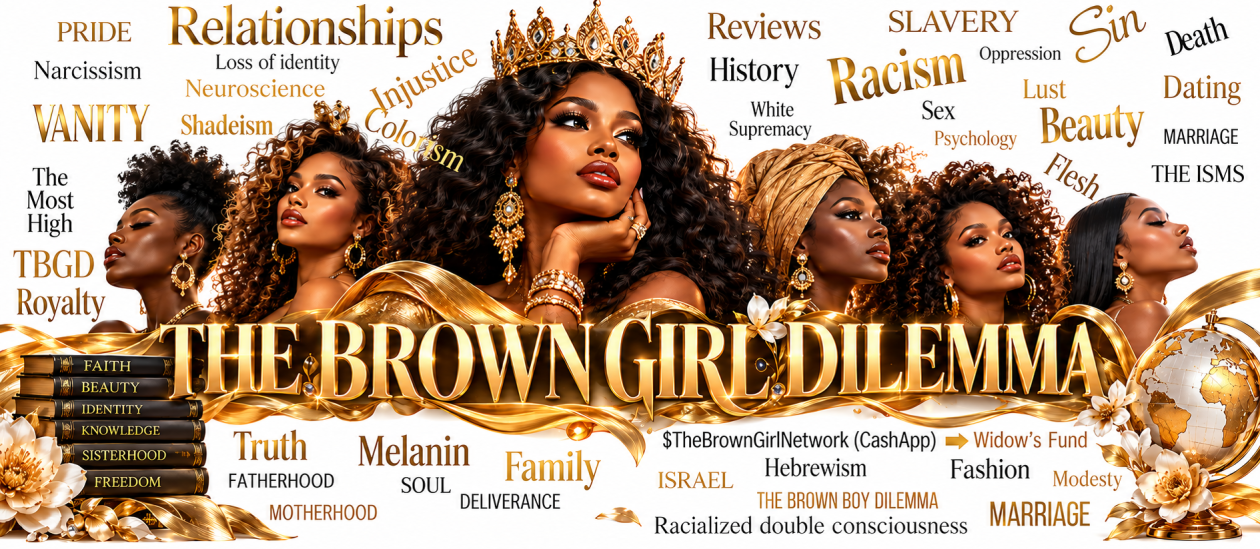
There are questions that follow us throughout our lives. Questions about who we are, why we are here, what we believe, what we fear, whom we love, and what ultimately gives our lives meaning. Some questions have easy answers. Others have been debated for generations. And then there are the dilemmas—the questions that force us to look deeper, think harder, and sometimes reconsider everything we thought we knew.
Today, I am pleased to introduce my book, Dilemmas, written under my author name, T. Janelle. This book was born from something I have always loved to do: question, examine, research, reflect, and explore the complexities of the human experience. Those who have followed The Brown Girl Dilemma know that this website has never been afraid of difficult conversations. Dilemmas carries that same spirit beyond the website and into the pages of a book.
We live in a world overflowing with information, yet information does not always give us understanding. We can search for an answer in seconds and still spend years trying to understand what that answer means for our lives. Technology has changed. Cultures have changed. The way we communicate has changed. But humanity continues to wrestle with many of the same fundamental questions about existence, morality, relationships, identity, purpose, beauty, suffering, faith, society, and the meaning of life.
That is the territory of Dilemmas.
I did not write this book because I believe that I possess every answer. I wrote it because I believe there is tremendous value in asking the right questions. Sometimes a question can reveal more about us than an answer ever could. It can expose our assumptions, challenge our beliefs, deepen our compassion, and make us examine why we think the way we do.
I also wanted Dilemmas to invite conversation. You may agree with some of my conclusions and disagree with others. You may close a chapter completely convinced, or you may close it with even more questions than when you began. That is perfectly fine. A thoughtful book should not merely tell a reader what to think. It should encourage the reader to think.
There is something uniquely human about our need to understand. We want to know why people behave as they do. We want to understand love and betrayal, beauty and prejudice, goodness and evil, success and failure, life and death. We search for purpose in our experiences and meaning in our pain. Across civilizations, cultures, religions, philosophies, and generations, human beings have continued asking the great questions because somewhere inside us is the belief that the answers matter.
Perhaps they do.
And perhaps some questions were never meant to produce one universal answer. Perhaps their importance lies partly in the journey they require us to take—the research, introspection, conversations, disagreements, discoveries, and moments of realization that occur along the way. Dilemmas is my contribution to that journey.
For longtime readers of The Brown Girl Dilemma, this book is also another chapter in something we have been doing together for years. Thousands of articles have allowed us to examine beauty, culture, womanhood, relationships, faith, society, history, identity, and the many contradictions of being human. A website allows a conversation to continue day after day. A book gives us an opportunity to sit with those ideas differently—to slow down, turn the page, reflect, and return to a thought long after we first encountered it.
I hope Dilemmas finds its way into the hands of readers who are curious. Readers who question things. Readers who have lived enough life to realize that the world is rarely as simple as it appears. Readers who enjoy exploring an idea from more than one direction. And perhaps most of all, readers who understand that admitting “I don’t know” is sometimes the beginning of discovering something extraordinary.
So today, I introduce you to Dilemmas.
Not simply as another book with my name on it, but as an invitation: to question, to examine, to challenge, to discover, and to think.
Thank you to everyone who has read my work, shared an article, returned to The Brown Girl Dilemma, encouraged my writing, or simply taken a moment to consider one of the questions I have placed before you over the years. Every writer hopes that somewhere, someone will open her work and find something worth thinking about.
There is a substantial historical basis for the argument that European colonialism, slavery, and racial hierarchy helped create and institutionalize color-based distinctions among people of African descent. At the same time, the history is more complicated than saying that one group simply invented every instance of prejudice between Black people.
“Colorism” is indeed a relatively modern term for a much older phenomenon: differential treatment based on skin tone or other perceived physical characteristics. Black writer and activist Alice Walker popularized the term in the United States, particularly in her 1982 essay collection In Search of Our Mothers’ Gardens.
What makes the history particularly important is the connection between racial classification and power. During European colonialism and American slavery, systems of racial hierarchy assigned social, legal, and economic meaning to ancestry and physical appearance. In the United States, distinctions involving skin tone developed within slavery and continued afterward through institutions and social practices. Scholars have documented associations between skin tone and status, opportunity, and social treatment within Black communities.
But Black people did not simply wake up one day and decide to dislike one another. People were living inside systems that attached advantages and disadvantages to proximity to whiteness. Those systems could influence perceptions of beauty, intelligence, respectability, employment, marriage, and social status. Over generations, external hierarchies can become internalized and reproduced within the communities subjected to them.
Beauty does not exist in a vacuum. What societies call beautiful is shaped by history, culture, power, economics, media, family, religion, geography, and social experience. People are often taught what beauty supposedly looks like before they are old enough to question where those ideas came from. For Black people, particularly in societies shaped by European colonialism and racial hierarchy, ideas about beauty have often been connected to a much larger history of racial classification. What may appear to be an individual preference can sometimes carry the remnants of a social system that existed long before the individual was born.
The phrase “beauty hierarchy” describes more than someone’s personal attraction to one physical feature over another. A hierarchy exists when certain characteristics become socially elevated while others are diminished. Historically, European standards of beauty have often occupied privileged positions in Western societies, influencing perceptions of skin complexion, hair texture, facial features, body types, and other physical characteristics. The consequences were not merely aesthetic. Physical appearance could become associated with social status, respectability, opportunity, and perceived worth.
The history of racial hierarchy is essential to understanding how these ideas developed. European colonialism and the institution of slavery created systems in which race and physical characteristics could be used to categorize human beings and justify unequal treatment. Over generations, those systems did not remain exclusively in laws and institutions. They could influence cultural attitudes, social relationships, family expectations, and perceptions of attractiveness. Scholars examining colorism have documented connections between skin color, race, inequality, and social status across different societies. (Dixon & Telles, 2017).
This does not mean that every preference for a particular physical characteristic can be traced directly to racism. Human beings have always possessed individual preferences, and standards of beauty vary across cultures and historical periods. The more significant question is what happens when one set of characteristics becomes associated with greater social value while another becomes associated with inferiority. At that point, beauty becomes connected to power. The issue is no longer simply who someone finds attractive; it becomes a question of which bodies society teaches people to admire, reward, protect, or imitate.
Black people inherited these contradictions through generations of racialized social experience. A person could be born into a world in which Blackness was simultaneously an identity to be lived and a category that society had historically devalued. Children could encounter messages about appearance through family conversations, toys, advertisements, television, school environments, magazines, relationships, and everyday interactions. These messages did not necessarily have to be explicitly racist to influence perceptions. Repetition alone can teach people what society appears to consider desirable.
Skin tone became one particularly visible component of this hierarchy. Research by Verna Keith and Cedric Herring found that skin-tone variation among Black Americans was associated with differences in stratification outcomes, including education, occupation, and income, using data from the National Survey of Black Americans. Their findings suggested that darker-skinned Black Americans experienced disadvantages that could not be explained simply by family socioeconomic background or other demographic characteristics.
The existence of such patterns demonstrates why the discussion cannot be reduced to the question of whether one person prefers lighter or darker skin. Individual preference operates within social environments. If a society repeatedly attaches greater status to particular appearances, people grow up encountering those associations. They may accept them, reject them, negotiate them, or reproduce them without consciously understanding their historical origins. In this way, social hierarchies can outlive the institutions that originally helped construct them.
Beauty industries have also participated in this history. Cosmetics, hair products, fashion, photography, and advertising have never simply reflected society; they have also helped shape what consumers are encouraged to desire. Research on Black women and the cosmetics industry demonstrates how the rise of the “Black is Beautiful” movement challenged Eurocentric standards while simultaneously creating new commercial opportunities for companies seeking Black consumers. Beauty can therefore become both a site of resistance and a marketplace.
The Black is Beautiful movement represented a significant cultural challenge to inherited assumptions about Black appearance. During the late 1960s and afterward, Black activists, artists, intellectuals, photographers, musicians, and ordinary people increasingly celebrated dark skin, natural hair, African features, and Black cultural identity. The movement did not simply tell Black people to feel better about themselves. It challenged the underlying assumption that proximity to whiteness was necessary for beauty, dignity, or social legitimacy.
Yet liberation itself can become complicated when people begin searching for a replacement hierarchy. If society once declared lighter skin superior, liberation should not require declaring darker skin superior. If straight hair was once presented as the only acceptable standard, natural hair should not become another compulsory standard. If one facial feature was historically criticized, another should not become mandatory evidence of Black beauty. The goal should not be to reverse the hierarchy. The goal should be to dismantle the idea that human beauty requires a hierarchy in the first place.
This distinction matters because Black people are extraordinarily diverse. Africa is not a single physical type, and the African diaspora does not produce one uniform appearance. Black people possess countless combinations of skin tones, facial structures, hair textures, heights, body types, and other characteristics. Attempting to establish one “correct” Black appearance simply creates another limitation. Black beauty becomes more powerful when its diversity is understood as a defining characteristic rather than a problem that needs to be organized.
Hair offers an especially revealing example. Black hair has historically been subjected to social judgments involving professionalism, attractiveness, respectability, and conformity. Yet Black hair itself encompasses extraordinary creativity and variation. Braids, locs, afros, twists, curls, coils, pressed styles, wigs, extensions, and countless other forms of expression exist within Black communities. The question should not be which style is the most authentically Black. The more meaningful question is whether Black people have the freedom to determine their own presentation without being treated as less respectable because of it.
The same principle applies to facial features. The Black face has frequently been compared against standards that were never designed to represent the full range of African-descended populations. But there is no single Black nose, Black lip shape, Black eye shape, or Black facial structure. Individual faces contain unique combinations of inherited characteristics. Some faces are symmetrical; others are distinctive precisely because of characteristics that do not conform to conventional ideals. Beauty does not require genetic uniformity.
Colorism, then, can be understood as part of a larger story rather than the entire story. The term gives scholars and communities language for discussing differential treatment associated with skin tone, but the historical forces behind such attitudes are older than the terminology itself. Research demonstrates that skin color can intersect with racial inequality and social stratification, while comparative scholarship shows that colorism exists in multiple societies and has developed through different historical pathways. The language may change, but the human consequences of socially ranking appearance deserve continued examination.
There is also a psychological dimension to inherited beauty standards. People develop perceptions of themselves partly through social interaction and cultural feedback. A child who repeatedly sees people who look like her represented as beautiful, intelligent, successful, and worthy receives one kind of message. A child who rarely sees herself represented positively receives another. This does not mean representation determines identity completely, but it can contribute to the environment in which identity develops.
For Black women in particular, beauty can become complicated by the intersection of race and gender. Black women have historically been subjected simultaneously to racial stereotypes and gendered expectations. Contemporary scholarship examining Black women’s body image emphasizes the importance of understanding these experiences within their broader sociocultural context rather than treating them as isolated concerns about appearance. The pressure is therefore not simply to be beautiful, but sometimes to negotiate conflicting expectations about what a Black woman is supposed to look like.
Breaking an inherited hierarchy does not require rejecting beauty. It requires redefining the relationship between beauty and worth. A woman can enjoy makeup without believing that her natural face is inadequate. She can straighten her hair without believing that her natural texture is inferior. She can wear extensions without believing that long hair makes her more feminine. She can appreciate her dark complexion without believing that lighter skin is inherently less beautiful. Freedom exists when aesthetic choices become choices rather than requirements.
Perhaps the most important generation to consider is the next one. Children should not inherit the burden of spending their formative years ranking themselves against one another. A dark-skinned child should not grow up believing that her complexion is something to overcome. A child with tightly coiled hair should not learn that beauty requires changing its texture. A child with features that differ from current trends should not be taught that uniqueness is a defect. The responsibility of adults is not to manufacture a new standard but to give children room to recognize beauty in human diversity.
There is tremendous power in understanding where an idea came from. Once people recognize that certain beauty standards have histories, those standards become easier to question. What once appeared natural can be revealed as cultural. What seemed universal can be recognized as historical. What seemed inevitable can become optional. Education does not require people to reject every conventional beauty preference. It simply gives them the opportunity to determine which preferences genuinely belong to them and which ones they may have inherited without examination.
The inheritance of a beauty hierarchy does not mean that Black people are permanently trapped inside it. Every generation has the opportunity to decide what it will preserve and what it will discard. Cultural inheritance is not a prison. It can be examined, challenged, transformed, and reimagined. Black communities have already demonstrated this through artistic movements, natural-hair movements, literature, photography, fashion, music, scholarship, and countless everyday acts of self-definition.
Perhaps the ultimate goal is not to prove that Black beauty is superior to anyone else’s beauty. That would simply reproduce the logic of ranking human beings according to appearance. The deeper liberation is realizing that Black beauty does not need to defeat another group in order to exist. It does not need comparison to establish its value. It does not need permission from European standards, commercial industries, social media, or anyone else. It can simply be recognized on its own terms.
The inheritance can therefore change. What one generation received as a hierarchy, another can transform into a landscape of possibility. Instead of teaching children that one complexion is more beautiful, teach them that complexion is one part of their identity. Instead of teaching them that one hair texture is superior, teach them that hair can be expressed in many ways. Instead of teaching them that one facial structure represents beauty, teach them to appreciate individuality. Instead of teaching them to rank one another, teach them to recognize one another.
The most profound challenge to a beauty hierarchy may ultimately be very simple: stop measuring human beings against a single standard. Black beauty does not need to be reconstructed from the ground up because it was never absent. What needs reconstruction is the framework through which beauty has been judged. Once that framework becomes broader, more historically conscious, and less dependent upon hierarchy, Black people can inherit something far more valuable than another standard of beauty. They can inherit the freedom to see themselves without asking someone else’s definition to tell them what they are worth.
References
Dixon, A. R., & Telles, E. E. (2017). Skin color and colorism: Global research, concepts, and measurement. Annual Review of Sociology, 43, 405–424.
Keith, V. M., & Herring, C. (1991). Skin tone and stratification in the Black community. American Journal of Sociology, 97(3), 760–778.
Maddox, K. B., & Chase, S. G. (2004). Manipulating subcategory salience: Exploring the link between skin tone and perceptions of Black women. Psychological Science, 15(9), 610–614.
Hunter, M. L. (2005). Race, gender, and the politics of skin tone. Routledge.
Russell-Cole, K., Wilson, M. L., & Hall, R. E. (2013). The color complex: The politics of skin color among African Americans. Harvest.
Baird, C. (2021). “Making Black more beautiful”: Black women and the cosmetics industry in the post-Civil Rights era. Gender & History, 33(3), 821–840.
Crenshaw, K. (1989). Demarginalizing the intersection of race and sex: A Black feminist critique of antidiscrimination doctrine, feminist theory and antiracist politics. University of Chicago Legal Forum, 1989(1), 139–167.
Thompson, M. S., & Keith, V. M. (2001). The Blacker the Berry: Gender, skin tone, self-esteem, and self-efficacy. Gender & Society, 15(3), 336–357.
Wade, T. J., Romano, M., & Blue, L. (2004). The effect of African American skin tone on self-perceptions and evaluations of others. Journal of Black Psychology, 30(4), 472–491.
Willis, L. E., & Todorov, A. (2006). First impressions: Making up your mind after a 100-ms exposure to a face. Psychological Science, 17(7), 592–598.
A single statistic, historical event, or contemporary social problem cannot measure the cost of being Black in America. It is an accumulated historical cost produced through centuries of enslavement, racial hierarchy, economic exploitation, political exclusion, cultural devaluation, segregation, discrimination, and resistance. From the arrival of enslaved Africans through the present day, Black Americans have repeatedly been required to navigate institutions and social systems that extracted their labor and contributions while restricting their freedom, wealth, political power, mobility, and recognition. Yet the history of Black America is not merely a history of suffering. It is simultaneously a history of survival, resistance, creativity, institution-building, intellectual achievement, cultural influence, and an unrelenting demand for human dignity.
American slavery stands at the center of this history because it created one of the most extensive systems of racialized exploitation in the modern world. Enslaved Africans were kidnapped, transported across the Atlantic, sold, and forced into labor without compensation. The law treated them as property rather than autonomous human beings. Families could be separated for profit, children could inherit enslaved status, and human beings could be bought, sold, mortgaged, insured, beaten, sexually exploited, and subjected to violence. The economic system depended upon the denial of Black freedom. Enslaved labor generated commodities, profits, and wealth that became intertwined with agricultural production, domestic commerce, international trade, finance, insurance, transportation, and manufacturing. Black labor was not incidental to American economic development; it was deeply embedded within it.
The economic significance of slavery also exposes a fundamental contradiction in American history. A nation increasingly defining itself through concepts of liberty and individual rights simultaneously permitted millions of people to be deprived of liberty. Racial ideology helped reconcile that contradiction. If Black people could be portrayed as naturally inferior, intellectually deficient, uncivilized, morally defective, or biologically suited for servitude, then slavery could be presented as something other than what it was: the systematic exploitation of human beings. Racial theories therefore served a political and economic purpose. They transformed an unjust social arrangement into something defenders could portray as natural, necessary, or divinely sanctioned.
The ideology developed to justify slavery did not disappear when slavery ended. This distinction is essential. Institutions can change more rapidly than the beliefs and social assumptions that supported them. Once generations have been taught that Blackness is associated with inferiority and whiteness with superiority, those associations can survive the abolition of the original institution. Racial hierarchy could therefore be adapted to new circumstances. When slavery became politically untenable, other systems emerged that restricted Black freedom, labor, wealth, mobility, voting rights, education, and political participation.
Emancipation through the Thirteenth Amendment was a monumental transformation, but freedom was immediately followed by a struggle over what freedom would actually mean. Formerly enslaved people sought far more than release from physical ownership. They sought families reunited, land, education, employment, political representation, religious independence, economic security, and control over their own labor. Black communities established schools, churches, newspapers, businesses, political organizations, mutual-aid societies, and educational institutions. These accomplishments are particularly significant because they occurred after generations of deliberate policies designed to prevent Black people from accumulating literacy, property, wealth, and institutional power.
Reconstruction demonstrated both the possibilities of Black citizenship and the determination of white supremacist forces to restrict it. Black Americans voted, held public office, participated in constitutional conventions, established institutions, and helped reshape Southern political life. Their political advancement was met with organized resistance, intimidation, violence, economic retaliation, and terrorism. The destruction of Reconstruction did not simply end a political experiment; it enabled the restoration of racial control across much of the South. The historical lesson was profound: constitutional rights could exist on paper while organized systems of power worked to prevent Black Americans from exercising them in practice.
Jim Crow subsequently institutionalized racial separation and inequality. Segregation extended into schools, transportation, housing, restaurants, hospitals, libraries, parks, workplaces, and public accommodations. Black Americans were told that racial separation was compatible with equality even though resources and opportunities were systematically unequal. Plessy v. Ferguson provided constitutional legitimacy to the doctrine of “separate but equal,” illustrating how law could transform racial hierarchy into an apparently legitimate social order. The problem was not simply that Black Americans were treated differently. The larger problem was that the difference was embedded into the institutions through which everyday life was organized.
Voting suppression created another enormous cost. Citizenship without meaningful political power limited the ability of Black communities to influence the laws that governed them. Poll taxes, literacy tests, grandfather clauses, discriminatory registration practices, intimidation, and racial violence restricted Black political participation. Black Americans nevertheless organized, litigated, marched, registered voters, established newspapers, built political organizations, and challenged discriminatory systems. The Voting Rights Act of 1965 represented a major federal intervention against discriminatory voting practices, but the history demonstrates that political equality was not simply granted. It was demanded, organized, defended, and repeatedly tested.
The economic cost of racial inequality is particularly significant because wealth accumulates across generations. Income is what a person earns; wealth includes property, savings, investments, businesses, inheritances, and other assets that can provide security and be transferred to descendants. Enslaved people were denied the ability to accumulate wealth through their labor. After emancipation, Black Americans encountered discriminatory labor arrangements, unequal wages, land restrictions, violence, credit discrimination, occupational segregation, and other barriers to accumulation. Consequently, the racial wealth gap cannot be understood solely by examining contemporary individual behavior. Historical access to wealth-producing institutions matters because wealth itself is cumulative.
Housing demonstrates this principle clearly. During the twentieth century, Black families encountered racial covenants, discriminatory real-estate practices, redlining, exclusionary zoning, unequal mortgage access, and residential segregation. Homeownership became one of the most important mechanisms for middle-class wealth accumulation in the United States, yet Black Americans were systematically excluded from many neighborhoods and financing opportunities that allowed white families to benefit from rising property values. A family denied the opportunity to purchase an appreciating home did not merely lose the wealth associated with that particular property. It potentially lost decades of appreciation, borrowing capacity, inheritance, and financial security for subsequent generations.
Black labor has similarly occupied a complicated position in American history: indispensable yet frequently undervalued. Enslaved labor generated wealth without wages. Following emancipation, sharecropping and debt peonage often kept Black agricultural workers economically dependent. Domestic workers, agricultural laborers, industrial workers, and other Black workers faced occupational segregation and unequal compensation. Even as Black Americans entered professions and expanded their participation throughout the twentieth and twenty-first centuries, racial disparities in employment and advancement have remained subjects of extensive research. The historical record therefore challenges the simplistic idea that Black Americans merely needed to work harder to overcome inequality. Black Americans have worked extraordinarily hard; the historical question is also who possessed the power to determine how that labor would be compensated.
Education provides another example of a struggle for access rather than a passive receipt of opportunity. During slavery, literacy was restricted in many jurisdictions because education threatened systems of control. After emancipation, Black communities treated education as a pathway to freedom and invested heavily in schools despite poverty and inadequate resources. Historically Black colleges and universities became essential centers of intellectual development because predominantly white institutions frequently excluded Black students. Black teachers, parents, students, ministers, scholars, and community leaders recognized that education could challenge the racial hierarchy by giving Black people tools for economic independence, political participation, and intellectual self-determination.
The psychological cost of racial hierarchy is more difficult to quantify but should not be minimized. A person can encounter racial inequality not only through laws or economic statistics but through ordinary social interactions. It can appear in lowered expectations, discriminatory hiring, racial profiling, stereotypes about intelligence, assumptions about criminality, comments about hair, judgments about skin complexion, or repeated exposure to cultural messages suggesting that whiteness represents the standard of beauty, professionalism, intelligence, or respectability. The burden can involve not only experiencing discrimination but anticipating where it might occur.
Beauty is particularly important because racial hierarchy has historically extended into the evaluation of the human body itself. European physical characteristics were frequently elevated as dominant standards of beauty within Western societies, while darker skin, tightly coiled hair, broad noses, fuller lips, and other features associated with African ancestry were often stigmatized. These standards were reinforced through colonialism, slavery, segregation, advertising, entertainment, publishing, fashion, and social customs. Beauty therefore became more than an aesthetic question. It became another arena through which racial status could be communicated.
The historical devaluation of Black beauty has had particularly profound consequences for Black women. Black women have had to navigate stereotypes that could simultaneously portray them as hypersexual, undesirable, aggressive, unattractive, exotic, or insufficiently feminine. Their natural hair has been criticized or treated as unprofessional, while physical features associated with Black ancestry have sometimes been subjected to ridicule. At the same time, aspects of Black aesthetics have repeatedly been appropriated and celebrated after being detached from the Black women who originated or popularized them. This contradiction demonstrates how culture can simultaneously marginalize Black people and profit from Black creativity.
Colorism exists within this larger history of racial hierarchy. Skin complexion has sometimes been associated with social status, attractiveness, respectability, or proximity to whiteness. These preferences developed through complicated combinations of slavery, colonialism, social stratification, media representation, family experiences, and interpersonal relationships. Colorism should therefore be studied neither as an accusation against every individual preference nor as an isolated phenomenon unrelated to broader racial history. It is one of the ways historical racial hierarchies can become reproduced within communities and personal relationships.
The criminalization of Blackness represents another historical cost. Following emancipation, Black Codes criminalized certain forms of behavior and helped create conditions under which formerly enslaved people could be arrested and subjected to forced labor through convict-leasing arrangements. Over subsequent decades, racial stereotypes associated Blackness with danger, disorder, and criminality. Contemporary disparities in policing, sentencing, incarceration, and other aspects of the criminal legal system must be understood alongside this history while recognizing that contemporary disparities have multiple causes and vary across institutions and jurisdictions.
Mass incarceration can also create economic and family consequences extending beyond the individual who is incarcerated. Imprisonment can disrupt employment, housing, education, relationships, and household income. Children may lose financial support. Partners may lose income. Formerly incarcerated individuals can face barriers to employment and housing after release. When incarceration becomes concentrated within particular communities, the consequences can affect entire neighborhoods. The social cost is therefore larger than the prison sentence itself.
Health provides another dimension of the Black experience. Black Americans have historically encountered medical exclusion, exploitation, inadequate care, and unethical experimentation. The Tuskegee syphilis study remains one of the most widely known examples of unethical medical research involving Black Americans, but it exists within a broader history of racialized medical practices. Contemporary health disparities are influenced by numerous factors, including socioeconomic inequality, environmental exposure, healthcare access, occupational conditions, neighborhood conditions, discrimination, chronic stress, and institutional practices. The existence of these disparities should not be interpreted as evidence of inherent biological inferiority. Race is a social category with biological consequences mediated through lived conditions, while ancestry and genetics can influence particular health risks in ways that require careful scientific distinction.
Environmental inequality adds another dimension. In some communities, Black Americans have historically experienced disproportionate exposure to industrial pollution, hazardous facilities, inadequate infrastructure, and environmental hazards. Decisions involving zoning, transportation, industrial development, municipal investment, and housing can produce unequal environmental conditions. These conditions can affect health, property values, educational environments, and quality of life. Environmental inequality therefore illustrates how racial and economic systems can interact across multiple dimensions of everyday life.
Yet Black history cannot responsibly be reduced to oppression. Black Americans have created institutions and cultural traditions under conditions that repeatedly attempted to restrict their development. Black churches became centers of faith, education, political organizing, and community life. Historically Black colleges and universities became centers of scholarship. Black newspapers challenged dominant narratives. Black businesses created economic opportunities. Black writers, musicians, artists, scientists, educators, lawyers, physicians, entrepreneurs, activists, and community leaders transformed American culture and intellectual life.
The Harlem Renaissance demonstrated the power of Black artistic and intellectual self-definition. The Civil Rights Movement demonstrated the power of organized political resistance. The Black Arts Movement challenged cultural marginalization. Black feminist scholarship challenged both racial and gender hierarchies. Contemporary Black creators continue to influence music, fashion, literature, film, science, technology, business, sports, politics, and global popular culture. Black cultural production has repeatedly become an important part of American identity even when the people producing it were denied equal recognition.
This resilience, however, should not be romanticized into an expectation that Black people must continually survive injustice. There is a difference between celebrating resilience and normalizing the conditions that make resilience necessary. Black Americans should not have to demonstrate extraordinary strength simply to obtain ordinary dignity. The ability to survive oppression is not evidence that oppression is harmless. Resilience tells us something about the strength of the people who endured the system; it does not excuse the system itself.
The cost of being Black therefore includes both measurable and immeasurable dimensions. It includes lost wages, restricted property ownership, limited educational opportunities, political exclusion, discriminatory treatment, cultural stereotyping, unequal access to institutions, psychological stress, and intergenerational consequences. It also includes the less visible cost of constantly having to evaluate whether one’s race will influence how one is perceived, hired, educated, housed, policed, treated medically, or represented culturally. These experiences vary substantially among Black Americans, and race intersects with class, gender, geography, education, family circumstances, and individual experience. Black America is not monolithic.
Understanding this history also requires distinguishing historical responsibility from inherited personal guilt. Contemporary individuals should not automatically be treated as personally responsible for actions committed by people generations before them. Historical analysis serves a different purpose. It explains how institutions and inequalities were created, how they changed, and why some consequences can persist after the original laws or practices have disappeared. A society can acknowledge historical injustice without assigning personal blame to every contemporary member of the population associated with the historically dominant group.
The history of Black America also reveals a profound contradiction within American democracy. The nation has repeatedly proclaimed liberty, equality, individual rights, and opportunity while simultaneously maintaining institutions that excluded Black Americans from those principles. The Black freedom struggle has therefore been one of the most significant forces pushing the United States to confront the distance between its ideals and its practices. Reconstruction amendments, civil rights litigation, desegregation, voting-rights legislation, fair-housing protections, affirmative-action debates, and contemporary racial-justice movements all form part of this larger historical struggle.
The phrase “The Cost of Being Black” therefore represents more than financial disadvantage. It describes the accumulated price of existing within a society where race has historically influenced the distribution of freedom, wealth, power, beauty, opportunity, safety, and recognition. It is the cost of labor extracted without compensation, property opportunities denied, education restricted, political voices suppressed, families disrupted, communities segregated, bodies stereotyped, and cultural contributions appropriated or undervalued. Yet the ledger also contains another side: the schools established, businesses built, books written, institutions created, movements organized, families sustained, art produced, scientific discoveries made, communities defended, and generations educated.
Black history is consequently not simply the history of what was done to Black people. It is also the history of what Black people did in response. They survived slavery without allowing slavery to erase their humanity. They pursued education when education was restricted. They built businesses when economic systems excluded them. They created beauty when dominant culture attempted to define Blackness as undesirable. They organized politically when voting rights were suppressed. They created art that transformed the world while confronting institutions that frequently denied them equal recognition. They raised families, built communities, preserved traditions, created intellectual traditions, and demanded justice.
The cost has been enormous, but so has the contribution. The United States cannot tell its own history accurately without acknowledging both. Black Americans did not merely survive American history; they helped create it. Their labor helped build its economy. Their resistance helped expand its democracy. Their art helped define its culture. Their scholarship challenged its assumptions. Their activism forced its institutions to confront contradictions. Their perseverance preserved communities through circumstances that were often designed to destroy them.
To understand the cost of being Black is therefore not to declare that Black people are permanently defined by suffering. It is to recognize the historical price that racial hierarchy imposed while simultaneously recognizing the extraordinary human capacity that survived it. The ultimate story is neither one of victimhood nor one of effortless triumph. It is a story of people who were exploited yet productive, oppressed yet creative, excluded yet influential, wounded yet resilient, and repeatedly denied full equality while continually expanding the meaning of American freedom.
The historical record demands an honest accounting. Slavery mattered. Reconstruction mattered. Jim Crow mattered. Segregation mattered. Redlining mattered. Discriminatory labor practices mattered. Political disenfranchisement mattered. Cultural representations mattered. Beauty standards mattered. Colorism mattered. Criminalization mattered. Health disparities mattered. And the resistance to each of these systems mattered as well.
The cost of being Black is ultimately the cost of having to fight for what should have been recognized as human from the beginning: dignity, freedom, safety, opportunity, equality, and the right to define one’s own humanity. Yet the remarkable truth within Black history is that despite centuries of institutions designed to control, exploit, segregate, and diminish, Black Americans continually created something those systems could never completely take away—the capacity to define themselves, build for their descendants, create beauty from adversity, transform American culture, and insist that Black humanity is neither conditional nor negotiable.
Love what we do? Help us continue the work. Your donation helps support independent content, meaningful storytelling, education, representation, and the continued growth of The Brown Girl Dilemma. Every contribution makes a difference.
Alexander, M. (2012). The new Jim Crow: Mass incarceration in the age of colorblindness. The New Press.
Anderson, J. D. (1988). The education of Blacks in the South, 1860–1935. University of North Carolina Press.
Baptist, E. E. (2014). The half has never been told: Slavery and the making of American capitalism. Basic Books.
Brown v. Board of Education, 347 U.S. 483 (1954).
Du Bois, W. E. B. (1935). Black reconstruction in America, 1860–1880. Harcourt, Brace and Company.
Foner, E. (2014). Reconstruction: America’s unfinished revolution, 1863–1877. Harper Perennial.
Franklin, J. H., & Moss, A. A., Jr. (2000). From slavery to freedom: A history of African Americans (8th ed.). McGraw-Hill.
Hannah-Jones, N. (Ed.). (2021). The 1619 Project: A new origin story. One World.
Kendi, I. X. (2016). Stamped from the beginning: The definitive history of racist ideas in America. Nation Books.
Ladson-Billings, G. (2006). From the achievement gap to the education debt: Understanding achievement in U.S. schools. Educational Researcher, 35(7), 3–12. https://doi.org/10.3102/0013189X035007003
Omi, M., & Winant, H. (2015). Racial formation in the United States (3rd ed.). Routledge.
Rothstein, R. (2017). The color of law: A forgotten history of how our government segregated America. Liveright.
Taylor, K.-Y. (2016). From #BlackLivesMatter to Black liberation. Haymarket Books.
The U.S. Constitution. Amendments XIII, XIV, and XV.
U.S. Commission on Civil Rights. (1967). Racial isolation in the public schools. U.S. Government Printing Office.
Wilkerson, I. (2020). Caste: The origins of our discontents. Random House.
Their paths crossed in a way that felt ordained, not accidental. From the moment they first spoke, a sense of anticipation lingered, a quiet recognition that something meaningful was unfolding. It was a good feeling, subtle yet persistent, as if the universe itself conspired to draw them together under divine guidance.
They did not rush or force the connection; rather, they allowed the encounter to breathe, understanding that God moves in His timing. Scripture reminds us that the Lord brings about meetings in His will: “Many are the plans in a man’s heart; but it is the counsel of the LORD that shall stand” (Proverbs 19:21, KJV). This encounter was counseled by God.
Both shared a love for God that shaped their interaction. Conversation flowed easily, yet there was reverence, humility, and mutual respect. When love for God is central, attraction aligns with purpose rather than passion alone. “Seek ye first the kingdom of God, and his righteousness; and all these things shall be added unto you” (Matthew 6:33, KJV).
The good feeling they experienced was not mere chemistry but a spiritual confirmation. Sometimes, God gives hearts a sense of knowing, a quiet peace that whispers, This is right. “And the peace of God, which passeth all understanding, shall keep your hearts and minds through Christ Jesus” (Philippians 4:7, KJV).
They recognized that their meeting was not coincidental. Life could have presented many distractions, yet their paths crossed precisely at the appointed moment. “The steps of a good man are ordered by the LORD: and he delighteth in his way” (Psalm 37:23, KJV). Only God could have arranged such a meeting.
Both were mindful of purity. Attraction existed, yet they did not allow desire to override discipline. Scripture warns, “Flee fornication” (1 Corinthians 6:18, KJV). They understood that honoring God with their bodies and hearts would protect their destiny together.
There was a sense of wonder in the air. Each smiled, laughed, and spoke as though the other understood intuitively what words could not express. “Iron sharpeneth iron; so a man sharpeneth the countenance of his friend” (Proverbs 27:17, KJV). Their connection felt like refinement, not mere amusement.
They acknowledged silently that this could only be God’s doing. No human planning could have caused their lives to intersect in such perfect alignment. “The LORD hath done it this very day; let us rejoice and be glad in it” (Psalm 118:24, KJV). Gratitude filled their hearts for the divine orchestration.
Even amid the excitement of the encounter, there was calmness. They did not rush to define what was happening but allowed it to unfold naturally. Patience is part of God’s design, for “To everything there is a season, and a time to every purpose under the heaven” (Ecclesiastes 3:1, KJV).
They shared their faith openly, which deepened mutual respect. Knowing that both loved God created a foundation beyond physical attraction. “Be ye all of one mind, having compassion one of another, love as brethren, be pitiful, be courteous” (1 Peter 3:8, KJV). Their love for God was the lens through which they viewed one another.
Throughout the day, the good feeling persisted—a subtle reminder that God’s timing is perfect. It was not insistence or pressure, but an inner assurance that this meeting was right, ordained, and protected. “The LORD will perfect that which concerneth me” (Psalm 138:8, KJV).
They spoke of dreams, hopes, and purposes, discovering alignment in values, vision, and prayer. Connection rooted in God’s will transcends infatuation. “Delight thyself also in the LORD; and he shall give thee the desires of thine heart” (Psalm 37:4, KJV). Their desires were harmonized through Him.
Purity remained central. They were committed to honoring God by reserving intimacy until marriage. “Marriage is honourable in all, and the bed undefiled” (Hebrews 13:4, KJV). Their discipline preserved clarity, trust, and anticipation for the covenant that would one day unite them.
By the end of the day, both sensed that something significant was beginning. Not all details were clear, but the presence of God was unmistakable. “For I know the thoughts that I think toward you, saith the LORD, thoughts of peace, and not of evil, to give you an expected end” (Jeremiah 29:11, KJV).
Their paths had crossed, and it was a meeting of providence, purpose, and promise. They understood that God had orchestrated every step to ensure their hearts would meet in purity, mutual respect, and alignment. Only He could bring two lives together in such intentional grace, and they chose to walk forward trusting His plan.
“Brown Girls/Brown Boys” is a celebration of Black womanhood and Black manhood in their extraordinary diversity. The terms brown girls and brown boys evoke warmth, ancestry, complexion, childhood, cultural memory, and the many dimensions of Black identity. Black women and Black men cannot be reduced to a single appearance, personality, socioeconomic condition, or cultural experience. Their lives encompass intellectual achievement, creativity, spirituality, entrepreneurship, family, leadership, beauty, love, struggle, resilience, and aspiration. To examine Black women and men honestly is therefore to recognize both the historical forces that have shaped their experiences and the individuality that exists beyond those forces.
Black women occupy a distinctive place within the history and development of Black communities. Their contributions have included scholarship, political activism, entrepreneurship, education, medicine, literature, science, religion, entertainment, and community leadership. Figures such as Sojourner Truth, Ida B. Wells, Mary McLeod Bethune, Zora Neale Hurston, Katherine Johnson, and Toni Morrison demonstrate the extraordinary intellectual and cultural range of Black women. Their accomplishments challenge historical assumptions that confined women, particularly Black women, to narrow social roles. Black women have repeatedly demonstrated that intellectual brilliance and cultural influence are not exceptions to Black womanhood but important parts of its historical record.
Black men likewise possess a history far more expansive than the stereotypes frequently imposed upon them. Black men have served as scholars, scientists, educators, inventors, artists, entrepreneurs, soldiers, physicians, ministers, writers, athletes, fathers, and community leaders. Individuals such as Frederick Douglass, W. E. B. Du Bois, George Washington Carver, Carter G. Woodson, Paul Laurence Dunbar, James Baldwin, and Garrett Morgan illustrate different dimensions of Black male achievement. Their lives demonstrate that Black masculinity has never been a single social type. It has included intellectualism, artistic expression, courage, tenderness, leadership, craftsmanship, spirituality, scholarship, and service.
The beauty of Black women deserves particular attention because European-centered beauty standards have historically influenced how darker complexions, African facial features, and natural hair have been perceived. Black women possess an extraordinary range of complexions, facial structures, body types, hair textures, and aesthetic characteristics. Dark skin and light skin represent different expressions of human pigmentation rather than measures of worth or beauty. Wide noses, full lips, high cheekbones, round faces, angular faces, tightly coiled hair, loose curls, locs, braids, twists, afros, and countless other features exist within the broad spectrum of Black beauty. Recognizing this diversity is an important component of challenging colorism and restrictive beauty hierarchies.
Black men also possess remarkable physical and aesthetic diversity. Brown boys grow into men whose appearances may include deep ebony complexions, rich brown skin, lighter brown tones, varied facial structures, tightly coiled hair, waves, locs, curls, afros, beards, mustaches, and clean-shaven faces. Physical appearance, however, should not become the sole measure of Black masculinity. A Black man’s character, intellect, emotional maturity, integrity, creativity, responsibility, and treatment of others are equally significant dimensions of his identity. Celebrating Black male beauty is therefore most meaningful when physical appearance is understood as one part of a much larger human being.
Hair has particular cultural significance for Black women and men. Hairstyles can communicate creativity, professionalism, spirituality, individuality, cultural affiliation, and personal preference. The natural-hair movement has also challenged assumptions that African-descended hair must be chemically altered or concealed to be considered attractive or professional. At the same time, Black people should not be placed into another restrictive standard in which natural hair becomes mandatory as a test of authenticity. Freedom includes the ability to wear natural hair, protective styles, straightened hair, locs, short cuts, braids, wigs, or any other style without having one’s Black identity questioned.
Black women have also had to navigate competing expectations concerning strength and vulnerability. The popular image of the “strong Black woman” can acknowledge genuine resilience, but it can also become limiting when it implies that Black women should endure hardship without assistance. Strength should never mean the absence of exhaustion, grief, tenderness, fear, or the legitimate need for support. Black women deserve relationships and communities in which they can be competent without having to be invulnerable. They deserve to be cared for as fully as they are expected to care for others.
Black men face their own complicated expectations surrounding masculinity. Social stereotypes can portray Black men as threatening, emotionally inaccessible, hypermasculine, irresponsible, or incapable of vulnerability. Such representations fail to capture the enormous diversity of Black male lives. Black men can be gentle fathers, devoted husbands, scholars, artists, entrepreneurs, caregivers, introverts, intellectuals, spiritual leaders, and emotionally expressive human beings. Masculinity does not require emotional silence. A Black man can demonstrate strength through accountability, compassion, discipline, wisdom, patience, and the willingness to seek help when circumstances require it.
The relationship between Black women and Black men deserves discussion without reducing either group to stereotypes. Black heterosexual relationships have historically been affected by slavery, racial segregation, economic inequality, migration, incarceration, employment discrimination, and broader social conditions. Contemporary relationships are also influenced by education, economics, religion, cultural expectations, dating preferences, family structures, and individual personality. These realities should be examined carefully rather than transformed into simplistic narratives that blame either Black women or Black men for every difficulty experienced within Black relationships.
Family remains another important dimension of Black life. Black families have taken many forms, including married households, multigenerational families, single-parent households, blended families, extended kinship networks, adoptive families, and chosen communities. Historical circumstances frequently required Black communities to develop strong networks of mutual assistance. Contemporary Black families continue to demonstrate adaptability, although they also confront economic pressures, housing instability, educational inequality, healthcare disparities, and other structural challenges. Recognizing those challenges should never erase the affection, humor, traditions, sacrifices, and achievements that characterize Black family life.
Fatherhood deserves particular recognition in discussions about Black men. Black fathers are frequently represented through narratives of absence while the many men who actively parent, mentor, protect, teach, provide, and nurture their children receive comparatively less attention. Responsible fatherhood can take many forms, including biological, adoptive, stepfather, grandparent, and community mentorship. A father’s influence is not limited to financial provision. Presence, emotional availability, instruction, affection, discipline, encouragement, and example can profoundly influence a child’s development. Black fatherhood should therefore be discussed with both honesty about challenges and recognition of committed fathers.
Black motherhood likewise encompasses far more than sacrifice. Black mothers have historically carried enormous responsibilities while simultaneously serving as educators, entrepreneurs, caregivers, community organizers, spiritual leaders, and advocates for their children. Yet motherhood should not require Black women to erase themselves. Women deserve opportunities to develop their own intellectual, professional, creative, and personal identities alongside their responsibilities to family. Honoring Black mothers means honoring their humanity rather than romanticizing exhaustion.
Education has been one of the most important avenues through which Black communities have pursued advancement. From historically Black colleges and universities to public universities, trade schools, graduate programs, professional institutions, and independent scholarship, Black intellectual life has contributed significantly to American and global knowledge. Black scholars have transformed fields ranging from history and sociology to physics, medicine, literature, mathematics, law, and political science. Education can provide opportunity, but it should not become another hierarchy in which individuals without advanced degrees are considered less valuable. Intelligence and wisdom exist in classrooms, laboratories, businesses, churches, families, workshops, artistic communities, and lived experience.
Economic empowerment is equally important. Black entrepreneurs have established businesses despite discriminatory lending practices, unequal access to capital, segregation, and other barriers. From Black Wall Street communities to contemporary technology companies, restaurants, beauty enterprises, professional practices, publishing businesses, and creative industries, Black economic activity has repeatedly demonstrated ingenuity. Financial literacy is particularly important because income alone does not guarantee financial security. Understanding saving, investing, credit, entrepreneurship, taxes, ownership, and long-term wealth creation can help individuals and families make informed economic decisions.
Representation in media also matters because images influence how people understand themselves and one another. When Black women and men appear only in narrow roles, audiences can internalize distorted assumptions about Black identity. Representation becomes more meaningful when Black characters and public figures are allowed to be ordinary and extraordinary, humorous and serious, wealthy and working-class, romantic and intellectual, flawed and admirable. Black people deserve representation that reflects the complexity of actual human life rather than requiring every story to serve as either a tragedy or an inspirational lesson.
Black creativity has continually expanded the cultural landscape. Literature, music, film, television, fashion, dance, visual art, photography, cuisine, architecture, and entrepreneurship have all been shaped by Black creators. The cultural contributions of Black Americans have influenced national and international culture in profound ways. Yet cultural influence should not be mistaken for cultural equality. A society can enthusiastically consume Black creativity while failing to provide Black creators with equal recognition, ownership, compensation, or institutional opportunity. Celebrating Black culture should therefore include respect for the people who create it.
Spirituality and faith have also played significant roles in the lives of many Black communities. Black churches, religious institutions, families, and individual believers have historically provided spaces for worship, education, mutual aid, political organizing, and emotional support. Religious life has produced influential Black theologians, ministers, scholars, musicians, and community leaders. At the same time, Black people hold diverse religious and philosophical perspectives, including Christianity, Islam, African traditional religions, other faiths, and secular worldviews. Black identity is not dependent upon one religious tradition, and cultural diversity should not be confused with theological uniformity.
Ultimately, “Brown Girls/Brown Boys” is about seeing Black women and Black men as whole human beings. Their skin carries the visible evidence of human genetic diversity, but their humanity extends far beyond complexion. Their histories contain suffering and triumph, injustice and achievement, discrimination and creativity, loss and renewal. Black women deserve to be seen beyond stereotypes of strength, beauty, sexuality, anger, or sacrifice. Black men deserve to be seen beyond stereotypes of aggression, absence, physicality, or emotional limitation. Both deserve the freedom to be complex, imperfect, brilliant, loving, ambitious, spiritual, creative, vulnerable, successful, and fully human.
The brown girl and the brown boy are therefore not merely symbols of race; they are individuals inheriting histories while creating futures. Their identities are shaped by ancestry but not imprisoned by ancestry. Black women and Black men can honor those who came before them while developing lives that their ancestors could not have imagined. The deepest celebration of Blackness is not the creation of another stereotype, but the recognition of an extraordinary range of human possibilities. Brown girls and brown boys deserve to grow into Black women and Black men who know that their beauty does not require permission, their intelligence does not require validation, their humanity does not require qualification, and their future does not have to be limited by the prejudices of the past.
Love what we do? Help us continue the work. Your donation helps support independent content, meaningful storytelling, education, representation, and the continued growth of The Brown Girl Dilemma. Every contribution makes a difference.
Color has always carried meaning in human societies, but within the Black community, skin tone has often been assigned value in ways that fracture unity and distort identity. Long after colonialism and slavery formally ended, their psychological residue remains embedded in how Black bodies are perceived, ranked, and treated—sometimes by those who share the same ancestry. Shadeism, or colorism within a racial group, represents one of the most enduring legacies of racial hierarchy.
The origins of shadeism can be traced directly to European colonialism and the transatlantic slave trade. Enslavers constructed a racial caste system in which proximity to whiteness—through lighter skin, looser hair texture, or mixed ancestry—was rewarded with perceived superiority. This artificial hierarchy was designed to divide, control, and weaken enslaved populations.
During slavery, lighter-skinned enslaved people were often assigned domestic labor, while darker-skinned individuals were forced into harsher fieldwork. These divisions were not accidental; they were strategic. By privileging one group over another, enslavers reduced the likelihood of collective resistance and fostered internalized competition.
After emancipation, these hierarchies did not disappear—they evolved. Social institutions such as education, employment, housing, and entertainment continued to favor lighter skin. Access to opportunity became subtly tied to complexion, reinforcing the message that darker skin was less desirable or less capable.
Within Black communities, this conditioning manifested in everyday language and social practices. Phrases that praised light skin or mocked dark skin normalized bias from childhood. These narratives shaped self-perception, romantic desirability, and even family dynamics, embedding shadeism into cultural memory.
Media representation has played a powerful role in sustaining these divisions. For decades, lighter-skinned Black individuals were disproportionately showcased as symbols of beauty, success, and sophistication. Darker skin was often associated with aggression, poverty, or invisibility.
This imbalance affected how Black women, in particular, were perceived and valued. Studies consistently show that darker-skinned Black women face harsher judgments in employment, sentencing, and interpersonal relationships. Their experiences reflect the intersection of racism, sexism, and shadeism.
Men are not immune to shadeism either. Darker-skinned Black men are often stereotyped as threatening or hyper-aggressive, while lighter-skinned men may be perceived as more approachable or intelligent. These perceptions shape outcomes in policing, education, and employment.
Psychologically, shadeism produces deep internal conflict. When individuals absorb messages that their natural appearance is inferior, self-esteem suffers. Internalized color bias can manifest as self-hatred, identity confusion, or the desire to distance oneself from Blackness altogether.
Shadeism also fractures communal solidarity. When skin tone becomes a measure of worth, collective progress is undermined. Communities divided against themselves are easier to exploit economically, politically, and socially.
Biblically, shadeism contradicts foundational principles of human equality. Scripture teaches that God is “no respecter of persons” (Acts 10:34, KJV) and that all humanity is created in the image of God (Genesis 1:27, KJV). Ranking skin tone violates divine design.
The persistence of shadeism reveals how deeply colonial ideologies penetrated the psyche. Even generations removed from slavery, the echoes of imposed hierarchy remain. Deconstructing shadeism requires intentional unlearning and historical honesty.
Education plays a critical role in dismantling color bias. Teaching accurate Black history, African civilizations, and pre-colonial beauty standards helps reframe Blackness outside a Eurocentric lens. Knowledge restores dignity.
Representation also matters. When media, leadership, and art reflect the full spectrum of Black skin tones, it disrupts long-standing narratives. Visibility affirms worth and expands the definition of beauty and excellence.
Conversations about shadeism must be honest and uncomfortable. Silence protects the status quo. Healing begins when communities acknowledge harm without defensiveness or denial.
Parents and elders hold particular responsibility. Children learn bias early. Affirming all shades of Blackness in language, discipline, and praise interrupts generational transmission of color prejudice.
Addressing shadeism also requires confronting economic and structural inequities. Color bias influences hiring, promotion, and income disparities. Justice demands both cultural and institutional reform.
Healing from shadeism is not about reversing hierarchies or elevating one shade over another. It is about rejecting the hierarchy altogether. Liberation is found in unity, not comparison.
Ultimately, color lines within our own skin are neither natural nor inevitable. They were drawn deliberately and can be erased intentionally. Recognizing this truth is the first step toward collective healing.
When Black communities dismantle shadeism, they reclaim stolen narratives of beauty, worth, and belonging. In honoring every shade, we honor our ancestors, ourselves, and future generations.
Colorism is an insidious legacy. Unlike overt racism, which is often recognized and condemned, colorism is subtler—a judgment based on shades of melanin within a single racial or ethnic community. It is the unspoken hierarchy that values lighter skin and devalues darker skin, leaving individuals to wrestle with identity, self-esteem, and belonging.
In a supposedly “color-blind” society, these judgments persist. Media, Hollywood, and social platforms often privilege lighter-skinned actors, models, and influencers, reinforcing the idea that beauty, success, and love are tied to skin tone (Hunter, 2007). For those with darker shades, this creates a double burden: external discrimination coupled with internalized bias.
Historically, colorism has roots in slavery and colonialism. Lighter-skinned enslaved Africans were sometimes given preferential treatment—working in homes rather than fields—while darker-skinned individuals endured harsher labor. This created a legacy of hierarchy based on skin tone, still evident in communities today (Keith & Herring, 1991).
The psychological impact is profound. People who experience colorism, especially from within their own communities, often struggle with self-worth and identity. Studies show that internalized colorism correlates with anxiety, depression, and social withdrawal (Hunter, 2007). To wrestle with one’s own shade is to wrestle with inherited societal values.
Even within families, colorism manifests. Parents may unconsciously praise lighter-skinned children more often, while darker-skinned children receive less affirmation. This reinforces the false hierarchy from a young age and perpetuates cycles of shame and envy (Hill, 2002).
Romantic relationships are not exempt. Black men and women often internalize societal preferences, sometimes unconsciously favoring lighter-skinned partners. This fosters resentment, mistrust, and division within the community, making it harder for authentic love to flourish (Monk, 2015).
Education and socioeconomic opportunity are also impacted. Research indicates that lighter-skinned individuals may have advantages in hiring, promotions, and social mobility, further perpetuating disparities within the same racial group (Monk, 2015). Color-blind rhetoric can mask these realities, making systemic inequities harder to address.
Spiritually, colorism contradicts the divine image. Genesis 1:27 affirms that all humans are made in God’s image, and Psalm 139:14 reminds us that we are “fearfully and wonderfully made.” To value one shade over another is to distort God’s design, and reconciliation begins with seeing oneself and others as equally made in His image. ✝️🤎
Healing requires conscious affirmation. Celebrating brown, dark, and golden tones, embracing natural features, and reclaiming cultural pride are essential steps in counteracting internalized bias. Mentorship, media representation, and community dialogue also help dismantle entrenched color hierarchies (Hunter, 2007).
Wrestling with colorism is not just personal—it is communal. Open conversations in families, churches, and schools about the history and impact of colorism foster empathy and understanding. Sharing experiences normalizes the struggle and builds solidarity across skin tones.
Education about ancestry helps contextualize pride. Knowing that one descends from African kingdoms like Mali, Kush, or Ethiopia instills dignity and counters narratives that devalue darker skin (Bradbury, 1998). Historical awareness provides a spiritual and cultural foundation for self-respect.
Therapeutic practices can also aid healing. Counseling that addresses intra-racial bias, internalized oppression, and self-image can help individuals develop healthier relationships with themselves and others. Group therapy and support networks foster communal restoration.
Media and art play a crucial role in reshaping perception. Films, literature, and visual arts that celebrate the full spectrum of Blackness challenge dominant narratives and normalize diverse beauty. Representation inspires young people to embrace their natural shade without apology. 🎨🤎
Forgiveness is vital—both of oneself and of others who may have perpetuated bias, intentionally or unconsciously. Ephesians 4:32 reminds us to “be kind one to another, tenderhearted, forgiving one another, even as God for Christ’s sake hath forgiven you.” Forgiveness allows liberation from the chains of judgment and resentment.
Ultimately, wrestling with colorism in a color-blind world is a journey toward self-acceptance, cultural pride, and spiritual affirmation. Shades of Me is a reclamation of worth, a declaration that every tone carries divine beauty, and a commitment to dismantling the subtle hierarchies that have persisted for centuries.
Bradbury, R. (1998). The Nubian queens: Ancient African women and power. Oxford University Press.
Hill, M. (2002). Skin color and the perception of attractiveness among African Americans: Does gender make a difference? Social Psychology Quarterly, 65(1), 77–91.
Hunter, M. (2007). The persistent problem of colorism: Skin tone, status, and inequality. Sociology Compass, 1(1), 237–254.
Keith, V., & Herring, C. (1991). Skin tone and stratification in the Black community. American Journal of Sociology, 97(3), 760–778.
Monk, E. (2015). The cost of color: Skin color, discrimination, and health among African-Americans. American Journal of Sociology, 121(2), 396–444.
In contemporary conversations about race and social justice, the term ally has become a central part of the discourse. A White ally refers to a White individual who claims to support and advocate for racial equality and the liberation of people of color (POC). However, a growing dilemma has emerged surrounding the rise of self-appointed White allies—those who label themselves as allies without undergoing the deep, uncomfortable work of dismantling their own biases, examining privilege, and relinquishing power. This performative allyship often prioritizes ego over empathy, attention over accountability, and control over collaboration.
The term self-appointed ally implies a lack of validation from the community one claims to support. True allyship cannot be self-proclaimed; it must be earned through consistent action, humility, and accountability. When a White person declares themselves an ally, they risk centering themselves in a struggle that is not about them. Instead of amplifying Black voices, they may unintentionally overshadow them, making racial justice an extension of their own identity performance rather than an act of solidarity.
One key issue with self-appointment is that it reduces allyship to a label rather than a lived practice. Genuine allies listen, learn, and act without expectation of praise. They do not demand emotional labor from POC or treat anti-racism as a badge of moral superiority. When White allies seek validation for “doing the work,” it exposes how deeply the savior complex remains ingrained within the psychology of whiteness (DiAngelo, 2018).
Historically, White paternalism and saviorism have accompanied colonization and missionary work. Under the guise of helping, many White-led efforts stripped African and Indigenous peoples of their languages, religions, and cultures. Modern performative allyship often echoes this pattern—presenting as benevolence but reinforcing hierarchy. When self-proclaimed allies dictate the narrative, they silence those most affected by systemic injustice.
Moreover, this form of allyship can create fatigue and distrust among Black activists who continuously encounter “allies” who disappear when the work becomes uncomfortable or controversial. The public outrage after the murder of George Floyd in 2020 sparked a surge of corporate statements, social media activism, and self-identification as allies—most of which faded once the spotlight dimmed. This inconsistency reveals the fragile commitment that characterizes much of White allyship.
True allyship requires sustained accountability and a willingness to confront one’s complicity in systems of oppression. It is not an identity but a practice. It involves listening to marginalized voices, supporting their leadership, and redistributing resources and opportunities that have historically been monopolized by White privilege. It also demands self-education rather than expecting people of color to serve as teachers or emotional caretakers.
A self-appointed ally may use their platform to “speak for” Black people rather than to uplift their voices. This dynamic, though seemingly well-intentioned, perpetuates the same silencing that racism has long imposed. The work of an ally is to create and hold space, not to dominate it. The focus should shift from helping to standing beside—from centering oneself to amplifying others.
To improve allyship, White individuals must embrace what scholar Layla Saad (2020) calls “radical honesty.” This involves interrogating personal biases, challenging systemic advantages, and accepting discomfort as a necessary step in transformation. An ally who refuses discomfort cannot dismantle racism; they can only decorate it with politeness.
Institutions also play a role in sustaining performative allyship by rewarding superficial diversity initiatives that lack structural change. Workshops, hashtags, and corporate statements become substitutes for actual reform in hiring, curriculum, and representation. This creates the illusion of progress while protecting White comfort.
A more authentic approach demands power-sharing. White allies should advocate for systemic transformation in policy, education, and representation, and must be willing to lose privilege in the process. Without this sacrifice, allyship remains an empty gesture.
The key is humility—recognizing that allyship is a continuous process of learning, unlearning, and listening. It is not about leading the conversation but following the guidance of those directly impacted by racism. In essence, a White ally must transition from a performer to a partner.
Self-reflection is crucial. White individuals must ask: Am I doing this for recognition or for real change? Am I speaking when I should be listening? Am I amplifying Black voices or replacing them with my own? These questions must guide the journey of allyship.
In the broader context of racial healing, performative allyship delays progress by creating illusions of solidarity without real transformation. It allows racism to persist under the cover of good intentions. As Audre Lorde (1984) reminds us, “The master’s tools will never dismantle the master’s house.” Performative allyship uses those same tools—control, validation, and centrality—to maintain the very power imbalance it claims to resist.
For allyship to evolve, it must be redefined as accountability, not identity. Allies should seek correction from those they aim to support, and accept that feedback with grace rather than defensiveness. They must center justice, not comfort.
Ultimately, the dilemma of the self-appointed White ally reflects the broader challenge of White fragility and privilege. To overcome it, White individuals must move from declaration to demonstration—from sympathy to solidarity.
True allyship is not about wearing the title but bearing the burden. It is about showing up when it is inconvenient, speaking out when it costs something, and standing aside when Black leadership must lead the way.
When allyship becomes authentic, it no longer seeks applause but transformation. It becomes a practice of humility, sacrifice, and unwavering commitment to equity and truth.
“A people without the knowledge of their past history, origin and culture is like a tree without roots.” – Marcus Garvey
🖤 🖤 🖤 🖤 🖤 🖤 🖤 🖤 🖤 🖤
🖤 🖤 🖤 🖤 🖤 🖤 🖤 🖤 🖤 🖤
We are history. Before our names were written into textbooks, before photographs captured our faces, and before monuments were erected in our honor or shame, human beings were already creating the story that would become the history of the world. Every generation inherits the consequences of what previous generations built, destroyed, preserved, resisted, and forgot. History is therefore not merely something behind us; it is a living inheritance carried into the present.
For Black people, the statement “We Are History” carries extraordinary significance. Black history is not a small chapter within American history, nor is it limited to slavery, civil rights, and racial discrimination. Black history encompasses ancient African civilizations, intellectual traditions, kingdoms, migrations, scientific achievements, artistic expression, religious traditions, political movements, family histories, economic contributions, and the countless ordinary lives that collectively shaped civilization.
Africa itself is central to the story of humanity. Archaeological and genetic evidence demonstrates that modern humans originated in Africa and subsequently migrated across the world. This means that African history is not peripheral to human history. It is foundational to the human story. Long before modern racial categories developed, African societies were producing technologies, agricultural systems, political institutions, artistic traditions, architecture, trade networks, and philosophical ideas.
Ancient African civilizations demonstrate the diversity and sophistication of the continent’s past. Egypt and Nubia developed complex political and cultural systems, while civilizations throughout West Africa later established powerful kingdoms and empires. Ghana, Mali, Songhai, Great Zimbabwe, and other societies participated in regional and international commerce. Their histories challenge simplistic narratives that portray Africa as historically passive or disconnected from global civilization.
The history of slavery is one of the most consequential and painful chapters in the history of Black people and the Americas. Millions of Africans were forcibly removed from their homelands through the transatlantic slave trade and transported under brutal conditions to the Americas, where enslaved people were subjected to forced labor, family separation, physical violence, sexual exploitation, and legal systems that denied their fundamental humanity. Yet enslaved Africans were never merely victims of history; they resisted oppression through rebellion, escape, cultural preservation, community building, and countless everyday acts of defiance. Their labor also generated enormous wealth that contributed to the economic development of colonial and later American society. Understanding slavery therefore requires examining both the brutality of the institution and the humanity, resilience, resistance, and cultural creativity of the people who endured it. As historian Ira Berlin demonstrates, enslaved people were active historical agents who continually shaped their own lives and communities despite the constraints imposed upon them (Berlin, 2003).
The transatlantic slave trade profoundly altered the history of Africa, Europe, and the Americas. Millions of Africans were forcibly transported across the Atlantic, separated from families and communities, and subjected to systems of hereditary enslavement. The consequences were enormous, producing demographic, economic, political, cultural, and psychological transformations that continue to influence societies centuries later.
Enslaved Africans nevertheless remained human beings with memories, cultures, languages, beliefs, skills, relationships, and aspirations. Slavery attempted to reduce people to property, but enslaved people continually asserted their humanity. They formed families, preserved cultural practices, created spiritual traditions, resisted oppression, escaped when possible, and fought for freedom. Their resistance is an essential part of Black history.
Black history also belongs to the history of American labor and economic development. Enslaved people cultivated agricultural products, constructed buildings, performed domestic labor, developed skilled trades, and generated enormous wealth for individuals and institutions. After emancipation, Black workers continued contributing to American economic development while frequently confronting discriminatory wages, exclusion from opportunities, segregation, and exploitation.
Emancipation did not immediately create equality. The Reconstruction era represented a remarkable period of Black political participation, institution building, education, and civic engagement, but it was followed by violent resistance and the establishment of systems designed to restrict Black freedom. Jim Crow segregation, disenfranchisement, racial terror, and discriminatory laws shaped the lives of generations.
Yet Black Americans repeatedly created institutions that strengthened their communities. Churches, schools, colleges, newspapers, businesses, fraternal organizations, mutual-aid societies, and civic organizations became essential sources of education, economic development, spiritual life, and political organization. These institutions demonstrated that Black communities were not merely surviving oppression; they were building structures capable of sustaining future generations.
The intellectual history of Black America is equally powerful. Scholars, writers, philosophers, scientists, educators, journalists, and activists challenged prevailing assumptions about race and human ability. Figures such as W. E. B. Du Bois, Anna Julia Cooper, Carter G. Woodson, Zora Neale Hurston, Alain Locke, and countless others expanded American intellectual life through scholarship, literature, education, and cultural criticism.
Black women occupy a particularly important place within this history. Their experiences cannot be reduced to the stories of Black men or white women. Black women navigated racial discrimination, gender inequality, economic exploitation, family responsibilities, political struggles, and cultural expectations while producing extraordinary contributions to education, literature, activism, science, medicine, business, religion, and the arts.
The Civil Rights Movement is one of the most recognized portions of Black history, but even that movement was larger than the names most commonly remembered. Martin Luther King Jr., Rosa Parks, Malcolm X, Ella Baker, Fannie Lou Hamer, Medgar Evers, John Lewis, Diane Nash, Bayard Rustin, and countless local organizers contributed to movements that challenged segregation and racial injustice. History is often remembered through famous individuals, but movements are built by thousands of people whose names may never appear in textbooks.
Black history also includes intellectual and cultural movements that transformed global culture. The Harlem Renaissance demonstrated the extraordinary creative power of Black literature, music, visual art, theater, and intellectual life. Jazz, blues, gospel, rhythm and blues, hip-hop, and numerous other musical traditions developed through Black creativity and became influential throughout the world.
Fashion, beauty, and popular culture are also historical subjects. Black hairstyles, clothing, cosmetics, music, dance, language, and artistic expression have repeatedly influenced mainstream culture. Yet recognition and economic compensation have not always followed cultural influence. Studying this history allows us to understand both Black creativity and the complicated relationship between cultural contribution, commercialization, appropriation, and ownership.
Black history extends far beyond the United States. The African diaspora includes communities throughout the Caribbean, Latin America, Canada, Europe, and other parts of the world. People of African descent have shaped the political, economic, cultural, and intellectual histories of numerous nations. The experiences differ from country to country, but connections can be found through migration, colonialism, slavery, resistance, culture, religion, and shared ancestry.
Genealogy provides another way of understanding history. Every individual represents a chain of generations. Names, photographs, birth records, oral traditions, family stories, genetic ancestry, and geographic migrations can help reconstruct pieces of that chain. For descendants of people whose records were destroyed, altered, or never created, genealogical research can become an especially meaningful process of recovering historical identity.
History also contains painful truths. There are stories of violence, betrayal, exploitation, discrimination, displacement, and loss that cannot simply be erased because they make people uncomfortable. Remembering painful history does not mean remaining trapped in the past. It means understanding how the past shaped the present and recognizing the consequences of decisions made by previous generations.
At the same time, Black history should never be reduced exclusively to suffering. There is beauty in the story: families raising children, communities building churches and schools, entrepreneurs creating businesses, artists producing masterpieces, scientists expanding knowledge, musicians transforming sound, writers creating worlds, and ordinary people finding joy under extraordinary circumstances. Resilience is part of the story, but so are creativity, love, humor, ambition, achievement, and celebration.
“We Are History” therefore means that history is not something that belongs exclusively to famous people. Every family has a history. Every community has a history. Every migration, marriage, struggle, achievement, invention, song, photograph, letter, and memory contributes another piece to the human record. The grandmother who preserved family recipes and the grandfather whose work supported his children are historical figures within their own family narratives.
Ultimately, knowing history is an act of understanding. It teaches us where we came from, what previous generations endured, what they accomplished, what mistakes they made, and what possibilities they created. For Black people, studying history can restore stories that were ignored, distorted, or deliberately excluded. But the purpose of remembering is not simply to celebrate yesterday. We are history because we are the living continuation of those who came before us—and what we do today will become the history that someone else inherits tomorrow.
If this work has informed or inspired you, please consider supporting it so we can continue researching, writing, and sharing these stories.
Berlin, I. (2003). Generations of captivity: A history of African-American slaves. Belknap Press of Harvard University Press.
Blassingame, J. W. (1972). The slave community: Plantation life in the antebellum South. Oxford University Press.
Du Bois, W. E. B. (1935). Black reconstruction in America, 1860–1880. Harcourt, Brace and Company.
Gates, H. L., Jr. (2011). Black in Latin America. New York University Press.
Gomez, M. A. (1998). Exchanging our country marks: The transformation of African identities in the colonial and antebellum South. University of North Carolina Press.
Hine, D. C., Hine, W. C., & Harrold, S. (2018). The African American odyssey (7th ed.). Pearson.
Horton, J. O., & Horton, L. E. (Eds.). (2006). Slavery and public history: The tough stuff of American memory. University of North Carolina Press.
Lewis, D. L. (2009). W. E. B. Du Bois: The complete biography. Henry Holt and Company.
Painter, N. I. (2006). Creating Black Americans: African-American history and its meanings, 1619 to the present. Oxford University Press.
Robinson, J. (1989). Black women and the struggle for equality. Cambridge University Press.
Woodson, C. G. (1933). The mis-education of the Negro. Associated Publishers.
Yacovone, D. (2020). Teaching White supremacy: America’s democratic ordeal and the forging of our national identity. Pantheon Books.
Wilkerson, I. (2020). Caste: The origins of our discontents. Random House.
Where faith, history, and truth illuminate the Black experience.