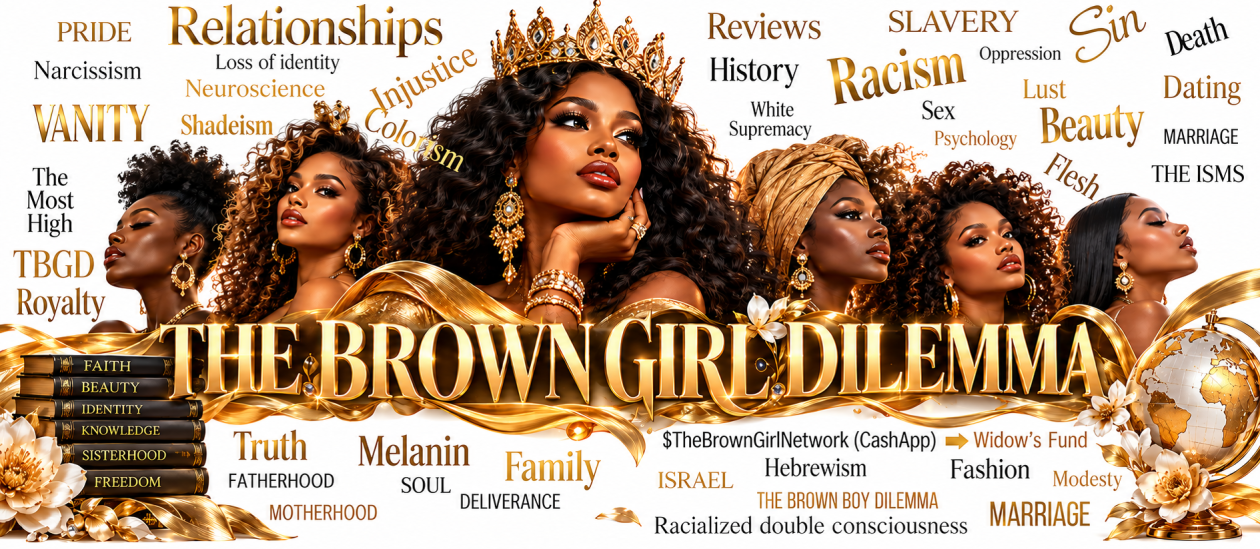
Black love is sacred, yet it has endured centuries of disruption, oppression, and systemic injustice. From the horrors of slavery to modern societal pressures, Black couples often inherit trauma that impacts intimacy, trust, and relational health. Healing Our Love explores how confronting trauma is essential to restoring authentic, God-centered relationships.
Historical trauma is foundational. The transatlantic slave trade fractured families, separating husbands, wives, and children. Generational wounds from slavery, Jim Crow, and systemic racism continue to affect relational patterns today (Berlin, 1998). Recognizing this context is the first step in healing.
Psychologically, trauma manifests in attachment styles, mistrust, and communication barriers. Survivors of intergenerational trauma may struggle with emotional intimacy, fear of vulnerability, or patterns of codependency (Bryant-Davis, 2005). Healing requires awareness and intentional intervention.
Faith provides both guidance and grounding. Scripture reminds believers of God’s power to restore brokenness. Psalm 147:3 (KJV) declares, “He healeth the broken in heart, and bindeth up their wounds.” Spiritual alignment encourages forgiveness, patience, and resilience in relationships.
Acknowledging trauma within the relationship is essential. Partners must create safe spaces to share experiences without judgment. Active listening and empathy foster emotional safety, allowing wounds to be voiced and addressed constructively.
Therapy and counseling support healing. Professional guidance provides tools to navigate trauma responses, manage conflict, and rebuild trust. Both individual and couples counseling are effective pathways to emotional restoration.
Community reinforcement strengthens recovery. Mentorship, support groups, and faith-based programs normalize healthy communication, modeling resilience and relational integrity. Positive examples counteract negative societal narratives of Black love as broken.
Communication strategies are critical. Couples can learn to identify triggers, express needs, and resolve conflicts without escalation. Intentional dialogue builds understanding and prevents past trauma from dictating present behavior.
Forgiveness is a cornerstone of relational healing. Colossians 3:13 exhorts, “Forbearing one another, and forgiving one another, if any man have a quarrel against any: even as Christ forgave you, so also do ye.” Forgiveness frees both partners to move forward without the weight of resentment.
Cultural affirmation is empowering. Celebrating African heritage, shared ancestry, and Black excellence instills pride and resilience. Recognizing the strength embedded in cultural identity bolsters self-esteem and relational confidence. 🌍🎶
Economic stability also affects relational health. Systemic barriers like income inequality, employment disparities, and housing insecurity add stress to relationships. Financial literacy, planning, and cooperative decision-making help couples build security and trust. 💼💰
Boundaries are essential. Trauma can blur relational limits, fostering co-dependence or enabling harmful behavior. Establishing and respecting boundaries ensures emotional safety and mutual respect.
Parenting in a healed relationship models generational resilience. Children witness effective conflict resolution, emotional honesty, and covenantal love, shaping their understanding of healthy relationships. 👶🏾
Spiritual disciplines reinforce healing. Prayer, scripture meditation, and worship strengthen individual and relational fortitude. Ephesians 4:32 encourages kindness, compassion, and forgiveness, key elements in overcoming trauma within love.
Ultimately, Healing Our Love emphasizes that confronting trauma is not optional—it is transformative. By addressing historical, emotional, and societal wounds, Black couples can reclaim love that is sacred, resilient, and reflective of God’s design. Healing fosters intimacy, trust, and a legacy of generational strength.
Berlin, I. (1998). Many thousands gone: The first two centuries of slavery in North America. Harvard University Press.
Bryant-Davis, T. (2005). Surviving the storm: The role of spirituality in healing from trauma among African Americans. Journal of Trauma & Dissociation, 6(3), 85–102.
From early childhood, many people are introduced to an unspoken hierarchy of beauty. It is rarely taught directly, yet it is absorbed through media, toys, advertising, and social interactions. This “beauty lie” suggests that attractiveness is narrow, conditional, and tied to features that only a small percentage of people naturally possess.
As children, we begin to notice which characters are labeled “pretty,” “princess-like,” or “desirable,” and which are not. These patterns are subtle but powerful, shaping self-image before critical thinking fully develops. Over time, children begin to internalize the idea that beauty is not just aesthetic—it is a social value.
Psychologists describe this process as internalized social comparison, in which individuals evaluate themselves against external standards rather than intrinsic worth. According to social comparison theory, people learn to measure their value by what they see rewarded in their environment (Festinger, 1954).
By adolescence, these early impressions often intensify. Social media platforms, celebrity culture, and filtered imagery reinforce highly curated and often unrealistic beauty ideals. These standards are frequently racially and ethnically skewed, privileging certain skin tones, facial structures, and body types over others.
Within many communities, especially marginalized ones, colorism adds another layer of complexity. Lighter skin tones are often subtly or overtly associated with privilege, desirability, and success. This creates internal divisions and emotional harm that persist across generations.
From a psychological standpoint, repeated exposure to idealized images can distort body perception. Research in body image psychology shows a strong correlation between media exposure and dissatisfaction with one’s appearance, particularly among young women and adolescents (Perloff, 2014).
The beauty industry also plays a significant role in sustaining this narrative. Cosmetics, fashion, and advertising industries collectively profit from insecurity by promoting the idea that beauty is something to be purchased, corrected, or enhanced rather than inherently possessed.
Historically, these standards are not neutral. They are rooted in colonialism and Eurocentric frameworks that elevated certain features as the global ideal. This legacy continues to influence global media representation today, often unconsciously reinforcing hierarchy.
Religious and philosophical perspectives also challenge these standards. In many spiritual traditions, including interpretations of scripture such as The Holy Bible, human worth is described as inherent rather than externally assigned, emphasizing character over appearance.
In texts like The Holy Bible, beauty is often reframed as internal qualities such as wisdom, humility, and compassion rather than physical form. These ideas contrast sharply with modern consumer-driven definitions of attractiveness.
Despite this, society continues to reward visibility tied to appearance. Social validation—likes, follows, and attention—often reinforces external beauty as a form of social currency. This creates a feedback loop where appearance feels tied to identity and worth.
For many individuals, this leads to emotional consequences such as anxiety, low self-esteem, and chronic comparison. Clinical research has linked body dissatisfaction to depression, especially in environments where appearance is heavily scrutinized (Grogan, 2016).
Men are not exempt from this pressure. While often less openly discussed, male beauty standards emphasize muscularity, height, and dominance, creating their own psychological burdens and identity struggles.
Children growing up in this environment often learn to critique themselves before they learn to affirm themselves. This internal voice becomes a lifelong companion unless consciously challenged and restructured.
Cultural representation plays a critical role in healing this distortion. When people see diverse faces, body types, and skin tones represented as beautiful, it expands the definition of what is considered valuable and desirable.
However, representation alone is not enough if underlying belief systems remain unchanged. The deeper issue is not just visibility, but the ideology that assigns worth based on appearance in the first place.
The “beauty lie” persists because it is profitable, socially reinforced, and deeply embedded in identity formation. Challenging it requires both cultural awareness and personal deconstruction of long-held beliefs.
Relearning beauty as something diverse, contextual, and human rather than fixed and hierarchical is a psychological and cultural process. It requires questioning what we were taught before we had the language to question it.
Ultimately, the goal is not to reject beauty altogether, but to redefine it. When beauty is separated from value, status, and worth, it becomes an expression rather than a measurement of human dignity.
Breaking free from this lie is not instant. It is a gradual shift in perception, reinforced by education, self-reflection, and intentional exposure to diverse standards of humanity.
The beauty lie loses power when people begin to understand that worth was never meant to be conditional. And in that realization, a more grounded, inclusive, and mentally healthy understanding of self can begin to form.
References
Festinger, L. (1954). A theory of social comparison processes. Human Relations, 7(2), 117–140.
Grogan, S. (2016). Body image: Understanding body dissatisfaction in men, women, and children (3rd ed.). Routledge.
Perloff, R. M. (2014). Social media effects on young women’s body image concerns: Theoretical perspectives and an agenda for research. Sex Roles, 71, 363–377.
Stay-at-home mothers occupy a profoundly significant yet often undervalued role within both the family structure and society at large. Their labor, though frequently unpaid and unseen, forms the emotional, psychological, and moral backbone of the household. In a world driven by economic productivity and public recognition, the quiet, consistent work of mothers in the home reflects a deeper, sacred commitment—one rooted in love, discipline, and devotion to both family and the Most High.
The duties of a housewife or stay-at-home mother extend far beyond simple domestic tasks; she functions as a caregiver, educator, emotional anchor, and moral guide within the home. Her daily responsibilities often include nurturing children, managing the household, preparing meals, teaching foundational life skills, and cultivating a stable, loving environment where her family can thrive. She operates with both emotional intelligence and strategic oversight, balancing the psychological and physical needs of her household with consistency and care. Yet, despite the depth and significance of this role, modern society frequently reduces her contributions to outdated stereotypes, labeling her as unambitious or unproductive because her labor is not financially compensated. This perception overlooks the profound influence she has in shaping character, reinforcing values, and building the next generation. In truth, the work of a stay-at-home mother is not a limitation but a position of immense responsibility and quiet power—one that sustains families and, ultimately, society itself.
This statement is widely attributed to Hamdan bin Mohammed bin Rashid Al Maktoum (often called “Fazza”), and it circulated heavily online in recent years.
What he reportedly said
According to viral posts and media circulation, the Crown Prince expressed that the term “housewife” is not enough to describe a mother’s role. Instead, he referred to mothers as:
“Generation shapers” — emphasizing that they are responsible for raising and shaping the future of society.
The decision to remain at home and nurture children is not one of passivity, but of intentional sacrifice and purpose. It requires the surrender of personal ambitions, social validation, and often financial independence in exchange for the long-term cultivation of human life. This role reflects the biblical principle of stewardship, where mothers are entrusted with shaping the next generation in wisdom, righteousness, and stability (Proverbs 22:6, KJV).
From a developmental psychology perspective, children benefit significantly from consistent maternal presence in early childhood. Research indicates that secure attachment, formed through attentive caregiving, contributes to emotional regulation, social competence, and cognitive development (Bowlby, 1969; Ainsworth, 1978). Stay-at-home mothers are uniquely positioned to provide this stability, ensuring that children grow within a nurturing and responsive environment.
The home, under the guidance of a devoted mother, becomes more than a physical dwelling—it transforms into a sanctuary. It is within this space that values are instilled, identities are shaped, and character is refined. The mother serves as both teacher and protector, guarding the minds and hearts of her children against harmful influences while instilling discipline, love, and reverence for the Most High.
Faith plays a central role in the life of many stay-at-home mothers. Their daily routines often include prayer, scriptural teaching, and spiritual guidance for their children. In this way, they act as spiritual leaders within the home, ensuring that the knowledge and fear of the Most High are passed down through generations. This aligns with Deuteronomy 6:6–7, which commands the faithful to diligently teach their children the commandments of God.
In supporting their husbands, stay-at-home mothers contribute to the stability and success of the family unit. Their presence in the home allows for a division of labor that can strengthen marital bonds when rooted in mutual respect and shared purpose. The Proverbs 31 woman exemplifies this dynamic, described as industrious, wise, and supportive, contributing to her household’s prosperity and honor (Proverbs 31:10–31, KJV).
The emotional labor carried by stay-at-home mothers is immense. They manage not only the physical needs of the household but also the emotional climate. They soothe fears, celebrate achievements, mediate conflicts, and provide constant reassurance. This invisible labor is essential to the psychological well-being of children and the overall harmony of the home (Hochschild & Machung, 2012).
Despite its importance, the role of the stay-at-home mother is often minimized in modern society. Cultural narratives frequently equate success with career advancement and financial gain, overlooking the intrinsic value of caregiving. This devaluation can lead to feelings of isolation and underappreciation among mothers who dedicate themselves fully to their families.
Economically, the contributions of stay-at-home mothers are substantial, even if not formally recognized. If their roles were monetized—childcare provider, educator, cook, housekeeper, counselor—the financial equivalent would be considerable. Their work reduces household expenses while increasing the quality of care children receive (Folbre, 2001).
Moreover, the presence of a mother in the home can serve as a protective factor against various social risks. Studies have shown that children who receive consistent parental supervision are less likely to engage in delinquent behavior and more likely to perform well academically (Steinberg, 2001). The mother’s role, therefore, extends beyond the home into broader societal outcomes.
The love that stay-at-home mothers pour into their children reflects a divine attribute. It is patient, enduring, and sacrificial. This love mirrors the scriptural description found in 1 Corinthians 13, where love is described as kind, long-suffering, and unwavering. Through their daily acts of service, mothers embody this higher form of love.
In loving the Most High, these mothers anchor their identity and purpose in something greater than societal validation. Their work becomes an act of worship, a living testimony of faith in action. Every meal prepared, every lesson taught, and every tear wiped becomes a sacred offering, reflecting obedience and devotion.
The challenges faced by stay-at-home mothers are numerous. The absence of structured recognition, the repetition of daily tasks, and the lack of personal time can lead to burnout. Yet, many persevere with resilience, drawing strength from faith and the understanding of their role’s eternal significance.
Community support is essential in uplifting stay-at-home mothers. Encouragement from spouses, extended family, and faith communities can alleviate feelings of isolation and affirm the value of their work. A culture that honors motherhood fosters stronger families and, by extension, stronger societies.
It is also important to recognize the intellectual and managerial skills required in homemaking. Budgeting, scheduling, conflict resolution, and educational planning are complex tasks that demand critical thinking and adaptability. Stay-at-home mothers operate as the chief executives of their households, ensuring that all aspects function smoothly.
The relationship between mother and child is foundational to identity formation. Through consistent interaction, children learn language, values, and social norms. The mother’s influence shapes not only behavior but also self-perception and worldview (Vygotsky, 1978).
Saluting stay-at-home mothers is not merely an act of appreciation—it is a recognition of their indispensable role in human development. Their work, though often unseen, leaves a lasting imprint on generations. They are the architects of the future, building lives through love, discipline, and faith.
For husbands, honoring and supporting their wives in this role is essential. Mutual respect and gratitude strengthen the marital bond and create a unified front in parenting. When a mother feels valued, the entire household benefits from increased harmony and stability.
In a society that often prioritizes external achievement, it is crucial to reaffirm the dignity and importance of motherhood within the home. Stay-at-home mothers embody a countercultural commitment to family, faith, and long-term legacy over immediate recognition.
Ultimately, the work of a stay-at-home mother is one of the most important callings. It requires strength, patience, wisdom, and unwavering love. It is a role that shapes not only individual lives but the moral and spiritual fabric of society.
To every stay-at-home mother: your labor is seen, your sacrifices are meaningful, and your love is transformative. You are building nations within your homes, guided by faith and sustained by grace. Your work is not in vain—it is eternal. May the Most High continue to bless you!
References
Ainsworth, M. D. S. (1978). Patterns of attachment: A psychological study of the strange situation. Lawrence Erlbaum.
Bowlby, J. (1969). Attachment and loss: Vol. 1. Attachment. Basic Books.
Folbre, N. (2001). The invisible heart: Economics and family values. The New Press.
Hochschild, A. R., & Machung, A. (2012). The second shift: Working families and the revolution at home. Penguin Books.
Steinberg, L. (2001). We know some things: Parent–adolescent relationships in retrospect and prospect. Journal of Research on Adolescence, 11(1), 1–19.
Vygotsky, L. S. (1978). Mind in society: The development of higher psychological processes. Harvard University Press.
Raising children in the Black community is a sacred responsibility, one that shapes not only individuals but also the legacy of generations. Kingdom Love emphasizes the importance of nurturing Black boys and girls as future kings and queens—instilling values of faith, integrity, and resilience.
The foundation of kingdom love begins in the home. Ephesians 6:4 (KJV) instructs, “And ye fathers, provoke not your children to wrath: but bring them up in the nurture and admonition of the Lord.” Both parents, or guardians, play a crucial role in teaching obedience, love, and wisdom while fostering emotional security.
Spiritual grounding is essential. Teaching children about God’s love, purpose, and divine design cultivates identity and self-worth. Proverbs 22:6 reminds us that training a child in the way he should go ensures that when he is older, he will not depart from it. Faith is the compass that guides young kings and queens.
Black history provides role models. From Mansa Musa of Mali to Queen Amanirenas of Kush, historical figures demonstrate intelligence, courage, and leadership. Exposing children to these examples cultivates pride, ambition, and cultural affirmation (Bradbury, 1998; Levtzion, 2000).
Education and literacy are tools of empowerment. Parents who prioritize learning equip children to navigate systemic barriers, build generational wealth, and claim spaces of influence in society. Knowledge is a weapon against oppression.
Emotional intelligence is equally vital. Teaching children to manage feelings, communicate effectively, and resolve conflict fosters relational maturity. Emotional awareness prevents cycles of anger, low self-esteem, and relational dysfunction that often plague communities affected by trauma.
Discipline must be balanced with love. Firm guidance combined with nurturing support teaches responsibility while affirming worth. Discipline without love can provoke resentment, while love without boundaries can foster entitlement or insecurity.
Community plays a supportive role. Mentorship programs, faith-based organizations, and peer networks provide guidance, accountability, and encouragement. Children thrive when they see multiple examples of success, integrity, and relational health.
Cultural identity strengthens self-esteem. Celebrating African traditions, music, art, and ancestry instills pride and resilience. Understanding one’s roots reinforces the dignity of Blackness and prepares children to navigate a world that often devalues them. 🌍🎶
Marriage and partnership model kingdom love. Children who witness healthy, faith-centered unions learn about respect, fidelity, and cooperation. Couples who navigate life together provide a blueprint for relational stability and Godly partnership.
Economic literacy is a form of kingdom love. Teaching children to manage money, save, invest, and plan for the future equips them for independence and leadership, reducing susceptibility to systemic traps like debt and financial instability. 💼💰
Encouraging ambition and purpose empowers children. Every Black boy and girl deserves to envision themselves as a leader, innovator, or creator. Supporting dreams and celebrating achievements builds confidence and perseverance.
Faithful parenting includes prayer and spiritual mentorship. Praying over children, reading scripture together, and teaching moral discernment create a spiritual foundation that guides decisions, relationships, and character.
Forgiveness and grace are crucial. Children will make mistakes; guiding them with patience and teaching repentance mirrors God’s mercy. This instills humility, responsibility, and resilience.
Ultimately, Kingdom Love is a holistic approach to parenting that combines faith, culture, education, and emotional intelligence. Raising Black kings and queens together ensures a legacy of strength, wisdom, and divine purpose. Families rooted in God’s principles cultivate leaders, heal generational wounds, and celebrate the majesty of Black identity. 👑🤎
References
Bradbury, R. (1998). The Nubian queens: Ancient African women and power. Oxford University Press.
Levtzion, N. (2000). Ancient Ghana and Mali. Africana Publishing.
Psychological servitude refers to a state of emotional enslavement in which an individual becomes mentally, emotionally, and sometimes spiritually bound to the will and approval of another. In relationships with narcissistic parents, this servitude is cultivated through manipulation, conditional love, and control. The child is conditioned to suppress their autonomy in exchange for survival and acceptance, forming a cycle that often continues into adulthood (Herman, 2015). This dynamic is not merely familial dysfunction—it is a form of psychological imprisonment that distorts identity and self-worth.
At its root, psychological servitude is the internalization of subjugation. The narcissistic parent establishes dominance by demanding admiration, obedience, and emotional caretaking from their child. This control does not rely solely on overt abuse; it is maintained through subtle emotional coercion, guilt, and fear of rejection (Miller, 1981). The child learns early that love is conditional—granted when they serve the parent’s ego and withdrawn when they assert individuality.
The narcissistic parent’s primary goal is not to nurture but to be mirrored. They view their child as an extension of themselves rather than a separate being (Kernberg, 1975). As a result, the child becomes a vessel for the parent’s unmet ambitions, insecurities, and desires. When the child conforms, they are praised; when they resist, they are punished, ignored, or shamed. This conditioning produces a deep psychological dependency, a kind of learned servitude that feels like love but is actually control.
Psychological servitude can manifest as chronic people-pleasing, fear of disapproval, or the compulsive need to rescue others. These traits, while seemingly altruistic, often stem from the child’s early programming to earn love through service (Forward, 1997). The child internalizes the parent’s voice as an inner critic, perpetuating the parent’s control even when they are absent. This is the essence of psychological bondage—the external oppressor becomes internalized.
In families dominated by a narcissistic parent, hierarchy is absolute. The parent positions themselves as the ultimate authority, incapable of error. The child’s feelings, opinions, and needs are invalidated or mocked. Over time, this erasure of self leads to what psychologists call “false self” formation—a survival adaptation where the child suppresses authenticity to meet the parent’s expectations (Winnicott, 1960). The child becomes what the parent needs, not who they are.
Narcissistic parents often alternate between affection and cruelty to maintain control. This intermittent reinforcement—sometimes called “love withdrawal and reward”—creates emotional addiction (Carnes, 2019). The child becomes trapped in a cycle of chasing approval, interpreting even minimal kindness as love. This mirrors the dynamic between captor and captive described in trauma bonding literature (Dutton & Painter, 1993).
Psychological servitude also manifests in adulthood as difficulty setting boundaries. The adult child of a narcissist may feel overwhelming guilt when asserting independence or disagreeing with authority figures. They may unconsciously seek out relationships with partners or employers who replicate the parent’s control dynamic (Schneider, 2004). Without awareness, the pattern of servitude continues in new forms.
Spiritually, this servitude can feel like idolatry—worship of the parent as a false god. The narcissistic parent demands emotional sacrifice and obedience akin to religious devotion. Children often believe that their worth depends on pleasing the parent, equating disobedience with sin (Johnson, 2018). This fusion of fear and reverence sustains the narcissist’s power long after the child becomes an adult.
The psychological cost is profound. Many adult children of narcissists struggle with chronic anxiety, perfectionism, or imposter syndrome. They may achieve outward success but feel inward emptiness because their self-concept was built on servitude, not authenticity (Pressman & Pressman, 1994). Their inner dialogue echoes the parent’s voice—critical, demanding, and never satisfied.
Healing begins with awareness. Recognizing psychological servitude as a learned response, not a natural one, disrupts the narcissist’s control. Awareness allows the adult child to separate the “false self” from the authentic self. This process often requires therapy, particularly modalities like schema therapy or inner child work, which address early attachment wounds (Young et al., 2003).
Breaking psychological servitude also requires confronting guilt and fear—emotions that the narcissistic parent weaponized to maintain control. The survivor must learn to tolerate the discomfort of saying “no” and surviving disapproval. Each act of boundary-setting reclaims personal authority and reconditions the nervous system to associate autonomy with safety rather than danger (Levine, 2010).
Forgiveness, in this context, does not mean reconciliation. True liberation from psychological servitude involves accepting that the narcissistic parent may never change or acknowledge their harm. Forgiveness, if it comes, is for the self—not the parent. It is the release of internalized shame and the decision to stop carrying the emotional debt of the abuser (Herman, 2015).
For those still in contact with narcissistic parents, the key is emotional detachment. This does not mean coldness but strategic disengagement from manipulation. Gray rocking, limited contact, or even no contact may be necessary to preserve mental health (Durvasula, 2015). These boundaries create the space for the survivor to rediscover their own voice.
On a broader psychological level, psychological servitude can be viewed as the inheritance of intergenerational trauma. Many narcissistic parents were themselves victims of emotional neglect or authoritarian control. They unconsciously repeat the pattern, passing down a legacy of bondage masquerading as love (van der Kolk, 2014). Breaking free becomes both a personal and ancestral act of healing.
Theologically, psychological servitude contradicts the principle of free will and divine identity. Scripture teaches that humanity was not created to serve human egos but to walk in truth and freedom (Galatians 5:1, KJV). Thus, overcoming narcissistic control is not rebellion—it is restoration of divine order. Liberation from psychological servitude is an act of reclaiming God-given sovereignty over one’s mind and spirit.
Rebuilding after narcissistic servitude involves learning self-compassion and redefining identity outside of performance. Survivors must learn that love does not need to be earned and that their worth is inherent. This new narrative replaces the old script of conditional acceptance with unconditional self-acceptance (Neff, 2011).
Therapeutically, support groups and trauma-informed counseling provide vital validation and tools for recovery. Naming the experience—psychological servitude—gives language to the invisible chains that bound survivors for years. Language transforms pain into knowledge, and knowledge into freedom (Herman, 2015).
Ultimately, psychological servitude is not just a family issue but a profound spiritual and psychological condition rooted in control, shame, and fear. Overcoming it requires courage, truth, and the willingness to face one’s deepest wounds. When survivors reclaim their autonomy, they do more than escape manipulation—they model liberation for generations to come.
Freedom from psychological servitude is, at its essence, the rediscovery of self. It is the journey from bondage to authenticity, from fear to love, and from illusion to truth. Those who emerge from narcissistic control do not simply survive; they rise as witnesses that the human spirit, though once enslaved, can always be reborn into freedom.
References
Carnes, P. (2019). The betrayal bond: Breaking free of exploitive relationships. Health Communications. Durvasula, R. (2015). Should I stay or should I go? Surviving a relationship with a narcissist. Post Hill Press. Dutton, D. G., & Painter, S. (1993). Emotional attachments in abusive relationships: A test of traumatic bonding theory. Violence and Victims, 8(2), 105–120. Forward, S. (1997). Toxic parents: Overcoming their hurtful legacy and reclaiming your life. Bantam Books. Herman, J. L. (2015). Trauma and recovery: The aftermath of violence—from domestic abuse to political terror. Basic Books. Johnson, S. M. (2018). Character styles. Routledge. Kernberg, O. F. (1975). Borderline conditions and pathological narcissism. Jason Aronson. Levine, P. A. (2010). In an unspoken voice: How the body releases trauma and restores goodness. North Atlantic Books. Miller, A. (1981). The drama of the gifted child: The search for the true self. Basic Books. Neff, K. D. (2011). Self-compassion: The proven power of being kind to yourself. William Morrow. Pressman, C., & Pressman, S. (1994). The narcissistic family: Diagnosis and treatment. Jossey-Bass. Schneider, J. P. (2004). The wounded healer: Countertransference from a narcissistic parent-child dynamic. Psychoanalytic Psychology, 21*(1), 74–88. van der Kolk, B. A. (2014). The body keeps the score: Brain, mind, and body in the healing of trauma. Viking. Winnicott, D. W. (1960). Ego distortion in terms of true and false self. The Maturational Processes and the Facilitating Environment. Hogarth Press. Young, J. E., Klosko, J. S., & Weishaar, M. E. (2003). Schema therapy: A practitioner’s guide. Guilford Press.
Fornication culture describes the widespread normalization of sexual intimacy outside of the biblical marriage covenant, forming one of the greatest moral, spiritual, and sociological dilemmas of this generation (Foster, 2019). It does not exist in isolation—it partners with baby-mama culture, where motherhood and fatherhood emerge without covenantal structure, shared governance, or spiritual oversight.
Though culture may call it “freedom,” the Bible calls fornication flight-worthy: “Flee fornication. Every sin that a man doeth is without the body; but he that committeth fornication sinneth against his own body” (1 Corinthians 6:18, KJV). Scripture frames it not simply as a mistake but a corruption of the self, spiritually, physically, and psychologically.
When sex becomes common, covenant becomes optional. Yet scripture does not treat sexual union casually: “Marriage is honourable in all, and the bed undefiled: but whoremongers and adulterers God will judge” (Hebrews 13:4, KJV). The bed is divine, but only when the ring governs engagement.
Culture now teaches that commitment can follow sex, but scripture teaches that marriage prevents fornication, not results from it: “Nevertheless, to avoid fornication, let every man have his own wife, and let every woman have her own husband” (1 Corinthians 7:2, KJV). Marriage is covering, not cleanup.
Fornication removes structure from relationships, replacing wife and husband with labels that feel lighter than vows. Proverbs warns that results follow doctrines of the heart: “Keep thy heart with all diligence; for out of it are the issues of life” (Proverbs 4:23, KJV). The culture in the heart becomes the society in the home.
When relationships begin without covenant, trust is thin and rupture is thick. Jesus explains: “A good man out of the good treasure of the heart bringeth forth good things…” (Matthew 12:35, KJV). Treasureless foundations produce unstable emotional economy.
Rather than spiritual stewardship, co-parenting often becomes government-mediated guardianship, legal oversight, and financial arbitration. “Except the Lord build the house, they labour in vain that build it” (Psalm 127:1, KJV) remains the great indictment—families work harder when God works less in them.
Children conceived through fornication often inherit instability long before articulation. Scripture declared children are heritage: “Lo, children are an heritage of the Lord…” (Psalm 127:3, KJV). Yet heritage without covenant becomes struggle before identity, survival before vision.
A father is meant to be more than finance; he is meant to be formation: “And ye fathers, provoke not your children to wrath: but bring them up in the nurture and admonition of the Lord” (Ephesians 6:4, KJV). Legal systems may extract checks, but only fathers deposit consciousness.
Many fathers become known more for child-support documents than household discipleship. Paul warns that lack of provision is denial of faith, yet provision without presence creates distortion: “But if any provide not for his own…he hath denied the faith…” (1 Timothy 5:8, KJV).
Generational wounds compound the story. Black families were historically denied marriage, fatherhood, and kinship rights during slavery, creating structural precedent for relational rupture (Franklin, 2010). “The fathers have eaten sour grapes, and the children’s teeth are set on edge” (Jeremiah 31:29, KJV) captures the symbolic multi-generation effect.
Many mothers live the double weight of motherhood without wifehood, raising children as economic heads without spiritual covering. Scripture affirms feminine spiritual posture heals rather than retaliates: “Let it not be that outward adorning only…but a meek and quiet spirit…” (1 Peter 3:3-4, KJV).
Men also carry consequence when seed is created without structure. Deuteronomy warns covenant disorder results in economic vulnerability: “He shall lend to thee, and thou shalt not lend to him…he shall be the tail” (Deuteronomy 28:44, KJV). This is the arithmetic of covenantlessness.
Child-support culture enters as a legal remedy, yet without covenant, it can feel like punishment instead of responsibility. Many men work multiple jobs, wages garnished, time extracted, identity exhausted, carrying provision but not paternal story honor (Payne, 2023).
Disordered desire creates disordered communication. Jesus clarifies: “For out of the abundance of the heart the mouth speaketh…” (Matthew 12:34, KJV). Accusation becomes the language when accountability isn’t the lifestyle.
Fornication culture fuels relationship turnover, not relational endurance. Proverbs warns sexual recklessness brings dishonor: “He shall get a wound and dishonour…” (Proverbs 6:32-33, KJV). The wound is emotional, economic, and communal.
When marriage is removed, relationships function on desire—not design. Paul instructs the correct escape: “Flee also youthful lusts…” (2 Timothy 2:22, KJV). Lust builds moments, not mountains.
Society absorbs fatherlessness as social identity diffusion, gang affiliation, emotional displacement, hyper-masculine defense scripting, and unanchored familial belonging (Anderson, 2023). When fathers exit the home, society adopts the survivors.
The community promotes sexual access over covenantal alignment, making relationships emotionally expensive and spiritually cheap. Proverbs rebukes imbalance as abomination: “A false balance is abomination to the Lord…” (Proverbs 11:1, KJV).
Healing begins when men reclaim identity beyond economy, and women reclaim identity beyond emotional aftermath, covenant before creation, covering before consequence. Malachi gives the vision: “And he shall turn the heart of the fathers to the children…” (Malachi 4:6, KJV). This is restoration, not retaliation.
God calls family to revival, not mere survival. Fatherhood is glory, guidance, government: “The glory of children are their fathers…” (Proverbs 17:6, KJV). Glory lives in presence, not enforcement.
Thus, the answer to fornication culture is covenant culture—marriage before mother, God before seed, father before finance, order before womb, kingdom before courts. This is the counterculture: God-built homes, father-turned hearts, and covenant-rooted legacies.
References
Anderson, E. (2023). Fatherlessness and community identity construction. Urban Family Psychology Review. Franklin, J. H. (2010). From Slavery to Freedom. McGraw-Hill. Foster, T. (2019). Sexual ethics and cultural normalization. Journal of Faith & Society. Payne, R. (2023). Economic survival among non-custodial fathers. Urban Social Economics Review. Rhodes, G. (2006). Facial beauty and identity perception. Annual Review of Psychology.
Where faith, history, and truth illuminate the Black experience.