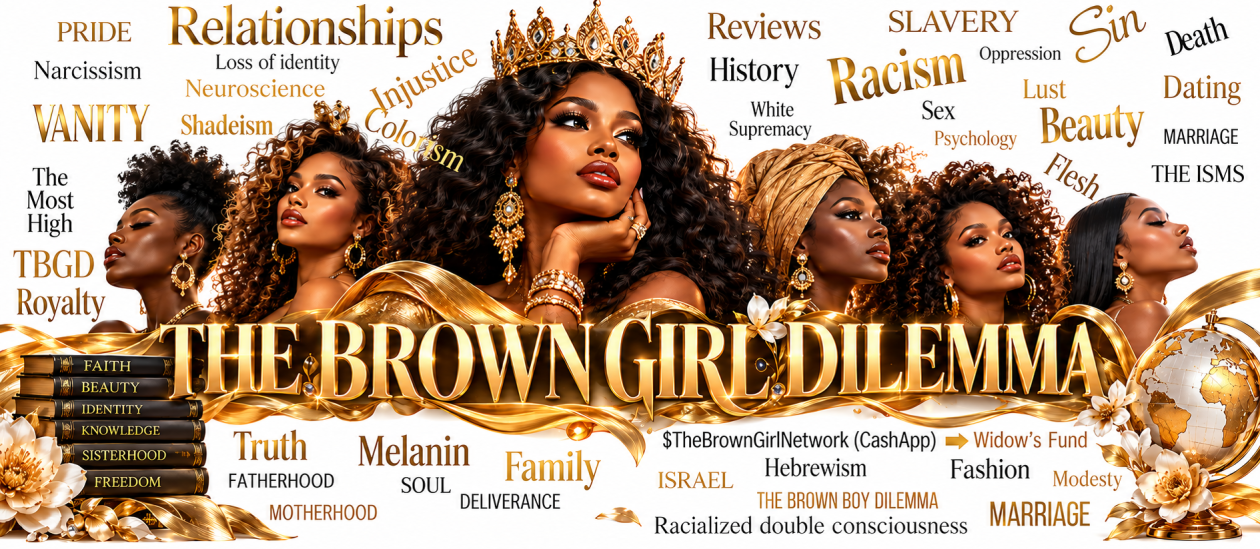

Love is often described as pure, instinctive, and deeply personal. Yet when examined closely, patterns begin to emerge that challenge this ideal. Within many communities of color, attraction is not always free from influence; it is shaped by history, media, and social conditioning. Colorism quietly enters the realm of romance, influencing who is desired, pursued, and ultimately chosen.

Colorism, the privileging of lighter skin over darker skin within the same racial group, extends beyond aesthetics into the realm of relationships (Hunter, 2007). It informs perceptions of beauty, femininity, and worth, creating a hierarchy that affects romantic opportunities.
Desire is often framed as natural, yet research suggests that attraction is socially constructed. Media representations, cultural narratives, and historical hierarchies all contribute to what individuals perceive as attractive (Russell-Cole, Wilson, & Hall, 2013). These influences blur the line between preference and programming.
Historically, lighter skin has been associated with privilege due to its proximity to whiteness, particularly during and after slavery. These associations did not remain confined to economics or status—they extended into desirability and marriageability (Keith & Herring, 1991).
Within this framework, lighter-skinned women have often been positioned as the ideal romantic partner, while darker-skinned women are marginalized or overlooked. This pattern is not coincidental; it reflects deeply embedded social hierarchies.
The Dating Divide: Skin Tone and Social Value

The dating landscape reveals a clear divide shaped by skin tone. Studies have shown that lighter-skinned individuals are more likely to be perceived as attractive and socially desirable, influencing their romantic prospects (Hunter, 2011).
This divide is evident in both offline and online dating environments. Profiles featuring lighter-skinned individuals often receive more attention, reinforcing the idea that desirability is tied to complexion rather than character.
Social value becomes intertwined with appearance. Lighter skin is frequently associated with beauty, softness, and femininity, while darker skin is often burdened with stereotypes that diminish its perceived value.
These biases are not limited to external perception; they are internalized within communities. Preferences expressed in casual conversation—such as “I like light-skinned women”—may seem harmless but reflect broader patterns of exclusion.
For darker-skinned women, this divide can result in feelings of invisibility and rejection. The consistent lack of affirmation reinforces harmful narratives about their worth and desirability.
Men, too, are influenced by these dynamics. Their preferences are shaped by societal messages that equate lighter skin with status, sometimes leading them to pursue partners who align with these ideals rather than genuine compatibility.
The dating divide is not simply about attraction; it is about access. Who is seen, approached, and valued in romantic spaces is often determined before any interaction takes place.
Are We Choosing Partners—or Conditioning?

This raises a critical question: are individuals truly choosing their partners, or are they responding to conditioning? Attraction feels personal, but it is often the result of repeated exposure to specific ideals.
From childhood, individuals are exposed to images and narratives that define beauty. Dolls, television, music videos, and advertisements consistently reinforce lighter skin as the standard, shaping subconscious preferences.
Psychological research suggests that familiarity influences attraction. When certain features are repeatedly presented as desirable, they become internalized as preferences, even when individuals are unaware of this process (Monk, 2015).
Colorism complicates the concept of choice. What is perceived as a personal preference may, in reality, be a reflection of societal conditioning rooted in historical inequality.
This does not mean that all attraction is invalid, but it does call for critical self-examination. Understanding the origins of one’s preferences is essential in distinguishing genuine desire from learned bias.
Breaking this cycle requires intentionality. Expanding one’s perception of beauty and challenging internalized standards can lead to more authentic and equitable relationships.
Representation plays a significant role in this shift. When diverse skin tones are celebrated and normalized, it broadens the scope of what is considered attractive and desirable.
Community dialogue is equally important. Conversations about colorism and dating can create awareness and encourage individuals to reflect on their choices.
Ultimately, love should be rooted in connection, respect, and compatibility—not constrained by inherited hierarchies. Moving beyond colorism in dating requires both personal growth and collective change.
The question is not whether attraction exists, but whether it is free. To love fully, one must first examine the lens through which they see beauty. Only then can relationships transcend bias and reflect true intention.
References
Hunter, M. (2007). The persistent problem of colorism: Skin tone, status, and inequality. Sociology Compass, 1(1), 237–254.
Hunter, M. L. (2011). Buying racial capital: Skin-bleaching and cosmetic surgery in a globalized world. Routledge.
Keith, V., & Herring, C. (1991). Skin tone and stratification in the Black community. American Journal of Sociology, 97(3), 760–778.
Monk, E. P. (2015). The cost of color: Skin color, discrimination, and health among African-Americans. American Journal of Sociology, 121(2), 396–444.
Russell-Cole, K., Wilson, M., & Hall, R. E. (2013). The color complex: The politics of skin color in a new millennium. Anchor Books.
Discover more from THE BROWN GIRL DILEMMA
Subscribe to get the latest posts sent to your email.