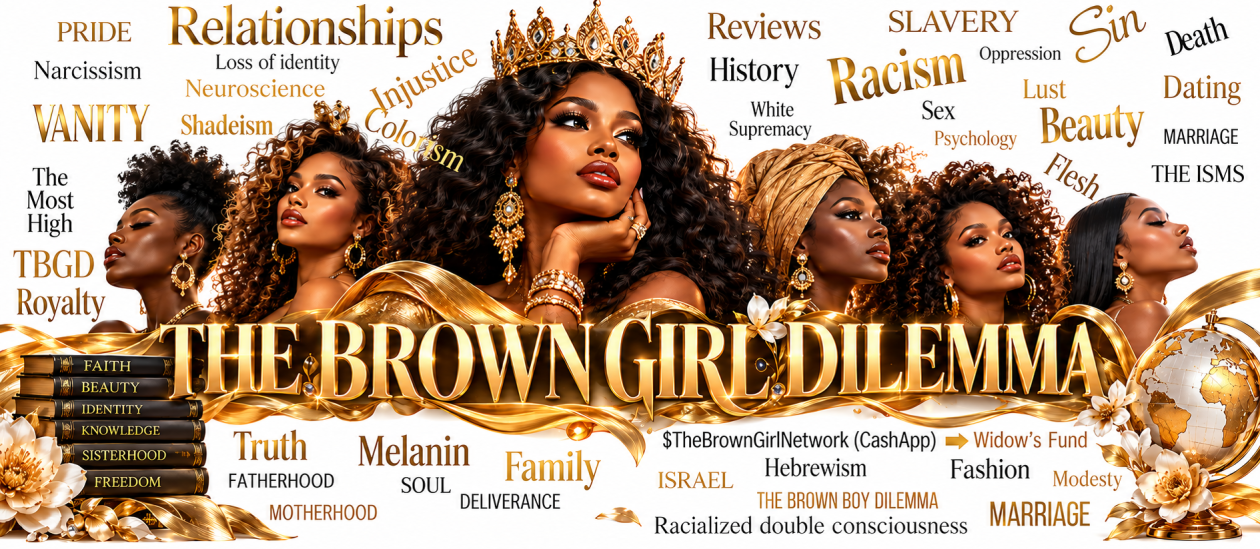
Category Archives: the universal standard of beauty

Unmasking Eurocentric Beauty: The Legacy of Colonial Aesthetics.

Eurocentric beauty standards, deeply entrenched in global society, continue to influence perceptions of attractiveness, self-worth, and social hierarchy. Rooted in colonial histories that privileged European physical features over those of colonized peoples, these ideals have perpetuated colorism, hair discrimination, and facial feature bias, particularly among communities of African descent (Banks, 2019). This essay explores the historical origins, psychological ramifications, and ongoing societal impact of Eurocentric beauty ideals, highlighting how they shape contemporary notions of desirability and identity.

Historical Origins of Eurocentric Beauty
The privileging of European physical features is historically intertwined with colonial expansion and the transatlantic slave trade. Colonizers imposed hierarchies based on skin tone, facial structure, and hair texture to justify systemic oppression and social stratification (Painter, 2010). Portraiture, literature, and early photography often depicted lighter skin, straight hair, and “European” facial features as markers of civility and moral superiority, embedding these standards in both colonial and post-colonial societies (Hall, 1997). In African colonies, internalized notions of beauty were systematically altered through missionary education, media, and local elites’ adoption of European fashion and grooming standards.

Psychological Impact and Internalized Racism
The internalization of Eurocentric beauty ideals has profound psychological consequences. Scholars note that colorism—preference for lighter skin within Black communities—can lead to diminished self-esteem, identity conflict, and social anxiety (Hunter, 2007). Children and adolescents exposed to Eurocentric imagery often develop implicit biases against their own natural features, associating straight hair, narrow noses, and lighter eyes with social mobility and acceptance (Jones, 2018). Psychologists also highlight the phenomenon of “beauty hierarchies,” where individuals subconsciously assign value and competence based on adherence to Eurocentric standards, perpetuating cycles of discrimination and self-rejection (Frisby, 2004).

Media, Fashion, and the Perpetuation of Colonial Aesthetics
Contemporary media continues to reinforce Eurocentric aesthetics through advertising, film, and fashion industries that prioritize European facial features, body types, and skin tones. Celebrities and models often undergo hair straightening, skin lightening, or facial alterations to conform to mainstream ideals, signaling aspirational standards to the public (Hunter, 2011). Social media exacerbates these pressures, as algorithmically promoted content often favors Eurocentric features, generating both admiration and self-critique among diverse audiences.

Resistance and the Reclamation of Beauty
Despite the pervasive influence of colonial aesthetics, movements promoting natural hair, darker skin pride, and Afrocentric fashion have gained momentum. Campaigns such as #BlackGirlMagic and #MelaninPoppin celebrate features historically marginalized by Eurocentric ideals, fostering cultural pride and psychological resilience (Thompson, 2020). Educational programs and media representation that emphasize diverse beauty models challenge the colonial legacy, creating spaces for inclusive self-expression and empowerment.

Conclusion
Eurocentric beauty is not merely a matter of personal preference—it is a colonial artifact that continues to shape social hierarchies, identity formation, and self-perception. By understanding its historical roots and confronting its ongoing influence, societies can begin to dismantle these entrenched hierarchies, embracing a more inclusive and affirming vision of beauty. Reclaiming beauty on one’s own terms is both a personal and collective act of liberation, challenging centuries of imposed aesthetic standards.

References

  • Banks, I. (2019). Hair matters: Beauty, power, and Black women’s identity. NYU Press.
  • Frisby, C. M. (2004). Beauty, body image, and the media. Routledge.
  • Hall, S. (1997). Representation: Cultural representations and signifying practices. Sage.
  • Hunter, M. L. (2007). The persistent problem of colorism: Skin tone, status, and inequality. Sociology Compass, 1(1), 237–254.
  • Hunter, M. L. (2011). Race, gender, and the politics of skin tone. Routledge.
  • Jones, A. (2018). Colorism and psychological effects in youth. Journal of Black Psychology, 44(2), 123–145.
  • Painter, N. I. (2010). The history of White people. W. W. Norton & Company.
  • Thompson, C. (2020). Afrocentric beauty and social media activism. Cultural Studies Review, 26(3), 55–74.

You’ve Been Conditioned to Think This Is Attractive Only…

What we often call “attraction” is not always instinct—it is frequently instruction. Across generations, societies have quietly trained the human eye to associate beauty with dominance, status, and proximity to power. Over time, these lessons become so normalized that they feel like personal preference rather than inherited perception.

In the Western world, many modern beauty standards did not emerge in a vacuum. They were shaped through centuries of colonial expansion, slavery, and racial hierarchy. During the transatlantic slave era, European features were positioned as the symbol of refinement, intelligence, and civility, while African features were dehumanized or dismissed as “primitive” in both scientific rhetoric and popular culture.

This created a psychological hierarchy where proximity to whiteness was not just social advantage but aesthetic preference. Skin tone, hair texture, and facial features became markers that were assigned value through systems of power rather than biological truth. These ideas did not disappear with emancipation—they evolved.

After slavery, minstrelsy, segregation-era advertising, and early Hollywood films continued to reinforce Eurocentric ideals. Light skin was often associated with virtue, femininity, and desirability, while darker skin was marginalized or hypersexualized. These repeated visual messages trained generations to internalize a specific “look” as ideal.

Even scientific spaces contributed to this conditioning. Early anthropological studies in the 18th and 19th centuries attempted to rank human groups based on skull measurements and facial features, falsely presenting bias as biology. Though discredited today, their influence shaped cultural assumptions for decades.

Beauty, then, became less about diversity and more about conformity. Straight hair over coiled textures, narrow noses over broader ones, and lighter skin tones over darker complexions were elevated through media, art, and advertising. This was not accidental—it was systemic reinforcement.

Six smiling adults holding wine glasses and beer bottles during a social gathering

Psychologically, repeated exposure to certain images create familiarity bias. What we see most often becomes what we perceive as most attractive. When entire industries—from fashion to film—center one aesthetic, the brain begins to code that aesthetic as “standard.”

This is why representation matters so deeply. When children grow up seeing only one dominant image of beauty, they unconsciously absorb that hierarchy. It can affect self-esteem, identity formation, and even romantic preference later in life.

Colorism emerged as one of the most lasting effects of this conditioning. Within communities of color, lighter skin tones were often granted more visibility or opportunity due to proximity to dominant beauty standards. This was not inherent bias—it was inherited structure passed down through generations of unequal valuation.

At the same time, European features were elevated globally through colonial influence. As European powers expanded across Africa, Asia, and the Americas, their cultural norms—fashion, language, religion, and aesthetics—were often imposed or idealized as “modern” or “civilized.”

Even today, global media exports reinforce these patterns. Hollywood, advertising agencies, and social media algorithms frequently amplify certain facial archetypes, subtly reinforcing what is considered universally “beautiful,” even when global populations are far more diverse.

However, attraction is not fixed. Studies in psychology show that perceived beauty can shift dramatically depending on exposure and cultural context. What one society praises, another may not prioritize, proving that beauty standards are largely learned rather than universal.

Understanding this does not mean rejecting personal preference—it means interrogating where that preference originates. Is it truly personal, or is it a reflection of repeated cultural messaging? That question alone can begin to dismantle unconscious bias.

In recent years, there has been a visible shift. Natural hair movements, dark-skinned representation in media, and global beauty campaigns have begun to challenge the old hierarchy. This is not just cultural—it is corrective, attempting to rebalance centuries of skewed visual conditioning.

Yet, remnants of the old system still linger. Algorithms, casting decisions, and marketing strategies can still favor familiar Eurocentric aesthetics, showing how deeply embedded these preferences remain even in diverse societies.

The process of deconditioning is gradual. It requires exposure, education, and intentional representation. When people see beauty in its full spectrum consistently, the brain begins to unlearn narrow definitions and expand its recognition of attractiveness.

Ultimately, attraction is not just personal taste—it is cultural memory. And cultural memory can be rewritten. What has been conditioned can be consciously reconditioned through truth, visibility, and balance.

To recognize this is not to diminish any group, but to understand how systems shape perception. Beauty was never meant to be a single image—it was always meant to be a wide reflection of humanity itself.

When we begin to see clearly, we realize that much of what we were taught to desire was curated, not natural. And in that realization, the definition of beauty becomes not smaller—but finally free.


References

Bourdieu, P. (1984). Distinction: A social critique of the judgement of taste. Harvard University Press.

Fanon, F. (1967). Black skin, white masks. Grove Press.

Fredrickson, G. M. (2002). Racism: A short history. Princeton University Press.

Hall, S. (1997). Representation: Cultural representations and signifying practices. Sage.

Hunter, M. (2005). Race, gender, and the politics of skin tone. Annual Review of Sociology, 31, 237–261.

Russell, K., Wilson, M., & Hall, R. E. (1992). The color complex: The politics of skin color among African Americans. Anchor Books.

Smedley, A., & Smedley, B. D. (2005). Race as biology is fiction, racism as a social problem is real. American Psychologist, 60(1), 16–26.

Tate, S. A. (2009). Black beauty: Aesthetics, stylization, politics. Routledge.

Wade, T. J., & Bielitz, S. (2005). The differential effect of skin color on attractiveness. Journal of Black Studies, 35(6), 839–856.

Internalized Bias and the Politics of Beauty

Beauty, though often presented as an individual preference, is deeply political. It is shaped by power, privilege, and centuries of cultural conditioning. The phrase “beauty is in the eye of the beholder” conceals a harder truth — that the beholder’s eye has been trained by history, media, and hierarchy. The politics of beauty is the story of who gets to be seen, who gets to be celebrated, and who remains invisible.

Internalized bias is one of the most silent yet pervasive consequences of these politics. It occurs when marginalized individuals absorb the very prejudices used to oppress them. For many people of color, this manifests in the subconscious belief that proximity to whiteness equals attractiveness. Straight hair, lighter skin, narrow noses, and thin lips become aspirational features, not because they are inherently beautiful, but because society has long declared them superior.

This internalized bias is a residue of colonization. European imperial powers not only conquered land but also colonized minds, imposing their aesthetics as universal ideals. Over generations, the colonized began to police themselves — bleaching their skin, altering their features, and mimicking European styles to survive and succeed in systems that rewarded conformity over authenticity.

The global beauty industry thrives on this insecurity. It markets “fairness creams,” hair relaxers, and cosmetic surgeries as solutions to a problem it helped create. Every commercial promising “radiance” or “refinement” reinforces the idea that darker or ethnic features require correction. This is not mere marketing; it is a psychological assault that normalizes self-rejection.

Internalized bias doesn’t only affect women; men, too, face its pressures. The “tall, light, and handsome” trope dominates many cultures, while darker-skinned men are often stereotyped as either hypermasculine or undesirable. These standards fracture self-esteem and limit how masculinity and beauty are expressed within communities of color.

The politics of beauty extends beyond physical traits — it dictates behavior, voice, and even confidence. Women of color who wear natural hair or darker lipstick shades are often labeled “too bold,” while those who tone down their appearance are called “respectable.” Every expression of self becomes a negotiation between authenticity and acceptability.

Social media has amplified this conflict. Platforms like Instagram and TikTok, though heralded as spaces for self-expression, often reinforce Eurocentric filters and algorithms that favor lighter skin tones. Studies reveal that posts featuring lighter-skinned individuals tend to receive more engagement, perpetuating a digital hierarchy of beauty.

Despite these challenges, social movements have emerged to counter internalized bias. Campaigns like #BlackGirlMagic, #UnfairandLovely, and #MelaninPoppin celebrate natural beauty and reclaim space in visual culture. These movements serve as cultural resistance — affirming that beauty does not require validation from colonial frameworks.

Still, internal healing is the hardest work. It demands confronting years of social conditioning and familial influence. Many individuals recall being told as children not to play in the sun or that a lighter partner was “better.” These casual remarks form the roots of internalized bias, teaching self-doubt before self-love.

In academia, scholars like bell hooks and Frantz Fanon have examined this phenomenon with piercing clarity. Fanon’s Black Skin, White Masks (1952) describes how colonized people internalize white ideals, leading to self-alienation. Hooks (1992) later argued that reclaiming beauty from patriarchal and racialized standards is an act of political rebellion. Together, their works remind us that beauty is not apolitical; it is a form of power.

The entertainment industry, though making progress, remains complicit in perpetuating narrow ideals. Hollywood continues to favor lighter-skinned actors for lead roles, while darker-skinned performers are often typecast. This visual bias subconsciously teaches audiences that worth correlates with complexion, reinforcing systemic hierarchies of desirability.

Faith and spirituality offer another lens of resistance. The understanding that humans are “fearfully and wonderfully made” (Psalm 139:14, KJV) invites a radical reframing of beauty as divine rather than societal. For many, this scriptural truth dismantles internalized bias by affirming that every shade, feature, and texture reflects divine craftsmanship.

Psychologically, healing from internalized bias requires both personal reflection and community affirmation. Therapy, media literacy, and representation all play vital roles in deconstructing harmful standards. Representation, in particular, provides mirrors for those who have long been invisible — reminding them that beauty comes in multiplicity, not uniformity.

Education is equally essential. Schools that teach racial history, global aesthetics, and identity studies equip the next generation to resist colonial conditioning. When children learn that African, Asian, and Indigenous aesthetics have always embodied sophistication and artistry, they grow up valuing diversity instead of hierarchy.

In modern culture, a quiet revolution is underway. Photographers, filmmakers, and artists are reclaiming narratives once shaped by white gaze. From fashion editorials featuring dark-skinned models to films celebrating natural hair, beauty is being redefined through authentic representation. The revolution is visual, vocal, and visceral.

Yet, we must remain vigilant. The commodification of “diversity” can easily dilute its power. When inclusion becomes a marketing slogan rather than a moral conviction, the politics of beauty rebrands itself rather than repents. Real change demands accountability, not aesthetics alone.

Ultimately, the fight against internalized bias is the fight for self-liberation. It is the journey from imitation to affirmation — from trying to be seen to knowing one’s worth without permission. Beauty, when reclaimed, becomes a weapon of truth and healing.

To dismantle the politics of beauty is to expose the illusion of hierarchy. It is to say that no shade, shape, or feature holds more value than another. True beauty, freed from bias, is the reflection of a soul that has remembered its divine origin.

The politics of beauty may have been written by empires, but the rewriting belongs to those who dare to love themselves without apology. When we unlearn the bias, we rediscover the sacred — that beauty, in all its shades and forms, was never a competition but a collective reflection of creation itself.

References

Fanon, F. (1952). Black skin, white masks. Grove Press.
hooks, b. (1992). Black looks: Race and representation. South End Press.
Hunter, M. (2017). Race, gender, and the politics of skin tone. Routledge.
Russell, K., Wilson, M., & Hall, R. (2013). The color complex: The politics of skin color among African Americans (2nd ed.). Anchor Books.
Tate, S. A. (2016). Black beauty: Aesthetics, stylization, politics. Ashgate Publishing.
Wilder, J. (2015). Color stories: Black women and colorism in the 21st century. Praeger.

The Internet Standards of Beauty

The digital era has redefined beauty, shifting cultural ideals from organic human variation to algorithmically curated perfection. Social media platforms have become arbiters of attractiveness, where likes, comments, and shares validate certain appearances over others. This constant online comparison has altered perceptions of what is “beautiful” and created a feedback loop that reinforces narrow aesthetic norms (Tiggemann & Zaccardo, 2018).

Online filters and editing apps have accelerated the transformation of beauty standards. Instagram, Snapchat, and TikTok allow users to manipulate facial features, skin texture, and even body proportions in real time. These digital tools promote a homogenized aesthetic that often diverges from natural human appearance (Fardouly et al., 2015).

AI-driven technologies now play a central role in shaping online beauty. Generative adversarial networks (GANs) can synthesize faces or alter existing images to conform to culturally idealized standards. Such manipulation blurs the line between reality and fabrication, making the online standard an artificial benchmark for attractiveness (Karras et al., 2019).

Photo editing software, ranging from professional platforms like Adobe Photoshop to accessible smartphone apps, allows users to retouch imperfections, adjust lighting, and reshape bodies. These tools encourage the creation of flawless images that rarely correspond to the subject’s real-life appearance (Hobbs & Roberts, 2018).

Filters have become a cultural norm, reinforcing a digital aesthetic where smooth skin, enlarged eyes, and symmetrical features are celebrated. While these enhancements may be playful, they also create unrealistic expectations, especially among younger users (Fardouly et al., 2018).

The proliferation of catfishing highlights the extreme consequences of online beauty standards. Manipulated images and fabricated identities are used to deceive others in social, romantic, and economic contexts. The resulting misalignment between expectation and reality erodes trust in digital communication (Whitty & Buchanan, 2012).

Social media platforms amplify beauty ideals through algorithms that prioritize content with the highest engagement. Users learn quickly that polished, filtered, and edited images receive the most validation, reinforcing a cycle of digital self-enhancement (Marwick, 2015).

Internet Standards of Beauty vs. Universal Standards of Beauty

Beauty has always been culturally constructed, yet the rise of digital media has created a distinct divide between traditional or “universal” standards of beauty and those propagated online. Universal standards are rooted in cross-cultural and evolutionary psychology, emphasizing traits historically associated with health, fertility, and symmetry (Little, Jones, & DeBruine, 2011). In contrast, internet standards are shaped by algorithms, filters, and social media trends, which often amplify ephemeral and artificial ideals (Tiggemann & Zaccardo, 2018).

Universal beauty standards tend to prioritize facial symmetry, clear skin, and proportionality, traits consistently found attractive across diverse populations. Evolutionary theorists argue that these features signal genetic fitness and health, making them enduring indicators of attractiveness (Rhodes, 2006). These traits exist independently of technological mediation and are appreciated in real-life social interaction, art, and historical representations.

The internet, however, has introduced a malleable, performative form of beauty. Social media platforms reward curated images, often enhanced with filters, editing tools, and AI algorithms. Features such as eye enlargement, skin smoothing, and facial slimming are exaggerated beyond natural variation, creating a standard that is largely artificial (Fardouly et al., 2018).

Filters and beauty apps manipulate not only superficial features but also entire body shapes. While universal standards are constrained by biology, internet standards are shaped by technological capability, marketing trends, and engagement metrics, often disconnected from physical reality (Cohen et al., 2019).

The impact of internet beauty standards on self-perception is profound. Constant exposure to highly curated images can distort one’s perception of attractiveness, leading to body dissatisfaction and anxiety. This effect is particularly pronounced among adolescents, who are still developing self-identity (Fardouly, Pinkus, & Vartanian, 2018). Universal standards, by contrast, operate more subtly, guiding cross-cultural aesthetic appreciation without necessarily relying on digital amplification.

Internet beauty standards are also influenced by social and algorithmic bias. Filters and AI enhancements frequently favor Eurocentric features, marginalizing alternative forms of beauty and creating inequitable representations (Buolamwini & Gebru, 2018). Universal standards, while historically influenced by cultural hierarchies, rely more heavily on biologically consistent cues such as symmetry and proportion rather than trending aesthetics.

The temporal nature of internet standards contrasts sharply with the stability of universal beauty. Viral trends—like specific makeup styles, lip shapes, or filter effects—can dominate social media for months but quickly fade, creating a fluid standard of attractiveness that is constantly evolving (Marwick, 2015). Universal standards, however, remain relatively constant across generations, as evidenced in art, sculpture, and cross-cultural studies of facial attractiveness.

Virtual influencers and AI-generated personalities epitomize the divergence between these standards. These digital beings are sculpted to meet online aesthetics, often surpassing human limits in perfection, and are unconstrained by biology. Universal standards cannot replicate this hyper-artificial level of beauty because they are inherently tied to natural human form (Liu, Wang, & Sun, 2020).

Online dating platforms amplify internet beauty standards by encouraging users to present their most polished selves. Photos are heavily filtered or digitally altered, reinforcing the belief that idealized, curated images represent normative attractiveness (Strubel & Petrie, 2017). Universal standards, in contrast, are validated in person and across real-life social interactions, emphasizing health and symmetry rather than digital perfection.

Marketing and advertising further differentiate the two standards. Brands leverage internet aesthetics to sell products, often creating aspirational images that rely on extreme enhancement. Traditional beauty marketing, historically tied to universal standards, emphasized balanced features and natural appearance as indicators of desirability (Perloff, 2014).

The psychological consequences of these standards also differ. Internet-driven ideals can induce anxiety, obsessive comparison, and self-consciousness due to their unattainable nature. Universal standards, by focusing on stable and cross-cultural indicators, are less likely to provoke such extreme dissonance (Tiggemann & Slater, 2014).

Youth culture is especially susceptible to online beauty manipulation. Adolescents are exposed to filtered and edited images daily, shaping their notions of attractiveness before they fully develop self-esteem. Universal beauty standards, while influential, provide a more consistent reference point that does not fluctuate with platform trends (Fardouly et al., 2018).

Social reinforcement mechanisms magnify the divergence. Likes, shares, and comments reward highly curated images, making internet beauty performative and transactional. Universal standards rely less on peer validation and more on innate perceptual preferences (Senft & Baym, 2015).

While universal beauty emphasizes authenticity and human variation, internet beauty rewards conformity and perfection. Deviations from trending aesthetics can be marginalized or overlooked online, whereas natural variation is often celebrated within universal frameworks (Wolf, 2013).

Real-life social interactions often reveal the contrast between these standards. People who appear “ideal” online may not conform to universal beauty in person, leading to dissonance, mistrust, or disappointment (Whitty & Buchanan, 2012).

The commodification of beauty through AI and filters further distances online standards from biology. Whereas universal standards are constrained by evolution and perception, internet standards are constrained only by technological possibilities (Karras et al., 2019).

Globalization has facilitated the spread of internet beauty norms, sometimes overriding regional aesthetic traditions. While universal standards remain widely respected, digitally propagated ideals can dominate local preferences, creating tension between inherited and contemporary notions of attractiveness (Cohen et al., 2019).

Despite their differences, the two standards occasionally intersect. Symmetry, smooth skin, and proportion remain attractive across both frameworks. However, internet standards often exaggerate or idealize these traits beyond natural human variation, creating a hyperreal aesthetic (Little et al., 2011).

Ultimately, the tension between the internet and universal standards of beauty highlights a cultural shift from biological, evolutionary markers to algorithmically curated perfection. Awareness of this distinction is essential for maintaining mental health, self-esteem, and authentic appreciation of human diversity.

Digital beauty standards also intersect with race, gender, and ethnicity. Algorithms and filters often favor Eurocentric features, marginalizing diverse forms of attractiveness. This intersectional bias pressures users to conform to a narrow, predominantly white aesthetic ideal (Buolamwini & Gebru, 2018).

Online dating platforms exemplify the collision between curated images and real-life encounters. Photos are frequently edited or filtered, creating expectations that are difficult to meet in person and leading to disappointment, mistrust, and dissatisfaction in romantic contexts (Strubel & Petrie, 2017).

The psychology of comparison is heightened by constant exposure to idealized images. Users frequently assess themselves against digital representations, fostering body dissatisfaction and diminished self-esteem (Tiggemann & Slater, 2014).

Professional media continues to enforce these standards. Advertisements, magazines, and streaming platforms often feature digitally enhanced models, conditioning audiences to accept impossible levels of perfection as normal (Perloff, 2014).

Youth and adolescents are particularly vulnerable to online beauty standards. Exposure to curated images before the formation of a stable self-concept can result in long-term body image issues and internalized pressures to conform (Fardouly et al., 2018).

The rise of virtual influencers—AI-generated personalities—further amplifies these pressures. Their flawless appearances and curated behaviors normalize unattainable ideals, often surpassing human limits of beauty and aging (Liu et al., 2020).

Real-time beauty filters have expanded the reach of digital aesthetics into live interactions. Video calls, streaming, and virtual events now present augmented appearances, perpetuating a culture where natural imperfection is deemphasized (Doring et al., 2021).

The commodification of online beauty affects mental health. Constant engagement with curated images and beauty metrics can increase anxiety, depression, and obsessive concern with appearance (Cohen et al., 2019).

Digital metrics have turned beauty into measurable quantities. Applications can score attractiveness based on facial symmetry, skin smoothness, and other biometric indicators, further constraining subjective appreciation of diversity (Little et al., 2011).

The concept of authenticity is increasingly challenged. Online beauty standards reward artifice and penalize natural appearances, creating tension between one’s digital self and lived reality (Holland & Timmerman, 2016).

Algorithmic reinforcement of beauty ideals creates self-perpetuating cycles. Users adopt these standards not solely for self-expression but to gain visibility, popularity, and validation within digital spaces (Senft & Baym, 2015).

Societal obsession with online beauty has ethical and cultural consequences. By privileging digitally altered aesthetics, society risks eroding the acceptance of natural human diversity and perpetuating unrealistic, potentially harmful ideals (Wolf, 2013).

Ultimately, the internet standards of beauty have transformed what is considered attractive, privileging curated perfection over authenticity. Understanding and challenging these digitally mediated norms is crucial for cultivating a more inclusive and psychologically healthy perception of human beauty. The answer: Be happy in the skin you’re in, don’t let society dictate who you are, only God can do that!


References

Buolamwini, J., & Gebru, T. (2018). Gender shades: Intersectional accuracy disparities in commercial gender classification. Proceedings of Machine Learning Research, 81, 1–15.

Cohen, R., Irwin, L., Newton-John, T., & Slater, A. (2019). #Bodypositivity: A content and thematic analysis of body positive accounts on Instagram. Body Image, 29, 47–57.

Doring, N., Reif, A., & Poeschl, S. (2021). The influence of beauty filters on self-esteem and body image. Computers in Human Behavior, 114, 106547.

Fardouly, J., Diedrichs, P. C., Vartanian, L. R., & Halliwell, E. (2015). Social comparisons on social media: The impact of Facebook on young women’s body image concerns and mood. Body Image, 13, 38–45.

Fardouly, J., Pinkus, R. T., & Vartanian, L. R. (2018). The impact of appearance comparisons made through social media, traditional media, and in person in women’s everyday lives. Body Image, 26, 152–159.

Hobbs, R., & Roberts, D. F. (2018). The evolution of media literacy education. Routledge.

Holland, G., & Timmerman, J. (2016). Social media and the real-world self: Implications for identity and self-esteem. Computers in Human Behavior, 64, 612–619.

Karras, T., Laine, S., Aittala, M., Hellsten, J., Lehtinen, J., & Aila, T. (2019). Analyzing and improving the image quality of StyleGAN. Proceedings of the IEEE/CVF Conference on Computer Vision and Pattern Recognition, 8110–8119.

Little, A. C., Jones, B. C., & DeBruine, L. M. (2011). Facial attractiveness: Evolutionary based research. Philosophical Transactions of the Royal Society B: Biological Sciences, 366(1571), 1638–1659.

Liu, Y., Wang, H., & Sun, X. (2020). Virtual influencers and their impact on human perception of beauty and authenticity. New Media & Society, 22(12), 2223–2242.

Marwick, A. E. (2015). Instafame: Luxury selfies in the attention economy. Public Culture, 27(1), 137–160.

Perloff, R. M. (2014). Social media effects on young women’s body image concerns: Theoretical perspectives and an agenda for research. Sex Roles, 71(11-12), 363–377.

Senft, T. M., & Baym, N. K. (2015). What does the selfie say? Investigating a global phenomenon. International Journal of Communication, 9, 1588–1606.

Strubel, J., & Petrie, T. A. (2017). Online dating and its influence on dating success and well-being. Computers in Human Behavior, 75, 123–131.

Tiggemann, M., & Slater, A. (2014). NetGirls: The Internet, Facebook, and body image concern in adolescent girls. International Journal of Eating Disorders, 47(6), 630–643.

Tiggemann, M., & Zaccardo, M. (2018). “Exercise to be fit, not skinny”: The effect of fitspiration imagery on women’s body image. Body Image, 26, 90–97.

Whitty, M. T., & Buchanan, T. (2012). The online dating romance scam: Causes and consequences of victimization. Psychology, Crime & Law, 18(2), 99–117.

Wolf, N. (2013). The beauty myth: How images of beauty are used against women. Harper Perennial.

The Universal Standard of Beauty: Implications for Black Women.

Photo by Anna Shvets on Pexels.com

Beauty has long been a social construct shaped by cultural, historical, and psychological factors. Across societies, a “universal standard of beauty” has emerged, often privileging Eurocentric features such as light skin, narrow noses, high cheekbones, and straight hair. This standard exerts profound influence on perceptions of self-worth and social acceptance, particularly for Black women.

Historically, the universal standard of beauty was not neutral. Colonization, slavery, and media have historically elevated whiteness as the ideal while devaluing Black features (hooks, 1992). This system reinforced hierarchy, assigning privilege to those who fit Eurocentric ideals and marginalizing those who did not.

The origins of this standard are tied to power structures. White colonial rulers, European aristocracy, and later Hollywood propagated imagery and narratives that established Eurocentric features as beautiful, moral, and desirable. Psychology explains this as social conditioning: repeated exposure to certain traits shapes perception of beauty (Tiggemann & McGill, 2004).

Prerequisites of the universal beauty standard often include light skin, straight hair, narrow noses, thin lips, and symmetrical facial features. These traits are frequently elevated in media, advertising, and fashion industries, creating aspirational norms that are nearly impossible for many Black women to meet naturally.

Black women are disproportionately affected because their natural features are systematically devalued. Darker skin, coarser hair textures, fuller lips, and wider noses are often stigmatized, producing negative self-perception and internalized colorism. This aligns with the biblical principle in 1 Samuel 16:7 (KJV): “But the Lord said unto Samuel, Look not on his countenance, or on the height of his stature; because I have refused him: for the Lord seeth not as man seeth; for man looketh on the outward appearance, but the Lord looketh on the heart.”

Psychologically, exposure to Eurocentric beauty ideals can increase anxiety, depression, and body dissatisfaction among Black women (Griffiths et al., 2018). Social comparison, particularly through social media and Hollywood films, reinforces feelings of inadequacy and fuels self-criticism.

The media plays a central role in maintaining these standards. Black women are often underrepresented or portrayed in stereotypical ways. When they appear, light-skinned, straight-haired, or “mixed-race” models are prioritized, reinforcing the message that natural Black features are less desirable.

Ironically, some facial features of Black women—full lips, high cheekbones, and curvy bodies—have been increasingly copied and celebrated in mainstream beauty culture. White women undergoing cosmetic procedures to emulate Black features underscores both the influence and undervaluation of Black beauty (Harrison, 2003).

The universal view of beauty continues to evolve but remains Eurocentric at its core. Surveys and global media indicate that lighter skin and slim body types remain dominant ideals in many countries, despite cultural differences (Swami et al., 2012). Black women often find themselves navigating conflicting standards of beauty that neither fully recognize nor validate their natural features.

Some psychological theories suggest that the preference for these traits is partly rooted in evolutionary cues of health, youth, and symmetry (Rhodes, 2006). However, culture and power structures exaggerate these preferences, transforming natural variations into normative standards.

The implications for self-esteem are significant. Black women who internalize Eurocentric beauty ideals may engage in harmful practices: skin lightening, hair straightening, cosmetic surgeries, or extreme dieting. These behaviors attempt to conform to socially constructed ideals rather than celebrating natural diversity.

Education and self-awareness are critical in overcoming these pressures. By understanding the historical and social roots of beauty standards, Black women can separate societal expectations from intrinsic value. Proverbs 31:30 (KJV) emphasizes this: “Favour is deceitful, and beauty is vain: but a woman that feareth the Lord, she shall be praised.” Spiritual grounding strengthens resilience against societal pressures.

Representation matters. Black women who see themselves positively reflected in media, arts, and leadership positions reinforce pride in natural features. Cultural pride movements, such as the natural hair movement, encourage self-acceptance and challenge Eurocentric norms.

Psychologically, positive self-affirmation, mentoring, and community support buffer the negative effects of internalized beauty ideals. Cognitive-behavioral interventions help women recognize and restructure harmful beliefs about their appearance (Cash, 2002).

Cultural education also helps. Understanding African aesthetic traditions, hairstyles, and historical contributions to art, fashion, and beauty can foster pride and counteract feelings of inferiority imposed by Eurocentric standards.

Beauty must be reframed as multifaceted, inclusive, and culturally grounded. Symmetry, health, and expression are universal aspects of attractiveness, but culture shapes the interpretation of these traits. Black beauty encompasses resilience, heritage, and unique physical characteristics that defy narrow definitions.

Faith and spirituality provide additional tools. Meditating on biblical truths about identity and value helps women resist the lies of superficial standards. Psalm 139:14 (KJV) reminds, “I will praise thee; for I am fearfully and wonderfully made: marvellous are thy works; and that my soul knoweth right well.”

Overcoming the pressures of a universal standard of beauty requires intentional self-care, affirmation, and rejection of societal lies. Black women can celebrate their hair textures, skin tones, facial features, and bodies as divine creations. Empowerment arises from recognizing one’s inherent value and refusing to let external standards dictate self-worth.

Finally, collective action and cultural advocacy strengthen resilience. Black women supporting one another, mentoring younger generations, and demanding representation in media and leadership positions ensures that future standards of beauty are inclusive, empowering, and authentic.


References

  • Cash, T. F. (2002). Cognitive-behavioral perspectives on body image. In T. F. Cash & T. Pruzinsky (Eds.), Body Image: A Handbook of Theory, Research, and Clinical Practice. Guilford Press.
  • Griffiths, S., Murray, S. B., Krug, I., & McLean, S. A. (2018). The contribution of social media to body image concerns in young women. International Journal of Eating Disorders, 51(7), 1-10.
  • Harrison, K. (2003). Media, race, and body image. Journal of Communication, 53(3), 300-317.
  • hooks, b. (1992). Black Looks: Race and Representation. South End Press.
  • Rhodes, G. (2006). The evolutionary psychology of facial beauty. Annual Review of Psychology, 57, 199-226.
  • Swami, V., Mada, R., Tovée, M. J., & Furnham, A. (2012). An investigation of the impact of television viewing on self-esteem and body image in adolescent girls. European Eating Disorders Review, 20(1), 59-65.
  • KJV Bible: 1 Samuel 16:7; Proverbs 31:30; Psalm 139:14.

Eurocentric Beauty Standards VS Black Beauty Standards: The Brown Girl Dilemma

Eurocentric beauty standards have shaped global perceptions of attractiveness for centuries, creating a hierarchy that places whiteness at the top and all other features beneath it. For Black women—especially Brown-skinned and dark-skinned women—this hierarchy produces a dilemma that is both personal and generational. It affects identity, self-esteem, desirability, and even spiritual understanding of self-worth. This essay explores the history and psychology behind Eurocentric ideals—straight hair, light skin, narrow features, blue eyes—and contrasts them with the richness, diversity, and inherent value of Black beauty.

The Origins of Eurocentric Beauty Hierarchy

Eurocentric standards were born from colonialism, slavery, and racial pseudoscience. European colonizers declared their own features—pale skin, straight or wavy hair, slim noses, and light eyes—as “civilized,” “pure,” and “superior.” These traits became the global benchmark, not because they were inherently beautiful, but because they were associated with power, wealth, and dominance. Whiteness became the symbol of privilege.

Slavery and Color Hierarchies

During the transatlantic slave trade, enslaved Africans with lighter skin—often the product of sexual violence—were given preferential treatment. They worked in the house, wore better clothing, and at times received literacy or skilled labor training. This created the “house slave vs. field slave” hierarchy, embedding colorism deep into Black communities. Light skin became associated with safety, access, and acceptance—survival benefits. These dynamics later morphed into social preferences that still influence dating, media, and institutional biases today.

The Psychological Impact of Whiteness as the Default

Psychologists describe Eurocentric beauty standards as a “dominant cultural schema” (hooks, 1992). When one group controls media, education, and social narratives, their features become normalized as the ideal. This creates aesthetic assimilation pressure—the subconscious push to emulate the dominant group to gain approval, opportunity, and perceived worth.

The Brown Girl Dilemma

For Brown-skinned and dark-skinned girls, the psychological conflict is acute. They are often raised to love themselves spiritually, yet conditioned socially to see their features as less desirable. This creates cognitive dissonance:

  • “Why don’t I look like the women celebrated on TV?”
  • “Why is lighter skin described as beautiful, classy, or desirable?”
  • “Why do I feel too dark or too ‘ethnic’?”
    This tension affects self-esteem, dating prospects, opportunities, and even how young girls see their own reflection.

Hair: A Battleground for Identity

Straight hair has long been praised because it aligns closest to Eurocentric ideals. During Jim Crow and segregation, straightened or pressed hair was viewed as a means to “fit in” and reduce racial discrimination. The psychological message?
Natural coils = unprofessional, wild, unkempt
Straight hair = polished, acceptable, beautiful
This created internalized anti-Blackness, where girls learned that their natural features needed altering to be worthy.

Light Eyes and Light Skin as Social Capital

Blue or light eyes and pale skin carried symbolic power because they aligned with whiteness. The lighter a Black woman appeared, the closer she seemed to whiteness—and the more approval she gained from dominant society. Studies show that lighter-skinned Black women historically received better job opportunities, social mobility, and media representation (Hunter, 2007).
This ingrained the belief that beauty equals proximity to whiteness.

Media Reinforcement

For decades, magazines, movies, and fashion campaigns prioritized white women and lighter-skinned Black women. Black girls grew up with very few images that reflected their features, resulting in what some psychologists call identity starvation. Without representation, children struggle to form healthy self-esteem because they cannot see themselves as beautiful.

Colonial Psychology: The Beauty of the Conquered vs. the Conqueror

Colonialism taught the world that the conqueror’s traits were superior. European missionaries, scientists, and artists depicted African features as “primitive” or “animalistic.” Pseudoscientific works like those by Carl Linnaeus and Johann Blumenbach ranked races by beauty, placing Europeans at the top and Africans at the bottom. This scientific racism became the foundation for beauty discrimination.

Internalized Colorism in Black Communities

Over time, these external hierarchies became internal practices:

  • Favoring lighter-skinned women in family praise
  • Associating dark skin with aggression or masculinity
  • Assuming lighter skin equals innocence or refinement
    This internalization is generational trauma passed down from slavery.

Beauty as a Form of Resistance

The natural hair movement, melanin pride culture, and the resurgence of African aesthetics are forms of rebellion against Eurocentric standards. Black women have reclaimed what was once degraded—afros, braids, dark skin, wide noses, full lips—and declared them beautiful.

The Rise of Black Beauty Consciousness

Black beauty is diverse, rich, and multidimensional. Full lips, melanated skin, textured hair, and Afrocentric features are globally admired today—not because beauty standards changed by chance, but because Black women demanded visibility. “Black girl magic” is not a trend—it is a declaration of self-worth.

The Brown Girl’s Healing Journey

Healing from beauty-based trauma requires unlearning internalized biases. It means teaching young girls that their worth is not tied to proximity to whiteness. It means uplifting dark-skinned beauty publicly and consistently. It means dismantling old scripts tied to slavery’s residue.

Biblical Reflection

In Scripture, beauty is never defined by skin tone or European features. Instead, God calls His people beautiful, chosen, and precious.
“I will praise thee; for I am fearfully and wonderfully made” (Psalm 139:14, KJV).
Black women must reclaim this truth as identity—not as aspiration.

Reframing the Standard

Beauty standards are not neutral—they are political. They reflect power structures. To uplift Black beauty, society must redefine beauty in a way that centers inclusivity, diversity, and historical truth.

Colorism in Dating and Relationships

Studies show that lighter-skinned Black women are more likely to be preferred in dating apps and social settings because of centuries-old conditioning (Wilder, 2015). This creates insecurity among Brown girls who feel overshadowed. The imbalance is not personal—it is systemic.

Economic Value of Eurocentric Features

Mainstream industries profit from insecurity:

  • Skin-lightening creams
  • Straightening treatments
  • Colored contact lenses
    These industries make billions by selling whiteness as a product. The psychology: create insecurity → sell the solution.

Breaking the Cycle

Educators, parents, churches, and media creators must consciously highlight Afrocentric beauty. Brown girls need consistent affirmation—visual and verbal.

Honoring the Brown-Skinned Woman

Brown and dark-skinned beauty is unique, powerful, and breathtaking. The richness of melanin, the depth of brown skin tones, the strength of textured hair—all represent spiritual, genetic, and ancestral beauty.

The Future of Beauty

The beauty world is shifting, but the work is ongoing. True transformation requires dismantling the psychological chains inherited from colonialism and slavery. Brown girls deserve to grow up knowing they are enough as they are.

Conclusion

Eurocentric beauty standards are artificial constructs rooted in historical oppression, not truth. Black beauty—rich, diverse, and divine—stands in opposition to centuries of enforced inferiority. The Brown Girl Dilemma can be healed through representation, affirmation, education, and spiritual grounding. Black women must continue rewriting the narrative, reclaiming the beauty that was always theirs.


References

  • hooks, bell. Black Looks: Race and Representation. South End Press, 1992.
  • Hunter, M. (2007). “The Persistent Problem of Colorism.” Sociology Compass.
  • Wilder, J. (2015). Color Stories: Black Women and Colorism in the 21st Century.
  • Russell, K., Wilson, M., & Hall, R. (2013). The Color Complex: The Politics of Skin Color in a New Millennium.
  • Tate, S. (2009). Black Beauty: Aesthetics, Stylization, Politics.
  • Psalm 139:14 (KJV).

The Black Woman: The Barbie Doll Effect

The “Barbie Doll Effect” describes the psychological, social, and cultural pressure placed on Black women to conform to an ideal of beauty that was never designed with them in mind. For generations, society upheld Eurocentric features—straight hair, narrow noses, light skin, thin frames—as the universal standard for femininity. Black women, in turn, were expected to mold themselves into this unattainable blueprint just to be seen as worthy, beautiful, or acceptable.

For many Black girls, the first doll they ever received didn’t look like them. Her hair swung in the wind, her eyes were light, her skin was pale, and her beauty was packaged as the “default.” This early conditioning planted seeds: To be beautiful is to be anything but yourself. The Barbie Doll Effect begins in childhood, but its impact often extends well into adulthood.

As Black women grow, society continues to whisper the same message through media, beauty industries, and Hollywood casting: straighten your hair, lighten your complexion, shrink your body, soften your presence, and quiet your voice. The closer you appear to the “Barbie ideal,” the more you are rewarded—professionally, socially, and romantically. The farther you are from it, the more you must fight unseen battles just to be acknowledged.

This creates a crisis of identity. Black women find themselves torn between self-love and societal acceptance, between honoring their ancestry and performing a version of femininity that dismisses their natural essence. This conflict isn’t superficial; it is deeply emotional. It shapes self-esteem, mental health, dating experiences, and even career opportunities.

In contemporary society, the concept of beauty is often dictated by narrow, Eurocentric standards that dominate media, fashion, and entertainment. Among these ideals, the “Barbie Doll Effect” has emerged as a prominent cultural phenomenon, shaping perceptions of attractiveness, self-worth, and femininity, particularly for Black women. This term describes the social and psychological pressures to embody perfection: flawless skin, slender physique, symmetrical features, and overall “marketable” beauty. While Barbie herself is a toy, her symbolic influence transcends playtime, impacting how young girls and women internalize their value.

Unrealistic Beauty and Colorism

For Black women, the Barbie Doll Effect is compounded by colorism—a preference for lighter skin within communities of color, perpetuated by societal and media portrayals. Darker-skinned Black women often face marginalization and exclusion from mainstream representations of beauty. In contrast, women with lighter complexions or features closer to Eurocentric ideals may be elevated, reinforcing internalized hierarchies of attractiveness. This phenomenon fosters self-doubt and a heightened focus on appearance, even as it undermines authentic identity.

Psychological Implications

The constant exposure to unrealistic images can lead to low self-esteem, body dysmorphia, and disordered eating habits. Research indicates that girls who internalize unattainable beauty standards often experience heightened anxiety, depression, and diminished self-worth (Grabe, Ward, & Hyde, 2008). The Barbie Doll Effect also conditions women to equate their value with their appearance, diverting attention from talents, intellect, and personal growth. For Black women navigating systemic bias, these pressures intersect with societal oppression, magnifying the psychological toll.

Media and Representation

Television, film, and social media amplify the Barbie Doll Effect by repeatedly showcasing idealized versions of Black femininity. Celebrities, influencers, and fashion icons are frequently curated to fit a specific aesthetic: smooth skin, exaggerated features, and slim bodies. While some Black women celebrate their beauty and achieve visibility, the overall narrative reinforces a narrow, homogenized ideal, often excluding darker skin tones, natural hair textures, or fuller body types. This limited representation affects how Black women perceive themselves and how society validates their beauty.

Beauty Standards vs. Authenticity

The pressure to conform to these ideals often leads Black women to alter their natural features through skin-lightening, hair straightening, cosmetic surgery, or extreme makeup routines. While personal choice plays a role, the underlying motivation is frequently social approval rather than self-expression. Rejecting the Barbie Doll Effect requires intentional cultivation of self-love, celebrating natural beauty, and fostering spaces where Black women see themselves represented authentically and holistically.

Societal Shifts and Empowerment

Despite pervasive pressures, there is a growing movement of empowerment. Black women are embracing natural hair, diverse body types, and culturally resonant fashion, challenging Eurocentric dominance in beauty standards. Organizations, social media campaigns, and influencers are redefining what beauty looks like, emphasizing resilience, intellect, and heritage alongside appearance. The message is clear: beauty is multifaceted, and self-worth cannot be measured solely by conformity to a doll’s proportions or societal ideals.

Conclusion

The Barbie Doll Effect illustrates the complex interplay between media, societal expectations, and personal identity. For Black women, it highlights the intersection of beauty standards, colorism, and systemic pressures. Breaking free from this effect requires acknowledgment of these pressures, intentional self-celebration, and a cultural shift that embraces diverse forms of beauty. By reclaiming narratives of worth, Black women can transcend superficial ideals and cultivate confidence rooted in authenticity, heritage, and individuality.

The Barbie Doll Effect also perpetuates colorism, where lighter skin is praised and darker skin is scrutinized. It fosters a beauty hierarchy that wounds Black women emotionally, dividing them into categories—“pretty for a dark-skinned girl,” “exotic,” “acceptable,” “too Black,” or “too ethnic.” These labels are weapons, not compliments, and they echo the painful legacy of colonization and slavery.

But despite these pressures, Black women continue to redefine beauty in their own image. From natural hair movements to melanin-positive campaigns, from darker-skinned models on magazine covers to actresses proudly wearing locs on red carpets, Black women are slowly reclaiming visibility and rewriting the standard. The world is watching—and following.

The Barbie Doll Effect is losing its power, not because the world suddenly changed, but because Black women refused to. They refused to shrink themselves to fit narrow beauty boxes. They refused to mask their features, mute their culture, or bleach away their heritage. Instead, they created their own lane—bold, regal, and authentically divine.

Today, the Black woman is not chasing the Barbie ideal; she is the standard. Her features have been copied, commercialized, and coveted. Full lips, curves, coils, melanin—everything once mocked is now monetized. But the true power lies not in being imitated, but in being unapologetically yourself.

The Barbie Doll Effect taught Black women to compare themselves to a plastic fantasy. But this generation is teaching the world that true beauty is not manufactured—it is inherited. It is ancestral. It is complex. It is alive.

The Black woman is not a doll—she is a blueprint.

Ebony and Ivory: Two Shades, One Standard of Beauty.

From the dawn of civilization, beauty has been both a mirror and a weapon—reflecting ideals shaped by power and privilege, and wielded to define worth within social hierarchies. Within the globalized gaze of modernity, the politics of skin color continue to influence how femininity and desirability are perceived, especially among women of African descent. The notion of “Ebony and Ivory” evokes more than just color; it symbolizes the ongoing dialogue between light and dark, between acceptance and exclusion, and between the internalized and externalized standards of beauty that shape identity (hooks, 1992).

The idea of “two shades, one standard” captures the paradox of colorism: the simultaneous elevation and devaluation of Blackness within the same racial group. While “ivory” tones have historically been exalted as closer to Western ideals, “ebony” skin has often been marginalized, caricatured, or fetishized. Both ends of the spectrum, however, are measured against the same Eurocentric barometer that privileges whiteness as the ultimate aesthetic reference (Hunter, 2005).

This phenomenon, deeply rooted in colonialism, reveals how beauty became a tool of control. During the transatlantic slave trade, lighter-skinned enslaved individuals were often granted domestic positions and social proximity to white power structures, breeding intra-racial hierarchies that persist today. These legacies still echo in media representation, where lighter skin is frequently coded as “refined,” while darker tones are portrayed as “exotic” or “primitive” (Craig, 2006).

For many women of color, navigating these coded perceptions can be exhausting. The “brown girl dilemma” emerges when one feels too dark to be celebrated and too light to be considered authentically Black. This liminal existence is both a burden and a revelation—proof that beauty, as defined by Western constructs, remains an unattainable illusion that fractures rather than unites.

Beauty standards, much like colonial borders, were imposed rather than chosen. From the powdered faces of the Victorian era to the filtered glow of Instagram, the valuation of lightness has remained a constant aesthetic undercurrent. Yet, even within African and Afro-diasporic communities, this colonial inheritance continues to dictate preferences in partners, media icons, and even professional opportunities (Glenn, 2008).

In popular culture, colorism is often masked by phrases like “preference” or “type.” However, these preferences are rarely organic—they are sociologically constructed through centuries of imagery that equate lightness with purity and success, and darkness with defiance and struggle. The entertainment industry’s casting choices often reinforce these biases, rewarding lighter skin with visibility while relegating darker complexions to supporting or stereotypical roles (Russell, Wilson, & Hall, 2013).

This bias extends beyond film and television. In the global beauty market, skin-lightening creams generate billions annually, a grim testament to the internalization of Eurocentric ideals (Glenn, 2008). The psychological effects of such products are profound, suggesting that beauty is not only skin-deep but soul-deep, affecting one’s perception of self-worth and belonging.

For Black women, beauty is an act of survival. To adorn oneself becomes an assertion of existence in a world that often demands invisibility. From the regal hairstyles of precolonial Africa to the natural hair movement, Black women have continuously redefined and reclaimed their beauty on their own terms (Byrd & Tharps, 2014).

Yet, this reclamation is not without struggle. Within the Black community itself, hierarchies persist. The glorification of lighter women as more “marriageable” or “acceptable” continues to fracture solidarity. It is an unspoken inheritance of slavery’s psychological residue, perpetuated by both men and women who unconsciously valorize proximity to whiteness.

The darker-skinned woman often bears the weight of invisibility and hypervisibility simultaneously—ignored in spaces of admiration, yet scrutinized as the embodiment of resistance or rebellion. This double-bind mirrors W.E.B. Du Bois’ concept of “double consciousness,” wherein one is forced to see oneself through the lens of a world that refuses full recognition (Du Bois, 1903).

Light-skinned women, conversely, navigate their own complexities. While society may privilege them aesthetically, they are often accused of benefiting from colorism or being “not Black enough.” Thus, both ebony and ivory tones bear distinct forms of cultural alienation, tied together by an oppressive standard neither created (Monk, 2014).

In this context, beauty becomes not celebration but negotiation. Every compliment, every criticism, every casting call, and every social media post reinforces the invisible hierarchy of shade. The struggle is not between dark and light, but against the system that pits them against each other.

Media representation plays a critical role in dismantling or reinforcing these divides. When dark-skinned actresses like Lupita Nyong’o or Viola Davis are celebrated, it signals progress—but also exposes how rare such representation remains. Likewise, the inclusion of mixed-race models in campaigns may appear inclusive, yet often centers features still aligned with Eurocentric beauty (Tate, 2009).

To heal from this color divide, we must first acknowledge that beauty is not a monolith. It is plural, diverse, and spiritually rooted. In the biblical sense, humanity was created “in the image of God” (Genesis 1:27, KJV), meaning all shades reflect divine artistry. The rejection of any hue is, therefore, a rejection of the Creator’s design.

Moreover, Proverbs 31:30 reminds us that “favor is deceitful, and beauty is vain: but a woman that feareth the Lord, she shall be praised.” This verse redirects the gaze from the external to the eternal, urging women to seek validation not from comparison but from divine purpose.

Ebony and ivory are not opposites but complements, each contributing to the symphony of creation. Just as piano keys of contrasting colors produce harmony, so too can diverse complexions coexist in mutual admiration and respect. The beauty of one does not diminish the beauty of the other; together, they reveal the fullness of God’s palette.

True beauty transcends complexion—it emanates from character, compassion, and conviction. In a world obsessed with appearances, spiritual and cultural consciousness must redefine the standard. Beauty should not divide but dignify, not exclude but exalt.

To love one’s shade is to reclaim agency over identity. When Black women, in all their hues, embrace their reflection without apology, they dismantle centuries of aesthetic oppression. “Ebony and Ivory” then becomes more than a contrast—it becomes a covenant of self-acceptance and collective healing.

As we move forward, let beauty be measured not by shade but by soul. For when light and dark come together, they create balance, harmony, and wholeness—the true reflection of divine beauty.


References

Byrd, A. D., & Tharps, L. L. (2014). Hair Story: Untangling the Roots of Black Hair in America. St. Martin’s Press.
Craig, M. L. (2006). Race, beauty, and the tangled knot of a guilty pleasure. Feminist Theory, 7(2), 159–177.
Du Bois, W. E. B. (1903). The Souls of Black Folk. Chicago: A.C. McClurg.
Glenn, E. N. (2008). Yearning for lightness: Transnational circuits in the marketing and consumption of skin lighteners. Gender & Society, 22(3), 281–302.
hooks, b. (1992). Black Looks: Race and Representation. South End Press.
Hunter, M. L. (2005). Race, gender, and the politics of skin tone. Routledge.
Monk, E. P. (2014). Skin tone stratification among Black Americans, 2001–2003. Social Psychology Quarterly, 77(4), 360–379.
Russell, K., Wilson, M., & Hall, R. (2013). The Color Complex (Revised): The Politics of Skin Color Among African Americans. Anchor.
Tate, S. A. (2009). Black Beauty: Aesthetics, Stylization, Politics. Ashgate Publishing.
The Holy Bible, King James Version (KJV). (1611).

Beauty: Is it your Skin Color or your Facial Features that make you beautiful?

These photographs are the property of their respective owners. No copyright infringement intended.

I was oblivious to skin color. People always told me I was beautiful, and I always believed it was my features and not my light café-au-lait skin tone. Growing up, beauty seemed more about the symmetry of one’s face, the way one’s eyes aligned, or how one’s smile illuminated a room. But as I matured and began to understand the social and psychological layers of race and aesthetics, I realized that the question of beauty—particularly for people of African descent—was neither simple nor purely biological. It was a complex interplay between genetics, societal conditioning, colonization, and personal perception.

The science of beauty has long sought to define attractiveness through objective measurements. The Marquardt facial mask, developed by Dr. Stephen Marquardt, is one such tool that uses the golden ratio (phi, approximately 1.618) to map ideal facial proportions (Marquardt, 2002). This mathematical construct suggests that beauty lies in balance and symmetry. Yet, while symmetry contributes to perceived attractiveness across cultures (Rhodes, 2006), it cannot fully explain why certain faces—like Halle Berry’s or Idris Elba’s—transcend mathematical formulas to captivate the world.

Genetically, facial features are an orchestra of inherited traits determined by the complex interactions of multiple genes (Jones & Little, 2012). Skin tone, lip shape, and eye spacing are phenotypic expressions influenced by ancestral environments. For instance, fuller lips and broader noses evolved as adaptive features in warmer climates, aiding in temperature regulation (Jablonski & Chaplin, 2000). Yet colonialism rebranded these traits as “undesirable,” constructing Eurocentric beauty standards that favored narrow noses, thin lips, and lighter skin.

This colonial gaze reshaped entire generations’ perception of beauty. During and after slavery, the closer one’s appearance aligned with European features, the more “beautiful” or “acceptable” one was considered. This false hierarchy of aesthetics—rooted in power and racial politics—continues to shape modern beauty ideals, especially in the global media (Hunter, 2005). Thus, many women and men of color wrestle with a dual consciousness: one that recognizes their innate beauty while subconsciously measuring it against Western standards.

When we look at Halle Berry, we see a blend of symmetry, balance, and soft femininity that aligns with global ideals of beauty. Yet what makes her distinct is her expressive eyes, proportionate bone structure, and emotive presence—traits that transcend complexion. Lupita Nyong’o, in contrast, represents a radical reclamation of deep-toned beauty. Her skin radiates with depth and grace, and her high cheekbones and luminous eyes challenge Eurocentric molds, celebrating the richness of African features as equally divine.

Vanessa L. Williams’s beauty carries a classical appeal—a combination of facial symmetry, expressive eyes, and harmony of proportions. Her presence in the entertainment industry during the 1980s broke barriers, representing both elegance and controversy in a time when America still struggled to accept a Black woman crowned “Miss America.” Her beauty was seen through both admiration and prejudice—a reflection of how colorism complicates acceptance even within communities of color.

Among men, Shemar Moore’s charm lies in his smooth facial symmetry, strong jawline, and warm, approachable smile—qualities that align with scientific definitions of attractiveness. Yet, Idris Elba’s beauty feels more elemental. His deep-set eyes, strong features, and commanding presence convey power, charisma, and confidence. His allure, like Lupita’s, resists Eurocentricity; it draws instead on ancestral strength and authenticity.

But what about those whose features don’t fit the “mask”? Beauty in the human experience is not only mathematical but also psychological and cultural. Studies show that individuals are more likely to find faces from their own ethnic group more attractive due to familiarity and cultural exposure (Little et al., 2011). Thus, what one finds beautiful often depends on one’s cultural conditioning, not universal law.

Beauty is, therefore, both objective and subjective. Science can measure facial harmony, but culture shapes what harmony looks like. Western beauty often celebrates sharpness—defined cheekbones, narrow noses—while African aesthetics celebrate fullness, balance, and expression. These differing ideals are not hierarchies but reflections of varied cultural philosophies about life and identity.

The psychological phenomenon of “beauty bias” reinforces societal privilege for those deemed more attractive. This bias influences job prospects, relationships, and self-esteem (Langlois et al., 2000). For people of color, beauty bias intersects with colorism, leading to internalized hierarchies where lighter skin and Eurocentric features are unconsciously prioritized. This is why even those confident in their looks may still feel their beauty questioned by social norms.

Colonization didn’t only enslave bodies—it colonized aesthetics. From missionary schools to Hollywood casting rooms, the European ideal of beauty became synonymous with civilization, purity, and desirability. African features, once revered within indigenous societies as markers of lineage and strength, were ridiculed and suppressed. The result was centuries of aesthetic erasure that many are only now beginning to reverse.

The return to natural hair, deeper skin tones in media, and diverse representation mark a cultural renaissance. This redefinition of beauty reconnects the diaspora to its authentic self. It celebrates faces like Lupita’s not as exceptions but as exemplars of divine variation. It honors dark skin not as “different” but as glorious.

Still, one must ask: if beauty is in the eye of the beholder, who is holding the mirror? Media corporations, advertisers, and colonial institutions have long acted as the beholders, dictating taste and value. But the shift toward self-definition—especially among Black creators, photographers, and scholars—marks a new chapter in aesthetic sovereignty.

Scientifically, certain features—clear skin, bilateral symmetry, facial averageness—are universally preferred because they signal health and genetic fitness (Perrett et al., 1999). However, features like high cheekbones, full lips, or wide noses can be just as aesthetically pleasing when embraced through a culturally affirming lens. The issue is not the feature itself but the framework through which it’s judged.

In psychological terms, humans are drawn to faces that mirror their identity. This “familiarity principle” (Zajonc, 1968) explains why beauty can never be entirely objective. It is influenced by cultural memory and social environment. Thus, the perception of beauty among African-descended peoples carries historical trauma—beauty has been both weaponized and denied.

Genetics, then, provides the blueprint, but society writes the interpretation. One person’s admiration of Halle Berry’s elegance or Lupita’s radiance is not merely about structure—it’s about what those faces symbolize. They represent visibility, validation, and the defiance of centuries of aesthetic marginalization.

To be beautiful in a colonized world is to exist in resistance. Each melanated face, each natural curl, each unapologetic feature, is an act of restoration—reclaiming what history attempted to distort. Beauty, in this sense, becomes a form of protest and prophecy, not vanity.

When I reflect on my own journey, I realize that what I believed to be “just my features” was shaped by more than DNA—it was shaped by social constructs, ancestral memories, and cultural expectations. My beauty was never just mine; it was inherited from generations who carried grace through oppression and dignity through erasure.

So, is it your skin color or your features that make you beautiful? The answer is both—and neither. True beauty transcends the surface. It lives in the harmony of authenticity, confidence, and self-recognition. It is not measured by the golden ratio but by the light you emit when you embrace who you truly are.


References
Hunter, M. L. (2005). Race, gender, and the politics of skin tone. Routledge.
Jablonski, N. G., & Chaplin, G. (2000). The evolution of human skin coloration. Journal of Human Evolution, 39(1), 57–106.
Jones, B. C., & Little, A. C. (2012). The role of facial attractiveness in mate choice. Trends in Cognitive Sciences, 16(1), 33–38.
Langlois, J. H., et al. (2000). Maxims or myths of beauty? A meta-analytic and theoretical review. Psychological Bulletin, 126(3), 390–423.
Little, A. C., Jones, B. C., & DeBruine, L. M. (2011). Facial attractiveness: Evolutionary based research. Philosophical Transactions of the Royal Society B, 366(1571), 1638–1659.
Marquardt, S. (2002). The golden ratio: The beauty mask and the science of human aesthetics. Marquardt Beauty Analysis.
Perrett, D. I., et al. (1999). Symmetry and human facial attractiveness. Evolution and Human Behavior, 20(5), 295–307.
Rhodes, G. (2006). The evolutionary psychology of facial beauty. Annual Review of Psychology, 57, 199–226.
Zajonc, R. B. (1968). Attitudinal effects of mere exposure. Journal of Personality and Social Psychology, 9(2p2), 1–27.

The Beauty Con Game: How Society Manipulated Black Beauty.

Photo by Merlin Lightpainting on Pexels.com

Beauty is one of the most powerful social currencies, yet it has been weaponized against Black women for centuries. Society has dictated what is considered beautiful, often elevating Eurocentric features as the standard while degrading African aesthetics.

From slavery onward, Black bodies were dehumanized, exoticized, and stripped of dignity. Enslaved women were compared to animals, their hair labeled “woolly” and their features mocked (White, 2012). The colonizers’ standard of beauty placed whiteness as the ideal — pale skin, thin noses, and straight hair became the aspirational model. This early propaganda created a deep generational wound, convincing many Black women that their natural state was inferior.

Scripture reminds us that all creation is made in God’s image (Genesis 1:27, KJV). The denigration of Black beauty is therefore not just a social injustice but a spiritual assault — an attempt to distort the Creator’s handiwork and cause people to despise what God called “very good” (Genesis 1:31, KJV).

Psychology supports this understanding, noting that beauty ideals strongly influence self-esteem and identity formation (Cash & Pruzinsky, 2002). When a community is repeatedly told they are ugly, unworthy, or undesirable, it fosters internalized racism, self-hatred, and colorism. Black girls often grow up wishing to look like the models in magazines, who historically were overwhelmingly white.

The con game becomes clear when we see how the beauty industry profits from this insecurity. Billions of dollars are spent annually by Black women on hair relaxers, skin-lightening creams, and wigs designed to mimic Eurocentric features (Hunter, 2011). The market is built on the false premise that Black women must “fix” themselves to be acceptable.

Straight hair became a symbol of respectability during the early 20th century. Madam C.J. Walker, while celebrated for empowering Black women economically, also sold products that encouraged them to conform to Eurocentric ideals. Sociologists argue that this was a survival strategy — assimilating to dominant beauty norms in order to access jobs, education, and social mobility (Gill, 2010).

Colorism — the preference for lighter skin — further divided the Black community. During slavery, lighter-skinned enslaved people were often favored and given domestic work, while darker-skinned people labored in the fields. This legacy persists, with research showing lighter-skinned Black women still receive better treatment in dating, hiring, and media representation (Wilder, 2010).

Scripture, however, affirms the beauty of melanin-rich skin. The Shulamite woman in Song of Solomon boldly declares, “I am black, but comely” (Song of Solomon 1:5, KJV). Her words push back against shame and affirm that dark skin is beautiful and worthy of celebration.

In recent decades, Black celebrities and activists have fought back against this con game. Icons like Nina Simone, Lauryn Hill, Lupita Nyong’o, Viola Davis, and Michaela Coel have publicly affirmed natural hair, dark skin, and African features. Lupita Nyong’o’s speech at Essence’s Black Women in Hollywood awards described learning to see her dark skin as beautiful — a testimony that inspired a generation.

The natural hair movement is one of the most powerful acts of resistance. Black women worldwide have embraced afros, locs, braids, and twists as symbols of cultural pride. This movement rejects the lie that straight hair is “better” and instead celebrates hair in its God-given form. Laws like the CROWN Act (Creating a Respectful and Open Workplace for Natural Hair) are dismantling workplace discrimination against natural styles.

Social media has also amplified representation. Influencers and content creators showcase Black beauty in all its shades, from the deepest ebony to the fairest brown, proving that beauty is not monolithic. This democratization of media allows Black women to define beauty on their own terms rather than through Eurocentric gatekeepers.

Psychologists warn, however, that dismantling centuries of programming takes time. Internalized racism and colorism can linger even within progressive spaces. Healing requires intentional unlearning, affirmations, and re-exposure to positive images of Blackness (Hall, 2010).

Biblically, the call is to renew the mind. Romans 12:2 (KJV) commands believers not to conform to the world but to be transformed by the renewing of the mind. This applies to rejecting false beauty standards and embracing God’s definition of worth. Beauty becomes an inner quality, as 1 Peter 3:3-4 reminds us: “Whose adorning let it not be that outward adorning… but let it be the hidden man of the heart.”

Black women are also reclaiming beauty in fashion and pageantry. The historic moment when Zozibini Tunzi of South Africa won Miss Universe 2019, wearing her natural hair challenged decades of Eurocentric pageant norms. She stated, “I grew up in a world where a woman who looks like me… was never considered beautiful.” Her victory was a global affirmation that the standard is shifting.

Despite these advances, the beauty con game continues through subtle pressures. Media algorithms still over-represent lighter-skinned models. Cosmetic companies still push skin-whitening creams in African and Asian markets. These realities remind us that liberation is an ongoing struggle.

The followers of Christ have a responsibility to participate in this healing by teaching that every shade of melanin reflects the creativity of God. Psalm 139:14 (KJV) declares, “I will praise thee; for I am fearfully and wonderfully made.” Teaching this truth to young girls builds resilience against media lies.

Psychology shows that positive representation can rewire self-perception. Exposure to affirming images of Black beauty has been linked to improved self-esteem and body satisfaction (Frisby, 2004). Representation is not superficial — it is a tool of psychological liberation.

Another critical step is economic empowerment. Supporting Black-owned beauty brands allows women to invest in products that celebrate, not erase, their natural beauty. This shift keeps wealth circulating in the community and challenges global conglomerates that exploit insecurities.

Parents, educators, and mentors must be intentional about teaching children to love their natural features early. Displaying books, dolls, and media with diverse representations of Black beauty helps inoculate children against the lie that they must look different to be worthy.

It is also important to resist idolizing beauty altogether. Proverbs 31:30 (KJV) reminds us, “Favour is deceitful, and beauty is vain: but a woman that feareth the LORD, she shall be praised.” True empowerment comes when beauty is seen as one part of identity, not the sum total of worth.

Healing from the beauty con game is both personal and collective. It requires rejecting lies, affirming truth, and celebrating every expression of African identity. It means speaking life into one another, reminding sisters that they are wonderfully made and worthy of honor.

Ultimately, God has the final word on beauty. His word teaches that we are His workmanship (Ephesians 2:10, KJV). Every curl, coil, and shade of melanin was intentionally designed. Restoring Black women’s self-image is not merely a social project — it is a spiritual act of reclaiming what God has declared good.


References

  • Cash, T. F., & Pruzinsky, T. (2002). Body image: A handbook of theory, research, and clinical practice. Guilford Press.
  • Frisby, C. M. (2004). Does race matter? Effects of idealized images on African American women’s perceptions of body esteem. Journal of Black Studies, 34(3), 323–347.
  • Gill, T. M. (2010). Beauty shop politics: African American women’s activism in the beauty industry. University of Illinois Press.
  • Hall, R. E. (2010). The melanin millennium: Skin color as 21st century international discourse. Springer.
  • Hunter, M. (2011). Buying racial capital: Skin-bleaching and cosmetic surgery in a globalized world. Journal of Pan African Studies, 4(4), 142–164.
  • White, D. G. (2012). Ar’n’t I a Woman?: Female slaves in the plantation South. W.W. Norton & Company.
  • The Holy Bible, King James Version.