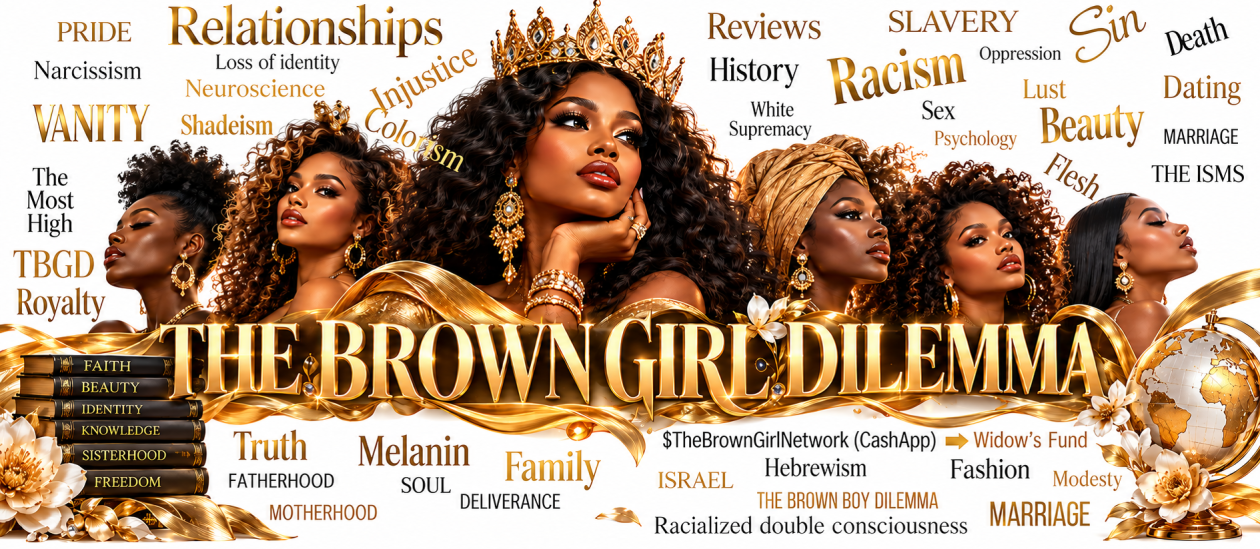
For centuries, beauty has been measured against the pale standards of Eurocentric ideals—thin noses, straight hair, and light skin tones. These characteristics, elevated through colonial history and global media, became the universal template of desirability. Yet, Brown women across the world have begun to rise against these narrow definitions, reclaiming their power, their pigment, and their personhood. Breaking the tone barrier is not merely a cultural moment—it is a revolution, one that dismantles centuries of internalized inferiority and reclaims the divine multiplicity of beauty.
The origins of Eurocentric beauty standards are deeply tied to colonialism and racial hierarchy. During the transatlantic slave trade and subsequent centuries of imperialism, white skin became synonymous with purity, intelligence, and civility, while darker tones were unfairly associated with savagery or labor. These toxic associations did not merely affect perception—they shaped systems of privilege and exclusion that still reverberate today (Blay, 2011). The Brown woman’s body became a site of both fascination and oppression, simultaneously exoticized and devalued.
Colorism—discrimination based on skin tone—emerged as a direct consequence of this hierarchy. Within colonized societies, lighter-skinned individuals were often afforded better treatment, opportunities, and visibility. In Black and Brown communities, this created painful divisions that persist today. The “brown paper bag test” of the early 20th century, which excluded darker-skinned people from certain social spaces, epitomized how deeply these colonial ideals were internalized. The Brown woman, caught between Blackness and whiteness, was often rendered invisible.
Media and advertising have long reinforced these hierarchies. From Hollywood to Bollywood, lighter skin has dominated screens, billboards, and magazines. Skin-lightening products became billion-dollar industries, preying on insecurities planted by colonial narratives. The message was clear: to be lighter was to be lovelier, to be darker was to be deficient. This systematic programming distorted generations of self-perception, teaching Brown girls that their melanin was a flaw to fix rather than a crown to cherish (Glenn, 2008).
Yet, despite the suffocating weight of these standards, Brown women have refused to be defined by them. Across continents, artists, activists, and visionaries have begun to reclaim their hue as holy, their features as fierce, and their culture as beautiful. Through movements like #MelaninMagic, #UnfairandLovely, and #BrownSkinGirl, they have created digital sanctuaries that celebrate the full spectrum of Brownness. The revolution is both aesthetic and spiritual—it is a return to authenticity.
Representation matters because visibility shapes value. When young girls see women who look like them in film, fashion, and media, it affirms that they, too, are worthy of admiration. The emergence of figures such as Lupita Nyong’o, Viola Davis, and Mindy Kaling has expanded the global gaze. Their visibility disrupts the monolithic image of beauty and introduces nuance—proving that elegance, intellect, and allure are not the monopoly of whiteness.
The fashion industry, once a bastion of Eurocentric exclusivity, is also transforming. Models like Duckie Thot, Adut Akech, and Imaan Hammam are redefining glamour. Their presence on runways from Paris to New York is not just inclusion—it is invasion. Each stride they take breaks the tone barrier, declaring that deep complexions belong not at the margins but at the center of the aesthetic conversation.
The psychological cost of colorism, however, cannot be ignored. Studies show that women with darker skin tones often face lower self-esteem, employment discrimination, and reduced romantic desirability due to ingrained biases (Hunter, 2007). Healing this trauma requires more than representation—it demands re-education. It calls for dismantling internalized racism and replacing it with radical self-love grounded in truth and spirituality.
Scripture provides a profound foundation for this reclamation. In Song of Solomon 1:5 (KJV), the Shulamite woman boldly proclaims, “I am black, but comely.” Her declaration defies shame and affirms divine beauty in her darkness. This ancient verse becomes prophetic in modern times, echoing through every Brown woman who dares to love her skin in a world that taught her not to.
Education, too, plays a crucial role in breaking the tone barrier. When history is taught truthfully—when students learn about the civilizations of Nubia, Ethiopia, and Mali, or the regal aesthetics of pre-colonial India—it dismantles the myth that beauty is European in origin. The Brown woman’s ancestors adorned themselves in gold, kente, and silk long before European refinement was defined. She does not borrow beauty; she inherits it.
Cultural icons like Beyoncé’s Brown Skin Girl and India.Arie’s Video serve as musical manifestos of this movement. They uplift women of color not through pity but through praise, redefining love as self-acceptance. These songs are modern psalms of affirmation, counteracting centuries of propaganda. They remind the Brown woman that her glow is not dependent on light but radiates from within.
Spirituality remains at the core of this transformation. When a woman sees herself as made in the image of God (Genesis 1:27, KJV), her self-perception transcends societal standards. Her skin becomes sacred, her body temple, her reflection testimony. The divine does not prefer pale or dark—it glorifies diversity as evidence of creation’s splendor. The Brown woman, therefore, is not defying beauty norms; she is returning to divine truth.
In academia, scholars like bell hooks and Audre Lorde have long articulated that self-love for the Brown woman is a political act. To love oneself within oppressive systems is to resist them. hooks (1992) notes that “loving blackness as political resistance” transforms love into liberation. Thus, the Brown woman’s mirror becomes her battleground—her reflection, her revolution.
The corporate beauty industry, once complicit in promoting colorism, now faces accountability. Brands like Fenty Beauty, which launched with 40 inclusive foundation shades, revolutionized cosmetics by centering diversity rather than tokenism. This shift proved profitable and moral: authenticity sells. More importantly, it validated millions of women who had never seen their undertones represented on shelves before.
Still, Eurocentric beauty standards linger, subtly disguised in global culture. The fetishization of “mixed” features—light skin, loose curls, ambiguous ethnicity—often replaces one narrow ideal with another. True liberation requires celebrating all tones, textures, and features, not just those that appear palatable to white audiences. The Brown woman’s beauty must be seen in her full, unapologetic depth.
Social media, while empowering, can also perpetuate these contradictions. Filters and editing tools often lighten skin tones or Eurocentrize facial features, reinforcing the very standards being challenged. The digital era thus presents both freedom and falsehood. To break the tone barrier online, Brown women must curate authenticity, using technology not to alter but to amplify their truth.
Globally, the reclamation of Brown beauty is part of a larger movement toward decolonization—an unlearning of imposed inferiority. From the Caribbean to South Asia, women are returning to natural aesthetics, rejecting bleaching creams, and reviving traditional adornments. The resurgence of locs, afros, bindis, and natural hues marks a spiritual renaissance—a reconnection to ancestral pride.
Psychologically, this awakening restores wholeness. When Brown women affirm their beauty, they also affirm their worth, intelligence, and humanity. This shift transcends cosmetics—it heals generational wounds. It tells every young girl, “You were never too dark; the world was too blind.” Healing begins when perception changes, when beauty becomes inclusive of every tone that God created.
Ultimately, breaking the tone barrier is about liberation. It is about freeing the Brown woman from the tyranny of comparison and the illusion of lack. It is about restoring the truth that she was always radiant, always worthy, always divine. When she stands in the fullness of her hue, she does not compete—she commands.
The Brown woman’s defiance is not rebellion; it is restoration. By rejecting Eurocentric beauty, she reclaims her mirror, her heritage, and her holiness. The world’s light once blinded her, but now she glows with her own. The tone barrier has cracked, and through it shines the brilliance of Brown womanhood—unbroken, unbought, and undeniably beautiful.
References
Blay, Y. A. (2011). Skin bleaching and global white supremacy: By way of introduction. The Journal of Pan African Studies, 4(4), 4–46.
Glenn, E. N. (2008). Yearning for lightness: Transnational circuits in the marketing and consumption of skin lighteners. Gender & Society, 22(3), 281–302.
Holy Bible, King James Version. (2017). Cambridge University Press.
Hooks, B. (1992). Black looks: Race and representation. South End Press.
Hunter, M. (2007). The persistent problem of colorism: Skin tone, status, and inequality. Sociology Compass, 1(1), 237–254.
Lorde, A. (1984). Sister outsider: Essays and speeches. Crossing Press.