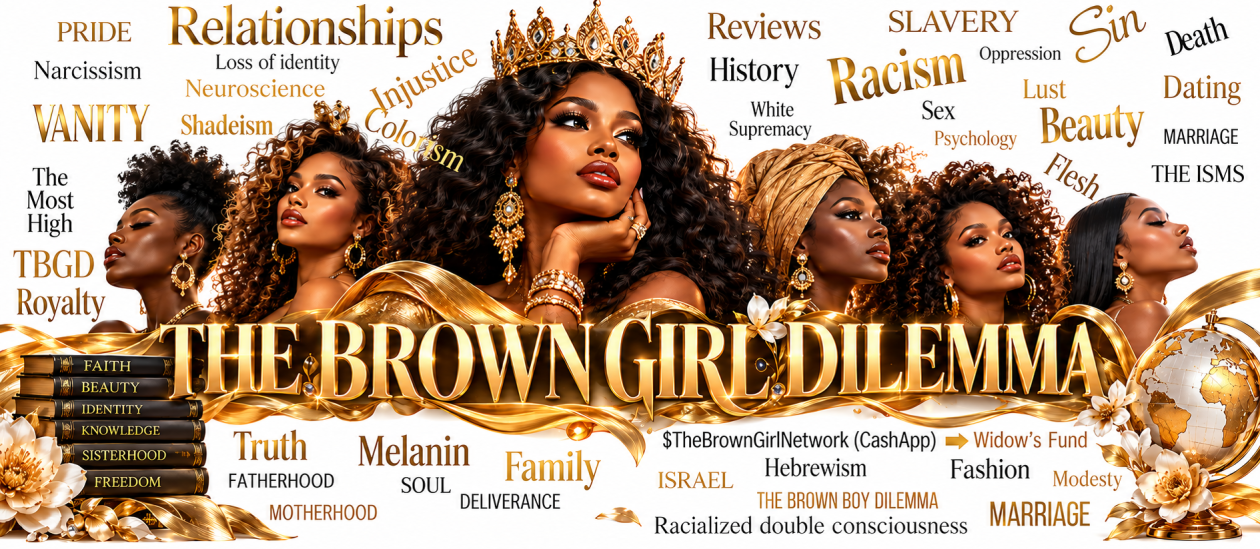
Category Archives: black beauty standards

Unmasking Eurocentric Beauty: The Legacy of Colonial Aesthetics.

Eurocentric beauty standards, deeply entrenched in global society, continue to influence perceptions of attractiveness, self-worth, and social hierarchy. Rooted in colonial histories that privileged European physical features over those of colonized peoples, these ideals have perpetuated colorism, hair discrimination, and facial feature bias, particularly among communities of African descent (Banks, 2019). This essay explores the historical origins, psychological ramifications, and ongoing societal impact of Eurocentric beauty ideals, highlighting how they shape contemporary notions of desirability and identity.

Historical Origins of Eurocentric Beauty
The privileging of European physical features is historically intertwined with colonial expansion and the transatlantic slave trade. Colonizers imposed hierarchies based on skin tone, facial structure, and hair texture to justify systemic oppression and social stratification (Painter, 2010). Portraiture, literature, and early photography often depicted lighter skin, straight hair, and “European” facial features as markers of civility and moral superiority, embedding these standards in both colonial and post-colonial societies (Hall, 1997). In African colonies, internalized notions of beauty were systematically altered through missionary education, media, and local elites’ adoption of European fashion and grooming standards.

Psychological Impact and Internalized Racism
The internalization of Eurocentric beauty ideals has profound psychological consequences. Scholars note that colorism—preference for lighter skin within Black communities—can lead to diminished self-esteem, identity conflict, and social anxiety (Hunter, 2007). Children and adolescents exposed to Eurocentric imagery often develop implicit biases against their own natural features, associating straight hair, narrow noses, and lighter eyes with social mobility and acceptance (Jones, 2018). Psychologists also highlight the phenomenon of “beauty hierarchies,” where individuals subconsciously assign value and competence based on adherence to Eurocentric standards, perpetuating cycles of discrimination and self-rejection (Frisby, 2004).

Media, Fashion, and the Perpetuation of Colonial Aesthetics
Contemporary media continues to reinforce Eurocentric aesthetics through advertising, film, and fashion industries that prioritize European facial features, body types, and skin tones. Celebrities and models often undergo hair straightening, skin lightening, or facial alterations to conform to mainstream ideals, signaling aspirational standards to the public (Hunter, 2011). Social media exacerbates these pressures, as algorithmically promoted content often favors Eurocentric features, generating both admiration and self-critique among diverse audiences.

Resistance and the Reclamation of Beauty
Despite the pervasive influence of colonial aesthetics, movements promoting natural hair, darker skin pride, and Afrocentric fashion have gained momentum. Campaigns such as #BlackGirlMagic and #MelaninPoppin celebrate features historically marginalized by Eurocentric ideals, fostering cultural pride and psychological resilience (Thompson, 2020). Educational programs and media representation that emphasize diverse beauty models challenge the colonial legacy, creating spaces for inclusive self-expression and empowerment.

Conclusion
Eurocentric beauty is not merely a matter of personal preference—it is a colonial artifact that continues to shape social hierarchies, identity formation, and self-perception. By understanding its historical roots and confronting its ongoing influence, societies can begin to dismantle these entrenched hierarchies, embracing a more inclusive and affirming vision of beauty. Reclaiming beauty on one’s own terms is both a personal and collective act of liberation, challenging centuries of imposed aesthetic standards.

References

  • Banks, I. (2019). Hair matters: Beauty, power, and Black women’s identity. NYU Press.
  • Frisby, C. M. (2004). Beauty, body image, and the media. Routledge.
  • Hall, S. (1997). Representation: Cultural representations and signifying practices. Sage.
  • Hunter, M. L. (2007). The persistent problem of colorism: Skin tone, status, and inequality. Sociology Compass, 1(1), 237–254.
  • Hunter, M. L. (2011). Race, gender, and the politics of skin tone. Routledge.
  • Jones, A. (2018). Colorism and psychological effects in youth. Journal of Black Psychology, 44(2), 123–145.
  • Painter, N. I. (2010). The history of White people. W. W. Norton & Company.
  • Thompson, C. (2020). Afrocentric beauty and social media activism. Cultural Studies Review, 26(3), 55–74.

Decolonizing Beauty: Black Aesthetics as Resistance and Revelation.

Black aesthetics cannot be reduced to appearance alone; it is a multidimensional framework that encompasses history, identity, resistance, and cultural expression. Rooted in the lived experiences of people of African descent, Black aesthetics reflects both the trauma of displacement and the resilience of cultural preservation.

Historically, African societies possessed diverse and sophisticated aesthetic systems long before European contact. From intricate hairstyles to symbolic body adornment, beauty was deeply tied to spirituality, status, and communal identity rather than conformity to a singular standard (Thompson, 1984).

The disruption of these systems began with the transatlantic slave trade, where African bodies were stripped of cultural markers and redefined within a racialized hierarchy. Enslaved individuals were denied the ability to express their aesthetic traditions, and their physical features were recast as inferior within European frameworks.

This imposed hierarchy did not merely affect perception; it reshaped identity. Blackness became associated with lack, absence, and deviation from an imposed norm. As a result, aesthetics became a site of psychological and cultural struggle, where appearance was politicized and policed.

Despite these conditions, Black communities continuously recreated beauty through resistance. Hairstyles, fashion, music, and language became tools of cultural survival. The act of maintaining or reinventing aesthetic traditions was itself a form of defiance against erasure.

The 20th century marked a significant turning point with movements such as the Harlem Renaissance, where Black artists and intellectuals redefined beauty on their own terms. Figures like Langston Hughes and Zora Neale Hurston celebrated Black identity through literature and art, challenging dominant narratives.

Later, the Black is Beautiful movement of the 1960s and 1970s further advanced this reclamation. Natural hair, darker skin tones, and African-inspired fashion were embraced as symbols of pride rather than shame. This movement directly confronted Eurocentric beauty standards and offered alternative frameworks of attractiveness.

Black aesthetics also operates as a language of symbolism. For example, hairstyles such as braids and locs carry historical and cultural significance, often representing lineage, resistance, and identity. These forms are not merely stylistic—they are communicative.

In contemporary society, Black aesthetics continues to influence global culture in profound ways. From fashion to music to visual art, elements originating in Black communities are often adopted and mainstreamed. Yet, this influence is frequently detached from its cultural origins, raising questions about appropriation and recognition.

Social media has amplified both visibility and tension. On one hand, it has created space for diverse representations of Black beauty. On the other, it has also enabled the commodification of Black features without acknowledging their historical context.

Colorism remains a critical issue within discussions of Black aesthetics. The privileging of lighter skin tones within and outside Black communities reflects the lingering impact of colonial hierarchies. This internal stratification complicates the broader reclamation of beauty.

Gender also shapes the experience of Black aesthetics. Black women, in particular, navigate intersecting expectations related to race, femininity, and beauty. Their bodies are often subjected to both hypervisibility and invisibility, depending on context.

At the same time, Black masculinity is aestheticized in ways that can be both empowering and limiting. Traits associated with strength and physicality are often emphasized, sometimes overshadowing emotional and intellectual dimensions.

The global influence of Black aesthetics is undeniable. Music genres such as hip-hop and R&B, as well as fashion trends rooted in Black culture, have reshaped mainstream aesthetics worldwide. This influence demonstrates the creative power embedded within Black communities.

However, influence does not always translate into equity. The same features that are celebrated on non-Black bodies are often stigmatized on Black individuals. This contradiction highlights the ongoing tension between admiration and discrimination.

Scholars argue that Black aesthetics must be understood as both artistic expression and political statement. It challenges dominant narratives while offering alternative visions of beauty and identity (Mercer, 1987).

Education and representation are key to advancing this discourse. By centering Black voices and experiences, it becomes possible to move beyond superficial engagement and toward a deeper understanding of cultural significance.

Importantly, Black aesthetics is not monolithic. It encompasses a wide range of expressions influenced by geography, history, and individual creativity. Recognizing this diversity prevents the oversimplification of Black identity.

As conversations around diversity and inclusion continue to evolve, Black aesthetics remains central to redefining global beauty standards. It invites a shift from exclusion to multiplicity, from hierarchy to appreciation.

Ultimately, Black aesthetics is an ongoing process of reclamation. It reasserts the value of features, traditions, and identities that were historically devalued, transforming them into sources of pride and empowerment.

In doing so, it not only reshapes how beauty is perceived but also how identity is understood. Black aesthetics stands as both a testament to resilience and a blueprint for a more inclusive vision of humanity.


References

Mercer, K. (1987). Black hair/style politics. New Formations, 3, 33–54.

Thompson, R. F. (1984). Flash of the spirit: African and Afro-American art and philosophy. Random House.

Byrd, A. D., & Tharps, L. L. (2014). Hair story: Untangling the roots of Black hair in America. St. Martin’s Press.

Hall, S. (1997). Representation: Cultural representations and signifying practices. Sage.

Tate, S. A. (2009). Black beauty: Aesthetics, stylization, politics. Routledge.

Walker, S. (2007). Style and status: Selling beauty to African American women, 1920–1975. University Press of Kentucky.

Internalized Bias and the Politics of Beauty

Beauty, though often presented as an individual preference, is deeply political. It is shaped by power, privilege, and centuries of cultural conditioning. The phrase “beauty is in the eye of the beholder” conceals a harder truth — that the beholder’s eye has been trained by history, media, and hierarchy. The politics of beauty is the story of who gets to be seen, who gets to be celebrated, and who remains invisible.

Internalized bias is one of the most silent yet pervasive consequences of these politics. It occurs when marginalized individuals absorb the very prejudices used to oppress them. For many people of color, this manifests in the subconscious belief that proximity to whiteness equals attractiveness. Straight hair, lighter skin, narrow noses, and thin lips become aspirational features, not because they are inherently beautiful, but because society has long declared them superior.

This internalized bias is a residue of colonization. European imperial powers not only conquered land but also colonized minds, imposing their aesthetics as universal ideals. Over generations, the colonized began to police themselves — bleaching their skin, altering their features, and mimicking European styles to survive and succeed in systems that rewarded conformity over authenticity.

The global beauty industry thrives on this insecurity. It markets “fairness creams,” hair relaxers, and cosmetic surgeries as solutions to a problem it helped create. Every commercial promising “radiance” or “refinement” reinforces the idea that darker or ethnic features require correction. This is not mere marketing; it is a psychological assault that normalizes self-rejection.

Internalized bias doesn’t only affect women; men, too, face its pressures. The “tall, light, and handsome” trope dominates many cultures, while darker-skinned men are often stereotyped as either hypermasculine or undesirable. These standards fracture self-esteem and limit how masculinity and beauty are expressed within communities of color.

The politics of beauty extends beyond physical traits — it dictates behavior, voice, and even confidence. Women of color who wear natural hair or darker lipstick shades are often labeled “too bold,” while those who tone down their appearance are called “respectable.” Every expression of self becomes a negotiation between authenticity and acceptability.

Social media has amplified this conflict. Platforms like Instagram and TikTok, though heralded as spaces for self-expression, often reinforce Eurocentric filters and algorithms that favor lighter skin tones. Studies reveal that posts featuring lighter-skinned individuals tend to receive more engagement, perpetuating a digital hierarchy of beauty.

Despite these challenges, social movements have emerged to counter internalized bias. Campaigns like #BlackGirlMagic, #UnfairandLovely, and #MelaninPoppin celebrate natural beauty and reclaim space in visual culture. These movements serve as cultural resistance — affirming that beauty does not require validation from colonial frameworks.

Still, internal healing is the hardest work. It demands confronting years of social conditioning and familial influence. Many individuals recall being told as children not to play in the sun or that a lighter partner was “better.” These casual remarks form the roots of internalized bias, teaching self-doubt before self-love.

In academia, scholars like bell hooks and Frantz Fanon have examined this phenomenon with piercing clarity. Fanon’s Black Skin, White Masks (1952) describes how colonized people internalize white ideals, leading to self-alienation. Hooks (1992) later argued that reclaiming beauty from patriarchal and racialized standards is an act of political rebellion. Together, their works remind us that beauty is not apolitical; it is a form of power.

The entertainment industry, though making progress, remains complicit in perpetuating narrow ideals. Hollywood continues to favor lighter-skinned actors for lead roles, while darker-skinned performers are often typecast. This visual bias subconsciously teaches audiences that worth correlates with complexion, reinforcing systemic hierarchies of desirability.

Faith and spirituality offer another lens of resistance. The understanding that humans are “fearfully and wonderfully made” (Psalm 139:14, KJV) invites a radical reframing of beauty as divine rather than societal. For many, this scriptural truth dismantles internalized bias by affirming that every shade, feature, and texture reflects divine craftsmanship.

Psychologically, healing from internalized bias requires both personal reflection and community affirmation. Therapy, media literacy, and representation all play vital roles in deconstructing harmful standards. Representation, in particular, provides mirrors for those who have long been invisible — reminding them that beauty comes in multiplicity, not uniformity.

Education is equally essential. Schools that teach racial history, global aesthetics, and identity studies equip the next generation to resist colonial conditioning. When children learn that African, Asian, and Indigenous aesthetics have always embodied sophistication and artistry, they grow up valuing diversity instead of hierarchy.

In modern culture, a quiet revolution is underway. Photographers, filmmakers, and artists are reclaiming narratives once shaped by white gaze. From fashion editorials featuring dark-skinned models to films celebrating natural hair, beauty is being redefined through authentic representation. The revolution is visual, vocal, and visceral.

Yet, we must remain vigilant. The commodification of “diversity” can easily dilute its power. When inclusion becomes a marketing slogan rather than a moral conviction, the politics of beauty rebrands itself rather than repents. Real change demands accountability, not aesthetics alone.

Ultimately, the fight against internalized bias is the fight for self-liberation. It is the journey from imitation to affirmation — from trying to be seen to knowing one’s worth without permission. Beauty, when reclaimed, becomes a weapon of truth and healing.

To dismantle the politics of beauty is to expose the illusion of hierarchy. It is to say that no shade, shape, or feature holds more value than another. True beauty, freed from bias, is the reflection of a soul that has remembered its divine origin.

The politics of beauty may have been written by empires, but the rewriting belongs to those who dare to love themselves without apology. When we unlearn the bias, we rediscover the sacred — that beauty, in all its shades and forms, was never a competition but a collective reflection of creation itself.

References

Fanon, F. (1952). Black skin, white masks. Grove Press.
hooks, b. (1992). Black looks: Race and representation. South End Press.
Hunter, M. (2017). Race, gender, and the politics of skin tone. Routledge.
Russell, K., Wilson, M., & Hall, R. (2013). The color complex: The politics of skin color among African Americans (2nd ed.). Anchor Books.
Tate, S. A. (2016). Black beauty: Aesthetics, stylization, politics. Ashgate Publishing.
Wilder, J. (2015). Color stories: Black women and colorism in the 21st century. Praeger.

Divine Shades in the Image of God

In the beginning, humanity was crafted in divine likeness — “in the image of God created He him; male and female created He them” (Genesis 1:27, KJV). Within that creation lies a spectrum of divine artistry — hues, tones, and textures that speak not of difference, but of design. Divine Shades in the Image of God explores the sacred diversity of human color and how the Creator’s infinite imagination is reflected through every shade of skin.

For centuries, the image of God has been distorted through the lens of race, colonization, and cultural supremacy. What was meant to reveal divine unity became the basis for division. The lighter shades were elevated as symbols of holiness and purity, while the darker were vilified, associated with sin, servitude, and savagery. Yet Scripture never placed hierarchy on hue — humanity did.

In every shade of brown and black, there exists a story of resilience and radiance. Melanin — often politicized and misunderstood — is a miracle of divine design. It is both shield and symbol, protecting life from the sun’s power and testifying to humanity’s origin in the warmth of Edenic soil. To reject darker skin is, in essence, to reject the creative intention of God.

The Bible itself affirms the beauty of variation. From the bronze hue of Christ described in Revelation 1:15, to the Ethiopian eunuch who carried the gospel in Acts 8, Scripture paints a diverse portrait of faith and flesh. God’s image is not pale and narrow; it is wide and wondrous — a mosaic of sacred shades woven into the human family.

The sin of colorism, born from colonial psychology and social conditioning, has long separated people of the same ancestry. It is the shadow of white supremacy internalized — a lingering lie that lighter means better, safer, or more loved. Within the Black community, it has scarred generations, pitting sister against sister, brother against brother. But divine truth demands a different vision: to see color not as a curse, but as a crown.

Every complexion carries a message from the Creator. The dark-skinned man bears the image of endurance, forged under centuries of oppression yet still shining with purpose. The brown woman reflects strength and softness combined — a living poem of divine balance. The lighter brother and sister bear no less sacredness; they too are reflections of divine artistry. The full image of God cannot be seen in one shade alone, but in the collective harmony of them all.

The prophet Jeremiah reminds us that God formed us in the womb, knowing us before our first breath (Jeremiah 1:5). Our pigmentation, then, is not random — it is prophetic. It speaks of history, geography, ancestry, and spiritual destiny. To despise it is to despise the fingerprints of God upon creation.

Throughout history, systems of oppression have sought to redefine beauty and holiness according to European ideals. Paintings of Christ were bleached, saints were stripped of their African and Middle Eastern features, and biblical imagery was whitewashed. These distortions shaped theology, identity, and society — teaching the colonized to see divinity only through Western eyes. But the truth, like melanin, cannot be erased; it endures beneath every false portrayal.

To restore the true image of God is an act of spiritual justice. It means reclaiming what was stolen — not only the narrative but the mirror. It requires that we teach our children to see their skin not as burden or blemish, but as blessing. When a brown-skinned girl looks into the mirror and whispers, “I am fearfully and wonderfully made” (Psalm 139:14, KJV), heaven smiles.

Science and Scripture converge beautifully on this point. Genetically, all humans descend from Africa — the cradle of civilization. The first humans, formed from the dust of the earth, bore the rich tones of fertile soil. Theologically, this truth reminds us that every race and ethnicity shares one divine root. The same Spirit that breathed life into Adam breathes through every living soul today.

The church must confront the ways it has perpetuated color bias, consciously or unconsciously. Sunday morning remains one of the most segregated hours in America. Sermons, art, and worship spaces must once again reflect the full glory of God’s human creation. Diversity is not tokenism; it is theology in color.

The Black body, often devalued or fetishized, carries a sacred legacy. It has endured chains, whips, and injustice — yet still rises, still creates, still worships. This resilience is divine evidence that the image of God cannot be defiled, no matter how violently humanity tries to erase it. The very skin once despised now shines as testimony of God’s faithfulness.

When Christ walked the earth, He did not choose privilege or pallor; He entered poverty and pain. His shade, His suffering, His solidarity with the oppressed — all reveal a God who identifies not with the powerful, but with the marginalized. The divine image, then, is not about aesthetic perfection but sacrificial love.

Colorism, racism, and prejudice fracture that divine image. Each insult, stereotype, or exclusion chips away at the mirror that should reflect God’s unity. The work of restoration begins with repentance — seeing our biases for what they are: lies against creation itself. To honor another’s shade is to honor God’s creativity.

In the book of Revelation, John envisions a redeemed multitude — people of “every nation, kindred, tongue, and people” (Revelation 7:9, KJV). Heaven’s vision of beauty is not monochrome; it is multicultural, multiethnic, and multihued. This celestial diversity reflects what earth was always meant to be: a living gallery of divine shades.

Artists, theologians, and scholars today continue to reinterpret the divine image through Afrocentric and inclusive lenses. From Black Madonna icons to African-centered theology, a new generation is reclaiming the sacred beauty of brownness. Their work declares that God’s light shines in every pigment — that holiness is not bound to whiteness but radiates from the full palette of creation.

To see God in every shade is to see holiness in humanity again. It heals the wound that centuries of bias have inflicted. It restores the dignity of those told their skin was too dark, too different, too unworthy. It invites us to worship a God who delights in diversity — who paints the heavens with endless color and calls it good.

Ultimately, divine beauty transcends hue, yet is expressed through it. We are each reflections of the same eternal light refracted through different tones of grace. When the church, the world, and the self can finally look upon all shades and say, “This too is God’s image,” the mirror of creation will be whole again.

References

Cone, J. H. (1970). A Black theology of liberation. Orbis Books.
Douglas, K. B. (1999). What’s faith got to do with it?: Black bodies/Christian souls. Orbis Books.
Fanon, F. (1952). Black skin, white masks. Grove Press.
Mitchell, H. H. (2004). Black preaching: The recovery of a lost art. Abingdon Press.
The Holy Bible, King James Version. (1611). London: Oxford University Press.

The Shades of Brown: The Beauty of Melanin.

This photograph is the property of its respective owner. No copyright infringement intended.

There is poetry written in every shade of brown. From the soft caramel glow to the deep mahogany hue, melanin tells a story of resilience, ancestry, and divine artistry. It is more than pigment—it is protection, inheritance, and identity. In a world that once called darkness a curse, melanin remains a crown, shimmering beneath the sun with the same radiance it has carried since the dawn of creation. The beauty of melanin is not merely aesthetic; it is spiritual, scientific, and ancestral.

Melanin is the biological miracle that shields the skin from the sun’s ultraviolet rays, but it is also the spiritual marker of a people kissed by creation. The Creator designed melanin as armor and adornment—function and beauty woven together. Science may define it as a pigment, but history knows it as a signature of survival. In every shade of brown is the story of a people who refused to fade despite centuries of attempts to erase them.

Colonialism distorted beauty standards by elevating whiteness and denigrating darkness. Skin tone became a hierarchy, and the deeper hues were stigmatized. Yet, the truth remains: melanin is life’s most ancient cosmetic, nature’s most elegant innovation. It holds within it not only physical strength but the memory of continents, cultures, and kingdoms. It is the original standard, not a deviation from it.

To celebrate melanin is to reclaim identity. For centuries, Black and Brown people were conditioned to associate lightness with worth and darkness with shame. This internalized colorism fractured communities and self-perception. But now, a new generation rises—one that speaks proudly of cocoa, bronze, cinnamon, and chestnut as the palette of God’s divine creativity. To love melanin is to undo centuries of psychological warfare.

Every shade of brown carries a vibration, a melody. It sings of Africa’s deserts and rainforests, of Caribbean sunsets, of the American South and the streets of Harlem. The diversity of melanin tells a global story—a tapestry woven with migration, struggle, and survival. It reminds us that even in difference, there is unity. Every tone, every variation, belongs to the same sacred family.

The beauty of melanin extends beyond the physical. It symbolizes endurance—the ability to thrive in environments that others find hostile. Scientifically, melanin absorbs light and converts it to energy, a metaphor for how Black and Brown people turn pain into power. From spirituals to hip-hop, from oppression to innovation, the melanin-rich have always transmuted suffering into strength.

Spiritually, melanin represents divine craftsmanship. The Psalmist declared, “I will praise thee; for I am fearfully and wonderfully made” (Psalm 139:14, KJV). The hues of brown reflect the Creator’s infinite imagination. No two tones are identical, yet each one radiates majesty. When we understand melanin as a gift rather than a genetic accident, we begin to walk in the dignity God intended.

Societally, melanin challenges Eurocentric ideals of beauty. For decades, the media has idolized lighter skin and straighter hair, teaching generations to aspire to artificial versions of themselves. But now, movements celebrating natural hair, dark skin, and Afrocentric fashion are rewriting the narrative. The world is learning what Africa always knew: brown is not a boundary—it is brilliance.

Psychologically, learning to love melanin requires unlearning centuries of programming. It demands that we question why certain complexions are called “beautiful” while others are labeled “too dark.” True healing begins when we realize that such hierarchies were never divine—they were manmade tools of division. Embracing melanin is an act of mental emancipation.

The artistry of melanin reveals itself in every shade’s relationship with light. The sun does not burn it—it blesses it. The darker the skin, the more it glows under golden rays. Melanin reflects not rejection but radiance. It carries its own light, an inner luminescence that cannot be dimmed by societal bias. This is why the deepest tones command awe—they are nature’s most regal display of symmetry and strength.

In art, literature, and photography, there has been a renaissance of melanin visibility. Artists now highlight the rich contrast of dark skin against vibrant color palettes, celebrating what was once ignored. This shift is not only aesthetic—it is cultural restoration. To see beauty in darkness is to see truth, for darkness was the first canvas upon which light was born.

Historically, melanin has been linked to divine royalty. Ancient Egypt, Nubia, Kush, and Mali celebrated dark skin as a sign of lineage and strength. The pharaohs, queens, and scholars of these civilizations saw melanin as sacred, not shameful. The reclamation of that understanding is crucial for restoring pride in Black identity today.

Culturally, the celebration of melanin builds solidarity across the diaspora. It unites Africans, African Americans, Afro-Caribbeans, and Afro-Latinos under one truth: though geography may separate us, melanin binds us. It is the visible reminder that we share origin, purpose, and divine design.

Fashion and media industries are slowly catching up, though they still have far to go. Representation matters—when dark-skinned models grace billboards, magazine covers, and screens, young Black children see themselves reflected in glory. Each image becomes a sermon of self-love, proclaiming, “You are enough. You are exquisite. You are worthy.”

In theology, melanin has been historically whitewashed. From paintings of biblical figures to Sunday school imagery, whiteness was portrayed as holiness. But scripture tells another story: the people of the Bible lived in regions kissed by the sun. Melanin is not foreign to faith—it is foundational. To erase it was to erase the truth of creation’s diversity.

Emotionally, embracing melanin is healing work. It restores what was lost when society taught generations to bleach their beauty or hide their hue. It teaches self-acceptance, self-care, and self-respect. It reminds us that beauty is not validation from others—it is revelation from within.

Scientifically, melanin continues to reveal new mysteries. It influences mood, brain chemistry, and even resilience to environmental stress. Research shows that melanin’s antioxidant properties protect not only skin but the nervous system. In every sense—physical, emotional, spiritual—melanin sustains life.

The future of beauty depends on inclusivity rooted in truth. The shades of brown will no longer be an afterthought but the foundation. As societies evolve, the celebration of melanin must move from trend to truth—an enduring acknowledgment of God’s intentional diversity.

Ultimately, the beauty of melanin is the beauty of creation itself. It is a reminder that darkness was never the absence of light—it was the womb of it. Every shade of brown reflects the eternal creativity of a God who paints in rich tones and holy gradients. To love melanin is to honor the miracle of existence, the poetry of survival, and the majesty of being wonderfully made.

References

  • The Holy Bible, King James Version (Psalm 139:14).
  • hooks, b. (1992). Black Looks: Race and Representation. South End Press.
  • Tate, S. (2009). Black Beauty: Aesthetics, Stylization, Politics. Routledge.
  • Hall, S. (1997). Representation: Cultural Representations and Signifying Practices. Sage.
  • Davis, A. (1981). Women, Race, & Class. Random House.
  • Hill Collins, P. (2000). Black Feminist Thought. Routledge.
  • Craig, M. L. (2002). Ain’t I a Beauty Queen?: Black Women, Beauty, and the Politics of Race. Oxford University Press.
  • Russell, K., Wilson, M., & Hall, R. E. (1992). The Color Complex: The Politics of Skin Color Among African Americans. Doubleday.
  • Byrd, A., & Tharps, L. L. (2014). Hair Story: Untangling the Roots of Black Hair in America. St. Martin’s Press.
  • Okorafor, N. (2017). Who Fears Death. DAW Books.

Reclaiming Black Beauty: A Celebration and Analysis.

Black women’s beauty has long been marginalized, misrepresented, and undervalued due to centuries of systemic oppression, colorism, and Eurocentric beauty standards. From the era of slavery to contemporary media, Black women have been conditioned to view whiteness as the aesthetic ideal. This conditioning manifests in preferential treatment for lighter skin, straighter hair, thinner lips, and narrow noses, while traits commonly found in Black women—full lips, high cheekbones, wide noses, and deep melanin-rich skin—have been devalued or exoticized (Hunter, 2007).

Historically, enslaved Africans were deliberately exposed to the dominant European standards of beauty. Slave masters and overseers elevated the white female body as the ideal, associating light skin, straight hair, and European facial features with moral virtue and desirability. Conversely, Black women were often portrayed as unattractive, undesirable, or hypersexualized to justify systemic oppression (White, 1999). This racialized hierarchy of beauty was perpetuated through popular culture, literature, and visual media, reinforcing internalized colorism and self-rejection among Black women.

The media has continued to play a pivotal role in shaping perceptions of beauty. From Hollywood films to magazine covers and social media, Black women have been underrepresented or positioned as secondary to white women, who dominate the global standard of attractiveness (hooks, 1992). Even in advertising and fashion, lighter-skinned or Eurocentric-featured Black women are often highlighted as exceptional, while darker-skinned women with traditionally African features are marginalized, creating a narrow, unrealistic framework for beauty.

Despite these pervasive narratives, Black women possess inherent beauty markers that are celebrated both biologically and culturally. Lupita Nyong’o, for example, has become an international icon for Black beauty. Her deep melanin-rich skin, high cheekbones, full lips, and wide expressive eyes exemplify traits historically devalued in mainstream media but celebrated within African and diasporic aesthetic traditions (Frost, 2006). Lupita’s symmetry and facial proportions also align with classical standards of attractiveness, demonstrating that Black beauty encompasses both distinctiveness and universal aesthetic harmony.

Full lips, widely spaced and well-defined eyes, rich skin tones, natural hair textures, and facial symmetry are just a few markers of Black female beauty. These traits are not anomalies but rather represent the diversity and richness of African heritage. When embraced and celebrated, they counter centuries of media erasure and Eurocentric bias, reinforcing pride and self-acceptance among Black women.

Beauty is inherently subjective, shaped by cultural context, exposure, and social conditioning. What one culture elevates as beautiful may differ drastically from another. However, historical and contemporary oppression has consistently skewed perception, creating a persistent bias that favors whiteness or whiteness-adjacent features. Recognizing this, celebrating Black aesthetics becomes a form of resistance and empowerment, reclaiming both visual and cultural narratives.

Encouraging Black women to embrace their natural beauty requires challenging these ingrained perceptions, highlighting role models like Lupita Nyong’o, and fostering communities that validate Black aesthetics. By acknowledging the historical forces that devalued Black features—slavery, colonialism, colorism, and media bias—women can contextualize their self-perception and cultivate pride rooted in heritage, identity, and cultural continuity.

In conclusion, Black beauty is multidimensional, rich, and deserving of celebration. Figures like Lupita Nyong’o exemplify the power and radiance of African features, offering a counter-narrative to media-driven Eurocentric standards. By understanding the historical context, reclaiming inherent aesthetic markers, and resisting biased cultural frameworks, Black women can fully embrace their beauty, dignity, and worth.

References: Frost, P. (2006). Human facial beauty: A biological perspective. Human Nature Review, 6(1), 29-41. Hunter, M. (2007). The persistent problem of colorism: Skin tone, status, and inequality. Sociology Compass, 1(1), 237-254. hooks, b. (1992). Black looks: Race and representation. South End Press. White, D. G. (1999). Ar’n’t I a woman?: Female slaves in the plantation South. W.W. Norton & Company.

The Archetype of the Brown Girl’s Beauty

This photograph is the property of its respective owner. No copyright infringement intended.

The beauty of the brown girl is not simply a matter of appearance — it is an archetype, a spiritual and cultural blueprint encoded with divine purpose, ancestral memory, and cosmic artistry. Her beauty transcends the surface; it is historical, psychological, and metaphysical. It carries the wisdom of generations, the pain of oppression, and the light of survival. To speak of the brown girl’s beauty is to speak of the sacred — a radiance born from the soil of struggle and the spirit of resilience.

The archetype of the brown girl’s beauty begins with the Creator’s design. In Genesis 2:7 (KJV), it is written that God “formed man of the dust of the ground.” That sacred dust — rich, dark, and full of life — mirrors the hues of brown and black skin, a testament that divinity itself is reflected in melanin. Thus, the brown girl’s complexion is not incidental but intentional — a visible sign of her connection to the earth, to creation, and to divine energy. Her beauty is elemental; she embodies the sun, the soil, and the spirit of life itself.

Historically, the brown girl has been both the muse and the misunderstood. Colonization and slavery distorted her image, branding her as lesser while simultaneously exploiting her body and labor. European beauty ideals sought to erase her features, labeling her lips, hair, and skin as “undesirable.” Yet, the world constantly imitates what it denies — full lips, curvaceous forms, bronze skin, and textured hair now fill fashion magazines and social media trends. The irony is profound: the archetype of the brown girl’s beauty remains the original, even when others attempt to replicate it.

Psychologically, this archetype holds deep tension. The brown girl has been taught to question her reflection — to see it through the lens of white supremacy and internalized colorism. The mirror, for her, has often been a battleground between what she truly is and what she has been told to be. But to awaken to her archetype is to remember her divine design — to understand that her beauty is not comparative but sacred, not performative but inherent. “I am black, but comely, O ye daughters of Jerusalem” (Song of Solomon 1:5, KJV) — a timeless affirmation of melanated beauty and spiritual worth.

Her beauty archetype carries a dual essence: strength and softness. She is the nurturer and the warrior, the healer and the builder. In every brown girl lies the echo of ancient queens, prophets, and mothers who shaped civilizations. Her beauty is active — it creates, restores, and resurrects. This is why her presence commands attention without speaking. She radiates from within, a glow that cannot be dimmed by cultural distortion or social bias.

Spiritually, the brown girl’s beauty represents divine balance. In Proverbs 31, the virtuous woman is described as strong, wise, and clothed in honor. These attributes mirror the essence of the brown girl, whose beauty is inseparable from her inner strength and moral depth. Her radiance comes from faith and endurance — qualities that time cannot erase. Beauty, in her, becomes testimony: a reflection of divine endurance that outlasts oppression, heartbreak, and rejection.

The brown girl’s body is often politicized and misunderstood. Her curves, tone, and rhythm are symbols of vitality, yet they are too often hypersexualized or dehumanized. To reclaim her archetype is to declare that her body is holy — not for objectification but for divine expression. 1 Corinthians 6:19 (KJV) reminds her, “Know ye not that your body is the temple of the Holy Ghost which is in you.” Her beauty, therefore, is not a tool for validation but a vessel for spiritual presence.

Her hair — in its curls, coils, and waves — carries ancestral symbolism. Each strand is a crown of identity, a living connection to heritage and divinity. When she wears it naturally, she does not merely style it; she resists centuries of cultural erasure. Her hair testifies that her natural state is not rebellion — it is restoration. The crown she wears is a silent sermon, proclaiming that God makes no mistakes.

In art and literature, the archetype of the brown girl has long been misrepresented — either vilified or exoticized. Yet, a new renaissance is unfolding. Contemporary creators, writers, and theologians are re-centering her as the subject, not the spectacle. The brown girl’s beauty is now being written by her own hand, no longer through the colonizer’s gaze. She is reclaiming her image, voice, and narrative — returning to the mirror not for approval, but for revelation.

Her beauty is inherently communal. It carries the spirit of Ubuntu — “I am because we are.” The brown girl’s radiance uplifts others, healing collective wounds of erasure and self-doubt. When one brown girl embraces her reflection, she liberates many. Her self-love becomes activism; her confidence, a form of resistance. Through her reflection, others find permission to see themselves as divine.

This archetype also holds prophetic power. The brown girl’s beauty often foreshadows cultural shifts. She is the trendsetter, the innovator, the heartbeat of global aesthetics. From music to fashion to spirituality, her influence flows everywhere, yet she remains uncredited. Still, she rises — carrying within her the prophetic truth that what was once rejected will one day be revered.

In the spiritual dimension, the brown girl’s beauty mirrors the Bride of Christ — radiant, redeemed, and clothed in glory (Revelation 19:7–8, KJV). Her adornment is not artificial but righteous; her glow comes from alignment with divine will. When she walks in her purpose, her beauty becomes worship — every smile, every gesture, every act of love radiating light back to the Source.

The archetype also reminds her that true beauty demands integrity. Vanity fades, but virtue endures. The brown girl’s allure deepens with character — with humility, wisdom, and compassion. Her beauty matures through time and trials, reflecting the glory of one who has endured much yet remains unbroken. “The King’s daughter is all glorious within” (Psalm 45:13, KJV) — this is her truth.

For centuries, the brown girl’s beauty was framed through others’ definitions, but the time has come for reclamation. Her image must be seen not as a deviation but as the divine norm. She is the archetype — the original reflection of the Creator’s imagination, the blueprint of balance, warmth, and spiritual depth. Her beauty is not new; it is eternal, waiting to be re-recognized by a world that has forgotten its source.

The archetype of her beauty also calls her to accountability. To know her power is to walk in humility and purpose. Her reflection should inspire righteousness, not rivalry; healing, not harm. When she uses her beauty to uplift others, she honors the divine artistry that made her. In this way, beauty becomes service — a ministry of light.

For young brown girls growing up in a world of distorted mirrors, this archetype is a compass. It teaches them to love their reflection as a form of worship, to reject comparisons, and to find peace in their natural state. The archetype whispers, You are not less; you are the light the world forgot it needed.

In loving herself, the brown girl also heals her ancestors. Every affirmation, every confident stride, rewrites centuries of shame. Her reflection becomes generational deliverance. She becomes both the prayer and the answer, the legacy and the future.

Ultimately, the archetype of the brown girl’s beauty reminds the world that beauty was never meant to be ranked — it was meant to reveal God’s diversity. The brown girl stands as the living expression of divine symmetry: strong yet gentle, sacred yet human, mysterious yet clear. Her beauty is not an imitation but an origin.

So, brown girl, when you look into the mirror, remember — you are not a trend, not a token, not an afterthought. You are the template. You are divine design manifested in melanin, the original hue of creation, and the mirror through which the world glimpses God’s glory.

References (KJV):

  • Genesis 2:7
  • Song of Solomon 1:5
  • Proverbs 31:25–30
  • 1 Corinthians 6:19–20
  • Psalm 45:13
  • Revelation 19:7–8
  • 1 Peter 3:3–4
  • Romans 12:2
  • Ecclesiastes 3:11
  • Psalm 139:14

The Essence of Black Beauty

Black beauty has always transcended mere aesthetics; it is a testament to resilience, cultural richness, and ancestral legacy. Across history, Black people have navigated societies that often sought to diminish their worth, yet the essence of Black beauty has endured as a symbol of dignity, pride, and self-expression. From the radiant skin tones and textured hair of African queens to the strong features and commanding presence of Black men, Black beauty is deeply intertwined with identity and cultural memory (hooks, 1992).

In the African diaspora, colorism has shaped perceptions of beauty, creating hierarchies that favored lighter skin over darker skin. This bias, rooted in colonialism and slavery, persists in media, fashion, and social interactions today (Hunter, 2007). Despite these pressures, Black women and men continue to reclaim and redefine beauty standards that honor natural hair, melanin-rich skin, and traditional African features. Celebrating Black beauty is not merely about appearance; it is an act of cultural resistance and affirmation.

This photograph is the property of its respective owner.

Black women, from historical figures like Harriet Tubman and Sojourner Truth to contemporary icons like Lupita Nyong’o and Viola Davis, embody beauty that intersects with intellect, courage, and artistry (Griffin, 2016). Their beauty cannot be reduced to a color palette; it is the resilience in their eyes, the grace in their posture, and the confidence in their presence that radiates powerfully. The acknowledgment of this multidimensional beauty challenges societal biases that have long devalued dark-skinned women.

This photograph is the property of its respective owner.

The resilience inherent in Black beauty reflects a historical continuum of survival and triumph. African civilizations prized intricate hairstyles, body art, and jewelry not only for aesthetic appeal but as markers of social status, spirituality, and identity (Echeruo, 1998). Enslaved Africans brought these traditions to the Americas, adapting them to new realities while preserving cultural memory. Contemporary Black beauty carries this legacy forward, connecting past and present in a celebration of unbroken identity.

Equally compelling is the beauty of Black men, whose aesthetics convey strength, dignity, and sensuality. Black men’s beauty is found in their diverse skin tones, sculpted physiques, natural hair, and facial symmetry, reflecting both genetic legacy and personal style (Russell-Cole, Wilson, & Fergunson, 2013). It is also expressed through demeanor—confidence, resilience, intellect, and emotional depth—which enhances their physical presence. From civil rights leaders to cultural icons like Idris Elba, Morris Chestnut, and Omari Hardwick, Black men exemplify a holistic beauty that integrates mind, body, and spirit. This celebration of Black male beauty, often overlooked in mainstream narratives, affirms that attractiveness is inseparable from character and heritage.

Media representation has played a double-edged role in defining Black beauty. Historically, Black features were marginalized or caricatured, reinforcing Eurocentric ideals (Patton, 2006). Yet contemporary media increasingly spotlights diverse Black aesthetics, showcasing models, actors, and influencers who embrace natural hair, muscular physiques, and rich skin tones. Campaigns that center dark-skinned beauty, such as those featuring Naomi Campbell, Alek Wek, or Lupita Nyong’o, disrupt conventional norms and inspire younger generations to value authenticity over conformity.

This photograph is the property of its respective owner.

Black beauty also manifests through style and self-expression. Fashion, grooming, and personal adornment serve as mediums through which Black individuals celebrate identity and challenge societal expectations. From the elegance of a tailored suit to the casual flair of denim and vibrant textiles, Black beauty encompasses creativity and individuality (Steele, 1997). Accessories, hairstyles, and cultural symbols are not superficial; they are visual narratives of pride, resistance, and heritage.

In interpersonal and societal contexts, Black beauty has often been politicized. The pressure to conform to Eurocentric beauty standards has generated internalized bias and colorism within communities (Hunter, 2007). Yet, movements such as natural hair advocacy, dark-skinned representation campaigns, and Black male modeling collectives challenge these limitations, promoting self-love, acceptance, and empowerment. Beauty becomes a vehicle for social commentary and cultural affirmation.

This photograph is the property of its respective owner.

A key aspect of Black beauty is its versatility and range. Black skin exhibits a spectrum of rich tones, from deep ebony to caramel and golden hues. Hair textures range from tightly coiled to loosely wavy, each holding unique aesthetic and cultural significance. Facial features are equally varied, encompassing a diversity of nose shapes, lips, eyes, and jawlines. This multiplicity defies narrow standards, underscoring that beauty cannot be uniform but is enhanced by individuality and difference.

The spiritual dimension of Black beauty is also notable. In many African traditions, physical beauty is inseparable from moral and spiritual integrity. Radiance is considered a reflection of inner harmony, wisdom, and virtue (Asante, 2007). This perspective challenges purely superficial understandings of attractiveness, positioning beauty as a holistic attribute encompassing mind, body, and spirit.

In celebrating Black men’s beauty, it is important to recognize the intersection of physical and cultural aesthetics. Strong jawlines, muscular frames, well-groomed hair, and facial hair styles are enhanced by posture, poise, and presence. Whether clad in suits, casual attire, or cultural dress, Black men project confidence that transcends clothing, revealing dignity, strength, and heritage. This form of beauty is not performative but deeply rooted in identity, ancestry, and self-respect.

Black beauty, however, extends beyond individual features to collective affirmation. Community events, cultural festivals, and artistic expressions showcase the diversity and richness of Black aesthetics, reinforcing pride and belonging. Such spaces allow Black individuals to appreciate beauty in its many forms, fostering unity and countering narratives of marginalization.

This photograph is the property of its respective owner.

Education and scholarship also contribute to understanding Black beauty. Studies examining the psychology of race, aesthetics, and representation highlight the sociocultural pressures faced by Black individuals while celebrating adaptive strategies and cultural resilience (Russell-Cole et al., 2013). By documenting and analyzing Black beauty across contexts, scholars provide frameworks for appreciating its complexity and significance.

Ultimately, Black beauty is a celebration of survival, creativity, and self-expression. It resists devaluation, transcends colorism, and affirms identity. Each hairstyle, skin tone, and facial feature carries historical resonance, connecting individuals to a rich tapestry of culture, resilience, and artistry. Beauty is not passive but active—a statement of existence, pride, and defiance in the face of oppression.

Black beauty is not merely seen; it is felt, lived, and honored. It is a language of resistance, an affirmation of humanity, and a testament to ancestral strength. From the elegance of Black women to the commanding presence of Black men, this beauty encompasses the full spectrum of identity, expression, and cultural memory. It is an enduring, transformative force.

References

  • Asante, M. K. (2007). The history of Africa: The quest for eternal harmony. Routledge.
  • Echeruo, M. J. C. (1998). Victorian African Studies: Art, culture, and aesthetics. Cambridge Scholars Press.
  • Griffin, L. (2016). Shades of beauty: Colorism in the African diaspora. University Press.
  • hooks, b. (1992). Black looks: Race and representation. South End Press.
  • Hunter, M. (2007). The persistent problem of colorism: Skin tone, status, and inequality. Sociology Compass, 1(1), 237–254.
  • Patton, T. O. (2006). Hey girl, am I more than my hair?: African American women and their struggles with beauty, body image, and hair. NWSA Journal, 18(2), 24–51.
  • Russell-Cole, K., Wilson, M., & Fergunson, R. (2013). The color complex: The politics of skin color in a New Millennium. Anchor Books.
  • Steele, V. (1997). Fashion and eroticism: Ideals of feminine beauty from the Victorian era to the Jazz Age. Oxford University Press.

The Politics of Lightism in the Black Community: Power, Perception, and the Legacy of Color Hierarchies.

Lightism, often referred to as colorism, is a deeply embedded social hierarchy within the Black community that privileges lighter skin tones over darker ones. While racism operates externally, colorism functions internally, shaping perceptions of beauty, worth, and social mobility. This phenomenon is not accidental but is rooted in historical systems of oppression that date back to slavery and colonialism.

The origins of lightism can be traced to the institution of slavery in the United States, where lighter-skinned enslaved individuals—often the mixed-race children of enslaved Black women and white slave owners—were sometimes given preferential treatment. They were more likely to work in the house rather than the fields, creating a visible hierarchy tied to proximity to whiteness. This early distinction laid the groundwork for enduring social divisions within the Black community.

During the post-slavery era, these divisions were reinforced through social institutions such as the “paper bag test,” which informally determined access to certain social clubs, churches, and educational opportunities. Individuals whose skin tone was lighter than a brown paper bag were often granted entry, while darker-skinned individuals were excluded. This practice institutionalized color-based discrimination within Black spaces themselves.

Lightism has also been perpetuated through media representation, where lighter-skinned Black individuals are more frequently depicted as desirable, successful, or socially acceptable. Film, television, and advertising industries have historically favored Eurocentric features, reinforcing the notion that beauty is aligned with proximity to whiteness. This has had lasting psychological effects on both light- and dark-skinned individuals.

Scholars such as Alice Walker have been instrumental in bringing attention to colorism. Walker is credited with popularizing the term “colorism,” defining it as prejudicial or preferential treatment of same-race people based solely on their skin color. Her work illuminated how internalized racism manifests within marginalized communities.

Psychologically, lightism can contribute to issues of self-esteem, identity conflict, and internalized inferiority among darker-skinned individuals. Studies have shown that darker-skinned Black women, in particular, often face compounded discrimination based on both race and skin tone, affecting their opportunities in employment, relationships, and media visibility.

Conversely, lighter-skinned individuals may experience unearned privilege within the community, though this privilege is often complicated by questions of identity and authenticity. This dynamic creates tension and division, as individuals navigate a system that simultaneously elevates and scrutinizes them.

The politics of lightism extend into economic outcomes as well. Research indicates that lighter-skinned individuals, on average, earn higher incomes and receive more educational and professional opportunities than their darker-skinned counterparts. These disparities mirror broader systemic inequalities while also reflecting intra-community biases.

In the realm of beauty and fashion, lightism has historically dictated standards that marginalize darker skin tones. From foundation shades to magazine covers, the underrepresentation of dark-skinned beauty has reinforced narrow definitions of attractiveness. However, recent movements have begun to challenge these norms, advocating for greater inclusivity.

Social media has played a dual role in the conversation around lightism. On one hand, it has amplified harmful stereotypes and colorist rhetoric; on the other, it has provided a platform for dark-skinned voices to reclaim narratives of beauty and empowerment. Hashtags and digital activism have become tools for resistance and awareness.

The legacy of colonialism also plays a significant role in shaping global perceptions of skin color. In many parts of the world, lighter skin is associated with wealth, education, and modernity, while darker skin is unfairly linked to poverty and labor. These associations are remnants of colonial power structures that continue to influence contemporary societies.

Religious and cultural narratives have sometimes been misinterpreted to justify color hierarchies, further entrenching lightism within communities. These interpretations often distort historical and biblical contexts, contributing to harmful ideologies that equate lightness with purity and darkness with inferiority.

Education is a critical tool in dismantling lightism. By teaching accurate histories of slavery, colonialism, and racial formation, individuals can better understand the origins of color-based bias. Awareness fosters critical thinking and challenges internalized beliefs that perpetuate division.

Representation matters deeply in shifting perceptions. The increased visibility of dark-skinned actors, models, and public figures has begun to redefine beauty standards and challenge longstanding biases. This cultural shift is essential in promoting equity and self-acceptance.

Community dialogue is equally important. Open conversations about colorism allow individuals to share experiences, confront biases, and build solidarity. These discussions can be uncomfortable but are necessary for collective healing and growth.

The intersection of gender and colorism reveals that Black women are disproportionately affected by lightism. Beauty standards, dating preferences, and professional opportunities often place darker-skinned women at a disadvantage, highlighting the need for intersectional analysis.

Resistance to lightism can be seen in movements that celebrate melanin-rich skin and African features. Campaigns, art, and literature have emerged to affirm the beauty and value of darker skin, countering centuries of negative messaging.

Ultimately, the politics of lightism are about power—who holds it, who is denied it, and how it is maintained. Challenging this system requires both individual introspection and collective action to dismantle deeply ingrained biases.

The journey toward equity within the Black community involves recognizing and addressing the harm caused by colorism. It calls for a redefinition of beauty, value, and identity that is not based on proximity to whiteness but rooted in authenticity and diversity.

By confronting lightism, the Black community can move toward greater unity and empowerment, honoring the full spectrum of its beauty and strength. This work is not only social but deeply psychological and cultural, requiring sustained commitment across generations.

References

Hunter, M. (2007). The persistent problem of colorism: Skin tone, status, and inequality. Sociology Compass, 1(1), 237–254. https://doi.org/10.1111/j.1751-9020.2007.00006.x

Keith, V. M., & Herring, C. (1991). Skin tone and stratification in the Black community. American Journal of Sociology, 97(3), 760–778.

Walker, A. (1983). In Search of Our Mothers’ Gardens: Womanist Prose. Harcourt Brace Jovanovich.

Wilder, J. (2015). Color Stories: Black Women and Colorism in the 21st Century. Temple University Press.

The Brown Standard

The Brown Standard of beauty is a celebration of melanin-rich aesthetics, cultural heritage, and racial pride. It challenges Eurocentric beauty ideals by centering features historically marginalized yet deeply valued within Black and brown communities. From the warmth of light sun-kissed skin to the richness of deep chocolate tones, from big expressive eyes to small delicate ones, from broad noses to narrow bridges, and from full lips to more subtle contours, the Brown Standard honors the diversity of features shaped by ancestry, environment, and lineage. Hair textures—curly, coily, wooly, and naturally sun-kissed fros—are celebrated as both aesthetic markers and cultural symbols. This standard recognizes beauty not merely as symmetry or proportion but as an embodiment of heritage, identity, and lived experience.

Historically, African civilizations revered features now central to the Brown Standard. Sculptures, carvings, and paintings depict broad noses, full lips, and textured hair as signs of dignity, strength, and nobility. Beauty was intertwined with status, spirituality, and communal values rather than arbitrary or externally imposed standards. As Asante (2003) emphasizes, African societies understood aesthetics as a reflection of balance, harmony, and moral character.

Colorism, however, complicates the Brown Standard. Hunter (2007) observes that lighter skin tones have historically received greater social recognition and privilege, even within communities of color. The Brown Standard emerges as both a reclamation and a counter-narrative: it affirms that beauty exists across the spectrum of melanin-rich skin and that features long devalued by colonial and Eurocentric influence are inherently beautiful.

Socially, the Brown Standard functions as a form of aesthetic capital (Bourdieu, 1986). Individuals embodying these traits often gain visibility, credibility, and social deference within their communities. Big eyes, full lips, and textured hair can signal health, vitality, and cultural alignment. Yet, the standard is not prescriptive; it celebrates diversity and the individuality of melanin-rich features rather than enforcing conformity to a single template.

Psychologically, embracing the Brown Standard enhances self-esteem and cultural pride. Dion, Berscheid, and Walster (1972) demonstrate that perceptions of attractiveness influence assumptions about intelligence, kindness, and capability. In communities honoring the Brown Standard, individuals experience affirmation of their worth, resisting the internalized bias imposed by Eurocentric ideals.

Hair remains one of the most visible markers of the Brown Standard. Natural curls, coils, and fros are celebrated as symbols of authenticity, heritage, and resistance to assimilation. The reclamation of natural hair in recent decades represents both a personal and collective assertion of identity, challenging discriminatory practices in professional, educational, and social contexts (Rhode, 2010).

Facial features such as big eyes and full lips carry expressive power, conveying emotion, vitality, and presence. Broad noses and high cheekbones reflect ancestral lineage and are markers of cultural pride. Each feature contributes to a holistic aesthetic that communicates identity, resilience, and historical continuity.

The Brown Standard also acknowledges the interplay of skin tone and environmental influence. Sun-kissed tones, freckles, and variations in melanin distribution are celebrated as markers of natural beauty rather than flaws. This inclusivity fosters recognition of the wide range of expressions within melanin-rich populations.

Colorism continues to influence access to social and economic opportunities. Hamermesh (2011) notes that lighter-skinned individuals often receive favorable treatment, higher wages, and greater social mobility. The Brown Standard, by affirming the beauty of darker tones, challenges systemic bias and encourages broader societal recognition of diverse aesthetics.

Media representation plays a pivotal role in shaping the Brown Standard. For decades, Eurocentric models dominated television, film, and advertising. However, contemporary Black and brown media increasingly feature melanin-rich beauty in its varied forms, highlighting curly hair, full lips, and diverse skin tones. Representation affirms identity, validates aesthetic preference, and reshapes cultural perceptions.

The spiritual dimension of beauty within the Brown Standard cannot be overlooked. Biblical teachings emphasize that true worth lies in character, integrity, and divine favor rather than external appearance (1 Samuel 16:7). Yet, celebrating the beauty inherent in melanin-rich features aligns with a recognition of God’s creativity and the sacredness of His diverse creation.

Education and cultural discourse are essential to sustaining the Brown Standard. Schools, media, and community institutions can teach the history of Black aesthetics, the social consequences of colorism, and the value of melanin-rich features. Knowledge of ancestral beauty practices reinforces cultural pride and counters internalized bias.

The Brown Standard also intersects with gender. Women, in particular, face societal pressure to conform to Eurocentric ideals, yet embracing features aligned with the Brown Standard fosters empowerment and self-affirmation. Men similarly navigate expectations around masculinity and attractiveness, and recognition of ancestral features enhances confidence and social authority.

Psychologically, the affirmation of the Brown Standard combats feelings of invisibility or inadequacy. When communities celebrate features like sun-kissed fros, curly hair, and full lips, individuals internalize a sense of worth that resists systemic prejudice. This recognition contributes to mental health, social cohesion, and identity formation.

Culturally, the Brown Standard affirms continuity with African and diasporic heritage. Hairstyles, skin tones, and facial features function as living markers of lineage, connecting contemporary individuals to historical identity and ancestral pride. It celebrates the multiplicity of Black and brown beauty without imposing rigid conformity.

Colorism and the fetishization of lighter skin within global contexts reveal the ongoing struggle for equitable recognition. The Brown Standard challenges these hierarchies by emphasizing the legitimacy, attractiveness, and dignity of darker tones. It asserts that all expressions of melanin-rich beauty are valid, desirable, and worthy of visibility.

The Brown Standard also engages with intersectional identity. Skin tone, hair texture, facial features, and body shape intersect with culture, socioeconomic status, and historical context to influence how individuals are perceived. Recognition of this complexity ensures that the Brown Standard honors diversity rather than enforcing a narrow ideal.

Media, fashion, and beauty industries are beginning to reflect the Brown Standard more faithfully. Campaigns featuring a wide spectrum of skin tones, natural hair textures, and facial features expand societal understanding of beauty, affirming that aesthetics rooted in ancestry and melanin are compelling and desirable.

Ultimately, the Brown Standard is not merely a set of physical prerequisites but a holistic framework of cultural pride, identity, and self-affirmation. It celebrates the wide spectrum of melanin-rich skin, curly and wooly hair, big and small eyes, broad and narrow noses, and full or subtle lips. It is a standard grounded in ancestry, history, and lived experience, challenging Eurocentric hierarchies while elevating the dignity and visibility of Black and brown bodies.

In conclusion, the Brown Standard represents the intersection of history, culture, and aesthetics. It affirms the beauty inherent in diversity, the power of melanin-rich features, and the importance of honoring ancestral lineage. By embracing this standard, individuals and communities reclaim identity, resist colorism, and celebrate the unique and radiant expressions of Black and brown beauty.


References

Anderson, T. L., Grunert, C., Katz, A., & Lovascio, S. (2010). Aesthetic capital: A research review on beauty perks and penalties. Sociology Compass, 4(8), 564–575. https://doi.org/10.1111/j.1751-9020.2010.00312.x

Asante, M. K. (2003). The history of Africa: The quest for eternal harmony. Routledge.

Bourdieu, P. (1986). The forms of capital. In J. Richardson (Ed.), Handbook of theory and research for the sociology of education (pp. 241–258). Greenwood Press.

Dion, K., Berscheid, E., & Walster, E. (1972). What is beautiful is good. Journal of Personality and Social Psychology, 24(3), 285–290.

Eagly, A. H., Ashmore, R. D., Makhijani, M. G., & Longo, L. C. (1991). What is beautiful is good, but… A meta-analytic review. Psychological Bulletin, 110(1), 109–128.

Feingold, A. (1992). Good-looking people are not what we think. Psychological Bulletin, 111(2), 304–341.

Hunter, M. (2007). The persistent problem of colorism: Skin tone, status, and inequality. Sociology Compass, 1(1), 237–254. https://doi.org/10.1111/j.1751-9020.2007.00006.x

Langlois, J. H., et al. (2000). Maxims or myths of beauty? Psychological Bulletin, 126(3), 390–423.

Rhode, D. L. (2010). The beauty bias: The injustice of appearance in life and law. Oxford University Press.

Wilson, T. D. (2002). Strangers to ourselves: Discovering the adaptive unconscious. Harvard University Press.

Gafney, W. (2017). Womanist midrash: A reintroduction to the women of the Torah and the Throne. Westminster John Knox Press.