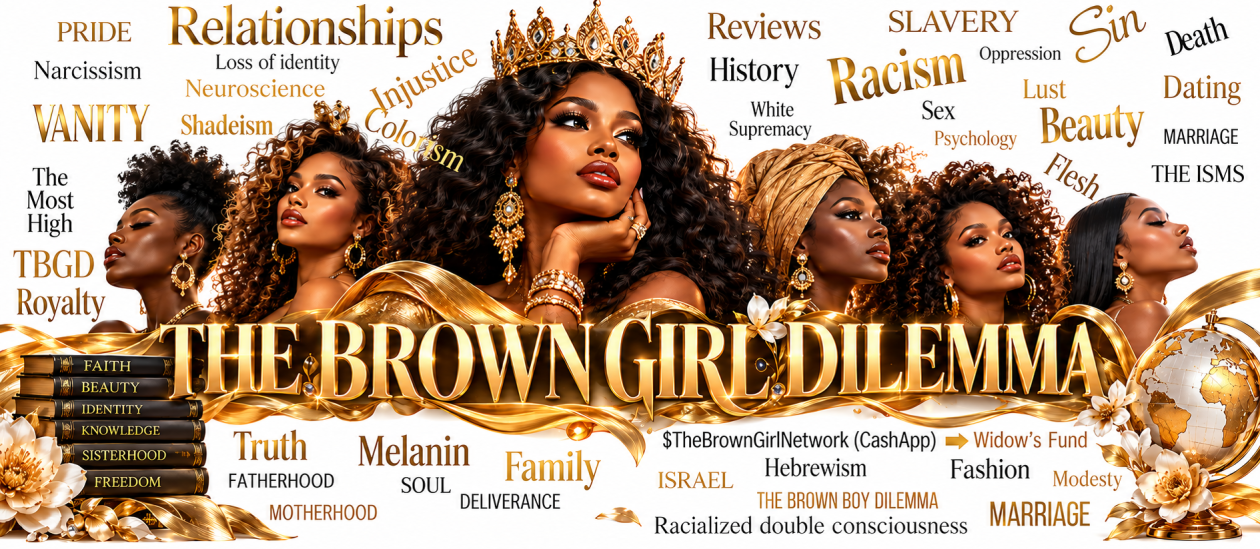

Black aesthetics cannot be reduced to appearance alone; it is a multidimensional framework that encompasses history, identity, resistance, and cultural expression. Rooted in the lived experiences of people of African descent, Black aesthetics reflects both the trauma of displacement and the resilience of cultural preservation.
Historically, African societies possessed diverse and sophisticated aesthetic systems long before European contact. From intricate hairstyles to symbolic body adornment, beauty was deeply tied to spirituality, status, and communal identity rather than conformity to a singular standard (Thompson, 1984).
The disruption of these systems began with the transatlantic slave trade, where African bodies were stripped of cultural markers and redefined within a racialized hierarchy. Enslaved individuals were denied the ability to express their aesthetic traditions, and their physical features were recast as inferior within European frameworks.
This imposed hierarchy did not merely affect perception; it reshaped identity. Blackness became associated with lack, absence, and deviation from an imposed norm. As a result, aesthetics became a site of psychological and cultural struggle, where appearance was politicized and policed.
Despite these conditions, Black communities continuously recreated beauty through resistance. Hairstyles, fashion, music, and language became tools of cultural survival. The act of maintaining or reinventing aesthetic traditions was itself a form of defiance against erasure.
The 20th century marked a significant turning point with movements such as the Harlem Renaissance, where Black artists and intellectuals redefined beauty on their own terms. Figures like Langston Hughes and Zora Neale Hurston celebrated Black identity through literature and art, challenging dominant narratives.
Later, the Black is Beautiful movement of the 1960s and 1970s further advanced this reclamation. Natural hair, darker skin tones, and African-inspired fashion were embraced as symbols of pride rather than shame. This movement directly confronted Eurocentric beauty standards and offered alternative frameworks of attractiveness.
Black aesthetics also operates as a language of symbolism. For example, hairstyles such as braids and locs carry historical and cultural significance, often representing lineage, resistance, and identity. These forms are not merely stylistic—they are communicative.
In contemporary society, Black aesthetics continues to influence global culture in profound ways. From fashion to music to visual art, elements originating in Black communities are often adopted and mainstreamed. Yet, this influence is frequently detached from its cultural origins, raising questions about appropriation and recognition.
Social media has amplified both visibility and tension. On one hand, it has created space for diverse representations of Black beauty. On the other, it has also enabled the commodification of Black features without acknowledging their historical context.
Colorism remains a critical issue within discussions of Black aesthetics. The privileging of lighter skin tones within and outside Black communities reflects the lingering impact of colonial hierarchies. This internal stratification complicates the broader reclamation of beauty.
Gender also shapes the experience of Black aesthetics. Black women, in particular, navigate intersecting expectations related to race, femininity, and beauty. Their bodies are often subjected to both hypervisibility and invisibility, depending on context.
At the same time, Black masculinity is aestheticized in ways that can be both empowering and limiting. Traits associated with strength and physicality are often emphasized, sometimes overshadowing emotional and intellectual dimensions.
The global influence of Black aesthetics is undeniable. Music genres such as hip-hop and R&B, as well as fashion trends rooted in Black culture, have reshaped mainstream aesthetics worldwide. This influence demonstrates the creative power embedded within Black communities.
However, influence does not always translate into equity. The same features that are celebrated on non-Black bodies are often stigmatized on Black individuals. This contradiction highlights the ongoing tension between admiration and discrimination.
Scholars argue that Black aesthetics must be understood as both artistic expression and political statement. It challenges dominant narratives while offering alternative visions of beauty and identity (Mercer, 1987).
Education and representation are key to advancing this discourse. By centering Black voices and experiences, it becomes possible to move beyond superficial engagement and toward a deeper understanding of cultural significance.
Importantly, Black aesthetics is not monolithic. It encompasses a wide range of expressions influenced by geography, history, and individual creativity. Recognizing this diversity prevents the oversimplification of Black identity.
As conversations around diversity and inclusion continue to evolve, Black aesthetics remains central to redefining global beauty standards. It invites a shift from exclusion to multiplicity, from hierarchy to appreciation.
Ultimately, Black aesthetics is an ongoing process of reclamation. It reasserts the value of features, traditions, and identities that were historically devalued, transforming them into sources of pride and empowerment.
In doing so, it not only reshapes how beauty is perceived but also how identity is understood. Black aesthetics stands as both a testament to resilience and a blueprint for a more inclusive vision of humanity.
References
Mercer, K. (1987). Black hair/style politics. New Formations, 3, 33–54.
Thompson, R. F. (1984). Flash of the spirit: African and Afro-American art and philosophy. Random House.
Byrd, A. D., & Tharps, L. L. (2014). Hair story: Untangling the roots of Black hair in America. St. Martin’s Press.
Hall, S. (1997). Representation: Cultural representations and signifying practices. Sage.
Tate, S. A. (2009). Black beauty: Aesthetics, stylization, politics. Routledge.
Walker, S. (2007). Style and status: Selling beauty to African American women, 1920–1975. University Press of Kentucky.


