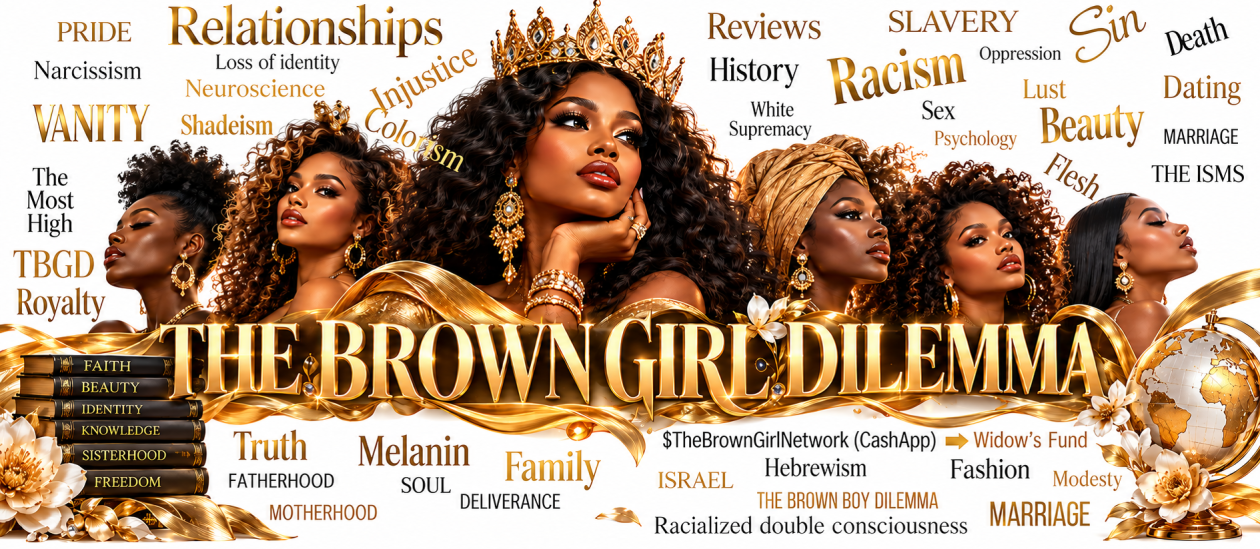

Beauty has long been a social construct shaped by cultural, historical, and psychological factors. Across societies, a “universal standard of beauty” has emerged, often privileging Eurocentric features such as light skin, narrow noses, high cheekbones, and straight hair. This standard exerts profound influence on perceptions of self-worth and social acceptance, particularly for Black women.
Historically, the universal standard of beauty was not neutral. Colonization, slavery, and media have historically elevated whiteness as the ideal while devaluing Black features (hooks, 1992). This system reinforced hierarchy, assigning privilege to those who fit Eurocentric ideals and marginalizing those who did not.
The origins of this standard are tied to power structures. White colonial rulers, European aristocracy, and later Hollywood propagated imagery and narratives that established Eurocentric features as beautiful, moral, and desirable. Psychology explains this as social conditioning: repeated exposure to certain traits shapes perception of beauty (Tiggemann & McGill, 2004).
Prerequisites of the universal beauty standard often include light skin, straight hair, narrow noses, thin lips, and symmetrical facial features. These traits are frequently elevated in media, advertising, and fashion industries, creating aspirational norms that are nearly impossible for many Black women to meet naturally.
Black women are disproportionately affected because their natural features are systematically devalued. Darker skin, coarser hair textures, fuller lips, and wider noses are often stigmatized, producing negative self-perception and internalized colorism. This aligns with the biblical principle in 1 Samuel 16:7 (KJV): “But the Lord said unto Samuel, Look not on his countenance, or on the height of his stature; because I have refused him: for the Lord seeth not as man seeth; for man looketh on the outward appearance, but the Lord looketh on the heart.”
Psychologically, exposure to Eurocentric beauty ideals can increase anxiety, depression, and body dissatisfaction among Black women (Griffiths et al., 2018). Social comparison, particularly through social media and Hollywood films, reinforces feelings of inadequacy and fuels self-criticism.
The media plays a central role in maintaining these standards. Black women are often underrepresented or portrayed in stereotypical ways. When they appear, light-skinned, straight-haired, or “mixed-race” models are prioritized, reinforcing the message that natural Black features are less desirable.
Ironically, some facial features of Black women—full lips, high cheekbones, and curvy bodies—have been increasingly copied and celebrated in mainstream beauty culture. White women undergoing cosmetic procedures to emulate Black features underscores both the influence and undervaluation of Black beauty (Harrison, 2003).
The universal view of beauty continues to evolve but remains Eurocentric at its core. Surveys and global media indicate that lighter skin and slim body types remain dominant ideals in many countries, despite cultural differences (Swami et al., 2012). Black women often find themselves navigating conflicting standards of beauty that neither fully recognize nor validate their natural features.
Some psychological theories suggest that the preference for these traits is partly rooted in evolutionary cues of health, youth, and symmetry (Rhodes, 2006). However, culture and power structures exaggerate these preferences, transforming natural variations into normative standards.
The implications for self-esteem are significant. Black women who internalize Eurocentric beauty ideals may engage in harmful practices: skin lightening, hair straightening, cosmetic surgeries, or extreme dieting. These behaviors attempt to conform to socially constructed ideals rather than celebrating natural diversity.
Education and self-awareness are critical in overcoming these pressures. By understanding the historical and social roots of beauty standards, Black women can separate societal expectations from intrinsic value. Proverbs 31:30 (KJV) emphasizes this: “Favour is deceitful, and beauty is vain: but a woman that feareth the Lord, she shall be praised.” Spiritual grounding strengthens resilience against societal pressures.
Representation matters. Black women who see themselves positively reflected in media, arts, and leadership positions reinforce pride in natural features. Cultural pride movements, such as the natural hair movement, encourage self-acceptance and challenge Eurocentric norms.
Psychologically, positive self-affirmation, mentoring, and community support buffer the negative effects of internalized beauty ideals. Cognitive-behavioral interventions help women recognize and restructure harmful beliefs about their appearance (Cash, 2002).
Cultural education also helps. Understanding African aesthetic traditions, hairstyles, and historical contributions to art, fashion, and beauty can foster pride and counteract feelings of inferiority imposed by Eurocentric standards.
Beauty must be reframed as multifaceted, inclusive, and culturally grounded. Symmetry, health, and expression are universal aspects of attractiveness, but culture shapes the interpretation of these traits. Black beauty encompasses resilience, heritage, and unique physical characteristics that defy narrow definitions.
Faith and spirituality provide additional tools. Meditating on biblical truths about identity and value helps women resist the lies of superficial standards. Psalm 139:14 (KJV) reminds, “I will praise thee; for I am fearfully and wonderfully made: marvellous are thy works; and that my soul knoweth right well.”
Overcoming the pressures of a universal standard of beauty requires intentional self-care, affirmation, and rejection of societal lies. Black women can celebrate their hair textures, skin tones, facial features, and bodies as divine creations. Empowerment arises from recognizing one’s inherent value and refusing to let external standards dictate self-worth.
Finally, collective action and cultural advocacy strengthen resilience. Black women supporting one another, mentoring younger generations, and demanding representation in media and leadership positions ensures that future standards of beauty are inclusive, empowering, and authentic.
References
- Cash, T. F. (2002). Cognitive-behavioral perspectives on body image. In T. F. Cash & T. Pruzinsky (Eds.), Body Image: A Handbook of Theory, Research, and Clinical Practice. Guilford Press.
- Griffiths, S., Murray, S. B., Krug, I., & McLean, S. A. (2018). The contribution of social media to body image concerns in young women. International Journal of Eating Disorders, 51(7), 1-10.
- Harrison, K. (2003). Media, race, and body image. Journal of Communication, 53(3), 300-317.
- hooks, b. (1992). Black Looks: Race and Representation. South End Press.
- Rhodes, G. (2006). The evolutionary psychology of facial beauty. Annual Review of Psychology, 57, 199-226.
- Swami, V., Mada, R., Tovée, M. J., & Furnham, A. (2012). An investigation of the impact of television viewing on self-esteem and body image in adolescent girls. European Eating Disorders Review, 20(1), 59-65.
- KJV Bible: 1 Samuel 16:7; Proverbs 31:30; Psalm 139:14.


