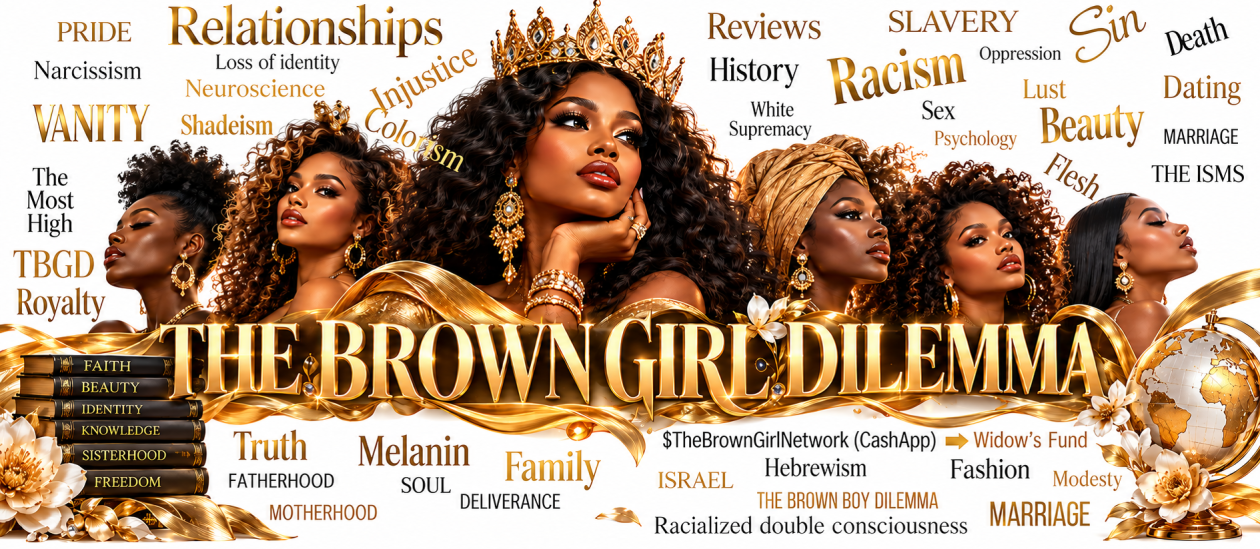
Tag Archives: colonization

What are the signs of a colonized mind?

A colonized mind can be understood as a psychological and cultural condition in which the values, assumptions, standards, and hierarchies established by a dominant power become internalized by people who have historically been subjected to that power. Colonialism does not operate exclusively through political control or economic exploitation; it can also influence how people understand themselves, their history, their culture, their appearance, their intelligence, and their possibilities. Frantz Fanon examined this psychological dimension of colonial domination, demonstrating how systems of racial hierarchy can become embedded within the consciousness of both the oppressed and the oppressor (Fanon, 1952/2008).

What Is Colonization?

Colonization is the process by which one society or political power extends control over another people’s land, government, economy, resources, labor, culture, and often their understanding of themselves. It is not merely migration or cultural exchange. At its most coercive, colonization involves conquest, dispossession, exploitation, and the restructuring of an existing society to benefit the colonizing power.

European colonialism became one of the most consequential forms of colonization in modern history. From the fifteenth century onward, European states established empires across Africa, the Americas, Asia, the Caribbean, and Oceania. These systems differed by region and period, but many involved military conquest, seizure of land and resources, political domination, forced labor, cultural suppression, and racial ideologies used to justify unequal treatment.

Slavery was deeply connected to colonial expansion

The transatlantic slave trade cannot be separated from the development of European colonial economies in the Americas. European colonial powers and colonial societies transported millions of Africans across the Atlantic and subjected them and their descendants to hereditary racialized slavery.

Enslaved Africans were treated as property under law, deprived of freedom, separated from families, subjected to violence, and compelled to produce enormous amounts of wealth through agricultural and domestic labor.

Slavery was not simply an unfortunate consequence of colonization. In many colonial economies, enslaved labor was fundamental to economic development and wealth accumulation.

The consequences extended far beyond emancipation. The destruction of families, denial of education, exclusion from property ownership, political disenfranchisement, racial terror, and economic exploitation created inequalities that did not automatically disappear when slavery formally ended.

European colonialism also created racial hierarchies

Colonialism did not invent every form of prejudice or human hierarchy, but European imperial systems helped construct and institutionalize modern racial classifications in ways that profoundly shaped the modern world.

European intellectual, political, and religious institutions developed or promoted theories portraying Europeans as more civilized, rational, advanced, or biologically superior to Africans and other colonized peoples.

These ideas became particularly powerful when connected to political and economic institutions.

A racial hierarchy could therefore become something much larger than an individual’s prejudice:

European/white → civilized, superior, powerful

African/Black/Indigenous → primitive, inferior, uncivilized

These categories were not scientific truths. They were ideological constructions that helped legitimize domination.

White supremacy

White supremacy refers to systems of thought and institutional arrangements that assign greater social, political, economic, or cultural value to whiteness or to people classified as white.

It does not necessarily require every white individual to consciously hate Black people.

A system can continue operating through laws, institutions, inherited wealth, social norms, educational systems, beauty standards, media representations, and assumptions about who is naturally intelligent, attractive, civilized, trustworthy, or authoritative.

That distinction matters.

Individual prejudice and systemic racial hierarchy are related, but they are not identical.

Cultural erasure

Colonization frequently attacks more than territory.

It can attack memory.

Colonized peoples may have their languages discouraged or prohibited, their traditional religions demonized, their names replaced, their clothing stigmatized, their histories rewritten, and their intellectual accomplishments minimized.

African peoples possessed enormously diverse civilizations, political systems, philosophies, technologies, artistic traditions, languages, spiritual traditions, and forms of scholarship before and during European colonial expansion.

Reducing Africa to a continent without history or civilization served a political purpose: if a people can be portrayed as having no meaningful civilization, conquest can be presented as salvation rather than domination.

That is one of the psychological dimensions of colonialism.

Forced assimilation

Forced assimilation occurs when a dominant power pressures or compels a conquered population to abandon aspects of its identity and adopt those of the dominant society.

This can involve:

  • language
  • names
  • religion
  • clothing
  • education
  • family structures
  • customs
  • historical narratives
  • cultural practices

The objective does not always have to be explicitly stated as “destroy their identity.”

Sometimes the message is subtler:

Your way is backward. Our way is civilized.

Eventually, people may begin repeating that message themselves.

That is where psychology becomes especially important.

Colorism

Colorism is discrimination or preferential treatment based on skin tone, particularly within racial or ethnic groups.

Although color hierarchies existed in various societies before European colonialism, European imperialism and racial classification significantly intensified and institutionalized particular associations between lighter skin, European features, social status, and superiority in many colonized societies.

Over generations, people can internalize these associations.

A darker-skinned person may therefore be taught—directly or indirectly—that lighter skin is more beautiful, more respectable, more desirable, or more socially valuable.

That does not mean every preference for lighter skin is automatically caused by colonialism. History is more complicated than that.

But colonial racial hierarchies unquestionably contributed to global systems in which European physical characteristics were frequently positioned as standards of beauty and social status.

Internalized racism

This is one of the most painful consequences to discuss.

Internalized racism occurs when people belonging to a racially marginalized group absorb negative beliefs about their own racial group and begin applying those beliefs to themselves or to other members of their group.

For example, someone may believe:

“Black people are less intelligent.”

Or:

“Dark skin isn’t beautiful.”

Or:

“Our history isn’t important.”

Or:

“African cultures are primitive.”

Those ideas can originate outside the community, but after generations of exposure, they can sometimes become embedded within the community itself.

This is why oppression does not necessarily disappear when the oppressor leaves.

Ideas can survive the institution that originally produced them.

Psychological conditioning

This is where the concept of a colonized mind becomes useful—but it should be used carefully.

A colonized mind is not a clinical diagnosis. It is a way of describing how domination can influence a person’s perceptions of self, history, culture, beauty, intelligence, authority, and worth.

Imagine a child repeatedly receiving messages that everything associated with the dominant group is superior:

Their history is superior.

Their language is superior.

Their appearance is superior.

Their religion is superior.

Their institutions are superior.

Their knowledge is superior.

Their people are superior.

Meanwhile, the child’s own people are repeatedly portrayed as inferior.

Eventually, the child does not necessarily need an oppressor standing in front of them.

The hierarchy can become internal.

That is psychological conditioning.

But Black people are not responsible for colonialism

This distinction is extremely important.

When we discuss internalized racism, we should never confuse adaptation to oppression with responsibility for oppression.

A person who has internalized racist beliefs did not create the historical system that produced those beliefs.

The responsibility belongs to the individuals, institutions, governments, economic systems, and ideological structures that created, enforced, justified, and reproduced racial domination.

At the same time, recognizing internalized oppression gives people an opportunity to challenge it.

Colonization can therefore operate on several levels

Territory: Who controls the land?

Politics: Who governs?

Economics: Who controls labor, resources, property, and wealth?

Law: Whose rights are protected?

Culture: Whose language and traditions are considered legitimate?

Education: Whose history is taught?

Religion: Whose spiritual worldview is declared legitimate or illegitimate?

Appearance: Whose physical characteristics become the beauty standard?

Psychology: Whose image of themselves does the colonized person ultimately accept?

This is why colonization is much larger than military occupation.

The deepest form of domination is not merely controlling where people live. It is influencing what they believe about themselves.

And that is why liberation can involve more than political independence. It can involve recovering historical knowledge, restoring cultural dignity, rejecting racial inferiority, challenging colorism, reclaiming African and diasporic history, rebuilding economic power, and learning to see Black humanity without requiring validation from a hierarchy that historically devalued it.

Colonization, therefore, should be understood not simply as something that happened to land, but as something that could happen to institutions, cultures, economies, identities, and minds.

One of the most recognizable signs of a colonized mind is self-rejection. An individual may begin to regard characteristics associated with their own cultural or racial identity as inferior while regarding characteristics associated with the dominant culture as superior. Among Black populations, this can manifest through the rejection of African history, language, physical characteristics, cultural traditions, names, or forms of expression. The problem is not personal preference itself; the deeper concern emerges when preference is governed by the belief that one’s own cultural characteristics are inherently less valuable.

Another sign is internalized racial hierarchy. A person may consciously reject racism while unconsciously reproducing assumptions about which people are more intelligent, beautiful, civilized, respectable, successful, or worthy based upon proximity to dominant racial standards. Internalized oppression can operate subtly, making social hierarchies appear natural rather than historically constructed. Pyke (2010) emphasizes that internalized racial oppression involves the incorporation of ideologies of racial domination into the consciousness of members of subordinated groups.

A colonized mindset may also reveal itself through colorism, particularly when lighter skin is automatically associated with beauty, status, desirability, or social worth while darker skin is treated as undesirable. Colorism has complex historical origins and cannot be attributed to one single institution or period. Nevertheless, colonialism, slavery, class stratification, and racial hierarchy have historically contributed to systems in which proximity to whiteness could provide social advantages. The psychological consequence can be the elevation of particular physical characteristics over others within the same racial community.

The rejection of African or Black physical features can represent another manifestation. Hair texture, facial features, skin tone, body shape, and other characteristics may become targets of criticism when dominant beauty standards are treated as universal standards of attractiveness. This does not mean that wearing straight hair, using cosmetics, changing one’s hairstyle, or appreciating European aesthetics automatically represents colonization. The critical question is whether individuals possess genuine freedom of aesthetic choice or whether they have been taught that their natural characteristics are unacceptable unless altered.

Eurocentrism can also become embedded within one’s understanding of knowledge. A colonized mind may assume that European history is automatically world history while African, Indigenous, Asian, Caribbean, and other histories are treated as secondary or peripheral. Colonial education frequently established European intellectual traditions as universal while minimizing the intellectual contributions of colonized peoples. Ngũgĩ wa Thiong’o (1986) famously argued that colonial domination extends into the realm of language, education, culture, and imagination.

Another sign is historical disconnection. People may know extensive details about European monarchies, wars, philosophers, and cultural movements while possessing little knowledge about African civilizations, intellectual traditions, political systems, scientific contributions, or resistance movements. Ignorance itself does not prove colonization; everyone has gaps in knowledge. The more significant issue is when a person believes that their ancestral history is unimportant, primitive, embarrassing, or irrelevant while regarding European history as inherently sophisticated and worthy of serious study.

A colonized mindset may also produce cultural shame. Cultural practices can become objects of ridicule when they are perceived through the eyes of a dominant society. Language, food, music, spirituality, clothing, family structures, names, and traditional customs may be dismissed as backward simply because they do not conform to dominant cultural expectations. Frantz Fanon (1952/2008) explored how colonized subjects can experience profound psychological conflict when attempting to navigate between their inherited identity and the cultural standards imposed by colonial society.

Another sign is the desire for acceptance from the dominant group at the expense of one’s own dignity. Seeking acceptance is a normal human desire. The problem develops when acceptance requires abandoning one’s values, denigrating one’s community, concealing one’s identity, or distancing oneself from people who share one’s background. The colonized mind may interpret assimilation as the only path to respectability. In this situation, belonging becomes dependent upon demonstrating distance from the supposedly inferior group.

People-pleasing toward dominant institutions can be another manifestation. Individuals may feel compelled to modify their speech, appearance, cultural expressions, opinions, or behavior to appear acceptable to institutions historically associated with power. Code-switching itself should not automatically be described as colonization; adapting communication to different environments can be a legitimate survival or professional skill. The concern arises when adaptation becomes accompanied by the belief that one’s authentic cultural identity is inherently unprofessional, unintelligent, uncivilized, or unacceptable.

A colonized mind may also demonstrate discomfort with Black excellence when it does not conform to familiar stereotypes. Successful Black individuals may sometimes be accused of “acting different,” “acting white,” or abandoning their community because they possess educational, professional, linguistic, or socioeconomic characteristics associated with dominant institutions. This reveals how racial stereotypes can become internalized even among members of the group being stereotyped. True liberation should make room for intellectual, professional, economic, artistic, and cultural diversity within Black identity.

Another potential sign is the assumption that white or Western institutions are automatically superior. Western institutions have produced enormous contributions to science, medicine, philosophy, government, literature, and technology, and acknowledging those contributions does not require rejecting other civilizations. The colonized mindset emerges when Western achievement is treated as evidence of inherent racial superiority rather than understood within historical, geographical, economic, political, and cultural contexts. Likewise, recognizing African civilizations and intellectual achievements does not require romanticizing Africa or denying legitimate historical shortcomings.

Materialism and status consciousness can sometimes become connected to colonial psychology. Colonial systems frequently established social hierarchies based upon proximity to European standards, wealth, education, occupation, language, and social position. Consequently, individuals may pursue symbols of status not simply because they enjoy beautiful or expensive things but because those things appear to validate their humanity or social worth. The issue is not luxury itself; it is the psychological belief that possessing certain products, accents, neighborhoods, institutions, or affiliations makes one more worthy than one’s own community.

Another sign can be the belief that liberation requires becoming like the former or present dominant group. This represents a misunderstanding of liberation. Liberation does not require the rejection of everything associated with another culture, nor does it require the creation of an artificial cultural purity. Rather, liberation involves developing the intellectual freedom to evaluate ideas independently and retain what is constructive without accepting imposed hierarchies of human worth. Steve Biko (1978) emphasized the importance of psychological liberation and the restoration of Black self-consciousness under apartheid.

A colonized mind may also exhibit learned powerlessness. Colonial systems often communicate the message that certain populations are incapable of governing themselves, producing knowledge, building institutions, creating wealth, or determining their own future. When such messages become internalized, individuals may stop imagining themselves as agents capable of changing their circumstances. They may assume that meaningful authority, expertise, innovation, or leadership must always come from somewhere else. Psychological liberation therefore involves recovering a sense of agency and intellectual possibility.

Self-policing within the community may be another expression of internalized domination. Individuals can sometimes become enforcers of standards originally imposed upon their community, criticizing others for their appearance, dialect, cultural practices, political consciousness, or historical interests. Instead of questioning the origin of the standard, they defend it. This phenomenon illustrates how systems of domination can become particularly powerful when external enforcement is no longer necessary because members of the subordinated population begin enforcing the hierarchy themselves.

The colonized mind may additionally demonstrate fear of historical truth. Honest engagement with history can be uncomfortable because it requires confronting slavery, colonialism, segregation, exploitation, resistance, complicity, and the complicated relationships between oppressed and privileged groups. Yet historical knowledge is not intended to produce perpetual hatred or victimhood. Its purpose is to provide context. W. E. B. Du Bois (1903/2007) demonstrated the importance of understanding the psychological and social consequences of racial oppression rather than treating racial inequality as an isolated individual problem.

Another important sign is the inability to distinguish admiration from submission. There is nothing inherently wrong with appreciating European, African, Asian, Caribbean, Latin American, or other cultures. Cultural exchange has always been part of human civilization. The problem occurs when appreciation becomes submission—when another culture is regarded as inherently superior, and one’s own culture is automatically dismissed. A psychologically liberated person can admire another civilization without believing that admiration requires self-contempt.

A colonized mindset can also appear as the absence of collective imagination. Colonial ideology can restrict the imagination by convincing people that existing institutions, economic arrangements, social hierarchies, and cultural standards are permanent and unavoidable. When people cannot imagine alternatives, they may reproduce the very structures that disadvantage them. bell hooks (1994) emphasized the importance of critical consciousness, education, and transformative thinking in challenging systems of domination. Liberation therefore involves not only recognizing oppression but imagining something beyond it.

Ultimately, the opposite of a colonized mind is not hatred of another race, rejection of Western civilization, romanticization of Africa, or the belief that one racial group is inherently superior to another. Psychological liberation is the recovery of intellectual sovereignty. It means being able to examine history honestly, appreciate one’s ancestry without romanticizing it, criticize one’s community without despising it, appreciate other cultures without worshiping them, and make decisions without unconsciously measuring human worth according to colonial standards. The liberated mind does not simply reverse the hierarchy—it questions the hierarchy itself.

For Black people in particular, psychological liberation can involve reclaiming historical knowledge, affirming the dignity of Black identity, studying African and African-diasporic civilizations, challenging colorism and internalized racism, developing economic and intellectual independence, and refusing to confuse assimilation with human progress. Yet liberation remains an individual and collective process rather than a test of racial authenticity. No person should be labeled “colonized” merely because they enjoy Western clothing, music, education, institutions, religion, language, or aesthetics. The deeper question is whether those choices are freely made or controlled by an internal belief that Blackness, African heritage, or one’s own humanity is somehow inferior. As Fanon, Biko, Du Bois, hooks, and Ngũgĩ each demonstrate in different ways, freedom ultimately requires more than changing political circumstances—it requires transforming the ways human beings understand themselves, their history, and their possibilities.

References

Biko, S. (1978). I write what I like: A selection of his writings. Heinemann.

Du Bois, W. E. B. (2007). The souls of Black folk. Oxford University Press. (Original work published 1903)

Fanon, F. (2008). Black skin, white masks (R. Philcox, Trans.). Grove Press. (Original work published 1952)

Fanon, F. (1963). The wretched of the earth (C. Farrington, Trans.). Grove Press.

hooks, b. (1994). Teaching to transgress: Education as the practice of freedom. Routledge.

Memmi, A. (1991). The colonizer and the colonized. Beacon Press. (Original work published 1957)

Ngũgĩ wa Thiong’o. (1986). Decolonising the mind: The politics of language in African literature. James Currey.

Pyke, K. D. (2010). What is internalized racial oppression and why don’t we study it? Acknowledging racism’s hidden injuries. Sociological Perspectives, 53(4), 551–572. https://doi.org/10.1525/sop.2010.53.4.551

Said, E. W. (1978). Orientalism. Pantheon Books.

Memmi, A. (1967). The colonizer and the colonized. Beacon Press.

Bhabha, H. K. (1994). The location of culture. Routledge.

Césaire, A. (2000). Discourse on colonialism (J. Pinkham, Trans.). Monthly Review Press. (Original work published 1950)

Cooper, F. (2005). Colonialism in question: Theory, knowledge, history. University of California Press.

Du Bois, W. E. B. (1903). The souls of Black folk. A. C. McClurg & Co.

Fredrickson, G. M. (1981). White supremacy: A comparative study in American and South African history. Oxford University Press.

Gates, H. L., Jr. (2011). Black in Latin America. New York University Press.

Gomez, M. A. (1998). Exchanging our country marks: The transformation of African identities in the colonial and antebellum South. University of North Carolina Press.

Hall, S. (1996). When was “the post-colonial”? Thinking at the limit. In I. Chambers & L. Curti (Eds.), The post-colonial question: Common skies, divided horizons (pp. 242–260). Routledge.

Harris, M. (1964). Patterns of race in the Americas. Walker and Company.

Hochschild, A. (1998). King Leopold’s ghost: A story of greed, terror, and heroism in colonial Africa. Houghton Mifflin.

Kendi, I. X. (2016). Stamped from the beginning: The definitive history of racist ideas in America. Nation Books.

Memmi, A. (1965). The colonizer and the colonized (H. Greenfeld, Trans.). Orion Press.

Mills, C. W. (1997). The racial contract. Cornell University Press.

Nunn, N. (2008). The long-term effects of Africa’s slave trades. The Quarterly Journal of Economics, 123(1), 139–176. https://doi.org/10.1162/qjec.2008.123.1.139

Robinson, C. J. (1983). Black Marxism: The making of the Black radical tradition. Zed Press.

Said, E. W. (1978). Orientalism. Pantheon Books.

Smedley, A., & Smedley, B. D. (2012). Race in North America: Origin and evolution of a worldview (4th ed.). Westview Press.

Thompson, V. (2018). Black beauty: A history of the African American beauty culture. NYU Press.

Williams, E. (1944). Capitalism and slavery. University of North Carolina Press.

Woodson, C. G. (1933). The mis-education of the Negro. The Associated Publishers.

African Kingdoms Before Colonization

Long before European colonization, Africa was home to some of the world’s most sophisticated and influential civilizations. These kingdoms developed advanced systems of government, thriving economies, complex trade networks, impressive architecture, and rich cultural traditions. The history of precolonial Africa challenges outdated stereotypes that portray the continent as isolated or underdeveloped before European contact.

Africa’s diverse geography contributed to the emergence of numerous powerful kingdoms and empires. Vast deserts, fertile river valleys, forests, grasslands, and coastal regions provided unique opportunities for agriculture, trade, and state formation. As a result, African societies developed in many different ways while maintaining strong regional and international connections.

One of the earliest great African civilizations was Ancient Egypt. Located along the Nile River, Egypt became one of the most influential societies in human history. Its achievements in engineering, mathematics, medicine, writing, and government influenced civilizations throughout Africa, the Middle East, and the Mediterranean world.

South of Egypt, the Kingdom of Kush emerged in present-day Sudan. Kush became a major political and military power and even conquered Egypt during the Twenty-Fifth Dynasty. Kushite rulers governed a vast territory and developed impressive cities such as Napata and Meroë.

In West Africa, the Empire of Ghana became one of the first great trading states. Despite its name, it was located primarily in present-day Mauritania and Mali. Ghana grew wealthy through its control of trans-Saharan trade routes that connected West Africa with North Africa.

Gold and salt were among the most valuable commodities traded through Ghana. Merchants crossed the Sahara Desert carrying goods that linked African economies with broader commercial networks extending into Europe and Asia.

After the decline of Ghana, the Mali Empire rose to prominence during the thirteenth century. Founded by Sundiata Keita, Mali became one of the largest and wealthiest empires in African history. Its influence stretched across vast regions of West Africa.

Mali’s prosperity was built upon agriculture, taxation, and control of important trade routes. Gold mines within the empire generated immense wealth, making Mali one of the richest states in the medieval world.

The most famous ruler of Mali was Mansa Musa. His pilgrimage to Mecca in 1324 introduced the empire to much of the known world and highlighted the extraordinary wealth and influence of West Africa.

Mali also became a center of scholarship and learning. Cities such as Timbuktu attracted scholars, teachers, and students from across Africa and the Islamic world. Libraries and educational institutions flourished under imperial patronage.

Following Mali’s decline, the Songhai Empire emerged as the dominant power in West Africa. Centered around the city of Gao, Songhai expanded into one of the largest empires in African history.

Under rulers such as Sunni Ali and Askia Muhammad, Songhai developed a sophisticated government, professional military, and extensive trade system. The empire became renowned for its administrative efficiency and educational institutions.

In present-day Nigeria, the Hausa city-states developed prosperous urban centers that engaged in commerce, manufacturing, and long-distance trade. Cities such as Kano and Katsina became important commercial hubs.

The Kingdom of Kanem-Bornu flourished near Lake Chad for centuries. Its strategic location allowed it to participate in regional and trans-Saharan trade networks while maintaining considerable political power.

The Yoruba civilization developed powerful city-states in southwestern Nigeria. Among these, Ife became famous for its artistic achievements, particularly its remarkable bronze and terracotta sculptures.

The Oyo Empire emerged as one of the most influential Yoruba states. Oyo’s military strength, political organization, and commercial success enabled it to dominate large portions of West Africa for centuries.

In the forests of modern Ghana, the Akan states prospered through agriculture and gold production. These states eventually contributed to the rise of the powerful Ashanti Empire.

The Ashanti Empire became one of the most organized and militarily effective kingdoms in West Africa. Its centralized government, disciplined military, and extensive trade networks allowed it to become a major regional power.

In Central Africa, the Kingdom of Kongo developed a highly organized political system. The kingdom maintained diplomatic and commercial relationships with neighboring societies and later with European powers.

The Kingdom of Kongo possessed a structured government with provincial administrators, taxation systems, and sophisticated agricultural practices. Its leaders demonstrated considerable political skill in managing a large and diverse population.

Further south, Great Zimbabwe became one of Africa’s most impressive civilizations. Built between the eleventh and fifteenth centuries, the city featured massive stone structures that continue to amaze archaeologists and historians.

Great Zimbabwe controlled valuable trade routes linking the African interior with Indian Ocean ports. Gold, ivory, and other goods were exchanged with merchants from Arabia, Persia, India, and China.

Along the East African coast, the Swahili city-states flourished through maritime commerce. Cities such as Kilwa, Mombasa, and Zanzibar became prosperous centers of trade and cultural exchange.

The Swahili civilization reflected a unique blend of African, Arab, Persian, and Indian influences. Its merchants played a crucial role in connecting Africa to the wider Indian Ocean world.

In Ethiopia, the Kingdom of Aksum emerged as one of the great powers of the ancient world. Aksum controlled important trade routes and became one of the earliest states to adopt Christianity.

The Ethiopian highlands later gave rise to powerful Christian kingdoms that preserved their independence and maintained rich cultural and religious traditions over many centuries.

African kingdoms developed sophisticated political systems long before colonial rule. Many maintained councils, legal codes, taxation structures, diplomatic relationships, and professional military organizations.

Major African Kingdoms and Empires Before Colonization

North Africa

  • Ancient Egypt
  • Kingdom of Kush
  • Kingdom of Aksum
  • Carthaginian Empire
  • Numidian Kingdom
  • Garamantian Kingdom

West Africa

  • Ghana Empire (Wagadou)
  • Mali Empire
  • Songhai Empire
  • Sosso Kingdom
  • Tekrur Kingdom
  • Jolof Empire
  • Ashanti Empire
  • Bono Kingdom
  • Denkyira Kingdom
  • Dagbon Kingdom
  • Mossi Kingdoms
  • Oyo Empire
  • Benin Kingdom
  • Nri Kingdom
  • Kanem Empire
  • Bornu Empire
  • Hausa City-States (Kano, Katsina, Zaria, Gobir, Daura, Rano, Biram)

Central Africa

  • Kingdom of Kongo
  • Kingdom of Loango
  • Kingdom of Ndongo
  • Kingdom of Matamba
  • Kuba Kingdom
  • Luba Empire
  • Lunda Empire
  • Yeke Kingdom

East Africa

  • Kingdom of Aksum
  • Ethiopian Empire (Abyssinia)
  • Zagwe Kingdom
  • Kingdom of Damot
  • Kingdom of Kaffa
  • Kingdom of Buganda
  • Kingdom of Bunyoro-Kitara
  • Kingdom of Ankole
  • Kingdom of Rwanda
  • Kingdom of Burundi
  • Kilwa Sultanate
  • Mombasa Sultanate
  • Pate Sultanate
  • Zanzibar Sultanate

Southern Africa

  • Great Zimbabwe
  • Kingdom of Mapungubwe
  • Mutapa Empire
  • Rozvi Empire
  • Torwa Kingdom
  • Zulu Kingdom
  • Swazi Kingdom
  • Basotho Kingdom
  • Ndebele Kingdom
  • Tswana Kingdoms

Some of the Largest and Most Powerful African Empires

  • Ancient Egypt
  • Kingdom of Kush
  • Ghana Empire
  • Mali Empire
  • Songhai Empire
  • Kanem-Bornu Empire
  • Benin Kingdom
  • Ashanti Empire
  • Kingdom of Kongo
  • Ethiopian Empire
  • Great Zimbabwe
  • Mutapa Empire
  • Oyo Empire
  • Luba Empire
  • Lunda Empire
  • Zulu Kingdom

Famous African Kings and Queens

  • Sundiata Keita
  • Mansa Musa
  • Askia Muhammad I
  • Sunni Ali
  • Shaka Zulu
  • Yaa Asantewaa
  • Amina of Zazzau
  • Nzinga Mbande
  • Taharqa
  • Ezana of Aksum

Often Called the “Big Three” West African Empires

  • Ghana Empire
  • Mali Empire
  • Songhai Empire

These three empires dominated trans-Saharan trade for centuries and controlled much of the world’s gold supply during different periods of African history. They are often considered the greatest empires of medieval West Africa.

Art, architecture, music, literature, and religion flourished throughout precolonial Africa. From the bronze works of Ife to the stone monuments of Great Zimbabwe, African societies produced enduring cultural achievements.

Trade connected African kingdoms to international markets. Gold, ivory, textiles, copper, salt, spices, and agricultural products moved through extensive networks that linked Africa with Europe, Asia, and the Middle East.

The history of African kingdoms before colonization demonstrates that Africa was home to powerful states, thriving economies, advanced educational institutions, and remarkable cultural achievements. Understanding this history provides a more accurate and complete picture of the continent’s rich heritage and the significant contributions African civilizations made to world history.

References

Davidson, B. (1995). Africa in history (Rev. ed.). Touchstone.

Ehret, C. (2002). The civilizations of Africa: A history to 1800. University of Virginia Press.

Fage, J. D., & Oliver, R. (Eds.). (1975). The Cambridge history of Africa (Vols. 1–8). Cambridge University Press.

Iliffe, J. (2017). Africans: The history of a continent (3rd ed.). Cambridge University Press.

Ki-Zerbo, J. (1981). General history of Africa I: Methodology and African prehistory. UNESCO.

Niane, D. T. (1989). Sundiata: An epic of old Mali. Longman.

Oliver, R., & Fage, J. D. (1995). A short history of Africa (6th ed.). Penguin Books.

Shillington, K. (2019). History of Africa (4th ed.). Red Globe Press.

UNESCO. (1998). General history of Africa IV: Africa from the twelfth to the sixteenth century. University of California Press.

Vansina, J. (1990). Paths in the rainforests: Toward a history of political tradition in equatorial Africa. University of Wisconsin Press.

Eurocentric Beauty Standards VS Black Beauty Standards: The Brown Girl Dilemma

Eurocentric beauty standards have shaped global perceptions of attractiveness for centuries, creating a hierarchy that places whiteness at the top and all other features beneath it. For Black women—especially Brown-skinned and dark-skinned women—this hierarchy produces a dilemma that is both personal and generational. It affects identity, self-esteem, desirability, and even spiritual understanding of self-worth. This essay explores the history and psychology behind Eurocentric ideals—straight hair, light skin, narrow features, blue eyes—and contrasts them with the richness, diversity, and inherent value of Black beauty.

The Origins of Eurocentric Beauty Hierarchy

Eurocentric standards were born from colonialism, slavery, and racial pseudoscience. European colonizers declared their own features—pale skin, straight or wavy hair, slim noses, and light eyes—as “civilized,” “pure,” and “superior.” These traits became the global benchmark, not because they were inherently beautiful, but because they were associated with power, wealth, and dominance. Whiteness became the symbol of privilege.

Slavery and Color Hierarchies

During the transatlantic slave trade, enslaved Africans with lighter skin—often the product of sexual violence—were given preferential treatment. They worked in the house, wore better clothing, and at times received literacy or skilled labor training. This created the “house slave vs. field slave” hierarchy, embedding colorism deep into Black communities. Light skin became associated with safety, access, and acceptance—survival benefits. These dynamics later morphed into social preferences that still influence dating, media, and institutional biases today.

The Psychological Impact of Whiteness as the Default

Psychologists describe Eurocentric beauty standards as a “dominant cultural schema” (hooks, 1992). When one group controls media, education, and social narratives, their features become normalized as the ideal. This creates aesthetic assimilation pressure—the subconscious push to emulate the dominant group to gain approval, opportunity, and perceived worth.

The Brown Girl Dilemma

For Brown-skinned and dark-skinned girls, the psychological conflict is acute. They are often raised to love themselves spiritually, yet conditioned socially to see their features as less desirable. This creates cognitive dissonance:

  • “Why don’t I look like the women celebrated on TV?”
  • “Why is lighter skin described as beautiful, classy, or desirable?”
  • “Why do I feel too dark or too ‘ethnic’?”
    This tension affects self-esteem, dating prospects, opportunities, and even how young girls see their own reflection.

Hair: A Battleground for Identity

Straight hair has long been praised because it aligns closest to Eurocentric ideals. During Jim Crow and segregation, straightened or pressed hair was viewed as a means to “fit in” and reduce racial discrimination. The psychological message?
Natural coils = unprofessional, wild, unkempt
Straight hair = polished, acceptable, beautiful
This created internalized anti-Blackness, where girls learned that their natural features needed altering to be worthy.

Light Eyes and Light Skin as Social Capital

Blue or light eyes and pale skin carried symbolic power because they aligned with whiteness. The lighter a Black woman appeared, the closer she seemed to whiteness—and the more approval she gained from dominant society. Studies show that lighter-skinned Black women historically received better job opportunities, social mobility, and media representation (Hunter, 2007).
This ingrained the belief that beauty equals proximity to whiteness.

Media Reinforcement

For decades, magazines, movies, and fashion campaigns prioritized white women and lighter-skinned Black women. Black girls grew up with very few images that reflected their features, resulting in what some psychologists call identity starvation. Without representation, children struggle to form healthy self-esteem because they cannot see themselves as beautiful.

Colonial Psychology: The Beauty of the Conquered vs. the Conqueror

Colonialism taught the world that the conqueror’s traits were superior. European missionaries, scientists, and artists depicted African features as “primitive” or “animalistic.” Pseudoscientific works like those by Carl Linnaeus and Johann Blumenbach ranked races by beauty, placing Europeans at the top and Africans at the bottom. This scientific racism became the foundation for beauty discrimination.

Internalized Colorism in Black Communities

Over time, these external hierarchies became internal practices:

  • Favoring lighter-skinned women in family praise
  • Associating dark skin with aggression or masculinity
  • Assuming lighter skin equals innocence or refinement
    This internalization is generational trauma passed down from slavery.

Beauty as a Form of Resistance

The natural hair movement, melanin pride culture, and the resurgence of African aesthetics are forms of rebellion against Eurocentric standards. Black women have reclaimed what was once degraded—afros, braids, dark skin, wide noses, full lips—and declared them beautiful.

The Rise of Black Beauty Consciousness

Black beauty is diverse, rich, and multidimensional. Full lips, melanated skin, textured hair, and Afrocentric features are globally admired today—not because beauty standards changed by chance, but because Black women demanded visibility. “Black girl magic” is not a trend—it is a declaration of self-worth.

The Brown Girl’s Healing Journey

Healing from beauty-based trauma requires unlearning internalized biases. It means teaching young girls that their worth is not tied to proximity to whiteness. It means uplifting dark-skinned beauty publicly and consistently. It means dismantling old scripts tied to slavery’s residue.

Biblical Reflection

In Scripture, beauty is never defined by skin tone or European features. Instead, God calls His people beautiful, chosen, and precious.
“I will praise thee; for I am fearfully and wonderfully made” (Psalm 139:14, KJV).
Black women must reclaim this truth as identity—not as aspiration.

Reframing the Standard

Beauty standards are not neutral—they are political. They reflect power structures. To uplift Black beauty, society must redefine beauty in a way that centers inclusivity, diversity, and historical truth.

Colorism in Dating and Relationships

Studies show that lighter-skinned Black women are more likely to be preferred in dating apps and social settings because of centuries-old conditioning (Wilder, 2015). This creates insecurity among Brown girls who feel overshadowed. The imbalance is not personal—it is systemic.

Economic Value of Eurocentric Features

Mainstream industries profit from insecurity:

  • Skin-lightening creams
  • Straightening treatments
  • Colored contact lenses
    These industries make billions by selling whiteness as a product. The psychology: create insecurity → sell the solution.

Breaking the Cycle

Educators, parents, churches, and media creators must consciously highlight Afrocentric beauty. Brown girls need consistent affirmation—visual and verbal.

Honoring the Brown-Skinned Woman

Brown and dark-skinned beauty is unique, powerful, and breathtaking. The richness of melanin, the depth of brown skin tones, the strength of textured hair—all represent spiritual, genetic, and ancestral beauty.

The Future of Beauty

The beauty world is shifting, but the work is ongoing. True transformation requires dismantling the psychological chains inherited from colonialism and slavery. Brown girls deserve to grow up knowing they are enough as they are.

Conclusion

Eurocentric beauty standards are artificial constructs rooted in historical oppression, not truth. Black beauty—rich, diverse, and divine—stands in opposition to centuries of enforced inferiority. The Brown Girl Dilemma can be healed through representation, affirmation, education, and spiritual grounding. Black women must continue rewriting the narrative, reclaiming the beauty that was always theirs.


References

  • hooks, bell. Black Looks: Race and Representation. South End Press, 1992.
  • Hunter, M. (2007). “The Persistent Problem of Colorism.” Sociology Compass.
  • Wilder, J. (2015). Color Stories: Black Women and Colorism in the 21st Century.
  • Russell, K., Wilson, M., & Hall, R. (2013). The Color Complex: The Politics of Skin Color in a New Millennium.
  • Tate, S. (2009). Black Beauty: Aesthetics, Stylization, Politics.
  • Psalm 139:14 (KJV).

The Beauty Con Game: How Society Manipulated Black Beauty.

Photo by Merlin Lightpainting on Pexels.com

Beauty is one of the most powerful social currencies, yet it has been weaponized against Black women for centuries. Society has dictated what is considered beautiful, often elevating Eurocentric features as the standard while degrading African aesthetics.

From slavery onward, Black bodies were dehumanized, exoticized, and stripped of dignity. Enslaved women were compared to animals, their hair labeled “woolly” and their features mocked (White, 2012). The colonizers’ standard of beauty placed whiteness as the ideal — pale skin, thin noses, and straight hair became the aspirational model. This early propaganda created a deep generational wound, convincing many Black women that their natural state was inferior.

Scripture reminds us that all creation is made in God’s image (Genesis 1:27, KJV). The denigration of Black beauty is therefore not just a social injustice but a spiritual assault — an attempt to distort the Creator’s handiwork and cause people to despise what God called “very good” (Genesis 1:31, KJV).

Psychology supports this understanding, noting that beauty ideals strongly influence self-esteem and identity formation (Cash & Pruzinsky, 2002). When a community is repeatedly told they are ugly, unworthy, or undesirable, it fosters internalized racism, self-hatred, and colorism. Black girls often grow up wishing to look like the models in magazines, who historically were overwhelmingly white.

The con game becomes clear when we see how the beauty industry profits from this insecurity. Billions of dollars are spent annually by Black women on hair relaxers, skin-lightening creams, and wigs designed to mimic Eurocentric features (Hunter, 2011). The market is built on the false premise that Black women must “fix” themselves to be acceptable.

Straight hair became a symbol of respectability during the early 20th century. Madam C.J. Walker, while celebrated for empowering Black women economically, also sold products that encouraged them to conform to Eurocentric ideals. Sociologists argue that this was a survival strategy — assimilating to dominant beauty norms in order to access jobs, education, and social mobility (Gill, 2010).

Colorism — the preference for lighter skin — further divided the Black community. During slavery, lighter-skinned enslaved people were often favored and given domestic work, while darker-skinned people labored in the fields. This legacy persists, with research showing lighter-skinned Black women still receive better treatment in dating, hiring, and media representation (Wilder, 2010).

Scripture, however, affirms the beauty of melanin-rich skin. The Shulamite woman in Song of Solomon boldly declares, “I am black, but comely” (Song of Solomon 1:5, KJV). Her words push back against shame and affirm that dark skin is beautiful and worthy of celebration.

In recent decades, Black celebrities and activists have fought back against this con game. Icons like Nina Simone, Lauryn Hill, Lupita Nyong’o, Viola Davis, and Michaela Coel have publicly affirmed natural hair, dark skin, and African features. Lupita Nyong’o’s speech at Essence’s Black Women in Hollywood awards described learning to see her dark skin as beautiful — a testimony that inspired a generation.

The natural hair movement is one of the most powerful acts of resistance. Black women worldwide have embraced afros, locs, braids, and twists as symbols of cultural pride. This movement rejects the lie that straight hair is “better” and instead celebrates hair in its God-given form. Laws like the CROWN Act (Creating a Respectful and Open Workplace for Natural Hair) are dismantling workplace discrimination against natural styles.

Social media has also amplified representation. Influencers and content creators showcase Black beauty in all its shades, from the deepest ebony to the fairest brown, proving that beauty is not monolithic. This democratization of media allows Black women to define beauty on their own terms rather than through Eurocentric gatekeepers.

Psychologists warn, however, that dismantling centuries of programming takes time. Internalized racism and colorism can linger even within progressive spaces. Healing requires intentional unlearning, affirmations, and re-exposure to positive images of Blackness (Hall, 2010).

Biblically, the call is to renew the mind. Romans 12:2 (KJV) commands believers not to conform to the world but to be transformed by the renewing of the mind. This applies to rejecting false beauty standards and embracing God’s definition of worth. Beauty becomes an inner quality, as 1 Peter 3:3-4 reminds us: “Whose adorning let it not be that outward adorning… but let it be the hidden man of the heart.”

Black women are also reclaiming beauty in fashion and pageantry. The historic moment when Zozibini Tunzi of South Africa won Miss Universe 2019, wearing her natural hair challenged decades of Eurocentric pageant norms. She stated, “I grew up in a world where a woman who looks like me… was never considered beautiful.” Her victory was a global affirmation that the standard is shifting.

Despite these advances, the beauty con game continues through subtle pressures. Media algorithms still over-represent lighter-skinned models. Cosmetic companies still push skin-whitening creams in African and Asian markets. These realities remind us that liberation is an ongoing struggle.

The followers of Christ have a responsibility to participate in this healing by teaching that every shade of melanin reflects the creativity of God. Psalm 139:14 (KJV) declares, “I will praise thee; for I am fearfully and wonderfully made.” Teaching this truth to young girls builds resilience against media lies.

Psychology shows that positive representation can rewire self-perception. Exposure to affirming images of Black beauty has been linked to improved self-esteem and body satisfaction (Frisby, 2004). Representation is not superficial — it is a tool of psychological liberation.

Another critical step is economic empowerment. Supporting Black-owned beauty brands allows women to invest in products that celebrate, not erase, their natural beauty. This shift keeps wealth circulating in the community and challenges global conglomerates that exploit insecurities.

Parents, educators, and mentors must be intentional about teaching children to love their natural features early. Displaying books, dolls, and media with diverse representations of Black beauty helps inoculate children against the lie that they must look different to be worthy.

It is also important to resist idolizing beauty altogether. Proverbs 31:30 (KJV) reminds us, “Favour is deceitful, and beauty is vain: but a woman that feareth the LORD, she shall be praised.” True empowerment comes when beauty is seen as one part of identity, not the sum total of worth.

Healing from the beauty con game is both personal and collective. It requires rejecting lies, affirming truth, and celebrating every expression of African identity. It means speaking life into one another, reminding sisters that they are wonderfully made and worthy of honor.

Ultimately, God has the final word on beauty. His word teaches that we are His workmanship (Ephesians 2:10, KJV). Every curl, coil, and shade of melanin was intentionally designed. Restoring Black women’s self-image is not merely a social project — it is a spiritual act of reclaiming what God has declared good.


References

  • Cash, T. F., & Pruzinsky, T. (2002). Body image: A handbook of theory, research, and clinical practice. Guilford Press.
  • Frisby, C. M. (2004). Does race matter? Effects of idealized images on African American women’s perceptions of body esteem. Journal of Black Studies, 34(3), 323–347.
  • Gill, T. M. (2010). Beauty shop politics: African American women’s activism in the beauty industry. University of Illinois Press.
  • Hall, R. E. (2010). The melanin millennium: Skin color as 21st century international discourse. Springer.
  • Hunter, M. (2011). Buying racial capital: Skin-bleaching and cosmetic surgery in a globalized world. Journal of Pan African Studies, 4(4), 142–164.
  • White, D. G. (2012). Ar’n’t I a Woman?: Female slaves in the plantation South. W.W. Norton & Company.
  • The Holy Bible, King James Version.

Colorism and the Silent Wounds or Intra-Facial Discrimination.

Photo by Darina Belonogova on Pexels.com

Colorism, a term popularized by Alice Walker in 1983, refers to prejudice or discrimination against individuals with darker skin tones, often by members of their own racial or ethnic group. Unlike racism, which is an intergroup phenomenon, colorism is largely intra-racial and internalized, functioning as a byproduct of colonialism, slavery, and white supremacy. In the Black community, this hierarchy of skin tone—placing light skin above dark—has deep historical roots and persistent modern implications. The silent wounds of colorism often manifest as diminished self-esteem, fractured unity, and internalized oppression.


The Silent Wounds of Intra-Racial Discrimination

The wounds of colorism are “silent” because they are often normalized and rarely addressed openly. Psychologically, they appear as feelings of inadequacy, alienation, and resentment within the Black community. Children are often socialized into believing that lighter skin equates to beauty, intelligence, or higher status. Studies have shown that darker-skinned African Americans face harsher prison sentences, reduced job opportunities, and are less likely to be married than lighter-skinned peers with similar qualifications (Monk, 2014). The consequences are cumulative: lower self-worth, fractured identity, and intergenerational bias.


Historical Roots: The Light vs. Dark Divide

The light-skin/dark-skin divide began during slavery in the Americas, where lighter-skinned enslaved Africans—often the children of white slave owners and enslaved Black women—were sometimes given preferential treatment. They were more likely to work in the house rather than in the fields, receive basic education, or be considered for manumission. This hierarchy persisted into the Jim Crow era, reinforced by social organizations like the “Blue Vein Societies” that excluded darker-skinned Blacks. The ideology of white supremacy made whiteness the ultimate standard of beauty and worth, embedding these beliefs deep within Black cultural consciousness.


Colorism in the Black Community and Entertainment

Today, colorism manifests in how Black people perceive and treat one another. Light-skinned individuals are often assumed to be more attractive, educated, or approachable, while darker-skinned individuals may be stereotyped as aggressive or less refined. This bias is evident in the entertainment, modeling, and sports industries, where lighter-skinned women such as Zendaya, Amandla Stenberg, and Tessa Thompson often receive leading roles, while darker-skinned actresses like Lupita Nyong’o and Viola Davis have had to fight for representation. In music, rappers like Kodak Black have openly stated a preference for lighter-skinned women, reflecting deep-seated biases. Actor Taye Diggs once admitted in an interview that he was attracted to white women due to his upbringing in predominantly white spaces—a statement that sparked discussion about internalized preference and societal conditioning.

Examples of Celebrities by Skin Tone

  • Light-skinned celebrated celebrities: Zendaya, Tessa Thompson, Amandla Stenberg, Drake, Mariah Carey.
  • Dark-skinned celebrated celebrities: Lupita Nyong’o, Viola Davis, Idris Elba, Danai Gurira, Mahershala Ali.

Global and African Context

Colorism is not limited to the African diaspora in the West; it is prevalent in Africa itself. In nations like Nigeria, Ghana, and South Africa, skin-lightening products are widely sold, despite known health risks. The preference for lighter skin is tied to colonial history and reinforced by global media that promotes Eurocentric beauty ideals. Light-skinned women are often considered more “marriageable” or “professional,” while darker-skinned women face social and economic disadvantages.


Social and Economic Impacts

Colorism influences social mobility, dating, marriage prospects, and even income potential. Lighter-skinned Black Americans have been found to earn more, live in wealthier neighborhoods, and receive better educational opportunities than their darker-skinned counterparts (Keith & Herring, 1991). In modeling and advertising, lighter skin tones are disproportionately featured in beauty campaigns, perpetuating the cycle of bias.


Celebrity Commentary on Colorism

Several celebrities have spoken openly about colorism. Lupita Nyong’o has shared how she once prayed to God to lighten her skin, only to later embrace her beauty. Viola Davis has criticized Hollywood for sidelining darker-skinned women in romance and leading roles. Rapper Cardi B has acknowledged that her lighter complexion has given her certain advantages in the music industry compared to darker-skinned peers. These admissions highlight the need for systemic change within media representation.


Solutions and Path to Change

Addressing colorism requires both personal and systemic transformation. On a personal level, Black communities must unlearn internalized racism by affirming the beauty, intelligence, and value of all skin tones. On a systemic level, industries must commit to equal representation and opportunities for darker-skinned individuals. Education, media literacy, and cultural celebration of melanin-rich beauty can dismantle the hierarchy. As Proverbs 31:30 (KJV) reminds us, “Favour is deceitful, and beauty is vain: but a woman that feareth the Lord, she shall be praised.”


Conclusion

Colorism’s silent wounds are a legacy of colonialism and slavery, perpetuated by white supremacy and internalized bias. They impact social, economic, and psychological well-being within the Black community, both in the diaspora and on the African continent. Breaking this cycle demands intentional action, from challenging biased beauty standards to holding media accountable for diverse representation. Until the hierarchy of skin tone is dismantled, true unity in the Black community will remain incomplete.


References

  • Keith, V. M., & Herring, C. (1991). Skin tone and stratification in the Black community. American Journal of Sociology, 97(3), 760–778.
  • Monk, E. P. Jr. (2014). Skin tone stratification among Black Americans, 2001–2003. Social Forces, 92(4), 1313–1337.
  • Walker, A. (1983). In Search of Our Mothers’ Gardens. Harcourt Brace Jovanovich.
  • The Holy Bible, King James Version.