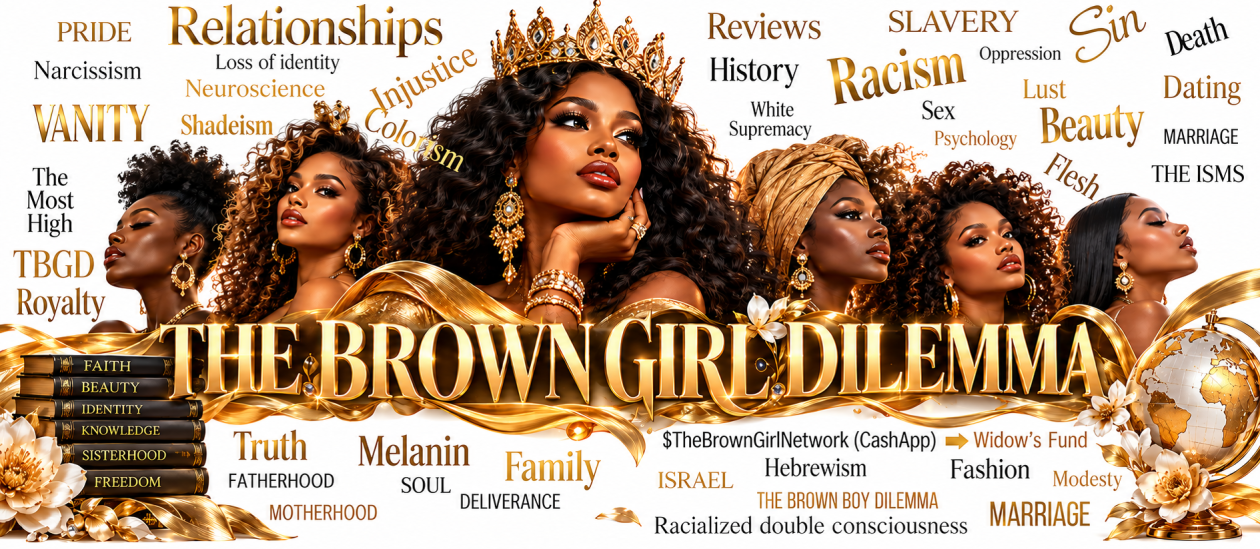

What we often call “attraction” is not always instinct—it is frequently instruction. Across generations, societies have quietly trained the human eye to associate beauty with dominance, status, and proximity to power. Over time, these lessons become so normalized that they feel like personal preference rather than inherited perception.
In the Western world, many modern beauty standards did not emerge in a vacuum. They were shaped through centuries of colonial expansion, slavery, and racial hierarchy. During the transatlantic slave era, European features were positioned as the symbol of refinement, intelligence, and civility, while African features were dehumanized or dismissed as “primitive” in both scientific rhetoric and popular culture.
This created a psychological hierarchy where proximity to whiteness was not just social advantage but aesthetic preference. Skin tone, hair texture, and facial features became markers that were assigned value through systems of power rather than biological truth. These ideas did not disappear with emancipation—they evolved.
After slavery, minstrelsy, segregation-era advertising, and early Hollywood films continued to reinforce Eurocentric ideals. Light skin was often associated with virtue, femininity, and desirability, while darker skin was marginalized or hypersexualized. These repeated visual messages trained generations to internalize a specific “look” as ideal.
Even scientific spaces contributed to this conditioning. Early anthropological studies in the 18th and 19th centuries attempted to rank human groups based on skull measurements and facial features, falsely presenting bias as biology. Though discredited today, their influence shaped cultural assumptions for decades.
Beauty, then, became less about diversity and more about conformity. Straight hair over coiled textures, narrow noses over broader ones, and lighter skin tones over darker complexions were elevated through media, art, and advertising. This was not accidental—it was systemic reinforcement.

Psychologically, repeated exposure to certain images create familiarity bias. What we see most often becomes what we perceive as most attractive. When entire industries—from fashion to film—center one aesthetic, the brain begins to code that aesthetic as “standard.”
This is why representation matters so deeply. When children grow up seeing only one dominant image of beauty, they unconsciously absorb that hierarchy. It can affect self-esteem, identity formation, and even romantic preference later in life.
Colorism emerged as one of the most lasting effects of this conditioning. Within communities of color, lighter skin tones were often granted more visibility or opportunity due to proximity to dominant beauty standards. This was not inherent bias—it was inherited structure passed down through generations of unequal valuation.
At the same time, European features were elevated globally through colonial influence. As European powers expanded across Africa, Asia, and the Americas, their cultural norms—fashion, language, religion, and aesthetics—were often imposed or idealized as “modern” or “civilized.”
Even today, global media exports reinforce these patterns. Hollywood, advertising agencies, and social media algorithms frequently amplify certain facial archetypes, subtly reinforcing what is considered universally “beautiful,” even when global populations are far more diverse.
However, attraction is not fixed. Studies in psychology show that perceived beauty can shift dramatically depending on exposure and cultural context. What one society praises, another may not prioritize, proving that beauty standards are largely learned rather than universal.
Understanding this does not mean rejecting personal preference—it means interrogating where that preference originates. Is it truly personal, or is it a reflection of repeated cultural messaging? That question alone can begin to dismantle unconscious bias.
In recent years, there has been a visible shift. Natural hair movements, dark-skinned representation in media, and global beauty campaigns have begun to challenge the old hierarchy. This is not just cultural—it is corrective, attempting to rebalance centuries of skewed visual conditioning.
Yet, remnants of the old system still linger. Algorithms, casting decisions, and marketing strategies can still favor familiar Eurocentric aesthetics, showing how deeply embedded these preferences remain even in diverse societies.
The process of deconditioning is gradual. It requires exposure, education, and intentional representation. When people see beauty in its full spectrum consistently, the brain begins to unlearn narrow definitions and expand its recognition of attractiveness.
Ultimately, attraction is not just personal taste—it is cultural memory. And cultural memory can be rewritten. What has been conditioned can be consciously reconditioned through truth, visibility, and balance.
To recognize this is not to diminish any group, but to understand how systems shape perception. Beauty was never meant to be a single image—it was always meant to be a wide reflection of humanity itself.
When we begin to see clearly, we realize that much of what we were taught to desire was curated, not natural. And in that realization, the definition of beauty becomes not smaller—but finally free.
References
Bourdieu, P. (1984). Distinction: A social critique of the judgement of taste. Harvard University Press.
Fanon, F. (1967). Black skin, white masks. Grove Press.
Fredrickson, G. M. (2002). Racism: A short history. Princeton University Press.
Hall, S. (1997). Representation: Cultural representations and signifying practices. Sage.
Hunter, M. (2005). Race, gender, and the politics of skin tone. Annual Review of Sociology, 31, 237–261.
Russell, K., Wilson, M., & Hall, R. E. (1992). The color complex: The politics of skin color among African Americans. Anchor Books.
Smedley, A., & Smedley, B. D. (2005). Race as biology is fiction, racism as a social problem is real. American Psychologist, 60(1), 16–26.
Tate, S. A. (2009). Black beauty: Aesthetics, stylization, politics. Routledge.
Wade, T. J., & Bielitz, S. (2005). The differential effect of skin color on attractiveness. Journal of Black Studies, 35(6), 839–856.
Discover more from THE BROWN GIRL DILEMMA
Subscribe to get the latest posts sent to your email.