Category Archives: Beauty

Judged by the Flesh: The Hidden Cost of Lookism.

In a world that increasingly prioritizes aesthetics, lookism—discrimination based on physical appearance—has emerged as a subtle yet powerful social ill. Unlike overt forms of prejudice, lookism operates quietly, influencing hiring practices, social interactions, and access to opportunities. Society often equates attractiveness with competence, likability, and even moral character, creating systemic advantages for those deemed “good-looking” and profound disadvantages for those who do not meet conventional beauty standards (Langlois et al., 2000).

The roots of lookism are both cultural and biological. Evolutionary psychology suggests humans have historically relied on physical cues to assess health, fertility, and social dominance. Yet, while some preference for symmetry or health markers may have biological origins, contemporary standards are deeply cultural, shaped by media, fashion, and globalized beauty ideals. This creates a hierarchy where certain facial features, body types, and skin tones are valorized, while others are marginalized.

Research consistently shows that physical appearance influences professional outcomes. Attractive individuals are more likely to be hired, earn higher salaries, and receive positive performance evaluations, regardless of skill or experience. This phenomenon, sometimes called “beauty premium,” highlights the insidious economic consequences of lookism. Those who fall outside idealized beauty norms experience not only diminished opportunities but also the psychological burden of feeling undervalued or invisible (Hamermesh & Biddle, 1994).

Lookism intersects with race, gender, and class, compounding disadvantage. For example, women of color often face both racialized and beauty-based discrimination, navigating a society that celebrates Eurocentric features as ideal. Black women, in particular, contend with colorism, hair politics, and features historically stigmatized, intensifying the harm of lookism within their communities and society at large.

Social media has intensified lookism by elevating curated images and digital standards of beauty. Platforms like Instagram and TikTok prioritize visual appeal, rewarding those with aesthetically pleasing appearances while marginalizing others. This “algorithmic bias” perpetuates unrealistic beauty ideals, fostering low self-esteem, body dysmorphia, and a relentless comparison culture (Fardouly et al., 2015).

Lookism also operates in interpersonal relationships. Attractive individuals often receive more attention, affection, and social favor, while those deemed less attractive are frequently dismissed, underestimated, or socially excluded. This bias extends beyond conscious prejudice; implicit cognition studies reveal that humans subconsciously associate beauty with positive traits such as intelligence, morality, and sociability (Dion et al., 1972).

Educational environments are not immune. Teachers may unknowingly favor attractive students, granting them more attention, encouragement, or leniency. This early bias can shape self-perception and academic outcomes, reinforcing societal inequities and perpetuating cycles of privilege and marginalization (Ritts et al., 1992).

The psychological toll of lookism is significant. Individuals who are judged harshly for their appearance are at increased risk of depression, anxiety, and social withdrawal. Persistent exposure to appearance-based discrimination erodes self-worth and fosters internalized bias, where individuals adopt society’s negative judgments as personal truths. These effects are particularly acute during adolescence, when identity and self-esteem are most malleable.

Lookism’s influence extends to healthcare. Research demonstrates that patients perceived as attractive are more likely to receive attentive care, quicker diagnoses, and greater empathy from healthcare providers, whereas those considered unattractive may experience neglect or misdiagnosis. Such disparities reflect the deep, often unconscious, ways physical appearance shapes life outcomes (Hamermesh & Biddle, 1994).

Media representation reinforces lookism through selective portrayal. Television, film, and advertising disproportionately feature individuals who conform to narrow standards of beauty, marginalizing diverse bodies, skin tones, and facial features. These representations not only validate societal bias but also communicate implicit messages about worth, desirability, and success.

Even in romantic relationships, lookism exerts influence. Cultural narratives and dating algorithms often prioritize conventional attractiveness, reinforcing the notion that beauty is synonymous with value. This commodification of physical appearance can overshadow qualities like character, intellect, and emotional compatibility, perpetuating superficial standards of partnership.

Workplace lookism has legal and ethical implications. Although anti-discrimination laws protect against race, gender, and age biases, physical appearance is not universally protected, leaving “appearance discrimination” largely unchecked. Employees who deviate from conventional attractiveness norms face subtle penalties—missed promotions, social exclusion, or biased performance evaluations.

Despite its pervasive nature, interventions against lookism are possible. Awareness campaigns, diversity initiatives, and inclusive media representation can challenge ingrained perceptions of beauty. Organizations that prioritize skill, character, and diversity over appearance foster equitable opportunities and reduce the hidden costs of aesthetic bias.

Cultural critique also plays a role in mitigating lookism. Scholars and activists have highlighted the intersectionality of appearance-based bias with race, gender, and socioeconomic status, emphasizing the need to dismantle systems that equate beauty with virtue or competence. These critiques encourage society to value individuals holistically rather than superficially.

Psychological resilience can counteract the personal effects of lookism. Encouraging self-compassion, emphasizing skill development, and cultivating communities that value diverse appearances help mitigate the internalization of appearance-based discrimination. Programs that celebrate body positivity and aesthetic diversity have shown positive effects on self-esteem and mental health outcomes.

Historically, beauty standards have been mutable, illustrating that what is considered attractive is socially constructed rather than inherent. Renaissance, Victorian, and modern ideals vary dramatically, underscoring the arbitrary nature of lookism and the potential for cultural change. Understanding this fluidity empowers individuals to question and resist oppressive aesthetic norms.

Social media literacy is increasingly critical. Users must recognize curated imagery, filters, and digital enhancements as non-representative of reality. Educating young people on the mechanics of social media influence can reduce the internalization of unattainable beauty ideals and mitigate the mental health consequences of lookism.

It is also essential to address intra-community lookism, such as colorism or hair politics, which reinforce discriminatory hierarchies within marginalized groups. These forms of appearance-based bias perpetuate inequality and hinder collective empowerment, demonstrating that the effects of lookism are both broad and intimate.

Finally, combating lookism requires systemic change alongside personal resilience. Policies promoting inclusion, media representation of diverse appearances, and education that challenges aesthetic hierarchies are crucial for reducing the hidden costs of judging by the flesh. Without intentional action, society risks perpetuating inequities that undermine social cohesion, self-worth, and justice.

In conclusion, lookism is a pervasive, often invisible form of discrimination that shapes opportunities, relationships, and self-perception. Recognizing its impact and implementing cultural, institutional, and individual interventions are essential steps toward a more equitable society. As society becomes increasingly conscious of bias in all forms, addressing lookism is critical for cultivating justice, dignity, and authentic human value.

References

  • Dion, K., Berscheid, E., & Walster, E. (1972). What is beautiful is good. Journal of Personality and Social Psychology, 24(3), 285–290.
  • Fardouly, J., Diedrichs, P. C., Vartanian, L. R., & Halliwell, E. (2015). Social comparisons on social media: The impact of Facebook on young women’s body image concerns and mood. Body Image, 13, 38–45.
  • Hamermesh, D. S., & Biddle, J. E. (1994). Beauty and the labor market. American Economic Review, 84(5), 1174–1194.
  • Langlois, J. H., Kalakanis, L., Rubenstein, A. J., Larson, A., Hallam, M., & Smoot, M. (2000). Maxims or myths of beauty? A meta-analytic and theoretical review. Psychological Bulletin, 126(3), 390–423.
  • Ritts, V., Patterson, M., & Tubbs, M. (1992). Expectations, impressions, and judgments of physically attractive students: A review. Review of Educational Research, 62(4), 413–426.
Judged by the Flesh: The Hidden Cost of Lookism.

In a world that increasingly prioritizes aesthetics, lookism—discrimination based on physical appearance—has emerged as a subtle yet powerful social ill. Unlike overt forms of prejudice, lookism operates quietly, influencing hiring practices, social interactions, and access to opportunities. Society often equates attractiveness with competence, likability, and even moral character, creating systemic advantages for those deemed “good-looking” and profound disadvantages for those who do not meet conventional beauty standards (Langlois et al., 2000).

The roots of lookism are both cultural and biological. Evolutionary psychology suggests humans have historically relied on physical cues to assess health, fertility, and social dominance. Yet, while some preference for symmetry or health markers may have biological origins, contemporary standards are deeply cultural, shaped by media, fashion, and globalized beauty ideals. This creates a hierarchy where certain facial features, body types, and skin tones are valorized, while others are marginalized.

Research consistently shows that physical appearance influences professional outcomes. Attractive individuals are more likely to be hired, earn higher salaries, and receive positive performance evaluations, regardless of skill or experience. This phenomenon, sometimes called “beauty premium,” highlights the insidious economic consequences of lookism. Those who fall outside idealized beauty norms experience not only diminished opportunities but also the psychological burden of feeling undervalued or invisible (Hamermesh & Biddle, 1994).

Lookism intersects with race, gender, and class, compounding disadvantage. For example, women of color often face both racialized and beauty-based discrimination, navigating a society that celebrates Eurocentric features as ideal. Black women, in particular, contend with colorism, hair politics, and features historically stigmatized, intensifying the harm of lookism within their communities and society at large.

Social media has intensified lookism by elevating curated images and digital standards of beauty. Platforms like Instagram and TikTok prioritize visual appeal, rewarding those with aesthetically pleasing appearances while marginalizing others. This “algorithmic bias” perpetuates unrealistic beauty ideals, fostering low self-esteem, body dysmorphia, and a relentless comparison culture (Fardouly et al., 2015).

Lookism also operates in interpersonal relationships. Attractive individuals often receive more attention, affection, and social favor, while those deemed less attractive are frequently dismissed, underestimated, or socially excluded. This bias extends beyond conscious prejudice; implicit cognition studies reveal that humans subconsciously associate beauty with positive traits such as intelligence, morality, and sociability (Dion et al., 1972).

Educational environments are not immune. Teachers may unknowingly favor attractive students, granting them more attention, encouragement, or leniency. This early bias can shape self-perception and academic outcomes, reinforcing societal inequities and perpetuating cycles of privilege and marginalization (Ritts et al., 1992).

The psychological toll of lookism is significant. Individuals who are judged harshly for their appearance are at increased risk of depression, anxiety, and social withdrawal. Persistent exposure to appearance-based discrimination erodes self-worth and fosters internalized bias, where individuals adopt society’s negative judgments as personal truths. These effects are particularly acute during adolescence, when identity and self-esteem are most malleable.

Lookism’s influence extends to healthcare. Research demonstrates that patients perceived as attractive are more likely to receive attentive care, quicker diagnoses, and greater empathy from healthcare providers, whereas those considered unattractive may experience neglect or misdiagnosis. Such disparities reflect the deep, often unconscious, ways physical appearance shapes life outcomes (Hamermesh & Biddle, 1994).

Media representation reinforces lookism through selective portrayal. Television, film, and advertising disproportionately feature individuals who conform to narrow standards of beauty, marginalizing diverse bodies, skin tones, and facial features. These representations not only validate societal bias but also communicate implicit messages about worth, desirability, and success.

Even in romantic relationships, lookism exerts influence. Cultural narratives and dating algorithms often prioritize conventional attractiveness, reinforcing the notion that beauty is synonymous with value. This commodification of physical appearance can overshadow qualities like character, intellect, and emotional compatibility, perpetuating superficial standards of partnership.

Workplace lookism has legal and ethical implications. Although anti-discrimination laws protect against race, gender, and age biases, physical appearance is not universally protected, leaving “appearance discrimination” largely unchecked. Employees who deviate from conventional attractiveness norms face subtle penalties—missed promotions, social exclusion, or biased performance evaluations.

Despite its pervasive nature, interventions against lookism are possible. Awareness campaigns, diversity initiatives, and inclusive media representation can challenge ingrained perceptions of beauty. Organizations that prioritize skill, character, and diversity over appearance foster equitable opportunities and reduce the hidden costs of aesthetic bias.

Cultural critique also plays a role in mitigating lookism. Scholars and activists have highlighted the intersectionality of appearance-based bias with race, gender, and socioeconomic status, emphasizing the need to dismantle systems that equate beauty with virtue or competence. These critiques encourage society to value individuals holistically rather than superficially.

Psychological resilience can counteract the personal effects of lookism. Encouraging self-compassion, emphasizing skill development, and cultivating communities that value diverse appearances help mitigate the internalization of appearance-based discrimination. Programs that celebrate body positivity and aesthetic diversity have shown positive effects on self-esteem and mental health outcomes.

Historically, beauty standards have been mutable, illustrating that what is considered attractive is socially constructed rather than inherent. Renaissance, Victorian, and modern ideals vary dramatically, underscoring the arbitrary nature of lookism and the potential for cultural change. Understanding this fluidity empowers individuals to question and resist oppressive aesthetic norms.

Social media literacy is increasingly critical. Users must recognize curated imagery, filters, and digital enhancements as non-representative of reality. Educating young people on the mechanics of social media influence can reduce the internalization of unattainable beauty ideals and mitigate the mental health consequences of lookism.

It is also essential to address intra-community lookism, such as colorism or hair politics, which reinforce discriminatory hierarchies within marginalized groups. These forms of appearance-based bias perpetuate inequality and hinder collective empowerment, demonstrating that the effects of lookism are both broad and intimate.

Finally, combating lookism requires systemic change alongside personal resilience. Policies promoting inclusion, media representation of diverse appearances, and education that challenges aesthetic hierarchies are crucial for reducing the hidden costs of judging by the flesh. Without intentional action, society risks perpetuating inequities that undermine social cohesion, self-worth, and justice.

In conclusion, lookism is a pervasive, often invisible form of discrimination that shapes opportunities, relationships, and self-perception. Recognizing its impact and implementing cultural, institutional, and individual interventions are essential steps toward a more equitable society. As society becomes increasingly conscious of bias in all forms, addressing lookism is critical for cultivating justice, dignity, and authentic human value.

References

  • Dion, K., Berscheid, E., & Walster, E. (1972). What is beautiful is good. Journal of Personality and Social Psychology, 24(3), 285–290.
  • Fardouly, J., Diedrichs, P. C., Vartanian, L. R., & Halliwell, E. (2015). Social comparisons on social media: The impact of Facebook on young women’s body image concerns and mood. Body Image, 13, 38–45.
  • Hamermesh, D. S., & Biddle, J. E. (1994). Beauty and the labor market. American Economic Review, 84(5), 1174–1194.
  • Langlois, J. H., Kalakanis, L., Rubenstein, A. J., Larson, A., Hallam, M., & Smoot, M. (2000). Maxims or myths of beauty? A meta-analytic and theoretical review. Psychological Bulletin, 126(3), 390–423.
  • Ritts, V., Patterson, M., & Tubbs, M. (1992). Expectations, impressions, and judgments of physically attractive students: A review. Review of Educational Research, 62(4), 413–426.
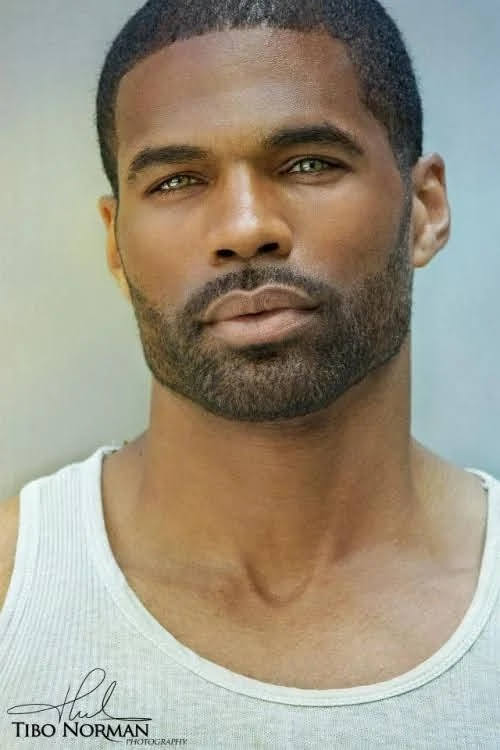
The Male Files: Beauty over Personality

Photo Credit: Tibo Norman (used with permission)

In today’s society, the valuation of men often hinges upon appearance, charisma, and physical appeal rather than depth of character. Media culture has conditioned both men and women to prioritize beauty over inner worth, even within male identity. The modern male is judged not by his moral integrity or wisdom, but by how closely he aligns with aesthetic ideals. This distortion of values reflects a growing superficiality that has not only infiltrated female beauty standards but has now taken men captive as well.

The obsession with male beauty is a recent cultural shift. Historically, masculinity was associated with strength, courage, and provision. Yet, in a postmodern, image-driven world, appearance has become currency. Men are increasingly commodified through fashion, fitness, and facial symmetry. Social media platforms reinforce these ideals, elevating certain looks as the standard of male desirability while silencing deeper traits such as compassion, patience, and faithfulness.

Beauty, for men, now functions as a social passport. A handsome face can open doors to admiration, privilege, and romantic interest. Conversely, men deemed “average” or “unattractive” often face discrimination, invisibility, or rejection. This reality echoes the experiences women have long endured—objectification based on physical traits rather than personality or virtue. The double standard has simply shifted its direction.

Hollywood and celebrity culture have fueled this phenomenon. Actors such as Travis Cure, Idris Elba, Shemar Moore, and Regé-Jean Page embody the archetype of the “perfect man”—tall, chiseled, and effortlessly confident. Their images dominate advertising and media narratives, subtly teaching that physical appeal equates to success and desirability. Meanwhile, the intellectual, kind, or spiritually grounded man is often portrayed as dull or irrelevant.

Social media further amplifies these ideals. Platforms like Instagram and TikTok reward visual perfection with validation—likes, followers, and admiration. Men now curate themselves like brands, promoting fitness routines, skin regimens, and fashion aesthetics. The self becomes a digital performance, crafted for approval rather than authenticity. As the Apostle Paul warned, “For men shall be lovers of their own selves, covetous, boasters, proud…” (2 Timothy 3:2, KJV).

This obsession with beauty reshapes identity and relationships. Many men internalize the belief that their worth is defined by how women perceive them, rather than who they are in God’s eyes. Such validation-based living breeds insecurity and competition rather than self-acceptance. It creates a fragile masculinity built on appearance instead of moral character.

The rise of “pretty boys” and “model men” reflects a cultural reversal of gendered vanity. Once, men criticized women for their beauty obsessions, yet now, they too stand before the mirror, enslaved by self-image. Grooming culture, cosmetic enhancement, and social comparison have merged into a new masculine aestheticism—one that values looks over legacy.

Spirituality offers a sobering contrast. Scripture teaches that true beauty is inward. “Man looketh on the outward appearance, but the Lord looketh on the heart” (1 Samuel 16:7, KJV). This verse underscores a divine principle: external attractiveness fades, but inner righteousness endures. The modern male must rediscover this truth to reclaim authentic manhood.

Men who rely on beauty alone often suffer silently. They may attract temporary admiration but rarely earn lasting respect. Relationships formed on appearance lack spiritual depth and emotional stability. The moment physical perfection fades or public attention shifts, these men feel abandoned and purposeless. This emotional void reveals the emptiness of external validation.

Historically, great men were defined by their deeds, not their looks. Figures such as Frederick Douglass, Martin Luther King Jr., and Nelson Mandela were revered for conviction and courage. Their moral beauty inspired transformation, proving that integrity leaves a greater legacy than physical appearance ever could. Today’s generation must return to that model of greatness.

Beauty without character is like gold-plated brass—it shines, but it lacks substance. In relationships, women may initially be drawn to a man’s physical appeal, but they ultimately seek strength, leadership, and spiritual maturity. Superficial attraction fades when trials test the soul. Personality and principle become the glue that sustains love beyond the surface.

Modern capitalism profits from male insecurity. Industries exploit appearance anxiety, selling fitness supplements, grooming products, and designer wardrobes under the illusion that beauty equals success. This consumer trap replaces spiritual confidence with material vanity, urging men to buy rather than build self-worth.

True manhood must return to its divine roots. The biblical man leads with wisdom, compassion, and self-control. He understands that appearance is fleeting, but legacy is eternal. As Proverbs 31:30 reminds us, “Favour is deceitful, and beauty is vain: but a woman that feareth the Lord, she shall be praised.” The same principle applies to men—those who fear God embody lasting beauty.

Personality—rooted in humility, courage, and faith—defines a man’s true worth. It is the light that remains when youthful glow fades. The world may idolize handsomeness, but heaven honors holiness. When men walk in purpose, their presence becomes radiant beyond physical measure.

The pressure of beauty over personality has also created mental health struggles among men. Depression, body dysmorphia, and social anxiety are rising as men chase unattainable perfection. This crisis reveals how far society has drifted from valuing authentic humanity. Healing begins when men detach their worth from worldly admiration.

Men must learn to see themselves through divine eyes, not digital ones. Social media filters and comparisons distort truth. God designed every man with intention, from his features to his purpose. Accepting this divine craftsmanship restores peace and dignity in an age obsessed with appearances.

Reclaiming personality over beauty means redefining success. The strong man is not the most handsome but the most honorable. He uplifts others, speaks truth, and walks in integrity. His smile may fade, but his character leaves a mark that time cannot erase.

The church and community play vital roles in reshaping male identity. Mentorship, discipleship, and open dialogue can counter the idol of beauty. By emphasizing moral leadership, empathy, and service, men can rediscover their God-given image and reject superficial validation.

Ultimately, the true beauty of a man lies in his spirit. His courage to love, his strength to forgive, and his devotion to God define his essence. In a culture that prizes image over integrity, the righteous man stands as a reflection of divine masculinity—beautiful not in body, but in soul.

References

  • Holy Bible, King James Version. (1611/2017). Thomas Nelson.
  • Paul, S. (2020). The Mask of Masculinity: How Image Replaced Integrity. Oxford University Press.
  • hooks, b. (2004). The Will to Change: Men, Masculinity, and Love. Atria Books.
  • Gill, R. (2009). Mediated Masculinities: Image, Body, and Culture. Routledge.
  • Dines, G., & Humez, J. (2018). Gender, Race, and Class in Media. SAGE Publications.
  • Twenge, J. M., & Campbell, W. K. (2018). The Narcissism Epidemic: Living in the Age of Entitlement. Atria Books.
  • Anderson, E. (2014). Inclusive Masculinity: The Changing Nature of Masculinities. Routledge.
  • Schwalbe, M. (2016). Manhood Acts: Gender and the Practices of Domination. Routledge.
  • Pease, B. (2019). Reinventing Masculinity: The Power of Character over Appearance. Beacon Press.

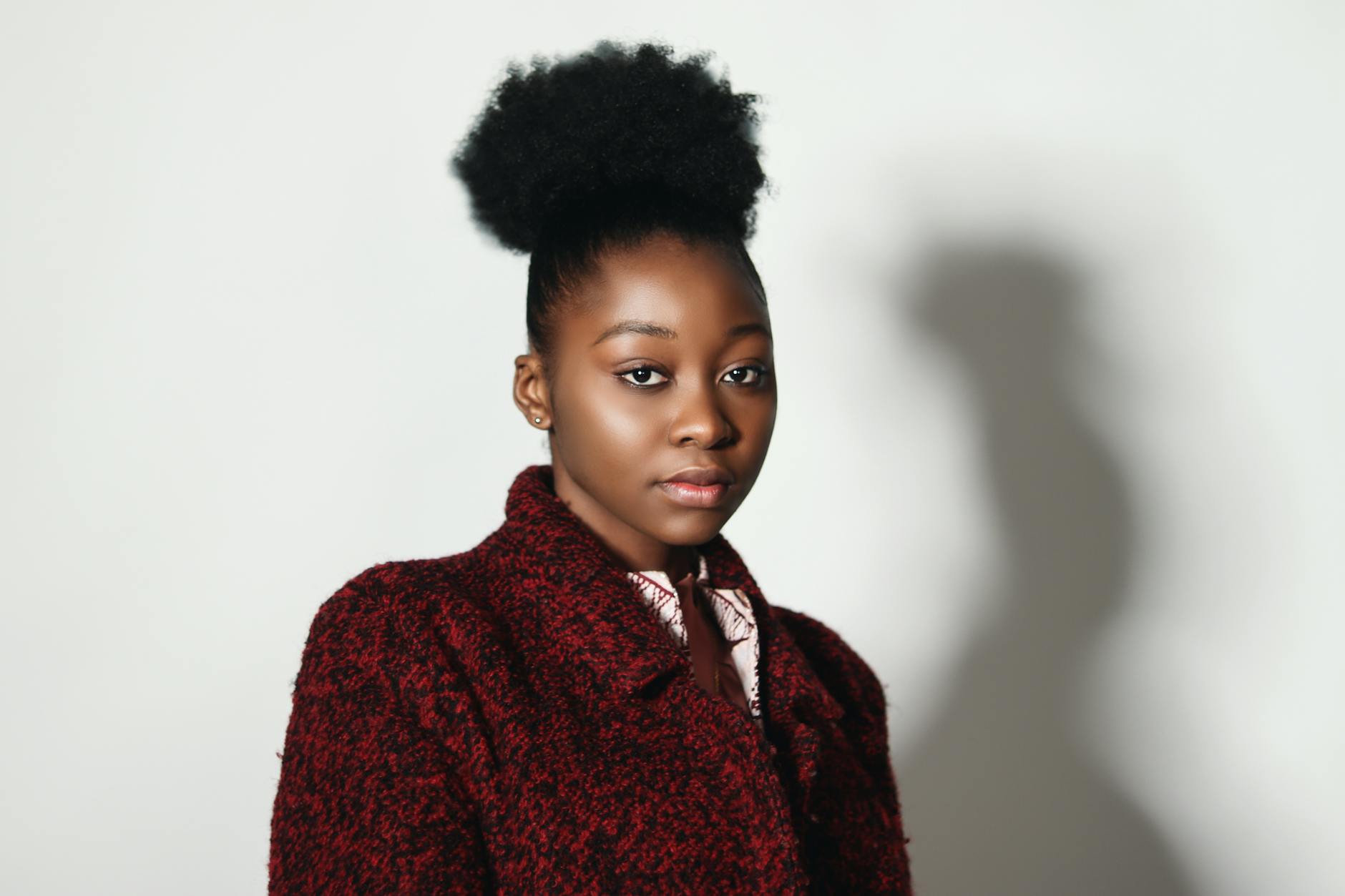
Good-Looking Black People and Representation.

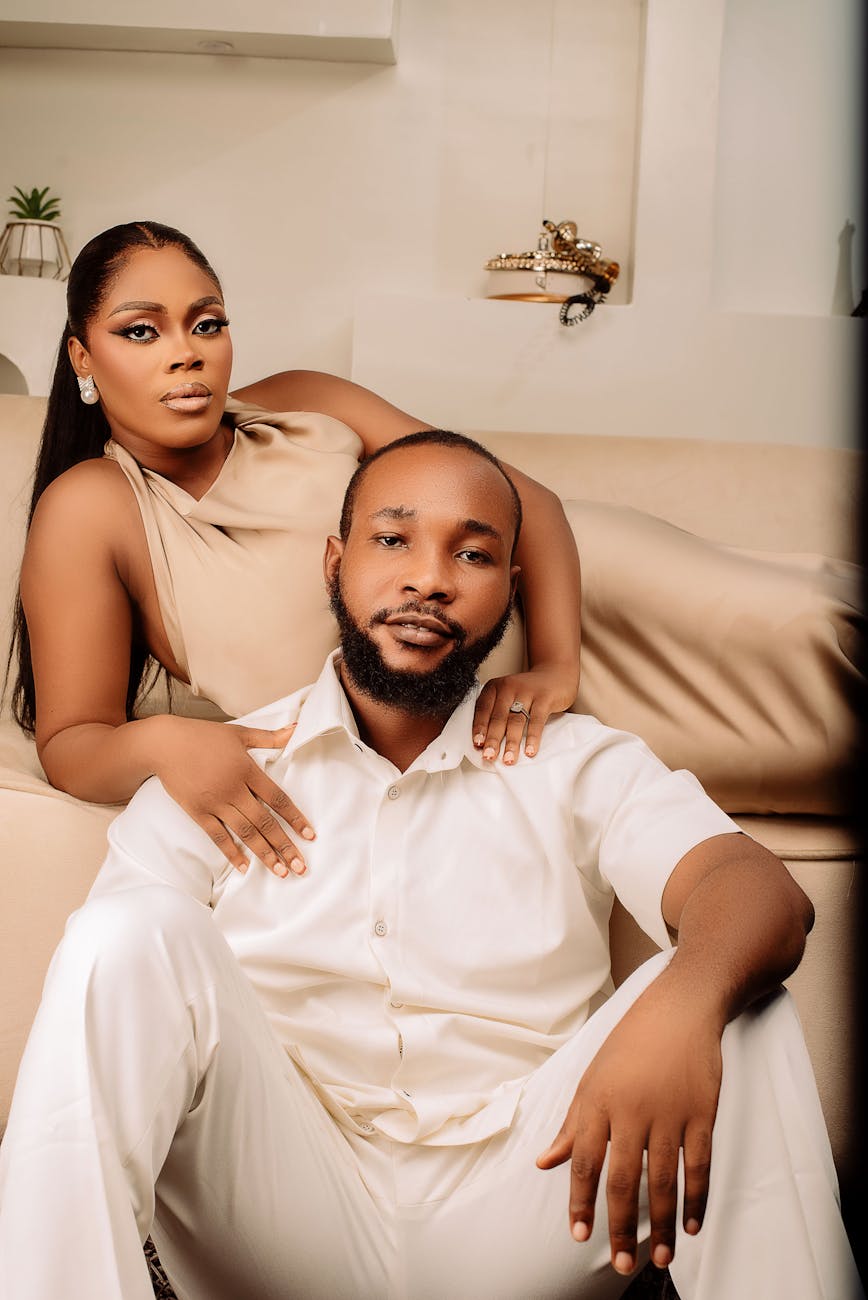
Photo by Chinedu Offor on Pexels.com

The concept of beauty has always been shaped by cultural narratives, economic power, and historical context. When we discuss good-looking Black people, we are not merely speaking about aesthetics but about visibility, identity, and resistance. The image of Black beauty has long been distorted by Western ideals that equate attractiveness with proximity to whiteness. Yet, in the twenty-first century, representation of beautiful Black people in media, art, and fashion is reshaping how the world perceives Blackness itself (hooks, 1992).

Historically, Eurocentric beauty standards dominated global consciousness, positioning straight hair, lighter skin, and narrow facial features as the epitome of beauty. This framework marginalized darker-skinned people, especially Black individuals whose features deviated from these ideals. The absence of Black beauty in mainstream culture contributed to generations of internalized inferiority and self-rejection (Craig, 2006).

In response, the visibility of good-looking Black people in popular media has become an act of reclamation. Every time a dark-skinned model, actor, or influencer graces the cover of a magazine or headlines a major campaign, it challenges the longstanding myth that beauty belongs exclusively to whiteness. Representation, in this sense, is not about vanity—it is about validation and empowerment.

The struggle for representation began long before modern media. During the Harlem Renaissance, artists and intellectuals like Langston Hughes and Zora Neale Hurston celebrated Black beauty as divine and dignified, countering racist depictions that dehumanized African features. Their work laid the foundation for a cultural revolution that continues to this day (Lewis, 1997).

In contemporary culture, figures such as Lupita Nyong’o, Halle Berry, and Idris Elba have redefined the parameters of beauty. Lupita’s global rise, particularly after her Oscar win, symbolized the triumph of authentic Black beauty in a world accustomed to Eurocentric images. Her dark skin and natural hair became revolutionary symbols of pride, challenging the narrative that darker tones are less desirable (Tate, 2009).

Yet, representation is not simply about presence—it is also about the context of that presence. Too often, the visibility of good-looking Black people is tokenized, reduced to diversity quotas rather than genuine inclusion. When Black beauty is commercialized without cultural understanding, it risks becoming aesthetic appropriation rather than affirmation (Russell, Wilson, & Hall, 2013).

Fashion and film industries have both played complex roles in this transformation. The modeling world, once dominated by Eurocentric ideals, is gradually opening space for diverse complexions and textures. Icons like Naomi Campbell, Tyra Banks, and more recently Adut Akech and Duckie Thot, have proven that African beauty is not niche—it is universal. Their success transcends race and challenges global beauty hierarchies.

In cinema, Black actors have long battled typecasting. Good-looking Black men, for instance, have been portrayed either as hypersexualized threats or desexualized side characters. Similarly, beautiful Black women were often cast as maids, temptresses, or comic relief. The emergence of multifaceted, empowered roles for Black leads marks progress in dismantling these harmful stereotypes (Bogle, 2016).

Television and streaming media have become powerful tools for this cultural shift. Shows like Insecure, Black Panther, and Queen Sugar have showcased Black beauty in its full range—dark and light, natural and polished, urban and regal. The celebration of melanin on screen resonates deeply with audiences who finally see reflections of themselves that are dignified, complex, and desirable.

However, the fight for authentic representation remains ongoing. Even within the Black community, colorism continues to dictate which forms of beauty are celebrated. Lighter-skinned individuals often receive more media visibility, perpetuating internal hierarchies that mirror colonial ideologies (Hunter, 2005). True representation must embrace all shades, hair textures, and body types—not just those that align with marketable ideals.

Social media has become both a battlefield and a beacon. Platforms like Instagram and TikTok amplify diverse expressions of beauty, giving power back to individuals. Hashtags like #BlackIsBeautiful and #MelaninMagic have become movements, celebrating features once ridiculed. Yet, digital spaces also reproduce biases—filters that lighten skin or algorithms that prioritize Eurocentric faces show that the algorithm itself can be an instrument of oppression (Noble, 2018).

Representation is also spiritual. When Black people embrace their God-given appearance, they honor divine intention. Psalm 139:14 declares, “I will praise thee; for I am fearfully and wonderfully made.” This affirmation transcends aesthetics—it reclaims identity as sacred. To see oneself as beautiful, despite centuries of indoctrination, is an act of faith and liberation.

Moreover, Black beauty challenges the notion that attractiveness is static. It evolves through rhythm, resilience, and resistance. From the sculpted cheekbones of African queens to the modern artistry of Afrofuturism, beauty becomes both heritage and prophecy. The good-looking Black person is not merely admired but remembered as a symbol of survival and power (Asante, 2003).

The conversation about beauty also extends to masculinity. Good-looking Black men have had to navigate stereotypes of aggression and hypermasculinity. Figures like Idris Elba, Chadwick Boseman, and Shemar Moore have reshaped this image, merging strength with sophistication and sensitivity. Their visibility encourages young Black men to see beauty not as vanity, but as confidence rooted in self-respect.

In literature and music, the aesthetics of Blackness continue to inspire global admiration. Artists like Erykah Badu, Jill Scott, and Kendrick Lamar weave visual and lyrical narratives that celebrate Black beauty as divine expression. Their work rejects artificial conformity, instead embracing Afrocentric identity as a source of creative power.

The representation of good-looking Black people matters because visibility is validation. For centuries, Black faces were excluded from billboards, film screens, and fashion spreads. Today, each appearance—whether in a global campaign or a local classroom—challenges the world to see beauty beyond prejudice. It tells every young Black child that their reflection is enough.

Still, the work is unfinished. The beauty industry must continue to diversify leadership and decision-making. Representation cannot stop at faces—it must include the voices and visions behind the camera, the designers behind the clothes, and the editors behind the magazines. Equity in representation requires structural change, not symbolic gestures.

Ultimately, good-looking Black people embody more than visual appeal—they represent resilience, divinity, and depth. Their beauty tells a story of overcoming centuries of erasure and reclaiming the narrative of worth. Each smile, each portrait, each performance becomes a testimony that Black is not just beautiful—it is essential.

As Galatians 3:28 reminds us, “There is neither Jew nor Greek, bond nor free, male nor female: for ye are all one in Christ Jesus.” Beauty, therefore, is not a hierarchy but a harmony. When representation reflects this truth, humanity itself becomes more whole.

The recognition of good-looking Black people is not about validation from others but liberation from false standards. It is the realization that every shade, texture, and feature reflects divine creativity. When Black beauty stands unapologetically in the light, it does more than inspire—it transforms the very definition of beauty itself.


References

Asante, M. K. (2003). Afrocentricity: The Theory of Social Change. African American Images.
Bogle, D. (2016). Toms, Coons, Mulattoes, Mammies, and Bucks: An Interpretive History of Blacks in American Films. Bloomsbury Publishing.
Craig, M. L. (2006). Race, beauty, and the tangled knot of a guilty pleasure. Feminist Theory, 7(2), 159–177.
hooks, b. (1992). Black Looks: Race and Representation. South End Press.
Hunter, M. L. (2005). Race, Gender, and the Politics of Skin Tone. Routledge.
Lewis, D. L. (1997). When Harlem Was in Vogue. Penguin Books.
Noble, S. U. (2018). Algorithms of Oppression: How Search Engines Reinforce Racism. NYU Press.
Russell, K., Wilson, M., & Hall, R. (2013). The Color Complex (Revised): The Politics of Skin Color Among African Americans. Anchor.
Tate, S. A. (2009). Black Beauty: Aesthetics, Stylization, Politics. Ashgate Publishing.
The Holy Bible, King James Version (KJV). (1611).

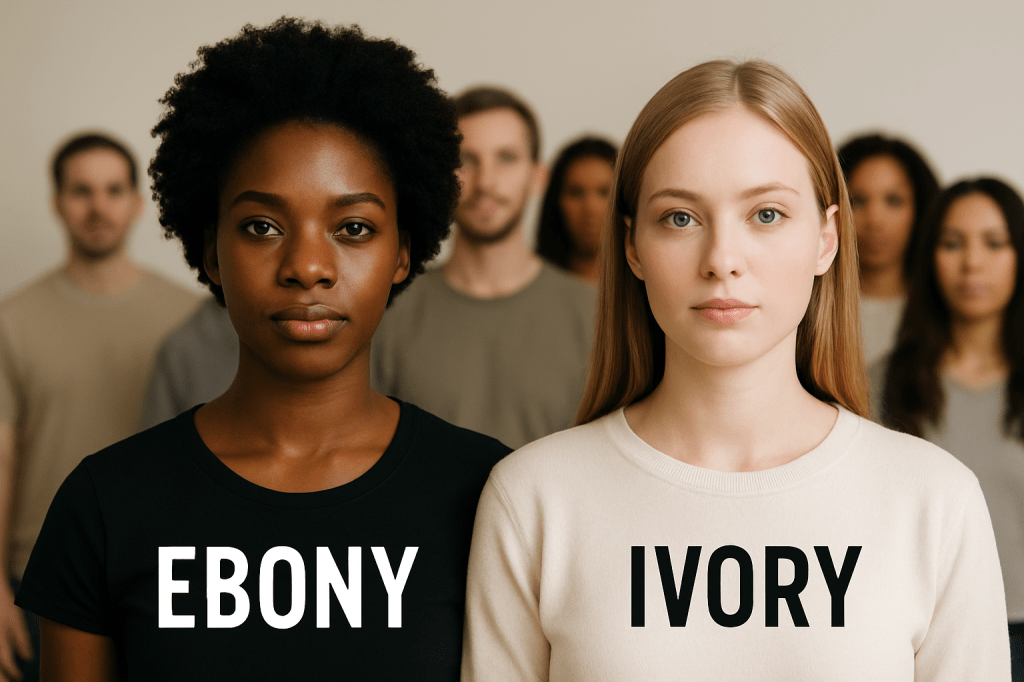
Ebony and Ivory: Two Shades, One Standard of Beauty.

From the dawn of civilization, beauty has been both a mirror and a weapon—reflecting ideals shaped by power and privilege, and wielded to define worth within social hierarchies. Within the globalized gaze of modernity, the politics of skin color continue to influence how femininity and desirability are perceived, especially among women of African descent. The notion of “Ebony and Ivory” evokes more than just color; it symbolizes the ongoing dialogue between light and dark, between acceptance and exclusion, and between the internalized and externalized standards of beauty that shape identity (hooks, 1992).

The idea of “two shades, one standard” captures the paradox of colorism: the simultaneous elevation and devaluation of Blackness within the same racial group. While “ivory” tones have historically been exalted as closer to Western ideals, “ebony” skin has often been marginalized, caricatured, or fetishized. Both ends of the spectrum, however, are measured against the same Eurocentric barometer that privileges whiteness as the ultimate aesthetic reference (Hunter, 2005).

This phenomenon, deeply rooted in colonialism, reveals how beauty became a tool of control. During the transatlantic slave trade, lighter-skinned enslaved individuals were often granted domestic positions and social proximity to white power structures, breeding intra-racial hierarchies that persist today. These legacies still echo in media representation, where lighter skin is frequently coded as “refined,” while darker tones are portrayed as “exotic” or “primitive” (Craig, 2006).

For many women of color, navigating these coded perceptions can be exhausting. The “brown girl dilemma” emerges when one feels too dark to be celebrated and too light to be considered authentically Black. This liminal existence is both a burden and a revelation—proof that beauty, as defined by Western constructs, remains an unattainable illusion that fractures rather than unites.

Beauty standards, much like colonial borders, were imposed rather than chosen. From the powdered faces of the Victorian era to the filtered glow of Instagram, the valuation of lightness has remained a constant aesthetic undercurrent. Yet, even within African and Afro-diasporic communities, this colonial inheritance continues to dictate preferences in partners, media icons, and even professional opportunities (Glenn, 2008).

In popular culture, colorism is often masked by phrases like “preference” or “type.” However, these preferences are rarely organic—they are sociologically constructed through centuries of imagery that equate lightness with purity and success, and darkness with defiance and struggle. The entertainment industry’s casting choices often reinforce these biases, rewarding lighter skin with visibility while relegating darker complexions to supporting or stereotypical roles (Russell, Wilson, & Hall, 2013).

This bias extends beyond film and television. In the global beauty market, skin-lightening creams generate billions annually, a grim testament to the internalization of Eurocentric ideals (Glenn, 2008). The psychological effects of such products are profound, suggesting that beauty is not only skin-deep but soul-deep, affecting one’s perception of self-worth and belonging.

For Black women, beauty is an act of survival. To adorn oneself becomes an assertion of existence in a world that often demands invisibility. From the regal hairstyles of precolonial Africa to the natural hair movement, Black women have continuously redefined and reclaimed their beauty on their own terms (Byrd & Tharps, 2014).

Yet, this reclamation is not without struggle. Within the Black community itself, hierarchies persist. The glorification of lighter women as more “marriageable” or “acceptable” continues to fracture solidarity. It is an unspoken inheritance of slavery’s psychological residue, perpetuated by both men and women who unconsciously valorize proximity to whiteness.

The darker-skinned woman often bears the weight of invisibility and hypervisibility simultaneously—ignored in spaces of admiration, yet scrutinized as the embodiment of resistance or rebellion. This double-bind mirrors W.E.B. Du Bois’ concept of “double consciousness,” wherein one is forced to see oneself through the lens of a world that refuses full recognition (Du Bois, 1903).

Light-skinned women, conversely, navigate their own complexities. While society may privilege them aesthetically, they are often accused of benefiting from colorism or being “not Black enough.” Thus, both ebony and ivory tones bear distinct forms of cultural alienation, tied together by an oppressive standard neither created (Monk, 2014).

In this context, beauty becomes not celebration but negotiation. Every compliment, every criticism, every casting call, and every social media post reinforces the invisible hierarchy of shade. The struggle is not between dark and light, but against the system that pits them against each other.

Media representation plays a critical role in dismantling or reinforcing these divides. When dark-skinned actresses like Lupita Nyong’o or Viola Davis are celebrated, it signals progress—but also exposes how rare such representation remains. Likewise, the inclusion of mixed-race models in campaigns may appear inclusive, yet often centers features still aligned with Eurocentric beauty (Tate, 2009).

To heal from this color divide, we must first acknowledge that beauty is not a monolith. It is plural, diverse, and spiritually rooted. In the biblical sense, humanity was created “in the image of God” (Genesis 1:27, KJV), meaning all shades reflect divine artistry. The rejection of any hue is, therefore, a rejection of the Creator’s design.

Moreover, Proverbs 31:30 reminds us that “favor is deceitful, and beauty is vain: but a woman that feareth the Lord, she shall be praised.” This verse redirects the gaze from the external to the eternal, urging women to seek validation not from comparison but from divine purpose.

Ebony and ivory are not opposites but complements, each contributing to the symphony of creation. Just as piano keys of contrasting colors produce harmony, so too can diverse complexions coexist in mutual admiration and respect. The beauty of one does not diminish the beauty of the other; together, they reveal the fullness of God’s palette.

True beauty transcends complexion—it emanates from character, compassion, and conviction. In a world obsessed with appearances, spiritual and cultural consciousness must redefine the standard. Beauty should not divide but dignify, not exclude but exalt.

To love one’s shade is to reclaim agency over identity. When Black women, in all their hues, embrace their reflection without apology, they dismantle centuries of aesthetic oppression. “Ebony and Ivory” then becomes more than a contrast—it becomes a covenant of self-acceptance and collective healing.

As we move forward, let beauty be measured not by shade but by soul. For when light and dark come together, they create balance, harmony, and wholeness—the true reflection of divine beauty.


References

Byrd, A. D., & Tharps, L. L. (2014). Hair Story: Untangling the Roots of Black Hair in America. St. Martin’s Press.
Craig, M. L. (2006). Race, beauty, and the tangled knot of a guilty pleasure. Feminist Theory, 7(2), 159–177.
Du Bois, W. E. B. (1903). The Souls of Black Folk. Chicago: A.C. McClurg.
Glenn, E. N. (2008). Yearning for lightness: Transnational circuits in the marketing and consumption of skin lighteners. Gender & Society, 22(3), 281–302.
hooks, b. (1992). Black Looks: Race and Representation. South End Press.
Hunter, M. L. (2005). Race, gender, and the politics of skin tone. Routledge.
Monk, E. P. (2014). Skin tone stratification among Black Americans, 2001–2003. Social Psychology Quarterly, 77(4), 360–379.
Russell, K., Wilson, M., & Hall, R. (2013). The Color Complex (Revised): The Politics of Skin Color Among African Americans. Anchor.
Tate, S. A. (2009). Black Beauty: Aesthetics, Stylization, Politics. Ashgate Publishing.
The Holy Bible, King James Version (KJV). (1611).

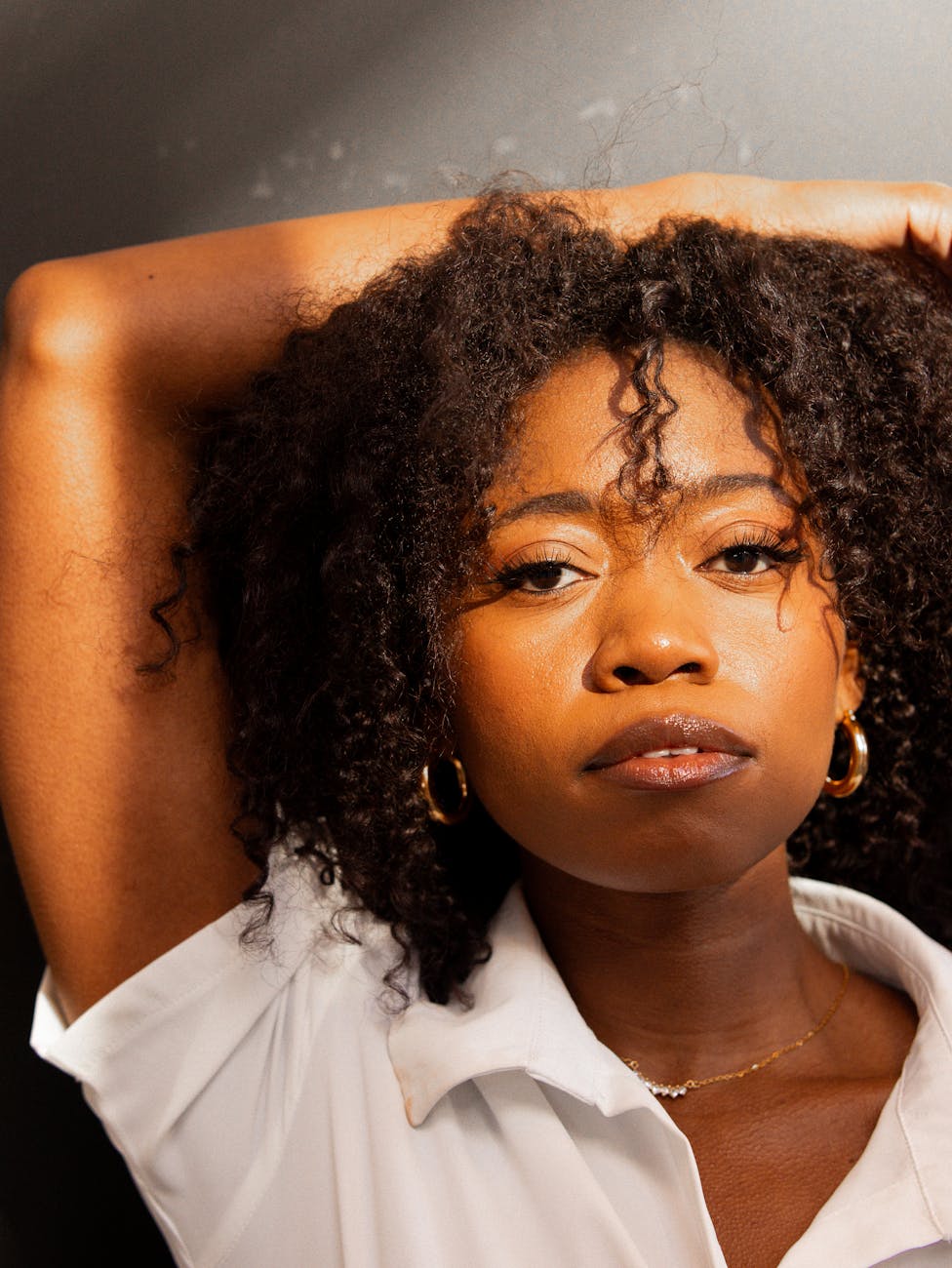
Reclaiming the Mirror: Beauty, Identity, and Resistance in the African Diaspora.

Photo by Godisable Jacob on Pexels.com

The concept of beauty has long been weaponized as a tool of domination and exclusion. For people of African descent, beauty has been historically defined through Eurocentric lenses that sought to invalidate African features, skin tones, and hair textures. This distortion of aesthetics served colonial and psychological purposes—reinforcing systems of white supremacy and dehumanization. Yet, amid this oppression, the African diaspora has continuously resisted, reclaimed, and redefined beauty through self-love, creativity, and cultural expression.

From the transatlantic slave trade to modern globalization, the manipulation of Black beauty has been integral to controlling identity. European colonizers constructed racial hierarchies that associated whiteness with purity and civilization, while blackness was linked to savagery and inferiority. These narratives became embedded in social, political, and religious ideologies, influencing how the world viewed—and how Black people came to view—themselves. This internalized oppression still manifests today in colorism, hair discrimination, and beauty bias within and outside the Black community.

Resistance to these narratives began as early as slavery itself. Enslaved Africans braided maps into their hair, wore headwraps as acts of pride, and sang spirituals affirming divine identity. These practices were not mere survival mechanisms but subtle assertions of self-worth. By reclaiming control over their bodies and appearances, Africans in the diaspora asserted, “We are still human.” This quiet defiance evolved into a cultural aesthetic that would later inspire entire movements of liberation.

The Harlem Renaissance marked a turning point in redefining Black beauty and identity. Figures like Zora Neale Hurston, Langston Hughes, and Josephine Baker challenged the notion that Black culture needed white validation. Their art celebrated dark skin, natural hair, and sensual expression, reclaiming the very traits society had demeaned. The phrase “Black is Beautiful,” born from this era and later popularized in the 1960s, became both a political slogan and a spiritual affirmation.

The Black Power movement of the 1960s and 1970s elevated aesthetics into activism. The afro became a crown of resistance, symbolizing freedom from assimilation. Black models like Beverly Johnson and Naomi Sims graced magazine covers once closed to women of their complexion, forcing the fashion world to confront its biases. Through photography, music, and protest, Black people around the world began to reassert the value of their image.

In the African diaspora, beauty and identity are deeply intertwined with spirituality. Ancient African civilizations revered the human form as divine art—sculptures from Nok, Benin, and Kemet celebrated symmetry, strength, and melanin as reflections of the Creator. This spiritual understanding of beauty counters the Western tendency to commodify and sexualize. The African aesthetic is holistic, connecting inner virtue with outer form—a principle still visible in African diasporic faiths like Yoruba and Rastafari.

Media representation remains one of the battlegrounds for beauty reclamation. For decades, film and advertising industries portrayed Eurocentric features as universal ideals. However, with the rise of digital media, Black creators began shaping new narratives. Platforms like YouTube and Instagram became spaces for natural hair tutorials, melanin-positive campaigns, and discussions about shadeism. This digital renaissance democratized visibility and dismantled the monopoly of Western beauty standards.

In contemporary times, artists like Lupita Nyong’o, Viola Davis, and Michaela Coel have redefined what global beauty looks like. They embody confidence rooted in authenticity rather than conformity. Their visibility challenges centuries of erasure, reminding the world that African beauty is not a trend—it is foundational. Each image, each role, becomes a mirror through which the diaspora can see itself with dignity and love.

Colorism, however, continues to plague the diaspora, a lingering scar of colonialism and slavery. Light skin often remains associated with privilege, while darker complexions are marginalized. This phenomenon fractures communities and perpetuates hierarchies of desirability. Yet, new generations are confronting these wounds head-on through documentaries, essays, and online activism—demanding that every shade of melanin be honored equally.

The reclamation of African aesthetics extends beyond physical features—it encompasses fashion, language, and ritual. African print clothing, protective hairstyles, and ancestral jewelry have become emblems of identity. What was once mocked or banned in workplaces is now worn proudly on global runways. The diaspora’s embrace of traditional aesthetics is not merely nostalgic—it is revolutionary, asserting that African heritage is modern, relevant, and eternal.

Psychologically, reclaiming beauty is an act of healing. Centuries of racial trauma have distorted self-perception, leading to generational insecurities. Scholars like bell hooks and Frantz Fanon have discussed the colonization of the mind and the struggle to love oneself under oppressive gaze. To look in the mirror and find beauty in one’s reflection is therefore a radical act of resistance, one that dismantles the psychological remnants of enslavement.

Black beauty movements have also intersected with gender liberation. Black women, historically hypersexualized or desexualized, have reclaimed agency over their image. Movements like #MelaninMagic and #BlackGirlMagic celebrate diverse forms of femininity—powerful, intellectual, sensual, and sacred. Similarly, Black men are confronting toxic stereotypes that equate masculinity with aggression, finding beauty in vulnerability and self-expression.

The global spread of African aesthetics—from music videos to fashion weeks—illustrates how the diaspora has transformed pain into power. Afrobeats, hip-hop, and soul music have carried messages of pride, resilience, and beauty to every corner of the world. The rhythm of resistance lives in every hairstyle, every dance, every melody that celebrates Blackness unapologetically.

Educational institutions and media organizations are beginning to recognize the importance of diverse representation. Curriculums now explore African art history, and museums exhibit African beauty traditions once labeled “primitive.” This reclamation of space in academia and culture is crucial—it ensures that future generations inherit a fuller, truer reflection of themselves.

In theology, the reclamation of beauty challenges centuries of Eurocentric religious imagery. Depictions of a white Messiah and angels have been replaced in many circles with images that reflect the original people of the Bible. The rise of Afrocentric theology reaffirms that divinity does not belong to one race or culture. The beauty of the Creator is reflected in the diversity of creation itself.

Art remains one of the most powerful vehicles for this transformation. Painters, photographers, and filmmakers across the diaspora are crafting new visual languages that honor melanin, texture, and form. Fine art portraiture—like the works of Kehinde Wiley or Awol Erizku—reimagines classical European iconography through an African lens, restoring Black presence to the historical canvas.

Beauty, in its truest sense, is more than aesthetics—it is liberation. When Black people embrace their natural selves, they reject the lie that they must change to be worthy. This acceptance becomes an act of spiritual sovereignty, echoing the biblical declaration that we are “fearfully and wonderfully made” (Psalm 139:14, KJV).

The mirror, once a symbol of distortion, now becomes a site of truth. It reflects not the colonizer’s image, but the Creator’s craftsmanship. To reclaim the mirror is to reclaim narrative power—to define beauty not by borrowed standards, but by ancestral wisdom. Every curl, curve, and hue tells a story of endurance, divinity, and rebirth.

Ultimately, the reclamation of beauty in the African diaspora is about freedom—the freedom to exist without apology, to see oneself as whole and holy. It is about transforming generations of shame into songs of pride and turning reflection into revolution. Through art, faith, and community, the descendants of Africa continue to rise, reminding the world that the most powerful form of beauty is self-acceptance rooted in truth.


References

Baker, J. (2017). The politics of Black beauty. Oxford University Press.
Davis, A. Y. (1981). Women, race, & class. Random House.
Fanon, F. (1952). Black skin, white masks. Grove Press.
hooks, b. (1992). Black looks: Race and representation. South End Press.
Hunter, M. (2007). The persistent problem of colorism: Skin tone, status, and inequality. Sociology Compass, 1(1), 237–254.
Mercer, K. (1994). Welcome to the jungle: New positions in Black cultural studies. Routledge.
Mills, C. W. (1997). The racial contract. Cornell University Press.
Nyong’o, L. (2014). Lupita Nyong’o’s speech on beauty and self-love [Video]. Essence Black Women in Hollywood.
Walker, A. (1983). In search of our mothers’ gardens: Womanist prose. Harcourt Brace Jovanovich.
Wiley, K. (2018). Reclaiming beauty: African aesthetics in modern art. Yale University Press.
Wilkerson, I. (2020). Caste: The origins of our discontents. Random House.
Wynter, S. (2003). Unsettling the coloniality of being/power/truth/freedom. The New Centennial Review, 3(3), 257–337.
Yaba Blay, Y. (2017). Pretty. Period.: The politics of being Black and beautiful. Blackprint Press.
Bryant-Davis, T. (2007). Healing requires recognition: The case for race-based traumatic stress. The Counseling Psychologist, 35(1), 135–143.
Johnson, K. (2021). Beauty in resistance: Black aesthetics and cultural power. Duke University Press.
Lewis, R. (2011). Afrocentric identity and the politics of beauty. Routledge.
Morrison, T. (1992). Playing in the dark: Whiteness and the literary imagination. Vintage Books.
Nash, J. C. (2019). Black feminism reimagined: After intersectionality. Duke University Press.
Tate, S. (2016). Black beauty: Aesthetics, stylization, politics. Routledge.
Thompson, C. (2009). Black women, beauty, and hair as resistance. Journal of Pan African Studies, 3(2), 97–108.

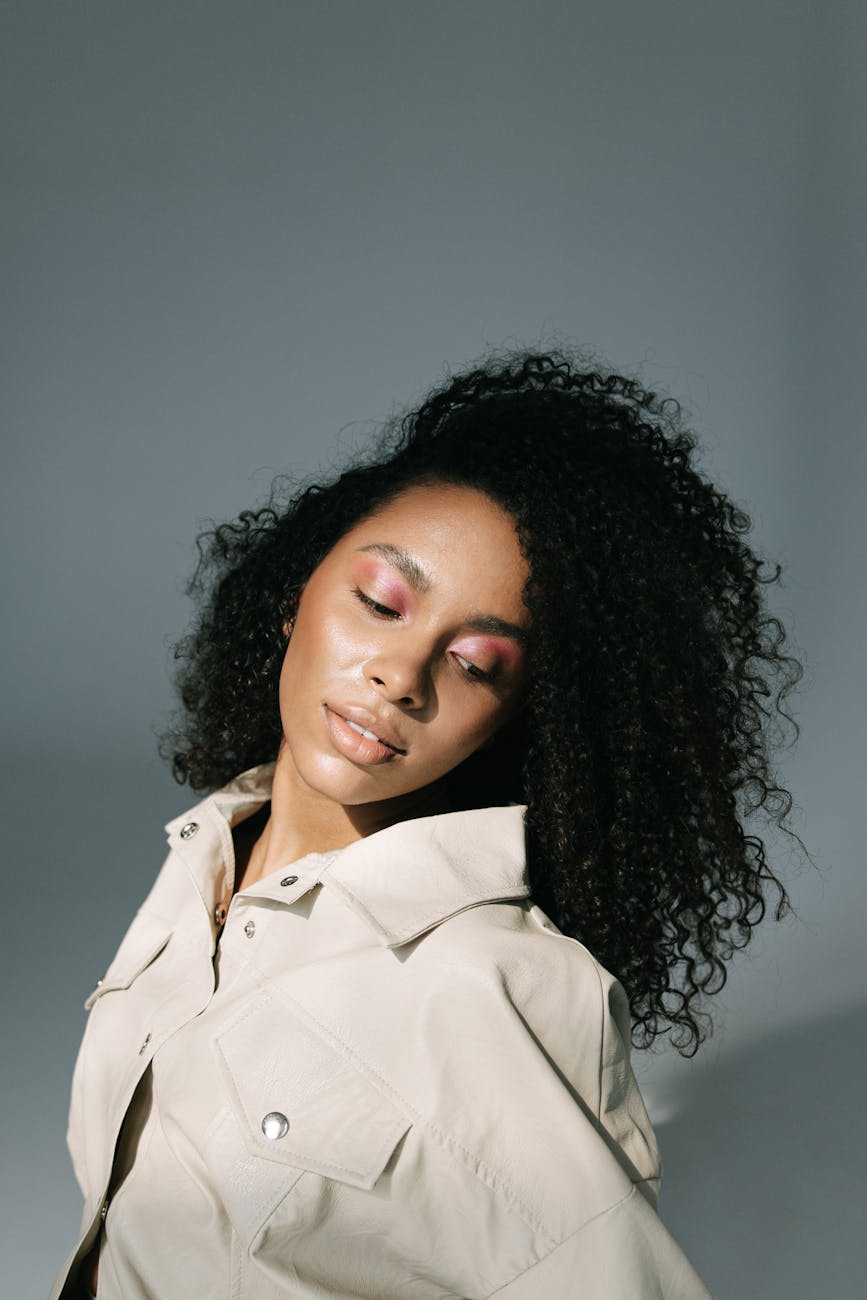
The Tone Dilemma: Shades, Society, and Self. #thebrowngirldilemma

Photo by Sherman Trotz on Pexels.com

Color has always been more than a visual spectrum; it is a social construct, a mirror, and a measure of worth. Within the global Black community, skin tone occupies a complex intersection between identity, desirability, and belonging. From the honey tones of the Caribbean to the deep, blue-black hues of the African continent, melanin has been both a mark of pride and a point of prejudice. “The Tone Dilemma” explores how shades shape not only perception but also selfhood in a world that still clings to colonial hierarchies of beauty.

Historically, lighter complexions were often privileged under systems of slavery and colonization. House slaves, typically of mixed ancestry, were afforded proximity to power and comfort, while darker-skinned laborers toiled in the fields. This social stratification created an enduring internalized bias within the Black diaspora—one that subtly persists in contemporary beauty standards, employment opportunities, and media representation (Hunter, 2007).

Media remains a powerful amplifier of these hierarchies. Mainstream entertainment often uplifts lighter-skinned actors and models as the “universal” standard of Black beauty. The visibility of women like Zendaya or Halle Bailey is often celebrated, yet darker-skinned counterparts face limited opportunities or hyper-stereotyping. These imbalances reaffirm a color-coded aesthetic ideal that devalues richness of tone in favor of proximity to whiteness (Monk, 2014).

In social contexts, skin tone still dictates desirability. Studies show that lighter-skinned Black individuals are often perceived as more intelligent, trustworthy, and attractive by both non-Black and Black evaluators (Keith & Herring, 1991). Such associations stem from centuries of racial conditioning that tied whiteness to purity and darkness to danger. These implicit biases are not simply aesthetic—they influence dating preferences, hiring decisions, and even police encounters.

The internal dialogue among Black individuals about color is often unspoken yet deeply felt. Many recall being teased for being “too dark” or “not dark enough.” In some cases, light-skinned people are accused of privilege or arrogance, while dark-skinned individuals battle invisibility. This circular wound fractures unity and obscures the collective beauty of the Black experience.

Colorism’s impact extends beyond self-esteem; it affects access to resources. Research shows that darker-skinned individuals within the same racial group often experience lower socioeconomic mobility and harsher sentencing in criminal justice systems (Viglione et al., 2011). The shade of one’s skin, thus, becomes a determinant not just of beauty but of life outcomes.

Social media has introduced both remedy and risk. Movements like #MelaninMagic and #BlackGirlMagic have helped reframe narratives by celebrating darker tones and rejecting Eurocentric norms. Yet, even within these digital affirmations, filters and curated imagery can reinforce unrealistic expectations. The quest for validation remains intertwined with the politics of color.

Historically, beauty rituals have also reflected these tensions. The global market for skin-lightening products, estimated at billions annually, exposes how deep the wound runs. These creams—often harmful—represent both aspiration and alienation: a longing to belong to a beauty paradigm that was never designed to include melanin (Glenn, 2008).

Within the African diaspora, however, there is a growing reclamation of color as divine art. The warm siennas, golden ambers, and deep obsidians of Black skin reflect ancestry, geography, and resilience. In African spiritual traditions, darker skin was often viewed as sacred, symbolizing closeness to the earth and the Creator’s fire.

Yet healing from colorism requires confrontation. It demands acknowledging how internalized whiteness seeps into love, art, and identity. Conversations about skin tone must be honest, not accusatory—spaces where both pain and pride coexist.

Educators and parents play a crucial role in reprogramming young minds. Teaching children that melanin is both science and soul—a biological blessing and a cultural crown—can shift generational narratives. Representation in dolls, books, and media also matters, shaping how future generations define “beautiful.”

The psychology of shade preference has roots in colonial trauma but thrives through modern reinforcement. The more society commodifies lightness, the more darkness must be defended, not as a counter-ideal but as an equal truth.

Artists and photographers have become crucial in this cultural renaissance. Through visual storytelling, they depict the full tonal spectrum of Blackness as poetry—each shade a note in a larger symphony of identity. Their work challenges the myth of uniformity and celebrates diversity within the diaspora.

In romantic relationships, the tone dilemma also manifests subtly. Some individuals admit to “preferences” shaped not by attraction but by social conditioning. To unlearn such biases is to rediscover love as something unbound by colonial logic.

Faith communities have also begun addressing the color divide. Biblical texts remind believers that humanity was created in God’s image—an image that encompasses the full range of human color. Reclaiming this theology can restore spiritual balance where self-hatred once lingered.

Educational curricula can integrate lessons about colorism into racial justice education. When students learn that skin shade variation is a natural adaptation to sunlight exposure and not a hierarchy of worth, science becomes liberation.

Psychologists encourage affirmations, visibility, and community healing spaces to dismantle tone-based trauma. Group dialogues and art therapy allow individuals to rewrite their narratives, transforming shame into self-acceptance.

Ultimately, the tone dilemma is not simply about pigment—it is about power, perception, and pride. To transcend it, we must see skin not as a scale but as a spectrum of strength.

When Black skin, in all its hues, is celebrated as divine design rather than divided by degrees, the world will finally begin to reflect its true beauty—a beauty that was never meant to be measured, only marveled at.

References
Glenn, E. N. (2008). Yearning for lightness: Transnational circuits in the marketing and consumption of skin lighteners. Gender & Society, 22(3), 281–302.
Hunter, M. (2007). The persistent problem of colorism: Skin tone, status, and inequality. Sociology Compass, 1(1), 237–254.
Keith, V. M., & Herring, C. (1991). Skin tone and stratification in the Black community. American Journal of Sociology, 97(3), 760–778.
Monk, E. P. (2014). Skin tone stratification among Black Americans, 2001–2003. Social Forces, 92(4), 1313–1337.
Viglione, J., Hannon, L., & DeFina, R. (2011). The impact of light skin on prison time for Black female offenders. The Social Science Journal, 48(1), 250–258.

The Spectrum of Brown: Beauty Beyond One Shade.

Photo by Ivan Samkov on Pexels.com

Beauty is not a singular concept, and brown skin is far from a monolith. Across the globe, brown skin spans a rich spectrum—from deep chocolate and espresso tones to caramel, honey, and light café au lait shades. Each tone carries its own radiance, history, and cultural significance. Celebrating the diversity within brown skin is essential for dismantling colorism, embracing heritage, and redefining beauty standards.

Understanding the Diversity

The range of brown skin is shaped by genetics, ancestry, and environmental factors. Deep brown tones often carry a legacy of resilience and survival, while lighter brown shades reflect diverse diasporic histories. Recognizing this spectrum is not just about aesthetics—it is about understanding the stories, cultures, and identities embedded within each shade.

Challenging Colorism

Historically, lighter brown skin has been privileged in media and society, marginalizing darker tones and perpetuating internalized bias (Hunter, 2007). By celebrating the full spectrum, communities can challenge these biases and foster pride in every shade. Representation matters: when all shades of brown are visible in fashion, media, and beauty industries, individuals feel seen, validated, and empowered.

Influencers and Representation

Celebrities and influencers are reshaping perceptions of brown beauty. Figures like Lupita Nyong’o (deep brown), Tracee Ellis Ross (medium brown), and Zendaya (light brown) demonstrate that glamour, elegance, and confidence exist across the entire spectrum. Their visibility challenges narrow beauty ideals and provides role models for young girls and women navigating societal pressures.

Psychological Impact

Celebrating diverse brown skin tones positively impacts self-esteem and identity. Research shows that when individuals see their shade represented positively, it enhances confidence and reduces internalized colorism (Russell, Wilson, & Hall, 1992). Embracing diversity within brown skin encourages individuals to value their unique appearance rather than conforming to imposed standards.

Cultural Significance

Every shade of brown reflects a unique cultural and historical narrative. From African and Caribbean heritage to South Asian and Middle Eastern lineages, brown skin embodies resilience, creativity, and ancestral pride. Recognizing and celebrating this spectrum honors cultural roots while asserting that beauty is multifaceted and inclusive.

Conclusion

Brown skin is a spectrum, not a single shade. Every tone—from the deepest espresso to the lightest caramel—is beautiful, powerful, and worthy of recognition. By embracing the diversity within brown skin, communities challenge societal bias, celebrate heritage, and redefine beauty. True appreciation lies in recognizing that every shade tells a story, carries a legacy, and embodies brilliance beyond comparison.


References

  • Hunter, M. (2007). The Persistent Problem of Colorism: Skin Tone, Status, and Inequality. Sociology Compass, 1(1), 237–254.
  • Russell, K., Wilson, M., & Hall, R. E. (1992). The Color Complex: The Politics of Skin Color in a New Millennium. Anchor Books.

Brown Skin, Heavy Crown: The Weight of Representation. #TheBrownGirlDilemma

Photo by Antu00f3nio Ribeiro on Pexels.com

Representation is never neutral. For brown-skinned women, every appearance in media, politics, or public life carries symbolic weight far beyond personal identity. Their faces, bodies, and voices are scrutinized not only as individuals but as representatives of entire communities. The phrase “heavy is the head that wears the crown” captures the pressure of leadership, but for women with brown skin, the crown is not always given—it is fought for, earned against bias, and carried under the burden of societal expectations. This essay explores the weight of representation as it relates to brown women across history, psychology, spirituality, and modern media.

The Historical Crown of Brown Womanhood

The weight of representation begins in history. During slavery and colonization, brown-skinned women were stripped of agency and forced into stereotypical roles: the Mammy, the Jezebel, or the Sapphire. Each caricature denied complexity and dignity while shaping how society viewed brown women (Collins, 2000). To step outside those imposed roles was an act of defiance. Representation, therefore, has always been both a battlefield and a crown.

The Burden of Stereotypes

Even today, brown women in leadership, artistry, or public life face the double bind of being visible yet misrepresented. Michelle Obama, for instance, was celebrated as a First Lady but also subjected to racist caricatures questioning her femininity and beauty. Such experiences reveal how representation is not simply a platform for influence but also a site of heavy scrutiny, where one misstep can be weaponized against an entire group.

The Crown of Visibility

Visibility is both gift and burden. On one hand, representation in media and politics disrupts centuries of invisibility; on the other hand, it pressures brown women to embody perfection. Stars like Viola Davis, Issa Rae, and Lupita Nyong’o have expanded the palette of beauty and identity, yet they also carry the responsibility of “getting it right” for those who see themselves in their faces. The crown becomes heavy when one person must stand in for millions.

Psychological Toll of Representation

The psychological impact of representation cannot be underestimated. Studies show that underrepresentation or misrepresentation negatively affects self-esteem and identity formation among Black and brown girls (Ward, 2004). Conversely, positive representation can foster empowerment and resilience. Yet when representation is limited to tokenism, the crown becomes a trap, forcing women to embody ideals rather than authentic selves.

Media and the Beauty Hierarchy

Media often constructs a hierarchy of beauty that privileges light skin and Eurocentric features, leaving brown-skinned women at the margins. Even within Black media, colorism can determine who becomes a cover model or leading lady. The crown of representation is heavy when it is given only conditionally—when beauty, desirability, or relatability must first pass through a Eurocentric filter.

Representation in Politics and Leadership

In political life, brown women carry the additional burden of respectability. Figures like Shirley Chisholm, Kamala Harris, and Ayanna Pressley symbolize progress, but their crowns come with heavy costs: navigating racism, sexism, and colorism simultaneously. Their presence is not merely personal achievement but proof of possibility for future generations. Yet every critique they endure is magnified as commentary on the capability of all brown women.

The Spiritual Dimensions of Representation

The crown also carries spiritual significance. In biblical texts, crowns often symbolize both victory and responsibility. James 1:12 promises a “crown of life” to those who endure trials. For brown women, enduring societal trials of bias and exclusion parallels this spiritual crown-bearing. Their representation becomes a living testimony of perseverance, embodying Proverbs 31 strength while challenging worldly definitions of beauty and worth.

The Crown as Double Burden

Representation often forces brown women to live in two worlds. They must embody authenticity for their communities while also navigating the expectations of dominant culture. This dual burden is mentally exhausting, leading to what psychologists term “code-switching fatigue” (Jones & Shorter-Gooden, 2003). The crown is not only heavy but sometimes crushing.

Resistance Through Representation

Despite the burden, representation also fuels resistance. Campaigns like #BlackGirlMagic and #MelaninPoppin challenge dominant narratives by celebrating brown skin as regal and divine. These movements reclaim the crown as a symbol of heritage and pride rather than a weight of scrutiny. Representation becomes not just survival but revolution.

The Global Crown of Brownness

The weight of representation extends globally. In South Asia, the Middle East, and Latin America, brown-skinned women confront similar struggles of colorism and bias. The multibillion-dollar skin-lightening industry testifies to the global reach of these ideals (Glenn, 2008). The crown of brownness, then, is a shared global inheritance, both heavy with oppression and radiant with resilience.

Hair, Fashion, and Aesthetic Crowns

For brown women, representation is also policed through aesthetics. Hairstyles, clothing, and bodily expressions become battlegrounds of respectability. When Zendaya wore locs to the Oscars, she was praised by some but mocked by others. Each choice becomes symbolic, turning personal expression into public discourse. The crown of aesthetics is thus both a celebration and a cage.

Representation and the Next Generation

Young brown girls often look to role models for cues on beauty and possibility. When they see themselves reflected in positive ways, they learn to wear their crowns proudly. But when absence or distortion dominates, they inherit insecurity. Representation is not only about the present but about shaping future generations who must decide whether their crowns will be hidden or exalted.

The Theology of Crown-Bearing

From a theological perspective, the weight of representation echoes Christ’s crown of thorns. His crown symbolized both suffering and redemption. Likewise, the brown woman’s crown is carried through struggle but also testifies to divine strength. Psalm 8:5 declares that humanity is “crowned with glory and honor.” For brown women, embracing this truth dismantles external hierarchies and affirms a God-given identity beyond societal bias.

Collective Crowns and Community

Representation becomes lighter when crowns are shared collectively. The burden eases when brown women see diverse portrayals that allow for multiplicity rather than singular perfection. Community platforms, literature, and grassroots movements democratize representation so that no single woman bears the weight of symbolizing all.

Representation as Healing

Positive representation also functions as healing. When brown women are celebrated for their beauty, intelligence, and humanity, it counters centuries of erasure. Representation thus becomes restorative, mending psychological scars left by bias and validating identities that have long been marginalized.

Representation and Resistance to White Supremacy

Ultimately, the crown is heavy because it resists white supremacy. To wear brown skin proudly in a world that devalues it is a political act. Each time a brown woman ascends to visibility—whether in a film, a boardroom, or a pulpit—she disrupts narratives that suggest her inferiority. Representation is therefore not symbolic alone but revolutionary in its impact.

The Crown as Calling

Rather than a burden alone, the crown of representation can be reframed as a calling. To embody strength, intelligence, and grace while confronting bias reflects a prophetic role. Brown women stand as cultural and spiritual witnesses, bearing crowns that point to possibilities of justice and equality.

Toward Lighter Crowns

The goal of representation should not be to perpetuate heavy crowns but to create a world where no one woman carries the weight of all. Diversifying media, dismantling colorism, and affirming brown beauty at every level can redistribute the symbolic crown. In such a world, brown women are free to be human, not merely representatives.

Conclusion

Brown skin carries a heavy crown, but it also shines with unmatched radiance. Representation, while burdened with scrutiny, also births transformation, resistance, and pride. The task before us is to lighten the weight by ensuring that brown women no longer stand alone as symbols but thrive as individuals celebrated in their fullness. The crown is heavy, yes, but it is also sacred—a reminder that within brown skin lies the strength to endure, inspire, and redefine what beauty and leadership mean for generations to come.


References

  • Collins, P. H. (2000). Black feminist thought: Knowledge, consciousness, and the politics of empowerment. Routledge.
  • Glenn, E. N. (2008). Yearning for lightness: Transnational circuits in the marketing and consumption of skin lighteners. Gender & Society, 22(3), 281–302.
  • Jones, C., & Shorter-Gooden, K. (2003). Shifting: The double lives of Black women in America. HarperCollins.
  • Ward, L. M. (2004). Wading through the stereotypes: Positive and negative associations between media use and Black adolescents’ conceptions of self. Developmental Psychology, 40(2), 284–294.
  • The Holy Bible, King James Version.

The Cost of Being Beautiful: Exploitation, Validation, and Visibility.

This photograph is the property of its respective owner. No copyright infringement intended.

Beauty has long been a currency in human society—admired, desired, and exploited. For women, especially women of color, beauty has functioned both as power and prison. The cost of being beautiful extends beyond vanity; it is the psychological, emotional, and even spiritual toll exacted by a world that defines worth through appearance. Beauty becomes both an asset and a liability, offering validation but demanding visibility on terms not of one’s own making.

From childhood, individuals—particularly girls—are taught that beauty opens doors. Compliments, attention, and social privileges reinforce a belief that attractiveness equates to value. Yet, this same system exploits that very beauty, commodifying it through media, marketing, and male desire. The pursuit of beauty thus becomes a performance sustained by approval, not authenticity (Wolf, 1991).

In modern culture, beauty is no longer natural—it is manufactured. Billions are spent annually on cosmetics, plastic surgery, and digital enhancement. Social media platforms like Instagram and TikTok amplify this obsession, turning faces and bodies into brands. The line between identity and image blurs, leaving many women trapped between their true selves and the perfected versions projected online (Gill, 2007).

Beauty’s validation often comes through the male gaze. Women are socialized to see themselves as objects of desire rather than subjects of their own narratives. This gaze not only dictates standards but defines visibility—who is seen, who is desirable, and who is invisible. To be beautiful is to be watched; to be watched is to be controlled (Mulvey, 1975).

For Black women, beauty carries a distinct complexity. Eurocentric standards historically excluded them from being perceived as beautiful, relegating them to stereotypes of strength or hypersexuality. The struggle for validation becomes an act of resistance—a reclaiming of aesthetics, identity, and self-worth against centuries of misrepresentation (Hooks, 1992).

The beauty industry profits from insecurity. Advertisements subtly tell women they are never enough—never young enough, thin enough, light enough. This manufactured dissatisfaction fuels perpetual consumption. Beauty, in capitalist culture, is not about empowerment but about profit, built upon cycles of comparison and competition (Bordo, 2003).

Exploitation hides beneath the surface of glamour. Models, influencers, and entertainers often face objectification disguised as opportunity. Their visibility is contingent upon maintaining desirability, which can breed anxiety, eating disorders, and burnout. The emotional labor of beauty—the pressure to be flawless at all times—is invisible yet exhausting.

In the realm of Hollywood and fashion, women of color face the dual burden of representation and tokenism. Their inclusion often serves as aesthetic diversity rather than genuine equity. The “exotic” label objectifies rather than honors their heritage, turning cultural identity into spectacle (Craig, 2002).

Historically, beauty has also been weaponized as social currency. During slavery and segregation, lighter-skinned Black women were often favored in domestic work or entertainment, reinforcing colorism within the community. Beauty became not only personal but political—a marker of proximity to whiteness and privilege (Hunter, 2005).

Psychologically, the constant pursuit of beauty erodes self-esteem. When identity becomes contingent on appearance, the individual lives under the tyranny of external validation. This fragile self-worth can fracture when youth fades or trends shift, revealing the emptiness behind conditional love and approval.

Religiously and spiritually, beauty holds deeper implications. Scripture reminds us that “favor is deceitful, and beauty is vain” (Proverbs 31:30, KJV). True beauty, in divine terms, is moral and internal, not material. Yet society reverses this order, idolizing outward appearance and neglecting inner substance—a form of modern idolatry masked as self-care.

The commodification of beauty also intersects with racial capitalism. Global markets exploit African, Asian, and Latin American women’s bodies through skin-lightening products, hair extensions, and Eurocentric fashion ideals. What is marketed as “choice” often conceals economic coercion and cultural colonization (Glenn, 2008).

Visibility, while often framed as empowerment, carries its own cost. Women in the public eye face surveillance and criticism that erode privacy and authenticity. The more visible a woman becomes, the less control she has over how she is seen. Visibility thus becomes exposure—a light that illuminates and burns simultaneously.

In relationships, beauty can distort power dynamics. Attractive women may receive attention but not respect; love offered for appearance rather than character is shallow and fleeting. Men conditioned by visual culture may desire beauty but fear its autonomy, leading to control, jealousy, or emotional abuse (Fredrickson & Roberts, 1997).

The digital age amplifies these dynamics. Filters, edits, and algorithms dictate what is beautiful, rewarding conformity and punishing difference. The result is a homogenized global aesthetic where individuality is lost. Even empowerment movements risk becoming commodified slogans that sell beauty under the guise of “self-love.”

Yet, beauty is not inherently evil—it is divine when redefined. When women reclaim beauty as expression rather than validation, it transforms from exploitation to empowerment. True beauty becomes a mirror of spirit, creativity, and cultural identity. It ceases to be about approval and becomes an act of liberation.

Cultural redefinition requires dismantling Eurocentric beauty norms and celebrating diversity of complexion, texture, and form. Movements such as “Black Girl Magic” and natural hair advocacy challenge oppressive aesthetics, restoring pride to what was once marginalized. Beauty, reimagined through cultural authenticity, becomes resistance and restoration.

The cost of being beautiful can only be paid back through truth—by acknowledging the pain behind the polish. Women must reclaim the narrative of beauty, detaching it from consumption and control. Beauty must once again serve humanity, not hierarchy.

Ultimately, beauty’s truest form lies in freedom: the freedom to exist beyond the gaze, to define oneself without permission, and to embody a worth that no mirror can measure. When beauty ceases to be a burden and becomes a birthright, visibility transforms into vision—and validation becomes self-love.


References

Bordo, S. (2003). Unbearable weight: Feminism, Western culture, and the body. University of California Press.

Craig, M. L. (2002). Ain’t I a beauty queen? Black women, beauty, and the politics of race. Oxford University Press.

Fredrickson, B. L., & Roberts, T.-A. (1997). Objectification theory: Toward understanding women’s lived experiences and mental health risks. Psychology of Women Quarterly, 21(2), 173–206.

Gill, R. (2007). Gender and the media. Polity Press.

Glenn, E. N. (2008). Yearning for lightness: Transnational circuits in the marketing and consumption of skin lighteners. Gender & Society, 22(3), 281–302.

Hooks, B. (1992). Black looks: Race and representation. South End Press.

Hunter, M. (2005). Race, gender, and the politics of skin tone. Routledge.

Mulvey, L. (1975). Visual pleasure and narrative cinema. Screen, 16(3), 6–18.

Wolf, N. (1991). The beauty myth: How images of beauty are used against women. HarperCollins.