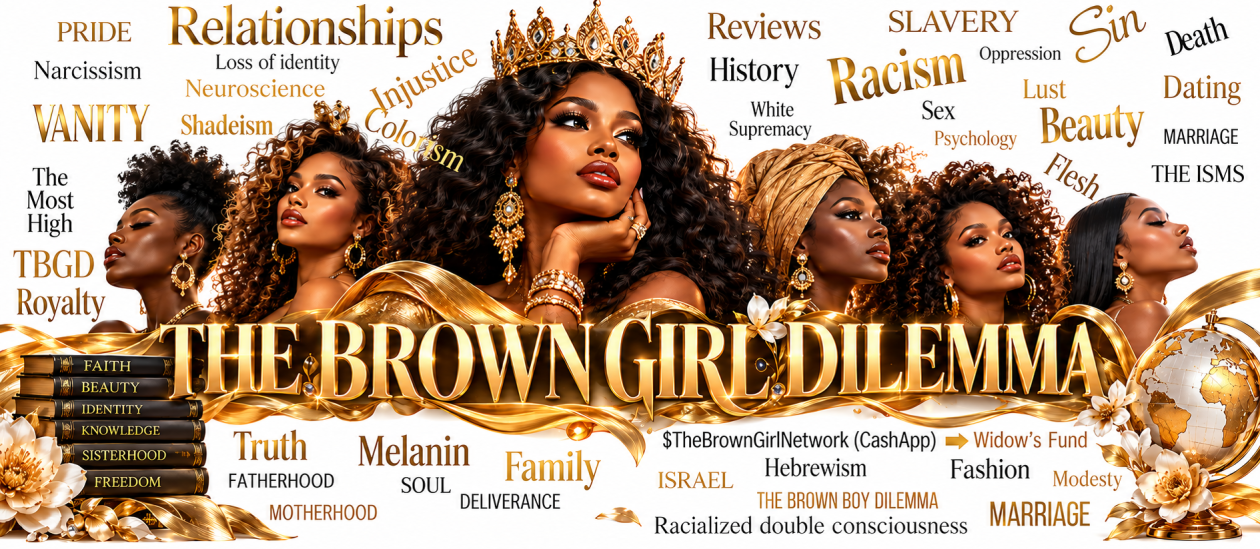
Tag Archives: crown

The Crown and the Curse

Beauty has often been described as a crown—something worn, admired, and envied. Yet for many women, especially Black women, this crown is inseparable from a curse. What appears as privilege on the surface frequently conceals a deeper system of control, punishment, and vulnerability that accompanies visibility and desirability.

Historically, beauty has never been neutral. It has functioned as a social marker that determines who is protected, who is believed, and who is disposable. The crown of beauty grants access to attention and opportunity, but it also places its bearer under constant surveillance, judgment, and expectation.

For Black women, this contradiction is intensified by racialized beauty hierarchies. When beauty aligns with Eurocentric ideals, it may offer conditional favor, yet that favor is fragile and revocable. When beauty reflects African features, it is often hypersexualized, exoticized, or framed as threatening. In both cases, beauty becomes a site of regulation rather than liberation.

The curse emerges in the loss of autonomy. Beautiful women are rarely allowed to simply exist. Their bodies are read as public property, open to commentary, entitlement, and projection. Compliments quickly shift into assumptions, demands, or moral scrutiny, revealing how admiration can mutate into control.

This dynamic is deeply rooted in history. During slavery and colonialism, the bodies of women of African descent were commodified and violated under the guise of fascination and desire. Beauty did not shield them from violence; instead, it made them more vulnerable to exploitation. The crown, from its inception, carried a curse.

In modern contexts, this curse persists through media and social institutions. Beautiful women are elevated visually but diminished intellectually. Their success is often attributed to appearance rather than competence, reinforcing the belief that beauty negates merit. This framing undermines credibility and invites resentment.

Power further complicates the burden. A woman who is both beautiful and authoritative destabilizes patriarchal norms. As a result, she may face heightened backlash, characterized by character assassination, rumors, and exaggerated scrutiny. Her crown becomes evidence against her rather than a neutral trait.

Colorism operates as an internal extension of this curse. Within marginalized communities, lighter skin and certain features may be crowned as ideal, while darker skin is devalued. This hierarchy reproduces colonial logic and fractures communal solidarity, turning beauty into a tool of division rather than affirmation.

The curse also manifests psychologically. Constant visibility can lead to hypervigilance, anxiety, and self-policing. Women may feel pressured to downplay their appearance, mute their confidence, or shrink their presence to avoid backlash. This internal regulation reflects the success of external control.

Religious and moral narratives have historically reinforced the curse. Women’s beauty has been framed as a source of temptation and disorder, placing responsibility for others’ desires onto female bodies. Such narratives transform beauty into moral liability rather than neutral embodiment.

Economically, the crown is monetized while the curse is ignored. Industries profit from beauty while absolving themselves of responsibility for the harm caused by unattainable standards, harassment, and exploitation. Women are encouraged to invest endlessly in their appearance without protection from the consequences of visibility.

Social relationships are not immune. Beauty can provoke envy, competition, and isolation. Rather than fostering admiration, it may invite hostility or distrust, particularly in environments shaped by scarcity and comparison. The crown isolates as much as it elevates.

The paradox of the crown and the curse exposes a deeper cultural discomfort with women who cannot be easily categorized. Beauty is tolerated only when paired with submission. Power is tolerated only when stripped of desirability. Together, they challenge hierarchies built on control.

Liberation begins with naming the curse. Recognizing that punishment is structural rather than personal allows women to reject shame and reclaim agency. It also challenges communities to confront how admiration can coexist with harm.

Reclaiming the crown requires redefining beauty beyond hierarchy. Beauty must be disentangled from worth, morality, and entitlement. When beauty is no longer a currency that demands payment through silence or submission, the curse begins to weaken.

Collectively, dismantling the curse involves changing narratives, policies, and social norms. It requires believing women regardless of appearance, valuing competence over aesthetics, and rejecting the myth that beauty justifies intrusion or judgment.

The crown does not need to be discarded; it needs to be redeemed. Beauty can exist without punishment when autonomy is respected and humanity is centered. The goal is not invisibility, but safety, dignity, and freedom.

Ultimately, the crown and the curse reveal the cost of living in a world that confuses visibility with entitlement. Until beauty is no longer treated as permission for control, the crown will remain heavy. True justice allows women to wear it without consequence.

References

Collins, P. H. (2004). Black sexual politics: African Americans, gender, and the new racism. Routledge.

Crenshaw, K. (1991). Mapping the margins: Intersectionality, identity politics, and violence against women of color. Stanford Law Review, 43(6), 1241–1299.

Dion, K., Berscheid, E., & Walster, E. (1972). What is beautiful is good. Journal of Personality and Social Psychology, 24(3), 285–290.

Eagly, A. H., & Karau, S. J. (2002). Role congruity theory of prejudice toward female leaders. Psychological Review, 109(3), 573–598.

Hunter, M. (2007). The persistent problem of colorism: Skin tone, status, and inequality. Sociology Compass, 1(1), 237–254.

hooks, b. (1992). Black looks: Race and representation. South End Press.

Wolf, N. (1991). The beauty myth: How images of beauty are used against women. HarperCollins.

The Crown: Him

A good godly man can be a profound blessing in a woman’s life—not because he completes her, but because his character can complement her own purpose, values, and walk with God. Scripture presents righteous leadership not as domination, but as responsibility, sacrifice, wisdom, protection, and love. The biblical standard for a man is therefore much higher than physical attractiveness, financial success, social status, or charisma. His crown is ultimately revealed through his character.

One of the greatest positives of having a godly man in your life is having someone whose values are anchored in something greater than himself. A man who genuinely seeks God is called to develop humility, self-control, honesty, patience, compassion, and integrity. These qualities can create an environment in which a woman feels respected rather than manipulated and valued rather than objectified. Proverbs 20:7 declares, “The just man walketh in his integrity: his children are blessed after him” (KJV).

A godly man understands that being a man does not mean being controlled by every desire that enters his mind. Biblical manhood requires discipline. Proverbs 25:28 compares a person without self-control to “a city that is broken down, and without walls.” A man who can govern himself demonstrates that his desires do not govern him. This distinction becomes especially important in a culture that frequently teaches men to pursue whatever they want whenever they want it.

Sexual purity before marriage is therefore not merely about denying pleasure; it is about developing character. A man who chooses abstinence before marriage demonstrates that he understands the difference between desire and entitlement. He recognizes that attraction is natural, but acting upon every attraction is a choice. His willingness to wait can demonstrate patience, conviction, and respect for both himself and the woman he intends to marry.

A man who avoids sexual temptation is not necessarily a man who never experiences temptation. Rather, he is a man who understands how temptation works and refuses to deliberately place himself in situations designed to weaken his convictions. Joseph provides one of Scripture’s clearest examples. When confronted with sexual temptation from Potiphar’s wife, Joseph did not negotiate with temptation; he fled from it (Genesis 39:7–12). Sometimes spiritual strength looks less like standing around proving how strong you are and more like knowing when to leave.

Wisdom lies in a man who protects the boundaries of a relationship before marriage. He does not continually test how far he can go physically. He does not use emotional intimacy as a pathway toward sexual gratification. He does not pressure a woman by saying that love must be proven through physical intimacy. Instead, he respects her convictions and establishes boundaries that protect both people.

A godly man also understands that a woman’s body is not his possession simply because he is attracted to her. Biblical love requires honor. First Thessalonians 4:3–5 instructs believers to exercise holiness and self-control rather than living according to uncontrolled passion. A man who genuinely loves a woman should therefore care about her spiritual, emotional, and personal well-being—not merely about gaining access to her body.

Another positive quality is consistency. A godly man should not be righteous only when someone is watching. Character is demonstrated privately as well as publicly. The man who speaks respectfully about women when his friends are present, maintains his boundaries when nobody is monitoring him, and keeps his commitments when there is no immediate reward is demonstrating something far more valuable than outward religious performance.

A good man can also provide emotional stability. This does not mean that he will never struggle, become frustrated, or experience difficult emotions. Rather, maturity means learning how to handle emotions responsibly. A man who can communicate rather than intimidate, apologize rather than manipulate, and listen rather than constantly defend himself creates the possibility for a healthier relationship.

A godly man should also understand the importance of protecting a woman’s dignity. Ephesians 5:25 instructs husbands to love their wives sacrificially, using Christ’s love for the church as the model. This is an extraordinary standard because it places responsibility upon the man to give rather than merely demand. Biblical authority without sacrificial love becomes abuse of power; genuine godly leadership is inseparable from responsibility.

Financial responsibility can also be an important dimension of mature manhood. Scripture does not define a man’s worth by his income, possessions, or social class, but it does emphasize responsibility toward one’s household. First Timothy 5:8 warns against neglecting family responsibilities. A godly man therefore strives to work, provide, plan, and steward resources wisely according to his circumstances rather than expecting a woman to carry responsibilities he refuses to confront.

Wisdom is another quality that makes a good man valuable. Proverbs repeatedly connects wisdom with righteous living. A wise man does not believe he knows everything. He seeks counsel, learns from correction, considers consequences, and recognizes when he is wrong. His confidence does not require arrogance. He can be strong without being harsh and humble without being weak.

A godly man should also possess spiritual accountability. He should have a relationship with God that exists independently of the woman he is dating or hoping to marry. A woman should not have to become his pastor, conscience, therapist, mother, and spiritual caretaker. His faith should be something he personally pursues through prayer, Scripture, obedience, repentance, and fellowship with other believers.

There is also tremendous value in a man who understands covenant rather than merely convenience. Modern relationships can sometimes be built around what two people can obtain from each other. Biblical marriage, however, is covenantal. Malachi 2:14 describes marriage as a covenant, emphasizing faithfulness rather than temporary gratification. A man who desires marriage should therefore be preparing himself for covenantal responsibility rather than simply searching for companionship, sex, or domestic benefits.

A man who can resist temptation can bring a different kind of security into a relationship. No woman can eliminate every temptation a man will encounter, and no man can eliminate every temptation a woman will encounter. Fidelity ultimately depends upon personal character and moral choices. Nevertheless, a man committed to faithfulness will not blame his partner for his decisions. He will take responsibility for guarding his eyes, his thoughts, his associations, his digital life, and his behavior.

Such a man can also encourage a woman to become more—not less—of who God has called her to be. A healthy relationship should not require either person to abandon their gifts, intelligence, aspirations, friendships, or spiritual development. A good man does not fear a woman’s growth. He can celebrate her accomplishments without feeling diminished by them. He understands that partnership is not competition.

A godly man should also know how to apologize and repent. Religious language does not automatically produce righteous character. A man may quote Scripture and still behave selfishly. Genuine godliness becomes visible when a person can acknowledge wrongdoing, seek forgiveness, make restitution where appropriate, and change his behavior. Repentance is one of the strongest indications that faith is producing transformation rather than merely providing vocabulary.

The presence of a good man can also create an atmosphere of peace, but peace should never be confused with perfection. Every relationship will encounter disagreements, disappointments, and difficult seasons. The difference is often found in how two people handle conflict. A mature man does not use silence as punishment, threats as leverage, or anger as a weapon. He seeks reconciliation while maintaining truth and appropriate boundaries.

Ultimately, a woman should not choose a man simply because he wears the appearance of a crown. Crowns can be symbolic, expensive, and impressive while revealing nothing about the heart beneath them. The true crown of a man is his character. His greatest adornment is not his clothing, physique, occupation, education, wealth, or social reputation, but his faithfulness when temptation comes and his integrity when nobody is watching.

The crown of a godly man is therefore not perfection but submission to God. He may stumble, but he gets back up. He may be tempted, but he chooses discipline. He may become angry, but he learns self-control. He may make mistakes, but he accepts correction. He may desire intimacy, but he honors the boundaries established before marriage. His strength is demonstrated not by how much he can take from a woman, but by how much he is willing to sacrifice to honor God and protect her dignity.

A woman who desires such a man should likewise remember that she is not merely waiting for someone worthy of her; she is also becoming the person capable of sustaining a healthy covenant. The goal should not be to find a flawless king or to become a flawless queen. The goal is to find two people whose lives are increasingly submitted to God, whose relationship is governed by love and truth, and whose commitment to one another is stronger than the temporary pleasures competing for their attention. Proverbs 31:10 asks, “Who can find a virtuous woman? for her price is far above rubies.” In a similar spirit, a righteous man is a treasure because his character cannot be purchased.

References

Holy Bible, King James Version. (1611/1769). The Holy Bible. Cambridge University Press.

Lewis, C. S. (1960). The four loves. Geoffrey Bles.

Merton, T. (1961). New seeds of contemplation. New Directions.

Murray, J. (1954). Principles of Christian conduct. Eerdmans.

Peterson, E. H. (2005). The message: The Bible in contemporary language. NavPress.

Stott, J. R. W. (2006). The cross of Christ. InterVarsity Press.

Wilcox, W. B. (2004). Soft patriarchs, new men: How Christianity shapes fathers and husbands. University of Chicago Press.

Wright, N. T. (2010). After you believe: Why Christian character matters. HarperOne.

The Crown: Her

A godly woman possesses a beauty that extends far beyond physical appearance. Her crown is not merely found in her hair, clothing, jewelry, accomplishments, or the attention she receives from men. Her greatest adornment is character. Scripture presents the virtuous woman as someone whose value cannot be measured by outward beauty alone. Proverbs 31:10 declares, “Who can find a virtuous woman? for her price is far above rubies” (KJV).

One of the greatest blessings of having a godly woman in a man’s life is wisdom, encouragement, and spiritual companionship. A woman who genuinely seeks God can bring a perspective shaped by prayer, discernment, compassion, and faith. She does not seek a relationship merely for companionship or material security; she desires one in which both people can grow spiritually and morally.

A godly woman understands that her body has value beyond sexual attraction. She does not measure her worth by how much attention she receives or how many men desire her. Her body is not a commodity, and her femininity does not require her to compromise her convictions. First Corinthians 6:19–20 reminds believers that the body is a temple of the Holy Spirit and should therefore be treated with honor.

Sexual purity before marriage can be an expression of self-respect, obedience, and spiritual conviction. A woman who chooses to wait is not declaring that sexuality is evil; she is recognizing that sexual intimacy carries significance and belongs within the covenant of marriage. Her decision to establish boundaries communicates that she values the relationship enough not to allow physical desire to dictate its direction.

A woman committed to purity also understands that temptation is real. She does not pretend that attraction disappears simply because she has religious convictions. Instead, she develops wisdom concerning situations, conversations, environments, and relationships that could weaken her boundaries. Second Timothy 2:22 instructs believers to flee youthful lusts and pursue righteousness, faith, charity, and peace.

A virtuous woman therefore does not continually place herself in situations where she must prove how strong her willpower is. Wisdom sometimes means recognizing danger before it becomes a crisis. She understands that boundaries are not punishments; they are protective structures. A woman who establishes healthy boundaries is not being difficult or prudish. She is exercising discernment concerning what she believes her body, heart, and future are worth.

A godly woman also refuses to manipulate a man through sexuality. She does not use intimacy as a bargaining tool, weapon, reward, or means of maintaining control. Likewise, she does not allow herself to be pressured into sexual behavior simply because someone claims that physical intimacy is proof of love. Genuine love is patient and honorable. First Corinthians 13:5 teaches that love “seeketh not her own.”

Emotional purity matters as well. A woman can become deeply attached to someone without having sexual intercourse. Emotional intimacy can create powerful bonds, and wisdom requires recognizing when a relationship is becoming disproportionately intimate without the covenant of marriage. A godly woman learns to guard not only her body but also her heart.

Proverbs 4:23 offers the foundational principle: “Keep thy heart with all diligence; for out of it are the issues of life.” Guarding the heart does not mean becoming cold or incapable of love. It means refusing to give unrestricted access to people who have not demonstrated the character, commitment, and intentions necessary to handle that access responsibly.

A godly woman also understands the difference between attention and genuine love. Being pursued does not necessarily mean being valued. A man can compliment a woman, desire her, buy her gifts, or shower her with attention without possessing the character necessary for a healthy marriage. Discernment allows a woman to look beyond what a man says and examine how he lives.

A wise woman therefore observes consistency. Does he respect her boundaries? Does he honor his commitments? Does he demonstrate self-control? Does he treat other people with dignity? Does his private behavior correspond with his public testimony? These questions can reveal far more about a man’s character than romantic words ever could.

A godly woman should likewise cultivate financial wisdom. Scripture praises stewardship, diligence, prudence, and responsible management. Proverbs 31 portrays a woman who evaluates property, works with her hands, considers investments, provides for her household, and conducts herself with wisdom. Her femininity does not require financial ignorance. She can be nurturing while also being economically intelligent.

The virtuous woman is also industrious. Proverbs 31 does not portray her as passive or without purpose. She works, plans, creates, manages, serves, and makes decisions. Her strength is not presented as a contradiction of femininity. Instead, strength and femininity coexist within her character. She can be gentle without being weak and confident without becoming arrogant.

A godly woman also possesses the courage to say no. This is an essential dimension of wisdom. Saying no to an unsuitable relationship, inappropriate behavior, sexual temptation, financial irresponsibility, manipulation, or disrespect may be painful in the moment, but boundaries can preserve the future. A woman who cannot say no to what is wrong will eventually have difficulty protecting what is right.

Another beautiful quality is emotional maturity. A mature woman understands that not every disagreement requires an explosion, not every disappointment requires revenge, and not every offense requires public exposure. She learns how to communicate, listen, forgive, confront appropriately, and walk away when necessary. Proverbs 31:26 says, “She openeth her mouth with wisdom; and in her tongue is the law of kindness.”

A godly woman does not need to destroy another woman to establish her own beauty. She understands that comparison can become a form of bondage. Another woman’s beauty does not subtract from hers. Another woman’s success does not make her unsuccessful. Another woman’s marriage does not mean that God has forgotten her. Confidence allows a woman to celebrate others without feeling threatened by them.

She also understands that physical beauty is temporary. Youth changes. Bodies change. Fashion changes. Hair changes. Circumstances change. A woman who builds her identity entirely upon physical appearance eventually discovers that the foundation was never strong enough to carry her through life. First Peter 3:3–4 emphasizes the importance of the “hidden man of the heart,” pointing toward an inward beauty characterized by a gentle and quiet spirit.

This does not mean that a godly woman cannot enjoy fashion, cosmetics, jewelry, beautiful clothing, or physical attractiveness. Scripture does not require women to neglect their appearance. Rather, outward beauty should never become more important than inward character. A woman may wear a beautiful crown, but the crown should symbolize something greater than vanity: dignity, wisdom, responsibility, and grace.

A godly woman also understands the importance of choosing a husband carefully. Marriage is too significant to be entered solely because a man is handsome, wealthy, sexually attractive, popular, or exciting. Character matters. Spiritual maturity matters. Self-control matters. Responsibility matters. A woman’s future can be profoundly affected by the man she chooses, which makes discernment one of her greatest forms of wisdom.

She should also resist the temptation to believe that she can transform an unwilling man into a godly husband. Love can encourage people, but love cannot substitute for another person’s willingness to change. A woman should not marry potential while ignoring present character. If a man consistently demonstrates dishonesty, sexual immorality, irresponsibility, cruelty, addiction, or contempt for her boundaries, romantic feelings should not blind her to reality.

The same principle applies to her own character. A godly woman does not demand from a man qualities that she refuses to cultivate herself. If she desires honesty, she should practice honesty. If she desires fidelity, she should practice fidelity. If she desires self-control, she should develop self-control. If she desires spiritual leadership, she should become spiritually mature enough to participate meaningfully in a godly marriage.

Ultimately, the crown of a woman is not the attention she commands but the character she carries. Her greatest beauty is revealed when nobody is applauding her. It is revealed in how she treats people who cannot benefit her, how she handles temptation, how she responds to disappointment, how she protects her dignity, how she honors God, and how she conducts herself when nobody is watching.

The crown of a godly woman is therefore not perfection. It is a life continually being refined by wisdom, faith, repentance, discipline, and love. She can be beautiful and intelligent, feminine and strong, compassionate and discerning, graceful and courageous. She does not have to choose between beauty and substance. Her outward beauty can be an expression of her creativity, while her inward beauty becomes the foundation upon which her entire life stands.

A woman wearing a crown should remember what the crown represents. It represents responsibility before it represents privilege. It represents dignity before attention. It represents wisdom before popularity. It represents self-control before desire. And above all, it represents a life submitted to God. Proverbs 31:30 provides the final measure: “Favour is deceitful, and beauty is vain: but a woman that feareth the LORD, she shall be praised.” The crown may shine upon her head, but it is the character within her heart that makes her truly worthy of it.

References

Holy Bible, King James Version. (1611/1769). The Holy Bible. Cambridge University Press.

Lewis, C. S. (1960). The four loves. Geoffrey Bles.

Merton, T. (1961). New seeds of contemplation. New Directions.

Murray, J. (1954). Principles of Christian conduct. Eerdmans.

Peterson, E. H. (2005). The message: The Bible in contemporary language. NavPress.

Stott, J. R. W. (2006). The cross of Christ. InterVarsity Press.

Wilcox, W. B. (2004). Soft patriarchs, new men: How Christianity shapes fathers and husbands. University of Chicago Press.

Wright, N. T. (2010). After you believe: Why Christian character matters. HarperOne.

Who Wears the Biggest Crown? The Black Man or the Black Woman?

The question of who wears the biggest crown—the Black man or the Black woman—is ultimately a question that reaches beyond gender, beauty, authority, achievement, or social status. A crown represents dignity, responsibility, honor, and authority. Yet from a biblical perspective, the highest crown does not belong to either man or woman independently. The highest crown belongs to the Most High, whose sovereignty transcends every human distinction. “For thou, LORD, art the most high above all the earth: thou art exalted far above all gods” (Psalm 97:9, KJV). Human beings may possess dignity and authority, but all legitimate authority remains subordinate to God.

Within the biblical understanding of family, the Black man and Black woman are not competitors for the same throne. They possess distinct responsibilities while sharing fundamental human dignity as bearers of God’s image. Genesis declares that both male and female were created in the image of God (Genesis 1:27). Therefore, biblical headship should never be interpreted as evidence that a woman is less valuable than a man. Likewise, female strength should not require the destruction or humiliation of masculine responsibility. The biblical model is better understood as ordered partnership rather than a contest for supremacy.

For the Black man, the crown represents more than physical appearance, masculinity, financial success, or social status. It represents responsibility. Scripture presents the husband as having a particular responsibility toward his household. Ephesians 5:23 describes the husband as “the head of the wife, even as Christ is the head of the church” (KJV). This passage establishes a model of leadership that cannot legitimately be separated from sacrifice. The man who wants the crown of leadership must also accept the weight that comes with it.

Biblical leadership is therefore not permission for domination. Christ’s example fundamentally changes the meaning of authority. Ephesians 5:25 commands husbands to love their wives “as Christ also loved the church, and gave himself for it” (KJV). The standard is extraordinary self-sacrifice. A man cannot reasonably demand obedience, honor, or submission while refusing the corresponding responsibilities of protection, provision, fidelity, emotional maturity, and sacrificial love. A crown without responsibility becomes merely decoration.

The concept of the man as provider is also deeply connected to biblical responsibility. First Timothy 5:8 states that a person who fails to provide for his household has denied the faith. Although economic circumstances differ across generations and households, the principle remains significant: responsible manhood includes a serious commitment to the welfare of one’s family. Provision, however, should not be reduced exclusively to money. A man can provide security, wisdom, discipline, affection, spiritual leadership, stability, and protection. Financial provision matters, but biblical provision encompasses the whole household.

The Black woman, meanwhile, carries her own crown. Scripture does not portray womanhood as weakness or insignificance. Proverbs 31 presents a woman who is economically productive, intellectually capable, discerning, industrious, charitable, and respected within her community. She considers a field and purchases it, makes merchandise, strengthens her household, and speaks with wisdom (Proverbs 31:16–26). Her strength does not erase her femininity. Instead, her wisdom and capability become part of the glory of her womanhood.

The biblical instruction for a wife to follow her husband’s leadership therefore should not be interpreted as a command to surrender intelligence, conscience, dignity, or moral discernment. Ephesians 5:22–24 places wives within a framework of marital submission, but the passage immediately surrounds that instruction with an extraordinarily demanding command to husbands to love sacrificially. Biblical submission cannot be separated from biblical responsibility. If the husband is called to lead, his leadership must resemble Christ rather than tyranny.

A woman following her husband’s lead, within this biblical framework, is not necessarily a statement that she is inferior. It can represent trust, cooperation, order, and covenantal partnership. Two people cannot effectively lead the same household in opposite directions. Leadership requires someone to accept ultimate responsibility, while partnership requires both people to contribute wisdom and strength. Proverbs 31 demonstrates that a woman can be highly capable while functioning within a marriage where her husband occupies a recognized position of family leadership.

The Black woman should therefore never have to become less intelligent, less ambitious, less articulate, or less accomplished to honor biblical femininity. The biblical woman can be strong without becoming masculine, and she can be submissive without becoming voiceless. Her crown is not diminished because she respects her husband’s leadership. Indeed, Proverbs 31:28 says that her children rise up and call her blessed, while her husband praises her. Honor flows in both directions.

Likewise, the Black man should not believe that masculinity requires emotional hardness, arrogance, irresponsibility, sexual conquest, or domination. Those qualities may be celebrated by portions of contemporary culture, but they do not represent the highest biblical ideal of manhood. Christ demonstrated strength through service. He washed feet, protected the vulnerable, confronted hypocrisy, showed compassion, and ultimately sacrificed Himself. The biblical man is therefore called to possess strength under discipline rather than strength without restraint.

This distinction is particularly meaningful when considering the historical experiences of Black men and Black women. Both have endured systems that attempted to deny their dignity, separate families, exploit labor, and impose degrading stereotypes upon Black identity. Historical scholarship on slavery and racial hierarchy demonstrates that Black families were repeatedly subjected to forces that undermined family stability and autonomy (Davis, 1981; Franklin & Moss, 2000). Consequently, discussions about Black masculinity and femininity should acknowledge history rather than pretend that contemporary family dynamics developed in isolation.

Black women have historically carried enormous responsibilities within Black families and communities. Black men have likewise confronted circumstances that attacked their economic opportunities, social standing, and ability to exercise authority over their households. Recognizing these historical realities should not become an argument for permanent competition between Black men and Black women. Instead, history can teach the importance of rebuilding relationships in which both sexes are treated as valuable, responsible, and worthy of dignity.

The question, then, is not really which one deserves the larger crown. If the Black man and Black woman are both attempting to wear the crown of supremacy over one another, both have misunderstood the purpose of the crown. Scripture repeatedly warns against pride and self-exaltation. James 4:6 declares that “God resisteth the proud, but giveth grace unto the humble” (KJV). The greatest crown is therefore not obtained by defeating one’s spouse. It is received through humility before God.

The Most High remains above every earthly crown. Psalm 24:10 asks, “Who is this King of glory? The LORD of hosts, he is the King of glory” (KJV). This theological principle establishes the proper hierarchy: God is sovereign, human beings are His creation, and every form of human authority is accountable to Him. A husband is not God over his wife. A wife is not God over her husband. Neither possesses unlimited authority over the other.

This distinction becomes especially important when discussing the phrase “the man is the head.” Biblical headship should be understood as accountable leadership rather than unrestricted power. A husband who claims authority while neglecting his wife, children, finances, fidelity, character, or spiritual responsibilities is not demonstrating the fullness of biblical headship. Authority divorced from responsibility becomes oppression. Leadership joined to sacrifice becomes service.

The woman, similarly, should not interpret her crown as a license to despise masculine leadership or compete with her husband for superiority. A marriage in which both individuals continually attempt to prove who is more powerful becomes a battlefield rather than a covenant. Scripture instead presents marriage as a relationship requiring love, respect, fidelity, sacrifice, wisdom, and mutual concern. Ephesians 5:21 begins the larger discussion by instructing believers to submit themselves “one to another in the fear of God” (KJV). Whatever differences in marital roles may be understood from the passage, Christian marriage cannot be reduced to unilateral selfishness.

There is also a profound cultural dimension to reclaiming healthy Black masculinity and femininity. In a society that frequently commodifies Black bodies, stereotypes Black relationships, and measures human worth through wealth and appearance, both Black men and Black women need a definition of dignity that is deeper than cultural approval. The Black man does not need to prove his worth through domination. The Black woman does not need to prove hers through independence from every form of partnership. Their deepest worth precedes their accomplishments because it originates in being created in the image of God.

The crown therefore becomes a symbol of stewardship. If God gives a man authority, he must steward it. If God gives a woman wisdom, she must steward it. If God gives a family children, both parents must steward them. If God gives wealth, it must be stewarded. If God gives influence, it must be stewarded. Nothing placed upon the human head eliminates accountability to the One who placed it there. The crown is never merely a privilege; it is a responsibility.

Perhaps the most beautiful answer is that the Black man and Black woman can both wear crowns without fighting over whose is larger. The man can wear the crown of responsible leadership, sacrificial love, protection, and provision. The woman can wear the crown of wisdom, strength, dignity, nurture, discernment, and partnership. Their crowns do not have to compete because their ultimate allegiance is not to one another but to the Most High. Their relationship becomes strongest when both understand that their authority is received, not self-created.

Ultimately, however, every earthly crown is temporary. Wealth fades. Beauty changes. Careers end. Physical strength diminishes. Social recognition disappears. Even human kingdoms eventually pass away. But the sovereignty of the Most High remains. Revelation 19:12 describes Christ wearing “many crowns” (KJV), emphasizing divine kingship that surpasses every earthly claim to glory. The Black man may wear a crown. The Black woman may wear a crown. But neither wears the highest crown.

So, who wears the biggest crown—the Black man or the Black woman? Neither. The Most High wears the greatest crown. The Black man is called to lead with sacrificial responsibility rather than domination. The Black woman is called to walk in dignity, wisdom, strength, and honorable partnership rather than inferiority. When both submit themselves to God, their crowns become symbols not of competition but of purpose. The highest form of Black excellence is therefore not a man defeating a woman or a woman defeating a man; it is a people discovering how to live with dignity, responsibility, love, wisdom, and reverence before the King above every king.

If this work has informed or inspired you, please consider supporting it so we can continue researching, writing, and sharing these stories.

CashApp: $thebrowngirlnetwork

References

Davis, A. Y. (1981). Women, race, & class. Random House.

Franklin, J. H., & Moss, A. A., Jr. (2000). From slavery to freedom: A history of African Americans (8th ed.). McGraw-Hill.

Holy Bible, King James Version. (1611/1769). The Holy Bible.

Hooks, B. (2004). We real cool: Black men and masculinity. Routledge.

Hunter, M. (2005). Race, gender, and the politics of skin tone. Routledge.

Lerner, G. (1972). Early community work of Black club women. The Journal of Negro History, 59(2), 158–167.

Proverbs 31 Ministries. (n.d.). Proverbs 31. In Holy Bible, King James Version.

The Holy Bible. (KJV). Genesis 1:27; Psalm 24:10; Psalm 97:9; Proverbs 31:10–31; Ephesians 5:21–33; 1 Timothy 5:8; James 4:6; Revelation 19:12.

Who Deserves the Crown?

Beauty is often presented as though it were an objective truth, a quality that naturally belongs to certain faces and bodies. Yet the history of beauty reveals something far more complicated. The question of who “deserves the crown” is rarely determined by physical appearance alone. Beauty is interpreted through cultural values, historical circumstances, social hierarchies, economics, media institutions, and systems of power. The crown, therefore, is not merely placed upon the head of the most beautiful woman; it is often awarded by those who possess the authority to define beauty in the first place.

For centuries, societies have created standards that distinguish desirable appearances from undesirable ones. Ancient civilizations developed their own ideals concerning proportion, complexion, hair, body shape, youth, and ornamentation. Classical Greek aesthetics emphasized symmetry and proportion, while other cultures developed standards reflecting their own environments and social values. There has never been one universal definition of beauty shared equally across humanity. What is considered beautiful is partly shaped by culture and historical experience.

The modern beauty industry transformed these cultural preferences into commercial institutions. Cosmetics, fashion, advertising, photography, film, television, and eventually social media created enormous markets around the human desire to become more attractive. Beauty ceased to be merely an aesthetic judgment and became an economic system. Naomi Wolf famously argued in The Beauty Myth that modern societies could use beauty standards as a mechanism for disciplining women even as women gained greater social and political freedoms (Wolf, 1991). The crown could therefore become both a prize and a form of social control.

Race profoundly complicates the question of beauty. European colonialism established racial hierarchies that frequently associated European physical characteristics with civilization, refinement, and social superiority. These ideas did not disappear with the formal end of colonial rule. They continued through cultural institutions, advertising, entertainment, education, and social conventions. Consequently, the question “Who is beautiful?” cannot be separated from the historical question of “Whose appearance has been granted authority?”

For Black women, the politics of beauty have been particularly complicated. Features historically associated with African ancestry—dark skin, tightly coiled hair, broad noses, fuller lips, and certain body types—have frequently been stigmatized within societies influenced by Eurocentric standards. At the same time, Black women have continually created their own traditions of beauty, fashion, hair artistry, adornment, and self-definition. The history of Black beauty is therefore not simply a history of exclusion; it is also a history of resistance.

Colorism adds another dimension to this struggle. Within and across racial communities, lighter skin has sometimes been associated with greater beauty, privilege, desirability, or social status. Research on skin-tone bias has documented associations between complexion and social outcomes, including perceptions of attractiveness and social treatment (Hunter, 2005). The result is a troubling hierarchy in which Black women may be judged not simply according to whether they are considered beautiful, but according to where their complexion places them within a racialized beauty spectrum.

Hair provides another example of how beauty standards can become social expectations. Black women’s natural hair has historically been subjected to scrutiny, regulation, and discrimination. Straightened hair has sometimes been interpreted as more professional or socially acceptable than natural Afro-textured hair. The contemporary natural-hair movement has challenged this assumption by asserting that tightly coiled and textured hair does not require transformation to become legitimate. The crown, in this context, becomes symbolic: Who gets to appear as herself without modification?

The entertainment industry has also played a powerful role in determining which women receive widespread recognition for their beauty. Film studios, magazines, advertising agencies, television networks, and fashion institutions historically had disproportionate influence over which faces became internationally recognizable. When particular racial groups were underrepresented, audiences were exposed to a narrower definition of attractiveness. Representation matters because repeated visibility can influence perceptions of what is considered normal, desirable, aspirational, or beautiful.

Yet representation alone does not eliminate hierarchy. A society can increase the visibility of Black women while still rewarding particular forms of Black beauty over others. The preferred Black woman may be lighter-skinned, younger, thinner, more racially ambiguous, closer to Eurocentric facial proportions, or more commercially marketable. This produces an important distinction between representation and liberation. Being permitted into the beauty hierarchy is not necessarily the same as dismantling the hierarchy itself.

Age introduces another contradiction. Women are frequently told that beauty is timeless, yet commercial culture overwhelmingly associates feminine desirability with youth. Older women may become increasingly invisible within advertising, fashion, entertainment, and romantic narratives. Gray hair, wrinkles, changing bodies, and mature facial features are often treated as problems to conceal rather than evidence of a life lived. The older woman therefore confronts a different question: Can she possess the crown without pretending she is still young?

Class also influences beauty. Maintaining the appearance celebrated by contemporary culture can require substantial resources. Professional hairstyling, skincare, cosmetics, dental care, fashionable clothing, cosmetic procedures, fitness programs, photography, and other forms of appearance management can be expensive. Consequently, beauty standards may appear universal while being easier to achieve for people with greater economic resources. The crown can therefore conceal a financial barrier.

Social media has intensified these dynamics. Platforms built around photographs and short-form video have created unprecedented opportunities for ordinary people to participate in beauty culture, but they have also expanded exposure to filters, cosmetic editing, algorithmic recommendations, influencer marketing, and highly curated images. Research has associated social-media exposure and appearance-focused comparison with body-image concerns among some users (Fardouly & Vartanian, 2016). The contemporary beauty contest is no longer confined to a stage; it can occur every time someone opens a phone.

Algorithms introduce an additional complication because they can amplify particular forms of attractiveness. Images that generate engagement may receive greater visibility, while beauty characteristics that do not perform as well commercially can become less visible. This creates the possibility of an automated beauty hierarchy—one in which technological systems appear neutral while reproducing patterns embedded in their training data, user behavior, and commercial incentives. The crown can therefore become increasingly difficult to locate because the judges are no longer visibly sitting at a table.

Beauty pageants themselves illustrate the tension between individual achievement and institutional judgment. A contestant may possess intelligence, charisma, confidence, talent, physical beauty, and community commitment, yet the title still depends on a judging system. The winner does not become objectively more beautiful because a crown is placed on her head. Rather, she becomes the person whom a particular institution selected according to particular criteria at a particular historical moment. The crown establishes recognition, not metaphysical truth.

This distinction matters because declaring someone “the most beautiful woman in the world” sounds definitive even though beauty cannot be measured with the precision of temperature or blood pressure. Researchers can study facial symmetry, averageness, sexual dimorphism, skin quality, and other features associated with attractiveness judgments, but human attraction remains influenced by culture, familiarity, individual preference, context, and social meaning (Rhodes, 2006). Science can investigate patterns in attractiveness; it cannot legitimately appoint one woman as humanity’s objectively most beautiful person.

There is also a psychological cost to constantly ranking women. When women are encouraged to see one another as competitors for a limited supply of beauty, another woman’s attractiveness can become a threat to one’s own perceived worth. This creates a scarcity model of beauty: if she is the most beautiful, perhaps I am less beautiful. If she receives the crown, someone else must remain beneath it. Such thinking transforms beauty from a form of human appreciation into a hierarchy of female value.

The true crown comes from the Most High.

Perhaps the most important question, therefore, is whether anyone deserves the crown at all. Deserving implies that beauty is a competition in which one woman can legitimately outrank billions of others. But human beings possess radically different forms of beauty. One woman may possess extraordinary facial symmetry; another may possess striking eyes; another may have an unforgettable smile; another may become more beautiful with age; another may possess a presence that cannot be captured in a photograph. Beauty is multidimensional, and the attempt to compress it into one winner inevitably leaves something out.

For Black women, rejecting a single crown can be particularly liberating. It means that dark-skinned women do not need to prove that they can compete with lighter-skinned women; women with natural hair do not need to demonstrate that their texture can imitate another standard; older women do not need to defeat younger women; and Black women do not need institutional approval before recognizing their own beauty. The goal is not to replace one hierarchy with another but to question why beauty must function as a hierarchy at all.

This does not mean that preferences cease to exist. Human beings will continue to find particular faces, bodies, styles, and personalities attractive. Individuals are entitled to aesthetic preferences. The problem emerges when personal preference becomes institutionalized as universal truth. When one group’s preferences determine who receives social respect, romantic desirability, employment opportunities, media visibility, or cultural prestige, beauty becomes something more consequential than taste.

Perhaps, then, the crown belongs to no single woman. Or perhaps every woman has a crown that cannot be transferred to another person because beauty is not a finite resource. The woman with dark skin does not become less beautiful because another woman has lighter skin. The older woman does not become invisible because a younger woman is radiant. The woman without expensive clothing does not become less worthy because another woman can afford designer fashion. Beauty does not become smaller when it is shared.

The real crown may therefore belong to the person who refuses to surrender her humanity to the beauty hierarchy. She understands that attractiveness can be celebrated without becoming a measure of worth. She can admire another woman’s beauty without diminishing her own. She can acknowledge cultural standards without allowing them to determine her identity. And she can recognize that the most important question is not “Who is the prettiest race?” but “Who gave anyone the authority to decide?”

Ultimately, the crown is a symbol of power. Whoever controls the definition of beauty can elevate some appearances and marginalize others. That is why the beauty question deserves serious examination rather than superficial celebration. The future of beauty may not require a new winner; it may require a new understanding. Instead of asking which woman deserves to stand above all others, perhaps society should learn to recognize beauty without constructing a throne beneath it.

If this work has informed or inspired you, please consider supporting it so we can continue researching, writing, and sharing these stories.

CashApp: $thebrowngirlnetwork

References

Fardouly, J., & Vartanian, L. R. (2016). Social media and body image concerns: Current research and future directions. Current Opinion in Psychology, 9, 1–5. https://doi.org/10.1016/j.copsyc.2015.09.005

Hunter, M. (2005). Race, gender, and the politics of skin tone. Routledge.

Rhodes, G. (2006). The evolutionary psychology of facial beauty. Annual Review of Psychology, 57, 199–226. https://doi.org/10.1146/annurev.psych.57.102904.190208

Wolf, N. (1991). The beauty myth: How images of beauty are used against women. William Morrow and Company.

Crown & Grace

In every society, beauty and dignity have long been intertwined, producing a hierarchy of favor in which some are naturally elevated while others remain unseen. “Crown & Grace” examines how physical appearance functions as a symbolic crown, conferring social privilege, moral authority, and cultural deference. Those who align with dominant standards of beauty often experience unearned advantages, while others are excluded, marginalized, or subjected to judgment.

Psychologically, the halo effect explains much of this phenomenon. Individuals perceived as attractive are assumed to possess positive personal traits, including intelligence, kindness, and competence (Dion, Berscheid, & Walster, 1972). This cognitive bias extends beyond perception: it influences hiring decisions, social invitations, and interpersonal trust. Beauty, in this sense, becomes both a crown and a form of grace—an invisible advantage that multiplies across social contexts.

Sociologically, aesthetic privilege functions as a form of capital. Bourdieu (1986) identifies social, cultural, and economic capital as key determinants of power; aesthetic capital, or the value derived from appearance, operates similarly. Attractive individuals accrue social recognition, professional opportunity, and cultural legitimacy. Grace, therefore, is not only moral but materially and socially reinforced.

Colorism intensifies these dynamics, particularly within communities of color. Hunter (2007) notes that lighter-skinned individuals enjoy increased visibility, higher social status, and broader opportunity. In contrast, darker-skinned peers, regardless of competence or virtue, often encounter diminished recognition. Thus, the crown of aesthetic favor is unequally distributed, reflecting both historical hierarchies and contemporary cultural biases.

Women experience the intersection of crown and grace most acutely. Cultural expectations tie female worth to appearance, shaping access to opportunity and influencing perceptions of morality. Attractive women often receive amplified attention, credibility, and social mobility, while simultaneously facing objectification and scrutiny. Those who do not conform may be rendered invisible, punished socially, and denied the subtle forms of grace that beauty confers.

Men are not exempt. Leadership perception, social influence, and even romantic desirability are affected by aesthetic privilege. While men may benefit from attractiveness without the same degree of sexualization, those outside normative ideals of masculinity may experience diminished credibility or social exclusion, demonstrating that the crown is not equally attainable.

Economic implications of beauty reinforce these social patterns. Hamermesh (2011) documents that attractive individuals earn more, advance faster, and are more likely to occupy positions of power. Beauty functions as both currency and capital, producing advantages in hiring, promotion, and professional evaluation. Conversely, those denied aesthetic favor face structural disadvantage and diminished access to resources.

The media plays a decisive role in shaping perceptions of grace and favor. Advertising, television, film, and social media consistently elevate certain appearances while marginalizing others. This constant reinforcement shapes collective judgment, social norms, and even self-perception, making aesthetic privilege both pervasive and self-reinforcing.

Psychologically, receiving unearned favor can produce confidence, assertiveness, and social influence. However, it can also generate entitlement, overconfidence, or reliance on appearance over merit. Conversely, those denied grace experience internalized stigma, self-doubt, and social anxiety, illustrating the unequal psychological burden imposed by aesthetic hierarchies (Rhode, 2010).

Culturally, beauty becomes a form of moral shorthand. Attractive individuals are often perceived as good, capable, and deserving of trust, while those who do not conform are judged harshly or dismissed. This misattribution undermines equitable judgment, reinforcing the illusion that favor is merit-based rather than socially constructed.

From a biblical perspective, crown and grace are ultimately moral and spiritual rather than aesthetic. Scripture repeatedly emphasizes that God values the heart over outward appearance. In 1 Samuel 16:7, God reminds Samuel that “man looketh on the outward appearance, but the LORD looketh on the heart,” challenging the human tendency to conflate beauty with worth or divine approval. The crown of favor is thus intended metaphorically, representing righteousness, integrity, and covenantal obedience rather than symmetry or skin tone.

Yet human societies often invert this principle, granting tangible benefits to those who appear “blessed” by beauty while marginalizing those who are not. Colorism, gender bias, and social hierarchies intertwine to make aesthetic privilege both pervasive and unjust. The crown of social grace becomes visible, while the inherent value of those without aesthetic advantage remains invisible.

The intersection of race and beauty amplifies these inequities. Lighter-skinned individuals, particularly women, enjoy disproportionate access to social, professional, and cultural benefits, while darker-skinned peers face compounded exclusion. This dynamic reflects a historical continuity in which visual traits have been socially coded as markers of worth, morality, and divine favor.

Ethically, the unequal distribution of aesthetic grace challenges societal commitments to justice and equity. When appearance functions as invisible currency, it distorts evaluation, opportunity, and recognition. Merit is overshadowed by perception, and social hierarchies are reproduced under the guise of preference or natural favor.

The media and technology exacerbate these disparities, amplifying dominant beauty norms while marginalizing diverse appearances. Social media, in particular, converts visibility into opportunity, reinforcing aesthetic hierarchies and consolidating social capital in ways that are largely inaccessible to those outside normative standards.

Culturally, the halo effect compounds inequality. Attractive individuals are forgiven more readily, celebrated for minor achievements, and given disproportionate credibility. Those lacking aesthetic privilege face harsher scrutiny, diminished influence, and limited access to social networks. The crown and grace are therefore both symbolic and practical, influencing life outcomes across multiple dimensions.

Awareness of aesthetic privilege is the first step toward mitigating its effects. Education, critical reflection, and representation can broaden societal standards of beauty, decentering superficial hierarchies while validating diverse bodies and appearances. Institutions can implement policies that reduce appearance-based discrimination in hiring, promotion, and evaluation, emphasizing merit and character over visibility.

Psychologically, cultivating humility and reflection helps individuals recognize the unearned advantages of aesthetic privilege. Those who enjoy visible favor must remain conscious of its role in shaping perceptions, avoiding the moral hazard of equating beauty with virtue. Conversely, those without aesthetic privilege benefit from affirming intrinsic worth and seeking recognition based on ability, integrity, and achievement rather than appearance.

Ultimately, crown and grace reveal both the power and peril of aesthetic favor. Beauty functions as currency, privilege, and social advantage, yet it is neither inherently virtuous nor determinative of moral worth. True grace, as Scripture and ethical reflection emphasize, resides in integrity, character, and the equitable treatment of all individuals, regardless of appearance.

Understanding crown and grace requires recognizing the intersection of race, gender, culture, and social perception. By decentering aesthetic privilege and affirming intrinsic value, society can move toward justice that honors character over appearance, cultivating recognition and opportunity that is genuinely fair and equitable.


References

Anderson, T. L., Grunert, C., Katz, A., & Lovascio, S. (2010). Aesthetic capital: A research review on beauty perks and penalties. Sociology Compass, 4(8), 564–575.

Bourdieu, P. (1986). The forms of capital. In J. Richardson (Ed.), Handbook of theory and research for the sociology of education (pp. 241–258). Greenwood Press.

Dion, K., Berscheid, E., & Walster, E. (1972). What is beautiful is good. Journal of Personality and Social Psychology, 24(3), 285–290.

Eagly, A. H., Ashmore, R. D., Makhijani, M. G., & Longo, L. C. (1991). What is beautiful is good, but… Psychological Bulletin, 110(1), 109–128.

Feingold, A. (1992). Good-looking people are not what we think. Psychological Bulletin, 111(2), 304–341.

Hamermesh, D. S. (2011). Beauty pays: Why attractive people are more successful. Princeton University Press.

Hunter, M. (2007). The persistent problem of colorism: Skin tone, status, and inequality. Sociology Compass, 1(1), 237–254.

Rhode, D. L. (2010). The beauty bias: The injustice of appearance in life and law. Oxford University Press.

Webster, M., & Driskell, J. E. (1983). Beauty as status. American Journal of Sociology, 89(1), 140–165.

Wilson, T. D. (2002). Strangers to ourselves: Discovering the adaptive unconscious. Harvard University Press.

Gafney, W. (2017). Womanist midrash: A reintroduction to the women of the Torah and the Throne. Westminster John Knox Press.

Crowned Before the World Touched Her

She was crowned before the world touched her, before language named her skin, before systems decided her worth. Her existence was intentional, authored by God and formed in divine wisdom, not accident or afterthought. Long before society imposed hierarchies, she bore dignity by design (Psalm 139:14, KJV).

The crown she carried was not fashioned of gold, but of purpose. It rested quietly in her spirit, unseen yet immovable. The world would later try to convince her that crowns are earned through suffering, but Scripture reveals that she was crowned at creation (Genesis 1:27, KJV).

Before the gaze of empire found her, she belonged wholly to God. Her identity was not a reaction to oppression but a reflection of divine image. This truth disrupts narratives that define Black womanhood through pain alone.

The world touched her with names that were never hers. It called her excessive, aggressive, invisible, or unworthy, projecting fear and desire onto her body. Yet none of these labels altered the crown she was given before words were weaponized (Isaiah 62:3, KJV).

Colonial beauty standards attempted to dethrone her by redefining beauty through whiteness. Hair, skin, and features became sites of contestation. But Scripture never outsourced beauty to empire; God declared His work “very good” before colonizers existed (Genesis 1:31, KJV).

She learned early that the world polices what it cannot control. Her body became public property in narrative, law, and image. Still, her crown remained untouched, because it was not placed by human hands.

The Bible is filled with women who were crowned before circumstances hardened them. Hagar was seen in the wilderness before society erased her (Genesis 16:13, KJV). Her encounter affirms that divine recognition precedes social rejection.

Like Esther, she was prepared in secret before being revealed in public. Her season of refinement was not punishment, but positioning. The crown comes before the calling, not after the trial (Esther 2:17, KJV).

The world taught her to armor herself, mistaking hardness for strength. Yet God honors softness guarded by wisdom. Meekness, in Scripture, is not weakness but disciplined power (Matthew 5:5, KJV).

She was told survival was her highest calling. But God called her to dominion, stewardship, and rest. Her worth was never dependent on endurance alone (Genesis 1:28, KJV).

The crown signifies authority over self before authority over circumstance. It is a reminder that she governs her mind, body, and spirit under God’s sovereignty. No system can rule what God has already crowned.

Her crown also represents inheritance. She did not begin in lack but in legacy. What was stolen historically does not erase what was granted eternally (Joel 2:25–26, KJV).

The world touched her through trauma, but trauma did not author her. Scripture makes clear that suffering is an experience, not an identity (Romans 8:18, KJV).

Spiritual warfare often targets crowned heads first. When identity is attacked, it is because destiny is present. The enemy never assaults what has no value (Ephesians 6:12, KJV).

To be crowned before the world touched her means she does not need validation from structures that were designed to exploit her. Her worth is pre-social and pre-political.

Her restoration is not about becoming something new, but remembering what she was before distortion. Repentance, healing, and self-love are acts of remembrance.

God crowns not to decorate, but to commission. The crown signals responsibility, vision, and alignment with heaven. She carries not ego, but assignment (Psalm 8:5, KJV).

In reclaiming her crown, she disrupts narratives of deficiency. She stands as evidence that Black womanhood is not an exception to divine favor, but an expression of it.

She is not crowned because she survived. She survived because she was crowned. That order matters.

Crowned before the world touched her, she walks not in apology, but in authority—restored, rooted, and radiant in the knowledge that God finished His work before the world began its lies.


References (KJV)

Genesis 1:27, 28, 31
Genesis 16:13
Esther 2:17
Psalm 8:5
Psalm 139:14
Isaiah 62:3
Matthew 5:5
Joel 2:25–26
Romans 8:18
Ephesians 6:12

📜 The Male Files: Kings Without Crowns

A king without a crown is not a man without power—he is a man without placement. In the digital age, masculinity is promoted as territory to seize, not a role to steward. Scripture defines the male purpose differently: “The steps of a good man are ordered by the LORD” (Psa. 37:23, KJV). A man becomes a king only when God becomes the one ordering his direction—not popularity, ideology, or trend.

Many men know the language of kingship, but few understand the theology of crowning. Crowns in scripture are given, not taken. “I have found David… a man after mine own heart, which shall fulfil all my will” (Acts 13:22, KJV). His kingship began the moment God found him, not the moment humans favored him. Modern masculinity movements reverse this order.

The manosphere tells men to master women, wealth, and dominion, yet scripture calls men to master themselves first. “He that ruleth his spirit is better than he that taketh a city” (Prov. 16:32, KJV). Internal governance is the biblical inauguration of kings, long before social influence ever recognizes them.

A generation of men now seek crowns through controversy, commentary, or charisma. Amplified voices have replaced consecrated ones. Online platforms reward dominance performance more than devotional grounding, shaping men into rhetoricians, not patriarchs (Ging, 2019). This produces kings in vocabulary, but orphans in covenant.

The deepest masculine wound is not irrelevance—it is fatherlessness. Even when fathers are present physically, many sons remain unfathered spiritually and emotionally. Scripture reveals the necessity of generational anchoring: “One generation shall praise thy works to another” (Psa. 145:4, KJV). But inheritance cannot flow where identity was never affirmed.

Many young men trade intimacy with God for brotherhood with echo chambers. These communities offer belonging, but not becoming. Digital masculine networks thrive on social identity formation through grievance-based solidarity (Ribeiro et al., 2020). A man may gain community and still lose self.

The rejection of vulnerability is another missing piece of the crown. The world shames wounded men for bleeding, yet God draws near to men who break without abandoning Him. “The LORD is nigh unto them that are of a broken heart” (Psa. 34:18, KJV). Healing is not a disqualification from kingship—it is often the prerequisite for it.

Without a crown, many men adopt hardness as a throne. They equate emotional restraint with authority and detachment with discipline. Yet scripture rejects emotional amputation as strength. God never calls men to bury emotion—He calls them to submit it.

The social narrative also labels men by dominance rank—alpha, sigma, beta—as though personality category determines divine assignment. Scripture disrupts the taxonomy entirely: “Man looketh on the outward appearance, but the LORD looketh on the heart” (1 Sam. 16:7, KJV). A man may be “quiet” socially and crowned spiritually, or “viral” digitally and bankrupt internally.

Men without covenant begin to idolize conquest as coronation—money, physiques, sexual access, and endorsement from other unhealed men. But crowns in scripture are moral, not muscular. “He crowneth thee with lovingkindness and tender mercies” (Psa. 103:4, KJV). The biblical masculine crown is a heart posture, not a public one.

Modern masculinity movements are also monetized emotional ecosystems. They capitalize on male loneliness, insecurity, identity confusion, and resentment, offering ideology as a prosthetic for unhealed trauma (Marwick & Caplan, 2018). When pain becomes a marketplace, purpose becomes product packaging, not priesthood.

Kingship in scripture is inseparable from service. A man crowned by God eventually carries responsibility toward others, not leverage over them. True biblical masculinity is Christ-modeled servant leadership (hooks, 2004). Jesus never destroyed women to validate manhood, nor discarded disciples to preserve authority.

Many “lost sons” become “loud prophets” online—preaching dominion but rejecting discipleship, declaring kingship but refusing kings, demanding crowns but avoiding correction. Yet scripture insists: “For whom the LORD loveth he correcteth” (Heb. 12:6, KJV). If there is no correction, there is no crowning.

A man without a crown can still become one, but not by digital decree. It happens through surrender, internal rulership, covenantal obedience, father-anchored identity, spiritual accountability, and a re-ordered heart. Kings are formed under covenant, not comment sections.

The tragedy is not that men lack crowns—it is that many no longer recognize the God who gives them. They seek kingdoms without the King who assigns them, becoming sovereigns of self rather than sons under spirit. Biblical kings are not autonomous—they are anointed.

A crowned man is not a perfect man, but an obedient one. He does not rise because he never fell—he rises because God raised him. “Humble yourselves… and he shall lift you up” (James 4:10, KJV). When God lifts a man, no algorithm can replace the mantle.


📚 References

Ging, D. (2019). Manosphere cultures and the rise of digital masculine identity movements. Social Media + Society, 5(2), 1–14.

Marwick, A., & Caplan, R. (2018). Drinking male rage: The monetization of patriarchy on social platforms. Data & Society Research Institute.

Ribeiro, M., Ottoni, R., West, R., Almeida, V., & Meira Jr., W. (2020). The evolution of grievance masculinity networks across the web. Proceedings of the International AAAI Conference on Web and Social Media, 14, 196–207.

hooks, b. (2004). The Will to Change: Men, Masculinity, and Love. Washington Square Press.

American Psychological Association. (2017). Guidelines for Psychological Practice with Boys and Men.

Brown Skin, Heavy Crown: The Weight of Representation. #TheBrownGirlDilemma

Photo by Antu00f3nio Ribeiro on Pexels.com

Representation is never neutral. For brown-skinned women, every appearance in media, politics, or public life carries symbolic weight far beyond personal identity. Their faces, bodies, and voices are scrutinized not only as individuals but as representatives of entire communities. The phrase “heavy is the head that wears the crown” captures the pressure of leadership, but for women with brown skin, the crown is not always given—it is fought for, earned against bias, and carried under the burden of societal expectations. This essay explores the weight of representation as it relates to brown women across history, psychology, spirituality, and modern media.

The Historical Crown of Brown Womanhood

The weight of representation begins in history. During slavery and colonization, brown-skinned women were stripped of agency and forced into stereotypical roles: the Mammy, the Jezebel, or the Sapphire. Each caricature denied complexity and dignity while shaping how society viewed brown women (Collins, 2000). To step outside those imposed roles was an act of defiance. Representation, therefore, has always been both a battlefield and a crown.

The Burden of Stereotypes

Even today, brown women in leadership, artistry, or public life face the double bind of being visible yet misrepresented. Michelle Obama, for instance, was celebrated as a First Lady but also subjected to racist caricatures questioning her femininity and beauty. Such experiences reveal how representation is not simply a platform for influence but also a site of heavy scrutiny, where one misstep can be weaponized against an entire group.

The Crown of Visibility

Visibility is both gift and burden. On one hand, representation in media and politics disrupts centuries of invisibility; on the other hand, it pressures brown women to embody perfection. Stars like Viola Davis, Issa Rae, and Lupita Nyong’o have expanded the palette of beauty and identity, yet they also carry the responsibility of “getting it right” for those who see themselves in their faces. The crown becomes heavy when one person must stand in for millions.

Psychological Toll of Representation

The psychological impact of representation cannot be underestimated. Studies show that underrepresentation or misrepresentation negatively affects self-esteem and identity formation among Black and brown girls (Ward, 2004). Conversely, positive representation can foster empowerment and resilience. Yet when representation is limited to tokenism, the crown becomes a trap, forcing women to embody ideals rather than authentic selves.

Media and the Beauty Hierarchy

Media often constructs a hierarchy of beauty that privileges light skin and Eurocentric features, leaving brown-skinned women at the margins. Even within Black media, colorism can determine who becomes a cover model or leading lady. The crown of representation is heavy when it is given only conditionally—when beauty, desirability, or relatability must first pass through a Eurocentric filter.

Representation in Politics and Leadership

In political life, brown women carry the additional burden of respectability. Figures like Shirley Chisholm, Kamala Harris, and Ayanna Pressley symbolize progress, but their crowns come with heavy costs: navigating racism, sexism, and colorism simultaneously. Their presence is not merely personal achievement but proof of possibility for future generations. Yet every critique they endure is magnified as commentary on the capability of all brown women.

The Spiritual Dimensions of Representation

The crown also carries spiritual significance. In biblical texts, crowns often symbolize both victory and responsibility. James 1:12 promises a “crown of life” to those who endure trials. For brown women, enduring societal trials of bias and exclusion parallels this spiritual crown-bearing. Their representation becomes a living testimony of perseverance, embodying Proverbs 31 strength while challenging worldly definitions of beauty and worth.

The Crown as Double Burden

Representation often forces brown women to live in two worlds. They must embody authenticity for their communities while also navigating the expectations of dominant culture. This dual burden is mentally exhausting, leading to what psychologists term “code-switching fatigue” (Jones & Shorter-Gooden, 2003). The crown is not only heavy but sometimes crushing.

Resistance Through Representation

Despite the burden, representation also fuels resistance. Campaigns like #BlackGirlMagic and #MelaninPoppin challenge dominant narratives by celebrating brown skin as regal and divine. These movements reclaim the crown as a symbol of heritage and pride rather than a weight of scrutiny. Representation becomes not just survival but revolution.

The Global Crown of Brownness

The weight of representation extends globally. In South Asia, the Middle East, and Latin America, brown-skinned women confront similar struggles of colorism and bias. The multibillion-dollar skin-lightening industry testifies to the global reach of these ideals (Glenn, 2008). The crown of brownness, then, is a shared global inheritance, both heavy with oppression and radiant with resilience.

Hair, Fashion, and Aesthetic Crowns

For brown women, representation is also policed through aesthetics. Hairstyles, clothing, and bodily expressions become battlegrounds of respectability. When Zendaya wore locs to the Oscars, she was praised by some but mocked by others. Each choice becomes symbolic, turning personal expression into public discourse. The crown of aesthetics is thus both a celebration and a cage.

Representation and the Next Generation

Young brown girls often look to role models for cues on beauty and possibility. When they see themselves reflected in positive ways, they learn to wear their crowns proudly. But when absence or distortion dominates, they inherit insecurity. Representation is not only about the present but about shaping future generations who must decide whether their crowns will be hidden or exalted.

The Theology of Crown-Bearing

From a theological perspective, the weight of representation echoes Christ’s crown of thorns. His crown symbolized both suffering and redemption. Likewise, the brown woman’s crown is carried through struggle but also testifies to divine strength. Psalm 8:5 declares that humanity is “crowned with glory and honor.” For brown women, embracing this truth dismantles external hierarchies and affirms a God-given identity beyond societal bias.

Collective Crowns and Community

Representation becomes lighter when crowns are shared collectively. The burden eases when brown women see diverse portrayals that allow for multiplicity rather than singular perfection. Community platforms, literature, and grassroots movements democratize representation so that no single woman bears the weight of symbolizing all.

Representation as Healing

Positive representation also functions as healing. When brown women are celebrated for their beauty, intelligence, and humanity, it counters centuries of erasure. Representation thus becomes restorative, mending psychological scars left by bias and validating identities that have long been marginalized.

Representation and Resistance to White Supremacy

Ultimately, the crown is heavy because it resists white supremacy. To wear brown skin proudly in a world that devalues it is a political act. Each time a brown woman ascends to visibility—whether in a film, a boardroom, or a pulpit—she disrupts narratives that suggest her inferiority. Representation is therefore not symbolic alone but revolutionary in its impact.

The Crown as Calling

Rather than a burden alone, the crown of representation can be reframed as a calling. To embody strength, intelligence, and grace while confronting bias reflects a prophetic role. Brown women stand as cultural and spiritual witnesses, bearing crowns that point to possibilities of justice and equality.

Toward Lighter Crowns

The goal of representation should not be to perpetuate heavy crowns but to create a world where no one woman carries the weight of all. Diversifying media, dismantling colorism, and affirming brown beauty at every level can redistribute the symbolic crown. In such a world, brown women are free to be human, not merely representatives.

Conclusion

Brown skin carries a heavy crown, but it also shines with unmatched radiance. Representation, while burdened with scrutiny, also births transformation, resistance, and pride. The task before us is to lighten the weight by ensuring that brown women no longer stand alone as symbols but thrive as individuals celebrated in their fullness. The crown is heavy, yes, but it is also sacred—a reminder that within brown skin lies the strength to endure, inspire, and redefine what beauty and leadership mean for generations to come.


References

  • Collins, P. H. (2000). Black feminist thought: Knowledge, consciousness, and the politics of empowerment. Routledge.
  • Glenn, E. N. (2008). Yearning for lightness: Transnational circuits in the marketing and consumption of skin lighteners. Gender & Society, 22(3), 281–302.
  • Jones, C., & Shorter-Gooden, K. (2003). Shifting: The double lives of Black women in America. HarperCollins.
  • Ward, L. M. (2004). Wading through the stereotypes: Positive and negative associations between media use and Black adolescents’ conceptions of self. Developmental Psychology, 40(2), 284–294.
  • The Holy Bible, King James Version.