Tag Archives: the brown girl dilemma

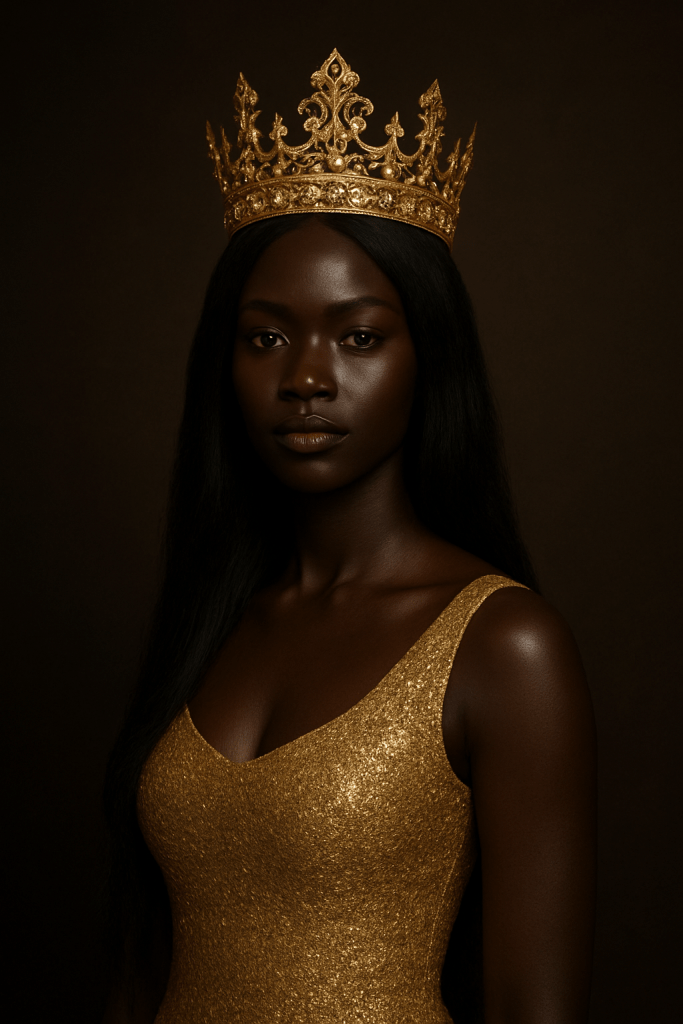
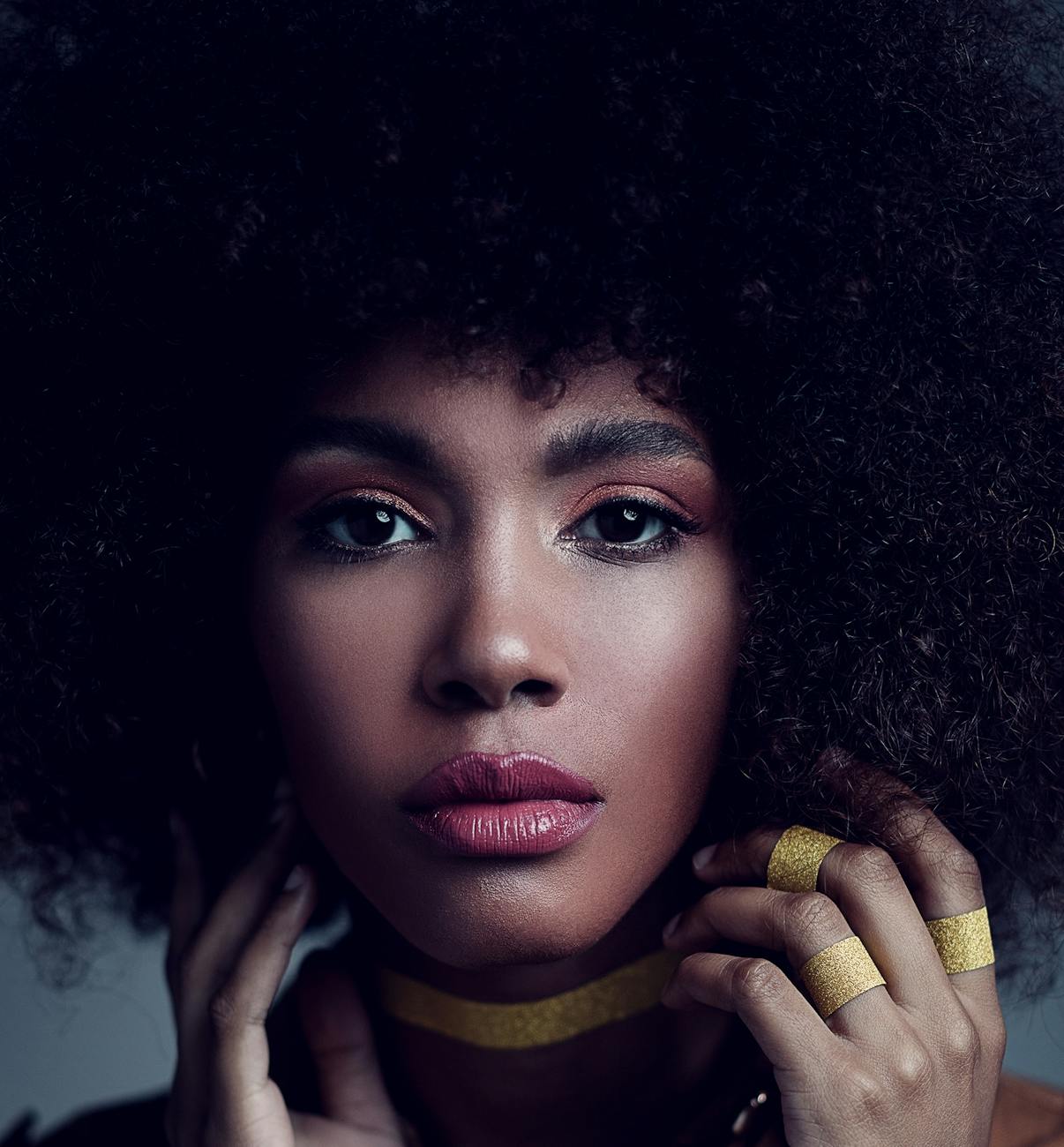
The Dark-Skinned Queens: Restoring the Crown to Melanin’s Deep Majesty.

The Dark-Skinned Queen stands as a living monument to ancestral glory—her skin a sacred archive of history, divinity, and resilience. Yet the world has not always treated her as such. For centuries, she has been positioned at the bottom of a racialized beauty hierarchy, burdened by the shadows of colonialism, anti-Blackness, and internal color prejudice. But the truth remains unshaken: her beauty is ancient, sovereign, and cosmic. She is not emerging—she has always been, and the world is finally remembering what was never lost.

Historically, deep melanin was revered across civilizations. In ancient Kemet, Nubia, and Kush, dark-skinned queens were worshipped as embodiments of divinity, fertility, royalty, and cosmic order. Stone carvings and temple art bear witness—deep brown skin was not merely beautiful; it was sacred. Civilization began in melanin-rich lands, and thus, the Dark-Skinned Goddess represents origin and power, not deviation or rarity.

Colonialism sought to rewrite this truth, weaponizing beauty to fracture identity. European expansion brought a violent inversion of values, casting darker skin as undesirable, uncivilized, or inferior. These lies were institutionalized through enslavement, missionary propaganda, and global media. The goal was psychological domination: if the world could be convinced that the darkest skin was the least valuable, then the original people could be controlled. Beauty became a battlefield.

Through history, dark-skinned women bore double violence—racism and colorism. Their labor was exploited, their beauty ignored or mocked, and their femininity questioned. Those wounds still echo today when darker-skinned girls struggle with visibility, self-esteem, and belonging. Yet even in oppression, the Dark-Skinned Goddess remained unbroken. Her existence is resistance. Her radiance survived the lie.

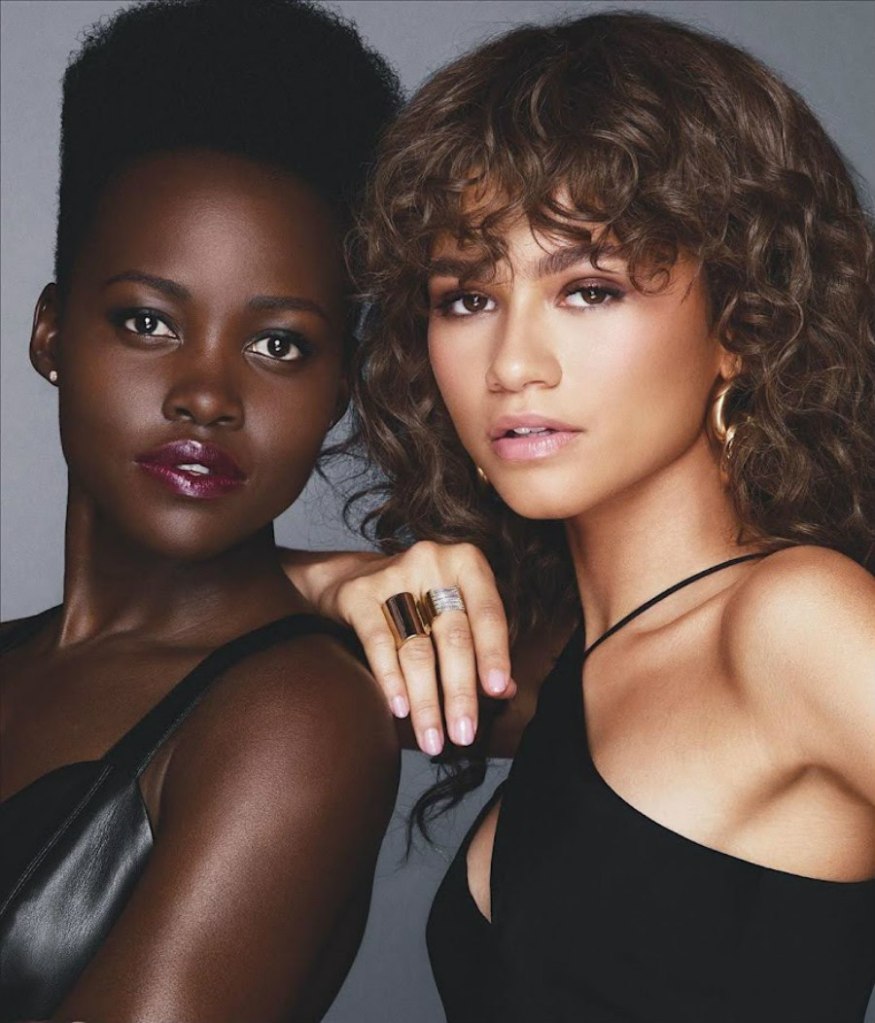
In modern media, her representation remains limited, though rising. When women like Lupita Nyong’o, Viola Davis, Khoudia Diop, and Nia Long appear, they disrupt centuries of curated beauty narratives. Their presence is not simply aesthetic—it is political. Their faces tell new stories and correct historical distortions. Their visibility is cultural restoration, not a trend.

Socially, the Dark-Skinned Goddess is often underestimated before she is known. People assume toughness, attitude, or aggression before recognizing grace, intelligence, softness, or elegance. Stereotypes cling to her not because she lacks depth, but because the world fears her power. Mischaracterization is the weapon of the intimidated.

Romantically, she has faced long-standing biases shaped by colonial beauty scripts. Some men once sought lighter-skinned partners to access false proximity to privilege. Others fetishized her body while disregarding her heart. Yet her value never depended on preference—it exists independent of perception. She is not validated by desire; she is complete by design.

Spiritually, melanin symbolizes divine creation. Scripture reminds: “I am black, but comely” (Song of Solomon 1:5, KJV). This verse is not an apology—it is a declaration. Darkness in biblical text is associated with mystery, depth, and holiness. God formed humanity from rich, fertile earth, not pale, dry dust. Melanin is not an accident—it is intentional artistry.

Psychologically, reclamation requires healing. Dark-skinned women have internal battles shaped by external rejection. They learn to love themselves in societies slow to love them back. But healing blooms when she sees the truth of her reflection—not through distortion, but revelation. Confidence, when rooted in reality rather than validation, becomes unshakable.

Within the community, colorism has damaged sisterhood. Dark-skinned girls were often teased, underestimated, or overlooked. Some developed armor; others developed silence. Yet the new era demands empathy, not competition. When beauty becomes communal instead of comparative, we rise together. No shade of Blackness needs apology—only acknowledgement.

Culturally, she carries the memory of her ancestors in her skin. Each melanin cell is a testament to sun-kissed lands and royal lineage. She does not darken in inferiority—she glows in origin. Melanin is cosmic technology—absorbing light, storing warmth, preserving youth. It is biological excellence, not burden.

Economically, she often had to work twice as hard to be seen as equal to lighter peers. Her competence was tested more; her mistakes judged harsher. Yet she consistently excelled, not because she had privilege, but because she possessed perseverance. Strength became her inheritance, not her choice. And yet, she still seeks the right to softness.

Emotionally, she navigates constant contrast—admired aesthetically in one breath, overlooked socially in another. She is celebrated on runways but ignored in workplaces. Praised in songs yet harmed in systems. This paradox teaches her discernment, depth, and inner worth. She learns that true beauty transcends environment and expectation.

The world imitates her body yet denies her humanity. Full lips, curvaceous hips, rich skin, coily hair—once mocked, now monetized. Her features trend on those without her struggle. But imitation will never equal essence. She is the blueprint, not the beneficiary of borrowed beauty.

Yet a renaissance rises. She is reclaiming beauty narratives, rewriting cultural scripts, and building new worlds where she doesn’t have to prove anything. She stands not in reaction to bias, but in revelation of identity. Her presence demands reverence, not permission.

Her beauty is not merely visual—it is metaphysical. It radiates history, intellect, intuition, empathy, and fire. Beauty is not her burden—it is her birthright. Society once tried to dim her glow; now the world adjusts its eyes to her brilliance. She is not emerging—she is unveiling.

The Dark-Skinned Queen does not seek comparison. She is not the opposite of light—she is the embodiment of depth. She is the eternal night sky, ancient soil, divine mystery, royal lineage. Her beauty is not subtractive; it is sovereign.

For she is fearfully and wonderfully made (Psalm 139:14, KJV). Not despite her shade, but because of it. Melanin is crown. Darkness is splendor. She is not defined by struggle—she is defined by glory.

And now, she does not rise alone. She rises with every shade beside her. Her divinity does not eclipse others; it illuminates the truth: Black beauty is infinite. But among its many expressions, the Dark-Skinned Goddess remains the beginning, the memory, and the majesty.

May she walk not with apology, but authority. Not seeking validation, but embodying revelation. For she is not reclaiming beauty—she is beauty, rediscovered.


References

Hunter, M. (2007). The persistent problem of colorism: Skin tone, status, and inequality. Sociology Compass, 1(1), 237–254.

Russell, K., Wilson, M., & Hall, R. (2013). The color complex: The politics of skin color in a new millennium. Anchor Books.

Wade, P. (2020). Race, nature and culture: An anthropological perspective. Pluto Press.

Song of Solomon 1:5 (KJV); Psalm 139:14 (KJV).

Mirror Talk: Loving Your Reflection, Embracing Your Shade.


Soft as morning coffee, kissed by sun’s first light,
Café au lait skin, glowing in gentle delight.
Warmth in every tone, a story in every hue,
I see myself fully, radiant, strong, and true.

When I stand before the mirror, I do more than glance—I honor my reflection. My light café au lait skin, a gentle blend of cream and caramel, carries with it a history, a lineage, and a story of resilience. It is a tone that bridges generations, connecting the legacy of ancestors with the life I am creating today.

Loving one’s reflection is an act of courage. Society often dictates rigid beauty standards, making some tones feel invisible or undervalued. But each shade of brown, including mine, holds its own power. Every hue is a testament to strength, identity, and self-worth. My reflection reminds me that I am not defined by external expectations, but by the pride I claim in my own skin.

Self-love begins in these intimate moments before the mirror—tracing the contours of the face, noticing subtle variations in tone, acknowledging every unique feature. In doing so, I practice gratitude: gratitude for my heritage, for my light café au lait shade, and for the beauty of being authentically me.

There is also a spiritual dimension to this affirmation. Scripture celebrates the beauty of skin in all its melanin-rich glory (Song of Solomon 1:5 KJV: “I am black, but comely, O ye daughters of Jerusalem”). While my shade may be lighter, it is no less beautiful, no less sacred, no less worthy of love. To embrace it fully is to honor divine creation.

In embracing my reflection, I also embrace confidence and empowerment. My shade is a story, a symbol of warmth, resilience, and light. Loving this skin strengthens how I move through the world, how I speak, and how I dream. It is a quiet rebellion against comparison, a declaration of self-worth, and a celebration of identity.

Mirror talk is an act of reclamation. When I look at my reflection, I see potential, strength, and history woven into every inch of my being. Loving my light café au lait skin is more than affirmation—it is empowerment, self-recognition, and gratitude.

To anyone learning to embrace their shade: let your reflection speak to you. Celebrate your tone, your story, your heritage. Every shade holds power, and every reflection deserves love.


Reference

  • The Holy Bible, King James Version. (1611). Song of Solomon 1:5.

Exotic, But Not Enough: The Politics of Being Seen as ‘Special’

Yet the same specialness that elevates you is often twisted by society into a form of exoticization. To be called “special” because of your Black features is a double-edged sword. It acknowledges beauty but simultaneously separates it from normalcy, making Blackness an object of curiosity rather than a standard to be celebrated on its own terms. This is the politics of being seen as “special” — a liminal space where admiration borders on objectification.

Exoticization has historical roots in the Western gaze. During the colonial period, Africans, especially women, were depicted in art, literature, and anthropology as inherently different — mysterious, seductive, and often hypersexualized. This framing positioned them as objects to be observed and studied rather than fully human, a narrative that persists subtly in contemporary media (Collins, 2004).

In modern society, Black women are frequently described as “exotic” or “unique,” language that seems complimentary but carries implicit othering. To be called exotic is to signal that one is different from the default, which in most Western societies is white. The praise is thus conditional — it only holds value when compared against a Eurocentric standard of beauty.

Being seen as “special” also comes with the invisible burden of performance. Black women are expected to embody this exotic appeal without deviating from societal fantasies. There is pressure to maintain a polished, curated appearance that aligns with someone else’s imagination of “Black beauty,” rather than an authentic self-expression.

Celebrities frequently exemplify this dynamic. Halle Berry, for example, has discussed how her mixed heritage led Hollywood to view her as exotic, opening doors while simultaneously pigeonholing her into roles that emphasized her difference (Berry, 2014). Similarly, Lupita Nyong’o’s rise to prominence was celebrated as a disruption to beauty norms, yet even her acclaim was framed around rarity, the “exceptional” Black woman, rather than the normalization of Black beauty in everyday life.

Exotic, But Not Enough: The Cost of Being the Exceptional Black Woman

I remember the first time I was called “exotic.” I was fourteen, standing in a bookstore, and a man approached me. “You’re beautiful,” he said, “so exotic… I’ve never seen anyone like you.” At that moment, I felt both elevated and invisible. Elevated, because someone recognized my beauty; invisible, because my Blackness was reduced to an adjective, something rare to be admired but never fully understood. That tension — being celebrated and erased at the same time — is the daily reality for so many Black women.

Being called “special” or “exceptional” carries a hidden price. Society frames Black women’s beauty as unusual, as if it exists outside the norm, something that can only be understood through the lens of novelty or difference. This is not admiration without consequence — it is a subtle form of objectification, a lens that separates Black women from ordinariness and imposes expectations of perfection.

Historically, this pattern is rooted in colonial and slave-era ideologies. African women were depicted as mysterious, sensual, and inherently different in European art, literature, and pseudo-science. Their bodies were studied, catalogued, and exoticized, creating a template that continues to influence how Black women are perceived today (Collins, 2004). The message was clear: Black beauty is not the default; it is a spectacle.

In school, this dynamic plays out in classrooms and playgrounds. Girls who are “special” for their looks or mixed heritage often receive attention from teachers and peers, but this attention is conditional. Compliments often carry comparisons — lighter skin, straighter hair, narrower noses — that suggest their beauty is exceptional only when aligned with whiteness. Meanwhile, darker-skinned girls learn that their natural beauty is ordinary, overlooked, or even undesirable.

Celebrities are not immune. Halle Berry has shared that Hollywood initially labeled her as “exotic,” a distinction that opened doors but also confined her to a narrow set of roles emphasizing her difference (Berry, 2014). Lupita Nyong’o’s rise to fame was celebrated as the “exceptional” Black woman, her deep skin and natural features framed as rare, beautiful anomalies. While inspiring, this narrative implies that Black women are only remarkable when they are unusual.

The psychological cost of being seen as exceptional is significant. Black women often internalize the pressure to maintain perfection — flawless skin, a curvaceous figure, impeccable hair — because deviation threatens the fantasy that others have projected onto them. The result is chronic stress, hypervigilance, and anxiety, all in the service of fulfilling someone else’s idea of “special” (Hunter, 2007).

Social media intensifies this effect. On platforms like Instagram, Black women are often celebrated for their rarity — lighter skin, unique hair textures, or particular facial features. While visibility can be empowering, it reinforces a standard where only certain traits are elevated. Many women scroll through feeds feeling both admired and inadequate, unsure if they are enough outside the curated lens of online admiration (Mercer, 2018).

Exoticization frequently intersects with fetishization. Compliments can morph into sexualized attention, where a Black woman’s features are admired but her personhood is overlooked. This transformation of admiration into desire strips agency and places the burden of appeal on her shoulders (Collins, 2004). Being special in this context is not empowering — it is performative and conditional.

Church and faith communities are not exempt. Black women are sometimes told that only Eurocentric features are “presentable” or “holy,” perpetuating an internalized belief that divine beauty aligns with whiteness. This conflicts with scripture, which consistently affirms that God created humanity in His own image (Genesis 1:27, KJV) and that every individual is fearfully and wonderfully made (Psalm 139:14, KJV).

The internalization of these messages leads many Black women to police their own bodies. We straighten our hair, lighten our skin, and sculpt our features to meet expectations. In doing so, we become complicit in a system that values difference over ordinariness and admiration over authenticity. The exceptional Black woman becomes a curated performance rather than a natural, living identity.

Family and community often provide the first lessons in resilience. Older women teach younger women that beauty is not about rarity but about the fullness of who you are. This guidance is essential, reminding girls that they do not need to be exotic to be worthy — that their value is inherent, not contingent on being unusual or extraordinary.

Friendships can complicate the experience. Peer comparisons — “She’s so exotic” or “She’s prettier because she’s mixed” — reinforce hierarchies within the Black community, creating tension and jealousy. The social cost of being “special” is alienation, as admiration from outsiders can distance women from their peers.

Romantic relationships are another arena where this politics plays out. Some men fetishize Black women’s difference, praising them for traits they perceive as rare, while overlooking their personality, intellect, and agency. Being “special” in this context is conditional love — valued for appearance but not always for selfhood.

Education and mentorship are crucial tools for countering the pressure of exceptionalism. Teaching Black girls to see their beauty as inherent, not exceptional, helps dismantle internalized hierarchies and builds self-esteem. Celebrating everyday Blackness — ordinary yet divine — restores balance in a world that constantly tells women they are extraordinary only in comparison to others.

Representation in media must go beyond the exceptional. Stories that normalize Black beauty in all its forms — dark, light, natural, straight, curly — reinforce that Blackness is not a spectacle but a standard. Films, advertisements, and TV shows that showcase everyday beauty help young women internalize a healthy sense of self.

The Erasure Complex compounds the cost of being exceptional. When Black women are admired for being different, it subtly suggests that being fully Black is not enough. The gaze that elevates them simultaneously erases the vast diversity of Black identity, reinforcing conditional admiration rather than universal recognition.

Spiritual grounding offers a counterbalance. Recognizing that one’s beauty and worth are divinely ordained, rather than societally validated, shifts the focus from external approval to intrinsic value. Psalm 139:14 (KJV) reminds us that we are “fearfully and wonderfully made” — unique, yes, but whole and worthy in our natural state.

Community solidarity also heals. By celebrating Black women collectively rather than selectively, society can dismantle the hierarchy of exoticization. From hair and skin to intellect and talent, the normalization of Black excellence fosters a sense of belonging rather than isolation.

Ultimately, being seen as “special” is both an honor and a burden. While it can affirm one’s beauty, it can also confine, objectify, and pressure. True empowerment comes from rejecting conditional admiration, embracing one’s authentic self, and affirming that Blackness — in all its forms — is a universal standard of beauty, not an exception.

In conclusion, the cost of being the exceptional Black woman is real, spanning psychological, social, and spiritual domains. Recognition should not require rarity, admiration should not demand objectification, and beauty should not depend on being extraordinary. To be authentically Black, fully human, and unapologetically oneself is to claim a power and dignity that no external gaze can define. You are special — not because you are rare, but because you are divinely complete.

The psychology of being labeled “special” is complex. While admiration can boost self-esteem, it often comes with heightened scrutiny. Every flaw is amplified because deviation from the constructed standard risks breaking the illusion of perfection that exoticization demands. This creates an internalized pressure to maintain a level of beauty that is unsustainable and emotionally taxing (Hunter, 2007).

Social media amplifies this paradox. Platforms like Instagram and TikTok showcase Black women’s beauty as a form of currency, often highlighting traits that conform to Eurocentric beauty ideals — lighter skin, narrower noses, straighter hair. Even when celebrating natural features, the algorithms often elevate only those deemed “unusual” or “rare,” reinforcing the narrative of being exceptional rather than normal (Mercer, 2018).

Exoticization is closely linked to fetishization, where Black women’s features are sexualized and objectified. The concept of the “exotic woman” transforms admiration into desire, but it strips agency from the individual. Her identity is commodified, admired for how it appeals to someone else rather than for her intrinsic worth or personhood (Collins, 2004).

This pressure is not only external but internalized. Many Black women grow up absorbing messages about what it means to be beautiful, often measuring themselves against a standard that views them as inherently unusual. Internalized colorism and beauty hierarchy become self-policing mechanisms that complicate self-love and identity formation (Hunter, 2007).

In contrast, biblical scripture offers a standard that transcends societal constructs. Genesis 1:27 (KJV) affirms that “God created man in his own image,” which implies that beauty and worth are divinely ordained, not dependent on human hierarchy. Psalm 139:14 (KJV) reinforces this, reminding believers that they are “fearfully and wonderfully made,” with beauty and worth inherent, not contingent on external validation.

The social consequences of being seen as “special” are also significant. Exceptionalism often isolates Black women from their peers, creating distance in communities where solidarity is needed. To be admired primarily for being rare or different can undermine authentic connection, reinforcing the notion that one’s value lies in their difference rather than their humanity.

Exoticization also perpetuates a colorist hierarchy. Lighter-skinned or mixed-race women are often labeled “special,” while darker-skinned women are either ignored or othered differently. This conditional admiration fragments the community, subtly teaching that some forms of Blackness are more palatable or worthy of attention than others (Hunter, 2007).

In the workplace, this dynamic can shape opportunities. Women seen as “exotic” may be promoted for image-based reasons rather than competence, or conversely, pigeonholed into roles that exploit their appearance. Their skills and intellect are overshadowed by the constant framing of their bodies and faces as objects of fascination (Collins, 2004).

Education and mentorship can help counteract these effects. Teaching Black girls that their beauty is both ordinary and extraordinary simultaneously — that they are “special” because they are authentically themselves — can dismantle the internalized pressure to perform for admiration. Celebrating everyday Black beauty as the norm rather than the exception is crucial for mental health and self-acceptance.

Representation matters. Media that portrays Black women in a range of roles, skin tones, and expressions — not only the rare or unusual — helps normalize Black beauty and dismantle exoticization. Films, TV, and advertisements that celebrate Black women for their achievements, intellect, and character, alongside their appearance, provide a more holistic framework for identity (Mercer, 2018).

The politics of being seen as “special” are therefore multifaceted — psychological, cultural, historical, and spiritual. While admiration may feel empowering, it is inseparable from centuries of racialized viewing that objectifies difference. Recognizing this dynamic is the first step toward reclaiming agency over identity.

Ultimately, true empowerment comes from rejecting the conditional praise of the exotic gaze and embracing the full spectrum of Blackness without apology. Being special is not about meeting someone else’s standard or fascination; it is about owning one’s inherent worth and beauty as ordained by God.

In conclusion, the label of “special” carries both admiration and erasure. To be exoticized is to be elevated and confined simultaneously. By understanding the historical and psychological underpinnings of this phenomenon, celebrating authentic Black beauty, and fostering spaces that normalize rather than fetishize, Black women can reclaim the power of their visage. Your FACE is divine, your identity complete, and your beauty is not a curiosity — it is a standard unto itself.


References

  • Berry, H. (2014). Halle Berry interviews on Hollywood and racial identity. Essence Magazine.
  • Collins, P. H. (2004). Black sexual politics: African Americans, gender, and the new racism. Routledge.
  • Hunter, M. (2007). The persistent problem of colorism: Skin tone, status, and inequality. Sociology Compass, 1(1), 237–254.
  • Mercer, K. (2018). Representing Blackness in media: Social media, visibility, and authenticity. Routledge.
  • Genesis 1:27, KJV.
  • Psalm 139:14, KJV.

Smart Brown Girl Series: Introduction

Smart brown girls have always existed in a world that questions their intellect before it celebrates it. From early childhood, many learn that their intelligence must be proven repeatedly, often under scrutiny that their peers do not face. The phrase “smart brown girl” itself challenges stereotypes that have long attempted to separate Blackness from brilliance.

Historically, the intellectual capacities of brown girls were deliberately denied during slavery and segregation, when laws and customs criminalized their education. Yet even under such oppression, Black women taught themselves and others to read, preserved knowledge through oral traditions, and laid the foundations for future scholarship. Intelligence became an act of resistance rather than a luxury.

In modern educational spaces, smart brown girls frequently navigate conflicting expectations. Excellence is praised, but confidence is often misread as arrogance. Curiosity may be labeled as defiance, and leadership interpreted as aggression. These misinterpretations create emotional labor that smart brown girls must manage alongside academic demands.

Research shows that stereotype threat continues to impact Black girls’ educational experiences. When society expects less, achievement can feel isolating rather than empowering. Many smart brown girls learn to downplay their abilities to avoid social penalties, a phenomenon that reflects broader structural inequities rather than individual shortcomings.

Despite these barriers, smart brown girls consistently outperform expectations when given equitable support. Culturally responsive teaching and affirming environments reveal what has always been true: intelligence is not scarce among brown girls, opportunity is. When brilliance is nurtured rather than policed, confidence flourishes.

Media representation rarely reflects the full spectrum of brown girl intellect. Characters are often portrayed as sidekicks, caretakers, or comic relief rather than thinkers, innovators, and visionaries. This absence subtly informs public perception and shapes how brown girls imagine their own futures.

Psychologically, being both smart and brown requires resilience. Constantly navigating assumptions can lead to internalized doubt, even among high achievers. Yet many brown girls develop strong self-awareness and adaptability, skills forged through necessity rather than ease.

Family and community often serve as critical sources of affirmation. Intergenerational encouragement counters societal messages that question worth and capability. Grandmothers, mothers, teachers, and mentors have historically acted as intellectual guardians, reminding brown girls of who they are.

Faith traditions also play a powerful role in affirming intelligence. Scripture consistently associates wisdom with virtue, discernment, and divine favor. The Bible does not present wisdom as gendered or racialized but as a gift from God, accessible to those who seek it.

Proverbs declares wisdom to be the principal thing, emphasizing its supreme value. For smart brown girls, this challenges narratives that prioritize appearance or compliance over thoughtfulness and insight. Their minds are not incidental; they are sacred.

Womanist theology further affirms that Black women’s knowledge emerges from lived experience. Smart brown girls carry cultural, spiritual, and historical intelligence that textbooks often overlook. Their understanding of survival, justice, and care expands what counts as knowledge.

In classrooms, recognizing multiple forms of intelligence is essential. Academic success should not require cultural erasure. When brown girls are allowed to bring their full selves into learning spaces, their engagement deepens and their confidence strengthens.

Socially, smart brown girls are often expected to be strong without support. The “Strong Black Woman” trope can mask the emotional needs of intellectually gifted girls, discouraging vulnerability. True empowerment allows room for rest, curiosity, and joy.

Mentorship plays a transformative role in sustaining intellectual confidence. Seeing women who look like them thriving in academic, scientific, theological, and creative fields reinforces the possibility. Representation, when authentic, disrupts internalized limits.

Economically and politically, investing in smart brown girls yields collective benefit. Education, leadership training, and creative freedom strengthen communities. History repeatedly shows that when Black women advance, entire societies move forward.

Reclaiming the title “smart brown girl” is not about exceptionalism but truth-telling. It refuses deficit-based narratives and asserts that intelligence has always lived in brown skin. This reclamation is both personal and communal.

Self-definition is a radical act. When smart brown girls name themselves, they resist being defined by test scores, stereotypes, or external validation. Their worth is not contingent upon performance but inherent.

Healing involves unlearning the belief that brilliance must be hidden to be safe. Smart brown girls deserve environments where curiosity is welcomed and intellect is celebrated without penalty. Visibility should not require self-sacrifice.

Ultimately, the story of the smart brown girl is one of continuity. She is the descendant of women who learned in secret, taught in defiance, and dreamed without permission. Her intelligence is inherited, cultivated, and enduring.

To affirm smart brown girls is to honor truth. Their minds are powerful, their insights necessary, and their presence transformative. They are not anomalies; they are evidence. Smart brown girls are not becoming intelligent—they have always been so.


References

Collins, P. H. (2000). Black feminist thought: Knowledge, consciousness, and the politics of empowerment (2nd ed.). Routledge.

Crenshaw, K. (1991). Mapping the margins: Intersectionality, identity politics, and violence against women of color. Stanford Law Review, 43(6), 1241–1299.

Fordham, S., & Ogbu, J. U. (1986). Black students’ school success: Coping with the “burden of acting white.” The Urban Review, 18(3), 176–206.

hooks, b. (1994). Teaching to transgress: Education as the practice of freedom. Routledge.

Morris, M. W. (2016). Pushout: The criminalization of Black girls in schools. The New Press.

Muhammad, G. E. (2020). Cultivating genius: An equity framework for culturally and historically responsive literacy. Scholastic.

Steele, C. M. (2010). Whistling Vivaldi: How stereotypes affect us and what we can do. W. W. Norton & Company.

The Holy Bible, King James Version.

Williams, D. S. (1993). Sisters in the wilderness: The challenge of womanist God-talk. Orbis Books.

Cooper, A. J. (1892). A voice from the South. Aldine Printing House.

The Degradation of American Culture: The Good, the Bad, and the Ugly – The Niggerization of America!

Race, Media, Internalized Oppression, and the Crisis of Identity in Modern America

What the word is meant to imply (in sociological usage)

When people use the term “niggerization” (usually in polemical or extremist writing), they typically mean:

The perceived process by which a society or group is said to adopt negative stereotypes historically associated with Black people, such as:

  • poverty
  • disorder
  • criminality
  • vulgarity
  • hypersexuality
  • anti-intellectualism
  • cultural dysfunction

So in that usage, it is shorthand for:

“cultural degradation framed through racist stereotypes.”

Why the term itself is intellectually flawed

From a scholarly standpoint, the term is conceptually incoherent and racist, because:

  1. It assumes Blackness itself is synonymous with dysfunction.
  2. It collapses complex social problems into racial essence.
  3. It confuses structural conditions (poverty, trauma, policy, media) with biological or cultural identity.
  4. It reproduces the very colonial logic it claims to critique.

In other words, it racializes social pathology, instead of analyzing:

  • capitalism
  • media systems
  • historical trauma
  • political economy
  • psychological conditioning

The accurate academic concepts instead

In serious sociology and psychology, the phenomena people try to describe with that word are actually studied as:

  • Cultural degradation (Postman, 1985)
  • Internalized oppression (Fanon, 1967)
  • Collective trauma (Herman, 1992)
  • Symbolic violence (Bourdieu, 1991)
  • Cultural pathology under late capitalism
  • Media-induced behavioral normalization

These frameworks explain the same issues without racial essentialism.

Bottom line (the honest answer)

The term “niggerization” means:

“The claim that social or cultural decline is caused by or resembles racist stereotypes of Black people.”

But academically speaking, it is:

  • not a valid concept
  • not used in peer-reviewed scholarship
  • built on racist assumptions
  • and analytically useless for real understanding.

Serious analysis talks about systems, trauma, incentives, power, and psychology — not racialized caricatures.

American culture stands at a paradoxical crossroads. On one hand, it represents unprecedented technological advancement, economic power, and global influence; on the other, it reveals deep moral confusion, cultural fragmentation, and psychological instability. The same society that produced civil rights movements, scientific revolutions, and artistic brilliance now also exports nihilism, hypersexuality, intellectual decline, and cultural self-loathing. This contradiction demands serious analysis, not sentimental nostalgia or ideological denial.

The “good” of American culture lies in its foundational ideals: liberty, education, innovation, and the belief in human potential. The United States historically functioned as a space where marginalized groups—particularly Black Americans—transformed systemic adversity into cultural excellence. From spirituals and jazz to civil rights theology and Black intellectualism, oppressed communities generated some of the most profound moral and artistic contributions in human history.

Black culture, in particular, once operated as a counter-hegemonic force—rooted in church, family structure, discipline, and collective survival. The Black church served not merely as a religious institution but as a psychological refuge, political organizing center, and moral compass. It cultivated literacy, leadership, and resistance, producing figures like Martin Luther King Jr., W.E.B. Du Bois, Malcolm X, and countless unsung educators and theologians.

However, the “bad” emerges when culture shifts from liberation to commodification. Under late-stage capitalism, identity itself becomes a product. Blackness, once forged in collective struggle, is now marketed as aesthetic rebellion divorced from historical consciousness. Hip-hop, fashion, slang, and trauma are packaged for global consumption while structural realities remain unresolved.

This transformation reflects what Frantz Fanon described as internalized oppression—the psychological condition in which colonized or marginalized people unconsciously absorb the values and narratives of their oppressors. Rather than defining themselves through ancestral dignity or moral purpose, individuals increasingly mirror distorted media archetypes that reward dysfunction, hypervisibility, and performative identity.

The American media-industrial complex plays a decisive role in this pathology. Reality television, viral culture, and algorithmic platforms normalize ignorance, narcissism, and moral exhibitionism. Intelligence is no longer rewarded; attention is. Loudness replaces substance, controversy replaces coherence, and degradation becomes spectacle.

From a sociological standpoint, this represents what Pierre Bourdieu called symbolic violence—a system in which dominant structures impose meaning in ways that appear natural or entertaining. Cultural decline is not accidental; it is engineered through incentives that reward psychological regression over collective uplift.

The “ugly” phase emerges when dysfunction becomes identity. At this stage, cultural pathology is defended, not questioned. Self-destructive behavior is reframed as authenticity. Anti-intellectualism becomes empowerment. Victimhood becomes currency. Accountability becomes oppression. The very tools needed for liberation—language, art, sexuality, spirituality—are weaponized against self-development.

This phenomenon is not limited to Black America; it reflects a broader American collapse of values. Consumerism replaces character. Pleasure replaces purpose. Image replaces substance. The nation increasingly resembles what the sociologist Christopher Lasch termed a culture of narcissism, where self-expression replaces moral formation and therapy replaces ethics.

Theologically, this crisis reflects a deeper spiritual disorder. Scripture consistently frames cultural decay as the consequence of moral inversion. “Woe unto them that call evil good, and good evil” (Isaiah 5:20, KJV). When societies lose transcendent moral reference points, they descend into relativism, where no behavior can be judged and no standard upheld.

In biblical anthropology, human beings are not merely social animals but moral agents accountable to divine law. When culture severs itself from transcendent accountability, identity collapses into instinct, impulse, and ego. This is not freedom; it is regression.

Deuteronomy 28 presents a powerful framework for cultural analysis: obedience produces collective flourishing, while disobedience produces psychological confusion, social instability, and generational trauma. The text reads less like ancient theology and more like sociological prophecy.

From a psychological perspective, the current American condition aligns with collective trauma theory. Historical violence—slavery, segregation, economic exploitation—left deep neurological and cultural scars. However, unresolved trauma does not heal itself; it either transforms into wisdom or mutates into pathology.

Instead of healing through historical consciousness, education, and moral reconstruction, American culture increasingly chooses escapism: drugs, sex, entertainment, consumption, and digital addiction. These are not neutral pleasures; they function as anesthetics against existential emptiness.

The tragedy is that Black America once offered a powerful counter-model: communal identity, spiritual resilience, disciplined family structures, and moral seriousness forged under pressure. That legacy is now being diluted, caricatured, and commercially exploited.

What was once a culture of survival has become a culture of simulation. Pain is aestheticized. Trauma is monetized. Rebellion is marketed. Liberation is reduced to branding.

This is not merely cultural decline; it is psychological colonization in reverse—where the descendants of the oppressed internalize and perform the very stereotypes once imposed upon them, now for profit and validation.

Yet the story is not closed. Cultural cycles can be reversed. The same communities that produced intellectual giants, theologians, artists, and revolutionaries can do so again. Cultural resurrection is possible, but it requires ruthless honesty.

It requires rejecting media lies, reclaiming historical consciousness, restoring intellectual discipline, rebuilding family structures, and re-centering spiritual identity. Culture does not change through slogans; it changes through values, institutions, and collective memory.

The future of America will not be determined by technology or politics alone, but by psychological orientation: whether society chooses depth over spectacle, meaning over impulse, and truth over performance.

Ultimately, the crisis of American culture is not racial at its core—it is spiritual and psychological. Race merely reveals the fractures more vividly. What we are witnessing is not just cultural decay, but a civilizational test: whether identity will be grounded in transcendence or dissolved into algorithmic noise.

The good showed what America could be.
The bad reveals what it compromised.
The ugly exposes what it becomes when it forgets who it is.


References

Bourdieu, P. (1991). Language and symbolic power. Harvard University Press.

Fanon, F. (1967). Black skin, white masks. Grove Press.

Du Bois, W. E. B. (1903). The souls of Black folk. A.C. McClurg.

Lasch, C. (1979). The culture of narcissism: American life in an age of diminishing expectations. W. W. Norton.

Herman, J. L. (1992). Trauma and recovery. Basic Books.

bell hooks. (1992). Black looks: Race and representation. South End Press.

Postman, N. (1985). Amusing ourselves to death. Penguin.

The Holy Bible, King James Version. (1611/2017). Hendrickson Publishers.

Dei, G. J. S. (2012). Reframing Blackness and Black solidarities through anti-colonial and decolonial prisms. Springer.

Wilkerson, I. (2020). Caste: The origins of our discontents. Random House.

Dilemma: Fear

Fear is one of the oldest human emotions, woven into the survival instincts of the body and the spiritual consciousness of the soul. It alerts, warns, and protects, yet when fear governs the heart, it becomes a tyrant rather than a teacher. In today’s world, fear has shifted from momentary danger to a constant psychological atmosphere, shaping how people think, plan, and hope.

Modern fears are no longer limited to immediate threats. Many live under the weight of persistent uncertainty—fear of not having enough food, fear of financial collapse, fear of illness, fear of violence, and fear of what tomorrow may bring. These anxieties quietly influence decisions and erode peace, even when danger has not yet arrived.

Scripture acknowledges fear as a real human experience, not an imaginary weakness. Throughout the Bible, men and women of faith faced famine, war, exile, and loss. Their fears were not dismissed; instead, God addressed them directly. This reveals that fear itself is not sin, but what one does with fear determines its outcome.

Economic instability has revived ancient fears of scarcity. Rising food prices, supply shortages, and global disruptions have caused many to wonder how they will eat, provide, or survive. These fears echo biblical times when famine tested faith and obedience. Yet Scripture reminds believers that provision does not originate in systems alone but in God Himself.

The Bible speaks directly to the fear of lack. “Therefore I say unto you, Take no thought for your life, what ye shall eat, or what ye shall drink… Is not the life more than meat?” (Matthew 6:25, KJV). This passage does not deny physical need but challenges fear-driven obsession, calling the heart back to trust.

War is another dominant fear of the modern age. News cycles are filled with violence, rumors of war, and global conflict. The Bible foretold such times, stating, “And ye shall hear of wars and rumours of wars: see that ye be not troubled” (Matthew 24:6, KJV). Fear increases when events are misunderstood, but scripture frames these moments within divine sovereignty.

Fear also thrives in the anticipation of loss. Many fear losing loved ones, freedom, stability, or identity. This fear is often intensified by trauma and historical memory, particularly among communities that have repeatedly endured displacement and injustice. Fear becomes generational when wounds are left unhealed.

God repeatedly addresses His people with the phrase “fear not.” This command appears not as a rebuke, but as reassurance. “Fear thou not; for I am with thee: be not dismayed; for I am thy God” (Isaiah 41:10, KJV). The absence of fear is rooted not in circumstances improving, but in God’s presence remaining.

Fear has the power to distort perception. When fear dominates, problems appear larger than they are, and solutions seem unreachable. Scripture counters this distortion by reminding believers that strength does not originate in human ability alone. “God hath not given us the spirit of fear; but of power, and of love, and of a sound mind” (2 Timothy 1:7, KJV).

The fear of the future is particularly paralyzing. Questions about what will happen next—economically, politically, spiritually—consume many minds. Yet the Bible reframes the future as known by God even when hidden from man. “Take therefore no thought for the morrow: for the morrow shall take thought for the things of itself” (Matthew 6:34, KJV).

Spiritual fear often arises when people feel abandoned or forgotten. In moments of despair, fear whispers that God is distant. Scripture responds decisively: “When thou passest through the waters, I will be with thee” (Isaiah 43:2, KJV). Fear loses authority when presence is assured.

The Apostle Paul described fear through the lens of spiritual warfare and resilience. “We are troubled on every side, yet not distressed; we are perplexed, but not in despair; persecuted, but not forsaken; cast down, but not destroyed” (2 Corinthians 4:8–9, KJV). This passage acknowledges pressure while affirming survival and divine preservation.

Fear often intensifies when control is lost. Humans attempt to manage fear by controlling outcomes, but this strategy usually deepens anxiety. Scripture invites surrender instead. “Cast thy burden upon the LORD, and he shall sustain thee” (Psalm 55:22, KJV). Burdens are lifted not by strength alone, but by trust.

Children today inherit a world saturated with fear—climate anxiety, violence, instability, and digital overload. God’s message to the next generation remains unchanged. “Fear not, little flock; for it is your Father’s good pleasure to give you the kingdom” (Luke 12:32, KJV). Fear is met with promise, not panic.

Faith does not deny danger; it reframes it. Biblical faith stands in the presence of fear without bowing to it. Courage is not the absence of fear but obedience in spite of it. This distinction is vital in understanding biblical strength.

The fear of death is one of humanity’s deepest dilemmas. Scripture confronts this fear with eternal perspective. “Yea, though I walk through the valley of the shadow of death, I will fear no evil” (Psalm 23:4, KJV). Death is acknowledged, but fear is rejected because God remains present.

Communal fear spreads rapidly, especially during crises. Scripture warns against collective panic, urging discernment and faith. “Say ye not, A confederacy… neither fear ye their fear, nor be afraid” (Isaiah 8:12, KJV). God calls His people to resist fear-driven alliances and reactions.

Fear can either drive people away from God or push them closer to Him. The biblical pattern shows that fear, when surrendered, becomes a doorway to deeper dependence. “The LORD is my light and my salvation; whom shall I fear?” (Psalm 27:1, KJV). Fear is challenged by relationship.

Ultimately, fear reveals what the heart trusts most. When fear rules, trust is misplaced. When trust is restored, fear loses its grip. Scripture consistently redirects fear toward reverence for God rather than terror of circumstances.

The dilemma of fear remains real, but it is not final. God’s word repeatedly speaks life into fearful hearts, reminding humanity that though the world shakes, He does not. Fear may cast one down, but in God, they are never destroyed.


References

The Holy Bible, King James Version. (1611/2017). Cambridge University Press.

Matthew 6:25–34, KJV
Matthew 24:6, KJV
Isaiah 41:10, KJV
Isaiah 43:2, KJV
2 Timothy 1:7, KJV
Psalm 55:22, KJV
2 Corinthians 4:8–9, KJV
Luke 12:32, KJV
Psalm 23:4, KJV
Psalm 27:1, KJV

Pretty Privilege Series: The Shade Hierarchy — Breaking Free from the Color Caste System.

Photo by King Cyril Kalu on Pexels.com

Colorism, often described as prejudice or discrimination based on skin tone, creates a hierarchy within the Black community that values lighter skin over darker shades. This “shade hierarchy” functions like an internal caste system, influencing beauty standards, social acceptance, and economic opportunities (Hunter, 2007).

The origins of this hierarchy are deeply entwined with colonialism and slavery. European colonizers created a system where proximity to whiteness equaled privilege. Lighter-skinned enslaved Africans were often assigned domestic work and given preferential treatment, while darker-skinned individuals labored in the fields, cementing a perception that lighter skin was inherently superior (Williams, 1987).

Media and pop culture perpetuated these notions over centuries. Hollywood films frequently cast light-skinned Black women in romantic or leading roles while relegating darker-skinned women to subservient, villainous, or hypersexualized stereotypes. This not only shaped public perception but also influenced self-image among Black women (Bogle, 2016).

The psychological impact of the shade hierarchy is profound. Dark-skinned individuals often experience lower self-esteem, body image dissatisfaction, and internalized racism. Being told, explicitly or implicitly, that one’s skin is “too dark” to be desirable produces lasting trauma (Hill, 2002).

Dating preferences also reveal the pervasiveness of this hierarchy. Studies show that lighter-skinned Black women are often perceived as more attractive and desirable for relationships, while darker-skinned women are marginalized in the dating market (Wilder, 2010). Men’s internalization of colorist standards reinforces systemic bias.

Colorism extends into education and professional opportunities. Research demonstrates that darker-skinned Black men and women earn less than lighter-skinned peers, even when controlling for education and experience. This colorism wage gap mirrors the historical privileging of lighter skin (Goldsmith, Hamilton, & Darity, 2006).

Schools are microcosms where colorism manifests early. Dark-skinned children are often subject to teasing, social exclusion, or disproportionate disciplinary actions. This reinforces societal hierarchies and internalized biases before adulthood (Monk, 2014).

Family and community can either reinforce or challenge the shade hierarchy. Favoring lighter-skinned relatives in compliments, marriage prospects, or inheritance decisions perpetuates the caste system. Conversely, affirming all shades equally fosters resilience and pride in melanin-rich identities (Russell, Wilson, & Hall, 2013).

Language plays a crucial role in perpetuating colorism. Terms like “redbone,” “high yellow,” and backhanded compliments such as “pretty for a dark-skinned girl” normalize hierarchy and shape self-perception. Challenging and changing this language is essential for liberation (Charles, 2003).

Social media has emerged as both a challenge and a solution. While platforms sometimes reinforce colorism through algorithmic biases and influencer culture, they also provide spaces for celebrating dark-skinned beauty, such as #MelaninPoppin and #DarkSkinIsBeautiful campaigns. These initiatives help counter harmful narratives and create visible representation.

Religious and spiritual frameworks can aid in dismantling the shade hierarchy. Scriptures such as Song of Solomon 1:5 — “I am black, but comely” — affirm that melanin is not a flaw but a feature worthy of pride. Church communities can preach against favoritism and celebrate beauty in all skin tones (James 2:1-4).

Media literacy is another tool. Teaching children and adults to critically assess representations in television, film, and advertising reduces the internalization of harmful beauty norms. Awareness of how light-skinned individuals are often elevated helps viewers resist accepting a biased standard unconsciously.

Empowerment programs targeting youth can directly counter colorism. Workshops that teach self-esteem, beauty appreciation, and historical knowledge about African ancestry encourage young people to embrace their skin tone with pride (Hall, 1992).

Feminist scholars emphasize that dismantling the shade hierarchy is not just about aesthetics; it is about power. Colorism intersects with sexism and racism, creating compounded oppression for dark-skinned women. Addressing these structural inequalities is critical for holistic liberation (Hunter, 2007).

Representation in professional and artistic spaces also matters. Featuring dark-skinned Black men and women in leadership roles, creative industries, and political office challenges societal hierarchies and normalizes their presence in positions of influence.

Black men’s participation is key in dismantling the hierarchy. By affirming dark-skinned women as desirable partners, celebrating them publicly, and rejecting societal pressure to prefer lighter skin, men can help erode internalized colorist standards in the community (Harris, 2015).

Economic interventions are also necessary. Organizations should prioritize diversity in hiring and promotion, ensuring that darker-skinned candidates are not overlooked due to unconscious bias. Equitable opportunities disrupt the cycle of privilege attached to lighter skin.

Education and mentorship programs should include historical context about colorism and practical strategies for resistance. Teaching children about African history, melanin-rich heroes, and cultural pride counteracts centuries of negative messaging about dark skin (Smedley, 1999).

Personal reflection and therapy can help individuals confront internalized colorism. Journaling, counseling, and group discussions offer spaces to unlearn harmful messages and rebuild self-worth, allowing people to embrace their natural complexion fully.

Breaking free from the color caste system requires sustained effort across generations. By challenging social norms, affirming diverse beauty, and creating supportive spaces, the Black community can replace hierarchical thinking with pride, dignity, and unity.


References

  • Bogle, D. (2016). Toms, Coons, Mulattoes, Mammies, and Bucks: An Interpretive History of Blacks in American Films. Bloomsbury.
  • Charles, C. (2003). Skin Bleaching, Self-Hate, and Black Identity in Jamaica. Journal of Black Studies, 33(6), 711–728.
  • Goldsmith, A., Hamilton, D., & Darity, W. (2006). Shades of Discrimination: Skin Tone and Wages. American Economic Review, 96(2), 242–245.
  • Hall, R. E. (1992). Bias Among African Americans Regarding Skin Color: Implications for Social Work Practice. Research on Social Work Practice, 2(4), 479–486.
  • Harris, A. (2015). The Influence of Fathers on the Self-Esteem of African American Daughters. Journal of Black Psychology, 41(3), 257–276.
  • Hunter, M. (2007). The Persistent Problem of Colorism: Skin Tone, Status, and Inequality. Sociology Compass, 1(1), 237–254.
  • Monk, E. P. (2014). Skin Tone Stratification among Black Americans, 2001–2003. Social Forces, 92(4), 1313–1337.
  • Russell, K., Wilson, M., & Hall, R. (2013). The Color Complex: The Politics of Skin Color Among African Americans. Anchor Books.
  • Smedley, A. (1999). Race in North America: Origin and Evolution of a Worldview. Westview Press.
  • Williams, E. (1987). Capitalism and Slavery. UNC Press.
  • Wilder, J. (2010). Revisiting “Color Names and Color Notions”: A Contemporary Examination of the Language and Attitudes of Skin Color among Young Black Women. Journal of Black Studies, 41(1), 184–206.

🌸 Grace Over Glamour: Why Godly Character Lasts Longer Than Looks 🌸

Photo by murat esibatir on Pexels.com

In every generation, people have been tempted to chase after glamour—fashion, status, and fleeting admiration. Yet the Word of God reminds us that these things quickly fade. Proverbs 31:30 (KJV) declares: “Favour is deceitful, and beauty is vain: but a woman that feareth the Lord, she shall be praised.” Grace, the quiet strength of godly character, outlasts the glimmer of worldly beauty. While glamour may impress for a moment, it is grace that transforms lives and leaves an eternal legacy.

The psychology of attractiveness helps us understand this distinction. Studies show that while physical beauty may draw initial attention, it is personality traits such as kindness, reliability, and humility that sustain long-term admiration (Zebrowitz & Montepare, 2008). Outward glamour can fade with age or circumstance, but a gracious spirit shines brighter with time. Grace has a spiritual and psychological impact because it cultivates peace, joy, and relational harmony—qualities no amount of makeup or jewelry can provide.

The Bible provides many examples where godly character outweighed outward appearance. Ruth, a Moabite widow, may not have been admired for glamour, but her loyalty, humility, and faith brought her into the lineage of Christ (Ruth 1:16–17 KJV). Similarly, Hannah’s fervent prayers and devotion, not her outward beauty, brought forth the prophet Samuel (1 Samuel 1:27–28 KJV). These women show that God delights in character that glorifies Him rather than glamour that glorifies self.

Even in the New Testament, Peter emphasized that true beauty is inward: “Whose adorning let it not be that outward adorning of plaiting the hair, and of wearing of gold… But let it be the hidden man of the heart… a meek and quiet spirit, which is in the sight of God of great price” (1 Peter 3:3–4 KJV). Peter was not forbidding beauty, but teaching that glamour without godliness is empty. True beauty lies in grace—a spirit aligned with God.

Modern life gives us countless examples of grace outlasting glamour. A grandmother whose wrinkles testify of years of prayer, service, and love often radiates more beauty than any model on a magazine cover. A teacher who uplifts struggling students or a nurse who comforts patients reflects a grace that no designer clothing could replicate. These individuals reveal the eternal truth that grace is not seen in the mirror but experienced through the heart.

Psychologists also affirm that virtues like gratitude, forgiveness, and humility foster long-term well-being and relational satisfaction (Seligman, 2011). People are drawn to those who exhibit these traits, proving that glamour may attract crowds, but grace builds community. Grace speaks through actions, heals through compassion, and strengthens through faith.

Mary, the mother of Jesus, exemplifies this principle. She is never described in Scripture by her outward beauty, but she was called “highly favoured” (Luke 1:28 KJV). Her grace—obedience, humility, and faith—made her one of the most honored women in history. Her life demonstrates that God chooses vessels of grace, not glamour, to carry His greatest purposes.

The moral is clear: glamour fades, but grace remains. Godly character lasts longer than physical charm because it is rooted in eternity. While beauty may impress the eyes, grace touches the soul. To cultivate grace is to align oneself with God’s design for beauty, reflecting His love in every word and deed.

Ultimately, the choice is ours: to chase after glamour that will fade with time, or to walk in grace that grows more radiant with every act of faith. God’s daughters are called to clothe themselves in strength, humility, and love—for these are garments that never go out of style and will be praised in heaven.


References

  • The Holy Bible, King James Version.
  • Zebrowitz, L. A., & Montepare, J. M. (2008). Social psychological face perception: Why appearance matters. Social and Personality Psychology Compass, 2(3), 1497–1517.
  • Seligman, M. E. P. (2011). Flourish: A Visionary New Understanding of Happiness and Well-being. New York: Free Press.
  • Koenig, H. G. (2012). Religion, spirituality, and health: The research and clinical implications. ISRN Psychiatry, 2012, 278730. https://doi.org/10.5402/2012/278730

Girl Talk Series: Confidence

The Science, Spirit, and Power of a Woman’s Worth.

Photo by Al Ameen Saddiq on Pexels.com

“A woman who knows her worth walks taller than the tallest tower.
Her stride is strength, her smile is fire,
Her confidence—an unshaken empire.”

A man once said to me, as I perched on high heels, “You look like a walking skyscraper.” That was not about beauty alone—it was about confidence. Sisters, confidence is not arrogance, nor is it shallow pride. Confidence is a deep assurance of who you are, rooted in self-respect, discipline, and knowing you are fearfully and wonderfully made (Psalm 139:14, KJV). To walk in confidence is to refuse to shrink, to stop apologizing for existing, and to step into every room as though you belong there—because you do.

As motivational speaker Mel Robbins reminds us: “Confidence is not a feeling. It’s a habit of taking action even when you don’t feel ready.” This aligns with faith—confidence grows not by waiting for fear to vanish, but by stepping forward despite it.

The Essence of Confidence

Confidence is the foundation of self-efficacy—the belief in one’s ability to succeed (Bandura, 1997). For women, it means trusting that your presence carries value and that your voice deserves to be heard. Walking in confidence is not merely about external appearance but about alignment between mind, spirit, and action. Confidence empowers women to set boundaries, pursue goals, and withstand rejection without crumbling.

📊 The Confidence Scale: Where Do You Stand?

🔴 Low Confidence (Insecurity Zone)

  • Constant self-doubt, second-guessing every decision.
  • Afraid to speak up or share opinions.
  • Shrinks back in social settings, avoids eye contact.
  • Needs constant validation from others to feel “enough.”
  • Negative self-talk: “I can’t,” “I’m not good enough.”

🟡 False Confidence (Arrogance Zone)

  • Loud or boastful to cover insecurity.
  • Puts others down to feel bigger.
  • Obsessed with being right or admired.
  • Confidence based on possessions, looks, or status.
  • Easily shaken when criticized or ignored.

🟢 True Confidence (Balanced Zone)

  • Walks into a room with calm assurance.
  • Speaks clearly, listens respectfully, and stands firm in truth.
  • Takes risks without fear of failure.
  • Keeps promises to self and others.
  • Anchored in faith: “For the Lord shall be thy confidence” (Proverbs 3:26, KJV).
  • Lifts others up while still knowing her own worth.

Confidence and Self-Care

Taking care of oneself physically, emotionally, and spiritually is an act of confidence. When a woman invests in her health, hygiene, and personal style, she communicates to the world that she is worthy of respect. Self-care is not vanity; it is stewardship of the vessel God has given you (1 Corinthians 6:19–20, KJV). From eating nourishing foods to getting rest, these practices strengthen not only the body but also the mind.

Owning a Room

Psychologically, posture and presence communicate confidence before words are ever spoken. Social psychologist Amy Cuddy’s research on “power posing” shows that expansive body language increases feelings of confidence and even reduces stress hormones (Cuddy, 2015). Owning a room means lifting your head, straightening your shoulders, and walking with intention. People are drawn to those who carry themselves with assurance, and a confident woman doesn’t have to shout to command respect—her presence speaks.

Creating the Life You Desire

Confidence is not only about how you present yourself, but about believing you have the power to shape your future. Vision casting, goal setting, and consistency create the foundation for the life you want. Proverbs 29:18 (KJV) reminds us, “Where there is no vision, the people perish.” A confident woman writes down her vision, pursues it with discipline, and refuses to let fear dictate her steps.

The Bible on Confidence

The Scriptures remind us that confidence is not rooted in the flesh, but in God. “For the Lord shall be thy confidence, and shall keep thy foot from being taken” (Proverbs 3:26, KJV). Biblical confidence is not boastful self-reliance; it is assurance that God’s presence and promises establish our worth. Esther walked in confidence when she approached the king, and Deborah ruled with confidence as a prophetess and judge.

Psychology of Confidence

Psychology views confidence as both a trait and a skill. According to Bandura’s theory of self-efficacy, repeated mastery experiences—succeeding at small goals—build lasting confidence. Cognitive-behavioral psychology emphasizes that positive self-talk reshapes beliefs, while repeated exposure to challenges reduces fear. In essence, confidence is both learned and strengthened through practice.

Tips for the Confident Woman

  • Affirm Daily with Scripture
    • Speak life over yourself: “I can do all things through Christ” (Philippians 4:13, KJV).
  • 📝 Keep Promises to Yourself
    • Follow through on small goals—confidence grows when you trust your own word.
  • 👗 Dress with Intention
    • Wear colors that empower: red for power, black for authority, blue for trust, white for clarity.
  • 💃 Practice Posture
    • Stand tall, shoulders back, head lifted—your body signals confidence before your words do.
  • 📚 Invest in Knowledge
    • Read, learn, and sharpen your skills—intelligence fuels authority and presence.
  • 🤝 Choose Your Circle Wisely
    • Surround yourself with people who build you up, not tear you down.
  • 🙏 Pray for Courage
    • Even when fear whispers, act in faith. Courage is confidence in motion.
  • 🪞 Positive Self-Talk
    • Replace self-criticism with affirmations: “I am worthy, I am capable, I am chosen.”
  • 🧘 Care for Your Body & Mind
    • Eat well, rest, and exercise—confidence shines through health and energy.
  • 🌟 Celebrate Small Wins
    • Confidence compounds—every victory, no matter how small, is proof of your power.

Colors that Cultivate Confidence

Fashion psychology reveals that colors influence both mood and perception. Studies show that wearing red increases feelings of power and attractiveness, while black communicates authority and sophistication. Blue inspires trustworthiness, and white reflects clarity and freshness (Vrij, 2001). For women, clothing becomes armor—a visual representation of their inner confidence.

Building Unshaken Confidence

Confidence is shaken when women tie their worth to external approval. To build unshaken confidence, women must anchor identity in values, not validation. Keeping promises to yourself is one of the greatest builders of confidence (Robbins, 2017). Each small act of discipline—waking up early, finishing a workout, completing a task—creates internal trust. Over time, this self-trust becomes unshakable confidence.

The Impact of Confidence

A confident woman attracts admiration, respect, and better opportunities. Employers, friends, and partners naturally gravitate toward those who exude assurance. Confidence is magnetic. Yet, the most powerful effect is internal—peace of mind, resilience, and the ability to weather storms without losing faith.

Science of Confidence

Neuroscience shows that confidence is tied to dopamine, the brain’s “reward chemical.” Achieving goals and taking risks activate dopamine, which reinforces self-assurance (Schultz, 2015). Confidence also engages the prefrontal cortex, helping regulate fear and enhance decision-making. Simply put, confidence reshapes the brain to see challenges as opportunities instead of threats.

Scale of Confidence

Confidence can be thought of as a scale ranging from insecurity (self-doubt, fear, avoidance) to arrogance (overcompensation, pride, disregard for others). True confidence sits in the balanced center—rooted in humility, resilience, and assurance of worth. On this scale, growth comes from moving daily decisions closer toward self-belief without tipping into pride.

Conclusion

Confidence is not something women must wait to receive—it is something to cultivate. Through self-care, spiritual grounding, psychological tools, and disciplined practice, women can build unshaken assurance. Confidence is both science and spirit, psychology and faith, fashion and inner truth. A confident woman becomes a light, a leader, and a living testament to her God-given worth.


📚 References

  • Bandura, A. (1997). Self-efficacy: The exercise of control. New York: W.H. Freeman.
  • Cuddy, A. (2015). Presence: Bringing your boldest self to your biggest challenges. Little, Brown and Company.
  • Robbins, M. (2017). The 5 Second Rule: Transform your life, work, and confidence with everyday courage. Savio Republic.
  • Schultz, W. (2015). Neuronal reward and decision signals: From theories to data. Physiological Reviews, 95(3), 853–951.
  • Vrij, A. (2001). Detecting lies and deceit: The psychology of lying and the implications for professional practice. Wiley.
  • The Holy Bible, King James Version (KJV).

r life, work, and confidence with everyday courage. Savio Republic.

  • Offers practical tools on acting quickly and building confidence through small, consistent actions.
  • Schunk, D. H., & Pajares, F. (2009).Self-efficacy theory. In K. R. Wentzel & A. Wigfield (Eds.), Handbook of Motivation at School (pp. 35–53). Routledge.
    • Highlights the role of belief in one’s abilities (self-efficacy) in motivation and confidence.
  • Provides insights on how clothing and visual cues influence perception and authority.
  • Neuroscientific evidence on dopamine and how goal achievement reinforces confidence.
  • The Holy Bible, King James Version (KJV).
    • “For the Lord shall be thy confidence, and shall keep thy foot from being taken” (Proverbs 3:26).
    • “I can do all things through Christ which strengtheneth me” (Philippians 4:13).
    • “Ye shall know them by their fruits” (Matthew 7:16).

The Psychology of Colorism: The Light vs Dark Skin.

This photograph is the property of its respective owner. No copyright infringement intended.

Colorism is the prejudice or preferential treatment based on skin tone, typically favoring lighter skin over darker skin within the same racial or ethnic group. Unlike racism, which discriminates across different races, colorism operates within a racial or ethnic community, creating hierarchies based on proximity to Eurocentric features. The term was first popularized by Alice Walker in 1983, though the phenomenon has existed for centuries.

Within the Black community, colorism has deep historical roots. It emerged during slavery, when lighter-skinned enslaved individuals—often the children of white slave owners—were given preferential treatment, such as working inside the house rather than laboring in the fields. These house slaves often had access to better food, clothing, and education, whereas field slaves endured harsher conditions (Hunter, 2007). The social stratification created lasting intergenerational psychological effects.

Psychologically, colorism affects self-esteem, identity, and social mobility. Studies show that darker-skinned Black individuals often experience lower self-worth, fewer professional opportunities, and heightened internalized racism compared to lighter-skinned peers (Hunter, 2007; Keith & Herring, 1991). The preference for lighter skin is associated with societal ideals of beauty and success that are tied to European features.

The influence of colorism extends beyond the Black community. In India, the caste system and historical colonization reinforced the belief that lighter skin denotes higher social status, leading to widespread use of skin-lightening products (Tajfel & Turner, 1979). Among Hispanic and Latinx populations, mestizo identity and European ancestry are often valorized over Indigenous or Afro-descendant heritage. Similarly, in East and Southeast Asia, lighter skin has been historically associated with wealth, nobility, and refinement, while darker skin has been linked to laboring in the sun.

Colorism also intersects with gender, disproportionately affecting women. In the Black community, lighter-skinned women have historically been deemed more attractive, more marriageable, and more socially desirable, both by men within and outside the community (Hunter, 2007). This preference can exacerbate divisions and reinforce patriarchal hierarchies, leaving darker-skinned women marginalized and undervalued.

The psychological effects are compounded by media and cultural representation. Hollywood and Western media often present lighter-skinned Black women in leading roles while marginalizing dark-skinned women to background or stereotypical roles. This reinforces internalized colorism, creating a cycle of self-devaluation and desire for features associated with whiteness (Russell-Cole et al., 2013).

Biblically, the issue of valuing outward appearance over inward worth is cautioned against. 1 Samuel 16:7 (KJV) states, “For the LORD seeth not as man seeth; for man looketh on the outward appearance, but the LORD looketh on the heart.” Colorism, in this light, reflects human fallibility in valuing skin tone over character, faith, and spiritual depth.

Historical slavery significantly entrenched colorism in the United States. House slaves—usually lighter-skinned—were sometimes granted privileges unavailable to darker-skinned field slaves, leading to internal hierarchies and divisions within the enslaved community. Lighter-skinned children born to slave owners often had ambiguous status, creating both resentment and survival strategies that persist across generations.

During slavery, lighter-skinned Black women were often sexualized by white men, a tragic legacy that has influenced modern perceptions of beauty and desirability. This history contributes to the psychological phenomenon where Black men may consciously or unconsciously favor lighter-skinned women, associating them with beauty, status, or social capital (Hunter, 2007; Keith & Herring, 1991).

Psychology explains this as a combination of social learning, internalized bias, and reinforcement. Preferences for lighter-skinned partners may reflect both historical conditioning and the influence of media and society. Social Identity Theory (Tajfel & Turner, 1979) suggests that individuals derive self-esteem by favoring traits aligned with dominant societal standards, even within their own ethnic group.

Colorism contributes to intragroup discrimination, where darker-skinned individuals face bias not just from society but from within their own communities. This can manifest in reduced dating prospects, employment bias, or social exclusion. Studies indicate that darker-skinned women are often less likely to marry lighter-skinned men, and darker-skinned men may experience similar disadvantages in partner selection (Russell-Cole et al., 2013).

Globally, colorism intersects with class, wealth, and cultural capital. In India, lighter-skinned individuals are more likely to receive better job offers and marriage prospects. Among Latinx and Asian communities, skin tone can influence perceptions of intelligence, civility, and social mobility. These dynamics show that colorism is a global phenomenon, shaped by historical, economic, and cultural forces.

Changing colorism requires both individual and collective action. Education about the historical roots of skin-based hierarchies is essential. Communities can promote media representation that celebrates all skin tones, and religious or cultural teachings can emphasize inner worth over outward appearance. 1 Samuel 16:7 (KJV) reminds communities to value heart and character above skin tone.

In the Black community, self-affirmation and visibility of darker-skinned leaders, celebrities, and role models can counteract internalized bias. Campaigns that celebrate melanin-rich skin, such as #UnfairAndLovely or #DarkIsBeautiful, provide psychological reinforcement of worth and beauty beyond lightness.

Within family structures, parents can raise children to value character, intelligence, and faith rather than skin tone. Proverbs 22:6 (KJV) states, “Train up a child in the way he should go: and when he is old, he will not depart from it.” By instilling these values early, communities can challenge intergenerational colorist beliefs.

Colorism also intersects with religion and spirituality. Black women who embrace their natural skin often find empowerment in biblical teachings that emphasize inner beauty and God-given identity. 1 Peter 3:3–4 (KJV) instructs, “Whose adorning let it not be that outward adorning of plaiting the hair… but the hidden man of the heart, in that which is not corruptible, even the ornament of a meek and quiet spirit, which is in the sight of God of great price.”

Psychologists emphasize that internalized colorism can be mitigated through cognitive restructuring, affirmations, and representation. Therapy, mentorship, and community engagement can help individuals recognize their inherent value, countering messages from media and historical oppression.

For Black men, confronting preferences that favor lighter-skinned women requires self-reflection and awareness of historical conditioning. Biblical teachings on equality and righteousness, coupled with psychological education, can foster appreciation for all women regardless of skin tone. Galatians 3:28 (KJV) reminds us, “There is neither Jew nor Greek, there is neither bond nor free, there is neither male nor female: for ye are all one in Christ Jesus.”

Ultimately, colorism is not simply a matter of preference; it is a systemic, historical, and psychological issue that affects self-esteem, relationships, and social cohesion. Addressing it requires education, representation, cultural affirmation, and spiritual guidance. Communities must recognize the divisive impact of skin-tone hierarchies and actively work to celebrate all shades of beauty and worth.

The Psychology of Colorism

Title: Colorism: Light vs Dark Skin – History, Psychology, and Social Impact

1. Historical Origins (Slavery & Colonization)

  • House Slaves (Lighter Skin): Privileged treatment, access to education, better food, and closer to slave owners.
  • Field Slaves (Darker Skin): Hard labor, harsher conditions, social marginalization.
  • Impact: Created an intra-racial hierarchy based on skin tone.

2. Psychological Effects

  • Internalized Colorism: Lower self-esteem for darker-skinned individuals.
  • Identity & Self-Worth: Lighter skin associated with beauty, success, and desirability.
  • Behavioral Consequences: Preference for lighter-skinned partners, social mobility advantages.

3. Cultural & Global Impact

  • Black Community: Preference for light-skinned women; media representation reinforces bias.
  • India: Fair skin linked to social status; widespread use of skin-lightening products.
  • Hispanic/Latinx Communities: European ancestry valorized over Indigenous/Afro-descendant heritage.
  • East/Southeast Asia: Lighter skin historically linked to nobility and social class.

4. Gender Dynamics

  • Women: Most affected; lighter-skinned women often deemed more attractive and marriageable.
  • Men: Preferences shaped by history, culture, and media influence; some favor lighter-skinned partners.

5. Biblical & Moral Perspective

  • 1 Samuel 16:7 (KJV): God values the heart, not outward appearance.
  • Galatians 3:28 (KJV): Equality in Christ; skin tone irrelevant in spiritual worth.

6. Solutions & Interventions

  • Education: Teach history and psychological impact of colorism.
  • Media Representation: Highlight darker-skinned individuals in positive roles.
  • Community Affirmation: Encourage pride in melanin-rich skin.
  • Spiritual Guidance: Emphasize biblical truths about inner worth and godly character.
  • Parental Guidance: Raise children to value character and faith over skin tone.

The legacy of slavery, colonialism, and Eurocentric beauty standards continues to shape colorist perceptions today. By acknowledging history, valuing inner character, and promoting inclusivity, communities can gradually dismantle the hierarchy of light versus dark skin. Psychology, cultural studies, and biblical principles converge in emphasizing that true value lies not in complexion but in character, faith, and actions.


References

  • Hunter, M. (2007). The Persistent Problem of Colorism: Skin Tone, Status, and Inequality. Sociology Compass, 1(1), 237–254.
  • Keith, V., & Herring, C. (1991). Skin Tone and Stratification in the Black Community. American Journal of Sociology, 97(3), 760–778.
  • Russell-Cole, K., Wilson, M., & Hall, R. (2013). The Color Complex: The Politics of Skin Color in a New Millennium. HarperCollins.
  • Tajfel, H., & Turner, J. (1979). An Integrative Theory of Intergroup Conflict. In W. Austin & S. Worchel (Eds.), The Social Psychology of Intergroup Relations. Brooks/Cole.
  • The Holy Bible, King James Version (KJV).