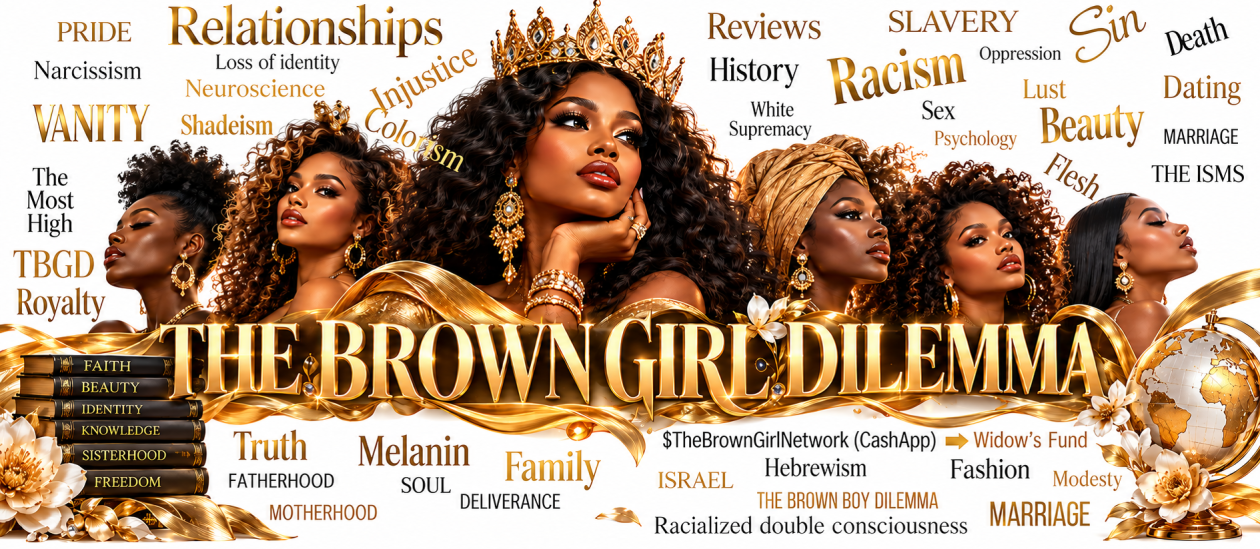
Tag Archives: Mirror

Beauty Sins: The Idol in the Mirror

In contemporary society, beauty has become a form of worship. Women, in particular, are socialized to equate self-worth with physical appearance, often measuring value by standards imposed through media, culture, and peer judgment. The title “The Idol in the Mirror” captures this phenomenon: the reflection becomes a shrine to societal ideals, and failure to measure up produces internalized shame and anxiety (Wolf, 1991).

The idolization of beauty is not merely personal but structural. Cultural narratives perpetuate narrow standards that prioritize youth, symmetry, light skin, and Eurocentric features, framing deviation as a deficiency. These ideals are amplified through advertising, social media, and celebrity culture, creating pervasive pressure to conform (Langlois et al., 2000).

Psychologically, the mirror becomes a site of self-surveillance. Women monitor themselves, assessing attractiveness, perceived flaws, and social acceptability. This hyper-awareness fosters body dysmorphia, low self-esteem, and obsessive behaviors aimed at correcting perceived imperfection (Cash & Pruzinsky, 2004).

Empathy toward women who fail to meet beauty standards is often diminished. Society implicitly rewards conformity while penalizing deviation, reinforcing social hierarchies where physical appearance mediates worthiness, competence, and likability (Eagly et al., 1991).

The idol in the mirror is also a spiritual metaphor. The fixation on physical perfection can displace deeper ethical, relational, and spiritual priorities, making beauty an object of devotion in itself. This misplaced worship can foster narcissism, materialism, and relational alienation (Wolf, 1991).

Social media exacerbates the phenomenon. Platforms that prioritize visual content create constant opportunities for comparison, feedback, and validation. Likes, comments, and follower counts operate as secular rites, measuring social capital through aesthetic compliance (Noble, 2018).

Intersectional factors complicate the experience. Race, body size, age, and disability intersect with beauty norms, producing differentiated pressures and penalties. Women of color, plus-size women, and older women often experience amplified scrutiny or invisibility in the cultural mirror (Hunter, 2007).

Beauty worship intersects with gendered labor. Women are expected to perform relational and emotional work while simultaneously maintaining appearance ideals, producing cumulative social stress. The idol of the mirror enforces labor-intensive conformity while denying equitable reward or acknowledgment.

Media imagery reinforces the cycle. Advertising, film, and television consistently elevate narrow ideals, presenting beauty as both aspirational and requisite. Women internalize these messages, often measuring self-worth against impossible standards (Eagly & Karau, 2002).

The idol in the mirror has measurable social consequences. Less conventionally attractive women experience reduced social support, professional opportunities, and public empathy, creating a feedback loop that links appearance with life outcomes (Dion, Berscheid, & Walster, 1972).

Beauty standards are culturally enforced but psychologically internalized. Self-surveillance and perfectionism arise not only from external evaluation but from internalized ideals, producing self-punitive behaviors including dieting, cosmetic procedures, and aesthetic modification (Cash & Pruzinsky, 2004).

The idol mirrors power structures. Those who control beauty narratives—media producers, advertisers, and social influencers—shape social valuation, dictating who receives attention, affirmation, and opportunity. Compliance with these norms often determines access to relational, social, and economic capital.

Resistance is possible. Movements promoting body positivity, diverse representation, and media literacy challenge the worship of narrow aesthetics. These initiatives reframe beauty as inclusive, subjective, and relational rather than prescriptive and hierarchical (Wolf, 1991).

Mentorship and community support mitigate the idol’s impact. Women who are affirmed for competence, creativity, and character rather than appearance develop resilience and self-efficacy, disrupting the societal emphasis on aesthetic perfection.

Education plays a critical role. Teaching critical media literacy, emphasizing ethical and relational values, and exposing young women to diverse beauty paradigms can reduce internalization of destructive standards (Langlois et al., 2000).

Spiritual frameworks also provide alternative valuation. Scripture and ethical teachings emphasize intrinsic worth over physical perfection, redirecting devotion from the superficial to enduring qualities such as integrity, compassion, and wisdom (Proverbs 31:30, KJV).

Failure to challenge the idol in the mirror perpetuates systemic inequities. Workplace discrimination, relational judgment, and social exclusion disproportionately affect women who do not meet culturally sanctioned beauty norms, underscoring the societal reach of aesthetic bias (Hosoda, Stone-Romero, & Coats, 2003).

The idol is also generational. Young girls internalize beauty worship early, modeling adult behavior that emphasizes aesthetics over substance. Breaking this cycle requires intentional cultural intervention, media critique, and mentorship (Langlois et al., 2000).

Ultimately, the idol in the mirror is both a personal and social construct, reflecting collective values while shaping individual behavior. Confronting this idol requires awareness, critique, and alternative valuation systems that prioritize character, relational depth, and spiritual alignment over physical appearance.

Transformation occurs when women reclaim agency, challenging internalized ideals and cultivating self-worth independent of societal judgment. The mirror remains, but the reflection becomes a site of affirmation rather than idol worship.

References

Cash, T. F., & Pruzinsky, T. (2004). Body image: A handbook of theory, research, and clinical practice. Guilford Press.

Dion, K., Berscheid, E., & Walster, E. (1972). What is beautiful is good. Journal of Personality and Social Psychology, 24(3), 285–290.

Eagly, A. H., Ashmore, R. D., Makhijani, M. G., & Longo, L. C. (1991). What is beautiful is good, but…: A meta-analytic review of research on the physical attractiveness stereotype. Psychological Bulletin, 110(1), 109–128.

Eagly, A. H., & Karau, S. J. (2002). Role congruity theory of prejudice toward female leaders. Psychological Review, 109(3), 573–598.

Hosoda, M., Stone-Romero, E. F., & Coats, G. (2003). The effects of physical attractiveness on job-related outcomes: A meta-analysis of experimental studies. Personnel Psychology, 56(2), 431–462.

Hunter, M. (2007). The persistent problem of colorism: Skin tone, status, and inequality. Sociology Compass, 1(1), 237–254.

Langlois, J. H., Kalakanis, L., Rubenstein, A. J., Larson, A., Hallam, M., & Smoot, M. (2000). Maxims or myths of beauty? A meta-analytic and theoretical review. Psychological Bulletin, 126(3), 390–423.

Noble, S. U. (2018). Algorithms of oppression: How search engines reinforce racism. NYU Press.

Wolf, N. (1991). The beauty myth: How images of beauty are used against women. HarperCollins.

Proverbs 31:30 (KJV).

The Female Files: Redeeming Worth Beyond the Mirror

In contemporary society, the female self is often mediated through a relentless visual economy—one that equates worth with external appearance, social validation, and measured standards of beauty. Yet this narrow framing obscures the deeper, more complex nature of womanhood. Redeeming Worth Beyond the Mirror seeks to disrupt cultural scripts that tether female value to aesthetic appeal and challenge women to reclaim a sense of self grounded in intrinsic dignity, moral agency, and relational flourishing.

Cultural Context and the Mirror Trap

From advertising campaigns to social media feeds, women are inundated with images and messages that reinforce idealized beauty norms (Grabe et al., 2008). These norms are not benign; they function within a sociocultural structure that positions women as objects to be viewed and evaluated (Fredrickson & Roberts, 1997). The pressure to conform can spark psychological distress, diminished self-worth, and internalized self-criticism (Cash, 2004). This phenomenon—where self-value becomes contingent on perceptual feedback—is what we term the mirror trap.

The mirror trap is reinforced by mechanisms of comparison and competition. Social media platforms, in particular, amplify curated representations of femininity that prioritize youth, symmetry, and commodified beauty. These digital environments act as echo chambers that normalize unrealistic standards and marginalize alternative expressions of worth (Harrison & Fredrickson, 2003).

Psychological Frameworks of Self-Worth

According to objectification theory, chronic exposure to objectifying images can lead to self-objectification, where women adopt an outsider’s perspective of their bodies (Fredrickson & Roberts, 1997). This externalized self-scrutiny contributes to heightened anxiety, body shame, and fragmented identity. Empirical studies demonstrate significant associations between self-objectification and negative mental health outcomes, including depression and disordered eating (Grabe et al., 2008; Tiggemann, 2011).

Simultaneously, broader psychological research on self-regulation reveals that overemphasis on external validation depletes emotional resources and undermines intrinsic motivation (Baumeister & Vohs, 2007). When worth is externally anchored—defined by likes, followers, or visual appraisal—women risk surrendering agency to fluctuating cultural metrics.

Redemptive Reframing: Worth in Purpose, Character, and Community

To redeem worth beyond the mirror, the narrative must shift from appearance to purpose, character, and community engagement. This reframing resonates with existential and humanistic psychological traditions, which locate meaning in self-authorship and relational connectedness rather than aesthetic compliance.

Meaningful worth is cultivated through authentic contributions—acts of service, intellectual growth, moral integrity, and empathetic relationality. These dimensions of self are inherently resistant to surface-level evaluation and invite women to value themselves and others in sustained, substantive ways.

Intersectional Considerations

An intersectional lens is essential, recognizing that women of different racial, cultural, and socioeconomic backgrounds encounter distinct pressures and norms. For example, beauty standards in Western media have historically privileged Eurocentric features, imposing disproportionate burdens on women of color (Wolf, 1991). Thus, reclaiming worth beyond the mirror necessitates cultural inclusivity and affirmation of diverse embodiments.

Spiritual and Theological Anchors

Across spiritual traditions, self-worth is often articulated in terms of inherent dignity bestowed at creation rather than contingent achievement or appearance. From a Christian theological perspective, scriptural texts affirm the value of the person beyond physical form (e.g., 1 Samuel 16:7; Proverbs 31:30). These resources can serve as counter-narratives to cultural objectification and offer women interpretive frameworks that integrate spiritual identity with embodied experience.

Toward a Redeemed Self-Perception

Redeeming worth beyond the mirror is not about rejecting beauty or aesthetic expression but about situating these elements within a larger constellation of human value. Women are invited to transcend performance-based self-evaluations and to nurture a holistic self-conception—one that embraces complexity, resilience, moral depth, and relational significance.

Reclamation of self-worth is both individual and communal. It requires systemic critique of cultural norms and personal practices of self-reflection, community support, and engagement with life-giving narratives that affirm worth beyond the surface.


References

American Psychological Association. (2017). Stress in America: The impact of discrimination. APA.

Baumeister, R. F., & Vohs, K. D. (2007). Self-regulation, ego depletion, and motivation. Social and Personality Psychology Compass, 1(1), 115–128.

Cash, T. F. (2004). Body image: Past, present, and future. Body Image, 1(1), 1–5.

Fredrickson, B. L., & Roberts, T.-A. (1997). Objectification theory: Toward understanding women’s lived experiences and mental health risks. Psychology of Women Quarterly, 21(2), 173–206.

Grabe, S., Ward, L. M., & Hyde, J. S. (2008). The role of the media in body image concerns among women: A meta-analysis. Psychological Bulletin, 134(3), 460–476.

Harrison, K., & Fredrickson, B. L. (2003). Women’s sport media, self-objectification, and mental health. Journal of Sport & Social Issues, 27(4), 315–335.

Tiggemann, M. (2011). Sociocultural perspectives on human appearance and body image. In T. F. Cash & L. Smolak (Eds.), Body image: A handbook of science, practice, and prevention (2nd ed.). Guilford Press.

Wolf, N. (1991). The beauty myth: How images of beauty are used against women. HarperCollins.

United Nations Women. (n.d.). Gender stereotypes and women’s empowerment. UN Women.

The Holy Bible, King James Version. (1769/2017). 1 Samuel 16:7; Proverbs 31:30. Cambridge University Press.

Mirror Talk: Loving Your Reflection, Embracing Your Shade.


Soft as morning coffee, kissed by sun’s first light,
Café au lait skin, glowing in gentle delight.
Warmth in every tone, a story in every hue,
I see myself fully, radiant, strong, and true.

When I stand before the mirror, I do more than glance—I honor my reflection. My light café au lait skin, a gentle blend of cream and caramel, carries with it a history, a lineage, and a story of resilience. It is a tone that bridges generations, connecting the legacy of ancestors with the life I am creating today.

Loving one’s reflection is an act of courage. Society often dictates rigid beauty standards, making some tones feel invisible or undervalued. But each shade of brown, including mine, holds its own power. Every hue is a testament to strength, identity, and self-worth. My reflection reminds me that I am not defined by external expectations, but by the pride I claim in my own skin.

Self-love begins in these intimate moments before the mirror—tracing the contours of the face, noticing subtle variations in tone, acknowledging every unique feature. In doing so, I practice gratitude: gratitude for my heritage, for my light café au lait shade, and for the beauty of being authentically me.

There is also a spiritual dimension to this affirmation. Scripture celebrates the beauty of skin in all its melanin-rich glory (Song of Solomon 1:5 KJV: “I am black, but comely, O ye daughters of Jerusalem”). While my shade may be lighter, it is no less beautiful, no less sacred, no less worthy of love. To embrace it fully is to honor divine creation.

In embracing my reflection, I also embrace confidence and empowerment. My shade is a story, a symbol of warmth, resilience, and light. Loving this skin strengthens how I move through the world, how I speak, and how I dream. It is a quiet rebellion against comparison, a declaration of self-worth, and a celebration of identity.

Mirror talk is an act of reclamation. When I look at my reflection, I see potential, strength, and history woven into every inch of my being. Loving my light café au lait skin is more than affirmation—it is empowerment, self-recognition, and gratitude.

To anyone learning to embrace their shade: let your reflection speak to you. Celebrate your tone, your story, your heritage. Every shade holds power, and every reflection deserves love.


Reference

  • The Holy Bible, King James Version. (1611). Song of Solomon 1:5.