Tag Archives: smart brown girl

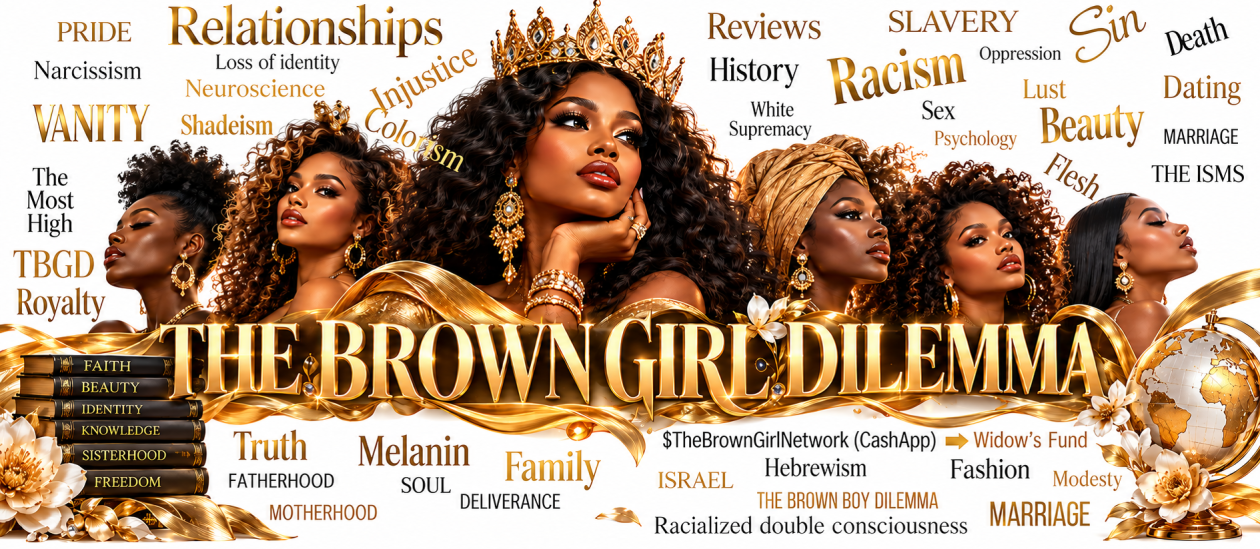
The Brown Girl Dilemma: When Intelligence Intimidates the Room

Woman speaking at podium addressing a community meeting audience

Intelligence has long been admired in theory yet punished in practice, particularly when embodied by women who challenge social expectations. For Black and brown women, this contradiction becomes even more complicated because race and gender stereotypes often shape how their intelligence is perceived. The Brown Girl Dilemma emerges when a woman enters a room not only beautiful and articulate, but intellectually powerful as well. Instead of being celebrated, she may be viewed as threatening, intimidating, arrogant, or difficult simply because she refuses to shrink herself for the comfort of others.

Historically, Black women have had to fight for access to education and intellectual recognition. During slavery in the United States, literacy among enslaved Africans was often criminalized because knowledge represented power and liberation. Even after emancipation, Black women faced systemic barriers to higher education, professional advancement, and academic legitimacy. Despite these obstacles, generations of Black women became scholars, educators, inventors, writers, activists, and leaders whose intellect transformed society.

Stereotypes surrounding Black women continue to affect how intelligence is interpreted today. Society often feels more comfortable when Black women are entertaining, nurturing, or aesthetically pleasing than when they are intellectually dominant. A highly intelligent Black woman may be perceived as “too opinionated,” “too strong,” or “hard to approach,” while similar traits in others are framed as confidence or leadership. These double standards reveal how race and gender intersect to shape social perception.

Research on workplace bias demonstrates that women, particularly women of color, often experience penalties for displaying competence and authority (Rosette & Livingston, 2012). Intelligence that should inspire respect can instead trigger insecurity, resistance, or exclusion. Many Black women learn early that excelling academically or professionally may isolate them socially because achievement disrupts the stereotypes people unconsciously expect them to fulfill.

The Brown Girl Dilemma is especially visible in educational environments. Black girls who speak confidently, ask advanced questions, or excel academically are sometimes labeled as intimidating rather than gifted. Some experience bullying or social rejection for “talking proper” or appearing intellectually ambitious. This creates emotional tension where young women feel pressured to choose between acceptance and authenticity.

Colorism and beauty politics complicate this experience further. Attractive Black women are often underestimated intellectually because society struggles to reconcile beauty with intelligence, particularly in women of color. If a woman is highly educated, articulate, and physically attractive, she may face suspicion or disbelief from those who unconsciously expect her to embody only one dimension. Her existence challenges multiple stereotypes simultaneously.

Historically, Black women intellectuals such as Anna Julia Cooper, Toni Morrison, and bell hooks transformed literature, philosophy, education, and social theory despite existing within systems that frequently minimized their contributions. Their work revealed how Black women’s intellectual voices have often been overlooked even while shaping cultural and political thought globally.

In professional settings, intelligent Black women frequently encounter what researchers describe as the “competence likability dilemma.” Studies show that women perceived as highly competent are sometimes viewed as less warm or socially desirable, especially in leadership positions (Heilman & Okimoto, 2007). Black women often experience this tension more intensely because stereotypes already position them as assertive or emotionally hardened before they even speak.

Many intelligent Black women, therefore, learn to perform emotional moderation. They may soften their tone, downplay achievements, avoid correcting misinformation, or intentionally appear less knowledgeable to maintain social harmony. This psychological burden can become exhausting because it requires constant self-monitoring. Instead of simply existing authentically, they are forced to calculate how much brilliance the room can tolerate.

The emotional isolation associated with intelligence is rarely discussed openly. Women who think deeply, analyze critically, and communicate articulately often struggle to find environments where they feel fully understood. For Black women, this isolation can become even sharper when they are one of the few women of color in academic, corporate, or intellectual spaces. Success may bring visibility without emotional belonging.

Media representation also influences these experiences. Intelligent Black women in film and television are often portrayed as emotionally unavailable, overly serious, or romantically undesirable. Meanwhile, intellectual brilliance in men is frequently romanticized and associated with power. These cultural narratives subtly shape how audiences interpret real women in everyday life.

At the same time, society profits enormously from the labor and innovation of intelligent Black women. Black women consistently lead in entrepreneurship, education, activism, science, culture, and professional achievement despite systemic barriers. Their intellectual contributions drive industries, influence social movements, and reshape public discourse. Yet recognition often arrives more slowly compared to their peers.

The rise of social media created new opportunities for Black women intellectuals to build platforms independently. Scholars, psychologists, lawyers, writers, doctors, and educators now share knowledge directly with global audiences without relying entirely on traditional gatekeeping institutions. These digital spaces have allowed many Black women to reclaim visibility and redefine what intelligence looks like publicly.

Still, visibility does not eliminate prejudice. Intelligent Black women online often face disproportionate criticism, harassment, and scrutiny. Confidence may be interpreted as arrogance, expertise as hostility, and assertiveness as aggression. The same qualities celebrated in others can become controversial when expressed by Black women.

The Brown Girl Dilemma also involves relationships and desirability politics. Some intelligent Black women report feeling pressured to minimize their accomplishments in dating environments to avoid intimidating potential partners. Society frequently encourages women to appear supportive of male ambition while discouraging women from visibly surpassing traditional expectations themselves.

Yet intelligence itself is a form of beauty. The ability to think critically, communicate eloquently, solve problems, create ideas, and understand human complexity reflects profound human attractiveness. Intellectual depth enriches relationships, communities, leadership, and culture. The problem is not intelligence itself but social discomfort with women who embody both intellect and presence unapologetically.

Black women have repeatedly demonstrated extraordinary resilience within intellectual spaces designed to exclude them. From historically Black colleges and universities to global research institutions, Black women continue to break barriers while carrying the additional weight of representation. Their success often requires navigating both racial and gendered expectations simultaneously.

The phrase “when intelligence intimidates the room” ultimately exposes insecurity more than capability. Intelligence becomes threatening only in environments where power depends upon hierarchy, ego, or stereotype preservation. A confident, educated Black woman disrupts systems that expect her silence, and that disruption often unsettles those invested in traditional social dynamics.

Despite these challenges, many Black women are reclaiming intellectual confidence without apology. They are embracing education, scholarship, creativity, and leadership while refusing to diminish themselves for acceptance. This shift represents not only personal empowerment but cultural transformation.

The Brown Girl Dilemma reveals that brilliance and beauty are not opposites. Black women can be graceful and intellectual, soft and powerful, emotionally aware and academically exceptional simultaneously. Their complexity challenges narrow societal categories that attempt to limit who they are allowed to become.

In the end, intelligent Black women do not intimidate rooms because they lack warmth or humanity. They intimidate rooms because their presence exposes how often society has underestimated them. Their intellect stands as proof that brilliance cannot be confined by stereotype, and their voices continue to reshape the spaces once designed to silence them.

References

Collins, P. H. (2000). Black feminist thought: Knowledge, consciousness, and the politics of empowerment (2nd ed.). Routledge.

Heilman, M. E., & Okimoto, T. G. (2007). Why are women penalized for success at male tasks? The implied communality deficit. Journal of Applied Psychology, 92(1), 81–92.

hooks, b. (1994). Teaching to transgress: Education as the practice of freedom. Routledge.

Morris, M. W. (2016). Pushout: The criminalization of Black girls in schools. The New Press.

Rosette, A. S., & Livingston, R. W. (2012). Failure is not an option for Black women: Effects of organizational performance on leaders with single versus dual-subordinate identities. Journal of Experimental Social Psychology, 48(5), 1162–1167.

Steele, C. M. (2010). Whistling Vivaldi: How stereotypes affect us and what we can do. W. W. Norton & Company.

West, C. M. (2008). Mammy, Jezebel, Sapphire, and their homegirls: Developing an “oppositional gaze” toward the images of Black women. In J. Chrisler, C. Golden, & P. Rozee (Eds.), Lectures on the psychology of women (4th ed., pp. 286–299). McGraw-Hill.

Smart Brown Girl Series: Condoleezza Rice

Strategic Intelligence on a Global Stage.

This photograph is the property of its respective owner. No copyright infringement is intended.

Condoleezza Rice is one of the most remarkable figures of modern American history—a woman whose intellect, poise, and leadership have earned her a place among the world’s most influential statespersons. Born on November 14, 1954, in Birmingham, Alabama, Rice grew up in a segregated South, where racial discrimination was a daily reality. Her parents—her mother a teacher and her father a guidance counselor—instilled in her the importance of education, excellence, and dignity in the face of prejudice. Rice’s early talents were evident: she skipped grades, excelled academically, and demonstrated an exceptional capacity for learning from a young age.

Rice began her college education at age 15 and originally pursued music as a concert pianist before discovering her passion for international politics. She earned her bachelor’s degree in political science from the University of Denver in 1974, a master’s degree from the University of Notre Dame in 1975, and a Ph.D. in political science from the University of Denver in 1981.

Her academic biography itself speaks volumes about her discipline and intellectual breadth. Studying Russian at Moscow State University and gaining expertise in Soviet political structures positioned her as a scholar with a deep understanding of global affairs. Years later, her academic credentials made her a sought-after voice in national security and foreign policy.

Rice began teaching political science at Stanford University immediately after completing her doctorate, quickly ascending through academic ranks. In 1993, she became the first woman and first African American to serve as Stanford’s Provost, the university’s chief academic and budget officer. During her tenure, she helped guide Stanford through financial challenges and expanded educational access.

Her career bridged academia and government. In 1989 she advised President George H.W. Bush on Soviet and Eastern European affairs during a pivotal moment in world history, including the collapse of the Soviet Union. By 2001, Rice had left Stanford to become National Security Advisor to President George W. Bush, the first African American woman to hold the position.

In 2005 she was appointed the 66th U.S. Secretary of State, making her the first African American woman to serve in that role. As Secretary of State, Rice championed what she termed “Transformational Diplomacy,” a strategy aimed at expanding democratic governance and global cooperation, including redeploying diplomats to challenging regions and emphasizing local capacity building.

Her years in Washington coincided with seismic international events, including the post‑9/11 landscape, the wars in Afghanistan and Iraq, and complex negotiations involving North Korea and the Middle East. These arenas tested her diplomatic expertise and strategic resolve at the highest levels of global politics.

Beyond government service, Rice has written extensively, contributing books on statecraft, international relations, and her own experiences, including Extraordinary, Ordinary People and No Higher Honor. These works reflect not only her high‑level engagements but her reflective insights on leadership and service.

Rice’s life is a testament to intellectual rigor and perseverance. Her journey from a segregated Alabama childhood to the world stage underscores how education can equip one to navigate and lead amid global complexity. Her doctoral work in political science is a rare achievement, testifying to her scholarly discipline and analytical acumen.

Despite her professional accomplishments, she has remained single, choosing to devote her life to public service and scholarship. Early in her life she was once engaged to NFL player Rick Upchurch, but she never married.

Rice continues to shape public discourse today. She serves as the director of Stanford University’s Hoover Institution, where she influences research, policy dialogues, and intellectual thought leadership on freedom, democracy, and global rule of law. In 2025 she launched a Substack venture called Freedom Frequency from Hoover, aiming to promote principled ideas rooted in liberty and democratic values.

Her involvement also extends into the private sector and corporate governance. Rice has served on the boards of major companies and institutions, applying her strategic insight beyond academia and government.

Rice’s intellectual influence is widely recognized. She has received numerous honorary degrees, recognition awards, and was one of the first women to be admitted to the historically male Augusta National Golf Club, symbolizing both social progress and her wide‑ranging impact.

Rice’s legacy within the Smart Brown Girl Series lies in her embodiment of disciplined intelligence, academic excellence, and global leadership. She navigated barriers of race and gender to achieve roles once unimaginable for African American women, and her career illustrates that intellect combined with resolve can redefine possibility.

Her life challenges reductive stereotypes about women of color in leadership, demonstrating that scholarly brilliance and strategic acumen are fundamental to shaping world affairs. Her example offers inspiration not only to young Black girls but to anyone striving for intellectual achievement and meaningful impact in public life.

In a broader sense, Condoleezza Rice represents what it means to live a life of scholarship, service, and civic engagement. Her contributions to diplomacy, education, and public thought affirm the importance of intellectual preparation and principled leadership.

She remains a figure of study for students of international relations, leadership, and history, continuing to publish, speak, teach, and guide public discourse well into her later years.

References

Condoleezza Rice | National Women’s History Museum biography. womenshistory.org
Condoleezza Rice | Britannica. britannica.com
Condoleezza Rice | Biography.com. biography.com
Condoleezza Rice PragerU Magazine. assets.ctfassets.net
Rice launches Freedom Frequency from Hoover Institution. axios.com
Condoleezza Rice board and net worth details. architectureadrenaline.com
White House archives Rice biography and honors. georgewbush-whitehouse.archives.gov

Smart Brown Girl Series: Michelle Obama

Grace in Leadership. Power in Purpose

This photograph is the property of its respective owner. No copyright infringement intended.

Michelle LaVaughn Robinson Obama is one of the most inspirational figures of our era—a woman whose intellect, leadership, and voice have resonated globally. Born on January 17, 1964, on Chicago’s South Side, Michelle was raised by hardworking parents who valued education, discipline, and service. From an early age, she exhibited academic promise and a commitment to excellence.

She attended Princeton University, where she majored in sociology and minored in African American studies, graduating with distinction. She went on to earn her Juris Doctor (J.D.) degree from Harvard Law School, where she further refined her analytical skills and deepened her understanding of the law and society. After law school, Michelle began her legal career in Chicago, where she also met her future husband, Barack Obama.

Michelle’s career has spanned law, public service, education, and advocacy. Early in her professional life, she worked in the Chicago city government and with nonprofit organizations focused on youth and community development. Her leadership abilities were evident long before she stepped onto the national stage.

Her role as First Lady of the United States (2009–2017) elevated her platform and impact. During her tenure, she championed evidence‑based public health initiatives, most notably Let’s Move!, a campaign addressing childhood obesity and promoting nutrition and physical activity nationwide. She also co‑founded the Joining Forces initiative to support military families and launched Reach Higher and Let Girls Learn to expand educational opportunities for youth, especially girls, around the world.

Michelle used her influence to reshape how Americans think about health, education, and family. She also established the White House vegetable garden to educate communities about healthy eating and food justice—an innovative and symbolic project that highlighted her commitment to communal well‑being.

Her communication skills—marked by clarity, warmth, and conviction—made her an admired public speaker. Her 2016 Democratic National Convention address, which included the phrase “When they go low, we go high,” became emblematic of her approach to adversity: principled, gracious, and resilient.

After her tenure in the White House, Michelle channeled her creativity and leadership into writing and media. Her 2018 memoir Becoming became a global bestseller, resonating with millions for its candid exploration of identity, purpose, and resilience. She later published The Light We Carry: Overcoming in Uncertain Times, offering reflections on confidence, community, and navigating life’s uncertainties.

Her storytelling extended into audio media. Michelle launched The Michelle Obama Podcast in 2020, featuring conversations with family, friends, and thought leaders about relationships, community, and personal development. She also developed Michelle Obama: The Light Podcast, based on her book The Light We Carry, which explored similar themes through personal narratives and interviews.

In 2025, Michelle expanded her media presence with a new podcast co‑hosted with her older brother, Craig Robinson, titled IMO with Michelle Obama & Craig Robinson. On this project, they bring their sibling bond to bear on everyday dilemmas, life lessons, and candid conversations about relationships, family, purpose, and personal growth. The podcast is produced by Higher Ground Productions and features a range of guests and topics that emphasize authenticity, humor, and wisdom. The show is available on platforms like YouTube, Apple Podcasts, and Spotify and includes episodes where even former President Barack Obama appears as a guest, illustrating the depth of conversation and familial rapport.

This sibling venture offers Michelle at her most relaxed and relational, demonstrating how her intelligence and insight translate beyond policy and into everyday life.

Michelle continues to engage in philanthropy, storytelling, and mentorship through the Obama Foundation, promoting leadership, civic engagement, and global outreach. Her work focuses on empowering girls and young women through education and opportunity, reinforcing the idea that inclusive leadership is vital to societal progress.

In addition to her media and nonprofit efforts, Michelle remains a cultural influencer. Through public speaking, live events, and social media engagement, she continues to shape discourse on equity, resilience, and intentional living. Her candid discussions about identity, confidence, and community foster connection and inspiration across generations.

Michelle’s legacy is also firmly rooted in her partnership with Barack Obama. Together, they co‑founded Higher Ground Productions, a media company dedicated to uplifting diverse voices and sharing stories that entertain, educate, and inspire. Under their leadership, Higher Ground has produced acclaimed projects, including documentaries and series that highlight underrepresented narratives.

As a mother of two girls, Sasha & Malia, author, advocate, and communicator, Michelle’s journey reflects disciplined intelligence, emotional depth, and the power of service over self. Her story models how individuals can leverage intellect and empathy to create meaningful impact in both private and public arenas.

Her inclusion in the Smart Brown Girl Series honors her scholastic achievement, cultural influence, and dedication to uplifting others—especially young women who see in her example a template for leadership without compromise.

Today, Michelle remains an active voice in public life. Beyond her podcast work with her brother Craig Robinson, she engages audiences through speaking engagements, literary events, and community partnerships, continually advocating for education, empowerment, and thoughtful engagement with the world around us.

Her life demonstrates that true influence flows not just from titles held but from the courage to speak honestly, the wisdom to listen deeply, and the commitment to serve others with integrity and heart.

References

  • Michelle Obama (personal biography and career overview). Wikipedia. en.wikipedia.org
  • IMO with Michelle Obama & Craig Robinson podcast (Apple Podcasts & Spotify description). podcasts.apple.com
  • IMO with Michelle Obama & Craig Robinson launch and details on YouTube. youtube.com
  • Higher Ground Productions background and media activities. en.wikipedia.org
  • The Light We Carry book by Michelle Obama. en.wikipedia.org
  • Obama Foundation YouTube (general involvement and appearances). youtube.com

Smart Brown Girl Series: Introduction

Smart brown girls have always existed in a world that questions their intellect before it celebrates it. From early childhood, many learn that their intelligence must be proven repeatedly, often under scrutiny that their peers do not face. The phrase “smart brown girl” itself challenges stereotypes that have long attempted to separate Blackness from brilliance.

Historically, the intellectual capacities of brown girls were deliberately denied during slavery and segregation, when laws and customs criminalized their education. Yet even under such oppression, Black women taught themselves and others to read, preserved knowledge through oral traditions, and laid the foundations for future scholarship. Intelligence became an act of resistance rather than a luxury.

In modern educational spaces, smart brown girls frequently navigate conflicting expectations. Excellence is praised, but confidence is often misread as arrogance. Curiosity may be labeled as defiance, and leadership interpreted as aggression. These misinterpretations create emotional labor that smart brown girls must manage alongside academic demands.

Research shows that stereotype threat continues to impact Black girls’ educational experiences. When society expects less, achievement can feel isolating rather than empowering. Many smart brown girls learn to downplay their abilities to avoid social penalties, a phenomenon that reflects broader structural inequities rather than individual shortcomings.

Despite these barriers, smart brown girls consistently outperform expectations when given equitable support. Culturally responsive teaching and affirming environments reveal what has always been true: intelligence is not scarce among brown girls, opportunity is. When brilliance is nurtured rather than policed, confidence flourishes.

Media representation rarely reflects the full spectrum of brown girl intellect. Characters are often portrayed as sidekicks, caretakers, or comic relief rather than thinkers, innovators, and visionaries. This absence subtly informs public perception and shapes how brown girls imagine their own futures.

Psychologically, being both smart and brown requires resilience. Constantly navigating assumptions can lead to internalized doubt, even among high achievers. Yet many brown girls develop strong self-awareness and adaptability, skills forged through necessity rather than ease.

Family and community often serve as critical sources of affirmation. Intergenerational encouragement counters societal messages that question worth and capability. Grandmothers, mothers, teachers, and mentors have historically acted as intellectual guardians, reminding brown girls of who they are.

Faith traditions also play a powerful role in affirming intelligence. Scripture consistently associates wisdom with virtue, discernment, and divine favor. The Bible does not present wisdom as gendered or racialized but as a gift from God, accessible to those who seek it.

Proverbs declares wisdom to be the principal thing, emphasizing its supreme value. For smart brown girls, this challenges narratives that prioritize appearance or compliance over thoughtfulness and insight. Their minds are not incidental; they are sacred.

Womanist theology further affirms that Black women’s knowledge emerges from lived experience. Smart brown girls carry cultural, spiritual, and historical intelligence that textbooks often overlook. Their understanding of survival, justice, and care expands what counts as knowledge.

In classrooms, recognizing multiple forms of intelligence is essential. Academic success should not require cultural erasure. When brown girls are allowed to bring their full selves into learning spaces, their engagement deepens and their confidence strengthens.

Socially, smart brown girls are often expected to be strong without support. The “Strong Black Woman” trope can mask the emotional needs of intellectually gifted girls, discouraging vulnerability. True empowerment allows room for rest, curiosity, and joy.

Mentorship plays a transformative role in sustaining intellectual confidence. Seeing women who look like them thriving in academic, scientific, theological, and creative fields reinforces the possibility. Representation, when authentic, disrupts internalized limits.

Economically and politically, investing in smart brown girls yields collective benefit. Education, leadership training, and creative freedom strengthen communities. History repeatedly shows that when Black women advance, entire societies move forward.

Reclaiming the title “smart brown girl” is not about exceptionalism but truth-telling. It refuses deficit-based narratives and asserts that intelligence has always lived in brown skin. This reclamation is both personal and communal.

Self-definition is a radical act. When smart brown girls name themselves, they resist being defined by test scores, stereotypes, or external validation. Their worth is not contingent upon performance but inherent.

Healing involves unlearning the belief that brilliance must be hidden to be safe. Smart brown girls deserve environments where curiosity is welcomed and intellect is celebrated without penalty. Visibility should not require self-sacrifice.

Ultimately, the story of the smart brown girl is one of continuity. She is the descendant of women who learned in secret, taught in defiance, and dreamed without permission. Her intelligence is inherited, cultivated, and enduring.

To affirm smart brown girls is to honor truth. Their minds are powerful, their insights necessary, and their presence transformative. They are not anomalies; they are evidence. Smart brown girls are not becoming intelligent—they have always been so.


References

Collins, P. H. (2000). Black feminist thought: Knowledge, consciousness, and the politics of empowerment (2nd ed.). Routledge.

Crenshaw, K. (1991). Mapping the margins: Intersectionality, identity politics, and violence against women of color. Stanford Law Review, 43(6), 1241–1299.

Fordham, S., & Ogbu, J. U. (1986). Black students’ school success: Coping with the “burden of acting white.” The Urban Review, 18(3), 176–206.

hooks, b. (1994). Teaching to transgress: Education as the practice of freedom. Routledge.

Morris, M. W. (2016). Pushout: The criminalization of Black girls in schools. The New Press.

Muhammad, G. E. (2020). Cultivating genius: An equity framework for culturally and historically responsive literacy. Scholastic.

Steele, C. M. (2010). Whistling Vivaldi: How stereotypes affect us and what we can do. W. W. Norton & Company.

The Holy Bible, King James Version.

Williams, D. S. (1993). Sisters in the wilderness: The challenge of womanist God-talk. Orbis Books.

Cooper, A. J. (1892). A voice from the South. Aldine Printing House.