Tag Archives: mental-health

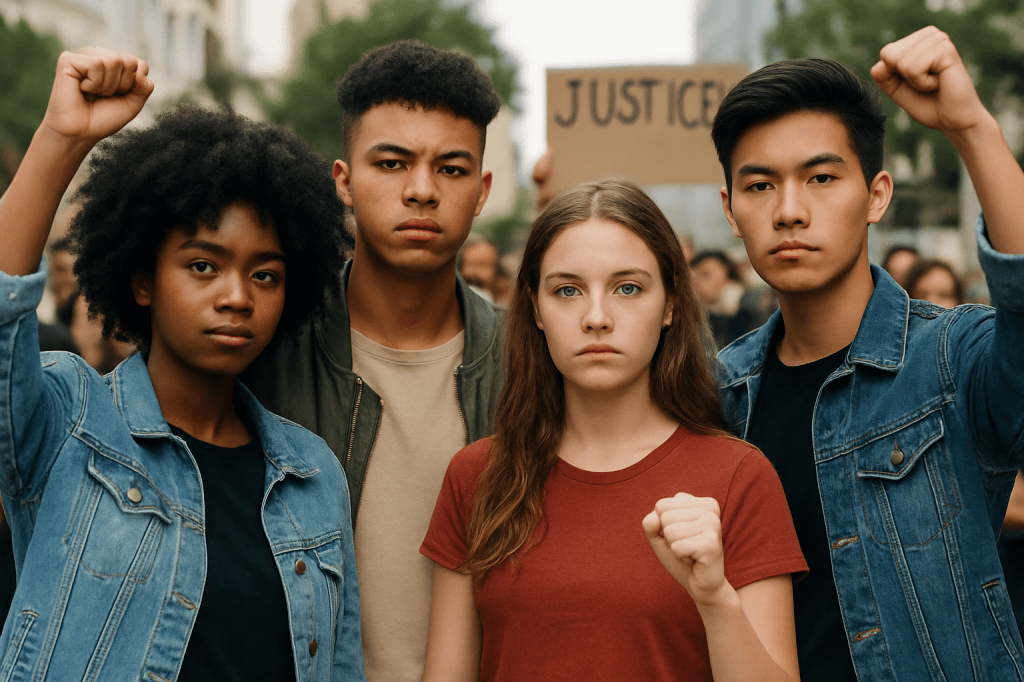
Faces of Injustice: How Lookism Shapes Opportunity and Identity

Lookism is the preferential treatment of individuals based on physical appearance. This bias, often subtle and socially accepted, permeates workplaces, education, media, and social interactions, shaping both opportunities and identity.

At its core, lookism is a form of discrimination, privileging those who meet culturally defined standards of attractiveness while marginalizing those who do not (Hamermesh & Biddle, 1994). This bias intersects with race, gender, age, and socioeconomic status, compounding inequality.

The labor market reflects stark evidence of lookism. Research shows that attractive individuals are more likely to be hired, earn higher salaries, and receive favorable performance evaluations compared to their less conventionally attractive peers (Hamermesh & Parker, 2005).

Education is not immune. Studies suggest that teachers unconsciously favor students who appear attractive, often granting more attention, encouragement, and positive feedback. This early advantage shapes self-esteem and academic outcomes (Langlois et al., 2000).

Media perpetuates and normalizes lookism. Television, film, and social media elevate specific facial features, body types, and skin tones as ideal, creating a feedback loop where social value is linked to conformity with these norms (Dion et al., 1972).

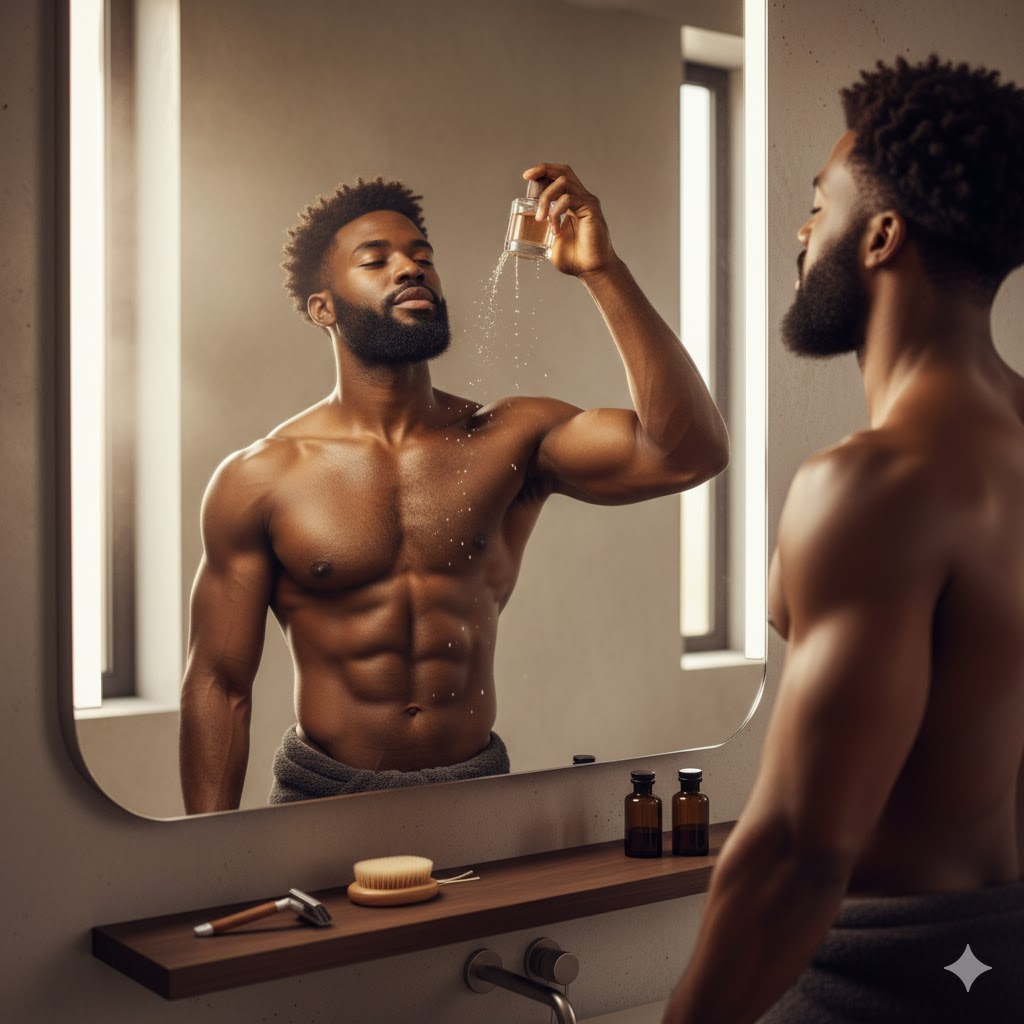
Gendered pressures amplify lookism. Women, in particular, face scrutiny over facial aesthetics, body shape, and grooming. Men are increasingly subject to expectations of muscularity and fitness. Nonconformity often results in social or professional penalties (Cash & Pruzinsky, 2002).

Lookism intersects with race and colorism. Marginalized communities frequently face compounded biases, where attractiveness is measured against Eurocentric or socially dominant standards, resulting in systemic disadvantage (Hunter, 2007).

The concept of “beauty privilege” illustrates structural advantages. Attractive individuals receive preferential treatment in hiring, legal outcomes, social interactions, and romantic contexts, demonstrating how appearance influences life trajectories (Mobius & Rosenblat, 2006).

Implicit bias reinforces lookism. Even well-intentioned individuals may unconsciously favor attractive people, believing them to be more competent, friendly, or deserving, which perpetuates systemic inequity (Eagly et al., 1991).

Facial features influence perception of trustworthiness, dominance, and intelligence. Studies demonstrate that these snap judgments affect hiring, promotions, and social capital, often independently of actual skills or character (Todorov et al., 2005).

Cosmetic interventions highlight societal complicity. Individuals may alter appearance to conform to social norms, reflecting the pressure to negotiate identity within a lookist framework (Sarwer & Crerand, 2004). This underscores the pervasive impact of aesthetic standards.

Economic inequality intersects with lookism. Those lacking resources to enhance appearance—through grooming, wardrobe, or cosmetic treatments—often face compounded disadvantages in professional and social spheres (Hamermesh, 2011).

Lookism shapes identity from a young age. Children internalize messages about attractiveness, associating social approval and self-worth with appearance. This internalization influences self-esteem, aspirations, and interpersonal relationships (Grabe, Ward, & Hyde, 2008).

Employment discrimination based on appearance is often legally unaddressed. Unlike race, gender, or disability, attractiveness is not protected, leaving individuals vulnerable to systemic bias without formal recourse (Hamermesh & Biddle, 1994).

Media representation of beauty affects social identity. When marginalized groups are underrepresented or misrepresented, individuals may feel pressure to alter features or style to align with dominant ideals, impacting cultural and personal identity (Hunter, 2007).

Body image and facial aesthetics influence social mobility. Attractive individuals gain access to professional networks, mentorship, and client-facing roles more readily, highlighting the tangible impact of lookism on life outcomes (Mobius & Rosenblat, 2006).

The workplace often rewards appearance over performance. Attractive employees receive higher evaluations, even when performance metrics are identical, demonstrating systemic inequity rooted in visual bias (Hamermesh & Parker, 2005).

Digital media reinforces lookism through filters and editing. Altered images normalize unattainable beauty standards, perpetuating self-comparison, insecurity, and social stratification based on appearance (Fardouly et al., 2015).

Intersectionality compounds the effects of lookism. Women of color, LGBTQ+ individuals, and persons with disabilities face unique pressures, navigating societal ideals while confronting systemic discrimination on multiple fronts (Crenshaw, 1991).

Addressing lookism requires awareness, education, and systemic change. Policies, media literacy, and advocacy for inclusive representation can mitigate the inequities tied to appearance, fostering a more equitable society (Langlois et al., 2000).

Ultimately, the faces we see—and the judgments we make—carry consequences far beyond first impressions. Confronting lookism demands challenging societal biases, expanding definitions of beauty, and ensuring that opportunity and identity are determined by merit, not appearance.


References

  • Cash, T. F., & Pruzinsky, T. (2002). Body image: A handbook of theory, research, and clinical practice. Guilford Press.
  • Crenshaw, K. (1991). Mapping the margins: Intersectionality, identity politics, and violence against women of color. Stanford Law Review, 43(6), 1241–1299.
  • Dion, K., Berscheid, E., & Walster, E. (1972). What is beautiful is good. Journal of Personality and Social Psychology, 24(3), 285–290.
  • Eagly, A. H., Ashmore, R. D., Makhijani, M. G., & Longo, L. C. (1991). What is beautiful is good, but…: A meta-analytic review of research on the physical attractiveness stereotype. Psychological Bulletin, 110(1), 109–128.
  • Fardouly, J., Diedrichs, P. C., Vartanian, L. R., & Halliwell, E. (2015). Social comparisons on social media: The impact of Facebook on young women’s body image concerns and mood. Body Image, 13, 38–45.
  • Grabe, S., Ward, L. M., & Hyde, J. S. (2008). The role of the media in body image concerns among women: A meta-analysis of experimental and correlational studies. Psychological Bulletin, 134(3), 460–476.
  • Hamermesh, D. S. (2011). Beauty pays: Why attractive people are more successful. Princeton University Press.
  • Hamermesh, D. S., & Biddle, J. E. (1994). Beauty and the labor market. American Economic Review, 84(5), 1174–1194.
  • Hamermesh, D. S., & Parker, A. (2005). Beauty in the classroom: Instructors’ pulchritude and putative pedagogical productivity. Economics of Education Review, 24(4), 369–376.
  • Hunter, M. L. (2007). The persistent problem of colorism: Skin tone, status, and inequality. Sociology Compass, 1(1), 237–254.
  • Langlois, J. H., Kalakanis, L., Rubenstein, A. J., Larson, A., Hallam, M., & Smoot, M. (2000). Maxims or myths of beauty? A meta-analytic and theoretical review. Psychological Bulletin, 126(3), 390–423.
  • Mobius, M. M., & Rosenblat, T. S. (2006). Why beauty matters. American Economic Review, 96(1), 222–235.
  • Sarwer, D. B., & Crerand, C. E. (2004). Body image and cosmetic medical treatments. Body Image, 1(1), 99–111.
  • Todorov, A., Mandisodza, A. N., Goren, A., & Hall, C. C. (2005). Inferences of competence from faces predict election outcomes. Science, 308(5728), 1623–1626.
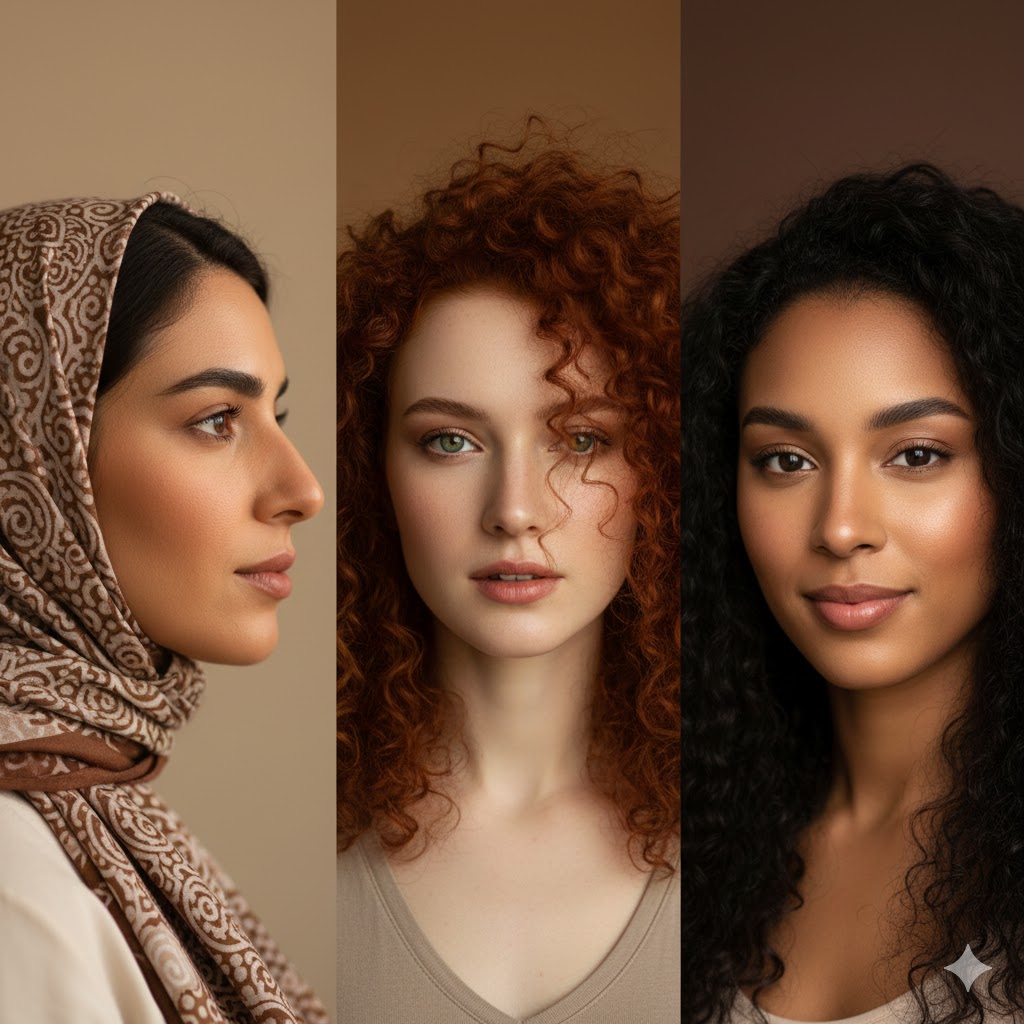
Beyond the Mirror: Confronting Society’s Obsession with Beauty

Society has long equated beauty with worth. From magazines to social media, advertising, and entertainment, physical appearance is amplified as a marker of success, desirability, and social acceptance. This fixation creates pressure to conform to often unattainable standards.

Beauty standards are culturally constructed. They vary across regions and eras, yet a consistent theme emerges: idealized symmetry, clear skin, and youthful features dominate the narrative. These ideals are reinforced by media, celebrity culture, and commercial industries (Wolf, 1991).

The psychology of beauty highlights the “halo effect,” where attractive individuals are perceived as more competent, intelligent, and trustworthy. This cognitive bias reinforces the societal obsession with physical appearance (Dion, Berscheid, & Walster, 1972).

Social media has intensified beauty fixation. Platforms like Instagram and TikTok promote curated images, filters, and cosmetic enhancements. Users internalize these images as normative, often comparing themselves unfavorably to digitally enhanced representations (Fardouly et al., 2015).

Advertising and marketing exploit insecurities. Skincare, cosmetics, and fashion industries profit by suggesting that happiness and social success are contingent on appearance. This commercial manipulation deepens the fixation on outward aesthetics (Etcoff, 1999).

Gender norms exacerbate the pressure. Women are often judged more harshly on appearance, while men are increasingly expected to conform to muscular or chiseled ideals. The result is a pervasive culture of scrutiny across genders (Cash & Pruzinsky, 2002).

Beauty fixation impacts mental health. Anxiety, depression, and low self-esteem correlate with internalization of societal beauty standards. Individuals often experience dissatisfaction with their natural appearance, seeking validation through external approval (Grabe, Ward, & Hyde, 2008).

The cosmetic surgery industry reflects society’s preoccupation with perfection. Millions pursue procedures to align their features with perceived ideals. While transformative for some, it underscores the belief that appearance is paramount to self-worth (Sarwer & Crerand, 2004).

Youthfulness is valorized, leading to ageism. Anti-aging products and cosmetic interventions perpetuate the notion that beauty diminishes with age. Older individuals may feel pressured to maintain a youthful appearance, reflecting society’s conflation of beauty and vitality (Hurd Clarke, 2010).

Colorism reinforces beauty hierarchy. Lighter skin tones are often idealized in media and popular culture, marginalizing darker complexions and perpetuating systemic discrimination within communities (Hunter, 2007).

The fashion industry dictates trends that shape beauty standards. Runway models, influencer endorsements, and magazine covers present a narrow spectrum of body types, creating unrealistic expectations for consumers (Tiggemann & Zaccardo, 2018).

Digital filters and AI-generated images distort perceptions of natural beauty. Augmented realities promote flawless skin, perfect symmetry, and exaggerated features, normalizing unrealistic ideals and complicating self-acceptance (Chae, 2017).

Celebrity culture amplifies the obsession. Public figures serve as aspirational benchmarks, with media coverage emphasizing appearance over achievement. Fans often emulate looks and lifestyle choices, reinforcing a cycle of comparison (Cash et al., 2004).

Beauty fixation intersects with race, gender, and class. Marginalized groups face compounded pressures, navigating ideals not reflective of their natural features or cultural identity (Hunter, 2007). Societal preference for Eurocentric features marginalizes diverse forms of beauty.

Education and media literacy can mitigate harmful effects. Critical awareness of marketing, filters, and digitally altered images helps individuals contextualize beauty messages and resist internalizing unattainable standards (Fardouly et al., 2015).

Empowerment movements challenge conventional beauty norms. Campaigns promoting body positivity, self-love, and diversity redefine standards, emphasizing confidence, health, and authenticity over superficial ideals (Tylka & Wood-Barcalow, 2015).

Psychological research suggests self-compassion buffers the negative impact of beauty pressure. Individuals cultivating acceptance of their natural appearance exhibit higher resilience and self-esteem (Neff, 2003).

Cultural shifts are visible in media representation. Inclusive campaigns, diverse casting, and promotion of natural beauty signal a slow transformation, expanding the definition of attractiveness beyond narrow conventions (Hall & Fields, 2013).

The fixation on beauty also intersects with consumerism. Industries profit from insecurities, from skincare routines to fitness regimens, perpetuating a cycle where self-worth is measured through appearance (Etcoff, 1999).

Ultimately, confronting society’s obsession with beauty requires awareness, education, and cultural reform. By valuing authenticity, diversity, and inner qualities, individuals and communities can move beyond the mirror, embracing a holistic understanding of self-worth (Wolf, 1991).


References

  • Cash, T. F., & Pruzinsky, T. (Eds.). (2002). Body image: A handbook of theory, research, and clinical practice. Guilford Press.
  • Cash, T. F., Melnyk, S. E., & Hrabosky, J. I. (2004). The assessment of body image investment: An extensive revision of the Appearance Schemas Inventory. International Journal of Eating Disorders, 35(3), 305–316.
  • Chae, J. (2017). Virtual makeover: The impact of digitally altered images on self-perception. Cyberpsychology, Behavior, and Social Networking, 20(5), 295–301.
  • Dion, K., Berscheid, E., & Walster, E. (1972). What is beautiful is good. Journal of Personality and Social Psychology, 24(3), 285–290.
  • Etcoff, N. (1999). Survival of the prettiest: The science of beauty. Anchor Books.
  • Fardouly, J., Diedrichs, P. C., Vartanian, L. R., & Halliwell, E. (2015). Social comparisons on social media: The impact of Facebook on young women’s body image concerns and mood. Body Image, 13, 38–45.
  • Grabe, S., Ward, L. M., & Hyde, J. S. (2008). The role of the media in body image concerns among women: A meta-analysis of experimental and correlational studies. Psychological Bulletin, 134(3), 460–476.
  • Hall, R. J., & Fields, B. (2013). Modeling the media’s influence on racial and gendered beauty standards. Sociology Compass, 7(11), 918–931.
  • Hunter, M. L. (2007). The persistent problem of colorism: Skin tone, status, and inequality. Sociology Compass, 1(1), 237–254.
  • Hurd Clarke, L. (2010). Aging and everyday life: The social construction of identity and age. Canadian Journal on Aging, 29(1), 39–49.
  • Neff, K. D. (2003). Self-compassion: An alternative conceptualization of a healthy attitude toward oneself. Self and Identity, 2(2), 85–101.
  • Sarwer, D. B., & Crerand, C. E. (2004). Body image and cosmetic medical treatments. Body Image, 1(1), 99–111.
  • Tiggemann, M., & Zaccardo, M. (2018). “Exercise to be fit, not skinny”: The effect of fitspiration imagery on women’s body image. Body Image, 26, 90–97.
  • Tylka, T. L., & Wood-Barcalow, N. L. (2015). The Body Appreciation Scale-2: Item refinement and psychometric evaluation. Body Image, 12, 53–67.
  • Wolf, N. (1991). The beauty myth: How images of beauty are used against women. HarperCollins.

The Black Woman: The Barbie Doll Effect

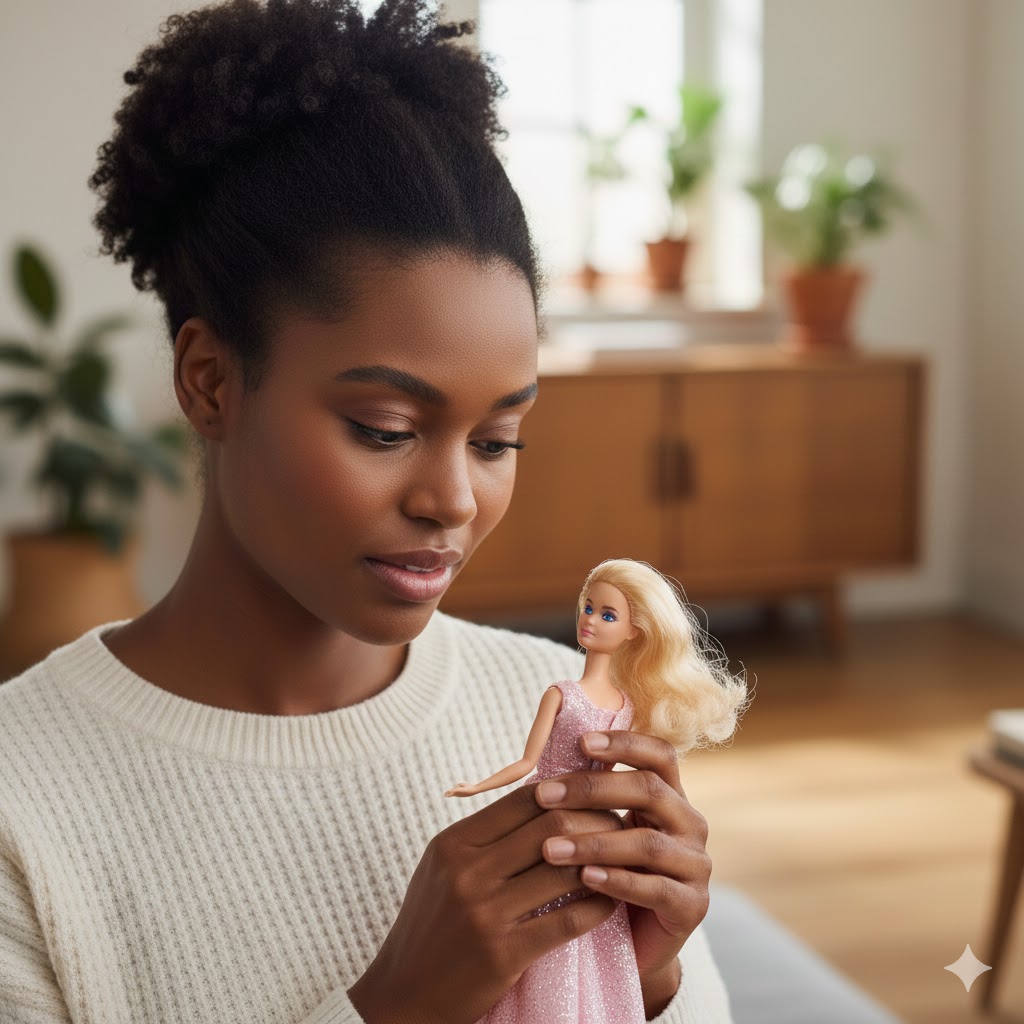
The “Barbie Doll Effect” describes the psychological, social, and cultural pressure placed on Black women to conform to an ideal of beauty that was never designed with them in mind. For generations, society upheld Eurocentric features—straight hair, narrow noses, light skin, thin frames—as the universal standard for femininity. Black women, in turn, were expected to mold themselves into this unattainable blueprint just to be seen as worthy, beautiful, or acceptable.

For many Black girls, the first doll they ever received didn’t look like them. Her hair swung in the wind, her eyes were light, her skin was pale, and her beauty was packaged as the “default.” This early conditioning planted seeds: To be beautiful is to be anything but yourself. The Barbie Doll Effect begins in childhood, but its impact often extends well into adulthood.

As Black women grow, society continues to whisper the same message through media, beauty industries, and Hollywood casting: straighten your hair, lighten your complexion, shrink your body, soften your presence, and quiet your voice. The closer you appear to the “Barbie ideal,” the more you are rewarded—professionally, socially, and romantically. The farther you are from it, the more you must fight unseen battles just to be acknowledged.

This creates a crisis of identity. Black women find themselves torn between self-love and societal acceptance, between honoring their ancestry and performing a version of femininity that dismisses their natural essence. This conflict isn’t superficial; it is deeply emotional. It shapes self-esteem, mental health, dating experiences, and even career opportunities.

In contemporary society, the concept of beauty is often dictated by narrow, Eurocentric standards that dominate media, fashion, and entertainment. Among these ideals, the “Barbie Doll Effect” has emerged as a prominent cultural phenomenon, shaping perceptions of attractiveness, self-worth, and femininity, particularly for Black women. This term describes the social and psychological pressures to embody perfection: flawless skin, slender physique, symmetrical features, and overall “marketable” beauty. While Barbie herself is a toy, her symbolic influence transcends playtime, impacting how young girls and women internalize their value.

Unrealistic Beauty and Colorism

For Black women, the Barbie Doll Effect is compounded by colorism—a preference for lighter skin within communities of color, perpetuated by societal and media portrayals. Darker-skinned Black women often face marginalization and exclusion from mainstream representations of beauty. In contrast, women with lighter complexions or features closer to Eurocentric ideals may be elevated, reinforcing internalized hierarchies of attractiveness. This phenomenon fosters self-doubt and a heightened focus on appearance, even as it undermines authentic identity.

Psychological Implications

The constant exposure to unrealistic images can lead to low self-esteem, body dysmorphia, and disordered eating habits. Research indicates that girls who internalize unattainable beauty standards often experience heightened anxiety, depression, and diminished self-worth (Grabe, Ward, & Hyde, 2008). The Barbie Doll Effect also conditions women to equate their value with their appearance, diverting attention from talents, intellect, and personal growth. For Black women navigating systemic bias, these pressures intersect with societal oppression, magnifying the psychological toll.

Media and Representation

Television, film, and social media amplify the Barbie Doll Effect by repeatedly showcasing idealized versions of Black femininity. Celebrities, influencers, and fashion icons are frequently curated to fit a specific aesthetic: smooth skin, exaggerated features, and slim bodies. While some Black women celebrate their beauty and achieve visibility, the overall narrative reinforces a narrow, homogenized ideal, often excluding darker skin tones, natural hair textures, or fuller body types. This limited representation affects how Black women perceive themselves and how society validates their beauty.

Beauty Standards vs. Authenticity

The pressure to conform to these ideals often leads Black women to alter their natural features through skin-lightening, hair straightening, cosmetic surgery, or extreme makeup routines. While personal choice plays a role, the underlying motivation is frequently social approval rather than self-expression. Rejecting the Barbie Doll Effect requires intentional cultivation of self-love, celebrating natural beauty, and fostering spaces where Black women see themselves represented authentically and holistically.

Societal Shifts and Empowerment

Despite pervasive pressures, there is a growing movement of empowerment. Black women are embracing natural hair, diverse body types, and culturally resonant fashion, challenging Eurocentric dominance in beauty standards. Organizations, social media campaigns, and influencers are redefining what beauty looks like, emphasizing resilience, intellect, and heritage alongside appearance. The message is clear: beauty is multifaceted, and self-worth cannot be measured solely by conformity to a doll’s proportions or societal ideals.

Conclusion

The Barbie Doll Effect illustrates the complex interplay between media, societal expectations, and personal identity. For Black women, it highlights the intersection of beauty standards, colorism, and systemic pressures. Breaking free from this effect requires acknowledgment of these pressures, intentional self-celebration, and a cultural shift that embraces diverse forms of beauty. By reclaiming narratives of worth, Black women can transcend superficial ideals and cultivate confidence rooted in authenticity, heritage, and individuality.

The Barbie Doll Effect also perpetuates colorism, where lighter skin is praised and darker skin is scrutinized. It fosters a beauty hierarchy that wounds Black women emotionally, dividing them into categories—“pretty for a dark-skinned girl,” “exotic,” “acceptable,” “too Black,” or “too ethnic.” These labels are weapons, not compliments, and they echo the painful legacy of colonization and slavery.

But despite these pressures, Black women continue to redefine beauty in their own image. From natural hair movements to melanin-positive campaigns, from darker-skinned models on magazine covers to actresses proudly wearing locs on red carpets, Black women are slowly reclaiming visibility and rewriting the standard. The world is watching—and following.

The Barbie Doll Effect is losing its power, not because the world suddenly changed, but because Black women refused to. They refused to shrink themselves to fit narrow beauty boxes. They refused to mask their features, mute their culture, or bleach away their heritage. Instead, they created their own lane—bold, regal, and authentically divine.

Today, the Black woman is not chasing the Barbie ideal; she is the standard. Her features have been copied, commercialized, and coveted. Full lips, curves, coils, melanin—everything once mocked is now monetized. But the true power lies not in being imitated, but in being unapologetically yourself.

The Barbie Doll Effect taught Black women to compare themselves to a plastic fantasy. But this generation is teaching the world that true beauty is not manufactured—it is inherited. It is ancestral. It is complex. It is alive.

The Black woman is not a doll—she is a blueprint.

Psychology Series: Understanding Psychology – The Science of Mind and Behavior

Psychology is the scientific study of the mind and behavior. It seeks to understand how individuals think, feel, and act in various situations, blending science with practical insight into human experience. At its core, psychology explores the mechanisms that shape perception, emotion, cognition, and social interaction.

The roots of psychology date back to ancient civilizations, where philosophers like Plato and Aristotle speculated about the mind, behavior, and human nature. However, modern psychology emerged in the late 19th century with Wilhelm Wundt, who established the first experimental laboratory, emphasizing systematic observation and measurement of mental processes.

Psychology is a diverse field that encompasses multiple subdisciplines. Clinical psychology focuses on diagnosing and treating mental illness, whereas cognitive psychology explores processes like memory, attention, and problem-solving. Developmental psychology studies how people grow and change across the lifespan, and social psychology examines how individuals’ thoughts and behaviors are influenced by others.

One critical area of psychology is behavioral study, pioneered by figures like John B. Watson and B.F. Skinner. Behaviorists emphasize that behavior is learned from the environment through conditioning, reinforcement, and punishment, offering insight into habits, addiction, and learning.

Cognitive psychology, by contrast, emphasizes internal mental processes. Researchers study how people perceive, store, and retrieve information, revealing mechanisms behind memory, decision-making, and problem-solving. Cognitive-behavioral therapy (CBT) applies these insights to help individuals change harmful thought patterns and behaviors.

Biological psychology explores the relationship between the brain, nervous system, and behavior. Neuroscience has uncovered how brain structures, neurotransmitters, and hormones influence mood, cognition, and behavior, deepening our understanding of mental health conditions such as depression, anxiety, and schizophrenia.

Humanistic psychology, led by Carl Rogers and Abraham Maslow, emphasizes individual potential, personal growth, and self-actualization. It promotes the idea that humans have an innate drive to achieve fulfillment, creativity, and purpose, focusing on strengths rather than pathology.

Social psychology examines the effects of social interactions on behavior. It investigates phenomena like conformity, obedience, group dynamics, prejudice, and relationships. Classic studies, including Milgram’s obedience experiment and Asch’s conformity study, illustrate the powerful influence of social contexts on individual actions.

Developmental psychology highlights how cognition, emotion, and behavior evolve from infancy to adulthood. Piaget’s theory of cognitive development and Erikson’s psychosocial stages provide frameworks for understanding learning, moral development, and identity formation across the lifespan.

Psychology also informs education, helping teachers and parents understand learning styles, motivation, and behavioral challenges. Educational psychologists apply cognitive and behavioral principles to enhance classroom environments and improve student outcomes.

In mental health, psychologists use various therapeutic approaches, including talk therapy, CBT, psychoanalysis, and mindfulness-based therapies. These interventions aim to reduce symptoms, improve coping strategies, and foster emotional well-being.

Positive psychology is a modern subfield focusing on strengths, resilience, happiness, and human flourishing. Researchers study factors like gratitude, optimism, and purpose to help individuals live meaningful, fulfilling lives rather than merely treating illness.

Industrial-organizational psychology applies psychological principles to workplaces. It explores employee motivation, leadership, productivity, and organizational culture, helping companies optimize performance and well-being.

Forensic psychology bridges psychology and law, aiding in criminal profiling, jury selection, and understanding criminal behavior. It demonstrates how psychological insight can support justice and legal decision-making.

Cross-cultural psychology examines how culture shapes behavior, cognition, and emotion. By comparing societies, researchers reveal universal human tendencies and culturally specific patterns, emphasizing the interplay between biology, society, and culture.

Personality psychology studies the traits, patterns, and characteristics that define individual differences. The Big Five personality traits—openness, conscientiousness, extraversion, agreeableness, and neuroticism—help predict behavior, relationships, and occupational success.

Emotion psychology explores how feelings influence thought, behavior, and decision-making. Emotions affect social interactions, health, and motivation, highlighting the interconnection between mind and body.

Clinical research demonstrates that early intervention, therapy, and support systems improve mental health outcomes. Psychology emphasizes prevention, resilience-building, and coping strategies to mitigate stress, trauma, and chronic mental health conditions.

Finally, psychology continues to evolve as neuroscience, genetics, artificial intelligence, and technology expand our understanding of human behavior. Its applications extend from mental health treatment to education, workplace productivity, public policy, and personal growth.

Psychology is ultimately the bridge between scientific inquiry and human experience. By understanding the mind and behavior, individuals and communities can promote well-being, empathy, and social harmony, fostering lives of purpose and resilience.


References

  • Myers, D. G. (2020). Psychology (12th ed.). Worth Publishers.
  • Passer, M. W., & Smith, R. E. (2019). Psychology: The Science of Mind and Behaviour (6th ed.). McGraw-Hill Education.
  • American Psychological Association (APA). (2023). About Psychology. https://www.apa.org
  • Carlson, N. R. (2017). Physiology of Behavior (12th ed.). Pearson.
  • Cherry, K. (2023). What Is Psychology?. Verywell Mind. https://www.verywellmind.com/what-is-psychology-2794963

Inside the Manosphere: Masculinity, Trauma, and the Search for Identity

The term manosphere has become a cultural phenomenon—an online constellation of blogs, influencers, podcasts, and forums where men gather to discuss masculinity, identity, relationships, and power. Yet beneath the surface lies a complex psychological, sociological, and spiritual reality that shapes how modern men interpret themselves and the world. The manosphere is not just a digital community; it is a mirror reflecting the anxieties, wounds, and aspirations of men living in a rapidly changing society.

The rise of the manosphere must be understood within the context of shifting gender norms. As traditional roles blur, many men experience a destabilization of identity. For some, this space becomes a refuge—a place to voice concerns without judgment. For others, it becomes a breeding ground for bitterness, resentment, and hyper-individualism. The manosphere is therefore not monolithic; it is a spectrum ranging from healthy male self-improvement to toxic ideologies anchored in misogyny.

Central to the manosphere’s appeal is the hunger for meaning. Many men feel isolated in a world that rarely encourages emotional vulnerability. With rates of male depression, loneliness, and suicide rising, online male communities often claim to fill a void left by absent fathers, fragmented families, or a culture that repeatedly tells men to “man up” rather than to heal. In this sense, the manosphere often functions as an informal form of brotherhood.

However, the manosphere also includes extremist factions that weaponize men’s pain. These groups—such as incels, red pill purists, and certain hyper-nationalistic voices—convert insecurity into ideology. Their narratives often blame women, feminism, or multiculturalism for men’s frustrations, redirecting personal wounds toward collective resentment. These narratives thrive because they offer simple explanations for complex emotional realities.

The manosphere also capitalizes on the modern marketplace of attention. Influencers monetize male insecurity through coaching programs, dating strategies, and lifestyle brands. While some provide legitimate guidance on discipline, fitness, or financial literacy, others exploit men’s vulnerabilities by offering overly simplistic narratives about dominance, submission, and sexual entitlement.

Spiritually, the manosphere reflects a crisis of masculine purpose. Historically, men found identity through covenant relationships, community, and responsibility. Today’s manosphere often promotes a detached masculinity rooted in self-gratification rather than service. In contrast to biblical manhood—which emphasizes love, stewardship, and sacrificial leadership—the manosphere frequently exalts power over humility and conquest over character.

At the same time, not all digital male spaces are destructive. Some men’s groups foster healthy dialogue about accountability, emotional intelligence, mentorship, and healing generational trauma. These spaces acknowledge the reality of male pain without blaming entire genders. They encourage growth, integrity, and brotherhood rooted in compassion rather than competition.

The manosphere’s obsession with dating dynamics reveals deeper issues about relational insecurity. Many voices teach men to view women as adversaries, prizes, or objects to be manipulated. This dehumanizing approach reflects a broader cultural problem: a lack of emotional maturity. Healthy relationships require empathy, communication, and mutual respect—qualities often dismissed in more toxic corners of the manosphere.

The manosphere also intersects with race. Black men, for instance, navigate not only gender expectations but also historical trauma, systemic oppression, and racial stereotypes. As a result, the Black manosphere often includes discussions about legacy, survival, and spiritual identity that differ from mainstream narratives. Yet even within Black communities, the influence of misogynoir can distort relationships by aligning with harmful patriarchal patterns.

In many ways, the manosphere is a symptom of fractured families. Men who grow up without stable male role models often seek identity in digital substitutes. This creates a vacuum where influencers become father figures—guiding millions not through covenant, wisdom, or lived experience, but through charisma and algorithmic popularity.

Economically, many men feel powerless in a world where career stability and financial certainty are no longer guaranteed. The manosphere taps into this anxiety by promising shortcuts to wealth, success, and dominance. Yet these promises often oversimplify the realities of socioeconomic stress.

The manosphere also thrives because society rarely provides safe spaces for male vulnerability. When emotional expression is stigmatized, unresolved trauma festers. Digital communities then become an outlet for suppressed anger. The problem is not that men seek refuge online—it is that many find the wrong voices at the wrong time.

Intellectually, the manosphere promotes a pseudo-scientific worldview that blends evolutionary psychology with selective data. Arguments about “male hierarchy,” “female hypergamy,” or “alpha archetypes” often ignore the nuance and complexity of real human behavior. These narratives appeal because they make relational struggles feel predictable and controllable.

Politically, the manosphere intersects with anti-feminist movements, conservative nationalism, and reactionary ideologies. These movements often exploit men’s grievances to recruit supporters and reinforce polarized worldviews. As a result, the manosphere becomes not only a gendered space but a political tool.

Yet the manosphere’s existence also reveals society’s failure to support men holistically. Schools often lack male mentors. Churches struggle to engage young men effectively. The workforce increasingly rewards skills traditionally associated with collaboration rather than physical labor. Without guidance, many men turn to digital communities for identity formation.

The spiritual danger of the manosphere lies in its distortion of leadership. True leadership is rooted in accountability, humility, and service. Yet manosphere leaders often promote dominance without responsibility, authority without empathy, and influence without moral grounding. This produces men who are emotionally underdeveloped yet psychologically inflated.

Still, the manosphere reveals that men desire structure, meaning, and purpose. When guided by healthy principles, male communities can produce resilience, discipline, and brotherhood. The solution is not to eliminate male spaces but to reform them—to infuse them with wisdom, character, and compassion.

A redeemed version of the manosphere would prioritize healing trauma, improving emotional intelligence, strengthening families, and encouraging men to embrace both strength and tenderness. Rather than targeting women, it would call men to grow into the fullness of their divine and human potential.

Ultimately, the manosphere is a mirror of modern manhood—its wounds, its fears, its hopes, and its confusion. It reveals how desperately men need guidance, fathering, community, and a purpose higher than ego. What men choose to do with this space will determine whether the manosphere becomes a force for healing or a playground for dysfunction.


References

Bailey, J., & Noman, R. (2020). Digital masculinity and online identity formation. Journal of Cyber Psychology, 12(3), 145–162.

Connell, R. W. (2005). Masculinities (2nd ed.). University of California Press.

Ging, D. (2019). Alphas, betas, and incels: The manosphere as a transnational online masculinity ecosystem. Men and Masculinities, 22(4), 638–657.

Kimmel, M. (2017). Angry white men: American masculinity at the end of an era. Nation Books.

Marwick, A., & Lewis, R. (2020). Media manipulation and online radicalization within the manosphere. Internet Studies Review, 8(1), 55–78.

Wilson, S. (2021). Broken boys to hardened men: Male vulnerability in digital subcultures. Journal of Social Psychology, 161(2), 240–256.

Youth in Revolt: Gen Z’s Battle for Identity, Justice, and a New World

Gen Z has emerged as a generation marked by urgency, upheaval, and unfiltered honesty. Born into a world already trembling with economic uncertainty, political polarization, and spiritual confusion, their revolt is not one of senseless destruction but of fierce introspection. They challenge norms because the norms have failed them. They question authority because authority has historically ignored their voices. Their rebellion is, in many ways, a righteous outcry for meaning in an age of contradiction.

This generation grew up online, absorbing information at a pace no previous generation could imagine. The internet exposed them to global injustice early—police brutality, climate catastrophe, racism, and corruption were not distant stories but daily realities scrolling across their screens. This constant exposure created a generation hyper-aware of the world’s brokenness, yet determined to push for something better.

Gen Z’s revolt is also deeply tied to identity. They reject strict labels and refuse to let society force them into predefined boxes. Whether discussing race, gender, religion, or individuality, they assert autonomy over the narratives that once silenced young people. Their self-expression—through fashion, art, music, activism, and digital culture—is a statement of defiance against conformity.

Economically, Gen Z has witnessed the crumbling of the so-called “American Dream.” They saw their parents lose homes during the recession, watched millennials drown in student debt, and now face rising prices, unstable job markets, and inflation that threatens their future. Their revolt is a refusal to enter systems that seem rigged from the start.

Spiritually, this generation is both lost and searching. Many reject organized religion but still yearn for purpose, connection, and truth. Their skepticism is not rebellion against God but against institutions that have too often failed to reflect divine love, justice, and compassion. Their spiritual revolt is an effort to reclaim authenticity over tradition.

Socially, Gen Z is bold. They speak openly about mental health, trauma, and emotional intelligence. They refuse to romanticize suffering or accept silence where healing is needed. Their vulnerability is revolutionary because it breaks generational curses of suppression and secrecy.

Gen Z is also a generation of creators. They build businesses from their phones, produce art from their bedrooms, and influence culture with every post. Their creativity is a weapon—one that challenges outdated systems and empowers them to rewrite the rules.

Politically, they are fierce. They protest, vote, organize, and demand change. They have no patience for hypocrisy or empty promises. Their revolt is grounded in a desire for accountability, transparency, and justice within institutions that have long functioned on exclusivity.

Culturally, Gen Z elevates voices once ignored. They celebrate Blackness, queerness, womanhood, and multicultural identity with a richness that previous generations often suppressed. Their revolt is a collective embrace of the marginalized.

Gen Z challenges capitalism’s excesses. They reject blind consumerism while still navigating a world saturated with ads, influencers, and brands. Their relationship with materialism is complex—they are both shaped by it and rebelling against it.

Technology is both their battlefield and their sanctuary. They use it to connect, mobilize, and create movements. Yet they also struggle under the weight of social comparison, digital burnout, and algorithmic manipulation. Their revolt is a fight for digital freedom and mental peace.

Education for Gen Z is less about degrees and more about skills, understanding, and relevance. They challenge outdated curricula and advocate for learning that reflects real-world issues—social justice, financial literacy, mental wellness, and global awareness.

In relationships, Gen Z seeks emotional honesty. They reject performative love, toxic cycles, and misogynistic norms. Their revolt is a refusal to repeat generational patterns of broken homes, silent suffering, and unspoken wounds.

Gen Z is redefining family structures. They build communities outside of bloodlines and choose people who uplift them. Their revolt challenges the notion that family must tolerate abuse, neglect, or dysfunction.

They are also unafraid to critique the systems that harm them—schools, governments, corporations, and even older generations. Their criticism is often dismissed as entitlement, yet it is rooted in observant clarity. They see the world for what it is and refuse to pretend otherwise.

Despite their boldness, Gen Z carries heavy burdens: anxiety, depression, isolation, and the constant pressure to succeed. Their revolt includes learning boundaries, rest, and self-preservation. They fight for their mental health as fiercely as they fight for justice.

Their relationship with truth is complex. Raised in an age of misinformation, they are skeptical but deeply curious. Their revolt is a search for authenticity in a world overflowing with illusions.

Gen Z’s creativity extends into activism—art as protest, fashion as statement, social media as megaphone. They transform pain into power, struggle into strategy, and outrage into organized resistance. Their revolt is as artistic as it is political.

Yet beneath their resistance lies a deep desire: to build a world where dignity is not negotiable. Their rebellion is rooted in hope, even when expressed through frustration. They are not destroying the world—they are demanding that it finally become livable.

Ultimately, Gen Z’s revolt is a prophetic call for transformation. They are not the problem. They are the warning, the mirror, and the spark. They are the youth in revolt—not against order, but against injustice; not against tradition, but against oppression; not against elders, but against silence. And in their rising, they force the world to reckon with truth, change, and possibility.

References

Anderson, M., & Jiang, J. (2018). Teens, social media & technology. Pew Research Center. https://www.pewresearch.org

Baron, D. (2020). Identity formation in the digital age: How online environments shape youth development. Journal of Adolescent Research, 35(4), 451–470.

Carter, R. T. (2007). Racism and psychological well-being of young people of color. The Counseling Psychologist, 35(1), 13–16.

Dimock, M. (2019). Defining generations: Where Millennials end and Generation Z begins. Pew Research Center. https://www.pewresearch.org

Friedman, U. (2018). The changing politics of American youth. The Atlantic. https://www.theatlantic.com

Haidt, J., & Twenge, J. (2021). Social media and adolescent mental health: A review. The Journal of Child Psychology and Psychiatry, 62(5), 545–554.

Jenkins, H. (2006). Convergence culture: Where old and new media collide. NYU Press.

Kellner, D. (2020). Youth resistance, social movements, and digital activism. American Journal of Cultural Sociology, 8(3), 325–352.

Parker, K., Graf, N., & Igielnik, R. (2019). Generation Z looks a lot like Millennials on key social and political issues. Pew Research Center. https://www.pewresearch.org

Putnam, R. D. (2015). Our kids: The American dream in crisis. Simon & Schuster.

Sawyer, S. M., Azzopardi, P. S., Wickremarathne, D., & Patton, G. C. (2018). The age of adolescence. The Lancet Child & Adolescent Health, 2(3), 223–228.

Seemiller, C., & Grace, M. (2016). Generation Z goes to college. Jossey-Bass.

Shanafelt, A. (2020). Economic instability and youth labor experiences in post-recession America. Sociology Compass, 14(10), e12837.

Smith, A. (2015). Technology, smartphones & the digital generation. Pew Research Center.

Strauss, W., & Howe, N. (1997). The fourth turning: An American prophecy. Broadway Books.

Twenge, J. M. (2017). iGen: Why today’s super-connected kids are growing up less rebellious, more tolerant—and completely unprepared for adulthood. Atria Books.

Wang, H., & Wellman, B. (2010). Social connectivity in the digital era: Youth and online networks. Information, Communication & Society, 13(3), 373–396.

Watts, R. J., Griffith, D. M., & Abdul-Adil, J. (1999). Sociopolitical development in urban youth. Journal of Community Psychology, 27(2), 157–171.

Williams, J. (2020). Rebels with a cause: Youth activism in the 21st century. Oxford University Press.

Zuboff, S. (2019). The age of surveillance capitalism. PublicAffairs.

Megalomaniac: Understanding Arrogance and the Rise of Vanity in Modern Society

The term megalomaniac originates from the Greek words megas (great) and mania (madness), describing an individual with an obsessive desire for power, recognition, or superiority. In modern psychology, megalomania is often linked to narcissistic personality traits, where self-importance becomes exaggerated and detached from reality (Millon, 2011).

Arrogance, vanity, and conceit are closely related to megalomania, reflecting a pattern of self-centered behavior. Such traits are evident when individuals prioritize their own image, desires, or status over the well-being of others (Twenge & Campbell, 2009).

People often develop vanity or pride due to both environmental and psychological factors. For example, consistent praise without accountability in childhood can create an inflated sense of self-worth (Kernberg, 2016). This early reinforcement fosters a belief that one is inherently superior.

Social comparison also plays a pivotal role in fostering arrogance. Humans naturally evaluate themselves against others, and when comparison emphasizes status, wealth, or appearance, it can lead to vanity-driven behavior (Festinger, 1954).

Social media platforms amplify narcissistic tendencies. Carefully curated posts, filtered images, and constant validation through likes or comments encourage self-absorption and a focus on external approval (Andreassen et al., 2017).

Megalomania is often fueled by insecurity. Ironically, individuals who appear self-confident may actually harbor deep self-doubt, using arrogance as a shield to protect their fragile self-esteem (Cain, 2012).

Cultural and societal influences further promote self-importance. Modern society frequently rewards individual achievement, wealth accumulation, and physical appearance, reinforcing conceited attitudes and self-centered values (Twenge, 2014).

Religious and moral perspectives caution against pride and arrogance. The Bible, for example, states in Proverbs 16:18 (KJV), “Pride goeth before destruction, and an haughty spirit before a fall,” highlighting the dangers of vanity and self-exaltation.

Arrogance can also emerge from positions of power. Authority may inflate an individual’s sense of entitlement and superiority, a phenomenon documented in both organizational and political psychology (Galinsky et al., 2006).

The megalomaniac personality often seeks admiration and external validation, rather than internal fulfillment. Such individuals frequently manipulate others’ perceptions to maintain their sense of importance.

Social media, celebrity culture, and influencer dynamics exacerbate these tendencies. The pursuit of followers, sponsorships, or viral attention creates an environment where vanity becomes normalized and celebrated (Kross et al., 2013).

Psychologically, narcissism is not purely a moral failing but a maladaptive trait. Studies suggest that certain genetic and developmental factors can predispose individuals to narcissistic behavior (Livesley et al., 2002).

Arrogance manifests in subtle and overt ways: interrupting others, dismissing opposing viewpoints, or exaggerating personal achievements are common behavioral markers of a megalomaniac personality.

The Bible also addresses conceit and arrogance in James 4:6 (KJV): “God resisteth the proud, but giveth grace unto the humble.” This verse reinforces the virtue of humility as a counter to vanity-driven self-importance.

Social environments, including schools and workplaces, can inadvertently encourage narcissism. Reward systems based solely on performance or public recognition may teach individuals to value self-promotion over collective growth (Campbell et al., 2004).

Megalomania can have destructive consequences in relationships. Excessive self-focus undermines empathy, fosters manipulation, and can lead to emotional exploitation of others (Miller et al., 2011).

Addressing arrogance requires self-reflection and accountability. Encouraging humility, gratitude, and service-oriented behaviors can mitigate vanity and promote emotional intelligence (Emmons, 2007).

Religious and philosophical traditions consistently emphasize the importance of humility as a corrective to megalomania. Philippians 2:3 (KJV) instructs: “Let nothing be done through strife or vainglory; but in lowliness of mind let each esteem other better than themselves.”

Modern society’s obsession with self-presentation, fueled by social media and celebrity culture, continues to blur the line between confidence and narcissism. Recognizing these influences is essential to fostering healthier self-perception and interpersonal relationships.

Ultimately, understanding megalomania, arrogance, and vanity is not just a psychological pursuit but a moral and spiritual one. Awareness, humility, and intentional cultivation of empathy offer the most effective antidotes to the pervasive culture of self-importance.


References:

  • Andreassen, C. S., Pallesen, S., & Griffiths, M. D. (2017). The relationship between addictive use of social media, narcissism, and self-esteem: Findings from a large national survey. Addictive Behaviors, 64, 287–293.
  • Cain, N. M. (2012). Narcissism: What it is, and why it matters. Harvard Review of Psychiatry, 20(2), 93–100.
  • Campbell, W. K., Rudich, E. A., & Sedikides, C. (2002). Narcissism, self-esteem, and the positivity of self-views: Two portraits of self-love. Personality and Social Psychology Bulletin, 28(3), 358–368.
  • Emmons, R. A. (2007). Thanks! How the new science of gratitude can make you happier. Houghton Mifflin Harcourt.
  • Festinger, L. (1954). A theory of social comparison processes. Human Relations, 7(2), 117–140.
  • Galinsky, A. D., Gruenfeld, D. H., & Magee, J. C. (2003). From power to action. Journal of Personality and Social Psychology, 85(3), 453–466.
  • Kernberg, O. F. (2016). Narcissistic personality disorder: Diagnostic and clinical features. American Psychiatric Publishing.
  • Kross, E., et al. (2013). Facebook use predicts declines in subjective well-being in young adults. PLOS ONE, 8(8), e69841.
  • Livesley, W. J., Jang, K. L., Jackson, D. N., & Vernon, P. A. (2002). Genetic and environmental contributions to dimensions of personality disorder. American Journal of Psychiatry, 159(12), 2114–2123.
  • Miller, J. D., Dir, A. L., Gentile, B., Wilson, L., Pryor, L. R., & Campbell, W. K. (2011). Searching for a vulnerable dark side: Comparing self-report and informant ratings of narcissism and psychopathy. Personality and Individual Differences, 50(5), 659–664.
  • Millon, T. (2011). Disorders of personality: DSM–IV and beyond. John Wiley & Sons.
  • Twenge, J. M., & Campbell, W. K. (2009). The narcissism epidemic: Living in the age of entitlement. Free Press.

Psychology Series: What is behind a Smile?

A smile is one of the most universal expressions of human emotion, yet it is also one of the most complicated. Psychologists consider the smile a powerful form of nonverbal communication that can reveal truth, conceal truth, or express emotions that words cannot accurately capture. While people often assume a smile means happiness, the psychology behind a smile is far deeper, shaped by biology, culture, personality, and emotional survival.

A genuine smile—often called the Duchenne smile—involves the mouth and the eyes. It reflects real joy, connection, or contentment, activating the brain’s reward centers and releasing dopamine, endorphins, and serotonin. These natural chemicals help reduce stress, elevate mood, and create a sense of emotional bonding. A real smile happens almost effortlessly, rooted in positive emotion or human connection. When someone smiles with sincerity, their entire face participates, and their body language becomes open and unguarded.

However, psychology shows that not all smiles express happiness. People frequently use smiles as emotional masks to hide pain, fear, anxiety, or exhaustion. These are known as “social smiles” or “surface smiles.” A person may smile to avoid conflict, to appear strong, or to protect themselves from vulnerability. Children learn early that smiling makes adults more comfortable, which is why many grow into adults who hide their discomfort or trauma behind a practiced expression of warmth.

Some smiles are strategic—used to navigate social environments, ease tension, or gain acceptance. In professional settings, people often smile to appear approachable, confident, or competent, even when they feel overwhelmed. Psychology calls this “emotional labor”—managing one’s visible emotions to meet social expectations. Over time, emotional labor can create fatigue, burnout, or a sense of disconnection from one’s authentic self.

There are also submissive smiles, often used when someone feels unsafe, threatened, or unsure of their social power. These smiles function as protective gestures meant to defuse hostile situations or prevent confrontation. In communities facing systemic discrimination, such smiles can become ingrained survival tools—expressions shaped less by joy and more by caution.

Cultural psychology reveals that the meaning of a smile also depends on cultural norms. Some cultures view smiling as a sign of politeness, warmth, or trustworthiness; others see excessive smiling as a sign of weakness or social uncertainty. Thus, what one culture views as friendliness, another might interpret as discomfort or insincerity.

A smile can also be a sign of internal conflict. People dealing with depression or trauma often smile to avoid burdening others or to convince themselves that they are okay. This is known as “smiling depression,” a state in which outward expressions of joy conceal inner battles. While the world sees brightness, the individual feels heaviness they are afraid to voice.

Yet smiles can also heal. Research shows that even a forced smile can trick the brain into releasing mood-enhancing chemicals. Smiling increases social connection, builds trust, and strengthens relationships. It can soften hostility, create a sense of belonging, and communicate empathy. In therapy, smiles often emerge as signs of emotional breakthrough or the beginning of healing.

Behind every smile lies a story—sometimes joyful, sometimes painful, sometimes deeply complex. A smile can be a shield, a greeting, a plea for help, or a testament to resilience. It can express sincerity or mask sorrow. It can reveal love or hide grief. Understanding the psychology behind a smile reminds us that human emotion is layered, and what we see on the surface does not always mirror what is happening within.

To truly understand someone, we must look beyond the upward curve of their lips and listen to the subtle cues of their eyes, voice, posture, and silence. A smile may be the most recognizable expression in the world, but it is also one of the most misunderstood.

References

Ambadar, Z., Cohn, J. F., & Reed, L. I. (2009). All smiles are not created equal: Morphology and timing of smiles perceived as amused, polite, and embarrassed. Journal of Nonverbal Behavior, 33(1), 17–34.

Ekman, P. (2003). Emotions revealed: Recognizing faces and feelings to improve communication and emotional life. Henry Holt.

Ekman, P., & Friesen, W. V. (1982). Felt, false, and miserable smiles. Journal of Nonverbal Behavior, 6(4), 238–252.

Fernandez-Dols, J. M., & Crivelli, C. (2013). Emotional expressions: The world through a face. Cambridge University Press.

Grandey, A. A. (2000). Emotion regulation in the workplace: A new way to conceptualize emotional labor. Journal of Occupational Health Psychology, 5(1), 95–110.

Keltner, D., & Lerner, J. S. (2010). Emotion. In S. T. Fiske, D. T. Gilbert, & G. Lindzey (Eds.), Handbook of social psychology (5th ed., pp. 317–352). Wiley.

Krumhuber, E. G., & Manstead, A. S. (2009). Are you joking? The elaboration likelihood model and smiling behavior. Journal of Experimental Social Psychology, 45(1), 219–224.

Matsumoto, D., Yoo, S. H., & Nakagawa, S. (2008). Culture, emotion regulation, and adjustment. Journal of Personality and Social Psychology, 94(6), 925–937.

Niedenthal, P. M. (2007). Embodying emotion. Science, 316(5827), 1002–1005.

Soussignan, R. (2002). Duchenne smile, emotional experience, and physiological responses: A test of the facial feedback hypothesis. Emotion, 2(1), 52–74.

Narcissism Series: Mirror, Mirror – The Narcissism of Modern Beauty Culture.

Photo by Ryanniel Masucol on Pexels.com

In today’s hyper-visual society, beauty has transcended its natural boundaries to become a global obsession. The rise of digital media has birthed a culture that thrives on self-display, self-comparison, and curated perfection. The modern beauty industry capitalizes on psychological vulnerability, selling not only products but the illusion of worthiness through appearance. Beauty, once a reflection of divine creativity and individuality, has become a narcissistic mirror reflecting societal emptiness.

The roots of this narcissism stem from both individual and cultural conditioning. Social media platforms, particularly Instagram and TikTok, reinforce the idea that self-worth is derived from external validation—likes, comments, and followers. The constant reinforcement of visual feedback conditions users to equate beauty with approval. As Twenge and Campbell (2009) argue in The Narcissism Epidemic, society’s shift toward image-based communication fosters self-centeredness and superficial comparison.

Beauty in the modern world has become performative rather than authentic. The body and face are canvases for self-promotion, commodified into digital assets that must be maintained through filters, surgeries, and endless self-surveillance. This cultural fixation transforms the self into an object to be consumed. As Wolf (1991) asserts in The Beauty Myth, the modern woman is entrapped by a cycle of desire and dissatisfaction perpetuated by patriarchal and commercial forces.

Psychologically, this obsession has deep implications. Narcissism, as defined by the DSM-5 (APA, 2013), involves grandiosity, a need for admiration, and a lack of empathy. Modern beauty culture amplifies these traits, rewarding those who prioritize image over substance. Cosmetic enhancements, constant selfies, and influencer lifestyles all reflect an inflated yet fragile self-image sustained by external approval.

This phenomenon extends beyond vanity—it reflects a cultural identity crisis. The endless pursuit of beauty reveals a deeper void: a lack of internal peace and acceptance. When identity is built on aesthetics, it becomes fragile, dependent on social trends and public perception. This creates a cycle of insecurity masked by curated confidence, producing what psychologists call “vulnerable narcissism” (Hendin & Cheek, 1997).

Media manipulation reinforces unrealistic ideals that distort self-perception. Photoshop, AI-generated filters, and augmented reality redefine normality, leading to widespread dysmorphia and dissatisfaction. Studies show that repeated exposure to idealized images correlates with higher rates of anxiety, depression, and body dissatisfaction, particularly among women (Grabe, Ward, & Hyde, 2008). Beauty thus becomes a psychological battlefield.

Ironically, the more a person invests in external beauty, the less connected they often become to internal authenticity. This disconnect reflects the biblical notion in 1 Peter 3:3–4, which teaches that true beauty lies in “the hidden person of the heart” rather than external adornment. Yet in a consumer-driven world, the inner self is neglected, and the spirit is starved of genuine love, purpose, and humility.

The commercialization of beauty has democratized narcissism. Beauty products, surgeries, and enhancements are marketed as tools of empowerment, yet they often reinforce dependency on external affirmation. The rhetoric of “self-love” has been commodified into a marketing strategy, selling confidence in bottles, lip kits, and serums rather than cultivating true self-acceptance.

Social media influencers have become modern idols, perpetuating what psychologists describe as “social comparison theory” (Festinger, 1954). Women, in particular, are bombarded with messages equating beauty with power, success, and desirability. The curated perfection of influencers creates unattainable benchmarks, leading ordinary individuals to feel perpetually inadequate.

Men are not immune to these pressures. The rise of “gym culture,” aesthetic surgeries, and body modification among men reflects a growing male narcissism. Studies show an increase in muscle dysmorphia and self-objectification among young men (Frederick & Haselton, 2007). Thus, beauty narcissism transcends gender—it’s a human affliction shaped by media, capitalism, and psychological fragility.

At its core, modern beauty narcissism is a spiritual problem disguised as a social one. It reveals humanity’s broken relationship with self and Creator. When people seek validation through mirrors and screens instead of divine connection, beauty becomes an idol. This aligns with Romans 1:25, which describes worshipping the created rather than the Creator.

Historically, beauty has always been linked to social hierarchy. From European aristocracies to Hollywood, lighter skin, symmetrical features, and thin bodies have symbolized superiority. Though globalization has expanded the definition of beauty, Eurocentric standards remain dominant, subtly influencing perceptions across cultures (Hill, 2002). Thus, narcissism in beauty is also tied to colonial legacies of power and desirability.

The psychological harm of this fixation is profound. Studies show that individuals overly concerned with appearance often experience higher rates of loneliness, anxiety, and shallow relationships (Neumann & Bierhoff, 2004). This occurs because narcissism thrives on external validation, leaving the inner self underdeveloped. Emotional intimacy becomes difficult when self-image overshadows authenticity.

Technology has magnified this crisis. The “selfie generation” blurs the line between self-expression and self-obsession. Constant self-documentation creates a fragmented identity, where people live more vividly online than in reality. The pursuit of the perfect angle or filter becomes symbolic of deeper existential emptiness. Beauty no longer reflects being—it replaces it.

The irony is that while beauty culture promises empowerment, it often delivers enslavement. The constant maintenance of image—hair, makeup, surgeries, lighting—creates exhaustion masked as elegance. Women are told they are free, yet bound by invisible chains of performance. The result is a form of psychological labor that drains emotional energy.

True healing from narcissistic beauty culture requires self-awareness and spiritual grounding. Individuals must redefine beauty beyond visibility. Beauty rooted in compassion, wisdom, and purpose transcends time and vanity. Inner beauty is not performative—it is transformative. It glows quietly, independent of validation or visibility.

Psychologists suggest that mindfulness, gratitude, and self-compassion counteract the negative effects of narcissistic tendencies (Zuckerman, Li, & Diener, 2017). When individuals embrace imperfection and humanity, they cultivate humility and self-acceptance. The mirror becomes not a prison, but a window to growth.

The cultural narrative must shift from “looking good” to “being whole.” The education system, faith communities, and families play vital roles in teaching young people to discern media illusions from authentic self-worth. By exposing the manipulations of the beauty industry, society can foster resilience against psychological exploitation.

Ultimately, the path forward lies in restoring sacred balance—honoring both physical presentation and inner peace. When beauty serves love, truth, and divine purpose, it becomes a blessing. When it serves pride, envy, or greed, it becomes bondage. The modern age’s mirror is deceptive, but through self-reflection grounded in truth, humanity can reclaim its original, unfiltered beauty.

References:

American Psychiatric Association. (2013). Diagnostic and statistical manual of mental disorders (5th ed.). Washington, DC: Author.

Barber, N. (2008). The evolutionary psychology of physical attractiveness: Sexual selection and human beauty. Social Biology, 55(1), 34–51. https://doi.org/10.1080/19485565.2008.9989124

Cash, T. F. (2012). Encyclopedia of body image and human appearance (Vols. 1–2). Academic Press.

Davis, K. (2003). Dubious equalities and embodied differences: Cultural studies on cosmetic surgery. Rowman & Littlefield.

Donnelly, K., & Twenge, J. M. (2017). Mirror, mirror on the wall: Gender differences in self‐enhancement in social media. Psychology of Popular Media Culture, 6(3), 277–289. https://doi.org/10.1037/ppm0000102

Engeln, R. (2020). Beauty sick: How the cultural obsession with appearance hurts girls and women. HarperCollins.

Frederick, D. A., & Haselton, M. G. (2007). Why is muscularity sexy? Tests of the fitness indicator hypothesis. Personality and Social Psychology Bulletin, 33(8), 1167–1183. https://doi.org/10.1177/0146167207303022

Gill, R. (2007). Gender and the media. Polity Press.

Grabe, S., Ward, L. M., & Hyde, J. S. (2008). The role of the media in body image concerns among women: A meta-analysis of experimental and correlational studies. Psychological Bulletin, 134(3), 460–476. https://doi.org/10.1037/0033-2909.134.3.460

Hendin, H. M., & Cheek, J. M. (1997). Assessing hypersensitive narcissism: A reexamination of Murray’s Narcism Scale. Journal of Research in Personality, 31(4), 588–599. https://doi.org/10.1006/jrpe.1997.2204

Hill, M. E. (2002). Skin color and the perception of attractiveness among African Americans: Does gender make a difference? Social Psychology Quarterly, 65(1), 77–91. https://doi.org/10.2307/3090169

Hirschman, E. C., & Thompson, C. J. (1997). Why media matter: Toward a richer understanding of consumers’ relationships with advertising and mass media. Journal of Advertising, 26(1), 43–60. https://doi.org/10.1080/00913367.1997.10673517

Miller, J. D., & Campbell, W. K. (2008). Comparing clinical and social-personality conceptualizations of narcissism. Journal of Personality, 76(3), 449–476. https://doi.org/10.1111/j.1467-6494.2008.00492.x

Neumann, E., & Bierhoff, H. W. (2004). The role of self-regulation and self-complexity in the experience of physical attractiveness. European Journal of Personality, 18(1), 1–20. https://doi.org/10.1002/per.499

O’Brien, K. S., Latner, J. D., Halberstadt, J., Hunter, J. A., Anderson, J., Caputi, P., & Akabas, S. (2008). Do anti-fat attitudes predict antifat behaviors? Obesity, 16(2), S87–S92. https://doi.org/10.1038/oby.2008.455

Twenge, J. M., & Campbell, W. K. (2009). The narcissism epidemic: Living in the age of entitlement. Free Press.

Wolf, N. (1991). The beauty myth: How images of beauty are used against women. Harper Perennial.

Zarate, M. A., Garcia, B., Garza, A. A., & Hitlan, R. T. (2004). Cultural threat and perceived realistic group conflict as dual predictors of prejudice. Journal of Experimental Social Psychology, 40(1), 99–105. https://doi.org/10.1016/S0022-1031(03)00067-2

Zuckerman, M., Li, C., & Diener, E. F. (2017). Societal conditions and the gender difference in narcissism: A cross-national analysis. Journal of Personality, 85(3), 345–356. https://doi.org/10.1111/jopy.12243

Dilemma: The Isms

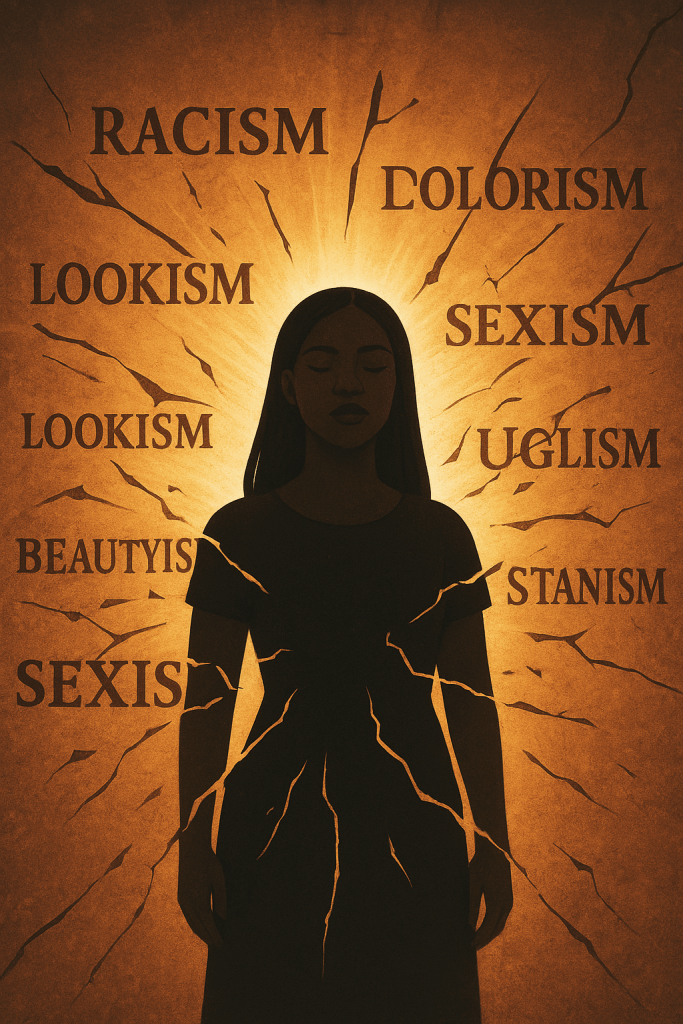
In the grand theater of human existence, few scripts are as persistent and poisonous as the “isms.” Racism, colorism, lookism, beautyism, sexism, oldism, shadeism, uglyism, and even satanism—all are manifestations of a fallen world obsessed with hierarchy, appearance, and power. Each “ism” reflects the corrosion of love and the rebellion of pride. Together, they create a network of deception that distorts identity, destroys unity, and desecrates the divine image in which humanity was made. Nowhere are the scars of these “isms” more deeply etched than within the Black experience. For centuries, Black people have stood at the crossroads of all these prejudices, bearing their weight in body, mind, and soul.

Racism remains the root—a centuries-old ideology that devalues melanin while exalting whiteness. It began as a tool of control and exploitation, branding Blackness as inferior to justify enslavement, colonization, and systemic oppression. The result is a world where Black people must constantly prove their worth in spaces that were built to exclude them. Yet God created man “of one blood” (Acts 17:26, KJV), and He did not rank His creation by hue or heritage. Racism, therefore, is not merely a social construct—it is a sin against divine design.

Colorism, birthed from the same soil, has fractured the Black community itself. It is the preference for lighter skin tones and the degradation of darker shades, a poison inherited from colonialism and slavery. Within entertainment, corporate spaces, and even family structures, darker-skinned individuals often face invisibility or bias. The pain of colorism is internal and generational—it teaches people to love themselves in fragments. Blackness, in all its shades, becomes a battlefield instead of a brotherhood.

Shadeism, a close cousin to colorism, digs deeper into the nuances of melanin politics. It is not just about dark or light, but about the subtle gradients that dictate beauty, opportunity, and social treatment. A few shades lighter can mean a world of difference in media representation or romantic desirability. This artificial hierarchy was never God’s plan. The Bible declares that “we are fearfully and wonderfully made” (Psalm 139:14, KJV), yet man continues to divide what God made whole.

Lookism extends these divisions into the realm of physical features. Society’s obsession with symmetrical faces, certain nose shapes, or body proportions reinforces Eurocentric ideals and marginalizes Black aesthetics. African features—broad noses, full lips, coily hair—have been mocked, exoticized, or appropriated, rarely celebrated for their divine authenticity. For Black people, lookism means being measured by standards that were never meant to reflect them.

Beautyism makes this discrimination even more insidious. It teaches that worth is equal to desirability and that physical beauty is a form of social capital. This idolization of beauty enslaves both the admired and the overlooked. The Black woman, in particular, stands at the intersection of racial, aesthetic, and gender bias—praised for her strength but rarely protected, desired for her body but dismissed for her humanity. Proverbs 31:30 (KJV) reminds us that “beauty is vain,” yet the world worships it as god.

Sexism compounds these struggles by defining womanhood through subservience and silence. Within the Black experience, sexism manifests uniquely. Black women are often denied softness, labeled as too strong, too loud, or too masculine. Their pain is minimized, their brilliance overlooked. Meanwhile, Black men face a different battle—emasculated by stereotypes yet pressured to perform dominance to prove their manhood. Both genders suffer when the divine order of respect and balance is replaced with competition and oppression.

Oldism, or ageism, is another hidden form of injustice. It affects the elders of the Black community, whose wisdom and history are often ignored by a youth-obsessed culture. In Western societies, aging is seen as decline rather than dignity. Yet Scripture says, “The hoary head is a crown of glory, if it be found in the way of righteousness” (Proverbs 16:31, KJV). Elders are living libraries, but oldism silences their stories, causing younger generations to repeat cycles of trauma.

Uglyism is perhaps the cruelest of the superficial “isms.” It labels people as unworthy of admiration based on arbitrary ideals of attractiveness. Within Black culture, uglyism often targets those with the darkest complexions or most African features. This cruel bias leads to deep-seated self-hate, psychological wounds, and lifelong insecurities. The truth, however, is that beauty cannot be defined by the eye of man—it must be defined by the heart of God. What the world calls “ugly,” God often calls chosen.

Satanism, though seemingly distinct from the others, undergirds them all. These “isms” are not merely social patterns—they are spiritual strategies. They divide humanity through pride, envy, and hatred, which are tools of the adversary. Satanism glorifies self-worship, vanity, and hierarchy—all principles seen in the other “isms.” The adversary’s goal is to make creation despise itself, to pit shade against shade, gender against gender, and soul against soul. Ephesians 6:12 (KJV) warns us that “we wrestle not against flesh and blood, but against principalities.” The “isms” are not random—they are orchestrated.

For Black people, the impact of these “isms” is multiplied. Racism devalues them, colorism divides them, lookism mocks them, and beautyism excludes them. Sexism silences their women, oldism forgets their elders, uglyism shames their features, and satanism blinds their spiritual identity. The Black experience becomes a battlefield not just for equality, but for wholeness.

Generational trauma has taught many Black individuals to conform in order to survive. Skin bleaching, hair alteration, and assimilation into Western beauty norms are all symptoms of a deeper wound—the internalized belief that to be accepted, one must erase oneself. But God never intended for His people to conform to the image of man. Romans 12:2 (KJV) commands, “Be not conformed to this world: but be ye transformed by the renewing of your mind.”

Each “ism” robs something sacred. Racism steals dignity. Colorism steals unity. Lookism steals authenticity. Beautyism steals peace. Sexism steals purpose. Oldism steals legacy. Uglyism steals confidence. Shadeism steals harmony. And satanism steals souls. Together, they create a system of distraction—a matrix designed to keep people fixated on the external rather than the eternal.

Healing begins with awareness but is completed through righteousness. God calls His people to live beyond the world’s labels. The Kingdom of Heaven does not rank based on skin tone, age, or beauty; it honors righteousness and humility. The true mark of greatness is not appearance, but obedience.

Black people, as descendants of resilience and divine heritage, must reclaim their image through the eyes of the Creator. Melanin is not a curse but a covering. Afrocentric features are not imperfections but imprints of glory. Elders are not outdated but anointed. Every shade, every texture, every curve is a verse in the poetry of creation.

The path to liberation lies in spiritual reprogramming—replacing the lies of the “isms” with the truth of divine identity. When Black people remember who they are and whose they are, the “isms” lose their grip. For the Most High sees not as man sees. He looks on the heart.

In the end, the true enemy is not color, beauty, or gender—it is corruption. The ultimate “ism” is ego, the self elevated above God. But those who walk in love, humility, and righteousness will transcend the world’s systems. As it is written, “If any man be in Christ, he is a new creature” (2 Corinthians 5:17, KJV).

Let the “isms” fall away, and let divine identity rise. For when we see ourselves and others as God sees us—fearfully, wonderfully, and equally made—the chains of vanity, prejudice, and pride are broken forever.


References

  • The Holy Bible, King James Version (KJV) – Genesis 1:27; Psalm 139:14; Acts 17:26; 1 Samuel 16:7; Proverbs 31:30; Proverbs 16:31; Romans 12:2; Galatians 5:22–23; Ephesians 6:12; 2 Corinthians 5:17.
  • hooks, b. (1981). Ain’t I a Woman: Black Women and Feminism. South End Press.
  • Hill Collins, P. (2000). Black Feminist Thought. Routledge.
  • Russell, K., Wilson, M., & Hall, R. (2013). The Color Complex: The Politics of Skin Color Among African Americans. Anchor Books.
  • Wolf, N. (1991). The Beauty Myth: How Images of Beauty Are Used Against Women. HarperCollins.
  • West, C. (1993). Race Matters. Beacon Press.
  • Bailey, C. (2020). Misogynoir Transformed: Black Women’s Digital Resistance. NYU Press.