Category Archives: the brown girl dilemma

Dilemma: The Pros and Cons of Being Black in Society.

The experience of being Black in modern society is multifaceted, complex, and deeply influenced by historical, social, and systemic factors. While there are many sources of pride, cultural richness, and resilience within Black communities, these are often juxtaposed with enduring structural inequalities, societal prejudices, and personal dilemmas that affect daily life. Understanding this duality requires both historical context and contemporary analysis.

Historically, the Black experience has been marked by the transatlantic slave trade, colonization, and systemic oppression. These historical realities have shaped social structures, economic opportunities, and cultural perceptions in ways that continue to affect Black individuals today. Deuteronomy 28:43-44 (KJV) warns that disobedience leads to subjugation, which resonates metaphorically in discussions of generational oppression and societal marginalization.

One prominent challenge is systemic racism, which manifests in employment, housing, healthcare, and education. Despite decades of civil rights advancements, Black individuals frequently encounter barriers that limit social mobility. Studies show that Black applicants are less likely to be called for job interviews compared to White applicants with identical resumes (Bertrand & Mullainathan, 2004). Such disparities illustrate that merit alone does not eliminate discrimination.

Another societal challenge is criminal justice bias. Black communities are disproportionately targeted by law enforcement, resulting in higher arrest and incarceration rates. According to the NAACP, Black Americans are incarcerated at more than five times the rate of White Americans. This over-policing contributes to cycles of poverty, familial disruption, and community distrust, creating profound social dilemmas for Black families.

Education represents both a challenge and a source of opportunity. Historically underfunded schools in Black neighborhoods often provide fewer resources, which perpetuates educational inequities. Yet, Black students who overcome these obstacles demonstrate remarkable resilience and achievement, often excelling academically and culturally despite systemic disadvantages. Proverbs 22:6 (KJV) emphasizes the importance of early training and guidance, highlighting the potential power of nurturing and support.

Cultural pride and identity are undeniable pros of being Black. From music and art to fashion and language, Black culture has enriched global society. The spread of hip-hop, Afrobeat, and literature by Black authors showcases creativity and influence that transcends racial boundaries. This cultural visibility fosters empowerment and serves as a reminder of a rich ancestral heritage.

Community solidarity is another significant advantage. Black communities often demonstrate strong family bonds, church networks, and mutual support systems. Churches, historically central to Black life, provide spiritual guidance, social activism, and a sense of belonging. Psalm 133:1 (KJV) celebrates unity, which resonates with the communal cohesion often observed in Black societies.

Yet, colorism within the Black community itself presents internal dilemmas. Preference for lighter skin tones often mirrors societal biases inherited from colonialism and slavery. This internalized prejudice can affect self-esteem, social perception, and personal relationships, creating tension within communities that otherwise share cultural pride.

Representation in media is a double-edged sword. While more Black faces appear in entertainment, sports, and politics, the industry often emphasizes stereotypical roles, beauty standards, and tokenism. While visibility can inspire, it can also impose limiting expectations. The struggle for authentic portrayal remains ongoing, reflecting broader societal dilemmas.

Economic disparities remain a persistent challenge. The racial wealth gap shows that Black households typically hold a fraction of the assets of White households. This gap affects homeownership, business investment, and generational wealth accumulation. Proverbs 21:20 (KJV) highlights the wisdom of prudent resource management, a principle made more challenging under systemic economic disadvantage.

Health disparities compound these challenges. Black communities face higher rates of chronic illnesses, limited access to quality healthcare, and environmental health hazards. COVID-19, for example, disproportionately affected Black populations due to preexisting health inequities and socioeconomic vulnerabilities. These disparities illustrate the tangible consequences of systemic neglect.

Despite these challenges, Black excellence is increasingly recognized globally. Figures in politics, science, business, and the arts exemplify achievement that counters negative stereotypes. Celebrating such accomplishments fosters pride, aspiration, and resilience, reinforcing the potential for success even amid adversity.

Spiritual resilience is another advantage. Many Black individuals find strength and guidance through faith. Biblical teachings, such as Isaiah 40:31 (KJV), provide hope and endurance: “They that wait upon the Lord shall renew their strength.” Faith often serves as a stabilizing force amid societal challenges, offering both solace and motivation.

Black identity often fosters creativity, adaptability, and problem-solving skills. Navigating systemic obstacles requires ingenuity and resourcefulness, traits that are highly valuable in both personal and professional contexts. These adaptive skills can empower individuals to excel even in restrictive environments.

Interpersonal relationships are shaped by societal perceptions. While some Black individuals experience bias or exclusion, strong mentorship, networking, and cultural affinity can counteract isolation. These relationships foster opportunity, guidance, and resilience, highlighting the importance of social capital in overcoming systemic barriers.

Experiences of discrimination often instill a heightened awareness of social justice issues. Black individuals frequently become advocates for equity, education, and reform, contributing to broader societal change. This activist orientation demonstrates both the burden and the empowerment that can arise from lived experience.

However, microaggressions—subtle, often unintentional slights—permeate daily life. These can erode mental health, self-esteem, and overall well-being. Black individuals often must navigate these invisible challenges while maintaining composure, a psychological burden that underscores the complexity of societal interaction.

Cultural legacy provides a profound source of pride. Knowledge of African ancestry, historical resilience, and contributions to civilization empowers Black individuals to claim identity and dignity. Works by historians such as Cheikh Anta Diop and Molefi Kete Asante illuminate the rich heritage often overlooked by mainstream narratives.

The intersectionality of identity adds layers to the dilemma. Gender, sexuality, socioeconomic status, and nationality intersect with race to shape individual experiences. Black women, for instance, navigate compounded biases in both racial and gendered contexts, highlighting the multifaceted nature of oppression and resilience.

Finally, being Black in society is both a challenge and an opportunity. While systemic inequities, bias, and historical trauma present undeniable obstacles, the cultural richness, resilience, and global influence of Black communities demonstrate profound strength. Navigating this duality requires awareness, advocacy, and faith.

In conclusion, the dilemma of being Black in society reflects a tension between oppression and empowerment, struggle and resilience, exclusion and recognition. Understanding both the pros and cons encourages empathy, informed action, and a celebration of Black identity while confronting persistent inequities. As Psalm 34:18 (KJV) reminds, “The Lord is nigh unto them that are of a broken heart,” offering hope and justice amid societal challenges.

References

  • Bertrand, M., & Mullainathan, S. (2004). Are Emily and Greg more employable than Lakisha and Jamal? A field experiment on labor market discrimination. American Economic Review, 94(4), 991–1013.
  • NAACP. (2020). Criminal justice fact sheet.
  • Diop, C. A. (1974). The African origin of civilization: Myth or reality. Lawrence Hill & Company.
  • Asante, M. K. (1991). The Afrocentric idea. Temple University Press.
  • Holy Bible, King James Version.
Dilemma: Black Hair Discrimination

The Politics of Policing Black Identity

Angela Davis

“I had been looking at pictures of women who were free, and they were wearing their hair the way it grows out of their heads.”
(Davis, A. Y., Women, Race & Class, 1981)

Chimamanda Ngozi Adichie

“Hair is political. Hair is personal. Hair is identity.”
(Adichie, C. N., Americanah, 2013)

Bell Hooks

“Straightening our hair is one of the many ways we try to erase the reality of our Blackness.”
(Hooks, b., Black Looks: Race and Representation, 1992)

Lupita Nyong’o

“What I learned is that when the world tells you you’re not enough, you don’t have to believe it.”
(Nyong’o, L., Sulwe, 2019)

“Black hair is not a trend, a problem, or a phase—it is a living archive of survival, resistance, and ancestral memory.”

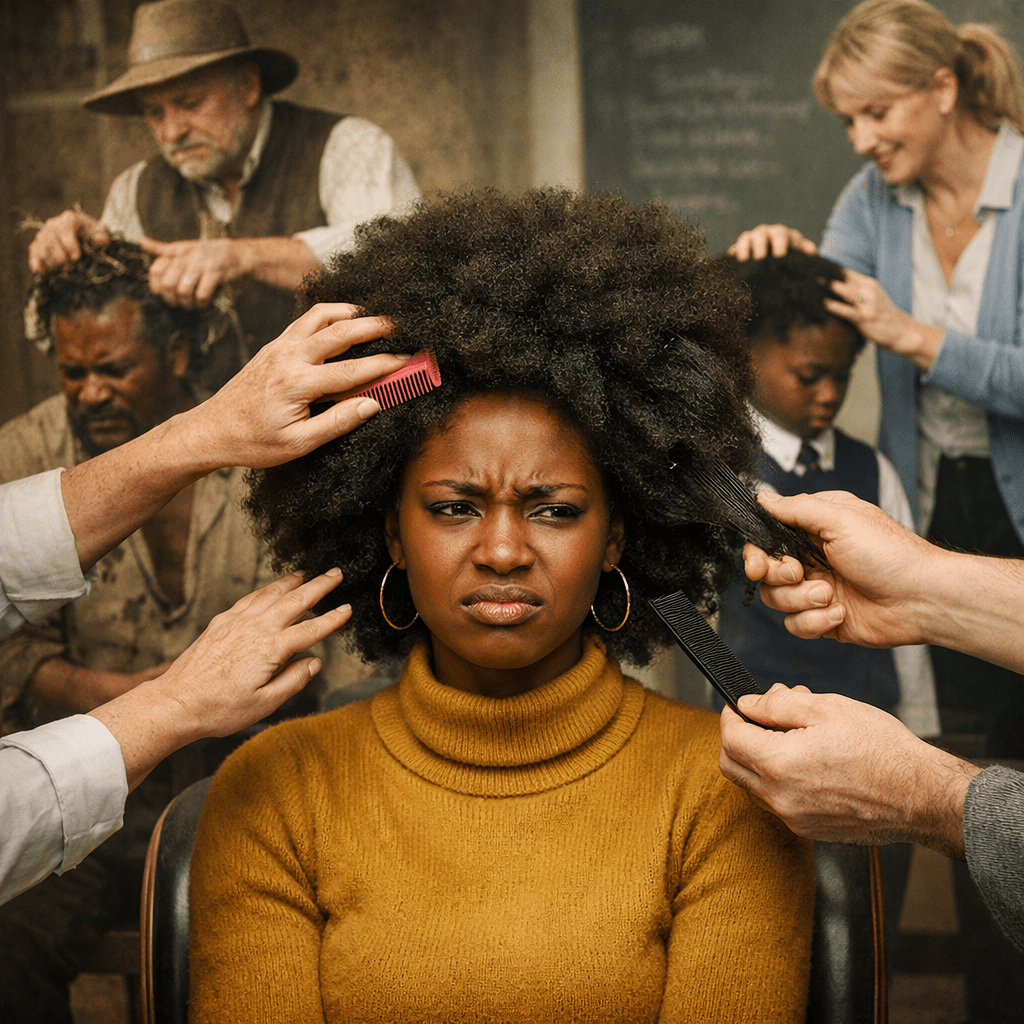
Black hair discrimination remains one of the most visible and normalized forms of racial bias in modern society. From classrooms to corporate offices, Black hair is disproportionately scrutinized, regulated, and punished under the guise of “professionalism,” “neatness,” or “dress code policies.” These standards are not neutral; they are rooted in Eurocentric ideals that define straight, loose, and non-textured hair as the default measure of beauty and respectability. As a result, Black people are often forced to alter their natural hair to gain acceptance, employment, or basic dignity.

In schools, Black children are suspended, sent home, or humiliated for wearing braids, locs, Afros, twists, or even natural curls. These disciplinary practices communicate a dangerous message: that Black identity itself is disruptive and unacceptable. When a child’s natural hair becomes grounds for punishment, the educational system participates in psychological harm that can shape self-esteem and identity formation for life. The classroom becomes not a place of learning, but a site of racial conditioning.

In the workplace, similar patterns persist. Black professionals are routinely told their hair is “unprofessional,” “distracting,” or “unkept,” even when it is clean, styled, and culturally appropriate. This forces many to chemically straighten their hair, wear wigs, or suppress their natural texture in order to be perceived as competent. Such pressures reveal how deeply white norms are embedded in institutional culture, where assimilation is often required for survival.

The hatred toward Black hair did not originate in modern offices or schools—it was cultivated during slavery. Enslaved Africans were stripped of their cultural grooming practices and taught to associate straight hair with proximity to whiteness and social advantage. Field laborers, who often had tightly coiled hair, were deemed inferior, while those with looser textures were privileged within the plantation hierarchy. Hair became a racial marker used to rank human worth.

This legacy did not disappear after emancipation. It evolved into colorism and texture discrimination, where straighter hair is still associated with beauty, intelligence, and professionalism, while kinky or coiled hair is labeled “nappy,” “bad,” or “ugly.” These terms, passed down through generations, reflect internalized racism—a psychological inheritance from white supremacy that continues to shape how Black people see themselves.

One of the most painful aspects of Black hair discrimination is that it is often reinforced within Black families themselves. Many Black parents, conditioned by their own experiences of rejection and survival, teach their children that their natural hair is something to be fixed, relaxed, or hidden. Phrases like “your hair is too nappy” or “you need a perm” are not harmless—they transmit shame and self-rejection at the most formative stages of identity.

This internalization is not accidental; it is a direct result of systemic oppression. When society consistently rewards whiteness and penalizes Blackness, marginalized communities may adopt those standards as coping mechanisms. However, survival strategies should not become permanent ideologies. Black parents must wake up to the reality that teaching children to hate their natural features only perpetuates the same system that devalues them.

White supremacy plays a central role in Black hair discrimination because it establishes whiteness as the universal standard of normality. Under this system, anything outside of European phenotypes is constructed as deviant, exotic, or inferior. Hair texture becomes political, not because Black people made it so, but because racism made Black bodies sites of control.

The concept of “professionalism” itself is racially coded. There is no scientific or moral basis for associating straight hair with competence or intelligence. These associations are cultural myths that developed within colonial and capitalist systems that centered white identity as the model citizen. Black hair challenges these myths simply by existing in its natural state.

Black hair has also been criminalized. From police stops to courtroom bias, Afro-textured hair has been associated with deviance and threat. Studies show that Black people with natural hairstyles are more likely to be perceived as aggressive, untrustworthy, or less intelligent, even when all other factors are controlled. This demonstrates how aesthetic bias becomes a mechanism of social exclusion.

The rise of movements like the Natural Hair Movement and the passing of the CROWN Act represent resistance against these injustices. These efforts aim to legally protect individuals from discrimination based on hair texture and style. However, legal reform alone cannot dismantle deeply ingrained psychological and cultural beliefs. Laws can change policies, but they cannot instantly heal internalized self-hatred.

True liberation requires a cultural shift in how Black beauty is defined and taught. Black hair must be reframed not as a problem to manage, but as a sacred inheritance—genetically rich, biologically diverse, and historically powerful. The same coils once mocked were used to map escape routes during slavery, braid seeds for survival, and encode communal identity.

Education plays a crucial role in this transformation. Schools must incorporate Black history and African aesthetics into curricula, not as side notes, but as central narratives. When children learn that their features have historical meaning and cultural value, they are less likely to internalize racist hierarchies imposed by society.

Media representation is equally important. For decades, Black beauty was only celebrated when it approximated whiteness—light skin, straight hair, narrow features. Today, although representation has expanded, Eurocentric beauty standards still dominate advertising, film, and fashion industries. The normalization of natural Black hair must move beyond trends and become structural.

The policing of Black hair is ultimately about control. It is about who gets to define beauty, respectability, and humanity. When institutions regulate how Black people wear their hair, they are not managing aesthetics—they are managing identity. Hair becomes a battlefield where cultural memory confronts colonial ideology.

Psychologically, hair discrimination contributes to identity fragmentation. Black individuals are often forced to perform different versions of themselves depending on context—natural at home, altered at work, cautious in public. This constant self-monitoring produces emotional fatigue and reinforces the idea that authenticity is unsafe.

Black parents, educators, and leaders have a responsibility to disrupt this cycle. Teaching children that their hair is “good” exactly as it grows is not a trivial affirmation—it is a radical act of resistance. It challenges centuries of propaganda designed to disconnect Black people from their bodies and ancestry.

Healing from hair discrimination requires both structural and spiritual work. Structurally, institutions must dismantle biased policies. Spiritually and psychologically, Black communities must unlearn the lie that proximity to whiteness equals worth. The reclamation of Black hair is inseparable from the reclamation of Black identity.

Black hair is not unprofessional, unclean, or undesirable. It is African. It is genetic. It is historical. It is political because oppression made it so. And until society confronts the racial logic behind its beauty standards, Black hair will continue to be policed—not because it is wrong, but because it refuses to conform to a system built on white supremacy.

Ultimately, the hatred of Black hair reflects a deeper hatred of Black existence. To love Black hair fully is to reject the entire hierarchy that ranks human value by proximity to Europe. In that sense, every Afro worn freely, every loc grown proudly, and every child taught to love their coils is an act of cultural revolution.


References

Banks, I. (2000). Hair matters: Beauty, power, and Black women’s consciousness. New York, NY: New York University Press.

Byrd, A. D., & Tharps, L. L. (2014). Hair story: Untangling the roots of Black hair in America. New York, NY: St. Martin’s Press.

Collins, P. H. (2004). Black sexual politics: African Americans, gender, and the new racism. New York, NY: Routledge.

Crenshaw, K. (1991). Mapping the margins: Intersectionality, identity politics, and violence against women of color. Stanford Law Review, 43(6), 1241–1299.

Johnson, T. R., & Bankhead, T. (2014). Hair it is: Examining the experiences of Black women with natural hair. Open Journal of Social Sciences, 2(1), 86–100.

Rooks, N. (1996). Hair raising: Beauty, culture, and African American women. New Brunswick, NJ: Rutgers University Press.

Rosette, A. S., & Dumas, T. L. (2007). The hair dilemma: Conformity versus authenticity. Journal of Applied Psychology, 92(6), 1601–1616.

Tate, S. A. (2009). Black beauty: Aesthetics, stylization, politics. Farnham, UK: Ashgate.

The CROWN Act. (2019). Creating a Respectful and Open World for Natural Hair. U.S. legislation on hair discrimination.

Girl Talk Series: The Illusion of 50/50 Relationships.

Listen, Ladies: A Man is Called to Provide

Listen, ladies — it is not wrong for a woman to desire a man who provides for her. My late husband always reminded me that provision is a man’s duty and honor, not a burden. When a man loves a woman, he does not see caring for her needs as a chore but as a privilege that reflects his role as leader and protector. The Bible is clear about this responsibility. First Timothy 5:8 warns, “But if any provide not for his own, and especially for those of his own house, he hath denied the faith, and is worse than an infidel.” This is not a light statement — it means that failing to provide for one’s household is a spiritual and moral failure. When a man provides, he demonstrates sacrificial love, mirroring Christ’s care for the church (Ephesians 5:25–28). He creates an environment where a woman feels safe, secure, and valued, allowing her to flourish in her calling. Provision is not just financial — it is emotional, spiritual, and physical care that establishes stability for the entire family. Women should not feel guilty for expecting this. It is not greed; it is alignment with God’s design for marriage. A man’s willingness to provide reveals his maturity, character, and readiness for covenant commitment.

The modern cultural push for “50/50 relationships” promises fairness and equality between partners, yet many women discover that this model can still leave them emotionally, financially, and spiritually depleted. On the surface, splitting bills, chores, and responsibilities seems fair, but when a man avoids leadership and provision, the relationship quickly becomes unbalanced. The woman may end up carrying the weight of both provider and nurturer, which goes against the biblical design for marriage.

God’s Word establishes a clear picture of headship and provision. Ephesians 5:25–28 commands husbands to love their wives “even as Christ also loved the church, and gave himself for it.” Christ did not share the burden of salvation equally with the church—He bore it entirely. Likewise, a husband’s role is one of sacrificial leadership, taking primary responsibility for the welfare of his wife and household. When a man shirks this responsibility, the woman becomes vulnerable to exhaustion and resentment.

The 50/50 model also creates confusion in roles. When financial and emotional labor is divided down the middle, leadership often becomes negotiable, leading to power struggles or passivity. Scripture does not teach mutual passivity but calls men to lead with humility and love. A man who abdicates this role leaves a vacuum that the woman may feel forced to fill, creating a dynamic that undermines trust and respect.

Psychology sheds light on why such arrangements often fail. Research on learned helplessness shows that when one partner refuses to carry their share of responsibility, the other partner may overfunction, doing more and more to keep the relationship afloat. Over time, this can lead to emotional burnout, anxiety, and even depression. The imbalance of power can create a subtle form of exploitation, where one partner benefits at the expense of the other.

Financially, many women have found themselves paying half the bills, contributing to a man’s dreams, and even funding his education—only to have him leave once he is stable. This pattern is so common that it has been discussed in popular media and relationship studies. The emotional toll is devastating because the woman not only loses the relationship but also feels robbed of the investment she made into his life.

One well-known media example is the breakup of singer Mary J. Blige’s marriage to Kendu Isaacs. During the divorce, it became public that Blige had supported Isaacs financially for years, only for him to allegedly misuse funds and engage in infidelity. This public case highlights the painful reality many women face when they invest financially in men who do not share the same loyalty or commitment (Gonzalez, 2017).

Biblically, men are called to be providers. First Timothy 5:8 warns, “But if any provide not for his own, and specially for those of his own house, he hath denied the faith, and is worse than an infidel.” This is a serious charge: a man who refuses to take responsibility for his household is living in disobedience. A 50/50 arrangement may seem modern and progressive, but if it allows a man to neglect his God-given duty, it ultimately harms the spiritual order of the home.

Women can protect themselves from one-sided emotional labor by establishing clear boundaries early in relationships. If a man expects financial partnership, she must ask whether he is also prepared to lead spiritually, emotionally, and sacrificially. Leadership is not domination; it is service. If he only wants to split bills but not bear the weight of provision, he is asking for partnership without accountability.

Self-protection also means paying attention to patterns of behavior. A man who frequently “borrows” money, avoids discussing finances, or becomes defensive when asked about spending habits may be signaling irresponsibility. Proverbs 27:12 says, “A prudent man foreseeth the evil, and hideth himself.” Women must be vigilant and not ignore early warning signs.

Another safeguard is financial independence before marriage. Women should maintain their own savings, credit, and emergency fund until they are in a covenant where mutual provision is clear. This is not distrustful but wise stewardship. If the relationship ends, she will not be left destitute.

From a psychological perspective, women must resist the trap of overfunctioning. Doing more than your fair share may feel noble, but it fosters resentment and reinforces a man’s avoidance of growth. Boundaries are not punishment; they are invitations for the man to step up. If he does not rise to the occasion, that reveals his character.

Spiritually, women must pray for discernment. James 1:5 promises wisdom to those who ask God. Discernment helps a woman recognize whether a man’s intentions are honorable or self-serving. Godly headship is seen in consistent character, not just charm or romantic gestures.

Teaching men biblical manhood is also part of the solution. Men must understand that provision is not optional but part of reflecting Christ’s image. Churches and mentors should call men to accountability, teaching them to view marriage not as a financial arrangement but as a covenant requiring sacrifice.

For women already in 50/50 relationships, communication is key. Honest conversations about expectations, finances, and future plans can bring clarity. If the man is unwilling to discuss or adjust, she must decide whether the relationship is sustainable long-term.

Emotional labor must also be addressed. Many women carry the emotional weight of the relationship—planning dates, managing household tasks, and maintaining communication—while the man coasts. This imbalance can be corrected by delegating responsibilities or refusing to do tasks he is capable of doing.

Ultimately, the illusion of 50/50 relationships is that they are fair. True fairness is not mathematical equality but mutual giving according to each person’s capacity and role. A godly man will give more than 50% because he loves sacrificially. A godly woman will respond with respect and support, creating a dynamic of harmony rather than competition.

Relationships thrive when both partners embrace their biblical roles. The man leads, provides, and protects. The woman nurtures, supports, and helps. When these roles are honored, there is peace. When they are reversed or neglected, there is confusion and pain.

50/50 Relationship vs. Biblical Covenant Relationship

Category50/50 RelationshipBiblical Covenant Relationship (Ephesians 5:25–28)
LeadershipNegotiated or shared — often leaves a power vacuum or power struggle.The man lovingly leads, sacrifices, and takes spiritual responsibility.
ProvisionSplit equally — may leave the woman vulnerable if he withdraws support.The man provides for his household (1 Tim. 5:8) and prioritizes her well-being.
Emotional LaborOften falls disproportionately on the woman (planning, nurturing, problem-solving).Shared — the man takes initiative to care for her emotional needs.
Conflict ResolutionCan become transactional (“I did my half, you do yours”).Built on grace, humility, and sacrificial love, not score-keeping.
Financial SecurityDepends on both parties keeping their share. If one stops, the other is overburdened.The husband bears the main responsibility so the wife feels secure.
Spiritual DirectionUsually absent or inconsistent; spiritual growth is optional.The man leads prayer, worship, and sets a Christ-centered tone for the home.
View of RolesGender roles are blurred or dismissed.Roles are distinct yet complementary — the man leads, the woman supports.
Decision-MakingRequires constant negotiation; can breed resentment.Man leads with humility, consults his wife, and seeks God’s will.
Motivation for GivingConditional — “I will give my half if you give yours.”Unconditional — he loves and gives first, as Christ gave to the church.
Long-Term StabilityCan collapse if one partner stops contributing or loses interest.Endures through trials because it is built on covenant, not contract.

The call to women is not to settle for half-hearted leadership or a man who uses partnership as an excuse to avoid responsibility. Your worth is too great to finance your own exploitation. Trust God to send a man who reflects Christ’s love—a man who gives, leads, and sacrifices.


References

  • Holy Bible, King James Version (KJV).
  • Gonzalez, S. (2017). Mary J. Blige on Divorce: “I’m Gonna Be Just Fine.” Billboard.
  • Beck, J. S. (2021). Cognitive Behavior Therapy: Basics and Beyond. Guilford Press.
  • Cloud, H., & Townsend, J. (2017). Boundaries in Dating. Zondervan.
  • Smith, C. A. (2020). The Psychology of Power Imbalance in Romantic Relationships. Journal of Family Psychology, 34(4), 512–523.

We Are the Story America Cannot Edit

Black history in America has always been more than a chapter—it is the spine of the national narrative. Yet for centuries, this story has been edited, erased, softened, or rewritten to soothe the conscience of a nation deeply shaped by the labor, blood, and brilliance of a people it tried to silence. Still, despite redactions and revisions, the truth endures: we are the story America cannot edit.

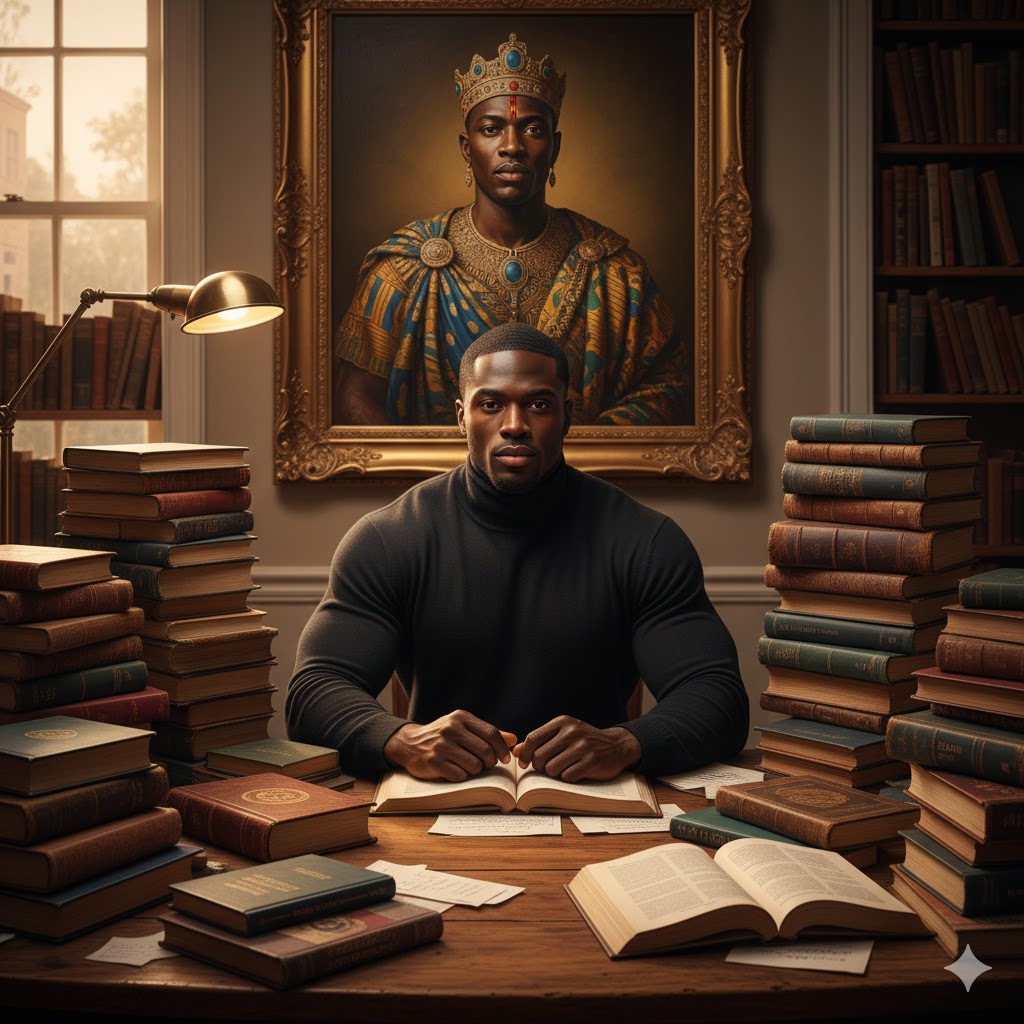
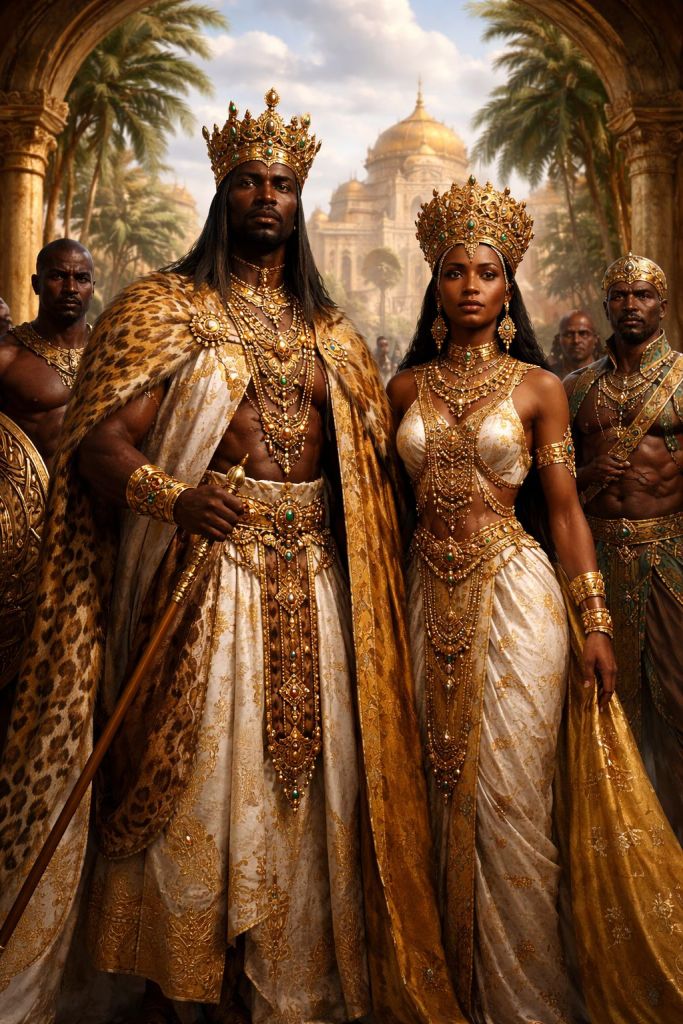
This story begins long before ships touched the Atlantic coast. It begins in African kingdoms where art, astronomy, architecture, and theology flourished. The brilliance of the ancestors did not begin in bondage; it began in royalty, innovation, and legacy. No revisionist textbook can erase the origins of a people whose civilizations helped advance global knowledge.

When the Middle Passage shattered families and scattered bodies across the ocean, America inherited a people it tried to dehumanize but could not destroy. The nation wrote laws to silence Black voices, but those voices survived. They survived in spirituals, in whispered prayers, in maroon communities, in the coded footsteps of escape routes carved in the night. The ink of this story was not blacklisted—it was carved in courage.

America tried to enslave people into subservience, but instead they became prophets, builders, warriors, and liberators. Harriet Tubman turned the Underground Railroad into a living testament of freedom. Frederick Douglass transformed literacy into a revolution. Sojourner Truth took the podium and shook the conscience of a country pretending not to hear her. These names refuse erasure.

The Civil War and Reconstruction wrote a brief chapter of possibility—Black senators, congressmen, teachers, and landowners rose swiftly. But America attempted another revision: Jim Crow. Segregation, lynching, and systemic disenfranchisement were designed to rewrite the Black story into one of subjugation. Yet the people refused the edits. Every protest, every church meeting, every organizing circle was a declaration that the pen of oppression could not overrule the pen of destiny.

The Civil Rights Movement authored a new wave of transformation. Martin Luther King Jr.’s dream, Malcolm X’s fire, Rosa Parks’ quiet firmness, and Fannie Lou Hamer’s thunderous truth-telling exposed the nation’s moral contradictions. Their lives demonstrate that Black people did not just endure history—they shaped it. They re-inked the American narrative with justice.

America has long tried to reduce Black identity to struggle, but Black culture refuses to be footnoted. Jazz, gospel, blues, soul, hip-hop, theatre, literature, and film—all are chapters written in brilliance, not brokenness. These art forms do not ask permission; they testify. They preserve memory. They uplift. They correct the historical record by embodying the power and creativity of a people the nation tried to underestimate.

Black resilience has always been inconvenient for America’s preferred storyline. It challenges myths of meritocracy, exposes the violence of past and present systems, and proves that progress was never given—only won. This is why so many attempts have been made to censor, dilute, or distort Black history. Yet truth has a way of resurfacing, even through the cracks of suppression.

The story America cannot edit also includes everyday heroes—grandmothers who kept families together, fathers who worked two and three jobs, children who dared to learn in schools that did not want them, freedom fighters whose names never made headlines, teachers who planted dreams in young minds, and church mothers who prayed communities through storms. These lives are sacred scripture for a people who built resilience into their DNA.

Even today, as political forces attempt to ban books, restrict curriculum, or sanitize the past, the story resists. Black scholars, artists, pastors, activists, and youth are documenting the truth in new ways—through digital archives, spoken word, classrooms, podcasts, and movements for justice. The story is not just preserved; it is expanding.

We are the story America cannot edit because our existence defies the narrative of inferiority that once dominated the national imagination. Every achievement in science, politics, sports, education, business, and ministry disproves the lies that once served as historical “facts.” Black excellence is not an anomaly—it is a continuation of ancestral greatness.

We are the story America cannot edit because the evidence is everywhere. It is in the economic foundation Black labor built. It is in the culture Black creativity shaped. It is in the democracy Black activism strengthened. It is in the global influence Black innovation commands. America has benefitted too deeply from Black genius to pretend it did not exist.

Our story remains uneditable because it is woven into Scripture as well as history. From Cush to Ethiopia, from the Queen of Sheba to the early church, the Bible itself records the presence, power, and purpose of African-descended people. The sacred text affirms what oppression tried to deny: that Blackness has always been part of God’s design and destiny.

We are the story America cannot edit because the truth is living, breathing, and continually unfolding. It shows up in every generation—Black children with brilliance in their eyes, Black elders carrying the wisdom of survivors, Black communities redefining strength, joy, and possibility.

Ultimately, America cannot edit what God Himself has preserved. The story of Black people is marked by divine protection, ancestral strength, and spiritual authority. It is a story of survival, transformation, and triumph. It is a story that exposes injustice but also reveals hope. It is a story bigger than slavery, bigger than segregation, bigger than racism.

We are the story America cannot edit because the truth is too powerful, too resilient, too sacred to be silenced. And as long as we continue to speak it, write it, live it, and teach it—the story will remain unaltered, unstoppable, and unforgettable.

References:
Exodus 1–3 (KJV); Psalm 68:31; Acts 8:27–39; Franklin, J. H. From Slavery to Freedom; Gates, H. L. The African Americans: Many Rivers to Cross; Hannah-Jones, N. The 1619 Project; Litwack, L. Trouble in Mind; Stevenson, B. Just Mercy; Anderson, C. White Rage; Raboteau, A. Slave Religion.

🌺 Colored Girls: The Beauty and The Brains 🌺

Photo by Fernanda Simu00f5es on Pexels.com

The term “colored girls” historically referred to Black women, often during eras of segregation and inequality. Though originally used as a label of exclusion, it has been reclaimed to celebrate the beauty, intellect, and resilience of women of African descent. The Bible affirms this dignity, saying, “I am black, but comely” (Song of Solomon 1:5, KJV). This declaration turns what society once treated as inferior into a statement of divine pride and purpose.

Black women have always been pillars of strength, intellect, and creativity. They have excelled in education, becoming one of the fastest-growing demographics in higher education enrollment (NCES, 2022). Proverbs 31:26 (KJV) perfectly describes this brilliance: “She openeth her mouth with wisdom; and in her tongue is the law of kindness.” From classrooms to boardrooms, colored girls are showing that their intelligence is as radiant as their physical beauty.

Psychologists argue that Black women’s determination is partly shaped by generations of survival under oppression. These challenges have forged a strong sense of identity and agency (Collins, 2000). Resilience, often called “the superwoman schema,” is both a blessing and a challenge — a source of strength but also a weight that requires rest and balance.

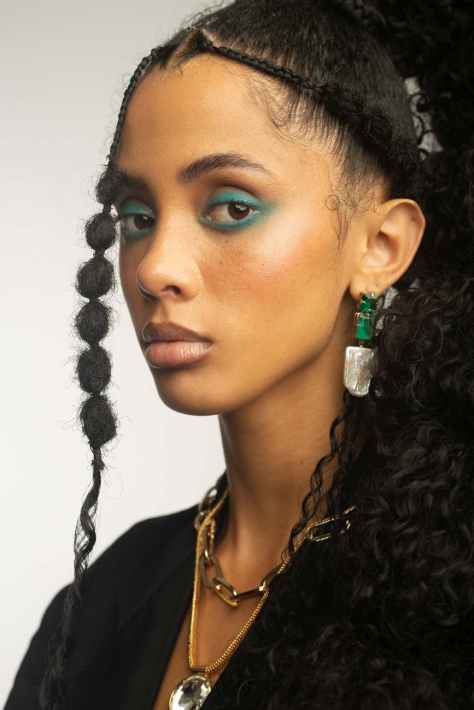
Culturally, the beauty of colored girls is celebrated worldwide. From our glowing melanin to our full lips, textured hair, and diverse body shapes, Black women are natural trendsetters. Global beauty markets have responded with bronzers, lip plumpers, and hairstyles inspired by Black women’s natural features. Psalm 139:14 (KJV) reminds us: “I will praise thee; for I am fearfully and wonderfully made.”

Psychology and science confirm why Black beauty is so striking. Facial symmetry, often associated with genetic health, is highly represented in African phenotypes (Little et al., 2011). Fuller lips, higher cheekbones, and wider-set eyes are viewed as youthful and attractive across cultures. Melanin provides natural photoprotection, slowing skin aging and giving Black women a radiant glow well into later life (Taylor, 2020). These biological features make colored girls admired around the globe.

This admiration has sometimes led to cultural appropriation, where others mimic the aesthetics of colored girls without acknowledging the history or struggles that come with them (Russell et al., 2013). Despite this, Black women continue to lead the way in music, fashion, art, and pop culture, influencing trends and shaping global beauty standards.

Examples abound of Black women who have shattered stereotypes. Michelle Obama, the first African American First Lady, is a symbol of grace, intelligence, and poise. Her advocacy for education, health, and empowerment of girls worldwide embodies the “brains” of colored girls. Her book Becoming became a bestseller, inspiring millions with her journey.

Maya Angelou is another powerful example. As a poet, writer, and activist, her work gave voice to generations of Black women. Her words “Still I rise” resonate with the resilience of colored girls everywhere. Her life demonstrates that beauty is not just physical but intellectual and spiritual.

In the realm of sports, Serena Williams exemplifies strength, discipline, and excellence. She not only dominated tennis but also challenged narrow definitions of femininity and beauty in athletics. Her journey shows that colored girls are multifaceted — strong competitors and nurturing mothers, unapologetically themselves.

Entertainment also celebrates the beauty and brains of colored girls. Viola Davis, an award-winning actress, uses her platform to tell authentic Black stories and advocate for diversity in Hollywood. Lupita Nyong’o, with her dark skin celebrated on magazine covers, shifted global beauty narratives and encouraged young Black girls to embrace their natural beauty.

Spiritual leadership is another area where Black women shine. Throughout history, they have been prayer warriors, deaconesses, and gospel singers who carried the church through trials. Their faith is not just for survival but for thriving. 1 Peter 3:3–4 (KJV) reminds us that true beauty is “the hidden man of the heart… even the ornament of a meek and quiet spirit.”

Psychologically, their strength has sometimes been romanticized as if they must always be strong. This expectation can lead to stress and emotional exhaustion. Mental health professionals now emphasize that Black women need safe spaces to rest and heal, reclaiming the right to be soft and cared for. Jesus’ words “Come unto me, all ye that labour and are heavy laden, and I will give you rest” (Matthew 11:28, KJV) remind them that strength also means knowing when to lay burdens down.

Globally, colored girls are admired not only for their beauty but also for their intellect and leadership. Nobel Prize winner Toni Morrison transformed literature by centering Black voices. Chimamanda Ngozi Adichie challenges global audiences to rethink feminism and identity through her books and speeches. These women embody beauty with depth and intellect that changes culture.

Even in STEM, women like Dr. Mae Jemison, the first Black woman in space, prove that colored girls literally reach for the stars. Their contributions remind the world that brains and beauty are not mutually exclusive — they coexist powerfully.

In everyday life, colored girls continue to set trends, educate communities, raise leaders, and stand on the frontlines of justice movements. They are the heartbeat of neighborhoods and the backbone of families, carrying forward legacies of survival and triumph.

In conclusion, “colored girls” are indeed the beauty and the brains — fearfully and wonderfully made, leaders in intellect, trailblazers in culture, and examples of strength and faith. The world may try to imitate their features, but it can never duplicate the soul, resilience, and brilliance that define them.


References

  • Collins, P. H. (2000). Black feminist thought: Knowledge, consciousness, and the politics of empowerment. Routledge.
  • Little, A. C., Jones, B. C., & DeBruine, L. M. (2011). Facial attractiveness: Evolutionary based research. Philosophical Transactions of the Royal Society B: Biological Sciences, 366(1571), 1638–1659.
  • National Center for Education Statistics (NCES). (2022). Status and trends in the education of racial and ethnic groups. U.S. Department of Education.
  • Russell, K., Wilson, M., & Hall, R. (2013). The color complex: The politics of skin color among African Americans. Anchor Books.
  • Taylor, S. (2020). Advances in understanding of skin of color. Journal of the American Academy of Dermatology, 82(1), 157–166.
  • The Holy Bible, King James Version.

From Chains to Challenges: The Black Journey from Slavery to Modern Struggle.

The story of Black people in the Americas is a long arc of suffering, survival, and strength. Slavery was one of the most devastating atrocities in human history, yet it became the soil out of which resilience, culture, and faith blossomed. To understand where we stand today, we must revisit the beginning—how slavery started, how it ended, and what challenges remain in the present day. This narrative is not merely about the past; it is about the enduring struggle for freedom, dignity, and equality.

Black History Timeline: From Slavery to Modern Struggle

  • 1619 – First enslaved Africans arrive in Virginia, marking the beginning of chattel slavery in the English colonies.
  • 1863 – President Abraham Lincoln issues the Emancipation Proclamation, declaring enslaved people in Confederate states free.
  • 1865 – The 13th Amendment is ratified, officially abolishing slavery in the United States.
  • 1868 – The 14th Amendment grants citizenship and equal protection under the law to formerly enslaved people.
  • 1870 – The 15th Amendment grants Black men the right to vote.
  • 1896Plessy v. Ferguson Supreme Court decision establishes “separate but equal,” legalizing racial segregation.
  • 1954Brown v. Board of Education Supreme Court decision declares school segregation unconstitutional.
  • 1964 – The Civil Rights Act is passed, outlawing discrimination based on race, color, religion, sex, or national origin.
  • 1965 – The Voting Rights Act is signed into law, protecting Black Americans’ right to vote.
  • 2008 – Barack Obama is elected the first Black President of the United States.
  • 2013 – The Black Lives Matter movement is founded in response to police violence and systemic racism.
  • 2020 – Global protests erupt after the murder of George Floyd, sparking renewed calls for racial justice worldwide.

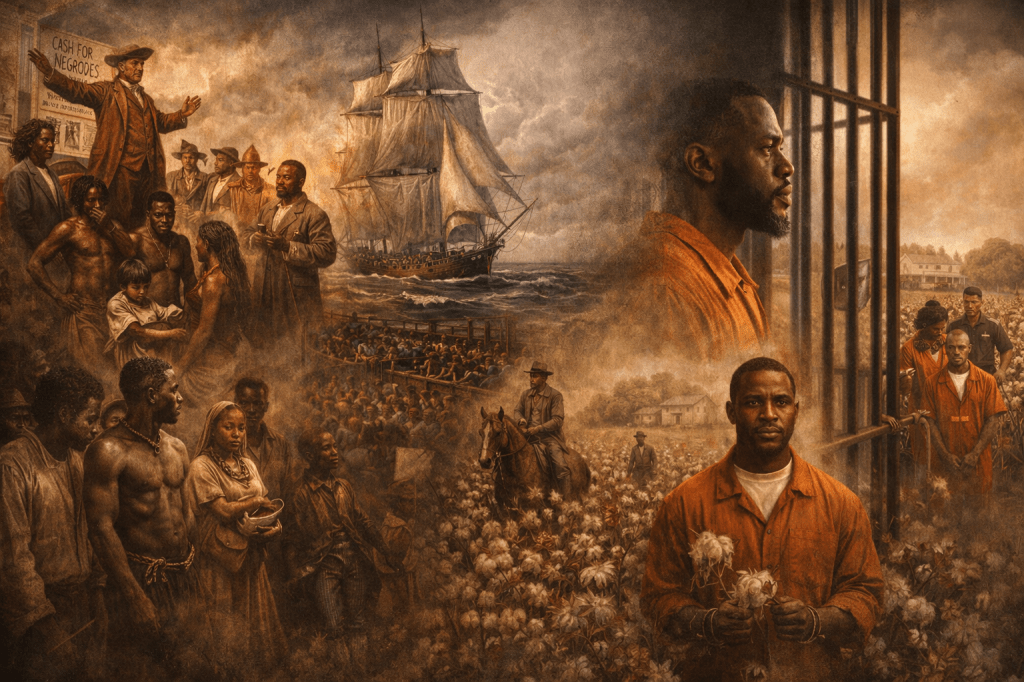
The transatlantic slave trade began in the 15th century when European powers discovered the economic potential of African labor for their colonies in the Americas. Enslaved Africans were kidnapped, sold, and shipped under brutal conditions across the Atlantic in what became known as the Middle Passage. Millions perished along the way, their bodies thrown overboard. Those who survived were forced into chattel slavery, treated as property with no rights, and subjected to physical abuse, family separation, and cultural erasure (Smallwood, 2007).

Slavery in the United States was particularly harsh because it was racialized and hereditary. The legal system ensured that children born to enslaved mothers were automatically slaves, cementing generational bondage (Baptist, 2014). Plantations thrived on cotton, sugar, and tobacco, and the wealth of the American South—and much of the North—depended on unpaid African labor. This institution became so entrenched that it divided the nation politically, socially, and economically.

Resistance was always present. Enslaved people rebelled in overt and covert ways, from uprisings like Nat Turner’s rebellion to everyday acts of defiance such as breaking tools, escaping via the Underground Railroad, or maintaining African traditions in music and religion. These acts of resistance preserved Black humanity and spirit even in the face of dehumanization (Berlin, 2003).

The formal end of slavery in the United States came with the Civil War (1861–1865). President Abraham Lincoln’s Emancipation Proclamation in 1863 declared freedom for enslaved people in Confederate states, though true liberation came only with the Union victory and the ratification of the 13th Amendment in 1865. Yet freedom was only partial—many enslavers resisted, and newly freed people faced systemic violence and oppression (Foner, 2014).

Reconstruction (1865–1877) was a critical but short-lived moment of hope. Freedmen’s schools were established, Black men gained the right to vote, and several Black politicians were elected to office. However, white supremacist backlash soon reversed these gains through Black Codes, sharecropping systems, and domestic terrorism by groups such as the Ku Klux Klan. Reconstruction’s collapse ushered in the era of Jim Crow segregation (Litwack, 1998).

Jim Crow laws legally enforced racial segregation, keeping Black Americans in a second-class status for nearly a century. Public spaces, schools, and neighborhoods were divided, with Black people denied equal access to education, housing, and voting rights. Lynchings became a tool of terror, and entire communities were burned to the ground, as in Tulsa’s 1921 massacre (Gates, 2019). Despite this, Black Americans built their own thriving institutions, from HBCUs to churches that became pillars of community life.

The Civil Rights Movement of the 1950s and 1960s was a turning point. Leaders like Martin Luther King Jr., Rosa Parks, and Malcolm X challenged racial injustice through marches, boycotts, and powerful speeches. Landmark victories included the Brown v. Board of Education decision (1954), the Civil Rights Act (1964), and the Voting Rights Act (1965). These legal changes dismantled de jure segregation, though de facto inequalities persisted (Branch, 1988).

Key Figures Who Made a Difference

  • Abraham Lincoln – Issued the Emancipation Proclamation and pushed for the 13th Amendment to abolish slavery.
  • Frederick Douglass – Escaped slave, abolitionist, writer, and orator who advocated for freedom and equality.
  • Harriet Tubman – Led hundreds to freedom through the Underground Railroad, symbolizing courage and liberation.
  • Sojourner Truth – Abolitionist and women’s rights advocate, known for her “Ain’t I a Woman?” speech.
  • W.E.B. Du Bois – Scholar and co-founder of the NAACP, championed civil rights and Pan-African unity.
  • Marcus Garvey – Advocated Black pride, economic independence, and Pan-Africanism.
  • Martin Luther King Jr. – Leader of the Civil Rights Movement, preached nonviolent resistance and racial equality.
  • Malcolm X – Spokesman for Black empowerment and self-defense, encouraged pride in African heritage.
  • Rosa Parks – Sparked the Montgomery Bus Boycott by refusing to give up her seat, inspiring nationwide action.
  • Thurgood Marshall – First Black Supreme Court Justice, fought segregation through legal challenges.
  • Ida B. Wells – Journalist and anti-lynching crusader, raised awareness of racial terror.
  • Barack Obama – First Black President of the United States, symbolizing progress and representation.

After the Civil Rights era, there were significant advances: greater representation in politics, the election of mayors, governors, and, eventually, President Barack Obama. Economic opportunities slowly expanded, but wealth disparities, mass incarceration, and systemic racism remained. The War on Drugs disproportionately targeted Black communities, leading to generations of Black men being imprisoned and families being destabilized (Alexander, 2010).

In today’s world, slavery no longer wears chains but manifests economically and psychologically. Financial bondage can be seen in predatory lending, wage disparities, and a lack of generational wealth. Black households, on average, hold a fraction of the wealth of white households due to historical exclusion from homeownership programs like the GI Bill and redlining practices (Oliver & Shapiro, 2006).

One of the clearest examples of modern-day economic slavery is student debt. Black students are more likely to take on loans for college and graduate with higher debt burdens than their white counterparts, limiting their ability to buy homes, invest, and build wealth (Scott-Clayton & Li, 2016). Education, once seen as a tool of liberation, can trap graduates in decades of repayment, mirroring the cycle of sharecropping debt from the Reconstruction era.

Prison labor is another form of present-day slavery. The 13th Amendment abolished slavery “except as punishment for crime,” allowing prisons to exploit incarcerated individuals for little to no pay. Many major corporations profit from prison labor, making mass incarceration an economic engine that disproportionately affects Black men (Davis, 2003). This system echoes the convict leasing programs of the late 19th century, where newly freed Black men were arrested for minor infractions and leased out to plantations and factories.

Corporate exploitation also plays a role in the new slavery. Many Black communities are targeted by payday lenders, fast-food chains, and predatory retailers who profit from economic desperation. Food deserts—neighborhoods with little access to fresh produce—force residents to rely on unhealthy options, contributing to poor health outcomes and reinforcing a cycle of dependency (Walker et al., 2010).

Employment discrimination continues to be a barrier. Studies have shown that resumes with “Black-sounding” names receive fewer callbacks than those with “white-sounding” names despite identical qualifications (Bertrand & Mullainathan, 2004). This systemic bias reinforces cycles of poverty and limits access to economic mobility.

Education remains a battleground. Predominantly Black schools often receive less funding, leading to fewer resources, overcrowded classrooms, and lower graduation rates. Yet, despite these challenges, Black students continue to excel, breaking barriers in academia, science, and entrepreneurship (Ladson-Billings, 2006).

Cultural slavery persists in the form of media stereotypes that shape perceptions of Black identity. From harmful tropes of the “thug” or “angry Black woman” to colorism within the Black community, these narratives influence hiring decisions, policing, and self-esteem. Representation in media, however, is slowly shifting, with more nuanced and empowering portrayals emerging.

Financial literacy has become a tool of modern liberation. Black entrepreneurs, activists, and educators are teaching about credit, investments, and ownership. Movements like #BuyBlack encourage the circulation of dollars within Black communities to build sustainable economic power (Anderson, 2017).

Social justice movements have reignited the fight against systemic oppression. These movements use technology and social media to expose police brutality, advocate for criminal justice reform, and mobilize global solidarity. The digital age has given new tools to an old struggle for freedom.

Spiritually, many in the Black community turn to faith as a source of endurance. Churches remain hubs for organizing, political activism, and community care. The Black church has historically been a place where the enslaved could sing freedom songs, where civil rights leaders could strategize, and where today’s generation continues to find hope.

Globally, the African diaspora faces similar challenges. In places like Brazil, the Caribbean, and the UK, Afro-descendant communities grapple with racial inequality, police violence, and underrepresentation. The struggle for Black liberation is international, linking us to a global human rights movement.

Despite the challenges, the Black journey is marked by incredible achievements in arts, science, sports, politics, and beyond. The cultural contributions of African Americans—from jazz to hip-hop, from literature to fashion—have transformed the world and redefined what it means to be resilient.

Today, being “enslaved” can also mean mental enslavement: internalized racism, self-hate, and the pursuit of material validation rather than true freedom. Breaking free requires education, healing, and a reorientation toward self-love and community empowerment.

This journey is not only about survival but about thriving. The legacy of slavery can be transformed into a legacy of greatness when knowledge, faith, and economic empowerment are combined. The fight is not over, but the foundation has been laid by those who came before us.


References
Alexander, M. (2010). The new Jim Crow: Mass incarceration in the age of colorblindness. The New Press.
Anderson, C. (2017). PowerNomics: The national plan to empower Black America. PowerNomics Corporation of America.
Baptist, E. (2014). The half has never been told: Slavery and the making of American capitalism. Basic Books.
Berlin, I. (2003). Generations of captivity: A history of African-American slaves. Harvard University Press.
Bertrand, M., & Mullainathan, S. (2004). Are Emily and Greg more employable than Lakisha and Jamal? American Economic Review, 94(4), 991–1013.
Branch, T. (1988). Parting the waters: America in the King years 1954-63. Simon & Schuster.
Davis, A. (2003). Are prisons obsolete? Seven Stories Press.
Foner, E. (2014). Reconstruction: America’s unfinished revolution, 1863-1877. Harper Perennial.
Gates, H. L. (2019). Stony the road: Reconstruction, white supremacy, and the rise of Jim Crow. Penguin Press.
Ladson-Billings, G. (2006). From the achievement gap to the education debt: Understanding achievement in U.S. schools. Educational Researcher, 35(7), 3–12.
Litwack, L. F. (1998). Trouble in mind: Black southerners in the age of Jim Crow. Vintage.
Oliver, M. L., & Shapiro, T. M. (2006). Black wealth/white wealth: A new perspective on racial inequality. Routledge.
Scott-Clayton, J., & Li, J. (2016). Black-white disparity in student loan debt more than triples after graduation. Brookings Institution.
Smallwood, S. (2007). Saltwater slavery: A middle passage from Africa to American diaspora. Harvard University Press.
Walker, R. E., Keane, C. R., & Burke, J. G. (2010). Disparities and access to healthy food in the United States: A review of food deserts literature. Health & Place, 16(5), 876–884.

The Kingdoms of This World

The phrase “the kingdoms of this world” evokes both a theological and historical imagination, referring not only to political empires but to systems of power, culture, and identity that shape human civilization. In biblical literature, kingdoms are not merely geographic territories; they are moral, spiritual, and ideological orders that reflect humanity’s relationship to God, authority, and justice. Within this framework, Black kingdoms—both biblical and African—occupy a significant but often marginalized place in world history and sacred narrative.

The Bible presents Africa and African-descended peoples as foundational to early civilization. From the genealogies in Genesis to the empires that shaped the ancient Near East, Black kingdoms appear repeatedly as centers of power, wisdom, and divine interaction. Yet Eurocentric interpretations have historically minimized or obscured these realities, reframing biblical history through a Western racial lens.

One of the earliest Black kingdoms mentioned in the Bible is Cush, identified with Nubia and ancient Sudan. In Genesis 10, Cush is named as the son of Ham and the father of Nimrod, described as the first mighty ruler on earth. Cush is associated with military strength, wealth, and early state formation, positioning Africa at the very origin of post-Flood civilization.

Ethiopia, often synonymous with Cush in biblical texts, appears frequently in the Old Testament as a respected and powerful nation. Psalm 68:31 famously declares, “Ethiopia shall soon stretch out her hands unto God,” symbolizing divine recognition and spiritual significance. Ethiopia was not portrayed as peripheral but as a kingdom with diplomatic relations, armies, and religious authority.

Another major Black biblical kingdom is Egypt, arguably the most influential ancient civilization in human history. Egypt dominates the biblical narrative from Genesis through Exodus, serving as both refuge and oppressor. Abraham sojourned in Egypt, Joseph ruled in Egypt, and Moses was educated in the royal court of Egypt. Egypt is depicted as technologically advanced, philosophically complex, and politically dominant.

The Exodus story itself situates Egypt as the archetype of imperial power. Pharaoh represents not merely a political ruler but a symbolic embodiment of worldly authority opposing divine liberation. Yet Egypt’s greatness is never denied; it is portrayed as the supreme empire of its time, ruling through knowledge, architecture, engineering, and spiritual institutions.

Another significant biblical kingdom is Sheba, commonly associated with regions of Ethiopia, Yemen, and the Horn of Africa. The Queen of Sheba’s visit to King Solomon demonstrates Africa’s role as a source of wealth, wisdom, and international diplomacy. She is described as arriving with gold, spices, and intellectual curiosity, challenging and affirming Solomon’s wisdom.

Sheba’s appearance disrupts Western assumptions about ancient power. The Queen is not subordinate but sovereign, not exotic but intellectual, not marginal but central to the global political network of the ancient world. Her kingdom represents Africa as an epistemic authority, a producer of knowledge and culture.

Libya, known in biblical texts as Put, is another African kingdom involved in ancient warfare and alliances. Put appears in the prophetic books as a military power aligned with Egypt, indicating Africa’s geopolitical influence in the ancient Mediterranean world. These kingdoms were not isolated but deeply integrated into global history.

Beyond the Bible, African history reveals vast civilizations that rivaled and surpassed European empires in wealth, organization, and intellectual development. One of the most famous is the Mali Empire, which flourished in West Africa between the 13th and 16th centuries. Mali controlled trans-Saharan trade routes and became one of the richest empires in human history.

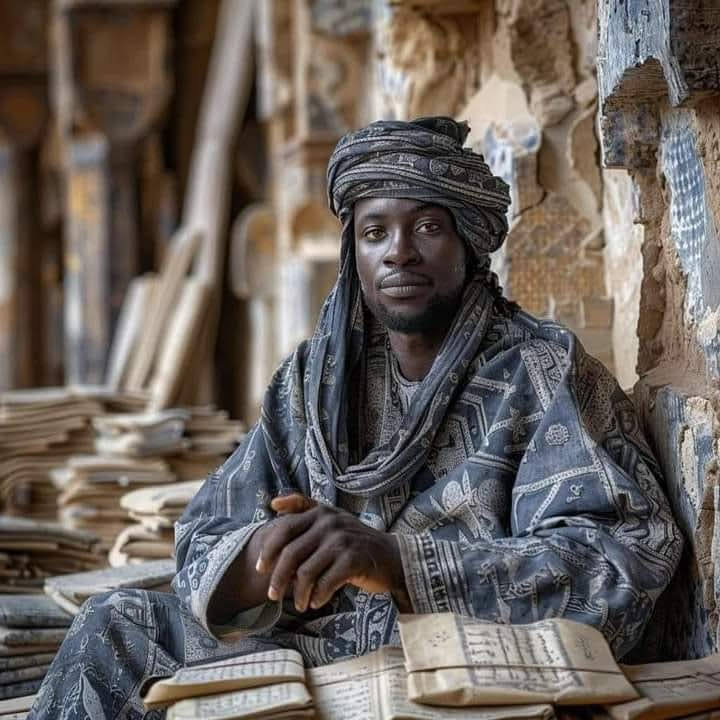
Mansa Musa, the most renowned ruler of Mali, is widely considered the wealthiest individual who ever lived. His pilgrimage to Mecca in 1324 reshaped global economies, distributing so much gold that it caused inflation across North Africa and the Middle East. Mali was not only wealthy but intellectually dominant, with universities in Timbuktu that rivaled medieval European institutions.

The Mali Empire also functioned as a center of Islamic scholarship, law, astronomy, and medicine. Libraries housed thousands of manuscripts, and scholars from across the Islamic world traveled to study there. This directly contradicts colonial narratives that portray Africa as intellectually barren before European contact.

Another major African kingdom was Great Zimbabwe, which flourished between the 11th and 15th centuries in Southern Africa. Its massive stone architecture, complex urban planning, and extensive trade networks demonstrate advanced engineering and political organization. European colonizers initially refused to believe Africans built it, attributing it falsely to Phoenicians or Arabs.

Great Zimbabwe controlled trade routes linking Africa to China, Persia, and India, exporting gold, ivory, and copper. Its very existence undermines the myth that Africa lacked civilization, revealing instead a long tradition of architectural mastery and global economic participation.

These African kingdoms parallel biblical themes of rise and fall. Like Egypt, Cush, and Sheba, Mali and Zimbabwe illustrate how kingdoms operate within divine cycles of power, wealth, justice, and decline. Scripture repeatedly teaches that no empire is permanent and that human authority is ultimately limited.

In the New Testament, Jesus declares, “My kingdom is not of this world,” distinguishing divine sovereignty from worldly empires. Yet Revelation speaks of “the kingdoms of this world” becoming the kingdoms of God, implying that all political systems are subject to spiritual judgment and transformation.

This theological framework invites a reinterpretation of Black history. Black kingdoms were not accidents of geography but expressions of divine order within human civilization. Their suppression through slavery and colonialism represents not natural decline but violent interruption of historical trajectories.

Colonialism functioned as a global reconfiguration of kingdoms, replacing African and Indigenous sovereignty with European imperial systems. These new “kingdoms of this world” restructured knowledge, race, labor, and power, redefining humanity itself through hierarchies of domination.

The erasure of Black kingdoms from mainstream history is therefore epistemological, not accidental. It reflects what scholars call “colonial knowledge production,” where history is written to legitimize conquest. Reclaiming Black kingdoms becomes an act of intellectual and spiritual restoration.

The Bible itself offers a counter-narrative. It consistently situates Africa within sacred history, not as an afterthought but as a foundational space of civilization, prophecy, and divine interaction. Black kingdoms are not footnotes; they are pillars.

Ultimately, “the kingdoms of this world” reveal that power is cyclical, meaning is political, and history is contested. Black kingdoms—biblical and African—demonstrate that Africa has always been central to global civilization, not marginal to it.

To study these kingdoms is not merely to recover lost history but to challenge the philosophical foundations of modernity itself. Black kingdoms remind the world that civilization did not begin in Europe, and that the future of humanity cannot be understood without Africa at its center.


References

Bible. (2011). King James Version. Hendrickson Publishers.

Diop, C. A. (1974). The African origin of civilization: Myth or reality. Lawrence Hill Books.

Fanon, F. (1967). Black skin, white masks. Grove Press.

Gordon, L. R. (2008). An introduction to Africana philosophy. Cambridge University Press.

Ki-Zerbo, J. (1997). General history of Africa, Vol. I: Methodology and African prehistory. UNESCO.

Levtzion, N., & Hopkins, J. F. P. (2000). Corpus of early Arabic sources for West African history. Markus Wiener.

Mudimbe, V. Y. (1988). The invention of Africa: Gnosis, philosophy, and the order of knowledge. Indiana University Press.

Shillington, K. (2018). History of Africa (4th ed.). Palgrave Macmillan.

Toby Green, T. (2019). A fistful of shells: West Africa from the rise of the slave trade to the age of revolution. University of Chicago Press.

Wynter, S. (2003). Unsettling the coloniality of being/power/truth/freedom. The New Centennial Review, 3(3), 257–337.

History in Black: The Slave Trade

The history of the transatlantic slave trade is one of the most defining and devastating chapters in Black history, shaping the modern world through violence, exploitation, and racial hierarchy. It represents not merely a period of forced labor, but the systematic dehumanization of African peoples and the construction of a global economy built on Black suffering. Slavery was not accidental or natural; it was a deliberate system engineered for profit, power, and domination.

The slave trade began in the late 15th century with European expansion into Africa and the Americas. Portuguese and Spanish traders were among the first to establish routes, followed by the British, French, Dutch, and later Americans. Africa became a central source of labor for European colonies in the so-called “New World,” especially in plantations producing sugar, cotton, tobacco, and coffee.

The primary reason behind the slave trade was economic. European empires needed a massive labor force to exploit land stolen from Indigenous peoples. Africans were targeted because they were already skilled agricultural workers, could survive tropical climates, and were geographically accessible through coastal trading ports. Race was later used to morally justify what was, at its core, an economic crime.

African people were captured through warfare, raids, kidnappings, and betrayal by local intermediaries pressured or coerced into participating. Millions were marched to coastal forts, imprisoned in dungeons, and branded as property. Families were torn apart permanently, with no regard for kinship, language, or humanity.

The Middle Passage was one of the most horrific experiences in human history. Enslaved Africans were packed into ships like cargo, chained, starved, raped, beaten, and thrown overboard. Many died from disease, suicide, or suffocation before ever reaching land. Those who survived arrived psychologically traumatized and physically broken.

Upon arrival in the Americas, Black people were sold at auction and legally reduced to chattel. They were stripped of names, cultures, religions, and identities. Enslaved Africans were treated not as human beings, but as livestock—bred, whipped, mutilated, and worked to death.

Slavery was enforced through extreme violence. Enslaved people were beaten, lynched, raped, and tortured for disobedience. Laws known as slave codes made it illegal for Black people to read, write, gather, or defend themselves. Resistance was punished with death.

Yet, despite unimaginable brutality, enslaved Africans resisted constantly. They escaped, revolted, preserved culture, practiced spiritual traditions, and passed down ancestral knowledge. Revolts such as the Haitian Revolution proved that enslaved people never accepted their condition as legitimate.

In the United States, slavery became the foundation of the national economy. Cotton was king, and enslaved labor made America one of the richest nations on earth. Banks, insurance companies, universities, and governments were directly funded by slave profits.

The Civil War (1861–1865) led to the formal abolition of slavery in the U.S. through the 13th Amendment. However, freedom was largely symbolic. Formerly enslaved people were released into poverty with no land, no resources, and no protection.

Immediately after slavery, Black Americans faced Black Codes, sharecropping, and convict leasing—systems that recreated slavery under new names. Prisons replaced plantations. Chain gangs replaced whips. Black labor remained controlled.

The Jim Crow era legalized racial segregation and terror. Lynchings, racial pogroms, and voter suppression were used to maintain white supremacy. Black people were excluded from housing, education, healthcare, and political power.

The Civil Rights Movement of the 1950s and 60s challenged legal segregation. Figures like Martin Luther King Jr., Malcolm X, and Fannie Lou Hamer fought for basic human rights. Laws changed, but systems did not.

Mass incarceration emerged as the new form of social control. The “War on Drugs” targeted Black communities, filling prisons with nonviolent offenders. Black men became statistically more likely to be incarcerated than to attend college.

Police violence replaced slave patrols. The same logic of control persisted: Black bodies were still viewed as dangerous, disposable, and criminal. Surveillance, brutality, and profiling became modern tools of oppression.

Economic inequality remains rooted in slavery. The racial wealth gap, housing discrimination, school segregation, and healthcare disparities all trace back to stolen labor and denied opportunity.

Globally, the legacy of slavery continues through neocolonialism, resource extraction, and economic dependency across Africa and the Caribbean. Western wealth still rests on historical exploitation.

Culturally, Black identity has been shaped by trauma and resilience. Music, religion, language, and art emerged as tools of survival. Black culture became both a source of global influence and commodification.

Psychologically, slavery created intergenerational trauma. Internalized racism, colorism, and identity fragmentation are modern expressions of historical violence. The mind became another site of colonization.

Legally, slavery was never repaired. There were no reparations, no land restitution, no national healing process. Former enslavers were compensated—former slaves were not.

From slavery to Jim Crow, from segregation to mass incarceration, the system changed in form but not in function. Black people remain disproportionately policed, imprisoned, impoverished, and surveilled.

History in Black reveals a painful truth: slavery did not end—it evolved. The chains became invisible, the plantations became prisons, and the auction blocks became algorithms. What changed were the laws. What did not change was the structure of power.


References

Alexander, M. (2012). The New Jim Crow: Mass incarceration in the age of colorblindness. The New Press.

Baptist, E. E. (2014). The half has never been told: Slavery and the making of American capitalism. Basic Books.

Berlin, I. (2003). Generations of captivity: A history of African-American slaves. Harvard University Press.

Du Bois, W. E. B. (1935). Black reconstruction in America. Free Press.

Equiano, O. (1789). The interesting narrative of the life of Olaudah Equiano. Author.

Equal Justice Initiative. (2017). Lynching in America: Confronting the legacy of racial terror. https://eji.org

Gates, H. L. (2014). The African Americans: Many rivers to cross. PBS.

Hochschild, A. (1998). King Leopold’s ghost. Houghton Mifflin.

Kendi, I. X. (2016). Stamped from the beginning: The definitive history of racist ideas in America. Nation Books.

UNESCO. (2010). The transatlantic slave trade database. https://www.slavevoyages.org

U.S. National Archives. (n.d.). 13th Amendment to the U.S. Constitution. https://www.archives.gov

Washington Post. (2020). Fatal Force: Police shootings database. https://www.washingtonpost.com/graphics/investigations/police-shootings-database/

Williams, E. (1944). Capitalism and slavery. University of North Carolina Press.

Living in the Middle Hue

Photo by Dellon Thomas on Pexels.com

To live in the middle hue is to exist in a space that is simultaneously visible and invisible. Brown-skinned women occupy a unique position within the color spectrum of Black beauty, standing between the lighter complexions that society often privileges and the darker complexions that increasingly symbolize resistance and resilience. This positioning creates a distinctive lived experience marked by tension, invisibility, and resilience.

Historically, colorism has shaped the trajectory of Black identity in profound ways. During slavery, skin tone was a marker of social hierarchy, with lighter-skinned individuals often placed in domestic roles and darker-skinned individuals subjected to field labor (Hunter, 2007). Brown-skinned women often stood somewhere in between, navigating ambiguous roles that reflected neither full privilege nor complete marginalization.

The legacy of these hierarchies remains. Contemporary psychology shows that skin tone significantly influences perceptions of attractiveness, intelligence, and competence (Hill, 2002). Brown-skinned women frequently find themselves overlooked, as if their shade renders them “neutral”—not exalted, not despised, but quietly ignored. This invisibility defines much of the “middle hue” experience.

Celebrities like Gabrielle Union, Nia Long, Sanaa Lathan, and Regina King exemplify this dynamic. Each has built a successful career, yet their complexions have not been consistently framed as cultural standards of beauty. Instead, they are remembered for talent, relatability, or resilience—qualities that, while admirable, subtly reflect society’s tendency to place brown-skinned women in the background rather than at the center.

The Bible offers an antidote to these hierarchies. Song of Solomon 1:5 (KJV) declares: “I am black, but comely, O ye daughters of Jerusalem.” The Shulamite’s affirmation reminds us that all shades of melanin, including the middle hues, are divinely beautiful. God’s design resists society’s categories, declaring beauty where humanity places division.

The psychological toll of colorism cannot be ignored. Social identity theory suggests that individuals derive worth from group belonging (Tajfel & Turner, 1986). When brown-skinned women are neither fully included in the praise of light skin nor in the pride of dark skin, they experience a fractured sense of belonging, resulting in anxiety, insecurity, and disconnection.

This fractured identity is especially pronounced in adolescence. Many young brown-skinned girls grow up hearing remarks such as, “You’re not light enough to be pretty” or “You’re not dark enough to be bold.” These microaggressions plant seeds of confusion and create internal struggles with identity. Living in the middle hue becomes a quiet battle for self-worth.

Romantic dynamics further illustrate this struggle. Research demonstrates that skin tone plays a role in partner preference and marriage patterns (Keith & Herring, 1991). Light-skinned women are often idealized as “trophy wives,” while dark-skinned women are increasingly celebrated for embodying cultural pride. Brown-skinned women, however, are frequently relegated to the “safe” or “average” category, reinforcing the pain of invisibility.

Yet, living in the middle hue also fosters resilience. Brown-skinned women often cultivate strength in navigating spaces that fail to affirm them. Celebrities like Regina King demonstrate this resilience, using their influence to expand representation and redefine what beauty, leadership, and artistry look like for women in the middle hue.

In popular culture, the erasure of brown skin persists. Spike Lee’s School Daze highlighted the tension between light and dark, but women of middle hues were largely sidelined, reflecting society’s reluctance to acknowledge their struggle. The middle hue continues to be minimized, even when discussions of colorism are at the forefront.

Anthropology describes this as liminality—existing on thresholds without belonging fully to either category (Turner, 1969). Brown-skinned women embody this liminal state, straddling two poles but never fully claimed by either. Living in the middle hue is, therefore, a cultural limbo marked by complexity and nuance.

Theologically, this liminality contradicts God’s design. Genesis 1:27 (KJV) affirms, “So God created man in his own image.” This declaration dismantles any human-created hierarchies. In God’s view, brown skin is not “middle” or secondary—it is equally part of His image, carrying the fullness of divine artistry.

Healing begins when brown-skinned women embrace this truth. Spiritual grounding reminds them that they are “fearfully and wonderfully made” (Psalm 139:14, KJV). Psychology echoes this, emphasizing that self-affirmation practices empower marginalized groups to resist internalized bias (Steele, 1988). Living in the middle hue can shift from invisibility to empowerment when women affirm their worth daily.

Representation in media is essential for healing. When brown-skinned women are centered as protagonists, love interests, and cultural icons, they redefine the narrative. Icons like Gabrielle Union, who has spoken openly about her experiences, help dismantle the silence surrounding the middle hue.

Intergenerational affirmation also plays a critical role. Brown-skinned mothers and mentors must teach young girls that their skin tone is not a compromise but a crown. Affirmation at home combats the cultural messages that reinforce invisibility, ensuring that the next generation lives confidently in their middle hue.

Community is another vital tool. Sisterhood spaces, where women affirm one another regardless of complexion, dismantle color hierarchies. Ecclesiastes 4:9-10 (KJV) emphasizes the power of support: “For if they fall, the one will lift up his fellow.” Healing requires unity, not competition, across the spectrum of Black womanhood.

The middle hue also represents balance. Brown skin carries the warmth of light tones and the richness of dark ones, embodying a harmony that reflects cultural wholeness. Rather than existing as a compromise, the middle hue symbolizes the blending of beauty across the spectrum.

Ultimately, living in the middle hue is both a challenge and an opportunity. The challenge lies in navigating invisibility, stereotypes, and comparison. The opportunity lies in embracing resilience, balance, and divine affirmation. Brown-skinned women represent a richness that society must learn to celebrate, not sideline.

In the end, living in the middle hue is not about being “in between”—it is about standing in fullness. Brown-skinned women are not halfway to beauty, nor shadows of extremes. They are radiant in their own right, carrying the glory of divine creation. When this truth is embraced, the blues of invisibility give way to the joy of affirmation.


References

  • Hill, M. E. (2002). Skin color and the perception of attractiveness among African Americans: Does gender make a difference? Social Psychology Quarterly, 65(1), 77–91.
  • Hunter, M. (2007). The persistent problem of colorism: Skin tone, status, and inequality. Sociology Compass, 1(1), 237–254.
  • Keith, V. M., & Herring, C. (1991). Skin tone and stratification in the Black community. American Journal of Sociology, 97(3), 760–778.
  • Steele, C. M. (1988). The psychology of self-affirmation: Sustaining the integrity of the self. Advances in Experimental Social Psychology, 21, 261–302.
  • Tajfel, H., & Turner, J. (1986). The social identity theory of intergroup behavior. In S. Worchel & L. W. Austin (Eds.), Psychology of intergroup relations (pp. 7–24). Nelson-Hall.
  • Turner, V. (1969). The ritual process: Structure and anti-structure. Aldine.
  • The Holy Bible, King James Version.
Crowned Before the World Touched Her

She was crowned before the world touched her, before language named her skin, before systems decided her worth. Her existence was intentional, authored by God and formed in divine wisdom, not accident or afterthought. Long before society imposed hierarchies, she bore dignity by design (Psalm 139:14, KJV).

The crown she carried was not fashioned of gold, but of purpose. It rested quietly in her spirit, unseen yet immovable. The world would later try to convince her that crowns are earned through suffering, but Scripture reveals that she was crowned at creation (Genesis 1:27, KJV).

Before the gaze of empire found her, she belonged wholly to God. Her identity was not a reaction to oppression but a reflection of divine image. This truth disrupts narratives that define Black womanhood through pain alone.

The world touched her with names that were never hers. It called her excessive, aggressive, invisible, or unworthy, projecting fear and desire onto her body. Yet none of these labels altered the crown she was given before words were weaponized (Isaiah 62:3, KJV).

Colonial beauty standards attempted to dethrone her by redefining beauty through whiteness. Hair, skin, and features became sites of contestation. But Scripture never outsourced beauty to empire; God declared His work “very good” before colonizers existed (Genesis 1:31, KJV).

She learned early that the world polices what it cannot control. Her body became public property in narrative, law, and image. Still, her crown remained untouched, because it was not placed by human hands.

The Bible is filled with women who were crowned before circumstances hardened them. Hagar was seen in the wilderness before society erased her (Genesis 16:13, KJV). Her encounter affirms that divine recognition precedes social rejection.

Like Esther, she was prepared in secret before being revealed in public. Her season of refinement was not punishment, but positioning. The crown comes before the calling, not after the trial (Esther 2:17, KJV).

The world taught her to armor herself, mistaking hardness for strength. Yet God honors softness guarded by wisdom. Meekness, in Scripture, is not weakness but disciplined power (Matthew 5:5, KJV).

She was told survival was her highest calling. But God called her to dominion, stewardship, and rest. Her worth was never dependent on endurance alone (Genesis 1:28, KJV).

The crown signifies authority over self before authority over circumstance. It is a reminder that she governs her mind, body, and spirit under God’s sovereignty. No system can rule what God has already crowned.

Her crown also represents inheritance. She did not begin in lack but in legacy. What was stolen historically does not erase what was granted eternally (Joel 2:25–26, KJV).

The world touched her through trauma, but trauma did not author her. Scripture makes clear that suffering is an experience, not an identity (Romans 8:18, KJV).

Spiritual warfare often targets crowned heads first. When identity is attacked, it is because destiny is present. The enemy never assaults what has no value (Ephesians 6:12, KJV).

To be crowned before the world touched her means she does not need validation from structures that were designed to exploit her. Her worth is pre-social and pre-political.

Her restoration is not about becoming something new, but remembering what she was before distortion. Repentance, healing, and self-love are acts of remembrance.

God crowns not to decorate, but to commission. The crown signals responsibility, vision, and alignment with heaven. She carries not ego, but assignment (Psalm 8:5, KJV).

In reclaiming her crown, she disrupts narratives of deficiency. She stands as evidence that Black womanhood is not an exception to divine favor, but an expression of it.

She is not crowned because she survived. She survived because she was crowned. That order matters.

Crowned before the world touched her, she walks not in apology, but in authority—restored, rooted, and radiant in the knowledge that God finished His work before the world began its lies.


References (KJV)

Genesis 1:27, 28, 31
Genesis 16:13
Esther 2:17
Psalm 8:5
Psalm 139:14
Isaiah 62:3
Matthew 5:5
Joel 2:25–26
Romans 8:18
Ephesians 6:12