Category Archives: prejudice

Dilemma: Redlining

The Architecture of Racial Segregation in American Housing

Redlining refers to a discriminatory practice in which financial institutions, lenders, insurers, and government agencies systematically denied or limited access to loans, mortgages, and other financial services to residents of certain neighborhoods based on race or ethnicity. The practice disproportionately targeted Black communities and other minority populations, reinforcing residential segregation and economic inequality across the United States. Redlining became one of the most enduring structural mechanisms used to maintain racial hierarchy in housing, wealth accumulation, and urban development.

The term “redlining” originated from the literal red lines drawn on government-sponsored maps to designate neighborhoods considered risky for mortgage lending. These maps were produced by the Home Owners’ Loan Corporation during the 1930s as part of federal housing initiatives implemented during the Great Depression. Neighborhoods with large Black populations were almost automatically labeled hazardous for investment, regardless of the income or stability of the residents who lived there.

Redlining emerged during the era of sweeping federal housing reform under the Franklin D. Roosevelt administration. In 1933, the U.S. government created the Home Owners’ Loan Corporation to refinance mortgages and prevent mass foreclosures. However, the agency developed color-coded maps to guide lending decisions. Areas marked in green were considered the best investments, while areas marked in red—often where Black Americans lived—were deemed undesirable.

These classifications were further reinforced by policies associated with the Federal Housing Administration (FHA), which was established in 1934. The FHA promoted homeownership through federally insured mortgages but refused to insure loans in neighborhoods with Black residents. This meant that white families could more easily obtain mortgages and build wealth through homeownership, while Black families were largely excluded from these opportunities.

Redlining was not merely an economic practice but a social system that institutionalized racial segregation. Mortgage lenders, real estate brokers, and city planners used these maps to guide investment decisions. Even middle-class Black neighborhoods with stable property values were marked as hazardous. As a result, banks refused to provide loans to Black homeowners seeking to buy, repair, or refinance their properties.

White homeowners and real estate developers frequently benefited from redlining policies. Suburban developments constructed after World War II often included racially restrictive covenants that explicitly prohibited the sale of homes to Black buyers. Developments such as Levittown became symbols of postwar suburban prosperity for white families while simultaneously excluding Black Americans from homeownership opportunities.

Because Black families were prevented from accessing traditional mortgage financing, many were forced into exploitative housing arrangements such as contract buying. Under these arrangements, buyers paid inflated prices for homes but did not gain ownership until the entire payment was completed. Missing even a single payment could result in eviction and loss of all previously paid funds, leaving many Black families financially devastated.

Redlining also restricted Black access to suburban neighborhoods, forcing many African Americans to remain concentrated in urban centers. Cities like Chicago, Detroit, and Baltimore became emblematic of racially segregated housing patterns produced by redlining policies. These patterns shaped the demographic landscape of American cities for generations.

One of the most devastating effects of redlining was its impact on generational wealth. Homeownership is one of the primary mechanisms through which American families accumulate wealth. By denying Black families access to mortgage credit, redlining prevented them from building home equity that could be passed down to future generations.

Redlining also affected neighborhood infrastructure and public services. Communities labeled as hazardous received fewer public investments, including reduced funding for schools, parks, and transportation. Businesses were less likely to open in these areas because banks refused to provide commercial loans, leading to economic stagnation in many Black neighborhoods.

Educational inequality also emerged as a secondary consequence of redlining. Because public school funding in the United States is often tied to local property taxes, neighborhoods with declining property values—often those affected by redlining—experienced underfunded schools. This created a cycle of disadvantage that affected educational attainment among Black children.

Health disparities also correlate with historically redlined neighborhoods. Researchers have found that communities once marked as hazardous often experience higher rates of environmental pollution, limited access to healthcare facilities, and increased prevalence of chronic illnesses such as asthma and hypertension.

Although redlining was formally outlawed with the passage of the Fair Housing Act of 1968, its legacy remains deeply embedded in the American housing system. The law prohibited discrimination in housing based on race, color, religion, or national origin, yet the structural inequalities created by decades of redlining have proven difficult to dismantle.

Modern forms of housing discrimination continue to resemble redlining practices. Some lenders engage in “reverse redlining,” targeting minority communities with predatory loans and subprime mortgages. These financial products often carry higher interest rates and fees, increasing the risk of foreclosure.

Urban scholars have noted that historically redlined neighborhoods still exhibit lower property values compared to areas that were graded favorably in the 1930s. This demonstrates how past policies continue to influence contemporary economic outcomes and spatial inequality.

Redlining also shaped patterns of urban disinvestment that contributed to the decline of many American inner cities during the mid-twentieth century. As white families moved to suburbs with government-backed mortgages, tax bases in urban Black communities declined, limiting municipal resources for infrastructure and public services.

Many historians and sociologists argue that redlining represents one of the clearest examples of structural racism in American policy. Unlike individual acts of prejudice, redlining was embedded within federal institutions, banking systems, and real estate practices, making it a systemic barrier to economic equality.

In recent years, scholars and policymakers have called for reparative housing policies to address the enduring legacy of redlining. Proposals include expanded access to homeownership programs, targeted investments in historically marginalized neighborhoods, and reforms to lending practices to promote equitable access to credit.

Understanding redlining is essential for comprehending the racial wealth gap in the United States. While individual success stories exist, structural barriers created by discriminatory policies significantly shaped economic outcomes for generations of Black Americans.

Ultimately, redlining reveals how government policy, financial institutions, and social attitudes combined to produce lasting racial inequality. Its legacy continues to influence patterns of housing segregation, economic mobility, and urban development in modern American society.


References

Aaronson, D., Hartley, D., & Mazumder, B. (2017). The effects of the 1930s HOLC “redlining” maps. Federal Reserve Bank of Chicago.

Jackson, K. T. (1985). Crabgrass frontier: The suburbanization of the United States. Oxford University Press.

Massey, D. S., & Denton, N. A. (1993). American apartheid: Segregation and the making of the underclass. Harvard University Press.

Rothstein, R. (2017). The color of law: A forgotten history of how our government segregated America. Liveright Publishing.

Satter, B. (2009). Family properties: Race, real estate, and the exploitation of Black urban America. Metropolitan Books.

U.S. Department of Housing and Urban Development. (2023). History of housing discrimination and redlining in America. HUD Archives.

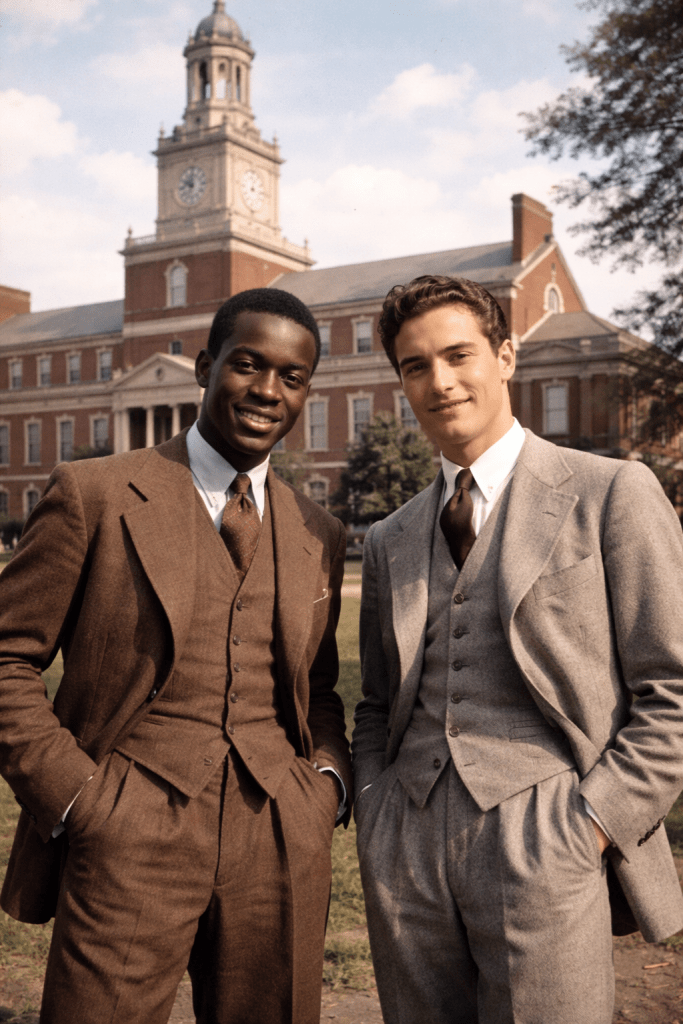
Passing Series: The Secret History of Howard University.

Founded in 1867 in Washington, D.C., Howard University emerged in the immediate aftermath of the American Civil War as one of the most important institutions dedicated to educating formerly enslaved African Americans. Established with the support of the Freedmen’s Bureau and named after Union General Oliver Otis Howard, the university was created to provide intellectual opportunity for newly emancipated Black citizens who had long been denied access to formal education under slavery.

The early mission of Howard University was expansive and ambitious. It was not simply a school but a symbol of racial uplift and reconstruction. The institution admitted students regardless of race or gender—an unusually progressive policy for the nineteenth century. In its earliest years, Howard enrolled formerly enslaved individuals, free Black people, and a small number of white students who believed in the cause of Reconstruction and education for all.

Within this diverse student body, a visible presence emerged that reflected one of the most complicated legacies of American slavery: mixed-race students. Many students at Howard in the late nineteenth century were individuals historically described by society as “mulatto,” meaning people of mixed African and European ancestry. Their existence was tied directly to the violent social realities of slavery, during which enslaved Black women were frequently subjected to sexual exploitation by slaveholders and other white men.

The legacy of these unions produced generations of mixed-race individuals whose appearance sometimes reflected European ancestry in ways that complicated America’s rigid racial categories. At Howard University, this reality was visible among students whose skin tones, hair textures, and facial features ranged across the full spectrum of the African diaspora. Some students appeared unmistakably African, while others possessed features that could allow them to move within white society unnoticed.

During the late nineteenth and early twentieth centuries, racial classification in the United States was governed by the ideology that later became known as the “one-drop rule.” Under this social doctrine, any individual with even a trace of African ancestry was legally considered Black. This legal and cultural definition meant that individuals who looked white could still be classified as Black if their ancestry was known.

The phrase “legally Black” thus emerged as a defining element of American racial identity. It referred to individuals who, under law or social recognition, were categorized as Black regardless of their physical appearance. This concept was reinforced through segregation laws, marriage restrictions, and social customs designed to maintain a rigid racial hierarchy that privileged whiteness.

For some light-skinned African Americans during the late nineteenth and early twentieth centuries, the ability to visually pass as white created a complicated social dilemma. Passing—meaning living as a white person despite Black ancestry—offered access to opportunities otherwise denied under segregation. Employment, housing, safety, and social mobility were often significantly easier to obtain for those perceived as white.

Howard University became a unique intellectual space where these realities were openly discussed among students and faculty. While the institution celebrated Black identity and advancement, it also housed students who could, if they chose, disappear into white society. This tension between racial pride and social survival reflected the broader contradictions of American racial life.

One story frequently discussed in early twentieth-century accounts involves a Howard student reportedly named Johnson, who attended the university during the early 1900s. Johnson’s appearance was so light that he could easily move within white spaces without suspicion. His classmates were aware of this ability, and his presence highlighted the paradox of racial identity during the Jim Crow era.

Johnson’s situation was not unique. Many students at Howard and other historically Black colleges possessed complex family histories shaped by generations of interracial ancestry. Some came from communities where mixed heritage was common, particularly in regions where slavery had produced significant populations of people of blended African and European descent.

In the early twentieth century, the ability to look white carried tangible advantages. Doors in employment, education, and housing frequently opened more readily to individuals whose appearance aligned with white norms. In a segregated society, whiteness functioned as a form of social capital, determining access to resources and protection from discrimination.

However, the decision to pass for white often came with profound psychological and emotional consequences. Individuals who crossed the color line frequently had to sever ties with family members and communities who were legally and socially classified as Black. The act of passing, therefore, required a form of identity erasure to maintain the illusion of whiteness.

Within Howard University, debates about identity, race, and loyalty sometimes surfaced among students. For many, the institution represented a sanctuary where Black intellect, culture, and leadership could flourish. To leave that community and enter white society as an impostor could be viewed as a betrayal of collective struggle.

At the same time, the pressures of racism were immense. The early twentieth century was a period marked by strict segregation laws, racial violence, and limited economic opportunity for African Americans. For some individuals who could visually blend into white society, passing appeared to offer a path toward security and upward mobility.

The broader history of mixed-race people in America cannot be separated from the institution of slavery. Throughout the eighteenth and nineteenth centuries, large populations of people of mixed African and European ancestry emerged across the South and in urban centers. Their existence challenged rigid racial categories while simultaneously reinforcing the hierarchy that privileged whiteness.

Institutions like Howard University became intellectual centers where these histories were examined and debated. Scholars and students explored the complex genealogies that connected African Americans to multiple continents, multiple cultures, and multiple historical experiences.

In this environment, Howard cultivated a new generation of Black thinkers who would later challenge racial inequality across the United States. The university produced influential scholars, lawyers, doctors, and activists who shaped the twentieth-century struggle for civil rights and social justice.

The presence of mixed-race students within Howard also contributed to broader discussions about colorism—the preferential treatment often given to lighter-skinned individuals within both white and Black communities. These conversations forced students to confront how slavery had embedded racial hierarchy not only in law but also in social perception.

Looking white during the Jim Crow era, therefore, carried both privilege and peril. While lighter skin sometimes opened doors, it could also create suspicion, isolation, and internal conflict about belonging. Identity became a negotiation between appearance, ancestry, and community loyalty.

Ultimately, the story of passing and mixed heritage at Howard University reflects the larger contradictions of American racial history. The institution stood as a beacon of Black advancement while simultaneously revealing how fluid and socially constructed racial categories could be.

Today, Howard University remains one of the most prestigious historically Black universities in the United States. Its early history—shaped by Reconstruction, slavery’s legacy, and complex racial identities—offers a powerful lens through which to understand the enduring impact of race, color, and identity in American society.


References

Andrews, W. L. (2019). The Oxford handbook of African American citizenship, 1865–present. Oxford University Press.

Foner, E. (1988). Reconstruction: America’s unfinished revolution, 1863–1877. Harper & Row.

Graham, H. D. (1990). The civil rights era: Origins and development of national policy, 1960–1972. Oxford University Press.

Hobbs, A. (2014). A chosen exile: A history of racial passing in American life. Harvard University Press.

Logan, R. W. (1980). Howard University: The first hundred years, 1867–1967. New York University Press.

Nash, G. B. (1999). Forbidden love: The hidden history of mixed-race America. Henry Holt.

Painter, N. I. (2010). The history of white people. W. W. Norton.

Williams, H. A. (2005). Self-taught: African American education in slavery and freedom. University of North Carolina Press.

The Psychology of Colorism: The Light vs Dark Skin.

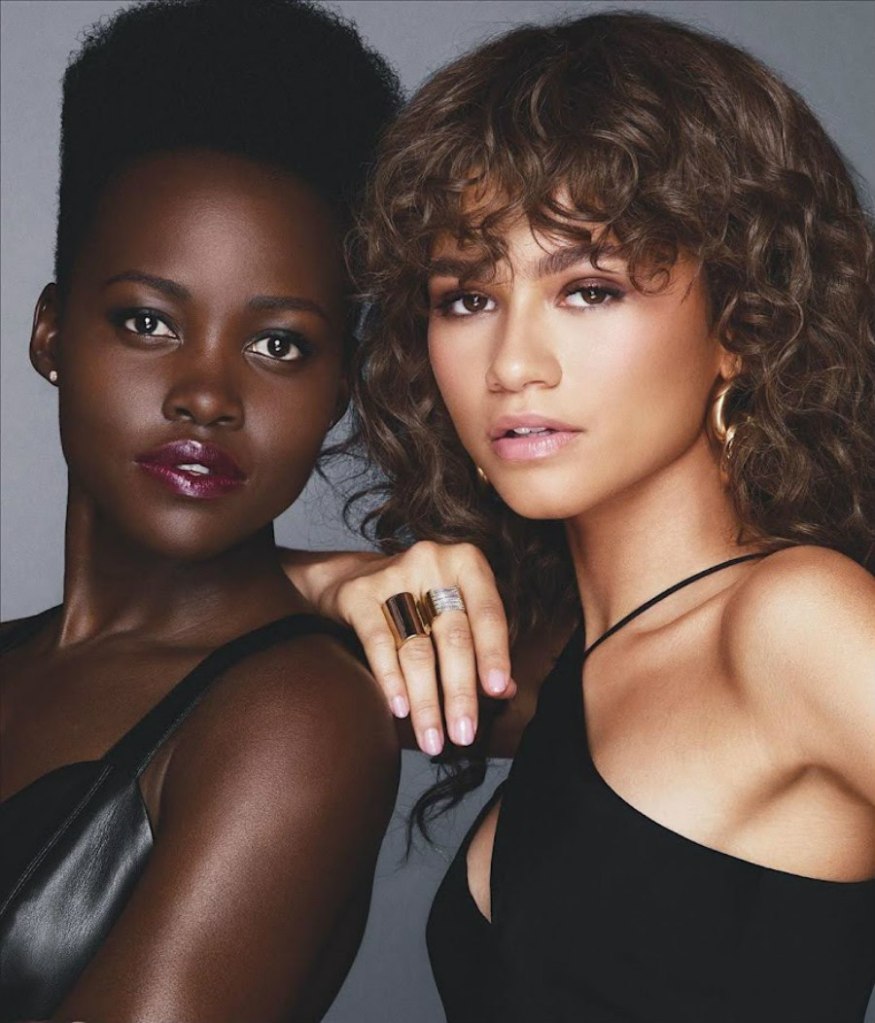
This photograph is the property of its respective owner. No copyright infringement intended.

Colorism is the prejudice or preferential treatment based on skin tone, typically favoring lighter skin over darker skin within the same racial or ethnic group. Unlike racism, which discriminates across different races, colorism operates within a racial or ethnic community, creating hierarchies based on proximity to Eurocentric features. The term was first popularized by Alice Walker in 1983, though the phenomenon has existed for centuries.

Within the Black community, colorism has deep historical roots. It emerged during slavery, when lighter-skinned enslaved individuals—often the children of white slave owners—were given preferential treatment, such as working inside the house rather than laboring in the fields. These house slaves often had access to better food, clothing, and education, whereas field slaves endured harsher conditions (Hunter, 2007). The social stratification created lasting intergenerational psychological effects.

Psychologically, colorism affects self-esteem, identity, and social mobility. Studies show that darker-skinned Black individuals often experience lower self-worth, fewer professional opportunities, and heightened internalized racism compared to lighter-skinned peers (Hunter, 2007; Keith & Herring, 1991). The preference for lighter skin is associated with societal ideals of beauty and success that are tied to European features.

The influence of colorism extends beyond the Black community. In India, the caste system and historical colonization reinforced the belief that lighter skin denotes higher social status, leading to widespread use of skin-lightening products (Tajfel & Turner, 1979). Among Hispanic and Latinx populations, mestizo identity and European ancestry are often valorized over Indigenous or Afro-descendant heritage. Similarly, in East and Southeast Asia, lighter skin has been historically associated with wealth, nobility, and refinement, while darker skin has been linked to laboring in the sun.

Colorism also intersects with gender, disproportionately affecting women. In the Black community, lighter-skinned women have historically been deemed more attractive, more marriageable, and more socially desirable, both by men within and outside the community (Hunter, 2007). This preference can exacerbate divisions and reinforce patriarchal hierarchies, leaving darker-skinned women marginalized and undervalued.

The psychological effects are compounded by media and cultural representation. Hollywood and Western media often present lighter-skinned Black women in leading roles while marginalizing dark-skinned women to background or stereotypical roles. This reinforces internalized colorism, creating a cycle of self-devaluation and desire for features associated with whiteness (Russell-Cole et al., 2013).

Biblically, the issue of valuing outward appearance over inward worth is cautioned against. 1 Samuel 16:7 (KJV) states, “For the LORD seeth not as man seeth; for man looketh on the outward appearance, but the LORD looketh on the heart.” Colorism, in this light, reflects human fallibility in valuing skin tone over character, faith, and spiritual depth.

Historical slavery significantly entrenched colorism in the United States. House slaves—usually lighter-skinned—were sometimes granted privileges unavailable to darker-skinned field slaves, leading to internal hierarchies and divisions within the enslaved community. Lighter-skinned children born to slave owners often had ambiguous status, creating both resentment and survival strategies that persist across generations.

During slavery, lighter-skinned Black women were often sexualized by white men, a tragic legacy that has influenced modern perceptions of beauty and desirability. This history contributes to the psychological phenomenon where Black men may consciously or unconsciously favor lighter-skinned women, associating them with beauty, status, or social capital (Hunter, 2007; Keith & Herring, 1991).

Psychology explains this as a combination of social learning, internalized bias, and reinforcement. Preferences for lighter-skinned partners may reflect both historical conditioning and the influence of media and society. Social Identity Theory (Tajfel & Turner, 1979) suggests that individuals derive self-esteem by favoring traits aligned with dominant societal standards, even within their own ethnic group.

Colorism contributes to intragroup discrimination, where darker-skinned individuals face bias not just from society but from within their own communities. This can manifest in reduced dating prospects, employment bias, or social exclusion. Studies indicate that darker-skinned women are often less likely to marry lighter-skinned men, and darker-skinned men may experience similar disadvantages in partner selection (Russell-Cole et al., 2013).

Globally, colorism intersects with class, wealth, and cultural capital. In India, lighter-skinned individuals are more likely to receive better job offers and marriage prospects. Among Latinx and Asian communities, skin tone can influence perceptions of intelligence, civility, and social mobility. These dynamics show that colorism is a global phenomenon, shaped by historical, economic, and cultural forces.

Changing colorism requires both individual and collective action. Education about the historical roots of skin-based hierarchies is essential. Communities can promote media representation that celebrates all skin tones, and religious or cultural teachings can emphasize inner worth over outward appearance. 1 Samuel 16:7 (KJV) reminds communities to value heart and character above skin tone.

In the Black community, self-affirmation and visibility of darker-skinned leaders, celebrities, and role models can counteract internalized bias. Campaigns that celebrate melanin-rich skin, such as #UnfairAndLovely or #DarkIsBeautiful, provide psychological reinforcement of worth and beauty beyond lightness.

Within family structures, parents can raise children to value character, intelligence, and faith rather than skin tone. Proverbs 22:6 (KJV) states, “Train up a child in the way he should go: and when he is old, he will not depart from it.” By instilling these values early, communities can challenge intergenerational colorist beliefs.

Colorism also intersects with religion and spirituality. Black women who embrace their natural skin often find empowerment in biblical teachings that emphasize inner beauty and God-given identity. 1 Peter 3:3–4 (KJV) instructs, “Whose adorning let it not be that outward adorning of plaiting the hair… but the hidden man of the heart, in that which is not corruptible, even the ornament of a meek and quiet spirit, which is in the sight of God of great price.”

Psychologists emphasize that internalized colorism can be mitigated through cognitive restructuring, affirmations, and representation. Therapy, mentorship, and community engagement can help individuals recognize their inherent value, countering messages from media and historical oppression.

For Black men, confronting preferences that favor lighter-skinned women requires self-reflection and awareness of historical conditioning. Biblical teachings on equality and righteousness, coupled with psychological education, can foster appreciation for all women regardless of skin tone. Galatians 3:28 (KJV) reminds us, “There is neither Jew nor Greek, there is neither bond nor free, there is neither male nor female: for ye are all one in Christ Jesus.”

Ultimately, colorism is not simply a matter of preference; it is a systemic, historical, and psychological issue that affects self-esteem, relationships, and social cohesion. Addressing it requires education, representation, cultural affirmation, and spiritual guidance. Communities must recognize the divisive impact of skin-tone hierarchies and actively work to celebrate all shades of beauty and worth.

The Psychology of Colorism

Title: Colorism: Light vs Dark Skin – History, Psychology, and Social Impact

1. Historical Origins (Slavery & Colonization)

  • House Slaves (Lighter Skin): Privileged treatment, access to education, better food, and closer to slave owners.
  • Field Slaves (Darker Skin): Hard labor, harsher conditions, social marginalization.
  • Impact: Created an intra-racial hierarchy based on skin tone.

2. Psychological Effects

  • Internalized Colorism: Lower self-esteem for darker-skinned individuals.
  • Identity & Self-Worth: Lighter skin associated with beauty, success, and desirability.
  • Behavioral Consequences: Preference for lighter-skinned partners, social mobility advantages.

3. Cultural & Global Impact

  • Black Community: Preference for light-skinned women; media representation reinforces bias.
  • India: Fair skin linked to social status; widespread use of skin-lightening products.
  • Hispanic/Latinx Communities: European ancestry valorized over Indigenous/Afro-descendant heritage.
  • East/Southeast Asia: Lighter skin historically linked to nobility and social class.

4. Gender Dynamics

  • Women: Most affected; lighter-skinned women often deemed more attractive and marriageable.
  • Men: Preferences shaped by history, culture, and media influence; some favor lighter-skinned partners.

5. Biblical & Moral Perspective

  • 1 Samuel 16:7 (KJV): God values the heart, not outward appearance.
  • Galatians 3:28 (KJV): Equality in Christ; skin tone irrelevant in spiritual worth.

6. Solutions & Interventions

  • Education: Teach history and psychological impact of colorism.
  • Media Representation: Highlight darker-skinned individuals in positive roles.
  • Community Affirmation: Encourage pride in melanin-rich skin.
  • Spiritual Guidance: Emphasize biblical truths about inner worth and godly character.
  • Parental Guidance: Raise children to value character and faith over skin tone.

The legacy of slavery, colonialism, and Eurocentric beauty standards continues to shape colorist perceptions today. By acknowledging history, valuing inner character, and promoting inclusivity, communities can gradually dismantle the hierarchy of light versus dark skin. Psychology, cultural studies, and biblical principles converge in emphasizing that true value lies not in complexion but in character, faith, and actions.


References

  • Hunter, M. (2007). The Persistent Problem of Colorism: Skin Tone, Status, and Inequality. Sociology Compass, 1(1), 237–254.
  • Keith, V., & Herring, C. (1991). Skin Tone and Stratification in the Black Community. American Journal of Sociology, 97(3), 760–778.
  • Russell-Cole, K., Wilson, M., & Hall, R. (2013). The Color Complex: The Politics of Skin Color in a New Millennium. HarperCollins.
  • Tajfel, H., & Turner, J. (1979). An Integrative Theory of Intergroup Conflict. In W. Austin & S. Worchel (Eds.), The Social Psychology of Intergroup Relations. Brooks/Cole.
  • The Holy Bible, King James Version (KJV).

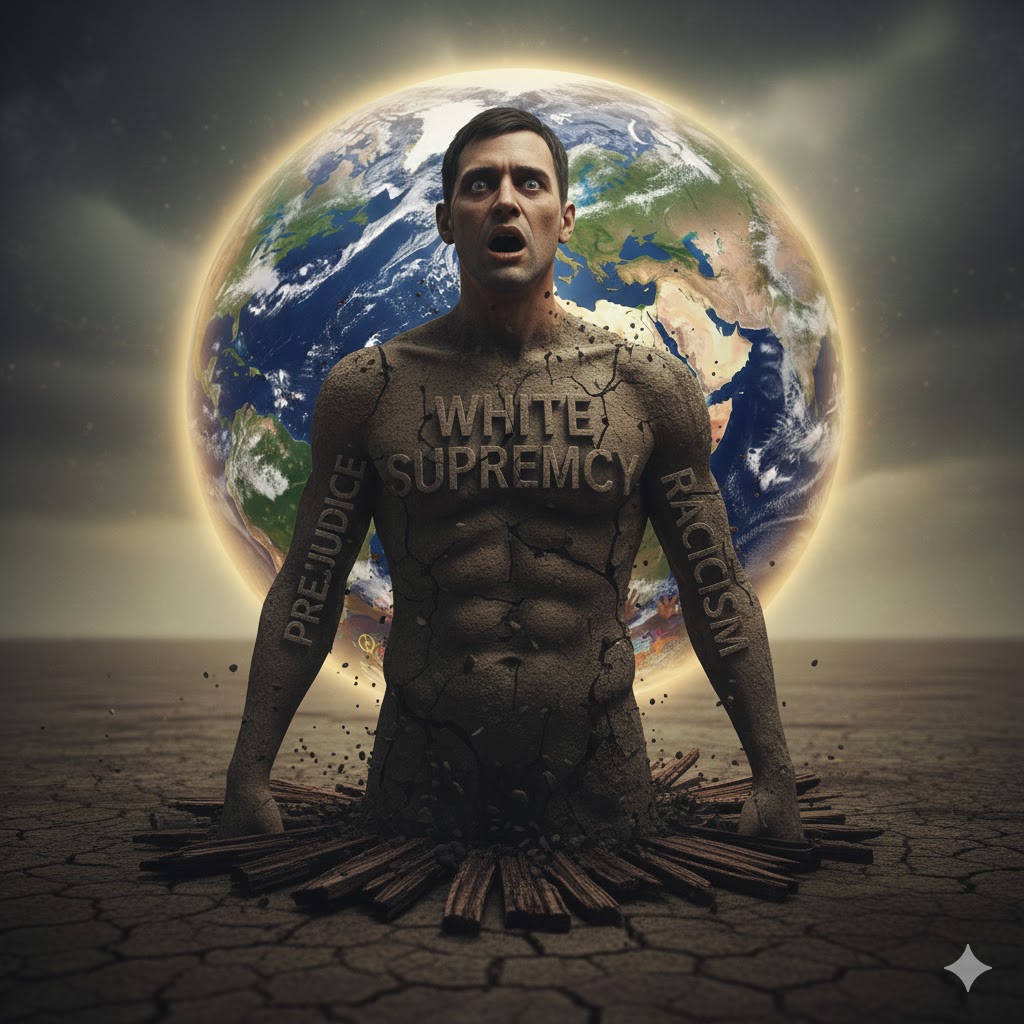
WHlTE Supremacy is crumbling across the globe.

White supremacy, long considered a dominant social and political force, is showing clear signs of decay across the globe. Once entrenched in colonial empires, economic systems, and cultural narratives, its structures are increasingly being challenged by movements for justice, equality, and truth. The ideology that once justified the subjugation of entire populations is now under scrutiny, as history, evidence, and activism expose the falsehoods it relied upon. Across nations, societies are awakening to the moral and ethical failures of racial hierarchy, revealing that supremacy built on fear and deception cannot endure indefinitely.

Historically, white supremacy was reinforced through law, religion, and education. Colonial powers justified slavery, land theft, and systemic oppression by promoting narratives of European superiority. Pseudo-science, distorted biblical interpretation, and manipulated history textbooks all served to normalize racial hierarchy. These systems were not natural; they were constructed to concentrate wealth, power, and control in the hands of a few while dehumanizing others. Today, this constructed system faces resistance at every level, from academic scholarship to grassroots activism.

The civil rights movements of the twentieth century marked an early wave of resistance. In the United States, South Africa, and other nations, oppressed populations began reclaiming their rights, asserting their humanity, and demanding systemic change. Leaders such as Martin Luther King Jr., Nelson Mandela, and countless others challenged both the laws and the ideologies that sustained racial oppression. These movements demonstrated that white supremacy relies on silence, ignorance, and fear, all of which are being steadily dismantled.

Globalization and access to information have accelerated the collapse of white supremacist narratives. The internet, social media, and independent media platforms allow oppressed and marginalized communities to share their truths widely. Historical injustices—slavery, colonialism, apartheid, and indigenous dispossession—can no longer be hidden or misrepresented. When truth spreads, the moral authority of supremacy erodes, revealing the system as an artificial construct maintained through propaganda and institutional control.

Education is another arena where white supremacy is being challenged. Curricula that once glorified European conquest and minimized the experiences of colonized peoples are being rewritten. African, Indigenous, Asian, and Latin American histories are increasingly taught with accuracy, highlighting the contributions, resilience, and humanity of non-European peoples. Knowledge empowers people to recognize that racial hierarchies are neither natural nor divinely ordained, challenging centuries of indoctrination.

Economic structures, too, are under scrutiny. Institutions that perpetuated systemic inequality are facing calls for reform and accountability. Wealth disparities rooted in centuries of exploitation are increasingly highlighted by scholars, journalists, and activists. Efforts to implement reparative justice, equitable access to resources, and anti-discrimination policies challenge the economic pillars that have historically sustained white dominance.

Cultural representation has also shifted. Media, film, literature, and art increasingly amplify the voices of historically marginalized communities. Stories of Black, Indigenous, and people of color challenge stereotypes, humanize lived experiences, and reclaim narratives previously controlled by dominant groups. Representation dismantles the psychological underpinnings of supremacy, proving that humanity cannot be defined by skin color.

Religious institutions are confronting the misuse of faith to justify racial oppression. Historically, distorted interpretations of Scripture and theology were used to validate slavery, colonialism, and apartheid. Modern theologians and faith leaders are rejecting these corrupt narratives, emphasizing equality, justice, and human dignity. Biblical truths, when correctly interpreted, expose the lies upon which white supremacy rests.

Political systems built to enforce racial hierarchy are also facing pressure. Voting rights movements, anti-discrimination legislation, and judicial scrutiny are challenging the legal mechanisms that preserved supremacy. Even in countries where inequality persists, public awareness and activism are creating conditions for reform. The principle that all humans are created in God’s image, as emphasized in Scripture, underpins many of these movements for justice.

Social consciousness is rising globally. Movements such as Black Lives Matter, Indigenous rights campaigns, and anti-apartheid organizations demonstrate collective resistance to systemic oppression. Awareness of historical injustices informs modern advocacy, fostering solidarity across racial and national lines. White supremacy thrives on isolation and ignorance; interconnected activism erodes its foundation.

White supremacy is also crumbling internally. The ideology depends on fear, competition, and the dehumanization of others. As societies evolve, its psychological and social control weakens. Younger generations, educated and globally connected, are less likely to accept racial hierarchies as truth. Moral and intellectual critique exposes its contradictions and immorality, accelerating its decline.

The arts and literature play a critical role in dismantling supremacy. Writers, musicians, filmmakers, and visual artists expose oppression, reclaim history, and celebrate the beauty and resilience of marginalized communities. Cultural production creates shared narratives that challenge the assumptions of supremacy, fostering empathy and social transformation.

Media exposure and investigative journalism have further undermined white supremacy. Exposing systemic racism, corruption, and oppression holds institutions accountable. Public awareness campaigns challenge normalized inequities, demanding transparency and reform. In an era where information is widely accessible, attempts to maintain supremacy through ignorance are failing.

Global collaboration is another factor. International human rights organizations, treaties, and advocacy groups challenge racial oppression worldwide. Nations are being held accountable for injustices through global scrutiny. The interconnected world makes isolationist supremacy impossible, as the truth of oppression spreads across borders.

Technology has also shifted power dynamics. Digital platforms allow communities to organize, educate, and resist in ways previously impossible. Supremacist ideologies, once reinforced locally and nationally, now face global critique. The democratization of information undermines traditional structures that perpetuated racial dominance.

Education, activism, and awareness are complemented by historical reckoning. Truth-telling about slavery, colonialism, and indigenous genocide creates accountability. Museums, documentaries, and scholarly research provide evidence that cannot be ignored. White supremacy’s historical foundations are exposed as morally corrupt and factually unsound.

The collapse of white supremacy is evident in demographic and political changes. Multicultural societies, increased immigration, and shifts in population dynamics challenge notions of racial hierarchy. As diversity becomes normalized, the old narratives of supremacy lose credibility and social relevance.

Legal challenges continue to dismantle systemic structures. Civil rights laws, anti-discrimination policies, and judicial interventions restrict the ability of supremacy to operate openly. Legal frameworks that were once complicit in oppression are now tools of accountability, signaling systemic transformation.

Psychologically, white supremacy loses influence as people internalize equality. Recognition of shared humanity diminishes fear, hate, and the belief in racial superiority. Education, social interaction, and media exposure cultivate empathy and understanding, directly opposing the ideology of supremacy.

White supremacy’s decline is also spiritual. Biblical principles affirm the equality of all humanity before God, emphasizing justice, mercy, and humility. James 2:1–4 warns against favoritism based on wealth or appearance, teaching that partiality is inconsistent with faith. Revelation 7:9 envisions a multitude from every nation worshiping God together, symbolizing the ultimate rejection of racial hierarchy.

The global dismantling of white supremacy is a reminder of God’s justice. While oppressive systems once seemed invincible, truth, righteousness, and divine order prevail. Societies are increasingly recognizing the immorality of supremacy, embracing equality, and restoring dignity to those who were dehumanized. The fall of white supremacy, though uneven, is already underway.

The assertion is bold, yet the evidence is mounting: the decaying structures of White Supremacy are crumbling across the globe. This is not merely a political or sociological observation, but a profound spiritual truth. For decades and centuries, this hateful ideology has operated as a destructive force, attempting to enforce a false hierarchy and deny the intrinsic dignity of countless millions. Today, however, the deep fissures and cracks are visible everywhere, indicating that a fundamental shift is underway—a shift driven by an immutable moral law that ultimately defeats oppression.

We hold fast to this central, unwavering thesis: The steady, irreversible decline of supremacist power is not an accident of history but the active manifestation of divine justice. Our God, the Creator of all humanity, the One who demands righteousness and equity, is engaged in this fight alongside those who seek liberation. The unraveling of this oppressive system is the inevitable consequence of a universe designed for truth and a divine will that is eternally committed to justice for the marginalized and the creation of a world where all bear the imago Dei.

To understand why this system is failing, we must first define the lie: White Supremacy is fundamentally an ideology of fear, exclusion, and power, rooted in historical oppression. It systematically denies the full personhood of those who do not fit its prescribed racial profile, seeking to justify theft, enslavement, and violence through corrupt theological and philosophical reasoning. This manufactured doctrine stands in direct opposition to the core tenets of faith—love of neighbor, humility, and the universal brotherhood of humankind.

Therefore, the struggle against this injustice is more than a socio-political contest; it is a spiritual warfare against the forces of division and hatred. When we observe activists marching, policymakers reforming, and communities unifying across racial lines, we are witnessing the hands of believers and people of conscience aligning with the divine purpose. We take courage, knowing that every act of resistance, every call for justice, and every tear shed for the oppressed is heard by a God who champions the cause of the poor and the prisoner, fighting for us in ways seen and unseen.


Historical Roots and Inevitable Cracks

The inevitability of this decline is rooted in the fact that supremacy is built upon a fundamental and unsustainable lie. No system of power that requires the constant degradation and dehumanization of others can ever truly endure. Historically, its maintenance has required continuous violence and denial of reality. But as education spreads, global connections deepen, and the voices of the oppressed grow louder, the fragility of the entire structure is exposed, leading to a steady erosion of its institutional power and moral authority.

The history of the fight for equality is, in essence, a chronicle of divine intervention against injustice. From the struggle of the Israelites against Pharaoh to the American Abolitionist Movement and the monumental Civil Rights era, every major victory against oppression serves as a testament to God’s alignment with the oppressed. These movements were not merely political skirmishes; they were spiritual earthquakes, cracking the foundations of institutionalized sin and demonstrating that no human system, however entrenched, can ultimately thwart the divine will for human freedom and dignity.

Today, the erosion of supremacy is being accelerated by global interconnectedness and demographic reality. The internet has dismantled the narrative control that once shielded oppressive systems, allowing stories of injustice to travel worldwide and galvanize international solidarity. Furthermore, the changing face of nations refutes the myth of a homogeneous racial ideal. As power shifts and diversity becomes the undeniable norm, the antiquated structure of White Supremacy finds itself increasingly isolated and irrelevant on the world stage.

This structural failure is accompanied by a profound shift in global consciousness. Younger generations, often raised with greater exposure to diverse cultures and histories, are showing a decreasing tolerance for bigotry. Social media movements and public discourse have accelerated accountability, making it far more difficult for racist attitudes and actions to hide in the shadows. This moral awakening signals that the human heart, guided by the innate sense of right and wrong instilled by the Creator, is actively rejecting the poison of hate.

The ideology of White Supremacy is further cursed by its internal fatal flaws: fear, division, and exclusion. It is a system built on perpetual anxiety—the fear of “the other” and the constant dread of losing perceived privilege. This internal poison denies its adherents true community, joy, and peace. By definition, a system that thrives on making enemies cannot build a sustainable future; it is inherently self-destructive and destined to crumble under the weight of its own paranoia and moral bankruptcy.

The Christian faith provides the clearest blueprint for this victory, because we worship a God of absolute Justice. When God declares, “Let justice roll down like waters, and righteousness like an ever-flowing stream,” He establishes the moral standard for all of creation. He is not neutral; He is eternally, unequivocally on the side of the marginalized. Our faith provides the foundational certainty that the fight against oppression is not just noble—it is guaranteed to succeed because the very character of the Almighty is fighting for us.


The Role of Faith and Divine Justice

Throughout history, the most effective movements against oppression have been led by prophets and activists who speak God’s truth to earthly power. Much like the ancient prophets who stood before kings to denounce injustice and idolatry, modern faith leaders and social justice advocates are fulfilling a divine mandate. They are the instruments through which the call for repentance and radical change is delivered, reminding society that systemic sin—like racism—must be dismantled from the ground up, not merely managed or contained.

This understanding places an urgent imperative on the faith community itself. The Church cannot be a passive observer; it must actively dismantle the vestiges of racism within its own walls and in the wider world. True discipleship demands seeing every human being as a full reflection of the imago Dei (the Image of God), rendering all forms of racial hierarchy utterly blasphemous. Our houses of worship must become training grounds for equity and reconciliation, living proof that unity in diversity is not a political aspiration but a spiritual reality.

From a spiritual perspective, divine judgment is the inevitable harvest of injustice. The biblical principle of “reaping what is sown” applies not just to individuals but to nations and systems. When power structures are built on the exploitation of the weak, the universe itself begins to correct the imbalance. The current crumbling of supremacist institutions—their loss of moral legitimacy, their internal fracturing, and their economic decline—is a manifestation of this profound, inescapable truth: systems rooted in lies cannot thrive indefinitely under the watchful eye of a just God.

Yet, the knowledge that God is fighting for us is the ultimate source of hope and endurance in the struggle. This commitment allows activists and advocates to press on, even when the work feels exhausting or the resistance seems overwhelming. Hope is not passive wishing; it is the active certainty that the arc of the moral universe bends toward justice, because a divine hand is guiding it. This sustained faith is the spiritual fuel that ensures the fight will continue until liberation is complete.

Today, the resurgence of extremist rhetoric and public hate groups should be understood as the final, desperate lashing out of a dying ideology. When a system loses its broad institutional power, it often retreats into noisy, violent extremism. These acts are not signs of renewed strength, but rather the frantic efforts of a minority unwilling to accept its imminent failure. This final, ugly phase is the death rattle of White Supremacy, confirming that the mainstream culture, informed by a growing moral consensus, has moved past its destructive logic.


The Path Forward and Conclusion

Our purpose now is not just to witness the decline of the old system, but to be the active architects of the new—building the beloved community, the new Kingdom of God on Earth. This involves intentionally crafting inclusive spaces, restructuring economic systems to ensure equitable access, and cultivating institutions that celebrate the worth of every person regardless of their heritage. We must move beyond simply reacting to hate and begin creating a positive, vibrant, multi-ethnic future that reflects the full, glorious diversity intended by the Creator.

The final phase of this spiritual war requires a call to personal action and profound self-examination. We must confront the subtle ways that systems of superiority may still reside within our own hearts and communities. This is the work of repentance and internal transformation, where we actively dismantle the unconscious biases and learned prejudices that are relics of the dying age. The most effective warriors for justice are those who have first found moral clarity and humility within themselves.

Furthermore, we are called to communal action through advocacy, policy, and unwavering solidarity. True faith demands that we lobby for laws that protect the vulnerable, support organizations that champion civil rights, and stand shoulder-to-shoulder with our neighbors who are targeted by hate. Our prayer is action, and our devotion is demonstrated by the fierce commitment to ensuring justice is done in the courts, on the streets, and in the halls of power.

Let this be our unshakeable affirmation of ultimate victory: The triumph of justice over oppression is not a utopian dream but a divine guarantee. The God who liberated slaves from bondage and raised the defeated from the dust is the same God who fights for us today. The ideology of White Supremacy is a spiritual corpse, sustained only by the breath of fear and inertia. Its end is certain, because its existence is incompatible with the character of the Almighty.

Therefore, we press on with unconquerable hope and boundless strength. Let the truth resonate in every corner of the world: The fight is hard, but the outcome is not in doubt. We are on the side of creation, love, and righteousness. Be encouraged, remain steadfast, and know that every step you take toward justice is a step taken with the Spirit of God marching right alongside you. Our God is fighting for us, and the victory is already assured.

📖 References

Cone, J. H. (2011). The cross and the lynching tree. Orbis Books.

Fredrickson, G. M. (2002). Racism: A short history. Princeton University Press.

Fanon, F. (1963). The wretched of the earth. Grove Press.

Finkelstein, N. G. (2003). Image and reality of the Israel–Palestine conflict (2nd ed.). Verso.

Khalidi, R. (2020). The hundred years’ war on Palestine: A history of settler colonialism and resistance, 1917–2017. Metropolitan Books.

Mamdani, M. (2001). When victims become killers: Colonialism, nativism, and the genocide in Rwanda. Princeton University Press.

Pappe, I. (2010). The ethnic cleansing of Palestine (2nd ed.). Oneworld Publications.

Said, E. W. (1979). The question of Palestine. Vintage Books.

Holy Bible, King James Version. (1611/2017). Cambridge University Press.

  • The Holy Bible. (2011). New International Version. Biblica. (Original work published 1978).
  • Branch, T. (1988). Parting the waters: America in the King years 1954-63. Simon & Schuster.
  • Cone, J. H. (1990). A black theology of liberation (2nd ed.). Orbis Books.
  • Kendi, I. X. (2016). Stamped from the beginning: The definitive history of racist ideas in America. Nation Books.
  • King, M. L., Jr. (1963). Letter from Birmingham jail.
  • King, M. L., Jr. (1968). Where do we go from here: Chaos or community? Harper & Row.
  • Pew Research Center. (n.d.). Demographics and population trends. [Various reports would be cited depending on the specific data used].
  • Southern Poverty Law Center. (n.d.). Hate map and extremism reports. [Specific reports would be cited depending on the data used].
  • Wallis, J. (2005). God’s politics: A new vision for faith and family in America. HarperOne.

Why is Active or Covert Racism Unacceptable while Passive Racism is Acceptable?

Racism continues to be a deep moral, social, and structural challenge in modern societies. One useful way to approach it is by distinguishing among active (overt) racism, covert (hidden) racism, and passive racism (inaction or indifference). Understanding these distinctions helps clarify why some forms of racism are more visible and widely condemned while others persist with relative tolerance—and why that tolerance is itself problematic.

Active racism—or overt racism—is characterized by intentional, explicit actions or attitudes meant to discriminate, demean or exclude individuals because of their race. Examples include using a racial slur, refusing service because someone is Black, or endorsing segregationist policies. These are usually socially unacceptable, easily identifiable, and often illegal in many jurisdictions. Researchers describe overt racism as “actions which have as their stated or explicit goal the maintenance of the system of racism and the oppression of those in the targeted racial groups.” Fourmilab+2PMC+2

Covert racism (also referred to as hidden, subtle, or indirect racism) involves actions, policies or attitudes that may appear race‑neutral but have racially disparate effects, or are motivated by bias that is concealed. It is socially less obvious, and thus often harder to challenge. As defined, “covert racism is a form of racial discrimination that is disguised, hidden or subtle” and operates through passive or seemingly passive means. EBSCO+2Diversity Social+2 Because it is less visible it can persist without full public scrutiny, yet its impact is real and deep.

Passive racism refers to the failure to act against racist behaviour, structures or systems. It is a form of complicity, often through silence or inaction: choosing not to challenge a racist joke, not questioning a biased hiring decision, or simply accepting the status quo. One definition frames passive racism as “beliefs, attitudes, and actions that contribute to the maintenance of racism, without openly advocating violence or oppression.” Fourmilab+1

The question arises: if active and covert racism are unacceptable, why is passive racism frequently tolerated, even by those who identify as antiracist? One reason is visibility: active racism is clear, easily condemned, and often subject to legal or social sanction. Covert racism is harder but still involves discernible actions or policies. Passive racism, however, is ambiguous—silence, omission, or indifference—making it easier for institutions and individuals to ignore or rationalize.

Furthermore, passive racism is tolerated because many in society carry implicit biases and prefer to see themselves as “not racist” rather than actively antiracist. As one critique puts it: “standing on a moving sidewalk and letting it carry you” (Tatum, 1997) is passive racism. Learn to be Antiracist+1 The comfort of inaction is compelling—actively opposing racism requires energy, risk, and change; passive support or silence demands little.

Another factor is that systems and institutions are designed in ways that embed racial advantage without explicit racist intent. These systems rely on passive participation. When the majority does not speak out or challenge inequitable practices, they perpetuate structural racism. For example, when whites in hiring, housing, or policing default to “business as usual,” racial disparities persist even in the absence of conscious discriminators.

Let us compare some examples. Active racism: a store clerk telling a Black customer “we don’t serve your kind here.” Covert racism: a company policy that requires extra credentialing primarily disadvantaging Black applicants though the policy is framed as neutral. Passive racism: a colleague witnessing a racially charged remark and failing to object, thereby allowing the culture of bias to continue. These distinctions highlight different levels of culpability and agency.

The harm of passive racism is often underestimated. Because it lacks the overt maliciousness of active racism, it seems less urgent—but its cumulative effect is substantial. When individuals repeatedly encounter non‐responses to bias, when institutions consistently fail to act, the message is clear: the status quo remains acceptable. Over time, passive racism sustains the racial hierarchy, undermines trust, and deepens intergenerational harm.

Scholarly literature confirms that covert and passive forms of racism are significant barriers to racial equity. For example, critical reviews show that subtle forms of racism—including “inaction” when witnessing racial bias—contribute to stress, decreased wellbeing, and reduced trust in institutions among racialised groups. PMC+1 In other words, what is less visible is often just as destructive.

From a theological or moral perspective, one might say that passive racism is unacceptable because it violates core commitments to justice, solidarity and dignity. To remain silent in the face of injustice is morally complicit. As the biblical injunction “learn to do right; seek justice, correct oppression” (Isaiah 1:17) suggests, inaction in the face of wrongdoing is itself a moral failing.

One might ask: if passive racism is so harmful, why do many institutions emphasise only overt racism? Legal frameworks and policies tend to address explicit discrimination, which is easier to document and litigate. Covert and passive racism—because of its ambiguity or lack of intent—are more difficult to address through traditional regulation. That regulatory gap contributes to the tolerance of inaction.

In workplaces, passive racism may mean failing to promote or protect Black employees when bias is evident, allowing micro‑aggressions to accumulate without intervention. Covert racism may appear as patterns of under‑hiring or exclusion masked as “poor fit” or “culture mismatch.” The former is tolerated, the latter disguised—but both enable inequality. CultureAlly+1

In housing, for instance, active racism might include refusing to rent to a Black family. Covert racism might involve setting rental minimums or credit score thresholds that disproportionately exclude Black renters and are justified as neutral. Passive racism might manifest when neighbours or managers see unequal treatment but do nothing. The net effect is generational disadvantage in home ownership, wealth accumulation and neighbourhood quality.

In criminal justice, active racism includes use of racial slurs by police, overt profiling. Covert racism may be policies that lead to higher stop‐rates in Black neighbourhoods under the guise of “crime prevention.” Passive racism is the failure of bystanders, community leaders or institutions to challenge disproportionate policing, thus allowing it to continue. Such passivity amplifies racial trauma. Diversity Social+1

It is also worth noting that many people prefer passive racism because it allows them to believe they “aren’t racist” while not actively confronting their privilege, biases or complicity. This self‐comforting stance sustains racial inequities. Active or covert racism forces a confrontation; passive racism avoids it.

Ethically, passive racism is unacceptable for three main reasons. First, it sustains harm by omission—silence is not neutral. Second, it places the burden on victims to continually challenge discrimination rather than holding institutions accountable. Third, it blocks systemic transformation because change requires action, not just lack of hostile intent.

One might argue that passive racism is “less bad” than active harmful racist acts. But the distinction between degrees of harm does not excuse tolerance. When societal structures rely on millions of passive decisions—“I did nothing,” “I did not challenge it”—the result is a continuing system of inequality. The sum of many passive contributions is substantial.

In conclusion, active and covert racism are widely condemned precisely because their violations of dignity and justice are clear and actionable. But passive racism is too often tolerated because it is invisible, indirect, and socially acceptable. Yet the moral imperative remains: to achieve racial justice, one must not only refrain from hostile acts, but actively resist racist systems, challenge covert bias, and refuse the easy path of passivity. Silence or inaction is no longer an option.

References

Amodio, D. M. (2001). The implications of implicit social cognition for judgments and behavior toward others. Personality and Social Psychology Review, 5(1), 3‑20.

Baskin, A. (2023). Covert racism. Research Starters – Social Sciences & Humanities. EBSCO. Retrieved from https://www.ebsco.com/research-starters/social-sciences-and-humanities/covert-racism EBSCO

CultureAlly. (n.d.). Overt vs. covert racism – Definition & comparison. Retrieved from https://cultureally.com/blog/overtvscovertracism CultureAlly

Diversity for Social Impact. (2025). Over­t racism vs covert racism – Understand meanings and implications. Retrieved from https://diversity.social/covert-overt-racism/ Diversity Social

Learn To Be Antiracist. (n.d.). Glossary of terms. Retrieved from https://www.learntobeantiracist.com/glossary Learn to be Antiracist

Orr, A. J. (2024). Overt/expressed vs covert discrimination. Research Starters – Sociology. EBSCO. EBSCO

Umbrella Collective. (2024, June 10). Passive vs active anti‑racism: What it is and why it matters. Retrieved from https://www.umbrellacollective.org/blog/2024/6/10/passive-vs-active-anti-racism-what-it-is-and-why-it-matters/ Umbrella Collective

How Do White Women Perceive Black Women?

The perception of Black women by white women is deeply shaped by history, culture, and media narratives. From the days of slavery to modern pop culture, these perceptions have been complex, often influenced by competition, envy, or internalized societal hierarchies, rather than direct understanding.

During slavery, white women were both enforcers and victims of a racialized system. Black women were often positioned as laborers, caregivers, and even objects of sexual exploitation, which bred tension and jealousy. White women sometimes resented the resilience and strength of Black women, seeing them as a threat to their social status within the household hierarchy.

Historical beauty standards rooted in European ideals also influenced perception. Features such as dark skin, fuller lips, and naturally textured hair were devalued, while fair skin and straight hair were celebrated. This created a subconscious lens through which white women judged Black women, linking beauty to social acceptance rather than inherent worth.

Romantic dynamics further complicated these perceptions. White women have historically been socialized to see Black women dating Black men or successful partners as competition. Envy could be triggered by traits such as confidence, attractiveness, or assertiveness, particularly when societal narratives suggested that Black women were “less desirable” or should occupy a lower social position.

Media representation has reinforced stereotypes and shaped perception over generations. Reality TV shows like The Real Housewives of Atlanta often highlight conflict, portraying Black women as confrontational or loud. White female audiences consuming these narratives may unconsciously internalize these depictions, perceiving Black women through a lens of stereotype rather than reality.

Conversely, positive media portrayals have the power to shift perception. Films like Black Panther feature Black women as intelligent, elegant, and powerful figures. Characters such as Nakia and Okoye demonstrate strength, grace, and heroism, allowing white women audiences to admire Black women as equals in intellect, beauty, and moral courage.

Social media amplifies perceptions in subtle and explicit ways. On Instagram and TikTok, Black women showcase fashion, hair, and beauty that celebrates natural features. White women engaging with these platforms may respond with admiration or envy, reflecting historical conditioning as well as personal biases. Viral moments, such as Lupita Nyong’o’s red carpet appearances or Beyoncé’s visual albums, exemplify how Black women’s beauty can inspire global recognition and sometimes mixed reactions.

Celebrity culture complicates perception further. Serena Williams, for instance, is both admired for her athletic prowess and critiqued for traits that are celebrated in white athletes but stereotyped in Black women. White women’s admiration can coexist with subtle judgment, revealing the persistent influence of racialized standards.

In dating contexts, white women sometimes view Black women through stereotypes connected to sexuality. The Jezebel myth, which hypersexualized Black women during slavery, continues to influence how white women interpret Black women’s romantic relationships. Media portrayals in shows like Scandal or Empire can unintentionally reinforce notions of Black women as overly sexual or aggressive.

Colorism adds another layer to perception. Lighter-skinned Black women are often viewed as more socially acceptable or attractive, reflecting both historical hierarchies and media preferences. White women may unconsciously perceive lighter-skinned Black women with admiration or envy, while darker-skinned women face compounded biases.

Workplace dynamics mirror these societal trends. Assertive Black women may be labeled “aggressive” or “intimidating” by colleagues, whereas similar behavior by white women is praised. White women’s perceptions are influenced by cultural conditioning and media framing, which historically cast Black women as threats to social and professional order.

Perception is also affected by exposure and familiarity. White women with direct relationships or friendships with Black women often develop more nuanced and positive perceptions, appreciating beauty, intelligence, and character rather than relying on stereotypes. Media literacy and cross-cultural experience help break down historical biases.

Historical myths, like the “angry Black woman” stereotype, continue to inform perception. These myths originated as tools of control during slavery, designed to justify harsh treatment and limit social power. White women today may unknowingly adopt these narratives, perceiving Black women as confrontational or overly dominant.

Media influence remains pervasive. Reality TV, news coverage, and social media highlight Black women in conflict or competition, reinforcing biases. Shows like Love & Hip Hop often depict drama among Black women, affecting both white and Black viewers’ understanding of female relationships and social dynamics.

Positive media representation challenges these stereotypes. The Netflix series Self Made, portraying Madam C.J. Walker, showcases entrepreneurship, beauty, and intelligence. White women watching such portrayals can develop respect and admiration, seeing Black women as multi-dimensional and accomplished rather than one-dimensional stereotypes.

Social media trends celebrating natural hair, such as the #BlackGirlMagic movement, allow white women to witness Black women embracing texture, style, and individuality. These cultural moments promote admiration, inspire fashion and beauty trends, and challenge Eurocentric standards.

White women’s perceptions also intersect with social class and status. Black women in positions of influence, such as politicians, entertainers, or CEOs, may be viewed with admiration or jealousy depending on the observer’s insecurities and exposure to stereotypes. Media often amplifies these perceptions through coverage and commentary.

Celebrity fashion moments continue to shape perception. Lupita Nyong’o’s glowing red carpet appearances or Rihanna’s beauty empire highlight the elegance, radiance, and versatility of Black female beauty. White women witnessing these moments may experience both inspiration and societal-conditioned envy.

Ultimately, perception reflects both historical influence and personal bias. White women’s views of Black women are shaped by slavery-era hierarchies, colorism, media representation, and cultural narratives. While some perceptions stem from envy or stereotyping, education, exposure, and authentic interaction can transform perception into admiration and respect.

Bridging perception requires visibility, storytelling, and authentic representation. Media that uplifts Black women’s beauty, talent, and intellect challenges historical biases and promotes mutual understanding. White women who engage critically with media, build relationships, and reflect on historical context are more likely to perceive Black women with respect and appreciation rather than judgment.

Perception evolves as history, culture, and media awareness intersect. When white women encounter Black women outside stereotypes—in friendship, workplace, or media—they can witness the richness of Black beauty, intellect, and resilience. Understanding historical roots, challenging media myths, and celebrating authentic excellence fosters genuine admiration, transforming centuries-old bias into recognition and respect.

Historical References (Slavery and Perception)

  • White, Deborah Gray. (1999). Ar’n’t I a Woman?: Female Slaves in the Plantation South. W.W. Norton & Company.
  • Davis, Angela Y. (1983). Women, Race & Class. Random House.
  • Franklin, John Hope, & Moss, Alfred A. (2000). From Slavery to Freedom: A History of African Americans. McGraw-Hill Education.
  • Painter, Nell Irvin. (2002). Creating Black Americans: African-American History and Its Meanings, 1619 to the Present. Oxford University Press.

Media and Cultural Studies References

  • Collins, Patricia Hill. (2000). Black Feminist Thought: Knowledge, Consciousness, and the Politics of Empowerment. Routledge.
  • hooks, bell. (1992). Black Looks: Race and Representation. South End Press.
  • Byrd, Ayana D., & Tharps, Lori L. (2014). Hair Story: Untangling the Roots of Black Hair in America. St. Martin’s Press.
  • Gray, Herman. (2005). Cultural Moves: African Americans and the Politics of Representation. University of California Press.
  • Entman, Robert M., & Rojecki, Andrew. (2000). The Black Image in the White Mind: Media and Race in America. University of Chicago Press.

Dating, Social Perception, and Psychology References

  • Buchanan, T., & Seligman, L. (2013). Interracial Dating Attitudes and Racial Stereotypes: A Sociopsychological Analysis. Journal of Social Issues.
  • Hunter, Margaret L. (2011). Buying Racial Capital: Skin-Bleaching and Cosmetic Surgery in Black and African Communities. Social Text.
  • Lewis, J., & Lockwood, E. (2018). Colorism, Beauty, and Media: Social Perceptions of Black Women. Journal of African American Studies.

Media Examples Cited

  • The Real Housewives of Atlanta (Bravo, 2008–present) – Reality TV portrayal of Black women in social and conflict-driven narratives.
  • Scandal (ABC, 2012–2018) – Portrayal of strong, ambitious, and often sexualized Black female characters.
  • Black Panther (Marvel Studios, 2018) – Positive representation of Black women as intelligent, courageous, and regal.
  • Self Made: Inspired by the Life of Madam C.J. Walker (Netflix, 2020) – Highlighting entrepreneurship, beauty, and intelligence.
  • Social Media: #BlackGirlMagic (Instagram/TikTok) – Movement celebrating Black women’s natural beauty, talent, and achievements.
  • Celebrity Case Studies: Beyoncé, Lupita Nyong’o, Rihanna, Serena Williams – Examples of Black female beauty, cultural influence, and public perception.

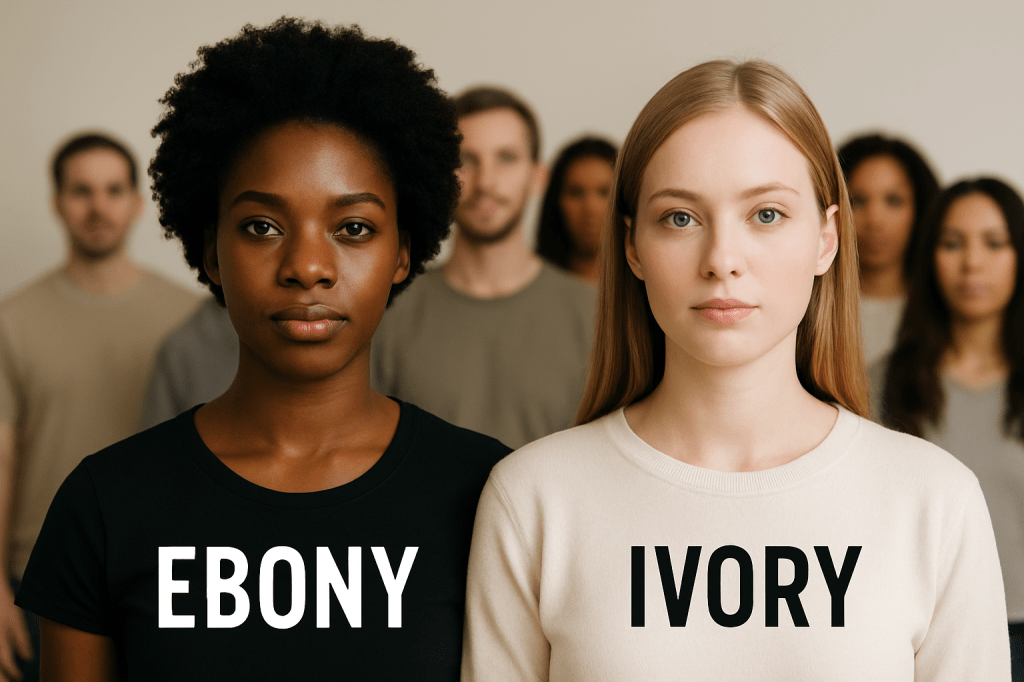
Ebony and Ivory: Two Shades, One Standard of Beauty.

From the dawn of civilization, beauty has been both a mirror and a weapon—reflecting ideals shaped by power and privilege, and wielded to define worth within social hierarchies. Within the globalized gaze of modernity, the politics of skin color continue to influence how femininity and desirability are perceived, especially among women of African descent. The notion of “Ebony and Ivory” evokes more than just color; it symbolizes the ongoing dialogue between light and dark, between acceptance and exclusion, and between the internalized and externalized standards of beauty that shape identity (hooks, 1992).

The idea of “two shades, one standard” captures the paradox of colorism: the simultaneous elevation and devaluation of Blackness within the same racial group. While “ivory” tones have historically been exalted as closer to Western ideals, “ebony” skin has often been marginalized, caricatured, or fetishized. Both ends of the spectrum, however, are measured against the same Eurocentric barometer that privileges whiteness as the ultimate aesthetic reference (Hunter, 2005).

This phenomenon, deeply rooted in colonialism, reveals how beauty became a tool of control. During the transatlantic slave trade, lighter-skinned enslaved individuals were often granted domestic positions and social proximity to white power structures, breeding intra-racial hierarchies that persist today. These legacies still echo in media representation, where lighter skin is frequently coded as “refined,” while darker tones are portrayed as “exotic” or “primitive” (Craig, 2006).

For many women of color, navigating these coded perceptions can be exhausting. The “brown girl dilemma” emerges when one feels too dark to be celebrated and too light to be considered authentically Black. This liminal existence is both a burden and a revelation—proof that beauty, as defined by Western constructs, remains an unattainable illusion that fractures rather than unites.

Beauty standards, much like colonial borders, were imposed rather than chosen. From the powdered faces of the Victorian era to the filtered glow of Instagram, the valuation of lightness has remained a constant aesthetic undercurrent. Yet, even within African and Afro-diasporic communities, this colonial inheritance continues to dictate preferences in partners, media icons, and even professional opportunities (Glenn, 2008).

In popular culture, colorism is often masked by phrases like “preference” or “type.” However, these preferences are rarely organic—they are sociologically constructed through centuries of imagery that equate lightness with purity and success, and darkness with defiance and struggle. The entertainment industry’s casting choices often reinforce these biases, rewarding lighter skin with visibility while relegating darker complexions to supporting or stereotypical roles (Russell, Wilson, & Hall, 2013).

This bias extends beyond film and television. In the global beauty market, skin-lightening creams generate billions annually, a grim testament to the internalization of Eurocentric ideals (Glenn, 2008). The psychological effects of such products are profound, suggesting that beauty is not only skin-deep but soul-deep, affecting one’s perception of self-worth and belonging.

For Black women, beauty is an act of survival. To adorn oneself becomes an assertion of existence in a world that often demands invisibility. From the regal hairstyles of precolonial Africa to the natural hair movement, Black women have continuously redefined and reclaimed their beauty on their own terms (Byrd & Tharps, 2014).

Yet, this reclamation is not without struggle. Within the Black community itself, hierarchies persist. The glorification of lighter women as more “marriageable” or “acceptable” continues to fracture solidarity. It is an unspoken inheritance of slavery’s psychological residue, perpetuated by both men and women who unconsciously valorize proximity to whiteness.

The darker-skinned woman often bears the weight of invisibility and hypervisibility simultaneously—ignored in spaces of admiration, yet scrutinized as the embodiment of resistance or rebellion. This double-bind mirrors W.E.B. Du Bois’ concept of “double consciousness,” wherein one is forced to see oneself through the lens of a world that refuses full recognition (Du Bois, 1903).

Light-skinned women, conversely, navigate their own complexities. While society may privilege them aesthetically, they are often accused of benefiting from colorism or being “not Black enough.” Thus, both ebony and ivory tones bear distinct forms of cultural alienation, tied together by an oppressive standard neither created (Monk, 2014).

In this context, beauty becomes not celebration but negotiation. Every compliment, every criticism, every casting call, and every social media post reinforces the invisible hierarchy of shade. The struggle is not between dark and light, but against the system that pits them against each other.

Media representation plays a critical role in dismantling or reinforcing these divides. When dark-skinned actresses like Lupita Nyong’o or Viola Davis are celebrated, it signals progress—but also exposes how rare such representation remains. Likewise, the inclusion of mixed-race models in campaigns may appear inclusive, yet often centers features still aligned with Eurocentric beauty (Tate, 2009).

To heal from this color divide, we must first acknowledge that beauty is not a monolith. It is plural, diverse, and spiritually rooted. In the biblical sense, humanity was created “in the image of God” (Genesis 1:27, KJV), meaning all shades reflect divine artistry. The rejection of any hue is, therefore, a rejection of the Creator’s design.

Moreover, Proverbs 31:30 reminds us that “favor is deceitful, and beauty is vain: but a woman that feareth the Lord, she shall be praised.” This verse redirects the gaze from the external to the eternal, urging women to seek validation not from comparison but from divine purpose.

Ebony and ivory are not opposites but complements, each contributing to the symphony of creation. Just as piano keys of contrasting colors produce harmony, so too can diverse complexions coexist in mutual admiration and respect. The beauty of one does not diminish the beauty of the other; together, they reveal the fullness of God’s palette.

True beauty transcends complexion—it emanates from character, compassion, and conviction. In a world obsessed with appearances, spiritual and cultural consciousness must redefine the standard. Beauty should not divide but dignify, not exclude but exalt.

To love one’s shade is to reclaim agency over identity. When Black women, in all their hues, embrace their reflection without apology, they dismantle centuries of aesthetic oppression. “Ebony and Ivory” then becomes more than a contrast—it becomes a covenant of self-acceptance and collective healing.

As we move forward, let beauty be measured not by shade but by soul. For when light and dark come together, they create balance, harmony, and wholeness—the true reflection of divine beauty.


References

Byrd, A. D., & Tharps, L. L. (2014). Hair Story: Untangling the Roots of Black Hair in America. St. Martin’s Press.
Craig, M. L. (2006). Race, beauty, and the tangled knot of a guilty pleasure. Feminist Theory, 7(2), 159–177.
Du Bois, W. E. B. (1903). The Souls of Black Folk. Chicago: A.C. McClurg.
Glenn, E. N. (2008). Yearning for lightness: Transnational circuits in the marketing and consumption of skin lighteners. Gender & Society, 22(3), 281–302.
hooks, b. (1992). Black Looks: Race and Representation. South End Press.
Hunter, M. L. (2005). Race, gender, and the politics of skin tone. Routledge.
Monk, E. P. (2014). Skin tone stratification among Black Americans, 2001–2003. Social Psychology Quarterly, 77(4), 360–379.
Russell, K., Wilson, M., & Hall, R. (2013). The Color Complex (Revised): The Politics of Skin Color Among African Americans. Anchor.
Tate, S. A. (2009). Black Beauty: Aesthetics, Stylization, Politics. Ashgate Publishing.
The Holy Bible, King James Version (KJV). (1611).

Brown Girl VS Brown Boy: The Trials That Both Black Women and Men Share.

Photo by Alexandre Canteiro on Pexels.com

The narrative of the Brown Girl and the Brown Boy is a testimony of shared endurance and resilience across centuries of oppression. While each carries unique burdens shaped by gender, their struggles intertwine within the same framework of racism, systemic inequality, and cultural misrepresentation. The Brown Boy carries the burden of criminalization. From childhood, he is labeled as a threat, his innocence quickly stripped away by the gaze of a society that fears his melanin. He is often over-policed, over-disciplined, and prematurely marked as deviant. This early criminalization sets the stage for a life in which opportunity is constrained, where his existence is seen as something to be managed rather than celebrated. The Brown Girl, in turn, bears the weight of invisibility and hypervisibility at once. Her body is policed, her skin tone scrutinized, and her hair politicized. She is told she must work twice as hard to be seen, yet when she asserts herself, she is cast as angry or difficult. Her womanhood is too often undervalued, her femininity questioned, and her contributions overlooked. Invisibility denies her credit, while hypervisibility subjects her to surveillance.

Historical Roots of Struggle
The struggles of the Brown Girl and Brown Boy are rooted in slavery, where African men and women were simultaneously dehumanized, exploited, and stripped of their personhood. Enslaved men were depicted as dangerous brutes, while enslaved women were hypersexualized or forced into maternal roles without agency. This legacy persists today in stereotypes that continue to shape societal perceptions. The plantation created a blueprint for systemic oppression that both Black men and women still resist.

The Brown Boy is burdened by criminalization. From his youth, society sees him not as a child but as a potential threat. He is over-policed, over-disciplined, and prematurely marked as deviant. This reflects Deuteronomy 28:50 (KJV): “A nation of fierce countenance, which shall not regard the person of the old, nor shew favour to the young.” His innocence is stolen by systemic suspicion, his manhood molded in the shadow of fear.

The Brown Girl’s struggle is invisibility and hypervisibility at once. She is unseen in her brilliance yet overexposed in her body. Her skin, hair, and tone are politicized, making her both target and spectacle. The scriptures foretell this devaluation: “Thy sons and thy daughters shall be given unto another people, and thine eyes shall look, and fail with longing for them all the day long” (Deuteronomy 28:32, KJV). The world covets her beauty but denies her humanity.

Representation and Misrepresentation
Representation has always been a double-edged sword. For the Brown Boy, media often frames him as a criminal or athlete, denying the full spectrum of his humanity. For the Brown Girl, the media either erases her altogether or confines her to caricatures such as the “mammy,” “jezebel,” or “angry Black woman.” Both experience the suffocation of misrepresentation, where society refuses to see them as complex individuals.

Educational Barriers and Discipline
Education becomes a battlefield. Research shows that Black boys are disproportionately suspended and criminalized in classrooms, labeled as “problematic” rather than nurtured (Ferguson, 2000). Black girls, while often excelling academically, face their own policing: their natural hair is deemed “unprofessional,” their assertiveness mistaken for defiance, and their bodies sexualized even in youth. Both genders wrestle with an education system that undermines their potential.

Economic Inequalities
The Brown Boy often confronts systemic barriers to employment and financial stability, including discriminatory hiring practices and wage gaps. Meanwhile, the Brown Girl—despite being the most educated demographic in the U.S.—earns less than both her Black male counterparts and white women. This intersection of racism and sexism is a double bind, yet both find themselves navigating economic structures designed to exploit rather than uplift.

Colorism’s Dividing Line
Colorism deepens the trials of both. Brown Boys may be perceived as more threatening the darker their complexion, while Brown Girls may be considered less desirable. This internalized bias stems from colonial legacies that equated light skin with superiority. Both men and women endure the psychological scars of a hierarchy that measures their worth through proximity to whiteness.

Psychological Weathering
The term “weathering” describes the cumulative effect of systemic oppression on Black bodies, leading to premature aging and health decline (Geronimus, 1992). The Brown Boy often carries the weight of being seen as a target, leading to chronic stress. The Brown Girl shoulders the burden of caretaking, respectability politics, and constant scrutiny. Together, they endure the slow erosion of health by racism’s daily toll.

Police Violence and State Control
For Brown Boys, encounters with police often turn deadly. Mass incarceration and racial profiling remain defining realities. For Brown Girls, vulnerability takes other forms—sexual violence, neglect in medical care, and dismissal in the justice system. Both genders are ensnared in different arms of the same carceral state, one that polices their existence.

Body Politics
The body becomes a site of battle. Black men are hyper-masculinized, their physiques fetishized yet criminalized. Black women’s bodies are policed, objectified, and appropriated—praised when on non-Black women yet ridiculed when naturally theirs. Both genders face dehumanization through the gaze of others.

Faith and Resilience
Despite these struggles, faith traditions have long served as a refuge. From the hush harbors of slavery to today’s Black churches, scripture reminds the Brown Girl and Brown Boy of their worth: “I will praise thee; for I am fearfully and wonderfully made” (Psalm 139:14, KJV). Both draw strength from a spiritual lineage that affirms beauty, dignity, and resilience against a world that denies them.

Love and Partnership
Romantic and communal relationships are also affected by oppression. The stressors of unemployment, incarceration, and societal division often strain bonds between Black men and women. Yet, when the Brown Girl and Brown Boy commit to healing together, their love becomes an act of resistance, a sanctuary in a hostile world.

Cultural Expression
Music, art, and literature serve as outlets of survival. From jazz and hip-hop to spoken word and Afrofuturism, the Brown Girl and Brown Boy reclaim narratives and create new worlds. Through cultural production, they not only resist but also affirm their brilliance.

Generational Trauma
Trauma is not only personal but generational. Children inherit the burdens of systemic oppression, witnessing the struggles of their parents. The Brown Girl and Brown Boy often carry wounds passed down from ancestors who endured slavery, Jim Crow, and structural racism. Healing requires breaking these cycles while honoring ancestral resilience.

The Burden of Exceptionalism
Both genders often feel the pressure to be “twice as good” in order to be deemed worthy. This burden of exceptionalism leaves little room for error or rest. The Brown Boy is expected to defy the odds and avoid stereotypes, while the Brown Girl must embody strength without vulnerability. Both pay the psychological cost of being denied simple humanity.

Resistance in Activism
Black women and men have stood side by side in movements for freedom, from abolition to civil rights to Black Lives Matter. The Brown Girl and Brown Boy recognize that liberation is bound together, for one cannot be free without the other. Their shared activism is a testimony of collective endurance and vision.

Beauty and Affirmation
In a world that tells them otherwise, both must learn to see their beauty. The Brown Girl reclaims her natural hair, dark skin, and full features as symbols of pride. The Brown Boy embraces his strength, his melanin, and his presence as affirmations of worth. Beauty, once defined against them, becomes theirs to define.

Mental Health Struggles
The stigma of mental health persists in Black communities, where seeking therapy is sometimes discouraged. Yet, both men and women battle depression, anxiety, and PTSD from systemic oppression. The Brown Girl and Brown Boy must learn to embrace healing spaces without shame.

Solidarity and Division
Oppression sometimes pits them against each other, but solidarity is essential. The Brown Girl and Brown Boy must recognize that patriarchy and sexism wound as deeply as racism, and healing requires accountability, empathy, and mutual uplift. Their strength lies in unity, not division.

The Role of Media and Social Platforms
In the digital era, social media becomes both a battleground and a platform for empowerment. Hashtags like #BlackGirlMagic and #BlackBoyJoy counter negative narratives. Yet, both also endure online harassment and colorist commentary. The virtual space mirrors the real-world struggle for validation.

Conclusion: Trials, Triumphs, and Togetherness
The story of the Brown Girl and Brown Boy is not a story of defeat but of resilience. Though their trials differ in form, they intersect in meaning. Both endure systemic oppression, cultural erasure, and personal struggles—but both also embody brilliance, creativity, and faith. Their shared journey calls for solidarity, healing, and love. Together, the Brown Girl and Brown Boy prove that resilience runs deep in their skin, their spirit, and their story.


📚 References

  • Ferguson, A. A. (2000). Bad Boys: Public Schools in the Making of Black Masculinity. University of Michigan Press.
  • Geronimus, A. T. (1992). The weathering hypothesis and the health of African-American women and men: Implications for reproductive strategies and policy analysis. Milbank Quarterly, 70(2), 335–365.
  • hooks, b. (1981). Ain’t I a Woman: Black Women and Feminism. South End Press.
  • Du Bois, W. E. B. (1903). The Souls of Black Folk. Chicago: A. C. McClurg & Co.

The Most Hated People: Black People

Photo by nappy on Pexels.com

Throughout history, Black people have endured hatred, oppression, and marginalization on a global scale. This phenomenon is not merely social or political; it has deep spiritual and psychological roots. The Bible, particularly the King James Version, offers insight into why Black people have been hated, how God allows this suffering, and how the forces of darkness exploit it. Understanding these dynamics is essential for empowerment, resilience, and spiritual victory.


Biblical Foundations: Why Black People Are Hated

The hatred toward Black people is hinted at in Scripture as a form of prophetic suffering. Deuteronomy 28:37 states, “And thou shalt become an astonishment, a proverb, and a byword among all nations whither the LORD shall lead thee” (KJV). The Israelites, often linked biblically to Black Africans through E1b1a haplogroups and historical migrations, were marked for suffering as a consequence of God’s covenant and the lessons of obedience. This hatred, though painful, serves as a tool in God’s providential plan to teach, refine, and ultimately elevate His people spiritually.

Scripture also warns of the spiritual adversary behind oppression: “Be sober, be vigilant; because your adversary the devil, as a roaring lion, walketh about, seeking whom he may devour” (1 Peter 5:8, KJV). The devil manipulates human sin and societal prejudice to sow division, hatred, and despair, targeting Black people as part of a larger plan to weaken God’s chosen people.


Psychological Dimensions of Hatred

From a psychological perspective, the hatred of Black people is rooted in fear, envy, and the need for domination. Social psychology explains this as in-group/out-group bias, scapegoating, and internalized superiority complexes. Historical trauma, such as slavery and colonization, reinforced narratives that dehumanized Black people, creating generational cycles of oppression. Modern psychology identifies implicit bias, colorism, and structural racism as extensions of these long-standing prejudices, perpetuated unconsciously in societies worldwide.

The psychological impact of being hated manifests as internalized oppression, lowered self-esteem, and hyper-vigilance. Yet the Bible offers resilience strategies: “Fear thou not; for I am with thee: be not dismayed; for I am thy God” (Isaiah 41:10, KJV). Faith, identity in God, and historical consciousness serve as buffers against the toxic effects of hatred.


The Role of the Devil

Satan’s involvement in the hatred of Black people cannot be understated. He works to divide, oppress, and distort identity. As John 10:10 warns, “The thief cometh not, but for to steal, and to kill, and to destroy” (KJV). By promoting false narratives, enslavement, and systemic oppression, the devil aims to suppress Black excellence, spiritual awareness, and societal influence. Recognizing this spiritual warfare is critical to understanding that hatred is not merely human sin but also a tool of darkness.


The Meaning of Blackness

Blackness is more than skin color; it represents resilience, divine heritage, and a reflection of God’s creative diversity. Psalm 139:14 states, “I will praise thee; for I am fearfully and wonderfully made” (KJV). Black identity, therefore, is sacred and intentional. Historically, Black people have been leaders, prophets, and nation-builders, and their cultural and spiritual contributions reflect God’s favor and purpose, even when society hates them.


How to Overcome Hatred

Overcoming hatred requires a combination of spiritual, psychological, and practical strategies:

  1. Faith in God’s Sovereignty: Trusting that God can turn suffering into blessing (Genesis 50:20).
  2. Community and Mentorship: Strengthening ties within Black communities to resist isolation and despair.
  3. Education and Awareness: Learning history, understanding systemic oppression, and reclaiming identity.
  4. Spiritual Warfare: Prayer, fasting, and studying Scripture to resist the devil’s schemes (Ephesians 6:11-12).

How Black People Can Deal with Hatred

Dealing with hatred requires resilience, wisdom, and spiritual discernment:

  • Identity Affirmation: Embrace biblical and historical truths about heritage.
  • Psychological Healing: Engage in therapy, counseling, or group support to process generational trauma.
  • Advocacy and Leadership: Transform experiences of hatred into activism, mentorship, and leadership.
  • Forgiveness and Wisdom: Maintain a biblical posture of righteousness without compromising self-respect (Romans 12:17-21).

Conclusion

The hatred of Black people is both a historical and spiritual reality, sanctioned at times in Scripture for refinement, exploited by human sin, and magnified by Satan’s schemes. Yet Blackness carries divine meaning, and God equips His people to overcome hatred through faith, resilience, and wisdom. Understanding the interplay of biblical principles, psychological realities, and spiritual warfare empowers Black individuals and communities to thrive despite oppression. The journey from suffering to victory is both personal and communal, guided by Scripture, history, and divine purpose.


References

Biblical References (KJV)

  • Deuteronomy 28:37
  • 1 Peter 5:8
  • Isaiah 41:10
  • John 10:10
  • Psalm 139:14
  • Genesis 50:20
  • Ephesians 6:11-12
  • Romans 12:17-21

Secondary Sources
Fanon, F. (1967). Black Skin, White Masks. Grove Press.

Grier, W. H., & Cobbs, P. M. (1968). Black Rage. Basic Books.

Harris, S. (2015). The Psychological Effects of Racism on African Americans. American Psychological Association.

West, C. (1993). Race Matters. Beacon Press.