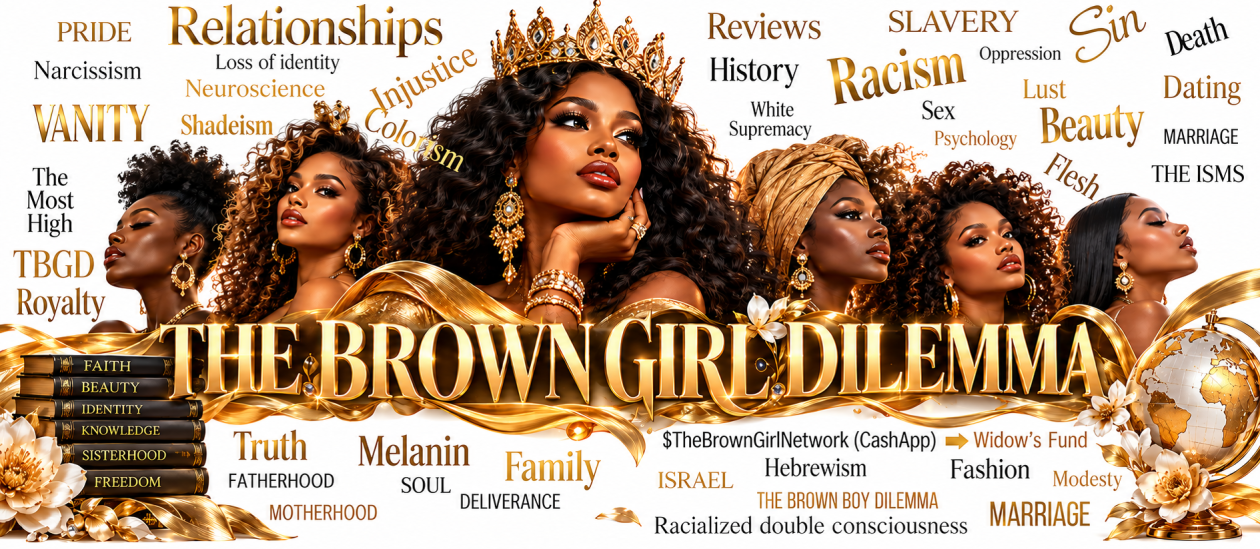
Category Archives: black people

And They Call Me BLACK: Meaning, Symbolism, and the Weight of History.

And They Call Me Black

They call me Black, yet my skin tells a softer truth—
a café au lait glow kissed by light,
golden brown like the warmth of morning sun
resting gently on earth that remembers rain.
Names try to confine what God made fluid,
But my reflection refuses to be boxed in labels not made for my fullness.

I am not one shade, not one story, not one tone of night—
I am every hue that breathes through melanin’s design.
Celebrate me in all my shades,
from bronze to honey, from caramel to deep, rich earth.
For I am not a color made small by language—
I am a living spectrum, created whole, created beautiful.

The color black carries one of the most complex and emotionally charged meanings in human history. It is not merely a visual shade but a symbol layered with cultural, spiritual, political, and historical significance. Across civilizations, black has represented both profound dignity and deep stigma, often depending on who is interpreting it and from what position of power.

Why are people called “white” and “Black

These labels developed mainly during the rise of European colonialism (1400s–1800s) and the Atlantic slave system.

  • Europeans increasingly categorized people by skin tone as a visible marker of difference
  • Over time, “white” came to represent people of European descent in legal systems and colonial societies
  • “Black” became the category assigned to African-descended peoples, especially in the context of slavery

So these terms were not originally scientific—they were social classifications tied to power, labor, and law, not precise descriptions of complexion.


Biologically speaking:

  • Human skin color exists on a wide spectrum of melanin levels
  • Most African-descended populations are various shades of brown, not literally “black”
  • Most European-descended populations are also shades of beige, pinkish, or light tanish, not truly “white”

The term “Black” as a racial category did not come from a single person or moment—it developed over time, mainly through European colonialism and the Atlantic slave system.

  • In ancient times, people were not classified as “Black” or “white” the way we use those terms today. Identity was usually based on tribe, nation, language, or region (e.g., Egyptian, Kushite, Israelite, Roman).
  • During the 15th–18th centuries, European explorers, traders, and colonizers began classifying people by skin color to organize expanding global trade and empires.
  • As the transatlantic slave trade expanded, “Black” became a racial label used to categorize enslaved Africans and their descendants as a group separate from Europeans. This system became tied to laws, the inheritance of slavery, and social hierarchy (Fredrickson, 2002; Mills, 1997).
  • Over time, “Black” stopped being just a description and became a racial identity category shaped by power structures, especially in the Americas.

So, the term is not ancient or biblical in origin—it is a modern social classification developed during colonial expansion.

In natural symbolism, black is associated with mystery, depth, and the unknown. It is the color of the night sky, the vastness of space, and the quiet stillness that precedes creation. In many African and ancient cultures, black has been connected to fertility, wisdom, and ancestral presence, symbolizing the womb of creation rather than absence.

However, in Western historical thought, black has often been assigned a negative meaning. It has been linked to danger, evil, and death in symbolic systems that contrast “light” with “dark.” These associations were not neutral; they developed within cultural frameworks that often placed European whiteness at the center of value systems (Goldenberg, 2003).

Language itself reflects this symbolic tension. Phrases such as “blacklist,” “black sheep,” and “black market” demonstrate how the color has been linguistically tied to exclusion or illegality. These expressions show how deeply symbolism can shape perception, even without direct intent.

The historical construction of racial categories intensified the meaning of black as identity. During the rise of European colonial expansion, “blackness” became associated with African peoples in ways that were used to justify enslavement and exploitation. This shift transformed color from symbolism into hierarchy (Fredrickson, 2002).

In the context of the transatlantic slave trade, millions of Africans were forcibly taken across the ocean under brutal conditions. The Atlantic passage became one of the most defining historical experiences associated with Black identity in the Americas (Smallwood, 2007). This historical trauma shaped how the color black became associated with suffering and endurance.

Within biblical interpretation, some readers connect blackness to passages describing oppression and identity transformation. One often-cited verse is found in Deuteronomy 28:37, which speaks of becoming “a proverb and a byword” among nations (Deuteronomy). For some interpreters, this language reflects how groups subjected to oppression may become stigmatized or misrepresented.

The idea of a “byword” refers to a person or group becoming a symbol of ridicule or negative association. In historical terms, this concept has been applied by some to describe how Black identity has been portrayed in global systems of racism, where stereotypes and caricatures shaped public perception (Mills, 1997).

At the same time, mainstream biblical scholarship understands Deuteronomy 28 as addressing ancient Israel within its own historical context. The passage describes covenant blessings and curses tied to obedience and exile, not modern racial categories (Coogan, 2018). This distinction is important in separating ancient textual meaning from contemporary interpretation.

Despite scholarly differences, the lived experience of Black communities in the Americas adds another layer of meaning. Through slavery, segregation, and systemic inequality, blackness became socially constructed not only as a color but as a lived identity marked by struggle and resilience (Alexander, 2012).

Yet blackness is not defined solely by oppression. In art, music, and culture, Black identity has produced extraordinary creativity and influence. From spirituals and gospel music to jazz, hip-hop, and global fashion, Black expression has shaped the cultural world in powerful ways.

In psychological and cultural studies, scholars note that identity formation often emerges from both pain and resistance. Cultural trauma theory suggests that collective suffering can become a source of unity, memory, and meaning across generations (Eyerman, 2001).

In religious thought, blackness is sometimes associated with divine mystery. In many theological traditions, God is described as beyond light and darkness, suggesting that human categories cannot fully contain divine essence. This challenges simplistic associations between color and moral value.

In contrast, colonial-era theology often reinforced color hierarchies that associated whiteness with purity and blackness with sin. These interpretations were later used to justify social inequality, though they are widely rejected in modern theological scholarship (Goldenberg, 2003).

What do historians and scholars say?

Ancient Israelites were a people of the ancient Near East—the same general region as modern-day Israel/Palestine, Jordan, and surrounding areas.

  • They were not classified as “Black” or “white” in the modern sense.
  • Modern racial categories developed much later (mainly during and after the transatlantic slave trade).
  • Physically, they likely had brown to dark brown skin tones, similar to other Semitic populations of that region.

Scholars generally place them among Semitic peoples, related to groups like ancient Canaanites, Arameans, and others.

👉 So academically speaking:
They were Middle Eastern people, not “white Europeans,” and not defined as “Black” in the modern racial sense either.


2. What does the Bible itself suggest?

The Bible gives very limited physical descriptions, but a few passages are often discussed:

  • Jeremiah 14:2 (KJV) – “Judah mourneth… the gates thereof languish; they are black unto the ground.”
  • Song of Solomon 1:5 (KJV) – “I am black, but comely…”

Some interpret these as evidence of darker skin, while others argue:

  • “Black” can refer to mourning, suffering, or sun exposure, not necessarily ethnicity.

So scripturally, it’s not definitive.


3. Why do some say the Israelites were Black?

Some groups—especially within the African diaspora—believe that:

  • The true Israelites were people of African descent
  • The transatlantic slave trade fulfills prophecies like Deuteronomy 28
  • Modern Black people (especially in the Americas) are descendants of biblical Israel

This belief is often rooted in:

  • Reclaiming identity after slavery
  • Connecting historical suffering with biblical prophecy
  • Challenging Eurocentric depictions of biblical figures

4. Why do others disagree?

Mainstream historians and theologians argue:

  • There is no direct historical or genetic evidence that all ancient Israelites were what we today call Black Africans
  • Jewish populations today (including Ethiopian Jews, Middle Eastern Jews, and European Jews) show diverse ancestry
  • Biblical prophecies are often interpreted as historical events, not modern racial identities

5. What is true and agreed upon?

There are a few important points most scholars agree on:

  • Ancient Israelites were not European/white in the modern sense
  • They were part of a diverse ancient world connected to Africa and the Middle East
  • Africa (especially places like Egypt and Cush) plays a significant role in biblical history

6. The deeper issue behind the question

This question is often not just about skin color—it’s about:

  • Identity
  • Dignity
  • Historical truth
  • Reclaiming a narrative after oppression

For many, asking if Israelites were Black is really asking:

“Do we have a place in God’s story?”


Balanced conclusion

  • Historically: Israelites were Middle Eastern people with varying brown skin tones
  • Biblically: The text does not clearly define them by modern race
  • Theologically (some beliefs): Some identify Black people today as the true Israelites
  • Academically: That claim is debated and not widely supported as a historical certainty

In African diasporic thought, blackness has been reclaimed as a symbol of identity, dignity, and spiritual depth. Movements in literature, theology, and politics have emphasized that Black identity is not defined by oppression but by heritage, survival, and intellectual contribution.

What does “byword” mean?

A byword is not just a nickname—it is:

  • A word or label people use mockingly or negatively
  • A term that becomes synonymous with a condition, stereotype, or stigma
  • Something said with contempt, ridicule, or generalization

In simple terms:
A byword is when your identity becomes a negative reference point in society.


How “Black” is interpreted as a byword

https://images.openai.com/static-rsc-4/yunXch1xN54TLZyk8l8ehtXAF3WrlJJrtlAsIb-bR1dY_DToex378B97UAKyGECga6Y6OlpitNGgsa9AF6dw1BTYWdxb03VZT4kyJytJu0NrZa45ddG6bFxX-QbxJCz8277bo2XTSaTcz_f672TjyxVkgaTWZXXWSi85hZJ4ZHqM8W45-fP780-3yat_RzNz?purpose=fullsize
This photograph is the property of its respective owners.
https://images.openai.com/static-rsc-4/73ZrxzsZX0QlLe_505znvzJYX-HSldcjDvi5XdMzLZZo3tqW7iY0a7XSLEpoP0QDKQ1WMUvjAgQ4ci5-_NcDC5V3bor2OhzMi5Z4YUSmeLi1HcJxKthbcnBVvk80KVA0TN2ifk62INQbvUpf3weTdUhIf_pLCYvDGvzqwR-gCGA52RPC0CXCo8GXY8ldqOeO?purpose=fullsize
This photograph is the property of its respective owners.

8

Those who connect this verse to Black history argue that:

1. “Black” has been used as a label with negative meaning

Historically, the word “black” has often been associated with:

  • Evil (“blacklist,” “black sheep,” “black market”)
  • Inferiority (pseudoscience and racism)
  • Criminality (media stereotypes)

So instead of just describing skin color, it became loaded with negative connotations.


2. Slavery and racism created global stereotypes

During and after slavery:

  • Black people were labeled as lazy, unintelligent, dangerous, hypersexual, etc.
  • These ideas were spread through media, laws, and education
  • Over time, “Black” itself became shorthand for these stereotypes in many societies

This aligns with the idea of becoming a “proverb and byword”—a people reduced to caricature.


3. Derogatory names and slurs

Beyond the term “Black,” enslaved and oppressed people were called:

  • Racial slurs
  • Dehumanizing labels
  • Terms that erased identity and dignity

These function as literal bywords—names used to degrade.


4. A global condition

The verse says “among all nations,” and many point out:

  • Anti-Black stereotypes exist worldwide, not just in one country
  • Colorism and bias against dark skin appear across multiple cultures

So the argument is that “Black” became a globalized identity tied to stigma, fitting the idea of a byword.


How scholars interpret this differently

Mainstream biblical scholars say:

  • “Byword” referred to ancient Israel being mocked by surrounding nations after defeat or exile
  • It was not about modern racial terms like “Black”
  • The Hebrew concept meant becoming an object lesson of failure or judgment, not a racial label

Important balance

There are two truths to hold carefully:

  • Historically: The Bible did not use “Black” as a racial category the way we do today
  • Experientially: Black people have undeniably been turned into a social byword through racism, slavery, and media narratives

Deeper meaning

When people say “Black is a byword,” they are really expressing this:

A people’s identity has been reduced, misdefined, and weaponized against them.

It’s not just about a word—it’s about:

  • Loss of original identity
  • Imposed labels
  • Living under narratives created by others

Encouraging perspective

The same scripture that speaks of becoming a “byword” also points toward restoration, identity, and remembrance.

A byword can be undone when:

  • People reclaim truth
  • Identity is redefined by God, not society
  • History is understood, not just inherited

The symbolism of black also appears in psychological frameworks. Carl Jung associated the “dark” with the unconscious mind—representing hidden knowledge, unresolved trauma, and inner transformation. In this sense, black becomes a metaphor for internal depth rather than negativity alone.

Modern social discourse continues to wrestle with how blackness is perceived. Media representation, economic inequality, and political structures all influence how Black identity is viewed and experienced in everyday life. These systems shape public perception in ways that are often inherited from historical narratives.

In response, many scholars and activists emphasize the importance of redefining language. Words and symbols are not fixed; they evolve based on cultural power and interpretation. Reclaiming blackness involves reshaping meaning from imposed stigma into self-defined identity.

The color black, therefore, exists in a space of dual meaning—both imposed and reclaimed, both symbolic and lived. It carries the weight of history while also holding the possibility of transformation. Understanding this duality is essential to engaging the topic honestly.

Ultimately, black is not simply a color—it is a story. It is a reflection of how human beings assign meaning to identity, how societies construct hierarchy, and how communities reclaim dignity after generations of distortion. Its meaning continues to evolve, shaped by both history and the people who live within it.


References

Alexander, M. (2012). The new Jim Crow: Mass incarceration in the age of colorblindness. The New Press.

Coogan, M. D. (2018). The Old Testament: A historical and literary introduction. Oxford University Press.

Eyerman, R. (2001). Cultural trauma: Slavery and the formation of African American identity. Cambridge University Press.

Fredrickson, G. M. (2002). Racism: A short history. Princeton University Press.

Goldenberg, D. M. (2003). The curse of Ham: Race and slavery in early Judaism, Christianity, and Islam. Princeton University Press.

Mills, C. W. (1997). The racial contract. Cornell University Press.

Smallwood, S. E. (2007). Saltwater slavery: A middle passage from Africa to American diaspora. Harvard University Press.

Contested Identity: The Debate Over Black Chosenness in Theology and History.

That tension comes from a mix of theology, history, and power—not just one simple reason.

First, in mainstream Judaism and Christianity, the idea of being “chosen” (as in ancient Israel) has traditionally been understood in a spiritual or covenantal sense, not tied to any single modern ethnic group. So when a group today identifies specifically Black people as the exclusive chosen people, it challenges long-standing interpretations. People who hold those traditional views often see that claim as a reinterpretation—or even a contradiction—of what they’ve been taught.

Second, there’s a historical layer. For centuries, systems like slavery and segregation were built on the belief that Black people were inferior, not divinely chosen. That ideology—often tied to white supremacy—didn’t just shape laws; it shaped theology, education, and culture. So when Black identity is reframed as chosen, royal, or covenantal, it directly confronts that old hierarchy. Some people resist that shift because it overturns narratives they’ve been conditioned to accept.

Third, the word “chosen” itself can trigger discomfort across many groups. It can sound like exclusivity or superiority, even when that’s not the intent. In a world already divided by race and religion, people may react defensively if they feel a claim separates humanity into “chosen” and “not chosen.”

There’s also an internal dimension within the Black community. Not everyone agrees on identity, theology, or interpretation of scriptures like Deuteronomy 28. Some embrace that framework deeply; others approach history and faith through different lenses—academic, cultural, or universalist.

First—what is Deuteronomy 28 actually describing?
Deuteronomy 28 is part of the covenant given to ancient Israel. It lists blessings for obedience and curses for disobedience—things like famine, disease, exile, oppression, and scattering among nations (Bible, KJV). In its original historical context, most biblical scholars connect these curses to events like the Assyrian and Babylonian exiles, and later Roman domination of Judea. In other words, the passage was first about ancient Israelites in the Near East, not modern racial categories as we define them today.

Second, why do some people connect it to Black history?
Certain groups, especially within the African diaspora, see parallels between Deuteronomy 28 and the experience of transatlantic slavery—particularly verse 68, which mentions being taken into captivity by ships and sold as bondmen and bondwomen. The transatlantic slave trade involved millions of Africans being transported by ship under brutal conditions, which makes that comparison emotionally and symbolically powerful. For those who hold this view, it’s not just about history—it’s about identity, prophecy, and reclaiming dignity after centuries of oppression.

Third—did white people come over on slave ships?
Not in the way described in the transatlantic slave trade.

https://images.openai.com/static-rsc-4/NCoaTtoV4JlB8gcNYJKrrgRH7dm17vaR1aPHARyeomfTFyizr6u6khLqhKBtYESoKW0t8zFFVkqh3o7aBsQt92Ot0XbwxqxgO5taMS9groVwEHpyYfkvrhghGvMfv5Ym3i8-_q4xQsJ1pg7fdvtW64jW41VOnFL6P1y5q6FO41r0JoK0iP_CR-ASH8MbkHB_?purpose=fullsize
This photograph is the property of its respective owners.
https://images.openai.com/static-rsc-4/VDy8FAgR8tsyWtNxKGNbLWK9vOaudu6qgkJraC_YzwSvWp2iysS-a77PzGq_LIz1gFlqNdouZdDmGzg2Ni8Bpc9eni7u-39-K9IfvxujGMPTqWsTF-JVbu-MX1J4Ta8ubvL7Tq_TuabJi4RtIQaOFICIDKFmAVyAV-tWKPt9v1_P7vZjcbXH3pIx5FolsIRc?purpose=fullsize
This photograph is the property of its respective owners.

The transatlantic slave trade (16th–19th centuries) overwhelmingly involved West and Central Africans who were forcibly captured, transported across the Atlantic (the “Middle Passage”), and sold as lifelong, hereditary slaves based on race. This system became racialized chattel slavery—meaning slavery was permanent and tied to being Black (Smallwood, 2007).

  • Some Europeans (who would be considered “white” today) did cross the Atlantic under harsh conditions, but typically as indentured servants, prisoners, or migrants. Their situation, while often difficult, was not the same as chattel slavery:
    • They were not enslaved for life in most cases
    • Their children were not automatically born into slavery
    • They retained legal pathways to freedom and social mobility

So while Europeans did travel under coercive or difficult circumstances, it does not match the system described in Deuteronomy 28:68 as it is commonly interpreted in relation to lifelong bondage and generational servitude.

So what race “fits” Deuteronomy 28?
There isn’t a single universally accepted answer.

  • Mainstream scholarship: It refers to ancient Israel and historical events in the Near East.
  • Faith-based reinterpretations (including some Black Hebrew perspectives): It prophetically aligns with the history of African-descended people in the Americas.
  • Critical historians: They caution against mapping ancient texts directly onto modern racial categories, since “race” as we know it today didn’t exist in biblical times.

Deuteronomy 28 is a powerful chapter about covenant, consequence, and suffering. Whether someone sees it as ancient history, ongoing prophecy, or symbolic truth depends on their theological framework. The connection to Black suffering is meaningful for many—but it’s an interpretation, not a universally agreed-upon historical identification.

Deuteronomy 28:16–19 — Cursed in the city and the field

https://images.openai.com/static-rsc-4/ooE2udS9nwuCMy2xH8J1mL9Zz3aRNCj-s3-Efp-e4MyeAmR4lKsL0fh9lnXrKB0HhX7D7b9FxWyNnMJBwOgbTOMJkrPXCkUgTC2LT0S5Yr7SmMqfcK0j5ePfMyomFmh6oLSebBFMGi6nmc15Qo4oID5I3OlNgPtCaPipXprdbNe_02b4i1Idbm5DIOOqiXjn?purpose=fullsize
This photograph is the property of its respective owners.

Text summary: Cursed in cities, fields, and daily life.

  • Black historical interpretation:
    Seen as reflecting systemic poverty—inner-city struggles, lack of resources, and generational economic hardship after slavery and segregation.
  • Scholarly view:
    Refers to agricultural and societal hardship in ancient Israel—failed crops, unsafe cities, and general instability due to invasion or divine judgment.

Deuteronomy 28:20–24 — Disease, drought, and destruction

Text summary: Plagues, sickness, famine, and environmental hardship.

  • Black historical interpretation:
    Connected to poor living conditions, health disparities, and generational suffering in marginalized Black communities.
  • Scholarly view:
    Common covenant curses in the ancient Near East—these were typical warnings tied to disobedience, reflecting natural disasters and war conditions.

Deuteronomy 28:25–37 — Oppression by enemies

https://images.openai.com/static-rsc-4/xRj8vXlttzw4ysossP4cYun7e7kz2Yao0IFfUcLok3mRAJgqid_QB4pXsL6l72JeXodkUigzuYrBlpyguGpADdXHq2Pr1Azc4dP26tnL85WnmVWDFyxZP5LnxkfnAHD-yGKAtnmXuveu-h1a0gx8gptxaoA2lThU1lt0VZxU-v7KhyLxlI1bpB4k8rZ1m8pH?purpose=fullsize
This photograph is the property of its respective owners.
https://images.openai.com/static-rsc-4/oQZ3Y4RIbp-1AwOh_YHSpMF0e6EdAKOUjA1iLUcD0vuWzMzAnY4J5pumgYyvJ-EpHdG9dWD4rZ1Q4y3fuuuRoxUGte7Uxm65KTaOKQHlshMClMg-HBrSphR8URQj1CY7QJXdozW_jbAtRFEpM2mHI9FuFWR-iwcYtZmoIsy65sCE4YXKSNsb2zvTzXMVbsAL?purpose=fullsize
This photograph is the property of its respective owners.

Text summary: Defeat, oppression, becoming a proverb and byword among nations.

  • Black historical interpretation:
    “Byword” interpreted as racial slurs and stereotypes placed on Black people globally; oppression seen in slavery, Jim Crow, and mass incarceration.
  • Scholarly view:
    Refers to Israel being conquered (e.g., by Assyria, Babylon, Rome), becoming a mocked and scattered people among other nations.

Deuteronomy 28:30–33 — Family and labor taken

Text summary: Wives violated, children taken, labor exploited.

  • Black historical interpretation:
    Strongly linked to slavery:
    • Families separated
    • Sexual violence against enslaved women
    • Forced labor with no reward
  • Scholarly view:
    Describes wartime atrocities common in the ancient world—rape, enslavement, and seizure of land during invasions.

Deuteronomy 28:43–44 — The stranger above you

Text summary: Foreigners rise above you economically and socially.

  • Black historical interpretation:
    Seen as others controlling economics in Black communities while Black people remain economically disadvantaged.
  • Scholarly view:
    Refers to foreigners living in Israel gaining power due to Israel’s decline.

Deuteronomy 28:47–48 — Serving enemies in hunger and need

https://images.openai.com/static-rsc-4/kJufM_gDF3FhUm21vgqrUXt9xXtnLTt3YAGl9V7oBEpX-vrXdH5b5hjsLht0x4zXl4jyENEK7XM-2fT6nqaW8shHq-JOCLuMsEnOkDm0x0HyDjEqzcOKwVH53B49Eeb1qGB3kQkvxMmegTuhR1yXJhsaiY7wTeSMIVyJKp9J128DsaDKAspJJkHAHruCjvAj?purpose=fullsize
This photograph is the property of its respective owners.
https://images.openai.com/static-rsc-4/bf5E3c2_FfizFP57RAsgo-YxPL1vb40lpwhbIGrkbnzyKpSiC1WQsYCfS41e_7QZpsOCPrDv5k5uGIWKjQD3o1x1jmqBQX8BbS0YTBI9uvDxkgz9-Dph73_wrhcM5_8slxmHoVuLMxZBxyqaF3W8QU5tAnRtbcd32VQtlGsTpg3XfHmz6je2WqLFJ9g1J5U_?purpose=fullsize
This photograph is the property of its respective owners.
https://images.openai.com/static-rsc-4/HzJdBd70baYn89EeKIHTK1qj52d8LqTZTGDWcQ_b5-bwYAV0DtorVVCrG9ThPOd45i91FwaLP5kCfknOvMG-Ee2xcyWRjhOgGMCetPo9tQ96OP_m2Zod2FDNo9qJO7CdiUBlBU6EvV3qAkVQgr7q_tOk8AHqLFQfBNsGDk1OrbozTjus78rhFQtjQgg9FmOh?purpose=fullsize
This photograph is the property of its respective owners.

Text summary: Serving enemies with a yoke of iron.

  • Black historical interpretation:
    “Iron yoke” linked to slavery—chains, shackles, and forced servitude.
  • Scholarly view:
    Symbolic language for harsh oppression under foreign rule (e.g., Babylonian or Roman domination).

Deuteronomy 28:49–57 — Siege and extreme suffering

Text summary: A distant nation invades; severe famine and suffering follow.

  • Black historical interpretation:
    Sometimes linked symbolically to European colonization and brutality.
  • Scholarly view:
    Clearly aligns with known historical sieges (especially Babylonian and Roman destruction of Jerusalem).

Deuteronomy 28:64–67 — Scattered among all nations

https://images.openai.com/static-rsc-4/SbbcUOXI-nS-EXjRS3LnaYaonNEEyy9XFRGzS4RZrxYz0AYSeffLOm9EB6_eseCvwKxLYgMmw7DC1fj959Fbn2yi_VC_trwCRV8gr7BN8ger0gvgDVUkUYkdq0L7B9Nn78PaB15bWQB1eKsIcO0pHnVdihaRdLpUzRYPoof6nQ8r3zJxxbBcTwSHGa4j68ZT?purpose=fullsize
This photograph is the property of its respective owners.
https://images.openai.com/static-rsc-4/soPjFXhwKvnlZ_87aYlk3ny1OT4OKHrKvAX2Rw73o_-ti5nngJT4QXBhrKOAnImuYgXEJbNGGSdxN9hn56pVivUzQoij8wJ7f-9iSn_QAsk578bo_qn8JAKK3QSkfetJCNek0Tzxeh4rP_SxY1Sa8IvnK9gJFyqgNFyM5ELU6mUjMrKolIDDKJnBKw9DBCP-?purpose=fullsize
This photograph is the property of its respective owners.

Text summary: Scattered globally, living in fear and uncertainty.

  • Black historical interpretation:
    Connected to the African diaspora—descendants of enslaved Africans scattered across the Americas, Caribbean, and Europe.
  • Scholarly view:
    Refers to Jewish diaspora after exiles—historically documented across the Middle East, Africa, and Europe.

Deuteronomy 28:68 — Ships and slavery

https://images.openai.com/static-rsc-4/PXbZHRe6Og2qmb9tcyWwks-C5gzzbIM4rCCcnhcdGAORWAOkrk3ckptabsfOJ6A9iWExtTTcuZpAhfKkaEIDeVDkj22PNUHTE29PH-f1nWsrtFWTF5Ufu5Jsl2YfjS0-O7GdkXaEUJudQmHIAYh8BWUY6pVkXpe164qI4-bpaCHKDRKzd1QCDu_K1W2ZBHwj?purpose=fullsize
This photograph is the property of its respective owners.
https://images.openai.com/static-rsc-4/tNWW-HF9_5KM_jxzUW6gSdzF6iGLQhdWX_3jgrhtCXP4y-XyaZmLH82_ZlwPyjuVkv4n7oiTo8Gn4S5rF0rCBc6gNRUPt3ZDHMB8JoTbojnDWBovu4kn333nltxgjIHPL-2y_eQYGYh_tSXC0fb3sKEcerhTJEx-EEKyDQHF9CczTNMp3_6APX_i-6dU904L?purpose=fullsize
This photograph is the property of its respective owners.

Text (key idea): Return to Egypt by ships, sold as bondmen and bondwomen.

  • Black historical interpretation:
    This is the strongest connection point:
    • Ships = transatlantic slave trade
    • Bondmen/bondwomen = chattel slavery
    • “No man shall buy you” = no one able to redeem/save
  • Scholarly view:
    “Egypt” is often interpreted symbolically as “bondage,” not necessarily literal Egypt.
    Some scholars argue this refers to smaller-scale movements or warnings, not a specific prediction of the Atlantic slave trade.

Final Understanding

What you’re seeing is two fundamentally different frameworks:

  • One is historical-critical → focuses on ancient Israel, documented invasions, and original context.
  • The other is prophetic-identity based → sees the text as extending into modern history, especially the experience of Black people in the diaspora.

Both are trying to make sense of suffering, identity, and scripture—but they start from different assumptions.


Important Grounding

  • The Bible does not use modern racial categories like “Black” or “white.”
  • The transatlantic slave trade is historically unique in its racialized, generational slavery.
  • The connection many people feel is interpretive and theological, not universally agreed upon academically.

Encouragement

Regardless of interpretation, one thing remains consistent in scripture:

God sees oppression, hears cries, and responds.

The same Bible that speaks of curses also speaks of restoration, redemption, and deliverance.

At the core, though, this isn’t just about doctrine—it’s about identity, dignity, and meaning. For many, reclaiming a sense of being chosen is a response to centuries of dehumanization. It’s a way of saying: we are not forgotten, we are not cursed without purpose, and our story has divine significance.

Whether people accept or reject that idea often depends on what they believe about scripture, history, and who has the authority to define identity.

References

Bible. (1611). The Holy Bible: King James Version.

Berlin, A., & Brettler, M. Z. (2014). The Jewish Study Bible. Oxford University Press.

Coogan, M. D. (2018). The Old Testament: A historical and literary introduction. Oxford University Press.

Smallwood, S. E. (2007). Saltwater slavery: A middle passage from Africa to American diaspora. Harvard University Press.

Walton, J. H. (2006). Ancient Near Eastern thought and the Old Testament. Baker Academic.

Alexander, M. (2012). The new Jim Crow: Mass incarceration in the age of colorblindness. The New Press.

Baker, K. (2020). Race, religion, and the Bible: Interpreting scripture in a racialized world. Oxford University Press.

Berlin, A., & Brettler, M. Z. (2014). The Jewish study Bible (2nd ed.). Oxford University Press.

Coogan, M. D. (2018). The Old Testament: A historical and literary introduction to the Hebrew Bible (3rd ed.). Oxford University Press.

Du Bois, W. E. B. (1903). The souls of Black folk. A. C. McClurg & Co.

Evans, C. A. (2012). Ancient texts for New Testament studies: A guide to the background literature. Hendrickson Publishers.

Eyerman, R. (2001). Cultural trauma: Slavery and the formation of African American identity. Cambridge University Press.

Fredrickson, G. M. (2002). Racism: A short history. Princeton University Press.

Goldenberg, D. M. (2003). The curse of Ham: Race and slavery in early Judaism, Christianity, and Islam. Princeton University Press.

Hopkins, D. N. (2009). Down, up, and over: Slave religion and Black theology. Fortress Press.

Mills, C. W. (1997). The racial contract. Cornell University Press.

Raboteau, A. J. (2004). Slave religion: The “invisible institution” in the antebellum South (Updated ed.). Oxford University Press.

Sanders, E. P. (1992). Judaism: Practice and belief, 63 BCE–66 CE. Trinity Press International.

Smallwood, S. E. (2007). Saltwater slavery: A middle passage from Africa to American diaspora. Harvard University Press.

Wilmore, G. S. (1998). Black religion and Black radicalism: An interpretation of the religious history of African Americans (3rd ed.). Orbis Books.

Wright, N. T. (2013). Paul and the faithfulness of God. Fortress Press.

We Are the Standard, Not the Exception

The declaration “We are the standard, not the exception” is both a reclamation and a resistance. It challenges centuries of distorted narratives that have positioned Black identity, beauty, intellect, and culture as deviations rather than foundations. This statement is not rooted in arrogance, but in historical correction—an insistence that truth be restored where erasure once prevailed.

From the cradle of civilization in Africa, humanity’s earliest developments in science, mathematics, agriculture, and spirituality emerged. Scholars have long acknowledged that ancient African societies such as Kemet (Egypt) and Nubia laid the intellectual groundwork for much of what the modern world claims as its own. Thus, to speak of Black people as “exceptions” is to ignore that they were, in fact, originators.

The transatlantic slave trade violently disrupted this legacy, displacing millions and systematically stripping them of identity, language, and lineage. Enslaved Africans were not only dehumanized physically but intellectually and spiritually as well. The rewriting of history served a purpose: to elevate whiteness as the standard while relegating Blackness to inferiority.

This constructed hierarchy extended into aesthetics, where European features became synonymous with beauty. Lighter skin, straighter hair, and narrower features were elevated, while African features were mocked or deemed undesirable. This was not accidental; it was a deliberate psychological strategy to maintain control and enforce self-rejection among the oppressed.

Yet despite these efforts, Black beauty has persisted in its fullness—resilient, diverse, and undeniable. From deep melanated skin tones to tightly coiled hair textures, Black features embody a range of expressions that reflect both genetic richness and cultural depth. What was once ridiculed has now become widely imitated, though often without acknowledgment.

The concept of “otherness” imposed on Black people has also permeated intellectual spaces. The myth of intellectual inferiority was used to justify exclusion from education and opportunity. However, history reveals countless Black scholars, inventors, and thinkers whose contributions have shaped global progress, often without due recognition.

In the realm of spirituality, African traditions and biblical interpretations have also been distorted. The scriptures themselves, when examined through historical and cultural context, reveal a people deeply connected to African and Near Eastern regions. The imagery and lineage within biblical texts challenge the Eurocentric portrayals that dominate Western Christianity.

Deuteronomy 28, often cited in theological discussions, has been interpreted by some scholars as reflecting the experiences of displaced and oppressed peoples. While interpretations vary, the parallels between the curses described and the historical realities of slavery and systemic oppression are striking and warrant thoughtful examination.

The psychological impact of systemic devaluation cannot be overstated. Generations of Black individuals have internalized messages of inadequacy, leading to struggles with identity, self-worth, and community cohesion. Yet within this struggle lies a powerful counter-narrative: one of resilience, creativity, and spiritual endurance.

Cultural expressions such as music, art, and language have served as vessels of resistance and affirmation. From spirituals sung in the fields to contemporary genres that dominate global charts, Black culture has consistently set the tone for innovation and expression. It is not derivative; it is foundational.

The global influence of Black culture further reinforces the assertion that it is the standard. Fashion, music, dance, and even language patterns originating in Black communities are often adopted and popularized worldwide. Yet, the originators are frequently excluded from the benefits and recognition of their own creations.

In academia, there is a growing movement to decolonize curricula and reintroduce African-centered perspectives. This shift is essential for dismantling the false narratives that have long dominated educational systems. Recognizing Black contributions is not an act of inclusion—it is an act of accuracy.

The family structure within Black communities has also been subjected to scrutiny and misrepresentation. Historical forces, including slavery and systemic inequality, have disrupted traditional family dynamics. However, the enduring strength of Black families, rooted in faith and communal support, continues to defy these challenges.

Black womanhood, in particular, has been both vilified and exploited. From the hypersexualization during slavery to modern stereotypes, Black women have navigated a complex intersection of race and gender. Yet they remain pillars of strength, wisdom, and beauty—embodying a standard that transcends societal limitations.

Similarly, Black men have faced narratives that portray them as threats rather than leaders. These stereotypes have justified disproportionate policing and incarceration. However, the reality is far more nuanced, with Black men serving as fathers, mentors, scholars, and protectors within their communities.

The reclamation of identity is a crucial step toward healing. This involves not only acknowledging historical injustices but also embracing cultural heritage and spiritual grounding. It is a process of unlearning imposed beliefs and rediscovering inherent worth.

Media representation plays a significant role in shaping perception. The increase in diverse and authentic portrayals of Black individuals is a positive development, yet there is still work to be done. True representation must go beyond visibility to include depth, complexity, and agency.

Economic empowerment is another critical dimension. Historically excluded from wealth-building opportunities, Black communities have demonstrated remarkable ingenuity in creating pathways to success. Supporting Black-owned businesses and fostering financial literacy are essential steps toward equity.

The statement “We are the standard” is also a call to unity. Division within the community, often fueled by colorism and internalized bias, must be addressed. Embracing the full spectrum of Black identity strengthens collective progress and reinforces shared purpose.

Faith remains a cornerstone for many, offering both solace and direction. Biblical teachings on love, justice, and righteousness provide a framework for navigating adversity. When interpreted with cultural awareness, scripture can serve as a powerful tool for empowerment rather than oppression.

Ultimately, to affirm that Black people are the standard is to reject the false narratives that have long defined them. It is to stand firmly in truth, rooted in history, culture, and faith. This declaration is not about superiority—it is about rightful recognition.

The journey toward this realization is ongoing, requiring both individual and collective effort. Through education, self-reflection, and community engagement, the narrative can continue to shift. The truth, once fully embraced, has the power to transform not only perception but reality itself.

References

Diop, C. A. (1974). The African origin of civilization: Myth or reality. Lawrence Hill Books.

Du Bois, W. E. B. (1903). The souls of Black folk. A.C. McClurg & Co.

Gates, H. L. (2013). The Black church: This is our story, this is our song. Penguin Press.

hooks, b. (1992). Black looks: Race and representation. South End Press.

Joseph, P. E. (2006). Waiting ’til the midnight hour: A narrative history of Black power in America. Henry Holt.

Karenga, M. (2003). Introduction to Black studies (3rd ed.). University of Sankore Press.

Mbiti, J. S. (1990). African religions and philosophy (2nd ed.). Heinemann.

Williams, C. (1976). The destruction of Black civilization. Third World Press.

Albinism: Genetics, Identity, and the Lived Experience of Black Albinos

Albinism is a rare, non-contagious genetic condition characterized by a significant reduction or complete absence of melanin, the pigment responsible for coloring the skin, hair, and eyes. This condition affects people of all racial and ethnic backgrounds, yet its manifestation in individuals of African descent often produces a striking visual contrast that draws both curiosity and misunderstanding. Scientifically, albinism is classified as a genetic disorder affecting melanin biosynthesis, most commonly involving mutations in genes such as TYR, OCA2, and others responsible for pigment production.

At its core, albinism occurs due to inherited mutations that impair the body’s ability to produce melanin. This typically follows an autosomal recessive inheritance pattern, meaning that both parents must carry a copy of the mutated gene for a child to be born with the condition. When both parents are carriers, there is a 25% chance with each pregnancy that the child will have albinism. This genetic reality underscores that albinism is not a “racial anomaly” but a hereditary condition grounded in biological processes.

The most common form of albinism globally is oculocutaneous albinism (OCA), which affects the skin, hair, and eyes. Within this category, several subtypes exist, including OCA1 and OCA2, each tied to specific genetic mutations. OCA2 is more prevalent among people of African descent, particularly in regions such as sub-Saharan Africa. The gene associated with OCA2 plays a critical role in the production and distribution of melanin within melanocytes, the cells responsible for pigmentation.

Black individuals with albinism, often referred to as “Black albinos” in colloquial language, are genetically Black but phenotypically present with very light skin, hair, and eye coloration. Their ancestry, facial structure, and genetic lineage remain rooted in African heritage, yet their external appearance may include pale or cream-colored skin, light blonde or white hair, and light-colored eyes ranging from blue to hazel. This juxtaposition challenges societal constructs of race that rely heavily on visible traits.

Physically, individuals with albinism often exhibit additional characteristics beyond pigmentation differences. Visual impairment is one of the most common features, as melanin plays a role in the development of the optic nerve. Conditions such as nystagmus (involuntary eye movement), photophobia (light sensitivity), and reduced visual acuity are frequently associated with albinism. These physiological aspects make albinism not only a cosmetic difference but also a medical condition requiring ongoing care.

The genetic foundation of albinism lies within the broader scientific framework of Genetics, particularly in understanding how gene mutations affect phenotype expression. Melanin production involves a complex biochemical pathway, and disruptions at any point can result in varying degrees of pigmentation loss. The enzyme tyrosinase, for example, is essential in converting the amino acid tyrosine into melanin, and mutations affecting this enzyme are a primary cause of OCA1.

In African and African diasporic communities, the presence of albinism has historically been met with a mixture of fascination, stigma, and cultural interpretation. In some societies, individuals with albinism have been viewed through spiritual or superstitious lenses, sometimes regarded as possessing mystical qualities or, conversely, as omens. These beliefs, though not grounded in science, have had real-world consequences for how individuals with albinism are treated.

The treatment of Black albinos by white populations varies across historical and contemporary contexts. During eras of rigid racial classification, such as the transatlantic slave trade and Jim Crow segregation in the United States, individuals with albinism often occupied an ambiguous social space. Their light skin sometimes afforded them marginally different treatment, yet they were still categorized within the Black racial hierarchy due to ancestry and legal definitions of race, such as the “one-drop rule.”

In modern Western societies, Black individuals with albinism may experience a unique form of racialized identity conflict. On one hand, their appearance may lead to assumptions of whiteness or mixed heritage; on the other hand, their cultural and familial ties firmly situate them within Black communities. This duality can lead to experiences of exclusion or misunderstanding from multiple sides, highlighting the socially constructed nature of race.

Colorism, a system of discrimination based on skin tone, also intersects with the experiences of Black albinos. While lighter skin has historically been privileged within many societies, albinism does not necessarily confer the same social advantages. Instead, the distinctiveness of their appearance often subjects them to heightened scrutiny, bullying, or fetishization, rather than acceptance.

From a medical perspective, individuals with albinism face increased risks of skin cancer due to the lack of protective melanin. This is particularly significant in regions with intense sun exposure, such as parts of Africa. Preventative care, including the use of sunscreen, protective clothing, and regular dermatological check-ups, is essential for maintaining health and longevity.

The social treatment of Black albinos by white individuals can also be influenced by broader racial dynamics and implicit biases. In some cases, their lighter appearance may lead to temporary inclusion or reduced immediate racial profiling. However, once their identity is known, they may still encounter the same systemic inequalities faced by other Black individuals. This demonstrates that race operates not only on appearance but also on knowledge of ancestry and social categorization.

In media and popular culture, representation of individuals with albinism has often been limited or problematic. They are sometimes portrayed as mysterious, otherworldly, or even villainous characters, reinforcing harmful stereotypes. Positive and accurate representation remains crucial in reshaping public perception and promoting understanding.

Psychologically, individuals with albinism may navigate complex identity formation processes. Questions of belonging, self-image, and societal acceptance are often central themes. Support systems, including family, community, and advocacy organizations, play a vital role in fostering resilience and self-worth.

In African contexts, particularly in countries like Tanzania and Malawi, individuals with albinism have faced extreme violence due to harmful myths about their bodies possessing magical properties. While this is not representative of all African societies, it highlights the urgent need for education and human rights protections. International organizations, such as the United Nations, have recognized these issues and advocate for the rights and safety of people with albinism.

Education about albinism is essential in dismantling myths and reducing stigma. Scientific literacy can help communities understand that albinism is a genetic condition rather than a supernatural phenomenon. Schools, healthcare providers, and media platforms all have roles to play in promoting accurate information.

Within Black communities, there is a growing movement toward embracing diversity in appearance, including the inclusion of individuals with albinism. Social media has provided a platform for Black albinos to share their stories, challenge stereotypes, and celebrate their identities. This visibility contributes to broader conversations about beauty, identity, and acceptance.

The concept of beauty itself is deeply intertwined with cultural standards and historical power dynamics. Black albinos, by existing outside conventional expectations of Black appearance, challenge narrow definitions of beauty and invite a more expansive and inclusive understanding.

Ultimately, albinism is a condition that transcends race while simultaneously intersecting with it in profound ways. For Black individuals with albinism, their experiences are shaped by both their genetic condition and the social realities of race. Recognizing their humanity, dignity, and individuality is essential in fostering a more just and compassionate society.

References
Cruz-Inigo, A. E., Ladizinski, B., & Sethi, A. (2011). Albinism in Africa: Stigma, slaughter and awareness campaigns. Dermatologic Clinics, 29(1), 79–87.
Grønskov, K., Ek, J., & Brondum-Nielsen, K. (2007). Oculocutaneous albinism. Orphanet Journal of Rare Diseases, 2(1), 43.
Lund, P. M. (2005). Oculocutaneous albinism in southern Africa. Clinical and Experimental Dermatology, 30(5), 560–564.
Montoliu, L., Grønskov, K., Wei, A. H., et al. (2014). Increasing the complexity: New genes and new types of albinism. Pigment Cell & Melanoma Research, 27(1), 11–18.
United Nations Human Rights Council. (2019). Persons with albinism: Report of the Independent Expert.

Shocking Facts About Black People – Historical and Cultural Insights

Photo by Roger Sekoua on Pexels.com

The history and cultural legacy of Black people are rich, complex, and often misrepresented. From ancient civilizations to the transatlantic slave trade, Black communities have faced oppression, exploitation, and erasure. Yet, these narratives also reveal extraordinary resilience, intelligence, and innovation. Understanding these facts challenges misconceptions and honors God’s design of His people (Psalm 139:14).

African Civilizations Pre-Slavery

Long before European contact, African kingdoms such as Mali, Songhai, Kush, and Great Zimbabwe were centers of wealth, education, and governance. Mansa Musa of Mali, for example, amassed immense wealth and elevated scholarship and trade, demonstrating the intellectual and economic prowess of Black civilizations (Conrad, 2012).

The Origins of Humanity

Scientific research shows that Homo sapiens originated in Africa. Genetic studies confirm that all humans trace lineage to African ancestors, highlighting Black people as the root of humanity (Tishkoff et al., 2009).

Contributions to Science and Medicine

Ancient Egyptians pioneered surgery, medicine, and mathematics. The concept of medical documentation, early surgical procedures, and complex calendars originated in African societies, long before European acknowledgment.

Cultural Innovations

Black people developed advanced metallurgy, architecture, textiles, music, and art. Instruments such as the drum and innovations in astronomy, navigation, and oral history shaped civilizations globally.

The Transatlantic Slave Trade

Between the 16th and 19th centuries, millions of Africans were forcibly enslaved. This systemic oppression disrupted societies, severed familial bonds, and attempted to erase cultural identity, leaving a legacy of trauma that persists today (Eltis & Richardson, 2010).

Black Intellectual Traditions

Despite oppression, Black intellectualism flourished. Figures like W.E.B. Du Bois, Olaudah Equiano, and Phillis Wheatley challenged stereotypes and demonstrated literary, philosophical, and scientific brilliance.

Biblical Identity

The Bible references the descendants of Cush, Mizraim, and Ham, linking Black people to God’s covenantal history (Genesis 10:6–14). This heritage underscores that Black people are not secondary or accidental, but divinely created with purpose.

Resilience Amid Oppression

Black communities have demonstrated remarkable resilience, developing strategies to survive, adapt, and thrive despite systemic racism, segregation, and economic exploitation. Faith, communal support, and cultural preservation were central to survival.

Impact on Global Culture

From language and music to cuisine and fashion, Black culture has profoundly influenced global societies. Jazz, hip-hop, gospel, and African diasporic traditions reflect creativity born from both joy and struggle.

Skin Tone and Colorism

Colorism within Black communities is a byproduct of colonialism, privileging lighter skin while marginalizing darker skin. This internalized hierarchy is not reflective of value or beauty but of historical imposition (Hunter, 2007).

Economic and Political Contributions

Black inventors, entrepreneurs, and leaders have shaped modern society. Innovations such as traffic lights, medical devices, and agricultural techniques were pioneered by Black individuals, despite systemic barriers.

Misrepresentation in Media

Media often distorts Black identity, portraying negative stereotypes while omitting historical and cultural contributions. These narratives perpetuate misconceptions and obscure the richness of Black heritage.

Health Disparities and Genetics

Black populations experience certain health disparities due to both socio-economic and biological factors. Yet genetic diversity among Africans has contributed to adaptive strengths, including immunity to certain diseases and physical endurance.

Spiritual Depth

Faith has been central to Black survival and empowerment. Christianity, Islam, and traditional spiritual practices have fostered resilience, moral guidance, and community cohesion across centuries.

Diaspora Connections

The African diaspora maintains cultural continuity through language, religion, and tradition. Understanding these connections highlights a shared heritage that spans continents and centuries.

Resistance and Liberation Movements

From slave revolts to civil rights activism, Black people have consistently resisted oppression. Leaders such as Harriet Tubman, Frederick Douglass, and Malcolm X exemplify courage, strategic intelligence, and moral leadership.

Contemporary Achievements

Today, Black individuals excel in academia, arts, business, science, and governance, challenging historical misrepresentations and redefining global influence.

Conclusion

Black history and culture are filled with achievements, resilience, and divine purpose. Recognizing these facts challenges societal misconceptions and honors the value and dignity of Black people as God’s creation (Psalm 139:14; Genesis 1:27). True understanding requires both historical insight and cultural appreciation.


References

  • Conrad, D. C. (2012). Empires of medieval West Africa: Ghana, Mali, and Songhai. Ohio University Press.
  • Eltis, D., & Richardson, D. (2010). Atlas of the transatlantic slave trade. Yale University Press.
  • Hunter, M. L. (2007). The persistent problem of colorism: Skin tone, status, and inequality. Sociology Compass, 1(1), 237–254. https://doi.org/10.1111/j.1751-9020.2007.00006.x
  • Tishkoff, S. A., et al. (2009). The genetic structure and history of Africans and African Americans. Science, 324(5930), 1035–1044. https://doi.org/10.1126/science.1172257
  • Psalm 139:14 (KJV) – “I am fearfully and wonderfully made.”
  • Genesis 10:6–14 (KJV) – Descendants of Cush, Mizraim, and Ham.

Seed of the Promise: How DNA and the Bible Reveal a Chosen People.

Photo by Yan Krukau on Pexels.com

From the beginning of Genesis, the concept of “seed” carries profound meaning. God’s promises to Abraham were not vague blessings, but covenantal assurances tied to his descendants: “And I will establish my covenant between me and thee and thy seed after thee in their generations for an everlasting covenant” (Genesis 17:7, KJV). The “seed of the promise” became a recurring theme throughout Scripture, linking identity, inheritance, and destiny. Today, science provides new tools to understand that promise, as genetics reveals the enduring bloodlines of peoples who have carried covenantal identity across millennia.

DNA, with its intricate coding of ancestry, functions almost like a modern “book of generations.” Haplogroups—clusters of genetic signatures inherited through paternal (Y-DNA) and maternal (mtDNA) lines—trace the migrations of peoples and preserve the record of dispersion. For many within the African diaspora, haplogroups such as E1b1a (E-M2) on the paternal side and L2/L3 on the maternal side establish direct connections to West and Central Africa, regions heavily impacted by the transatlantic slave trade (Tishkoff et al., 2009). Yet beyond geography, these markers symbolize continuity: a seed that could not be extinguished despite enslavement, exile, and systemic oppression.

This intertwining of genetics and Scripture challenges the narrative of erasure. Deuteronomy 28 speaks prophetically of a scattered people, yet Isaiah 44:3 declares, “I will pour my spirit upon thy seed, and my blessing upon thine offspring.” Just as the genetic record testifies to survival through dispersion, the biblical record testifies to divine preservation. The seed remains alive—not only biologically through DNA, but spiritually through covenant.

The revelation here is twofold: science provides evidence of origin, while the Bible provides evidence of purpose. Together they affirm that identity is not an accident of history, but a fulfillment of prophecy. The seed of the promise is both biological and spiritual, pointing toward a chosen people who, though scattered, remain bound by covenant and destined for restoration.


📖 References

  • Holy Bible, King James Version.
  • Tishkoff, S. A., Reed, F. A., Friedlaender, F. R., Ehret, C., Ranciaro, A., Froment, A., … & Williams, S. M. (2009). The genetic structure and history of Africans and African Americans. Science, 324(5930), 1035–1044.

Shocking Facts About Black People: Origins, Identity, and Divine Election.

Photo by Keegan Checks on Pexels.com

1. The Forgotten Truth of African Genesis

Many are shocked to learn that mainstream science affirms what ancient faith traditions long held: human life began in Africa. Anthropological evidence places the earliest Homo sapiens in East Africa over 200,000 years ago (Jablonski, 2023). This aligns with the biblical image of humanity emerging from earth rich in life.

“The Lord God formed man of the dust of the ground…” (Genesis 2:7, KJV)

African soil is deeply iron-rich and dark — mirroring the earliest human remains found.


2. Black People as the Original Human Blueprint

Genetic studies show African populations possess the greatest genetic diversity on earth, marking them as the root population, not a branch (Tishkoff et al., 2009).
This means every other group emerges after — a biological echo of ancient origin.


3. The Bible’s Often-Erased African Presence

Scripture names African peoples repeatedly — Cush, Mizraim, Ethiopia, Sheba, Egypt. These are not background nations; they shaped civilization, science, and scripture itself.

“Princes shall come out of Egypt; Ethiopia shall soon stretch out her hands unto God.” (Psalm 68:31, KJV)

This was a prophecy of future global spiritual awakening.


4. Israel’s Ancient Proximity to Africa

Israel is not a European land. It sits between Africa and Arabia — ancient populations intermixed, traded, intermarried, and shared culture and language.

The Bible notes Moses married an Ethiopian woman (Numbers 12:1, KJV), and when criticized, God defended the union.


5. Chosen People: A Sacred Controversy

Many Black scholars argue the biblical Hebrews were Afro-Asiatic people, not European, and that transatlantic slaves fulfill prophetic curses of Deuteronomy 28.
Scripturally, chosen-ness is covenantal, not racial — yet history echoes the text.

“Ye shall be a chosen generation…” (1 Peter 2:9, KJV)


6. Deuteronomy 28 and the Slave Prophecy Argument

Enslavement, scattering, identity loss, and ships (Deuteronomy 28:68) have led many to connect biblical Israel’s trials with African captivity in the Americas.
This interpretation is contested in academics but embraced by many theologians of African descent.


7. Enslavement Was Foretold — But Not the End

Even in prophetic judgement, God promises restoration:

“I will gather them out of all countries… and I will cause them to dwell safely.”
(Jeremiah 32:37, KJV)

Spiritual liberation follows physical oppression — a theme central to Black history.


8. Ancient African Empires Were Advanced and Divine

Before slavery, Africa produced empires, libraries, mathematics, astronomy, luxury trade, and medicine. Egypt, Kush, Mali, Songhai, Axum — civilizations with spiritual and scholarly brilliance.


9. Slavery Was Systemic — Not Random

The transatlantic slave trade strategically targeted literate, skilled African societies. Many enslaved Africans were nobles, priests, scholars, and warriors — not “savages.”


10. Black Presence in Jesus’ Lineage

Matthew names Tamar, Rahab, Ruth, Bathsheba — all linked to African or Afro-Asiatic lineages. Ethiopia, Egypt, and Israel are intertwined throughout Christ’s narrative.
Jesus Himself hid in Egypt (Matthew 2:13), a sign of cultural likeness.


11. The First Christian Communities Were African

Long before Europe embraced Christianity, Africa had churches, bishops, and monastic systems — in Egypt, Nubia, Ethiopia, and Carthage.


12. Skin as a Symbol of Sacred Design

Melanin is protective, conductive, and biochemically powerful — defending against radiation and disease. It is a gift of climate and creation, not a curse.

“…fearfully and wonderfully made…” (Psalm 139:14, KJV)


13. Black Civilizations Reached the Americas Before Columbus (debated but argued)

Mansa Musa’s Mali empire and ancient Nubian navigators are theorized by scholars to have reached the Americas — challenging Eurocentric discovery narratives.


14. Colorism Was Engineered as a Weapon

Colonial systems made Blackness a burden by law. Identity was psychologically assaulted to fracture power.
Divide-and-rule remains a tool of oppression.


15. Black Genius Has Been Systematically Erased

From inventors to philosophers, countless Black pioneers were hidden or their achievements stolen — including medical, military, and technological innovations.


16. Black Spiritual Memory is Ancient

Rhythm, prophecy, communal worship, and oral tradition trace back to ancient African priesthoods and prophetic orders — echoes of biblical cultures.


17. African Diaspora Rising

Across the world — America, Caribbean, Europe, Africa — Black consciousness is awakening. The long sleep is ending.

“Awake, awake; put on thy strength, O Zion…” (Isaiah 52:1, KJV)


18. Prophecy of Restoration & Return

Biblically, God promises justice for oppressed peoples globally.

“I will restore health unto thee…” (Jeremiah 30:17, KJV)

Many Black theologians view this as both spiritual and historical.


19. Knowledge of Self Was the Greatest Theft

Chains were physical — but ignorance was the real shackle.
Re-education and spiritual awakening are liberation.


20. The Future is Black — and Global

Not exclusionary — but inevitable.
African nations are rising in population, economics, cultural influence, and spiritual voice.
God has a pattern: those despised become leaders.

“The stone which the builders rejected…” (Psalm 118:22, KJV)

Black destiny is not merely survival —
it is restoration and ascension.

Brown Girl VS Brown Boy: The Trials That Both Black Women and Men Share.

Photo by Alexandre Canteiro on Pexels.com

The narrative of the Brown Girl and the Brown Boy is a testimony of shared endurance and resilience across centuries of oppression. While each carries unique burdens shaped by gender, their struggles intertwine within the same framework of racism, systemic inequality, and cultural misrepresentation. The Brown Boy carries the burden of criminalization. From childhood, he is labeled as a threat, his innocence quickly stripped away by the gaze of a society that fears his melanin. He is often over-policed, over-disciplined, and prematurely marked as deviant. This early criminalization sets the stage for a life in which opportunity is constrained, where his existence is seen as something to be managed rather than celebrated. The Brown Girl, in turn, bears the weight of invisibility and hypervisibility at once. Her body is policed, her skin tone scrutinized, and her hair politicized. She is told she must work twice as hard to be seen, yet when she asserts herself, she is cast as angry or difficult. Her womanhood is too often undervalued, her femininity questioned, and her contributions overlooked. Invisibility denies her credit, while hypervisibility subjects her to surveillance.

Historical Roots of Struggle
The struggles of the Brown Girl and Brown Boy are rooted in slavery, where African men and women were simultaneously dehumanized, exploited, and stripped of their personhood. Enslaved men were depicted as dangerous brutes, while enslaved women were hypersexualized or forced into maternal roles without agency. This legacy persists today in stereotypes that continue to shape societal perceptions. The plantation created a blueprint for systemic oppression that both Black men and women still resist.

The Brown Boy is burdened by criminalization. From his youth, society sees him not as a child but as a potential threat. He is over-policed, over-disciplined, and prematurely marked as deviant. This reflects Deuteronomy 28:50 (KJV): “A nation of fierce countenance, which shall not regard the person of the old, nor shew favour to the young.” His innocence is stolen by systemic suspicion, his manhood molded in the shadow of fear.

The Brown Girl’s struggle is invisibility and hypervisibility at once. She is unseen in her brilliance yet overexposed in her body. Her skin, hair, and tone are politicized, making her both target and spectacle. The scriptures foretell this devaluation: “Thy sons and thy daughters shall be given unto another people, and thine eyes shall look, and fail with longing for them all the day long” (Deuteronomy 28:32, KJV). The world covets her beauty but denies her humanity.

Representation and Misrepresentation
Representation has always been a double-edged sword. For the Brown Boy, media often frames him as a criminal or athlete, denying the full spectrum of his humanity. For the Brown Girl, the media either erases her altogether or confines her to caricatures such as the “mammy,” “jezebel,” or “angry Black woman.” Both experience the suffocation of misrepresentation, where society refuses to see them as complex individuals.

Educational Barriers and Discipline
Education becomes a battlefield. Research shows that Black boys are disproportionately suspended and criminalized in classrooms, labeled as “problematic” rather than nurtured (Ferguson, 2000). Black girls, while often excelling academically, face their own policing: their natural hair is deemed “unprofessional,” their assertiveness mistaken for defiance, and their bodies sexualized even in youth. Both genders wrestle with an education system that undermines their potential.

Economic Inequalities
The Brown Boy often confronts systemic barriers to employment and financial stability, including discriminatory hiring practices and wage gaps. Meanwhile, the Brown Girl—despite being the most educated demographic in the U.S.—earns less than both her Black male counterparts and white women. This intersection of racism and sexism is a double bind, yet both find themselves navigating economic structures designed to exploit rather than uplift.

Colorism’s Dividing Line
Colorism deepens the trials of both. Brown Boys may be perceived as more threatening the darker their complexion, while Brown Girls may be considered less desirable. This internalized bias stems from colonial legacies that equated light skin with superiority. Both men and women endure the psychological scars of a hierarchy that measures their worth through proximity to whiteness.

Psychological Weathering
The term “weathering” describes the cumulative effect of systemic oppression on Black bodies, leading to premature aging and health decline (Geronimus, 1992). The Brown Boy often carries the weight of being seen as a target, leading to chronic stress. The Brown Girl shoulders the burden of caretaking, respectability politics, and constant scrutiny. Together, they endure the slow erosion of health by racism’s daily toll.

Police Violence and State Control
For Brown Boys, encounters with police often turn deadly. Mass incarceration and racial profiling remain defining realities. For Brown Girls, vulnerability takes other forms—sexual violence, neglect in medical care, and dismissal in the justice system. Both genders are ensnared in different arms of the same carceral state, one that polices their existence.

Body Politics
The body becomes a site of battle. Black men are hyper-masculinized, their physiques fetishized yet criminalized. Black women’s bodies are policed, objectified, and appropriated—praised when on non-Black women yet ridiculed when naturally theirs. Both genders face dehumanization through the gaze of others.

Faith and Resilience
Despite these struggles, faith traditions have long served as a refuge. From the hush harbors of slavery to today’s Black churches, scripture reminds the Brown Girl and Brown Boy of their worth: “I will praise thee; for I am fearfully and wonderfully made” (Psalm 139:14, KJV). Both draw strength from a spiritual lineage that affirms beauty, dignity, and resilience against a world that denies them.

Love and Partnership
Romantic and communal relationships are also affected by oppression. The stressors of unemployment, incarceration, and societal division often strain bonds between Black men and women. Yet, when the Brown Girl and Brown Boy commit to healing together, their love becomes an act of resistance, a sanctuary in a hostile world.

Cultural Expression
Music, art, and literature serve as outlets of survival. From jazz and hip-hop to spoken word and Afrofuturism, the Brown Girl and Brown Boy reclaim narratives and create new worlds. Through cultural production, they not only resist but also affirm their brilliance.

Generational Trauma
Trauma is not only personal but generational. Children inherit the burdens of systemic oppression, witnessing the struggles of their parents. The Brown Girl and Brown Boy often carry wounds passed down from ancestors who endured slavery, Jim Crow, and structural racism. Healing requires breaking these cycles while honoring ancestral resilience.

The Burden of Exceptionalism
Both genders often feel the pressure to be “twice as good” in order to be deemed worthy. This burden of exceptionalism leaves little room for error or rest. The Brown Boy is expected to defy the odds and avoid stereotypes, while the Brown Girl must embody strength without vulnerability. Both pay the psychological cost of being denied simple humanity.

Resistance in Activism
Black women and men have stood side by side in movements for freedom, from abolition to civil rights to Black Lives Matter. The Brown Girl and Brown Boy recognize that liberation is bound together, for one cannot be free without the other. Their shared activism is a testimony of collective endurance and vision.

Beauty and Affirmation
In a world that tells them otherwise, both must learn to see their beauty. The Brown Girl reclaims her natural hair, dark skin, and full features as symbols of pride. The Brown Boy embraces his strength, his melanin, and his presence as affirmations of worth. Beauty, once defined against them, becomes theirs to define.

Mental Health Struggles
The stigma of mental health persists in Black communities, where seeking therapy is sometimes discouraged. Yet, both men and women battle depression, anxiety, and PTSD from systemic oppression. The Brown Girl and Brown Boy must learn to embrace healing spaces without shame.

Solidarity and Division
Oppression sometimes pits them against each other, but solidarity is essential. The Brown Girl and Brown Boy must recognize that patriarchy and sexism wound as deeply as racism, and healing requires accountability, empathy, and mutual uplift. Their strength lies in unity, not division.

The Role of Media and Social Platforms
In the digital era, social media becomes both a battleground and a platform for empowerment. Hashtags like #BlackGirlMagic and #BlackBoyJoy counter negative narratives. Yet, both also endure online harassment and colorist commentary. The virtual space mirrors the real-world struggle for validation.

Conclusion: Trials, Triumphs, and Togetherness
The story of the Brown Girl and Brown Boy is not a story of defeat but of resilience. Though their trials differ in form, they intersect in meaning. Both endure systemic oppression, cultural erasure, and personal struggles—but both also embody brilliance, creativity, and faith. Their shared journey calls for solidarity, healing, and love. Together, the Brown Girl and Brown Boy prove that resilience runs deep in their skin, their spirit, and their story.


📚 References

  • Ferguson, A. A. (2000). Bad Boys: Public Schools in the Making of Black Masculinity. University of Michigan Press.
  • Geronimus, A. T. (1992). The weathering hypothesis and the health of African-American women and men: Implications for reproductive strategies and policy analysis. Milbank Quarterly, 70(2), 335–365.
  • hooks, b. (1981). Ain’t I a Woman: Black Women and Feminism. South End Press.
  • Du Bois, W. E. B. (1903). The Souls of Black Folk. Chicago: A. C. McClurg & Co.