Category Archives: Black People Experiences

Brown Girls/Brown Boys our Blackness

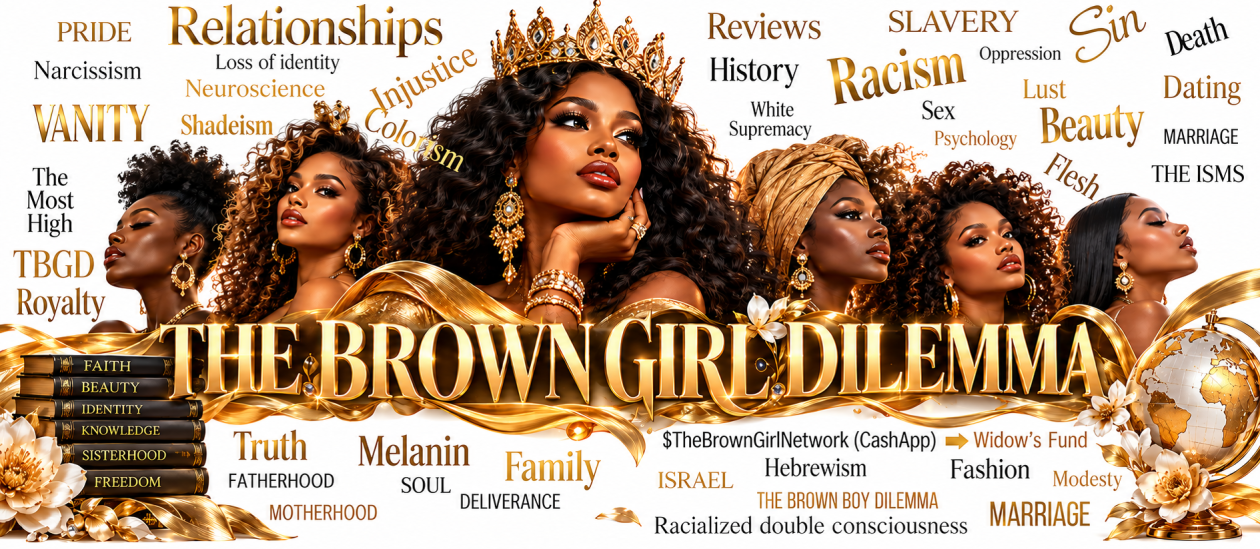
“Brown Girls/Brown Boys” is a celebration of Black womanhood and Black manhood in their extraordinary diversity. The terms brown girls and brown boys evoke warmth, ancestry, complexion, childhood, cultural memory, and the many dimensions of Black identity. Black women and Black men cannot be reduced to a single appearance, personality, socioeconomic condition, or cultural experience. Their lives encompass intellectual achievement, creativity, spirituality, entrepreneurship, family, leadership, beauty, love, struggle, resilience, and aspiration. To examine Black women and men honestly is therefore to recognize both the historical forces that have shaped their experiences and the individuality that exists beyond those forces.

Black women occupy a distinctive place within the history and development of Black communities. Their contributions have included scholarship, political activism, entrepreneurship, education, medicine, literature, science, religion, entertainment, and community leadership. Figures such as Sojourner Truth, Ida B. Wells, Mary McLeod Bethune, Zora Neale Hurston, Katherine Johnson, and Toni Morrison demonstrate the extraordinary intellectual and cultural range of Black women. Their accomplishments challenge historical assumptions that confined women, particularly Black women, to narrow social roles. Black women have repeatedly demonstrated that intellectual brilliance and cultural influence are not exceptions to Black womanhood but important parts of its historical record.

Black men likewise possess a history far more expansive than the stereotypes frequently imposed upon them. Black men have served as scholars, scientists, educators, inventors, artists, entrepreneurs, soldiers, physicians, ministers, writers, athletes, fathers, and community leaders. Individuals such as Frederick Douglass, W. E. B. Du Bois, George Washington Carver, Carter G. Woodson, Paul Laurence Dunbar, James Baldwin, and Garrett Morgan illustrate different dimensions of Black male achievement. Their lives demonstrate that Black masculinity has never been a single social type. It has included intellectualism, artistic expression, courage, tenderness, leadership, craftsmanship, spirituality, scholarship, and service.

The beauty of Black women deserves particular attention because European-centered beauty standards have historically influenced how darker complexions, African facial features, and natural hair have been perceived. Black women possess an extraordinary range of complexions, facial structures, body types, hair textures, and aesthetic characteristics. Dark skin and light skin represent different expressions of human pigmentation rather than measures of worth or beauty. Wide noses, full lips, high cheekbones, round faces, angular faces, tightly coiled hair, loose curls, locs, braids, twists, afros, and countless other features exist within the broad spectrum of Black beauty. Recognizing this diversity is an important component of challenging colorism and restrictive beauty hierarchies.

Black men also possess remarkable physical and aesthetic diversity. Brown boys grow into men whose appearances may include deep ebony complexions, rich brown skin, lighter brown tones, varied facial structures, tightly coiled hair, waves, locs, curls, afros, beards, mustaches, and clean-shaven faces. Physical appearance, however, should not become the sole measure of Black masculinity. A Black man’s character, intellect, emotional maturity, integrity, creativity, responsibility, and treatment of others are equally significant dimensions of his identity. Celebrating Black male beauty is therefore most meaningful when physical appearance is understood as one part of a much larger human being.

Hair has particular cultural significance for Black women and men. Hairstyles can communicate creativity, professionalism, spirituality, individuality, cultural affiliation, and personal preference. The natural-hair movement has also challenged assumptions that African-descended hair must be chemically altered or concealed to be considered attractive or professional. At the same time, Black people should not be placed into another restrictive standard in which natural hair becomes mandatory as a test of authenticity. Freedom includes the ability to wear natural hair, protective styles, straightened hair, locs, short cuts, braids, wigs, or any other style without having one’s Black identity questioned.

Black women have also had to navigate competing expectations concerning strength and vulnerability. The popular image of the “strong Black woman” can acknowledge genuine resilience, but it can also become limiting when it implies that Black women should endure hardship without assistance. Strength should never mean the absence of exhaustion, grief, tenderness, fear, or the legitimate need for support. Black women deserve relationships and communities in which they can be competent without having to be invulnerable. They deserve to be cared for as fully as they are expected to care for others.

Black men face their own complicated expectations surrounding masculinity. Social stereotypes can portray Black men as threatening, emotionally inaccessible, hypermasculine, irresponsible, or incapable of vulnerability. Such representations fail to capture the enormous diversity of Black male lives. Black men can be gentle fathers, devoted husbands, scholars, artists, entrepreneurs, caregivers, introverts, intellectuals, spiritual leaders, and emotionally expressive human beings. Masculinity does not require emotional silence. A Black man can demonstrate strength through accountability, compassion, discipline, wisdom, patience, and the willingness to seek help when circumstances require it.

The relationship between Black women and Black men deserves discussion without reducing either group to stereotypes. Black heterosexual relationships have historically been affected by slavery, racial segregation, economic inequality, migration, incarceration, employment discrimination, and broader social conditions. Contemporary relationships are also influenced by education, economics, religion, cultural expectations, dating preferences, family structures, and individual personality. These realities should be examined carefully rather than transformed into simplistic narratives that blame either Black women or Black men for every difficulty experienced within Black relationships.

Family remains another important dimension of Black life. Black families have taken many forms, including married households, multigenerational families, single-parent households, blended families, extended kinship networks, adoptive families, and chosen communities. Historical circumstances frequently required Black communities to develop strong networks of mutual assistance. Contemporary Black families continue to demonstrate adaptability, although they also confront economic pressures, housing instability, educational inequality, healthcare disparities, and other structural challenges. Recognizing those challenges should never erase the affection, humor, traditions, sacrifices, and achievements that characterize Black family life.

Fatherhood deserves particular recognition in discussions about Black men. Black fathers are frequently represented through narratives of absence while the many men who actively parent, mentor, protect, teach, provide, and nurture their children receive comparatively less attention. Responsible fatherhood can take many forms, including biological, adoptive, stepfather, grandparent, and community mentorship. A father’s influence is not limited to financial provision. Presence, emotional availability, instruction, affection, discipline, encouragement, and example can profoundly influence a child’s development. Black fatherhood should therefore be discussed with both honesty about challenges and recognition of committed fathers.

Black motherhood likewise encompasses far more than sacrifice. Black mothers have historically carried enormous responsibilities while simultaneously serving as educators, entrepreneurs, caregivers, community organizers, spiritual leaders, and advocates for their children. Yet motherhood should not require Black women to erase themselves. Women deserve opportunities to develop their own intellectual, professional, creative, and personal identities alongside their responsibilities to family. Honoring Black mothers means honoring their humanity rather than romanticizing exhaustion.

Education has been one of the most important avenues through which Black communities have pursued advancement. From historically Black colleges and universities to public universities, trade schools, graduate programs, professional institutions, and independent scholarship, Black intellectual life has contributed significantly to American and global knowledge. Black scholars have transformed fields ranging from history and sociology to physics, medicine, literature, mathematics, law, and political science. Education can provide opportunity, but it should not become another hierarchy in which individuals without advanced degrees are considered less valuable. Intelligence and wisdom exist in classrooms, laboratories, businesses, churches, families, workshops, artistic communities, and lived experience.

Economic empowerment is equally important. Black entrepreneurs have established businesses despite discriminatory lending practices, unequal access to capital, segregation, and other barriers. From Black Wall Street communities to contemporary technology companies, restaurants, beauty enterprises, professional practices, publishing businesses, and creative industries, Black economic activity has repeatedly demonstrated ingenuity. Financial literacy is particularly important because income alone does not guarantee financial security. Understanding saving, investing, credit, entrepreneurship, taxes, ownership, and long-term wealth creation can help individuals and families make informed economic decisions.

Representation in media also matters because images influence how people understand themselves and one another. When Black women and men appear only in narrow roles, audiences can internalize distorted assumptions about Black identity. Representation becomes more meaningful when Black characters and public figures are allowed to be ordinary and extraordinary, humorous and serious, wealthy and working-class, romantic and intellectual, flawed and admirable. Black people deserve representation that reflects the complexity of actual human life rather than requiring every story to serve as either a tragedy or an inspirational lesson.

Black creativity has continually expanded the cultural landscape. Literature, music, film, television, fashion, dance, visual art, photography, cuisine, architecture, and entrepreneurship have all been shaped by Black creators. The cultural contributions of Black Americans have influenced national and international culture in profound ways. Yet cultural influence should not be mistaken for cultural equality. A society can enthusiastically consume Black creativity while failing to provide Black creators with equal recognition, ownership, compensation, or institutional opportunity. Celebrating Black culture should therefore include respect for the people who create it.

Spirituality and faith have also played significant roles in the lives of many Black communities. Black churches, religious institutions, families, and individual believers have historically provided spaces for worship, education, mutual aid, political organizing, and emotional support. Religious life has produced influential Black theologians, ministers, scholars, musicians, and community leaders. At the same time, Black people hold diverse religious and philosophical perspectives, including Christianity, Islam, African traditional religions, other faiths, and secular worldviews. Black identity is not dependent upon one religious tradition, and cultural diversity should not be confused with theological uniformity.

Ultimately, “Brown Girls/Brown Boys” is about seeing Black women and Black men as whole human beings. Their skin carries the visible evidence of human genetic diversity, but their humanity extends far beyond complexion. Their histories contain suffering and triumph, injustice and achievement, discrimination and creativity, loss and renewal. Black women deserve to be seen beyond stereotypes of strength, beauty, sexuality, anger, or sacrifice. Black men deserve to be seen beyond stereotypes of aggression, absence, physicality, or emotional limitation. Both deserve the freedom to be complex, imperfect, brilliant, loving, ambitious, spiritual, creative, vulnerable, successful, and fully human.

The brown girl and the brown boy are therefore not merely symbols of race; they are individuals inheriting histories while creating futures. Their identities are shaped by ancestry but not imprisoned by ancestry. Black women and Black men can honor those who came before them while developing lives that their ancestors could not have imagined. The deepest celebration of Blackness is not the creation of another stereotype, but the recognition of an extraordinary range of human possibilities. Brown girls and brown boys deserve to grow into Black women and Black men who know that their beauty does not require permission, their intelligence does not require validation, their humanity does not require qualification, and their future does not have to be limited by the prejudices of the past.

Love what we do? Help us continue the work.
Your donation helps support independent content, meaningful storytelling, education, representation, and the continued growth of The Brown Girl Dilemma. Every contribution makes a difference.

Thank you for supporting the vision. 

CashApp: https://cash.app/$thebrowngirlnetwork

References

Baldwin, J. (1985). The price of the ticket: Collected nonfiction, 1948–1985. St. Martin’s Press.

Collins, P. H. (2000). Black feminist thought: Knowledge, consciousness, and the politics of empowerment (2nd ed.). Routledge.

Du Bois, W. E. B. (1903). The souls of Black folk. A. C. McClurg & Co.

Frazier, E. F. (1939). The Negro family in the United States. University of Chicago Press.

Gates, H. L., Jr. (2019). Stony the road: Reconstruction, white supremacy, and the rise of Jim Crow. Penguin Press.

Higginbotham, E. B. (1993). Righteous discontent: The women’s movement in the Black Baptist church, 1880–1920. Harvard University Press.

hooks, b. (1992). Black looks: Race and representation. South End Press.

Hunter, M. (2005). Race, gender, and the politics of skin tone. Routledge.

Johnson, K. A., & Jones, L. V. (Eds.). (2020). The Black family: A contemporary examination. Routledge.

Morrison, T. (1992). Playing in the dark: Whiteness and the literary imagination. Harvard University Press.

Robinson, C. J. (1983). Black Marxism: The making of the Black radical tradition. Zed Press.

West, C. (1993). Race matters. Beacon Press.

Wilkerson, I. (2020). Caste: The origins of our discontents. Random House.

Queens in Conversation

Conversation is a two-way exchange of thoughts, ideas, feelings, or information between two or more people. It is not just talking; it is an interactive process that involves both speaking and listening. Good conversation requires understanding, respect, and engagement.

At its core, conversation is about connection. It allows people to share perspectives, solve problems, learn, and build relationships. Whether in-person, over the phone, or online, conversation shapes how we understand each other and the world.


Key Components of Conversation

  1. Listening – Conversation is as much about hearing as it is about speaking. Active listening involves:
    • Paying attention without interrupting
    • Showing empathy and understanding
    • Reflecting or summarizing what the other person said
  2. Speaking Clearly – Express your thoughts in a way that others can understand:
    • Use simple, precise language
    • Speak at a moderate pace
    • Avoid using unnecessary jargon or ambiguous statements
  3. Respect – Respect is essential for a healthy exchange:
    • Avoid insulting or belittling others
    • Respect differences in opinion, culture, or background
    • Maintain polite tone even in disagreements
  4. Turn-Taking – Allow others to speak without dominating the conversation. Good conversation is balanced.
  5. Non-Verbal Cues – Body language, eye contact, facial expressions, and tone of voice are part of communication. They can reinforce or undermine spoken words.
  6. Openness – Be willing to share ideas honestly and consider new perspectives.

How to Go About Conversation Effectively

1. Prepare Mentally
Know the topic and your purpose, whether it’s casual, informative, or persuasive. Being prepared helps you stay confident and focused.

2. Begin with Respectful Engagement
Start conversations politely. Ask questions or make small talk to set a positive tone.

3. Ask Open-Ended Questions
Encourage discussion by asking questions that cannot be answered with just “yes” or “no.”
Example: “What do you think about this issue?” instead of “Do you agree?”

4. Listen More Than You Speak
Even if you are excited to share, active listening shows that you value the other person’s input.

5. Respond Thoughtfully
Reflect on what the other person said before responding. Avoid interrupting, jumping to conclusions, or reacting emotionally.

6. Stay Positive and Solution-Oriented
Focus on constructive dialogue. Avoid toxic behaviors such as criticism, gossip, or blaming.

7. Adapt to the Medium

  • Face-to-face: Use body language and tone to reinforce your words
  • Phone/video: Be clear and articulate; listening is more important because cues are limited
  • Text/social media: Use respectful language, emojis judiciously, and avoid sarcasm that can be misinterpreted

8. Close Gracefully
End conversations politely, even if there are disagreements. Summarize key points and express appreciation for the exchange.


Biblical Perspective on Conversation

The Bible emphasizes wise, kind, and uplifting speech:

  • Proverbs 15:1 (KJV): “A soft answer turneth away wrath: but grievous words stir up anger.”
  • Proverbs 16:24 (KJV): “Pleasant words are as an honeycomb, sweet to the soul, and health to the bones.”
  • Ephesians 4:29 (KJV): “Let no corrupt communication proceed out of your mouth, but that which is good to the use of edifying, that it may minister grace unto the hearers.”

Positive Communication: Lessons

1. Thoughtful Speech

  • Biblical Example: Esther carefully approached King Ahasuerus after prayer and counsel (Esther 4:16, KJV).
  • Modern Practice: Pause and think before responding to messages, emails, or social media posts. Avoid reactive or emotional responses.

2. Kindness and Respect

  • Biblical Example: Proverbs 31:26 (KJV) – “She openeth her mouth with wisdom; and in her tongue is the law of kindness.”
  • Modern Practice: Use positive, affirming language; compliment others sincerely; avoid sarcasm or insults online or in conversation.

3. Active Listening

  • Biblical Example: Abigail listened carefully to the situation before addressing David (1 Samuel 25:24-31, KJV).
  • Modern Practice: In discussions—online or in person—pay attention to what others are saying, ask clarifying questions, and validate their perspective.

4. Encouragement and Uplifting Others

  • Biblical Example: The Queen of Sheba acknowledged Solomon’s wisdom (1 Kings 10:9, KJV).
  • Modern Practice: Give positive feedback in text messages, posts, or meetings. Celebrate achievements and milestones.

5. Integrity in Communication

  • Biblical Example: Queen Vashti refused an inappropriate command from King Ahasuerus (Esther 1:12, KJV).
  • Modern Practice: Set healthy boundaries. Speak truthfully and respectfully, even when saying “no” or disagreeing.

6. Courage with Prudence

  • Biblical Example: Esther risked her life to speak for her people (Esther 4:16, KJV).
  • Modern Practice: Advocate for what’s right in a careful, respectful manner. Stand up against injustice without resorting to hostility.

7. Collaboration and Diplomacy

  • Biblical Example: Abigail mediated a tense situation between David and Nabal (1 Samuel 25:32-33, KJV).
  • Modern Practice: Seek consensus, compromise, and shared understanding in group chats, work teams, or family discussions.

8. Asking Thoughtful Questions

  • Biblical Example: Queen of Sheba tested Solomon with questions (1 Kings 10:1, KJV).
  • Modern Practice: Promote curiosity and learning. Ask questions to deepen understanding, not to argue or criticize.

9. Positive Framing

  • Biblical Example: Abigail framed her plea to David respectfully and persuasively (1 Samuel 25:24-31, KJV).
  • Modern Practice: Reframe challenges in constructive ways. Instead of focusing on problems, highlight solutions and opportunities.

10. Supportive Digital Communication

  • Biblical Example: Esther’s letters and petitions impacted an entire nation (Esther 8:3-9, KJV).
  • Modern Practice: Use social media and messaging apps to uplift, inform, and encourage. Avoid spreading negativity, gossip, or divisive content.

Key Takeaways for Modern Positive Communication

  • Pause Before Speaking: Like Esther, think strategically and prayerfully.
  • Speak with Kindness: Proverbs 31 teaches that wisdom is always coupled with gentleness.
  • Listen Actively: Abigail shows that understanding others’ perspectives is crucial.
  • Encourage and Praise: The Queen of Sheba’s acknowledgment demonstrates the power of affirming words.
  • Set Boundaries with Respect: Queen Vashti reminds us that integrity matters.
  • Advocate Thoughtfully: Courage paired with prudence transforms challenges into solutions.
  • Foster Constructive Dialogue: Modern communication thrives when we emulate biblical queens’ diplomacy.

Queens in the Bible are often portrayed as women of wisdom, courage, and strategic influence. Their voices and dialogues carried weight, shaping the political, social, and spiritual direction of their nations. These examples provide timeless lessons about communication.

Queen Esther exemplifies courage and careful speech. She approached King Ahasuerus to intercede for her people, saying, “If I perish, I perish” (Esther 4:16, KJV). Her words were deliberate, measured, and purposeful, highlighting the power of intentional communication.

Esther’s conversations were guided by counsel. Mordecai instructed her to recognize her position: “for such a time as this” (Esther 4:14, KJV). This emphasizes that dialogue is most effective when it considers timing, audience, and purpose—a lesson applicable in today’s interactions.

Queen Vashti provides another model. Her refusal to appear at the king’s feast (Esther 1:12, KJV) demonstrates integrity and assertiveness. Speaking with conviction, even when unpopular, can preserve dignity—a principle for modern communication in social and professional spaces.

The Queen of Sheba’s dialogue with King Solomon illustrates intellectual curiosity and respectful questioning (1 Kings 10:1, KJV). She engaged in deep conversation, testing wisdom and learning. Modern parallels exist in thoughtful discussions on social media, forums, and professional networks where questioning and dialogue promote growth.

The Queen of Sheba acknowledged Solomon’s God-given wisdom: “Blessed be the Lord thy God, which delighted in thee” (1 Kings 10:9, KJV). Praising others’ achievements, expressing gratitude, and acknowledging contributions are key elements of positive modern communication.

Abigail demonstrates strategic speech in averting conflict (1 Samuel 25:32-33, KJV). By speaking carefully, she prevented unnecessary bloodshed. In modern contexts, such as workplace emails or texts, measured, respectful language can prevent miscommunication and promote understanding.

Bathsheba influenced succession and policy through quiet counsel (1 Kings 1:15-21, KJV). Like biblical queens, today we exercise influence through thoughtful engagement on social media, messaging apps, and professional platforms, shaping decisions without aggression.

Esther’s approach to King Ahasuerus—inviting him to banquets before presenting her request (Esther 5:1-4, KJV)—highlights strategic pacing. In modern communication, this is akin to framing difficult conversations with context, empathy, and positivity.

Proverbs 31:26 (KJV) praises the virtuous woman: “She openeth her mouth with wisdom; and in her tongue is the law of kindness.” This verse underscores that all communication should be purposeful and kind—a principle relevant for social media interactions today.

The courage of queens often came from faith. Esther trusted God’s providence in making her appeal (Esther 4:16, KJV). Likewise, modern communication guided by integrity and moral principles fosters trust and strengthens relationships.

Queens’ dialogue influenced society. The Queen of Sheba, Abigail, and Esther used speech to create change. Today, positive dialogue online or on phones can influence communities, uplift others, and promote constructive engagement.

Abigail’s tact in addressing David demonstrates the value of persuasion and diplomacy (1 Samuel 25:24-31, KJV). Modern communication benefits when we employ the same principles: empathy, understanding the audience, and responding thoughtfully.

The Queen of Sheba’s gifts (1 Kings 10:2, KJV) illustrate that conversation often carries symbolic meaning. Similarly, in modern communication, sharing encouragement, acknowledgment, and support strengthens relationships and promotes community.

Proverbs 31:30 (KJV) notes: “Favor is deceitful, and beauty is vain: but a woman that feareth the Lord, she shall be praised.” Today, our words, not only our appearance, communicate character. Kind, faith-aligned speech carries influence and inspires trust.

Queens’ conversations often required balancing boldness with tact. Esther’s strategic approach teaches us to be assertive while maintaining respect. On social media, this translates to expressing opinions without hostility, fostering dialogue instead of conflict.

In modern times, social media, texting, and video calls allow us to emulate queens’ virtues in conversation. Positive communication involves listening, acknowledging others’ perspectives, and responding with patience and kindness.

Abigail’s wise intervention prevented violence. Similarly, modern digital spaces benefit from moderation, empathy, and constructive dialogue. Engaging in conversations without toxicity mirrors the strategic and moral wisdom of biblical queens.

Bathsheba’s influence in succession planning reflects the impact of informed advice (1 Kings 1:15-21, KJV). Today, mentoring, coaching, and supporting others through conversation—digitally or face-to-face—can shape outcomes positively.

The Queen of Sheba’s questions demonstrate that curiosity and learning are essential in communication. Asking thoughtful questions, both online and offline, encourages dialogue, learning, and collaboration.

Esther’s reliance on counsel (Mordecai, Esther 4:14, KJV) reminds us that wise communication often involves preparation, research, and seeking guidance before engaging. Social media dialogue benefits from the same principles—avoiding impulsive responses and focusing on informed discussion.

Proverbs 31:26 reinforces the idea that wisdom and kindness are inseparable in speech. Positive modern communication models this by avoiding harsh criticism, gossip, or inflammatory language while promoting encouragement and support.

Queens often influenced justice through speech. Abigail and Esther intervened to prevent wrongdoing. Today, reporting abuse, standing against misinformation, or uplifting marginalized voices exemplifies the same courage in modern contexts.

Communication today can reflect the balance of assertiveness and humility. Esther’s respectful yet firm approach to King Ahasuerus teaches that influence is most effective when delivered with both confidence and consideration.

The Queen of Sheba’s interaction with Solomon also shows that praise and acknowledgment strengthen relationships (1 Kings 10:9, KJV). Today, public recognition on social platforms or personal messages promotes trust, morale, and constructive engagement.

Abigail’s wise negotiation (1 Samuel 25:24-31, KJV) highlights conflict resolution. Modern communication can adopt these principles, focusing on problem-solving rather than argument escalation.

Social media and texting provide platforms for queens’ virtues in modern life: empathy, strategic timing, clarity, and encouragement. Positive use strengthens networks, fosters learning, and uplifts communities.

Biblical queens’ courage, wisdom, and faith-driven communication remain relevant. Modern communicators can emulate these traits to promote civility, understanding, and positive influence, creating spaces free from toxicity.

Ultimately, “Queens in Conversation” connects biblical examples with contemporary practices. Whether through digital platforms, personal interactions, or professional communication, the principles of wisdom, kindness, strategy, and faith guide effective and transformative dialogue.

Biblical Queen / ExampleCommunication PrincipleModern Positive Communication StrategyPractical Example Today
Esther (Esther 4:16; 5:1-4, KJV)Courage to speak, timing, strategic approachThoughtful pacing, prepared messages, choosing the right mediumSending a carefully worded email or DM to address a sensitive issue respectfully
Abigail (1 Samuel 25:24-31, KJV)Diplomacy, conflict resolution, tactDe-escalation, respectful negotiation, active listeningMediating workplace disputes or online disagreements constructively
Queen of Sheba (1 Kings 10:1-9, KJV)Curiosity, respectful questioning, acknowledgmentAsking thoughtful questions, showing appreciation, collaborative dialogueEngaging in professional forums or social media with curiosity and positive feedback
Bathsheba (1 Kings 1:15-21, KJV)Strategic influence, informed counselMentoring, coaching, providing reasoned guidanceGuiding junior colleagues or peers through messaging apps or virtual meetings
Proverbs 31 Woman (31:26, 31:30, KJV)Wisdom and kindness in speechPositive tone, encouragement, moral integrityPosting uplifting content, praising accomplishments, or avoiding toxic online debates
Esther & Mordecai (4:14, KJV)Seeking counsel, reliance on guidanceConsulting others before responding, informed decision-makingBrainstorming with trusted colleagues or friends before replying to contentious messages
Queen Vashti (Esther 1:12, KJV)Integrity and self-respect in communicationSetting boundaries, politely refusing harmful requestsDeclining inappropriate requests via email, text, or social media while maintaining professionalism
Abigail (1 Samuel 25:32-33, KJV)Preventing harm through speechIntervening positively to prevent misunderstandings or hurtSending clarifying messages to prevent miscommunication or gossip
Queen of Sheba (1 Kings 10:2, KJV)Generosity and exchange in conversationPositive reinforcement, acknowledgment, constructive feedbackSharing praise or recognition on social media or in professional networks
Esther (4:16, KJV)Faith-guided courageEthical and values-driven communicationSpeaking out on social justice issues online or offline with integrity and respect

In conclusion, the KJV narratives provide enduring lessons: intentional, kind, and informed speech has power. Like Esther, Abigail, and the Queen of Sheba, modern communicators can combine courage, wisdom, and positivity to influence outcomes, resolve conflicts, and foster meaningful relationships.

References (KJV Bible)

Holy Bible, King James Version. (1611). Cambridge Edition. Cambridge University Press.
Esther 4:14, 4:16; 5:1-4, 5:2.
1 Kings 10:1-9.
1 Samuel 25:24-33; 1 Kings 1:15-21.
Proverbs 31:26, 31:30.

Proverbs 15:1 – “A soft answer turneth away wrath: but grievous words stir up anger.”

Proverbs 16:24 – “Pleasant words are as an honeycomb, sweet to the soul, and health to the bones.”

Proverbs 31:26 – “She openeth her mouth with wisdom; and in her tongue is the law of kindness.”

Ephesians 4:29 – “Let no corrupt communication proceed out of your mouth, but that which is good to the use of edifying, that it may minister grace unto the hearers.”

James 1:19 – “Wherefore, my beloved brethren, let every man be swift to hear, slow to speak, slow to wrath.”

Adler, R. B., Rosenfeld, L. B., & Proctor, R. F. (2018). Interplay: The process of interpersonal communication (14th ed.). New York, NY: Oxford University Press.

Beebe, S. A., Beebe, S. J., & Ivy, D. K. (2021). Communication principles for a lifetime (7th ed.). Boston, MA: Pearson.

Goffman, E. (1967). Interaction ritual: Essays on face-to-face behavior. Chicago, IL: Aldine.

Gudykunst, W. B., & Kim, Y. Y. (2017). Communicating with strangers: An approach to intercultural communication (5th ed.). New York, NY: Routledge.

Tannen, D. (2001). You just don’t understand: Women and men in conversation. New York, NY: Ballantine Books.

Floyd, K. (2014). Interpersonal communication (3rd ed.). New York, NY: McGraw-Hill.

And They Call Me BLACK: Meaning, Symbolism, and the Weight of History.

And They Call Me Black

They call me Black, yet my skin tells a softer truth—
a café au lait glow kissed by light,
golden brown like the warmth of morning sun
resting gently on earth that remembers rain.
Names try to confine what God made fluid,
But my reflection refuses to be boxed in labels not made for my fullness.

I am not one shade, not one story, not one tone of night—
I am every hue that breathes through melanin’s design.
Celebrate me in all my shades,
from bronze to honey, from caramel to deep, rich earth.
For I am not a color made small by language—
I am a living spectrum, created whole, created beautiful.

The color black carries one of the most complex and emotionally charged meanings in human history. It is not merely a visual shade but a symbol layered with cultural, spiritual, political, and historical significance. Across civilizations, black has represented both profound dignity and deep stigma, often depending on who is interpreting it and from what position of power.

Why are people called “white” and “Black”

These labels developed mainly during the rise of European colonialism (1400s–1800s) and the Atlantic slave system.

  • Europeans increasingly categorized people by skin tone as a visible marker of difference
  • Over time, “white” came to represent people of European descent in legal systems and colonial societies
  • “Black” became the category assigned to African-descended peoples, especially in the context of slavery

So these terms were not originally scientific—they were social classifications tied to power, labor, and law, not precise descriptions of complexion.


Biologically speaking:

  • Human skin color exists on a wide spectrum of melanin levels
  • Most African-descended populations are various shades of brown, not literally “black”
  • Most European-descended populations are also shades of beige, pinkish, or light tanish, not truly “white”

The term “Black” as a racial category did not come from a single person or moment—it developed over time, mainly through European colonialism and the Atlantic slave system.

  • In ancient times, people were not classified as “Black” or “white” the way we use those terms today. Identity was usually based on tribe, nation, language, or region (e.g., Egyptian, Kushite, Israelite, Roman).
  • During the 15th–18th centuries, European explorers, traders, and colonizers began classifying people by skin color to organize expanding global trade and empires.
  • As the transatlantic slave trade expanded, “Black” became a racial label used to categorize enslaved Africans and their descendants as a group separate from Europeans. This system became tied to laws, the inheritance of slavery, and social hierarchy (Fredrickson, 2002; Mills, 1997).
  • Over time, “Black” stopped being just a description and became a racial identity category shaped by power structures, especially in the Americas.

So, the term is not ancient or biblical in origin—it is a modern social classification developed during colonial expansion.

In natural symbolism, black is associated with mystery, depth, and the unknown. It is the color of the night sky, the vastness of space, and the quiet stillness that precedes creation. In many African and ancient cultures, black has been connected to fertility, wisdom, and ancestral presence, symbolizing the womb of creation rather than absence.

However, in Western historical thought, black has often been assigned a negative meaning. It has been linked to danger, evil, and death in symbolic systems that contrast “light” with “dark.” These associations were not neutral; they developed within cultural frameworks that often placed European whiteness at the center of value systems (Goldenberg, 2003).

Language itself reflects this symbolic tension. Phrases such as “blacklist,” “black sheep,” and “black market” demonstrate how the color has been linguistically tied to exclusion or illegality. These expressions show how deeply symbolism can shape perception, even without direct intent.

The historical construction of racial categories intensified the meaning of black as identity. During the rise of European colonial expansion, “blackness” became associated with African peoples in ways that were used to justify enslavement and exploitation. This shift transformed color from symbolism into hierarchy (Fredrickson, 2002).

In the context of the transatlantic slave trade, millions of Africans were forcibly taken across the ocean under brutal conditions. The Atlantic passage became one of the most defining historical experiences associated with Black identity in the Americas (Smallwood, 2007). This historical trauma shaped how the color black became associated with suffering and endurance.

Within biblical interpretation, some readers connect blackness to passages describing oppression and identity transformation. One often-cited verse is found in Deuteronomy 28:37, which speaks of becoming “a proverb and a byword” among nations (Deuteronomy). For some interpreters, this language reflects how groups subjected to oppression may become stigmatized or misrepresented.

The idea of a “byword” refers to a person or group becoming a symbol of ridicule or negative association. In historical terms, this concept has been applied by some to describe how Black identity has been portrayed in global systems of racism, where stereotypes and caricatures shaped public perception (Mills, 1997).

At the same time, mainstream biblical scholarship understands Deuteronomy 28 as addressing ancient Israel within its own historical context. The passage describes covenant blessings and curses tied to obedience and exile, not modern racial categories (Coogan, 2018). This distinction is important in separating ancient textual meaning from contemporary interpretation.

Despite scholarly differences, the lived experience of Black communities in the Americas adds another layer of meaning. Through slavery, segregation, and systemic inequality, blackness became socially constructed not only as a color but as a lived identity marked by struggle and resilience (Alexander, 2012).

Yet blackness is not defined solely by oppression. In art, music, and culture, Black identity has produced extraordinary creativity and influence. From spirituals and gospel music to jazz, hip-hop, and global fashion, Black expression has shaped the cultural world in powerful ways.

In psychological and cultural studies, scholars note that identity formation often emerges from both pain and resistance. Cultural trauma theory suggests that collective suffering can become a source of unity, memory, and meaning across generations (Eyerman, 2001).

In religious thought, blackness is sometimes associated with divine mystery. In many theological traditions, God is described as beyond light and darkness, suggesting that human categories cannot fully contain divine essence. This challenges simplistic associations between color and moral value.

In contrast, colonial-era theology often reinforced color hierarchies that associated whiteness with purity and blackness with sin. These interpretations were later used to justify social inequality, though they are widely rejected in modern theological scholarship (Goldenberg, 2003).

What do historians and scholars say?

Ancient Israelites were a people of the ancient Near East—the same general region as modern-day Israel/Palestine, Jordan, and surrounding areas.

  • They were not classified as “Black” or “white” in the modern sense.
  • Modern racial categories developed much later (mainly during and after the transatlantic slave trade).
  • Physically, they likely had brown to dark brown skin tones, similar to other Semitic populations of that region.

Scholars generally place them among Semitic peoples, related to groups like ancient Canaanites, Arameans, and others.

👉 So academically speaking:
They were Middle Eastern people, not “white Europeans,” and not defined as “Black” in the modern racial sense either.


2. What does the Bible itself suggest?

The Bible gives very limited physical descriptions, but a few passages are often discussed:

  • Jeremiah 14:2 (KJV) – “Judah mourneth… the gates thereof languish; they are black unto the ground.”
  • Song of Solomon 1:5 (KJV) – “I am black, but comely…”

Some interpret these as evidence of darker skin, while others argue:

  • “Black” can refer to mourning, suffering, or sun exposure, not necessarily ethnicity.

So scripturally, it’s not definitive.


3. Why do some say the Israelites were Black?

Some groups—especially within the African diaspora—believe that:

  • The true Israelites were people of African descent
  • The transatlantic slave trade fulfills prophecies like Deuteronomy 28
  • Modern Black people (especially in the Americas) are descendants of biblical Israel

This belief is often rooted in:

  • Reclaiming identity after slavery
  • Connecting historical suffering with biblical prophecy
  • Challenging Eurocentric depictions of biblical figures

4. Why do others disagree?

Mainstream historians and theologians argue:

  • There is no direct historical or genetic evidence that all ancient Israelites were what we today call Black Africans
  • Jewish populations today (including Ethiopian Jews, Middle Eastern Jews, and European Jews) show diverse ancestry
  • Biblical prophecies are often interpreted as historical events, not modern racial identities

5. What is true and agreed upon?

There are a few important points most scholars agree on:

  • Ancient Israelites were not European/white in the modern sense
  • They were part of a diverse ancient world connected to Africa and the Middle East
  • Africa (especially places like Egypt and Cush) plays a significant role in biblical history

6. The deeper issue behind the question

This question is often not just about skin color—it’s about:

  • Identity
  • Dignity
  • Historical truth
  • Reclaiming a narrative after oppression

For many, asking if Israelites were Black is really asking:

“Do we have a place in God’s story?”


Balanced conclusion

  • Historically: Israelites were Middle Eastern people with varying brown skin tones
  • Biblically: The text does not clearly define them by modern race
  • Theologically (some beliefs): Some identify Black people today as the true Israelites
  • Academically: That claim is debated and not widely supported as a historical certainty

In African diasporic thought, blackness has been reclaimed as a symbol of identity, dignity, and spiritual depth. Movements in literature, theology, and politics have emphasized that Black identity is not defined by oppression but by heritage, survival, and intellectual contribution.

What does “byword” mean?

A byword is not just a nickname—it is:

  • A word or label people use mockingly or negatively
  • A term that becomes synonymous with a condition, stereotype, or stigma
  • Something said with contempt, ridicule, or generalization

In simple terms:
A byword is when your identity becomes a negative reference point in society.


How “Black” is interpreted as a byword

https://images.openai.com/static-rsc-4/yunXch1xN54TLZyk8l8ehtXAF3WrlJJrtlAsIb-bR1dY_DToex378B97UAKyGECga6Y6OlpitNGgsa9AF6dw1BTYWdxb03VZT4kyJytJu0NrZa45ddG6bFxX-QbxJCz8277bo2XTSaTcz_f672TjyxVkgaTWZXXWSi85hZJ4ZHqM8W45-fP780-3yat_RzNz?purpose=fullsize
This photograph is the property of its respective owners.
https://images.openai.com/static-rsc-4/73ZrxzsZX0QlLe_505znvzJYX-HSldcjDvi5XdMzLZZo3tqW7iY0a7XSLEpoP0QDKQ1WMUvjAgQ4ci5-_NcDC5V3bor2OhzMi5Z4YUSmeLi1HcJxKthbcnBVvk80KVA0TN2ifk62INQbvUpf3weTdUhIf_pLCYvDGvzqwR-gCGA52RPC0CXCo8GXY8ldqOeO?purpose=fullsize
This photograph is the property of its respective owners.

8

Those who connect this verse to Black history argue that:

1. “Black” has been used as a label with negative meaning

Historically, the word “black” has often been associated with:

  • Evil (“blacklist,” “black sheep,” “black market”)
  • Inferiority (pseudoscience and racism)
  • Criminality (media stereotypes)

So instead of just describing skin color, it became loaded with negative connotations.


2. Slavery and racism created global stereotypes

During and after slavery:

  • Black people were labeled as lazy, unintelligent, dangerous, hypersexual, etc.
  • These ideas were spread through media, laws, and education
  • Over time, “Black” itself became shorthand for these stereotypes in many societies

This aligns with the idea of becoming a “proverb and byword”—a people reduced to caricature.


3. Derogatory names and slurs

Beyond the term “Black,” enslaved and oppressed people were called:

  • Racial slurs
  • Dehumanizing labels
  • Terms that erased identity and dignity

These function as literal bywords—names used to degrade.


4. A global condition

The verse says “among all nations,” and many point out:

  • Anti-Black stereotypes exist worldwide, not just in one country
  • Colorism and bias against dark skin appear across multiple cultures

So the argument is that “Black” became a globalized identity tied to stigma, fitting the idea of a byword.


How scholars interpret this differently

Mainstream biblical scholars say:

  • “Byword” referred to ancient Israel being mocked by surrounding nations after defeat or exile
  • It was not about modern racial terms like “Black”
  • The Hebrew concept meant becoming an object lesson of failure or judgment, not a racial label

Important balance

There are two truths to hold carefully:

  • Historically: The Bible did not use “Black” as a racial category the way we do today
  • Experientially: Black people have undeniably been turned into a social byword through racism, slavery, and media narratives

Deeper meaning

When people say “Black is a byword,” they are really expressing this:

A people’s identity has been reduced, misdefined, and weaponized against them.

It’s not just about a word—it’s about:

  • Loss of original identity
  • Imposed labels
  • Living under narratives created by others

Encouraging perspective

The same scripture that speaks of becoming a “byword” also points toward restoration, identity, and remembrance.

A byword can be undone when:

  • People reclaim truth
  • Identity is redefined by God, not society
  • History is understood, not just inherited

The symbolism of black also appears in psychological frameworks. Carl Jung associated the “dark” with the unconscious mind—representing hidden knowledge, unresolved trauma, and inner transformation. In this sense, black becomes a metaphor for internal depth rather than negativity alone.

Modern social discourse continues to wrestle with how blackness is perceived. Media representation, economic inequality, and political structures all influence how Black identity is viewed and experienced in everyday life. These systems shape public perception in ways that are often inherited from historical narratives.

In response, many scholars and activists emphasize the importance of redefining language. Words and symbols are not fixed; they evolve based on cultural power and interpretation. Reclaiming blackness involves reshaping meaning from imposed stigma into self-defined identity.

The color black, therefore, exists in a space of dual meaning—both imposed and reclaimed, both symbolic and lived. It carries the weight of history while also holding the possibility of transformation. Understanding this duality is essential to engaging the topic honestly.

Ultimately, black is not simply a color—it is a story. It is a reflection of how human beings assign meaning to identity, how societies construct hierarchy, and how communities reclaim dignity after generations of distortion. Its meaning continues to evolve, shaped by both history and the people who live within it.


References

Alexander, M. (2012). The new Jim Crow: Mass incarceration in the age of colorblindness. The New Press.

Coogan, M. D. (2018). The Old Testament: A historical and literary introduction. Oxford University Press.

Eyerman, R. (2001). Cultural trauma: Slavery and the formation of African American identity. Cambridge University Press.

Fredrickson, G. M. (2002). Racism: A short history. Princeton University Press.

Goldenberg, D. M. (2003). The curse of Ham: Race and slavery in early Judaism, Christianity, and Islam. Princeton University Press.

Mills, C. W. (1997). The racial contract. Cornell University Press.

Smallwood, S. E. (2007). Saltwater slavery: A middle passage from Africa to American diaspora. Harvard University Press.

Authenticity over Acceptance: Which Leads to True Belonging?

Photo by cottonbro studio on Pexels.com

The Social Dilemma

Human beings are wired for connection, yet many live torn between the desire to be authentic and the need for acceptance. Authenticity refers to living in alignment with one’s true values, beliefs, and personality, while acceptance is the desire to be embraced, validated, and approved by others. The tension arises when these two needs seem to conflict — when being fully yourself risks rejection, or being accepted requires self-betrayal.


Defining Authenticity

Psychologists define authenticity as the ability to express your true thoughts, emotions, and values consistently, regardless of external pressure (Kernis & Goldman, 2006). Biblically, authenticity aligns with integrity — “The just man walketh in his integrity” (Proverbs 20:7, KJV). Authenticity requires courage, because it exposes you to possible criticism. However, it also leads to a sense of inner freedom, as you are no longer living behind a mask.


Defining Acceptance

Acceptance is the social experience of being recognized, valued, and included. It fulfills a core human need, as seen in Maslow’s hierarchy of needs (Maslow, 1943). Acceptance can be positive when it affirms a person’s God-given identity, but it can become toxic when it requires conformity to sinful or unhealthy behaviors. Paul warns believers not to seek worldly approval at the cost of truth: “Do I seek to please men? for if I yet pleased men, I should not be the servant of Christ” (Galatians 1:10, KJV).


The Social Pressure to Conform

Social groups often demand conformity, sometimes subtly. Whether through family expectations, peer influence, or workplace culture, people feel pressure to “fit in.” This can lead to self-silencing, where one hides parts of their identity or faith to maintain social harmony. Jesus warned against this when he said, “Woe unto you, when all men shall speak well of you!” (Luke 6:26, KJV), reminding us that universal approval often means compromise.


The Benefits of Authenticity

Research shows that living authentically correlates with higher well-being, lower stress, and stronger self-esteem (Ryan & Deci, 2017). When you are authentic, relationships deepen because they are based on honesty rather than pretense. Spiritually, authenticity is key to intimacy with God, who desires truth in the inward parts (Psalm 51:6).


The Risks of Prioritizing Acceptance

While acceptance feels good in the short term, relying on it can lead to people-pleasing, burnout, and loss of identity. People who build their lives around others’ approval may feel fragmented and anxious. Acceptance at any cost can be a trap, leaving you constantly adjusting yourself to maintain others’ favor — an exhausting and unstable foundation for belonging.


Biblical and Modern Examples

Biblically, Daniel chose authenticity over acceptance by refusing to eat the king’s meat (Daniel 1:8), risking punishment but gaining God’s favor. Similarly, Martin Luther King Jr. chose authenticity in his fight for justice despite widespread opposition, ultimately shifting society. Both examples show that true influence often requires sacrificing popularity for principle.


Conclusion: Choosing Authenticity First

Authenticity and acceptance are not always mutually exclusive, but when forced to choose, authenticity leads to deeper, more lasting belonging. True acceptance is found in God, who declares believers accepted in the beloved (Ephesians 1:6, KJV). When we live authentically before Him, we attract the right relationships — those who love us for who we truly are — rather than chasing superficial approval.


References

  • Kernis, M. H., & Goldman, B. M. (2006). A multicomponent conceptualization of authenticity: Theory and research. Advances in Experimental Social Psychology, 38, 283–357.
  • Maslow, A. H. (1943). A theory of human motivation. Psychological Review, 50(4), 370–396.
  • Ryan, R. M., & Deci, E. L. (2017). Self-Determination Theory: Basic Psychological Needs in Motivation, Development, and Wellness. Guilford Press.
  • The Holy Bible, King James Version (1769/2023).

Your Story Matters: The Power of Testimony in Transforming Lives.

Photo by Tima Miroshnichenko on Pexels.com

Every person carries a unique story — a tapestry of pain, triumph, lessons, and redemption — that is not only valuable but necessary for the healing and encouragement of others. In both psychology and Scripture, the power of storytelling is recognized as a tool for connection, empathy, and transformation. When we share our stories, we offer proof that adversity can be overcome, that growth is possible, and that God is faithful. The Bible reminds us, “And they overcame him by the blood of the Lamb, and by the word of their testimony” (Revelation 12:11, KJV). This verse highlights that personal testimony is not merely a narrative; it is a weapon of victory that defeats fear, shame, and the enemy’s lies.

From a psychological standpoint, sharing one’s personal narrative has measurable benefits for mental health. Narrative therapy, a widely recognized counseling approach, encourages individuals to re-author their lives by framing their experiences in ways that highlight resilience and agency (White & Epston, 1990). Telling one’s story helps process trauma, make meaning out of suffering, and reduce feelings of isolation. Research shows that when people share testimonies of overcoming challenges, listeners often experience increased hope and motivation (Adler et al., 2016). This underscores that storytelling not only heals the speaker but inspires the hearer.

The Bible is full of testimonies that were recorded to instruct, comfort, and strengthen future generations. Joseph’s story of betrayal, slavery, and eventual elevation to power (Genesis 37–50) demonstrates how one person’s journey can preserve a nation. The Apostle Paul frequently shared his conversion experience — from persecutor to preacher — to validate the transformative power of Christ (Acts 22:1–21). These biblical examples show that God intends our personal journeys to be a blessing to others, not just private experiences.

Sharing our stories also dismantles shame. Many people hide their struggles out of fear of judgment, yet James 5:16 commands, “Confess your faults one to another, and pray one for another, that ye may be healed.” Vulnerability in testimony allows others to see that they are not alone in their pain and invites communal healing. Psychology supports this, showing that shame loses power when it is spoken and met with empathy (Brown, 2015).

Moreover, sharing testimonies is an act of stewardship. The experiences we endure are not random; they are lessons entrusted to us so that we may serve others. Second Corinthians 1:3–4 reminds us that God “comforteth us in all our tribulation, that we may be able to comfort them which are in any trouble.” When we withhold our stories, we withhold the comfort someone else might desperately need.

Real-life testimonies illustrate this principle powerfully. Survivors of addiction who speak openly about recovery often encourage others to seek treatment. Individuals who share stories of grief, loss, or illness offer hope to those walking through similar valleys. Churches frequently use testimony time as a means of edification, allowing members to witness the faithfulness of God in action.

Finally, sharing your story affirms your own worth and significance. Many people struggle with feelings of insignificance or invisibility, but telling one’s story is an act of reclaiming identity. Psalm 139:14 declares, “I will praise thee; for I am fearfully and wonderfully made.” Your life, with all its complexity, is a masterpiece that reflects God’s glory. To remain silent is to hide that masterpiece under a bushel (Matthew 5:15).

In conclusion, our stories are not accidents; they are instruments for change. Whether in a counseling session, small group, pulpit, or conversation over coffee, our testimonies have the power to heal, inspire, and transform lives. Sharing them honors God, strengthens others, and reminds us of our own resilience and importance. Your story matters — and someone else’s breakthrough may depend on your willingness to tell it.


References

  • Adler, J. M., Lodi-Smith, J., Philippe, F. L., & Houle, I. (2016). The incremental validity of narrative identity in predicting well-being: A review of the field and recommendations for the future. Personality and Social Psychology Review, 20(2), 142–175.
  • Brown, B. (2015). Daring Greatly: How the Courage to Be Vulnerable Transforms the Way We Live, Love, Parent, and Lead. Gotham Books.
  • White, M., & Epston, D. (1990). Narrative Means to Therapeutic Ends. Norton & Company.
  • The Holy Bible, King James Version. (1769/2023). Thomas Nelson. (Revelation 12:11; James 5:16; 2 Corinthians 1:3–4; Psalm 139:14; Matthew 5:15).