Tag Archives: writing

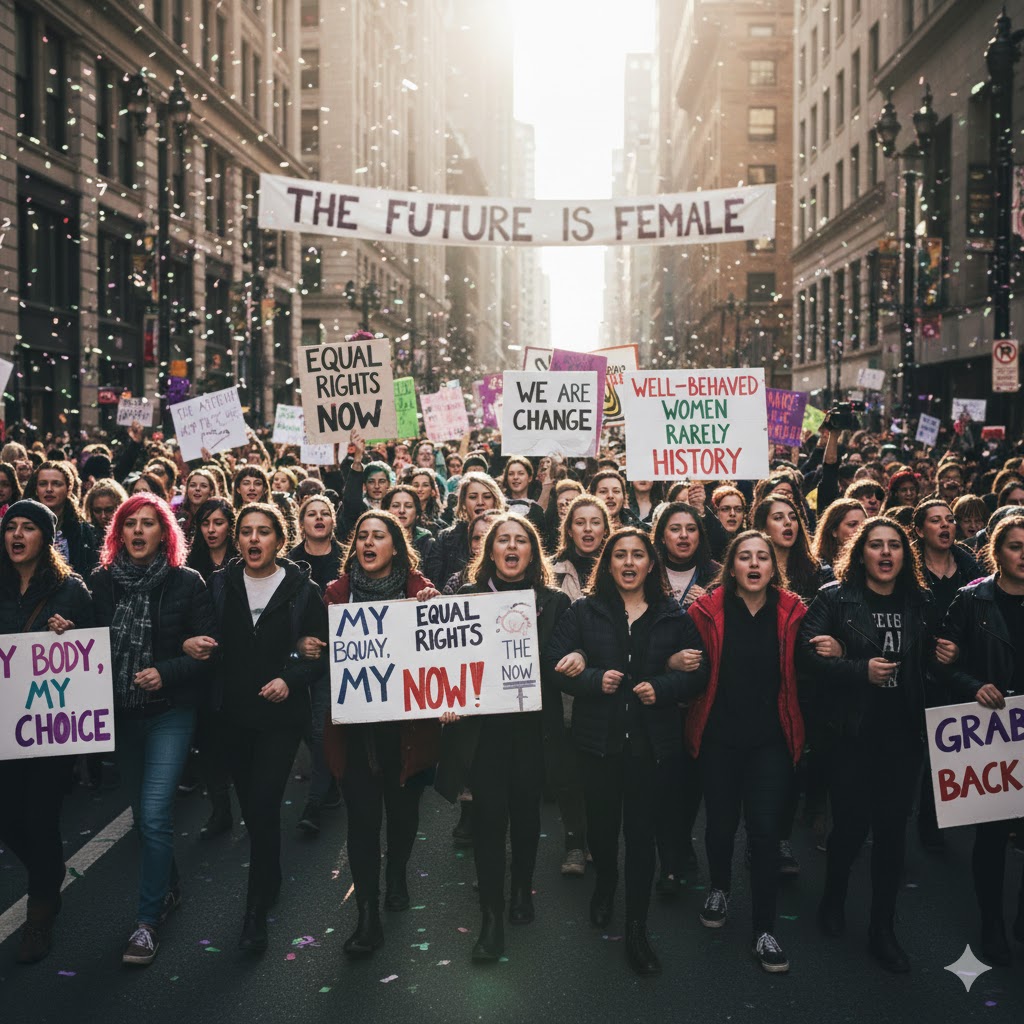
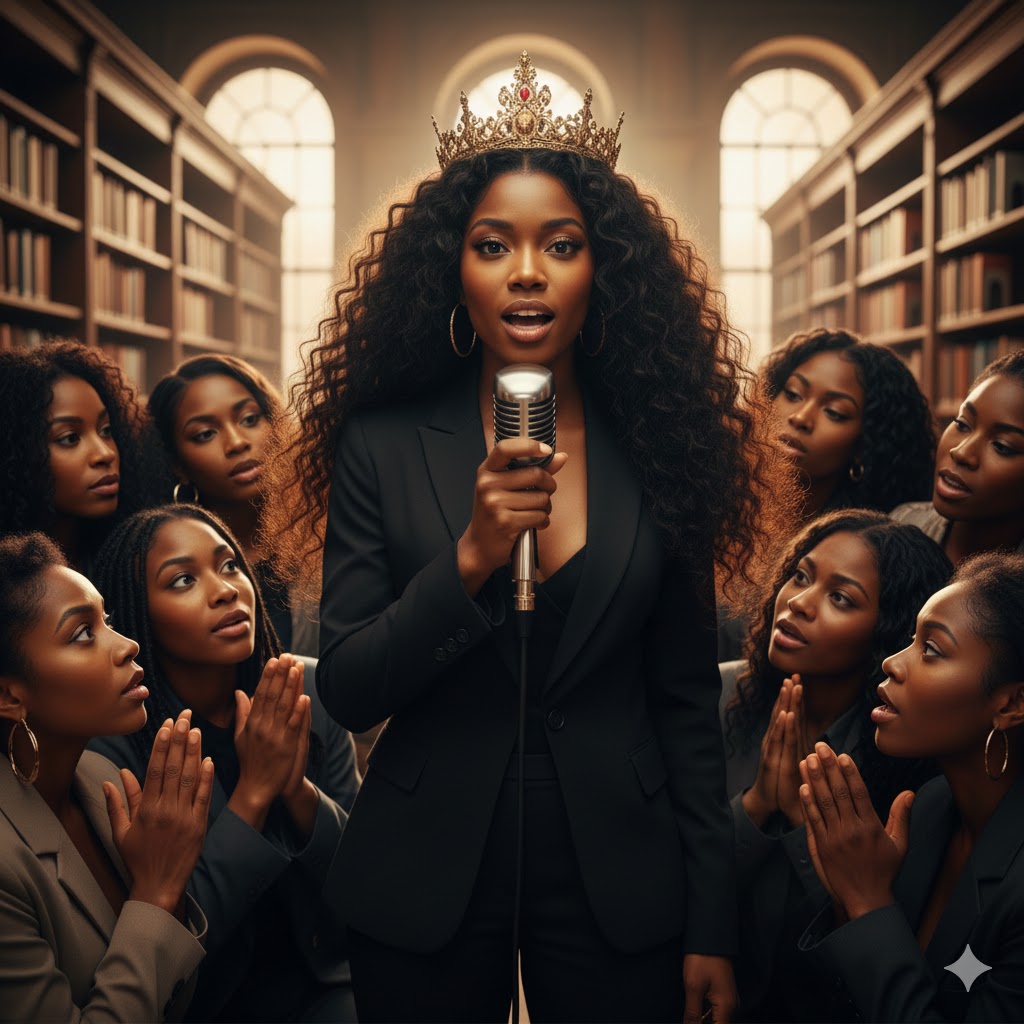
👑 Girl Talk Series: Crowns, Confidence & Calling

Hello Ladies – a crown is more than decoration—it is a declaration. When a woman places a crown on her head, even symbolically, she asserts royalty, identity, and worth. Scripture affirms a woman crowned in dignity: “Strength and honour are her clothing; and she shall rejoice in time to come” (Prov. 31:25, KJV). Ladies, before the world ever defined beauty or worth, God already crowned you in His purpose.

Many women admire crowns without recognizing that they already wear one inwardly. A woman aligned with God carries a spiritual diadem, not a borrowed vanity. “Thou shalt also be a crown of glory in the hand of the Lord” (Isa. 62:3, KJV). The crown is His, but the purpose is yours.

Confidence today is often manufactured through trends, influencers, or aesthetics, yet biblical confidence is nurtured through God’s voice, not echo chambers. “The Lord is my light and my salvation; whom shall I fear?” (Psa. 27:1, KJV). Real confidence begins without fear, not without opposition.

Many women struggle with insecurity because their identity was placed in mirrors instead of meaning. But scripture secures femininity deeper than reflection: “For we are his workmanship, created in Christ Jesus unto good works” (Eph. 2:10, KJV). A woman is crafted, not accidental.

Covenantal confidence does not walk loudly—it walks anchored. Social confidence boasts, but spiritual confidence bows. “Humble yourselves in the sight of the Lord, and he shall lift you up” (James 4:10, KJV). Lift comes after posture, not performance.

Calling is not something chased, but something uncovered through obedience. Many women run after purpose while running from submission. Yet scripture explains alignment brings assignment: “Commit thy works unto the Lord, and thy thoughts shall be established” (Prov. 16:3, KJV).

God’s calling for women includes mentorship, nurture, emotional articulation, and spiritual inheritance transmission. But not every voice online stewards identity correctly. “Take heed what ye hear” (Mark 4:24, KJV). Listening determines shaping.

A woman who walks without calling will eventually walk toward validation markets—likes, praise, trends, competition. But calling frees a woman from comparison prison. “The Lord is the portion of mine inheritance” (Psa. 16:5, KJV). Purpose comes pre-inherited under God.

Many ladies were taught to seek crowns socially—beauty crowns, success crowns, marriage crowns—but not to seek the God who crowns covenantally. Yet scripture promises the most important crowning: “He crowneth thee with lovingkindness and tender mercies” (Psa. 103:4, KJV). Mercy is the first crown, not reward.

The world celebrates outspoken women, but often mocks obedient women. Yet scripture centers quiet strength as divine feminine power: “A meek and quiet spirit… is in the sight of God of great price” (1 Pet. 3:4, KJV).

Many ladies seek confidence through economic or romantic elevation, not realizing divine positioning precedes earthly inheritance. God uplifts womanhood through righteousness, not rivalry. Christ uplifts through covenant, not conquest.

A crowned woman must still carry accountability. Crowns do not remove correction. “Whom the Lord loveth he correcteth” (Prov. 3:12, KJV). If He corrects you, you are not lost, you are loved.

Confidence without covenant becomes vanity, but confidence under covenant becomes testimony. God makes women glorious by spiritual alignment, not social applause. “The Lord shall establish thee an holy people unto himself” (Deut. 28:9, KJV). Purpose stays holy when covenant stays intact.

Many ladies carry a diagnosis of insecurity, father-wounds, fractured religious history, and relational trust ruptures, and bring those unmet needs online to influencers who monetize what God should have fathered. Scripture warns against replacing the shepherd with sectors. “Woe unto the shepherds that destroy and scatter the sheep” (Ezek. 34:2, KJV).

A woman healed under God does not deny femininity; she redefines it through scripture, not trends. She carries faith’s original blueprint, not digital doctrine. Identity was God-instated before platform-marketed.

Girls must stop believing that confidence is the absence of tears, softness, or uncertainty. Strength is not emotional burial; it is emotional clarity surrendered to God. God welcomes the tears that influencers shame. “The Lord is nigh unto them that are of a broken heart” (Psa. 34:18, KJV).

The voices online divide men into alpha/beta ranks, yet scripture reverses the ranking system entirely. “The Lord looketh on the heart” (1 Sam. 16:7, KJV). Purpose is internal rulership, not external hierarchy.

The crisis in modern feminine purpose is that many want crowns without process, confidence without covenant, influence without instruction. Yet scripture confirms true feminine inheritance flows only through divine ordering.

A crowned woman must eventually step into a calling that endures longer than applause. Influence is seasonal, calling is eternal. God began a purpose in you intentionally, and scripture promises the follow-through: “He which hath begun a good work in you will perform it” (Phil. 1:6, KJV).

Covenantal womanhood disciples nurture, guidance, humility, covenant, assignment, and inheritance—not opinion gladiatorship or grievance markets. The internet has microphones; God has mantles.

The real power of a crowned woman is not dominating rooms—but discerning them. “Give not that which is holy unto the dogs” (Matt. 7:6, KJV). Discernment is feminine spiritual rulership.

Purpose-seeking ends only when noise bows to knowledge, grievances bow to God, insecurity bows to identity, trends bow to scripture, and womanhood bows to a covenant that does not scatter under social duress. Godliness is not a trend; it is an eternal feminine inheritance installed by the spirit over the stage.

Therefore, ladies, wear your crowns spiritually first. Walk in God’s confidence before social confidence. Uncover calling through obedience rather than ideological markets. Your crown is not your burden—lack of covenant is. But once covenant returns, crowns become testimonies, confidence becomes inheritance, and calling becomes performed destiny.


📚 References

The Holy Bible, King James Version. (1611). Cambridge University Press.

hooks, b. (2004). The Will to Change: Men, Masculinity, and Love. Washington Square Press.

Tatum, B. D. (1997). Why Are All the Black Kids Sitting Together in the Cafeteria? Basic Books.
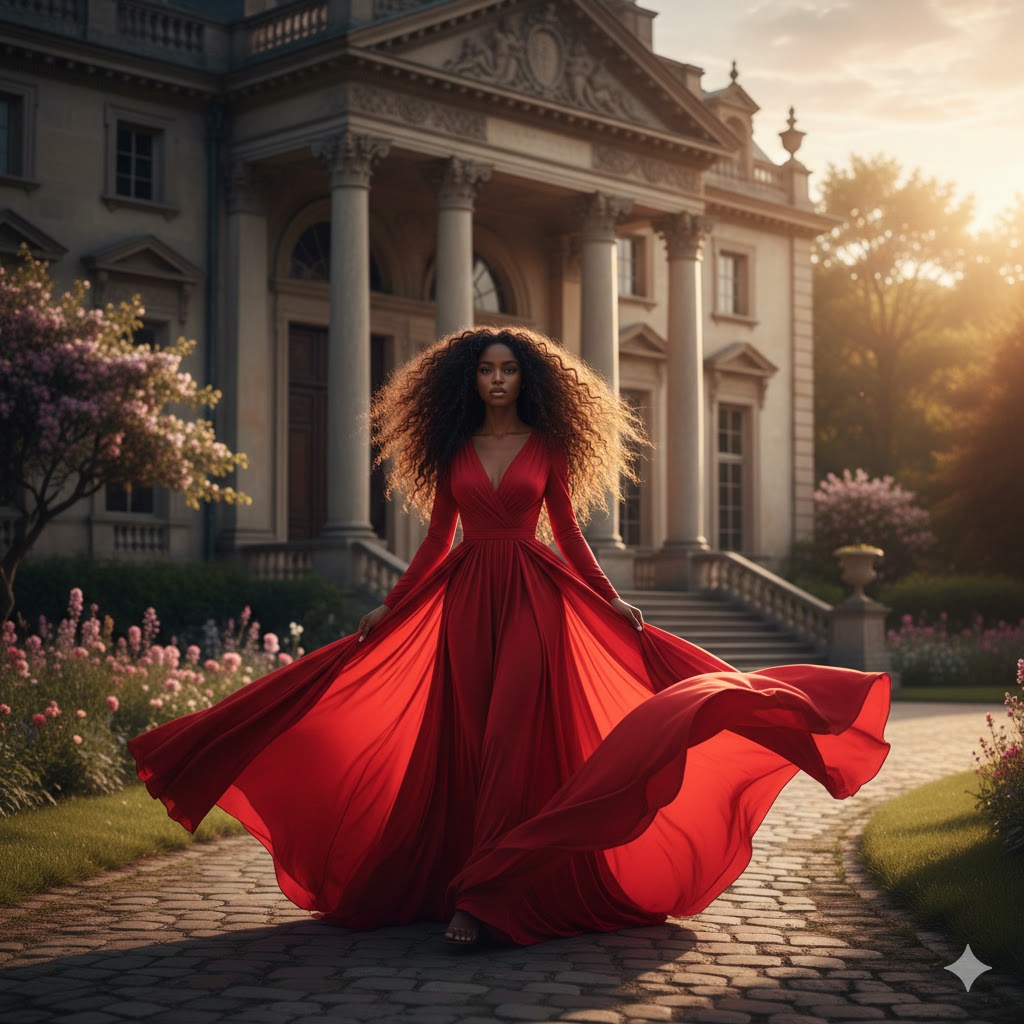
The Black Woman: The Force of Nature

The Black woman is a force of nature—powerful, unbreakable, and extraordinary. She carries a presence that cannot be imitated or minimized. Her soul holds a depth that comes from surviving centuries of oppression while still producing brilliance, culture, and generational resilience. The Most High has gifted her with a spirit that stands tall in storms and shines even in darkness. She is not merely strong—she is strength itself.

Her beauty is unparalleled. From the richness of her melanin to the depth of her features, the Black woman embodies divine artistry. Her skin, kissed by the sun, radiates warmth and royalty. Her hair, in all its textures and forms, is a crown of glory that speaks of identity, culture, and heritage. She is beauty beyond measure—beauty that the world often tries to imitate but can never fully replicate.

The Black woman’s heart is expansive. She loves deeply, often beyond her own capacity, because she understands sacrifice. She loves with intention, commitment, and soul. She shows up for others even when her own heart is weary. Her compassion is not weakness—it is spiritual strength that transforms families, communities, and nations.

Black women are the backbone of their households. They nurture, teach, build, discipline, and uplift. Many have raised generations with limited resources yet produced kings, queens, scholars, and leaders. Their motherhood is a sacred duty, executed with grace and power. Proverbs 31:25 describes her perfectly: “Strength and honour are her clothing; and she shall rejoice in time to come.”

The Black woman carries a unique spiritual intuition. She discerns danger, reads emotion, and senses the unseen. Her prayers cover entire families. Her intercession has saved countless lives. She is a warrior in the spiritual realm, fighting battles that others may never know about.

Her strength is unmatched. Not only does she endure trials, but she transforms them into triumph. History proves this—from surviving slavery, segregation, and systemic injustice, to rising as leaders, educators, innovators, and cultural icons. The Black woman embodies resilience that cannot be taught; it is inherited, divine, and ancestral.

Black women hold up Black men with loyalty, encouragement, and unwavering belief. Even when society tears Black men down, the Black woman often stands beside them as a pillar of support. She speaks life into her husband, her father, her sons, and her brothers. She sees their greatness even when the world tries to blind them.

For Black sons, she is the first love, the first teacher, the first safe place. She nurtures them into men, instilling courage and identity. For Black daughters, she is the blueprint. She models strength, elegance, intelligence, and survival. Her daughters learn womanhood by watching her endure with dignity.

Her intellect is sharp and expansive. Black women are scholars, scientists, theologians, mothers, CEOs, creators, and innovators. Despite being doubted and underestimated, they continue to excel in every field imaginable. They shatter ceilings that were never designed to include them.

The Black woman’s creativity breathes life into culture. Music, fashion, language, dance, and art—Black women have shaped global culture with little credit and even less recognition. Their ingenuity inspires the world, even when the world refuses to honor its source.

Her emotional strength is both beautiful and misunderstood. She feels deeply yet carries herself with composure. Her pain becomes poetry. Her wounds become wisdom. Her journey becomes testimony. Through heartbreak, she rebuilds; through betrayal, she forgives; through loss, she rises again.

Black women are natural leaders. Their presence commands respect not because they demand it, but because they embody it. They lead with compassion, strategy, intuition, and power. Their leadership has sustained movements, communities, and families throughout generations.

She carries cultural memory. Within her is the story of her ancestors—their survival, their songs, their traditions. She subconsciously preserves history through her cooking, her storytelling, her faith, and her rituals. She is a living heritage.

She is a healer. From herbal knowledge to emotional nurturing, the Black woman restores what is broken. Her hands comfort, her words soothe, and her presence brings peace. Her resilience heals generations that come after her.

The Black woman is loyal. She stands when others walk away. She believes when others doubt. She gives when others take. Her loyalty is not naive—it is rooted in her spiritual calling to uplift those she loves.

She is fierce when necessary. Her fire is sacred. She defends her children, her family, her purpose, and her identity with unwavering determination. She does not fear challenges because she has faced greater battles and conquered them.

Her faith is powerful. Through every trial, she calls on the Most High. Her relationship with God sustains her in ways the world cannot understand. She is a woman of prayer, a woman of scripture, a woman of faith. As Psalm 46:5 affirms, “God is in the midst of her; she shall not be moved.”

Her presence elevates spaces. When a Black woman walks into a room, the atmosphere shifts. Her confidence, her elegance, her energy—these things are felt, not just seen. She is a force, a storm, a sunrise.

The Black woman is worthy of honor. Worthy of rest. Worthy of celebration. Worthy of love. Her contribution to the world is immeasurable and irreplaceable. She is the heartbeat of her community, the anchor of her family, and the embodiment of God’s creativity.

The Black woman is a force of nature—powerful, breathtaking, essential, and divine. The world is better because she exists.


References

  • Proverbs 31:25 (KJV)
  • Psalm 46:5 (KJV)
  • Collins, P. H. (2000). Black Feminist Thought.
  • hooks, bell. (1981). Ain’t I a Woman: Black Women and Feminism.
  • Martin, D. (2017). Black Women in the United States: Progress and Pitfalls.

The Dark Feminist Movement

A Critical Analysis of Ideology, Scripture, and Cultural Transformation

The modern feminist landscape is diverse, but a particular faction—often referred to as the Dark Feminist Movement—has emerged with sharper ideological stances that challenge traditional morality, biblical principles, and historical understandings of womanhood. This movement is characterized by its emphasis on radical autonomy, bodily sovereignty without ethical restriction, and the rejection of religious frameworks—particularly the Bible—as oppressive structures designed to limit female freedom. Yet Scripture affirms that “The fear of the Lord is the beginning of wisdom” (Proverbs 9:10), positioning God—not self—as the rightful source of authority.

At the heart of dark feminism is the belief that the Bible is fundamentally patriarchal. Proponents argue that Scripture reinforces male authority, female submission, and gender roles that they consider outdated. They view biblical instructions on marriage, sexuality, and family as relics of ancient societies rather than eternal moral truths. However, the Bible teaches that “All scripture is given by inspiration of God” (2 Timothy 3:16), asserting its timeless relevance.

One of the central pillars of the dark feminist worldview is abortion as ultimate bodily autonomy. This group sees reproductive freedom not merely as healthcare, but as a form of power—an assertion that a woman’s body, choices, and future must remain completely independent of religious moral codes. Scripture, however, affirms the sanctity of life: “Before I formed thee in the belly I knew thee” (Jeremiah 1:5), framing unborn life as God-ordained.

Dark feminists also critique the Bible’s teachings on sexual morality. They reject the biblical view that sexuality is sacred, covenantal, and bound by divine standards. Instead, they embrace a fluid, unrestricted sexual ethic where pleasure and personal fulfillment override spiritual or communal responsibility. Yet Scripture teaches that “Flee fornication” (1 Corinthians 6:18) and that the body is “the temple of the Holy Ghost” (1 Corinthians 6:19).

A significant component of this movement includes support for queer theory, which challenges the Bible’s teachings on gender and sexuality. Dark feminists argue that gender is socially constructed and fluid, whereas Scripture presents gender as intentionally designed and divinely ordered. Genesis 1:27 clearly states: “Male and female created he them,” anchoring gender in divine creation rather than cultural fluidity.

Dark feminism often critiques biblical womanhood as inherently repressive. Passages about submission, modesty, motherhood, and marital roles are interpreted as tools for maintaining male dominance. However, Scripture reveals submission as mutual and rooted in love, not control: “Submitting yourselves one to another in the fear of God” (Ephesians 5:21). Modesty is framed not as oppression but protection (1 Timothy 2:9–10).

The movement also resists biblical teachings on marriage. Instead of seeing marriage as covenantal and sacred, dark feminists frame it as a historical institution that restricted women’s economic and social power. Yet the Bible describes marriage as honorable (Hebrews 13:4) and rooted in sacrificial partnership: “Husbands, love your wives, even as Christ also loved the church” (Ephesians 5:25).

Another major theme is the rejection of male leadership—whether in the home, church, or society. Dark feminists argue that leadership roles historically given to men are products of patriarchal culture rather than divine order. However, Scripture presents leadership as responsibility, not dominance—“He that is greatest among you shall be your servant” (Matthew 23:11).

This movement also frequently critiques motherhood. While not universally anti-motherhood, dark feminism resists the idea that motherhood is a woman’s divine calling. Yet Scripture honors mothers with reverence: “Her children arise up, and call her blessed” (Proverbs 31:28). Motherhood is portrayed as ministry, not limitation.

Spiritually, dark feminists often embrace alternative belief systems—tarot, ancestor veneration, goddess worship, or metaphysical spirituality—as ways to reclaim feminine power outside the Bible. Scripture warns against such practices: “Regard not them that have familiar spirits” (Leviticus 19:31). Biblical spirituality places God—not self or mystical frameworks—at the center.

The movement is also rooted in social justice philosophies that sometimes conflict with biblical teachings. Issues like systemic oppression, reproductive justice, and queer liberation become moral priorities framed through a secular lens. The Bible teaches justice but ties it to righteousness: “To do justice and judgment is more acceptable to the Lord” (Proverbs 21:3).

Dark feminism promotes a worldview where self is supreme. Personal identity, desire, and self-definition hold more weight than external moral codes. This directly conflicts with biblical teaching that says: “Lean not unto thine own understanding” (Proverbs 3:5).

The movement also critiques biblical narratives such as Eve’s deception in Genesis. Dark feminists reinterpret Eve as a symbol of enlightenment. The Bible frames her as deceived (1 Timothy 2:14), not empowered, reminding believers that rebellion leads to brokenness, not liberation.

Another area of conflict involves forgiveness and reconciliation. The Bible emphasizes repentance, surrender, and restoration (Matthew 6:14–15), while dark feminism often promotes severing ties and prioritizing self-preservation. Scripture frames reconciliation as strength, not weakness.

Within the Dark Feminist Movement, masculinity is frequently depicted as inherently oppressive. The Bible differentiates between corrupt masculinity and godly masculinity, calling men to be protectors and providers (1 Corinthians 16:13–14).

Economically, dark feminists push for total financial independence from men. While empowerment is good, Scripture teaches interdependence within marriage: “Two are better than one” (Ecclesiastes 4:9).

The movement also influences media and cultural narratives. Films, music, and social platforms increasingly glorify self-worship, sexual liberation, and anti-marriage ideologies. Scripture warns: “Love not the world” (1 John 2:15–16), emphasizing holiness over cultural conformity.

Despite these tensions, it is important to acknowledge that dark feminism arises from real pain—historical oppression, gender inequality, domestic violence, and religious misuse. The Bible acknowledges these injustices and commands protection for women (Colossians 3:19; 1 Peter 3:7).

Ultimately, the conflict centers on authority: Who defines womanhood—God or the self? The Dark Feminist Movement elevates autonomy; the Bible elevates divine design. Joshua 24:15 declares, “Choose you this day whom ye will serve,” making the contrast clear.


The Biblical View of Womanhood

Biblical womanhood is not oppression—it is identity rooted in divine purpose, dignity, and sacred design.

  1. Women are created in God’s image (Genesis 1:27), carrying equal worth, value, and spiritual significance as men.
  2. Women possess divine strength modeled by Deborah (Judges 4), Esther (Esther 4), and the Proverbs 31 woman.
  3. Biblical womanhood honors wisdom, virtue, and inner beauty, as seen in 1 Peter 3:3–4.
  4. God honors the emotional depth of women, inviting them to cast their cares upon Him (1 Peter 5:7).
  5. Motherhood is divine, not mandatory, but honored as a godly calling (Psalm 127:3).
  6. Marriage is covenant partnership, not hierarchy, modeled after Christ’s sacrificial love (Ephesians 5:25).
  7. Women are called to spiritual strength, being “helpers” in the same sense that God is called our Helper (Psalm 46:1).
  8. Biblical womanhood encourages purpose, entrepreneurship, and productivity (Proverbs 31:16–24).
  9. Virtue is power, not weakness (Proverbs 31:10).
  10. God sees, honors, and defends women, especially the vulnerable (Psalm 68:5).

Biblical womanhood is not about silence, subservience, or suppression—it is about walking in God’s purpose, identity, grace, and strength with the dignity He designed.

The Male Files: Things Men Say That Hurt Women Without Realizing.

Women carry words deeply. While men often focus on intention, women absorb tone, emotion, and delivery. The female heart is designed with sensitivity, intuition, and emotional intelligence—qualities that allow her to nurture, connect, and love with fullness. But because of that same sensitivity, certain phrases strike her spirit harder than men realize. What he thinks is small may echo in her long after the conversation ends.

1 Peter 3:7 – “Husbands, dwell with them according to knowledge, giving honour unto the wife…”
Ephesians 4:29 – “Let no corrupt communication proceed out of your mouth…”
Colossians 3:19 – “Husbands, love your wives, and be not bitter against them.”
Proverbs 15:4 – “A wholesome tongue is a tree of life…”
James 1:19 – “Let every man be swift to hear, slow to speak, slow to wrath.”

When a man says, “Calm down,” he may mean to diffuse the situation, but she hears dismissal. This phrase makes her feel dramatic, irrational, or overly emotional. Instead of feeling understood, she feels silenced. Women want their emotions seen, not minimized.

Saying “You’re overreacting” wounds her deeply. It labels her feelings as invalid or exaggerated. Even if her emotions seem strong, they are real to her. She feels alone when her emotional reality is denied.

When a man tells her, “You’re too sensitive,” she hears that her femininity is a flaw. Sensitivity is part of her design—her ability to feel, discern, and connect. Calling her “too sensitive” communicates that her heart is a burden instead of a treasure.

Statements like “You’re imagining things” or “That didn’t happen” can make her doubt her intuition, which is one of her strongest God-given gifts. Women remember tone, details, and emotional patterns. Gaslighting, even unintentionally, erodes her trust in her own perception.

Saying “I don’t have time for this” makes her feel unimportant. A woman interprets time and attention as love. When he refuses to engage, she feels like she is competing with his stress, distractions, or interests.

The phrase “Do what you want” may sound like freedom, but she hears emotional abandonment. Instead of leadership or partnership, it signals that he has stepped back from caring about the outcome.

When a man says, “You’re lucky I’m with you,” even jokingly, it leaves a deep scar. It communicates that she is not desirable, not enough, or not worthy. A woman’s confidence in the relationship begins to crumble under such words.

Telling her, “My ex never did that,” or comparing her to another woman is emotionally devastating. Comparison breaks trust and makes her feel inadequate in her own skin. A woman wants to be cherished uniquely, not measured against someone else.

Saying “You act just like your mother” cuts her deeply, especially if used negatively. Women value their identity; attacking it through family comparison feels disrespectful and demeaning.

When a man tells her, “You’re doing too much,” it diminishes her effort. Women often express love through detail, care, and thoroughness. Undermining her investment makes her feel taken for granted.

The phrase “You’re not the same anymore” frightens her emotionally. Women need reassurance that growth, aging, and change are still seen as beautiful. This statement makes her feel like she is losing value in his eyes.

Saying “I didn’t ask you to do that” invalidates her sacrifices. Women often go beyond what is asked because they love deeply. When their efforts are brushed off, they feel unseen and unappreciated.

When he says “Get over it,” she hears that her feelings are inconvenient. Healing takes time, and women need emotional presence, not impatience.

The phrase “You’re acting crazy” is especially painful. It pathologizes her emotions and attacks her dignity. Women want to feel safe expressing themselves without being labeled unstable.

Telling her, “That’s why I don’t tell you things,” shuts the door of communication. She hears that she is unworthy of honesty or vulnerability. It builds insecurity and fear in her spirit.

When a man responds with silence—stonewalling—she feels rejected. Women need connection. Silence feels like abandonment and creates emotional distance.

Saying “You’re too much” wounds her at her core because women often fear being “too emotional, too needy, or too expressive.” This reinforces the fear that she must shrink to be loved.

The phrase “I don’t care” can crush her, even if he meant it casually. Women tie care to commitment. If he doesn’t care, she feels unprotected.

And when a man weaponizes love by saying, “I don’t know if I want this anymore,” it destabilizes her entire emotional foundation. Women build relationships on security, consistency, and devotion. Empty threats cause emotional trauma and insecurity.

Ultimately, women bloom under love, tenderness, reassurance, and emotional presence. When a man speaks with gentleness, compassion, and respect, he nurtures her heart and strengthens the bond between them. Words can heal or wound. A wise man uses them to love.


References (KJV Bible)

Proverbs 18:21 – “Death and life are in the power of the tongue.”
Proverbs 31:26 – “She openeth her mouth with wisdom; and in her tongue is the law of kindness.”
1 Peter 3:7 – “Husbands, dwell with them according to knowledge, giving honour unto the wife…”
Ephesians 4:29 – “Let no corrupt communication proceed out of your mouth…”
Colossians 3:19 – “Husbands, love your wives, and be not bitter against them.”
Proverbs 15:4 – “A wholesome tongue is a tree of life…”
James 1:19 – “Let every man be swift to hear, slow to speak, slow to wrath.”

Chains of Complexion: How History Shaped the Modern Brown Identity.

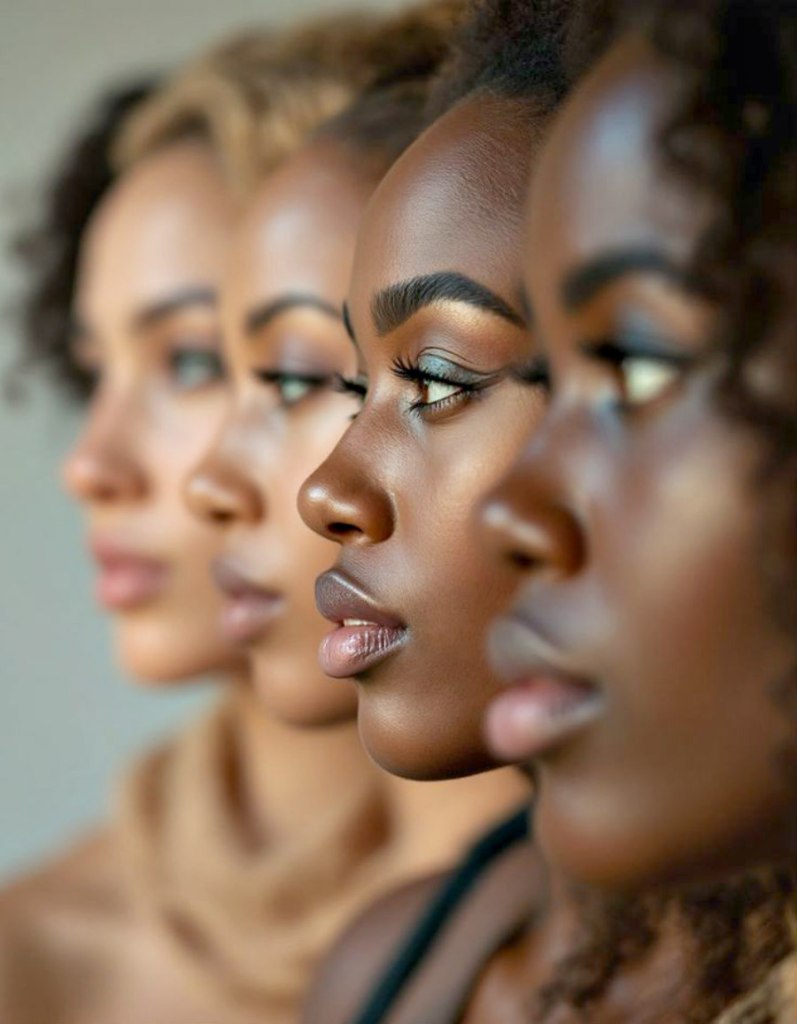
This photograph is the property of its respective owner. No copyright infringement intended.

Color is more than skin deep—it is history etched into flesh. Every shade of brown tells a story of migration, enslavement, colonization, and resistance. The complexion of the African diaspora is both a map and a mirror, reflecting the global journey of a people who endured fragmentation yet remained whole in spirit. To understand the modern brown identity, one must first confront the historical chains that bound it—chains not only of iron but of ideology.

The origins of color-based hierarchy began with colonization. As European empires expanded, they encountered people with darker skin across Africa, Asia, and the Americas. Instead of celebrating difference, they weaponized it. Color became the currency of control—an outward symbol of who was to rule and who was to serve. The darker the hue, the lower the worth assigned. Thus, the global structure of colorism was born—not from truth, but from the convenience of power.

In the transatlantic slave trade, complexion became both identifier and punishment. Enslaved Africans were categorized by skin tone—those with lighter complexions, often the offspring of white masters and Black mothers, were sometimes granted minor privileges within the plantation hierarchy. This created an internalized schism within the enslaved community, one that would persist for centuries: the illusion that proximity to whiteness meant elevation.

The colonial powers extended this pigmentocracy beyond the Americas. In India, the British reinforced pre-existing caste notions through their preference for lighter skin. In the Caribbean, Spanish and French colonizers created entire systems of racial classification—mulatto, quadroon, octoroon—each reflecting how deeply skin tone was tied to social mobility. The hierarchy of color became global, shaping not just how others saw us, but how we saw ourselves.

Psychologically, this division created generational trauma. People of color internalized shame toward their own reflection. Light skin became aspiration; dark skin became condemnation. This self-hatred was nurtured through education, religion, and beauty standards that praised the pale while vilifying the deep brown. The chains of complexion were mental as much as material.

Even after emancipation, the residue of these systems lingered. In post-slavery America, organizations like the “Blue Vein Societies” admitted only those whose skin was light enough to reveal blue veins beneath. Meanwhile, darker-skinned individuals faced exclusion not only from white spaces but from within their own communities. Colorism became an invisible whip that outlasted the plantation.

The entertainment and beauty industries deepened this divide. For decades, Hollywood and advertising glorified lighter-skinned Black actors and models as the standard of beauty. The “brown paper bag test” haunted social circles, while bleaching creams became symbols of internalized oppression. The damage was generational—entire lineages raised to equate lightness with desirability and darkness with deficiency.

Yet, despite this oppression, resistance rose. The Black Power Movement of the 1960s ignited a revolution of self-love. Phrases like “Black is Beautiful” challenged centuries of conditioning. Dark-skinned men and women began to see themselves as embodiments of royal lineage rather than colonial inferiority. The celebration of afros, natural features, and brown skin was not vanity—it was vindication.

The legacy of colorism, however, remains. Today, social media exposes how deeply color bias persists even among people of African descent. Lighter tones often receive more visibility and validation, while darker tones are marginalized or fetishized. The struggle is no longer about survival alone—it is about recognition and restoration. The modern brown identity must therefore wrestle with both pride and pain.

Historically, the Bible has been misused to justify racial hierarchies. European colonizers reimagined biblical figures as white, erasing their Afro-Asiatic origins. This spiritual bleaching further detached brown people from divine identity. But scripture tells another story—one of people from lands “black as the tents of Kedar” (Song of Solomon 1:5, KJV). Reclaiming that truth is central to healing the psychological scars of color-based oppression.

Sociologically, the “brown identity” today exists as both unity and complexity. Across the globe, people of African, Latin, Indigenous, and South Asian descent share the struggle against colorism. The brown identity is no longer regional—it is diasporic. It symbolizes the shared inheritance of colonial trauma and the collective awakening to self-worth.

Culturally, music, film, and literature have become tools of reclamation. Artists like Nina Simone, Toni Morrison, and Kendrick Lamar have used their platforms to affirm the depth and beauty of brownness. Through art, the brown identity becomes more than skin—it becomes song, rhythm, and revolution. It speaks to both the pain of being unseen and the power of being undeniable.

Psychologically, decolonizing beauty remains the next frontier. It requires that we dismantle the subconscious hierarchies implanted by colonialism. That means redefining professionalism, beauty, and intelligence beyond Eurocentric standards. It means teaching children that melanin is not a mark of shame but a medal of divine craftsmanship. Healing begins when brown becomes holy again.

Spiritually, melanin carries symbolism that transcends science. It absorbs light, transforms energy, and protects life. In that sense, it mirrors the spiritual essence of the brown-skinned people—absorbing pain, transforming it into art, faith, and resilience. The ability to survive centuries of oppression while radiating strength is itself a form of divine alchemy.

The future of the brown identity depends on solidarity. Bridging the internal divides between light and dark, between Afro-Latino and African American, between African and Caribbean, is crucial. The enemy was never one another—it was the system that taught us to distrust our own reflection. True liberation means seeing beauty in every shade of our spectrum.

Education plays a vital role in this transformation. Schools must teach the real history of how complexion was politicized. When young people learn that colorism was engineered to divide and conquer, they gain the power to reject it. Knowledge becomes liberation; truth becomes therapy.

Economically, representation still matters. When brands, corporations, and media campaigns embrace all shades of brown authentically—not tokenistically—they contribute to cultural healing. Every dark-skinned model, every brown-skinned CEO, every melanated hero on screen chips away at centuries of erasure. Visibility becomes victory.

Ultimately, the modern brown identity is an act of reclamation. It is the conscious decision to love the skin that history taught us to hate. It is choosing pride over pain, unity over division, and truth over imitation. It is the realization that every shade of brown carries the fingerprint of God and the legacy of survival.

The chains of complexion may have shaped our past, but they do not define our future. Today’s brown identity stands as both memory and movement—a declaration that what was once weaponized can now be worshiped. In embracing our full spectrum, we unshackle not just our image but our spirit. The brown identity, once bound by hierarchy, now rises as heritage—unbroken, unashamed, and undeniably divine.

References

  • The Holy Bible, King James Version (Song of Solomon 1:5).
  • hooks, b. (1992). Black Looks: Race and Representation. South End Press.
  • Russell, K., Wilson, M., & Hall, R. (1992). The Color Complex: The Politics of Skin Color Among African Americans. Doubleday.
  • Hall, S. (1997). Representation: Cultural Representations and Signifying Practices. Sage.
  • Davis, A. (1981). Women, Race, & Class. Random House.
  • Hill Collins, P. (2000). Black Feminist Thought. Routledge.
  • Morrison, T. (1992). Playing in the Dark: Whiteness and the Literary Imagination. Vintage.
  • Tate, S. (2009). Black Beauty: Aesthetics, Stylization, Politics. Routledge.
  • Craig, M. L. (2002). Ain’t I a Beauty Queen?: Black Women, Beauty, and the Politics of Race. Oxford University Press.
  • West, C. (1993). Race Matters. Beacon Press.

From King to Commodity: The Exploitation of Black Male Beauty

For centuries, the Black male body has existed at the crossroads of reverence and exploitation. In ancient African civilizations, the Black man was often crowned as divine—embodying leadership, spiritual authority, physical excellence, and intellectual brilliance. Yet through the transatlantic slave trade and subsequent Western sociopolitical systems, this image was distorted into a commodified form—an object to be controlled, feared, marketed, consumed, and surveilled. The Black male aesthetic, once a symbol of sovereignty, was stripped and weaponized for profit, entertainment, and domination.

The transformation from king to commodity began during slavery, where enslaved Black men were appraised for strength, endurance, and reproductive potential rather than humanity or intellect. Plantation records reveal how enslavers measured, bred, and traded Black men as physical capital (Gomez, 1998). This legacy birthed an enduring paradox: the Black male admired for his athletic body and masculine power, yet simultaneously denied autonomy, dignity, and emotional depth.

In the modern era, this commodification evolved into media, sports, fashion, and entertainment industries that profit from Black male image and labor. Professional athletics serve as a modern plantation metaphor, where predominantly white ownership capitalizes on Black physicality while often suppressing political voice and cultural authenticity (Rhoden, 2006). Rap and film industries selectively magnify hyper-masculinity, aggression, and sexual prowess, reinforcing stereotypes rooted in slavery’s breeding logic. Even luxury fashion and modeling spaces now celebrate melanin, strong facial structure, and athletic builds—traits historically mocked or criminalized—yet Black men still navigate barriers to economic ownership and narrative control in these industries.

Paradoxically, while the Black male body is commodified, the Black male spirit remains heavily policed. Society praises the physique but fears the presence; celebrates the style but rejects the voice; desires the look but not the lived experience. This duality contributes to mental strain, identity conflict, and hyper-visibility intertwined with invisibility. Black men must constantly negotiate spaces where their beauty is praised but their humanity is questioned.

Yet reclaiming sovereignty is underway. Increasingly, Black men reject objectification and redefine beauty beyond physicality—embracing intellectual excellence, emotional intelligence, spiritual grounding, and entrepreneurial power. Cultural movements uplift the dignified, introspective, protective, visionary roles Black men play as fathers, scholars, artists, healers, and leaders. From ancient Kemet to Nubia, from Timbuktu to Harlem Renaissance salons, the Black man’s beauty has always been multidimensional—rooted not in body alone, but in mind, spirit, and legacy.

The journey forward requires dismantling systems that consume Black masculinity for profit while denying agency and humanity. It calls for honoring the king before the commodity, the purpose before the performance, the soul before the spectacle. The Black male is not merely to be viewed—he is to be valued, respected, and restored to his rightful place in the narrative of global civilization.


References

Gomez, M. A. (1998). Exchanging our country marks: The transformation of African identities in the colonial and antebellum South. University of North Carolina Press.

Rhoden, W. C. (2006). Forty million dollar slaves: The rise, fall, and redemption of the Black athlete. Crown Publishing.

Melanin Memoirs: Confessions and Revelations.

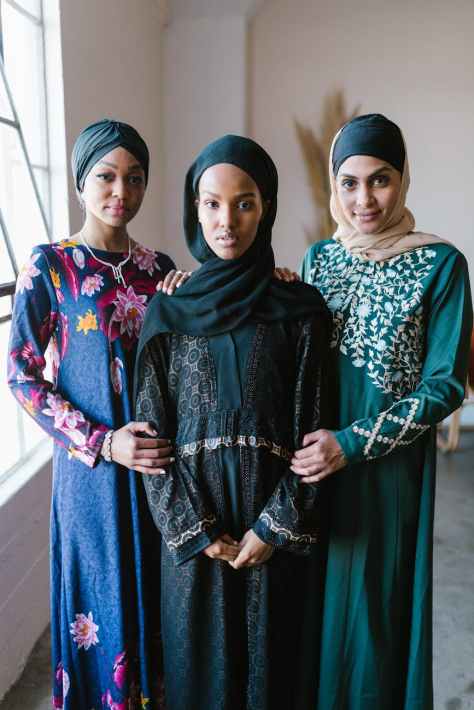
Photo by RDNE Stock project on Pexels.com

Judy, Sadia, and Shelia—three women whose stories weave together like strands of the same braid, bound by shared ancestry yet separated by shade. Each carries a different hue of experience, shaped by the silent social hierarchies that color their worlds. In their melanin lies both blessing and burden, truth and tension, confession and revelation.

Judy, the light-skinned woman, grew up praised for her complexion. Family and strangers alike told her she was “lucky,” as if her proximity to whiteness were an achievement. Yet beneath the compliments lived guilt and confusion. She felt both adored and resented, accepted yet alienated. Men desired her, women envied her, and she struggled to understand why her beauty caused division. In church, she prayed for humility, whispering the words of 1 Samuel 16:7—“for man looketh on the outward appearance, but the Lord looketh on the heart.” Her revelation came when she realized that lightness without love was still darkness.

Sadia’s story rests on the other side of the same mirror. Her dark skin was her inheritance—deep, rich, and radiant—but the world called it “too much.” She remembers being teased as a child, overlooked as a woman, and underestimated as a professional. Her reflection became a battlefield, and every insult left a scar. Yet God met her in the valley of rejection. Song of Solomon 1:5 echoed through her spirit: “I am black, but comely.” What once felt like a curse became her crown. Her revelation was that divine beauty is not subject to human approval—it is anchored in divine design.

Shelia, another light-skinned woman, experienced colorism differently. While her complexion opened doors, it also invited suspicion. She was often told she “wasn’t Black enough,” accused of privilege she didn’t seek and exclusion she didn’t deserve. She spent years trying to prove her authenticity, overcompensating in her speech, dress, and demeanor. The weight of identity politics exhausted her spirit. One night, she opened her Bible to Galatians 3:28—“There is neither Jew nor Greek… for ye are all one in Christ Jesus.” Her revelation was that belonging was never about performance; it was about purpose.

The confessions of these women expose the emotional complexity of color within the Black community. Their pain is not born from nature but from the historical distortion of beauty and worth. Colonialism planted the seed of colorism, teaching generations to measure themselves by how close they stood to whiteness. Yet in their honesty, Judy, Sadia, and Shelia began to uproot the lies that once divided them.

They met one evening for tea—three shades of sisterhood in a single circle. Judy confessed how she used to avoid dark-skinned friends out of fear of losing attention. Sadia admitted how bitterness had crept into her prayers. Shelia broke down, admitting she often felt invisible in her own family. The air grew heavy, yet healing hovered in their midst. Sadia reached out her hand, and the simple act of touch became sacred. “We are all His,” she whispered. It was no longer confession—it was communion.

The revelation that followed was collective: their differences were divine, not divisive. Each shade reflected a different aspect of God’s creativity. Genesis 1:27 came alive in them: “So God created man in His own image.” Their melanin was not a measure of value but a manifestation of His artistry. Together, they began to dismantle the emotional walls colorism had built.

Judy’s journey became one of advocacy. She started mentoring young girls, teaching them that beauty has no hierarchy. “True beauty begins where comparison ends,” she would say, quoting Proverbs 31:30: “Favour is deceitful, and beauty is vain: but a woman that feareth the Lord, she shall be praised.” She found purpose in using her influence to uplift, not outshine.

Sadia began journaling her experiences, turning pain into poetry. Her words spoke of triumph over trauma, and soon, women who once hid in shame found themselves reflected in her verses. Each stanza became a revelation of divine confidence. Her solution was not to retaliate against colorism but to rise above it through education, affirmation, and spiritual restoration.

Shelia dedicated herself to bridging the gap between light and dark women in her church. She organized “Sister Circles” where women shared testimonies, cried, and prayed together. There, unity was reborn—not through sameness, but through shared healing. Her work echoed Romans 12:5: “So we, being many, are one body in Christ, and every one members one of another.”

Together, the three women began leading workshops for young girls. Their message was clear—your worth is not in your tone but in your testimony. They taught that healing colorism requires confession, compassion, and Christ. The movement spread, reminding women everywhere that they were fearfully and wonderfully made (Psalm 139:14).

Through their journeys, the women learned that colorism could not survive in the presence of truth. When confronted by love, it withers. They realized that Satan thrives on division, but unity is the weapon that disarms him. Their revelations became their resistance.

Their community began to change. Mothers stopped comparing their daughters’ shades, and men learned to love without bias. The light-skinned woman no longer felt superior; the dark-skinned woman no longer felt unseen. Together, they reflected the full image of God—an infinite spectrum of grace and glory.

The confessions of Judy, Sadia, and Shelia are more than stories; they are scriptures in motion—modern parables of redemption. Each woman found her revelation in surrender, realizing that melanin was never meant to divide but to testify of divine diversity.

In the end, they stood side by side, no longer light or dark—just daughters. They looked in the mirror and finally saw what God always saw: beauty beyond measure, unity beyond color, and faith beyond fear. Their melanin was not just a pigment but a promise—a reminder that every shade of Blackness carries the fingerprint of Heaven.

References

  • The Holy Bible, King James Version. (1611).
  • Banks, T. A. (2019). Colorism and the politics of beauty. Journal of Black Studies, 50(3), 243–261.
  • Hunter, M. (2007). The persistent problem of colorism: Skin tone, status, and inequality. Sociology Compass, 1(1), 237–254.
  • Walker-Barnes, C. (2020). Too heavy a yoke: Black women and the burden of strength. Cascade Books.
  • West, C. (1993). Race matters. Beacon Press.

Reclaiming the Mirror: Beauty, Identity, and Resistance in the African Diaspora.

Photo by Godisable Jacob on Pexels.com

The concept of beauty has long been weaponized as a tool of domination and exclusion. For people of African descent, beauty has been historically defined through Eurocentric lenses that sought to invalidate African features, skin tones, and hair textures. This distortion of aesthetics served colonial and psychological purposes—reinforcing systems of white supremacy and dehumanization. Yet, amid this oppression, the African diaspora has continuously resisted, reclaimed, and redefined beauty through self-love, creativity, and cultural expression.

From the transatlantic slave trade to modern globalization, the manipulation of Black beauty has been integral to controlling identity. European colonizers constructed racial hierarchies that associated whiteness with purity and civilization, while blackness was linked to savagery and inferiority. These narratives became embedded in social, political, and religious ideologies, influencing how the world viewed—and how Black people came to view—themselves. This internalized oppression still manifests today in colorism, hair discrimination, and beauty bias within and outside the Black community.

Resistance to these narratives began as early as slavery itself. Enslaved Africans braided maps into their hair, wore headwraps as acts of pride, and sang spirituals affirming divine identity. These practices were not mere survival mechanisms but subtle assertions of self-worth. By reclaiming control over their bodies and appearances, Africans in the diaspora asserted, “We are still human.” This quiet defiance evolved into a cultural aesthetic that would later inspire entire movements of liberation.

The Harlem Renaissance marked a turning point in redefining Black beauty and identity. Figures like Zora Neale Hurston, Langston Hughes, and Josephine Baker challenged the notion that Black culture needed white validation. Their art celebrated dark skin, natural hair, and sensual expression, reclaiming the very traits society had demeaned. The phrase “Black is Beautiful,” born from this era and later popularized in the 1960s, became both a political slogan and a spiritual affirmation.

The Black Power movement of the 1960s and 1970s elevated aesthetics into activism. The afro became a crown of resistance, symbolizing freedom from assimilation. Black models like Beverly Johnson and Naomi Sims graced magazine covers once closed to women of their complexion, forcing the fashion world to confront its biases. Through photography, music, and protest, Black people around the world began to reassert the value of their image.

In the African diaspora, beauty and identity are deeply intertwined with spirituality. Ancient African civilizations revered the human form as divine art—sculptures from Nok, Benin, and Kemet celebrated symmetry, strength, and melanin as reflections of the Creator. This spiritual understanding of beauty counters the Western tendency to commodify and sexualize. The African aesthetic is holistic, connecting inner virtue with outer form—a principle still visible in African diasporic faiths like Yoruba and Rastafari.

Media representation remains one of the battlegrounds for beauty reclamation. For decades, film and advertising industries portrayed Eurocentric features as universal ideals. However, with the rise of digital media, Black creators began shaping new narratives. Platforms like YouTube and Instagram became spaces for natural hair tutorials, melanin-positive campaigns, and discussions about shadeism. This digital renaissance democratized visibility and dismantled the monopoly of Western beauty standards.

In contemporary times, artists like Lupita Nyong’o, Viola Davis, and Michaela Coel have redefined what global beauty looks like. They embody confidence rooted in authenticity rather than conformity. Their visibility challenges centuries of erasure, reminding the world that African beauty is not a trend—it is foundational. Each image, each role, becomes a mirror through which the diaspora can see itself with dignity and love.

Colorism, however, continues to plague the diaspora, a lingering scar of colonialism and slavery. Light skin often remains associated with privilege, while darker complexions are marginalized. This phenomenon fractures communities and perpetuates hierarchies of desirability. Yet, new generations are confronting these wounds head-on through documentaries, essays, and online activism—demanding that every shade of melanin be honored equally.

The reclamation of African aesthetics extends beyond physical features—it encompasses fashion, language, and ritual. African print clothing, protective hairstyles, and ancestral jewelry have become emblems of identity. What was once mocked or banned in workplaces is now worn proudly on global runways. The diaspora’s embrace of traditional aesthetics is not merely nostalgic—it is revolutionary, asserting that African heritage is modern, relevant, and eternal.

Psychologically, reclaiming beauty is an act of healing. Centuries of racial trauma have distorted self-perception, leading to generational insecurities. Scholars like bell hooks and Frantz Fanon have discussed the colonization of the mind and the struggle to love oneself under oppressive gaze. To look in the mirror and find beauty in one’s reflection is therefore a radical act of resistance, one that dismantles the psychological remnants of enslavement.

Black beauty movements have also intersected with gender liberation. Black women, historically hypersexualized or desexualized, have reclaimed agency over their image. Movements like #MelaninMagic and #BlackGirlMagic celebrate diverse forms of femininity—powerful, intellectual, sensual, and sacred. Similarly, Black men are confronting toxic stereotypes that equate masculinity with aggression, finding beauty in vulnerability and self-expression.

The global spread of African aesthetics—from music videos to fashion weeks—illustrates how the diaspora has transformed pain into power. Afrobeats, hip-hop, and soul music have carried messages of pride, resilience, and beauty to every corner of the world. The rhythm of resistance lives in every hairstyle, every dance, every melody that celebrates Blackness unapologetically.

Educational institutions and media organizations are beginning to recognize the importance of diverse representation. Curriculums now explore African art history, and museums exhibit African beauty traditions once labeled “primitive.” This reclamation of space in academia and culture is crucial—it ensures that future generations inherit a fuller, truer reflection of themselves.

In theology, the reclamation of beauty challenges centuries of Eurocentric religious imagery. Depictions of a white Messiah and angels have been replaced in many circles with images that reflect the original people of the Bible. The rise of Afrocentric theology reaffirms that divinity does not belong to one race or culture. The beauty of the Creator is reflected in the diversity of creation itself.

Art remains one of the most powerful vehicles for this transformation. Painters, photographers, and filmmakers across the diaspora are crafting new visual languages that honor melanin, texture, and form. Fine art portraiture—like the works of Kehinde Wiley or Awol Erizku—reimagines classical European iconography through an African lens, restoring Black presence to the historical canvas.

Beauty, in its truest sense, is more than aesthetics—it is liberation. When Black people embrace their natural selves, they reject the lie that they must change to be worthy. This acceptance becomes an act of spiritual sovereignty, echoing the biblical declaration that we are “fearfully and wonderfully made” (Psalm 139:14, KJV).

The mirror, once a symbol of distortion, now becomes a site of truth. It reflects not the colonizer’s image, but the Creator’s craftsmanship. To reclaim the mirror is to reclaim narrative power—to define beauty not by borrowed standards, but by ancestral wisdom. Every curl, curve, and hue tells a story of endurance, divinity, and rebirth.

Ultimately, the reclamation of beauty in the African diaspora is about freedom—the freedom to exist without apology, to see oneself as whole and holy. It is about transforming generations of shame into songs of pride and turning reflection into revolution. Through art, faith, and community, the descendants of Africa continue to rise, reminding the world that the most powerful form of beauty is self-acceptance rooted in truth.


References

Baker, J. (2017). The politics of Black beauty. Oxford University Press.
Davis, A. Y. (1981). Women, race, & class. Random House.
Fanon, F. (1952). Black skin, white masks. Grove Press.
hooks, b. (1992). Black looks: Race and representation. South End Press.
Hunter, M. (2007). The persistent problem of colorism: Skin tone, status, and inequality. Sociology Compass, 1(1), 237–254.
Mercer, K. (1994). Welcome to the jungle: New positions in Black cultural studies. Routledge.
Mills, C. W. (1997). The racial contract. Cornell University Press.
Nyong’o, L. (2014). Lupita Nyong’o’s speech on beauty and self-love [Video]. Essence Black Women in Hollywood.
Walker, A. (1983). In search of our mothers’ gardens: Womanist prose. Harcourt Brace Jovanovich.
Wiley, K. (2018). Reclaiming beauty: African aesthetics in modern art. Yale University Press.
Wilkerson, I. (2020). Caste: The origins of our discontents. Random House.
Wynter, S. (2003). Unsettling the coloniality of being/power/truth/freedom. The New Centennial Review, 3(3), 257–337.
Yaba Blay, Y. (2017). Pretty. Period.: The politics of being Black and beautiful. Blackprint Press.
Bryant-Davis, T. (2007). Healing requires recognition: The case for race-based traumatic stress. The Counseling Psychologist, 35(1), 135–143.
Johnson, K. (2021). Beauty in resistance: Black aesthetics and cultural power. Duke University Press.
Lewis, R. (2011). Afrocentric identity and the politics of beauty. Routledge.
Morrison, T. (1992). Playing in the dark: Whiteness and the literary imagination. Vintage Books.
Nash, J. C. (2019). Black feminism reimagined: After intersectionality. Duke University Press.
Tate, S. (2016). Black beauty: Aesthetics, stylization, politics. Routledge.
Thompson, C. (2009). Black women, beauty, and hair as resistance. Journal of Pan African Studies, 3(2), 97–108.

Diary of a Brown Girl Becoming: Angela’s Story.

Angela grew up in a world that measured beauty with a narrow ruler, one that often excluded the richness of her brown skin. From an early age, she noticed how lighter faces were praised while hers seemed to absorb shadows in spaces that celebrated whiteness. The mirror became both friend and foe, reflecting the contradictions of pride and self-doubt.

Her childhood was filled with stories of her ancestors, tales of resilience whispered between the cracks of slavery and colonization. They were strong, courageous, and unapologetically beautiful in ways society often refused to acknowledge. Angela clung to these narratives, even when the world outside questioned the worth of her hue.

School became a battleground for identity. Angela learned to navigate the subtle hierarchy of complexion and the unspoken preference for European features. Teachers, peers, and media reinforced these ideals. The pain of comparison gnawed at her, but it also planted seeds of resistance.

She remembers the first time someone called her “exotic.” Though meant as a compliment, it made her feel like a specimen rather than a person. She began to dissect her features, questioning which were assets and which were liabilities. Angela started a silent dialogue with herself, seeking the beauty that history seemed intent on denying her.

Television screens and magazine covers rarely reflected faces like hers. She noticed the patterns: brownness was either fetishized, caricatured, or erased altogether. Yet in her family, brown skin was celebrated for its depth, its connection to roots, and its story of survival. These dual narratives shaped Angela’s understanding of the world.

Adolescence brought a heightened awareness of colorism within her community. The unspoken hierarchy of light versus dark created tensions and insecurities among peers. Angela observed how her lighter-skinned friends often received attention and opportunities more easily, while girls with darker skin had to fight harder for recognition.

Despite these challenges, she cultivated a sense of pride. Angela immersed herself in literature, history, and art that celebrated brownness. From Toni Morrison to Zora Neale Hurston, from the Harlem Renaissance to contemporary Black artists, she discovered that her skin tone carried a lineage of creativity, power, and beauty.

Her relationship with hair mirrored her journey with skin. Angela learned to appreciate the versatility of her texture, experimenting with styles that honored her heritage rather than conforming to Eurocentric standards. Every braid, twist, and coil became an assertion of identity, a declaration of belonging to a legacy that endured despite oppression.

She began keeping a diary, writing candidly about her experiences, fears, and triumphs. It became a space to explore the contradictions of desire and self-acceptance. In its pages, Angela could reconcile the tension between wanting to fit in and yearning to stand out authentically.

Love and relationships complicated her understanding of self. Angela noticed how society and culture influenced attraction, favoring lighter complexions and certain features. These patterns were not universal, but they shaped how she viewed herself in the mirror and how others perceived her.

Social media became a double-edged sword. On one hand, it allowed Angela to see faces like hers celebrated globally. On the other, it highlighted the persistent bias toward light skin and European features. She learned to curate her feed, choosing inspiration over comparison, empowerment over envy.

College opened new horizons. Angela met brown girls from diverse backgrounds who embraced their skin with courage. Their shared experiences created bonds rooted in understanding and affirmation. They spoke openly about colorism, representation, and the politics of identity, reinforcing the notion that brownness was a spectrum, each shade deserving celebration.

Professional life brought its own set of challenges. Bias and microaggressions tested Angela’s confidence. At times, her capabilities were underestimated or overlooked because of the color of her skin. Yet she discovered that excellence could be a form of resistance, a way to redefine the narrative about brown girls in historically unwelcoming spaces.

She embraced spirituality as a grounding force. Scripture, meditation, and ancestral wisdom reminded Angela that her worth was not dictated by societal standards but by a divine design. Her skin became a canvas of history, a symbol of endurance and hope that transcended mere appearance.

Travel allowed Angela to witness the global diaspora of brownness. From African cities to Caribbean islands, she saw beauty celebrated in its natural state. These encounters expanded her vision, teaching her that brown skin carries stories of migration, adaptation, and resilience that are both universal and profoundly personal.

Motherhood—real or symbolic in her nurturing of community—taught Angela the importance of modeling self-love. She wanted the next generation of brown girls to see themselves reflected not as anomalies but as embodiments of strength, intelligence, and grace. This responsibility shaped her daily choices and interactions.

Art and creative expression became sanctuaries. Painting, photography, and poetry allowed Angela to externalize her journey, to give form to the invisible struggles of growing up brown in a world obsessed with lighter shades. Each creation was a testament to survival, pride, and the beauty of becoming.

Friendship revealed mirrors of self-acceptance. Surrounding herself with brown girls who celebrated authenticity helped Angela dismantle lingering insecurities. Their laughter, shared stories, and communal validation created a counter-narrative to societal rejection, affirming that beauty and value are inherent, not granted.

As she reflects on this journey, Angela recognizes the power of narrative. Writing her diary has been an act of reclamation—transforming shame into pride, doubt into confidence, and invisibility into presence. Each entry affirms that becoming is not linear but a layered, ongoing process.

Now, as a brown woman fully embracing her skin, features, and heritage, Angela understands that her story is both personal and collective. It is the story of countless girls who came before her and those who will follow. Her skin, her features, her history are not deficits to overcome but treasures to honor.

In becoming, Angela has learned that brownness is not a limitation but a lens—a way to see the world, understand its complexities, and assert a presence that is unapologetic, radiant, and transformative. Her diary will continue as long as there is growth, reflection, and the beauty of embracing the journey.

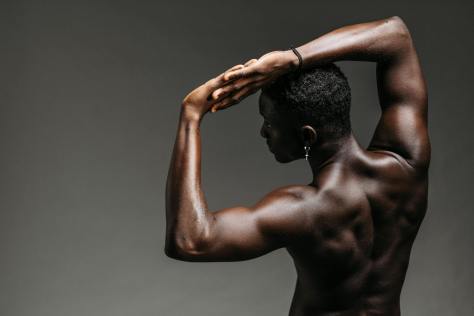
The Art of the Male Form: Power, Presence, and Perception.

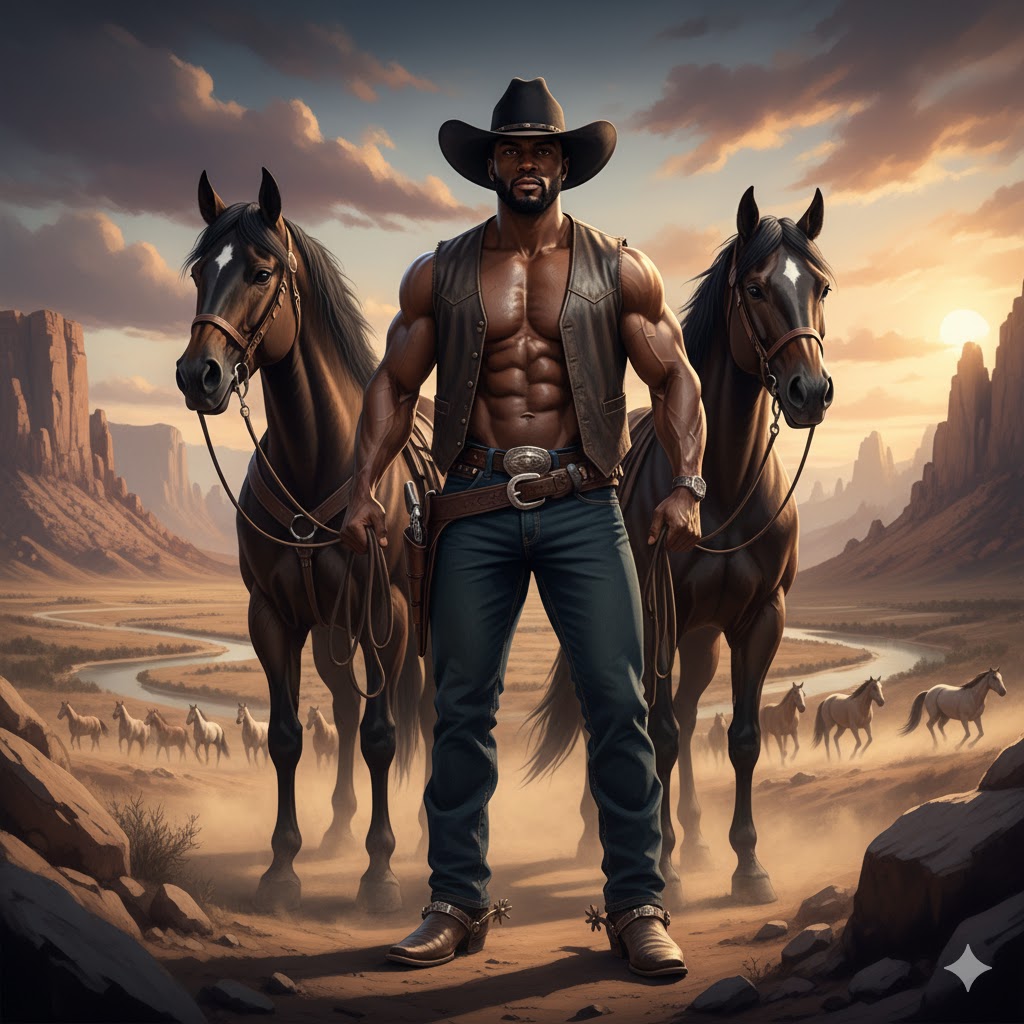
Photo by ROCKETMANN TEAM on Pexels.com

The human male form has long been a subject of fascination in art, science, and culture, reflecting not only physicality but also social hierarchies, cultural ideals, and psychological projections. Across centuries, the representation of the male body has evolved, embodying changing conceptions of masculinity, strength, and beauty. From classical sculptures of Greece and Rome to contemporary photography and film, the male form has been interpreted as a canvas of power and presence.

Historically, the Greek ideal celebrated the male body as a perfect balance of symmetry, proportion, and athleticism. Sculptures such as Polykleitos’ Doryphoros exemplified mathematical precision, with the canon of proportions establishing standards for physical perfection that would influence Western art for millennia. This idealized vision of masculinity combined both aesthetic beauty and moral virtue, suggesting that bodily perfection mirrored inner excellence.

The Renaissance reintroduced classical principles while emphasizing dynamic motion and individual expression. Artists such as Michelangelo in David portrayed not only physical strength but also psychological tension and heroic presence. The male form became an emblem of intellectual and spiritual power, reflecting a holistic understanding of human potential. Renaissance art thus bridged the external and internal, situating the male body as both a physical marvel and a symbolic vessel of identity.

In non-Western contexts, the male form has been depicted through varied cultural lenses. In African art, the male figure often embodies communal roles, leadership, and spiritual vitality rather than purely aesthetic ideals. Carvings, masks, and statues depict muscularity and posture as markers of social and ceremonial significance. Similarly, in East Asian traditions, male figures have symbolized wisdom, martial skill, and filial duty, emphasizing presence over purely sculptural beauty.

Contemporary representations of the male body have expanded to encompass a spectrum of forms, challenging classical notions of beauty and strength. Media, fashion, and advertising frequently spotlight muscular, lean physiques, reinforcing cultural ideals tied to health, athleticism, and desirability. These portrayals, however, often obscure the diversity of natural male forms, creating pressures that intersect with gender norms and body image concerns.

The perception of male strength and virility is deeply intertwined with visual cues. Broad shoulders, defined musculature, and upright posture convey dominance and confidence, signaling both physical capability and social authority. Yet these traits are culturally mediated; in some societies, intellectual presence, sartorial elegance, or artistic skill may supersede raw physicality as markers of masculine power.

Psychologically, the male form operates as a site of projection for both men and women. Men may internalize societal ideals as standards for self-worth, while women may perceive these traits through lenses of attraction, protection, or social status. The interaction of biology, culture, and psychology produces a complex matrix in which physicality, behavior, and charisma intersect.

Artistic depiction often emphasizes narrative alongside form. Paintings, photographs, and sculptures do not merely replicate anatomy but evoke story, emotion, and character. The male form thus becomes a storytelling tool, capable of conveying vulnerability, aggression, heroism, or intimacy depending on context. Such portrayals can redefine social perceptions of masculinity beyond mere physical prowess.

The study of anatomy underpins much of the artistic representation of the male body. Knowledge of skeletal structure, muscle distribution, and movement enables artists to render the body convincingly and expressively. Anatomical studies by Leonardo da Vinci and modern biomechanics research illustrate how understanding physiology enhances both aesthetic and functional interpretation of form.

In cinema and performance, the male body functions as a medium of narrative embodiment. Action films, dance, and theater utilize posture, gesture, and musculature to communicate character, intent, and emotion. Actors’ physical training is integral to credibility, reinforcing cultural associations between physical form and personal agency.

Clothing and adornment further influence perception. Tailored suits, armor, traditional garments, or casual attire interact with the body’s contours to project authority, elegance, or approachability. Fashion, therefore, becomes a form of embodied rhetoric, shaping how presence is interpreted socially and aesthetically.

The intersection of race and the male form reveals additional layers of perception. Societal biases often exaggerate or stereotype certain physiques, influencing both admiration and marginalization. Scholarly research highlights how media representation of Black, Asian, and Indigenous men can reinforce prejudicial narratives while simultaneously offering opportunities for celebration and redefinition of power.

Athleticism, historically celebrated in art and society, continues to reinforce ideals of the male form. Sports icons, Olympians, and bodybuilders exemplify disciplined cultivation of the body, symbolizing perseverance, control, and societal admiration. These figures operate at the nexus of corporeal excellence and symbolic authority.

The sexualization of the male form has also evolved, reflecting shifting cultural mores. Where once nudity implied heroism, divinity, or philosophical ideal, contemporary eroticized representations carry complex implications regarding consent, objectification, and agency. The male body thus navigates multiple discourses simultaneously: aesthetic, athletic, sexual, and symbolic.

Media proliferation intensifies scrutiny of the male form. Social platforms, advertising, and global cinema perpetuate standards of muscularity, height, and symmetry, creating feedback loops that influence self-perception and social judgment. These pressures can foster both aspiration and anxiety, highlighting the psychosocial dimensions of bodily representation.

Philosophically, the male form invites reflection on mortality, temporality, and embodiment. Aging, injury, and transformation challenge ideals of constancy and perfection, offering opportunities for more nuanced understandings of masculinity. Imperfection, once marginalized in classical aesthetics, now contributes to narratives of resilience, authenticity, and wisdom.

Cross-disciplinary studies, incorporating anthropology, psychology, and art history, illuminate the interplay between biology and culture in shaping perceptions of the male form. Evolutionary theory, for example, considers sexual selection, strength signaling, and social hierarchy as factors influencing both appearance and societal valuation. Cultural studies, in turn, examine media representation, ritual, and mythology as determinants of perception.

Digital technology and virtual spaces are redefining the male form in contemporary imagination. CGI, motion capture, and social media avatars allow manipulation of physique, posture, and expression beyond natural limits, raising questions about authenticity, aspiration, and identity. Such developments extend the discourse of perception into immersive and interactive arenas.

Ultimately, the art of the male form transcends mere anatomy. It is a dialogue among power, presence, and perception, reflecting the interdependence of physicality, culture, and cognition. The male body is both observed and experienced, a site of aesthetic contemplation, social negotiation, and personal embodiment.

Contemporary discourse urges inclusivity, diversity, and critical reflection, challenging narrow definitions of strength and beauty. Recognizing variation, vulnerability, and agency broadens appreciation of the male form beyond traditional paradigms. In this light, art, science, and lived experience converge to create a dynamic understanding of masculinity as both human and culturally mediated.

In conclusion, the male form remains a compelling locus of study and representation. Its power lies not solely in muscle or height but in the interplay of physicality, presence, and perception, shaped by history, culture, and psychology. From the classical canon to modern media, the male body continues to articulate ideals, challenge assumptions, and inspire contemplation, affirming its enduring significance in human imagination and social life.

References

Frontiers in Psychology. (2023). Body image dissatisfaction in men: Causes and consequences. https://www.frontiersin.org/journals/psychology/articles/10.3389/fpsyg.2023.1116686/full

Metropolitan Museum of Art. (n.d.). Anatomy in the Renaissance. https://www.metmuseum.org/essays/anatomy-in-the-renaissance

PubMed. (2002). Impact of media images on male body image. https://pubmed.ncbi.nlm.nih.gov/11920996/

Smarthistory. (n.d.). Polykleitos, Doryphoros (Spear Bearer). https://smarthistory.org/polykleitos-doryphoros-spear-bearer/

Smarthistory. (n.d.). Depictions of the human figure and animals in African art. https://smarthistory.org/depictions-of-the-human-figure-and-animals/

Italian Renaissance. (n.d.). Michelangelo’s David: Analysis and history. https://www.italianrenaissance.org/michelangelos-david/

Science Museum, UK. (n.d.). Anatomy, art, and science. https://www.sciencemuseum.org.uk/objects-and-stories/medicine/anatomy-art-and-science

The Boar. (2020, June). Male bodies in film: Representations of masculinity. https://theboar.org/2020/06/male-bodies-film/

Vogue Business. (2021). Sizing is stopping consumers from shopping: Here’s what brands need to know. https://www.voguebusiness.com/story/fashion/sizing-is-stopping-consumers-from-shopping-heres-what-brands-need-to-know

The Times. (n.d.). Unhealthy skinny models: Fashion week report. https://www.thetimes.co.uk/article/vogue-report-unhealthy-skinny-models-fashion-week-jj3qwhf9w

Smithsonian Asian Art Museum. (n.d.). Facing East: Portraits from Asia. https://asia.si.edu/whats-on/exhibitions/facing-east-portraits-from-asia/