Tag Archives: the brown girl dilemma

Girl Talk Series: The Matters of a Broken Heart.

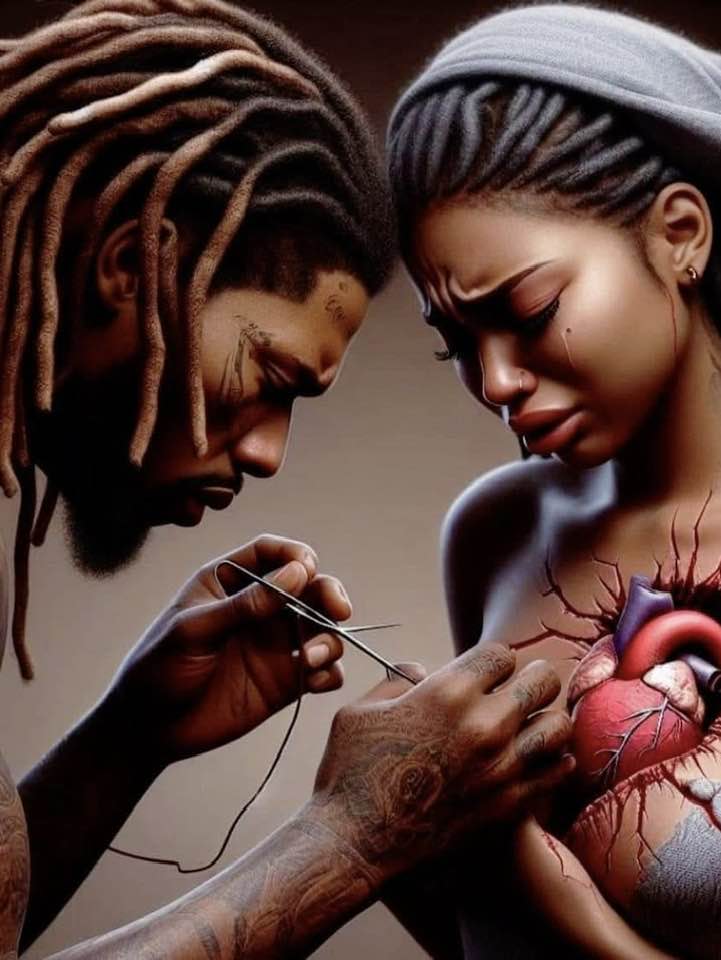
This photograph is the property of its respective owner. No copyright infringement intended

Ladies – The matters of the heart are among the most sacred and sensitive aspects of a woman’s spiritual and emotional life. Many women carry wounds from abandonment, betrayal, rejection, and unmet expectations, often wondering if a man will ever truly love them in a way that heals rather than harms. Yet Scripture teaches that before any man can love us well, we must first understand the nature of God’s love, because all healthy love flows from Him. This series is an encouragement to women to seek not just romance, but restoration, wholeness, and divine alignment with a man who has a heart after God.

A woman gets over a broken heart not by erasing the pain, but by healing through it with truth, time, and transformation. Healing is not denial; it is intentional restoration of the soul, the mind, and the spirit. Biblically and psychologically, heartbreak is a form of grief—you are mourning not just a person, but a dream, an attachment, and a future you imagined. That loss must be processed, not suppressed.

First, she must allow herself to grieve honestly. Many women rush to “be strong” and pretend they are fine, but unprocessed pain becomes emotional scars. Scripture reminds us that even Jesus wept (John 11:35). Tears are not weakness; they are release. A broken heart needs permission to feel before it can heal.

Second, she must detach emotionally and spiritually from what hurt her. This includes cutting unhealthy soul ties, limiting contact, and resisting the urge to revisit memories that reopen wounds. From a psychological standpoint, attachment bonds activate the same neural pathways as addiction—so withdrawal is real. Healing requires space (Proverbs 4:23).

Third, she must rebuild her identity outside of the relationship. Many women lose themselves in love—adopting someone else’s needs, habits, and emotional rhythms. Heartbreak forces a woman to ask: Who am I without him? Healing begins when she reconnects to her own purpose, gifts, and calling (Jeremiah 29:11).

Fourth, she must release forgiveness, not for his benefit, but for her freedom. Forgiveness is not excusing behavior—it is choosing not to let pain control your future. Unforgiveness keeps emotional ties alive. Forgiveness breaks the psychological loop of replaying the trauma (Ephesians 4:31–32).

Fifth, she must renew her mind. The thoughts that follow heartbreak are often distorted: I wasn’t enough. I’ll never love again. Everyone leaves. These are trauma-based beliefs, not truth. Scripture teaches, “Be ye transformed by the renewing of your mind” (Romans 12:2). Healing requires replacing lies with reality.

Sixth, she must return to God as her emotional source. Many women unknowingly turn men into emotional idols—looking to them for validation, security, and self-worth. When the relationship ends, so does the emotional foundation. God restores the heart by becoming the primary source of love again (Psalm 62:5).

Seventh, she must set new boundaries. Heartbreak often reveals patterns—choosing unavailable men, ignoring red flags, over-giving, or tolerating disrespect. Growth comes when pain becomes wisdom. Boundaries are not walls; they are filters for future peace.

Eighth, she must move her body and environment. Trauma is stored in the nervous system, not just the mind. Exercise, sunlight, walking, cleaning, and changing surroundings help regulate emotions and reduce depressive symptoms. Healing is physiological as well as spiritual.

Ninth, she must stop romanticizing the past. The brain tends to remember the good and minimize the harm. This is called selective memory bias. Healing requires remembering the truth, not the fantasy. If it was healthy, it wouldn’t have broken her.

Tenth, she must stop seeking closure from the person who broke her. Closure comes from within, not from conversations, apologies, or explanations. A person who couldn’t love you properly cannot heal what they damaged.

Eleventh, she must invest in supportive relationships—friends, mentors, counselors, and faith communities. Isolation intensifies heartbreak. Safe people provide perspective, accountability, and emotional grounding (Proverbs 11:14).

Twelfth, she must grieve the illusion, not just the person. Many women are hurt more by losing the idea of what could have been than the actual man. Healing means accepting reality, not chasing potential.

Thirteenth, she must reclaim her self-worth. Heartbreak often damages confidence and desirability. But worth does not come from being chosen—it comes from being created by God. “I am fearfully and wonderfully made” (Psalm 139:14).

Fourteenth, she must learn to be alone without being lonely. Solitude builds emotional independence. A healed woman does not fear being alone—she fears being emotionally unsafe.

Fifteenth, she must stop numbing the pain through rebound relationships, substances, overworking, or distractions. Avoidance delays healing. Pain that is numbed returns stronger.

Sixteenth, she must develop emotional discernment. Not every man who is kind is sent by God. Not every connection is alignment. Discernment protects future peace more than attraction ever could.

Seventeenth, she must rewrite the narrative. Heartbreak is not proof she failed—it is evidence she outgrew what could not sustain her. Many relationships end not because you were unlovable, but because you were becoming someone incompatible with dysfunction.

Eighteenth, she must trust time, not urgency. Healing is not linear. Some days feel strong, others feel fragile. This is normal. The nervous system needs time to recalibrate.

Nineteenth, she must believe love is still possible without desperation. A healed woman does not chase love—she attracts it through wholeness. She no longer needs to be chosen; she chooses wisely.

Finally, she must understand this truth: A broken heart is not the end of her story—it is the beginning of her awakening. Pain reveals where she gave too much, tolerated too little, and expected God from a human. When the heart heals, it does not become harder—it becomes wiser, softer, and spiritually stronger.

A woman does not get over a broken heart—she grows through it and emerges as a version of herself who no longer abandons her own needs for someone else’s love.

A broken heart is not merely emotional pain; it is a spiritual injury that affects self-worth, identity, and trust. The Bible acknowledges this reality when it says, “The Lord is nigh unto them that are of a broken heart; and saveth such as be of a contrite spirit” (Psalm 34:18, KJV). God does not dismiss heartbreak—He draws near to it. Healing begins when a woman allows God to mend what people have damaged.

Many women ask, Will he heal my broken heart? Will he make me feel special? Will he love me endlessly? These are not shallow questions; they reflect a deep longing to be seen, cherished, and emotionally safe. However, no man can replace God as the ultimate healer. A man can support the healing process, but only God can restore the soul (Psalm 23:3). When a woman expects a man to do what only God can do, she risks entering relationships rooted in emotional dependency rather than spiritual health.

God’s love is fundamentally different from human love. Scripture defines it as agape love—a selfless, unconditional, sacrificial love that seeks the good of the other (1 Corinthians 13:4–7). God’s love is patient, kind, not abusive, not manipulative, not temporary, and not based on performance. Unlike human affection, God’s love does not fluctuate with mood, appearance, or mistakes (Romans 8:38–39).

A major question many women carry is, How will I know if he really loves me? Biblical love is not proven through words, gifts, or sexual chemistry—it is proven through consistent character, spiritual leadership, protection, and sacrifice (Ephesians 5:25). A man who truly loves you will not rush your body while neglecting your soul. He will desire your holiness more than your availability.

The Bible is clear about sexual boundaries: no fornication. “Flee fornication” (1 Corinthians 6:18) is not a suggestion; it is a command. God restricts sex to marriage not to punish women, but to protect their emotional, spiritual, and psychological well-being. Sex creates soul ties, and when formed outside of covenant, those ties often produce trauma, confusion, and delayed healing.

One of the most dangerous traps is mistaking lust for love. Lust is driven by desire for the body; love is driven by commitment to the soul. Many women are loved physically but not emotionally, desired sexually but not honored spiritually. A godly man will not reduce you to your looks—he will recognize you as a daughter of God, not an object of pleasure.

The Bible warns, “The heart is deceitful above all things, and desperately wicked: who can know it?” (Jeremiah 17:9). This verse reminds women not to rely solely on feelings when choosing a partner. Emotions can lie, attraction can blind, and chemistry can override discernment. Wisdom comes from the Spirit, not from butterflies.

A godly man is defined not by charm, income, or physical appearance, but by character and integrity. He fears God, honors women, keeps his word, practices self-control, and walks in humility (Proverbs 1:7; Galatians 5:22–23). He does not manipulate, ghost, exploit, or emotionally withhold.

Integrity means a man is the same in private as he is in public. He does not perform righteousness; he lives it. His lifestyle aligns with his language. His actions match his promises. He does not lead with ego but with accountability and spiritual discipline.

The Bible also describes a godly man as a provider, not just financially, but emotionally, spiritually, and intellectually. “If any provide not for his own… he hath denied the faith” (1 Timothy 5:8). Provision includes money, yes—but also wisdom, stability, protection, and leadership. A man who cannot manage his own life cannot lead a woman’s heart.

A man heals a broken heart not by being perfect, but by being safe. Safety means emotional consistency, respect for boundaries, honest communication, and spiritual covering. Healing happens when a woman is no longer anxious about abandonment, betrayal, or emotional games.

A healed relationship feels peaceful, not chaotic. It feels secure, not confusing. God is not the author of emotional torment. “For God is not the author of confusion, but of peace” (1 Corinthians 14:33). If a man brings anxiety, instability, and constant doubt, he is not sent by God.

True love does not rush intimacy; it cultivates trust. It allows space for healing, growth, prayer, and self-discovery. A godly man will never pressure a woman to compromise her values to keep him.

Many women secretly ask, Does he want me for my looks? Physical attraction is natural, but it must never be the foundation. Beauty fades, bodies change, but character sustains love (Proverbs 31:30). A man who only praises your appearance will leave when it no longer satisfies his ego.

God’s intention for love is not consumption but covenant. Covenant means commitment, sacrifice, responsibility, and accountability before God. Love is not about being chosen—it is about being covered.

The ultimate goal of dating is not validation, marriage, or companionship—it is alignment with God’s will. A relationship should bring you closer to God, not farther from Him. If you have to disobey God to keep a man, he is not your blessing.

Healing also requires women to stop romanticizing broken men. A woman is not called to be a therapist, savior, or rehabilitation center. You are called to be a daughter of God, not a fixer of wounded masculinity.

A man with a heart of God will pray with you, not prey on you. He will protect your purity, not exploit your vulnerability. He will value your peace more than his pleasure.

In the end, the greatest love story is not between a woman and a man—it is between a woman and God. When God heals the heart first, He attracts the right partner later. Wholeness precedes union. Healing comes before romance.

The true question is not Will he love me endlessly? but Am I rooted in the One whose love never ends? Because when God fills the heart, no man can break it again.


References

The Holy Bible, King James Version. (1769/2017). Cambridge University Press.

Cloud, H., & Townsend, J. (2002). Boundaries in dating: How healthy choices grow healthy relationships. Zondervan.

Chapman, G. (2010). The five love languages: The secret to love that lasts. Northfield Publishing.

Lewis, C. S. (1960). The four loves. Harcourt, Brace & World.

Peck, M. S. (1978). The road less traveled: A new psychology of love, traditional values, and spiritual growth. Simon & Schuster.

Piper, J. (2012). This momentary marriage: A parable of permanence. Crossway.

Stanley, A. (2011). The new rules for love, sex, and dating. Zondervan.

Worthington, E. L. (2005). Relationship repair: Healing the wounds of a troubled marriage. InterVarsity Press.

Wilkinson, B. (2000). The prayer of Jabez. Multnomah Publishers.

Smith, C. (2003). Soul searching: The religious and spiritual lives of American teenagers. Oxford University Press.
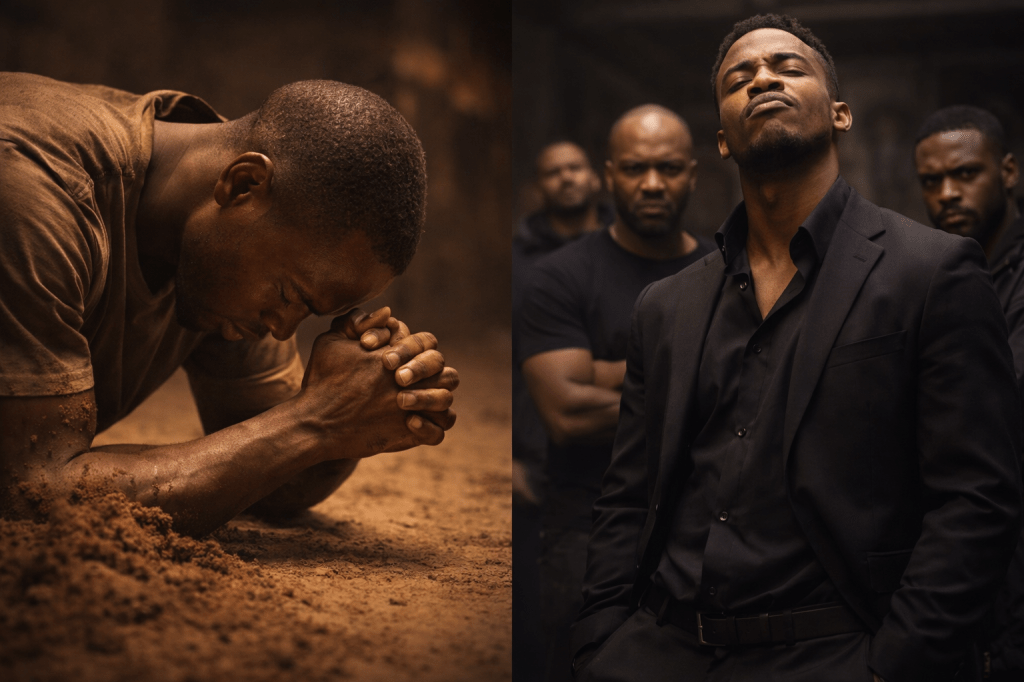

Knees in Gratitude No to Your Head in Arrogance.

Kneeling in gratitude represents one of the most powerful postures in spiritual life, because it reflects humility before the Creator and an acknowledgment that all blessings originate from God. In scripture, kneeling is often associated with reverence, submission, and dependence on divine grace. When a person bows their knees, they symbolically recognize that they are not self-made, but sustained by a higher power (Psalm 95:6).

Gratitude keeps the soul grounded in truth. It reminds individuals that life, opportunity, talent, and success are gifts rather than entitlements. The act of giving thanks protects the heart from pride and cultivates spiritual awareness, reinforcing the biblical principle that every good and perfect gift comes from above (James 1:17).

In contrast, arrogance represents a spiritual posture of self-exaltation. When blessings “go to the head,” the individual begins to attribute success to personal ability rather than divine provision. This shift from gratitude to pride marks a dangerous spiritual transition, as scripture consistently warns that pride precedes destruction and leads to moral blindness (Proverbs 16:18).

Arrogance distorts perception. It causes individuals to forget their origins, ignore their limitations, and dismiss their dependence on God. Instead of kneeling, the arrogant stand tall in self-worship, constructing identities rooted in ego, status, and superiority. This mindset replaces humility with illusion and replaces worship with self-admiration (Romans 12:3).

The Bible presents gratitude as a safeguard against spiritual decay. When people remember God in their success, they remain emotionally and morally anchored. Gratitude nurtures empathy, patience, and self-awareness, all of which are essential for healthy relationships and ethical leadership (Colossians 3:15).

Arrogance, however, isolates. It creates emotional distance from others and spiritual distance from God. The arrogant individual no longer listens, learns, or submits. Instead, they dominate, compare, and compete. This posture not only damages relationships but also disrupts spiritual growth (Luke 18:11–14).

From a theological perspective, arrogance reflects a form of idolatry. The self becomes the object of worship, replacing God as the center of meaning and authority. This mirrors the original fall narrative, where humanity sought godhood without God, resulting in alienation and disorder (Genesis 3:5–6).

Gratitude, on the other hand, realigns the soul with divine reality. It fosters a lifestyle of reverence and obedience, reminding individuals that power is entrusted, not possessed. Knees in gratitude symbolize spiritual literacy—the ability to interpret life through divine truth rather than personal ego (1 Thessalonians 5:18).

Psychologically, gratitude has been linked to emotional well-being, resilience, and moral clarity, while arrogance correlates with narcissism, entitlement, and relational dysfunction. Studies confirm that gratitude promotes humility and ethical behavior, whereas arrogance reinforces cognitive distortion and self-centeredness (Emmons & McCullough, 2003).

Ultimately, the contrast between knees in gratitude and heads in arrogance represents two spiritual paths. One leads to reverence, wisdom, and divine alignment. The other leads to illusion, pride, and eventual collapse. The posture of the body reflects the posture of the soul: those who kneel before God rise in wisdom, while those who exalt themselves fall into spiritual emptiness (Matthew 23:12).


References

M. E. (2003). Counting blessings versus burdens: An experimental investigation of gratitude and subjective well-being in daily life. Journal of Personality and Social Psychology, 84(2), 377–389. https://doi.org/10.1037/0022-3514.84.2.377

The Holy Bible, King James Version. (1611/2017). Cambridge University Press.

Lewis, C. S. (1952). Mere Christianity. HarperOne.

Wright, N. T. (2012). After you believe: Why Christian character matters. HarperOne.

Peterson, C., & Seligman, M. E. P. (2004). Character strengths and virtues: A handbook and classification. Oxford University Press.

Why Don’t You Do Something With Your Hair? Hair Politics in the Black Community.

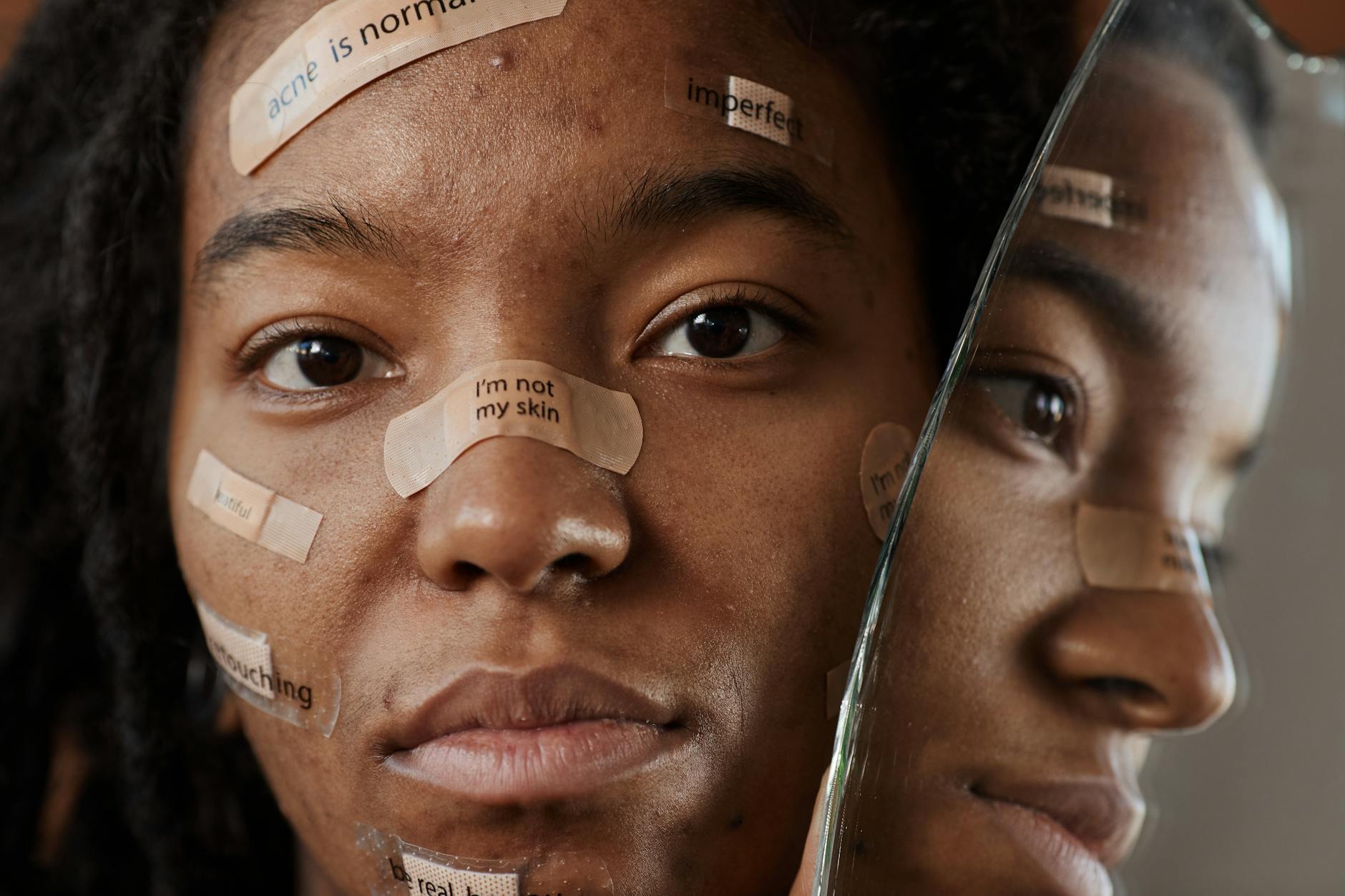
Photo by Osmar Vasques on Pexels.com

The question “Why don’t you do something with your hair?” carries weight far beyond casual conversation. It reflects the long, complicated history of hair politics within the Black community, where hair is not merely aesthetic but deeply tied to identity, culture, and social status. The question assumes that the natural hair that grows out of a Black woman’s scalp is insufficient, needing alteration to be considered beautiful or presentable. This dilemma plays out daily in salons, workplaces, and even among friends, revealing the enduring tension between assimilation and authenticity.

Hair politics in the Black community have roots that trace back to pre-colonial Africa. African hairstyles once symbolized tribe, social rank, marital status, and even spiritual beliefs (Byrd & Tharps, 2014). Intricate braids, twists, and natural textures were celebrated as markers of identity and belonging. This changed dramatically during the transatlantic slave trade. Enslaved Africans were often forced to shave their heads, stripping them of cultural identity and dignity (White & White, 1998). This dehumanizing act laid the groundwork for centuries of stigma against African hair textures.

During slavery and later segregation, Eurocentric beauty standards dominated. Straight hair was viewed as a marker of respectability and proximity to whiteness. Many Black women began straightening their hair as a means of survival, using hot combs and later chemical relaxers to fit into white society’s expectations (Rooks, 1996). This survival strategy was both empowering—opening doors to employment and social acceptance—and damaging, as it subtly communicated that natural hair was unkempt or undesirable.

This tension birthed the concept of “good hair” versus “bad hair.” “Good hair” was typically defined as straighter, looser, and more European-like, while “bad hair” referred to tightly coiled, kinky textures. This language continues to shape how Black girls grow up viewing themselves. The woman in the store who questioned another’s natural fro echoed centuries of conditioning that privileges one texture over another.

Biblically, this judgment contradicts the affirmation of divine creation. Psalm 139:14 (KJV) declares, “I will praise thee; for I am fearfully and wonderfully made: marvellous are thy works.” If God made hair textures diverse, then natural Black hair is good by design. The cultural insistence on altering hair to be acceptable reflects a deeper issue of internalized oppression rather than divine truth.

Hair also became a political statement during the Civil Rights and Black Power movements of the 1960s and 1970s. The Afro emerged as a symbol of pride, rebellion, and resistance against white supremacy. To wear one’s hair in its natural state became an act of defiance and self-acceptance. Angela Davis famously wore her iconic Afro as both a personal choice and a political statement, making natural hair synonymous with the fight for liberation (Davis, 1981).

However, as mainstream culture commodified Black style, the natural hair movement lost some of its radical edge. The emergence of weaves, wigs, and chemical relaxers in the 1980s and 1990s introduced new standards of glamour and professionalism. While these styles offered versatility and creative expression, they also reinforced the idea that natural hair was only acceptable if controlled or hidden.

Celebrities have weighed in on this hair dilemma, often sparking debate. Viola Davis removed her wig on the hit show How to Get Away With Murder in a powerful scene that revealed her natural hair, stating in interviews that she wanted to normalize textured hair on television (Dockterman, 2014). Solange Knowles has also been vocal about the politics of natural hair, penning the song “Don’t Touch My Hair” as an anthem of autonomy and identity.

On the other side, some celebrities have been criticized for perpetuating Eurocentric beauty ideals. Rapper Lil’ Kim and others who have dramatically lightened their skin and straightened their hair have been accused of reflecting the deep scars of colorism and texturism. These choices are not simply personal but political, given the influence celebrities have on shaping beauty standards.

Workplace politics also play a major role in the natural-versus-straight hair conversation. For years, natural hairstyles such as locs, braids, and twists were deemed “unprofessional” in many corporate environments. It wasn’t until the passing of laws like the CROWN Act (2019) that discrimination against natural hairstyles began to be legally challenged in several U.S. states. This shows that hair policing is not just cultural but institutional.

The debate over natural hair versus weaves or wigs is complex. On one hand, weaves allow Black women to experiment with style, color, and length without damaging their natural hair. On the other, they can become a crutch if they are used to hide self-hatred or avoid confronting the stigma against natural textures. The key issue is not the style chosen but the motivation behind it—whether it flows from freedom or from shame.

Mentally, constant scrutiny over hair can lead to stress and self-esteem issues. Black girls as young as five report feeling pressured to straighten their hair for special occasions or school pictures (Opie & Phillips, 2015). This teaches them early that their natural state is less acceptable, planting seeds of insecurity that can take years to unlearn.

Spiritually, the church can play a role in affirming natural hair. Unfortunately, some church communities have perpetuated respectability politics by favoring women with straightened hair or wigs, especially in leadership roles. This contradicts the biblical principle in 1 Peter 3:3-4 (KJV), which states that beauty should not merely be about “plaiting the hair” or outward adornment but about “the hidden man of the heart.” This verse calls believers to focus on character rather than conformity to beauty standards.

The natural hair movement of the 21st century has made significant strides in reversing stigma. Social media platforms like Instagram and YouTube have created spaces for Black women to share tips, tutorials, and encouragement for embracing natural curls and coils. This digital sisterhood has birthed a new generation of women who proudly wear their afros, twist-outs, and locs as declarations of self-love.

Nevertheless, the pressure to conform to a certain standard of natural hair perfection—“curl envy”—has emerged as a new form of hair politics. Women with looser curl patterns are often celebrated more in natural hair campaigns than those with tighter coils, revealing that even within the movement, hierarchies still exist.

The Politics, Pain, and Power of Black Hair

I was standing in line at a neighborhood store when I overheard two women talking. One wore a sleek weave, carefully laid edges, and perfectly straightened strands; the other rocked a short, natural fro. With a laugh, the first woman asked, “Girl, why don’t you do something with your hair?” The second woman smiled politely, but her face betrayed the familiar sting that so many Black women know too well. That small exchange speaks volumes about the history and politics of Black hair — a history that stretches from the villages of West Africa to the plantations of the Americas, from the barbershops and beauty salons of the Jim Crow era to the hashtags and viral videos of today.

Hair has never been just hair for Black people. In pre-colonial Africa, hair was identity. Styles communicated tribe, social status, fertility, and even spiritual meaning (Byrd & Tharps, 2014). To cut someone’s hair was to humiliate them, stripping away dignity. Enslavers understood this, which is why many Africans brought to the Americas had their heads forcibly shaved, severing a crucial connection to their homeland (White & White, 1998). This trauma planted the seed for centuries of stigma against African textures.

In America, Black hair became a site of both survival and rebellion. For many, straightening hair was a way to gain access to jobs, education, and respectability in a white-dominated society (Rooks, 1996). The hot comb, famously popularized by Madam C.J. Walker, was both a tool of empowerment and a symbol of assimilation. “My grandmother told me that straightening her hair helped her get her first job as a teacher,” said Sharon, 62, in an interview. “But she also told me she always felt like she was wearing a mask.”

The language of “good hair” versus “bad hair” emerged from these survival tactics. “Good hair” was associated with looser, straighter textures — often linked to mixed ancestry — while “bad hair” was used to describe kinky, coily textures. “I grew up in the 90s, and my aunties would sigh whenever I wore my hair natural,” said Angela, 33. “They would say, ‘We gotta do something with this nappy mess.’ It made me feel like who I was naturally was a problem to be fixed.”

Biblically, this tension challenges what Scripture teaches about God’s creation. Genesis 1:31 (KJV) declares, “And God saw every thing that he had made, and, behold, it was very good.” If every hair texture is created by God, then none can be deemed “bad.” Psalm 139:14 reminds us that we are “fearfully and wonderfully made.” To degrade natural hair is to deny the Creator’s artistry.

The Civil Rights and Black Power era redefined hair politics. The Afro became a crown of pride and a political statement. “When I wear my Afro, I am making a statement that I am Black and proud,” Angela Davis wrote (Davis, 1981). To wear one’s hair naturally was to reject assimilation and embrace African identity. This was a time when hair became activism — the body itself was a protest sign.

But as the decades passed, relaxers, weaves, and wigs became mainstream again. For some, this was a matter of convenience and creative expression. For others, it was a return to old pressures to conform. “I love my weave because I can switch up my look,” said Monique, 27, during a focus group. “But I also hate that people assume I don’t love myself when I wear it. It’s not that — I just like the versatility.”

The natural hair movement of the 2010s reignited the call for authenticity. YouTube vloggers and Instagram influencers created a renaissance of tutorials, hair care tips, and motivational content celebrating curls, coils, and kinks. Yet, even within the natural hair community, hierarchies emerged. Looser curl patterns (3A–3C) were celebrated more prominently than tightly coiled textures (4B–4C), leading to what some call “texturism” (Robinson, 2011).

Celebrities have weighed in powerfully on the conversation. Viola Davis’s decision to remove her wig on How to Get Away with Murder was more than just a TV moment — it was a cultural reset. “I wanted to humanize her,” Davis explained. “And part of that is letting her be who she really is — natural hair and all” (Dockterman, 2014). Solange Knowles, in her song “Don’t Touch My Hair,” transformed her experience of unwanted hair-policing into an anthem of bodily autonomy.

Despite these victories, discrimination remains a reality. Studies show that Black women with natural hairstyles are often rated as less professional or less competent in corporate settings (Opie & Phillips, 2015). The passage of the CROWN Act (2019) in multiple U.S. states is a step toward protecting Black hair from workplace discrimination — but the cultural bias runs deep.

The question “Why don’t you do something with your hair?” carries an assumption: that natural hair is undone, messy, or unacceptable. But natural hair is done the moment it grows from the scalp. It does not need fixing to be valid. Romans 12:2 (KJV) reminds us, “Be not conformed to this world: but be ye transformed by the renewing of your mind.” Breaking free from the belief that straight is the only acceptable form is a mental and spiritual renewal.

Healing hair trauma requires unlearning generations of internalized shame. “I had to stop calling my daughter’s hair ‘difficult,’” said Candace, 40. “Now I tell her it’s beautiful, full, and strong — just like her.” This kind of language shift is revolutionary. It teaches young girls that their hair is a source of pride, not a burden.

There is also space for freedom of choice. Some women wear wigs or relaxers not out of shame but for self-expression. The issue is not the style but the root motivation. Galatians 5:1 (KJV) declares, “Stand fast therefore in the liberty wherewith Christ hath made us free.” Freedom in Christ includes freedom from the bondage of beauty standards — whether those standards push toward assimilation or prescribe a rigid idea of “natural purity.”

The politics of hair also affect men, though they are often left out of the conversation. Dreadlocks, cornrows, and afros on Black men have been criminalized, labeled as unkempt or threatening. Celebrities like J. Cole and Bob Marley used their hair as political and spiritual statements, reminding the world that natural hair is not just style but identity.

Moving forward, education is key. Schools, churches, and community spaces must normalize the full spectrum of Black hair. Representation in media matters — children need to see characters who look like them wearing braids, locs, fros, and curls with confidence and beauty.

Ultimately, the woman in the store who questioned the natural fro was voicing a generational script — one we must now rewrite. By embracing natural hair as inherently good, by affirming every style chosen freely, and by dismantling the good-hair/bad-hair dichotomy, the Black community can heal from centuries of hair trauma.

In the end, the question is no longer “Why don’t you do something with your hair?” but “What will we do with the legacy of hair politics?” Will we pass down shame or pass down pride? Will we perpetuate Eurocentric hierarchies or celebrate the God-given diversity of our crowns? The choice is ours — and it is time to choose freedom.

Healing from hair politics requires both internal and communal work. Internally, Black women must embrace that their hair—whatever its texture—is inherently good and worthy of care. Communally, there must be a shift in language, moving away from “good hair” and “bad hair” to affirming the full spectrum of textures as beautiful.

Parents play a critical role in shaping hair identity. Teaching young girls to love their hair early on, letting them see positive representations of their texture in books, movies, and social media, helps inoculate them against the pressures they will face. Such affirmation can prevent the painful moment when a stranger or even a friend asks, “Why don’t you do something with your hair?”

In conclusion, hair politics in the Black community are both a burden and an opportunity. The burden lies in centuries of stigma and division, but the opportunity lies in reclaiming hair as a site of freedom, creativity, and identity. When a woman chooses a fro, a weave, braids, or a bald head from a place of self-love, she resists the narrative that her natural state is not enough. By rooting our worth in biblical truth and affirming the diversity of Black beauty, the Black community can end the cycle of judgment and instead celebrate the crown that God has given.


References

  • Byrd, A., & Tharps, L. (2014). Hair story: Untangling the roots of Black hair in America (2nd ed.). St. Martin’s Press.
  • Davis, A. (1981). Women, race, & class. Vintage Books.
  • Dockterman, E. (2014, October 17). Viola Davis explains why she took off her wig on How to Get Away With Murder. TIME.
  • Opie, T., & Phillips, K. W. (2015). Hair penalties: The negative influence of Afrocentric hair on ratings of Black women’s dominance and professionalism. Frontiers in Psychology, 6, 1311.
  • Rooks, N. (1996). Hair raising: Beauty, culture, and African American women. Rutgers University Press.
  • White, S., & White, G. (1998). Slave hair and African American culture in the eighteenth and nineteenth centuries. Journal of Southern History, 63(1), 45–76.

The Chosen Ones Series: Seek His Will for Your Life

Chosen ones, seeking the will of the Most High is the highest calling of a believer’s life, for purpose is not discovered in ambition but in obedience. The world teaches us to chase success, status, and self-fulfillment, but Scripture teaches us to seek God’s will above all things, knowing that His plan is eternal, perfect, and aligned with our true destiny (Romans 12:2, KJV).

God’s will is not hidden in mystery to torment us, but revealed progressively to those who desire Him sincerely. The Most High does not guide the proud, the distracted, or the double-minded; He leads those who humble themselves and hunger for righteousness (Matthew 5:6, KJV).

The first way to seek God’s will is through prayer and communion. Prayer is not merely asking for blessings, but aligning your spirit with God’s mind. Through prayer, the believer learns to listen more than speak, and to submit rather than demand (Jeremiah 33:3, KJV).

The second way is through studying the Word of God. Scripture is the primary revelation of God’s will. If something contradicts the Word, it is not God’s will, no matter how appealing it seems (Psalm 119:105, KJV).

The third way is through fasting and spiritual discipline. Fasting weakens the flesh and strengthens spiritual sensitivity. Many cannot hear God clearly because their flesh is too loud and their spirit too weak (Matthew 17:21, KJV).

The fourth way is through obedience in small things. God does not reveal big assignments to people who ignore small instructions. Faithfulness qualifies you for clarity (Luke 16:10, KJV).

The fifth way is through godly counsel. The Most High often speaks through wise and spiritually grounded people. Isolation breeds deception, but wise counsel brings stability (Proverbs 11:14, KJV).

The sixth way is through patience and waiting. God’s will unfolds in seasons, not instantly. Many people rush into decisions and later pray for God to fix what they never asked Him about (Isaiah 40:31, KJV).

The seventh way is through surrender of personal desires. God’s will cannot be followed while clinging to ego, pride, or personal agendas. True guidance begins where self ends (Proverbs 3:5–6, KJV).

The eighth way is through inner peace and conviction. God’s will brings spiritual peace, even when the assignment is difficult. Confusion, chaos, and anxiety are not the voice of God (Colossians 3:15, KJV).

The ninth way is through observing spiritual fruit. God’s will produces righteousness, humility, growth, and love—not pride, greed, or destruction (Matthew 7:16, KJV).

The tenth way is through aligning your life with service. God’s will is always connected to serving others, not just enriching yourself. Purpose is found in impact, not comfort (Mark 10:45, KJV).

Seeking God’s will requires dying to the culture of self-worship and individualism. The modern world glorifies personal dreams, but Scripture calls believers to die daily and live for God’s glory (Luke 9:23, KJV).

Many people remain spiritually stuck because they want God to bless their plans instead of submitting to His. But God does not exist to serve human ambition; humans exist to serve divine purpose (Job 42:2, KJV).

The will of God often requires separation from people, environments, and habits that no longer align with your calling. Growth always involves pruning (John 15:2, KJV).

God’s will may not always be comfortable, but it will always be meaningful. It may involve sacrifice, rejection, or obscurity, but it will never be empty (2 Corinthians 4:17, KJV).

Those who seek God’s will develop spiritual discernment. They learn to recognize when opportunities are distractions and when closed doors are protection (1 Thessalonians 5:21, KJV).

When you seek God’s will, provision follows purpose. You do not chase resources; resources are assigned to your obedience (Matthew 6:33, KJV).

God’s will is not about becoming famous, wealthy, or admired, but about becoming aligned, obedient, and useful in His kingdom (Romans 8:28, KJV).

The chosen are not chosen for comfort but for calling. They are shaped by trials, refined by waiting, and strengthened by faith (James 1:2–4, KJV).

Those who truly walk in God’s will become spiritually anchored. They are not easily swayed by trends, pressure, or public opinion because their identity is rooted in divine instruction (Galatians 1:10, KJV).

Ultimately, seeking God’s will is seeking God Himself. Purpose is not found in destinations, careers, or titles, but in intimacy with the Creator who formed you before you were born (Jeremiah 1:5, KJV).

To seek the Most High’s will is to choose eternal alignment over temporary pleasure, divine purpose over human praise, and spiritual obedience over worldly success. This is the path of the chosen.

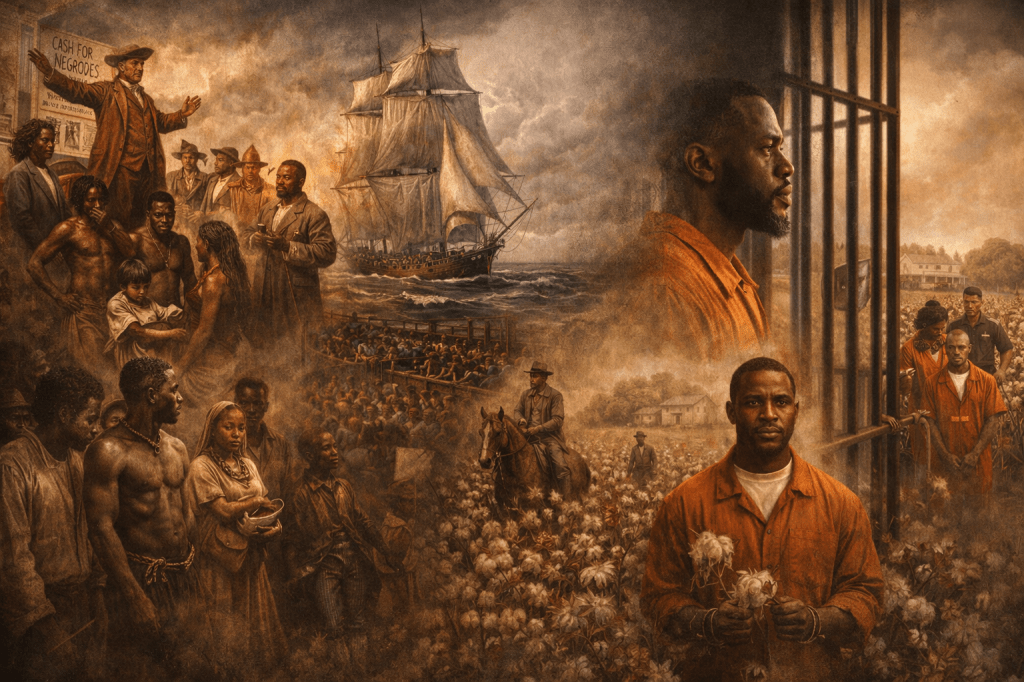
From Chains to Challenges: The Black Journey from Slavery to Modern Struggle.

The story of Black people in the Americas is a long arc of suffering, survival, and strength. Slavery was one of the most devastating atrocities in human history, yet it became the soil out of which resilience, culture, and faith blossomed. To understand where we stand today, we must revisit the beginning—how slavery started, how it ended, and what challenges remain in the present day. This narrative is not merely about the past; it is about the enduring struggle for freedom, dignity, and equality.

Black History Timeline: From Slavery to Modern Struggle

  • 1619 – First enslaved Africans arrive in Virginia, marking the beginning of chattel slavery in the English colonies.
  • 1863 – President Abraham Lincoln issues the Emancipation Proclamation, declaring enslaved people in Confederate states free.
  • 1865 – The 13th Amendment is ratified, officially abolishing slavery in the United States.
  • 1868 – The 14th Amendment grants citizenship and equal protection under the law to formerly enslaved people.
  • 1870 – The 15th Amendment grants Black men the right to vote.
  • 1896Plessy v. Ferguson Supreme Court decision establishes “separate but equal,” legalizing racial segregation.
  • 1954Brown v. Board of Education Supreme Court decision declares school segregation unconstitutional.
  • 1964 – The Civil Rights Act is passed, outlawing discrimination based on race, color, religion, sex, or national origin.
  • 1965 – The Voting Rights Act is signed into law, protecting Black Americans’ right to vote.
  • 2008 – Barack Obama is elected the first Black President of the United States.
  • 2013 – The Black Lives Matter movement is founded in response to police violence and systemic racism.
  • 2020 – Global protests erupt after the murder of George Floyd, sparking renewed calls for racial justice worldwide.

The transatlantic slave trade began in the 15th century when European powers discovered the economic potential of African labor for their colonies in the Americas. Enslaved Africans were kidnapped, sold, and shipped under brutal conditions across the Atlantic in what became known as the Middle Passage. Millions perished along the way, their bodies thrown overboard. Those who survived were forced into chattel slavery, treated as property with no rights, and subjected to physical abuse, family separation, and cultural erasure (Smallwood, 2007).

Slavery in the United States was particularly harsh because it was racialized and hereditary. The legal system ensured that children born to enslaved mothers were automatically slaves, cementing generational bondage (Baptist, 2014). Plantations thrived on cotton, sugar, and tobacco, and the wealth of the American South—and much of the North—depended on unpaid African labor. This institution became so entrenched that it divided the nation politically, socially, and economically.

Resistance was always present. Enslaved people rebelled in overt and covert ways, from uprisings like Nat Turner’s rebellion to everyday acts of defiance such as breaking tools, escaping via the Underground Railroad, or maintaining African traditions in music and religion. These acts of resistance preserved Black humanity and spirit even in the face of dehumanization (Berlin, 2003).

The formal end of slavery in the United States came with the Civil War (1861–1865). President Abraham Lincoln’s Emancipation Proclamation in 1863 declared freedom for enslaved people in Confederate states, though true liberation came only with the Union victory and the ratification of the 13th Amendment in 1865. Yet freedom was only partial—many enslavers resisted, and newly freed people faced systemic violence and oppression (Foner, 2014).

Reconstruction (1865–1877) was a critical but short-lived moment of hope. Freedmen’s schools were established, Black men gained the right to vote, and several Black politicians were elected to office. However, white supremacist backlash soon reversed these gains through Black Codes, sharecropping systems, and domestic terrorism by groups such as the Ku Klux Klan. Reconstruction’s collapse ushered in the era of Jim Crow segregation (Litwack, 1998).

Jim Crow laws legally enforced racial segregation, keeping Black Americans in a second-class status for nearly a century. Public spaces, schools, and neighborhoods were divided, with Black people denied equal access to education, housing, and voting rights. Lynchings became a tool of terror, and entire communities were burned to the ground, as in Tulsa’s 1921 massacre (Gates, 2019). Despite this, Black Americans built their own thriving institutions, from HBCUs to churches that became pillars of community life.

The Civil Rights Movement of the 1950s and 1960s was a turning point. Leaders like Martin Luther King Jr., Rosa Parks, and Malcolm X challenged racial injustice through marches, boycotts, and powerful speeches. Landmark victories included the Brown v. Board of Education decision (1954), the Civil Rights Act (1964), and the Voting Rights Act (1965). These legal changes dismantled de jure segregation, though de facto inequalities persisted (Branch, 1988).

Key Figures Who Made a Difference

  • Abraham Lincoln – Issued the Emancipation Proclamation and pushed for the 13th Amendment to abolish slavery.
  • Frederick Douglass – Escaped slave, abolitionist, writer, and orator who advocated for freedom and equality.
  • Harriet Tubman – Led hundreds to freedom through the Underground Railroad, symbolizing courage and liberation.
  • Sojourner Truth – Abolitionist and women’s rights advocate, known for her “Ain’t I a Woman?” speech.
  • W.E.B. Du Bois – Scholar and co-founder of the NAACP, championed civil rights and Pan-African unity.
  • Marcus Garvey – Advocated Black pride, economic independence, and Pan-Africanism.
  • Martin Luther King Jr. – Leader of the Civil Rights Movement, preached nonviolent resistance and racial equality.
  • Malcolm X – Spokesman for Black empowerment and self-defense, encouraged pride in African heritage.
  • Rosa Parks – Sparked the Montgomery Bus Boycott by refusing to give up her seat, inspiring nationwide action.
  • Thurgood Marshall – First Black Supreme Court Justice, fought segregation through legal challenges.
  • Ida B. Wells – Journalist and anti-lynching crusader, raised awareness of racial terror.
  • Barack Obama – First Black President of the United States, symbolizing progress and representation.

After the Civil Rights era, there were significant advances: greater representation in politics, the election of mayors, governors, and, eventually, President Barack Obama. Economic opportunities slowly expanded, but wealth disparities, mass incarceration, and systemic racism remained. The War on Drugs disproportionately targeted Black communities, leading to generations of Black men being imprisoned and families being destabilized (Alexander, 2010).

In today’s world, slavery no longer wears chains but manifests economically and psychologically. Financial bondage can be seen in predatory lending, wage disparities, and a lack of generational wealth. Black households, on average, hold a fraction of the wealth of white households due to historical exclusion from homeownership programs like the GI Bill and redlining practices (Oliver & Shapiro, 2006).

One of the clearest examples of modern-day economic slavery is student debt. Black students are more likely to take on loans for college and graduate with higher debt burdens than their white counterparts, limiting their ability to buy homes, invest, and build wealth (Scott-Clayton & Li, 2016). Education, once seen as a tool of liberation, can trap graduates in decades of repayment, mirroring the cycle of sharecropping debt from the Reconstruction era.

Prison labor is another form of present-day slavery. The 13th Amendment abolished slavery “except as punishment for crime,” allowing prisons to exploit incarcerated individuals for little to no pay. Many major corporations profit from prison labor, making mass incarceration an economic engine that disproportionately affects Black men (Davis, 2003). This system echoes the convict leasing programs of the late 19th century, where newly freed Black men were arrested for minor infractions and leased out to plantations and factories.

Corporate exploitation also plays a role in the new slavery. Many Black communities are targeted by payday lenders, fast-food chains, and predatory retailers who profit from economic desperation. Food deserts—neighborhoods with little access to fresh produce—force residents to rely on unhealthy options, contributing to poor health outcomes and reinforcing a cycle of dependency (Walker et al., 2010).

Employment discrimination continues to be a barrier. Studies have shown that resumes with “Black-sounding” names receive fewer callbacks than those with “white-sounding” names despite identical qualifications (Bertrand & Mullainathan, 2004). This systemic bias reinforces cycles of poverty and limits access to economic mobility.

Education remains a battleground. Predominantly Black schools often receive less funding, leading to fewer resources, overcrowded classrooms, and lower graduation rates. Yet, despite these challenges, Black students continue to excel, breaking barriers in academia, science, and entrepreneurship (Ladson-Billings, 2006).

Cultural slavery persists in the form of media stereotypes that shape perceptions of Black identity. From harmful tropes of the “thug” or “angry Black woman” to colorism within the Black community, these narratives influence hiring decisions, policing, and self-esteem. Representation in media, however, is slowly shifting, with more nuanced and empowering portrayals emerging.

Financial literacy has become a tool of modern liberation. Black entrepreneurs, activists, and educators are teaching about credit, investments, and ownership. Movements like #BuyBlack encourage the circulation of dollars within Black communities to build sustainable economic power (Anderson, 2017).

Social justice movements have reignited the fight against systemic oppression. These movements use technology and social media to expose police brutality, advocate for criminal justice reform, and mobilize global solidarity. The digital age has given new tools to an old struggle for freedom.

Spiritually, many in the Black community turn to faith as a source of endurance. Churches remain hubs for organizing, political activism, and community care. The Black church has historically been a place where the enslaved could sing freedom songs, where civil rights leaders could strategize, and where today’s generation continues to find hope.

Globally, the African diaspora faces similar challenges. In places like Brazil, the Caribbean, and the UK, Afro-descendant communities grapple with racial inequality, police violence, and underrepresentation. The struggle for Black liberation is international, linking us to a global human rights movement.

Despite the challenges, the Black journey is marked by incredible achievements in arts, science, sports, politics, and beyond. The cultural contributions of African Americans—from jazz to hip-hop, from literature to fashion—have transformed the world and redefined what it means to be resilient.

Today, being “enslaved” can also mean mental enslavement: internalized racism, self-hate, and the pursuit of material validation rather than true freedom. Breaking free requires education, healing, and a reorientation toward self-love and community empowerment.

This journey is not only about survival but about thriving. The legacy of slavery can be transformed into a legacy of greatness when knowledge, faith, and economic empowerment are combined. The fight is not over, but the foundation has been laid by those who came before us.


References
Alexander, M. (2010). The new Jim Crow: Mass incarceration in the age of colorblindness. The New Press.
Anderson, C. (2017). PowerNomics: The national plan to empower Black America. PowerNomics Corporation of America.
Baptist, E. (2014). The half has never been told: Slavery and the making of American capitalism. Basic Books.
Berlin, I. (2003). Generations of captivity: A history of African-American slaves. Harvard University Press.
Bertrand, M., & Mullainathan, S. (2004). Are Emily and Greg more employable than Lakisha and Jamal? American Economic Review, 94(4), 991–1013.
Branch, T. (1988). Parting the waters: America in the King years 1954-63. Simon & Schuster.
Davis, A. (2003). Are prisons obsolete? Seven Stories Press.
Foner, E. (2014). Reconstruction: America’s unfinished revolution, 1863-1877. Harper Perennial.
Gates, H. L. (2019). Stony the road: Reconstruction, white supremacy, and the rise of Jim Crow. Penguin Press.
Ladson-Billings, G. (2006). From the achievement gap to the education debt: Understanding achievement in U.S. schools. Educational Researcher, 35(7), 3–12.
Litwack, L. F. (1998). Trouble in mind: Black southerners in the age of Jim Crow. Vintage.
Oliver, M. L., & Shapiro, T. M. (2006). Black wealth/white wealth: A new perspective on racial inequality. Routledge.
Scott-Clayton, J., & Li, J. (2016). Black-white disparity in student loan debt more than triples after graduation. Brookings Institution.
Smallwood, S. (2007). Saltwater slavery: A middle passage from Africa to American diaspora. Harvard University Press.
Walker, R. E., Keane, C. R., & Burke, J. G. (2010). Disparities and access to healthy food in the United States: A review of food deserts literature. Health & Place, 16(5), 876–884.

Epistemologies of the Black Aesthetic and Phenomenology of the Black Woman and Man.

The epistemologies of the Black aesthetic begin with the recognition that knowledge itself is not neutral but socially and historically constructed. Epistemology, as the study of how knowledge is produced and legitimized, reveals that Western systems of knowing have long excluded Black experiences from the category of universal truth. Within this framework, Black aesthetics emerge not merely as artistic expressions but as alternative ways of knowing, rooted in embodied history, cultural memory, and collective survival.

The Black aesthetic operates as a counter-epistemology, challenging dominant paradigms that privilege Eurocentric modes of perception. Rather than separating reason from emotion, or mind from body, Black aesthetic traditions often integrate feeling, rhythm, spirituality, and storytelling as legitimate sources of knowledge. Music, dance, oral tradition, fashion, and visual art function as epistemic practices—ways of interpreting reality and transmitting meaning across generations.

Phenomenology, the philosophical study of lived experience, provides a powerful lens for understanding the Black woman and man as subjects rather than objects of knowledge. Phenomenology asks how individuals experience the world from within their own consciousness. Applied to Black existence, it shifts attention from how Black people are represented to how Black people perceive, feel, and inhabit social reality.

The phenomenology of the Black subject is inseparable from history. Slavery, colonialism, segregation, and systemic racism have shaped not only material conditions but also modes of perception. Black embodiment carries historical memory within it, producing what Frantz Fanon described as a “racial epidermal schema,” where the body is experienced through the gaze of others before it is experienced as self.

For the Black woman, phenomenology is marked by intersectionality—the simultaneous experience of racialized and gendered embodiment. Her body is not only racialized but sexualized, politicized, and surveilled. She is often forced to see herself through external projections that define her as laborer, caretaker, object of desire, or symbol of strength. These imposed meanings distort self-perception and fracture subjectivity.

Yet Black women also generate epistemologies of resistance. Through intellectual traditions such as Black feminism, womanism, and Africana philosophy, Black women reclaim authority over their own experiences. Knowledge emerges from lived reality, testimony, and embodied wisdom. The Black woman becomes not an object of study but a producer of theory.

The phenomenology of the Black man is shaped by a different but equally complex symbolic structure. Black masculinity has historically been framed through stereotypes of hyperphysicality, aggression, criminality, or emotional absence. These representations shape how Black men experience their own bodies in public space—often as sites of threat rather than humanity.

Black male subjectivity is therefore marked by hypervisibility and invisibility at once. The Black man is seen as a body but not recognized as a mind. His presence is often interpreted through fear rather than empathy. This produces what phenomenologists describe as alienation—the feeling of being estranged from one’s own existence.

Despite these constraints, Black men also produce alternative epistemologies of selfhood. Through music, literature, spirituality, and political consciousness, Black men articulate modes of being that resist dehumanization. Hip-hop, blues, jazz, and spoken word become philosophical forms—ways of narrating reality and reclaiming interior life.

The Black aesthetic unites these experiences through symbolic form. It functions as a visual, sonic, and cultural language through which Black people encode knowledge. Aesthetic practices become epistemic tools—mechanisms for understanding suffering, joy, memory, and hope. Art becomes theory in motion.

Unlike Western aesthetics, which often prioritize abstraction and detachment, the Black aesthetic emphasizes embodiment and relationality. Meaning is not discovered through distance but through participation. Knowledge emerges from the body in motion, from rhythm, from ritual, from collective experience. The aesthetic becomes a site of epistemological authority.

Memory plays a central role in this framework. The Black body functions as an archive, carrying ancestral trauma and resilience within its gestures, postures, and expressions. Cultural memory is transmitted not only through texts but through performance, language, and social practice. Knowledge lives in movement and sound.

Spirituality also operates as an epistemic dimension of Black life. In many African and diasporic traditions, knowledge is inseparable from divine order. Truth is not merely rational but spiritual, intuitive, and communal. The sacred becomes a way of knowing that resists Western secular epistemology.

The Black aesthetic thus collapses the boundary between art and life. Fashion becomes philosophy. Music becomes metaphysics. Beauty becomes political theory. These practices are not decorative but constitutive of reality. They shape how Black people understand themselves and the world.

From an epistemological standpoint, the Black woman and man exist within what philosopher Sylvia Wynter calls a struggle over the definition of the human. Western modernity constructs a narrow model of humanity based on whiteness, rationality, and individualism. Black existence challenges this model by revealing its exclusions.

Phenomenologically, Black existence is defined by what it means to live in a world that questions one’s humanity. The everyday experience of navigating institutions, media, and social space becomes a philosophical problem. The Black subject lives philosophy before studying it.

The Black aesthetic offers a new grammar of being. It allows Black people to name themselves, see themselves, and know themselves outside of imposed frameworks. This is not merely cultural expression but epistemic sovereignty—the right to define reality from within one’s own experience.

Knowledge, in this context, becomes relational rather than hierarchical. Truth is produced through dialogue, community, and shared struggle. The Black aesthetic rejects the idea of detached objectivity in favor of situated knowledge grounded in lived experience.

Both the Black woman and man embody what can be called epistemic resistance. Their existence disrupts dominant systems of meaning by revealing contradictions within Western claims to universality. Their bodies become sites where philosophy, history, and politics intersect.

The phenomenology of Black life ultimately reveals that subjectivity itself is political. To exist as Black in a racialized world is to experience reality through layers of meaning imposed from outside and reclaimed from within. Consciousness becomes a space of struggle and creativity.

The Black aesthetic, therefore, operates as both epistemology and ontology. It does not simply describe how Black people know the world; it reveals how Black people are in the world. Being and knowing collapse into each other, producing a distinct philosophical tradition.

In this sense, the Black woman and man are not marginal figures within philosophy but central figures in redefining what philosophy can be. Their experiences generate new questions about knowledge, reality, beauty, and humanity itself.

Ultimately, epistemologies of the Black aesthetic and the phenomenology of Black existence assert a radical claim: that Black life is not an object of analysis but a source of knowledge. Black being becomes Black knowing, and Black knowing becomes a new foundation for understanding the human condition.


References

Fanon, F. (1967). Black skin, white masks. Grove Press.

hooks, b. (1990). Yearning: Race, gender, and cultural politics. South End Press.

Collins, P. H. (2000). Black feminist thought: Knowledge, consciousness, and the politics of empowerment. Routledge.

Wynter, S. (2003). Unsettling the coloniality of being/power/truth/freedom. The New Centennial Review, 3(3), 257–337.

Gordon, L. R. (1995). Bad faith and antiblack racism. Humanity Books.

Du Bois, W. E. B. (1903). The souls of Black folk. A. C. McClurg.

Weheliye, A. G. (2014). Habeas viscus: Racializing assemblages, biopolitics, and Black feminist theories of the human. Duke University Press.

Hall, S. (1997). Representation: Cultural representations and signifying practices. Sage.

Tate, S. A. (2015). Black beauty: Aesthetics, stylization, politics. Routledge.

Merleau-Ponty, M. (2012). Phenomenology of perception. Routledge.

The Semiotics of Black Beauty

The semiotics of Black beauty begins with the understanding that beauty is not merely an aesthetic category but a system of signs, meanings, and cultural codes. Within semiotic theory, beauty operates as a language—one that communicates values, hierarchies, power relations, and historical memory. Black beauty, in particular, has functioned as a contested sign within Western modernity, simultaneously hyper-visible and marginalized, fetishized and erased. To analyze Black beauty semiotically is to examine how Black bodies, features, and aesthetics have been encoded, decoded, and re-signified across history.

In classical semiotics, Ferdinand de Saussure distinguished between the signifier (the form of the sign) and the signified (the concept it represents). Applied to Black beauty, the signifier may include dark skin, Afro-textured hair, full lips, broad noses, and curvilinear bodies, while the signified has historically been shaped by colonial ideology, racial hierarchy, and Eurocentric aesthetic standards. These physical features were not interpreted neutrally but loaded with meanings such as primitiveness, hypersexuality, exoticism, or inferiority. Thus, Black beauty became a distorted sign within the colonial visual grammar.

Colonialism produced what Frantz Fanon described as a racialized visual order in which Black bodies were rendered objects of surveillance and symbolic domination. In this system, beauty was weaponized as a tool of power, with whiteness positioned as the universal aesthetic norm. Blackness was defined in opposition to this norm, creating what semioticians would call a binary structure: beautiful versus ugly, civilized versus primitive, pure versus excessive. Black beauty was not simply excluded from the category of beauty; it was actively re-coded as its opposite.

Roland Barthes’ concept of myth is especially useful here. Myths transform cultural constructs into naturalized truths. The myth of beauty in Western society presents whiteness as neutral and universal while presenting Blackness as deviation. Over time, this myth became embedded in media, advertising, fashion, film, and even scientific discourse. Beauty standards ceased to appear ideological and instead appeared “natural,” obscuring their historical and political origins.

Black women’s bodies, in particular, have functioned as semiotic battlegrounds. From the exhibition of Sarah Baartman in the nineteenth century to contemporary hypersexualized representations in popular culture, Black femininity has been encoded through signs of excess—too sexual, too loud, too visible, too much. These representations operate as what Stuart Hall called regimes of representation, systems that fix meaning through repetition. The Black woman becomes a sign that circulates independently of her humanity.

Yet semiotics is not only about domination; it is also about resistance and re-signification. Black beauty has undergone profound symbolic transformation through cultural movements such as the Harlem Renaissance, the Black Arts Movement, Afrofuturism, and contemporary digital Black feminism. These movements challenge dominant sign systems by producing alternative visual codes—natural hair, dark skin celebration, Afrocentric fashion, and non-Eurocentric facial aesthetics. Here, Black beauty becomes a counter-sign, disrupting inherited meanings.

The politics of hair provides one of the clearest examples of semiotic struggle. Afro-textured hair has historically been encoded as unprofessional, wild, or undesirable, while straight hair has been associated with respectability and beauty. However, the natural hair movement re-signifies Afro-textured hair as a symbol of authenticity, resistance, and self-definition. Hair becomes a political sign, not merely a cosmetic choice.

Skin tone operates similarly within what scholars describe as colorism. Lighter skin has been historically coded as more beautiful due to proximity to whiteness, while darker skin has been marked as undesirable. This semiotic hierarchy is internalized within Black communities themselves, revealing how colonial sign systems reproduce themselves psychologically. Black beauty thus exists within a complex internal semiotics, where oppression is not only external but also internalized.

Media plays a central role in the production and circulation of beauty signs. Film, fashion, social media, and advertising function as symbolic machines that teach society what to desire and what to devalue. When Black women are underrepresented or represented through stereotypes, the sign of Black beauty becomes constrained, flattened, and commodified. Representation is not simply about visibility but about the range of meanings allowed to exist.

Digital culture has introduced new semiotic possibilities. Platforms such as Instagram, TikTok, and YouTube allow Black women to become producers of their own visual narratives rather than passive objects of representation. The rise of Black influencers, models, and artists creates decentralized beauty codes that challenge traditional gatekeepers. Semiotically, this represents a shift from imposed meaning to negotiated meaning.

The concept of the gaze is central to understanding Black beauty. Laura Mulvey’s theory of the male gaze can be extended to what many scholars call the white gaze—a visual framework through which Black bodies are interpreted and judged. Black beauty under the white gaze becomes spectacle rather than subject. However, the emergence of what is termed the Black female gaze reclaims visual authority, allowing Black women to define beauty on their own terms.

From a psychological perspective, beauty functions as symbolic capital. Pierre Bourdieu argued that symbolic capital produces social power through recognition and legitimacy. When Black beauty is denied legitimacy, Black women are denied access to certain forms of social mobility, desirability, and validation. Thus, beauty is not trivial; it is structurally linked to inequality.

Semiotically, Black beauty also intersects with spirituality. In many African cosmologies, beauty is not separated from morality, ancestry, or divine order. Physical appearance reflects harmony, balance, and spiritual alignment. This contrasts sharply with Western aesthetics, which prioritize surface over substance. Reclaiming Afrocentric aesthetics therefore represents not just cultural pride but epistemological resistance.

Fashion becomes another site of symbolic struggle. Historically, Black fashion was either appropriated or marginalized, yet contemporary Black designers and models are redefining aesthetic language globally. Clothing, hairstyles, and body presentation operate as visual texts through which Black identity is communicated. Fashion becomes semiotic activism.

Black beauty also functions as memory. It carries ancestral traces, historical trauma, and collective survival. The body itself becomes an archive, storing cultural meaning beyond written language. Semiotically, the Black body is a living sign, shaped by slavery, colonialism, migration, and resistance.

The commodification of Black beauty introduces further complexity. While Black aesthetics increasingly dominate popular culture, they are often consumed without acknowledging Black humanity. This produces what bell hooks called “eating the other,” where difference becomes a marketable aesthetic rather than a site of ethical engagement. Black beauty becomes profitable but not liberating.

At the level of language, even the word “beautiful” is semiotically loaded. To call Black women beautiful may appear affirming, yet it risks reinforcing the same system that requires validation from external authority. True semiotic liberation requires not merely inclusion within dominant categories but transformation of the categories themselves.

Thus, the semiotics of Black beauty is ultimately about power over meaning. Who gets to define beauty? Who controls the image? Who benefits from the sign? These are not aesthetic questions but political ones. Beauty operates as a symbolic economy, distributing value unevenly across racial and gendered lines.

Black beauty, when re-signified, becomes epistemological. It produces knowledge about the self, the body, and the world. It challenges Western philosophy’s separation of mind and body by asserting the body as a site of intelligence, history, and meaning. The Black woman becomes not an object of theory but a producer of theory.

In this sense, Black beauty is not simply visual; it is discursive. It speaks. It argues. It remembers. It resists. It transforms the semiotic field itself, expanding what beauty can mean and who gets to embody it.

Ultimately, the semiotics of Black beauty reveals that beauty is never innocent. It is a language shaped by history, power, and ideology. Yet within that language lies the possibility of rewriting the code. Black beauty, when claimed as self-authored meaning, becomes not a sign of exclusion but a symbol of cultural sovereignty.


References

Barthes, R. (1972). Mythologies. Hill and Wang.

Bourdieu, P. (1984). Distinction: A social critique of the judgement of taste. Harvard University Press.

Fanon, F. (1967). Black skin, white masks. Grove Press.

Hall, S. (1997). Representation: Cultural representations and signifying practices. Sage.

hooks, b. (1992). Black looks: Race and representation. South End Press.

Mulvey, L. (1975). Visual pleasure and narrative cinema. Screen, 16(3), 6–18.

Saussure, F. de. (2011). Course in general linguistics. Columbia University Press.

Tate, S. A. (2015). Black beauty: Aesthetics, stylization, politics. Routledge.

Weheliye, A. G. (2014). Habeas viscus: Racializing assemblages, biopolitics, and Black feminist theories of the human. Duke University Press.

Craig, M. L. (2002). Ain’t I a beauty queen? Black women, beauty, and the politics of race. Oxford University Press.

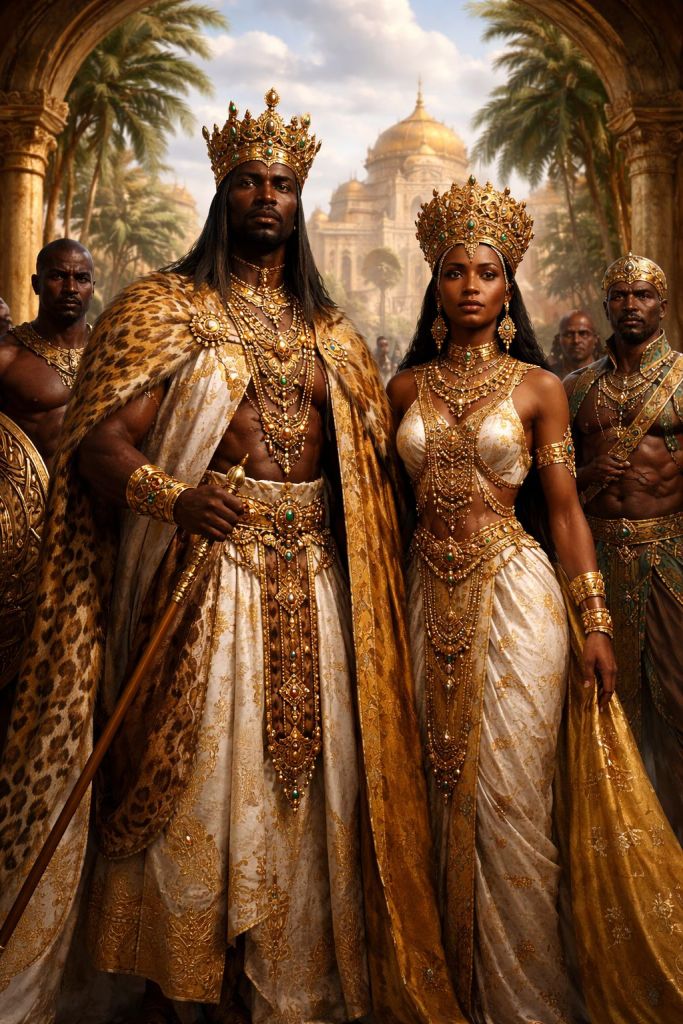
The Kingdoms of This World

The phrase “the kingdoms of this world” evokes both a theological and historical imagination, referring not only to political empires but to systems of power, culture, and identity that shape human civilization. In biblical literature, kingdoms are not merely geographic territories; they are moral, spiritual, and ideological orders that reflect humanity’s relationship to God, authority, and justice. Within this framework, Black kingdoms—both biblical and African—occupy a significant but often marginalized place in world history and sacred narrative.

The Bible presents Africa and African-descended peoples as foundational to early civilization. From the genealogies in Genesis to the empires that shaped the ancient Near East, Black kingdoms appear repeatedly as centers of power, wisdom, and divine interaction. Yet Eurocentric interpretations have historically minimized or obscured these realities, reframing biblical history through a Western racial lens.

One of the earliest Black kingdoms mentioned in the Bible is Cush, identified with Nubia and ancient Sudan. In Genesis 10, Cush is named as the son of Ham and the father of Nimrod, described as the first mighty ruler on earth. Cush is associated with military strength, wealth, and early state formation, positioning Africa at the very origin of post-Flood civilization.

Ethiopia, often synonymous with Cush in biblical texts, appears frequently in the Old Testament as a respected and powerful nation. Psalm 68:31 famously declares, “Ethiopia shall soon stretch out her hands unto God,” symbolizing divine recognition and spiritual significance. Ethiopia was not portrayed as peripheral but as a kingdom with diplomatic relations, armies, and religious authority.

Another major Black biblical kingdom is Egypt, arguably the most influential ancient civilization in human history. Egypt dominates the biblical narrative from Genesis through Exodus, serving as both refuge and oppressor. Abraham sojourned in Egypt, Joseph ruled in Egypt, and Moses was educated in the royal court of Egypt. Egypt is depicted as technologically advanced, philosophically complex, and politically dominant.

The Exodus story itself situates Egypt as the archetype of imperial power. Pharaoh represents not merely a political ruler but a symbolic embodiment of worldly authority opposing divine liberation. Yet Egypt’s greatness is never denied; it is portrayed as the supreme empire of its time, ruling through knowledge, architecture, engineering, and spiritual institutions.

Another significant biblical kingdom is Sheba, commonly associated with regions of Ethiopia, Yemen, and the Horn of Africa. The Queen of Sheba’s visit to King Solomon demonstrates Africa’s role as a source of wealth, wisdom, and international diplomacy. She is described as arriving with gold, spices, and intellectual curiosity, challenging and affirming Solomon’s wisdom.

Sheba’s appearance disrupts Western assumptions about ancient power. The Queen is not subordinate but sovereign, not exotic but intellectual, not marginal but central to the global political network of the ancient world. Her kingdom represents Africa as an epistemic authority, a producer of knowledge and culture.

Libya, known in biblical texts as Put, is another African kingdom involved in ancient warfare and alliances. Put appears in the prophetic books as a military power aligned with Egypt, indicating Africa’s geopolitical influence in the ancient Mediterranean world. These kingdoms were not isolated but deeply integrated into global history.

Beyond the Bible, African history reveals vast civilizations that rivaled and surpassed European empires in wealth, organization, and intellectual development. One of the most famous is the Mali Empire, which flourished in West Africa between the 13th and 16th centuries. Mali controlled trans-Saharan trade routes and became one of the richest empires in human history.

Mansa Musa, the most renowned ruler of Mali, is widely considered the wealthiest individual who ever lived. His pilgrimage to Mecca in 1324 reshaped global economies, distributing so much gold that it caused inflation across North Africa and the Middle East. Mali was not only wealthy but intellectually dominant, with universities in Timbuktu that rivaled medieval European institutions.

The Mali Empire also functioned as a center of Islamic scholarship, law, astronomy, and medicine. Libraries housed thousands of manuscripts, and scholars from across the Islamic world traveled to study there. This directly contradicts colonial narratives that portray Africa as intellectually barren before European contact.

Another major African kingdom was Great Zimbabwe, which flourished between the 11th and 15th centuries in Southern Africa. Its massive stone architecture, complex urban planning, and extensive trade networks demonstrate advanced engineering and political organization. European colonizers initially refused to believe Africans built it, attributing it falsely to Phoenicians or Arabs.

Great Zimbabwe controlled trade routes linking Africa to China, Persia, and India, exporting gold, ivory, and copper. Its very existence undermines the myth that Africa lacked civilization, revealing instead a long tradition of architectural mastery and global economic participation.

These African kingdoms parallel biblical themes of rise and fall. Like Egypt, Cush, and Sheba, Mali and Zimbabwe illustrate how kingdoms operate within divine cycles of power, wealth, justice, and decline. Scripture repeatedly teaches that no empire is permanent and that human authority is ultimately limited.

In the New Testament, Jesus declares, “My kingdom is not of this world,” distinguishing divine sovereignty from worldly empires. Yet Revelation speaks of “the kingdoms of this world” becoming the kingdoms of God, implying that all political systems are subject to spiritual judgment and transformation.

This theological framework invites a reinterpretation of Black history. Black kingdoms were not accidents of geography but expressions of divine order within human civilization. Their suppression through slavery and colonialism represents not natural decline but violent interruption of historical trajectories.

Colonialism functioned as a global reconfiguration of kingdoms, replacing African and Indigenous sovereignty with European imperial systems. These new “kingdoms of this world” restructured knowledge, race, labor, and power, redefining humanity itself through hierarchies of domination.

The erasure of Black kingdoms from mainstream history is therefore epistemological, not accidental. It reflects what scholars call “colonial knowledge production,” where history is written to legitimize conquest. Reclaiming Black kingdoms becomes an act of intellectual and spiritual restoration.

The Bible itself offers a counter-narrative. It consistently situates Africa within sacred history, not as an afterthought but as a foundational space of civilization, prophecy, and divine interaction. Black kingdoms are not footnotes; they are pillars.

Ultimately, “the kingdoms of this world” reveal that power is cyclical, meaning is political, and history is contested. Black kingdoms—biblical and African—demonstrate that Africa has always been central to global civilization, not marginal to it.

To study these kingdoms is not merely to recover lost history but to challenge the philosophical foundations of modernity itself. Black kingdoms remind the world that civilization did not begin in Europe, and that the future of humanity cannot be understood without Africa at its center.


References

Bible. (2011). King James Version. Hendrickson Publishers.

Diop, C. A. (1974). The African origin of civilization: Myth or reality. Lawrence Hill Books.

Fanon, F. (1967). Black skin, white masks. Grove Press.

Gordon, L. R. (2008). An introduction to Africana philosophy. Cambridge University Press.

Ki-Zerbo, J. (1997). General history of Africa, Vol. I: Methodology and African prehistory. UNESCO.

Levtzion, N., & Hopkins, J. F. P. (2000). Corpus of early Arabic sources for West African history. Markus Wiener.

Mudimbe, V. Y. (1988). The invention of Africa: Gnosis, philosophy, and the order of knowledge. Indiana University Press.

Shillington, K. (2018). History of Africa (4th ed.). Palgrave Macmillan.

Toby Green, T. (2019). A fistful of shells: West Africa from the rise of the slave trade to the age of revolution. University of Chicago Press.

Wynter, S. (2003). Unsettling the coloniality of being/power/truth/freedom. The New Centennial Review, 3(3), 257–337.

Rebuilding Self-Worth

Photo by ShotPot on Pexels.com

Rebuilding self-worth is both a spiritual and psychological journey. When a person has experienced rejection, betrayal, or emotional abuse, their perception of themselves can become distorted. They may feel unworthy of love, success, or God’s blessings. Yet, Scripture reminds us that human value is not based on external validation but on God’s design. Psalm 139:14 declares, “I will praise thee; for I am fearfully and wonderfully made.” This verse is not a casual statement but a theological declaration that human worth is intrinsic, God-given, and unchangeable.

True self-worth begins with identity. Understanding that you are created in the image of God (Genesis 1:27) reframes how you see yourself. When the world tears you down, this truth acts as an anchor: you are not defined by failure, heartbreak, or rejection. Your worth comes from being a child of God. This identity is not earned through performance but received through grace (Ephesians 2:8–9).

One essential step in rebuilding self-worth is practicing self-care as an act of worship. The body is described as the temple of the Holy Spirit (1 Corinthians 6:19–20), meaning that caring for your physical, emotional, and mental health is a way of honoring God. Self-care is not indulgence; it is stewardship. Eating well, resting, exercising, and setting healthy boundaries help maintain the vessel God entrusted you with.

Romans 12:2 offers a prescription for mental and emotional renewal: “And be not conformed to this world: but be ye transformed by the renewing of your mind.” This verse links transformation with a mental shift. You must actively replace destructive thought patterns with thoughts aligned with God’s truth. This is where spiritual disciplines like prayer, meditation on Scripture, and fasting become tools for mental clarity.

A cognitive-behavioral approach (CBT) is useful for identifying and challenging distorted thoughts. CBT teaches you to examine automatic thoughts, test their validity, and replace them with healthier alternatives. For instance, when a person thinks, “I am unworthy of love,” they can counter with biblical truth: “I am loved with an everlasting love” (Jeremiah 31:3). This retrains the brain to align with spiritual reality.

Negative self-talk is often the residue of past trauma or toxic relationships. These internalized voices must be confronted. Second Corinthians 10:5 encourages believers to “cast down imaginations, and every high thing that exalteth itself against the knowledge of God.” This includes false narratives about your identity. Every thought that calls you worthless must be replaced with Scripture that affirms your value.

Affirmations are powerful tools for renewing the mind. Declaring “I am fearfully and wonderfully made” (Psalm 139:14) daily can shift your perspective over time. Speaking Scripture aloud reinforces truth at a neurological level, building new mental pathways that promote confidence and hope.

Forgiveness—both of others and of self—is a major step in restoring self-worth. Guilt and resentment can weigh heavily on the soul. When you forgive, you release the emotional poison that keeps you tied to the past. First John 1:9 assures believers that if we confess our sins, God is faithful to forgive and cleanse us. Accepting His forgiveness frees you from shame.

Journaling can help track growth and progress. Writing down prayers, thoughts, and victories allows you to see how far you have come. It also provides a space to pour out pain before God. Many women find healing in writing letters they never send, releasing old wounds and reclaiming their emotional voice.

Another vital step is surrounding yourself with life-giving community. Proverbs 27:17 teaches that “iron sharpeneth iron; so a man sharpeneth the countenance of his friend.” Choose friends who speak truth, encourage your growth, and hold you accountable. Healthy community reflects God’s love back to you and reminds you that you are not alone.

Practicing gratitude shifts the focus from what you lack to what God has already done. Keeping a gratitude journal can retrain the brain to notice blessings instead of disappointments. Philippians 4:6–7 connects thanksgiving with peace, promising that the peace of God will guard your heart and mind when you bring your requests before Him with gratitude.

Worship also plays a role in rebuilding self-worth. Praising God lifts the spirit and resets focus. Psalm 100:4 invites us to “enter into his gates with thanksgiving, and into his courts with praise.” Worship shifts your attention from your inadequacies to God’s greatness, restoring perspective and hope.

Healthy boundaries are another layer of self-worth. Boundaries protect your heart from unnecessary harm and reinforce the message that your well-being matters. Proverbs 4:23 instructs, “Keep thy heart with all diligence; for out of it are the issues of life.” Setting limits is not selfish; it is wise stewardship of your emotional health.

Rest is often underestimated in the healing process. Jesus Himself withdrew to solitary places to rest and pray (Mark 1:35). Taking time for stillness allows space for God to speak to your heart, reveal hidden wounds, and fill you with His peace.

Renewing self-worth also means redefining success according to God’s standards. The world may measure worth by appearance, wealth, or status, but God looks at the heart (1 Samuel 16:7). Focusing on character development—kindness, humility, and integrity—gives you a sense of worth rooted in eternal values.

The process of rebuilding self-worth is not always linear. There will be days of progress and days of struggle. Patience with yourself is crucial. Philippians 1:6 reminds believers that God, who began a good work in you, will complete it. Trust the process and know that setbacks are not the end of your story.

Engaging in acts of service can also strengthen self-worth. When you help others, you experience purpose beyond your pain. Galatians 5:13 reminds believers to serve one another in love, which reinforces that you have something valuable to offer the world.

Over time, as you consistently renew your mind, practice self-care, and align your identity with Scripture, your confidence will return. You will begin to walk with assurance, speak with boldness, and make decisions from a place of wholeness.

Ultimately, rebuilding self-worth glorifies God. When you embrace who He made you to be, you reflect His image to the world. Your healing becomes a testimony that draws others closer to Him, proving that His grace is sufficient and His power is made perfect in weakness (2 Corinthians 12:9).


References

  • Holy Bible, King James Version (KJV).
  • Beck, J. S. (2021). Cognitive Behavior Therapy: Basics and Beyond. Guilford Press.
  • Cloud, H., & Townsend, J. (2017). Boundaries: When to Say Yes, How to Say No to Take Control of Your Life. Zondervan.
  • Peterson, C., & Seligman, M. E. P. (2004). Character Strengths and Virtues: A Handbook and Classification. Oxford University Press.

History in Black: The Slave Trade

The history of the transatlantic slave trade is one of the most defining and devastating chapters in Black history, shaping the modern world through violence, exploitation, and racial hierarchy. It represents not merely a period of forced labor, but the systematic dehumanization of African peoples and the construction of a global economy built on Black suffering. Slavery was not accidental or natural; it was a deliberate system engineered for profit, power, and domination.

The slave trade began in the late 15th century with European expansion into Africa and the Americas. Portuguese and Spanish traders were among the first to establish routes, followed by the British, French, Dutch, and later Americans. Africa became a central source of labor for European colonies in the so-called “New World,” especially in plantations producing sugar, cotton, tobacco, and coffee.

The primary reason behind the slave trade was economic. European empires needed a massive labor force to exploit land stolen from Indigenous peoples. Africans were targeted because they were already skilled agricultural workers, could survive tropical climates, and were geographically accessible through coastal trading ports. Race was later used to morally justify what was, at its core, an economic crime.

African people were captured through warfare, raids, kidnappings, and betrayal by local intermediaries pressured or coerced into participating. Millions were marched to coastal forts, imprisoned in dungeons, and branded as property. Families were torn apart permanently, with no regard for kinship, language, or humanity.

The Middle Passage was one of the most horrific experiences in human history. Enslaved Africans were packed into ships like cargo, chained, starved, raped, beaten, and thrown overboard. Many died from disease, suicide, or suffocation before ever reaching land. Those who survived arrived psychologically traumatized and physically broken.

Upon arrival in the Americas, Black people were sold at auction and legally reduced to chattel. They were stripped of names, cultures, religions, and identities. Enslaved Africans were treated not as human beings, but as livestock—bred, whipped, mutilated, and worked to death.

Slavery was enforced through extreme violence. Enslaved people were beaten, lynched, raped, and tortured for disobedience. Laws known as slave codes made it illegal for Black people to read, write, gather, or defend themselves. Resistance was punished with death.

Yet, despite unimaginable brutality, enslaved Africans resisted constantly. They escaped, revolted, preserved culture, practiced spiritual traditions, and passed down ancestral knowledge. Revolts such as the Haitian Revolution proved that enslaved people never accepted their condition as legitimate.

In the United States, slavery became the foundation of the national economy. Cotton was king, and enslaved labor made America one of the richest nations on earth. Banks, insurance companies, universities, and governments were directly funded by slave profits.

The Civil War (1861–1865) led to the formal abolition of slavery in the U.S. through the 13th Amendment. However, freedom was largely symbolic. Formerly enslaved people were released into poverty with no land, no resources, and no protection.

Immediately after slavery, Black Americans faced Black Codes, sharecropping, and convict leasing—systems that recreated slavery under new names. Prisons replaced plantations. Chain gangs replaced whips. Black labor remained controlled.

The Jim Crow era legalized racial segregation and terror. Lynchings, racial pogroms, and voter suppression were used to maintain white supremacy. Black people were excluded from housing, education, healthcare, and political power.

The Civil Rights Movement of the 1950s and 60s challenged legal segregation. Figures like Martin Luther King Jr., Malcolm X, and Fannie Lou Hamer fought for basic human rights. Laws changed, but systems did not.

Mass incarceration emerged as the new form of social control. The “War on Drugs” targeted Black communities, filling prisons with nonviolent offenders. Black men became statistically more likely to be incarcerated than to attend college.

Police violence replaced slave patrols. The same logic of control persisted: Black bodies were still viewed as dangerous, disposable, and criminal. Surveillance, brutality, and profiling became modern tools of oppression.

Economic inequality remains rooted in slavery. The racial wealth gap, housing discrimination, school segregation, and healthcare disparities all trace back to stolen labor and denied opportunity.

Globally, the legacy of slavery continues through neocolonialism, resource extraction, and economic dependency across Africa and the Caribbean. Western wealth still rests on historical exploitation.

Culturally, Black identity has been shaped by trauma and resilience. Music, religion, language, and art emerged as tools of survival. Black culture became both a source of global influence and commodification.

Psychologically, slavery created intergenerational trauma. Internalized racism, colorism, and identity fragmentation are modern expressions of historical violence. The mind became another site of colonization.

Legally, slavery was never repaired. There were no reparations, no land restitution, no national healing process. Former enslavers were compensated—former slaves were not.

From slavery to Jim Crow, from segregation to mass incarceration, the system changed in form but not in function. Black people remain disproportionately policed, imprisoned, impoverished, and surveilled.

History in Black reveals a painful truth: slavery did not end—it evolved. The chains became invisible, the plantations became prisons, and the auction blocks became algorithms. What changed were the laws. What did not change was the structure of power.


References

Alexander, M. (2012). The New Jim Crow: Mass incarceration in the age of colorblindness. The New Press.

Baptist, E. E. (2014). The half has never been told: Slavery and the making of American capitalism. Basic Books.

Berlin, I. (2003). Generations of captivity: A history of African-American slaves. Harvard University Press.

Du Bois, W. E. B. (1935). Black reconstruction in America. Free Press.

Equiano, O. (1789). The interesting narrative of the life of Olaudah Equiano. Author.

Equal Justice Initiative. (2017). Lynching in America: Confronting the legacy of racial terror. https://eji.org

Gates, H. L. (2014). The African Americans: Many rivers to cross. PBS.

Hochschild, A. (1998). King Leopold’s ghost. Houghton Mifflin.

Kendi, I. X. (2016). Stamped from the beginning: The definitive history of racist ideas in America. Nation Books.

UNESCO. (2010). The transatlantic slave trade database. https://www.slavevoyages.org

U.S. National Archives. (n.d.). 13th Amendment to the U.S. Constitution. https://www.archives.gov

Washington Post. (2020). Fatal Force: Police shootings database. https://www.washingtonpost.com/graphics/investigations/police-shootings-database/

Williams, E. (1944). Capitalism and slavery. University of North Carolina Press.