Tag Archives: the brown boy dilemma

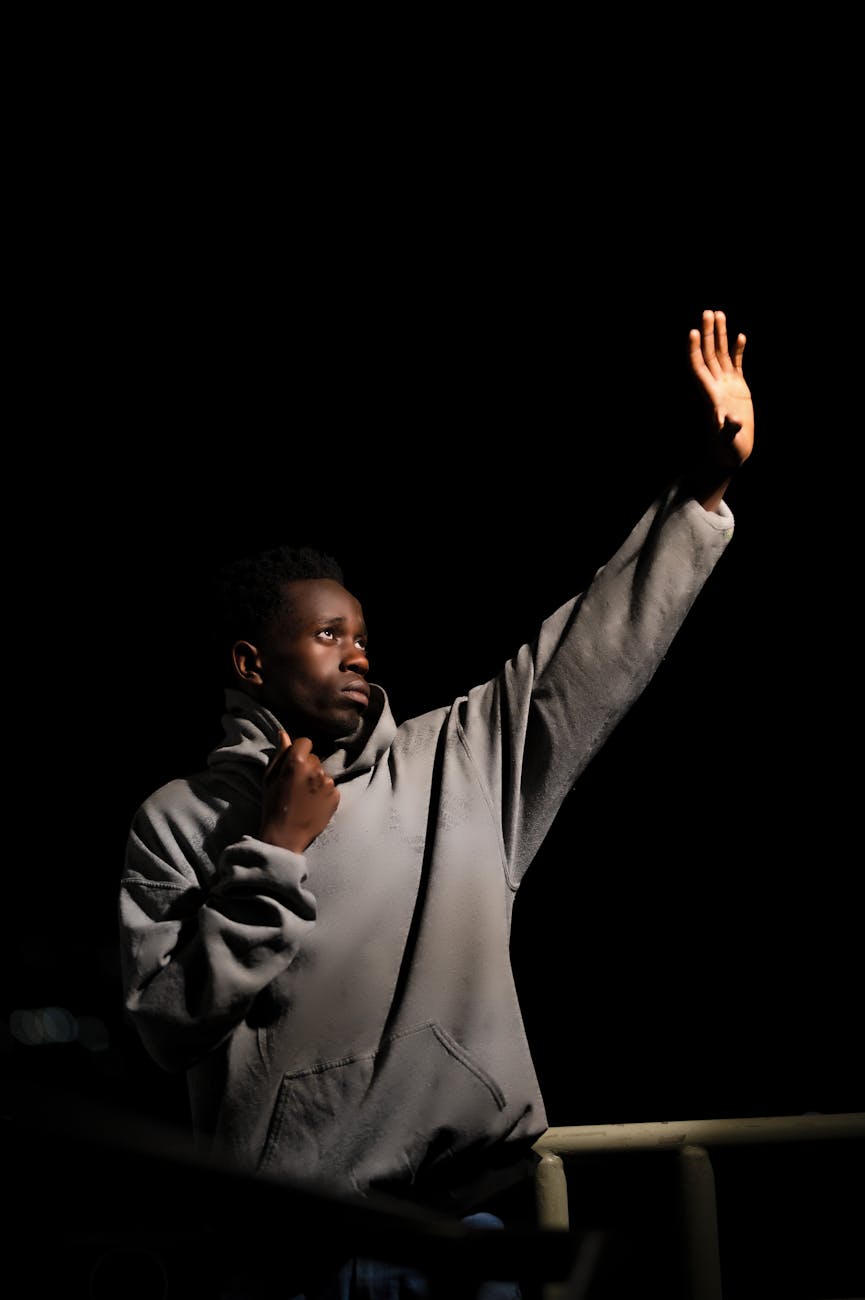
The Return of the Prodigal Man: From Rebellion to Redemption.

Photo by Joe Image on Pexels.com

There comes a moment in every man’s life when he must look into the mirror and see not just his reflection, but his rebellion. The story of the prodigal son is not only about a wayward youth who squandered his inheritance—it is a timeless metaphor for men who lose themselves chasing fulfillment in the far country of sin, pride, and self-will. “The Return of the Prodigal Man” speaks to every soul who has wandered away from purpose, from family, and from God, only to discover that the road back home is the road toward redemption.

The prodigal’s journey begins with rebellion. Like many men, he believed freedom meant separation—freedom from responsibility, authority, and divine order. He demanded his inheritance early (Luke 15:12, KJV), symbolizing humanity’s constant desire to possess blessings without submission to the Giver. In this act, he rejected relationship in favor of autonomy. Yet true manhood cannot exist apart from accountability. The rebellion of the prodigal man mirrors the ancient fall of Adam, who also chose independence over intimacy with God.

The far country represents more than physical distance—it is a spiritual exile. There, the prodigal man exchanges identity for indulgence. He surrounds himself with counterfeit pleasures and temporary applause, believing that validation equals value. But the glamour of rebellion always fades. The Scripture says he “wasted his substance with riotous living” (Luke 15:13, KJV). Modern men waste their inheritance not on livestock and parties, but on distractions—lust, materialism, ego, and the pursuit of image over integrity.

In the far country, the prodigal’s fortune runs dry, and so does his pride. The famine that follows symbolizes the inevitable emptiness of a life disconnected from purpose. No matter how gifted or successful a man becomes, spiritual famine sets in when he trades calling for comfort. In this state, he begins to crave the very things he once despised—structure, love, and the Father’s presence. The famine humbles the man who once believed he needed no one.

The turning point comes “when he came to himself” (Luke 15:17, KJV). That phrase is the axis of redemption. It signifies self-awareness, repentance, and revelation. The prodigal’s return begins not with movement, but with memory—remembering who he was before he fell. Many men live decades away from their true selves, numbing pain through performance. Redemption begins when they awaken to the realization that identity cannot be bought, borrowed, or branded—it must be reclaimed through humility.

The prodigal’s decision to rise and return is the first act of true manhood. It takes greater strength to confess failure than to conceal it. The path back home is paved with repentance, not reputation. The journey requires courage—the courage to admit, “I have sinned against heaven, and before thee” (Luke 15:18, KJV). The returning man must face the damage done by his distance, but also trust the grace that awaits him.

When the father sees his son “a great way off,” he runs to meet him (Luke 15:20, KJV). This image reveals the heart of God toward fallen men—not condemnation, but compassion. The Father does not wait behind locked gates of judgment; He runs down the road of mercy. The robe, ring, and feast symbolize restoration of identity, authority, and belonging. The man who left as a rebel returns as a son. This is the divine exchange—shame for grace, rebellion for restoration.

Every prodigal man carries both wounds and wisdom. The scars of rebellion remind him of where pride leads, while the mercy of the Father reminds him of where love restores. True redemption does not erase the past; it redeems it. The lessons learned in the far country become testimonies that strengthen others still wandering.

Yet not everyone rejoices at the prodigal’s return. The older brother’s resentment reveals society’s tendency to value performance over repentance. Many men fear returning home because they expect rejection rather than restoration. But God’s grace offends the self-righteous and uplifts the broken. Heaven rejoices more over one repentant man than ninety-nine who never left (Luke 15:7, KJV).

The modern prodigal man takes many forms—the absent father, the unfaithful husband, the spiritually lost leader. Yet the same invitation stands: return home. The Father’s arms remain open, not because men deserve it, but because grace demands it. Redemption is not a reward for the perfect; it is a rescue for the repentant.

The rebellion of men has cost families stability, women protection, and children direction. Generations have suffered from the absence of fathers who left physically or emotionally. But the return of the prodigal man has generational power—it restores lineage, rebuilds legacy, and revives love. The same man who once wandered can become the watchman who guards his home with prayer and purpose.

The return requires humility, confession, and accountability. It is not enough to feel sorry; one must come home. The prodigal did not text an apology from afar—he walked the road himself. Redemption demands presence. Modern men must learn that healing begins not in isolation but in community, under the guidance of faith, family, and fellowship.

Spiritually, the story symbolizes humanity’s redemption through Christ. Just as the father received his lost son, God receives all who turn back to Him through repentance. The robe represents righteousness, the ring signifies authority, and the shoes symbolize restored purpose. These are the gifts of grace awaiting every man who chooses to return.

The rebellion of the prodigal was fueled by pride; his return was guided by grace. This pattern reflects the very arc of salvation. Man’s downfall begins with “I will,” but redemption begins with “I have sinned.” To return to God is to rediscover the image of manhood that sin distorted—a man who walks in humility, service, and faith.

In returning home, the prodigal man finds that the Father never stopped waiting. The same is true today. No man is too far gone, no failure too great, no distance too wide for grace to bridge. Redemption is not about erasing the past but transforming it into testimony.

When the prodigal man returns, he does not merely restore his own soul—he revives his household. His repentance becomes a seed that produces generational fruit. Sons learn forgiveness, daughters learn safety, and wives learn trust. His story becomes proof that God still redeems men who once lost their way.

The return of the prodigal man is not just a homecoming—it is a spiritual revolution. It is the restoration of Adam’s voice, David’s heart, and Christ’s calling. It is the rise of men who lead with love, serve with humility, and speak with truth. From rebellion to redemption, the journey of the prodigal man reveals that God is not finished with the fallen—He is waiting to crown them with purpose.


References

Baucham, V. (2009). What he must be: If he wants to marry my daughter. Crossway.
Bonhoeffer, D. (1959). The cost of discipleship. Macmillan.
Eldredge, J. (2001). Wild at heart: Discovering the secret of a man’s soul. Thomas Nelson.
Lewis, C. S. (1952). Mere Christianity. HarperOne.
Moore, R. (2018). The storm-tossed family: How the cross reshapes the home. B&H Publishing Group.
Ortberg, J. (2010). The me I want to be: Becoming God’s best version of you. Zondervan.
Piper, J., & Grudem, W. (Eds.). (1991). Recovering biblical manhood and womanhood. Crossway.
The Holy Bible, King James Version. (1611). Thomas Nelson.
Tchividjian, T. (2012). Glorious ruin: How suffering sets you free. David C. Cook.
Wright, N. T. (2012). After you believe: Why Christian character matters. HarperOne.


The Isms of Black People: Racism, Colorism, and Beyond.

Photo by Kindel Media on Pexels.com

The history of Black people across the diaspora is marked by survival under systems of oppression, division, and erasure. To understand this history, one must examine the many “isms” that have shaped both external conditions and internal realities. Racism, colorism, classism, sexism, and materialism each stand as forces that distort identity, fracture unity, and reproduce inequality. Yet through these trials, Black people have also demonstrated resilience, faith, and creativity that transcend systemic barriers.

Racism stands at the foundation of oppression against Black people. Rooted in slavery, colonialism, and segregation, racism created a system of economic exploitation and social dehumanization. Enslavement reduced people to property, and post-slavery policies institutionalized inequality through Jim Crow laws, redlining, and mass incarceration. Racism is more than individual prejudice; it is structural, shaping opportunity, wealth, and health. Scripture reminds us of the cruelty of oppression: “They afflict the just, they take a bribe, and they turn aside the poor in the gate from their right” (Amos 5:12, KJV).

Colorism, though a product of racism, operates as a unique internal “ism.” Defined as prejudice or discrimination based on skin shade within the same racial or ethnic group, colorism privileges lightness and stigmatizes darkness. This hierarchy dates back to slavery, when lighter-skinned enslaved people were sometimes granted household work, while darker-skinned people labored in the fields. Today, this legacy persists in beauty standards, employment opportunities, and social perceptions. As Hunter (2007) notes, skin tone continues to influence social mobility within Black communities.

The psychological impact of colorism is profound. Dark-skinned individuals often face diminished self-esteem, while lighter-skinned individuals may struggle with authenticity and belonging. The Bible warns against valuing outward appearance: “For the Lord seeth not as man seeth; for man looketh on the outward appearance, but the Lord looketh on the heart” (1 Samuel 16:7, KJV). True worth is not measured by complexion, but by the character shaped by God.

Classism is another “ism” that plagues Black people. Historically, systemic barriers restricted access to land ownership, wealth accumulation, and higher education. Today, the racial wealth gap continues to mirror these inequalities, with Black households on average holding significantly less wealth than White households (Oliver & Shapiro, 2006). Within Black communities, however, class divisions can also produce elitism, where those who attain success may distance themselves from those still struggling.

This elitism can erode solidarity, creating divisions where unity is most needed. The talented tenth, the Black elite, and the upwardly mobile sometimes face accusations of abandoning their communities. Others are judged as “not doing enough” for collective uplift. These tensions demonstrate how classism operates both externally through systemic exclusion and internally through fractured relationships.

Sexism also shapes the Black experience. Black women, in particular, navigate the intersection of race and gender oppression, often referred to as “double jeopardy.” They face barriers in employment, healthcare, and representation, while simultaneously carrying cultural expectations of strength and endurance. Yet, Black women have been the backbone of movements for freedom, justice, and faith. Proverbs 31 honors such women: “Strength and honour are her clothing; and she shall rejoice in time to come” (Proverbs 31:25, KJV).

Internalized sexism within Black communities can also manifest in the devaluing of women’s voices or the pressure placed upon men to dominate rather than partner. These attitudes reflect both the legacy of patriarchal systems and the scars of slavery that disrupted family structures. Healing requires both men and women reclaiming biblical partnership and honoring the dignity of one another.

Materialism is another challenge—one that often emerges as a response to systemic poverty. In societies where consumerism defines worth, material possessions become a way to prove success and resist historical narratives of lack. Yet, materialism also traps people in cycles of debt and emptiness. Jesus warned, “Take heed, and beware of covetousness: for a man’s life consisteth not in the abundance of the things which he possesseth” (Luke 12:15, KJV).

This pursuit of material validation is compounded by media representations. From music videos to advertisements, Black culture is often associated with displays of wealth, fashion, and consumption. While cultural expression should not be dismissed, it is important to question whether such portrayals empower communities or reinforce destructive values.

Nationalism and ethnocentrism can also be considered part of the “isms” Black people navigate. Movements such as Pan-Africanism have provided pride and unity across the diaspora, but they can sometimes exclude or create tensions among different groups. For example, tensions between continental Africans and African Americans have occasionally emerged due to differing historical experiences. While these divisions are understandable, they must be overcome in the pursuit of global solidarity.

Religious elitism has also impacted Black communities. Denominationalism, doctrinal disputes, and church hierarchies sometimes divide believers rather than unify them. This contradicts Christ’s prayer for unity: “That they all may be one; as thou, Father, art in me, and I in thee” (John 17:21, KJV). Faith must function not as a divider, but as a healer of fractures caused by oppression.

Psychologically, these “isms” contribute to identity struggles, self-hatred, and internalized oppression. Frantz Fanon (1967) argued that colonialism implanted inferiority in the minds of the colonized, creating cycles of self-doubt and division. For Black people, this has meant carrying not only the weight of external racism but also the burden of internalized narratives of inadequacy.

Yet resilience remains central to the Black story. Despite racism, colorism, classism, sexism, and materialism, Black communities have birthed cultural movements, spiritual awakenings, and liberation struggles that inspire the world. From gospel music to civil rights activism, from African spirituality to biblical faith, Black people have consistently transformed oppression into creativity and survival.

Theologically, the “isms” faced by Black people mirror biblical exile and restoration. Just as Israel endured scattering, captivity, and oppression, so too have Black communities faced displacement and systemic bondage. Yet the Bible promises hope: “I will gather you out of all countries, and will bring you into your own land” (Ezekiel 36:24, KJV). For many, this speaks not only to spiritual restoration but to cultural reclamation.

Unity is the ultimate antidote to these “isms.” The divisions imposed by racism, colorism, classism, and other forces cannot be healed without collective solidarity. As Paul wrote, “There is neither Jew nor Greek, there is neither bond nor free, there is neither male nor female: for ye are all one in Christ Jesus” (Galatians 3:28, KJV). Unity does not erase difference, but it transforms difference into strength.

Education is also a key weapon against the “isms.” By teaching history, exposing systemic inequities, and reclaiming cultural heritage, communities can break cycles of ignorance and division. Knowledge allows people to recognize oppression not as personal failure but as structural injustice, while also equipping them to resist and rebuild.

Healing from these “isms” also requires spiritual renewal. Faith provides a framework for forgiveness, restoration, and hope. Prayer, scripture, and community worship serve as antidotes to despair and division, empowering individuals to rise above the weight of systemic oppression.

Ultimately, the “isms” of Black people must be confronted both within and without. Externally, systems of racism and inequality must be dismantled. Internally, the psychological scars of colorism, classism, and sexism must be healed. This dual work requires both social activism and spiritual transformation.

In conclusion, the “isms” of Black people reveal a history of wounds, but also a story of resilience. Each “ism” highlights the complexity of oppression, yet within each struggle lies the possibility of renewal. By grounding identity in faith, reclaiming cultural pride, and pursuing unity, Black people can move beyond the chains of “isms” and embody the freedom promised by God.


📖 References

  • Holy Bible, King James Version.
  • Hunter, M. (2007). The persistent problem of colorism: Skin tone, status, and inequality. Sociology Compass, 1(1), 237–254.
  • Oliver, M. L., & Shapiro, T. M. (2006). Black wealth/white wealth: A new perspective on racial inequality. Taylor & Francis.
  • Fanon, F. (1967). Black skin, white masks. Grove Press.

Dilemma: Anxiety

Anxiety is one of the most common yet misunderstood human experiences, often existing at the intersection of biology, psychology, culture, and spirituality. It can appear as a quiet restlessness or as an overwhelming force that disrupts daily life. While anxiety has adaptive roots meant to protect humans from danger, in modern society it frequently becomes chronic, disproportionate, and debilitating. This dilemma raises profound questions about how fear, uncertainty, and meaning are navigated in a world marked by constant pressure.

At its core, anxiety is a response to perceived threat, whether real or imagined. The human nervous system is designed to detect danger and mobilize the body for survival. However, when this system remains activated without resolution, the body and mind pay a heavy price. Persistent anxiety alters sleep, concentration, and emotional regulation, gradually eroding a person’s sense of stability and control.

Modern life has intensified the conditions under which anxiety thrives. Economic insecurity, social comparison through digital media, political instability, and relentless productivity demands create an environment of continuous vigilance. The mind is rarely allowed to rest, and uncertainty becomes a permanent backdrop rather than a temporary condition. Anxiety, in this sense, is not merely an individual problem but a societal symptom.

Culturally, anxiety is often stigmatized or minimized. Individuals are encouraged to “push through,” “stay positive,” or “pray it away,” responses that may unintentionally deepen shame. When anxiety is treated as a moral failure or weakness, sufferers are less likely to seek help. This silence reinforces isolation, one of anxiety’s most destructive companions.

From a psychological perspective, anxiety disorders involve patterns of distorted thinking, heightened physiological arousal, and avoidance behaviors. Catastrophic thinking and hypervigilance train the brain to expect danger even in safe environments. Over time, the fear of anxiety itself becomes a trigger, creating a self-perpetuating cycle that feels impossible to escape.

Biologically, anxiety is associated with dysregulation in neurotransmitters such as serotonin, norepinephrine, and gamma-aminobutyric acid. Chronic stress also affects the hypothalamic-pituitary-adrenal axis, keeping cortisol levels elevated. These physiological changes demonstrate that anxiety is not imagined but embodied, rooted in measurable neurochemical processes.

Trauma plays a significant role in the development of anxiety. Early childhood adversity, abuse, neglect, and chronic exposure to stress can shape the nervous system toward hyperarousal. For many individuals, anxiety is the echo of unresolved pain rather than an irrational fear. Understanding this context fosters compassion and reframes anxiety as a survival adaptation rather than a flaw.

Social inequalities further complicate the anxiety dilemma. Marginalized communities often face compounded stressors, including discrimination, financial precarity, and limited access to mental health care. These structural pressures increase vulnerability to anxiety while simultaneously reducing pathways to healing. Anxiety, therefore, cannot be separated from broader questions of justice and equity.

Spiritually, anxiety raises questions about trust, control, and human limitation. Many faith traditions acknowledge fear as a universal human condition while calling believers toward surrender and hope. Anxiety often intensifies when individuals attempt to control outcomes beyond their capacity, revealing the tension between human agency and dependence on something greater than oneself.

Scriptural Encouragement for Anxiety (KJV)

Scripture consistently acknowledges human fear while directing the heart toward divine refuge rather than self-reliance. Anxiety is not condemned in the Bible; instead, believers are instructed on where to place their burdens.

“Cast thy burden upon the LORD, and he shall sustain thee: he shall never suffer the righteous to be moved” (Psalm 55:22, KJV). This verse reframes anxiety as a weight not meant to be carried alone, emphasizing divine support rather than human endurance.

“Be careful for nothing; but in every thing by prayer and supplication with thanksgiving let your requests be made known unto God” (Philippians 4:6, KJV). Here, anxiety is countered through intentional prayer, gratitude, and communication with God, offering a disciplined response to mental unrest.

“And the peace of God, which passeth all understanding, shall keep your hearts and minds through Christ Jesus” (Philippians 4:7, KJV). This peace is described as protective, guarding both emotion and thought when anxiety threatens stability.

“Fear thou not; for I am with thee: be not dismayed; for I am thy God: I will strengthen thee; yea, I will help thee” (Isaiah 41:10, KJV). This passage addresses fear directly, grounding reassurance in God’s presence rather than changing circumstances.

“When my heart is overwhelmed: lead me to the rock that is higher than I” (Psalm 61:2, KJV). Anxiety often emerges when internal resources are exhausted, and this verse acknowledges emotional overwhelm while pointing toward transcendence and refuge.

“Peace I leave with you, my peace I give unto you: not as the world giveth, give I unto you. Let not your heart be troubled, neither let it be afraid” (John 14:27, KJV). Christ distinguishes divine peace from worldly reassurance, highlighting a peace that is not dependent on external stability.

“Thou wilt keep him in perfect peace, whose mind is stayed on thee: because he trusteth in thee” (Isaiah 26:3, KJV). This verse emphasizes mental focus and trust as anchors against anxious thought patterns.

In biblical literature, anxiety is addressed not as a denial of fear but as an invitation to reorient the heart. Scriptures emphasize casting cares, seeking wisdom, and resting in divine provision. These teachings do not negate psychological reality but offer a framework for meaning, resilience, and inner peace amid uncertainty.

The mind-body connection is critical in understanding anxiety. Practices such as controlled breathing, physical movement, and mindfulness activate the parasympathetic nervous system, counteracting chronic stress responses. These embodied practices remind individuals that healing is not solely cognitive but somatic.

Therapeutic interventions provide evidence-based pathways toward recovery. Cognitive-behavioral therapy helps individuals identify and challenge maladaptive thought patterns. Acceptance and commitment therapy encourages individuals to coexist with anxious thoughts without being dominated by them. Medication, when appropriate, can stabilize neurochemical imbalances and support therapeutic progress.

Community support is another essential dimension of healing. Anxiety thrives in isolation but weakens in environments of empathy and understanding. Safe relationships provide reassurance, perspective, and accountability. Shared vulnerability transforms anxiety from a private burden into a collective concern.

Rest is a neglected yet powerful antidote to anxiety. In cultures that equate worth with productivity, rest is often viewed as indulgent rather than necessary. Chronic exhaustion amplifies anxiety by reducing emotional resilience and cognitive clarity. Reclaiming rest is both a psychological and ethical act.

Anxiety also carries a paradoxical message. It often signals that something in one’s life requires attention, change, or realignment. When listened to carefully, anxiety can reveal misaligned values, unresolved grief, or unrealistic expectations. The dilemma lies in discerning when anxiety is a warning to heed and when it is a distortion to challenge.

Faith-based coping strategies, when integrated responsibly, can complement clinical approaches. Prayer, meditation, scripture reading, and communal worship may reduce stress and foster hope. However, spiritual practices should not replace professional care when anxiety becomes overwhelming or disabling.

Children and adolescents face unique anxiety challenges in an increasingly digital and competitive world. Academic pressure, social media exposure, and global crises shape developing nervous systems. Early intervention, emotional education, and supportive environments are critical in preventing lifelong patterns of anxiety.

The language used to describe anxiety matters. When individuals are labeled as “anxious people” rather than people experiencing anxiety, identity becomes fused with the condition. Reframing anxiety as an experience rather than a defining trait opens space for growth and recovery.

Ultimately, the dilemma of anxiety reflects the fragility and resilience of the human condition. Anxiety reveals humanity’s deep desire for safety, certainty, and meaning. Addressing it requires humility, compassion, and a willingness to integrate science, community, and spirituality.

Healing from anxiety is rarely linear. It involves setbacks, insight, patience, and grace. By acknowledging anxiety as a complex and multifaceted experience, individuals and societies can move beyond stigma toward understanding. In doing so, anxiety becomes not a life sentence, but a passage toward deeper awareness and wholeness.


References

American Psychiatric Association. (2022). DSM-5-TR: Diagnostic and statistical manual of mental disorders (5th ed., text rev.). American Psychiatric Publishing.

Beck, J. S. (2020). Cognitive behavior therapy: Basics and beyond (3rd ed.). Guilford Press.

Bessel van der Kolk. (2014). The body keeps the score: Brain, mind, and body in the healing of trauma. Viking.

Hofmann, S. G., Asnaani, A., Vonk, I. J. J., Sawyer, A. T., & Fang, A. (2012). The efficacy of cognitive behavioral therapy: A review of meta-analyses. Cognitive Therapy and Research, 36(5), 427–440. https://doi.org/10.1007/s10608-012-9476-1

McEwen, B. S. (2017). Neurobiological and systemic effects of chronic stress. Chronic Stress, 1, 1–11. https://doi.org/10.1177/2470547017692328

Smith, J. C. (2019). Managing stress: Principles and strategies for health and well-being (5th ed.). Pearson.

The Holy Bible, King James Version. (1611/2017). Cambridge University Press.

Girl Talk Series: The Male Files – The Secrets You Need to Know.

Understanding Male Emotions and Communication Styles

This artwork is the property of its respective owner. No copyright infringement intended.

Men often experience and express emotions differently than women, not because they feel less, but because of socialization, cultural expectations, and biological factors. From a young age, many boys are taught to “toughen up,” suppress tears, or hide vulnerability. This can lead to a gap in emotional expression that women sometimes interpret as indifference or detachment.

Psychologically, men often process feelings internally before verbalizing them. Research in gender studies shows that men may exhibit emotions through actions rather than words — fixing things, giving gifts, or providing support instead of verbal affirmation. Understanding this is key: their silence does not always mean a lack of feeling.

Communication styles also differ. Men often favor solution-focused communication, seeking to solve problems rather than share feelings in detail. Women, by contrast, often communicate to process emotions and seek empathy. Misunderstandings arise when men interpret questions as requests for advice and women interpret silence as disinterest.

Body language is a significant part of male communication. Posture, gestures, and tone often reveal more than words. A man who avoids eye contact might be struggling internally, while someone who withdraws physically may need space to process emotions. Observing actions alongside words provides a fuller picture of what he feels.

Cultural factors can compound these patterns. In many Black communities, historical and social pressures encourage men to project strength and stoicism. Scripture reminds men to lead with integrity and strength, yet also with sensitivity: “Be strong and of a good courage, fear not, nor be afraid of them: for the Lord thy God, he it is that doth go with thee” (Deuteronomy 31:6, KJV). Strength does not preclude emotional expression.

Emotional literacy is crucial for men. Teaching men to identify, name, and express their emotions can prevent destructive patterns like anger outbursts, withdrawal, or unhealthy coping mechanisms such as substance use. Proverbs 15:1 (KJV) highlights the power of gentle communication: “A soft answer turneth away wrath: but grievous words stir up anger.”

Practical Tips for Understanding Men’s Emotions:

  • Observe actions alongside words
  • Ask open-ended questions gently
  • Avoid judgment or criticism
  • Create safe spaces for vulnerability
  • Encourage emotional literacy and self-expression
  • Recognize cultural and social pressures influencing behavior
  • Integrate faith-based encouragement for holistic growth

Trust plays a major role in emotional openness. Many men do not share their feelings until they feel safe and respected. Women seeking emotional connection should foster environments of trust, patience, and non-judgment, encouraging honest dialogue.

Listening without immediate correction or advice is another key strategy. Men often need to articulate feelings without being problem-solved immediately. Reflective statements like “I hear you” or “I understand” validate their emotions and open deeper communication channels.

Men may also experience pressure around masculinity and societal expectations, which influences emotional expression. Addressing toxic masculinity and promoting vulnerability as a strength allows men to connect authentically. 1 Peter 3:8 (KJV) emphasizes unity and compassion: “Finally, be ye all of one mind, having compassion one of another.”

A Biblical Perspective

Men often experience and express emotions differently than women. This is not because they feel less deeply, but because God created men with unique emotional wiring and societal pressures often teach them to suppress vulnerability. From a young age, men are frequently taught to “be strong,” avoid crying, or hide sensitivity — behaviors that can hinder emotional connection.

The Bible acknowledges the emotional depth of men. King David, for example, openly expressed grief, fear, and joy. In Psalm 6:6 (KJV), he says, “I am weary with my groaning; all the night make I my bed to swim; I water my couch with my tears.” This demonstrates that men are capable of deep emotional expression, and tears are not a weakness but a form of release.

God designed men to lead their families with both strength and compassion. Ephesians 5:25 (KJV) instructs, “Husbands, love your wives, even as Christ also loved the church, and gave himself for it.” Emotional awareness is essential for this sacrificial love, because understanding feelings — their own and their spouse’s — enables men to lead with sensitivity and wisdom.

Men often communicate through actions more than words. Proverbs 20:11 (KJV) says, “Even a child is known by his doings, whether his work be pure, and whether it be right.” This principle applies to men of all ages: actions reflect emotional reality, even when verbal expression is limited. Fixing problems, providing support, or offering protection are often expressions of care.

Biblical masculinity balances strength and vulnerability. Deuteronomy 31:6 (KJV) reminds men, “Be strong and of a good courage, fear not, nor be afraid of them: for the LORD thy God, he it is that doth go with thee; he will not fail thee, nor forsake thee.” Strength is commanded, but God’s presence invites men to lean on Him — emotionally, spiritually, and relationally.

Communication differences are often shaped by culture. Men may be solution-focused, while women often process emotions verbally. Understanding this distinction prevents misinterpretation. Proverbs 15:1 (KJV) teaches, “A soft answer turneth away wrath: but grievous words stir up anger.” Gentle, patient communication helps men feel safe in expressing their hearts.

Trust is critical. Many men struggle to share emotions because of fear of judgment or appearing weak. Proverbs 3:5-6 (KJV) reminds believers, “Trust in the LORD with all thine heart; and lean not unto thine own understanding. In all thy ways acknowledge him, and he shall direct thy paths.” Men can be encouraged to trust God and, by extension, the safe spaces God places around them to express emotions.

The Bible models healthy emotional expression. Jesus wept at Lazarus’ tomb (John 11:35, KJV) and expressed anger in the temple (Matthew 21:12-13, KJV). Both demonstrate that emotional expression, even strong emotions, is appropriate when aligned with righteousness and truth.

Men’s emotional struggles may also stem from societal pressure to perform masculinity without fault. Addressing toxic expectations through mentorship and biblical teaching is key. 1 Peter 3:8 (KJV) teaches, “Finally, be ye all of one mind, having compassion one of another, love as brethren, be pitiful, be courteous.” Compassion and empathy are markers of spiritual and emotional maturity.

Encouraging men to cultivate emotional literacy — naming, expressing, and processing feelings — aligns with biblical principles of self-awareness and integrity. James 1:19 (KJV) instructs, “Wherefore, my beloved brethren, let every man be swift to hear, slow to speak, slow to wrath.” Listening and reflection are essential for healthy communication.

Practical strategies for understanding male emotions include: observing actions, creating safe spaces for dialogue, encouraging journaling, prayer, or mentorship, and modeling vulnerability. Ecclesiastes 4:9-10 (KJV) reminds us, “Two are better than one; because they have a good reward for their labour. For if they fall, the one will lift up his fellow.” Supportive relationships strengthen emotional expression.

Men’s emotional growth is not just for their own benefit — it strengthens families and communities. Proverbs 20:7 (KJV) says, “The just man walketh in his integrity: his children are blessed after him.” Emotionally aware men model integrity, teach healthy relationships, and break cycles of emotional suppression.

Healing from past emotional trauma, including generational trauma, is also essential. Counseling, prayer, and mentorship can help men process grief, shame, and suppressed emotions. Psalm 34:18 (KJV) reassures, “The LORD is nigh unto them that are of a broken heart; and saveth such as be of a contrite spirit.”

Men are capable of balancing strength with sensitivity when guided by God’s Word and empowered through faith. Colossians 3:12-13 (KJV) exhorts, “Put on therefore, as the elect of God, holy and beloved, bowels of mercies, kindness, humbleness of mind, meekness, longsuffering; Forbearing one another, and forgiving one another…” Emotional maturity reflects spiritual growth.

In romantic relationships, understanding male emotions improves intimacy and trust. Women who recognize nonverbal cues, respect need for space, and affirm men’s feelings foster healthier partnerships. Song of Solomon 2:16 (KJV) shows mutual delight and appreciation, affirming emotional connection in love.

Male mentorship programs, brotherhood groups, and faith-based counseling provide men spaces to explore vulnerability without judgment. Titus 2:2,6 (KJV) teaches older men to be sober, reverent, and mentors for younger men, modeling godly emotional behavior.

Emotional intelligence is also critical in leadership. Proverbs 16:32 (KJV) states, “He that is slow to anger is better than the mighty; and he that ruleth his spirit than he that taketh a city.” Men who master emotions lead families, communities, and workplaces with wisdom and stability.

Finally, women can play a supportive role by encouraging prayer, honest dialogue, and reflection. Galatians 6:2 (KJV) reminds us, “Bear ye one another’s burdens, and so fulfil the law of Christ.” Supporting men emotionally fulfills the biblical call to love and mutual care.


Key Takeaways

  • Men express emotions differently — often through actions, silence, or problem-solving.
  • Emotional literacy, mentorship, and faith-based guidance empower men to process feelings.
  • Scripture affirms that emotional depth, vulnerability, and empathy are marks of godly manhood.
  • Healthy communication strengthens relationships, families, and communities.

Finally, patience is essential. Changing communication patterns takes time, especially when emotions have been repressed for years. Encouraging men to journal, talk to mentors, or seek counseling can support emotional growth and healthier relationships.

References

The Holy Bible, King James Version. (1611). Thomas Nelson.

Clark, K., & Clark, M. (1947). Racial identification and preference in Negro children. Journal of Negro Education, 16(3), 169–175.

Hunter, M. (2007). The persistent problem of colorism: Skin tone, status, and inequality. Sociology Compass, 1(1), 237–254. https://doi.org/10.1111/j.1751-9020.2007.00006.x

Tajfel, H., & Turner, J. C. (1979). An integrative theory of intergroup conflict. In W. G. Austin & S. Worchel (Eds.), The social psychology of intergroup relations (pp. 33–47). Brooks/Cole.

Akbar, N. (1996). Breaking the chains of psychological slavery. Mind Productions.

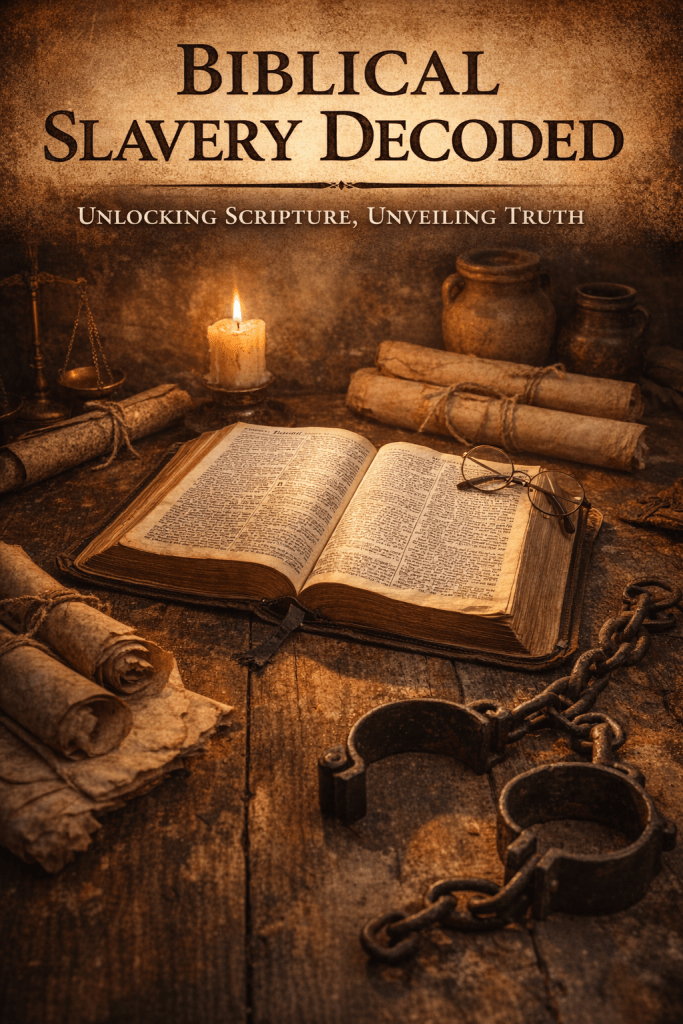
Biblical Slavery Decoded

Biblical slavery is one of the most misunderstood and misused subjects in religious history, often weaponized to justify chattel slavery while stripping Scripture of its historical, linguistic, and moral context. A careful reading of the King James Version (KJV), alongside ancient Near Eastern customs, reveals that biblical servitude was fundamentally different from the race-based, perpetual, dehumanizing system imposed on Africans in the transatlantic slave trade.

In Scripture, the English word slave often translates from the Hebrew word ʿeḇeḏ, which broadly means servant, laborer, or bondman. This term encompassed a wide range of social arrangements, including hired workers, indentured servants, royal officials, and covenantal servants of God. Context, not modern assumptions, determines its meaning.

Biblical servitude was primarily economic, not racial. Israelites could enter servitude to repay debts, survive famine, or restore family stability. This system functioned as a form of social welfare in an agrarian society without modern banking or safety nets (Leviticus 25:35–39, KJV).

Unlike chattel slavery, biblical servants retained personhood and legal protections. Exodus 21 outlines clear limits on treatment, including punishment for abuse. If a servant was permanently injured, they were to be released free as compensation (Exodus 21:26–27, KJV).

Time limits are central to understanding biblical servitude. Hebrew servants could not be held indefinitely. They were released in the seventh year, known as the Sabbath year, without payment or penalty (Exodus 21:2, KJV; Deuteronomy 15:12).

The Jubilee year further reinforced freedom. Every fiftieth year, all Israelite servants were released, debts forgiven, and land restored to ancestral families. This system prevented generational poverty and perpetual bondage (Leviticus 25:10, KJV).

The Bible explicitly forbids manstealing, the very foundation of transatlantic slavery. Kidnapping a human being to sell or enslave them was a capital offense under biblical law (Exodus 21:16, KJV; Deuteronomy 24:7).

This prohibition directly condemns the capture, transport, sale, and hereditary enslavement of Africans. Any attempt to justify race-based slavery using the Bible ignores this clear and uncompromising command.

Foreign servants in Israel were also protected under divine law. While non-Israelites could enter long-term servitude, they were still bound by covenantal ethics, Sabbath rest, and humane treatment (Exodus 20:10, KJV).

The Bible commands empathy toward servants by reminding Israel of their own history of oppression in Egypt. God repeatedly anchors social justice in remembrance of slavery and divine deliverance (Deuteronomy 5:15, KJV).

Servants were entitled to rest on the Sabbath, placing them on equal footing with their masters before God. This alone dismantles the notion of absolute ownership (Exodus 23:12, KJV).

Biblical slavery also included voluntary lifelong service. If a servant chose to remain with a master out of love and security, it was a consensual covenant—not coercion (Exodus 21:5–6, KJV).

In the New Testament, the Greek word doulos is often translated servant or bondservant. It is used metaphorically to describe believers’ relationship to Christ, emphasizing devotion, not degradation (Romans 1:1, KJV).

Jesus never endorsed oppression. Instead, He confronted systems of exploitation and emphasized mercy, justice, and love of neighbor (Matthew 23:23, KJV).

Christ’s mission was liberation at every level—spiritual, social, and moral. He declared freedom for the captives and release for the oppressed (Luke 4:18, KJV).

Paul’s epistles address servants and masters within the Roman system, not as approval of slavery, but as guidance for ethical conduct within existing structures. He undermined slavery by affirming spiritual equality (Galatians 3:28, KJV).

Paul explicitly condemns enslavers in his list of lawless sinners, using language that echoes the Old Testament ban on manstealing (1 Timothy 1:9–10, KJV).

The letter to Philemon reveals the heart of biblical ethics. Paul urges Philemon to receive Onesimus not as a servant, but as a beloved brother—an appeal that dismantles hierarchical bondage (Philemon 1:15–16, KJV).

Biblical law consistently places God as the ultimate owner of all people. Humans are stewards, not masters of souls (Leviticus 25:55, KJV).

This divine ownership nullifies the idea that one human can permanently own another. All authority is subordinate to God’s righteousness.

The prophets fiercely rebuked oppression, exploitation, and abuse of the vulnerable. Slavery that crushed dignity was treated as a sin that provoked divine judgment (Isaiah 58:6, KJV).

Biblical justice demanded fair wages, humane conditions, and accountability. The exploitation of labor was never portrayed as righteous (Jeremiah 22:13, KJV).

The misuse of Scripture to justify American slavery represents a theological betrayal, not biblical fidelity. Selective reading severed verses from context to sanctify greed and racial domination.

Chattel slavery violated every biblical principle: it was racial, perpetual, violent, hereditary, and rooted in kidnapping. It mocked Sabbath rest, denied Jubilee, and erased personhood.

The curse of Ham narrative was never about Black people and was distorted centuries later to rationalize European colonialism. Scripture does not assign racial destiny through curses (Genesis 9:25–27, KJV).

Biblical slavery must be understood within covenantal law, not colonial ideology. God’s statutes consistently aimed at restoration, not destruction.

Freedom is central to God’s character. From the Exodus to the Cross, liberation defines His intervention in human history.

When Scripture is read honestly, it condemns systems that thrive on cruelty and profit from suffering. God sides with the oppressed, not the oppressor (Psalm 103:6, KJV).

The Bible does not sanitize suffering, but it never sanctifies it either. Justice, mercy, and humility remain the standard (Micah 6:8, KJV).

Understanding biblical slavery correctly dismantles false theology and restores truth. It exposes how Scripture was manipulated to uphold racism rather than righteousness.

Biblical slavery, decoded properly, reveals a God who regulates human brokenness while pointing relentlessly toward freedom. Any theology that excuses dehumanization stands in opposition to the God of the Bible.


References (KJV)

Exodus 20:10; Exodus 21:2, 16, 26–27; Exodus 23:12
Leviticus 25:10, 35–39, 55
Deuteronomy 5:15; Deuteronomy 15:12; Deuteronomy 24:7
Psalm 103:6
Isaiah 58:6
Jeremiah 22:13
Matthew 23:23
Luke 4:18
Romans 1:1
Galatians 3:28
1 Timothy 1:9–10
Philemon 1:15–16
Micah 6:8

The Male Files: What Black Men Want Black Women to Know.

Black men are often spoken about but rarely spoken with. Narratives about Black masculinity tend to oscillate between extremes—either demonized or romanticized—leaving little room for truth, vulnerability, or complexity. This article seeks to articulate what many Black men desire Black women to understand, not from a place of superiority, but from a longing for peace, partnership, and mutual respect.

At the core, many Black men want to be seen as human before they are judged as providers, protectors, or problems. Scripture affirms that God looks on the heart rather than outward performance (1 Samuel 16:7, KJV). Yet culturally, Black men are often valued only for what they can produce, not who they are becoming. This pressure can lead to emotional withdrawal rather than emotional absence.

Respect matters deeply. While love is often emphasized in conversations about relationships, respect is frequently the language through which men experience love. Ephesians 5:33 instructs wives to respect their husbands, not as subjugation, but as acknowledgment of dignity and role. Many Black men desire to feel trusted, honored, and not constantly corrected or compared.

Black men also want Black women to understand that silence does not always mean indifference. For many, silence is a learned survival strategy. Historical trauma, racial profiling, and cultural expectations have taught Black men that emotional exposure can be dangerous (Majors & Billson, 1992). What appears as emotional unavailability is often emotional self-protection.

Partnership, not competition, is another recurring desire. Genesis 2:18 frames woman as a helper suitable—not inferior, but complementary. Many Black men long for relationships where strengths are shared rather than weaponized, where differences are balanced rather than exploited. Constant power struggles erode intimacy.

Black men also want it understood that provision is more than money. While financial stability matters, men also desire to provide leadership, spiritual covering, presence, and consistency. Ecclesiastes 4:9–12 emphasizes unity and cooperation as strength. When provision is reduced solely to income, men who are growing—but not yet established—may feel disqualified from love.

Healing is an unspoken need. Many Black men carry unresolved wounds from absent fathers, broken homes, systemic racism, and public humiliation. bell hooks (2004) notes that patriarchy teaches men to suppress pain rather than process it. Black men want space to heal without being shamed for needing it.

Faith plays a critical role in how many Black men understand manhood. Colossians 3:19 warns men not to be harsh, revealing that God expects emotional discipline, not domination. At the same time, men desire spiritual alignment—a partner who respects their walk with God and does not undermine their authority or growth.

Black men also want Black women to know that affirmation matters. In a world where they are often criminalized, overlooked, or disrespected, words of encouragement can restore strength. Proverbs 18:21 reminds us that life and death are in the power of the tongue. Many men remember words spoken over them—both harmful and healing.

Trust is another fragile area. Past betrayals, public criticism, and lack of discretion can make men guarded. 1 Peter 3:7 instructs men to dwell with women with understanding, implying that understanding must be mutual. Men desire emotional safety as much as women do.

Importantly, this is not a call to excuse wrongdoing. Accountability, growth, and maturity are essential. Black men want to be challenged—but not belittled; corrected—but not disrespected; supported—but not enabled. Love that builds is firm yet fair.

Ultimately, Black men want Black women to know that they desire peace. Not passivity, but peace. A home that feels like refuge rather than a battleground. Amos 3:3 asks, “Can two walk together, except they be agreed?” Agreement begins with listening.

Black love has always existed under pressure. Yet it has also endured through faith, forgiveness, and intentional communication. When Black men and Black women commit to understanding rather than assuming, healing becomes possible.

The Male Files is not a final word—it is an opening conversation. One rooted in truth, humility, and the hope that Black relationships can be places of rest, growth, and divine alignment.


References

Franklin, A. J. (2004). From brotherhood to manhood: How Black men rescue their relationships and dreams from the invisibility syndrome. Wiley.

hooks, b. (2004). We real cool: Black men and masculinity. Routledge.

Majors, R., & Billson, J. M. (1992). Cool pose: The dilemmas of Black manhood in America. Lexington Books.

Gottman, J. M., & Silver, N. (2015). The seven principles for making marriage work. Harmony Books.

Edin, K., & Nelson, T. J. (2013). Doing the best I can: Fatherhood in the inner city. University of California Press.

The Holy Bible, King James Version. (1769/2017). Cambridge University Press.

Family Values in 2026

Family is the cornerstone of society, providing love, guidance, and structure. For Black families in 2026, preserving family values is both a spiritual and social responsibility. Despite historical oppression, systemic challenges, and cultural shifts, the Bible offers timeless guidance for sustaining strong, God-centered households (Ephesians 6:4).

Parents play an essential role in nurturing children’s spiritual, emotional, and moral development. Fathers are called to lead with integrity, teaching righteousness and providing protection, while mothers guide with wisdom and care. Proverbs 22:6 instructs: “Train up a child in the way he should go: and when he is old, he will not depart from it.” In Black families, intentional teaching combats external cultural influences that can undermine faith and identity.

Marriage is a sacred covenant ordained by God. Genesis 2:24 states: “Therefore shall a man leave his father and his mother, and shall cleave unto his wife: and they shall be one flesh.” In 2026, couples face pressures from media, divorce culture, and economic stress, making faith, communication, and mutual respect crucial for marital stability.

Technology exerts a profound influence on family life. Children are exposed to social media, online messaging, and streaming content that can erode values, self-esteem, and respect for authority. Deuteronomy 6:6-7 emphasizes the importance of teaching God’s Word continually: “And these words, which I command thee this day, shall be in thine heart: And thou shalt teach them diligently unto thy children.”

Economic pressures continue to test families. Job insecurity, debt, and consumerism challenge the ability to provide materially and emotionally. Proverbs 21:20 advises: “There is treasure to be desired and oil in the dwelling of the wise; but a foolish man spendeth it up.” Financial literacy and stewardship are essential for family resilience.

Spiritual leadership within Black households fosters unity and moral grounding. Joshua 24:15 declares: “…as for me and my house, we will serve the LORD.” Regular family prayer, worship, and scripture study build emotional and spiritual resilience against societal pressures.

Discipline remains a vital aspect of raising children. Proverbs 13:24 teaches: “He that spareth his rod hateth his son: but he that loveth him chasteneth him betimes.” Loving correction, when applied fairly and consistently, instills responsibility and respect for authority.

Respect for elders and ancestors strengthens cultural identity. Exodus 20:12 commands: “Honour thy father and thy mother: that thy days may be long upon the land which the LORD thy God giveth thee.” Honoring elders reinforces traditions, wisdom, and family continuity.

Marriage roles, though sometimes challenged by modern culture, are essential for harmony. Ephesians 5:22-25 guides husbands to love sacrificially and wives to respect their husbands, creating a balanced, God-centered household. Black couples can model these principles despite external societal pressures.

Extended family networks—grandparents, aunts, uncles, and cousins—offer support and stability. Psalm 128:3-4 affirms the blessings of family: “Thy wife shall be as a fruitful vine by the sides of thine house: thy children like olive plants round about thy table.” These connections help Black families navigate systemic and social challenges.

Communication is crucial in maintaining strong relationships. James 1:19 instructs: “…let every man be swift to hear, slow to speak, slow to wrath.” Open dialogue prevents misunderstandings, fosters empathy, and strengthens family bonds in a fast-paced, digitally connected world.

Teaching children about sexuality, morality, and faith is increasingly important. 1 Corinthians 6:18 warns: “Flee fornication. Every sin that a man doeth is without the body; but he that committeth fornication sinneth against his own body.” Clear guidance helps children navigate the cultural pressures of media and peer influence.

Conflict resolution is central to family cohesion. Matthew 18:15-17 encourages reconciliation: confront with love, seek restoration, and involve others if necessary. Black families who resolve disputes biblically avoid long-term resentment and maintain unity.

Supporting children’s education—both secular and spiritual—is essential. Proverbs 1:7 declares: “The fear of the LORD is the beginning of knowledge: but fools despise wisdom and instruction.” Families that prioritize education and biblical knowledge equip children for life and leadership.

Work-life balance is a modern challenge. Ecclesiastes 3:1 reminds: “To every thing there is a season, and a time to every purpose under the heaven.” Prioritizing family time over career pressures fosters love, trust, and emotional security.

Community involvement reinforces family values. Galatians 6:2 instructs: “Bear ye one another’s burdens, and so fulfil the law of Christ.” Participation in church, mentorship, and outreach strengthens family bonds and provides support networks.

Single-parent households face unique trials. Yet God’s provision is steadfast. Psalm 68:5 affirms: “A father of the fatherless, and a judge of the widows, is God in his holy habitation.” Faith sustains single parents and guides children toward righteousness.

Financial stewardship is integral to teaching responsibility. Malachi 3:10 says: “Bring ye all the tithes into the storehouse…and prove me now herewith, saith the LORD of hosts.” Budgeting, saving, and giving instill values that transcend material wealth.

Cultural pressures challenge traditional family roles. Romans 12:2 advises: “And be not conformed to this world: but be ye transformed by the renewing of your mind…” Families rooted in scripture resist harmful societal trends and maintain biblical values.

Prayer and worship unify families spiritually. 1 Thessalonians 5:16-18 commands: “Rejoice evermore. Pray without ceasing. In everything give thanks…” Consistent spiritual practice cultivates faith, resilience, and hope.

Ultimately, Black families in 2026 must anchor themselves in God’s Word, love, and mutual respect. Psalm 127:1 affirms: “Except the LORD build the house, they labour in vain that build it.” Families that follow these principles create lasting stability, spiritual legacy, and hope for future generations.


References

  • The Holy Bible, King James Version (KJV)
  • Genesis 2:24
  • Proverbs 1:7; 13:24; 21:20; 22:6
  • Exodus 20:12
  • Joshua 24:15
  • Ephesians 5:22-25; 6:4
  • Psalm 68:5; 127:1; 128:3-4
  • Deuteronomy 6:6-7
  • Matthew 5:21-22; 18:15-17
  • 1 Corinthians 6:18
  • James 1:19
  • Romans 12:2
  • Galatians 6:2
  • Ecclesiastes 3:1
  • 1 Thessalonians 5:16-18
  • Malachi 3:10
  • Luke 10:27

The Aesthetic of Black Beauty: Genetics, Psychology, and Divine Design.

Black beauty is not a single expression but a spectrum of genetic diversity that manifests in facial features, body composition, skin tone, hair texture, and overall presence. From African roots to diasporic populations across the globe, these features convey strength, resilience, and divine artistry. Understanding this beauty requires an exploration of genetics, psychology, history, and spirituality.

Melanin-rich skin is one of the most defining features of Black beauty. High melanin content provides natural protection against ultraviolet radiation, contributes to a radiant glow, and displays a spectrum of shades from deep ebony to golden brown. The Bible celebrates skin as a divine creation: “Thou art all fair, my love; there is no spot in thee” (Song of Solomon 4:7, KJV). This scripture underscores the inherent perfection of pigmentation.

Facial structure in Black populations varies widely but often includes high cheekbones, broad noses, and full lips, reflecting African and Egyptian ancestry. These features have evolved over millennia to adapt to environmental factors, providing functional benefits such as enhanced oxygenation and protection from the sun. Anthropologists note that these structures also contribute to facial symmetry, a key element of perceived beauty (Rhodes, 2006).

The eyes, often large and expressive, are framed by naturally arched brows and long eyelashes. Psychologically, eye contact conveys dominance, confidence, and emotional depth. “The eyes of the LORD are in every place, beholding the evil and the good” (Proverbs 15:3, KJV) reminds us that vision, both literal and figurative, carries spiritual significance.

Nose shapes within the Black diaspora range from wide and rounded to straight and sculpted, reflecting genetic variation and admixture. Broad noses historically helped with humid climates and enhanced nasal airflow. Full lips, often prominent, serve not only as markers of identity but are aesthetically celebrated in global beauty paradigms.

Hair is one of the most versatile and culturally significant features. Excessively curly or coiled hair, typical in many African-descended populations, reflects high genetic diversity in hair follicle shape (Powell et al., 2012). Hair texture has symbolic importance: it represents ancestry, resilience, and adaptability. In the Bible, hair often signifies strength and identity, as in Samson’s story (Judges 16:17, KJV).

The jawline and chin provide structural strength and character. Strong jawlines in Black populations are often linked to evolutionary pressures for durability and facial symmetry. This contributes to psychological perceptions of leadership, power, and assertiveness (Little et al., 2011).

Skin elasticity and body composition vary, with many Black populations exhibiting mesomorphic or athletic builds. Muscle density, bone strength, and proportionality have both functional and aesthetic implications, highlighting physical resilience and adaptability. Scripture recognizes the body as God’s creation: “I praise thee; for I am fearfully and wonderfully made” (Psalm 139:14, KJV).

Neck and shoulder structures contribute to posture and perceived presence. Broad shoulders and muscular necks convey strength and authority, signaling both evolutionary fitness and cultural ideals of masculinity.

Hand and finger morphology, often graceful yet strong, plays roles in artistry, physical labor, and nonverbal communication. In African cultures, hands are celebrated for their expressive and functional capacities, bridging work and identity.

Torso structure varies across African and diasporic populations. A well-proportioned torso, often associated with endurance and physical capability, is both aesthetically admired and functionally advantageous. The body becomes a living testament to evolutionary adaptation and divine engineering.

Legs and lower body features display powerful musculature and athleticism, reflective of both lifestyle and genetic adaptation. Longer limbs relative to the torso, common in certain African populations, facilitate agility and endurance. Psychologically, these features contribute to perceptions of vitality and grace.

Visual “Feature Map” of Black Beauty

1. Skin Tone (Melanin Spectrum)

  • Deep ebony
  • Brown
  • Golden caramel
  • Tan/olive
    (Illustrates melanin diversity and natural protection)

2. Hair Texture

  • Coily / kinky (Type 4)
  • Curly (Type 3)
  • Wavy (Type 2)
    (Shows versatility and genetic variation across African and diasporic populations)

3. Facial Features

  • High cheekbones
  • Broad to medium noses
  • Full lips
  • Almond-shaped or rounded eyes
  • Defined jawline and chin
    (Highlights evolutionary adaptation, aesthetic symmetry, and Egyptian influence)

4. Body Proportions

  • Mesomorphic build (muscular, athletic)
  • Broad shoulders, strong neck
  • Proportional torso
  • Long, strong legs
    (Represents strength, endurance, and functional beauty)

5. Cultural and Historical Notes

  • Egyptian elongation of faces and noses
  • African sculpted features
  • Diaspora adaptations across Caribbean, Americas, and Europe

6. Psychological & Spiritual Layer

  • Confidence and presence linked to symmetry
  • Expressive eyes signaling emotional depth
  • Biblical affirmation: Psalm 139:13-14 (KJV)

Genetic diversity across the African continent explains the variation in features globally. From the Nilotic peoples of East Africa to West African populations and Egyptian descendants, phenotypes differ due to historical migration, environmental adaptation, and admixture. Melanin-rich skin, hair texture, and facial structure are markers of evolutionary resilience and aesthetic value.

Egyptian features, often admired historically and across cultures, include elongated faces, almond-shaped eyes, and slender noses. Art and sculpture from ancient Egypt preserve these features, which influenced Mediterranean and African aesthetics. The spread of Egyptian traits across Africa reflects both migration and intermixing of populations.

Beyond physiology, the psychology of Black beauty is tied to self-perception and societal validation. Internalized biases from colonialism and slavery have historically devalued African features, creating psychological stress and colorism. Embracing ancestral aesthetics restores dignity and affirms identity (Hunter, 2007).

Cultural adornments, including hair styling, body art, and jewelry, enhance perceived beauty while preserving heritage. Hairstyles such as braids, locs, and twists are both aesthetic expressions and cultural statements, linking identity to ancestry.

The symmetry of facial features plays a key role in attractiveness. Across populations, symmetrical faces are psychologically associated with health, genetic fitness, and beauty. African-descended populations often display facial symmetry enhanced by pronounced features, which contributes to aesthetic appeal (Rhodes, 2006).

Height and overall proportions vary widely, yet commonality lies in the harmony of features. Balanced proportions, combined with melanin-rich skin and expressive facial characteristics, create a sense of visual coherence and presence.

Eyes and facial expression are central to perceived beauty. Expressiveness conveys emotion, intelligence, and social engagement. Psychological studies show that expressive eyes increase interpersonal attraction and perceived trustworthiness.

Ultimately, Black beauty reflects a combination of genetics, evolutionary adaptation, cultural heritage, and divine design. As the Bible reminds us, each individual is crafted with intentionality and wonder: “Thou hast possessed my reins: thou hast covered me in my mother’s womb. I will praise thee; for I am fearfully and wonderfully made” (Psalm 139:13-14, KJV). Recognizing, celebrating, and understanding these features fosters pride, identity, and self-worth across the diaspora.


References

Clark, K., & Clark, M. (1947). Racial identification and preference in Negro children. Journal of Negro Education, 16(3), 169–175.

Hunter, M. (2007). The persistent problem of colorism: Skin tone, status, and inequality. Sociology Compass, 1(1), 237–254. https://doi.org/10.1111/j.1751-9020.2007.00006.x

Little, A. C., Jones, B. C., & DeBruine, L. M. (2011). Facial attractiveness: Evolutionary based research. Philosophical Transactions of the Royal Society B: Biological Sciences, 366(1571), 1638–1659. https://doi.org/10.1098/rstb.2010.0404

Powell, B., Shriver, M. D., & Parra, E. J. (2012). Genetic variation and the evolution of African hair texture. American Journal of Physical Anthropology, 149(1), 1–14. https://doi.org/10.1002/ajpa.22195

Rhodes, G. (2006). The evolutionary psychology of facial beauty. Annual Review of Psychology, 57, 199–226. https://doi.org/10.1146/annurev.psych.57.102904.190208

The Holy Bible, King James Version. (1611). Thomas Nelson.

Narcissism Series: The Demonic Spirits Behind Narcissism. 

Photo by Heber Vazquez on Pexels.com

There is a darkness that does not announce itself with thunderclaps or grotesque faces, but with charm and subtlety. It does not roar or hiss; it smiles. It flatters. It whispers words designed to pierce the soul, destabilize the mind, and erode one’s sense of worth and reality. This darkness hides in plain sight, often wearing the mask of charisma, intelligence, or even spirituality. Many have encountered it and bear the scars of its manipulation. Narcissism, far from being a mere personality quirk, reveals itself in pride, control, seduction, and a calculated absence of empathy. Scripture unveils that behind such behaviors lie spiritual forces—what the Bible calls “principalities and powers” (Ephesians 6:12, KJV). These include the Jezebel Spirit, which thrives on control, manipulation, and seduction (1 Kings 21:5–16, KJV); the Spirit of Leviathan, which twists truth, deceives, and sows division (Job 41:34, KJV); the Spirit of Antichrist, which embodies rebellion and self-glorification (1 John 4:3, KJV); the Spirit of Delusion, which blinds and masks reality (2 Thessalonians 2:10–11, KJV); the Spirit of Python, which suffocates and seeks to control prayer and spiritual vitality (Acts 16:16–18, KJV); and the Spirit of Haughty Eyes, marked by arrogance and superiority (Proverbs 6:16–17, KJV). These forces, cloaked in human behavior, reveal narcissism not merely as a psychological issue but as a deeply spiritual battle requiring discernment, prayer, and the authority of Christ.

Narcissism, as defined in modern psychology, often centers on self-absorption, lack of empathy, and an insatiable hunger for validation. Yet when observed through the lens of Scripture, it becomes evident that this is not merely a human weakness but a manifestation of spiritual corruption. The Bible warns that “in the last days perilous times shall come. For men shall be lovers of their own selves, covetous, boasters, proud…” (2 Timothy 3:1–2, KJV). This description aligns directly with the traits of narcissism, illustrating how self-worship is at its root demonic in origin.

The Jezebel Spirit is perhaps the most notorious spirit associated with narcissism. Jezebel, wife of King Ahab, epitomized manipulation, seduction, and control. She usurped authority, silenced truth-tellers, and schemed to obtain power at any cost (1 Kings 21:5–16, KJV). Like the narcissist, the Jezebel Spirit flatters to gain influence, manipulates to maintain control, and seduces to ensnare the vulnerable. This spirit is deeply rooted in rebellion against God’s order, seeking to dominate rather than submit.

The Spirit of Leviathan, often described metaphorically in Job 41, represents twisting and distortion. Scripture states, “He beholdeth all high things: he is a king over all the children of pride” (Job 41:34, KJV). Narcissists, under this influence, twist conversations, rewrite history, and manipulate narratives to ensure they remain superior. This constant distortion mirrors Leviathan’s ability to coil and twist, leaving victims confused and divided.

The Spirit of Antichrist embodies rebellion and self-exaltation. The Apostle John warned that “every spirit that confesseth not that Jesus Christ is come in the flesh is not of God: and this is that spirit of antichrist” (1 John 4:3, KJV). Narcissism mirrors this defiance, placing self on the throne where Christ belongs. The narcissist becomes their own god, craving worship, admiration, and unquestioned obedience. This rebellion is not simply human pride but an echo of Lucifer’s original fall when he declared, “I will exalt my throne above the stars of God” (Isaiah 14:13–14, KJV).

The Spirit of Delusion is another layer of narcissism’s deception. Paul warned that God would send “strong delusion, that they should believe a lie” (2 Thessalonians 2:11, KJV). Narcissists live within self-created illusions, projecting an image of superiority while concealing deep insecurity and moral corruption. They delude themselves into believing they are always right, while simultaneously deluding others into questioning their own sanity. Gaslighting—a common tactic of narcissists—is a clear fruit of this spirit.

The Spirit of Python, mentioned in Acts 16, sought to hinder the Apostle Paul’s ministry through a woman possessed with a spirit of divination (Acts 16:16–18, KJV). Python suffocates prayer, drains spiritual vitality, and manipulates divine authority. Similarly, narcissists seek to choke out the spiritual life of those around them by belittling faith, mocking prayer, or attempting to control one’s access to God. This suffocating influence is designed to make believers weary, silenced, and disconnected from their spiritual lifeline.

The Spirit of Haughty Eyes, condemned in Proverbs 6:16–17, represents arrogance and superiority. God declares that He hates “a proud look.” The narcissist embodies this spirit through condescension, entitlement, and disdain for others. This arrogance is not merely self-confidence but a demonic disdain for humility and servanthood, both of which are marks of Christ.

Narcissism also thrives on rebellion against divine authority. Samuel declared, “rebellion is as the sin of witchcraft, and stubbornness is as iniquity and idolatry” (1 Samuel 15:23, KJV). Just as Saul’s rebellion cost him the kingdom, the narcissist’s rejection of accountability aligns them with witchcraft—control, manipulation, and the elevation of self-will above God’s will.

The insidious nature of narcissism is its ability to masquerade as light. Paul warns that “Satan himself is transformed into an angel of light” (2 Corinthians 11:14, KJV). Narcissists often present themselves as charming, gifted, and even godly. They can appear generous in public while being cruel in private. This duality creates confusion, as victims struggle to reconcile the public persona with the private torment.

The biblical picture of pride consistently reveals its destructive power. “Pride goeth before destruction, and a haughty spirit before a fall” (Proverbs 16:18, KJV). Narcissism is simply pride on display—dressed in manipulation, adorned in deception, and fueled by spiritual darkness. God’s judgment against pride is severe, for it directly opposes His nature.

At the root of narcissism lies idolatry—the worship of self. Romans 1:25 declares that men “worshipped and served the creature more than the Creator.” This self-idolatry fuels every demonic spirit behind narcissism, for once self is enthroned, God is dethroned in the heart. The narcissist makes themselves an object of worship, reflecting the spirit of Antichrist.

Victims of narcissism often experience spiritual bondage. Jesus came “to preach deliverance to the captives” (Luke 4:18, KJV), and this includes those held in psychological and spiritual captivity by narcissistic abuse. The confusion, self-doubt, and isolation victims endure are not merely emotional struggles but manifestations of spiritual warfare.

Deliverance from these spirits requires discernment. John admonishes believers to “try the spirits whether they are of God” (1 John 4:1, KJV). Spiritual discernment allows one to identify when flattery is actually manipulation, when confidence is really arrogance, and when charisma masks rebellion. Without discernment, victims remain vulnerable to deception.

Prayer and fasting remain essential weapons against narcissistic spirits. Jesus taught that certain kinds of demons “goeth not out but by prayer and fasting” (Matthew 17:21, KJV). Because narcissism is empowered by spiritual forces, it cannot be dismantled by mere logic or confrontation. It must be resisted in the Spirit through prayerful warfare.

The authority of Christ is the believer’s ultimate defense. Jesus promised His disciples, “Behold, I give unto you power to tread on serpents and scorpions, and over all the power of the enemy” (Luke 10:19, KJV). Narcissistic spirits may intimidate and oppress, but they bow to the name of Jesus Christ. Freedom comes not through self-help but through spiritual authority.

Forgiveness also plays a crucial role in healing from narcissistic abuse. While forgiveness does not excuse the behavior, it releases the victim from bitterness. Jesus warned that unforgiveness gives Satan an advantage (2 Corinthians 2:11, KJV). By forgiving, believers close the door to ongoing torment and invite Christ’s peace.

The followers of Christ must also awaken to the presence of narcissism within its ranks. Paul warned of “false apostles, deceitful workers, transforming themselves into the apostles of Christ” (2 Corinthians 11:13, KJV). Many spiritual leaders, operating under Jezebel or Leviathan spirits, have used pulpits to manipulate, control, and exalt themselves rather than serve. Discernment is critical within the body of Christ.

Narcissism’s end is destruction if unrepented. Nebuchadnezzar, in his pride, declared, “Is not this great Babylon, that I have built…by the might of my power?” (Daniel 4:30, KJV). Immediately, God humbled him, proving that pride leads to downfall. Narcissists who refuse to repent will eventually face divine judgment, for God “resisteth the proud, but giveth grace unto the humble” (James 4:6, KJV).

The solution to narcissism is transformation through Christ. Paul declared, “if any man be in Christ, he is a new creature” (2 Corinthians 5:17, KJV). Even the most hardened narcissist can be delivered, but only through surrender to Christ and renunciation of pride. The blood of Jesus is sufficient to cleanse and heal even the darkest heart.

Believers must guard their hearts against the seeds of narcissism. Paul instructed, “let nothing be done through strife or vainglory; but in lowliness of mind let each esteem other better than themselves” (Philippians 2:3, KJV). Humility, servanthood, and Christlike love are the antidotes to narcissistic pride.

The spiritual war against narcissism is ongoing, but the victory is assured in Christ. “For the weapons of our warfare are not carnal, but mighty through God to the pulling down of strong holds” (2 Corinthians 10:4, KJV). Strongholds of manipulation, delusion, and arrogance are broken when believers walk in the Spirit and wield the Word of God.

Ultimately, narcissism is not defeated by human wisdom but by divine truth. Jesus declared, “Ye shall know the truth, and the truth shall make you free” (John 8:32, KJV). Truth exposes lies, unmasks spirits, and liberates souls from the grip of darkness.

The followers of Christ must teach, warn, and equip believers to recognize and resist the demonic roots of narcissism. Silence or ignorance leaves many vulnerable. Paul urged Timothy to “reprove, rebuke, exhort with all longsuffering and doctrine” (2 Timothy 4:2, KJV). Sound teaching equips the saints to stand firm against deception.

In conclusion, narcissism is far more than a psychological diagnosis. It is a spiritual battle involving Jezebel, Leviathan, Antichrist, Delusion, Python, and Haughty Eyes—each representing demonic strategies designed to exalt self above God and enslave others. Yet the Word of God assures us that through Christ we have victory. By prayer, discernment, humility, and the power of the Holy Spirit, believers can overcome and expose these spirits, walking in the freedom that only Jesus Christ provides.

The Dating Series: Does He Want to Marry You?

Photo by Pavel Danilyuk on Pexels.com

Ladies, it’s time for some heart-to-heart truth. Does he truly love you—or is he simply enjoying the benefits of your devotion without the covenant of marriage? Ask yourself: is he proposing marriage, or just playing house? Too often, women give everything—companionship, loyalty, their bodies, their support—only to discover that he never intended to make them his wife. Think about it: if you offer all the privileges of marriage without the promise, what incentive does he have to commit? The Bible reminds us that love is not built on convenience or lust, but on covenant and sacrifice (Ephesians 5:25, KJV). A man who truly loves you will honor you, protect your purity, and prepare a home for you under God’s design, not his own desires.

When a man’s intention is genuine, he will lead with purpose, not manipulation. He will seek clarity, not confusion. Scripture reminds us that “God is not the author of confusion, but of peace” (1 Corinthians 14:33, KJV). If his presence brings anxiety, uncertainty, or constant questioning, then you must discern whether his actions align with his words. A man who desires to marry you will plan for a future together—he will introduce you to family, speak openly about goals, and desire to build something rooted in faith. Anything less than that is a performance, not a partnership.

Ladies, emotional availability does not equal commitment. Many women fall into the trap of believing that affection, attention, or even consistent communication means he is preparing for marriage. But discernment requires more than emotion—it demands spiritual insight. The book of Proverbs tells us, “The simple believeth every word: but the prudent man looketh well to his going” (Proverbs 14:15, KJV). This means we must not mistake emotional closeness for spiritual alignment. Real love seeks holiness, not just happiness.

Understand that men are visual creatures, but Godly men are spiritual leaders. A man who walks in God’s purpose will see your worth beyond physical beauty. If his attention is solely driven by attraction and not spiritual admiration, his intentions may be temporary. The Bible warns, “Favour is deceitful, and beauty is vain: but a woman that feareth the LORD, she shall be praised” (Proverbs 31:30, KJV). A man who values your spirit more than your shape is one who understands covenant love.

Do not let loneliness trick you into settling for counterfeit companionship. Many relationships fail not because of lack of attraction, but because one person—usually the woman—ignores the warning signs of emotional deception. When a man repeatedly postpones marriage or avoids the topic altogether, it’s a red flag. He is not waiting on God’s timing—he is delaying responsibility. “Hope deferred maketh the heart sick” (Proverbs 13:12, KJV), and no woman should live perpetually in waiting for a promise that was never intended to be fulfilled.

God’s Word sets a clear standard: sex belongs within marriage, not before it. The world encourages “situationships,” but the Bible calls for covenant relationships. “Marriage is honourable in all, and the bed undefiled: but whoremongers and adulterers God will judge” (Hebrews 13:4, KJV). If he insists on intimacy without commitment, understand that he is more interested in your body than your soul. True love waits, because it fears the Lord more than it fears loneliness.

A man who loves you will not manipulate your emotions with guilt or charm. He will protect your heart by being transparent with his intentions. “Let love be without dissimulation. Abhor that which is evil; cleave to that which is good” (Romans 12:9, KJV). A deceitful man speaks love but acts in lust. A godly man speaks truth even when it challenges both of you to grow.

It’s important to remember that your body is a temple, not a test site for a man’s indecision. “Know ye not that your body is the temple of the Holy Ghost which is in you?” (1 Corinthians 6:19, KJV). When you treat yourself as sacred, you will attract men who honor holiness. But when you compromise your standards for temporary attention, you give away what was meant to be protected until covenant.

When a man wants to marry you, he will not keep you hidden. He will be proud to present you before family, friends, and even God’s altar. “Whoso findeth a wife findeth a good thing, and obtaineth favour of the LORD” (Proverbs 18:22, KJV). If he hides you, you are not his “good thing”—you are his convenience.

Stop giving a husband’s privileges to a boyfriend’s position. Stop cooking, cleaning, and comforting a man who hasn’t committed to covering you. He should prove his readiness through action, not empty promises. The Bible teaches that faith without works is dead (James 2:26, KJV)—so love without commitment is, too.

Many women fear that walking away means losing love. But you’re not losing love—you’re making room for God’s best. “Be ye not unequally yoked together with unbelievers” (2 Corinthians 6:14, KJV). If he is not aligned with your faith, vision, or values, then staying attached will only delay your divine destiny.

If he truly loves you, his leadership will resemble Christ’s love for the Church—sacrificial, pure, and protective. “Husbands, love your wives, even as Christ also loved the church, and gave himself for it” (Ephesians 5:25, KJV). He will not exploit your heart; he will guard it.

A man’s readiness for marriage is not measured by how much he says he loves you, but by how much he fears God. When he reverences God, he will naturally honor you. When he does not, manipulation and inconsistency will take root. “The fear of the LORD is the beginning of wisdom” (Proverbs 9:10, KJV).

If he keeps you in a relationship that leads nowhere, it’s time to ask: are you building a covenant or participating in a comfort zone? Do not confuse long-term dating with long-term intention. God’s timing is not an excuse for man’s indecision.

The woman who knows her worth is dangerous to the uncommitted man. When you recognize that you are fearfully and wonderfully made (Psalm 139:14, KJV), you will stop auditioning for a role that was never meant for you.

God created women to be helpmeets, not placeholders. You are not designed to be “practice” for a man’s maturity. You are the reward of a man who has sought the Lord and proven his readiness through responsibility.

If he avoids accountability, commitment, and God’s Word, you are not his partner—you are his distraction. The Bible warns, “Every way of a man is right in his own eyes: but the LORD pondereth the hearts” (Proverbs 21:2, KJV).

You deserve more than promises; you deserve partnership. Marriage is not just a social contract—it is a spiritual covenant ordained by God. Do not settle for imitation love when God offers divine connection.

Ladies, it’s time to choose faith over fantasy. Let your standards be shaped by Scripture, not society. A real man doesn’t play house—he builds one. A Godly man doesn’t just say “I love you”—he proves it through covenant.

References (KJV Bible)

  • Ephesians 5:25
  • 1 Corinthians 14:33
  • Proverbs 14:15
  • Proverbs 31:30
  • Proverbs 13:12
  • Hebrews 13:4
  • Romans 12:9
  • 1 Corinthians 6:19
  • Proverbs 18:22
  • James 2:26
  • 2 Corinthians 6:14
  • Proverbs 9:10
  • Psalm 139:14
  • Proverbs 21:2