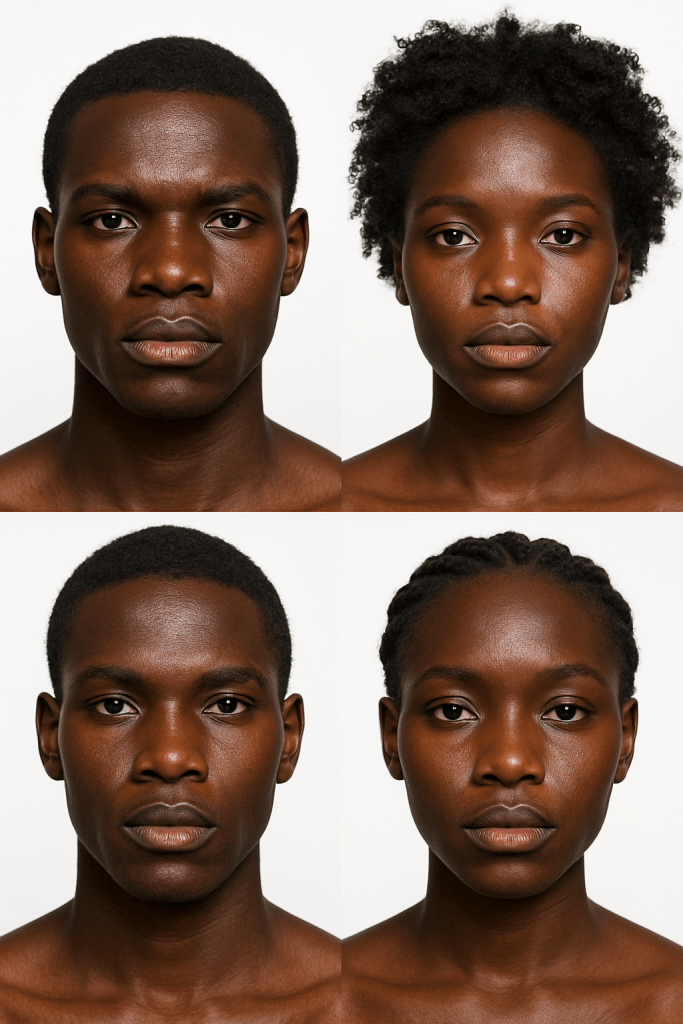
Tag Archives: science

The Tuskegee Syphilis Study – Medical exploitation of Black men.

The Tuskegee Syphilis Study stands as one of the most infamous examples of medical racism and ethical misconduct in American history. Conducted between 1932 and 1972, the study involved hundreds of Black men who were deliberately misled and denied proper medical treatment in order for government researchers to observe the natural progression of untreated syphilis. The experiment revealed how racial prejudice, scientific curiosity, and institutional power combined to exploit a vulnerable population under the guise of public health research.

The study was conducted in Tuskegee, located in Alabama, a region with a large population of poor Black sharecroppers. Researchers from the United States Public Health Service collaborated with the Tuskegee Institute (now Tuskegee University) to recruit participants. Approximately 600 Black men were enrolled in the study, including 399 men who had syphilis and 201 who did not and were used as a control group.

Participants were told that they were receiving treatment for what doctors described as “bad blood,” a vague term commonly used in the rural South to refer to various ailments such as fatigue, anemia, or infections. In reality, the men were never informed that they had syphilis, nor were they told that the purpose of the study was to observe the disease’s untreated progression over time.

During the early twentieth century, scientific racism strongly influenced American medical research. Many white physicians believed that Black people were biologically different and less sensitive to pain or disease than white populations. These racist assumptions contributed to the belief that Black bodies could be used as experimental subjects without the same ethical considerations afforded to white patients.

When the study began in 1932, treatments for syphilis were limited and often dangerous. However, by the mid-1940s, the antibiotic Penicillin had become the widely accepted and highly effective cure for syphilis. Despite this breakthrough, researchers involved in the Tuskegee study intentionally withheld the drug from participants in order to continue observing the disease’s long-term effects.

Researchers monitored the men for decades, regularly conducting blood tests, spinal taps, and physical examinations. Many of the participants believed these procedures were forms of medical care, when in reality they were part of a long-term observational experiment. The spinal taps were misleadingly described to the men as “special treatment,” even though they were primarily diagnostic procedures used for research purposes.

The consequences for the participants were devastating. Untreated syphilis can lead to severe complications, including neurological damage, blindness, heart disease, and death. Many of the men in the study suffered these outcomes while researchers documented the progression of their illness.

The harm extended beyond the individual participants. Because the men were unaware they had syphilis, many unknowingly transmitted the disease to their wives. In some cases, children were born with congenital syphilis, a condition that can cause serious developmental and health complications.

The study continued for forty years, largely hidden from public scrutiny. Government officials, medical researchers, and public health professionals were aware of the experiment, yet few questioned its ethical implications during its early decades. Institutional authority and racial bias allowed the study to persist without significant oversight.

The experiment was finally exposed in 1972 after investigative reporting by Jean Heller, a journalist for Associated Press. Her report brought national attention to the unethical nature of the study and sparked widespread public outrage.

Following the media revelations, the study was immediately terminated by federal authorities. Public condemnation came from medical professionals, civil rights organizations, and political leaders who recognized the experiment as a gross violation of human rights and medical ethics.

The scandal prompted congressional hearings and led to the establishment of new ethical guidelines for human research in the United States. In 1974, the U.S. government passed the National Research Act, which created oversight systems for studies involving human subjects.

One of the most important outcomes of the investigation was the development of the Belmont Report in 1979. This document established fundamental ethical principles for human research, including respect for persons, beneficence, and justice. These principles continue to guide modern medical research practices.

The legacy of the Tuskegee study has had a profound impact on the relationship between Black communities and the American medical establishment. The study reinforced longstanding mistrust toward healthcare institutions among African Americans, many of whom view the incident as evidence of systemic racism within the medical system.

Medical researchers and public health officials have acknowledged that the lingering effects of this mistrust contribute to disparities in healthcare access, participation in clinical trials, and attitudes toward medical treatment among Black populations.

In 1997, the U.S. government formally apologized for the study. During a ceremony at the White House, Bill Clinton issued a public apology to the surviving participants and their families, acknowledging that the government had profoundly violated their rights and dignity.

Clinton stated that the study represented a betrayal of trust and a reminder of the importance of ethical standards in medical research. The apology was widely viewed as a symbolic attempt to address the historical injustice inflicted upon the victims.

Today, the Tuskegee Syphilis Study is frequently taught in medical schools, public health programs, and ethics courses as a cautionary example of how scientific research can be corrupted by racism and institutional power.

The event also serves as a critical reminder of the need for informed consent, transparency, and respect for human dignity in medical research. These ethical standards were strengthened precisely because of the injustices exposed by the Tuskegee study.

Ultimately, the Tuskegee Syphilis Study illustrates how vulnerable populations can be exploited when prejudice, authority, and scientific ambition intersect. Its history remains a powerful lesson about the importance of ethical accountability in both medicine and public health.


References

Brandt, A. M. (1978). Racism and research: The case of the Tuskegee Syphilis Study. Hastings Center Report, 8(6), 21–29.

Centers for Disease Control and Prevention. (2023). The Tuskegee timeline. Centers for Disease Control and Prevention.

Gamble, V. N. (1997). Under the shadow of Tuskegee: African Americans and health care. American Journal of Public Health, 87(11), 1773–1778.

Jones, J. H. (1993). Bad blood: The Tuskegee syphilis experiment. New York: Free Press.

Reverby, S. M. (2009). Examining Tuskegee: The infamous syphilis study and its legacy. Chapel Hill: University of North Carolina Press.

U.S. Department of Health and Human Services. (2022). Tuskegee syphilis study archival records. Washington, DC.

What are the Neuro Linguistic Programming Techniques You Can Use Instantly?

Neuro-Linguistic Programming, commonly known as NLP, explores how language, thought patterns, and behavior interact to shape human experience. At its core, NLP suggests that small shifts in perception and communication can produce immediate changes in emotional states and responses.

One instantly usable NLP technique is anchoring. Anchoring involves associating a specific physical action, word, or image with a desired emotional state. By consciously recalling a confident or calm moment and pairing it with a gesture, individuals can later activate that state on demand.

Reframing is another foundational NLP tool that can be applied immediately. This technique involves changing the meaning assigned to a situation rather than the situation itself. By asking what else an experience could represent or what lesson it offers, emotional responses often shift rapidly.

Mirroring and matching are interpersonal NLP techniques that improve rapport. Subtly aligning posture, tone, or pacing with another person can create a sense of psychological safety and connection. When people feel understood, communication becomes more fluid and effective.

Language patterns play a critical role in NLP. Simply changing from absolute language such as “always” or “never” to more flexible phrasing like “sometimes” or “so far” can reduce internal pressure and open space for growth and problem-solving.

Visualization is an NLP strategy that engages the brain’s sensory systems. By vividly imagining a successful outcome using sight, sound, and feeling, individuals prime their nervous system for confidence and preparedness. The brain often responds to imagined success similarly to real experience.

The swish pattern is a rapid NLP technique designed to interrupt unwanted habits or thoughts. It works by replacing a negative mental image with a compelling positive one in quick succession, weakening the old association and strengthening a new, empowering response.

State management is central to NLP practice. Instead of asking why one feels a certain way, NLP focuses on how to shift states. Simple actions such as changing posture, breathing rhythm, or focus can immediately alter emotional energy.

Meta-cognition, or thinking about thinking, is another NLP-aligned skill. Becoming aware of internal dialogue allows individuals to challenge unhelpful narratives and consciously replace them with constructive language.

NLP emphasizes sensory awareness through representational systems. Paying attention to whether one thinks primarily in images, sounds, or feelings can enhance communication and self-understanding. Adjusting language to match these systems increases clarity and impact.

Future pacing is an NLP technique that mentally rehearses desired behaviors in upcoming situations. By imagining oneself responding calmly or confidently in advance, the brain becomes familiar with the behavior, making it easier to execute when the moment arrives.

Chunking is a cognitive NLP strategy that manages overwhelm. Breaking large goals into smaller, achievable steps reduces resistance and increases motivation. Conversely, chunking up helps individuals reconnect with purpose by seeing the bigger picture.

Pattern interruption is a fast NLP tool for shifting emotional states. Doing something unexpected, such as changing physical position or altering speech tempo, disrupts automatic reactions and creates space for conscious choice.

NLP also teaches precision in questioning. Asking better questions, such as “What specifically do I want instead?” directs attention toward solutions rather than problems, influencing both mindset and behavior instantly.

Submodalities refer to the fine details of mental imagery, such as brightness, size, or distance. Changing these qualities can dramatically alter emotional intensity. For example, shrinking or dimming a distressing image often reduces its emotional charge.

Rapport with oneself is just as important as rapport with others. NLP encourages aligning values, beliefs, and actions to reduce internal conflict. When inner communication improves, external behavior often follows.

NLP techniques can be particularly effective in moments of anxiety or self-doubt. Redirecting attention, shifting language, or adjusting body posture can calm the nervous system within minutes, restoring a sense of control.

Critics note that NLP varies in empirical support, yet many techniques align with established cognitive-behavioral and psychological principles. Its practical appeal lies in its accessibility and immediate applicability.

Ethical use of NLP is essential. Techniques designed to enhance communication and self-regulation should never be used to manipulate or coerce. Responsible practice prioritizes consent, authenticity, and personal growth.

Ultimately, NLP offers a toolkit rather than a doctrine. The techniques that work best are those applied with self-awareness, intention, and consistency. Small shifts in language, focus, and behavior can create meaningful changes in daily life.


References

Bandler, R., & Grinder, J. (1975). The structure of magic I: A book about language and therapy. Science and Behavior Books.

Dilts, R. (1990). Changing belief systems with NLP. Meta Publications.

Dilts, R., Grinder, J., Bandler, R., DeLozier, J., & Cameron-Bandler, L. (1980). Neuro-Linguistic Programming: The study of the structure of subjective experience. Meta Publications.

Kahneman, D. (2011). Thinking, fast and slow. Farrar, Straus and Giroux.

Linder-Pelz, S., & Hall, L. M. (2007). The empirical case for NLP. NLP World.

Tosey, P., & Mathison, J. (2010). Neuro-linguistic programming as an innovation in education and teaching. The Curriculum Journal, 21(4), 433–456.

Negroid Type: From Pseudoscience to Sacred Heritage

The term Negroid has long been one of the most controversial concepts in the study of human variation. Once used by anthropologists to categorize people of African descent, it has since become emblematic of the pseudo-scientific ideologies that underpinned racism, colonialism, and slavery. Yet, beyond its misuse, the study of African physical diversity, genetics, and spirituality reveals a deeper truth: the African phenotype represents the foundation of humanity itself.

Origins of the Term
The classification “Negroid” emerged in the late eighteenth and nineteenth centuries as part of the typological system developed by European naturalists such as Johann Friedrich Blumenbach. Blumenbach (1779) divided humankind into five “races”: Caucasoid, Mongoloid, Malayan, American, and Negroid. These categories, though influential, were based on superficial physical traits such as skin color, hair texture, and cranial measurements—not on actual biological lineage.

Scientific Racism and Colonial Expansion
Throughout the nineteenth century, the concept of the Negroid type became weaponized to justify slavery, imperialism, and racial hierarchy. Scientists like Samuel George Morton and Josiah C. Nott collected skulls and measured crania, falsely concluding that Africans had smaller brains and thus lesser intelligence. These ideas, later termed “scientific racism,” provided a veneer of legitimacy to the transatlantic slave trade and segregationist ideologies (Gould, 1996).

The Myth of Racial Purity
Racial typologies assumed that human groups were biologically distinct and hierarchically ordered. However, modern genetics has decisively refuted the notion of “pure races.” The Human Genome Project revealed that all humans share over 99.9% of their DNA, and that genetic variation within Africa is greater than that found between all other continents combined (Tishkoff et al., 2009). Thus, Africa is not a singular type, but the cradle of all human diversity.

Anthropological Evolution
Contemporary anthropology has moved away from fixed racial typologies toward an understanding of clinal variation—continuous, overlapping patterns of traits shaped by environment and adaptation. Features once associated with the so-called Negroid type—broad noses, full lips, dark skin, and tightly curled hair—are now recognized as adaptive responses to tropical climates, offering protection against ultraviolet radiation and dehydration (Jablonski, 2004).

Reclaiming the African Image
Despite its colonial misuse, many Afrocentric scholars have sought to reclaim the imagery associated with African phenotypes. The so-called Negroid features are not markers of inferiority but signatures of ancestral distinction and beauty. From the pyramids of Kemet to the kingdoms of Mali, Songhai, and Benin, these features have been celebrated in sculpture, iconography, and divine representation (Diop, 1974).

Theological Dimensions
In biblical interpretation, several theologians and Hebraic scholars suggest that many of the ancient Israelites and patriarchal figures were people of African or Afro-Asiatic descent (Hotep, 2012). Scriptures such as Jeremiah 8:21 and Song of Solomon 1:5 (“I am black but comely”) reflect an awareness of dark skin within sacred contexts. The “Negroid” image thus becomes not merely anthropological but theological—a reflection of divine creation in melanin.

The Melanin Doctrine
Melanin, the pigment responsible for skin color, has become central to Afrocentric spirituality and scientific theology. It is viewed not only as a biological substance but as a symbol of resilience, energy absorption, and divine intelligence. Modern science supports its importance as a natural protector against solar radiation and free radicals, granting both physiological and psychological strength (Barnes, 1998).

The Role of Genetics
Genetic anthropology has revealed that haplogroups such as E1B1A, prevalent among West and Central Africans, trace back tens of thousands of years and connect to ancient migrations across the Nile Valley and the Levant. This lineage further challenges Eurocentric narratives by demonstrating that African ancestry is central to the genesis of civilization, language, and spirituality (Keita & Boyce, 2005).

African Beauty and the Divine Aesthetic
Throughout art, history, and media, features once denigrated under “Negroid typology” have reemerged as powerful symbols of divine beauty. Full lips, coiled hair, and rich melanin have become icons of aesthetic authenticity. Artists, scholars, and theologians alike now celebrate these traits as reflections of the Imago Dei—the image of God expressed through African physiognomy.

The Psychological Aftermath of Typology
The lasting effects of racial classification systems manifest in colorism, internalized racism, and self-rejection among people of African descent. The colonial distortion of beauty and worth has caused generational trauma. However, through education, cultural pride, and spiritual renewal, many communities are redefining blackness as a state of sacred dignity rather than inherited shame (hooks, 1992).

Decolonizing Anthropology
To move forward, anthropology must continue to deconstruct Eurocentric frameworks and amplify African epistemologies. Decolonized scholarship acknowledges that Africa is not a peripheral contributor to human evolution—it is the epicenter. This perspective redefines the so-called Negroid type not as a scientific label but as an ancestral spectrum of human origin and identity.

The Biblical Lineage of Nations
Several biblical genealogies align with African migrations. Ham, the progenitor of Cush, Mizraim, and Canaan, is traditionally associated with African civilizations. Afro-Hebraic interpretations propose that the original Israelites shared ancestral links with these Afro-Asiatic peoples, connecting scriptural heritage to African identity (Ben-Yehuda, 2018).

Africa as Mother of Civilization
Civilizations such as ancient Nubia, Egypt, and Ethiopia challenge Western assumptions of white antiquity. These empires exhibited complex governance, literacy, architecture, and theology millennia before Europe’s Renaissance. Thus, the “Negroid” type, once portrayed as primitive, is historically proven to be the architect of civilization itself (Diop, 1974).

The Curse Narrative Debunked
The misuse of the biblical “curse of Ham” narrative historically justified slavery and segregation. However, critical exegesis reveals no divine condemnation of blackness; rather, this interpretation was fabricated to sustain white supremacy (Goldenberg, 2003). Modern theology restores the African presence in scripture as one of blessing, innovation, and covenantal purpose.

The Beauty of Diversity Within Africa
The African continent hosts immense phenotypic and cultural diversity—from the tall Nilotic peoples to the compact Bantu and the ancient Khoisan. Such variety proves the inadequacy of “Negroid” as a unifying label. Instead, Africa embodies a mosaic of adaptation, creativity, and divine design, representing the full expression of human potential.

The Modern Genetic Synthesis
Modern population genetics reinforces that all non-African peoples descend from small groups of Africans who migrated out of the continent roughly 60,000 years ago. Thus, every human phenotype, whether European or Asian, carries ancestral African DNA. Humanity, in essence, is a global expression of African origin (Stringer, 2016).

Cultural Redemption and Reeducation
To reclaim African identity, education must confront the falsehoods of racial hierarchy. Cultural and genetic literacy can restore self-worth among diasporic peoples. The truth that humanity originated in Africa dismantles the lie of inferiority and honors the spiritual narrative of creation found in Genesis: “And God formed man of the dust of the ground.”

Spiritual Anthropology
Beyond science, spiritual anthropology recognizes that the human form is a vessel of divine wisdom. The so-called Negroid type, with its radiant melanin and ancestral features, becomes a living testimony to divine craftsmanship. Through faith, knowledge, and cultural restoration, African descendants rediscover their sacred lineage as both biological and spiritual heirs of humanity.

Conclusion
The term Negroid type should no longer signify a scientific category but a journey—from misclassification to reclamation, from pseudoscience to sacred truth. Africa is not merely the continent of blackness; it is the womb of the world. By reinterpreting the narrative through historical critique, Afrocentric pride, and theological revelation, we affirm that to study the African face is to gaze upon the mirror of creation itself.


References (APA 7th Edition)

Barnes, J. (1998). Melanin: The key to freedom. Black Classic Press.
Ben-Yehuda, Y. (2018). Hebrew Israelites and the African connection: An Afrocentric biblical interpretation. Africana Studies Review, 12(3), 45–62.
Blumenbach, J. F. (1779). On the natural varieties of mankind. Göttingen.
Diop, C. A. (1974). The African origin of civilization: Myth or reality. Lawrence Hill Books.
Goldenberg, D. M. (2003). The curse of Ham: Race and slavery in early Judaism, Christianity, and Islam. Princeton University Press.
Gould, S. J. (1996). The mismeasure of man. W. W. Norton & Company.
hooks, b. (1992). Black looks: Race and representation. South End Press.
Hotep, U. (2012). The African origins of the Hebrew people. Kemet University Journal of African Spirituality, 8(2), 33–58.
Jablonski, N. G. (2004). The evolution of human skin and skin color. Annual Review of Anthropology, 33, 585–623.
Keita, S. O. Y., & Boyce, A. J. (2005). Genetics, history, and identity: The case of the African peoples. American Anthropologist, 107(1), 12–23.
Stringer, C. (2016). The origin of our species. Penguin Books.
Tishkoff, S. A., et al. (2009). The genetic structure and history of Africans and African Americans. Science, 324(5930), 1035–1044.

Eugenics – History, Meaning, and Impact on Black Communities

Eugenics is a social philosophy and movement that seeks to improve the genetic quality of a human population through selective breeding. It emerged in the late 19th century as scientists and social reformers debated how to apply principles of heredity to human societies. Proponents believed that traits such as intelligence, health, and moral character could be enhanced while undesirable traits could be reduced.

The modern concept of eugenics was popularized by Francis Galton, a British scientist and cousin of Charles Darwin, in the 1880s. Galton argued that human intelligence and morality were hereditary and that society should encourage reproduction among people with “desirable” traits and discourage it among those with “undesirable” traits.

The American Eugenics Society (AES) was one of the main organizations promoting eugenics in the United States, and its founders included prominent figures such as Madison Grant, Harry H. Laughlin, Charles Davenport, and others. These eugenics advocates actively pushed for sterilization laws, restrictive marriage policies, and other social measures that disproportionately harmed marginalized communities, particularly those deemed “unfit” by their standards. Alan F. Guttmacher, who later became president of Planned Parenthood, was also deeply involved in the eugenics movement, serving as vice-president of the American Eugenics Society. Other early proponents included Raymond Pearl, a biologist who promoted the application of eugenic principles to public health to improve the so-called “hereditary quality” of populations.

In the United States, eugenics gained traction in the early 20th century. Organizations promoted sterilization laws and marriage restrictions targeting people deemed “unfit.” This included those with mental illness, disabilities, or criminal records. Eugenics became intertwined with public health, social policy, and notions of racial hierarchy.

The eugenics movement reached its extreme in Nazi Germany, where the ideology justified forced sterilizations, euthanasia programs, and the Holocaust. The pseudoscientific principles of eugenics were used to legitimize genocide under the guise of improving the human race.

In the U.S., eugenics was applied through policies that disproportionately affected Black people, Indigenous communities, and other marginalized groups. Forced sterilizations in the South often targeted Black women, limiting reproductive freedom and reinforcing systemic racism. These programs were justified as public health measures but were deeply rooted in racial prejudice.

Eugenics is not just a historical concept; modern debates around genetics, reproductive technologies, and population control carry echoes of eugenic thinking. Some critics argue that policies promoting selective reproduction or targeting certain populations continue to have racial and social implications.

Bill Gates has been associated with modern population and health initiatives that some critics claim have eugenic undertones. Gates’ funding of global vaccination programs and reproductive health initiatives in developing countries has been controversial, with conspiracy theories misrepresenting these efforts as attempts to control population growth.

Despite controversy, Gates and his foundation emphasize voluntary health care, vaccination, and family planning programs to reduce preventable deaths, improve maternal health, and promote economic development. Mainstream public health experts generally reject eugenic interpretations of these programs, framing them as humanitarian efforts.

The term “eugenics” carries negative connotations because of its historical misuse to justify oppression, discrimination, and genocide. It highlights the dangers of applying genetic ideas to social policy without ethical safeguards or respect for human rights.

Historically, eugenics has been used to reinforce white supremacy. In the U.S., laws inspired by eugenic thinking sought to limit reproduction among Black communities, portraying them as genetically “inferior” while promoting reproduction among white populations.

Eugenic ideology often masked economic and social control as scientific progress. By presenting sterilization, restrictive marriage laws, and contraception as scientific measures, governments and organizations could legitimize discriminatory policies.

In the early 20th century, the American Eugenics Society and similar organizations lobbied for sterilization laws that disproportionately targeted Black women in states like North Carolina, Virginia, and Alabama. These programs continued into the 1970s.

The history of eugenics demonstrates how science can be misapplied when combined with prejudice. Policies that appear neutral can have devastating effects on marginalized populations if they are grounded in biased assumptions about genetic worth.

Modern genetics and reproductive technologies present ethical challenges reminiscent of past eugenics programs. Discussions around gene editing, CRISPR, and designer babies raise questions about equity, consent, and the value of human life.

Eugenics also influenced early birth control movements. Figures like Margaret Sanger used eugenic arguments to promote contraception, arguing that controlling reproduction could improve society. Critics highlight that these campaigns often targeted Black and poor communities disproportionately.

Racialized medical experimentation, including the Tuskegee Syphilis Study, can be viewed in the broader context of eugenic thinking. Black Americans were frequently subjected to coercive medical interventions justified by claims of improving population health.

The concept of “population control” has historically been entangled with eugenics. Policies aimed at reducing birth rates among poor or marginalized groups have often mirrored earlier eugenic logic.

What Bill Gates Has Actually Said About Population Control

  1. The Key Quote
    • In a 2010 TED Talk (“Innovating to Zero”), Gates said: “The world today has 6.8 billion people. That’s headed up to about nine billion. Now, if we do a really great job on new vaccines, health care, reproductive health services, we could lower that by, perhaps, 10 or 15 percent.” PolitiFact+1
    • He was not saying he wants to kill people, but that improving health could reduce future population growth by reducing child mortality. AAP+1
  2. What He Means by “Lowering” Population Growth
    • According to him, improved health (via vaccines, healthcare, reproductive health) means fewer children die, and when parents are confident their children will survive, they tend to have smaller families. Snopes+2Yahoo+2
    • This is a common demographic pattern: as child mortality drops, birth rates often decline. PolitiFact+1
  3. Clarifications & Misinterpretations
    • Multiple fact-checkers (e.g., PolitiFact, Africa Check) say that Gates has been misquoted or misrepresented: he’s not advocating for forced population reduction, but explaining a long-term demographic trend. PolitiFact+1
    • AAP FactCheck notes that the viral “population control” clip is taken out of context, and he was talking about future population growth, not reducing the current population by 15%. AAP
    • LeadStories also reports that there is no evidence Gates said he wanted to do population reduction in a malicious or coercive way; rather, his focus is on health programs that may indirectly slow growth. Lead Stories
  4. Why He Brings It Up
    • In his TED Talk, population is one factor in his equation for reducing carbon emissions. He’s making a broader argument: sustainable development involves not just energy, but health and social systems. PolitiFact
    • He has said improving public health is part of his philanthropy goals — not to “shrink humanity,” but to improve quality of life so that demographic transitions naturally occur. Snopes
  5. Historical Comments on “Population Control”
    • In a 1997 interview in George magazine, Gates talked about “population control,” but again in the sense of improving health rather than reducing population by force. Snopes
    • In fact, his foundation has invested heavily in both vaccines and reproductive health services. These efforts reflect a strategy to help people control their fertility voluntarily — not through coercion.

Why Some People Think He Meant Something Else

  • Some conspiracy theories misrepresent his comments as advocating genocide or forced mass sterilizations.
  • These theories often splice together clips (e.g., his TED Talk) to suggest he is admitting to a sinister “depopulation” plan.
  • But credible fact-checkers point out that these are distortions: his statements focus on lowering growth rates, not killing people. FactCheck.org+2Snopes+2

  • Yes, Gates has spoken about “lowering population growth” — but in the context of public health, not killing or coercive methods.
  • His argument is that when more children survive (because of vaccines, healthcare), families choose to have fewer children, which over time stabilizes or slows population growth.
  • Many of the more sinister interpretations (like “populations will be reduced by 15% through vaccines”) misunderstand or misrepresent what he said, according to independent fact-checkers.

Eugenics is a philosophy and social movement that seeks to improve human populations through selective reproduction. While proponents claimed it was a scientific effort to “enhance” society, in practice it disproportionately targeted marginalized groups, especially Black communities. The ideology framed Black bodies as inferior and their reproduction as a social problem, reinforcing systemic racism under the guise of science.

In the United States, eugenics gained popularity in the early 20th century. Policies included forced sterilizations, marriage restrictions, and institutionalization of those labeled “unfit.” Black women were disproportionately targeted, often sterilized without consent, reflecting the racialized hierarchy underpinning these laws. Such acts violated the biblical principle that every human life is made in God’s image (Genesis 1:27) and worthy of dignity and protection.

The American Eugenics Society and state governments used eugenic rhetoric to justify these measures. Black communities were portrayed as genetically inferior, while white populations were encouraged to reproduce freely. This racialized approach echoes the warnings in Proverbs 31:8-9 to defend the rights of the oppressed and speak up for those who cannot protect themselves.

Medical experimentation on Black Americans, such as the Tuskegee Syphilis Study, is another manifestation of eugenics’ racial impact. Black men were denied treatment for syphilis to observe disease progression, illustrating how pseudoscientific reasoning dehumanized Black bodies. Such practices violated the biblical call to justice, compassion, and protection for the vulnerable (Psalm 82:3-4).

The reproductive health movement, including early birth control advocacy, was also intertwined with eugenic ideology. Figures like Margaret Sanger promoted contraception using eugenic reasoning, targeting poor and Black communities under the guise of social reform. Although presented as “empowerment,” these efforts often reinforced control over Black reproduction, echoing systemic oppression rather than offering genuine autonomy.

Eugenics also influenced family planning policies in the mid-20th century. Black women were coerced or pressured into sterilization programs in states such as North Carolina, Virginia, and Alabama. These programs were presented as public health initiatives but were racially discriminatory, reflecting social prejudice and a disregard for human dignity, in direct contradiction to biblical justice (Micah 6:8).

The concept of “population control” has historically carried eugenic undertones. Black communities were often seen as overpopulated or “problematic” in policy discourse, and interventions such as forced sterilization and targeted contraception perpetuated racial inequality. Scripture consistently condemns oppression and injustice (Isaiah 1:17), highlighting the moral failure of these programs.

Modern reproductive and genetic technologies, while potentially beneficial, risk echoing historical patterns if ethical safeguards are ignored. Conversations about gene editing, population health, and family planning must consider racial equity, ensuring that Black communities are not coerced or marginalized in the name of scientific progress.

Bill Gates’ public statements about “reducing population growth” have been controversial, particularly among critics who see echoes of eugenic logic. Gates has clarified that he refers to voluntary health interventions that reduce child mortality, which naturally leads to smaller family sizes, not coercion or extermination. However, the historical context of Black communities experiencing population control measures underscores the need for vigilance and ethical oversight.

Education about the history of eugenics is essential for Black communities. Understanding how policies and medical programs have been used to control Black bodies helps communities make informed decisions about healthcare, reproductive choices, and consent. Proverbs 2:6 reminds us that knowledge and wisdom are key to discernment and protection from harm.

The legacy of eugenics in Black communities extends beyond individual harm. It has shaped public health, social policy, and trust in medical institutions. Generational trauma and skepticism toward healthcare interventions often stem from historical abuses, reinforcing the need for ethical, transparent, and community-centered health initiatives.

Religious and moral frameworks provide guidance for evaluating these issues. The Bible emphasizes the sanctity of life, the equality of all humans, and the responsibility to defend the vulnerable. Oppression, coercion, and discrimination in the name of science violate these principles, making eugenics fundamentally incompatible with Christian ethics (James 2:1-4; Matthew 25:40).

Eugenic rhetoric often framed Black people as a social problem rather than as individuals with inherent worth. This dehumanization facilitated policies that stripped reproductive rights, health autonomy, and basic dignity from Black communities, contradicting God’s command to love our neighbors and protect the weak (Luke 10:27).

Community advocacy and historical reckoning are critical. Recognizing the abuses of eugenics helps Black communities assert reproductive sovereignty, demand accountability from institutions, and resist policies that perpetuate racial inequality. Scripture repeatedly affirms that justice must be pursued and wrongs addressed (Isaiah 58:6-7).

The intersection of race, science, and ethics underscores the importance of consent, transparency, and equity in health and reproductive policies. Eugenics demonstrates how scientific authority can be misused to reinforce social hierarchies, highlighting the ongoing need for vigilance and moral guidance.

Modern population health initiatives must be evaluated critically to prevent unintended echoes of historical eugenics. Policies should prioritize voluntary access, informed consent, and the welfare of all individuals, particularly marginalized communities, aligning with biblical principles of justice and mercy (Micah 6:8; Proverbs 31:8-9).

Public health, when guided by ethics and respect for human dignity, can empower Black communities rather than oppress them. Historical awareness ensures that innovations in medicine, genetics, and reproductive health do not repeat past harms.

Ultimately, understanding eugenics from the Black perspective reveals the deep intersection of race, science, and morality. It challenges us to confront historical injustices, defend human dignity, and ensure that ethical and biblical principles guide all policies affecting reproduction and health.


  • Ethical reflection on eugenics emphasizes the importance of consent, equity, and human dignity. Modern societies must critically evaluate reproductive and genetic technologies to avoid repeating historical injustices.

Public understanding of eugenics is essential to ensure that scientific advancements benefit all humans without discrimination. Education, transparency, and ethical oversight are key to preventing abuses.

In contemporary discourse, references to eugenics serve as warnings about the misuse of science for social engineering. Awareness of its history is vital to recognize and resist modern forms of racial and reproductive oppression.

Eugenics remains a powerful example of how science can be co-opted to justify inequality. Studying its history helps societies navigate the complex intersections of genetics, ethics, and social policy, particularly regarding marginalized populations.


References

  • Wikipedia, “Eugenics” (en.wikipedia.org)
  • Wikipedia, “Francis Galton” (en.wikipedia.org)
  • Stern, A.M. (2005). Eugenic Nation: Faults and Frontiers of Better Breeding in Modern America. University of California Press.
  • Lombardo, P.A. (2011). Three Generations, No Imbeciles: Eugenics, the Supreme Court, and Buck v. Bell. Johns Hopkins University Press.
  • Kevles, D.J. (1995). In the Name of Eugenics: Genetics and the Uses of Human Heredity. Harvard University Press.
  • Planned Parenthood and Eugenics historical overview (plannedparenthood.org)
  • Gates Foundation, Global Health Initiatives (gatesfoundation.org)
  • Roberts, D. (1997). Killing the Black Body: Race, Reproduction, and the Meaning of Liberty. Vintage Books. FactCheck.org, “Video Targets Gates With Old Clip, Misleading Edit” FactCheck.org
  • PolitiFact, “Bill Gates didn’t say he wanted to use vaccines to reduce the population” PolitiFact
  • Snopes, “Bill Gates ‘Admit’ Vaccinations Are Designed So Governments Can ‘Depopulate’ the World?” Snopes
  • Africa Check, “No, Bill Gates is not practising population control through vaccines” Africa Check
  • AAP FactCheck, “Bill Gates vaccination TED Talk hasn’t been ‘scrubbed’” AAP
  • LeadStories, “Fact Check: Bill Gates Did NOT Discuss Population Reduction …” Lead Stories
  • Snopes, “Did Bill Gates Tell George Magazine … Over-Populated Planet …” Snopes
  • Yahoo / Fact‑check, “Missing context on Bill Gates 2010 quote about population sustainability” Yahoo Roberts, D. (1997). Killing the Black Body: Race, Reproduction, and the Meaning of Liberty. Vintage Books.
  • Wikipedia, “Eugenics” (en.wikipedia.org)
  • Stern, A.M. (2005). Eugenic Nation: Faults and Frontiers of Better Breeding in Modern America. University of California Press.
  • Lombardo, P.A. (2011). Three Generations, No Imbeciles: Eugenics, the Supreme Court, and Buck v. Bell. Johns Hopkins University Press.
  • Wikipedia, “Francis Galton” (en.wikipedia.org)
  • Gates Foundation, Global Health Initiatives (gatesfoundation.org)
  • PolitiFact, “Bill Gates Didn’t Say He Wanted to Use Vaccines to Reduce the Population” (politifact.com)
  • Snopes, “Bill Gates ‘Admit’ Vaccinations Are Designed So Governments Can ‘Depopulate’ the World?” (snopes.com) Wikipedia, “Eugenics” (https://en.wikipedia.org/wiki/Eugenics)
  • Wikipedia, “American Eugenics Society” (https://en.wikipedia.org/wiki/American_Eugenics_Society)
  • Wikipedia, “Alan F. Guttmacher” (https://en.wikipedia.org/wiki/Alan_Frank_Guttmacher)
  • Wikipedia, “Raymond Pearl” (https://en.wikipedia.org/wiki/Raymond_Pearl)

Chains of Complexion: How History Shaped the Modern Brown Identity.

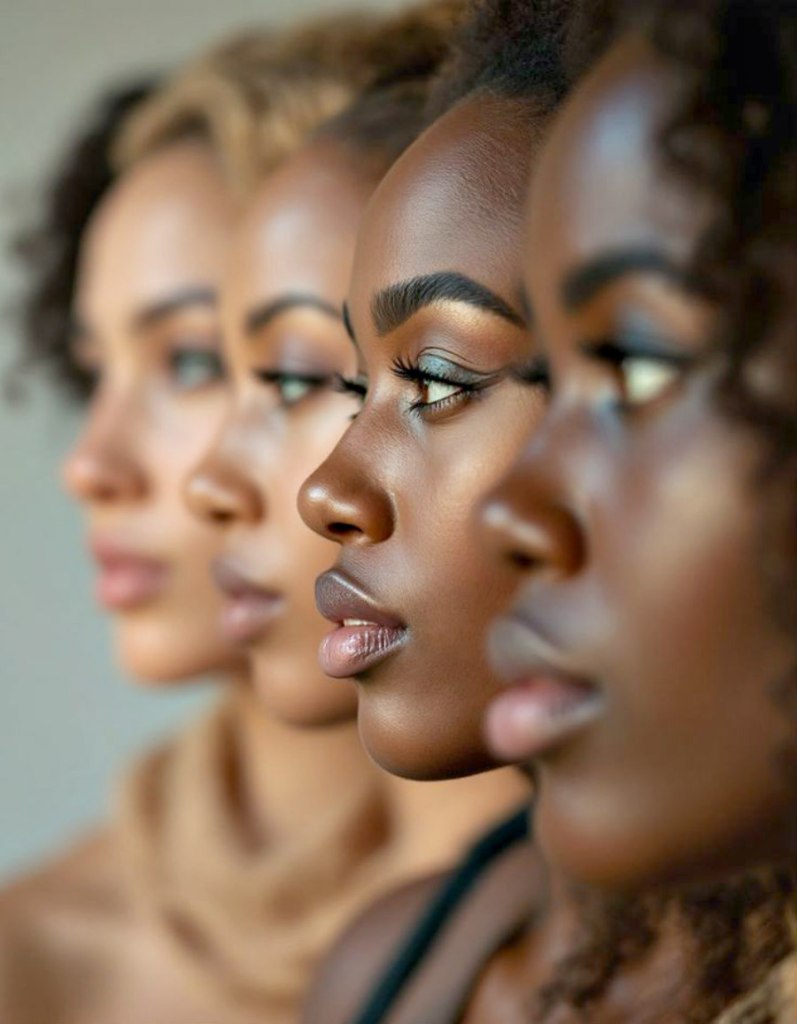
This photograph is the property of its respective owner. No copyright infringement intended.

Color is more than skin deep—it is history etched into flesh. Every shade of brown tells a story of migration, enslavement, colonization, and resistance. The complexion of the African diaspora is both a map and a mirror, reflecting the global journey of a people who endured fragmentation yet remained whole in spirit. To understand the modern brown identity, one must first confront the historical chains that bound it—chains not only of iron but of ideology.

The origins of color-based hierarchy began with colonization. As European empires expanded, they encountered people with darker skin across Africa, Asia, and the Americas. Instead of celebrating difference, they weaponized it. Color became the currency of control—an outward symbol of who was to rule and who was to serve. The darker the hue, the lower the worth assigned. Thus, the global structure of colorism was born—not from truth, but from the convenience of power.

In the transatlantic slave trade, complexion became both identifier and punishment. Enslaved Africans were categorized by skin tone—those with lighter complexions, often the offspring of white masters and Black mothers, were sometimes granted minor privileges within the plantation hierarchy. This created an internalized schism within the enslaved community, one that would persist for centuries: the illusion that proximity to whiteness meant elevation.

The colonial powers extended this pigmentocracy beyond the Americas. In India, the British reinforced pre-existing caste notions through their preference for lighter skin. In the Caribbean, Spanish and French colonizers created entire systems of racial classification—mulatto, quadroon, octoroon—each reflecting how deeply skin tone was tied to social mobility. The hierarchy of color became global, shaping not just how others saw us, but how we saw ourselves.

Psychologically, this division created generational trauma. People of color internalized shame toward their own reflection. Light skin became aspiration; dark skin became condemnation. This self-hatred was nurtured through education, religion, and beauty standards that praised the pale while vilifying the deep brown. The chains of complexion were mental as much as material.

Even after emancipation, the residue of these systems lingered. In post-slavery America, organizations like the “Blue Vein Societies” admitted only those whose skin was light enough to reveal blue veins beneath. Meanwhile, darker-skinned individuals faced exclusion not only from white spaces but from within their own communities. Colorism became an invisible whip that outlasted the plantation.

The entertainment and beauty industries deepened this divide. For decades, Hollywood and advertising glorified lighter-skinned Black actors and models as the standard of beauty. The “brown paper bag test” haunted social circles, while bleaching creams became symbols of internalized oppression. The damage was generational—entire lineages raised to equate lightness with desirability and darkness with deficiency.

Yet, despite this oppression, resistance rose. The Black Power Movement of the 1960s ignited a revolution of self-love. Phrases like “Black is Beautiful” challenged centuries of conditioning. Dark-skinned men and women began to see themselves as embodiments of royal lineage rather than colonial inferiority. The celebration of afros, natural features, and brown skin was not vanity—it was vindication.

The legacy of colorism, however, remains. Today, social media exposes how deeply color bias persists even among people of African descent. Lighter tones often receive more visibility and validation, while darker tones are marginalized or fetishized. The struggle is no longer about survival alone—it is about recognition and restoration. The modern brown identity must therefore wrestle with both pride and pain.

Historically, the Bible has been misused to justify racial hierarchies. European colonizers reimagined biblical figures as white, erasing their Afro-Asiatic origins. This spiritual bleaching further detached brown people from divine identity. But scripture tells another story—one of people from lands “black as the tents of Kedar” (Song of Solomon 1:5, KJV). Reclaiming that truth is central to healing the psychological scars of color-based oppression.

Sociologically, the “brown identity” today exists as both unity and complexity. Across the globe, people of African, Latin, Indigenous, and South Asian descent share the struggle against colorism. The brown identity is no longer regional—it is diasporic. It symbolizes the shared inheritance of colonial trauma and the collective awakening to self-worth.

Culturally, music, film, and literature have become tools of reclamation. Artists like Nina Simone, Toni Morrison, and Kendrick Lamar have used their platforms to affirm the depth and beauty of brownness. Through art, the brown identity becomes more than skin—it becomes song, rhythm, and revolution. It speaks to both the pain of being unseen and the power of being undeniable.

Psychologically, decolonizing beauty remains the next frontier. It requires that we dismantle the subconscious hierarchies implanted by colonialism. That means redefining professionalism, beauty, and intelligence beyond Eurocentric standards. It means teaching children that melanin is not a mark of shame but a medal of divine craftsmanship. Healing begins when brown becomes holy again.

Spiritually, melanin carries symbolism that transcends science. It absorbs light, transforms energy, and protects life. In that sense, it mirrors the spiritual essence of the brown-skinned people—absorbing pain, transforming it into art, faith, and resilience. The ability to survive centuries of oppression while radiating strength is itself a form of divine alchemy.

The future of the brown identity depends on solidarity. Bridging the internal divides between light and dark, between Afro-Latino and African American, between African and Caribbean, is crucial. The enemy was never one another—it was the system that taught us to distrust our own reflection. True liberation means seeing beauty in every shade of our spectrum.

Education plays a vital role in this transformation. Schools must teach the real history of how complexion was politicized. When young people learn that colorism was engineered to divide and conquer, they gain the power to reject it. Knowledge becomes liberation; truth becomes therapy.

Economically, representation still matters. When brands, corporations, and media campaigns embrace all shades of brown authentically—not tokenistically—they contribute to cultural healing. Every dark-skinned model, every brown-skinned CEO, every melanated hero on screen chips away at centuries of erasure. Visibility becomes victory.

Ultimately, the modern brown identity is an act of reclamation. It is the conscious decision to love the skin that history taught us to hate. It is choosing pride over pain, unity over division, and truth over imitation. It is the realization that every shade of brown carries the fingerprint of God and the legacy of survival.

The chains of complexion may have shaped our past, but they do not define our future. Today’s brown identity stands as both memory and movement—a declaration that what was once weaponized can now be worshiped. In embracing our full spectrum, we unshackle not just our image but our spirit. The brown identity, once bound by hierarchy, now rises as heritage—unbroken, unashamed, and undeniably divine.

References

  • The Holy Bible, King James Version (Song of Solomon 1:5).
  • hooks, b. (1992). Black Looks: Race and Representation. South End Press.
  • Russell, K., Wilson, M., & Hall, R. (1992). The Color Complex: The Politics of Skin Color Among African Americans. Doubleday.
  • Hall, S. (1997). Representation: Cultural Representations and Signifying Practices. Sage.
  • Davis, A. (1981). Women, Race, & Class. Random House.
  • Hill Collins, P. (2000). Black Feminist Thought. Routledge.
  • Morrison, T. (1992). Playing in the Dark: Whiteness and the Literary Imagination. Vintage.
  • Tate, S. (2009). Black Beauty: Aesthetics, Stylization, Politics. Routledge.
  • Craig, M. L. (2002). Ain’t I a Beauty Queen?: Black Women, Beauty, and the Politics of Race. Oxford University Press.
  • West, C. (1993). Race Matters. Beacon Press.

The Origins of White Skin

The study of human pigmentation, particularly the origins of white skin, intertwines anthropology, genetics, and evolutionary biology. Understanding how and why skin color diversified requires an exploration of migration patterns, environmental adaptation, and genetic mutations that shaped the physical diversity among humankind. This essay will explore the scientific, historical, and sociocultural dimensions of white skin evolution through an integrative scholarly lens.

The terms “white” and “black” are social and symbolic designations, not literal reflections of human pigmentation. Scientifically and anthropologically, all humans fall along a spectrum of brown skin tones determined by melanin concentration, hemoglobin visibility, and other pigmentary factors.

In biological terms, skin color arises from three main pigments: melanin, carotene, and hemoglobin. Melanin, produced by melanocytes, gives skin its brown to dark brown shades. Carotene adds yellow or golden undertones, while hemoglobin contributes pink to red hues visible through lighter skin. Therefore, so-called “white” people actually possess light beige or pinkish skin tones, influenced by low melanin levels and higher visibility of underlying blood vessels (Jablonski, 2021).

Similarly, “black” skin is not black in the literal sense but represents varying concentrations of eumelanin that create rich brown tones ranging from bronze to deep espresso. Under sunlight, darker skin often reveals golden, red, or blue undertones rather than pure blackness. This continuous gradation underscores that human pigmentation exists along a chromatic continuum, not binary categories.

The labels white and black originated during European colonial expansion to reinforce social hierarchies, not biological realities. In the 17th and 18th centuries, racial theorists used color as a metaphor for moral and intellectual worth—“white” symbolizing purity and civilization, and “black” denoting savagery and sin (Smedley & Smedley, 2011). These associations, rooted in ideology rather than anatomy, shaped enduring racial constructs that persist today.

Modern genetics and anthropology confirm that all humans share over 99.9% identical DNA, and differences in skin color are governed by a handful of genes (Norton et al., 2007). Thus, color terminology reflects cultural identity and historical power dynamics more than any genuine biological division.

In truth, all people are various shades of brown—from the lightest ivory to the deepest mahogany—demonstrating our shared origin and diversity within unity. As the biblical verse reminds, “And hath made of one blood all nations of men” (Acts 17:26, KJV). Science and scripture converge here: humanity’s distinctions are aesthetic and adaptive, not hierarchical.

Early human populations originated in sub-Saharan Africa, where high ultraviolet radiation levels favored dark skin pigmentation rich in melanin. Melanin serves as a natural barrier protecting the skin from UV-induced damage and degradation of folate, an essential nutrient for reproductive success (Jablonski & Chaplin, 2010). Thus, the earliest Homo sapiens possessed dark skin as a biological adaptation to equatorial sunlight.

As human groups migrated northward out of Africa roughly 60,000 years ago, they encountered regions with lower UV exposure. In these environments, dark pigmentation became less advantageous. To maintain adequate vitamin D synthesis—a process reliant on UV-B radiation—lighter skin gradually evolved through natural selection (Norton et al., 2007).

One of the most significant genetic factors in light skin evolution is the SLC24A5 gene. A single nucleotide change in this gene (Ala111Thr) is strongly associated with light pigmentation among Europeans (Lamason et al., 2005). This mutation, which likely arose around 8,000 years ago, spread rapidly due to selective pressures in northern latitudes where sunlight was weaker.

Another key gene, SLC45A2, also contributes to depigmentation in European populations (Stokowski et al., 2007). Together with TYR and OCA2 genes, these variants represent a cluster of evolutionary adaptations that reshaped melanin production, producing the light skin phenotypes common in Europe.

The emergence of white skin was not instantaneous but gradual. Genetic modeling suggests multiple independent depigmentation events occurred among non-African populations. East Asians, for example, developed lighter skin through different genetic pathways (notably the DCT and MFSD12 genes), demonstrating convergent evolution (Yamaguchi et al., 2018).

Archaeogenetic evidence indicates that early Europeans, such as the Mesolithic hunter-gatherers of Western Europe, still had dark skin and blue eyes (Olalde et al., 2014). It was only during the Neolithic agricultural revolution—when farming spread from the Near East—that genes for lighter skin became dominant in Europe.

This agricultural transition likely accelerated depigmentation. Diets deficient in vitamin D due to reduced consumption of animal products made lighter skin advantageous for efficient synthesis of the vitamin from limited sunlight (Hofmanová et al., 2016). Thus, whiteness as a phenotype arose through both environmental and dietary adaptation.

Cultural evolution soon intersected with biological change. As populations developed hierarchies, skin color became symbolically charged—first as a marker of regional origin, later as a social construct of superiority and purity (Smedley & Smedley, 2011). The scientific origins of white skin were therefore overlaid by ideological meanings during the rise of European colonialism.

European societies, beginning in the Renaissance and Enlightenment periods, reinterpreted physical difference through racial taxonomy. Thinkers like Linnaeus and Blumenbach used skin color to classify humanity, cementing whiteness as the “norm” of civilization (Eze, 1997). These frameworks distorted evolutionary diversity into hierarchical racial structures.

The biological reality, however, undermines these racialized assumptions. Modern genomic data reveal that skin color variation represents a small portion of overall genetic diversity among humans—roughly 0.1% of total DNA difference (Lewontin, 1972). Thus, “race” is more a sociopolitical invention than a biologically discrete category.

The theological narrative also influenced perceptions of white skin. In medieval Europe, depictions of Adam and Eve as white reinforced Eurocentric conceptions of divine image-bearing, contrasting with African and Semitic biblical origins (Goldenberg, 2003). This ideological whiteness would later justify slavery, colonialism, and systemic inequality.

Anthropologically, lighter skin in Eurasia should be seen not as superiority but as regional adaptation. It parallels the Inuit’s dietary vitamin D compensation or the dark skin retention of equatorial peoples despite varying UV exposure—each reflecting environmental equilibrium rather than hierarchy (Jablonski, 2021).

The adaptation process reveals the remarkable plasticity of the human genome. Mutations in pigmentation genes often occurred within a few thousand years—a rapid pace in evolutionary terms—demonstrating the strong influence of climate and diet on phenotype (Liu et al., 2015).

Moreover, studies of ancient DNA reveal that pigmentation genes continued evolving even in historical times. For example, the allele for light eyes and skin (HERC2/OCA2) rose in frequency in Europe during the Bronze Age (Mathieson et al., 2015). This continuous selection underscores skin color as a dynamic trait rather than a fixed racial essence.

Socially, the valorization of whiteness became a cultural invention with far-reaching consequences. Colonial narratives equated light skin with intelligence, civility, and divine favor—distortions that persist in global colorism today (Hunter, 2013). The origin of white skin, therefore, cannot be divorced from the ideologies it later inspired.

Biomedically, understanding the genetics of pigmentation informs research into health disparities. Lighter skin correlates with higher risks of UV-related cancers and folate deficiency, while darker skin populations in northern latitudes face vitamin D deficiencies (Nina et al., 2019). Both extremes highlight the adaptive trade-offs of human evolution.

The story of white skin also illustrates humanity’s shared ancestry. Despite visible differences, all modern humans trace their lineage to a common African origin roughly 200,000 years ago (Stringer, 2016). Skin color differences merely represent evolutionary responses along a continuum of adaptation.

From a spiritual-humanistic perspective, these findings reaffirm the unity of mankind. As the Apostle Paul declared, “And hath made of one blood all nations of men” (Acts 17:26, KJV). Scientific inquiry thus harmonizes with scriptural truth: diversity is divine design, not division.

Contemporary discussions on race and identity must therefore distinguish between biological pigmentation and sociocultural constructs. Whiteness as an identity emerged not from genetics but from power, empire, and ideology—constructed upon natural adaptation but weaponized through social stratification.

Ultimately, the origins of white skin testify to human resilience and adaptability. Our ancestors’ capacity to evolve physically, migrate globally, and adapt spiritually underscores the interconnectedness of all humanity under one Creator.

Science continues to demystify color, revealing that beneath the epidermis lies a shared human essence. In understanding how white skin evolved, we come closer to transcending the myths it inspired and embracing the unity embedded in our DNA.

References

Eze, E. C. (1997). Race and the Enlightenment: A reader. Blackwell.
Goldenberg, D. M. (2003). The curse of Ham: Race and slavery in early Judaism, Christianity, and Islam. Princeton University Press.
Hofmanová, Z., et al. (2016). Early farmers from across Europe directly descended from Neolithic Aegeans. Proceedings of the National Academy of Sciences, 113(25), 6886–6891.
Hunter, M. (2013). Race, gender, and the politics of skin tone. Routledge.
Jablonski, N. G., & Chaplin, G. (2010). Human skin pigmentation as an adaptation to UV radiation. Proceedings of the National Academy of Sciences, 107(Suppl 2), 8962–8968.
Jablonski, N. G. (2021). Living color: The biological and social meaning of skin color. University of California Press.
Lamason, R. L., et al. (2005). SLC24A5, a putative cation exchanger, affects pigmentation in zebrafish and humans. Science, 310(5755), 1782–1786.
Lewontin, R. C. (1972). The apportionment of human diversity. Evolutionary Biology, 6, 381–398.
Liu, F., et al. (2015). Genetics of skin color variation. Annual Review of Genomics and Human Genetics, 16, 99–120.
Mathieson, I., et al. (2015). Genome-wide patterns of selection in ancient Eurasians. Nature, 528(7583), 499–503.
Nina, G., et al. (2019). Pigmentation and health: The evolutionary legacy of skin color adaptation. Nature Reviews Genetics, 20(10), 705–718.
Norton, H. L., et al. (2007). Genetic evidence for the convergent evolution of light skin in Europeans and East Asians. Molecular Biology and Evolution, 24(3), 710–722.
Olalde, I., et al. (2014). Derived immune and ancestral pigmentation alleles in a 7,000-year-old Mesolithic European. Nature, 507(7491), 225–228.
Smedley, A., & Smedley, B. D. (2011). Race in North America: Origin and evolution of a worldview. Westview Press.
Stokowski, R. P., et al. (2007). A genomewide association study of skin pigmentation in a South Asian population. American Journal of Human Genetics, 81(6), 1119–1132.
Stringer, C. (2016). The origin and evolution of Homo sapiens. Philosophical Transactions of the Royal Society B, 371(1698), 20150237.
Yamaguchi, Y., et al. (2018). Diverse pathways to depigmentation: Evolution of light skin in different human populations. Pigment Cell & Melanoma Research, 31(3), 338–350.

Beauty: Is it your Skin Color or your Facial Features that make you beautiful?

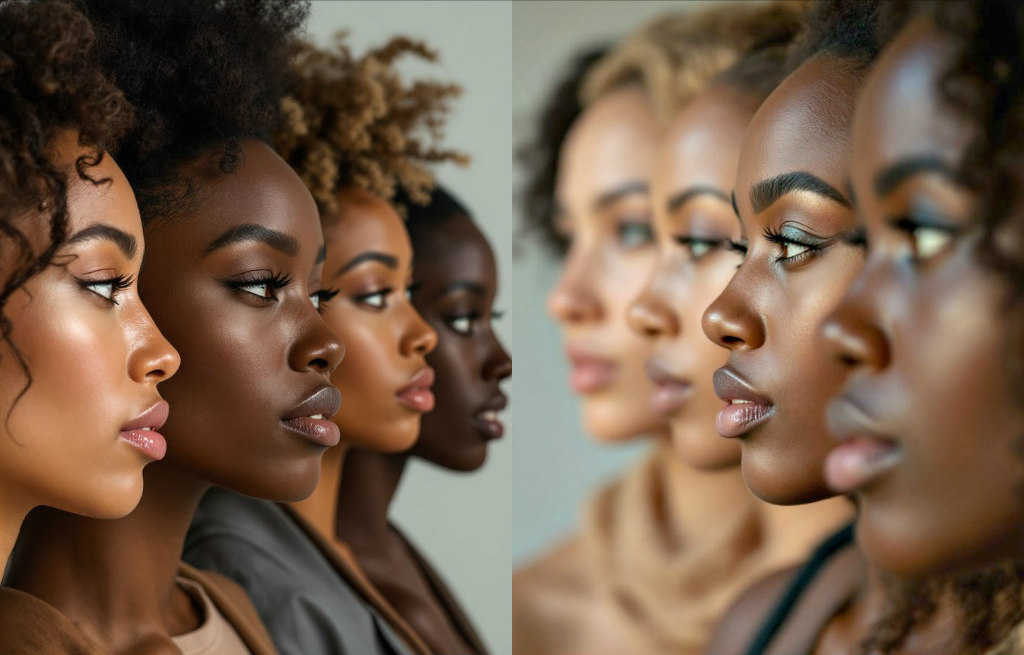
These photographs are the property of their respective owners. No copyright infringement intended.

I was oblivious to skin color. People always told me I was beautiful, and I always believed it was my features and not my light café-au-lait skin tone. Growing up, beauty seemed more about the symmetry of one’s face, the way one’s eyes aligned, or how one’s smile illuminated a room. But as I matured and began to understand the social and psychological layers of race and aesthetics, I realized that the question of beauty—particularly for people of African descent—was neither simple nor purely biological. It was a complex interplay between genetics, societal conditioning, colonization, and personal perception.

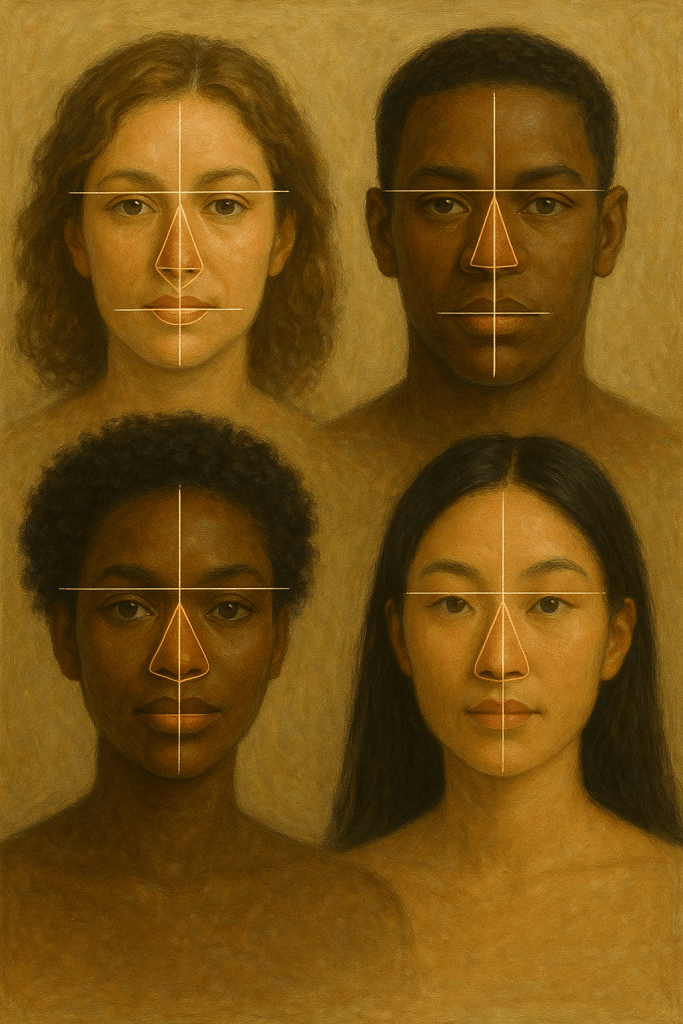
The science of beauty has long sought to define attractiveness through objective measurements. The Marquardt facial mask, developed by Dr. Stephen Marquardt, is one such tool that uses the golden ratio (phi, approximately 1.618) to map ideal facial proportions (Marquardt, 2002). This mathematical construct suggests that beauty lies in balance and symmetry. Yet, while symmetry contributes to perceived attractiveness across cultures (Rhodes, 2006), it cannot fully explain why certain faces—like Halle Berry’s or Idris Elba’s—transcend mathematical formulas to captivate the world.

Genetically, facial features are an orchestra of inherited traits determined by the complex interactions of multiple genes (Jones & Little, 2012). Skin tone, lip shape, and eye spacing are phenotypic expressions influenced by ancestral environments. For instance, fuller lips and broader noses evolved as adaptive features in warmer climates, aiding in temperature regulation (Jablonski & Chaplin, 2000). Yet colonialism rebranded these traits as “undesirable,” constructing Eurocentric beauty standards that favored narrow noses, thin lips, and lighter skin.

This colonial gaze reshaped entire generations’ perception of beauty. During and after slavery, the closer one’s appearance aligned with European features, the more “beautiful” or “acceptable” one was considered. This false hierarchy of aesthetics—rooted in power and racial politics—continues to shape modern beauty ideals, especially in the global media (Hunter, 2005). Thus, many women and men of color wrestle with a dual consciousness: one that recognizes their innate beauty while subconsciously measuring it against Western standards.

When we look at Halle Berry, we see a blend of symmetry, balance, and soft femininity that aligns with global ideals of beauty. Yet what makes her distinct is her expressive eyes, proportionate bone structure, and emotive presence—traits that transcend complexion. Lupita Nyong’o, in contrast, represents a radical reclamation of deep-toned beauty. Her skin radiates with depth and grace, and her high cheekbones and luminous eyes challenge Eurocentric molds, celebrating the richness of African features as equally divine.

Vanessa L. Williams’s beauty carries a classical appeal—a combination of facial symmetry, expressive eyes, and harmony of proportions. Her presence in the entertainment industry during the 1980s broke barriers, representing both elegance and controversy in a time when America still struggled to accept a Black woman crowned “Miss America.” Her beauty was seen through both admiration and prejudice—a reflection of how colorism complicates acceptance even within communities of color.

Among men, Shemar Moore’s charm lies in his smooth facial symmetry, strong jawline, and warm, approachable smile—qualities that align with scientific definitions of attractiveness. Yet, Idris Elba’s beauty feels more elemental. His deep-set eyes, strong features, and commanding presence convey power, charisma, and confidence. His allure, like Lupita’s, resists Eurocentricity; it draws instead on ancestral strength and authenticity.

But what about those whose features don’t fit the “mask”? Beauty in the human experience is not only mathematical but also psychological and cultural. Studies show that individuals are more likely to find faces from their own ethnic group more attractive due to familiarity and cultural exposure (Little et al., 2011). Thus, what one finds beautiful often depends on one’s cultural conditioning, not universal law.

Beauty is, therefore, both objective and subjective. Science can measure facial harmony, but culture shapes what harmony looks like. Western beauty often celebrates sharpness—defined cheekbones, narrow noses—while African aesthetics celebrate fullness, balance, and expression. These differing ideals are not hierarchies but reflections of varied cultural philosophies about life and identity.

The psychological phenomenon of “beauty bias” reinforces societal privilege for those deemed more attractive. This bias influences job prospects, relationships, and self-esteem (Langlois et al., 2000). For people of color, beauty bias intersects with colorism, leading to internalized hierarchies where lighter skin and Eurocentric features are unconsciously prioritized. This is why even those confident in their looks may still feel their beauty questioned by social norms.

Colonization didn’t only enslave bodies—it colonized aesthetics. From missionary schools to Hollywood casting rooms, the European ideal of beauty became synonymous with civilization, purity, and desirability. African features, once revered within indigenous societies as markers of lineage and strength, were ridiculed and suppressed. The result was centuries of aesthetic erasure that many are only now beginning to reverse.

The return to natural hair, deeper skin tones in media, and diverse representation mark a cultural renaissance. This redefinition of beauty reconnects the diaspora to its authentic self. It celebrates faces like Lupita’s not as exceptions but as exemplars of divine variation. It honors dark skin not as “different” but as glorious.

Still, one must ask: if beauty is in the eye of the beholder, who is holding the mirror? Media corporations, advertisers, and colonial institutions have long acted as the beholders, dictating taste and value. But the shift toward self-definition—especially among Black creators, photographers, and scholars—marks a new chapter in aesthetic sovereignty.

Scientifically, certain features—clear skin, bilateral symmetry, facial averageness—are universally preferred because they signal health and genetic fitness (Perrett et al., 1999). However, features like high cheekbones, full lips, or wide noses can be just as aesthetically pleasing when embraced through a culturally affirming lens. The issue is not the feature itself but the framework through which it’s judged.

In psychological terms, humans are drawn to faces that mirror their identity. This “familiarity principle” (Zajonc, 1968) explains why beauty can never be entirely objective. It is influenced by cultural memory and social environment. Thus, the perception of beauty among African-descended peoples carries historical trauma—beauty has been both weaponized and denied.

Genetics, then, provides the blueprint, but society writes the interpretation. One person’s admiration of Halle Berry’s elegance or Lupita’s radiance is not merely about structure—it’s about what those faces symbolize. They represent visibility, validation, and the defiance of centuries of aesthetic marginalization.

To be beautiful in a colonized world is to exist in resistance. Each melanated face, each natural curl, each unapologetic feature, is an act of restoration—reclaiming what history attempted to distort. Beauty, in this sense, becomes a form of protest and prophecy, not vanity.

When I reflect on my own journey, I realize that what I believed to be “just my features” was shaped by more than DNA—it was shaped by social constructs, ancestral memories, and cultural expectations. My beauty was never just mine; it was inherited from generations who carried grace through oppression and dignity through erasure.

So, is it your skin color or your features that make you beautiful? The answer is both—and neither. True beauty transcends the surface. It lives in the harmony of authenticity, confidence, and self-recognition. It is not measured by the golden ratio but by the light you emit when you embrace who you truly are.


References
Hunter, M. L. (2005). Race, gender, and the politics of skin tone. Routledge.
Jablonski, N. G., & Chaplin, G. (2000). The evolution of human skin coloration. Journal of Human Evolution, 39(1), 57–106.
Jones, B. C., & Little, A. C. (2012). The role of facial attractiveness in mate choice. Trends in Cognitive Sciences, 16(1), 33–38.
Langlois, J. H., et al. (2000). Maxims or myths of beauty? A meta-analytic and theoretical review. Psychological Bulletin, 126(3), 390–423.
Little, A. C., Jones, B. C., & DeBruine, L. M. (2011). Facial attractiveness: Evolutionary based research. Philosophical Transactions of the Royal Society B, 366(1571), 1638–1659.
Marquardt, S. (2002). The golden ratio: The beauty mask and the science of human aesthetics. Marquardt Beauty Analysis.
Perrett, D. I., et al. (1999). Symmetry and human facial attractiveness. Evolution and Human Behavior, 20(5), 295–307.
Rhodes, G. (2006). The evolutionary psychology of facial beauty. Annual Review of Psychology, 57, 199–226.
Zajonc, R. B. (1968). Attitudinal effects of mere exposure. Journal of Personality and Social Psychology, 9(2p2), 1–27.

Are You an Empath? Understanding the Science, Psychology, and Spirituality of Empathy.

Photo by Ivan Samkov on Pexels.com

Empathy is a defining human capacity — the ability to feel, understand, and share the emotions of others. While compassion and kindness are universal virtues, some individuals are wired with an unusually heightened sensitivity to other people’s feelings. These individuals are commonly referred to as empaths. In psychology and neuroscience, empathy is not just a personality trait but also a complex interaction between emotional intelligence, brain function, and social learning. The concept of the “dark empath” and the personality profiles associated with empathy, grounding the discussion in science, psychology, and spirituality.

Defining Empathy
Empathy is classically defined as the ability to recognize, understand, and share the feelings of others (Decety & Cowell, 2014). In neuroscience, it is associated with activity in the anterior insula, anterior cingulate cortex, and mirror neuron system, which allows us to “mirror” others’ emotions as if they were our own. The Bible reflects this principle when it commands, “Rejoice with them that do rejoice, and weep with them that weep” (Romans 12:15, KJV). This ability to emotionally attune to others is foundational to compassion, healthy relationships, and moral behavior.

Signs of an Empath
An empath typically exhibits a range of signs: heightened emotional sensitivity, deep compassion, intuition about others’ feelings, and a tendency to absorb the emotional energy of a room. Empaths often feel overwhelmed in crowds, need time alone to recharge, and are drawn to helping professions. Psychology also notes that empaths may experience “emotional contagion” — the automatic sharing of emotions — more intensely than the average person.

Different Types of Empaths
Research and popular psychology identify several categories of empaths:

  • Emotional Empath – Feels others’ emotions deeply.
  • Physical Empath – Senses other people’s physical pain or discomfort.
  • Intuitive Empath – Has strong gut feelings or spiritual discernment about others.
  • Cognitive Empath – Understands others’ perspectives intellectually.
  • Animal Empath – Connects strongly with animals’ emotions and needs.
  • Plant/Nature Empath – Feels restored and connected to nature’s rhythms.
  • Dark Empath – Possesses high empathy but uses it manipulatively.

This classification demonstrates that empathy is not one-size-fits-all; it expresses itself differently depending on personality, environment, and moral orientation.

The Dark Empath and the Dark Triad
Psychologists have recently explored the concept of the “dark empath” — someone with high emotional intelligence who uses it for manipulation rather than compassion. This overlaps with the “Dark Triad” personality traits: narcissism, Machiavellianism, and psychopathy. A dark empath can exploit others’ vulnerabilities while appearing compassionate. This is why discernment is key — not all who appear empathetic have pure motives. Proverbs 26:23 warns, “Burning lips and a wicked heart are like a potsherd covered with silver dross.”

Empathy and Personality Types
Certain personality traits correlate with empathy. Individuals high in agreeableness (from the Big Five personality model) tend to have greater empathic concern. Highly sensitive persons (HSPs) also score higher on measures of emotional empathy. Conversely, those with antisocial traits show reduced empathic processing. Empaths may gravitate toward roles as counselors, mediators, or caregivers, embodying a nurturing and compassionate personality style.

Example of an Empathic Person
Mother Teresa is a well-known example of an empathic individual. She dedicated her life to caring for the poorest and most destitute, embodying compassion and sacrificial service. Her empathy was both emotional (sharing in the suffering of others) and active (motivating concrete acts of care). Neuroscientific studies suggest that acts of empathy release oxytocin, which reinforces feelings of connection and prosocial behavior.

Neuroscience of Empathy
Empathy is rooted in brain circuitry. Mirror neurons — first discovered in primates — allow humans to internally “simulate” the actions and feelings of others. Functional MRI studies show that empathic people display heightened activation in brain regions responsible for emotion regulation, perspective-taking, and compassion. This biological foundation highlights that empathy is both a learned and innate capacity, one that can be strengthened through mindfulness, prayer, and relational practice.

Psychological Benefits and Challenges
While empathy is essential for healthy relationships, it can also be burdensome. Empaths may suffer from compassion fatigue, emotional burnout, or difficulty distinguishing their own feelings from those of others. Boundaries are essential — even Jesus withdrew from the crowds to pray (Luke 5:16), modeling emotional rest and spiritual renewal. Learning to regulate empathy helps individuals avoid codependency and maintain mental health.

Spiritual Dimension of Empathy
Empathy reflects the heart of God, who is described as “touched with the feeling of our infirmities” (Hebrews 4:15). In the Christian life, empathy becomes a vehicle for Christlike love, encouraging believers to bear one another’s burdens (Galatians 6:2). Spiritually mature empathy moves beyond sentiment into action — advocating for justice, caring for the marginalized, and offering forgiveness. When guided by the Holy Spirit, empathy becomes not just emotional resonance but a force for kingdom transformation.


Conclusion
Empathy is a profound human capacity that integrates neuroscience, psychology, and spirituality. Whether expressed as emotional sensitivity, intuitive discernment, or compassionate action, empathy allows us to connect deeply with others. However, it must be balanced with wisdom, boundaries, and discernment to avoid manipulation or emotional exhaustion. The study of empaths — including the dark empath — reminds us that empathy is powerful, and like all power, it must be stewarded well.


References

  • Decety, J., & Cowell, J. M. (2014). The complex relation between morality and empathy. Trends in Cognitive Sciences, 18(7), 337–339.
  • Heym, N., Firth, J., Kibowski, F., Sumich, A., Egan, V., & Bowler, D. M. (2020). The dark empath: Characterising dark triad traits in empathy. Personality and Individual Differences, 167, 110261.
  • Neff, K. D. (2011). Self-Compassion: The Proven Power of Being Kind to Yourself. HarperCollins.
  • Siegel, D. J. (2010). Mindsight: The New Science of Personal Transformation. Bantam.
  • The Holy Bible, King James Version. (1769/2023). (Romans 12:15; Proverbs 26:23; Galatians 6:2; Hebrews 4:15; Luke 5:16).

Genetics of a People: The Science of Ancestry and Haplogroups.

Photo by bareed_shotz on Pexels.com

In the search for identity, few tools have been as revolutionary as the study of genetics. Modern science allows us to trace human migrations, family lineages, and even ancient biblical connections through markers passed down in DNA. Among these markers, haplogroups—clusters of related genetic signatures inherited from a common ancestor—offer profound insights into the origins and journeys of entire peoples.

For those of African descent, haplogroup studies are especially significant. Y-DNA haplogroup E1b1a (E-M2), for instance, is one of the most common paternal lineages among West and Central Africans, regions heavily impacted by the transatlantic slave trade (Underhill et al., 2000). This same lineage is carried today by millions of African Americans, linking them genetically to ancestral homelands. Mitochondrial DNA (mtDNA), inherited maternally, likewise carries the story of women whose resilience sustained generations through migration, captivity, and survival.

What makes these findings powerful is not merely the science, but the resonance they have with Scripture. The Bible often speaks of “seed,” “bloodline,” and “generations” as carriers of both covenant and identity (Genesis 17:7; Deuteronomy 7:9, KJV). In this sense, haplogroups can be viewed as scientific confirmations of heritage and continuity, testifying to the endurance of a people across time and dispersion.

Understanding haplogroups does more than satisfy curiosity—it challenges the narratives of erasure imposed by colonialism and slavery. It allows descendants of the African diaspora to reclaim history not just through oral tradition or written record, but through the very code of their being. Genetics, then, becomes both a science and a witness, affirming that identity is neither lost nor forgotten, but inscribed in every cell.


📖 References

  • Underhill, P. A., Shen, P., Lin, A. A., Jin, L., Passarino, G., Yang, W. H., … & Oefner, P. J. (2000). Y chromosome sequence variation and the history of human populations. Nature Genetics, 26(3), 358–361.
  • Holy Bible, King James Version.

The Genetics of Black People #thescienceofblackbeauty

Photo by Merlin Lightpainting on Pexels.com

The genetics of Black people provides a profound window into human history, identity, and resilience. Through the lens of science, anthropology, and biblical reflection, one discovers that African-descended populations carry the richest genetic diversity on Earth. This diversity not only traces back to the earliest human origins but also tells the story of migration, adaptation, and survival. To understand Black genetics is to understand the foundations of humanity itself.

Africa as the Genetic Cradle

Modern genetics affirms what archaeology and anthropology have long suggested: Africa is the cradle of humanity. Studies of mitochondrial DNA (mtDNA) and Y-chromosome lineages confirm that all modern humans trace their ancestry to Africa approximately 200,000 years ago (Tishkoff et al., 2009). This means that the genetic diversity seen among Black people is not only vast but also foundational to the human story.

Haplogroups and Lineages

Among African and African diasporic populations, haplogroups such as E1b1a are highly prevalent. This Y-DNA lineage is especially common among West and Central Africans, as well as among African Americans and Afro-Caribbeans (Underhill et al., 2001). Such markers provide genetic evidence of ancestral ties that link dispersed Black populations back to Africa, particularly the regions most affected by the transatlantic slave trade.

Melanin as a Genetic Gift

One of the most visible genetic traits of Black people is melanin, the pigment responsible for skin color. Far from being a mere aesthetic trait, melanin serves as a protective adaptation against ultraviolet radiation. It reduces the risk of DNA damage while regulating vitamin D synthesis (Jablonski & Chaplin, 2000). In biblical reflection, one could argue that melanin symbolizes divine design: “I am black, but comely” (Song of Solomon 1:5, KJV).

Adaptation and Survival

Genetics reveals that traits common among African populations were shaped by evolutionary pressures. For example, the sickle cell trait—a genetic adaptation—provides resistance against malaria, a deadly disease endemic to parts of Africa. This illustrates how Black genetics embodies survival strategies written into DNA through centuries of environmental challenges.

The Transatlantic Slave Trade and Genetic Disruption

The forced displacement of millions of Africans through the transatlantic slave trade disrupted genetic continuity, yet it also created new diasporic lineages. African Americans, for example, typically show a mixture of West and Central African ancestry, with smaller proportions of European and Native American ancestry due to centuries of enslavement, coercion, and survival (Bryc et al., 2015). Genetics, therefore, serves as a testimony of trauma but also of resilience.

Diaspora Diversity

The African diaspora is far from monolithic. Afro-Caribbeans, Afro-Latinos, and African Americans all share African genetic roots but reflect distinct admixture histories. For instance, Afro-Brazilians often display higher proportions of African ancestry compared to African Americans, due to Brazil’s massive role in the slave trade (Telles, 2004). Yet across the diaspora, the shared thread is an undeniable African genetic legacy.

Health Implications in Genetics

The genetics of Black people also intersects with health in powerful ways. Certain conditions such as hypertension and diabetes are disproportionately prevalent among African-descended populations, influenced not only by genetics but also by systemic inequalities (Gravlee, 2009). Understanding genetic predispositions must go hand in hand with addressing structural racism in healthcare.

Misuse of Genetics in Racism

History has shown how genetics was misused to justify slavery, colonialism, and segregation. Pseudoscientific racism claimed that Black people were biologically inferior. Modern genetics refutes these falsehoods, affirming that race is a social construct, while genetic diversity within Africa surpasses that of all other continents combined (Lewontin, 1972).

Biblical Reflections on Ancestry

The Bible teaches that all humanity is made in the image of God (Genesis 1:27, KJV). Yet for Black people, genetics and scripture converge in unique ways. Deuteronomy 28 has been interpreted by some as prophetic, aligning the experiences of the African diaspora with the curses of Israel. While debated, this perspective connects genetics, history, and spiritual identity in profound ways.

Marriage of Science and Scripture

Rather than conflict, genetics and scripture can complement one another. Science reveals the pathways of migration and adaptation, while scripture reminds us of divine purpose. Acts 17:26 (KJV) declares: “And hath made of one blood all nations of men for to dwell on all the face of the earth.” This verse resonates deeply with the genetic truth that all humans share common African ancestry.

Genetics and Identity Formation

For many Black individuals, DNA testing has become a tool for reclaiming lost heritage. Commercial genetic tests allow descendants of the diaspora to trace their lineages back to specific African regions. This process provides not only scientific validation but also psychological healing from centuries of disconnection caused by slavery.

Psychology of Genetic Roots

Psychology suggests that knowing one’s ancestry strengthens self-esteem and identity formation (Phinney, 1990). For Black people, genetic awareness can counter narratives of erasure. By affirming African origins and resilience, genetics helps restore pride and a sense of belonging within the larger human family.

🧬 The Genetic Makeup of Black People

1. Genetic Diversity in Africa

Science shows that people of African descent carry the highest genetic diversity in the world. This is because Africa is the cradle of humankind, where modern Homo sapiens first evolved about 200,000 years ago (Tishkoff et al., 2009). Populations that migrated out of Africa carried only a subset of this genetic variation, which makes non-African groups less genetically diverse.


2. Haplogroups in African Populations

One of the most common paternal lineages in Sub-Saharan Africa is the Y-DNA haplogroup E1b1a. It is especially dominant among West and Central Africans and their descendants in the Americas due to the Transatlantic Slave Trade (Wood et al., 2005).

On the maternal side, African women often carry mtDNA haplogroups L0–L3, some of the oldest lineages in the world. These haplogroups trace directly back to the first mothers of humanity (Salas et al., 2002).


3. Skin Color and Melanin

The dark skin of Black people is due to high melanin production (specifically eumelanin). This adaptation evolved in Africa to protect against ultraviolet (UV) radiation, reducing risks of skin cancer and preserving folate, a vitamin essential for reproduction (Jablonski & Chaplin, 2010).


4. Health and Genetic Traits

Certain genetic traits in African populations arose as adaptations to local environments. For example:

  • The sickle-cell trait provides protection against severe malaria, which is widespread in Africa (Kwiatkowski, 2005).
  • Variants in the Duffy antigen receptor gene protect many West Africans from Plasmodium vivax malaria (Miller et al., 1976).

However, these adaptations can have trade-offs. For instance, carrying two sickle-cell alleles leads to sickle-cell disease.


5. Admixture and the Diaspora

Black populations outside Africa, especially in the Americas, often have mixed ancestry. African Americans, for example, typically have West and Central African ancestry but also varying degrees of European and Native American admixture due to historical slavery, colonization, and forced mixing (Bryc et al., 2015).


6. Genetics, Identity, and Misuse

Science has confirmed that while genetic diversity exists, race is not a strict biological category. Instead, it reflects clusters of ancestry shaped by migration and geography. Unfortunately, genetics has been historically misused to justify racism. Today, genetic studies highlight shared humanity and deep African origins of all people (Graves, 2005).


📖 Biblical Reflection (KJV)

  • “And hath made of one blood all nations of men for to dwell on all the face of the earth” (Acts 17:26).
  • “I will say to the north, Give up; and to the south, Keep not back: bring my sons from far, and my daughters from the ends of the earth” (Isaiah 43:6).

Genetic Continuity Across Generations

Despite centuries of oppression, African-descended people carry forward genetic continuity that cannot be erased. Each generation inherits not only biological traits but also stories of endurance. Psalm 139:14 (KJV) reminds us: “I will praise thee; for I am fearfully and wonderfully made.” Genetics affirms this biblical truth.

Cultural Implications of Genetics

Black culture—music, food, language, and spirituality—often reflects deep genetic memory. Anthropologists note that certain rhythms, agricultural practices, and even healing traditions among diasporic communities trace back to African roots. Genetics, therefore, is not only biological but also cultural.

The Ethics of Genetic Research

While genetic science holds promise, ethical considerations remain. Historically, Black communities have been exploited in medical and genetic research, such as the Tuskegee Syphilis Study. Thus, the pursuit of genetic knowledge must be grounded in justice, equity, and respect.

Future of Black Genetics

As technology advances, the genetics of Black people will play a central role in medicine, anthropology, and identity studies. Genetic research promises better healthcare outcomes when tailored to African ancestry. Moreover, it enriches global understanding of human origins and diversity.

Spiritual Continuity and Covenant

In scripture, covenant symbolizes continuity. Just as marriage is a covenant binding two into one flesh, so too does genetics bind generations into one continuous story (Genesis 2:24, KJV). For Black people, genetics reveals that despite historical fractures, divine continuity has preserved identity across centuries.

Walk Toward Eternal Truth

Genetics is not merely about physical lineage—it also points toward eternal truth. For believers, DNA testifies of God’s handiwork, inscribed into the very code of life. It calls humanity to unity rather than division, reminding us that science and scripture both declare the dignity of Black people.

Conclusion

The genetics of Black people is a narrative of origins, endurance, and divine purpose. From the haplogroups of Africa to the diasporic survival of slavery, from melanin’s protective gift to the misuse of science in racism, genetics tells a story of resilience. Scripture confirms this dignity, affirming that God’s covenant transcends race and history. To study Black genetics is not only to learn about biology but also to witness the unfolding of both science and spirit in one of humanity’s most profound stories. The genetics of Black people tells a story that stretches from the dawn of humanity in Africa to the present-day struggles for justice and identity. It encompasses haplogroups, slavery, melanin, health, psychology, and theology. More than science, genetics is a living testimony of survival, a record of God’s providence, and a foundation for future generations to reclaim both heritage and destiny.


📚 References

Bryc, K., Durand, E. Y., Macpherson, J. M., Reich, D., & Mountain, J. L. (2015). The genetic ancestry of African Americans, Latinos, and European Americans across the United States. The American Journal of Human Genetics, 96(1), 37–53. https://doi.org/10.1016/j.ajhg.2014.11.010

Gravlee, C. C. (2009). How race becomes biology: Embodiment of social inequality. American Journal of Physical Anthropology, 139(1), 47–57. https://doi.org/10.1002/ajpa.20983

Jablonski, N. G., & Chaplin, G. (2000). The evolution of human skin coloration. Journal of Human Evolution, 39(1), 57–106. https://doi.org/10.1006/jhev.2000.0403

Lewontin, R. C. (1972). The apportionment of human diversity. Evolutionary Biology, 6, 381–398. https://doi.org/10.1007/978-1-4684-9063-3_14

Phinney, J. S. (1990). Ethnic identity in adolescents and adults: Review of research. Psychological Bulletin, 108(3), 499–514. https://doi.org/10.1037/0033-2909.108.3.499

Telles, E. E. (2004). Race in another America: The significance of skin color in Brazil. Princeton University Press.

Tishkoff, S. A., et al. (2009). The genetic structure and history of Africans and African Americans. Science, 324(5930), 1035–1044. https://doi.org/10.1126/science.1172257

Underhill, P. A., et al. (2001). The phylogeography of Y chromosome binary haplotypes and the origins of modern human populations. Annals of Human Genetics, 65(1), 43–62. https://doi.org/10.1046/j.1469-1809.2001.6510043.x

Bryc, K., Durand, E. Y., Macpherson, J. M., Reich, D., & Mountain, J. L. (2015). The genetic ancestry of African Americans, Latinos, and European Americans across the United States. American Journal of Human Genetics, 96(1), 37–53. https://doi.org/10.1016/j.ajhg.2014.11.010

Graves, J. L. (2005). The race myth: Why we pretend race exists in America. Dutton.

Jablonski, N. G., & Chaplin, G. (2010). Human skin pigmentation as an adaptation to UV radiation. Proceedings of the National Academy of Sciences, 107(Supplement 2), 8962–8968. https://doi.org/10.1073/pnas.0914628107

Kwiatkowski, D. P. (2005). How malaria has affected the human genome and what human genetics can teach us about malaria. American Journal of Human Genetics, 77(2), 171–192. https://doi.org/10.1086/432519

Miller, L. H., Mason, S. J., Clyde, D. F., & McGinniss, M. H. (1976). The resistance factor to Plasmodium vivax in Blacks: The Duffy-blood-group genotype, FyFy. New England Journal of Medicine, 295(6), 302–304. https://doi.org/10.1056/NEJM197608052950602

Salas, A., Richards, M., De la Fe, T., Lareu, M. V., Sobrino, B., Sánchez-Diz, P., … & Carracedo, Á. (2002). The making of the African mtDNA landscape. American Journal of Human Genetics, 71(5), 1082–1111. https://doi.org/10.1086/344348

Tishkoff, S. A., Reed, F. A., Friedlaender, F. R., Ehret, C., Ranciaro, A., Froment, A., … & Williams, S. M. (2009). The genetic structure and history of Africans and African Americans. Science, 324(5930), 1035–1044. https://doi.org/10.1126/science.1172257

Wood, E. T., Stover, D. A., Ehret, C., Destro-Bisol, G., Spedini, G., McLeod, H., … & Hammer, M. F. (2005). Contrasting patterns of Y chromosome and mtDNA variation in Africa: Evidence for sex-biased demographic processes. European Journal of Human Genetics, 13(7), 867–876. https://doi.org/10.1038/sj.ejhg.5201370