Tag Archives: royalty

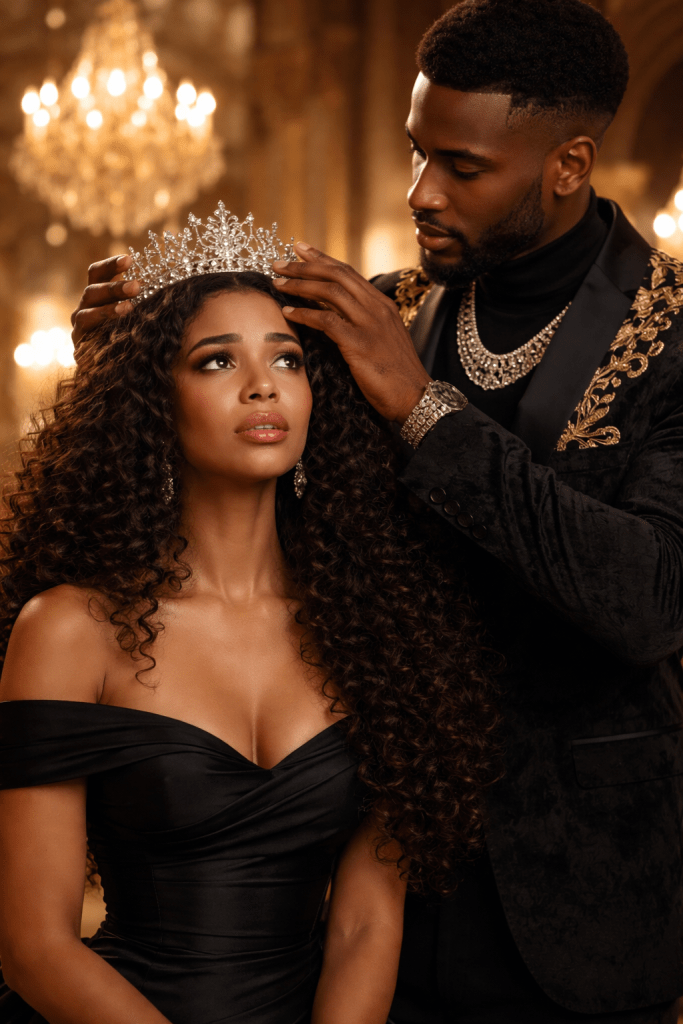
A Queen Worthy of the Crown

A queen worthy of the crown is not merely defined by outward beauty, status, or admiration from others; rather, her true identity is rooted in her relationship with God. Throughout Scripture, the imagery of crowns symbolizes honor, righteousness, and divine reward bestowed upon those who walk faithfully with the Lord. The spiritual crown is not earned through worldly prestige but through obedience, humility, and devotion to God. For the woman who desires to be a queen in God’s kingdom, the journey begins not with a man but with the King of Kings, whose guidance shapes her character and purpose.

The Bible teaches that believers will one day receive crowns as a reward for faithful living. The apostle Paul wrote that a “crown of righteousness” is laid up for those who love the appearing of Christ. This crown represents victory over sin, perseverance in faith, and steadfast commitment to God’s calling. Therefore, the woman who prepares herself spiritually is not merely preparing for earthly recognition but for eternal honor before God.

To be a queen in the kingdom of God requires a mindset that transcends cultural definitions of femininity. Society often encourages women to seek validation through relationships, social status, or physical appearance. However, a queen with God understands that her identity is secured in divine purpose. She sees herself as a daughter of the Most High, carrying dignity, wisdom, and grace in every aspect of her life.

Central to this identity is what may be called the “princess mentality.” This does not imply entitlement or arrogance, but rather a sacred awareness of one’s value before God. A princess mentality encourages a woman to treat herself with honor, protect her purity, and refuse environments that compromise her spiritual integrity. She understands that the way she carries herself reflects the kingdom she represents.

Seeking God daily is foundational to the life of a spiritual queen. Through prayer, meditation on Scripture, and worship, she cultivates intimacy with the Lord. This relationship becomes the source of her wisdom, strength, and peace. Rather than chasing worldly validation, she seeks the approval of God, knowing that divine affirmation surpasses human applause.

Fasting and prayer are also powerful disciplines that shape the heart of a queen. Biblical fasting is not simply abstaining from food but a spiritual practice that humbles the soul and sharpens spiritual sensitivity. Through fasting, a woman learns dependence upon God and gains clarity about her calling, relationships, and future direction.

Walking with God requires consistency and discipline. A queen worthy of the crown understands that spiritual maturity develops over time through obedience. She studies the Word, listens to the guidance of the Holy Spirit, and seeks wisdom from godly mentors. In doing so, she grows in character and becomes a reflection of divine wisdom.

Within God’s kingdom, queenship is closely tied to service and humility. Jesus Himself taught that greatness in the kingdom is measured by the willingness to serve others. A spiritual queen therefore uses her gifts to uplift her family, community, and church. Her influence is not domineering but nurturing, reflecting the compassionate nature of Christ.

Scripture offers a profound portrait of the virtuous woman in Proverbs 31. This woman is industrious, wise, compassionate, and deeply devoted to God. She manages her household with diligence, speaks with wisdom, and is clothed with strength and honor. Her worth is described as being far above rubies, emphasizing the rarity and value of such character.

Purity is another cornerstone of a queen’s spiritual preparation. The Bible encourages believers to honor God with their bodies and maintain holiness in their relationships. A woman committed to God guards her heart, understanding that intimacy is sacred and designed to flourish within the covenant of marriage.

Keeping oneself for marriage reflects both faith and patience. In a culture that often trivializes commitment, the woman who waits demonstrates profound trust in God’s timing. She recognizes that her body and heart are precious gifts, and she chooses to honor God by preserving them for a covenant relationship.

Waiting on God, however, does not mean living passively. During seasons of singleness, the queen continues to grow spiritually, intellectually, and emotionally. She invests in her purpose, builds meaningful relationships, and develops her talents. Her life remains fruitful even while she awaits the partner God may provide.

The Bible often emphasizes that a godly man finds a virtuous woman rather than the other way around. This principle suggests that the woman focuses primarily on becoming who God has called her to be. When the time is right, the godly king will recognize her character, faith, and dignity.

In the meantime, her devotion belongs first to the King of Kings. Christ becomes the center of her life, guiding her decisions and shaping her identity. Through this spiritual union, she experiences fulfillment that transcends romantic relationships.

Commitment to God also protects a woman from unhealthy relationships. When her standards are shaped by Scripture, she learns to discern character rather than charm. She values integrity, faith, and spiritual leadership above superficial attraction.

A queen worthy of the crown cultivates inner beauty. The apostle Peter wrote that the hidden person of the heart, characterized by a gentle and quiet spirit, is precious in the sight of God. Such beauty does not fade with time but grows stronger through faith and maturity.

Humility also defines the character of a spiritual queen. She recognizes that her gifts, beauty, and opportunities come from God’s grace. Rather than boasting, she expresses gratitude and uses her blessings to serve others.

Faith is essential during seasons of waiting and preparation. At times, a woman may feel overlooked or misunderstood, yet faith reminds her that God’s plans unfold according to divine wisdom. The crown prepared for her life will arrive in God’s perfect timing.

Ultimately, the promise of wearing a crown extends beyond earthly relationships. The faithful believer anticipates the eternal crown given by Christ to those who remain steadfast. This spiritual reward symbolizes victory, righteousness, and eternal fellowship with God.

Therefore, a queen worthy of the crown lives with purpose, purity, and devotion. She honors herself as a daughter of God, seeks the Lord through prayer and fasting, walks in wisdom, and patiently waits for God’s direction. Above all, she remains committed to the King of Kings, knowing that true royalty begins with a heart surrendered to God.

References

The Holy Bible, King James Version.
Clinton, J. R. (2012). The Making of a Leader. NavPress.
Foster, R. (2018). Celebration of Discipline: The Path to Spiritual Growth. HarperOne.
Stanley, C. (2010). How to Listen to God. Thomas Nelson.
Willard, D. (2014). The Spirit of the Disciplines. HarperOne.
The Representation of Black

The representation of Black people has never been neutral; it has been shaped by power, history, and ideology. From colonial narratives to modern media, images of Blackness have been constructed to serve political, economic, and psychological agendas rather than truth. Representation functions not merely as visibility, but as meaning-making—determining who is seen as human, valuable, intelligent, dangerous, beautiful, or disposable.

Historically, Western representation of Black people emerged through the lens of enslavement and colonial domination. Early depictions framed Africans as primitive, savage, and inferior, providing moral justification for conquest and exploitation. These narratives were not accidental but foundational to the racial hierarchy that undergirded the modern world-system (Fanon, 1952; Said, 1978).

During transatlantic slavery, Black bodies were represented as labor units rather than persons. Art, literature, and pseudoscience portrayed Black people as biologically suited for servitude, stripping them of complexity, spirituality, and intellect. These portrayals reinforced dehumanization and normalized violence against Black communities (Davis, 1981).

Biblical misrepresentation also played a role. Scripture was selectively interpreted to portray Blackness as cursed, despite no such racial designation existing in the biblical text. This theological distortion shaped Western Christian consciousness and cemented racialized representations that persist today (Haynes, 2002).

Post-emancipation representation did not immediately improve. Minstrelsy, caricatures, and early film continued to depict Black people as comic relief, criminals, or hypersexual figures. These images reassured white audiences of racial superiority while limiting Black social mobility (Bogle, 2016).

The rise of mass media in the twentieth century amplified these portrayals globally. Hollywood became a powerful tool for exporting distorted images of Black life, often disconnected from lived reality. Representation became repetition, and repetition hardened stereotype into assumed truth.

Black women faced a distinct burden within representation. Tropes such as the Jezebel, Mammy, Sapphire, and Welfare Queen confined Black womanhood to narrow, degrading roles. These images justified both sexual exploitation and social neglect while erasing vulnerability and dignity (Collins, 2000).

Black men were similarly constrained through representations of hypermasculinity, aggression, and criminality. Media narratives disproportionately linked Black male identity to violence and threat, shaping public perception and policy, including over-policing and mass incarceration (Alexander, 2010).

Representation also operates through absence. The exclusion of Black people from narratives of intellect, leadership, romance, and innocence communicates inferiority just as powerfully as negative imagery. What is not shown can be as damaging as what is shown.

In response, Black communities have consistently resisted imposed representations. From slave narratives to the Harlem Renaissance, Black creators reclaimed authorship and asserted humanity through literature, music, art, and theology. Representation became a site of survival and self-definition.

The Civil Rights and Black Power movements challenged not only legal inequality but symbolic domination. Slogans like “Black is Beautiful” directly confronted Eurocentric standards and re-centered Black aesthetics and self-worth. Representation shifted from apology to affirmation.

Contemporary media has seen increased Black visibility, yet representation remains contested. Tokenism, colorism, and commodified diversity often replace genuine inclusion. Visibility without power risks reproducing the same hierarchies under new language (hooks, 1992).

Colorism remains a critical issue within representation. Lighter skin, looser hair textures, and Eurocentric features continue to be privileged in media portrayals, reinforcing internalized anti-Blackness and stratification within Black communities (Hunter, 2007).

Social media has democratized representation, allowing Black individuals to tell their own stories outside institutional gatekeeping. However, it has also intensified surveillance, commodification, and performance pressures, complicating authenticity and agency.

Representation affects material outcomes. Studies show that media portrayals shape public opinion, educational expectations, employment opportunities, and criminal justice outcomes. Representation is not symbolic alone—it is structural (Entman & Rojecki, 2000).

Spiritual representation also matters. Depictions of God, holiness, and virtue overwhelmingly coded as white distort theological imagination and alienate Black believers. Reclaiming sacred representation is central to psychological and spiritual liberation.

Authentic representation requires more than inclusion; it demands narrative control. Who writes, directs, edits, funds, and distributes stories determines how Black life is framed and understood. Power behind the image is as important as the image itself.

True representation must reflect complexity—joy and pain, faith and doubt, intellect and emotion. Black people are not a monolith, and any representation that flattens diversity perpetuates harm, even when well-intentioned.

Decolonizing representation involves interrogating whose standards define excellence, beauty, and normalcy. It requires dismantling Eurocentric frameworks and honoring African diasporic histories, epistemologies, and aesthetics.

The future of Black representation depends on sustained cultural literacy, institutional accountability, and community self-definition. Representation must move from reaction to creation, from correction to sovereignty.

Ultimately, the representation of Black people is a moral issue. It reflects how society understands humanity itself. When Black life is represented truthfully and fully, it expands the moral imagination and affirms the dignity of all people.


References

Alexander, M. (2010). The new Jim Crow: Mass incarceration in the age of colorblindness. The New Press.

Bogle, D. (2016). Toms, coons, mulattoes, mammies, and bucks: An interpretive history of Blacks in American films. Bloomsbury.

Collins, P. H. (2000). Black feminist thought: Knowledge, consciousness, and the politics of empowerment. Routledge.

Davis, A. Y. (1981). Women, race & class. Vintage Books.

Entman, R. M., & Rojecki, A. (2000). The Black image in the white mind: Media and race in America. University of Chicago Press.

Fanon, F. (1952). Black skin, white masks. Grove Press.

Haynes, S. R. (2002). Noah’s curse: The biblical justification of American slavery. Oxford University Press.

hooks, b. (1992). Black looks: Race and representation. South End Press.

Hunter, M. (2007). The persistent problem of colorism. Sociology Compass, 1(1), 237–254.

Said, E. W. (1978). Orientalism. Pantheon Books.

Black History: Queen Charlotte of Mecklenburg-Strelitz – The First Black Queen of England.

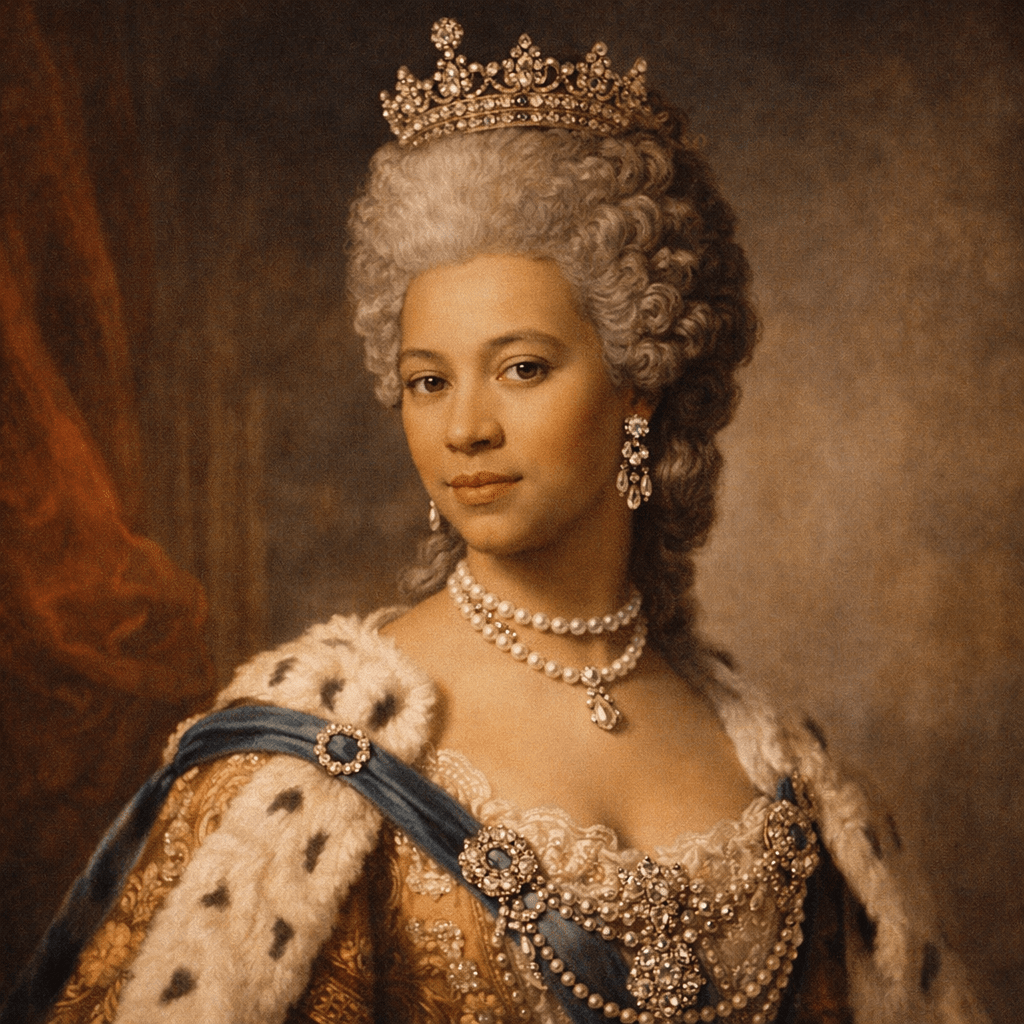
Queen Charlotte of Mecklenburg-Strelitz remains one of the most fascinating and contested figures in European royal history, particularly within discussions of Black presence in premodern Europe. While often portrayed in traditional British narratives as a conventional white European queen, growing historical scholarship and portrait analysis suggest that Charlotte may have been Britain’s first biracial monarch, with documented African ancestry embedded within her royal lineage.

Queen Charlotte of Mecklenburg-Strelitz was born in 1744 in the German duchy of Mecklenburg-Strelitz, a small but politically significant principality within the Holy Roman Empire. She married King George III of Great Britain in 1761 at the age of seventeen and immediately became Queen Consort of Great Britain and Ireland, later also Queen of Hanover.

Charlotte was the daughter of Duke Charles Louis Frederick of Mecklenburg-Strelitz and Princess Elisabeth Albertine of Saxe-Hildburghausen. Her family belonged to the minor German nobility, but through intermarriage with Iberian royal houses, her bloodline extended into Portuguese and Moorish ancestry. It is this lineage that forms the basis of arguments for her African heritage.

The strongest historical claim regarding Charlotte’s African ancestry comes from her descent from Margarita de Castro y Sousa, a noblewoman of the Portuguese royal court. Margarita herself was a descendant of King Afonso III of Portugal and Madragana, a Moorish woman described in historical documents as having African features and Muslim heritage. Through this line, Queen Charlotte inherited traceable African ancestry approximately fifteen generations back.

Portuguese royal records and genealogical studies show that Madragana was referred to as a “Moor” — a term used in medieval Europe for North African and sub-Saharan Africans, especially Muslims of African descent. This makes Charlotte genetically biracial by historical definition, even if diluted through centuries of intermarriage.

What makes Queen Charlotte particularly unique is not only her lineage, but how she was visually represented. Several contemporary portraits painted during her lifetime depict her with visibly African facial features: a broad nose, full lips, darker complexion, and tightly curled hair. Artists such as Allan Ramsay and Sir Thomas Lawrence painted Charlotte in ways that differed significantly from the idealized European beauty standards of the time.

Allan Ramsay, a known abolitionist, intentionally emphasized Charlotte’s African traits in his royal portraits. This was a political act, as Ramsay believed art could challenge white supremacist ideologies by showing Black presence in elite European spaces. His portraits stand in contrast to later revisions that whitened her appearance.

British society during the 18th century was deeply racialized, yet paradoxically fascinated by Blackness. While enslaved Africans existed in England, the presence of a biracial queen was never publicly acknowledged or celebrated. Instead, her African ancestry was quietly ignored, softened, or erased in official royal discourse.

Queen Charlotte herself never publicly claimed African identity, which would have been politically impossible in a monarchy built on white European supremacy. Her legitimacy depended on assimilation, not racial visibility. Thus, her Black ancestry existed as an unspoken truth hidden within aristocratic genealogy.

Despite this silence, many contemporaries commented on her appearance. Some British courtiers privately referred to her as having a “mulatto face,” while foreign diplomats described her features as “unusual for a German princess.” These coded racial descriptions reveal that her difference was noticed, even if never openly discussed.

Charlotte gave birth to fifteen children, making her the matriarch of modern European royal bloodlines. Through her descendants, African ancestry entered nearly every royal house in Europe, including the current British monarchy. This fact alone radically challenges the myth of racial purity in European royalty.

Her influence extended beyond race into culture, education, and abolitionist politics. She was a patron of Black composers, supported the education of poor children, and advocated for anti-slavery reforms through private influence on King George III.

Queen Charlotte’s story disrupts the dominant narrative that Black history exists only in Africa or the Americas. Her existence proves that Africans and their descendants have always been embedded in European power structures, even at the highest levels of monarchy.

Modern historians increasingly recognize Charlotte as a symbol of erased Black presence in European history. Her whitening in textbooks and portraits reflects a broader pattern of historical revisionism designed to maintain white exclusivity in narratives of power.

The popular television series Bridgerton did not invent the idea of a Black Queen Charlotte — it revived a truth long buried by racial politics. While dramatized, the concept is grounded in legitimate historical research.

Queen Charlotte stands today as a powerful reminder that Black history is not marginal, peripheral, or modern. It is ancient, royal, and deeply woven into the foundations of Western civilization itself.


References

Adams, G. (2019). The Queen’s Hidden Heritage: African Ancestry in the British Royal Family. Journal of Black Studies, 50(3), 234–251.

Ramsay, A. (1762–1780). Royal Portraits of Queen Charlotte. Royal Collection Trust.

Oliveira, M. (2008). Moorish Lineages in the Portuguese Royal House. Lisbon Historical Review.

Fryer, P. (1984). Staying Power: The History of Black People in Britain. Pluto Press.

Jeffries, S. (2018). “Was Queen Charlotte Black? The Real History Behind Bridgerton.” The Guardian.

BBC History. (2020). Queen Charlotte: Britain’s First Black Queen? British Broadcasting Corporation.

Royal Collection Trust. (2021). Queen Charlotte of Mecklenburg-Strelitz: Portraits and Legacy.

Black Royalty Series: King Letsie III of Lesotho – Monarch, Diplomat, and National Figure

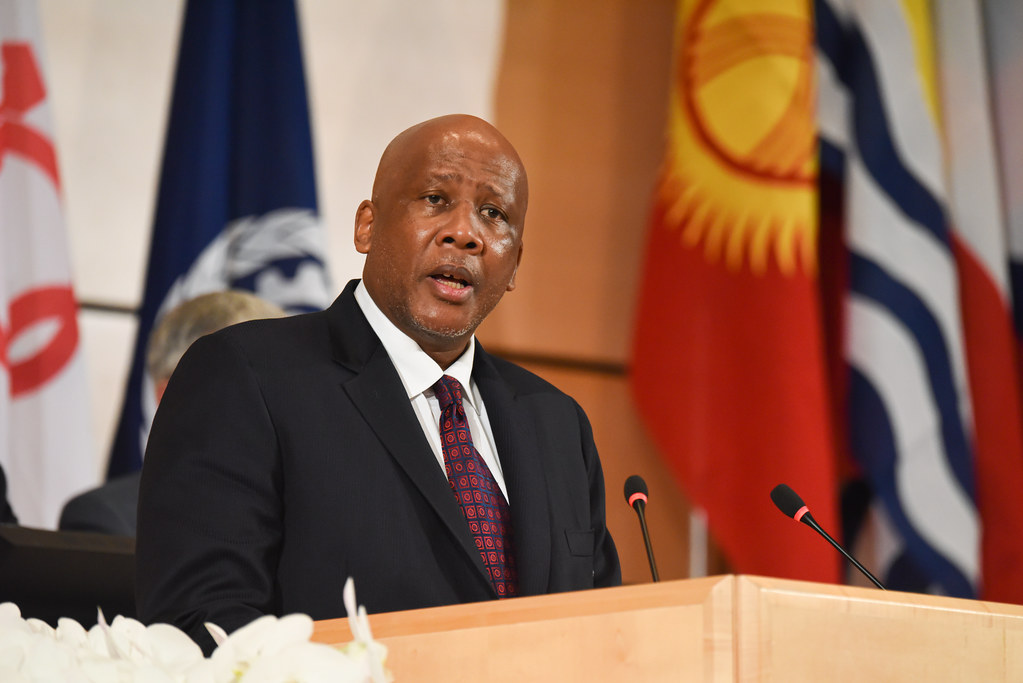
This photograph is the property of its respective owner. No copyright infringement intended.

King Letsie III is the current monarch of the Kingdom of Lesotho, a small, landlocked nation completely surrounded by South Africa. Born on July 17, 1963, as David Mohato Bereng Seeiso, he became a central figure in Lesotho’s constitutional monarchy, balancing ceremonial duties with political influence and international diplomacy.

Lesotho, historically known as Basutoland under colonial rule, gained independence from Britain in 1966. The nation is largely mountainous, with a population that maintains strong cultural traditions centered around the Basotho ethnic group. The monarchy in Lesotho plays a symbolic and unifying role, representing national identity while functioning within the framework of a constitutional democracy.

King Letsie III is the eldest son of King Moshoeshoe II and Queen ‘Mamohato Bereng Seeiso. His father, Moshoeshoe II, was a founding figure of Lesotho’s monarchy and a symbol of continuity during periods of political instability. King Letsie received his education in Lesotho, South Africa, and the United Kingdom, including legal and political studies that prepared him for both ceremonial and practical leadership roles.

He first ascended the throne on November 12, 1990, after King Moshoeshoe II was exiled amid political conflict. Letsie’s early reign coincided with a period of tension between the monarchy and elected governments, reflecting Lesotho’s struggle to balance traditional authority with democratic institutions. His father was later reinstated in 1995, after which Letsie abdicated, only to resume kingship following his father’s death in 1996.

As King, Letsie III serves primarily as a ceremonial head of state but also wields influence through moral authority and as a symbol of unity for the Basotho people. He participates in state functions, diplomatic engagements, and national ceremonies, promoting cultural heritage and national cohesion.

King Letsie III has been involved in various initiatives aimed at development and social welfare in Lesotho. He is particularly committed to public health, education, and HIV/AIDS awareness, aligning with organizations such as Sentebale, co-founded by his brother, Prince Seeiso, and Prince Harry, to support children affected by HIV/AIDS in southern Africa.

His monarchy emphasizes the integration of traditional leadership into modern governance. Lesotho’s chiefs and royal family members play a mediating role between communities and the state, supporting conflict resolution, land management, and cultural preservation. King Letsie is central to these efforts, leveraging his authority to stabilize governance and foster national dialogue.

The king is married to Queen ‘Masenate Mohato Seeiso, and together they have children, including Prince Lerotholi, who is in line for the throne. His family life remains largely private but is respected as a model of royal duty and cultural stewardship within Lesotho.

Internationally, King Letsie has cultivated diplomatic relationships with neighboring South Africa and other global partners. He participates in Commonwealth events, African Union engagements, and international forums where Lesotho’s development challenges and opportunities are highlighted.

This photograph is the property of its respective owner. No copyright infringement intended.

King Letsie III has received several honors and awards recognizing his service and leadership. These include appointments within the Orders of Lesotho, Commonwealth honors, and recognition for his contributions to HIV/AIDS advocacy and humanitarian initiatives across southern Africa.

Under his reign, Lesotho has maintained relative political stability compared to earlier decades marked by coups, civil unrest, and tensions between military and civilian governments. The king’s presence as a symbolic authority has often contributed to negotiation and conflict mediation, reinforcing social cohesion.

He actively promotes Lesotho’s culture and heritage, from traditional Basotho dress to local customs, music, and festivals. By elevating cultural identity, King Letsie strengthens national pride and counters cultural erasure in the region dominated by South Africa.

King Letsie III also serves as a patron for environmental initiatives and sustainable development in Lesotho, emphasizing protection of the highland ecosystem, water resources, and agriculture. His advocacy supports both ecological preservation and local livelihoods in rural communities.

His leadership is characterized by a blend of ceremonial duty, cultural representation, and modern engagement, highlighting the evolving role of African monarchs in the 21st century. King Letsie III represents continuity, diplomacy, and moral authority for Lesotho while fostering the international visibility of his nation.


References

Royal Household of Lesotho. (n.d.). His Majesty King Letsie III. Government of Lesotho. Retrieved from https://www.gov.ls/royal-family

BBC News. (2016). King Letsie III: Lesotho’s Constitutional Monarch. BBC. Retrieved from https://www.bbc.com/news/world-africa-37391177

Sentebale. (2023). Prince Seeiso and the Royal Family of Lesotho. Sentebale. Retrieved from https://www.sentebale.org

Peters, J. (2020). Modern African Monarchies: Tradition and Transformation. Cambridge University Press.

Mokoena, T. (2018). African Royals in the 21st Century: Leadership and Philanthropy. Johannesburg: South African Historical Press.

Harris, M. (2019). Royal Leadership in Southern Africa: Authority, Culture, and Social Impact. African Affairs, 118(473), 112–131.

The Kingdoms of This World

The phrase “the kingdoms of this world” evokes both a theological and historical imagination, referring not only to political empires but to systems of power, culture, and identity that shape human civilization. In biblical literature, kingdoms are not merely geographic territories; they are moral, spiritual, and ideological orders that reflect humanity’s relationship to God, authority, and justice. Within this framework, Black kingdoms—both biblical and African—occupy a significant but often marginalized place in world history and sacred narrative.

The Bible presents Africa and African-descended peoples as foundational to early civilization. From the genealogies in Genesis to the empires that shaped the ancient Near East, Black kingdoms appear repeatedly as centers of power, wisdom, and divine interaction. Yet Eurocentric interpretations have historically minimized or obscured these realities, reframing biblical history through a Western racial lens.

One of the earliest Black kingdoms mentioned in the Bible is Cush, identified with Nubia and ancient Sudan. In Genesis 10, Cush is named as the son of Ham and the father of Nimrod, described as the first mighty ruler on earth. Cush is associated with military strength, wealth, and early state formation, positioning Africa at the very origin of post-Flood civilization.

Ethiopia, often synonymous with Cush in biblical texts, appears frequently in the Old Testament as a respected and powerful nation. Psalm 68:31 famously declares, “Ethiopia shall soon stretch out her hands unto God,” symbolizing divine recognition and spiritual significance. Ethiopia was not portrayed as peripheral but as a kingdom with diplomatic relations, armies, and religious authority.

Another major Black biblical kingdom is Egypt, arguably the most influential ancient civilization in human history. Egypt dominates the biblical narrative from Genesis through Exodus, serving as both refuge and oppressor. Abraham sojourned in Egypt, Joseph ruled in Egypt, and Moses was educated in the royal court of Egypt. Egypt is depicted as technologically advanced, philosophically complex, and politically dominant.

The Exodus story itself situates Egypt as the archetype of imperial power. Pharaoh represents not merely a political ruler but a symbolic embodiment of worldly authority opposing divine liberation. Yet Egypt’s greatness is never denied; it is portrayed as the supreme empire of its time, ruling through knowledge, architecture, engineering, and spiritual institutions.

Another significant biblical kingdom is Sheba, commonly associated with regions of Ethiopia, Yemen, and the Horn of Africa. The Queen of Sheba’s visit to King Solomon demonstrates Africa’s role as a source of wealth, wisdom, and international diplomacy. She is described as arriving with gold, spices, and intellectual curiosity, challenging and affirming Solomon’s wisdom.

Sheba’s appearance disrupts Western assumptions about ancient power. The Queen is not subordinate but sovereign, not exotic but intellectual, not marginal but central to the global political network of the ancient world. Her kingdom represents Africa as an epistemic authority, a producer of knowledge and culture.

Libya, known in biblical texts as Put, is another African kingdom involved in ancient warfare and alliances. Put appears in the prophetic books as a military power aligned with Egypt, indicating Africa’s geopolitical influence in the ancient Mediterranean world. These kingdoms were not isolated but deeply integrated into global history.

Beyond the Bible, African history reveals vast civilizations that rivaled and surpassed European empires in wealth, organization, and intellectual development. One of the most famous is the Mali Empire, which flourished in West Africa between the 13th and 16th centuries. Mali controlled trans-Saharan trade routes and became one of the richest empires in human history.

Mansa Musa, the most renowned ruler of Mali, is widely considered the wealthiest individual who ever lived. His pilgrimage to Mecca in 1324 reshaped global economies, distributing so much gold that it caused inflation across North Africa and the Middle East. Mali was not only wealthy but intellectually dominant, with universities in Timbuktu that rivaled medieval European institutions.

The Mali Empire also functioned as a center of Islamic scholarship, law, astronomy, and medicine. Libraries housed thousands of manuscripts, and scholars from across the Islamic world traveled to study there. This directly contradicts colonial narratives that portray Africa as intellectually barren before European contact.

Another major African kingdom was Great Zimbabwe, which flourished between the 11th and 15th centuries in Southern Africa. Its massive stone architecture, complex urban planning, and extensive trade networks demonstrate advanced engineering and political organization. European colonizers initially refused to believe Africans built it, attributing it falsely to Phoenicians or Arabs.

Great Zimbabwe controlled trade routes linking Africa to China, Persia, and India, exporting gold, ivory, and copper. Its very existence undermines the myth that Africa lacked civilization, revealing instead a long tradition of architectural mastery and global economic participation.

These African kingdoms parallel biblical themes of rise and fall. Like Egypt, Cush, and Sheba, Mali and Zimbabwe illustrate how kingdoms operate within divine cycles of power, wealth, justice, and decline. Scripture repeatedly teaches that no empire is permanent and that human authority is ultimately limited.

In the New Testament, Jesus declares, “My kingdom is not of this world,” distinguishing divine sovereignty from worldly empires. Yet Revelation speaks of “the kingdoms of this world” becoming the kingdoms of God, implying that all political systems are subject to spiritual judgment and transformation.

This theological framework invites a reinterpretation of Black history. Black kingdoms were not accidents of geography but expressions of divine order within human civilization. Their suppression through slavery and colonialism represents not natural decline but violent interruption of historical trajectories.

Colonialism functioned as a global reconfiguration of kingdoms, replacing African and Indigenous sovereignty with European imperial systems. These new “kingdoms of this world” restructured knowledge, race, labor, and power, redefining humanity itself through hierarchies of domination.

The erasure of Black kingdoms from mainstream history is therefore epistemological, not accidental. It reflects what scholars call “colonial knowledge production,” where history is written to legitimize conquest. Reclaiming Black kingdoms becomes an act of intellectual and spiritual restoration.

The Bible itself offers a counter-narrative. It consistently situates Africa within sacred history, not as an afterthought but as a foundational space of civilization, prophecy, and divine interaction. Black kingdoms are not footnotes; they are pillars.

Ultimately, “the kingdoms of this world” reveal that power is cyclical, meaning is political, and history is contested. Black kingdoms—biblical and African—demonstrate that Africa has always been central to global civilization, not marginal to it.

To study these kingdoms is not merely to recover lost history but to challenge the philosophical foundations of modernity itself. Black kingdoms remind the world that civilization did not begin in Europe, and that the future of humanity cannot be understood without Africa at its center.


References

Bible. (2011). King James Version. Hendrickson Publishers.

Diop, C. A. (1974). The African origin of civilization: Myth or reality. Lawrence Hill Books.

Fanon, F. (1967). Black skin, white masks. Grove Press.

Gordon, L. R. (2008). An introduction to Africana philosophy. Cambridge University Press.

Ki-Zerbo, J. (1997). General history of Africa, Vol. I: Methodology and African prehistory. UNESCO.

Levtzion, N., & Hopkins, J. F. P. (2000). Corpus of early Arabic sources for West African history. Markus Wiener.

Mudimbe, V. Y. (1988). The invention of Africa: Gnosis, philosophy, and the order of knowledge. Indiana University Press.

Shillington, K. (2018). History of Africa (4th ed.). Palgrave Macmillan.

Toby Green, T. (2019). A fistful of shells: West Africa from the rise of the slave trade to the age of revolution. University of Chicago Press.

Wynter, S. (2003). Unsettling the coloniality of being/power/truth/freedom. The New Centennial Review, 3(3), 257–337.

Chosen Royalty: Marriage for the Sons and Daughters of Zion (The Marriage Series)

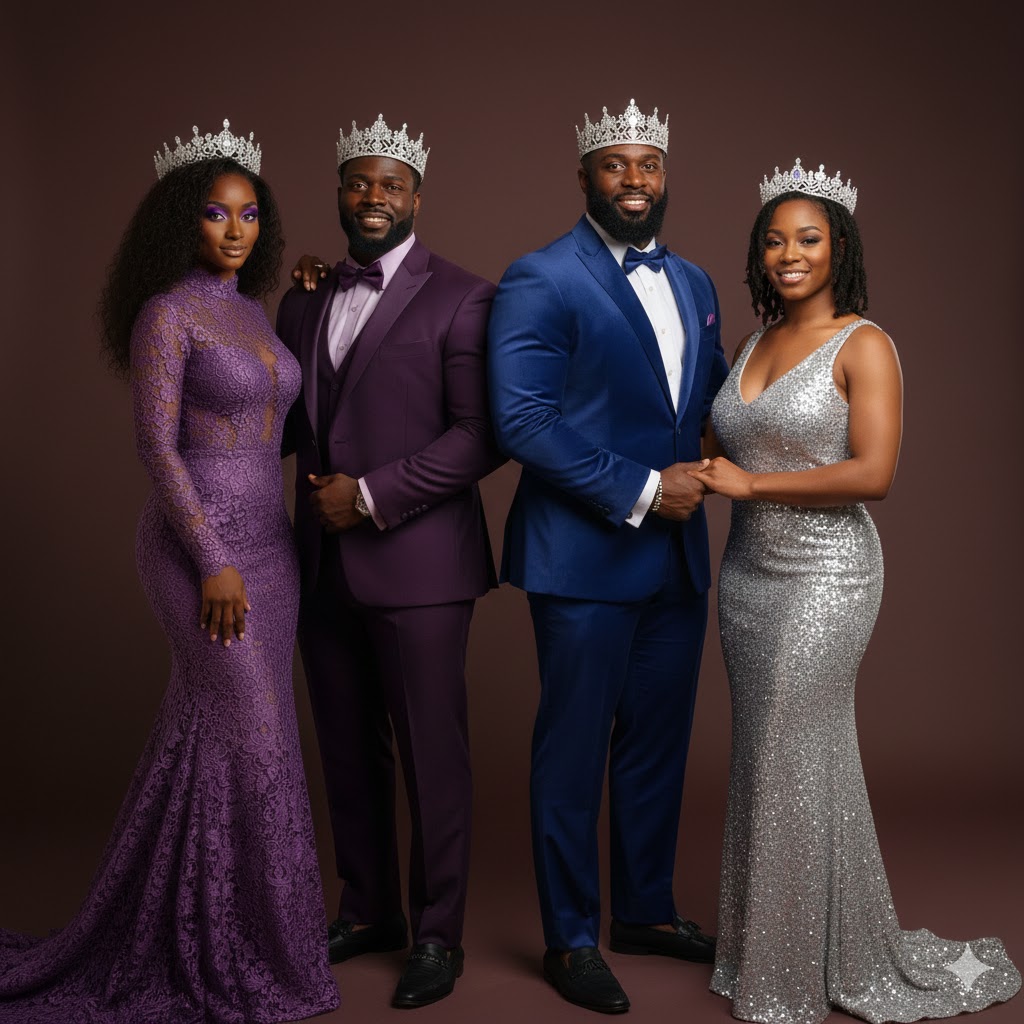
Marriage, in the eyes of the Most High, is not merely a social custom or cultural expectation. It is a divine covenant, a sacred union designed to reflect His glory, His order, and His love. For the sons and daughters of Zion, marriage carries an even deeper significance: it is a representation of covenant identity, spiritual inheritance, and kingdom legacy. You are not ordinary people. You are chosen vessels, called to manifest God’s intention for love, leadership, unity, and righteousness on the earth.

A royal marriage begins with knowing who you are. Before a man becomes a husband and before a woman becomes a wife, both must know their identity as God’s elect. Scripture declares, “Ye are a chosen generation, a royal priesthood, an holy nation, a peculiar people” (1 Peter 2:9, KJV). When you understand that you come from royalty, you will not settle for broken love, counterfeit partnerships, or relationships that compromise your calling. Royalty requires discernment.

For the daughters of Zion, preparing for marriage does not begin with finding a man but with finding purpose. A queen develops inward beauty—wisdom, modesty, strength, and virtue—long before she wears a crown. Like the Proverbs 31 woman, she is clothed with strength and honor, and she opens her mouth with wisdom (Proverbs 31:25–26). She knows that her value is spiritual before it is physical. Her worth is not in curves, complexion, or outward adornment, but in her God-given identity.

For the sons of Zion, preparing for marriage begins with learning to lead under God’s authority. A king cannot love his queen properly until he learns to submit to the King of Kings. Scripture instructs husbands to love their wives “even as Christ also loved the church, and gave himself for it” (Ephesians 5:25, KJV). This is sacrificial love—protective, patient, righteous, and accountable. A royal husband is not a tyrant; he is a shepherd, a covering, and a pillar.

When both king and queen understand God’s order, marriage becomes a partnership of purpose. The Most High never intended for men and women to compete with one another. Instead, He designed them to complement each other—both bearing divine strength, both walking in unity. “Two are better than one; because they have a good reward for their labour” (Ecclesiastes 4:9, KJV). Royal marriages are not accidental; they are intentional.

Communication is one of the foundations of a royal covenant. The tongue can build or destroy a household. Scripture teaches, “A soft answer turneth away wrath: but grievous words stir up anger” (Proverbs 15:1, KJV). Kings and queens must learn the discipline of loving speech—words that heal, uplift, and guide. A royal home is governed by peace, not chaos.

Purity is another pillar. In a world saturated with lust, temptation, and impulsive desires, the Most High calls His people to holiness. “For this is the will of God, even your sanctification, that ye should abstain from fornication” (1 Thessalonians 4:3, KJV). Purity protects the mind. Purity guards the heart. Purity prepares the soul to love without bondage or brokenness.

Forgiveness is the oil that keeps the royal covenant from growing brittle. No marriage is perfect. No partner is flawless. Yet the Most High commands us to forgive one another, even as He forgave us (Colossians 3:13). A king forgives. A queen forgives. They choose restoration over resentment, healing over distance, unity over pride.

A royal marriage also requires spiritual warfare. The enemy hates godly unions because they produce righteous generations. Therefore, couples must pray together, read scripture together, and stand in agreement. “When the enemy shall come in like a flood, the Spirit of the LORD shall lift up a standard against him” (Isaiah 59:19, KJV). A praying marriage is a powerful marriage.

Accountability is the shield of royalty. Wise couples surround themselves with elders, mentors, or spiritual leadership who can correct and counsel them. “Where no counsel is, the people fall” (Proverbs 11:14, KJV). A royal house is not built alone—it is built within a community of righteousness.

Financial stewardship is also part of royal order. Money is one of the top causes of marital conflict, but God’s wisdom provides clarity. “Be thou diligent to know the state of thy flocks” (Proverbs 27:23, KJV). Kings and queens budget together, plan together, save together, and build generational wealth—not just for themselves but for their children.

Speaking of children, they are the arrows of the kingdom. “Lo, children are an heritage of the LORD” (Psalm 127:3, KJV). A royal marriage understands that parenting is part of the covenant. The spiritual, emotional, and educational well-being of the next generation is a divine responsibility. Sons must be trained as kings. Daughters must be nurtured as queens.

Love in a royal marriage must be active, not passive. It is patient, kind, stable, and enduring (1 Corinthians 13:4–7). It is not dependent on feelings alone but on commitment and covenant. Real love works. Real love forgives. Real love stays.

Humility is the crown jewel of a godly union. Pride destroys, but humility restores. Scripture says, “With the lowly is wisdom” (Proverbs 11:2, KJV). Kings lead with humility. Queens carry themselves with grace. Humility keeps the marriage teachable and flexible.

Submission—often misunderstood—is a two-way principle rooted in respect and order. Wives are called to submit to their husbands as unto the Lord (Ephesians 5:22), and husbands are commanded to love sacrificially. Submission is not domination; it is alignment with God’s structure for protection and harmony.

A royal marriage also requires emotional maturity. You cannot bring unresolved wounds into a covenant and expect peace. Healing—inner, spiritual, and emotional—is essential. “He healeth the broken in heart” (Psalm 147:3, KJV). The Most High restores what trauma has stolen.

Celebration is another key practice. Kings and queens honor each other. They affirm each other. They celebrate each other’s achievements, strengths, and growth. Royal marriages thrive in an atmosphere of appreciation.

Service is the heart of Christ-like love. Yeshua taught that the greatest among us is the servant (Matthew 23:11). In a royal marriage, each partner serves the other—not out of obligation but out of devotion.

Finally, the covenant stands unshaken. A royal marriage is not built on convenience but on divine purpose. It is a representation of God’s eternal love for His people—a love that endures, protects, and restores. For the sons and daughters of Zion, marriage is more than companionship. It is a kingdom assignment.

Chosen Royalty means you marry with vision. You love with intention. You build with faith. You walk as living examples of God’s order and righteousness. Your union becomes a testimony, a legacy, and a royal lineage that reflects the glory of the Most High.


References (KJV):
1 Peter 2:9; Proverbs 31:25–26; Ephesians 5:25; Ecclesiastes 4:9; Proverbs 15:1; 1 Thessalonians 4:3; Colossians 3:13; Isaiah 59:19; Proverbs 11:14; Proverbs 27:23; Psalm 127:3; 1 Corinthians 13:4–7; Proverbs 11:2; Ephesians 5:22; Psalm 147:3; Matthew 23:11.

The Lost Kings and Queens: Reclaiming African Royal Lineage in the Diaspora.

“A people without the knowledge of their past history, origin, and culture is like a tree without roots.” — Marcus Garvey


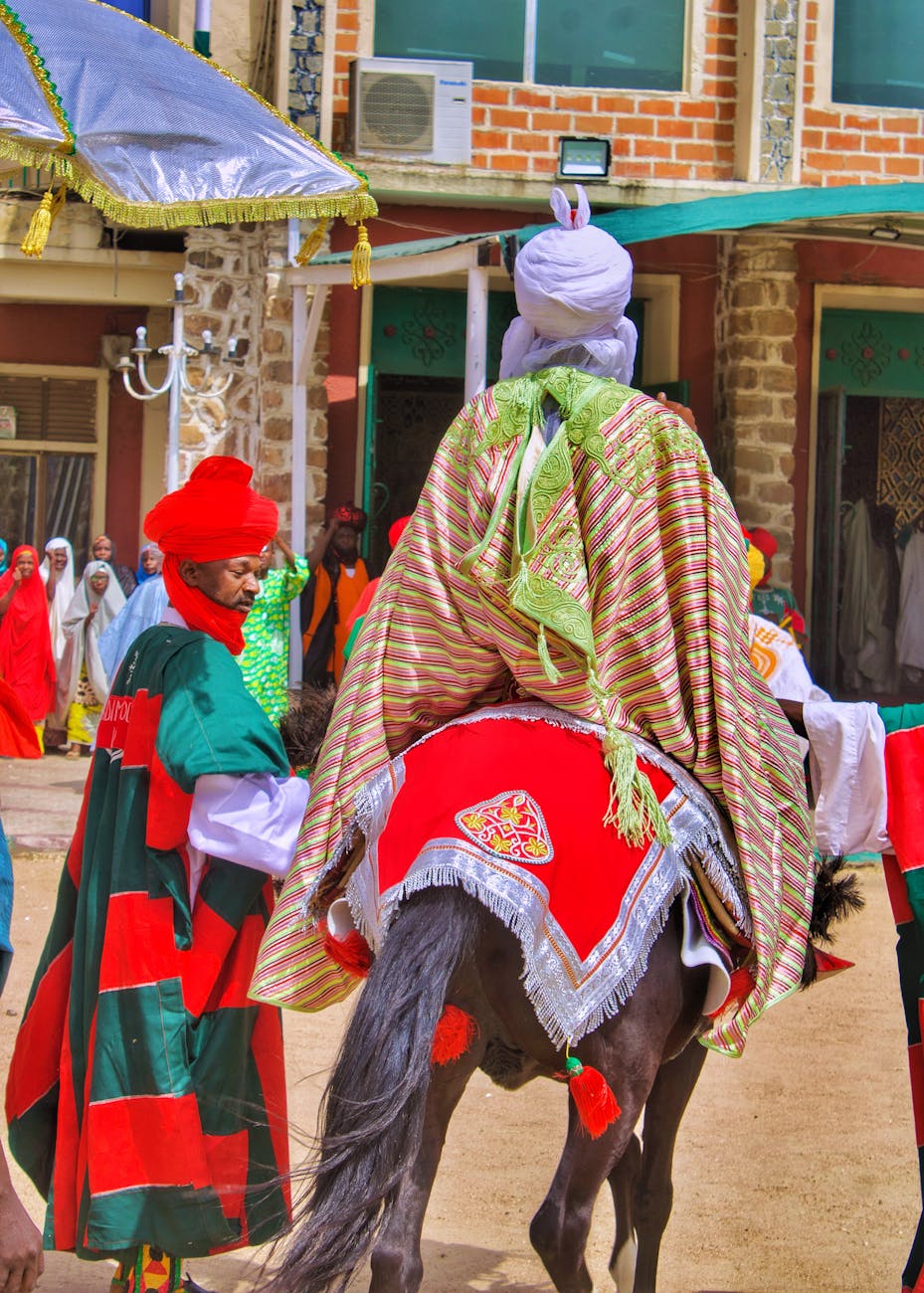
Photo by Daggash Farhan on Pexels.com

African history is rich with kingdoms, dynasties, and monarchies that predate many Western empires. Yet much of this history has been obscured, diminished, or erased due to the transatlantic slave trade, colonization, and the cultural manipulation of dominant powers. The “lost kings and queens” of Africa represent not only individuals but entire lineages of leadership, wisdom, and cultural stewardship. These rulers were custodians of knowledge, justice, and spiritual guidance, linking African peoples to God’s covenant and the biblical narrative of the twelve tribes of Israel. Reclaiming this royal lineage is a task of historical restoration, genealogical tracing, and spiritual awakening for the African diaspora.


Historical Context and Lost Lineages

The height of African civilization between 1000 BCE and 1600 CE produced kingdoms renowned for governance, culture, and wealth. Among these were the Kingdoms of Kush, Axum, Mali, Songhai, Benin, and Great Zimbabwe. Monarchs like Mansa Musa of Mali (14th century) and Queen Amanirenas of Kush exemplify the sophistication and authority of African royalty. The loss of these royal lineages was accelerated by European colonial conquest, internal warfare, and the forced displacement of Africans during the slave trade. These events fractured communities and obscured connections to ancestral leadership, creating a cultural amnesia that continues to affect African descendants globally.


Biblical Connections: The Kingdom of God and the 12 Tribes

The Bible provides a spiritual framework for understanding African royalty. The twelve tribes of Israel, as described in Genesis and the historical books of the KJV Bible, were originally led by patriarchs who exemplified godly leadership, wisdom, and covenantal responsibility. Scholars argue that Africans, particularly through the lineage of Cush and Ham (Genesis 10:6–8, KJV), share a spiritual and genealogical connection to these tribes. The “fall from grace” described in scripture—through disobedience, idolatry, and exile—mirrors the historical subjugation of African kingdoms, where colonial and imperial forces usurped authority and disrupted the governance and culture of African peoples.


The Original Black Royalty

Original African royalty was both political and spiritual. Kings and queens were custodians of law, morality, and religious practice. Pharaohs of Kemet, the monarchs of Kush, and the emperors of Axum exercised centralized authority while upholding societal and spiritual order. These leaders were often scholars, priests, and strategists, ensuring the prosperity and continuity of their people. Their legacy is reflected in architecture, oral traditions, and historical texts, but centuries of suppression have obscured their stories. Today, the remnants of these lineages are visible in royal families in Ethiopia, Morocco, and Nigeria, as well as through the cultural traditions that survived the diaspora.


The African Royal Diaspora

The African royal diaspora refers to descendants of African nobility and leadership displaced through slavery and colonialism. These “lost kings and queens” include both documented heirs and those whose genealogical ties were erased by systemic oppression. The diaspora’s disconnection from ancestral authority contributed to the cultural, social, and psychological challenges faced by African descendants. Reclaiming this royal identity involves education, genealogical research, and cultural restoration. Understanding one’s heritage is crucial for restoring dignity and spiritual continuity.


Reclaiming Royal Lineage

Reclamation of African royal lineage involves multiple strategies:

  1. Genealogical Research: Tracing family histories through oral tradition, DNA analysis (including Y-chromosome haplogroups like E1B1A), and archival records.
  2. Cultural Revival: Reviving languages, rituals, and governance practices that honor ancestral traditions.
  3. Education and Scholarship: Promoting African-centered curricula and research that document the accomplishments of African royalty and leadership.
  4. Spiritual Reconnection: Integrating biblical principles and ancestral teachings to restore the moral and spiritual authority once exercised by African monarchs.

Modern-Day Examples of African Royalty

Several modern African monarchs and traditional leaders continue to embody the legacy of African kingship:

  • King Mohammed VI of Morocco maintains the Alaouite dynasty, a lineage dating back to the 17th century.
  • Emperor of Ethiopia, Haile Selassie I (recently deceased) symbolized the Solomonic dynasty, tracing descent from King Solomon and the Queen of Sheba.
  • Oba of Benin, Ewuare II preserves the heritage of the Benin Kingdom and cultural traditions of governance and spirituality.
    These figures exemplify continuity, resilience, and the living presence of African royalty.

Evidence and Sources

Historical, archaeological, and genealogical evidence supports the existence and continuity of African royalty. Primary sources include inscriptions, royal decrees, architecture, oral histories, and lineage records maintained by traditional authorities. Scholarly works such as Ivan Van Sertima’s They Came Before Columbus and Cheikh Anta Diop’s The African Origin of Civilization provide detailed analysis of African monarchies and their contributions to global civilization. Combined with biblical texts (KJV) referencing Cush, Ham, and the covenantal tribes, these sources form a robust foundation for understanding African royal lineage.


Conclusion

The lost kings and queens of Africa represent a lineage of governance, spirituality, and cultural mastery that has been obscured by slavery, colonization, and systemic oppression. Reclaiming this heritage requires historical scholarship, genealogical research, cultural restoration, and spiritual reconnection. For the African diaspora, rediscovering royal ancestry is not merely an academic exercise—it is an act of identity reclamation, empowerment, and continuity with God’s covenantal people as described in the scriptures. As Marcus Garvey reminds us, knowledge of one’s roots is essential for strength, purpose, and collective destiny. By restoring awareness of African kings and queens, we reclaim a narrative of dignity, wisdom, and divine legacy that has endured despite centuries of erasure.


References

  • Diop, C. A. (1974). The African Origin of Civilization: Myth or Reality. Chicago Review Press.
  • Franklin, J. H., & Moss, A. A. (2000). From Slavery to Freedom: A History of African Americans (8th ed.). McGraw-Hill.
  • Van Sertima, I. (1976). They Came Before Columbus: The African Presence in Ancient America. Random House.
  • Garvey, M. (1920). Philosophy and Opinions of Marcus Garvey. Universal Negro Improvement Association.
  • The Holy Bible, King James Version.
  • Egharevba, J. U. (1968). A Short History of Benin. Ibadan University Press.
  • Shillington, K. (2005). History of Africa (2nd ed.). Palgrave Macmillan.