Tag Archives: jesus

The Dating Playbook: How to Give Your Relationship to God.

Dating in today’s world often emphasizes immediate gratification, emotional intensity, and physical intimacy before spiritual alignment. For Christians who desire to honor God in relationships, it is essential to approach dating with intentionality, prayer, and a commitment to biblical principles. This guide presents a framework for giving your relationship to God, grounded in the King James Bible, emphasizing purity, patience, and partnership.

1. Begin with God at the Center

A God-centered relationship starts with an individual’s personal walk with God. Proverbs 3:5–6 (KJV) advises: “Trust in the Lord with all thine heart; and lean not unto thine own understanding. In all thy ways acknowledge him, and he shall direct thy paths.” Before seeking a partner, cultivate intimacy with God through prayer, scripture, and obedience. A relationship guided by divine wisdom will reflect His character.

2. Pursue Spiritual Alignment

It is crucial for both partners to share a commitment to Christ. 2 Corinthians 6:14 (KJV) warns, “Be ye not unequally yoked together with unbelievers: for what fellowship hath righteousness with unrighteousness?” Spiritual alignment ensures that both individuals are walking in similar moral and ethical paths, reducing friction and providing a foundation for spiritual growth together.

3. Establish Boundaries Early

Physical intimacy should be reserved for marriage. Hebrews 13:4 (KJV) teaches, “Marriage is honourable in all, and the bed undefiled: but whoremongers and adulterers God will judge.” Waiting until marriage preserves emotional and spiritual integrity. Both men and women must understand that God values purity, and abstinence strengthens trust, respect, and long-term relational stability.

4. Communicate Intentions

Honesty about expectations is crucial. Clear communication prevents misunderstandings and fosters mutual respect. Song of Solomon 2:7 (KJV) advises, “I charge you, O ye daughters of Jerusalem, by the roes, and by the hinds of the field, that ye stir not up, nor awake my love, till he please.” In dating, this principle translates to patience and avoiding premature emotional or physical entanglements.

5. Pray Together and Individually

Prayer is the foundation of discernment. Pray for wisdom, guidance, and protection over the relationship. James 1:5 (KJV) promises, “If any of you lack wisdom, let him ask of God, that giveth to all men liberally, and upbraideth not; and it shall be given him.” Couples should also pray individually to ensure alignment with God’s will and maintain personal spiritual growth.

6. Wait on God to Reveal His Choice

Waiting on God requires trust and patience. Psalm 27:14 (KJV) exhorts, “Wait on the Lord: be of good courage, and he shall strengthen thine heart: wait, I say, on the Lord.” Rather than rushing into a relationship based on emotion or societal pressure, trust that God will orchestrate the timing and person appropriate for your life.

7. Evaluate Character Over Chemistry

Chemistry alone does not sustain a relationship. Focus on the spiritual and moral character of your potential partner. Galatians 5:22–23 (KJV) lists the fruits of the Spirit—love, joy, peace, longsuffering, gentleness, goodness, faith, meekness, temperance—as key indicators of a godly person. A partner who exhibits these traits is more likely to foster a lasting, God-honoring union.

8. Practice Respect and Accountability

Accountability strengthens relationships. Proverbs 27:17 (KJV) teaches, “Iron sharpeneth iron; so a man sharpeneth the countenance of his friend.” Mutual accountability, both to God and to mentors, ensures that the relationship stays aligned with spiritual principles and resists temptation.

9. Cultivate Emotional and Intellectual Connection

A relationship should include shared values, goals, and interests beyond attraction. Proverbs 18:24 (KJV) notes, “A man that hath friends must shew himself friendly: and there is a friend that sticketh closer than a brother.” Emotional intimacy without physical compromise allows couples to develop trust, communication skills, and partnership readiness.

10. Prepare for Marriage, Not Just Dating

Dating in a God-honoring way is preparation for marriage. Ephesians 5:25 (KJV) instructs, “Husbands, love your wives, even as Christ also loved the church, and gave himself for it.” Men and women should approach dating with the mindset of nurturing a covenantal relationship that mirrors Christ’s love, sacrifice, and faithfulness.

11. Guard Against Impatience

Societal pressures often push individuals to rush into intimacy or commitment. Ecclesiastes 3:1 (KJV) reminds us, “To everything there is a season, and a time to every purpose under the heaven.” Recognize that God’s timing is perfect, and impatience can lead to choices that compromise spiritual and emotional integrity.

12. Seek Mentorship and Counsel

Proverbs 15:22 (KJV) states, “Without counsel purposes are disappointed: but in the multitude of counsellors they are established.” Mentors, church leaders, and spiritually mature friends can provide guidance, perspective, and support as couples navigate early dating stages.

13. Serve Together

Shared service reinforces spiritual compatibility. Acts of ministry, charity, or community engagement reveal character and prioritize God’s mission over personal gain. Matthew 20:26–28 (KJV) emphasizes servant leadership, which should be mirrored in relational dynamics.

14. Address Conflict Biblically

Disagreements are inevitable. Matthew 18:15 (KJV) instructs, “Moreover if thy brother shall trespass against thee, go and tell him his fault between thee and him alone: if he shall hear thee, thou hast gained thy brother.” Conflict resolution in dating should be guided by honesty, humility, and biblical principles, not pride or emotion.

15. Maintain Personal Integrity

Even in a committed relationship, maintain personal values and spiritual disciplines. 1 Corinthians 10:31 (KJV) advises, “Whether therefore ye eat, or drink, or whatsoever ye do, do all to the glory of God.” Your behavior, decisions, and boundaries reflect your devotion and respect for God.

16. Discern God’s Leading Through Signs and Peace

God often provides confirmation through circumstances, spiritual conviction, and inner peace. Colossians 3:15 (KJV) teaches, “And let the peace of God rule in your hearts, to the which also ye are called in one body; and be ye thankful.” If doubt or unrest persists, prayerful discernment is necessary before moving forward.

17. Celebrate Purity

Purity in thought, word, and deed strengthens faith and prepares for covenantal marriage. 1 Thessalonians 4:3–4 (KJV) commands, “For this is the will of God, even your sanctification, that ye should abstain from fornication: that every one of you should know how to possess his vessel in sanctification and honor.” Celebrate and honor God through your commitment to purity.

18. Build a Foundation of Friendship

Dating should develop a strong foundation of friendship. Ecclesiastes 4:9–10 (KJV) teaches, “Two are better than one; because they have a good reward for their labour. For if they fall, the one will lift up his fellow.” Friendship cultivates trust, respect, and mutual understanding, essential for lasting relationships.

19. Recognize Relationship as Stewardship

A relationship is a stewardship over emotional, spiritual, and moral resources. Luke 16:10 (KJV) reminds us, “He that is faithful in that which is least is faithful also in much.” Treating dating as stewardship aligns the relationship with God’s purposes.

20. Surrender Outcomes to God

Ultimately, surrendering the relationship to God ensures alignment with His will. Proverbs 16:3 (KJV) encourages, “Commit thy works unto the Lord, and thy thoughts shall be established.” By placing the relationship in God’s hands, couples invite divine guidance, protection, and blessing.


Conclusion

Giving a relationship to God is not a passive act—it requires intentionality, discipline, prayer, and adherence to biblical principles. Both men and women are called to pursue purity, patience, and spiritual alignment, trusting God to reveal the right partner in His timing. By establishing God at the center, prioritizing character over chemistry, and preparing for a covenantal union, dating becomes not just a pursuit of companionship but an opportunity for spiritual growth and glorification of God.


References

The Holy Bible, King James Version. (1611/1769). Cambridge Edition.

Augustine. (2001). Confessions (H. Chadwick, Trans.). Oxford University Press. (Original work published c. 397)

Jung, C. G. (1969). The archetypes and the collective unconscious (2nd ed.). Princeton University Press.

Connell, R. W. (2005). Masculinities (2nd ed.). University of California Press.

The Kingdoms of This World

The phrase “the kingdoms of this world” evokes both a theological and historical imagination, referring not only to political empires but to systems of power, culture, and identity that shape human civilization. In biblical literature, kingdoms are not merely geographic territories; they are moral, spiritual, and ideological orders that reflect humanity’s relationship to God, authority, and justice. Within this framework, Black kingdoms—both biblical and African—occupy a significant but often marginalized place in world history and sacred narrative.

The Bible presents Africa and African-descended peoples as foundational to early civilization. From the genealogies in Genesis to the empires that shaped the ancient Near East, Black kingdoms appear repeatedly as centers of power, wisdom, and divine interaction. Yet Eurocentric interpretations have historically minimized or obscured these realities, reframing biblical history through a Western racial lens.

One of the earliest Black kingdoms mentioned in the Bible is Cush, identified with Nubia and ancient Sudan. In Genesis 10, Cush is named as the son of Ham and the father of Nimrod, described as the first mighty ruler on earth. Cush is associated with military strength, wealth, and early state formation, positioning Africa at the very origin of post-Flood civilization.

Ethiopia, often synonymous with Cush in biblical texts, appears frequently in the Old Testament as a respected and powerful nation. Psalm 68:31 famously declares, “Ethiopia shall soon stretch out her hands unto God,” symbolizing divine recognition and spiritual significance. Ethiopia was not portrayed as peripheral but as a kingdom with diplomatic relations, armies, and religious authority.

Another major Black biblical kingdom is Egypt, arguably the most influential ancient civilization in human history. Egypt dominates the biblical narrative from Genesis through Exodus, serving as both refuge and oppressor. Abraham sojourned in Egypt, Joseph ruled in Egypt, and Moses was educated in the royal court of Egypt. Egypt is depicted as technologically advanced, philosophically complex, and politically dominant.

The Exodus story itself situates Egypt as the archetype of imperial power. Pharaoh represents not merely a political ruler but a symbolic embodiment of worldly authority opposing divine liberation. Yet Egypt’s greatness is never denied; it is portrayed as the supreme empire of its time, ruling through knowledge, architecture, engineering, and spiritual institutions.

Another significant biblical kingdom is Sheba, commonly associated with regions of Ethiopia, Yemen, and the Horn of Africa. The Queen of Sheba’s visit to King Solomon demonstrates Africa’s role as a source of wealth, wisdom, and international diplomacy. She is described as arriving with gold, spices, and intellectual curiosity, challenging and affirming Solomon’s wisdom.

Sheba’s appearance disrupts Western assumptions about ancient power. The Queen is not subordinate but sovereign, not exotic but intellectual, not marginal but central to the global political network of the ancient world. Her kingdom represents Africa as an epistemic authority, a producer of knowledge and culture.

Libya, known in biblical texts as Put, is another African kingdom involved in ancient warfare and alliances. Put appears in the prophetic books as a military power aligned with Egypt, indicating Africa’s geopolitical influence in the ancient Mediterranean world. These kingdoms were not isolated but deeply integrated into global history.

Beyond the Bible, African history reveals vast civilizations that rivaled and surpassed European empires in wealth, organization, and intellectual development. One of the most famous is the Mali Empire, which flourished in West Africa between the 13th and 16th centuries. Mali controlled trans-Saharan trade routes and became one of the richest empires in human history.

Mansa Musa, the most renowned ruler of Mali, is widely considered the wealthiest individual who ever lived. His pilgrimage to Mecca in 1324 reshaped global economies, distributing so much gold that it caused inflation across North Africa and the Middle East. Mali was not only wealthy but intellectually dominant, with universities in Timbuktu that rivaled medieval European institutions.

The Mali Empire also functioned as a center of Islamic scholarship, law, astronomy, and medicine. Libraries housed thousands of manuscripts, and scholars from across the Islamic world traveled to study there. This directly contradicts colonial narratives that portray Africa as intellectually barren before European contact.

Another major African kingdom was Great Zimbabwe, which flourished between the 11th and 15th centuries in Southern Africa. Its massive stone architecture, complex urban planning, and extensive trade networks demonstrate advanced engineering and political organization. European colonizers initially refused to believe Africans built it, attributing it falsely to Phoenicians or Arabs.

Great Zimbabwe controlled trade routes linking Africa to China, Persia, and India, exporting gold, ivory, and copper. Its very existence undermines the myth that Africa lacked civilization, revealing instead a long tradition of architectural mastery and global economic participation.

These African kingdoms parallel biblical themes of rise and fall. Like Egypt, Cush, and Sheba, Mali and Zimbabwe illustrate how kingdoms operate within divine cycles of power, wealth, justice, and decline. Scripture repeatedly teaches that no empire is permanent and that human authority is ultimately limited.

In the New Testament, Jesus declares, “My kingdom is not of this world,” distinguishing divine sovereignty from worldly empires. Yet Revelation speaks of “the kingdoms of this world” becoming the kingdoms of God, implying that all political systems are subject to spiritual judgment and transformation.

This theological framework invites a reinterpretation of Black history. Black kingdoms were not accidents of geography but expressions of divine order within human civilization. Their suppression through slavery and colonialism represents not natural decline but violent interruption of historical trajectories.

Colonialism functioned as a global reconfiguration of kingdoms, replacing African and Indigenous sovereignty with European imperial systems. These new “kingdoms of this world” restructured knowledge, race, labor, and power, redefining humanity itself through hierarchies of domination.

The erasure of Black kingdoms from mainstream history is therefore epistemological, not accidental. It reflects what scholars call “colonial knowledge production,” where history is written to legitimize conquest. Reclaiming Black kingdoms becomes an act of intellectual and spiritual restoration.

The Bible itself offers a counter-narrative. It consistently situates Africa within sacred history, not as an afterthought but as a foundational space of civilization, prophecy, and divine interaction. Black kingdoms are not footnotes; they are pillars.

Ultimately, “the kingdoms of this world” reveal that power is cyclical, meaning is political, and history is contested. Black kingdoms—biblical and African—demonstrate that Africa has always been central to global civilization, not marginal to it.

To study these kingdoms is not merely to recover lost history but to challenge the philosophical foundations of modernity itself. Black kingdoms remind the world that civilization did not begin in Europe, and that the future of humanity cannot be understood without Africa at its center.


References

Bible. (2011). King James Version. Hendrickson Publishers.

Diop, C. A. (1974). The African origin of civilization: Myth or reality. Lawrence Hill Books.

Fanon, F. (1967). Black skin, white masks. Grove Press.

Gordon, L. R. (2008). An introduction to Africana philosophy. Cambridge University Press.

Ki-Zerbo, J. (1997). General history of Africa, Vol. I: Methodology and African prehistory. UNESCO.

Levtzion, N., & Hopkins, J. F. P. (2000). Corpus of early Arabic sources for West African history. Markus Wiener.

Mudimbe, V. Y. (1988). The invention of Africa: Gnosis, philosophy, and the order of knowledge. Indiana University Press.

Shillington, K. (2018). History of Africa (4th ed.). Palgrave Macmillan.

Toby Green, T. (2019). A fistful of shells: West Africa from the rise of the slave trade to the age of revolution. University of Chicago Press.

Wynter, S. (2003). Unsettling the coloniality of being/power/truth/freedom. The New Centennial Review, 3(3), 257–337.

Black History Is Holy Ground

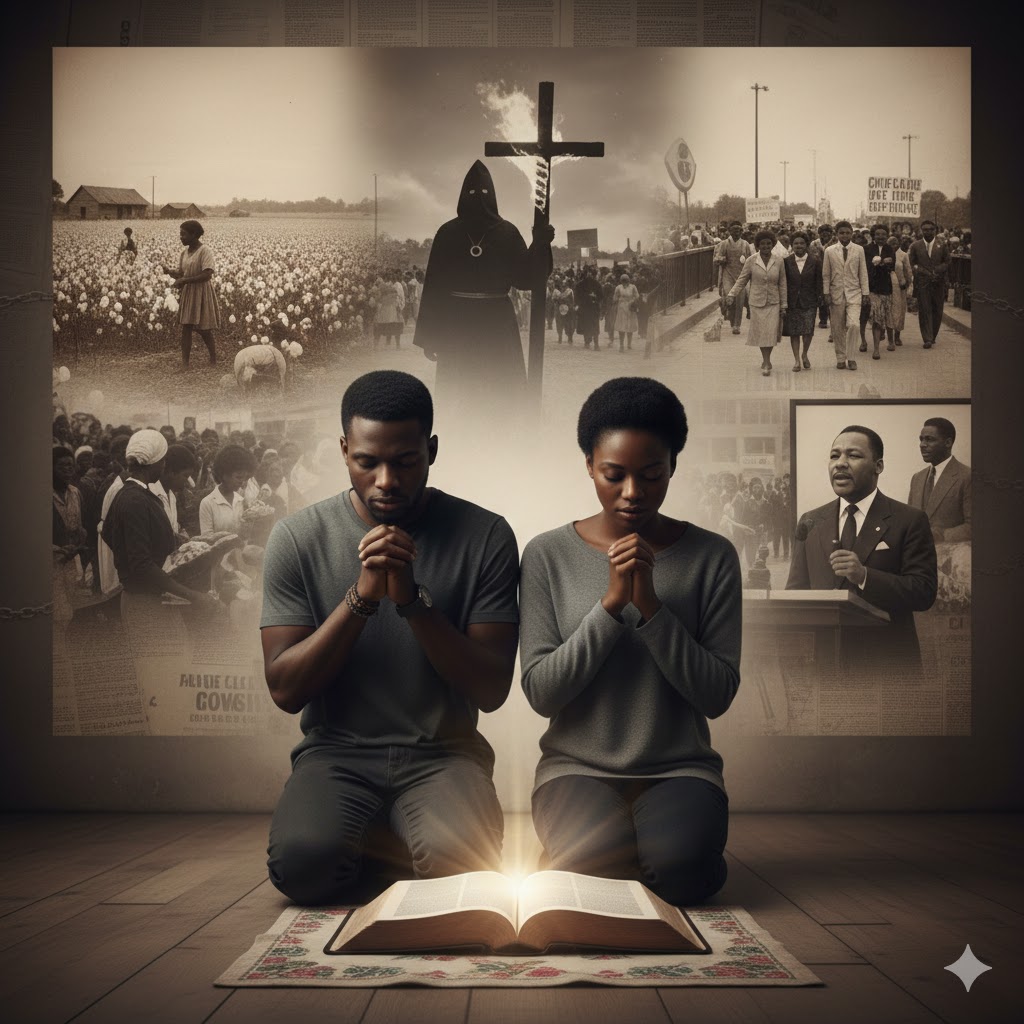
Black history is not merely a sequence of dates or the retelling of oppression; it is sacred terrain. It is a landscape shaped by the footprints of a people who carried faith, culture, dignity, and divine resilience across centuries. To stand in the presence of Black history is to stand on holy ground, because the journey of African-descended people bears witness to a God who walked with them through fire, flood, chains, and liberation.

Black history is holy ground because it begins long before slavery. It stretches back to kingdoms and civilizations where Black people ruled, built, studied, invented, and worshiped. From Nubia to Kush, from Ghana to Songhai, from Kemet to Ethiopia, Africa cultivated intellectual and spiritual traditions that the world still draws from. This heritage elevates Black history beyond pain; it anchors it in glory.

The holiness of this history is also found in its endurance. A people torn from their homeland survived one of the greatest atrocities in human history. They survived not by accident, but by providence. Their survival testifies to a divine hand at work in the shadows of suffering, shaping a remnant that would rise again. Every preserved family line, every song sung in the cotton fields, every whispered prayer in the midnight hour speaks of sacred resilience.

Black history is holy ground because it contains a narrative of faith that never died. Enslaved Africans did not inherit Christianity from their oppressors; they discovered in Scripture a God who understood bondage, deliverance, and covenant. Through the stories of Israel, they recognized themselves. Through the Psalms, they voiced their heartbreak. Through the Gospels, they found a Messiah who stood with the broken. Their faith was not borrowed but reborn.

The holiness of this narrative deepens when we consider the spiritual resistance embedded in Black culture. Spirituals were not just songs; they were coded prayers, liberation messages, and theological declarations. The rhythmic moans of the fields became a liturgy of survival. These traditions laid the foundation for the Black church, a sacred institution that shaped activism, family, and identity for generations.

Black history is holy ground because of its prophets and pioneers. Figures like Harriet Tubman, Frederick Douglass, Sojourner Truth, and countless unnamed leaders operated with a calling that mirrored biblical deliverers. They challenged systems, freed the oppressed, and stood firmly on righteousness. Their bravery was not merely political; it was spiritual warfare.

The holiness of this story extends to the mothers of the movement. Women whose names never made textbooks carried families on their backs. They prayed children into safety, held together broken homes, and passed down wisdom that sustained the community. Their hands were altars, their kitchens sanctuaries, their lives sermons of endurance and love.

Black history is holy ground because it carries the scent of sacrifice. Countless lives were laid down—from the Middle Passage to Jim Crow, from lynching trees to segregated streets. Their blood cries out like Abel’s, reminding the world that injustice is seen by God. Their sacrifices fertilized the soil from which future generations would rise.

That rising continues through the dreamers, scholars, activists, and artists who broadened the path toward freedom. Each breakthrough was a step deeper into holy territory—a reminder that progress is not simply social, but spiritual. Civil rights victories were not just legal milestones; they were manifestations of divine justice.

Black history is holy ground because it illuminates a people who refused to be erased. Despite centuries of oppression, their culture, creativity, and identity could not be destroyed. Instead, they transformed suffering into song, brokenness into brilliance, and hardship into hope. This divine alchemy marks their journey as sacred.

Modern Black life continues this sacredness. Every achievement—from academia to art, from science to business, from ministry to music—is a continuation of a holy lineage. Each accomplishment is a chapter in a story that began thousands of years before American soil ever felt the presence of African feet.

Black history is holy ground because it challenges the world to see humanity through a divine lens. The struggle for justice reflects God’s heart for righteousness. The fight for dignity reflects God’s image within humanity. Every act of resistance is a declaration that Black life is sacred and cannot be diminished.

The sacredness of Black history is also found in its wounds. Healing requires honesty, and Black history invites the world to confront painful truths without running. Yet this truth-telling is not meant to reopen scars but to restore what was lost. There is holiness in remembering, because memory heals and honors.

Black history is holy ground because it holds prophetic power. It warns against repeating the sins of the past, calls nations to repent, and demands transformation. It speaks with the authority of a testimony shaped by centuries of struggle and triumph. It teaches that liberation is a divine mandate, not a political suggestion.

This holiness also lies in the future. Black children today inherit not just a history of suffering but a legacy of brilliance. They stand on the shoulders of kings, queens, scholars, inventors, freedom fighters, and saints. Their existence is a continuation of the sacred promise that a people once enslaved would rise beyond anything intended to destroy them.

Black history is holy ground because it reveals God’s faithfulness. In every generation, He preserved a remnant, raised leaders, empowered movements, and poured creativity into a people who refused to surrender. Their story is evidence of divine purpose. Nothing about their survival is accidental.

To walk through Black history is to walk through a sacred story—one that encompasses creation, covenant, oppression, deliverance, restoration, and glory. It is a story intertwined with Scripture, echoing the journeys of ancient Israel and the hope of future redemption. It is a holy narrative wrapped in melanin and majesty.

Ultimately, Black history is holy ground because it embodies the miracle of endurance. It reveals that no chain is stronger than the human spirit, no system stronger than divine justice, and no hatred stronger than the love planted deep within a people chosen to carry light through centuries of darkness. Black history is not just remembered; it is revered.

And for those who study it, teach it, write it, or live it—it calls them to remove their shoes. For the place where they stand is sacred.

References:
Genesis 15:13–14 (KJV); Exodus 3:5; Psalm 68:31; Isaiah 61:1–4; Luke 4:18; Revelation 7:9; Curtin, P. The Atlantic Slave Trade; Gates, H. L. Africa in World History; Raboteau, A. Slave Religion; Franklin, J. H. From Slavery to Freedom.

Crowned Before the World Touched Her

She was crowned before the world touched her, before language named her skin, before systems decided her worth. Her existence was intentional, authored by God and formed in divine wisdom, not accident or afterthought. Long before society imposed hierarchies, she bore dignity by design (Psalm 139:14, KJV).

The crown she carried was not fashioned of gold, but of purpose. It rested quietly in her spirit, unseen yet immovable. The world would later try to convince her that crowns are earned through suffering, but Scripture reveals that she was crowned at creation (Genesis 1:27, KJV).

Before the gaze of empire found her, she belonged wholly to God. Her identity was not a reaction to oppression but a reflection of divine image. This truth disrupts narratives that define Black womanhood through pain alone.

The world touched her with names that were never hers. It called her excessive, aggressive, invisible, or unworthy, projecting fear and desire onto her body. Yet none of these labels altered the crown she was given before words were weaponized (Isaiah 62:3, KJV).

Colonial beauty standards attempted to dethrone her by redefining beauty through whiteness. Hair, skin, and features became sites of contestation. But Scripture never outsourced beauty to empire; God declared His work “very good” before colonizers existed (Genesis 1:31, KJV).

She learned early that the world polices what it cannot control. Her body became public property in narrative, law, and image. Still, her crown remained untouched, because it was not placed by human hands.

The Bible is filled with women who were crowned before circumstances hardened them. Hagar was seen in the wilderness before society erased her (Genesis 16:13, KJV). Her encounter affirms that divine recognition precedes social rejection.

Like Esther, she was prepared in secret before being revealed in public. Her season of refinement was not punishment, but positioning. The crown comes before the calling, not after the trial (Esther 2:17, KJV).

The world taught her to armor herself, mistaking hardness for strength. Yet God honors softness guarded by wisdom. Meekness, in Scripture, is not weakness but disciplined power (Matthew 5:5, KJV).

She was told survival was her highest calling. But God called her to dominion, stewardship, and rest. Her worth was never dependent on endurance alone (Genesis 1:28, KJV).

The crown signifies authority over self before authority over circumstance. It is a reminder that she governs her mind, body, and spirit under God’s sovereignty. No system can rule what God has already crowned.

Her crown also represents inheritance. She did not begin in lack but in legacy. What was stolen historically does not erase what was granted eternally (Joel 2:25–26, KJV).

The world touched her through trauma, but trauma did not author her. Scripture makes clear that suffering is an experience, not an identity (Romans 8:18, KJV).

Spiritual warfare often targets crowned heads first. When identity is attacked, it is because destiny is present. The enemy never assaults what has no value (Ephesians 6:12, KJV).

To be crowned before the world touched her means she does not need validation from structures that were designed to exploit her. Her worth is pre-social and pre-political.

Her restoration is not about becoming something new, but remembering what she was before distortion. Repentance, healing, and self-love are acts of remembrance.

God crowns not to decorate, but to commission. The crown signals responsibility, vision, and alignment with heaven. She carries not ego, but assignment (Psalm 8:5, KJV).

In reclaiming her crown, she disrupts narratives of deficiency. She stands as evidence that Black womanhood is not an exception to divine favor, but an expression of it.

She is not crowned because she survived. She survived because she was crowned. That order matters.

Crowned before the world touched her, she walks not in apology, but in authority—restored, rooted, and radiant in the knowledge that God finished His work before the world began its lies.


References (KJV)

Genesis 1:27, 28, 31
Genesis 16:13
Esther 2:17
Psalm 8:5
Psalm 139:14
Isaiah 62:3
Matthew 5:5
Joel 2:25–26
Romans 8:18
Ephesians 6:12

Smart Money Series: Financial Sins That Keep You Poor

Scripture makes it clear that prosperity is not merely material but spiritual, and true wealth begins with the condition of the soul. The Bible teaches that “Beloved, I wish above all things that thou mayest prosper and be in health, even as thy soul prospereth” (3 John 1:2, KJV). This establishes that financial outcomes are deeply connected to spiritual alignment, values, and obedience to God’s principles.

One of the greatest financial sins is materialism, which places possessions above purpose and wealth above God. Jesus warned that no one can serve both God and money, for one will always dominate the heart (Matthew 6:24). Materialism shifts trust from divine provision to human accumulation, producing anxiety, greed, and spiritual emptiness rather than true prosperity.

Another major cause of financial stagnation is neglecting the poor, widows, and orphans. Scripture repeatedly emphasizes that generosity toward the vulnerable is not optional but central to righteousness. Proverbs teaches that those who give to the poor lend to the Lord, and God Himself repays (Proverbs 19:17). Ignoring the needy blocks spiritual flow and hardens the heart against divine compassion.

God ties personal prosperity to social responsibility. When individuals hoard resources and ignore injustice, they disconnect from God’s economic system. Isaiah condemns religious practice without care for the oppressed, declaring that true worship includes feeding the hungry and sheltering the poor (Isaiah 58:6–10). Financial blessing is connected to ethical stewardship, not selfish accumulation.

Slothfulness is another financial sin that leads to poverty. The Bible consistently warns that laziness produces lack, while diligence produces increase. “The soul of the sluggard desireth, and hath nothing: but the soul of the diligent shall be made fat” (Proverbs 13:4). Waiting passively for opportunity rather than actively pursuing work reflects spiritual and practical irresponsibility.

God honors movement, effort, and initiative. The diligent person seeks multiple opportunities, learns new skills, and refuses stagnation. Scripture teaches that those who do not work should not expect to eat, reinforcing the moral obligation of productivity (2 Thessalonians 3:10). Faith is not inactivity; it is obedience in action.

Another destructive financial pattern is going into debt. Debt is portrayed in scripture as a form of bondage, not blessing. “The borrower is servant to the lender” (Proverbs 22:7). Debt compromises freedom, limits future choices, and places financial authority into the hands of others.

Debt is also a spiritual issue because it reflects misplaced trust. Instead of relying on God’s provision and disciplined stewardship, individuals often rely on credit, loans, and consumption. Romans instructs believers to owe no one anything except love, emphasizing freedom from financial entanglements (Romans 13:8).

Many remain poor because they are trapped in consumer culture and comparison, often called “keeping up with the Joneses.” This mindset pressures individuals to spend beyond their means to maintain social image. Scripture warns that life does not consist in the abundance of possessions (Luke 12:15).

Comparison destroys contentment and breeds dissatisfaction. Instead of seeking God’s purpose, individuals chase lifestyles that God never assigned to them. This leads to unnecessary spending, chronic debt, and emotional stress rather than peace and stability (Hebrews 13:5).

Another financial sin is failing to seek God’s will for one’s life. Many pursue careers, businesses, and goals based solely on money, not divine calling. Scripture teaches that God has specific plans for each person, and ignoring those plans leads to frustration and misalignment (Jeremiah 29:11).

When people do not allow God to lead them, they often work hard in directions that produce little fruit. Proverbs teaches that many plans exist in the human heart, but only the Lord’s purpose will prevail (Proverbs 19:21). Prosperity flows most naturally when one walks in divine assignment.

Jesus taught that financial provision follows spiritual priority. “Seek ye first the kingdom of God, and his righteousness; and all these things shall be added unto you” (Matthew 6:33). This principle reverses worldly economics by placing obedience before income.

Many remain poor because they seek money first and God last. This inversion creates stress, fear, and instability. Kingdom economics teach that provision is a byproduct of alignment, not obsession with wealth.

Another overlooked sin is withholding generosity. Giving is not loss but circulation. Scripture teaches that those who scatter increase, while those who withhold tend toward poverty (Proverbs 11:24–25). Generosity keeps resources flowing and the heart soft.

From a theological perspective, generosity reflects trust in God rather than attachment to money. The poor widow in scripture gave her last offering and was praised for her faith (Mark 12:41–44). True wealth is measured by trust, not accumulation.

Financial poverty is often sustained by fear-based decision-making. Fear leads to hoarding, risk avoidance, and a lack of investment in growth. God commands believers not to fear, for fear contradicts faith and limits potential (2 Timothy 1:7).

Faith requires movement, discipline, and obedience. The servant who buried his talent out of fear was condemned, while those who invested were rewarded (Matthew 25:14–30). Fear preserves poverty; faith produces increase.

Financial Practices That Lead to Freedom (Biblical Guide)

Put God first in your finances
Seek God’s kingdom before chasing money. Pray over your income, decisions, and direction. Alignment comes before increase (Matthew 6:33).

Prosper your soul first
Work on your spiritual life, mindset, discipline, and emotional health. Financial habits follow soul habits (3 John 1:2).

Reject materialism
Stop measuring success by what you own or show. Possessions are tools, not identity (Luke 12:15).

Give to the poor and vulnerable
Support the poor, widows, fatherless, and those in need. Giving keeps resources circulating and opens spiritual flow (Proverbs 19:17).

Live below your means
Don’t spend everything you earn. Build margin and resist lifestyle inflation (Proverbs 21:20).

Avoid unnecessary debt
Debt limits freedom and future choices. Pay down what you owe and stop borrowing for wants (Proverbs 22:7).

Owe no one except love
Aim for financial independence and relational peace (Romans 13:8).

Work diligently and actively
Seek opportunities, side work, skill-building, and multiple streams when needed. Faith requires movement (Proverbs 13:4).

Reject laziness and stagnation
Don’t wait for perfect conditions. Start where you are with what you have (Ecclesiastes 11:4).

Stop comparing yourself to others
Don’t try to keep up with lifestyles that aren’t yours (Hebrews 13:5).

Follow God’s will for your life
Choose purpose over paycheck. Prosperity flows easier in divine assignment (Proverbs 19:21).

Create a budget and plan
Write your vision and manage your money intentionally (Proverbs 16:3).

Build savings and emergency funds
Prepare for seasons of uncertainty like Joseph did in Egypt (Genesis 41:34–36).

Practice generosity consistently
Giving is not loss; it is circulation and trust (Proverbs 11:24–25).

Invest in growth, not just consumption
Learn, study, train, and improve your skills (Proverbs 1:5).

Make decisions in faith, not fear
Fear leads to hoarding and missed opportunities (2 Timothy 1:7).

Take responsibility for your choices
Blame keeps you stuck; accountability creates freedom (Galatians 6:5).

Serve others with your gifts
Money follows value, and value comes from service (Matthew 25:29).

Keep a grateful heart
Gratitude protects you from pride and greed (1 Thessalonians 5:18).

Trust God as your true source
Jobs, businesses, and income are channels—God is the source (Deuteronomy 8:18).

Ultimately, financial sin is not merely about money but about misalignment with God’s order. Poverty persists when individuals reject divine principles of stewardship, generosity, discipline, and obedience. Prosperity flows when life aligns with God’s will.

True wealth begins in the soul. When the soul prospers, behavior changes, priorities shift, and financial patterns transform. Poverty is not always economic—it is often spiritual, rooted in values, beliefs, and disconnection from divine wisdom.

The Bible does not promise luxury, but it does promise provision. God’s system is not built on exploitation, comparison, or debt, but on trust, diligence, generosity, and obedience. Financial freedom is ultimately a byproduct of spiritual alignment with the Most High.


References

The Holy Bible, King James Version. (1611/2017). Cambridge University Press.

Blomberg, C. L. (1999). Neither poverty nor riches: A biblical theology of material possessions. InterVarsity Press.

Keller, T. (2009). Counterfeit gods: The empty promises of money, sex, and power. Dutton.

Wright, C. J. H. (2004). Old Testament ethics for the people of God. InterVarsity Press.

Willard, D. (1998). The divine conspiracy: Rediscovering our hidden life in God. HarperOne.

We are Dust with his Breath

In the beginning of creation, humanity is introduced not as an accident of nature but as a deliberate act of divine intention. Scripture teaches that God formed man from the dust of the ground and breathed into his nostrils the breath of life, and man became a living soul (Genesis 2:7, KJV). This verse establishes a foundational theological truth: without the breath of God, humanity remains lifeless matter, no different from the soil beneath our feet.

The imagery of dust is deeply symbolic. Dust represents human fragility, limitation, and mortality. It reminds us that no matter how advanced civilization becomes, humanity remains dependent on divine power for existence. The breath of God transforms dust into life, meaning that human dignity does not originate from intellect, wealth, or status, but from divine impartation (Psalm 103:14).

The breath of life is not merely biological respiration; it is spiritual animation. In Hebrew, the word for breath, ruach, also means spirit or wind, indicating that life itself is sustained by the Spirit of God. This suggests that humanity is not self-sustaining but continuously upheld by divine presence (Ezekiel 37:5).

Without God’s breath, human existence loses its sacred meaning. Modern society often elevates human autonomy and self-sufficiency, yet scripture consistently reminds us that life is borrowed, not owned. Every heartbeat and breath testifies to divine mercy rather than human control (Acts 17:25).

The Most High God of Israel is portrayed throughout scripture as the giver and sustainer of life. He is not distant from creation but intimately involved in its continuation. Job acknowledges this truth when he declares that the Spirit of God has made him and the breath of the Almighty gives him life (Job 33:4).

To cherish the Creator is to recognize the source of one’s existence. Gratitude becomes a spiritual posture when one understands that life is a divine gift rather than a human achievement. Worship, therefore, is not ritualistic obligation but an acknowledgment of existential dependence (Psalm 150:6).

Human pride often blinds people to this reality. Scientific advancement has led many to believe that life can be explained without God, yet even science cannot produce consciousness from nothing. The mystery of life still points back to divine origin rather than mechanical causation (Collins, 2006).

In biblical theology, breath is also associated with renewal and restoration. In the valley of dry bones, God commands breath to enter lifeless bodies, and they rise again, symbolizing spiritual revival and national restoration (Ezekiel 37:9–10). This narrative reinforces that without divine breath, there is no resurrection, no hope, and no future.

The breath of God also signifies moral responsibility. If life comes from God, then life belongs to God. Humanity is therefore accountable to divine standards, not self-created ethics. This challenges modern individualism, which promotes self-definition without divine authority (Romans 14:7–8).

To say “we are dust without His breath” is to affirm human humility. It dismantles the illusion of self-made identity and replaces it with sacred dependency. Even kings and empires return to dust, but God’s breath remains eternal (Ecclesiastes 12:7).

The Most High is not merely a creator but a sustainer. He does not abandon what He forms. Scripture portrays God as continually involved in the world, sustaining all things by His word and power (Hebrews 1:3). Life is not a past miracle but an ongoing one.

Cherishing the Creator involves living in awareness of divine presence. It transforms daily life into a sacred experience. Eating, breathing, thinking, and loving become acts of worship when viewed through the lens of divine origin (Colossians 3:17).

The concept of breath also connects to divine communication. God’s breath produces His word, and His word produces life. The same God who breathed into Adam later breathed scripture into prophets and apostles, making His word living and powerful (2 Timothy 3:16).

From a theological perspective, denying God as the source of life leads to spiritual alienation. When humanity forgets its Creator, it begins to worship creation, self, and materialism. This reversal of order results in moral decay and existential emptiness (Romans 1:21–25).

The breath of God also represents divine intimacy. Unlike other creatures, humanity receives life through direct divine interaction. God does not speak humans into existence; He breathes into them, suggesting relational closeness rather than distant creation (Brueggemann, 2010).

Life therefore carries sacred responsibility. If God’s breath animates humanity, then every human life possesses inherent worth, regardless of race, class, or ability. This foundation supports biblical human dignity and justice (Genesis 1:27).

The Most High God of Israel reveals Himself not only as powerful but as compassionate. He breathes life into fragile dust and remains patient with human failure. His mercy sustains those who constantly fall short of divine perfection (Lamentations 3:22–23).

Even death in scripture does not represent divine abandonment. The return of breath to God signifies transition, not annihilation. The soul returns to its source, awaiting divine judgment and restoration (Ecclesiastes 12:7).

In this sense, breath becomes eschatological. It points beyond physical life to eternal reality. God’s breath does not merely create time-bound existence but prepares humanity for everlasting communion (John 20:22).

Ultimately, the statement “we are dust without His breath” is not a message of despair but of sacred truth. It reminds humanity that life is not meaningless, accidental, or random. Life is divine, purposeful, and sustained by the Most High God of Israel.

To cherish the Creator is to live in reverence, humility, and gratitude. Every breath becomes a testimony of divine mercy, and every moment becomes an opportunity to acknowledge the One who turns dust into living souls.


References

Brueggemann, W. (2010). Genesis: Interpretation: A Bible commentary for teaching and preaching. Westminster John Knox Press.

Collins, F. S. (2006). The language of God: A scientist presents evidence for belief. Free Press.

The Holy Bible, King James Version. (1611/2017). Cambridge University Press.

Wright, N. T. (2012). How God became king: The forgotten story of the Gospels. HarperOne.

Walton, J. H. (2009). The lost world of Genesis one: Ancient cosmology and the origins debate. InterVarsity Press.

A Long Way Home (Walk with God)

This photograph is the property of its respective owner. No copyright infringement intended.

There is something sacred about the word home. It does not merely describe a physical dwelling, but a spiritual destination—a place of rest, belonging, and divine intimacy. From a biblical perspective, humanity has always been on a journey, wandering between what was lost in Eden and what will be restored in the Kingdom of God. Our entire existence on earth can be understood as a pilgrimage, a long way home.

Scripture presents life as a temporary lodging. “For here have we no continuing city, but we seek one to come” (Hebrews 13:14, KJV). Earth is not our final address; it is a passageway. We are travelers passing through time, culture, trauma, and temptation, all while being called back to the presence of God, from whom the soul originated.

Sin is what made the journey long. In Genesis, Adam and Eve were exiled from divine intimacy, not just from a garden but from unbroken fellowship with the Most High. Every generation since has inherited that spiritual distance. To live in sin is to live in exile—breathing, yet displaced from one’s true home.

Yet God, in His mercy, never abandoned humanity to wander without direction. The entire biblical narrative—from Abraham’s call, to Israel’s wilderness journey, to Christ’s incarnation—is about God providing a path back. Redemption is not merely forgiveness; it is relocation of the soul.

Treasures from our past often shape how we travel. Memories, ancestral wisdom, cultural identity, and lived experiences become spiritual luggage. Some of these treasures refine us, while others weigh us down. God does not ask us to forget our past, but to redeem it—transforming pain into purpose.

Jesus taught that not all treasures belong in our suitcase. “Lay not up for yourselves treasures upon earth… but lay up for yourselves treasures in heaven” (Matthew 6:19–20, KJV). Earthly status, beauty, wealth, and validation cannot accompany us home. Only spiritual capital endures.

Our walk with God is not a sprint but a lifelong pilgrimage. Faith matures through trials, losses, unanswered prayers, and seasons of waiting. Like Israel in the wilderness, we often complain about the journey, forgetting that the delay itself is shaping our character.

Earth becomes a testing ground for the heart. God is less interested in what we accumulate and more concerned with what we become. Pride, bitterness, lust, and fear are burdens that slow the soul’s return. Repentance is the act of unpacking what God never told us to carry.

Home is not heaven as a place; it is God as a presence. Heaven is simply where God fully dwells without obstruction. To return home is to return to intimacy, obedience, humility, and truth. It is not about escaping the world, but being transformed within it.

The Apostle Paul described believers as ambassadors. An ambassador lives in a foreign land but remains loyal to their true country. Likewise, the faithful live in this world but do not belong to its systems, values, or idols.

The greatest deception of modern culture is convincing people that fulfillment is found in external things. Social media, consumerism, and self-worship teach us to build homes in places God never promised to dwell. But anything built without God becomes a temporary shelter.

God desires the heart more than performance. “My son, give me thine heart” (Proverbs 23:26, KJV). The true offering is not religious activity, but inner surrender. The heart is the only possession God explicitly asks us to bring home.

Salvation is not merely about avoiding hell, but about returning to a relationship. Christ did not come to make bad people good; He came to bring lost children back to their Father. The cross is the bridge, not the destination.

Many people reach material success yet feel spiritually homeless. This is because the soul remembers Eden, even if the mind does not. There is a divine homesickness embedded in human consciousness—a longing no relationship, achievement, or pleasure can satisfy.

The longer we stay attached to sin, the longer the journey feels. Sin delays arrival. It fragments identity, distorts purpose, and confuses direction. Every act of obedience shortens the distance between where we are and where we belong.

God’s concept of “packing light” is radical. He calls us to release ego, reputation, unforgiveness, and false identity. What He wants us to carry is faith, love, humility, and truth—items that increase in value the closer we get to Him.

Even suffering becomes a form of spiritual navigation. Trials expose what we truly trust. They teach us that comfort is not home, and pleasure is not peace. Sometimes God allows storms because we have mistaken the boat for the destination.

Death, in biblical theology, is not the end of life but the end of exile. For the righteous, it is not loss but return. It is the final border crossing from temporary residence into eternal citizenship.

To go a long way home is to awaken to who we truly are: souls created by God, separated by sin, restored by grace, and called back by love. Every prayer, every repentance, every act of faith is a step closer to that reunion.

In the end, the only thing God truly wants from us is alignment—our hearts facing the same direction as His. Not perfection, not fame, not success, but surrender. Home is not a place we find; it is a relationship we return to.


What to Pack for the Journey with God

Not physical items, but spiritual essentials:

A surrendered heart
A heart willing to be corrected, softened, and transformed.

A consistent prayer life
Not performance prayers, but honest conversation with God.

The Word of God
Scripture as daily bread, not occasional inspiration.

Repentance and humility
The ability to admit when we are wrong and turn back.

Faith and trust
Believing God even when the path is unclear.

Love and forgiveness
Releasing resentment so the soul can travel light.

Obedience
Choosing God’s will over personal comfort.

Gratitude
Recognizing God’s presence in every season.

Discernment
Knowing what to release and what to carry forward.

Hope
Confidence that the destination is real, even when unseen.


References

The Holy Bible, King James Version. (2017). Hendrickson Publishers.

Augustine of Hippo. (1991). Confessions (H. Chadwick, Trans.). Oxford University Press.

Bonhoeffer, D. (1959). The Cost of Discipleship. SCM Press.

Lewis, C. S. (2001). Mere Christianity. HarperOne.

Nouwen, H. J. M. (1992). The Return of the Prodigal Son: A Story of Homecoming. Doubleday.

Wright, N. T. (2012). After You Believe: Why Christian Character Matters. HarperOne.

Dilemma: Porneia

Photo by RDNE Stock project on Pexels.com

In the modern age, sexual immorality has become pervasive, often normalized in media, relationships, and culture. The Greek term porneia, translated as fornication or sexual immorality in the KJV Bible, encompasses all acts outside the bounds of God’s covenant of marriage. Understanding the spiritual, emotional, and societal consequences of porneia is essential for living a life that honors God.

Porneia is not merely a physical act but a sin of the heart. Jesus taught that lustful thoughts carry the weight of sin: “Ye have heard that it was said by them of old time, Thou shalt not commit adultery: But I say unto you, That whosoever looketh on a woman to lust after her hath committed adultery with her already in his heart” (Matthew 5:27–28, KJV).

Fornication defiles the body, which is the temple of the Holy Spirit. “Flee fornication. Every sin that a man doeth is without the body; but he that committeth fornication sinneth against his own body” (1 Corinthians 6:18, KJV). Sexual sin damages not only spiritual health but also emotional and relational well-being.

The allure of porneia is often subtle. Culture glorifies lust, convenience, and gratification, making temptation pervasive. However, the Word of God provides clarity and instruction: “Abstain from all appearance of evil” (1 Thessalonians 5:22, KJV). Avoiding tempting situations is essential for holiness.

Fornication breaks covenant trust. Sexual activity outside marriage undermines intimacy, creates guilt, and damages relationships. God designed sex to unify husband and wife in a sacred bond, as emphasized in Hebrews 13:4: “Marriage is honourable in all, and the bed undefiled: but whoremongers and adulterers God will judge” (KJV).

Self-control is vital in combating porneia. The fruit of the Spirit includes temperance, which empowers believers to resist sexual temptation. “But the fruit of the Spirit is love, joy, peace, longsuffering, gentleness, goodness, faith, Meekness, temperance: against such there is no law” (Galatians 5:22–23, KJV).

Awareness and acknowledgment are the first steps toward overcoming sexual immorality. Denial or rationalization only strengthens the sin. Confession to God and accountability to trustworthy mentors is crucial: “If we confess our sins, he is faithful and just to forgive us our sins, and to cleanse us from all unrighteousness” (1 John 1:9, KJV).

Guarding the eyes and mind protects against lust. Television, the internet, social media, and entertainment are powerful tools that can either corrupt or preserve purity. Proverbs 4:23 advises, “Keep thy heart with all diligence; for out of it are the issues of life” (KJV).

Marriage is the divinely ordained context for sexual expression. God designed intimacy to be enjoyed within commitment, love, and covenant faithfulness. Ephesians 5:3 reminds, “But fornication, and all uncleanness, or covetousness, let it not be once named among you, as becometh saints” (KJV).

The consequences of porneia extend beyond the spiritual realm. Emotional damage, broken trust, and relational instability often follow sexual immorality. Wise counsel and accountability can prevent further harm.

Prayer is a critical weapon in resisting temptation. Turning to God for strength, wisdom, and protection is essential in the fight against lust. “Watch and pray, that ye enter not into temptation: the spirit indeed is willing, but the flesh is weak” (Matthew 26:41, KJV).

Community and fellowship strengthen resistance. Engaging with believers who uphold biblical standards provides encouragement, mentorship, and accountability in pursuing purity. Hebrews 10:24–25 emphasizes the importance of mutual encouragement.

Spiritual disciplines such as fasting, meditation, and scripture study empower believers to renew the mind and strengthen resolve against porneia. Romans 12:2 teaches, “And be not conformed to this world: but be ye transformed by the renewing of your mind, that ye may prove what is that good, and acceptable, and perfect, will of God” (KJV).

Boundaries are essential. Avoiding compromising situations, unhealthy relationships, and negative influences reduces opportunities for temptation and sin. Discipline and wisdom guide conduct in alignment with God’s will.

Understanding desire through a biblical lens fosters proper stewardship of sexuality. Sexual energy is not sinful but is to be expressed within God’s design for intimacy and covenantal love.

Repentance and restoration are always available. No matter the depth of past sin, God’s mercy is accessible to those who sincerely turn from immorality. Hosea 14:1–2 urges, “Return, O Israel, unto the Lord thy God; for thou hast fallen by thine iniquity…Take with you words, and turn to the Lord” (KJV).

Education and awareness protect younger generations. Teaching biblical standards of purity, respect, and self-control equips children and youth to navigate sexual temptation with integrity.

Encouraging accountability partnerships is effective. Trusted friends, mentors, or spiritual guides help maintain commitment to purity and resist relapse into immorality.

The struggle against porneia is ongoing. It requires vigilance, prayer, discipline, and faithfulness. “Watch ye, stand fast in the faith, quit you like men, be strong” (1 Corinthians 16:13, KJV).

Ultimately, victory over sexual immorality reflects alignment with God’s Word. By fleeing temptation, embracing accountability, and seeking holiness, believers honor God, strengthen relationships, and live lives of integrity.


References

The Holy Bible, King James Version. (1769/2017). Cambridge University Press.

Grudem, W. (2004). Systematic theology: An introduction to biblical doctrine. Inter-Varsity Press.

Yarhouse, M. A., & Tan, E. S. (2010). Sexuality and the Christian: Contemporary issues and pastoral practice. IVP Academic.

Fee, G. D. (2011). Paul’s letter to the Corinthians: New International Commentary on the New Testament. Eerdmans.

Sanctified Romance: Why Courtship Still Matters.

Sanctified romance is the pursuit of love in a manner that honors God, protects purity, and prepares the heart for covenant rather than convenience. In a culture driven by instant gratification and casual intimacy, courtship stands as a countercultural model rooted in intentionality, holiness, and obedience to divine order. Scripture consistently calls believers to relationships marked by sanctification rather than self-indulgence (1 Thessalonians 4:3–5, KJV).

Courtship matters because it restores purpose to romantic pursuit. Unlike casual dating, which often centers on emotional enjoyment or physical attraction, courtship is oriented toward discernment and marriage. Proverbs 19:21 reminds us that while human plans may be many, it is the Lord’s counsel that prevails. Courtship places God’s will above personal desire.

Purity is central to sanctified romance. God’s design reserves sexual intimacy for marriage, where it is protected and honored. Hebrews 13:4 declares that marriage is honorable and the bed undefiled, underscoring that any romantic pursuit must guard the body and heart from fornication. Courtship intentionally creates space for obedience.

Courtship teaches discipline over desire. Feelings are acknowledged but not allowed to rule behavior. Scripture warns that the heart can be deceitful (Jeremiah 17:9), which is why boundaries are essential. Sanctified romance chooses restraint not because desire is evil, but because obedience is greater.

In courtship, intention replaces ambiguity. Each party understands the goal is to evaluate compatibility for marriage, not to fill emotional voids or seek validation. Jesus taught that integrity begins with clarity: “Let your communication be, Yea, yea; Nay, nay” (Matthew 5:37, KJV). Courtship reflects this honesty.

Prayer is foundational in sanctified romance. Courtship invites God into the process rather than asking Him to bless decisions already made. Proverbs 3:5–6 instructs believers to trust in the Lord and acknowledge Him in all ways, including matters of the heart. Prayer aligns desire with divine wisdom.

Courtship also restores accountability. Involving family, spiritual mentors, or trusted community provides protection against self-deception and temptation. Ecclesiastes 4:12 teaches that a threefold cord is not quickly broken, illustrating the strength found in godly oversight.

Sanctified romance values character over chemistry. Physical attraction may spark interest, but courtship evaluates spiritual fruit, moral integrity, and consistency. The Bible emphasizes inner beauty and godly character, reminding us that favor is deceitful and beauty is vain, but the fear of the Lord endures (Proverbs 31:30).

Courtship honors emotional purity as well. Guarding the heart prevents premature attachment that can cloud judgment. Proverbs 4:23 commands diligence in protecting the heart because it influences every area of life. Courtship slows emotional intimacy until commitment is established.

The modern dating culture often encourages physical closeness before spiritual alignment. Courtship reverses this order, placing faith, values, and purpose first. Jesus taught that wisdom builds on a firm foundation, not shifting sand (Matthew 7:24–25). Courtship builds on obedience.

Sanctified romance acknowledges temptation but does not flirt with it. Scripture commands believers to flee fornication, not negotiate with it (1 Corinthians 6:18). Courtship minimizes situations that provoke lust by maintaining appropriate settings and boundaries.

Courtship also fosters mutual respect. Each individual is treated as a future spouse, not an object of pleasure or emotional convenience. Philippians 2:3 encourages humility and consideration of others above oneself, a principle deeply embedded in courtship.

Waiting is a spiritual discipline cultivated through courtship. Song of Solomon 2:7 warns against awakening love before its time. Sanctified romance trusts God’s timing, believing that delayed gratification produces lasting joy rather than regret.

Courtship protects against relational manipulation. Without clear boundaries, relationships can drift into emotional dependency or sexual compromise. Sanctified romance calls for honesty, restraint, and respect, reflecting God’s character rather than human impulse.

Courtship prepares individuals for covenant. Marriage is not merely romantic; it is a lifelong commitment before God. Amos 3:3 asks whether two can walk together unless they are agreed, highlighting the importance of shared faith and values cultivated during courtship.

Sanctified romance also refines self-control. Galatians 5:22–23 identifies temperance as fruit of the Spirit. Courtship allows believers to grow in spiritual maturity, demonstrating love that waits rather than consumes.

Courtship glorifies God by reflecting His order. God is not the author of confusion (1 Corinthians 14:33). Clear expectations, boundaries, and accountability bring peace and clarity to romantic pursuit.

In a world that normalizes fornication and emotional excess, courtship stands as a testimony of obedience. Romans 12:1–2 calls believers to present their bodies as living sacrifices and to resist conformity to worldly patterns. Courtship embodies this transformation.

Sanctified romance does not deny desire; it redeems it. Desire submitted to God becomes purposeful, disciplined, and life-giving. Courtship channels affection toward covenant rather than chaos.

Courtship still matters because it reflects God’s heart for holiness, protection, and covenant love. It safeguards purity, honors divine timing, and prepares individuals for marriage that glorifies God. In choosing courtship, believers choose obedience over impulse and sanctification over satisfaction, trusting that God’s design is always worth the wait (Psalm 37:4).


References (KJV Bible)

1 Thessalonians 4:3–5
Hebrews 13:4
Proverbs 3:5–6; 4:23; 19:21; 31:30
Jeremiah 17:9
Matthew 5:37; 7:24–25
Ecclesiastes 4:12
Song of Solomon 2:7
1 Corinthians 6:18; 14:33
Philippians 2:3
Galatians 5:22–23
Romans 12:1–2
Amos 3:3
Psalm 37:4

The Differences Between Courting, Dating, Friendships, and Suitationships: A Biblical Perspective.

The modern landscape of relationships often blurs the lines between friendship, dating, courting, and suitationships. From a biblical perspective, these distinctions are critical, as they guide God’s people in navigating relational boundaries, guarding purity, and honoring His design for marriage (Genesis 2:24; Proverbs 4:23). Understanding these differences helps believers avoid the sin of fornication and maintain sanctified relationships.

Friendships are the most foundational relational structure. They involve trust, accountability, and shared values, but they remain non-romantic and non-sexual. Proverbs 27:17 reminds us, “Iron sharpeneth iron; so a man sharpeneth the countenance of his friend.” Friendships can be cross-gender or same-gender, but the key is that emotional intimacy does not become sexualized. Friends can support each other spiritually, emotionally, and practically without crossing God’s boundaries.

Dating, in contrast, is often recreational or social in modern culture, yet it can be biblically perilous if not approached with intentionality. Dating usually involves emotional attraction and companionship with the possibility of romantic involvement. Without boundaries, dating frequently leads to temptation, lust, and the sin of fornication (1 Corinthians 6:18; Matthew 5:28). Biblical dating should be approached cautiously, with a goal of discernment rather than entertainment.

Courting is more intentional and goal-oriented than casual dating. Courting focuses on seeking God’s will in choosing a spouse. It involves deliberate prayer, accountability, and guidance from family or spiritual mentors. Courting prioritizes character over appearance, purpose over passion, and purity over pleasure. Song of Solomon 2:7 emphasizes waiting and guarding the heart: “I charge you, O ye daughters of Jerusalem, by the roes, and by the hinds of the field, that ye stir not up, nor awake my love, till he please.”

A suitationship is a modern term for a relationship that mimics the appearance of courtship but lacks the commitment or spiritual accountability. It is often ambiguous, confusing, and prone to compromise. Suitationships can involve emotional and sexual intimacy without clear commitment, leading to fornication, heartbreak, and spiritual compromise (Hebrews 13:4). They are dangerous because they blur the line between friendship, courtship, and marriage.

The Bible repeatedly calls believers to purity before marriage. 1 Thessalonians 4:3–5 instructs, “For this is the will of God, even your sanctification, that ye should abstain from fornication; That every one of you should know how to possess his vessel in sanctification and honour.” Any relationship that encourages sexual intimacy outside of marriage is contrary to God’s will.

Friendships are safe relational spaces for practicing emotional intimacy without sexual risk. Proverbs 13:20 reminds us, “He that walketh with wise men shall be wise: but a companion of fools shall be destroyed.” Choosing friends who honor God strengthens discernment and guards against relational compromise.

Dating, if approached without boundaries, often conflates physical desire with emotional attachment. Physical attraction is powerful, but when it is prioritized over spiritual alignment, it can lead to lust and fornication. Matthew 5:28 warns, “Whosoever looketh on a woman to lust after her hath committed adultery with her already in his heart.” Boundaries, accountability, and prayer are essential to avoid sin in dating.

Courting, in contrast, emphasizes long-term relational goals. It intentionally seeks compatibility, shared faith, and mutual respect. Courting often involves family or mentor oversight, accountability partners, and clear expectations regarding physical boundaries. The goal is not casual enjoyment but preparation for holy matrimony (Proverbs 31:10–12).

Suitationships, however, often lack accountability. They can appear as dating or courting, yet they offer no guarantee of commitment or sanctity. Emotional manipulation, selfish desires, and sexual compromise are common. Individuals may deceive themselves with notions of “love” while engaging in sinful behavior (Jeremiah 17:9).

Friendships and platonic relationships allow individuals to practice relational skills, develop discernment, and cultivate Christlike character. They provide opportunities for mentorship, encouragement, and mutual spiritual growth. James 1:5 reminds us to seek wisdom from God, and wise friendships can provide that insight.

Dating should be approached with intentionality and accountability, distinguishing it from mere recreational interactions. Couples seeking God’s guidance should establish clear boundaries, avoid private settings conducive to temptation, and maintain open communication with spiritual mentors (Proverbs 22:3).

Courting respects God’s design for sexual intimacy and marriage. Song of Solomon 8:4 reiterates, “I charge you, O daughters of Jerusalem… that ye stir not up, nor awake my love, till he please.” This principle reinforces patience, self-control, and obedience to God’s timing in relationships.

Suitationships undermine biblical principles by promoting ambiguity, emotional dependency, and sexual compromise. Without the structure of courtship, individuals risk emotional and spiritual harm. The Bible warns against deceptive relationships that mask sin under the guise of love (2 Corinthians 11:14–15).

Purity requires intentional boundaries. Whether in friendships, dating, or courtship, believers must guard their hearts and bodies. Proverbs 4:23 advises, “Keep thy heart with all diligence; for out of it are the issues of life.” Guarding the heart includes avoiding situations that encourage sexual temptation or emotional manipulation.

Fornication is consistently condemned in Scripture. 1 Corinthians 6:18 instructs, “Flee fornication. Every sin that a man doeth is without the body; but he that committeth fornication sinneth against his own body.” Both casual dating and suitationships are high-risk contexts for sexual sin.

Courting prioritizes God’s approval over human approval. It recognizes that true love seeks holiness, not merely emotional satisfaction. 1 John 5:3 states, “For this is the love of God, that we keep his commandments: and his commandments are not grievous.” Love that honors God abstains from sexual sin.

Friendships, while non-romantic, can also serve as relational training grounds. They teach respect, communication, and humility. They model healthy interactions and prepare individuals for more serious courtship relationships (Philippians 2:3–4).

Dating without intention, and suitationships, are often fueled by self-interest, lust, and convenience. Hebrews 13:4 reminds us that “Marriage is honourable in all, and the bed undefiled: but whoremongers and adulterers God will judge.” Those seeking God’s best must approach relationships with sanctity in mind.

Friendships

Positives:

  • Builds trust and emotional intelligence.
  • Provides accountability and spiritual support (Proverbs 27:17).
  • Encourages wisdom through healthy influence.
  • Safe environment to practice relational skills without sexual temptation.
  • Can foster long-term partnerships if spiritual compatibility is observed.

Negatives:

  • Can become emotionally co-dependent if boundaries are weak.
  • Cross-gender friendships may sometimes lead to temptation without proper vigilance.
  • Over-reliance on a friend may displace trust in God.
  • If advice is ungodly, it can mislead decision-making.

2. Dating

Positives:

  • Offers a way to explore compatibility and shared interests.
  • Can provide emotional connection and mutual support.
  • Helps identify personal preferences and deal-breakers in relationships.
  • Opportunity to develop communication and relational skills.

Negatives:

  • High risk of sexual temptation and fornication (1 Corinthians 6:18).
  • Emotional attachment may develop faster than spiritual alignment.
  • Can encourage superficial judgment based on appearance or attraction.
  • Without boundaries, dating can become manipulative or emotionally draining.
  • Often influenced by societal norms rather than God’s principles.

3. Courting

Positives:

  • Goal-oriented toward marriage and godly partnership.
  • Prioritizes character, faith, and spiritual alignment.
  • Encourages purity, accountability, and prayerful decision-making (1 Thessalonians 4:3–5).
  • Builds trust and intimacy gradually in a safe, spiritual environment.
  • Supported by family or mentors, reducing risk of deception or compromise.

Negatives:

  • Requires patience, which may feel slow compared to modern dating culture.
  • Can be misunderstood as “old-fashioned” or rigid by peers.
  • Emotional challenges may arise if one party is less spiritually mature.
  • Rejection or ending a courtship may feel particularly difficult due to spiritual investment.

4. Suitationships

Positives:

  • Provides companionship and emotional closeness temporarily.
  • Can create a sense of intimacy without formal commitment.
  • Offers opportunities to test emotional compatibility superficially.

Negatives:

  • Lack of clear boundaries or commitment increases the risk of fornication (Hebrews 13:4).
  • Often emotionally confusing and manipulative.
  • Encourages selfishness, not sacrificial love.
  • Can lead to repeated heartbreak and spiritual compromise.
  • May normalize sin by blurring lines between friendship, dating, and courtship.

Summary:

  • Friendships = safest for growth and spiritual formation.
  • Dating = moderate risk; requires strict boundaries and spiritual oversight.
  • Courting = biblically ideal; goal-directed, accountable, and purity-focused.
  • Suitationships = highest risk; spiritually and emotionally dangerous, prone to fornication.

In conclusion, courting is the biblical ideal for pre-marital romantic relationships, as it focuses on intentionality, accountability, spiritual alignment, and purity. Friendships provide safe relational development, dating requires caution and boundaries, and suitationships often lead to spiritual compromise. Guarding the heart, maintaining purity, and seeking God’s guidance remain central to honoring Him in every relational context (Proverbs 3:5–6).