Tag Archives: history

Black History: The Soul Train… The hippest trip in America.

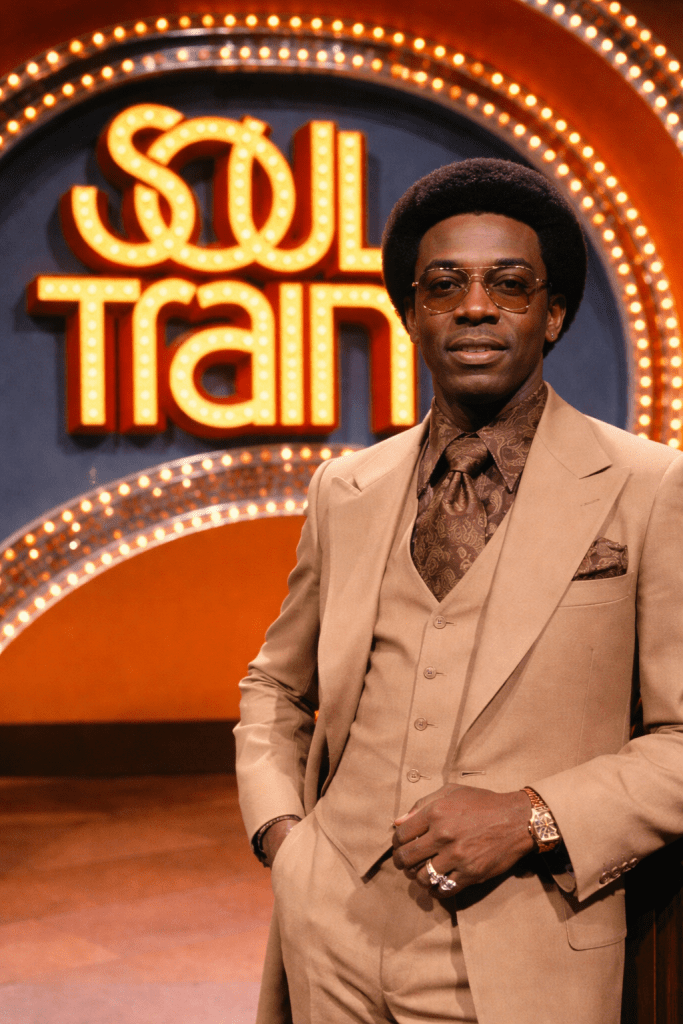
When Soul Train first aired in 1971, it was more than a television program—it was a cultural declaration. Branded “the hippest trip in America,” the show became a weekly sanctuary where Black music, fashion, and joy were broadcast unapologetically into millions of homes. At a time when mainstream television offered limited and often distorted portrayals of African Americans, Soul Train centered Black artistry with elegance, style, and pride.

The visionary behind the show was Don Cornelius, a former Chicago police officer and radio DJ whose deep baritone voice and calm authority became synonymous with the program. Born on September 27, 1936, in Chicago, Illinois, Cornelius developed an early love for broadcasting. After working in insurance sales and law enforcement, he transitioned into radio at WVON, a prominent Black-oriented station in Chicago.

In 1970, Cornelius created a local dance program on Chicago’s WCIU-TV featuring live performances and dancing teens. Its immediate success demonstrated a demand for authentic Black entertainment. With ambition and business acumen, Cornelius syndicated the show nationally in 1971, launching Soul Train into living rooms across America.
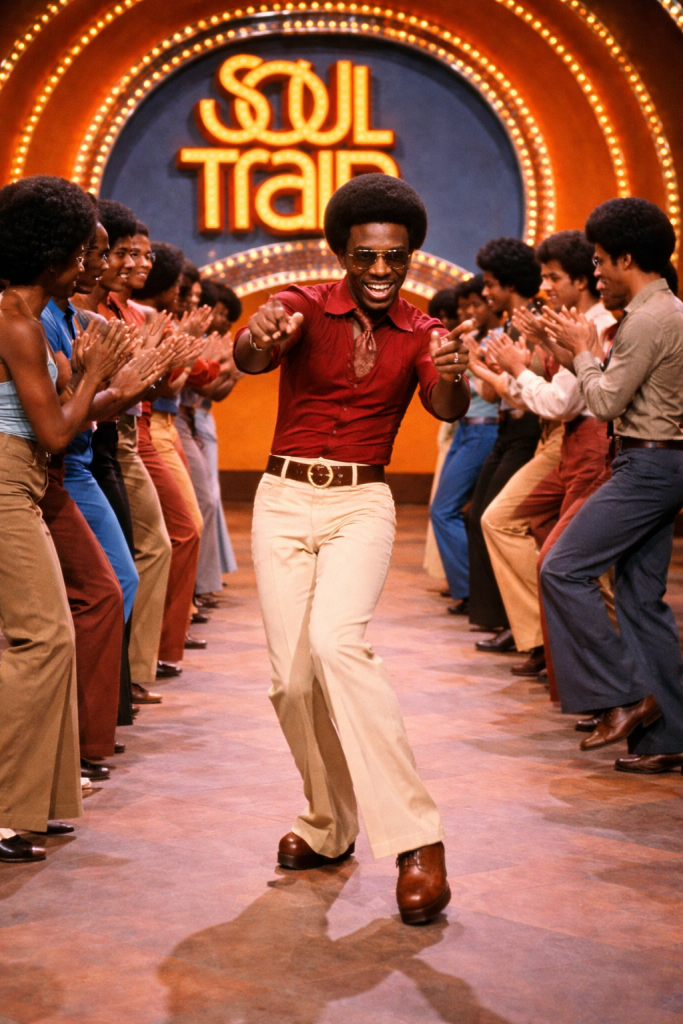
The show’s format was revolutionary. It featured live performances from emerging and established R&B, soul, and later funk and disco artists, alongside high-energy dancers whose style influenced fashion and street culture. The famed “Soul Train Line,” where dancers formed two rows and showcased individual flair, became an iconic symbol of self-expression.

Throughout the 1970s and 1980s, Soul Train hosted legendary performers including Aretha Franklin, Stevie Wonder, James Brown, The Jackson 5, and Whitney Houston. For many artists, appearing on Soul Train was a rite of passage and a gateway to broader audiences.

Cornelius maintained strict control over his production. He insisted on Black ownership at a time when few African Americans controlled nationally syndicated programs. His business model was groundbreaking, ensuring that the cultural capital generated by Black creativity benefited Black entrepreneurs.

In 1987, Cornelius expanded the brand by creating the Soul Train Music Awards, which celebrated achievements in R&B, soul, gospel, and later hip-hop. The awards show provided recognition for artists often overlooked by mainstream institutions like the Grammys.

Don Cornelius’s personal life, however, was complex. He was married twice and had two sons, Anthony and Raymond. Despite his professional success, he faced personal struggles, including depression and legal issues stemming from domestic disputes in the late 2000s.

On February 1, 2012, Cornelius died in Los Angeles from a self-inflicted gunshot wound. His death was ruled a suicide. The loss stunned the entertainment world, prompting tributes that underscored his immense cultural impact. He was 75 years old.

Cornelius’s signature closing phrase—“And as always in parting, we wish you love, peace, and soul”—became etched into American memory. His voice carried authority, smoothness, and dignity, reinforcing the show’s ethos of unity and cultural pride.

The theme song “Soul Train (Hot Potato),” performed by King Curtis in the early years, helped define the show’s sonic identity. Later, the most recognized theme, “TSOP (The Sound of Philadelphia),” performed by MFSB featuring The Three Degrees, became a number-one hit in 1974 and cemented the show’s musical legacy.

The program also served as a launching pad for artists who would later dominate popular culture. The exposure provided by Soul Train often translated into record sales, touring opportunities, and mainstream visibility. It helped integrate Black musical innovation into the broader American soundtrack.

Beyond music, the show influenced fashion trends. Afros, bell-bottoms, platform shoes, sequins, and bold prints became staples of 1970s style, broadcast weekly to a national audience. The dancers were not merely background performers; they were cultural ambassadors.

In 1993, Cornelius stepped down as host, though the show continued with guest hosts until its final episode in 2006. By then, it had aired for 35 years, making it one of the longest-running first-run syndicated programs in American television history.

The legacy of Soul Train extended into film and documentary. In 2021, Summer of Soul and other retrospectives reignited conversations about Black music archives and cultural preservation, though specifically in 2022, the series American Soul dramatized the creation of Soul Train, portraying Cornelius’s rise and personal struggles.

Official Hosts of Soul Train

Don Cornelius (1971–1993)
Creator and original host. His deep baritone voice, calm delivery, and signature closing line defined the show for over two decades.

Guest Host Era (1993–1997)
After Cornelius stepped down in 1993, the show used rotating celebrity guest hosts for several seasons rather than appointing a permanent replacement immediately.

Mystro Clark (1997–2000)
The first permanent host after Cornelius. He brought a youthful, late-90s R&B/hip-hop energy to the show.

Shemar Moore (2000–2003)
Yes — Shemar Moore was one of the official hosts. Before becoming widely known for acting roles on The Young and the Restless and later Criminal Minds, he hosted Soul Train during its early 2000s era. His charisma, physique, and charm appealed to a new generation of viewers and added a modern flavor to the brand.

Dorian Gregory (2003–2006)
The final permanent host before the show ended in 2006. Gregory carried the program through its concluding seasons.

The influence of Soul Train can be traced in later music television programs, including 106 & Park and other platforms that center Black youth culture. Its DNA is embedded in award shows, dance competitions, and music video aesthetics.

In 2012, Cornelius was posthumously honored with tributes at the BET Awards, affirming his foundational role in shaping Black entertainment media. Industry leaders credited him with building an institution that validated generations of artists.

Academically, Soul Train is often examined as a site of cultural resistance and representation. Scholars argue that it countered dominant narratives by showcasing Black excellence, entrepreneurship, and aesthetic innovation during the post–Civil Rights era.

The program also functioned as a historical archive. Episodes now serve as visual documentation of evolving Black style, choreography, and musical trends from soul and funk to early hip-hop. It captured cultural shifts in real time.

Today, Soul Train remains a symbol of unapologetic Black joy. Don Cornelius’s vision transformed a local dance show into a global brand that honored the rhythm of a people. His life story—marked by ambition, struggle, triumph, and tragedy—reflects both the promise and pressure of pioneering success.

“Soul Train” was never just a show; it was a movement. And as Cornelius always reminded viewers, its journey was guided by love, peace, and soul.


References

George, N. (1988). The Death of Rhythm and Blues. Pantheon Books.

Guerrero, E. (1993). Framing Blackness: The African American Image in Film. Temple University Press.

Harris, M. (2014). “Soul Train and the Construction of Black Cool.” Journal of Popular Culture, 47(3), 567–585.

Jet Magazine Archives (1971–2012). Johnson Publishing Company.

Robinson, E. (2012). Don Cornelius, ‘Soul Train’ Creator, Dies at 75. Los Angeles Times.

Smithsonian National Museum of African American History and Culture. (n.d.). Soul Train Collection Archives.
Shocking Facts About Black People – Historical and Cultural Insights

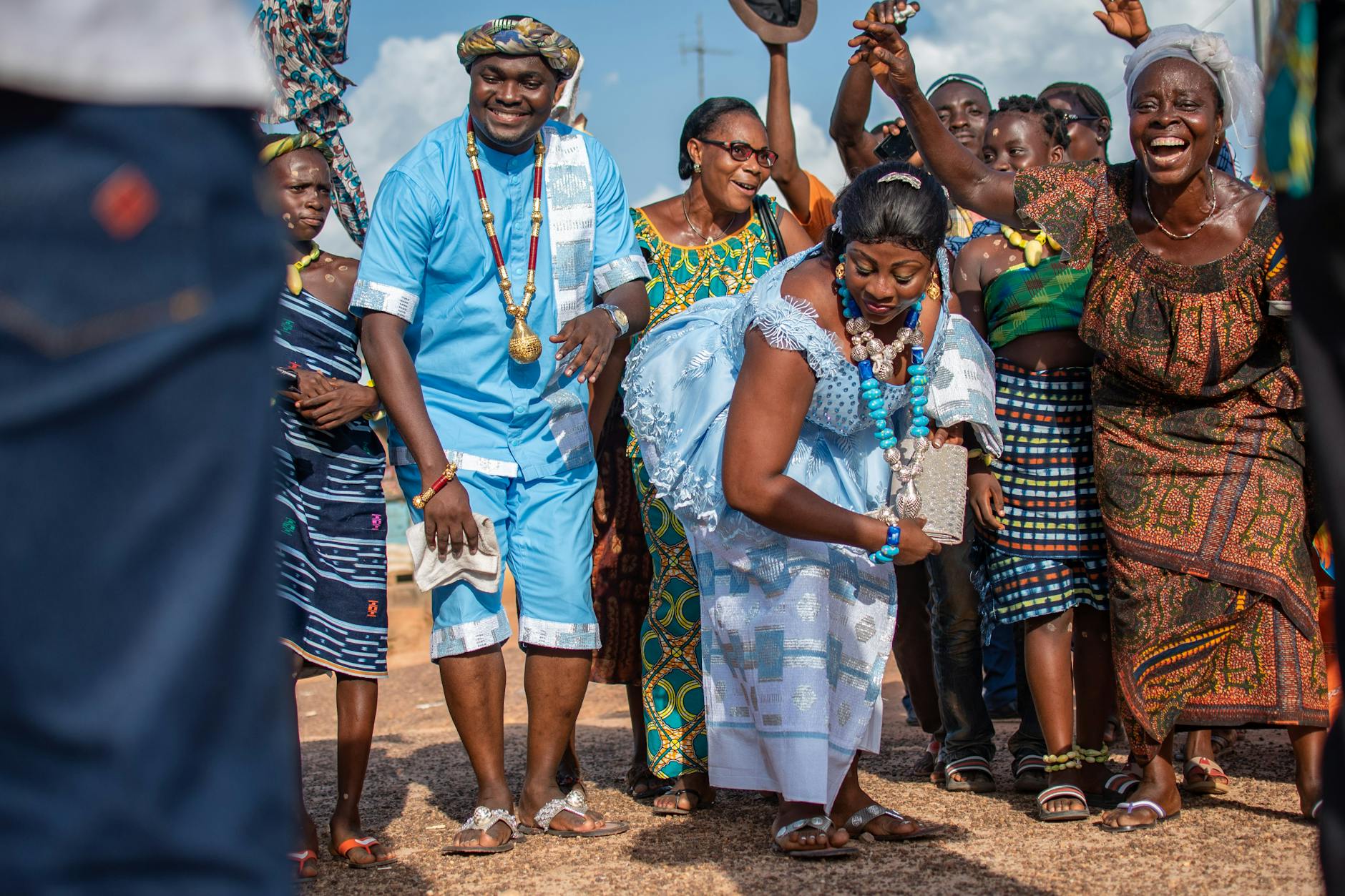
Photo by Roger Sekoua on Pexels.com

The history and cultural legacy of Black people are rich, complex, and often misrepresented. From ancient civilizations to the transatlantic slave trade, Black communities have faced oppression, exploitation, and erasure. Yet, these narratives also reveal extraordinary resilience, intelligence, and innovation. Understanding these facts challenges misconceptions and honors God’s design of His people (Psalm 139:14).

African Civilizations Pre-Slavery

Long before European contact, African kingdoms such as Mali, Songhai, Kush, and Great Zimbabwe were centers of wealth, education, and governance. Mansa Musa of Mali, for example, amassed immense wealth and elevated scholarship and trade, demonstrating the intellectual and economic prowess of Black civilizations (Conrad, 2012).

The Origins of Humanity

Scientific research shows that Homo sapiens originated in Africa. Genetic studies confirm that all humans trace lineage to African ancestors, highlighting Black people as the root of humanity (Tishkoff et al., 2009).

Contributions to Science and Medicine

Ancient Egyptians pioneered surgery, medicine, and mathematics. The concept of medical documentation, early surgical procedures, and complex calendars originated in African societies, long before European acknowledgment.

Cultural Innovations

Black people developed advanced metallurgy, architecture, textiles, music, and art. Instruments such as the drum and innovations in astronomy, navigation, and oral history shaped civilizations globally.

The Transatlantic Slave Trade

Between the 16th and 19th centuries, millions of Africans were forcibly enslaved. This systemic oppression disrupted societies, severed familial bonds, and attempted to erase cultural identity, leaving a legacy of trauma that persists today (Eltis & Richardson, 2010).

Black Intellectual Traditions

Despite oppression, Black intellectualism flourished. Figures like W.E.B. Du Bois, Olaudah Equiano, and Phillis Wheatley challenged stereotypes and demonstrated literary, philosophical, and scientific brilliance.

Biblical Identity

The Bible references the descendants of Cush, Mizraim, and Ham, linking Black people to God’s covenantal history (Genesis 10:6–14). This heritage underscores that Black people are not secondary or accidental, but divinely created with purpose.

Resilience Amid Oppression

Black communities have demonstrated remarkable resilience, developing strategies to survive, adapt, and thrive despite systemic racism, segregation, and economic exploitation. Faith, communal support, and cultural preservation were central to survival.

Impact on Global Culture

From language and music to cuisine and fashion, Black culture has profoundly influenced global societies. Jazz, hip-hop, gospel, and African diasporic traditions reflect creativity born from both joy and struggle.

Skin Tone and Colorism

Colorism within Black communities is a byproduct of colonialism, privileging lighter skin while marginalizing darker skin. This internalized hierarchy is not reflective of value or beauty but of historical imposition (Hunter, 2007).

Economic and Political Contributions

Black inventors, entrepreneurs, and leaders have shaped modern society. Innovations such as traffic lights, medical devices, and agricultural techniques were pioneered by Black individuals, despite systemic barriers.

Misrepresentation in Media

Media often distorts Black identity, portraying negative stereotypes while omitting historical and cultural contributions. These narratives perpetuate misconceptions and obscure the richness of Black heritage.

Health Disparities and Genetics

Black populations experience certain health disparities due to both socio-economic and biological factors. Yet genetic diversity among Africans has contributed to adaptive strengths, including immunity to certain diseases and physical endurance.

Spiritual Depth

Faith has been central to Black survival and empowerment. Christianity, Islam, and traditional spiritual practices have fostered resilience, moral guidance, and community cohesion across centuries.

Diaspora Connections

The African diaspora maintains cultural continuity through language, religion, and tradition. Understanding these connections highlights a shared heritage that spans continents and centuries.

Resistance and Liberation Movements

From slave revolts to civil rights activism, Black people have consistently resisted oppression. Leaders such as Harriet Tubman, Frederick Douglass, and Malcolm X exemplify courage, strategic intelligence, and moral leadership.

Contemporary Achievements

Today, Black individuals excel in academia, arts, business, science, and governance, challenging historical misrepresentations and redefining global influence.

Conclusion

Black history and culture are filled with achievements, resilience, and divine purpose. Recognizing these facts challenges societal misconceptions and honors the value and dignity of Black people as God’s creation (Psalm 139:14; Genesis 1:27). True understanding requires both historical insight and cultural appreciation.


References

  • Conrad, D. C. (2012). Empires of medieval West Africa: Ghana, Mali, and Songhai. Ohio University Press.
  • Eltis, D., & Richardson, D. (2010). Atlas of the transatlantic slave trade. Yale University Press.
  • Hunter, M. L. (2007). The persistent problem of colorism: Skin tone, status, and inequality. Sociology Compass, 1(1), 237–254. https://doi.org/10.1111/j.1751-9020.2007.00006.x
  • Tishkoff, S. A., et al. (2009). The genetic structure and history of Africans and African Americans. Science, 324(5930), 1035–1044. https://doi.org/10.1126/science.1172257
  • Psalm 139:14 (KJV) – “I am fearfully and wonderfully made.”
  • Genesis 10:6–14 (KJV) – Descendants of Cush, Mizraim, and Ham.

Black History: The Rivalry of Booker T. Washington and W.E.B. Du Bois.

Black Minds, Divergent Paths in the Battle for Black America’s Future.

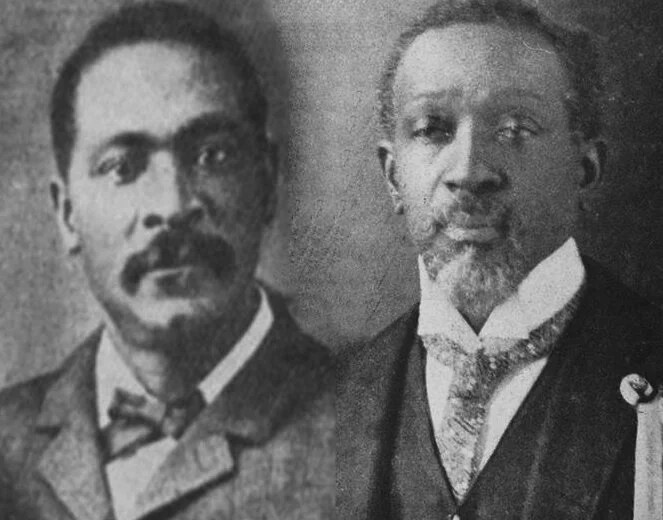
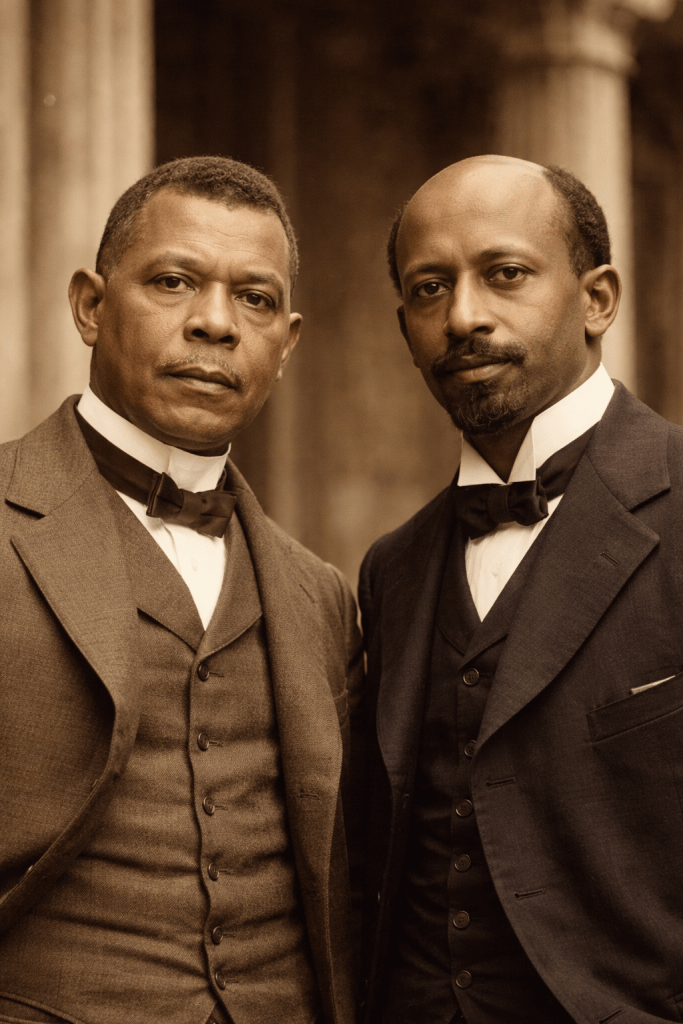
n the long and embattled arc of Black intellectual history, two towering figures emerged at the turn of the twentieth century whose visions would shape the destiny of African Americans for generations: Booker T. Washington and W. E. B. Du Bois. Though contemporaries, their philosophies diverged sharply, reflecting contrasting strategies for racial uplift during the nadir of American race relations. Together, they represent not merely disagreement but the dynamic intellectual tension that propelled Black progress forward.

Booker T. Washington was born into slavery in 1856 in Franklin County, Virginia. Emancipated as a child, he rose from bondage to become one of the most influential Black leaders of his era. His early life of poverty, labor, and illiteracy instilled in him a profound belief in discipline, industrial education, and economic self-sufficiency as the pathway to racial advancement. His autobiography, Up from Slavery, became a testament to perseverance and pragmatism.

Washington’s greatest institutional achievement was the founding of the Tuskegee Institute in Alabama in 1881. There, he emphasized vocational training—carpentry, agriculture, mechanics, domestic science—arguing that economic strength would earn Black Americans respect in a hostile white supremacist society. He believed that dignity could be constructed through labor and ownership, brick by brick.

His philosophy was crystallized in the 1895 Atlanta Exposition Address, often called the “Atlanta Compromise.” In that speech, Washington suggested that Black Americans should temporarily accept segregation and disenfranchisement while focusing on economic development. “Cast down your bucket where you are,” he urged, advocating cooperation with Southern whites in economic matters while avoiding direct agitation for civil rights.

In contrast stood W.E.B. Du Bois, born free in Great Barrington, Massachusetts, in 1868. Du Bois was the first African American to earn a Ph.D. from Harvard University. A scholar of extraordinary brilliance, he mastered history, sociology, economics, and classical studies. His intellect was widely regarded as unmatched among his contemporaries, earning him recognition as one of the greatest thinkers of the twentieth century.

Du Bois rejected Washington’s accommodationist stance. In his seminal work, The Souls of Black Folk, he critiqued what he perceived as Washington’s surrender of political rights. Du Bois introduced the concept of “double consciousness,” describing the psychological tension experienced by African Americans who must navigate a world that views them through the lens of prejudice.

Where Washington championed industrial education, Du Bois advocated for the “Talented Tenth”—the cultivation of a Black intellectual elite who would lead the race toward equality through higher education and political activism. He believed classical education, not merely vocational training, was essential for full citizenship and leadership.

Their disagreement was not simply personal but ideological. Washington emphasized economic gradualism; Du Bois demanded immediate civil rights. Washington sought alliances with white philanthropists and political leaders; Du Bois challenged the very structures of white supremacy. Washington operated behind the scenes, often wielding quiet influence; Du Bois engaged publicly and polemically.

In 1905, Du Bois helped found the Niagara Movement, a precursor to the NAACP, established in 1909. Through this organization, Du Bois became editor of The Crisis, a powerful publication that advocated for anti-lynching legislation, voting rights, and racial justice. His activism laid the groundwork for the modern Civil Rights Movement.

Washington’s influence, however, was equally formidable. He advised U.S. presidents and built networks of Black businesses, schools, and farmers throughout the South. Under his leadership, Tuskegee became a model of Black institutional autonomy. He believed that land ownership, craftsmanship, and financial literacy would fortify Black communities against economic exploitation.

Intellectually, both men were formidable, though in different ways. Washington possessed strategic intelligence and organizational genius. Du Bois embodied scholarly brilliance and philosophical depth. One was a master tactician of survival within oppression; the other a prophetic critic of injustice.

Their views on race also diverged. Washington, shaped by enslavement and Reconstruction’s violent collapse, viewed racial uplift as a long-term project requiring patience and economic stability. Du Bois, shaped by Northern education and exposure to global thought, viewed race as a social construct weaponized by power, demanding immediate dismantling.

Lineage and regional upbringing deeply influenced their perspectives. Washington’s Southern roots, born enslaved, forged a realism rooted in survival. Du Bois, of mixed African and European ancestry, raised in a relatively integrated Northern town, approached race with analytical detachment and global awareness. He later embraced Pan-Africanism, organizing international congresses that connected African diasporic struggles worldwide.

Both men were historically identified and socially classified as Black in the United States, but their ancestry backgrounds were different.

Booker T. Washington was born into slavery in Virginia in 1856. His mother, Jane, was an enslaved African woman. His father was a white man, widely believed to have been a neighboring plantation owner, though Washington never knew him. This means Washington was of mixed African and European ancestry biologically. However, under the racial caste system of the United States—particularly the “one-drop rule”—he was legally and socially defined as Black. Washington identified fully with the Black community and devoted his life to its advancement.

W. E. B. Du Bois was also of mixed ancestry. Born free in Massachusetts in 1868, Du Bois had African, French Huguenot, Dutch, and possibly Native American lineage. He openly acknowledged his multiracial heritage in his autobiographical writings. Despite his partial European ancestry and relatively lighter complexion, Du Bois was socially classified as Black and experienced racial discrimination. He strongly identified as a member of the African American community and became one of its foremost intellectual defenders.

It is important to understand that in 19th- and early 20th-century America, racial identity was not determined by ancestry percentages but by social classification and power structures. The legal doctrine of hypodescent—commonly known as the one-drop rule—assigned anyone with known African ancestry to the Black racial category regardless of admixture.

Genetically speaking, most African Americans descend from a mixture of West and Central African populations with varying degrees of European ancestry due to the history of slavery. Historically speaking, both Washington and Du Bois were Black men operating within and against a racially stratified society that did not recognize “mixed” as a protected or separate political identity.

Du Bois in particular wrestled intellectually with questions of race, ancestry, and identity. In The Souls of Black Folk, he emphasized the social construction of race and the psychological burden imposed upon Black Americans by white supremacy. His mixed heritage did not dilute his commitment to Pan-African solidarity; rather, it sharpened his critique of racial hierarchy.

In summary: biologically, both men had mixed ancestry. Socially, legally, culturally, and politically, they were Black men in America—and they embraced that identity in their scholarship and activism.

Despite their clashes, both men sought the elevation of Black people. Washington feared that agitation would provoke violent backlash. Du Bois feared that silence would entrench permanent subordination. Each perceived the dangers of his time differently, and each responded according to his convictions.

The early twentieth century proved that both strategies held merit. Economic institutions built under Washington provided material foundations for Black communities. Legal activism spearheaded by Du Bois and the NAACP led to landmark challenges to segregation, culminating in victories such as Brown v. Board of Education.

Washington died in 1915, while Du Bois lived until 1963, dying in Ghana on the eve of the March on Washington. Their lifespans bracketed the transformation from Reconstruction’s failure to the threshold of the Civil Rights Movement’s triumphs. History would vindicate aspects of both visions.

Du Bois eventually shifted toward socialism and Pan-African nationalism, critiquing capitalism as a global racial hierarchy. Washington remained committed to American industrial capitalism as a vehicle for Black prosperity. Their economic philosophies reveal deeper tensions about integration, autonomy, and systemic change.

The intellectual rivalry between Washington and Du Bois was not a weakness within Black leadership but a sign of intellectual vitality. Black America was not monolithic; it wrestled with strategy, ethics, and survival in real time. Their debates forced the nation to confront uncomfortable truths about democracy and citizenship.

Today, their legacies continue to shape discussions about education, economic empowerment, protest, and respectability politics. Contemporary debates over vocational training versus liberal arts education echo their arguments. The balance between institutional building and public protest remains central to social justice movements.

To ask who was “smarter” misses the deeper truth. Washington possessed practical genius; Du Bois embodied scholarly brilliance. Intelligence manifested differently in each man, yet both altered the trajectory of history. One built institutions; the other built consciousness.

In the final analysis, Booker T. Washington and W.E.B. Du Bois were not opposites so much as complementary forces within a larger struggle for Black liberation. One carved pathways within the system; the other challenged the system itself. Together, they expanded the intellectual and moral horizons of America, proving that Black thought in the early twentieth century was not only resilient but revolutionary.

References

Du Bois, W. E. B. (1903). The souls of Black folk. A. C. McClurg & Co.

Du Bois, W. E. B. (1968). The autobiography of W. E. B. Du Bois: A soliloquy on viewing my life from the last decade of its first century. International Publishers. (Original work published 1968)

Foner, E. (1988). Reconstruction: America’s unfinished revolution, 1863–1877. Harper & Row.

Harlan, L. R. (1972). Booker T. Washington: The making of a Black leader, 1856–1901. Oxford University Press.

Harlan, L. R. (1983). Booker T. Washington: The wizard of Tuskegee, 1901–1915. Oxford University Press.

Lewis, D. L. (1993). W. E. B. Du Bois: Biography of a race, 1868–1919. Henry Holt.

Lewis, D. L. (2000). W. E. B. Du Bois: The fight for equality and the American century, 1919–1963. Henry Holt.

Logan, R. W. (1954). The betrayal of the Negro: From Rutherford B. Hayes to Woodrow Wilson. Collier Books.

Meier, A. (1963). Negro thought in America, 1880–1915: Racial ideologies in the age of Booker T. Washington. University of Michigan Press.

Washington, B. T. (1901). Up from slavery. Doubleday, Page & Company.

Washington, B. T. (1895). The Atlanta Exposition Address. In L. R. Harlan (Ed.), The Booker T. Washington papers (Vol. 3). University of Illinois Press.

Woodward, C. V. (1955). The strange career of Jim Crow. Oxford University Press.

Black History: Mound Bayou – A Sovereign Dream in the Delta’s Shadow.

In the aftermath of Reconstruction, when the promise of Black citizenship was steadily being dismantled across the American South, a remarkable experiment in self-determination emerged in the Mississippi Delta. Mound Bayou was founded in 1887 as an all-Black town built on the principles of economic independence, political autonomy, and racial dignity. Conceived during the height of Jim Crow repression, it stood as a bold counter-narrative to white supremacy—an intentional “fortress” of Black sovereignty in hostile territory.

The founders of Mound Bayou were Isaiah T. Montgomery and his cousin Benjamin T. Green, both formerly enslaved men and sons of Benjamin Montgomery, who had been enslaved by Joseph E. Davis, brother of Jefferson Davis. Benjamin Montgomery had managed the Davis plantation and developed substantial administrative and agricultural expertise, which he passed on to his sons. After emancipation, Isaiah and Benjamin Green carried forward a vision of Black landownership and community governance rooted in self-reliance.

The Mississippi Delta in the late nineteenth century was fertile ground agriculturally but socially perilous for Black people. Sharecropping and debt peonage trapped many formerly enslaved families in cycles of economic dependency. Lynching and racial violence were pervasive. In this climate, Montgomery and Green sought to carve out a space where Black citizens could exercise full civic participation without white interference. They purchased land from the Louisville, New Orleans, and Texas Railway and began plotting a town.

Mound Bayou was deliberately located along the railroad line, which provided economic access while preserving geographic separation. The founders named the town after the nearby bayou and ancient Native American mounds in the region. From its inception, the town was self-governed by Black officials—mayors, police officers, merchants, and educators—forming one of the earliest fully autonomous Black municipalities in the United States.

Economic development was central to its survival. The town established cotton gins, general stores, and farms. Over time, it developed banks, insurance companies, and schools. Black professionals—doctors, lawyers, and teachers—found refuge and opportunity there. By the early twentieth century, Mound Bayou had become a symbol of Black enterprise, often cited alongside other independent Black communities such as Tulsa’s Greenwood District.

One of the most discussed early incidents illustrating the town’s social boundaries involved a white train conductor or traveler who reportedly stepped off a train in Mound Bayou, unaware that it was an all-Black town. According to local oral histories, he expected the usual racial deference accorded to whites in the South. Instead, he encountered a community that did not operate under Jim Crow norms of subservience. The shock was mutual: white intrusion was rare, and the town’s residents made clear that governance and authority there rested in Black hands. While versions of the story vary, the incident became emblematic of Mound Bayou’s guarded autonomy—a literal and symbolic “fortress” in the Delta.

Despite its ideals, the town’s leadership faced difficult political choices. In 1890, Isaiah T. Montgomery served as a delegate to the Mississippi Constitutional Convention. In a controversial move, he supported provisions that effectively disenfranchised many Black voters through poll taxes and literacy tests. Montgomery argued that political compromise was necessary to protect Mound Bayou from violent reprisal and to ensure its survival within a white-dominated state. His decision has remained a subject of scholarly debate, reflecting tensions between pragmatism and principle.

During the early 1900s, national Black leaders took notice. Booker T. Washington visited Mound Bayou and praised it as a model of Black self-help and industrial progress. Washington’s philosophy of economic advancement before political agitation aligned with Montgomery’s approach. The town was frequently cited in speeches and publications as proof that Black communities could thrive independently.

By 1907, Mound Bayou had a hospital, the Taborian Hospital, founded by the Knights and Daughters of Tabor, a Black fraternal organization. The hospital became one of the most important medical facilities for African Americans in Mississippi, providing care at a time when segregation barred them from white institutions. Health care, education, and business infrastructure reinforced the town’s status as a refuge.

The Great Migration altered the town’s trajectory. As millions of African Americans left the South for northern and western cities, Mound Bayou experienced population fluctuations. Mechanization in agriculture reduced labor needs, and economic challenges mounted. Yet the town endured, maintaining its identity as a symbol of Black resilience.

During the Civil Rights Movement, Mound Bayou again became significant. Activists and organizations such as the Student Nonviolent Coordinating Committee found support networks there. The town’s history of self-governance made it receptive to voter registration drives and community organizing efforts aimed at dismantling Jim Crow laws.

Federal anti-poverty programs in the 1960s, including initiatives under President Lyndon B. Johnson’s War on Poverty, brought new investments into the Mississippi Delta. Mound Bayou became a site for community health centers and economic development programs, linking its nineteenth-century origins to twentieth-century struggles for structural reform.

Throughout its existence, the town has embodied a paradox: it was both separatist in structure and integrative in aspiration. Its founders did not seek isolation for its own sake but protection from violence and degradation. In doing so, they created a civic experiment in Black nationalism long before that term gained popular currency.

The legacy of Isaiah T. Montgomery remains complex. To some, he was a visionary architect of Black autonomy; to others, his compromise at the 1890 convention symbolized accommodation to white supremacy. Yet without his political navigation, Mound Bayou may not have survived its vulnerable infancy.

Mound Bayou’s story also intersects with broader patterns of Black town formation across the South and West, including communities founded in response to racial terror and land exclusion. These towns were acts of resistance—physical manifestations of a people determined to claim space, cultivate land, and govern themselves.

Culturally, Mound Bayou fostered a sense of dignity that countered prevailing narratives of Black inferiority. Children grew up seeing Black authority normalized—Black teachers instructing, Black officers enforcing law, Black entrepreneurs building wealth. This psychological impact cannot be overstated in a region structured by racial hierarchy.

Though its population has declined from its early peak, the town remains incorporated and inhabited. Its very endurance is testimony to the durability of its founding vision. Streets laid in 1887 still carry the memory of aspiration etched into Delta soil.

Today, historians revisit Mound Bayou as part of a larger reconsideration of Reconstruction and its aftermath. Rather than viewing the post-Reconstruction era solely through the lens of Black disenfranchisement, scholars now emphasize Black institution-building and strategic survival. Mound Bayou stands at the center of that reinterpretation.

It was not merely a town but an argument—an embodied thesis that formerly enslaved people could master land, capital, and governance despite systemic obstruction. In the middle of the Delta, surrounded by plantations that once symbolized bondage, rose a community determined to rewrite destiny.

Mound Bayou endures as a sovereign dream carved from cotton fields and conviction. It reminds the nation that even under siege, Black Americans built fortresses of hope—self-fashioned citadels of dignity in the shadow of oppression.


References

Anderson, J. D. (1988). The education of Blacks in the South, 1860–1935. University of North Carolina Press.

Franklin, J. H., & Moss, A. A. (2000). From slavery to freedom: A history of African Americans (8th ed.). McGraw-Hill.

Green, A. (1999). Mound Bayou: An all-Black town in the Mississippi Delta. Mississippi Historical Society.

Montgomery, I. T. (1890). Speech at the Mississippi Constitutional Convention.

Washington, B. T. (1901). Up from slavery. Doubleday.

Woodruff, N. (2003). American Congo: The African American freedom struggle in the Delta. Harvard University Press.

Black History: Tignon Law – When Black Beauty Became a Crime.

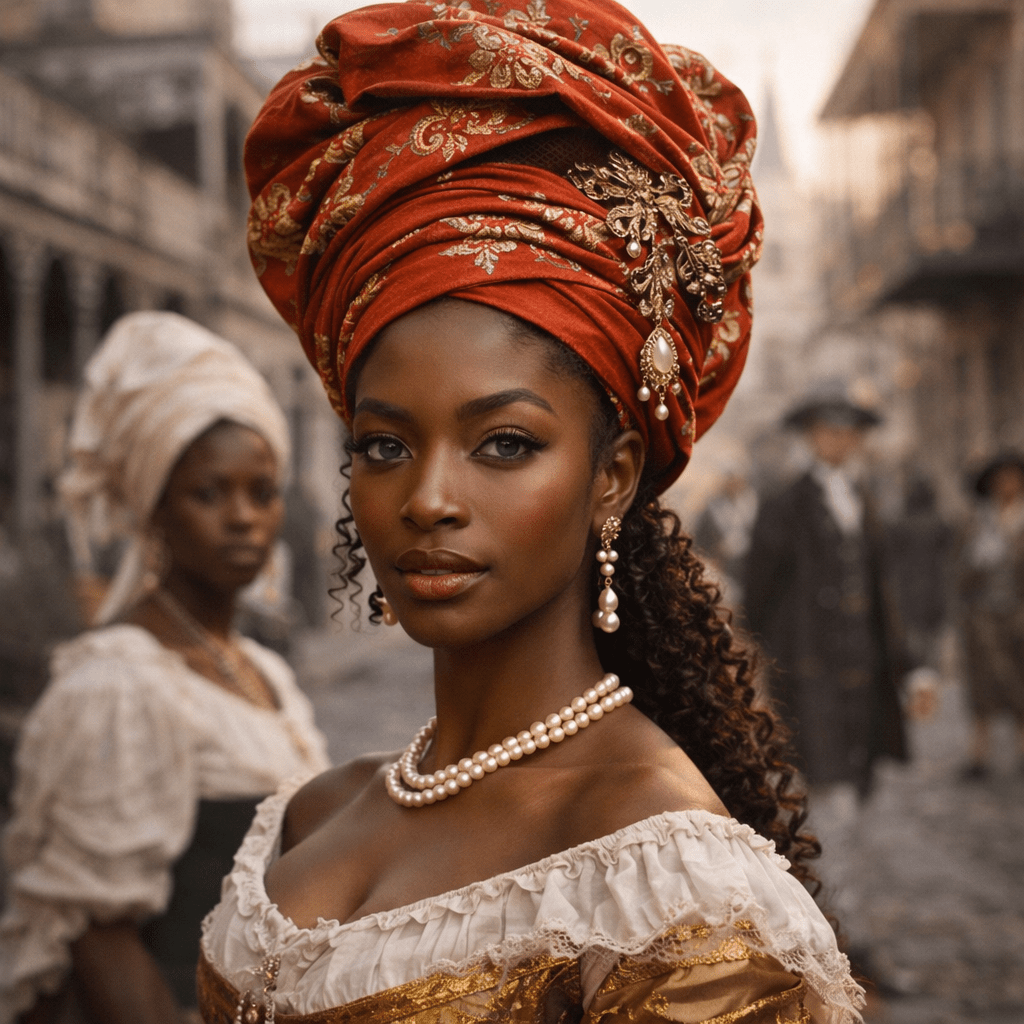
The Tignon Law represents one of the most striking examples of how Black beauty and identity have been policed through legislation. Passed in 1786 in Louisiana, this law required Black women, both free and enslaved, to cover their hair in public with a tignon, a type of headscarf. The law was ostensibly aimed at curbing the allure of Black women, reflecting deep anxieties about race, beauty, and social hierarchy in a colonial society.

The law was enacted during the period of Spanish rule in Louisiana, under the governorship of Esteban Rodríguez Miró. Miró was concerned with the growing social influence of free Black women, particularly the Gens de Couleur Libres, or free women of color, who were achieving economic independence and social prominence. Wealthy and attractive, these women challenged the rigid racial and gender hierarchies of the time.

The Tignon Law was framed as a moral and social regulation. Officials argued that Black women’s natural beauty and fashionable adornments threatened social order and risked attracting attention from white men. By forcing women to cover their hair, the law sought to visibly mark them as subordinate, restricting their ability to express themselves through appearance.

Hair and head wrapping have long been deeply symbolic in African and African diasporic cultures. Hair texture, styles, and adornments signify identity, social status, and cultural heritage. The Tignon Law directly targeted these expressions, attempting to erase visible signs of Black beauty that could empower women socially and economically.

Free Black women in New Orleans were particularly affected. Many were wealthy business owners, property holders, and skilled artisans. Their appearance, including elaborately styled hair and colorful scarves, became symbols of their independence and influence. These displays were seen as threats by a white elite intent on maintaining racial hierarchies.

Despite the law’s oppressive intent, Black women creatively subverted it. They wore tignons in elaborate, colorful, and decorative ways, turning what was intended as a mark of subjugation into a fashion statement. This resistance reflected ingenuity, resilience, and the enduring assertion of beauty and identity under racist constraints.

The law illustrates broader societal anxieties about Black female sexuality and power. White authorities feared that attractive Black women could disrupt social control by challenging assumptions of whiteness as superior and Blackness as subordinate. The Tignon Law is a vivid example of how systemic racism extends beyond economics and politics into the policing of appearance and cultural expression.

The Tignon Law was not only about controlling hair—it was about controlling the body and autonomy of Black women. By regulating visibility and beauty, colonial authorities sought to communicate that Black women could not assert power through self-presentation, wealth, or social influence.

Economic success among free Black women further intensified white anxieties. Many were entrepreneurs, running boarding houses, laundries, or small shops. Their wealth and social presence contradicted prevailing stereotypes of Black women as powerless or submissive, prompting legislative efforts to suppress this visibility.

The law also had implications for enslaved women. While their labor was exploited, enslaved women who displayed beauty or elegance could be accused of seduction or insolence. Hair covering laws reinforced a racialized hierarchy that sought to render all Black women invisible, modest, and socially subordinate.

Head wrapping itself carries a long history in African culture, signaling marital status, social rank, or spiritual devotion. The tignon, while imposed by colonial authorities, was adopted and transformed by Black women into an assertion of cultural pride and defiance.

Racist views underpinning the Tignon Law reflect broader European ideologies that sought to contain Black identity and sexuality. Beauty was racialized as threatening, with Black women punished for attractiveness and personal style in ways that white women were never subjected to.

Despite legal restrictions, Black women used the tignon to communicate status, creativity, and elegance. Some tied elaborate knots, layered multiple scarves, and adorned them with jewels or lace. Their adaptation of the law demonstrates the power of cultural expression to resist oppression.

The Tignon Law also highlights intersections of race, gender, and law. Unlike men, whose economic success might be tolerated or co-opted, Black women’s appearance and autonomy were policed as a threat to social order, revealing gendered dimensions of racial control.

Cultural historians argue that the Tignon Law had unintended consequences. By attempting to suppress Black beauty, it fostered a unique fashion aesthetic that blended African heritage with European influences, influencing Caribbean and American styles for generations.

The law remained in effect throughout the late 18th century, though enforcement was inconsistent. Black women’s ingenuity rendered the law largely symbolic, showing that social power can be expressed through appearance even under legal constraints.

The Tignon Law is a precursor to later codes and social norms that restricted Black women’s hair, such as school bans on natural hairstyles or corporate appearance policies. These contemporary issues echo the same underlying anxieties about Black beauty, professionalism, and visibility.

Understanding the Tignon Law is critical for appreciating the ways Black women have historically resisted aesthetic policing. It highlights their creativity, resilience, and ability to claim beauty as a form of power, even in the face of systemic oppression.

The law also reminds modern audiences that beauty is not superficial—it is political. Black women’s choices regarding hair, adornment, and style have long been sites of resistance, negotiation, and cultural affirmation.

Ultimately, the Tignon Law exemplifies the intersection of race, gender, law, and aesthetics. It serves as a testament to the enduring struggle of Black women to define their identity, assert autonomy, and transform imposed limitations into symbols of pride and cultural resilience.


References

Miller, M. (2017). Wrapped in Pride: African American Women and Head Coverings. University of North Carolina Press.

Foster, T. (2013). The Tignon Law: Policing Black Female Beauty in Colonial Louisiana. Journal of Southern History, 79(2), 287–310.

Reed, A. (2005). The Black Past: New Orleans Free Women of Color and the Tignon Law. African American Review, 39(4), 601–618.

Giddings, P. (1984). When and Where I Enter: The Impact of Black Women on Race and Sex in America. HarperCollins.

Hall, K. (1992). Hair as Power: Cultural Identity and Resistance in African American History. Journal of American History, 79(3), 921–939.

Dominguez, V. (2008). Colonial Laws and Racial Control in Spanish Louisiana. Louisiana Historical Quarterly, 91(1), 45–72.

Scott, R. (2006). Beauty and Subversion: The Politics of Black Female Appearance. Feminist Studies, 32(1), 87–112.

Dilemma: The Modern & Slave Plantations

The legacy of slavery continues to shape the modern world in ways that are often overlooked. While chattel slavery in the United States officially ended in 1865, its economic, social, and psychological structures persist in subtle yet profound forms. Modern “plantations” manifest not only as historical sites but also as systemic systems of exploitation that disproportionately impact Black communities.

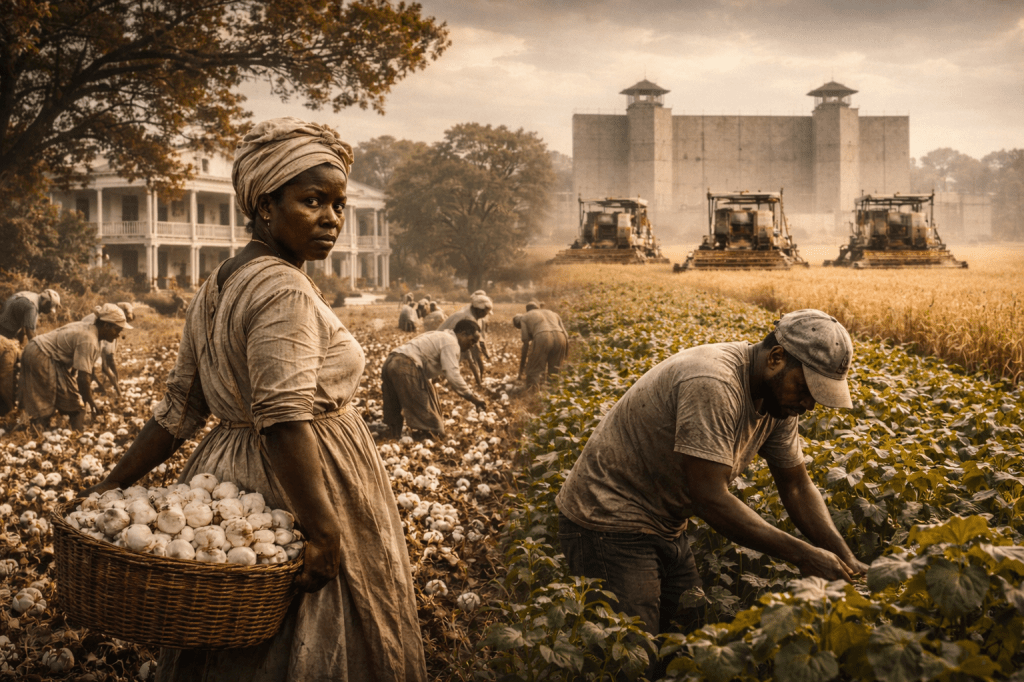
During the antebellum period, plantations were economic engines built on the labor of enslaved Africans. They relied on dehumanization, control, and violence to maintain productivity, wealth, and social hierarchy. The plantation system created lasting inequities in land ownership, education, and wealth accumulation.

Enslaved individuals were subjected to grueling labor from dawn to dusk, often under extreme conditions in the fields or as domestic workers. Families were torn apart, and basic human rights were denied. The psychological and cultural impact of this trauma has resonated across generations, creating long-lasting challenges in Black communities.

Plantations were also centers of cultural erasure. Enslaved Africans were forbidden from speaking their native languages, practicing their religions, or maintaining cultural traditions. This forced assimilation sought to strip individuals of identity while normalizing the supremacy of white culture.

The “modern plantation” can be understood metaphorically in terms of systemic oppression. Mass incarceration, exploitative labor practices, and economic marginalization of Black Americans are frequently described as contemporary forms of plantation-like control. While the methods differ, the underlying structures of surveillance, discipline, and economic extraction remain.

Historically, plantations relied on racialized hierarchies to maintain control. White supremacy dictated who could own property, access education, or participate in governance. These hierarchies have influenced social and institutional structures into the 21st century, contributing to persistent racial disparities in wealth, health, and political representation.

The psychological effects of plantation life continue to manifest in generational trauma. Studies on epigenetics suggest that stress and trauma experienced by enslaved ancestors may impact the mental and physical health of descendants, contributing to disparities in mental health, chronic illness, and resilience.

Education on plantation history often sanitizes the brutality experienced by enslaved individuals. Museums and historical sites sometimes focus on the architecture, wealth, or “heritage” of plantation owners while minimizing the suffering, resistance, and humanity of the enslaved population. This selective narrative reinforces systemic racism by erasing the lived experiences of Black Americans.

Labor exploitation continues in modern industries. Many low-wage sectors disproportionately employ Black workers under precarious conditions, echoing the economic dependency that existed on plantations. Farm labor, domestic work, and service industries reveal structural patterns reminiscent of historical exploitation.

Slavery and modern oppression are also interconnected through wealth disparities. The descendants of enslaved individuals were denied the ability to accumulate land, start businesses, or inherit wealth for generations. In contrast, many modern corporations and institutions trace their wealth back to slavery, creating intergenerational inequities that persist today.

Plantations were not only economic sites but also spaces of resistance and culture. Enslaved Africans preserved languages, songs, spiritual practices, and social networks, which formed the foundation of Black American culture. This resilience contrasts sharply with the narrative of passive subjugation often presented in history.

Modern parallels are visible in prison labor systems, where predominantly Black populations are employed for minimal wages. Scholars argue that this represents a continuation of the plantation logic: controlled labor extracted under constrained autonomy, producing profit for others while restricting freedom.

Cultural representations of plantations also shape perceptions. Films, literature, and tourism often romanticize plantation life, masking the violence and oppression that defined the institution. This misrepresentation perpetuates myths about the benevolence of slavery and undermines the acknowledgment of Black suffering and agency.

Plantations in the modern imagination can also refer to economic environments where Black workers are overexploited, surveilled, and restricted in mobility. Corporations, supply chains, and gig economies sometimes mirror the control mechanisms of historical plantations through low wages, lack of benefits, and limited upward mobility.

Land ownership remains a critical issue. After emancipation, Black farmers and landowners faced systemic barriers through discriminatory lending practices, violence, and legal maneuvers, preventing them from achieving economic independence. This mirrors the historical denial of land and wealth that characterized the plantation economy.

The plantation metaphor extends to education. Schools in under-resourced Black communities often suffer from overcrowding, poor facilities, and limited access to quality instruction. These conditions reflect structural neglect that echoes the constraints placed on enslaved individuals, shaping long-term outcomes.

Healthcare disparities also reflect plantation legacies. Limited access to medical services, environmental injustices, and systemic bias within healthcare institutions continue to disproportionately affect Black communities, echoing the neglect and exploitation of enslaved populations.

Understanding the link between historical plantations and modern inequalities is critical for policy and social justice. Recognizing systemic patterns enables more effective interventions, targeted support, and reparative measures that address the roots of inequity rather than treating symptoms superficially.

Resistance has always been part of the story. Enslaved Africans organized revolts, preserved cultural practices, and forged communities of resilience. Today, activism, scholarship, and advocacy continue this legacy, challenging modern forms of oppression and advocating for racial equity.

Ultimately, the dilemma of modern plantations reminds society that the end of slavery did not end its effects. The structures, ideologies, and systems established during slavery continue to shape economic, social, and cultural realities for Black Americans. Addressing this requires critical awareness, structural reform, and historical reckoning.


References

Berlin, I. (2003). Generations of Captivity: A History of African-American Slaves. Belknap Press.

Davis, A. Y. (2003). Are Prisons Obsolete? Seven Stories Press.

Kolchin, P. (2003). American Slavery, 1619–1877. Hill and Wang.

Wood, P. H. (1999). Black Majority: Negroes in Colonial South Carolina from 1670 through the Stono Rebellion. W. W. Norton & Company.

Alexander, M. (2010). The New Jim Crow: Mass Incarceration in the Age of Colorblindness. The New Press.

White, D. G. (1999). Ar’n’t I a Woman? Female Slaves in the Plantation South. W. W. Norton & Company.

Finkelman, P. (2009). Slavery and the Founders: Race and Liberty in the Age of Jefferson. M.E. Sharpe.

Gates, H. L., Jr., & Higginbotham, E. B. (2010). African American Lives. Oxford University Press.

PASSING as White

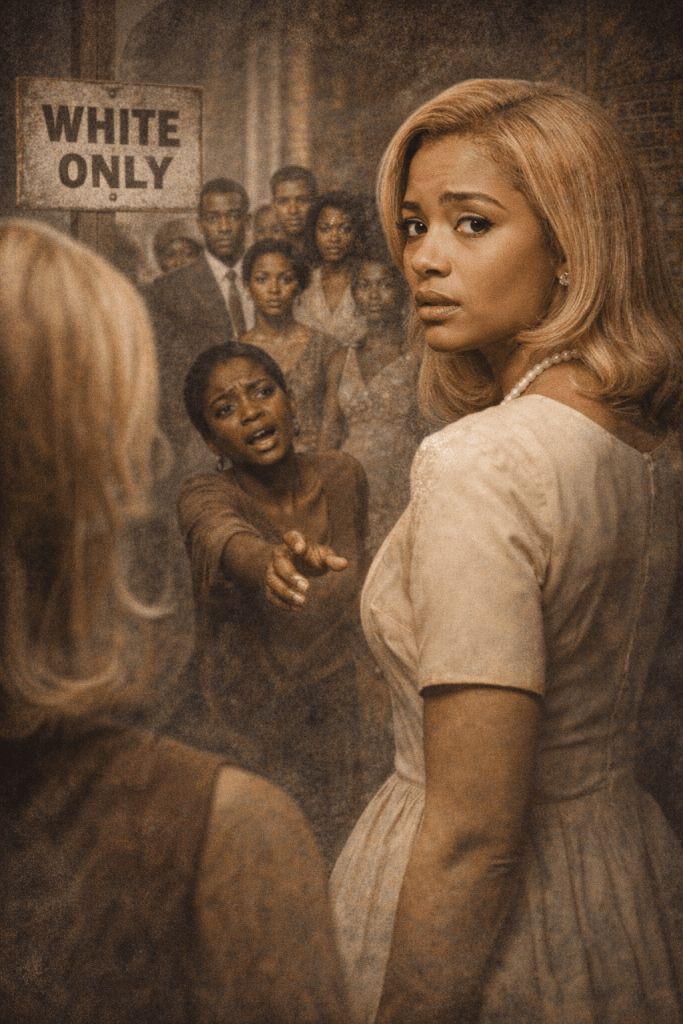
Passing as White is one of the most psychologically complex survival strategies produced by racism in America. It refers to the act of a Black person presenting themselves as white to escape racial oppression, gain social mobility, or avoid discrimination. While often discussed as a historical phenomenon, passing is fundamentally a psychological condition rooted in fear, internalized racism, and the desire for safety in a white supremacist society.

Psychologically, passing is not merely about skin tone or physical appearance; it is about identity suppression. It requires the individual to constantly perform whiteness—altering speech, behavior, social circles, family history, and even emotional expression. The person must erase their Blackness not only from public view, but from their own self-concept to survive the performance.

Looking white becomes a form of social camouflage. Lighter skin, straighter hair, ambiguous features, and European phenotypes allow some Black people to “blend in” within white spaces. However, this blending comes at a profound cost: the continuous denial of one’s ancestry, culture, and lived reality.

Passing emerges from racial terror. In societies where Blackness is punished economically, socially, and physically, passing becomes a method of protection. It is an adaptation to violence. Instead of confronting racism directly, the individual attempts to escape it by exiting Blackness altogether.

This phenomenon was powerfully dramatized in the film Imitation of Life, which tells the story of a light-skinned Black woman who rejects her Black mother to live as white. The film exposes the emotional devastation of passing: the shame, the secrecy, the grief, and the permanent sense of unbelonging.

What happens psychologically when white people discover that someone who has been passing is actually Black is often catastrophic. The individual is typically met with betrayal, hostility, disgust, or expulsion. White acceptance is conditional, and once racial truth is revealed, the person is stripped of the social privileges they had gained.

This moment of “discovery” often triggers identity collapse. The passer is rejected by the white world they tried to assimilate into, while also feeling disconnected from the Black world they abandoned. They become socially homeless—belonging fully to neither group.

Self-hatred is at the core of passing. It is not simply strategic; it is an internalized ideology. The person has absorbed the belief that Blackness is inferior, dangerous, or shameful, and that proximity to whiteness equals safety, value, and humanity.

Passing also produces chronic psychological stress. The individual lives in constant fear of exposure. Every conversation, family detail, photograph, or social interaction becomes a potential threat. This creates a life of hypervigilance, anxiety, and emotional isolation.

One of the most famous real-life examples of passing is Anatole Broyard, a highly respected literary critic and writer who lived as a white man for most of his life. Broyard concealed his Black identity even from his own children and wife, believing that revealing his ancestry would destroy his career and social standing.

After his death, his children discovered the truth, leading to deep emotional consequences. Broyard’s life became a symbol of the tragic cost of passing—success built on erasure, achievement built on denial, and legacy built on silence.

Passing not only distorts how others see one; it also distorts how one experiences love, intimacy, and belonging. Romantic relationships become performances. Friendships become guarded. Family becomes a threat to exposure. The passer must constantly choose between truth and survival.

This creates what psychologists call identity fragmentation. The person splits themselves into parts: the public self and the hidden self. Over time, the hidden self becomes increasingly suppressed, producing depression, dissociation, and internal conflict.

Passing also reinforces white supremacy at a structural level. It validates the idea that whiteness is the ultimate form of social legitimacy, while Blackness is something to escape. Each individual act of passing becomes a silent confirmation of racial hierarchy.

Historically, passing was most common during Jim Crow, when Black people faced segregation, lynching, housing discrimination, and legal exclusion. For some, passing was the only way to access education, employment, or physical safety. It was not always about shame; sometimes it was about survival.

However, survival strategies can become psychological prisons. What begins as protection can evolve into permanent self-rejection. Over time, the person may forget how to exist authentically, even in private.

The modern version of passing still exists, but in more subtle forms. It appears in aesthetic assimilation, name changes, cultural distancing, anti-Black rhetoric, and identity ambiguity. Some people no longer pass racially, but culturally and ideologically.

At its deepest level, passing is a spiritual crisis. It represents a rupture between the self and its origins. The person disconnects from ancestral memory, collective identity, and historical truth in exchange for conditional acceptance.

Many who once passed later experience a psychological awakening. As they age, they begin to feel the emptiness of erasure. They realize that no amount of assimilation can replace the loss of authentic identity. What was gained socially is lost existentially.

Reclaiming Black identity after passing often involves grief. Grief for the years spent hiding, for the relationships built on falsehood, and for the self that was denied. It is not simply a return—it is a reconstruction.

The desire to now “be who you are” represents a form of psychological decolonization. It is the rejection of internalized racism and the re-embrace of ancestral truth. It is a recognition that safety without authenticity is not freedom.

True healing from passing requires confronting the ideology that made it necessary. It requires dismantling the belief that whiteness equals humanity and Blackness equals limitation. Until that belief is destroyed, passing will continue to exist.

Passing as White is not just a historical curiosity. It is a mirror held up to a society that made Black identity something people felt they had to escape in order to live.

The tragedy is not that some people passed.
The tragedy is that a world existed where passing felt necessary.


References

Fanon, F. (1967). Black skin, white masks. Grove Press.

Gates, H. L. Jr. (1996). Thirteen ways of looking at a Black man. Random House.

Hobbs, A. (2014). A chosen exile: A history of racial passing in American life. Harvard University Press.

Larsen, N. (1929). Passing. Alfred A. Knopf.

Rockquemore, K. A., & Brunsma, D. L. (2002). Beyond Black: Biracial identity in America. Rowman & Littlefield.

Smith, S. M. (2006). The performance of race: Passing and the aesthetics of identity. Cultural Critique, 63, 1–27.

Sollors, W. (1997). Neither Black nor white yet both: Thematic explorations of interracial literature. Oxford University Press.

Broyard, B. (2007). One drop: My father’s hidden life—A story of race and family secrets. Little, Brown and Company.

Wilkerson, I. (2020). Caste: The origins of our discontents. Random House.

Du Bois, W. E. B. (1903). The souls of Black folk. A.C. McClurg & Co.

Black History: Queen Charlotte of Mecklenburg-Strelitz – The First Black Queen of England.

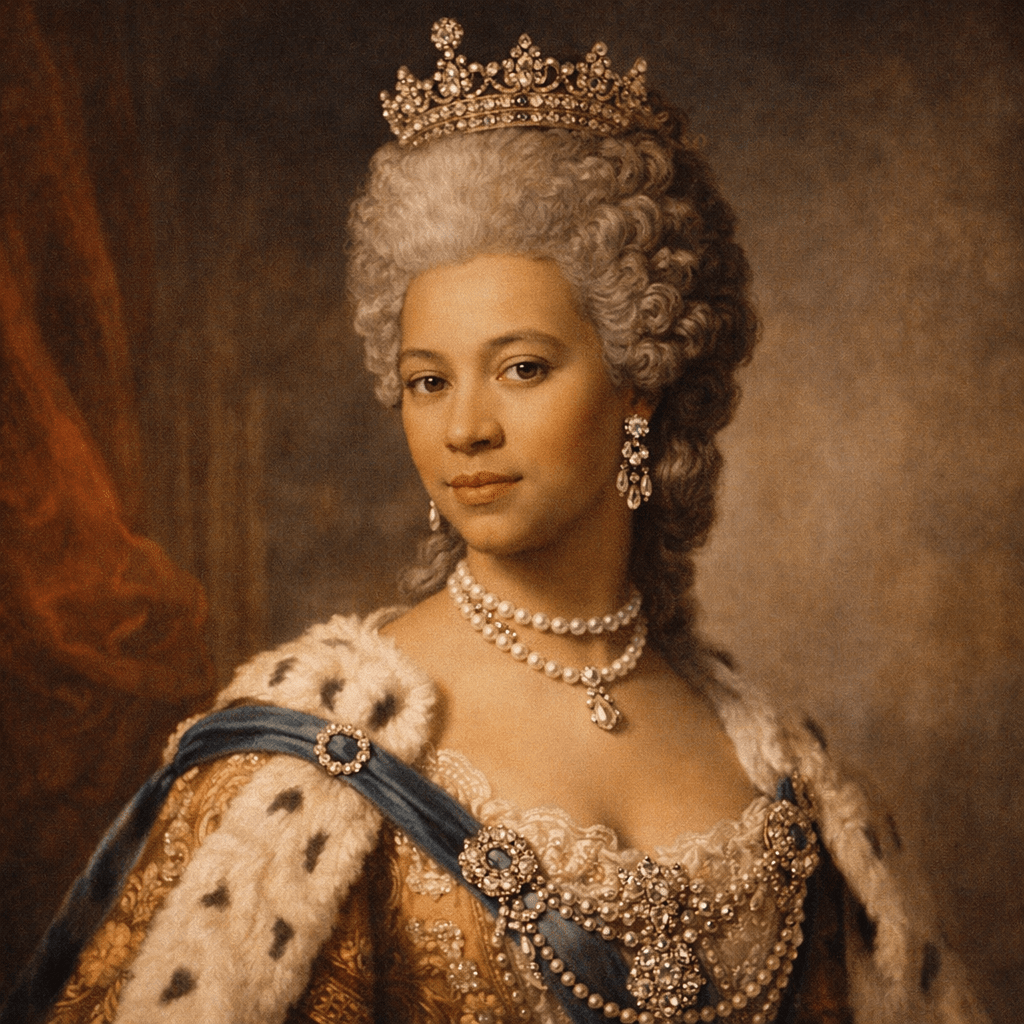
Queen Charlotte of Mecklenburg-Strelitz remains one of the most fascinating and contested figures in European royal history, particularly within discussions of Black presence in premodern Europe. While often portrayed in traditional British narratives as a conventional white European queen, growing historical scholarship and portrait analysis suggest that Charlotte may have been Britain’s first biracial monarch, with documented African ancestry embedded within her royal lineage.

Queen Charlotte of Mecklenburg-Strelitz was born in 1744 in the German duchy of Mecklenburg-Strelitz, a small but politically significant principality within the Holy Roman Empire. She married King George III of Great Britain in 1761 at the age of seventeen and immediately became Queen Consort of Great Britain and Ireland, later also Queen of Hanover.

Charlotte was the daughter of Duke Charles Louis Frederick of Mecklenburg-Strelitz and Princess Elisabeth Albertine of Saxe-Hildburghausen. Her family belonged to the minor German nobility, but through intermarriage with Iberian royal houses, her bloodline extended into Portuguese and Moorish ancestry. It is this lineage that forms the basis of arguments for her African heritage.

The strongest historical claim regarding Charlotte’s African ancestry comes from her descent from Margarita de Castro y Sousa, a noblewoman of the Portuguese royal court. Margarita herself was a descendant of King Afonso III of Portugal and Madragana, a Moorish woman described in historical documents as having African features and Muslim heritage. Through this line, Queen Charlotte inherited traceable African ancestry approximately fifteen generations back.

Portuguese royal records and genealogical studies show that Madragana was referred to as a “Moor” — a term used in medieval Europe for North African and sub-Saharan Africans, especially Muslims of African descent. This makes Charlotte genetically biracial by historical definition, even if diluted through centuries of intermarriage.

What makes Queen Charlotte particularly unique is not only her lineage, but how she was visually represented. Several contemporary portraits painted during her lifetime depict her with visibly African facial features: a broad nose, full lips, darker complexion, and tightly curled hair. Artists such as Allan Ramsay and Sir Thomas Lawrence painted Charlotte in ways that differed significantly from the idealized European beauty standards of the time.

Allan Ramsay, a known abolitionist, intentionally emphasized Charlotte’s African traits in his royal portraits. This was a political act, as Ramsay believed art could challenge white supremacist ideologies by showing Black presence in elite European spaces. His portraits stand in contrast to later revisions that whitened her appearance.

British society during the 18th century was deeply racialized, yet paradoxically fascinated by Blackness. While enslaved Africans existed in England, the presence of a biracial queen was never publicly acknowledged or celebrated. Instead, her African ancestry was quietly ignored, softened, or erased in official royal discourse.

Queen Charlotte herself never publicly claimed African identity, which would have been politically impossible in a monarchy built on white European supremacy. Her legitimacy depended on assimilation, not racial visibility. Thus, her Black ancestry existed as an unspoken truth hidden within aristocratic genealogy.

Despite this silence, many contemporaries commented on her appearance. Some British courtiers privately referred to her as having a “mulatto face,” while foreign diplomats described her features as “unusual for a German princess.” These coded racial descriptions reveal that her difference was noticed, even if never openly discussed.

Charlotte gave birth to fifteen children, making her the matriarch of modern European royal bloodlines. Through her descendants, African ancestry entered nearly every royal house in Europe, including the current British monarchy. This fact alone radically challenges the myth of racial purity in European royalty.

Her influence extended beyond race into culture, education, and abolitionist politics. She was a patron of Black composers, supported the education of poor children, and advocated for anti-slavery reforms through private influence on King George III.

Queen Charlotte’s story disrupts the dominant narrative that Black history exists only in Africa or the Americas. Her existence proves that Africans and their descendants have always been embedded in European power structures, even at the highest levels of monarchy.

Modern historians increasingly recognize Charlotte as a symbol of erased Black presence in European history. Her whitening in textbooks and portraits reflects a broader pattern of historical revisionism designed to maintain white exclusivity in narratives of power.

The popular television series Bridgerton did not invent the idea of a Black Queen Charlotte — it revived a truth long buried by racial politics. While dramatized, the concept is grounded in legitimate historical research.

Queen Charlotte stands today as a powerful reminder that Black history is not marginal, peripheral, or modern. It is ancient, royal, and deeply woven into the foundations of Western civilization itself.


References

Adams, G. (2019). The Queen’s Hidden Heritage: African Ancestry in the British Royal Family. Journal of Black Studies, 50(3), 234–251.

Ramsay, A. (1762–1780). Royal Portraits of Queen Charlotte. Royal Collection Trust.

Oliveira, M. (2008). Moorish Lineages in the Portuguese Royal House. Lisbon Historical Review.

Fryer, P. (1984). Staying Power: The History of Black People in Britain. Pluto Press.

Jeffries, S. (2018). “Was Queen Charlotte Black? The Real History Behind Bridgerton.” The Guardian.

BBC History. (2020). Queen Charlotte: Britain’s First Black Queen? British Broadcasting Corporation.

Royal Collection Trust. (2021). Queen Charlotte of Mecklenburg-Strelitz: Portraits and Legacy.

Black History: Madam C. J. Walker – The First Black Millionaire

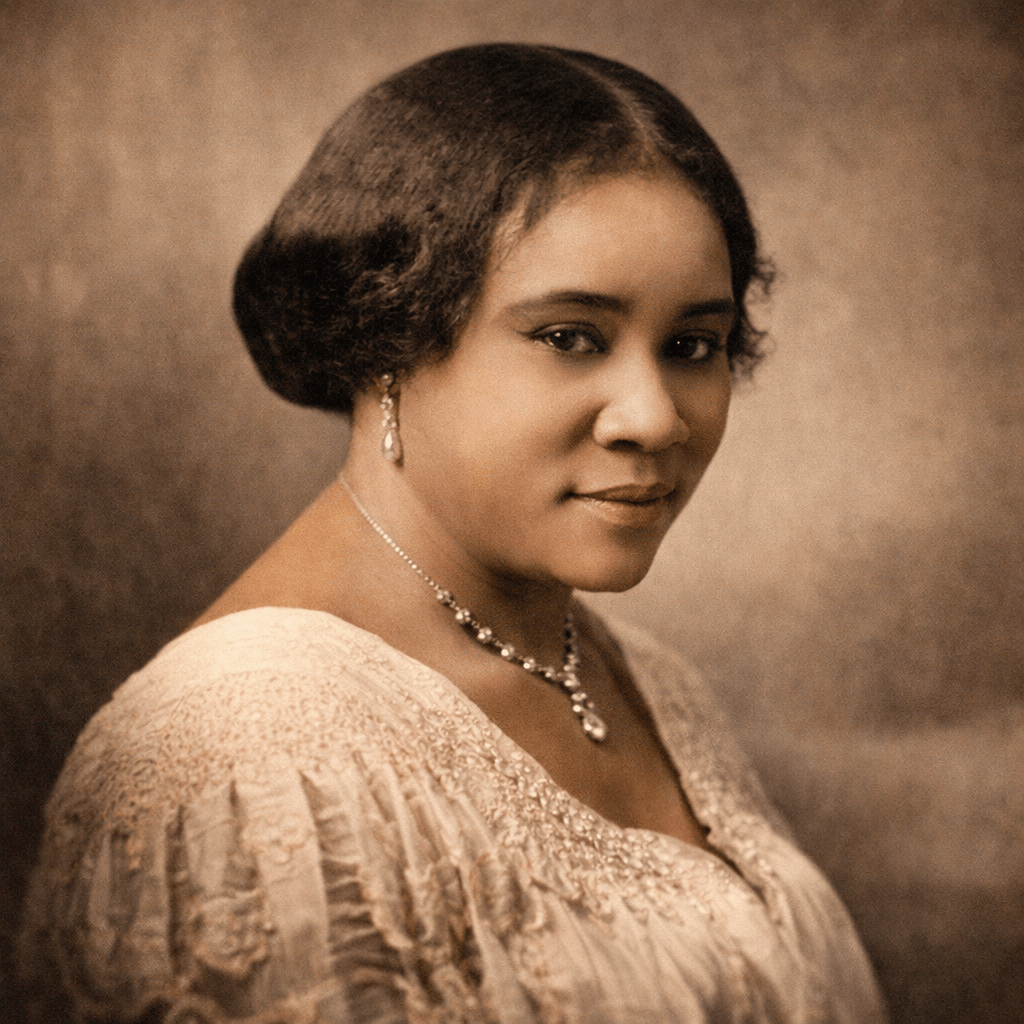
Madam C. J. Walker stands as one of the most extraordinary figures in American history, not only for her business success but for what she represented in an era defined by racial terror, gender exclusion, and economic apartheid. Born into the aftermath of slavery, Walker transformed personal hardship into a global enterprise that reshaped Black beauty culture and redefined what was possible for Black women in capitalism.

Madam C. J. Walker was born Sarah Breedlove in 1867 in Delta, Louisiana, the first child in her family born free after the Emancipation Proclamation. Orphaned by the age of seven, she grew up in extreme poverty, working in cotton fields and as a domestic laborer. Her early life reflected the harsh conditions of post-slavery Black America, where survival itself required resilience.

Walker married at fourteen to escape abuse in her sister’s home, becoming a widow by twenty with a young daughter to raise. She supported herself as a washerwoman, earning barely enough to live while enduring long hours of physical labor. This stage of her life exposed her to the brutal realities faced by Black women—low wages, limited education, and no access to economic mobility.

Her turning point came when she began losing her hair due to scalp diseases caused by poor hygiene conditions, harsh chemicals, and lack of proper hair care knowledge. Hair loss was common among Black women at the time, and there were no reliable products designed for their needs. What began as a personal crisis became the seed of a global industry.

Walker started experimenting with homemade formulas, drawing from folk remedies and early cosmetic chemistry. She eventually developed a scalp treatment that restored her hair and improved overall scalp health. Recognizing the demand, she began selling her products door to door, personally demonstrating their effectiveness to Black women.

She later married Charles Joseph Walker, a newspaper advertising salesman, and adopted the professional name Madam C. J. Walker. The title “Madam” was intentional, projecting authority, elegance, and European-style professionalism in a world that refused to see Black women as legitimate business leaders.

Walker’s most famous innovation was her hair care system, which included scalp ointments, shampoos, and hot-comb styling techniques. Contrary to modern misconceptions, her products were not designed to “make Black women white,” but to promote hair health, hygiene, and growth in an era where basic sanitation was inaccessible for many Black communities.

Her business exploded through a network of Black female sales agents known as “Walker Agents.” These women were trained not only in sales but in financial literacy, hygiene, public speaking, and self-presentation. For many, this was the first time they earned independent income, owned property, or traveled professionally.

Walker built factories, beauty schools, and salons across the United States, the Caribbean, and Central America. Her company employed thousands of Black women at a time when most corporations excluded them entirely. She created an alternative economic system inside a segregated society.

By 1910, she established her headquarters in Indianapolis, turning it into a Black industrial hub. The Madam C. J. Walker Manufacturing Company became one of the largest Black-owned businesses in the nation. Her success made her the first documented self-made Black female millionaire in American history.

Her wealth, however, was never purely personal. Walker was a radical philanthropist who funded Black schools, orphanages, civil rights organizations, and anti-lynching campaigns. She donated large sums to the NAACP, Tuskegee Institute, and Black churches across the country.

Walker used her platform to speak openly about racial violence, economic injustice, and women’s empowerment. She was not merely a beauty entrepreneur but a political figure who believed capitalism should serve liberation, not just profit.

Her daughter, A’Lelia Walker, inherited the business and expanded its cultural influence. A’Lelia became a major patron of the Harlem Renaissance, hosting salons that brought together artists, writers, musicians, and political thinkers. Their wealth became cultural infrastructure for Black intellectual life.

Walker’s legacy also reshaped beauty standards. She taught Black women that grooming and self-care were not signs of vanity but acts of dignity and resistance in a society that dehumanized them. Her message was radical: Black women deserved luxury, care, and self-respect.

She also redefined Black womanhood in business. At a time when women could not vote, and Black women were excluded from most professions, Walker owned property, controlled capital, managed factories, and employed thousands.

Walker died in 1919 at the age of 51, leaving behind an empire and a blueprint. Her funeral was attended by major civil rights leaders, including Booker T. Washington and Mary McLeod Bethune, confirming her status as not just a businesswoman but a historical force.

Her mansion, Villa Lewaro, became a symbol of Black wealth and architectural power in a nation that denied both. It was designed to showcase that Black success did not need to mimic whiteness but could exist on its own cultural terms.

Modern debates about hair politics, natural hair movements, and Black beauty industries all trace back to Walker’s foundational work. Every Black-owned beauty brand today stands on the infrastructure she built.

She proved that generational wealth could emerge from the margins, that Black women could control industries, and that capitalism could be weaponized for racial uplift.

Madam C. J. Walker’s true legacy is not just that she became rich, but that she taught thousands of Black women how to become free.


References

Bundles, A. (2001). On Her Own Ground: The Life and Times of Madam C. J. Walker. Scribner.

Bundles, A. (2015). Madam C. J. Walker: Entrepreneur. Chelsea House.

Gates, H. L., Jr. (2013). Life Upon These Shores: Looking at African American History, 1513–2008. Knopf.

Rooks, N. (1996). Hair Raising: Beauty, Culture, and African American Women. Rutgers University Press.

Walker, A. L. (1925). The Madam C. J. Walker Standard Beauty Manual. Madam C. J. Walker Manufacturing Company.

Hine, D. C., Hine, W. C., & Harrold, S. (2010). The African-American Odyssey. Pearson.

Black History: Black Millionaires They Tried to Erase from History.

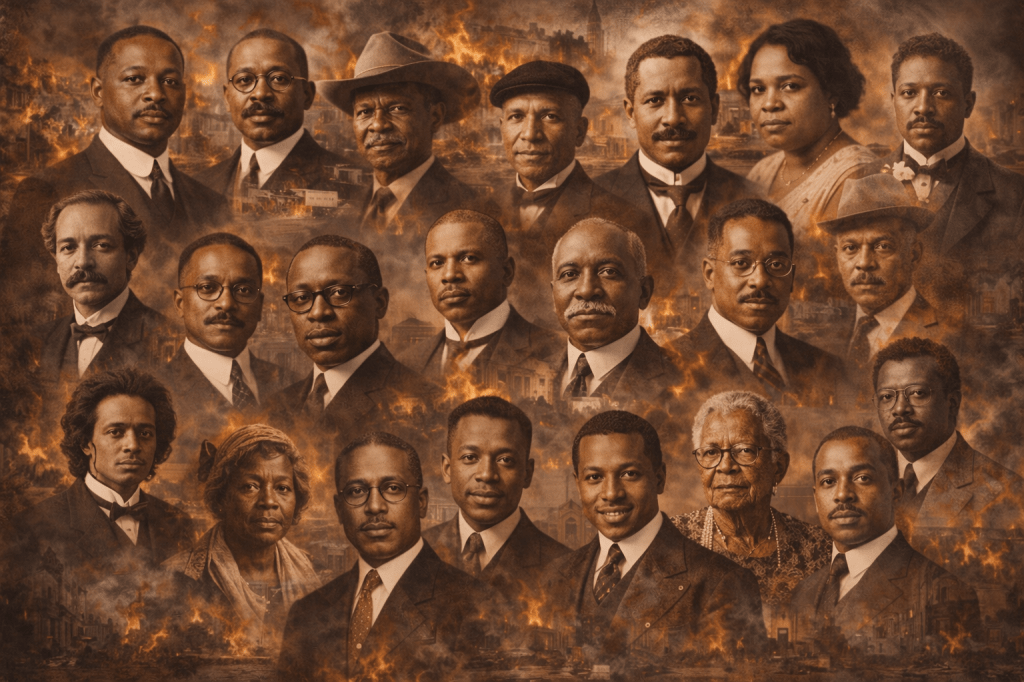
In early 20th‑century America, Black entrepreneurs in segregated communities defied racism by generating unprecedented wealth. These men and women built thriving businesses, owned property, and created entire economic ecosystems — only to have their legacies diminished, erased, or violently destroyed by systemic racism and white supremacist violence.

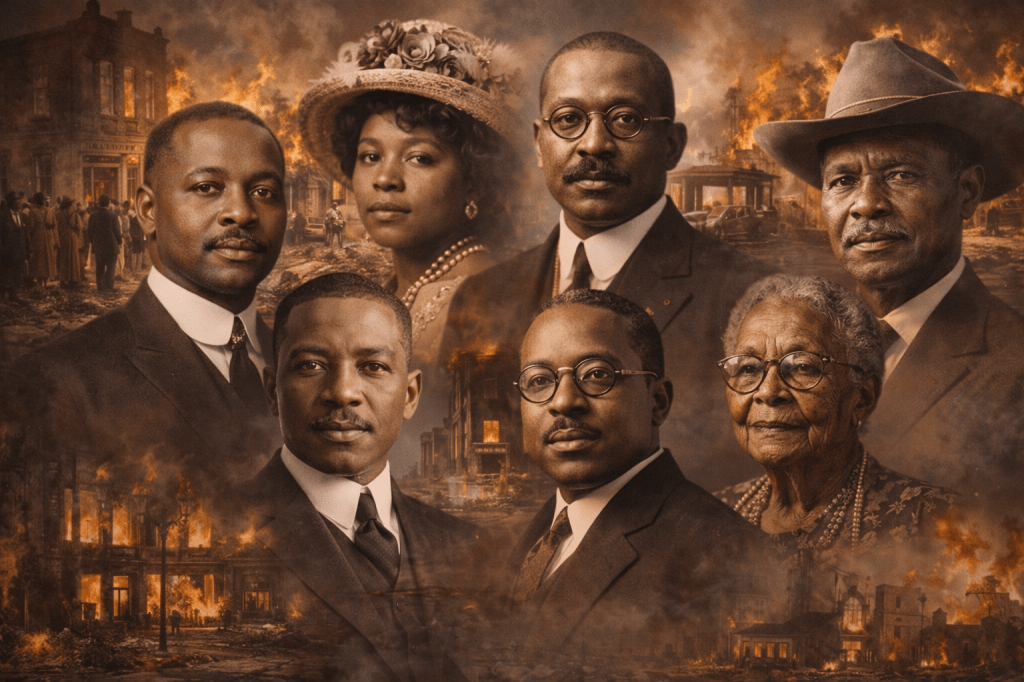
In Tulsa, Oklahoma, the Greenwood district — known as “Black Wall Street” — was one of the most remarkable examples of Black prosperity in American history. Founded by visionary Black businessmen and professionals, Greenwood became a symbol of independence, economic self‑sufficiency, and community resilience.

Among Greenwood’s earliest millionaires was O.W. Gurley, a real‑estate developer and entrepreneur. Born to formerly enslaved parents in Alabama, Gurley moved to Tulsa and purchased land designated for Black ownership. He built hotels, apartment buildings, a grocery store, and sponsored other local businesses, accumulating an estimated net worth that translated into the millions in today’s dollars.

Gurley’s success helped inspire others to invest in Greenwood. J.B. Stradford, another eminent figure, was the son of an emancipated slave who became a lawyer, real‑estate magnate, and hotelier. His crowning achievement was the Stradford Hotel, the largest Black‑owned hotel in the United States at the time. It offered luxury services equal to those in white Tulsa and hosted a thriving social life, attracting wealthy travelers and local elites.

John and Loula Williams were another Black power couple in Greenwood. They owned multiple businesses — including the Dreamland Theatre, a confectionary, and a rooming house — and became among the wealthiest Black residents. Loula was a partner in these ventures, showing how women also played central roles in building Black wealth.

Greenwood was far more than a collection of storefronts: it had its own bank, schools, hospital, newspaper, and even private transportation networks, all built and operated by Black entrepreneurs. The Tulsa Star, founded by A.J. Smitherman, became a prominent voice advocating civil rights, economic empowerment, and community solidarity.

Despite this economic miracle, Greenwood was targeted by white supremacists fearful of Black success. From May 31 to June 1, 1921, a white mob attacked the district in what is now known as the Tulsa Race Massacre, burning businesses, homes, and churches to the ground. Up to 300 Black residents were killed and roughly 1,200 homes destroyed. This coordinated assault erased generational wealth in a matter of hours.

The destruction of Greenwood exemplifies how racial violence was used to prevent Black Americans from maintaining wealth and influence. Millionaires like Gurley and Stradford lost everything; there was no restitution for survivors or descendants for decades. Their stories, once widely known locally, faded from mainstream historical memory.

Beyond Tulsa, there were other Black millionaires whose achievements were overshadowed or forgotten due to systemic racism. Jake Simmons Jr., an oilman from Oklahoma, became one of the most successful Black oil entrepreneurs in the mid‑20th century, partnering with major petroleum companies and opening opportunities in Africa’s energy sector. His rise showcased Black leadership in the global industry, yet his legacy remains underrecognized.

Black businesspeople in areas outside Tulsa also built considerable wealth during Jim Crow. In many segregated towns and cities, Black physicians, lawyers, educators, and merchants created thriving practices serving Black customers, generating stable incomes and propelling local economies. However, many were omitted from national business histories, minimized by the dominant narrative.

Black Millionaires Who Were Erased or Forgotten

  1. O.W. Gurley – Real estate developer and founder of Greenwood, Tulsa (“Black Wall Street”). Built hotels, grocery stores, and a thriving Black community before the Tulsa Race Massacre destroyed his fortune.
  2. J.B. Stradford – Lawyer and entrepreneur; owner of the Stradford Hotel, the largest Black-owned hotel in the U.S. before 1921. Lost property in the Tulsa Race Massacre.
  3. John and Loula Williams – Business power couple in Greenwood, owning multiple enterprises including theaters, confectionaries, and rooming houses.
  4. A.J. Smitherman – Publisher of the Tulsa Star, the influential newspaper in Greenwood that advocated Black economic empowerment and civil rights.
  5. Jake Simmons Jr. – Oklahoma oil tycoon and international businessman; instrumental in opening opportunities in Africa’s oil sector.
  6. Moses Austin – Early 19th-century businessman who invested in land and local enterprises; lesser-known due to records focusing on white counterparts.
  7. Paul Cuffe – African American entrepreneur and shipowner in the late 18th and early 19th centuries; financed Black migration to Sierra Leone and traded globally.
  8. Madam C.J. Walker – First female self-made millionaire in America through haircare and beauty products; her story was overshadowed for decades despite her philanthropy.
  9. Robert Reed Church – Memphis real estate mogul; accumulated wealth through investments and urban development in the post-Civil War South.
  10. Anthony Overton – Entrepreneur and publisher; owned the Overton Hygienic Company and the Chicago Bee newspaper.
  11. Alonzo Herndon – Founder of Atlanta Life Insurance Company; born enslaved and became one of the wealthiest Black men in the U.S.
  12. Norbert Rillieux – Inventor and businessman; revolutionized sugar refining and built wealth that was largely unrecognized in mainstream history.
  13. John H. Johnson – Founder of Johnson Publishing Company (Ebony, Jet); a 20th-century millionaire whose financial influence in media is often underappreciated.
  14. Viola Fletcher – Survivor and symbolic figure of Tulsa’s Greenwood, representing families who had generational wealth destroyed in the massacre.
  15. Samuel Coleridge-Taylor (U.S. connections) – Composer and businessman in music ventures; recognized in Europe but often omitted from U.S. economic history discussions.
  16. Mary Ellen Pleasant – Wealthy Black entrepreneur and philanthropist in San Francisco during the 19th century; aided civil rights causes but was historically obscured.
  17. Madison Jones – Oil and landowner in the early 20th century; wealth erased through discriminatory policies and lack of historical recognition.
  18. John Merrick – Founder of North Carolina Mutual Life Insurance Company; amassed wealth but is often only recognized regionally.
  19. Robert W. Johnson – Entrepreneur in early 1900s Chicago; built wealth in real estate and business before being written out of mainstream histories.
  20. Frederick McGhee – Lawyer and businessman; helped build economic infrastructure for Black communities in Minneapolis but largely forgotten in national narratives.

The erasure of these figures was not accidental. Throughout U.S. history, Black success has been met with legislative discrimination, economic exclusion, violence, and historical suppression. After the massacre, Greenwood’s rebuilt community prospered again for decades — only to be dismantled a second time in the mid‑20th century through “urban renewal” projects and highway construction that obliterated much of the neighborhood.

The consequences of this erasure persist. Without preservation and education about these Black millionaires, their contributions are excluded from textbooks, newspapers, and national consciousness. This has furthered false narratives that Black communities did not achieve economic success prior to the Civil Rights Movement.

Historians and activists today work to recover these stories, ensuring that Gurley, Stradford, the Williamses, Simmons, and many more are acknowledged as pioneers of Black wealth in America. Their legacy demonstrates profound resilience and innovation under adversity.

Black Wall Street’s destruction also disrupted generational wealth transfer; properties and businesses never regained their pre‑1921 value, and families were denied inheritance opportunities that could have sustained future prosperity.

In recent years, Tulsa has taken steps to confront its history. Reparations efforts, educational initiatives, and public memorialization aim to restore recognition for Greenwood’s lost entrepreneurs and honor survivors like Viola Fletcher, who testified about the massacre’s enduring impact.

The story of these Black millionaires is a reminder that racial oppression targeted not only individual lives but collective economic power. Their erasure from history reflects broader social resistance to acknowledging Black achievement.

Engaging with these histories allows for a more accurate understanding of American capitalism, one that includes both Black contributions and the violence used to undermine them.

Recognizing Black millionaires lost to history also challenges contemporary narratives about wealth, race, and opportunity, showing clearly that Black success was possible — and existed — long before today’s conversations about equity and inclusion.

These narratives also inspire modern generations of Black entrepreneurs, emphasizing the importance of legacy, community investment, and perseverance despite systemic barriers.

Understanding the erased histories of Black millionaires is vital not only for historical accuracy but for framing present discussions about wealth inequality, reparations, and racial justice in the United States.


References

National Geographic Society. (n.d.). Before the Tulsa Race Massacre, Black business was booming in Greenwood. National Geographic. https://www.nationalgeographic.com/history/history-magazine/article/before-tulsa-race-massacre-black-business-booming-greenwood

History.com Editors. (n.d.). 9 Entrepreneurs Who Helped Build Tulsa’s “Black Wall Street”. HISTORY. https://www.history.com/articles/black-wall-street-tulsa-visionaries

CNBC. (2020). What Is “Black Wall Street”? History of the community and its massacre. CNBC. https://www.cnbc.com/2020/07/04/what-is-black-wall-street-history-of-the-community-and-its-massacre.html

ABC7 New York. (n.d.). Tulsa Race Massacre: Story behind Black Wall Street destroyed by racist mob. https://abc7ny.com/tulsa-race-massacre-1921-black-wall-street-greenwood/10707747

Wikipedia contributors. (n.d.). Greenwood District, Tulsa. Wikipedia. https://en.wikipedia.org/wiki/Greenwood_District%2C_Tulsa

Wikipedia contributors. (n.d.). Jake Simmons. Wikipedia. https://en.wikipedia.org/wiki/Jake_Simmons

Wikipedia contributors. (n.d.). Viola Fletcher. Wikipedia. https://en.wikipedia.org/wiki/Viola_Fletcher