Tag Archives: god

The Male Files: The Spirit of David, Courage, Repentance, and Calling.

Photo by Habib Musliu on Pexels.com

The life of David stands as one of the most profound illustrations of God’s divine orchestration in the midst of human imperfection. From his humble beginnings as a shepherd in Bethlehem to his anointing as King of Israel, David’s story exemplifies courage in battle, steadfast faith, and a heart attuned to God’s calling. His journey is marked by both triumph and failure, demonstrating that divine purpose often intersects with human weakness.

David first enters biblical history in a moment of courage and faith, confronting the Philistine giant Goliath with only a sling and five smooth stones (1 Samuel 17:40, KJV). His courage was rooted not in human strength but in trust in Jehovah. This act was not merely military victory; it was symbolic of spiritual audacity. David’s reliance on God set the foundation for his lifelong recognition as a man after God’s own heart (1 Samuel 13:14, KJV).

Even as a young man, David exhibited the qualities of discernment and strategic patience. When King Saul became jealous and sought his life, David refrained from killing Saul despite opportunities, acknowledging the sovereignty of God over human affairs (1 Samuel 24:6, KJV). This restraint reveals a maturity that transcends physical bravery: a deep recognition of divine timing and justice. Courage for David was inseparable from obedience.

However, David’s story is not one of unbroken righteousness. His sin with Bathsheba, the subsequent orchestration of Uriah’s death, and the resulting confrontation by the prophet Nathan (2 Samuel 11:14-17, KJV) expose the vulnerability of even the most anointed individuals to temptation. David’s actions underscore the human propensity to succumb to desire, ambition, and fear, illustrating that spiritual calling does not eliminate moral responsibility.

Despite his grievous sins, David’s response to conviction exemplifies the centrality of repentance in God’s economy. When confronted by Nathan, David acknowledged his transgression, saying, “I have sinned against the LORD” (2 Samuel 12:13, KJV). His immediate recognition of wrongdoing and humble contrition models the transformative power of confession and the willingness to realign with God’s standards.

Repentance in David’s life is not merely emotional remorse but an active turning toward God. Psalm 51, attributed to David after the Bathsheba incident, is a vivid prayer of contrition, emphasizing the need for inner cleansing, restoration of spirit, and renewal of steadfastness in God (Psalm 51:10-12, KJV). Here, David’s heart becomes the canvas of divine grace, illustrating that repentance restores not only relationship with God but also spiritual vitality.

David’s courage was not limited to military or political arenas; it was also evident in his spiritual leadership. As king, he sought to unite the tribes of Israel, establish Jerusalem as the capital, and bring the Ark of the Covenant into the city (2 Samuel 6:12-15, KJV). These acts required boldness, vision, and the ability to inspire a nation, demonstrating that divine calling often involves risk, leadership, and unwavering faith.

The Spirit of David is marked by deep worship. His psalms, many composed during times of distress or victory, reveal a heart oriented toward God in all circumstances. Psalm 23, for instance, portrays the shepherdly care of the Lord and the security found in His guidance (Psalm 23:1-4, KJV). Even amidst personal failure and political turbulence, David’s devotion remained central to his identity and authority.

David’s life also reflects the tension between human emotion and divine mandate. He experienced grief, anger, jealousy, and fear, yet he continually sought God’s guidance through prayer and prophetic counsel. The episode of Saul’s pursuit demonstrates that even in despair, turning to God rather than acting solely on impulse exemplifies spiritual maturity (1 Samuel 26:23, KJV). Courage for David was inseparable from reliance on the Lord.

The complexity of David’s character is further seen in his family dynamics. His sons, such as Absalom and Adonijah, challenged his authority, leading to rebellion and heartbreak (2 Samuel 15:1-6; 1 Kings 1:5-10, KJV). These trials highlight the interplay of personal sin, divine purpose, and the consequences that ripple through relationships. David’s responses—grief, discernment, and prayer—reveal a blend of kingly wisdom and human vulnerability.

David’s sin with Bathsheba and Uriah also underscores the consequences of unchecked desire. God’s judgment was immediate: the death of the child born from the sin (2 Samuel 12:15, KJV). Yet, in this suffering, David’s faith deepened. He demonstrates that divine discipline, though painful, serves to redirect the heart toward repentance, righteousness, and continued service.

Even in his flaws, David’s reliance on God made him an archetype of resilience. He acknowledged his shortcomings without despair, turning adversity into worship and service. Psalm 34, a reflection on deliverance from fear and persecution, illustrates his philosophy: that fidelity to God transforms suffering into testimony (Psalm 34:1-7, KJV). David’s life exemplifies resilience through both obedience and spiritual reflection.

David’s courage was not merely martial or political; it was moral. He frequently made decisions based on justice rather than expedience. His sparing of Saul’s life, protection of Jonathan’s family, and concern for the widows and orphans under his reign reflect a heart aligned with God’s ethical standards (1 Samuel 26:9-11; 2 Samuel 21:1-3, KJV). The Spirit of David demonstrates that true courage integrates faith with righteousness.

The prophetic interaction with Nathan highlights the integration of divine accountability into leadership. David’s readiness to accept correction models a key principle: humility before God and submission to spiritual authority are essential for sustaining divine favor and moral clarity (2 Samuel 12:1-13, KJV). His acceptance of consequences demonstrates that repentance and obedience restore integrity and calling.

David’s anointing and subsequent kingship also demonstrate that divine calling often precedes perfection. God declared, “I have found David the son of Jesse, a man after mine own heart” (1 Samuel 13:14, KJV), not because David was flawless, but because of his willingness to trust, obey, and seek God’s presence. His life teaches that calling is rooted in devotion and responsiveness rather than sinless performance.

The integration of courage, repentance, and calling manifests in David’s later life. Despite family betrayal, political rebellion, and personal loss, he continued to lead Israel with a combination of wisdom, worship, and strategy (2 Samuel 18:5-15, KJV). His ability to navigate adversity with reliance on God exemplifies the holistic nature of spiritual leadership.

David’s psalms provide an enduring blueprint for confronting sin while embracing divine calling. In Psalm 32, he articulates the blessedness of confession and the relief of forgiveness (Psalm 32:1-5, KJV). The writings underscore that courage is not the absence of sin but the resolve to seek God’s mercy and guidance continually.

The life of David teaches that repentance is an ongoing process, interwoven with personal reflection, prayer, and ethical action. Sin does not negate calling, but unrepented sin impedes the fulfillment of divine purpose. David’s transparency in his struggles affirms that spiritual integrity involves honesty before God and accountability in life.

Ultimately, the Spirit of David is a testament to God’s grace, human frailty, and the redemptive power of repentance. His journey illustrates that courage in battle, moral fortitude, and responsiveness to divine calling can coexist with human imperfection. David becomes a model for believers seeking to navigate life faithfully, balancing accountability, repentance, and the pursuit of God’s purpose.

David’s legacy endures because it encompasses the full spectrum of human experience: triumph, failure, repentance, and divine favor. His life affirms that God’s calling transcends sin and that courage and obedience, when grounded in faith, empower individuals to fulfill divine destiny. In studying David, believers find both a mirror of their struggles and a guide for spiritual excellence, rooted in courage, repentance, and steadfast devotion to God.


References

The Holy Bible, King James Version.

Cone, J. H. (1970). A Black theology of liberation. Orbis Books.

Du Bois, W. E. B. (1903). The souls of Black folk. A. C. McClurg & Co.

Russell, R., & McKnight, S. (2012). King David: The life and legacy of Israel’s greatest king. Baker Academic.

Childs, B. S. (2001). Introduction to the Old Testament as scripture. Fortress Press.

A Queen Worthy of the Crown

A queen worthy of the crown is not merely defined by outward beauty, status, or admiration from others; rather, her true identity is rooted in her relationship with God. Throughout Scripture, the imagery of crowns symbolizes honor, righteousness, and divine reward bestowed upon those who walk faithfully with the Lord. The spiritual crown is not earned through worldly prestige but through obedience, humility, and devotion to God. For the woman who desires to be a queen in God’s kingdom, the journey begins not with a man but with the King of Kings, whose guidance shapes her character and purpose.

The Bible teaches that believers will one day receive crowns as a reward for faithful living. The apostle Paul wrote that a “crown of righteousness” is laid up for those who love the appearing of Christ. This crown represents victory over sin, perseverance in faith, and steadfast commitment to God’s calling. Therefore, the woman who prepares herself spiritually is not merely preparing for earthly recognition but for eternal honor before God.

To be a queen in the kingdom of God requires a mindset that transcends cultural definitions of femininity. Society often encourages women to seek validation through relationships, social status, or physical appearance. However, a queen with God understands that her identity is secured in divine purpose. She sees herself as a daughter of the Most High, carrying dignity, wisdom, and grace in every aspect of her life.

Central to this identity is what may be called the “princess mentality.” This does not imply entitlement or arrogance, but rather a sacred awareness of one’s value before God. A princess mentality encourages a woman to treat herself with honor, protect her purity, and refuse environments that compromise her spiritual integrity. She understands that the way she carries herself reflects the kingdom she represents.

Seeking God daily is foundational to the life of a spiritual queen. Through prayer, meditation on Scripture, and worship, she cultivates intimacy with the Lord. This relationship becomes the source of her wisdom, strength, and peace. Rather than chasing worldly validation, she seeks the approval of God, knowing that divine affirmation surpasses human applause.

Fasting and prayer are also powerful disciplines that shape the heart of a queen. Biblical fasting is not simply abstaining from food but a spiritual practice that humbles the soul and sharpens spiritual sensitivity. Through fasting, a woman learns dependence upon God and gains clarity about her calling, relationships, and future direction.

Walking with God requires consistency and discipline. A queen worthy of the crown understands that spiritual maturity develops over time through obedience. She studies the Word, listens to the guidance of the Holy Spirit, and seeks wisdom from godly mentors. In doing so, she grows in character and becomes a reflection of divine wisdom.

Within God’s kingdom, queenship is closely tied to service and humility. Jesus Himself taught that greatness in the kingdom is measured by the willingness to serve others. A spiritual queen therefore uses her gifts to uplift her family, community, and church. Her influence is not domineering but nurturing, reflecting the compassionate nature of Christ.

Scripture offers a profound portrait of the virtuous woman in Proverbs 31. This woman is industrious, wise, compassionate, and deeply devoted to God. She manages her household with diligence, speaks with wisdom, and is clothed with strength and honor. Her worth is described as being far above rubies, emphasizing the rarity and value of such character.

Purity is another cornerstone of a queen’s spiritual preparation. The Bible encourages believers to honor God with their bodies and maintain holiness in their relationships. A woman committed to God guards her heart, understanding that intimacy is sacred and designed to flourish within the covenant of marriage.

Keeping oneself for marriage reflects both faith and patience. In a culture that often trivializes commitment, the woman who waits demonstrates profound trust in God’s timing. She recognizes that her body and heart are precious gifts, and she chooses to honor God by preserving them for a covenant relationship.

Waiting on God, however, does not mean living passively. During seasons of singleness, the queen continues to grow spiritually, intellectually, and emotionally. She invests in her purpose, builds meaningful relationships, and develops her talents. Her life remains fruitful even while she awaits the partner God may provide.

The Bible often emphasizes that a godly man finds a virtuous woman rather than the other way around. This principle suggests that the woman focuses primarily on becoming who God has called her to be. When the time is right, the godly king will recognize her character, faith, and dignity.

In the meantime, her devotion belongs first to the King of Kings. Christ becomes the center of her life, guiding her decisions and shaping her identity. Through this spiritual union, she experiences fulfillment that transcends romantic relationships.

Commitment to God also protects a woman from unhealthy relationships. When her standards are shaped by Scripture, she learns to discern character rather than charm. She values integrity, faith, and spiritual leadership above superficial attraction.

A queen worthy of the crown cultivates inner beauty. The apostle Peter wrote that the hidden person of the heart, characterized by a gentle and quiet spirit, is precious in the sight of God. Such beauty does not fade with time but grows stronger through faith and maturity.

Humility also defines the character of a spiritual queen. She recognizes that her gifts, beauty, and opportunities come from God’s grace. Rather than boasting, she expresses gratitude and uses her blessings to serve others.

Faith is essential during seasons of waiting and preparation. At times, a woman may feel overlooked or misunderstood, yet faith reminds her that God’s plans unfold according to divine wisdom. The crown prepared for her life will arrive in God’s perfect timing.

Ultimately, the promise of wearing a crown extends beyond earthly relationships. The faithful believer anticipates the eternal crown given by Christ to those who remain steadfast. This spiritual reward symbolizes victory, righteousness, and eternal fellowship with God.

Therefore, a queen worthy of the crown lives with purpose, purity, and devotion. She honors herself as a daughter of God, seeks the Lord through prayer and fasting, walks in wisdom, and patiently waits for God’s direction. Above all, she remains committed to the King of Kings, knowing that true royalty begins with a heart surrendered to God.

References

The Holy Bible, King James Version.
Clinton, J. R. (2012). The Making of a Leader. NavPress.
Foster, R. (2018). Celebration of Discipline: The Path to Spiritual Growth. HarperOne.
Stanley, C. (2010). How to Listen to God. Thomas Nelson.
Willard, D. (2014). The Spirit of the Disciplines. HarperOne.

The Male Files: A Black Man’s Kryptonite – A Black Woman’s Beauty

Beauty has long been recognized as a potent force in human interaction. For many men, especially in the Black community, a woman’s beauty can act almost like kryptonite, eliciting admiration, attention, and sometimes compromised judgment. Understanding this dynamic is crucial for both men and women in navigating relationships with clarity and purpose.

When a woman is exceptionally beautiful, men often go out of their way to please her. Gifts, attention, and favors can flow more readily, as men feel compelled to demonstrate worthiness in the presence of physical attraction. In some cases, a man may prioritize her desires, sometimes even bending his principles to earn approval or affection.

It is common for beauty to create disproportionate influence. The “whole paycheck” metaphor illustrates that men may invest significant resources—time, energy, money—into a woman whose appeal commands their attention. While generosity is virtuous, disproportionate devotion driven by superficial attraction can misalign priorities and expose vulnerabilities.

Men respond differently depending on their values and spiritual grounding. A man guided by God seeks to honor the woman while maintaining integrity, balance, and personal accountability. He recognizes beauty, yet does not allow physical appearance to overshadow spiritual, emotional, or intellectual compatibility.

Attraction is indeed important. Physical appeal often initiates interest, fosters desire, and creates intimacy. However, attraction alone is insufficient for long-term relational stability. Godly men look beyond mere beauty, seeking qualities like character, wisdom, faith, and compatibility. Proverbs 31 describes the virtuous woman as more valuable than rubies, emphasizing substance over superficiality.

Beautiful women often receive heightened attention, yet a godly man is careful to navigate admiration without succumbing to lustful intent. 1 Corinthians 6:18–20 reminds men to flee fornication and honor God with their bodies, highlighting that desire must be tempered by discipline and reverence.

The influence of beauty can sometimes obscure true intentions. Men may act charitably, make promises, or overextend themselves to impress a woman, revealing that unchecked attraction can be both a motivator and a vulnerability. Awareness of this dynamic is essential for both sexes.

While beauty can captivate, godly men prioritize alignment with God’s will. A woman’s faith, humility, wisdom, and moral character weigh more than her looks. Spiritual and emotional depth sustains relationships in ways that physical attraction alone cannot.

Men often measure potential long-term compatibility by observing how a woman treats others, her approach to life, and her capacity for self-discipline. Beauty may open the door, but character sustains the connection. A woman who exercises grace, patience, and integrity appeals more profoundly than appearance alone.

A beautiful woman can influence decisions subtly or overtly. Men may defer to her preferences, indulge her desires, or even compromise their principles to maintain favor. This dynamic illustrates the power of beauty but also serves as a cautionary tale: influence must be mutual and grounded in respect.

Attraction motivates men to provide and protect. Financial support, acts of service, and demonstrations of care are often heightened in the presence of beauty. While provision is virtuous, the underlying intent must align with integrity, not obsession or coercion.

Godly men seek partnership, not possession. True desire is to cultivate mutual growth, foster respect, and build a life aligned with spiritual principles. They understand that beauty is fleeting, yet faithfulness, wisdom, and godly character endure.

Beauty can amplify a woman’s voice, making her opinions more persuasive or influential. Men often respond to this heightened presence by listening attentively, adjusting behaviors, or seeking approval. This dynamic requires both awareness and accountability, ensuring that attraction does not compromise discernment.

In intimate contexts, godly men exercise self-control. They recognize the temptation that beauty presents but act with restraint, valuing purity, commitment, and spiritual alignment. Waiting for marriage to consummate a relationship exemplifies this principle, safeguarding emotional and spiritual integrity.

Men also observe whether beauty is accompanied by humility. Confidence is attractive, but arrogance can be a deterrent. A godly man values a woman who is aware of her beauty but remains grounded, kind, and considerate toward others.

Physical attractiveness can open doors to opportunities and attention, yet a discerning man seeks to understand the heart. Proverbs 31:30 emphasizes that charm is fleeting, but a woman who fears the Lord is to be praised. True admiration involves respect for both outer and inner qualities.

Men sometimes overestimate the power of beauty, believing it can solve relational or emotional challenges. A godly man recognizes that beauty is a blessing, but relational health is sustained through communication, shared values, and spiritual alignment.

The influence of beauty extends to social perception. Men may elevate a beautiful woman in their minds, attributing qualities or assuming compatibility based on appearance. Godly discernment, prayer, and reflection help ensure that attraction does not cloud judgment.

Ultimately, a black man’s kryptonite—beauty—must be navigated with wisdom. Godly men admire, respect, and honor beauty without surrendering integrity. They provide, encourage, and protect, but never at the expense of principle or spiritual alignment.

Beauty is powerful, yet it is not the ultimate measure of a woman’s worth. A godly man seeks alignment with God’s will, values virtue above physical appearance, and understands that lasting partnership is built on faith, trust, and shared purpose. True love embraces both admiration for the external and reverence for the soul.

References

The Holy Bible, King James Version.

Proverbs 31:10–31
1 Corinthians 6:18–20
1 Timothy 5:8
Proverbs 3:5–6
Ephesians 5:25–33
Galatians 5:22–23

Psychology Today. (2016). Why physical attractiveness influences behavior.

Twenge, J. M., & Campbell, W. K. (2009). The Narcissism Epidemic: Living in the Age of Entitlement. Free Press.

Anderson, E. (2012). The Social Dynamics of Black Male Attraction. Oxford University Press.

Bible Study Series: Closer Walk with God

A closer walk with God is the lifelong pursuit of intimacy, obedience, and spiritual maturity. It is not defined merely by religious attendance or verbal confession but by consistent communion and transformation of the heart. Scripture reveals that relationship with God is both covenantal and experiential—rooted in faith yet expressed through daily living. To walk closely with God requires intentionality, humility, and surrender.

From the beginning, Scripture portrays God as desiring fellowship with humanity. In Genesis 3:8 (KJV), God walked in the garden in the cool of the day, illustrating relational proximity. Though sin disrupted that communion, the biblical narrative reveals God’s redemptive plan to restore intimate fellowship. A closer walk with God, therefore, begins with reconciliation through faith and continues through sanctification.

Faith is the foundation of spiritual closeness. Hebrews 11:6 (KJV) declares, “But without faith it is impossible to please him: for he that cometh to God must believe that he is, and that he is a rewarder of them that diligently seek him.” Faith requires trust beyond circumstances, anchoring the believer in confidence that God is both present and responsive.

Prayer is central to cultivating intimacy with God. 1 Thessalonians 5:17 (KJV) instructs believers to “Pray without ceasing.” Continuous prayer does not imply constant verbalization but rather a posture of awareness and dependence. Prayer fosters alignment, gratitude, confession, and intercession, deepening relational connection.

Equally essential is meditation on Scripture. Psalm 1:2 (KJV) describes the blessed individual whose “delight is in the law of the Lord; and in his law doth he meditate day and night.” Engaging Scripture daily renews the mind, clarifies values, and strengthens discernment. It is through the Word that believers learn God’s character, promises, and expectations.

Obedience reflects genuine closeness. John 14:15 (KJV) records Christ’s words: “If ye love me, keep my commandments.” Obedience is not legalism but evidence of devotion. A closer walk with God is demonstrated through ethical decisions, compassion toward others, and integrity in private and public life.

Repentance also sustains intimacy. 1 John 1:9 (KJV) assures believers, “If we confess our sins, he is faithful and just to forgive us our sins, and to cleanse us from all unrighteousness.” Confession restores fellowship when missteps occur. It reflects humility and acknowledgment of human imperfection.

Humility itself is foundational. James 4:8 (KJV) urges, “Draw nigh to God, and he will draw nigh to you.” Drawing near requires submission and the relinquishing of pride. God responds to those who approach Him with reverence and sincerity.

Worship strengthens spiritual connection. Psalm 95:6 (KJV) invites believers to “O come, let us worship and bow down: let us kneel before the Lord our maker.” Worship shifts focus from self to God, magnifying His sovereignty and goodness. It nurtures gratitude and awe, essential components of closeness.

Trust in adversity deepens faith. Proverbs 3:5–6 (KJV) instructs, “Trust in the Lord with all thine heart; and lean not unto thine own understanding. In all thy ways acknowledge him, and he shall direct thy paths.” Trusting God amid uncertainty fosters reliance on divine wisdom rather than human reasoning.

Patience is another dimension of a closer walk. Psalm 27:14 (KJV) counsels believers to “Wait on the Lord.” Waiting refines character and strengthens perseverance. Spiritual growth often unfolds gradually, requiring endurance and hope.

Community plays a role in spiritual maturity. Hebrews 10:25 (KJV) emphasizes not forsaking assembling together. Fellowship with other believers provides encouragement, accountability, and shared worship, reinforcing individual growth.

Love is the supreme evidence of intimacy with God. 1 John 4:8 (KJV) states, “He that loveth not knoweth not God; for God is love.” A closer walk manifests in compassion, forgiveness, and service to others, reflecting God’s character.

The Holy Spirit empowers this journey. Galatians 5:22–23 (KJV) lists the fruit of the Spirit: “love, joy, peace, longsuffering, gentleness, goodness, faith, meekness, temperance.” These qualities signify spiritual maturity and indicate divine influence in daily life.

Discipline and spiritual habits contribute to growth. Paul writes in 1 Corinthians 9:27 (KJV), “But I keep under my body, and bring it into subjection.” Spiritual disciplines such as fasting, study, and prayer cultivate self-control and attentiveness to God’s voice.

Forgiveness fosters freedom and relational harmony. Ephesians 4:32 (KJV) encourages believers to be “kind one to another, tenderhearted, forgiving one another.” Harboring resentment hinders closeness, while forgiveness aligns the heart with divine mercy.

Gratitude strengthens awareness of God’s presence. 1 Thessalonians 5:18 (KJV) instructs believers to give thanks in all circumstances. Gratitude reshapes perspective, focusing attention on divine provision rather than perceived lack.

Bible Study Companion Guide: Closer Walk with God

Week 1: Drawing Near Through Prayer and Faith

Focus Scriptures: Hebrews 11:6; Philippians 4:6–7; James 4:8
Reflection Questions:

  1. What does it mean to “diligently seek” God in your daily life?
  2. How do you currently handle moments when God seems silent?
  3. In what areas do you struggle to maintain faith and trust?

Journaling Prompts:

  • Write about a time when you felt closest to God. What circumstances allowed that closeness?
  • Identify areas in your life where faith could grow. How can you intentionally seek God there this week?

Action Steps:

  • Commit to at least 10 minutes of uninterrupted prayer daily.
  • Practice gratitude by listing three blessings each day.
  • Journal any impressions, scripture verses, or thoughts that arise during prayer.

Week 2: The Word as Your Guide

Focus Scriptures: Psalm 1:2; Romans 12:2; Colossians 3:16
Reflection Questions:

  1. How do you currently engage with God’s Word? Is it routine or sporadic?
  2. What scriptures have brought peace or clarity in past struggles?
  3. How does meditating on God’s Word affect your decisions?

Journaling Prompts:

  • Choose one verse to memorize and meditate on daily. Record how it influences your thoughts or choices.
  • Write about an area of life where God’s Word challenges you to grow.

Action Steps:

  • Dedicate a set time each day for Bible reading.
  • Reflect on the passages and write 1–2 insights per day.
  • Apply one insight from scripture in a practical way (e.g., patience, kindness, self-control).

Week 3: Obedience, Humility, and Love

Focus Scriptures: John 14:15; 1 John 4:8; Micah 6:8
Reflection Questions:

  1. How do you define obedience in your life?
  2. Are there areas where pride prevents you from drawing closer to God?
  3. How is your love for others an extension of your love for God?

Journaling Prompts:

  • List one way you can show obedience to God this week in your actions or choices.
  • Reflect on someone you find difficult to love or forgive. How can God guide your heart toward compassion?

Action Steps:

  • Practice humility in conversations—listen more than speak.
  • Show intentional acts of love, kindness, or service to at least one person daily.
  • Write a short prayer asking God to help you grow in obedience and love.

Week 4: Perseverance, Peace, and Spiritual Maturity

Focus Scriptures: Galatians 6:9; Psalm 27:14; Proverbs 3:5–6
Reflection Questions:

  1. How do you maintain spiritual peace during trials or uncertainty?
  2. Where have you experienced spiritual growth through perseverance?
  3. What areas require patience and trust in God’s timing?

Journaling Prompts:

  • Write about a challenge you are currently facing. How can patience and faith change your response?
  • Record moments where God’s peace guided your decisions.

Action Steps:

  • Identify one stressful situation and consciously follow God’s peace before acting.
  • Continue daily prayer, scripture reading, and journaling to reinforce spiritual habits.
  • Reflect weekly on growth in character, confidence, and closeness with God.

Additional Tips for Your Bible Study

  • Use a prayer journal to track daily communion with God and insights from scripture.
  • Pair reflection with small group discussions to gain perspective and encouragement.
  • Incorporate worship and praise into your daily routine to strengthen spiritual connection.
  • Evaluate progress each week and adjust practices as needed to maintain intentional spiritual growth.

Service embodies devotion. Micah 6:8 (KJV) summarizes God’s requirement: “to do justly, and to love mercy, and to walk humbly with thy God.” Serving others with integrity and compassion reflects a genuine commitment to God’s purposes.

Spiritual perseverance ensures continuity. Galatians 6:9 (KJV) reminds believers not to grow weary in well doing. Consistent effort, even when enthusiasm wanes, sustains spiritual vitality and deepens reliance on God.

Ultimately, a closer walk with God is both relational and transformative. It involves faith, obedience, humility, worship, community, love, and perseverance. As believers draw near, they experience the fulfillment of James 4:8: God draws near in return. This reciprocal relationship shapes identity, character, and purpose, guiding the believer toward spiritual maturity and eternal hope.


References

Bible. (1769/2017). King James Version. (Original work published 1611).

Scriptural references: Genesis 3:8; Psalm 1:2; 27:14; 95:6; Proverbs 3:5–6; Micah 6:8; John 14:15; Romans 12:2; 1 Corinthians 9:27; Galatians 5:22–23; 6:9; Hebrews 10:25; 11:6; James 4:8; 1 John 1:9; 4:8; 1 Thessalonians 5:17–18; Ephesians 4:32.

The Devil’s Influence

The Devil, known by many names including Satan, Lucifer, Beelzebub, the Evil One, and the Prince of Darkness, is described in the Scriptures as the ultimate adversary of God and man. His existence is attested in numerous passages throughout the Bible, revealing a being whose pride and ambition led to rebellion against the Almighty (Isaiah 14:12-15; Ezekiel 28:12-17).

Originally created as an angel of light, Lucifer was exalted in beauty and perfection. Ezekiel 28:12-15 describes him as the “anointed cherub that covereth,” perfect in his ways from the day he was created until iniquity was found in him. His brilliance and divine position gave him influence and admiration among the heavenly hosts.

The Devil’s sin began with pride. His heart was lifted up because of his beauty, and he corrupted his wisdom through vanity. This pride culminated in the desire to exalt himself above God: “I will ascend above the heights of the clouds; I will be like the most High” (Isaiah 14:14). His ambition to dominate and replace God initiated his fall.

The Devil’s rebellion demonstrates the destructive power of conceit and arrogance. His pride became a pattern that continues to influence humanity. Those who prioritize self-elevation over God’s glory mirror the attitude of Lucifer in subtle ways today, seeking honor, power, and recognition for themselves rather than serving God.

Satan’s betrayal of God was absolute. Once a divine creation, he twisted his original purpose, which was to glorify and serve God, into opposition. Revelation 12:9 calls him “that old serpent, called the Devil, and Satan, which deceiveth the whole world,” showing his intent to lead others into rebellion against the Creator.

The Devil’s influence is evident in the human propensity for sin. He exploits the lust of the eyes, the lust of the flesh, and the pride of life, which are the hallmarks of worldly temptation (1 John 2:16). By appealing to these desires, he draws people away from God and toward destruction.

The temptation of Adam and Eve in the Garden of Eden exemplifies the Devil’s methods. Using deception and subtlety, he persuaded them to doubt God’s word and pursue their own desires (Genesis 3:1-6). Through this act, sin entered the world, demonstrating how the Devil manipulates humanity by appealing to ambition, curiosity, and self-interest.

Scripture also portrays the Devil as a dragon with seven heads and ten horns (Revelation 12:3). This imagery reflects both his authority in the spiritual realm and his intent to establish dominion over the earth. He is a formidable adversary, organized and strategic in opposing God’s kingdom.

The Devil is described as the “prince of the power of the air” (Ephesians 2:2), emphasizing his control over worldly influence and the spiritual atmosphere in which humanity operates. Through lies, manipulation, and corruption, he exerts pressure on society to conform to his false principles.

Satan’s beauty and former glory in heaven demonstrate the danger of pride. While once radiant, he became the embodiment of rebellion and deceit. His example warns against the dangers of self-exaltation and arrogance, reminding humanity that unchecked pride leads to downfall.

The Devil established a false kingdom on earth through idolatry, false religions, materialism, and worldly ambition. By appealing to human desires and corrupting hearts, he creates structures and systems that oppose God’s intended order (2 Corinthians 4:4).

Names like Beelzebub, meaning “lord of the flies,” signify his association with corruption, decay, and spiritual filth. These titles highlight not only his identity but also his method: to defile, distract, and dominate the minds of men.

Satan’s deceit is subtle. He often masquerades as an “angel of light” (2 Corinthians 11:14), presenting temptation in attractive forms. His influence can appear beneficial, appealing, or harmless, yet ultimately leads to destruction for those who follow his path.

The Devil thrives on deception. He corrupts truth, instills doubt, and manipulates perception. His goal is to turn hearts away from God, promoting selfishness, moral compromise, and spiritual blindness. In modern society, this is evident in the glorification of pride, vanity, and worldly success over godly living.

Satan’s rebellion underscores the consequences of ambition unchecked by humility. He desired elevation above God’s throne and was cast down from heaven along with other angels who followed him (Revelation 12:4). His fall serves as a permanent reminder of the dangers of disobedience and arrogance.

Through human history, the Devil continues to assert influence. Wars, injustice, corruption, and oppression often bear his mark, as he seeks to dominate nations and individuals alike. Spiritual vigilance and discernment are essential to resist his schemes (1 Peter 5:8).

The Devil’s interaction with mankind reveals a calculated strategy: he entices through sin, convinces through lies, and enslaves through deception. Those who are unaware of his tactics may unwittingly follow his path, perpetuating cycles of destruction and immorality.

Despite his power, Satan is limited. God’s sovereignty remains supreme, and Scripture assures believers of victory through faith, prayer, and obedience (James 4:7). Recognizing the Devil’s methods allows Christians to resist his influence effectively.

Satan’s pride and beauty before his fall also serve as a warning to the faithful: external excellence or talent is meaningless without humility and devotion to God. The allure of worldly admiration can lead to spiritual ruin if it supersedes reverence for the Creator.

Ultimately, the Devil exemplifies the lust of the eyes, the lust of the flesh, and the pride of life. By studying his tactics, believers can understand the nature of temptation and guard against spiritual deception, cultivating lives of godliness, humility, and resistance to sin (1 John 3:8).

In conclusion, the Devil remains the ultimate adversary, a fallen angel whose beauty, pride, and ambition brought ruin upon himself and influenced humanity. His example serves both as a cautionary tale and a guide to recognizing and resisting evil, reminding the faithful of the importance of obedience, humility, and allegiance to God’s kingdom.

References (KJV):

  • Genesis 3:1-6
  • Isaiah 14:12-15
  • Ezekiel 28:12-17
  • Revelation 12:3-4, 9
  • Ephesians 2:2
  • 2 Corinthians 4:4; 11:14
  • 1 John 2:16; 3:8
  • James 4:7
  • 1 Peter 5:8

Holding Hands With Hope

Dating, when anchored in faith, becomes an act of hope rather than anxiety. It is the quiet belief that God is intentional, that encounters are not random, and that love—when surrendered to Him—unfolds according to divine order. Holding hands with hope means trusting that the Most High is not absent from the process, but actively guiding it.

Hope in dating is not naïveté; it is discernment rooted in trust. Scripture reminds us that “the steps of a good man are ordered by the LORD” (Psalm 37:23, KJV). Each connection is weighed not by emotion alone, but by whether it aligns with God’s purpose and peace.

Many ask, Is this destiny or distraction? Destiny is never rushed. God’s best does not require compromise, secrecy, or pressure. What He ordains unfolds with clarity, patience, and confirmation, often repeated through prayer, counsel, and consistency.

Holding hands with hope means believing that God’s best is worth waiting for. In a culture that promotes instant gratification, biblical hope resists urgency. “He that believeth shall not make haste” (Isaiah 28:16, KJV). Waiting becomes worship when obedience is chosen over impulse.

Purity is central to hopeful dating. Staying pure is not about denial, but protection. Scripture commands believers to “flee fornication” (1 Corinthians 6:18, KJV) because sexual intimacy is covenantal, not recreational. God safeguards the soul by setting boundaries for the body.

Hope-filled dating understands that love grows best in holiness. Physical restraint preserves emotional clarity and spiritual sensitivity. When lust is subdued, discernment sharpens, allowing character—not chemistry—to lead.

Putting God first transforms expectations. Rather than asking, Do they complete me? the faithful ask, Do we glorify God together? “Seek ye first the kingdom of God” (Matthew 6:33, KJV) reorders desire and aligns attraction with assignment.

Destiny relationships are marked by peace, not confusion. God is not the author of chaos (1 Corinthians 14:33, KJV). If a connection produces anxiety, secrecy, or compromise, hope calls for pause—not pursuit.

Hope also guards the heart without hardening it. Dating after disappointment can tempt one toward cynicism, yet Scripture exhorts, “Keep thy heart with all diligence” (Proverbs 4:23, KJV)—not close it, but steward it wisely.

Community confirmation strengthens hopeful discernment. God often affirms His will through trusted counsel. “In the multitude of counsellors there is safety” (Proverbs 11:14, KJV). Isolation breeds deception; accountability nurtures clarity.

Prayer is the language of hope. Inviting God into dating conversations, decisions, and desires transforms romance into reverence. What is prayed over is less likely to be mishandled.

Staying pure also preserves peace if a relationship ends. Obedience eliminates regret rooted in compromise. Hope rests in the assurance that God redeems time and honors faithfulness (1 Samuel 2:30, KJV).

Hopeful dating acknowledges that timing matters as much as compatibility. Even the right person at the wrong time can become a burden. Trusting God’s timing prevents premature attachment and unnecessary pain.

Holding hands with hope means believing that God’s best does not require self-betrayal. Love that demands you abandon convictions is not destiny—it is distraction dressed as desire.

Ultimately, hope is not in the person—it is in God. People are imperfect; God is faithful. When hope rests in Him, dating becomes a journey of trust rather than fear.

Holding hands with hope is choosing faith over frenzy, purity over pressure, and destiny over desire. It is believing that the Most High writes the greatest love stories—and that obedience keeps you in the pages of His best.


References

The Holy Bible, King James Version. (1769/2017).

Cloud, H., & Townsend, J. (1992). Boundaries in dating. Zondervan.

Piper, J. (2009). This momentary marriage. Crossway.

Wheat, E. (2003). How to save your marriage before it starts. Zondervan.

Stanley, A. (2011). The principle of the path. Zondervan.

The Virtuous Woman Code

Photo by Fotoboy on Pexels.com

The virtuous woman is a reflection of God’s glory and wisdom. She embodies strength, grace, and unwavering faith, serving as a beacon to her family and community. Proverbs 31:30 declares, “Favor is deceitful, and beauty is vain: but a woman that feareth the Lord, she shall be praised.” Her worth is measured not by fleeting appearances but by her devotion to God.

A virtuous woman is a woman of faith. Her life is anchored in trust and obedience to God’s Word. She prays consistently, seeking His guidance in all matters, knowing that her strength comes from Him. Philippians 4:6 exhorts, “Be careful for nothing; but in every thing by prayer and supplication with thanksgiving let your requests be made known unto God.”

She is a woman of integrity. Her actions align with her words, and her character remains steadfast under pressure. Proverbs 11:3 affirms, “The integrity of the upright shall guide them: but the perverseness of transgressors shall destroy them.” Integrity allows her to lead by example, inspiring trust and respect.

A virtuous woman is diligent in her responsibilities. She manages her household, nurtures her family, and contributes to her community with wisdom and skill. Proverbs 31:27 highlights, “She looketh well to the ways of her household, and eateth not the bread of idleness.” Her diligence reflects her commitment to God’s order and purpose.

Humility defines her demeanor. She does not seek acclaim but honors God through service and modesty. James 4:10 reminds, “Humble yourselves in the sight of the Lord, and he shall lift you up.” Humility cultivates wisdom, patience, and relational harmony.

A virtuous woman is compassionate. She extends mercy and kindness to those in need, embodying Christ’s love. Micah 6:8 instructs, “He hath shewed thee, O man, what is good; and what doth the Lord require of thee, but to do justly, and to love mercy, and to walk humbly with thy God?” Compassion strengthens her community and her testimony.

She exercises self-control, governing her emotions and desires with wisdom. Proverbs 25:28 warns, “He that hath no rule over his own spirit is like a city that is broken down, and without walls.” Through self-discipline, she maintains peace and integrity in her personal and family life.

A virtuous woman is wise in counsel. She listens, discerns, and offers guidance rooted in Scripture. Proverbs 31:26 teaches, “She openeth her mouth with wisdom; and in her tongue is the law of kindness.” Her counsel uplifts, corrects, and instructs with love.

She values education and growth, seeking knowledge that strengthens her mind and spirit. Proverbs 4:7 encourages, “Wisdom is the principal thing; therefore get wisdom: and with all thy getting get understanding.” Her pursuit of understanding equips her for leadership and influence.

Faithfulness marks her relationships. She honors her commitments and fosters trust in her marriage, family, and friendships. Luke 16:10 states, “He that is faithful in that which is least is faithful also in much.” Her loyalty reflects her reverence for God and His covenant principles.

A virtuous woman is a steward of her resources. She manages finances and possessions responsibly, ensuring provision for her family and generosity toward others. Proverbs 31:16 reveals, “She considereth a field, and buyeth it: with the fruit of her hands she planteth a vineyard.” Stewardship demonstrates wisdom and foresight.

She exemplifies courage, facing life’s challenges with faith and resilience. Joshua 1:9 encourages, “Be strong and of a good courage; be not afraid, neither be thou dismayed: for the Lord thy God is with thee whithersoever thou goest.” Courage strengthens her spirit and inspires those around her.

Patience is her companion. She understands that God’s timing is perfect and that growth comes through trials. Romans 5:3-4 teaches, “…tribulation worketh patience; And patience, experience; and experience, hope.” Patience enables her to persevere and remain steadfast in faith.

She cultivates purity of heart and mind. Philippians 4:8 instructs, “Whatsoever things are true, whatsoever things are honest, whatsoever things are just, whatsoever things are pure, whatsoever things are lovely…think on these things.” Her thoughts and actions honor God and protect her influence.

A virtuous woman nurtures spiritual growth in others. She mentors younger women, teaches her children, and encourages her peers in righteousness. Titus 2:3-5 instructs older women to guide the young, reflecting a legacy of godly mentorship.

She is confident in her God-given identity. She does not compare herself to others but embraces her unique gifts and purpose. Proverbs 31:25 affirms, “Strength and honour are her clothing; and she shall rejoice in time to come.” Confidence grounded in God produces joy and stability.

Her speech is uplifting, avoiding gossip and negativity. Proverbs 31:26 emphasizes, “She openeth her mouth with wisdom; and in her tongue is the law of kindness.” Words of encouragement and truth build up her household and community.

A virtuous woman is faithful in worship. She prioritizes communion with God through prayer, study, and obedience. Psalm 122:1 declares, “I was glad when they said unto me, Let us go into the house of the Lord.” Worship shapes her character and aligns her heart with God’s will.

She demonstrates perseverance in adversity, trusting God to sustain her through trials. James 1:12 assures, “Blessed is the man that endureth temptation: for when he is tried, he shall receive the crown of life, which the Lord hath promised to them that love him.” Her steadfastness models faith under pressure.

Ultimately, the virtuous woman’s life is a testimony of God’s wisdom, grace, and guidance. Proverbs 31:30 summarizes, “Favor is deceitful, and beauty is vain: but a woman that feareth the Lord, she shall be praised.” Her legacy is eternal, shaped by devotion, integrity, and love.

The Representation of Black

The representation of Black people has never been neutral; it has been shaped by power, history, and ideology. From colonial narratives to modern media, images of Blackness have been constructed to serve political, economic, and psychological agendas rather than truth. Representation functions not merely as visibility, but as meaning-making—determining who is seen as human, valuable, intelligent, dangerous, beautiful, or disposable.

Historically, Western representation of Black people emerged through the lens of enslavement and colonial domination. Early depictions framed Africans as primitive, savage, and inferior, providing moral justification for conquest and exploitation. These narratives were not accidental but foundational to the racial hierarchy that undergirded the modern world-system (Fanon, 1952; Said, 1978).

During transatlantic slavery, Black bodies were represented as labor units rather than persons. Art, literature, and pseudoscience portrayed Black people as biologically suited for servitude, stripping them of complexity, spirituality, and intellect. These portrayals reinforced dehumanization and normalized violence against Black communities (Davis, 1981).

Biblical misrepresentation also played a role. Scripture was selectively interpreted to portray Blackness as cursed, despite no such racial designation existing in the biblical text. This theological distortion shaped Western Christian consciousness and cemented racialized representations that persist today (Haynes, 2002).

Post-emancipation representation did not immediately improve. Minstrelsy, caricatures, and early film continued to depict Black people as comic relief, criminals, or hypersexual figures. These images reassured white audiences of racial superiority while limiting Black social mobility (Bogle, 2016).

The rise of mass media in the twentieth century amplified these portrayals globally. Hollywood became a powerful tool for exporting distorted images of Black life, often disconnected from lived reality. Representation became repetition, and repetition hardened stereotype into assumed truth.

Black women faced a distinct burden within representation. Tropes such as the Jezebel, Mammy, Sapphire, and Welfare Queen confined Black womanhood to narrow, degrading roles. These images justified both sexual exploitation and social neglect while erasing vulnerability and dignity (Collins, 2000).

Black men were similarly constrained through representations of hypermasculinity, aggression, and criminality. Media narratives disproportionately linked Black male identity to violence and threat, shaping public perception and policy, including over-policing and mass incarceration (Alexander, 2010).

Representation also operates through absence. The exclusion of Black people from narratives of intellect, leadership, romance, and innocence communicates inferiority just as powerfully as negative imagery. What is not shown can be as damaging as what is shown.

In response, Black communities have consistently resisted imposed representations. From slave narratives to the Harlem Renaissance, Black creators reclaimed authorship and asserted humanity through literature, music, art, and theology. Representation became a site of survival and self-definition.

The Civil Rights and Black Power movements challenged not only legal inequality but symbolic domination. Slogans like “Black is Beautiful” directly confronted Eurocentric standards and re-centered Black aesthetics and self-worth. Representation shifted from apology to affirmation.

Contemporary media has seen increased Black visibility, yet representation remains contested. Tokenism, colorism, and commodified diversity often replace genuine inclusion. Visibility without power risks reproducing the same hierarchies under new language (hooks, 1992).

Colorism remains a critical issue within representation. Lighter skin, looser hair textures, and Eurocentric features continue to be privileged in media portrayals, reinforcing internalized anti-Blackness and stratification within Black communities (Hunter, 2007).

Social media has democratized representation, allowing Black individuals to tell their own stories outside institutional gatekeeping. However, it has also intensified surveillance, commodification, and performance pressures, complicating authenticity and agency.

Representation affects material outcomes. Studies show that media portrayals shape public opinion, educational expectations, employment opportunities, and criminal justice outcomes. Representation is not symbolic alone—it is structural (Entman & Rojecki, 2000).

Spiritual representation also matters. Depictions of God, holiness, and virtue overwhelmingly coded as white distort theological imagination and alienate Black believers. Reclaiming sacred representation is central to psychological and spiritual liberation.

Authentic representation requires more than inclusion; it demands narrative control. Who writes, directs, edits, funds, and distributes stories determines how Black life is framed and understood. Power behind the image is as important as the image itself.

True representation must reflect complexity—joy and pain, faith and doubt, intellect and emotion. Black people are not a monolith, and any representation that flattens diversity perpetuates harm, even when well-intentioned.

Decolonizing representation involves interrogating whose standards define excellence, beauty, and normalcy. It requires dismantling Eurocentric frameworks and honoring African diasporic histories, epistemologies, and aesthetics.

The future of Black representation depends on sustained cultural literacy, institutional accountability, and community self-definition. Representation must move from reaction to creation, from correction to sovereignty.

Ultimately, the representation of Black people is a moral issue. It reflects how society understands humanity itself. When Black life is represented truthfully and fully, it expands the moral imagination and affirms the dignity of all people.


References

Alexander, M. (2010). The new Jim Crow: Mass incarceration in the age of colorblindness. The New Press.

Bogle, D. (2016). Toms, coons, mulattoes, mammies, and bucks: An interpretive history of Blacks in American films. Bloomsbury.

Collins, P. H. (2000). Black feminist thought: Knowledge, consciousness, and the politics of empowerment. Routledge.

Davis, A. Y. (1981). Women, race & class. Vintage Books.

Entman, R. M., & Rojecki, A. (2000). The Black image in the white mind: Media and race in America. University of Chicago Press.

Fanon, F. (1952). Black skin, white masks. Grove Press.

Haynes, S. R. (2002). Noah’s curse: The biblical justification of American slavery. Oxford University Press.

hooks, b. (1992). Black looks: Race and representation. South End Press.

Hunter, M. (2007). The persistent problem of colorism. Sociology Compass, 1(1), 237–254.

Said, E. W. (1978). Orientalism. Pantheon Books.

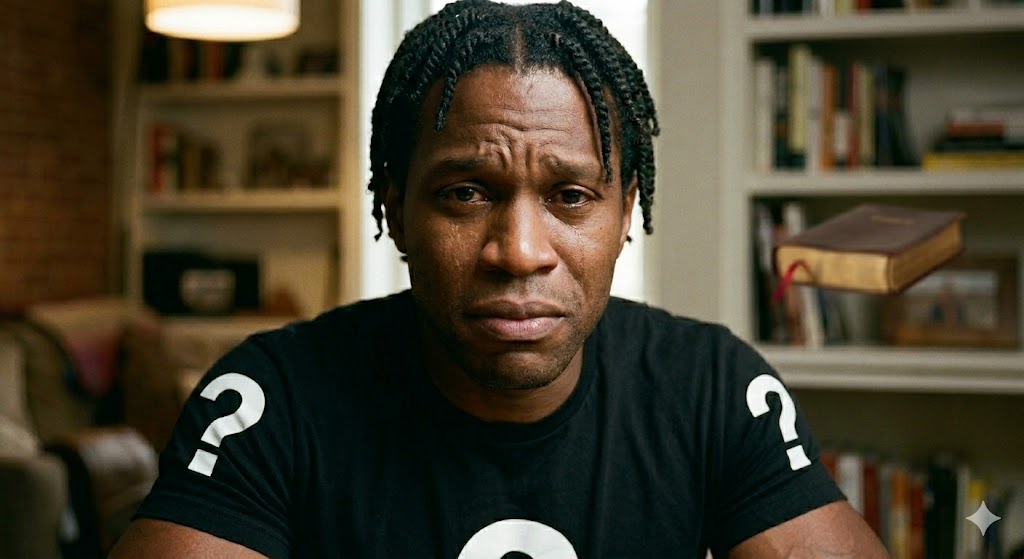
What Do You Do When the “?” Is Taped to Your Chest in Your Life?

The answer read below…..

Life often presents moments of uncertainty so heavy that it feels like a literal question mark has been taped to your chest. You may have prayed fervently, sought guidance, and begged God for clarity about your purpose, relationships, career, or calling, yet the silence seems deafening. This season of ambiguity can test faith, patience, and resilience. How should a believer respond when the answers are not immediately clear, when you have asked God with sincerity and humility, and yet, hear nothing in return?

The first principle is patience. Waiting on God is not passive; it is an active stance of trust, faith, and preparedness. Psalm 27:14 (KJV) exhorts, “Wait on the Lord: be of good courage, and he shall strengthen thine heart: wait, I say, on the Lord.” Waiting involves maintaining spiritual discipline, continuing to pray, worship, and live according to God’s principles even when clarity seems distant.

Prayer is foundational, but it must be consistent and intentional. Philippians 4:6–7 (KJV) advises, “Be careful for nothing; but in every thing by prayer and supplication with thanksgiving let your requests be made known unto God. And the peace of God, which passeth all understanding, shall keep your hearts and minds through Christ Jesus.” Continual prayer with thanksgiving, even in silence, establishes a rhythm of dependence and aligns your heart with divine timing.

Silence from God does not signify abandonment. Isaiah 30:18 (KJV) reminds us, “And therefore will the Lord wait, that he may be gracious unto you, and therefore will he be exalted, that he may have mercy upon you: for the Lord is a God of judgment: blessed are all they that wait for him.” His timing is perfect, and periods of waiting often refine character, deepen faith, and clarify motives.

When seeking answers, humility is crucial. Ask God for guidance with expectation, not arrogance. James 4:6 (KJV) states, “But he giveth more grace. Wherefore he saith, God resisteth the proud, but giveth grace unto the humble.” The posture of a humble heart opens one to receive direction while preventing frustration or pride from clouding judgment.

Pay attention to peace. The Bible teaches that peace is a guide to discernment. Colossians 3:15 (KJV) instructs, “And let the peace of God rule in your hearts, to the which also ye are called in one body; and be ye thankful.” When faced with a “?” in life, notice the paths that bring peace, the choices that ease the tension in your spirit. Peace becomes a compass when words, visions, or immediate clarity are absent.

Daily discipline in prayer, meditation, and scripture reading strengthens discernment. Romans 12:2 (KJV) exhorts believers, “And be not conformed to this world: but be ye transformed by the renewing of your mind, that ye may prove what is that good, and acceptable, and perfect, will of God.” Transformation occurs in these quiet, consistent practices, allowing God to shape understanding over time.

Faith often grows most during seasons of unanswered questions. Hebrews 11:1 (KJV) defines faith as “the substance of things hoped for, the evidence of things not seen.” Trusting in God’s guidance before receiving clarity strengthens reliance on Him rather than on one’s own understanding. Proverbs 3:5–6 (KJV) further emphasizes, “Trust in the Lord with all thine heart; and lean not unto thine own understanding. In all thy ways acknowledge him, and he shall direct thy paths.”

While waiting, it is essential to examine the heart’s posture. Are prayers motivated by desperation, self-interest, or genuine desire for God’s will? Psalm 37:4 (KJV) assures, “Delight thyself also in the Lord: and he shall give thee the desires of thine heart.” True alignment with God’s desires produces clarity and contentment while awaiting external confirmation.

The psychological dimension of waiting is also significant. Research on uncertainty demonstrates that prolonged ambiguity increases stress and can lead to anxiety or impulsive decisions (Carleton, 2016). Maintaining routines, mindfulness, and prayerful reflection helps manage this tension and prevents hasty actions that may contradict God’s plan.

Discernment often requires active listening. Beyond spoken prayer, pay attention to subtle confirmations—peace, recurring themes in scripture, wise counsel, or gentle nudges from the Spirit. These may be overlooked if one expects overt signs or dramatic visions. Proverbs 20:27 (KJV) notes, “The spirit of man is the candle of the Lord, searching all the inward parts of the belly.” Inner awareness is a channel for divine guidance.

Community plays a role in interpreting life’s “?” moments. Seek counsel from spiritually mature, trusted individuals. Proverbs 11:14 (KJV) teaches, “Where no counsel is, the people fall: but in the multitude of counsellors there is safety.” Honest dialogue with mentors or peers can illuminate paths previously unseen while maintaining accountability and humility.

Actions matter as much as reflection. While waiting, engage in productive, purposeful activities aligned with your values and God’s principles. Micah 6:8 (KJV) reminds, “He hath shewed thee, O man, what is good; and what doth the Lord require of thee, but to do justly, and to love mercy, and to walk humbly with thy God?” Consistent action cultivates readiness for opportunities when clarity arrives.

Resisting impatience is critical. Luke 21:19 (KJV) counsels, “In your patience possess ye your souls.” Impatience can prompt compromise, poor decision-making, or settling for alternatives that undermine long-term purpose. Waiting, while difficult, is an act of obedience and trust.

Acknowledging emotions is healthy. Feelings of frustration, fear, or confusion are natural. Express these honestly in prayer without demanding immediate answers. Psalm 62:8 (KJV) encourages, “Trust in him at all times; ye people, pour out your heart before him: God is a refuge for us.” Vulnerable, honest prayer does not weaken faith; it deepens it.

Testing assumptions is essential. Sometimes, the absence of answers signals the need for growth, preparation, or discernment. James 1:3 (KJV) notes, “Knowing this, that the trying of your faith worketh patience.” Life’s questions often require inner transformation before external solutions are revealed.

Spiritual journaling can aid clarity. Recording prayers, insights, and experiences allows reflection over time, highlighting patterns or guidance previously unnoticed. It aligns with Habakkuk 2:2 (KJV): “Write the vision, and make it plain upon tables, that he may run that readeth it.” Writing encourages focused reflection and retention of God’s subtle responses.

Faithful consistency nurtures trust in the unseen. Galatians 6:9 (KJV) states, “And let us not be weary in well doing: for in due season we shall reap, if we faint not.” Continuing to act with integrity, kindness, and obedience positions the believer to recognize God’s direction when it appears.

Ultimately, the answer may come as a gentle whisper of intuition, a sense of peace, or an unexpected opportunity. Isaiah 30:21 (KJV) affirms, “And thine ears shall hear a word behind thee, saying, This is the way, walk ye in it, when ye turn to the right hand, and when ye turn to the left.” Peace is often the clearest sign that a path aligns with God’s will.

In conclusion, when the “?” is taped to your chest, your response is guided by prayer, humility, patience, and attentiveness to peace. Seek guidance without arrogance, maintain daily communion with God, and act in alignment with His principles. Trust that clarity will come in due season. Waiting is not inactivity; it is preparation, refinement, and cultivation of discernment until God’s direction becomes unmistakable.


References

Carleton, R. N. (2016). Fear of the unknown: One fear to rule them all? Journal of Anxiety Disorders, 41, 5–21.

Goleman, D. (1995). Emotional intelligence. Bantam Books.

Bible. (1769/2017). King James Version. (Original work published 1611).

Psalm 27:14; 37:4, 37:7, 62:8; Proverbs 3:5–6; 11:14; 20:27; 29:18; Isaiah 30:21; Micah 6:8; Hebrews 11:1; Philippians 4:6–7; Colossians 3:15; Romans 12:2; James 1:3, 4:6; Luke 21:19; Galatians 6:9; 1 Thessalonians 5:17; Ephesians 4:32.

Wisdom Alert! Anger is a Trap!

Anger is a powerful emotion that can feel justified in moments of injustice, betrayal, or personal offense. Yet unchecked, it becomes a snare that enslaves the mind, poisons the spirit, and damages relationships. The scripture warns repeatedly against anger, highlighting its potential to mislead and destroy. Proverbs 14:29 (KJV) states, “He that is slow to wrath is of great understanding: but he that is hasty of spirit exalteth folly.” Wisdom requires patience and discernment rather than immediate retaliation.

Psychology supports this ancient warning. Research shows that chronic anger increases the risk of cardiovascular disease, hypertension, and impaired immune function (Chida & Steptoe, 2009). Beyond physical health, anger affects cognitive clarity, decision-making, and social connections. The mind under anger narrows, focusing on perceived threats rather than long-term solutions.

The Bible situates anger within moral and spiritual frameworks. Ephesians 4:26 (KJV) advises, “Be ye angry, and sin not: let not the sun go down upon your wrath.” This passage acknowledges that anger is a natural response but cautions against allowing it to produce sin. Unchecked anger often leads to actions or words that violate ethical principles, creating regret and relational rupture.

Psychological studies similarly distinguish between constructive and destructive anger. Constructive anger motivates problem-solving and boundary-setting, while destructive anger produces aggression, resentment, and impulsive behaviors (Deffenbacher, 2011). Awareness of this distinction is crucial in navigating emotional responses healthily.

Anger often arises from perceived disrespect or violation of expectations. Cognitive-behavioral psychology highlights that our interpretation of events—not just the events themselves—triggers emotional responses (Beck, 2011). Misinterpretation or magnification of perceived slights can intensify anger unnecessarily. Controlling interpretation is as important as controlling reaction.

Righteous anger, as modeled in scripture, is distinguished by purpose and restraint. Jesus expressed anger in the temple when confronting injustice, yet it was measured and directed at sin, not personal vendettas (Matthew 21:12–13, KJV). Observing boundaries, restraint, and clarity ensures that anger serves justice rather than ego.

Holding onto anger allows it to fester. Ephesians 4:31 (KJV) instructs, “Let all bitterness, and wrath, and anger, and clamor, and evil speaking, be put away from you, with all malice.” Chronic resentment corrodes the soul, creating psychological rigidity and preventing reconciliation. Forgiveness is a proactive antidote, freeing both parties from the cycle of reactivity.

From a psychological standpoint, rumination is a dangerous companion of anger. Persistent focus on grievances strengthens neural pathways associated with stress and hostility, making future anger responses easier to trigger (Nolen-Hoeksema, 2000). Mindfulness, journaling, or structured reflection can break this pattern, promoting emotional regulation.

Anger also impedes effective communication. When emotionally charged, individuals are more likely to misinterpret intentions, exaggerate offenses, and escalate conflicts (Gottman & Levenson, 1992). A measured approach allows for dialogue, reconciliation, and problem-solving rather than destruction.

Spiritual disciplines complement psychological strategies. Prayer, meditation on scripture, and seeking godly counsel redirect focus from self-centered indignation to constructive action. Psalm 37:8 (KJV) admonishes, “Cease from anger, and forsake wrath: fret not thyself in any wise to do evil.” Patience, rooted in faith, fosters emotional and moral clarity.

Anger often masks deeper emotions such as fear, hurt, or insecurity. Recognizing these underlying feelings allows one to address core issues rather than lashing out at surface provocations. Psychological interventions like emotion-focused therapy emphasize understanding and validating these hidden layers to prevent misdirected anger (Greenberg, 2010).

Forgiveness does not require forgetting, nor does it mean condoning wrong behavior. Rather, it releases personal bondage to anger. Colossians 3:13 (KJV) reminds, “Forbearing one another, and forgiving one another, if any man have a quarrel against any: even as Christ forgave you, so also do ye.” Forgiveness preserves mental and spiritual health.

Self-control is an essential skill in managing anger. Proverbs 16:32 (KJV) observes, “He that is slow to anger is better than the mighty; and he that ruleth his spirit than he that taketh a city.” Strength lies not in forceful retaliation but in restraint, discernment, and wisdom. The ability to rule the spirit is a form of power often overlooked.

Cognitive-behavioral techniques, such as reframing negative thoughts, can be effective in transforming anger into constructive energy (Beck, 2011). Reinterpreting provocations as opportunities for growth or as reflections of others’ limitations reduces emotional reactivity, fostering resilience.

Anger can also be contagious. Social psychology indicates that exposure to angry individuals increases one’s own anger, reinforcing cycles of hostility (Barsade, 2002). Avoiding toxic environments and engaging in calm, supportive relationships protects emotional balance and promotes positive influence.

The dangers of suppressed anger should not be ignored. Bottled anger manifests physically through tension, anxiety, and psychosomatic symptoms. Psychologists recommend safe outlets such as physical exercise, creative expression, or structured reflection to prevent internal harm while maintaining ethical conduct.

Developing empathy counters anger’s destructive tendencies. Understanding the perspectives and struggles of others reduces automatic blame and promotes compassion. Romans 12:17–21 (KJV) encourages believers not to repay evil with evil but to overcome evil with good, integrating moral wisdom with emotional regulation.

Prayer and spiritual reflection provide perspective beyond personal grievances. By seeking divine guidance, individuals can respond to provocation with discernment rather than reactive emotion. James 1:19 (KJV) counsels, “Let every man be swift to hear, slow to speak, slow to wrath,” emphasizing measured response over impulsive reaction.

The cumulative effect of uncontrolled anger is relational, emotional, and spiritual degradation. Friendships, marriages, workplaces, and communities suffer when reactive hostility prevails. Conversely, managing anger with wisdom, patience, and self-discipline fosters trust, respect, and long-term harmony.

Ultimately, wisdom teaches that anger itself is not the problem—it is the mismanagement of anger that ensnares. By combining scriptural principles with psychological insights, individuals can recognize triggers, regulate emotions, and act with discernment. Anger, when understood and controlled, becomes a signal for reflection, not destruction.

Anger is a trap—but awareness, self-control, forgiveness, and patience provide the keys to freedom. The Bible and psychology converge on this truth: mastery over the spirit, calm in adversity, and measured action preserve life, health, and relationships. Wise individuals choose restraint over reaction, understanding over impulse, and love over wrath.


References

Barsade, S. G. (2002). The ripple effect: Emotional contagion and its influence on group behavior. Administrative Science Quarterly, 47(4), 644–675.

Beck, J. S. (2011). Cognitive behavior therapy: Basics and beyond (2nd ed.). Guilford Press.

Chida, Y., & Steptoe, A. (2009). The association of anger and hostility with future coronary heart disease: A meta-analytic review of prospective evidence. Journal of the American College of Cardiology, 53(11), 936–946.

Deffenbacher, J. L. (2011). Cognitive-behavioral conceptualization and treatment of anger. Cognitive and Behavioral Practice, 18(1), 88–97.

Gottman, J. M., & Levenson, R. W. (1992). Marital processes predictive of later dissolution: Behavior, physiology, and health. Journal of Personality and Social Psychology, 63(2), 221–233.

Greenberg, L. S. (2010). Emotion-focused therapy: Theory and practice. American Psychological Association.

Nolen-Hoeksema, S. (2000). The role of rumination in depressive disorders and mixed anxiety/depressive symptoms. Journal of Abnormal Psychology, 109(3), 504–511.

Bible. (1769/2017). King James Version. (Original work published 1611).