Tag Archives: feminism

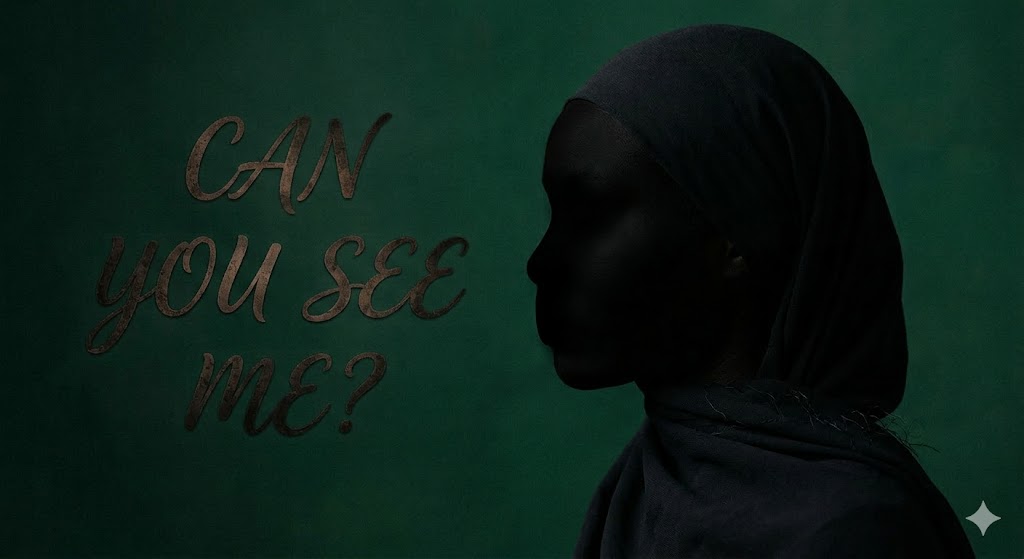
The Unseen Black Woman

The unseen Black woman lives at the intersection of power and pain, shaped by histories that sought to silence her and a world that often refuses to acknowledge her presence. Her story is one of resilience, complexity, and unshakable dignity—a story too often misinterpreted or completely ignored. From the days of enslavement to contemporary society, the Black woman remains both foundational and marginalized, desired yet devalued, visible only when convenient yet erased when truth is required. She is the cultural womb of nations, and yet she continues to battle the shadows of invisibility.

Historically, Black women have been overlooked and unprotected by social structures that elevate others while dismissing their humanity. During slavery, their labor and bodies were exploited without recognition or care, laying the foundation for stereotypes that still persist today. This invisibility is not accidental but systematically produced through institutions that benefit from her silence. Scholars have long noted that the Black woman is rarely seen as the standard of beauty, intelligence, or femininity in mainstream society, despite her profound contributions (Collins, 2000).

Rejection by other races, particularly within a white-dominated beauty and social hierarchy, has created layers of psychological warfare against the Black woman’s self-worth. Colorism—rooted in colonialism—has placed lighter skin on a pedestal while disregarding darker-skinned women. Media representation has amplified this hierarchy, rewarding proximity to whiteness and punishing features deeply tied to African ancestry. The Black woman’s rejection is not just personal; it is structural, echoing across fashion, film, workplace settings, and even healthcare outcomes.

Yet perhaps even more painful is the rejection she often experiences within her own community. Internalized racism and colorism, taught across generations, have led some Black men and women to subconsciously prefer lighter skin or Eurocentric features. This is not natural or innate—it is learned behavior shaped by centuries of conditioning. Enslavers strategically favored lighter-skinned enslaved people for domestic labor and created hierarchies among the enslaved that persist today. These psychological wounds have evolved but not disappeared.

Despite this, the Black woman’s beauty remains unmatched and deeply rooted in cultural, genetic, and ancestral strength. Her beauty defies narrow Western standards and emerges in endless forms—in tightly coiled hair, deep brown hues, high cheekbones, full lips, and regal posture. Studies on global beauty standards are increasingly recognizing the universality of features traditionally associated with African women, challenging outdated paradigms (Wade, 2017). Black beauty has not only survived exclusion; it has reshaped global culture, influencing art, fashion, language, and music.

The unseen Black woman is the backbone of movements, families, and spiritual communities, often leading without acknowledgment. She nurtured children who weren’t her own during slavery. She pioneered movements for civil rights while others received the spotlight. She protected her community, advocated for justice, and birthed cultural revolutions only to be written out of the narrative. Even today, Black women are the most educated demographic in America yet remain underpaid and under-promoted (NCES, 2022). This contradiction shows a society eager to benefit from her labor but unwilling to reward her leadership.

Her invisibility also appears in modern love dynamics. Many Black women face rejection on dating apps, in media pairings, and in social perceptions. Studies reveal that Black women are the most marginalized demographic in online dating algorithms (Hobbs et al., 2019). The social myth that Black women are “too strong,” “too independent,” or “undesirable” is not only untrue but dehumanizing. These narratives shape how the world interacts with Black women and how Black women learn to navigate relationships, often feeling unseen or undervalued.

But the unseen Black woman is not just a victim of rejection. She is a survivor who has learned to adapt, rebuild, and reimagine herself. She creates communities of healing—sister circles, natural hair movements, maternal health activism, and artistic spaces where she can breathe freely. She redefines beauty on her own terms, crafts new languages of empowerment, and challenges the structures that diminish her. She is not waiting for validation from society because she recognizes her worth internally.

Her spirituality has long been a source of strength. From traditional African religions to Christianity and modern spiritual practices, the Black woman’s connection to the divine has given her clarity and purpose. She understands suffering and redemption not as abstract concepts but lived realities. Her prayers have carried families, her faith has sustained movements, and her moral compass has shaped entire communities.

Black women have also served as cultural innovators, setting trends that the world imitates yet rarely credits. Hairstyles, fashion, vernacular, music, and social movements all bear the imprint of Black womanhood. The global appropriation of Black culture, without acknowledgment or respect, further demonstrates how she can be hyper-visible in influence yet invisible in recognition.

The unseen Black woman continues to face stereotypes—angry, loud, aggressive—labels manufactured to control her. These stereotypes mask her real emotions, preventing her from expressing pain, frustration, or vulnerability. They create barriers in workplaces, where she must work twice as hard while navigating biases that others do not face. They silence her in medical settings, where her pain is dismissed, leading to disproportionate maternal mortality rates.

Yet she persists. She continues to rise in academic fields, corporate leadership, entrepreneurship, and political influence. From Kamala Harris to Viola Davis, from everyday mothers to grassroots organizers, Black women are shaping the future. They are rewriting the narrative in real time, proving that invisibility is not destiny but a condition imposed by others.

Despite rejection from society, Black women remain deeply connected to one another. The solidarity found among Black women is powerful, nurturing, and healing. Within these bonds, they see each other fully. They uplift, affirm, and celebrate what the world ignores. In those circles, the unseen Black woman becomes seen again.

This invisibility has generational roots, but modern generations are actively dismantling it. Social media has allowed Black women to tell their own stories, challenge Eurocentric standards, and build platforms that center their experiences. From beauty influencers to scholars, Black women now control narratives once dictated by others.

The unseen Black woman is learning to rest, prioritize her mental health, and unlearn survival mode. She is healing from generational trauma, redefining femininity, and embracing softness without fear. She is discovering that her worth is inherent, not earned through suffering or sacrifice.

She is also demanding accountability—from media, corporations, governments, healthcare, and within her own communities. Black women are no longer silent about colorism, misogynoir, or the ways they have been mistreated. This new era is one of self-advocacy and bold truth-telling.

The unseen Black woman is not unseen because she lacks brilliance or beauty—she is unseen because society refuses to acknowledge what it cannot control. But she is rising, reclaiming her power, name by name, voice by voice. She carries the legacy of ancestors who walked through fire and still birthed nations. Her story is not one of defeat but victory.

Ultimately, the unseen Black woman is becoming the most visible she has ever been. She is taking her place in history and demanding that the world recognize her. Her resilience, beauty, intellect, and spiritual depth are undeniable. She is no longer waiting to be seen—she is choosing to be seen, loudly and unapologetically. And in doing so, she transforms not only her world but the world around her.

References

Collins, P. H. (2000). Black feminist thought: Knowledge, consciousness, and the politics of empowerment. Routledge.
Hobbs, L., Owen, J., & Gerstenberger, K. (2019). Online dating preferences and racial biases. Journal of Social and Personal Relationships, 36(7), 1992–2013.
National Center for Education Statistics. (2022). Status and trends in the education of racial and ethnic groups.
Wade, L. (2017). Beauty standards and race: A sociocultural analysis. Sociology Compass, 11(6), e12482.
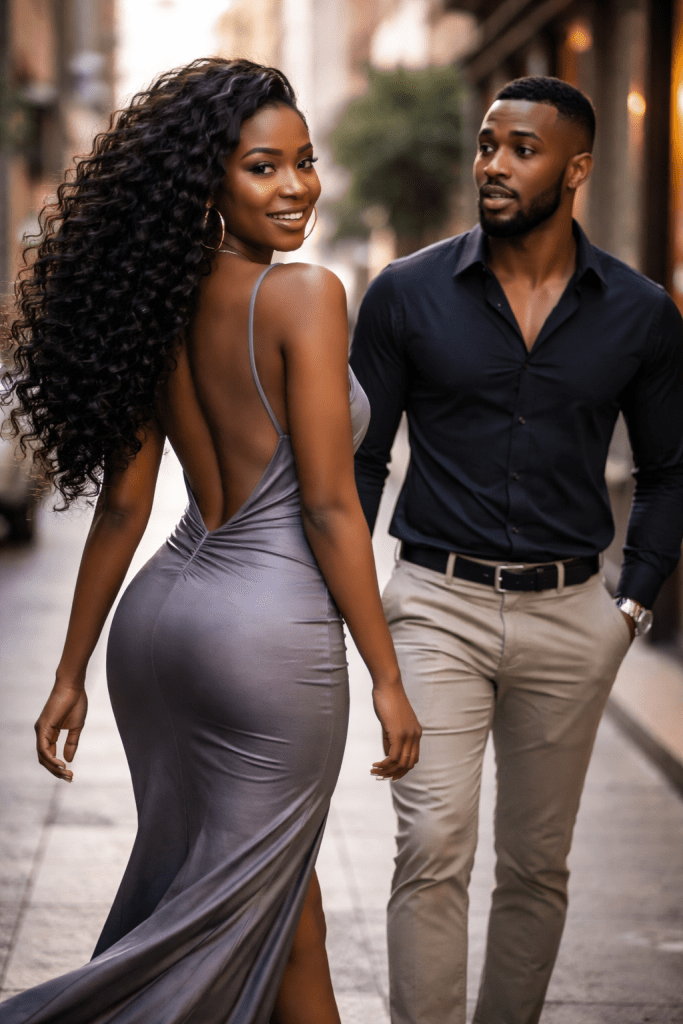
Beyond Stereotypes: The Social and Structural Challenges Affecting Black Women.

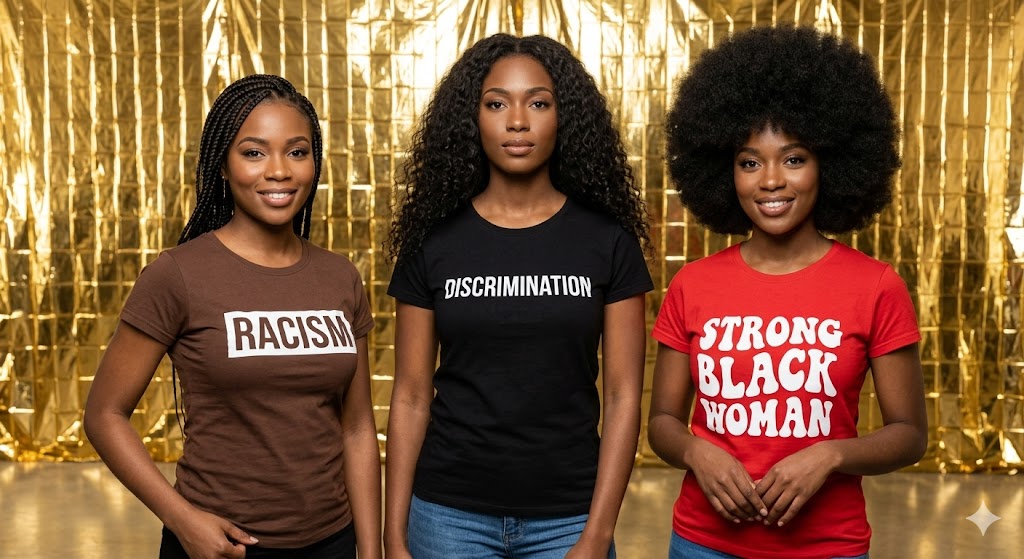
“The biggest problem with Black women” is extremely broad, and scholars caution against framing issues in a way that blames an entire group. Most research instead examines systemic challenges and social pressures that disproportionately affect Black women in the United States. These issues are rooted in historical inequalities, structural racism, gender bias, and economic disparities.

Intersectional Discrimination

One of the most widely discussed issues is intersectional discrimination, a concept introduced by legal scholar Kimberlé Crenshaw. Intersectionality explains how Black women often face discrimination that combines both racism and sexism simultaneously. This dual burden can affect employment opportunities, healthcare experiences, legal protections, and social perceptions.


The “Strong Black Woman” Stereotype

Another major concern is the cultural expectation often described as the “Strong Black Woman” stereotype. While strength and resilience are positive qualities, scholars note that this stereotype can pressure Black women to suppress vulnerability, emotional needs, or mental health struggles. The expectation to remain strong in the face of adversity sometimes leads to untreated stress and burnout.


Economic Inequality

Black women are also disproportionately affected by economic inequality. According to data from the U.S. Bureau of Labor Statistics, Black women historically earn less than both white men and white women in the United States. This wage gap reflects broader systemic issues such as occupational segregation, hiring discrimination, and unequal access to high-paying industries.


Health Disparities

Public health research shows significant disparities affecting Black women’s health outcomes. For example, maternal mortality rates among Black women are significantly higher than those of other racial groups. Studies by the Centers for Disease Control and Prevention attribute this disparity to factors including unequal healthcare access, medical bias, and chronic stress related to systemic racism.


Colorism and Beauty Standards

Colorism—the preferential treatment of lighter skin tones within communities of color—also impacts Black women socially and professionally. Darker-skinned women often report facing bias in media representation, employment opportunities, and dating dynamics. These issues are widely examined within sociology and cultural studies.


Media Representation

Black women have historically been portrayed through limited stereotypes in film and television, including tropes such as the “mammy,” the “angry Black woman,” or hypersexualized depictions. Media scholars argue that these portrayals influence public perception and contribute to bias in social institutions.


Educational and Professional Barriers

Despite significant educational achievements—Black women are among the fastest-growing groups earning college degrees—many still face barriers to leadership positions in corporate and political spaces. Structural inequality and workplace bias often limit advancement opportunities.


Relationship and Family Dynamics

Sociologists also examine how historical factors such as mass incarceration, economic inequality, and employment instability affect family structures within Black communities. These broader systemic issues influence relationship dynamics, marriage rates, and household stability.


Mental Health Stigma

Mental health stigma within many communities can discourage individuals from seeking professional help. Black women may feel pressure to maintain emotional strength while dealing with racism, sexism, and economic stressors. This can delay treatment for anxiety, depression, or trauma-related conditions.


Structural Inequality

Ultimately, many scholars argue that the biggest challenges facing Black women are not individual flaws but structural inequalities embedded within social systems. These include disparities in housing, healthcare, employment, and education that developed over centuries of discrimination.


Resilience and Leadership

Despite these challenges, Black women have historically demonstrated remarkable resilience and leadership. Figures such as Harriet Tubman, Ida B. Wells, and Shirley Chisholm played critical roles in social justice movements, civil rights advocacy, and political progress in the United States.


Conclusion

Rather than identifying a single “problem” with Black women, most scholars emphasize examining the structural conditions that shape their experiences. Addressing disparities in healthcare, economic opportunity, education, and representation can help reduce inequalities and support the well-being of Black women in society.


References

Crenshaw, K. (1989). Demarginalizing the intersection of race and sex. University of Chicago Legal Forum.

Collins, P. H. (2000). Black feminist thought: Knowledge, consciousness, and the politics of empowerment. Routledge.

Centers for Disease Control and Prevention. Maternal mortality and racial disparities in the United States.

Jones, C. P. (2000). Levels of racism: A theoretical framework. American Journal of Public Health.

U.S. Bureau of Labor Statistics. (2023). Labor force statistics by race and gender.

The Sexual Economy of Appearance

Appearance operates as a form of currency within modern social life, shaping access to desire, power, and protection. The sexual economy of appearance refers to the system in which physical attractiveness is exchanged for attention, validation, opportunity, and status. This economy is not neutral; it is governed by racialized, gendered, and class-based hierarchies that determine whose bodies are most valued.

Within this economy, beauty functions as capital. Individuals who align with dominant beauty standards are rewarded with romantic abundance, social visibility, and sexual leverage. Those who do not are often rendered invisible or forced to compensate through emotional labor, compliance, or self-sacrifice. Attraction becomes less about mutual connection and more about market positioning.

Gender plays a defining role in how appearance is monetized. Women are socialized to understand their bodies as primary assets, evaluated continuously and publicly. Men, by contrast, are more often judged on status and resources, yet still benefit from partnering with women whose appearance enhances their own social standing.

Race profoundly structures this sexual marketplace. Eurocentric beauty ideals elevate lighter skin, narrower features, and looser hair textures, while darker skin and Afrocentric features are systematically devalued. This hierarchy mirrors colonial and slave-based systems that assigned worth based on proximity to whiteness.

Desire within this system is frequently mistaken for personal preference. In reality, attraction is shaped by repeated cultural messaging that teaches who is “beautiful,” “feminine,” and “worthy.” These lessons are absorbed long before conscious choice, making desire feel natural even when it reproduces inequality.

The sexual economy also governs behavior. Attractive individuals are granted more grace, patience, and forgiveness in romantic interactions. They are pursued rather than required to prove themselves. Less attractive individuals are expected to accept lower standards, tolerate disrespect, or feel grateful for attention.

Social media has intensified this economy by quantifying desirability through likes, followers, and visibility. Appearance now translates directly into economic and sexual capital, rewarding those who conform and punishing those who resist. Algorithms act as gatekeepers, reinforcing existing beauty hierarchies.

Colorism amplifies sexual stratification within marginalized communities. Lighter-skinned women are often perceived as more feminine, approachable, and “wife-worthy,” while darker-skinned women are sexualized, ignored, or cast as less desirable partners. These dynamics fracture intimacy and erode collective self-worth.

Men also navigate this economy, though differently. Physical attractiveness can elevate masculine desirability, yet men are more frequently evaluated on their ability to provide status, protection, or resources. Still, beauty influences whose masculinity is affirmed and whose is questioned.

The moral implications of this economy are significant. When beauty is treated as merit, inequality appears deserved. Sexual success is framed as virtue, while rejection is interpreted as personal failure rather than structural bias.

Resistance begins with naming the system. The sexual economy of appearance thrives on silence and denial. Honest examination disrupts the illusion that attraction exists outside culture, power, and history.

Liberation requires redefining value beyond appearance. Intimacy grounded in mutual respect, shared values, and emotional safety challenges the market logic that reduces people to visual commodities.

Ultimately, dismantling the sexual economy of appearance is not about rejecting beauty but about refusing to let it determine human worth. Desire becomes ethical when it is conscious, reflective, and free from inherited hierarchies.

References

Bourdieu, P. (1986). The forms of capital. In J. Richardson (Ed.), Handbook of theory and research for the sociology of education (pp. 241–258). Greenwood Press.

Collins, P. H. (2004). Black sexual politics: African Americans, gender, and the new racism. Routledge.

Eagly, A. H., Ashmore, R. D., Makhijani, M. G., & Longo, L. C. (1991). What is beautiful is good, but… A meta-analytic review of research on the physical attractiveness stereotype. Psychological Bulletin, 110(1), 109–128.

Hamermesh, D. S. (2011). Beauty pays: Why attractive people are more successful. Princeton University Press.

Hunter, M. (2007). The persistent problem of colorism: Skin tone, status, and inequality. Sociology Compass, 1(1), 237–254.

Illouz, E. (2007). Consuming the romantic utopia: Love and the cultural contradictions of capitalism. University of California Press.

Zelizer, V. A. (2005). The purchase of intimacy. Princeton University Press.

Aesthetics as Inequality: The Rise of Beautyism.

Beautyism, the systematic bias based on physical appearance, functions as a social and economic hierarchy that privileges certain aesthetic traits while marginalizing others. Unlike racism or sexism, beautyism often operates under the guise of “preference” or “merit,” making it less visible yet no less damaging. Cultural norms, media representation, and historical hierarchies have transformed beauty into a form of currency that dictates opportunity, influence, and social value.

The origins of beautyism are deeply entwined with colonialism and European imperialism. Eurocentric standards of beauty were exported globally, creating benchmarks for skin tone, facial features, and body proportions. These norms were framed as universal ideals, elevating certain traits while devaluing others. In effect, beauty became a marker of social hierarchy (Hamermesh & Biddle, 1994).

In professional environments, beautyism manifests as differential treatment in hiring, promotions, and salary. Research demonstrates that attractive individuals are more likely to be hired, perceived as competent, and receive higher wages. These advantages often operate unconsciously, reinforcing inequality in ostensibly meritocratic systems (Hosoda, Stone-Romero, & Coats, 2003).

Beautyism intersects with race, gender, and class, compounding advantage for those whose appearance aligns with dominant cultural norms. Lighter skin, Eurocentric facial features, and specific body types are disproportionately rewarded, while darker skin and Afrocentric features are often penalized. The result is an embedded social hierarchy that favors appearance in ways that mirror historical oppression (Hunter, 2007).

In social interactions, beautyism shapes perceived personality and character. The “halo effect” demonstrates that people attribute positive traits such as intelligence, kindness, and reliability to those deemed attractive. Conversely, individuals judged less attractive are more likely to face skepticism, distrust, or diminished respect (Eagly et al., 1991).

Romantic and relational dynamics are also shaped by beautyism. Culturally preferred features increase desirability, creating inequitable distribution of attention, marriage proposals, and social affirmation. Those outside the beauty hierarchy are frequently marginalized, fetishized, or objectified, reproducing social inequality.

Within families, beautyism can exacerbate favoritism. Children deemed more attractive may receive greater encouragement, resources, and protection, while those judged less appealing experience neglect or lower expectations. These early disparities influence self-esteem, ambition, and life outcomes.

Women face disproportionate consequences of beautyism due to gendered expectations. Societal pressure to conform to beauty norms imposes emotional, financial, and social labor. Women are more harshly judged for aging, body shape, and skin tone, making appearance a persistent determinant of perceived worth.

Media and culture perpetuate beautyism by normalizing narrow aesthetic ideals. Television, film, advertising, and social media consistently privilege certain body types, facial features, and skin tones, while underrepresenting or misrepresenting others. Repetition reinforces internalized bias and shapes public perception (Frisby, 2004).

Psychologically, beautyism contributes to low self-esteem, anxiety, and body dysmorphia. Internalized preference for certain appearances fosters shame and self-policing, disproportionately affecting marginalized groups whose natural features diverge from dominant standards.

Education systems also reflect beauty-based inequities. Attractive students are often perceived as more capable or motivated, receiving more encouragement and leniency. Less attractive students face higher scrutiny and lower expectations, which can impact long-term academic trajectories.

Economic impact of beautyism is measurable. Attractive individuals receive higher compensation, more promotions, and broader social networks. Beauty operates as a form of social and cultural capital, granting opportunities inaccessible to those outside the aesthetic norm (Hamermesh, 2011).

Beautyism functions as social mobility currency. Conformity to idealized aesthetics facilitates entry into elite spaces, mentorship networks, and influential social circles, while deviation can hinder progress, access, and visibility. Appearance thus becomes a gatekeeper for success.

Theologically, beautyism contradicts the principle that worth is determined by the heart rather than outward appearance. Scripture instructs, “Man looketh on the outward appearance, but the Lord looketh on the heart” (1 Samuel 16:7, KJV). Favoritism based on looks violates this divine standard.

Faith communities are not immune. Even where racial or socioeconomic partiality is rejected, appearance-based favoritism subtly influences leadership selection, visibility, and social validation. Spiritual integrity demands that beauty hierarchies be challenged.

Overcoming beautyism requires conscious awareness of bias and its structural implications. Individuals must interrogate personal preferences, institutions must audit policies, and media must diversify representation. Recognition of privilege tied to appearance is crucial for reform.

Internalized beautyism must be addressed to heal its psychological effects. Self-worth should be disentangled from societal standards, and programs emphasizing character, talent, and virtue over appearance can mitigate the impact of bias.

Collective action involves creating equitable environments where appearance does not dictate value or opportunity. Policies and practices must be scrutinized to prevent subtle favoritism based on looks, just as society addresses racial and gender inequities.

Beautyism is a social construct that entrenches inequality. Its dismantling requires intentional cultural, institutional, and personal reform, prioritizing character, skill, and virtue over conformity to aesthetic norms.

Ultimately, addressing beautyism affirms the inherent dignity and worth of all individuals. When societies reject hierarchical valuation based on appearance, they foster environments of justice, inclusion, and human flourishing.


References

The Holy Bible, King James Version. (1611). Various passages.

Hamermesh, D. S., & Biddle, J. E. (1994). Beauty and the labor market. American Economic Review, 84(5), 1174–1194.

Hosoda, M., Stone-Romero, E. F., & Coats, G. (2003). The effects of physical attractiveness on job-related outcomes: A meta-analysis of experimental studies. Personnel Psychology, 56(2), 431–462.

Hunter, M. (2007). The persistent problem of colorism: Skin tone, status, and inequality. Sociology Compass, 1(1), 237–254.

Eagly, A. H., Ashmore, R. D., Makhijani, M. G., & Longo, L. C. (1991). What is beautiful is good, but…: A meta-analytic review of research on the physical attractiveness stereotype. Psychological Bulletin, 110(1), 109–128.

Frisby, C. M. (2004). Does race or gender matter? Effects of media images on self-perception. Journal of Broadcasting & Electronic Media, 48(2), 301–317.

Hamermesh, D. S. (2011). Beauty pays: Why attractive people are more successful. Princeton University Press.

Echoes of Masculinity: The Psychology and Politics of the Manosphere

The evolving digital landscape has given rise to new subcultures that shape how men understand themselves, their identities, and their place in the world. Among these digital communities, the “manosphere” emerges as one of the most influential—yet controversial—phenomena of the 21st century. It is a constellation of blogs, forums, influencers, and ideological hubs that discuss men’s issues, masculinity, dating, politics, and gender relations. Its echo chambers reveal both the anxieties and aspirations of modern men navigating cultural change.

Psychologically, the manosphere reflects a crisis of identity. Men facing economic uncertainty, shifting gender roles, and declining social structures often seek online spaces where their frustrations are validated. Researchers note that these communities appeal to men who feel culturally displaced or socially invisible (Ging, 2019). Many participants express feelings of betrayal, loneliness, or rejection—emotional wounds that make them susceptible to simplistic or extremist solutions.

The manosphere encompasses diverse factions, from moderate men’s rights advocates to more extreme corners like incels, pick-up artists (PUAs), and hyper-traditional patriarchal groups. Each subculture draws from different grievances, yet all share an intense focus on gender power dynamics. The movement’s psychological pull lies in its promise of clarity: clear rules for masculinity, clear villains for male suffering, and clear communities for belonging.

Politically, the manosphere has evolved into a potent force. Its narratives intersect with broader ideological concerns, including nationalism, anti-feminism, and traditionalism. Papadamou et al. (2020) show that these communities can act as radicalization pipelines, funneling disaffected men toward far-right beliefs. This shift reflects how gender identity becomes not only personal but also political—shaping voting behaviors, policy views, and cultural attitudes.

One of the central themes within the manosphere is the concept of male hierarchy. Alpha, beta, and sigma labels create a simplistic taxonomy that reduces masculinity to dominance or detachment. This worldview rejects vulnerability and compassion, reinforcing rigid notions of what a “real man” should be. Psychologists argue that such ideas deepen male distress by discouraging emotional expression and relational connection (Connell & Messerschmidt, 2005).

Platforms within the manosphere also promote transactional understandings of relationships. PUAs and red-pill ideologues often treat intimacy as a competitive marketplace. Women become opponents rather than partners; dating becomes strategy rather than connection. This mindset distorts emotional development and creates cycles of resentment, especially for young men struggling socially or romantically.

Yet it would be inaccurate to assume the manosphere is exclusively harmful. Some spaces focus on mental health, fatherhood, fitness, financial stability, and personal accountability. These communities emphasize resilience, discipline, and healing—traits essential for masculine well-being. However, even positive messages can be overshadowed by adjacent radical voices, making healthy navigation difficult for vulnerable men.

Relationally, the manosphere amplifies gender polarization. Feminists become enemies, women become predators or obstacles, and the idea of partnership becomes suspect. Scholars like Banet-Weiser (2018) emphasize that this adversarial framing fuels broader cultural conflict, turning personal pain into ideological warfare. What begins as emotional grievance often hardens into political identity.

Spiritually and emotionally, the manosphere reveals profound longing—longing for purpose, stability, respect, and connection. Masculine identity today is fragmented: some men cling to traditional roles; others seek entirely new scripts. Without supportive community structures, men turn to online voices to interpret their struggles. The manosphere fills the vacuum left by mentorship, family breakdown, and societal confusion about manhood.

The political implications are significant. Manosphere narratives increasingly influence elections, public discourse, and lawmaking. The rhetoric around “male disenfranchisement” and “feminist overreach” shapes debates about reproductive rights, social services, education, and criminal justice. Politicians have learned to tap into male resentment as a mobilizing force—fusing gender grievance with populist messaging.

Psychologically, the manosphere also reveals the vulnerabilities in modern masculinity. Depression, suicidality, social isolation, and identity instability are recurring themes among participants. Studies show that men drawn to extremist corners often struggle with belonging, trauma, or developmental disruptions (Baele et al., 2019). The manosphere becomes both an outlet for pain and a source of deeper wounds.

The movement’s echo chambers magnify emotional experiences. Algorithms reward outrage, leading men deeper into ideological certainty and relational disconnection. The resulting worldview is often binary: men vs. women, winners vs. losers, dominant vs. submissive. This cognitive rigidity reduces the rich complexity of human experience to a battlefield of oppositions.

At its core, the manosphere is not simply about gender—it is about power. Power over self, power in relationships, and power within society. Its narratives reveal conflict between the desire for agency and the fear of irrelevance. For many men, the manosphere offers a sense of identity when other pathways—family, faith, community—have weakened or disappeared.

However, healthier models of masculinity do exist. Scholars and therapists increasingly promote relational masculinity, which emphasizes emotional intelligence, accountability, compassion, and mutual respect. This model rejects weakness and cruelty, not masculinity itself. It offers a path for men to grow without dehumanizing others.

The challenge moving forward is addressing the underlying wounds that drive men into harmful manosphere spaces. Solutions include mentorship, mental-health support, community engagement, and positive cultural representations of men. When men heal, their ideologies shift. When men feel valued, they no longer need to seek identity in extremity.

Ultimately, “Echoes of Masculinity” reveals that the manosphere is not merely an online trend—it is a psychological landscape and political engine shaped by fear, desire, trauma, and longing. Understanding it requires compassion as much as critique. The future of masculinity depends not on abandoning manhood but on redefining it with responsibility, truth, and emotional depth. When men are offered healthier scripts, the echo chambers lose their power.

References
Baele, S. J., Brace, L., & Coan, T. G. (2019). From “incels” to “saints”: Transitions in online extremist subcultures. Terrorism and Political Violence.
Banet-Weiser, S. (2018). Empowered: Popular Feminism and Popular Misogyny. Duke University Press.
Connell, R. W., & Messerschmidt, J. (2005). Hegemonic masculinity: Rethinking the concept. Gender & Society, 19(6), 829–859.
Ging, D. (2019). Alphas, betas, and incels: The manosphere landscape. Men and Masculinities, 22(4), 638–657.
Papadamou, K., et al. (2020). A large-scale analysis of extremist platforms and radicalization pathways. Proceedings of the International AAAI Conference on Web and Social Media.

The Black Woman: The Barbie Doll Effect

The “Barbie Doll Effect” describes the psychological, social, and cultural pressure placed on Black women to conform to an ideal of beauty that was never designed with them in mind. For generations, society upheld Eurocentric features—straight hair, narrow noses, light skin, thin frames—as the universal standard for femininity. Black women, in turn, were expected to mold themselves into this unattainable blueprint just to be seen as worthy, beautiful, or acceptable.

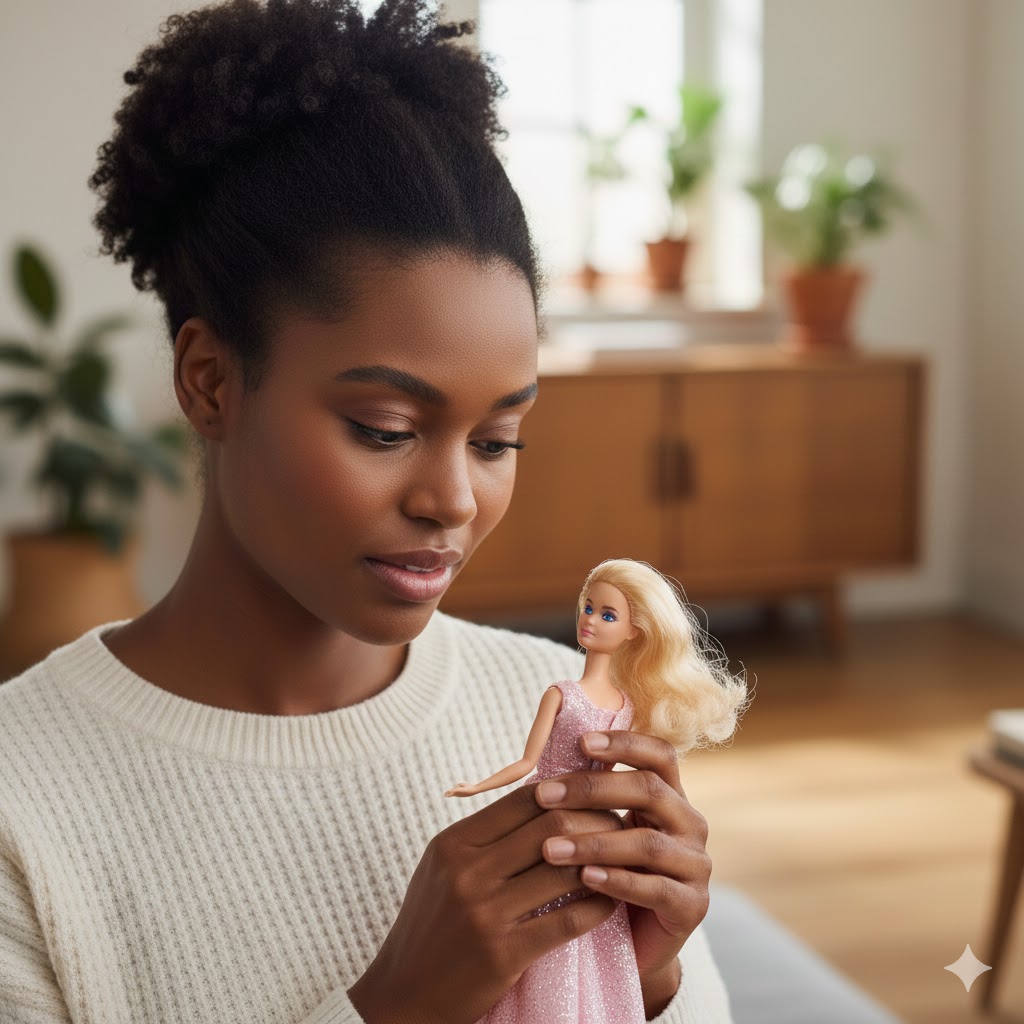
For many Black girls, the first doll they ever received didn’t look like them. Her hair swung in the wind, her eyes were light, her skin was pale, and her beauty was packaged as the “default.” This early conditioning planted seeds: To be beautiful is to be anything but yourself. The Barbie Doll Effect begins in childhood, but its impact often extends well into adulthood.

As Black women grow, society continues to whisper the same message through media, beauty industries, and Hollywood casting: straighten your hair, lighten your complexion, shrink your body, soften your presence, and quiet your voice. The closer you appear to the “Barbie ideal,” the more you are rewarded—professionally, socially, and romantically. The farther you are from it, the more you must fight unseen battles just to be acknowledged.

This creates a crisis of identity. Black women find themselves torn between self-love and societal acceptance, between honoring their ancestry and performing a version of femininity that dismisses their natural essence. This conflict isn’t superficial; it is deeply emotional. It shapes self-esteem, mental health, dating experiences, and even career opportunities.

In contemporary society, the concept of beauty is often dictated by narrow, Eurocentric standards that dominate media, fashion, and entertainment. Among these ideals, the “Barbie Doll Effect” has emerged as a prominent cultural phenomenon, shaping perceptions of attractiveness, self-worth, and femininity, particularly for Black women. This term describes the social and psychological pressures to embody perfection: flawless skin, slender physique, symmetrical features, and overall “marketable” beauty. While Barbie herself is a toy, her symbolic influence transcends playtime, impacting how young girls and women internalize their value.

Unrealistic Beauty and Colorism

For Black women, the Barbie Doll Effect is compounded by colorism—a preference for lighter skin within communities of color, perpetuated by societal and media portrayals. Darker-skinned Black women often face marginalization and exclusion from mainstream representations of beauty. In contrast, women with lighter complexions or features closer to Eurocentric ideals may be elevated, reinforcing internalized hierarchies of attractiveness. This phenomenon fosters self-doubt and a heightened focus on appearance, even as it undermines authentic identity.

Psychological Implications

The constant exposure to unrealistic images can lead to low self-esteem, body dysmorphia, and disordered eating habits. Research indicates that girls who internalize unattainable beauty standards often experience heightened anxiety, depression, and diminished self-worth (Grabe, Ward, & Hyde, 2008). The Barbie Doll Effect also conditions women to equate their value with their appearance, diverting attention from talents, intellect, and personal growth. For Black women navigating systemic bias, these pressures intersect with societal oppression, magnifying the psychological toll.

Media and Representation

Television, film, and social media amplify the Barbie Doll Effect by repeatedly showcasing idealized versions of Black femininity. Celebrities, influencers, and fashion icons are frequently curated to fit a specific aesthetic: smooth skin, exaggerated features, and slim bodies. While some Black women celebrate their beauty and achieve visibility, the overall narrative reinforces a narrow, homogenized ideal, often excluding darker skin tones, natural hair textures, or fuller body types. This limited representation affects how Black women perceive themselves and how society validates their beauty.

Beauty Standards vs. Authenticity

The pressure to conform to these ideals often leads Black women to alter their natural features through skin-lightening, hair straightening, cosmetic surgery, or extreme makeup routines. While personal choice plays a role, the underlying motivation is frequently social approval rather than self-expression. Rejecting the Barbie Doll Effect requires intentional cultivation of self-love, celebrating natural beauty, and fostering spaces where Black women see themselves represented authentically and holistically.

Societal Shifts and Empowerment

Despite pervasive pressures, there is a growing movement of empowerment. Black women are embracing natural hair, diverse body types, and culturally resonant fashion, challenging Eurocentric dominance in beauty standards. Organizations, social media campaigns, and influencers are redefining what beauty looks like, emphasizing resilience, intellect, and heritage alongside appearance. The message is clear: beauty is multifaceted, and self-worth cannot be measured solely by conformity to a doll’s proportions or societal ideals.

Conclusion

The Barbie Doll Effect illustrates the complex interplay between media, societal expectations, and personal identity. For Black women, it highlights the intersection of beauty standards, colorism, and systemic pressures. Breaking free from this effect requires acknowledgment of these pressures, intentional self-celebration, and a cultural shift that embraces diverse forms of beauty. By reclaiming narratives of worth, Black women can transcend superficial ideals and cultivate confidence rooted in authenticity, heritage, and individuality.

The Barbie Doll Effect also perpetuates colorism, where lighter skin is praised and darker skin is scrutinized. It fosters a beauty hierarchy that wounds Black women emotionally, dividing them into categories—“pretty for a dark-skinned girl,” “exotic,” “acceptable,” “too Black,” or “too ethnic.” These labels are weapons, not compliments, and they echo the painful legacy of colonization and slavery.

But despite these pressures, Black women continue to redefine beauty in their own image. From natural hair movements to melanin-positive campaigns, from darker-skinned models on magazine covers to actresses proudly wearing locs on red carpets, Black women are slowly reclaiming visibility and rewriting the standard. The world is watching—and following.

The Barbie Doll Effect is losing its power, not because the world suddenly changed, but because Black women refused to. They refused to shrink themselves to fit narrow beauty boxes. They refused to mask their features, mute their culture, or bleach away their heritage. Instead, they created their own lane—bold, regal, and authentically divine.

Today, the Black woman is not chasing the Barbie ideal; she is the standard. Her features have been copied, commercialized, and coveted. Full lips, curves, coils, melanin—everything once mocked is now monetized. But the true power lies not in being imitated, but in being unapologetically yourself.

The Barbie Doll Effect taught Black women to compare themselves to a plastic fantasy. But this generation is teaching the world that true beauty is not manufactured—it is inherited. It is ancestral. It is complex. It is alive.

The Black woman is not a doll—she is a blueprint.

The Dark Feminist Movement

A Critical Analysis of Ideology, Scripture, and Cultural Transformation

The modern feminist landscape is diverse, but a particular faction—often referred to as the Dark Feminist Movement—has emerged with sharper ideological stances that challenge traditional morality, biblical principles, and historical understandings of womanhood. This movement is characterized by its emphasis on radical autonomy, bodily sovereignty without ethical restriction, and the rejection of religious frameworks—particularly the Bible—as oppressive structures designed to limit female freedom. Yet Scripture affirms that “The fear of the Lord is the beginning of wisdom” (Proverbs 9:10), positioning God—not self—as the rightful source of authority.

At the heart of dark feminism is the belief that the Bible is fundamentally patriarchal. Proponents argue that Scripture reinforces male authority, female submission, and gender roles that they consider outdated. They view biblical instructions on marriage, sexuality, and family as relics of ancient societies rather than eternal moral truths. However, the Bible teaches that “All scripture is given by inspiration of God” (2 Timothy 3:16), asserting its timeless relevance.

One of the central pillars of the dark feminist worldview is abortion as ultimate bodily autonomy. This group sees reproductive freedom not merely as healthcare, but as a form of power—an assertion that a woman’s body, choices, and future must remain completely independent of religious moral codes. Scripture, however, affirms the sanctity of life: “Before I formed thee in the belly I knew thee” (Jeremiah 1:5), framing unborn life as God-ordained.

Dark feminists also critique the Bible’s teachings on sexual morality. They reject the biblical view that sexuality is sacred, covenantal, and bound by divine standards. Instead, they embrace a fluid, unrestricted sexual ethic where pleasure and personal fulfillment override spiritual or communal responsibility. Yet Scripture teaches that “Flee fornication” (1 Corinthians 6:18) and that the body is “the temple of the Holy Ghost” (1 Corinthians 6:19).

A significant component of this movement includes support for queer theory, which challenges the Bible’s teachings on gender and sexuality. Dark feminists argue that gender is socially constructed and fluid, whereas Scripture presents gender as intentionally designed and divinely ordered. Genesis 1:27 clearly states: “Male and female created he them,” anchoring gender in divine creation rather than cultural fluidity.

Dark feminism often critiques biblical womanhood as inherently repressive. Passages about submission, modesty, motherhood, and marital roles are interpreted as tools for maintaining male dominance. However, Scripture reveals submission as mutual and rooted in love, not control: “Submitting yourselves one to another in the fear of God” (Ephesians 5:21). Modesty is framed not as oppression but protection (1 Timothy 2:9–10).

The movement also resists biblical teachings on marriage. Instead of seeing marriage as covenantal and sacred, dark feminists frame it as a historical institution that restricted women’s economic and social power. Yet the Bible describes marriage as honorable (Hebrews 13:4) and rooted in sacrificial partnership: “Husbands, love your wives, even as Christ also loved the church” (Ephesians 5:25).

Another major theme is the rejection of male leadership—whether in the home, church, or society. Dark feminists argue that leadership roles historically given to men are products of patriarchal culture rather than divine order. However, Scripture presents leadership as responsibility, not dominance—“He that is greatest among you shall be your servant” (Matthew 23:11).

This movement also frequently critiques motherhood. While not universally anti-motherhood, dark feminism resists the idea that motherhood is a woman’s divine calling. Yet Scripture honors mothers with reverence: “Her children arise up, and call her blessed” (Proverbs 31:28). Motherhood is portrayed as ministry, not limitation.

Spiritually, dark feminists often embrace alternative belief systems—tarot, ancestor veneration, goddess worship, or metaphysical spirituality—as ways to reclaim feminine power outside the Bible. Scripture warns against such practices: “Regard not them that have familiar spirits” (Leviticus 19:31). Biblical spirituality places God—not self or mystical frameworks—at the center.

The movement is also rooted in social justice philosophies that sometimes conflict with biblical teachings. Issues like systemic oppression, reproductive justice, and queer liberation become moral priorities framed through a secular lens. The Bible teaches justice but ties it to righteousness: “To do justice and judgment is more acceptable to the Lord” (Proverbs 21:3).

Dark feminism promotes a worldview where self is supreme. Personal identity, desire, and self-definition hold more weight than external moral codes. This directly conflicts with biblical teaching that says: “Lean not unto thine own understanding” (Proverbs 3:5).

The movement also critiques biblical narratives such as Eve’s deception in Genesis. Dark feminists reinterpret Eve as a symbol of enlightenment. The Bible frames her as deceived (1 Timothy 2:14), not empowered, reminding believers that rebellion leads to brokenness, not liberation.

Another area of conflict involves forgiveness and reconciliation. The Bible emphasizes repentance, surrender, and restoration (Matthew 6:14–15), while dark feminism often promotes severing ties and prioritizing self-preservation. Scripture frames reconciliation as strength, not weakness.

Within the Dark Feminist Movement, masculinity is frequently depicted as inherently oppressive. The Bible differentiates between corrupt masculinity and godly masculinity, calling men to be protectors and providers (1 Corinthians 16:13–14).

Economically, dark feminists push for total financial independence from men. While empowerment is good, Scripture teaches interdependence within marriage: “Two are better than one” (Ecclesiastes 4:9).

The movement also influences media and cultural narratives. Films, music, and social platforms increasingly glorify self-worship, sexual liberation, and anti-marriage ideologies. Scripture warns: “Love not the world” (1 John 2:15–16), emphasizing holiness over cultural conformity.

Despite these tensions, it is important to acknowledge that dark feminism arises from real pain—historical oppression, gender inequality, domestic violence, and religious misuse. The Bible acknowledges these injustices and commands protection for women (Colossians 3:19; 1 Peter 3:7).

Ultimately, the conflict centers on authority: Who defines womanhood—God or the self? The Dark Feminist Movement elevates autonomy; the Bible elevates divine design. Joshua 24:15 declares, “Choose you this day whom ye will serve,” making the contrast clear.


The Biblical View of Womanhood

Biblical womanhood is not oppression—it is identity rooted in divine purpose, dignity, and sacred design.

  1. Women are created in God’s image (Genesis 1:27), carrying equal worth, value, and spiritual significance as men.
  2. Women possess divine strength modeled by Deborah (Judges 4), Esther (Esther 4), and the Proverbs 31 woman.
  3. Biblical womanhood honors wisdom, virtue, and inner beauty, as seen in 1 Peter 3:3–4.
  4. God honors the emotional depth of women, inviting them to cast their cares upon Him (1 Peter 5:7).
  5. Motherhood is divine, not mandatory, but honored as a godly calling (Psalm 127:3).
  6. Marriage is covenant partnership, not hierarchy, modeled after Christ’s sacrificial love (Ephesians 5:25).
  7. Women are called to spiritual strength, being “helpers” in the same sense that God is called our Helper (Psalm 46:1).
  8. Biblical womanhood encourages purpose, entrepreneurship, and productivity (Proverbs 31:16–24).
  9. Virtue is power, not weakness (Proverbs 31:10).
  10. God sees, honors, and defends women, especially the vulnerable (Psalm 68:5).

Biblical womanhood is not about silence, subservience, or suppression—it is about walking in God’s purpose, identity, grace, and strength with the dignity He designed.

Inside the Manosphere: Masculinity, Trauma, and the Search for Identity

The term manosphere has become a cultural phenomenon—an online constellation of blogs, influencers, podcasts, and forums where men gather to discuss masculinity, identity, relationships, and power. Yet beneath the surface lies a complex psychological, sociological, and spiritual reality that shapes how modern men interpret themselves and the world. The manosphere is not just a digital community; it is a mirror reflecting the anxieties, wounds, and aspirations of men living in a rapidly changing society.

The rise of the manosphere must be understood within the context of shifting gender norms. As traditional roles blur, many men experience a destabilization of identity. For some, this space becomes a refuge—a place to voice concerns without judgment. For others, it becomes a breeding ground for bitterness, resentment, and hyper-individualism. The manosphere is therefore not monolithic; it is a spectrum ranging from healthy male self-improvement to toxic ideologies anchored in misogyny.

Central to the manosphere’s appeal is the hunger for meaning. Many men feel isolated in a world that rarely encourages emotional vulnerability. With rates of male depression, loneliness, and suicide rising, online male communities often claim to fill a void left by absent fathers, fragmented families, or a culture that repeatedly tells men to “man up” rather than to heal. In this sense, the manosphere often functions as an informal form of brotherhood.

However, the manosphere also includes extremist factions that weaponize men’s pain. These groups—such as incels, red pill purists, and certain hyper-nationalistic voices—convert insecurity into ideology. Their narratives often blame women, feminism, or multiculturalism for men’s frustrations, redirecting personal wounds toward collective resentment. These narratives thrive because they offer simple explanations for complex emotional realities.

The manosphere also capitalizes on the modern marketplace of attention. Influencers monetize male insecurity through coaching programs, dating strategies, and lifestyle brands. While some provide legitimate guidance on discipline, fitness, or financial literacy, others exploit men’s vulnerabilities by offering overly simplistic narratives about dominance, submission, and sexual entitlement.

Spiritually, the manosphere reflects a crisis of masculine purpose. Historically, men found identity through covenant relationships, community, and responsibility. Today’s manosphere often promotes a detached masculinity rooted in self-gratification rather than service. In contrast to biblical manhood—which emphasizes love, stewardship, and sacrificial leadership—the manosphere frequently exalts power over humility and conquest over character.

At the same time, not all digital male spaces are destructive. Some men’s groups foster healthy dialogue about accountability, emotional intelligence, mentorship, and healing generational trauma. These spaces acknowledge the reality of male pain without blaming entire genders. They encourage growth, integrity, and brotherhood rooted in compassion rather than competition.

The manosphere’s obsession with dating dynamics reveals deeper issues about relational insecurity. Many voices teach men to view women as adversaries, prizes, or objects to be manipulated. This dehumanizing approach reflects a broader cultural problem: a lack of emotional maturity. Healthy relationships require empathy, communication, and mutual respect—qualities often dismissed in more toxic corners of the manosphere.

The manosphere also intersects with race. Black men, for instance, navigate not only gender expectations but also historical trauma, systemic oppression, and racial stereotypes. As a result, the Black manosphere often includes discussions about legacy, survival, and spiritual identity that differ from mainstream narratives. Yet even within Black communities, the influence of misogynoir can distort relationships by aligning with harmful patriarchal patterns.

In many ways, the manosphere is a symptom of fractured families. Men who grow up without stable male role models often seek identity in digital substitutes. This creates a vacuum where influencers become father figures—guiding millions not through covenant, wisdom, or lived experience, but through charisma and algorithmic popularity.

Economically, many men feel powerless in a world where career stability and financial certainty are no longer guaranteed. The manosphere taps into this anxiety by promising shortcuts to wealth, success, and dominance. Yet these promises often oversimplify the realities of socioeconomic stress.

The manosphere also thrives because society rarely provides safe spaces for male vulnerability. When emotional expression is stigmatized, unresolved trauma festers. Digital communities then become an outlet for suppressed anger. The problem is not that men seek refuge online—it is that many find the wrong voices at the wrong time.

Intellectually, the manosphere promotes a pseudo-scientific worldview that blends evolutionary psychology with selective data. Arguments about “male hierarchy,” “female hypergamy,” or “alpha archetypes” often ignore the nuance and complexity of real human behavior. These narratives appeal because they make relational struggles feel predictable and controllable.

Politically, the manosphere intersects with anti-feminist movements, conservative nationalism, and reactionary ideologies. These movements often exploit men’s grievances to recruit supporters and reinforce polarized worldviews. As a result, the manosphere becomes not only a gendered space but a political tool.

Yet the manosphere’s existence also reveals society’s failure to support men holistically. Schools often lack male mentors. Churches struggle to engage young men effectively. The workforce increasingly rewards skills traditionally associated with collaboration rather than physical labor. Without guidance, many men turn to digital communities for identity formation.

The spiritual danger of the manosphere lies in its distortion of leadership. True leadership is rooted in accountability, humility, and service. Yet manosphere leaders often promote dominance without responsibility, authority without empathy, and influence without moral grounding. This produces men who are emotionally underdeveloped yet psychologically inflated.

Still, the manosphere reveals that men desire structure, meaning, and purpose. When guided by healthy principles, male communities can produce resilience, discipline, and brotherhood. The solution is not to eliminate male spaces but to reform them—to infuse them with wisdom, character, and compassion.

A redeemed version of the manosphere would prioritize healing trauma, improving emotional intelligence, strengthening families, and encouraging men to embrace both strength and tenderness. Rather than targeting women, it would call men to grow into the fullness of their divine and human potential.

Ultimately, the manosphere is a mirror of modern manhood—its wounds, its fears, its hopes, and its confusion. It reveals how desperately men need guidance, fathering, community, and a purpose higher than ego. What men choose to do with this space will determine whether the manosphere becomes a force for healing or a playground for dysfunction.


References

Bailey, J., & Noman, R. (2020). Digital masculinity and online identity formation. Journal of Cyber Psychology, 12(3), 145–162.

Connell, R. W. (2005). Masculinities (2nd ed.). University of California Press.

Ging, D. (2019). Alphas, betas, and incels: The manosphere as a transnational online masculinity ecosystem. Men and Masculinities, 22(4), 638–657.

Kimmel, M. (2017). Angry white men: American masculinity at the end of an era. Nation Books.

Marwick, A., & Lewis, R. (2020). Media manipulation and online radicalization within the manosphere. Internet Studies Review, 8(1), 55–78.

Wilson, S. (2021). Broken boys to hardened men: Male vulnerability in digital subcultures. Journal of Social Psychology, 161(2), 240–256.

Dilemma: Misogynoir

The Unique Discrimination Against Black Women

Photo by Bave Pictures on Pexels.com

Misogynoir—a term coined by Moya Bailey (2010)—captures the specific intersection of racism and sexism that Black women face. Unlike generalized sexism or racism, misogynoir uniquely blends both to create social, cultural, and psychological burdens for Black women. It is manifested in harmful stereotypes that distort their humanity and confine them to demeaning roles. The “angry Black woman” trope frames Black women as hostile, aggressive, and perpetually dissatisfied, disregarding the legitimate roots of their frustration in systemic injustice. The hypersexualized “jezebel” stereotype objectifies Black women, reducing them to their bodies and marking them as sexually available. Meanwhile, the “mammy” archetype portrays Black women as self-sacrificing caretakers, expected to prioritize others’ needs at the expense of their own. These stereotypes have persisted from slavery into the present day, shaping workplace dynamics, media representation, and interpersonal relationships (Collins, 2000).

From a psychological standpoint, these stereotypes function as a form of “stereotype threat” (Steele, 1997), in which awareness of negative perceptions can hinder performance, increase stress, and damage self-concept. Black women often navigate “double consciousness” (Du Bois, 1903), a fractured identity where they see themselves through both their own cultural lens and the distorted gaze of a white, patriarchal society. This duality can lead to anxiety, depression, and diminished self-esteem (Watson-Singleton, 2017). Furthermore, the internalization of misogynoir reinforces cycles of silence, guilt, or perfectionism, where Black women feel compelled to “work twice as hard” to prove their worth. Psychology affirms that such sustained exposure to stress produces physical consequences, often termed “weathering” (Geronimus, 1992), leading to earlier onset of health disparities such as hypertension and heart disease.

The King James Bible reminds us that stereotypes and false witness are contrary to God’s commandments. Proverbs 31:10–31 exalts the virtuous woman, describing her as strong, wise, and industrious—not angry, oversexualized, or expendable. God calls women to be valued as His image-bearers (Genesis 1:27), not diminished by human prejudice. Ephesians 4:29 warns, “Let no corrupt communication proceed out of your mouth, but that which is good to the use of edifying.” Thus, speech and actions rooted in misogynoir are not only socially destructive but also spiritually sinful. The Bible underscores that all slander and demeaning words are falsehoods, and in God’s sight, women are honored creations with divine purpose.

Overcoming misogynoir requires both personal and collective strategies. Spiritually, Black women and communities are called to reclaim identity in God’s truth, remembering that liberation begins with obedience to His commandments and the refusal to internalize lies. As Romans 12:2 reminds, “Be not conformed to this world: but be ye transformed by the renewing of your mind.” Healing begins by rejecting false stereotypes and embracing God’s definition of worth. Psychologically, access to therapy, affirming spaces, and intergenerational support networks counter the damage of stereotype threat and provide avenues for resilience. Collective affirmation of beauty, intelligence, and dignity serves as a cultural shield against internalized oppression.

Socially, dismantling misogynoir means challenging media portrayals, workplace discrimination, and community dynamics that recycle harmful tropes. Black men in particular bear responsibility for rejecting narratives that demean Black women, while allies of all backgrounds must amplify voices that resist sexist-racist imagery. Policy reforms addressing wage gaps, healthcare disparities, and violence against Black women also play a crucial role in reducing the systemic roots of misogynoir. Building unity within the Black community, rooted in love and respect, strengthens collective resistance and ensures that oppressive frameworks are not perpetuated internally.

Ultimately, the dilemma of misogynoir is overcome by centering truth—biblical truth that affirms dignity, psychological truth that validates lived experiences, and social truth that reclaims narrative power. As Michelle Obama (2018) once said, “We need to do a better job of putting ourselves higher on our own ‘to-do list.’” Black women must be honored as full, complex beings, not limited by stereotypes. When society begins to see Black women through the lens of God’s truth and not historical lies, healing, restoration, and justice can emerge for future generations.


📚 References

  • Bailey, M. (2010). They aren’t talking about me… Misogynoir in hip-hop culture.
  • Collins, P. H. (2000). Black feminist thought. Routledge.
  • Du Bois, W. E. B. (1903). The Souls of Black Folk.
  • Geronimus, A. T. (1992). The weathering hypothesis. Ethnicity & Disease, 2(3), 207–221.
  • Steele, C. (1997). A threat in the air: How stereotypes shape intellectual identity. American Psychologist, 52(6), 613–629.
  • Watson-Singleton, N. (2017). Strong Black woman schema and mental health. Journal of Black Psychology, 43(8), 771–789.

Love, Loyalty, and Loneliness: The Dating Dilemmas of Black Women.

Photo by Meshack Emmanuel Kazanshyi on Pexels.com

The dating landscape for Black women has long been marked by complexities that reflect broader historical, cultural, and psychological realities. As they seek love, loyalty, and companionship, many find themselves navigating challenges shaped by systemic racism, gendered expectations, and the scarcity of men who meet traditional standards of commitment and provision. This has created a paradox where Black women, despite their educational, professional, and personal achievements, are often left facing the painful reality of loneliness or unfulfilling relationships.

One of the central dilemmas lies in the decreasing pool of “quality men.” Black men are disproportionately impacted by mass incarceration, unemployment, and systemic inequities that limit their socioeconomic mobility (Alexander, 2012). These realities drastically narrow the dating pool for Black women who desire stable, faithful, and responsible partners. As a result, many women confront the painful question of whether to compromise standards or risk prolonged singleness. In psychology, this contributes to chronic stress, lower relationship satisfaction, and a phenomenon termed “relationship scarcity” (Banks, 2011).

Another dimension is the increasing trend of Black men dating outside their race. While interracial love is not inherently negative, it becomes a source of tension when Black women—who are already culturally devalued—perceive themselves as less desirable partners. Studies show that Black women are among the least “swiped right” demographic on dating apps, revealing deep biases about beauty and desirability (Feliciano et al., 2009). The internalization of these biases leads some women to question their worth, even though Eurocentric standards of beauty fail to recognize the unique aesthetics of African heritage.

Compounding this issue are men who adopt exploitative approaches to dating. Many women encounter men who want only sexual access, with no intention of offering commitment or provision. The normalization of casual hookups has created a culture where women are asked, “What are you bringing to the table?”—a reductionist framing that treats relationships like business transactions rather than covenants of love. Instead of being honored as partners, Black women are often tested, judged, and dismissed based on narrow and materialistic criteria, further devaluing their femininity and humanity.

Additionally, the rise of “down low” culture, where men conceal same-sex relationships while engaging heterosexual partnerships, poses health and trust concerns. This hidden dynamic not only endangers Black women physically but also emotionally, as the betrayal of intimacy undermines trust. Alongside this, the prevalence of men lacking masculine responsibility—those unwilling to provide, protect, or commit—forces many Black women into roles of leadership and provision within relationships. This role reversal often leaves women drained, resentful, and longing for men who embody true biblical masculinity.

From a biblical perspective, the standards for how men should treat women are clear. Scripture emphasizes provision, love, and honor. Ephesians 5:25 (KJV) declares: “Husbands, love your wives, even as Christ also loved the church, and gave himself for it.” This verse establishes sacrificial love as the foundation of manhood. Likewise, 1 Timothy 5:8 (KJV) affirms that a man must provide: “But if any provide not for his own, and specially for those of his own house, he hath denied the faith, and is worse than an infidel.” These scriptures refute the cultural acceptance of men behaving like boys and underscore the divine mandate for men to be protectors and providers.

The dilemmas Black women face are also shaped by psychological dynamics in Black men. Centuries of racial emasculation, economic deprivation, and systemic disenfranchisement have left many men struggling with identity, motivation, and self-worth (Majors & Billson, 1992). This “cool pose” culture, where masculinity is performed through superficial bravado rather than authentic responsibility, often replaces genuine leadership with ego-driven behaviors. The consequence is a generational cycle where men fail to embody biblical husbandhood, leaving women disillusioned with romantic prospects.

Many Black women also struggle with the cultural stigma of spinsterhood. Remaining single past a certain age is often viewed negatively, yet for many, singleness is not by choice but by circumstance. While faith offers reassurance, the longing for companionship remains real. Proverbs 18:22 (KJV) states, “Whoso findeth a wife findeth a good thing, and obtaineth favour of the Lord.” This highlights the value of women in God’s design and emphasizes that men, not women, are to pursue and cherish this covenant. Yet in modern culture, pursuit is frequently replaced by games, inconsistencies, or fear of commitment.

Despite these challenges, there are still pathways for Black women to find quality men. Churches, professional networks, community organizations, and faith-based events can provide healthier contexts for meeting like-minded individuals compared to the superficial environment of dating apps. Furthermore, developing discernment through prayer and self-awareness is essential. Psalm 37:4 (KJV) encourages believers to “Delight thyself also in the Lord: and he shall give thee the desires of thine heart.” In this, women are reminded that God honors their desires for love and companionship when those desires are aligned with His will.

In conclusion, the dating dilemmas of Black women reflect deep intersections of systemic inequities, cultural stereotypes, and gendered expectations. From navigating scarcity of quality men to confronting betrayal, loneliness, and transactional relationship culture, Black women face unique challenges that demand both societal and spiritual attention. The Bible provides a timeless framework, affirming that men should love, provide, and protect, while women should be cherished, not devalued. The path to healing lies in reclaiming biblical order, challenging cultural stereotypes, and fostering environments where authentic, God-centered love can flourish.


References

  • Alexander, M. (2012). The new Jim Crow: Mass incarceration in the age of colorblindness. The New Press.
  • Banks, R. R. (2011). Is marriage for white people? How the African American marriage decline affects everyone. Penguin Press.
  • Feliciano, C., Robnett, B., & Komaie, G. (2009). Gendered racial exclusion among white internet daters. Social Science Research, 38(1), 39–54.
  • Majors, R., & Billson, J. M. (1992). Cool pose: The dilemmas of Black manhood in America. Simon & Schuster.