Tag Archives: culture

Cultural Appropriation vs. Appreciation: Hair, Fashion, and Music.

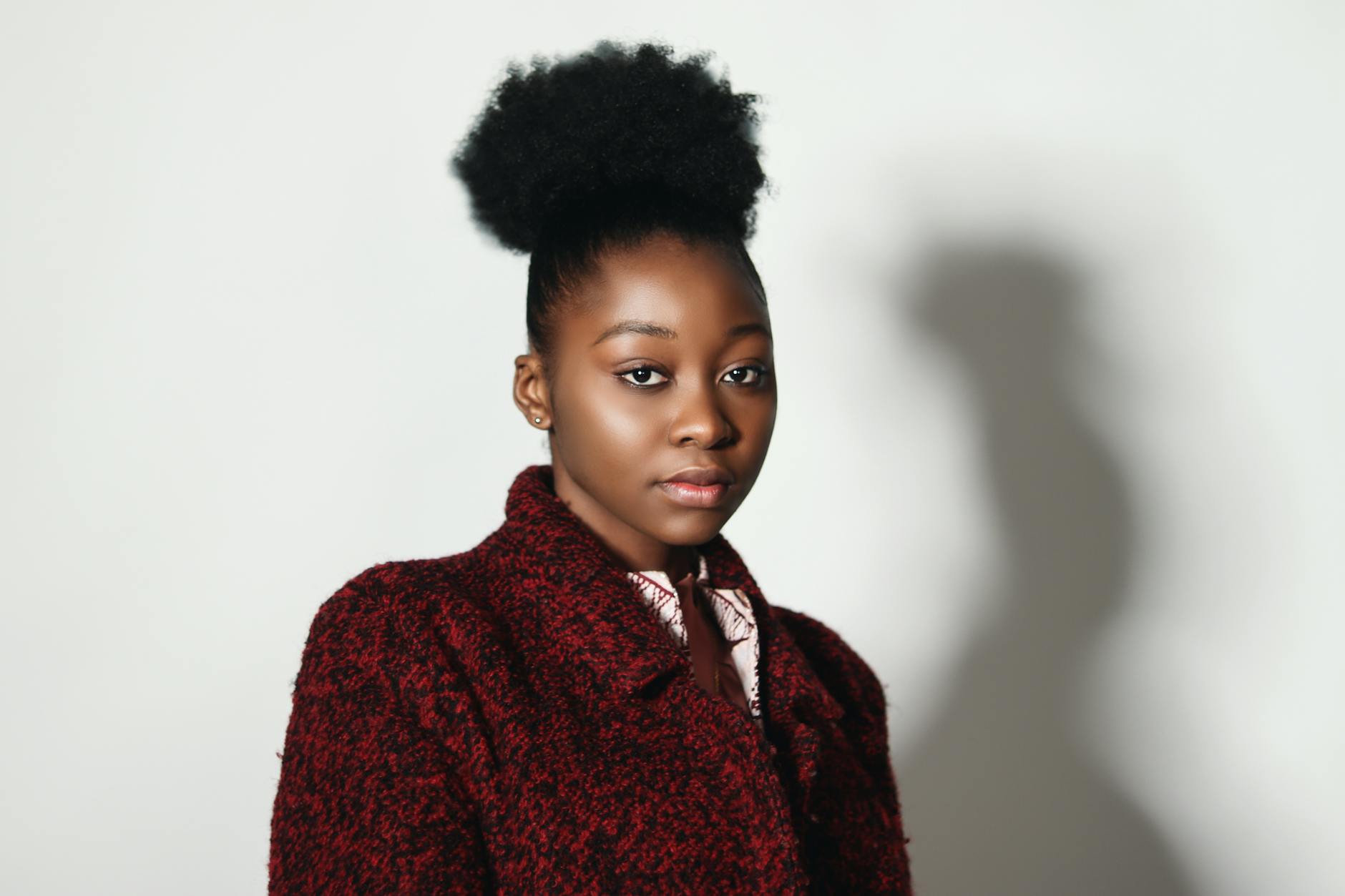
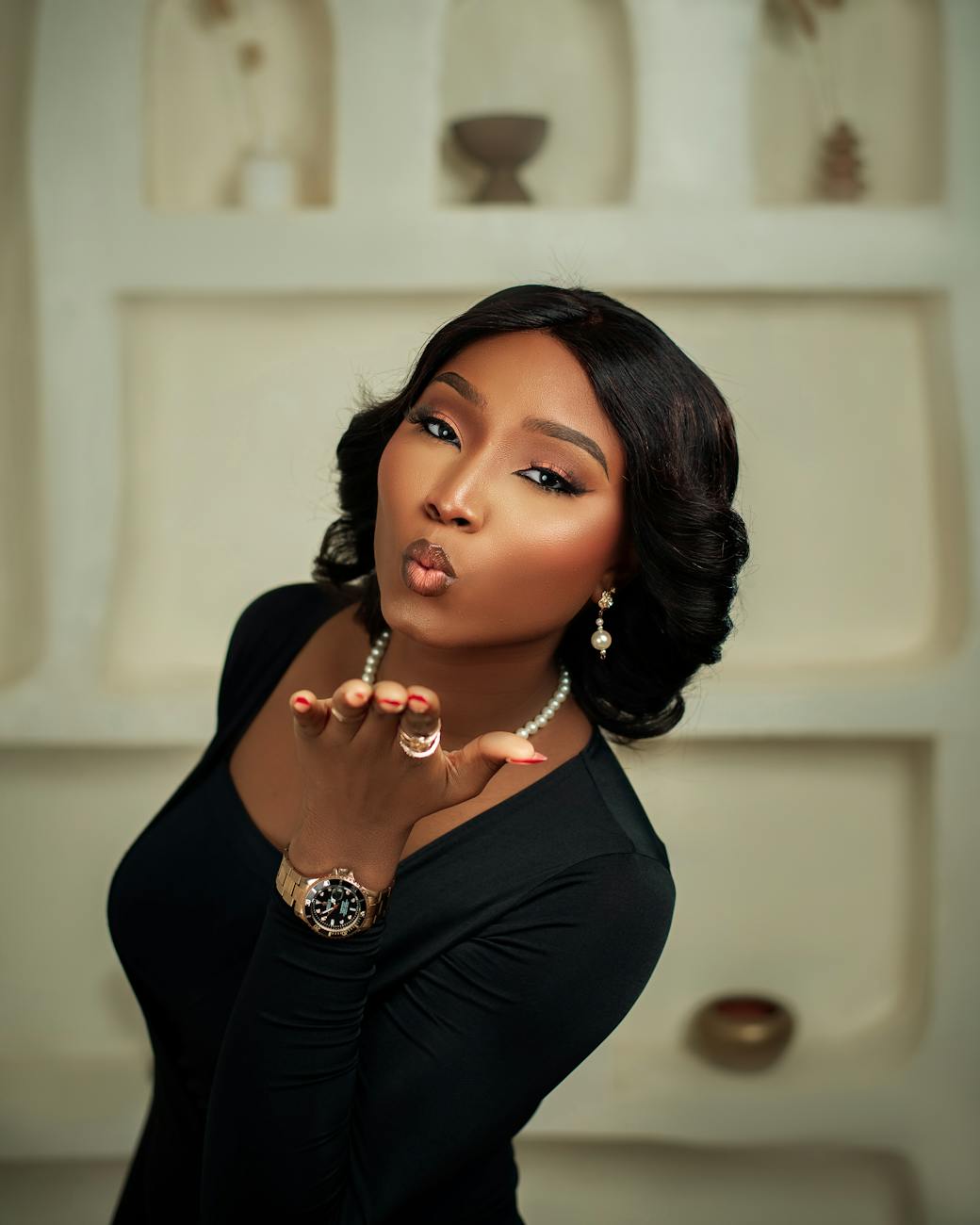
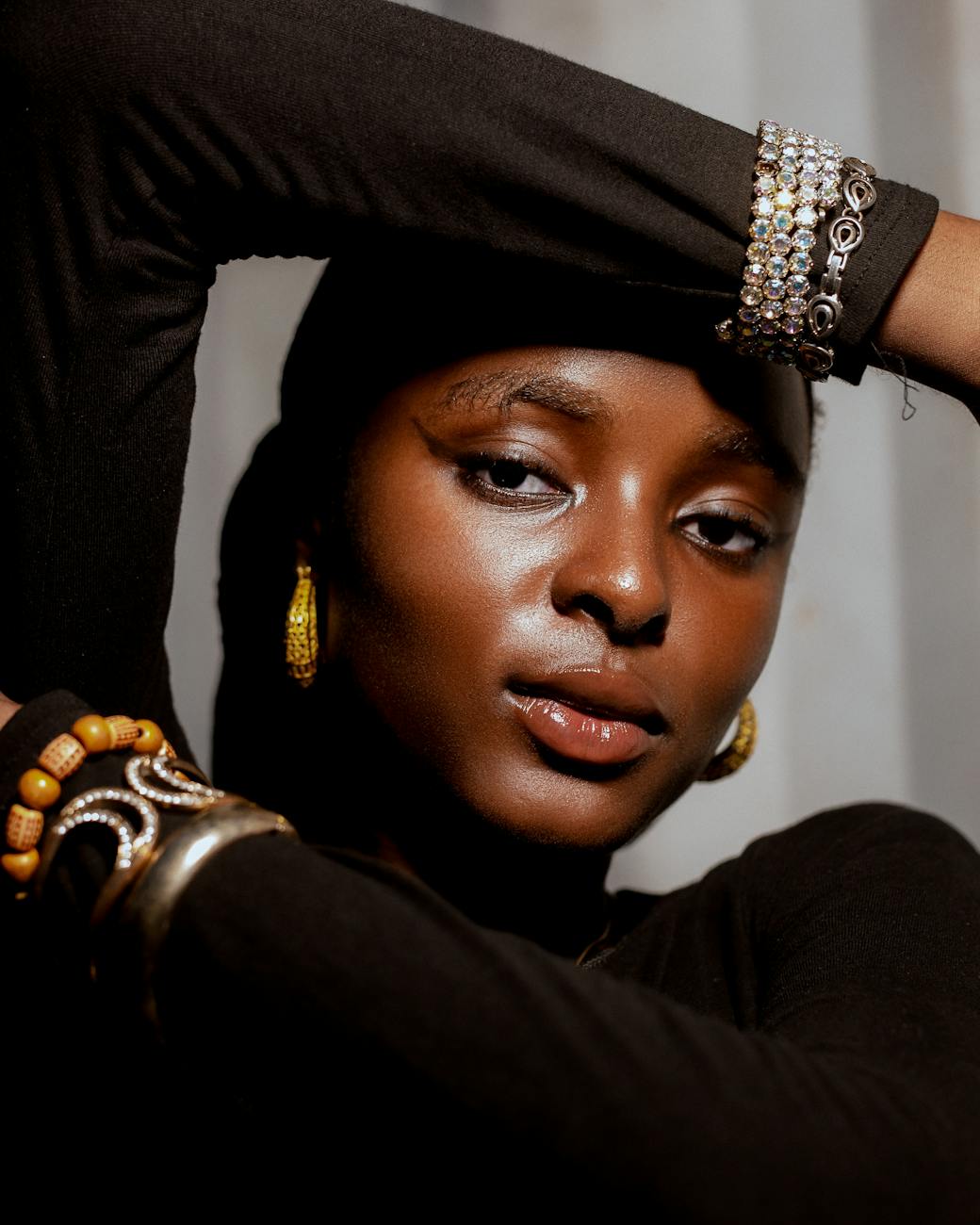
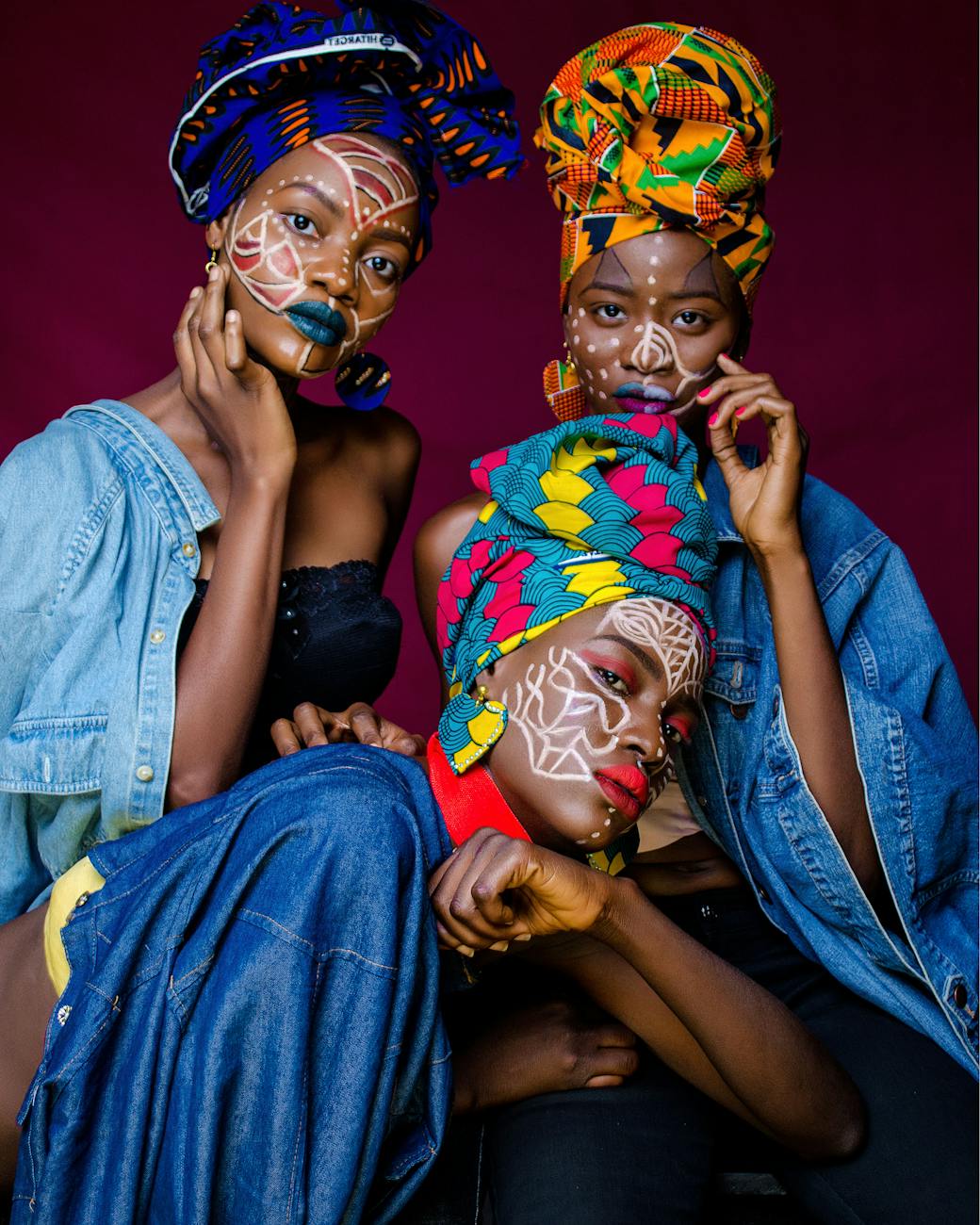
Photo by Bestbe Models on Pexels.com

Cultural appropriation and appreciation are concepts that often generate debate, particularly in creative industries such as hair, fashion, and music. While cultural appreciation involves learning from, respecting, and honoring another culture, cultural appropriation occurs when elements of a marginalized culture are adopted superficially, stripped of context, or used for profit without acknowledgment. For Black communities, whose cultural contributions have historically been exploited, understanding this distinction is essential in preserving heritage, identity, and agency.

In the realm of hair, cultural appropriation has frequently manifested through the adoption of traditionally Black hairstyles—braids, dreadlocks, cornrows—by non-Black individuals without acknowledgment of the historical and social significance. These hairstyles, long stigmatized in professional and educational settings for Black individuals, are often celebrated or commodified when worn by others (Thompson, 2019). Cultural appreciation, by contrast, involves learning the history, giving credit to Black culture, and respecting the lived experiences associated with these styles.

Fashion is another domain where the lines between appropriation and appreciation are frequently blurred. Designers and brands often adopt African-inspired patterns, textiles, and traditional garments without consultation or credit to the originating communities. When cultural symbols are used solely for aesthetic or commercial gain, it constitutes appropriation; when designers collaborate with local artisans, highlight the cultural context, and share profits fairly, it reflects appreciation (Rogers, 2006). This distinction emphasizes the importance of agency and acknowledgment in cultural exchange.

Music has similarly been affected by appropriation. Black musical forms such as jazz, hip-hop, R&B, and rap have been historically adopted and commercialized by non-Black artists, sometimes erasing the contributions of the originators. Cultural appreciation, on the other hand, involves studying the roots of the genre, respecting its historical context, and supporting artists within the community (Floyd, 1995). Misappropriation in music often leads to economic exploitation and diminished recognition for Black creators.

Cultural Appropriation vs. Appreciation: Quick Guide

1. Hair

ActionAppropriationAppreciation
Wearing cornrows, dreadlocks, or bantu knotsWearing styles without understanding history; dismissing the struggles Black people face for wearing natural hairLearning about the hairstyle’s cultural roots; crediting Black originators; supporting Black-owned salons
Using productsUsing Black hair products solely for trend/fashionSupporting Black-owned hair brands and educating yourself about hair care traditions

2. Fashion

ActionAppropriationAppreciation
African prints, dashikis, or traditional garmentsWearing garments purely for aesthetics; ignoring cultural significanceCollaborating with artisans; crediting communities; giving fair compensation
Jewelry and accessoriesUsing sacred symbols as casual fashionLearning the meaning and symbolism before wearing; respecting cultural context

3. Music

ActionAppropriationAppreciation
Sampling or performing genres like hip-hop, jazz, or R&BExploiting without credit; profiting while originators remain unrecognizedStudying genre history; crediting Black artists; supporting the community financially
Performance styleAdopting cultural expressions superficiallyEngaging with the culture authentically; understanding context; collaboration with originators

4. Key Principles to Avoid Appropriation

  • Educate Yourself: Learn the history and significance of cultural elements.
  • Give Credit: Always acknowledge the originators or communities.
  • Fair Compensation: Support artists, designers, or creators financially.
  • Respect Sacred Elements: Avoid trivializing spiritual or sacred cultural items.
  • Intent Matters: Ask if your action honors or exploits the culture.

5. Spiritual Reminder

“Thou shalt not oppress a stranger: for ye know the heart of a stranger, seeing ye were strangers in the land of Egypt” (Exodus 23:9, KJV).

  • Treat all cultures with empathy, respect, and ethical consideration.

The psychological effects of cultural appropriation are significant. When elements of a marginalized culture are commodified or misrepresented, it can reinforce feelings of marginalization, invisibility, and frustration among community members. For Black women, hair appropriation is particularly impactful, as hair is intimately connected to identity, beauty, and self-expression (Thompson, 2019). The contrast between stigmatization of Black hair in professional settings and its commodification elsewhere creates cognitive dissonance and emotional stress.

Legally and commercially, the distinction between appropriation and appreciation also affects intellectual property and compensation. While cultural elements often lack copyright protection, ethical standards dictate that originating communities receive recognition and financial benefit when their cultural artifacts are utilized commercially. This principle applies to fashion collaborations, music sampling, and hairstyle commercialization.

Historically, cultural appropriation has roots in colonialism, slavery, and systemic exploitation. Dominant groups have often taken cultural elements from marginalized populations while simultaneously denying those populations agency and economic benefit. Recognizing this history is essential for distinguishing between respectful cultural exchange and harmful appropriation.

Promoting cultural appreciation involves education, respect, and intentionality. Key strategies include learning about the origins of cultural elements, acknowledging creators publicly, providing fair compensation, and engaging in dialogue with communities about proper representation. These steps help prevent exploitation and foster cross-cultural understanding.

The Bible provides principles that align with cultural respect and appreciation: “Thou shalt not oppress a stranger: for ye know the heart of a stranger, seeing ye were strangers in the land of Egypt” (Exodus 23:9, KJV). This verse emphasizes empathy, respect, and ethical treatment of others, which can be applied to cultural exchange and the avoidance of appropriation.

In conclusion, differentiating cultural appropriation from appreciation is critical in hair, fashion, and music. Appreciation involves acknowledgment, respect, and fair benefit for originators, while appropriation exploits cultural elements for profit or aesthetics without context. By educating oneself, respecting historical significance, and fostering ethical collaboration, individuals and institutions can honor marginalized cultures and contribute to equitable representation.


References

  • Floyd, S. A. (1995). The Power of Black Music: Interpreting Its History from Africa to the United States. Oxford University Press.
  • Rogers, R. A. (2006). From cultural exchange to transculturation: A review and reconceptualization of cultural appropriation. Communication Theory, 16(4), 474–503.
  • Thompson, C. (2019). Black Hair: Art, Style, and Culture. Bloomsbury Academic.
  • The Holy Bible, King James Version.
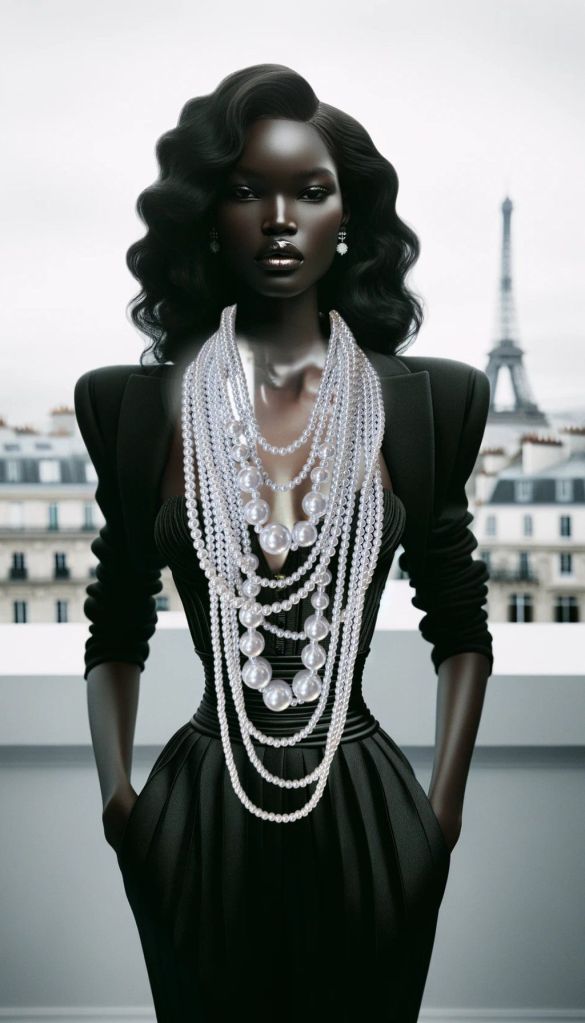
The Wrath of Black Resilience

Black resilience is not a gentle force; it is a righteous wrath forged through centuries of pressure, pain, and perseverance. It is the fire that refuses to be extinguished, the power that rises from ashes with dignity still intact. This resilience is both a shield and a sword, shaped by generational survival and spiritual endurance.

The wrath of Black resilience is not destructive—it is transformative. It is the fierce determination to exist in a world that has tried, repeatedly, to erase, distort, or diminish Black life. This resilience emerges from the collision of suffering and hope, forming a strength unmatched in its depth and sacred in its origin.

This wrath carries memory. It remembers slave ships, plantations, whips, auctions, and chains. It remembers the cries of mothers whose children were torn from their arms and the prayers whispered in dark cabins to a God who seemed far yet remained present. Memory sharpens resilience into conviction.

It is a wrath tempered by wisdom. Black people have learned to survive without surrendering their humanity. The resilience that flows through the diaspora is a testimony to what happens when faith meets fire and refuses to break. It is refusal wrapped in courage—refusal to bow, to be silent, or to disappear.

The wrath of Black resilience is seen in the unyielding pursuit of justice. It is the righteous anger that propelled rebellions, marches, sit-ins, and court battles. It is the same spirit that fueled leaders like Malcolm X, Fannie Lou Hamer, Marcus Garvey, and Ida B. Wells—individuals who understood that survival alone was not enough; liberation was the goal.

It is a sacred wrath, aligned with the God of the oppressed. Scripture affirms that the Most High hears the cries of the afflicted. Black resilience draws strength from this divine truth, knowing that justice is not merely a human demand but a spiritual inheritance. This wrath becomes a holy resistance against systems of exploitation and dehumanization.

Yet, Black resilience also holds tenderness. Despite centuries of brutality, Black communities created art, music, family, culture, and spiritual practices that nourished life. This duality—wrath against injustice, tenderness toward each other—is the secret to its power.

This resilience is generational. From enslaved ancestors to modern activists, the flame of endurance has been passed down like a torch. Each generation fans it into something greater—revival, rebellion, restoration. The wrath of resilience ensures that the trauma of the past does not silence the future.

It also manifests in economic creativity. From sharecropping to Black Wall Street, from entrepreneurship to global influence, Black communities have repeatedly built and rebuilt despite sabotage and systemic barriers. This relentless reconstruction is a form of wrathful hope—hope that refuses to die.

The wrath of Black resilience is poetic. It sings through spirituals and hip-hop, dances through jazz and blues, and speaks through literature, sermons, and scholarship. Art becomes protest; creativity becomes survival; expression becomes liberation.

It is seen in Black love—the protective, enduring, healing love that withstands external assault. Black families have survived legal restrictions, targeted destabilization, and economic pressure. Yet the love still blossoms. That love is an act of defiance.

This resilience is intellectual as well. Black scholars have dismantled false histories, reconstructed truth, and reclaimed identity. The wrath here is quiet but profound—a refusal to let lies prevail. Knowledge becomes warfare, and scholarship becomes a pathway to cultural redemption.

The wrath of Black resilience also operates spiritually. Through Christianity, Islam, African traditional religions, and Hebrew Israelite faith practices, Black communities cultivated belief systems that affirmed their worth when the world denied it. Faith became resistance; prayer became strategy.

This resilience is communal. It is seen in mutual aid networks, church gatherings, neighborhood protection, and intergenerational mentorship. Black communities have learned that survival is collective work. Their wrath is unified; their resilience, intertwined.

Even in grief, Black resilience rises. Mourning becomes movement; sorrow becomes strategy. Whether after lynchings, massacres, police brutality, or generational trauma, the community finds a way to speak, march, organize, and heal without losing its soul.

The wrath of Black resilience is global. In Africa, the Caribbean, South America, and throughout the diaspora, colonization could not destroy the spirit of the people. Revolutions erupted; cultures survived; languages adapted; identities persisted. The global Black experience is one of endurance and rebirth.

This resilience is also prophetic. It does not simply react to injustice—it anticipates liberation. It sees beyond present oppression to future restoration. Black resilience believes in the possibility of a world made right, and it fights relentlessly until that vision becomes reality.

The wrath of resilience is not rage without direction—it is purpose wrapped in fire. It is the sharpened edge of survival and the disciplined determination to rise above systems built for destruction. It is righteousness standing firm against wickedness.

Ultimately, the wrath of Black resilience is a divine inheritance. It is the echo of ancestors, the strength of the present generation, and the promise of those yet to come. It is the collective heartbeat of a people who refuse to die, refuse to bend, and refuse to be forgotten.


References

Alexander, M. (2012). The new Jim Crow: Mass incarceration in the age of colorblindness. The New Press.

Cone, J. H. (1975). God of the oppressed. Orbis Books.

Davis, A. (2016). Freedom is a constant struggle: Ferguson, Palestine, and the foundations of a movement. Haymarket Books.

Gates, H. L. (2019). Stony the road: Reconstruction, white supremacy, and the rise of Jim Crow. Penguin Press.

Wells, I. B. (2020). Crusade for justice: The autobiography of Ida B. Wells. University of Chicago Press.

West, C. (2017). Race matters. Beacon Press.

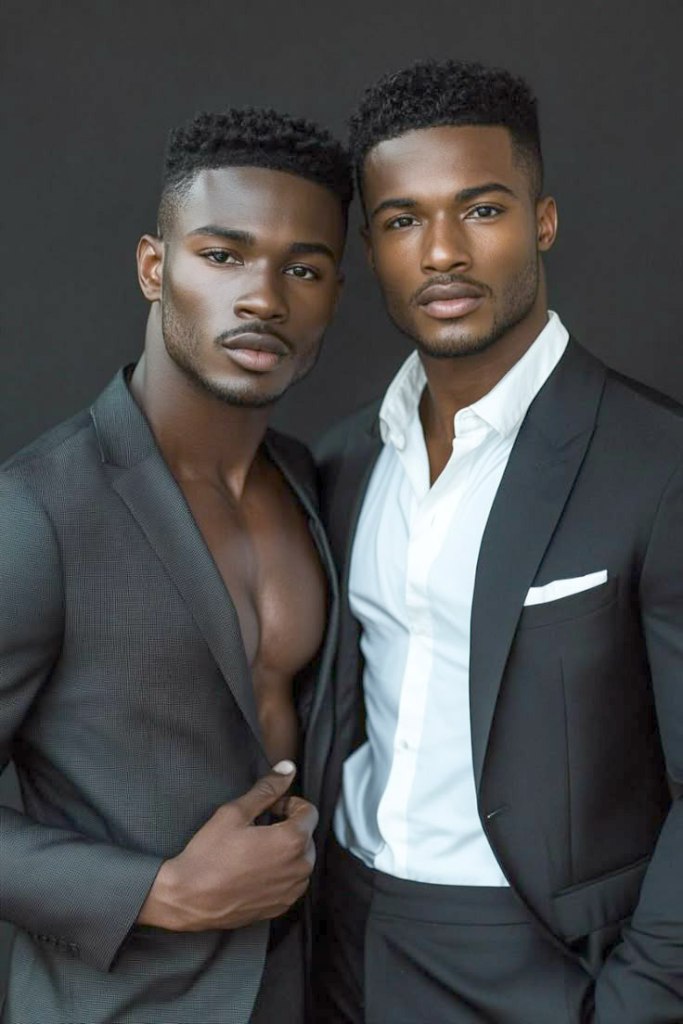
Masculine Grace: The Overlooked Beauty of the Black Man.

This photograph is the property of its respective owner. No copyright infringement intended.

The image of the Black man has long been distorted through colonial narratives, Eurocentric standards, and centuries of systemic dehumanization. Yet beneath the scars of history lies a quiet and powerful truth: the Black man embodies a form of beauty rarely celebrated—masculine grace. This grace transcends the mere physical, radiating through resilience, wisdom, emotional strength, and spiritual depth. It is the beauty of a being who has survived what was meant to destroy him and yet continues to create, lead, and love.

The world has often feared what it should have revered. From the plantation fields to the modern boardroom, the Black man’s physicality has been both fetishized and criminalized. His body—once deemed property—became a battleground for the projection of others’ fears and desires. But when seen through a lens untainted by bias, the symmetry of his form, the depth of his skin, and the fire of his eyes reflect divine craftsmanship, not danger (hooks, 2004).

To speak of masculine grace is to acknowledge that strength and softness are not opposites but complements. The Black man’s beauty rests in the balance between his power and gentleness—how he can protect without oppressing, lead without dominating, and love without losing himself. This duality challenges the Eurocentric masculine archetype that equates sensitivity with weakness (Majors & Billson, 1992).

Historically, Black men were denied the right to be seen as beautiful because beauty was defined through whiteness. The ideal male form was sculpted in marble—pale, rigid, and devoid of emotion. Yet the Black man’s presence, rich in rhythm and movement, exudes life. His grace is kinetic, a poetry of motion expressed in dance, labor, sport, and art—a beauty that moves rather than poses.

In African traditions, beauty was holistic. It encompassed virtue, spirit, and purpose, not merely appearance. The Yoruba concept of “iwa l’ewa” translates to “character is beauty,” suggesting that true beauty arises from inner moral substance (Abiodun, 2014). This philosophy restores the spiritual context that Western aesthetics stripped away. For the Black man, beauty is not vanity—it is dignity manifested.

Masculine grace can be seen in the tender way a father lifts his child, in the calm leadership of a pastor guiding his congregation, or in the perseverance of a man rebuilding his life after systemic injustice. It is the quiet confidence of knowing that one’s value is not defined by material success but by moral conviction and spiritual alignment (Kimbrough, 1997).

Yet media portrayals continue to undermine this beauty. The camera often captures the Black man as an aggressor, athlete, or entertainer, rarely as a scholar, lover, or thinker. This narrow visual vocabulary limits how society perceives Black masculinity. The absence of representation becomes a form of erasure—an aesthetic violence that teaches the world to see Black men as function rather than form (Dixon & Linz, 2000).

The reclamation of masculine grace, therefore, is an act of resistance. It says to the world: “You will not define my worth through stereotypes.” It also calls upon Black men to rediscover the divine artistry within themselves. To walk with grace is to carry both the weight of history and the light of redemption with balance and pride.

There is a sacred stillness in the Black man who knows his identity in God. His beauty reflects the imago Dei—the image of the Creator (Genesis 1:27). His walk is testimony; his voice, a melody of generations who refused to die in silence. This sacred reflection dismantles the notion that masculinity must be performative or domineering. In divine masculinity, grace and strength coexist.

Grace in the Black man also manifests in his intellectual and creative expressions. From Langston Hughes’s poetry to Chadwick Boseman’s cinematic brilliance, from Barack Obama’s eloquence to Marvin Gaye’s soul, Black men have continually shown that intellect and emotion are not contradictions but harmonies. They redefine what it means to be a man of grace—disciplined, dignified, and deeply human.

One cannot discuss the beauty of the Black man without addressing colorism’s shadow. Lighter tones have long been favored, even among people of African descent, a legacy of colonial conditioning. Yet, the deep hues of the Black man’s skin absorb light differently—reflecting warmth, history, and strength. His melanin is a masterpiece of biology and symbolism: protection and poetry in one (Blay, 2011).

To appreciate masculine grace requires decolonizing the gaze. This means rejecting the Eurocentric standards that measure beauty through whiteness and fragility. Instead, it calls for an aesthetic rooted in authenticity, where dark skin, broad noses, textured hair, and strong physiques are not liabilities but legacies—markers of ancestral power and divine design.

The modern world’s obsession with hypermasculinity has numbed emotional intelligence in men. But the Black man’s grace lies in his capacity to feel deeply—to weep, to heal, to forgive. This emotional courage is perhaps his most overlooked beauty. It takes strength to love after being unloved, to lead after being stripped of leadership, to rebuild after centuries of destruction (Akbar, 1996).

In contemporary culture, movements like “Black Boy Joy” have sought to reclaim this emotional space, celebrating the multifaceted beauty of Black men—laughing, learning, nurturing, and creating. These images disrupt toxic archetypes and reveal a truth long hidden: Black masculinity is not monolithic but mosaic.

The spiritual aspect of masculine grace cannot be overstated. The Black man’s relationship with faith—through prayer, perseverance, and praise—anchors his identity. His beauty radiates most when he walks in divine purpose. As the psalmist wrote, “The steps of a good man are ordered by the Lord” (Psalm 37:23, KJV). This divine choreography gives rhythm to his grace.

Every scar, every wrinkle, every muscle tells a story of endurance. The body of the Black man is a living archive—of battles fought, burdens carried, and victories won. His beauty is not cosmetic but cosmic, stitched with the threads of survival and hope.

In art, literature, and film, there is a growing movement to honor this beauty. Photographers like Kwame Brathwaite and writers like Ta-Nehisi Coates have reframed the Black male body as sacred rather than sinful, majestic rather than menacing. Through their work, masculine grace becomes visible again.

Ultimately, to honor the beauty of the Black man is to restore balance in a world that has long denied him softness. His grace teaches that masculinity is not the absence of vulnerability but the mastery of it. The true measure of a man lies not in his ability to dominate but in his capacity to love, forgive, and uplift.

Masculine grace, then, is both art and theology—a living testament that the Black man, made in the image of the Most High, is not merely beautiful; he is divinely composed. His existence challenges centuries of misrepresentation and stands as proof that beauty, when seen through truth, is revolutionary.


References

Abiodun, R. (2014). Yoruba art and language: Seeking the African in African art. Cambridge University Press.
Akbar, N. (1996). Breaking the chains of psychological slavery. Mind Productions.
Blay, Y. A. (2011). (1)ne Drop: Shifting the lens on race. Black Print Press.
Dixon, T. L., & Linz, D. (2000). Race and the misrepresentation of victimization on local television news. Communication Research, 27(5), 547–573.
hooks, b. (2004). We real cool: Black men and masculinity. Routledge.
Kimbrough, M. (1997). Faith and identity: African-American men in search of self. Orbis Books.
Majors, R., & Billson, J. M. (1992). Cool pose: The dilemmas of Black manhood in America. Simon & Schuster.
The Holy Bible, King James Version. (1611/2017). King James Bible Online. https://www.kingjamesbibleonline.org/
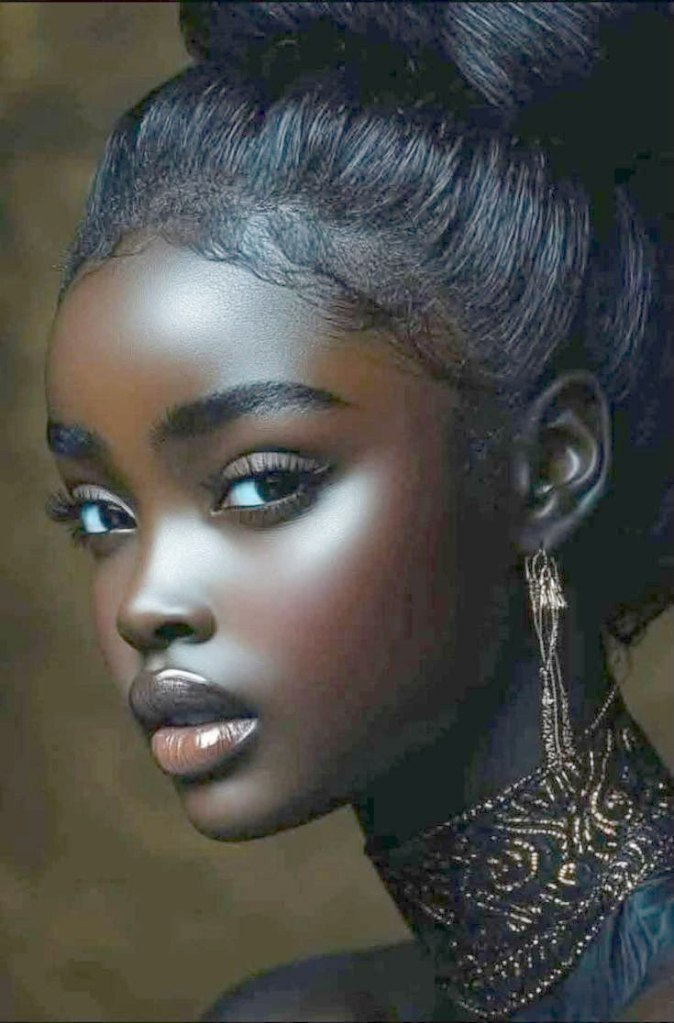
Melanin and Magnificence: Redefining Beauty through a Black Lens.

This photograph is the property of its respective owner. No copyright infringement intended.

Beauty has long been defined through Eurocentric standards that valorize lighter skin, straight hair, and European facial features, marginalizing the diverse aesthetics inherent to African-descended peoples. Yet, in recent decades, there has been a resurgence of cultural pride that positions melanin—not as a marker of difference or inferiority—but as a symbol of magnificence, resilience, and heritage. This essay explores how Black communities are redefining beauty, reclaiming agency over self-image, and challenging the historical legacies of colonial aesthetics (Banks, 2019; Hunter, 2007).

This photograph is the property of its respective owner. No copyright infringement intended.

Historical Marginalization of Black Features
The privileging of European aesthetics originates in colonialism and the transatlantic slave trade, which systematically devalued African physical features. Skin tone hierarchies, hair texture biases, and facial feature preferences were not merely social preferences but tools of oppression, used to enforce racialized social stratification (Painter, 2010). Literature, early photography, and art often depicted lighter-skinned individuals with Eurocentric features as “civilized” or “desirable,” while darker-skinned individuals were framed as “other,” reinforcing internalized notions of inadequacy (Hall, 1997).

Psychological Implications of Eurocentric Standards
Internalization of Eurocentric beauty ideals has deep psychological consequences for Black communities. Studies show that colorism—favoring lighter skin over darker—affects self-esteem, social mobility, and mental health (Hunter, 2007). Children exposed to media that elevates European features may develop implicit biases against their own natural traits, associating their darker skin, full lips, or textured hair with undesirability or incompetence (Jones, 2018). This internalized bias contributes to identity conflict and social anxiety, perpetuating the very hierarchies these standards sought to enforce.

The Role of Media and Popular Culture
Modern media continues to reflect and reinforce Eurocentric beauty norms. Film, fashion, and advertising often present European features as aspirational, subtly pressuring Black individuals to conform through hair straightening, skin lightening, or cosmetic alteration (Hunter, 2011). Social media amplifies this effect, with algorithmic promotion frequently privileging lighter-skinned, Eurocentric beauty, generating both admiration and self-critique among viewers. Yet, these platforms also offer spaces for resistance and representation.

Reclaiming Beauty Through a Black Lens
Resistance to Eurocentric standards has been growing. Movements celebrating natural hair, darker skin tones, and Afrocentric aesthetics actively redefine beauty through a Black lens. Campaigns like #BlackGirlMagic and #MelaninPoppin celebrate traits historically marginalized, fostering psychological resilience, cultural pride, and communal affirmation (Thompson, 2020). Black-owned media outlets, fashion brands, and artistic platforms contribute to a paradigm shift that centers Blackness as inherently beautiful, powerful, and diverse.

The Significance of Melanin
Melanin—the pigment that gives skin its color—has become a symbol of magnificence, resilience, and heritage. Beyond its biological function, melanin represents historical survival against oppression, a legacy of strength, and an aesthetic of authenticity. Celebrating melanin challenges centuries of devaluation and reframes Black beauty not as an imitation of European ideals but as a unique, dignified, and powerful standard in its own right (Banks, 2019).

Global and Cultural Impact
Redefining beauty through a Black lens has implications beyond individual self-perception. It challenges global beauty industries to diversify representation, prompts policymakers to address hair and skin discrimination, and inspires cross-cultural appreciation of African aesthetics. The reclamation of beauty is both personal and political, confronting colonial legacies while fostering pride and inclusion in contemporary society (Hunter, 2011).

Conclusion
Melanin and magnificence are not merely aesthetic concepts—they are acts of reclamation, resistance, and empowerment. By redefining beauty through a Black lens, communities can dismantle centuries-old hierarchies that devalued their features and assert the inherent dignity, elegance, and diversity of Blackness. The celebration of melanin is a cultural, psychological, and spiritual affirmation: a declaration that Black beauty is magnificent, sovereign, and unassailable.

References

  • Banks, I. (2019). Hair matters: Beauty, power, and Black women’s identity. NYU Press.
  • Hall, S. (1997). Representation: Cultural representations and signifying practices. Sage.
  • Hunter, M. L. (2007). The persistent problem of colorism: Skin tone, status, and inequality. Sociology Compass, 1(1), 237–254.
  • Hunter, M. L. (2011). Race, gender, and the politics of skin tone. Routledge.
  • Jones, A. (2018). Colorism and psychological effects in youth. Journal of Black Psychology, 44(2), 123–145.
  • Painter, N. I. (2010). The history of White people. W. W. Norton & Company.
  • Thompson, C. (2020). Afrocentric beauty and social media activism. Cultural Studies Review, 26(3), 55–74.

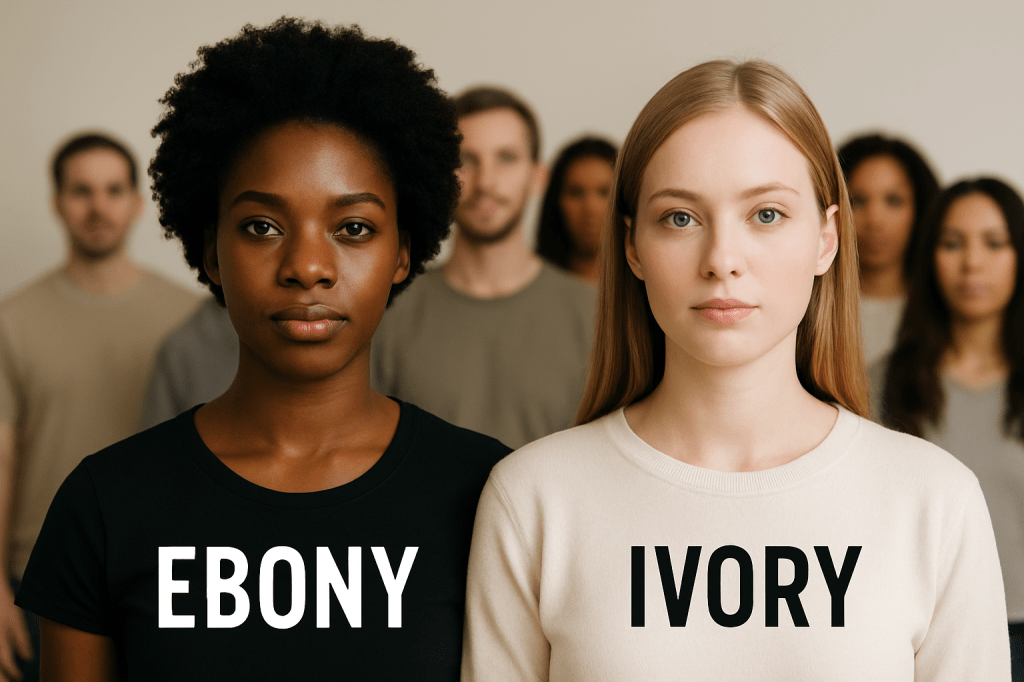
Ebony and Ivory: Two Shades, One Standard of Beauty.

From the dawn of civilization, beauty has been both a mirror and a weapon—reflecting ideals shaped by power and privilege, and wielded to define worth within social hierarchies. Within the globalized gaze of modernity, the politics of skin color continue to influence how femininity and desirability are perceived, especially among women of African descent. The notion of “Ebony and Ivory” evokes more than just color; it symbolizes the ongoing dialogue between light and dark, between acceptance and exclusion, and between the internalized and externalized standards of beauty that shape identity (hooks, 1992).

The idea of “two shades, one standard” captures the paradox of colorism: the simultaneous elevation and devaluation of Blackness within the same racial group. While “ivory” tones have historically been exalted as closer to Western ideals, “ebony” skin has often been marginalized, caricatured, or fetishized. Both ends of the spectrum, however, are measured against the same Eurocentric barometer that privileges whiteness as the ultimate aesthetic reference (Hunter, 2005).

This phenomenon, deeply rooted in colonialism, reveals how beauty became a tool of control. During the transatlantic slave trade, lighter-skinned enslaved individuals were often granted domestic positions and social proximity to white power structures, breeding intra-racial hierarchies that persist today. These legacies still echo in media representation, where lighter skin is frequently coded as “refined,” while darker tones are portrayed as “exotic” or “primitive” (Craig, 2006).

For many women of color, navigating these coded perceptions can be exhausting. The “brown girl dilemma” emerges when one feels too dark to be celebrated and too light to be considered authentically Black. This liminal existence is both a burden and a revelation—proof that beauty, as defined by Western constructs, remains an unattainable illusion that fractures rather than unites.

Beauty standards, much like colonial borders, were imposed rather than chosen. From the powdered faces of the Victorian era to the filtered glow of Instagram, the valuation of lightness has remained a constant aesthetic undercurrent. Yet, even within African and Afro-diasporic communities, this colonial inheritance continues to dictate preferences in partners, media icons, and even professional opportunities (Glenn, 2008).

In popular culture, colorism is often masked by phrases like “preference” or “type.” However, these preferences are rarely organic—they are sociologically constructed through centuries of imagery that equate lightness with purity and success, and darkness with defiance and struggle. The entertainment industry’s casting choices often reinforce these biases, rewarding lighter skin with visibility while relegating darker complexions to supporting or stereotypical roles (Russell, Wilson, & Hall, 2013).

This bias extends beyond film and television. In the global beauty market, skin-lightening creams generate billions annually, a grim testament to the internalization of Eurocentric ideals (Glenn, 2008). The psychological effects of such products are profound, suggesting that beauty is not only skin-deep but soul-deep, affecting one’s perception of self-worth and belonging.

For Black women, beauty is an act of survival. To adorn oneself becomes an assertion of existence in a world that often demands invisibility. From the regal hairstyles of precolonial Africa to the natural hair movement, Black women have continuously redefined and reclaimed their beauty on their own terms (Byrd & Tharps, 2014).

Yet, this reclamation is not without struggle. Within the Black community itself, hierarchies persist. The glorification of lighter women as more “marriageable” or “acceptable” continues to fracture solidarity. It is an unspoken inheritance of slavery’s psychological residue, perpetuated by both men and women who unconsciously valorize proximity to whiteness.

The darker-skinned woman often bears the weight of invisibility and hypervisibility simultaneously—ignored in spaces of admiration, yet scrutinized as the embodiment of resistance or rebellion. This double-bind mirrors W.E.B. Du Bois’ concept of “double consciousness,” wherein one is forced to see oneself through the lens of a world that refuses full recognition (Du Bois, 1903).

Light-skinned women, conversely, navigate their own complexities. While society may privilege them aesthetically, they are often accused of benefiting from colorism or being “not Black enough.” Thus, both ebony and ivory tones bear distinct forms of cultural alienation, tied together by an oppressive standard neither created (Monk, 2014).

In this context, beauty becomes not celebration but negotiation. Every compliment, every criticism, every casting call, and every social media post reinforces the invisible hierarchy of shade. The struggle is not between dark and light, but against the system that pits them against each other.

Media representation plays a critical role in dismantling or reinforcing these divides. When dark-skinned actresses like Lupita Nyong’o or Viola Davis are celebrated, it signals progress—but also exposes how rare such representation remains. Likewise, the inclusion of mixed-race models in campaigns may appear inclusive, yet often centers features still aligned with Eurocentric beauty (Tate, 2009).

To heal from this color divide, we must first acknowledge that beauty is not a monolith. It is plural, diverse, and spiritually rooted. In the biblical sense, humanity was created “in the image of God” (Genesis 1:27, KJV), meaning all shades reflect divine artistry. The rejection of any hue is, therefore, a rejection of the Creator’s design.

Moreover, Proverbs 31:30 reminds us that “favor is deceitful, and beauty is vain: but a woman that feareth the Lord, she shall be praised.” This verse redirects the gaze from the external to the eternal, urging women to seek validation not from comparison but from divine purpose.

Ebony and ivory are not opposites but complements, each contributing to the symphony of creation. Just as piano keys of contrasting colors produce harmony, so too can diverse complexions coexist in mutual admiration and respect. The beauty of one does not diminish the beauty of the other; together, they reveal the fullness of God’s palette.

True beauty transcends complexion—it emanates from character, compassion, and conviction. In a world obsessed with appearances, spiritual and cultural consciousness must redefine the standard. Beauty should not divide but dignify, not exclude but exalt.

To love one’s shade is to reclaim agency over identity. When Black women, in all their hues, embrace their reflection without apology, they dismantle centuries of aesthetic oppression. “Ebony and Ivory” then becomes more than a contrast—it becomes a covenant of self-acceptance and collective healing.

As we move forward, let beauty be measured not by shade but by soul. For when light and dark come together, they create balance, harmony, and wholeness—the true reflection of divine beauty.


References

Byrd, A. D., & Tharps, L. L. (2014). Hair Story: Untangling the Roots of Black Hair in America. St. Martin’s Press.
Craig, M. L. (2006). Race, beauty, and the tangled knot of a guilty pleasure. Feminist Theory, 7(2), 159–177.
Du Bois, W. E. B. (1903). The Souls of Black Folk. Chicago: A.C. McClurg.
Glenn, E. N. (2008). Yearning for lightness: Transnational circuits in the marketing and consumption of skin lighteners. Gender & Society, 22(3), 281–302.
hooks, b. (1992). Black Looks: Race and Representation. South End Press.
Hunter, M. L. (2005). Race, gender, and the politics of skin tone. Routledge.
Monk, E. P. (2014). Skin tone stratification among Black Americans, 2001–2003. Social Psychology Quarterly, 77(4), 360–379.
Russell, K., Wilson, M., & Hall, R. (2013). The Color Complex (Revised): The Politics of Skin Color Among African Americans. Anchor.
Tate, S. A. (2009). Black Beauty: Aesthetics, Stylization, Politics. Ashgate Publishing.
The Holy Bible, King James Version (KJV). (1611).

Reclaiming the Mirror: Beauty, Identity, and Resistance in the African Diaspora.

Photo by Godisable Jacob on Pexels.com

The concept of beauty has long been weaponized as a tool of domination and exclusion. For people of African descent, beauty has been historically defined through Eurocentric lenses that sought to invalidate African features, skin tones, and hair textures. This distortion of aesthetics served colonial and psychological purposes—reinforcing systems of white supremacy and dehumanization. Yet, amid this oppression, the African diaspora has continuously resisted, reclaimed, and redefined beauty through self-love, creativity, and cultural expression.

From the transatlantic slave trade to modern globalization, the manipulation of Black beauty has been integral to controlling identity. European colonizers constructed racial hierarchies that associated whiteness with purity and civilization, while blackness was linked to savagery and inferiority. These narratives became embedded in social, political, and religious ideologies, influencing how the world viewed—and how Black people came to view—themselves. This internalized oppression still manifests today in colorism, hair discrimination, and beauty bias within and outside the Black community.

Resistance to these narratives began as early as slavery itself. Enslaved Africans braided maps into their hair, wore headwraps as acts of pride, and sang spirituals affirming divine identity. These practices were not mere survival mechanisms but subtle assertions of self-worth. By reclaiming control over their bodies and appearances, Africans in the diaspora asserted, “We are still human.” This quiet defiance evolved into a cultural aesthetic that would later inspire entire movements of liberation.

The Harlem Renaissance marked a turning point in redefining Black beauty and identity. Figures like Zora Neale Hurston, Langston Hughes, and Josephine Baker challenged the notion that Black culture needed white validation. Their art celebrated dark skin, natural hair, and sensual expression, reclaiming the very traits society had demeaned. The phrase “Black is Beautiful,” born from this era and later popularized in the 1960s, became both a political slogan and a spiritual affirmation.

The Black Power movement of the 1960s and 1970s elevated aesthetics into activism. The afro became a crown of resistance, symbolizing freedom from assimilation. Black models like Beverly Johnson and Naomi Sims graced magazine covers once closed to women of their complexion, forcing the fashion world to confront its biases. Through photography, music, and protest, Black people around the world began to reassert the value of their image.

In the African diaspora, beauty and identity are deeply intertwined with spirituality. Ancient African civilizations revered the human form as divine art—sculptures from Nok, Benin, and Kemet celebrated symmetry, strength, and melanin as reflections of the Creator. This spiritual understanding of beauty counters the Western tendency to commodify and sexualize. The African aesthetic is holistic, connecting inner virtue with outer form—a principle still visible in African diasporic faiths like Yoruba and Rastafari.

Media representation remains one of the battlegrounds for beauty reclamation. For decades, film and advertising industries portrayed Eurocentric features as universal ideals. However, with the rise of digital media, Black creators began shaping new narratives. Platforms like YouTube and Instagram became spaces for natural hair tutorials, melanin-positive campaigns, and discussions about shadeism. This digital renaissance democratized visibility and dismantled the monopoly of Western beauty standards.

In contemporary times, artists like Lupita Nyong’o, Viola Davis, and Michaela Coel have redefined what global beauty looks like. They embody confidence rooted in authenticity rather than conformity. Their visibility challenges centuries of erasure, reminding the world that African beauty is not a trend—it is foundational. Each image, each role, becomes a mirror through which the diaspora can see itself with dignity and love.

Colorism, however, continues to plague the diaspora, a lingering scar of colonialism and slavery. Light skin often remains associated with privilege, while darker complexions are marginalized. This phenomenon fractures communities and perpetuates hierarchies of desirability. Yet, new generations are confronting these wounds head-on through documentaries, essays, and online activism—demanding that every shade of melanin be honored equally.

The reclamation of African aesthetics extends beyond physical features—it encompasses fashion, language, and ritual. African print clothing, protective hairstyles, and ancestral jewelry have become emblems of identity. What was once mocked or banned in workplaces is now worn proudly on global runways. The diaspora’s embrace of traditional aesthetics is not merely nostalgic—it is revolutionary, asserting that African heritage is modern, relevant, and eternal.

Psychologically, reclaiming beauty is an act of healing. Centuries of racial trauma have distorted self-perception, leading to generational insecurities. Scholars like bell hooks and Frantz Fanon have discussed the colonization of the mind and the struggle to love oneself under oppressive gaze. To look in the mirror and find beauty in one’s reflection is therefore a radical act of resistance, one that dismantles the psychological remnants of enslavement.

Black beauty movements have also intersected with gender liberation. Black women, historically hypersexualized or desexualized, have reclaimed agency over their image. Movements like #MelaninMagic and #BlackGirlMagic celebrate diverse forms of femininity—powerful, intellectual, sensual, and sacred. Similarly, Black men are confronting toxic stereotypes that equate masculinity with aggression, finding beauty in vulnerability and self-expression.

The global spread of African aesthetics—from music videos to fashion weeks—illustrates how the diaspora has transformed pain into power. Afrobeats, hip-hop, and soul music have carried messages of pride, resilience, and beauty to every corner of the world. The rhythm of resistance lives in every hairstyle, every dance, every melody that celebrates Blackness unapologetically.

Educational institutions and media organizations are beginning to recognize the importance of diverse representation. Curriculums now explore African art history, and museums exhibit African beauty traditions once labeled “primitive.” This reclamation of space in academia and culture is crucial—it ensures that future generations inherit a fuller, truer reflection of themselves.

In theology, the reclamation of beauty challenges centuries of Eurocentric religious imagery. Depictions of a white Messiah and angels have been replaced in many circles with images that reflect the original people of the Bible. The rise of Afrocentric theology reaffirms that divinity does not belong to one race or culture. The beauty of the Creator is reflected in the diversity of creation itself.

Art remains one of the most powerful vehicles for this transformation. Painters, photographers, and filmmakers across the diaspora are crafting new visual languages that honor melanin, texture, and form. Fine art portraiture—like the works of Kehinde Wiley or Awol Erizku—reimagines classical European iconography through an African lens, restoring Black presence to the historical canvas.

Beauty, in its truest sense, is more than aesthetics—it is liberation. When Black people embrace their natural selves, they reject the lie that they must change to be worthy. This acceptance becomes an act of spiritual sovereignty, echoing the biblical declaration that we are “fearfully and wonderfully made” (Psalm 139:14, KJV).

The mirror, once a symbol of distortion, now becomes a site of truth. It reflects not the colonizer’s image, but the Creator’s craftsmanship. To reclaim the mirror is to reclaim narrative power—to define beauty not by borrowed standards, but by ancestral wisdom. Every curl, curve, and hue tells a story of endurance, divinity, and rebirth.

Ultimately, the reclamation of beauty in the African diaspora is about freedom—the freedom to exist without apology, to see oneself as whole and holy. It is about transforming generations of shame into songs of pride and turning reflection into revolution. Through art, faith, and community, the descendants of Africa continue to rise, reminding the world that the most powerful form of beauty is self-acceptance rooted in truth.


References

Baker, J. (2017). The politics of Black beauty. Oxford University Press.
Davis, A. Y. (1981). Women, race, & class. Random House.
Fanon, F. (1952). Black skin, white masks. Grove Press.
hooks, b. (1992). Black looks: Race and representation. South End Press.
Hunter, M. (2007). The persistent problem of colorism: Skin tone, status, and inequality. Sociology Compass, 1(1), 237–254.
Mercer, K. (1994). Welcome to the jungle: New positions in Black cultural studies. Routledge.
Mills, C. W. (1997). The racial contract. Cornell University Press.
Nyong’o, L. (2014). Lupita Nyong’o’s speech on beauty and self-love [Video]. Essence Black Women in Hollywood.
Walker, A. (1983). In search of our mothers’ gardens: Womanist prose. Harcourt Brace Jovanovich.
Wiley, K. (2018). Reclaiming beauty: African aesthetics in modern art. Yale University Press.
Wilkerson, I. (2020). Caste: The origins of our discontents. Random House.
Wynter, S. (2003). Unsettling the coloniality of being/power/truth/freedom. The New Centennial Review, 3(3), 257–337.
Yaba Blay, Y. (2017). Pretty. Period.: The politics of being Black and beautiful. Blackprint Press.
Bryant-Davis, T. (2007). Healing requires recognition: The case for race-based traumatic stress. The Counseling Psychologist, 35(1), 135–143.
Johnson, K. (2021). Beauty in resistance: Black aesthetics and cultural power. Duke University Press.
Lewis, R. (2011). Afrocentric identity and the politics of beauty. Routledge.
Morrison, T. (1992). Playing in the dark: Whiteness and the literary imagination. Vintage Books.
Nash, J. C. (2019). Black feminism reimagined: After intersectionality. Duke University Press.
Tate, S. (2016). Black beauty: Aesthetics, stylization, politics. Routledge.
Thompson, C. (2009). Black women, beauty, and hair as resistance. Journal of Pan African Studies, 3(2), 97–108.

Modern Trailblazers: Redefining Beauty Standards.

Photo by BULE on Pexels.com

In the modern age, beauty has become a site of both revolution and reclamation. Historically bound by Eurocentric ideals that prioritized whiteness, thinness, and symmetry, today’s beauty landscape has been reshaped by a diverse chorus of voices refusing to conform. Black women, Indigenous creators, trans icons, and differently-abled influencers have emerged as cultural architects, redefining what it means to be beautiful through self-expression and authenticity. The revolution is not merely aesthetic—it is psychological, cultural, and political.

The 21st century has witnessed a radical shift from representation to ownership. Where earlier generations sought inclusion within existing frameworks, modern trailblazers are creating entirely new paradigms. Platforms like TikTok and Instagram have decentralized beauty hierarchies, giving rise to grassroots visibility. Figures such as Lupita Nyong’o, Adut Akech, and Alek Wek stand as embodiments of natural beauty, resilience, and unapologetic African identity. Their presence challenges the historical erasure of darker skin tones from mainstream beauty campaigns.

The reclamation of melanin-rich beauty is not accidental—it is intentional resistance. For centuries, colonialism and media imperialism conflated whiteness with virtue and civilization. Today, the celebration of dark skin tones represents a healing of generational trauma. It affirms that beauty, once defined externally, now belongs to those who were denied it. Through art, photography, and film, a new narrative has emerged—one that celebrates skin not as shade but as legacy.

Moreover, modern beauty trailblazers recognize that authenticity transcends aesthetics. The global push for natural hair representation is a powerful illustration of this. Movements such as #BlackGirlMagic and #TeamNatural have become sociocultural phenomena. They have not only redefined beauty for women of African descent but also established political solidarity rooted in self-acceptance. Natural hair, in this context, is both crown and protest.

The expansion of beauty definitions extends beyond race. Individuals like Winnie Harlow, who embraces her vitiligo. In doing so, they remind the world that beauty is not an exclusionary category; it is a human experience.

At the heart of this transformation lies the concept of visibility. Representation is more than a visual act; it is a psychological affirmation that one belongs. When young people see themselves mirrored in campaigns and media, it restores confidence eroded by centuries of misrepresentation. As philosopher Frantz Fanon noted, “To be seen is to exist.” Today’s beauty trailblazers embody that visibility as liberation.

Beauty influencers have become cultural philosophers of their own era. Through social media, voices such as Jackie Aina and Nyma Tang dissect colorism, cultural appropriation, and tokenism with academic precision and personal vulnerability. Their work bridges activism and aesthetics, dismantling beauty myths from within the very industries that once excluded them.

Inclusivity, however, is not merely about representation—it is about equity. Modern trailblazers are now entering corporate spaces, launching their own brands, and reshaping production norms. Rihanna’s Fenty Beauty revolutionized the cosmetics industry by introducing 40+ foundation shades, a simple yet profound act that exposed the systemic neglect of darker skin tones. Fenty became more than a brand; it became a blueprint for inclusion.

Similarly, Pat McGrath, often hailed as the most influential makeup artist in the world, has used her platform to merge high fashion and multiculturalism. Her artistry reveals that beauty, when liberated from narrow archetypes, becomes art itself. She continues to mentor and open doors for the next generation of global creatives who understand that diversity is not a trend—it is the truth.

The global South is now asserting its own aesthetic sovereignty. African, Caribbean, and Latinx designers are fusing traditional artistry with modern expression. Runways in Lagos, Accra, and São Paulo now rival those of Paris and Milan, redefining fashion geography. These movements signal that the future of beauty will be multipolar and multicultural.

At the intersection of technology and beauty lies another shift: digital self-representation. Filters, AI, and virtual influencers raise critical ethical questions. While these tools can democratize creativity, they also risk reinforcing unrealistic standards. Modern trailblazers navigate this paradox by promoting digital transparency and self-awareness amidst algorithmic distortion.

Beauty is also being redefined through academia and science. Genetic diversity is now understood as the true foundation of human beauty. Traits once deemed “undesirable” are increasingly recognized as markers of resilience and adaptation. The blending of cultures and lineages has produced what anthropologists call “aesthetic hybridity,” an evolution that mirrors humanity’s interconnectedness.

In this sense, modern beauty trailblazers are not anomalies—they are evolutionary symbols. They represent a species reclaiming its visual and spiritual wholeness after centuries of fragmentation. Beauty, once a weapon of division, is becoming a language of unity.

Yet, the work remains unfinished. Systems of patriarchy, racism, and capitalism continue to exploit beauty for profit. Thus, redefinition must be coupled with reformation. True progress means dismantling not only exclusionary ideals but also the economic structures that sustain them.

Education plays a central role in this transformation. By teaching young people media literacy, critical thinking, and self-love, society equips them to resist harmful comparisons and internalized inferiority. Beauty education, when rooted in empowerment, can become a form of social justice.

As this evolution continues, one truth becomes evident: beauty is not something to be achieved—it is something to be remembered. It is the echo of divine design, the harmony of individuality and purpose. The modern trailblazers of beauty are not inventing something new; they are restoring something ancient—authenticity.

Ultimately, the redefinition of beauty is a return to self. It is a collective mirror where every face, every shade, and every form finds reflection. The modern trailblazers remind us that beauty is power, and power, when wielded with love, transforms not only the image but the world itself.


References

Aina, J. (2020). The new face of beauty activism: Representation in the digital age. Journal of Media Studies, 14(3), 45–58.

Fanon, F. (1952). Black skin, white masks. Grove Press.

hooks, b. (1992). Black looks: Race and representation. South End Press.

McGrath, P. (2019). Artistry and identity in global fashion. Vogue Archives Journal, 27(2), 112–129.

Nyong’o, L. (2014). Dark beauty and the global imagination. Cultural Identity Review, 8(1), 9–18.

Rihanna. (2017). Fenty Beauty: The revolution of inclusion. LVMH Archives.

Tang, N. (2022). Colorism and cosmetic culture in the 21st century. Beauty and Society Quarterly, 11(2), 56–73.

Wek, A. (2015). My story: From refugee to runway. HarperCollins.

Zollman, K., & Thakur, M. (2020). Decolonizing aesthetics: The global beauty renaissance. Journal of Cultural Studies, 19(4), 203–221.


    Post-Slavery Beauty: The Evolution of the Brown Woman’s Image.

    Photo by Fotoboy on Pexels.com

    The legacy of slavery in the Americas left an indelible mark not only on the socio-economic status of Black people but also on the perception of beauty within Black communities. For the brown-skinned woman, this history produced a complex interplay of identity, aesthetics, and social hierarchies that continues to influence modern conceptions of attractiveness, desirability, and self-worth. The post-slavery era, spanning Reconstruction, the Jim Crow period, and the civil rights movement, marked a profound shift in how brown women were represented and how they navigated the legacy of European beauty standards imposed during enslavement.

    Historical Context and Color Hierarchies

    During slavery, enslaved women were often valued primarily for labor or reproductive potential, yet even within these oppressive systems, colorism emerged as a potent force. Lighter-skinned women, often the offspring of European men and enslaved African women, were afforded relative privileges, such as domestic work instead of field labor, access to education, or social proximity to white families. This intra-community stratification created early foundations for a hierarchy of beauty based on skin tone and European features (Hunter, 2007).

    The Post-Emancipation Image

    After emancipation, brown women began asserting new forms of identity and beauty, yet they were constrained by persistent Eurocentric ideals in media, fashion, and literature. Images in magazines, film, and advertisements rarely celebrated the natural features of brown-skinned women. Instead, the cultural imagination valorized whiteness, straight hair, lighter eyes, and delicate features, leaving brown women in a liminal space of desirability—a spectrum neither fully embraced by white standards nor entirely centered within Black communities (Russell, 2012).

    Colorism and Social Mobility

    Post-slavery America saw colorism intensify as a social determinant. Brown women were often perceived as more “marketable” in professional and social arenas due to their proximity to whiteness, creating a duality of privilege and pressure. The “paper bag test,” prevalent in Black social institutions, reinforced the preference for lighter skin within African American society itself (Thompson, 2009). Consequently, beauty became both a site of opportunity and of internalized oppression, shaping the brown woman’s self-perception and her social navigation strategies.

    Media Representations and the Entertainment Industry

    The 20th century brought more public visibility to brown women, particularly in film, television, and music. Stars such as Dorothy Dandridge, Lena Horne, and later Vanessa Williams and Halle Berry, exemplified a brown beauty that was palatable to mainstream audiences. These women negotiated a delicate balance: embracing their Black identity while often conforming to Eurocentric standards of hair, makeup, and body shape (Coleman, 2014). The entertainment industry, though providing representation, also cemented narrow ideals of brown beauty—slender noses, smooth skin, and straightened hair—further complicating the evolution of self-image among brown women.

    The Brown Woman and Resistance

    Despite systemic pressures, brown women resisted marginalization by reclaiming their aesthetics. From the Harlem Renaissance to contemporary movements such as natural hair advocacy and the celebration of melanin-rich beauty, brown women have asserted agency over their representation. Artistic, literary, and political spaces became platforms to challenge stereotypes, celebrate diversity within the spectrum of brown skin, and redefine standards of beauty on their own terms (Banks, 2000).

    Intersectionality and Modern Implications

    Modern scholarship on the brown woman’s image underscores the intersectionality of race, gender, and class. Brown women continue to navigate a world that valorizes whiteness and lightness, yet the increasing visibility of diverse Black aesthetics in social media, fashion, and film challenges historical hierarchies. Movements such as #MelaninMagic and campaigns highlighting dark-skinned models broaden the public imagination of beauty and invite brown women to embrace the totality of their heritage and features (Patton, 2010).

    Conclusion

    The post-slavery evolution of the brown woman’s image reflects a narrative of resilience, adaptation, and reclamation. From the imposed hierarchies of slavery and colorism to the contemporary celebration of melanin and Afrocentric aesthetics, brown women have negotiated identity and beauty in ways that resist historical oppression while asserting pride and individuality. The journey of the brown woman is not merely about surviving imposed standards but transforming them—creating a legacy of empowerment and redefining what beauty means within and beyond the Black community.

    References

    • Banks, I. (2000). Hair Matters: Beauty, Power, and Black Women’s Consciousness. New York: NYU Press.
    • Coleman, R. (2014). Fashioning Blackness: Clothing, Race, and Identity in American Culture. Routledge.
    • Hunter, M. (2007). The persistent problem of colorism: Skin tone, status, and inequality. Sociology Compass, 1(1), 237–254.
    • Patton, T. O. (2010). Beauty and Black Identity: African American Women’s Experiences and Aesthetics. Praeger.
    • Russell, K. (2012). Color Me Beautiful: African American Women and the Politics of Skin Color. University of North Carolina Press.
    • Thompson, M. (2009). Shades of Privilege: The Social Construction of Color and Identity in Black America. University of Illinois Press.

    African vs. African American Women: A Comparative Analysis of Cultural Identity, Traditions, and Social Realities.

    The relationship between African and African American women is complex, layered with shared ancestry yet shaped by divergent histories and sociocultural experiences. Both groups embody resilience and strength, yet their lived realities reflect different responses to history, colonization, and displacement. Understanding the distinctions between African and African American women requires an exploration of culture, traditions, gender roles, spirituality, and identity formation within historical and modern contexts.

    African women are deeply rooted in ancestral traditions that emphasize community, kinship, and continuity. Their roles are often defined through lineage, extended family systems, and tribal customs. In many African societies, womanhood is tied to motherhood, hospitality, and participation in rituals that sustain the social order (Amadiume, 1997). Their identities are shaped by ethnic belonging—such as Yoruba, Zulu, Akan, or Igbo—and by collective rather than individualistic frameworks of living.

    African American women, in contrast, are descendants of enslaved Africans who were forcibly removed from their native lands and stripped of their languages, spiritual systems, and kinship ties. Their womanhood evolved within the context of systemic racism, patriarchy, and survival in a hostile society. African American women have had to reconstruct their cultural identity, blending remnants of African heritage with new social realities in America (Collins, 2000).

    One of the most striking differences lies in the preservation of tradition. African women often maintain cultural practices such as traditional attire, native languages, ancestral naming systems, and rites of passage. In contrast, African American women have had to rediscover or reinvent these elements through Afrocentric movements, Black nationalism, and Pan-Africanism. This reconstruction has created a hybrid culture—neither fully African nor Western, but uniquely diasporic (Asante, 2003).

    In terms of social structure, African societies historically emphasize collectivism. Women play vital roles in market economies, agriculture, and family leadership. The extended family and community elders serve as support systems in raising children and resolving conflicts. African American women, on the other hand, have historically faced fragmentation of the family structure due to slavery, systemic poverty, and incarceration. This has necessitated a strong tradition of matriarchal resilience—women taking on leadership roles in families, churches, and movements for justice (Higginbotham, 1993).

    Marriage and gender roles also reveal cultural contrasts. In traditional African contexts, marriage is often a communal affair, involving families, elders, and sometimes arranged unions that ensure social stability. Bride price or dowry systems still exist as cultural customs, symbolizing respect and family alliance. African American women, influenced by Western notions of romantic love and individual freedom, often view marriage as a personal choice rather than a family contract (Sudarkasa, 1986).

    Motherhood holds sacred value in both contexts but manifests differently. African women view motherhood as an honored calling tied to continuity and lineage, often supported by extended family. African American women, however, have navigated motherhood as a site of resistance and survival. During slavery, their reproductive autonomy was denied, and yet motherhood became a means of transmitting hope, strength, and cultural memory (White, 1999).

    Religious traditions further mark significant distinctions. African women continue to practice indigenous spiritual systems—such as Yoruba Ifá, Akan ancestral veneration, or Zulu cosmology—alongside Christianity and Islam. Their spirituality often integrates rituals, dance, and ancestral communication. African American women, shaped by the Black Church and later by Afrocentric revivalism, combine Christianity with African spiritual elements like ancestor remembrance and liberation theology (Cone, 1970).

    Beauty standards and cultural aesthetics also differ across the diaspora. African women often embrace natural hairstyles, traditional clothing such as kente, Ankara, and gele, and view beauty through communal and spiritual lenses. In contrast, African American women have historically faced Eurocentric beauty ideals, leading to internal conflicts regarding hair texture, skin tone, and body image. However, movements like “Black is Beautiful” and the natural hair revolution have reconnected African American women to their African roots (Mercer, 1994).

    Economic participation reveals both parallels and disparities. African women constitute a significant portion of the labor force in agriculture, trade, and small-scale entrepreneurship. Many African societies recognize women as economic backbones of their households. African American women, similarly industrious, have long been active in the American workforce, from domestic labor during slavery to leadership in education, healthcare, and activism. Yet, they face intersectional barriers of race and gender in capitalist structures (King, 1988).

    Education serves as a bridge between the two worlds. African women, in many regions, continue to struggle against patriarchal and economic barriers to education. In contrast, African American women have achieved high levels of academic advancement, becoming one of the most educated demographic groups in the United States (National Center for Education Statistics, 2021). This achievement reflects both a legacy of struggle and the valuing of education as liberation.

    Feminism also manifests differently. African feminism often focuses on complementarity, emphasizing harmony between men and women within cultural contexts rather than Western individualism. African American feminism, however, emerged from experiences of racial and gender oppression, advocating for intersectional justice and liberation (Ogundipe-Leslie, 1994; Collins, 2000). Both movements share the goal of empowerment but differ in philosophical grounding and expression.

    Language remains a powerful marker of identity. African women maintain indigenous languages that connect them to their heritage and ancestors. African American women, descendants of those whose tongues were forcibly silenced, developed African American Vernacular English (AAVE)—a linguistic legacy of survival, creativity, and cultural memory (Smitherman, 2000). Through language, both groups assert cultural pride and identity.

    Cultural rites of passage further distinguish the two. African women often undergo coming-of-age rituals marking puberty, fertility, or marriage, rooted in centuries-old tribal customs. African American women, separated from such rites through slavery, have developed alternative initiations through church ceremonies, debutante events, and sorority culture, reflecting adaptation and resilience (Nwando, 2011).

    In terms of dress and adornment, African women’s attire is both symbolic and ceremonial, often reflecting tribal identity, marital status, and community pride. African American women, influenced by Western fashion and hip-hop culture, express identity through style as a form of resistance, creativity, and affirmation of Blackness. Both use adornment as cultural language (Blay, 2011).

    Despite differences, a spiritual and cultural bond persists. African and African American women share an unspoken recognition of shared ancestry and pain—the scars of colonization, slavery, and patriarchal oppression. Yet, reconnecting across continents often reveals misunderstandings born of colonial narratives and Western stereotypes. African women may view African American women as overly liberal or disconnected from traditional values, while African American women may perceive Africans as patriarchal or uncritical of oppressive customs (Makalani, 2010).

    The transatlantic slave trade remains the historical rupture that defines their separation. Yet it also serves as the bridge calling for reconnection. In recent decades, cultural exchange between African and African American women has grown through Pan-African organizations, social media, and travel. The “Back to Africa” movement, Afrobeat music, and global diasporic conferences have reignited dialogue and cultural healing.

    This reconnection is not without challenges. Colorism, class differences, and cultural misunderstandings sometimes hinder unity. However, shared spirituality, music, and activism—seen in collaborations across art, academia, and politics—offer hope for transcontinental sisterhood. The success of African and African American women in global leadership, from Ngozi Okonjo-Iweala to Michelle Obama, symbolizes this convergence of strength and heritage.

    Both groups have also led resistance movements in their respective contexts. African women have championed anti-colonial struggles and modern reforms, while African American women led civil rights, Black Lives Matter, and feminist movements. Their activism demonstrates that, though separated by geography, their spirits are united in a global pursuit of justice (Giddings, 1984).

    Modern globalization continues to blur distinctions. Migration, intermarriage, and digital communication have fostered greater cross-cultural understanding. Younger generations of African and African American women increasingly identify with Pan-Africanism, embracing a collective identity rooted in pride, heritage, and empowerment.

    Ultimately, African women embody the preservation of ancestral memory, while African American women represent cultural rebirth from historical disruption. One carries the flame of tradition; the other reignites it through rediscovery. Both together form a continuum of Black womanhood that transcends borders and time.

    Understanding the differences between African and African American women is not to divide but to illuminate the diverse expressions of shared origin. Through dialogue, empathy, and education, these women can continue to heal historical wounds and strengthen global Black unity. Their stories, though written on different continents, form one collective narrative of endurance, dignity, and divine resilience.


    References (APA Style)

    Amadiume, I. (1997). Re-inventing Africa: Matriarchy, Religion and Culture. Zed Books.

    Asante, M. K. (2003). Afrocentricity: The Theory of Social Change. African World Press.

    Blay, Y. (2011). (1)ne Drop: Shifting the Lens on Race. Black Classic Press.

    Collins, P. H. (2000). Black Feminist Thought: Knowledge, Consciousness, and the Politics of Empowerment. Routledge.

    Cone, J. H. (1970). A Black Theology of Liberation. Orbis Books.

    Giddings, P. (1984). When and Where I Enter: The Impact of Black Women on Race and Sex in America. William Morrow.

    Higginbotham, E. (1993). Righteous Discontent: The Women’s Movement in the Black Baptist Church, 1880–1920. Harvard University Press.

    King, D. K. (1988). Multiple jeopardy, multiple consciousness: The context of a Black feminist ideology. Signs, 14(1), 42–72.

    Makalani, M. (2010). In the Cause of Freedom: Radical Black Internationalism from Harlem to London, 1917–1939. University of North Carolina Press.

    Mercer, K. (1994). Welcome to the Jungle: New Positions in Black Cultural Studies. Routledge.

    National Center for Education Statistics. (2021). Condition of Education 2021. U.S. Department of Education.

    Nwando, A. (2011). African Women: A Historical Overview. Cambridge University Press.

    Ogundipe-Leslie, M. (1994). Re-creating Ourselves: African Women and Critical Transformations. Africa World Press.

    Puri, J. (2016). Woman, Body, Desire in Post-Colonial Contexts. Routledge.

    Smitherman, G. (2000). Talkin and Testifyin: The Language of Black America. Wayne State University Press.

    Sudarkasa, N. (1986). The status of women in indigenous African societies. Feminist Studies, 12(1), 91–103.

    White, D. G. (1999). Ar’n’t I a Woman? Female Slaves in the Plantation South. W.W. Norton.

    The History of Colorism in India

    Photo by Manjeet Singh Yadav on Pexels.com

    Colorism, or the preferential treatment of lighter skin over darker skin within the same racial or ethnic group, is deeply entrenched in India’s historical, cultural, and social fabric. While the phenomenon is often discussed in relation to Western racial hierarchies, in India, it has evolved through a unique interplay of caste, colonialism, religion, and media representation. The roots of colorism stretch back thousands of years, but its persistence today reflects a continued legacy of inequality and internalized prejudice.

    Historically, colorism in India predates European colonial rule. Ancient Sanskrit texts and Vedic scriptures often associated fairness with purity, beauty, and divinity, while darkness was symbolically linked to impurity or lower social standing. The “varna” system, which literally translates to “color,” was initially used to classify social groups in early Hindu society. The higher castes, particularly the Brahmins, were described as fair-skinned, while the lower castes, including the Shudras and Dalits, were often portrayed as darker, creating an early sociocultural hierarchy based on complexion (Jha, 2020).

    The intertwining of skin color and caste identity became a foundational aspect of Indian society. This early form of discrimination did not function identically to modern racism but set the groundwork for valuing lighter skin as a marker of social status and spiritual purity. The ancient texts like the Rigveda describe the Aryans, who were fair-skinned, as defeating the darker-skinned indigenous Dasas or Dasyus, symbolically reinforcing the supremacy of light over dark (Thapar, 2002).

    The arrival of foreign rulers further intensified these divisions. During the medieval period, the invasions by Persian, Turkic, and Mughal empires brought with them aesthetic ideals that favored fairer skin. The Mughals, who often had Central Asian ancestry, were depicted in art and literature as possessing lighter complexions, which became associated with nobility, beauty, and power. This aesthetic preference filtered down through society, where fairness became increasingly idealized among both men and women (Natrajan & Greenough, 2012).

    However, it was under British colonial rule that colorism took on its modern, racialized form. The British, steeped in their own racist ideologies of white superiority, reinforced the association between fairness and intelligence, civility, and modernity. British administrators and missionaries often portrayed darker-skinned Indians as primitive, lazy, or morally inferior. The colonial administration’s favoring of lighter-skinned Indians for clerical and bureaucratic jobs helped institutionalize color bias (Chatterjee, 2019).

    The rise of Western education and the influence of British culture led to widespread internalization of these ideas. Indians began to perceive fairness not just as a physical trait but as a social asset. Being fair-skinned came to signify upward mobility and access to privilege, while darker skin was stigmatized as a sign of backwardness or lower caste origins. Thus, colorism became both a social aspiration and a psychological burden, cutting across caste, region, and religion.

    In post-independence India, the ideology of fairness did not fade. Instead, it was reinforced by the burgeoning film industry and consumer capitalism. Bollywood, India’s largest cultural export, played a major role in perpetuating color bias. Leading actors and actresses were overwhelmingly fair-skinned, often from North Indian or lighter-complexioned backgrounds, while darker-skinned actors were relegated to villainous, comic, or servile roles (Parameswaran & Cardoza, 2009).

    Advertising and media amplified these stereotypes. Beginning in the 1970s, fairness creams such as Fair & Lovely (now rebranded as Glow & Lovely) became household names. The marketing campaigns explicitly portrayed fair skin as the key to success, marriage, and social acceptance. This commercialization of colorism normalized the pursuit of lighter skin as a sign of beauty and desirability, particularly among women (Hunter, 2011).

    Sociologically, colorism in India also intersects with gender. Women face disproportionate pressure to conform to fairness ideals, as marriage markets and beauty standards emphasize lighter skin. Matrimonial advertisements routinely specify “fair bride wanted,” a practice that underscores the deeply ingrained nature of complexion-based discrimination. The notion that a woman’s value is tied to her skin tone reflects a patriarchal and colonial hangover that continues to shape modern Indian identity (Puri, 2016).

    The globalized beauty industry further exacerbates this issue. The influence of Western beauty ideals and the rise of social media have intensified the demand for skin-lightening products. In recent years, even men have become targets of this marketing, as fairness is rebranded as a symbol of confidence and masculinity. Despite increased awareness, India remains one of the largest markets for skin-lightening cosmetics (Glenn, 2008).

    Colorism also intersects with regional and linguistic identities. Northern Indians, who tend to have lighter complexions, often perceive themselves as more “Aryan,” while southern Indians, who are generally darker, are stigmatized in popular culture and interregional interactions. This has created deep cultural divides, perpetuated through jokes, cinema, and everyday discrimination (Jha, 2020).

    In recent years, however, a growing movement challenging colorism has emerged. Activists, scholars, and artists have begun to call out the unfair beauty standards perpetuated by media and advertising. Campaigns such as “Dark Is Beautiful” and “Unfair & Lovely” have gained traction, sparking national conversations about beauty, identity, and colonial legacy (Kumar, 2021).

    Social media has become a critical tool in dismantling colorist narratives. Influencers and celebrities are increasingly embracing their natural skin tones, rejecting filters and editing tools that lighten their appearance. These digital movements signify a generational shift in how Indians perceive beauty and self-worth, challenging the psychological scars of colonialism.

    Yet, despite this progress, the remnants of colorism remain pervasive in Indian society. Skin tone continues to influence marriage prospects, job opportunities, and even perceptions of intelligence and trustworthiness. The psychological damage of colorism, including low self-esteem and body image issues, particularly among darker-skinned individuals, underscores its continuing impact (Parameswaran & Cardoza, 2009).

    Religious imagery also continues to play a subtle role. While Hindu deities like Krishna and Kali are often described as dark-skinned, modern depictions frequently lighten their features. This reinterpretation reflects an unconscious bias that equates divinity with fairness, reinforcing the same colonial-era assumptions that lighter is superior.

    Education and representation remain powerful tools for change. The inclusion of darker-skinned actors, models, and public figures in mainstream Indian culture marks a slow but significant shift toward inclusivity. Schools and media platforms that teach the history of colorism can help future generations recognize and reject internalized bias (Natrajan & Greenough, 2012).

    Ultimately, the history of colorism in India is a story of how ancient caste ideologies merged with colonial racial hierarchies to produce a deep-seated form of social prejudice. Its persistence reflects the challenges of decolonizing not only institutions but also minds. True liberation requires confronting the psychological remnants of these systems and reimagining beauty, worth, and identity beyond complexion.

    The fight against colorism in India is not just about aesthetics—it is about justice, dignity, and equality. As India continues to evolve in a globalized world, confronting its color bias is essential to creating a society that values character over complexion, and humanity over hue.


    References (APA Style)

    Chatterjee, S. (2019). Colonial Shadows: Skin Color and Class in British India. Oxford University Press.

    Glenn, E. N. (2008). Yearning for lightness: Transnational circuits in the marketing and consumption of skin lighteners. Gender & Society, 22(3), 281–302.

    Hunter, M. L. (2011). Buying racial capital: Skin-bleaching and cosmetic surgery in a globalized world. The Journal of Pan African Studies, 4(4), 142–164.

    Jha, M. (2020). The Colour of Inequality: Understanding Skin Colour Discrimination in India. Penguin Random House.

    Kumar, S. (2021). Fairness rebranded: The politics of colorism and beauty in India’s digital age. Asian Journal of Communication, 31(5), 420–437.

    Natrajan, B., & Greenough, P. (2012). Against Stigma: Studies in Caste, Race, and Color Discrimination in India. Orient Blackswan.

    Parameswaran, R., & Cardoza, K. (2009). Melanin on the margins: Advertising and the cultural politics of fair/light/white beauty in India. Journalism & Communication Monographs, 11(3), 213–274.

    Puri, J. (2016). Woman, Body, Desire in Post-Colonial India: Narratives of Gender and Sexuality. Routledge.

    Thapar, R. (2002). Early India: From the Origins to AD 1300. University of California Press.