Tag Archives: colonization

Eurocentric Beauty Standards VS Black Beauty Standards: The Brown Girl Dilemma

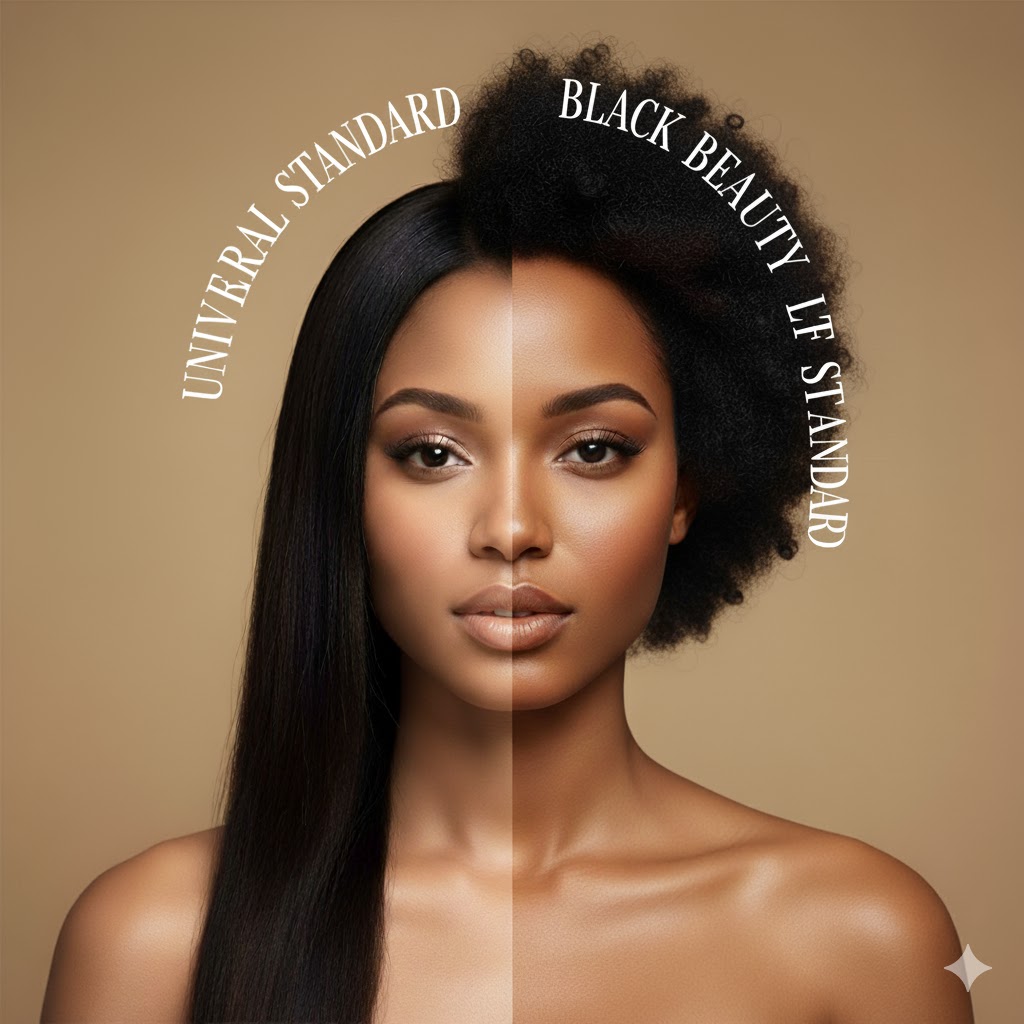
Eurocentric beauty standards have shaped global perceptions of attractiveness for centuries, creating a hierarchy that places whiteness at the top and all other features beneath it. For Black women—especially Brown-skinned and dark-skinned women—this hierarchy produces a dilemma that is both personal and generational. It affects identity, self-esteem, desirability, and even spiritual understanding of self-worth. This essay explores the history and psychology behind Eurocentric ideals—straight hair, light skin, narrow features, blue eyes—and contrasts them with the richness, diversity, and inherent value of Black beauty.

The Origins of Eurocentric Beauty Hierarchy

Eurocentric standards were born from colonialism, slavery, and racial pseudoscience. European colonizers declared their own features—pale skin, straight or wavy hair, slim noses, and light eyes—as “civilized,” “pure,” and “superior.” These traits became the global benchmark, not because they were inherently beautiful, but because they were associated with power, wealth, and dominance. Whiteness became the symbol of privilege.

Slavery and Color Hierarchies

During the transatlantic slave trade, enslaved Africans with lighter skin—often the product of sexual violence—were given preferential treatment. They worked in the house, wore better clothing, and at times received literacy or skilled labor training. This created the “house slave vs. field slave” hierarchy, embedding colorism deep into Black communities. Light skin became associated with safety, access, and acceptance—survival benefits. These dynamics later morphed into social preferences that still influence dating, media, and institutional biases today.

The Psychological Impact of Whiteness as the Default

Psychologists describe Eurocentric beauty standards as a “dominant cultural schema” (hooks, 1992). When one group controls media, education, and social narratives, their features become normalized as the ideal. This creates aesthetic assimilation pressure—the subconscious push to emulate the dominant group to gain approval, opportunity, and perceived worth.

The Brown Girl Dilemma

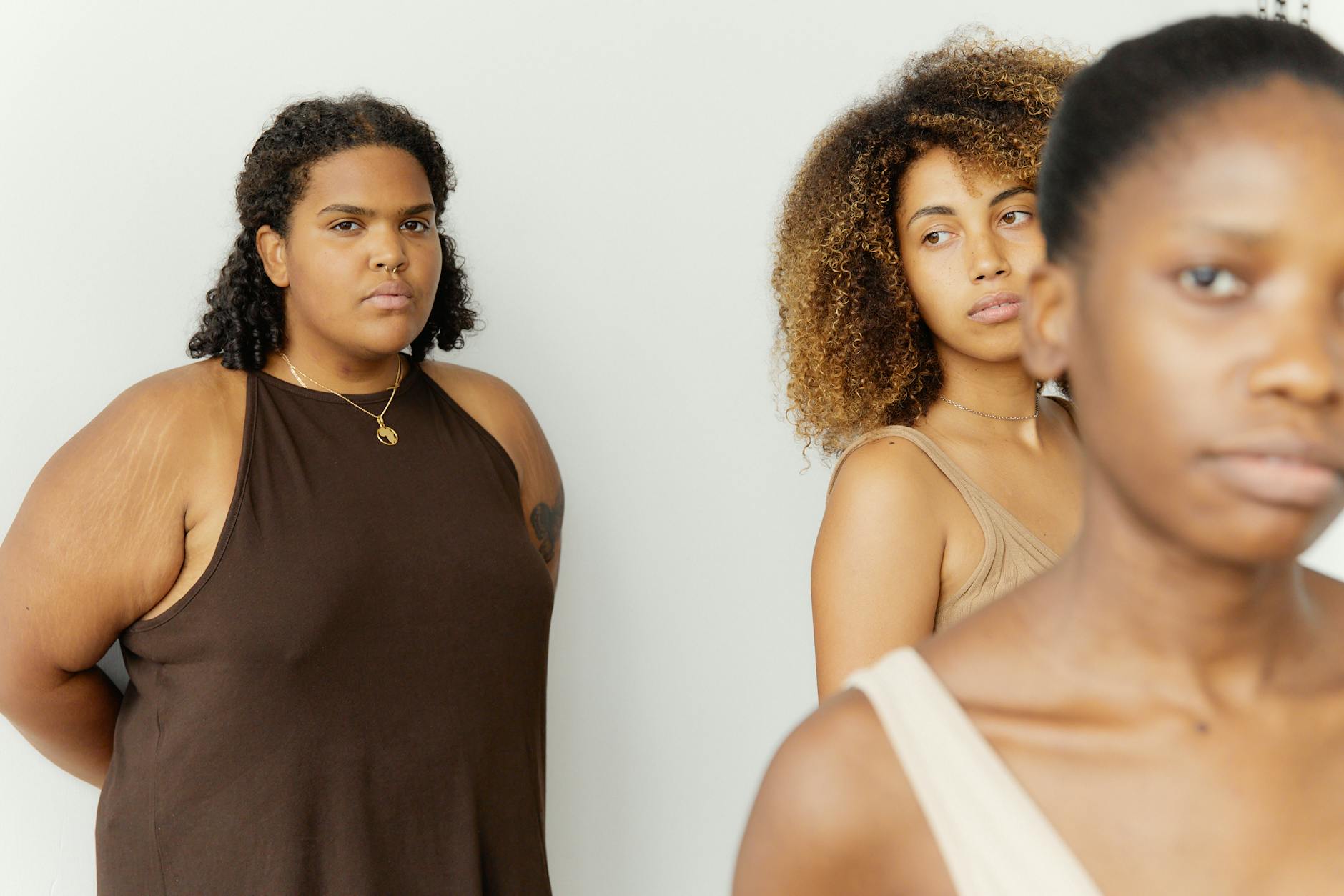
For Brown-skinned and dark-skinned girls, the psychological conflict is acute. They are often raised to love themselves spiritually, yet conditioned socially to see their features as less desirable. This creates cognitive dissonance:

  • “Why don’t I look like the women celebrated on TV?”
  • “Why is lighter skin described as beautiful, classy, or desirable?”
  • “Why do I feel too dark or too ‘ethnic’?”
    This tension affects self-esteem, dating prospects, opportunities, and even how young girls see their own reflection.

Hair: A Battleground for Identity

Straight hair has long been praised because it aligns closest to Eurocentric ideals. During Jim Crow and segregation, straightened or pressed hair was viewed as a means to “fit in” and reduce racial discrimination. The psychological message?
Natural coils = unprofessional, wild, unkempt
Straight hair = polished, acceptable, beautiful
This created internalized anti-Blackness, where girls learned that their natural features needed altering to be worthy.

Light Eyes and Light Skin as Social Capital

Blue or light eyes and pale skin carried symbolic power because they aligned with whiteness. The lighter a Black woman appeared, the closer she seemed to whiteness—and the more approval she gained from dominant society. Studies show that lighter-skinned Black women historically received better job opportunities, social mobility, and media representation (Hunter, 2007).
This ingrained the belief that beauty equals proximity to whiteness.

Media Reinforcement

For decades, magazines, movies, and fashion campaigns prioritized white women and lighter-skinned Black women. Black girls grew up with very few images that reflected their features, resulting in what some psychologists call identity starvation. Without representation, children struggle to form healthy self-esteem because they cannot see themselves as beautiful.

Colonial Psychology: The Beauty of the Conquered vs. the Conqueror

Colonialism taught the world that the conqueror’s traits were superior. European missionaries, scientists, and artists depicted African features as “primitive” or “animalistic.” Pseudoscientific works like those by Carl Linnaeus and Johann Blumenbach ranked races by beauty, placing Europeans at the top and Africans at the bottom. This scientific racism became the foundation for beauty discrimination.

Internalized Colorism in Black Communities

Over time, these external hierarchies became internal practices:

  • Favoring lighter-skinned women in family praise
  • Associating dark skin with aggression or masculinity
  • Assuming lighter skin equals innocence or refinement
    This internalization is generational trauma passed down from slavery.

Beauty as a Form of Resistance

The natural hair movement, melanin pride culture, and the resurgence of African aesthetics are forms of rebellion against Eurocentric standards. Black women have reclaimed what was once degraded—afros, braids, dark skin, wide noses, full lips—and declared them beautiful.

The Rise of Black Beauty Consciousness

Black beauty is diverse, rich, and multidimensional. Full lips, melanated skin, textured hair, and Afrocentric features are globally admired today—not because beauty standards changed by chance, but because Black women demanded visibility. “Black girl magic” is not a trend—it is a declaration of self-worth.

The Brown Girl’s Healing Journey

Healing from beauty-based trauma requires unlearning internalized biases. It means teaching young girls that their worth is not tied to proximity to whiteness. It means uplifting dark-skinned beauty publicly and consistently. It means dismantling old scripts tied to slavery’s residue.

Biblical Reflection

In Scripture, beauty is never defined by skin tone or European features. Instead, God calls His people beautiful, chosen, and precious.
“I will praise thee; for I am fearfully and wonderfully made” (Psalm 139:14, KJV).
Black women must reclaim this truth as identity—not as aspiration.

Reframing the Standard

Beauty standards are not neutral—they are political. They reflect power structures. To uplift Black beauty, society must redefine beauty in a way that centers inclusivity, diversity, and historical truth.

Colorism in Dating and Relationships

Studies show that lighter-skinned Black women are more likely to be preferred in dating apps and social settings because of centuries-old conditioning (Wilder, 2015). This creates insecurity among Brown girls who feel overshadowed. The imbalance is not personal—it is systemic.

Economic Value of Eurocentric Features

Mainstream industries profit from insecurity:

  • Skin-lightening creams
  • Straightening treatments
  • Colored contact lenses
    These industries make billions by selling whiteness as a product. The psychology: create insecurity → sell the solution.

Breaking the Cycle

Educators, parents, churches, and media creators must consciously highlight Afrocentric beauty. Brown girls need consistent affirmation—visual and verbal.

Honoring the Brown-Skinned Woman

Brown and dark-skinned beauty is unique, powerful, and breathtaking. The richness of melanin, the depth of brown skin tones, the strength of textured hair—all represent spiritual, genetic, and ancestral beauty.

The Future of Beauty

The beauty world is shifting, but the work is ongoing. True transformation requires dismantling the psychological chains inherited from colonialism and slavery. Brown girls deserve to grow up knowing they are enough as they are.

Conclusion

Eurocentric beauty standards are artificial constructs rooted in historical oppression, not truth. Black beauty—rich, diverse, and divine—stands in opposition to centuries of enforced inferiority. The Brown Girl Dilemma can be healed through representation, affirmation, education, and spiritual grounding. Black women must continue rewriting the narrative, reclaiming the beauty that was always theirs.


References

  • hooks, bell. Black Looks: Race and Representation. South End Press, 1992.
  • Hunter, M. (2007). “The Persistent Problem of Colorism.” Sociology Compass.
  • Wilder, J. (2015). Color Stories: Black Women and Colorism in the 21st Century.
  • Russell, K., Wilson, M., & Hall, R. (2013). The Color Complex: The Politics of Skin Color in a New Millennium.
  • Tate, S. (2009). Black Beauty: Aesthetics, Stylization, Politics.
  • Psalm 139:14 (KJV).

The Beauty Con Game: How Society Manipulated Black Beauty.

Photo by Merlin Lightpainting on Pexels.com

Beauty is one of the most powerful social currencies, yet it has been weaponized against Black women for centuries. Society has dictated what is considered beautiful, often elevating Eurocentric features as the standard while degrading African aesthetics.

From slavery onward, Black bodies were dehumanized, exoticized, and stripped of dignity. Enslaved women were compared to animals, their hair labeled “woolly” and their features mocked (White, 2012). The colonizers’ standard of beauty placed whiteness as the ideal — pale skin, thin noses, and straight hair became the aspirational model. This early propaganda created a deep generational wound, convincing many Black women that their natural state was inferior.

Scripture reminds us that all creation is made in God’s image (Genesis 1:27, KJV). The denigration of Black beauty is therefore not just a social injustice but a spiritual assault — an attempt to distort the Creator’s handiwork and cause people to despise what God called “very good” (Genesis 1:31, KJV).

Psychology supports this understanding, noting that beauty ideals strongly influence self-esteem and identity formation (Cash & Pruzinsky, 2002). When a community is repeatedly told they are ugly, unworthy, or undesirable, it fosters internalized racism, self-hatred, and colorism. Black girls often grow up wishing to look like the models in magazines, who historically were overwhelmingly white.

The con game becomes clear when we see how the beauty industry profits from this insecurity. Billions of dollars are spent annually by Black women on hair relaxers, skin-lightening creams, and wigs designed to mimic Eurocentric features (Hunter, 2011). The market is built on the false premise that Black women must “fix” themselves to be acceptable.

Straight hair became a symbol of respectability during the early 20th century. Madam C.J. Walker, while celebrated for empowering Black women economically, also sold products that encouraged them to conform to Eurocentric ideals. Sociologists argue that this was a survival strategy — assimilating to dominant beauty norms in order to access jobs, education, and social mobility (Gill, 2010).

Colorism — the preference for lighter skin — further divided the Black community. During slavery, lighter-skinned enslaved people were often favored and given domestic work, while darker-skinned people labored in the fields. This legacy persists, with research showing lighter-skinned Black women still receive better treatment in dating, hiring, and media representation (Wilder, 2010).

Scripture, however, affirms the beauty of melanin-rich skin. The Shulamite woman in Song of Solomon boldly declares, “I am black, but comely” (Song of Solomon 1:5, KJV). Her words push back against shame and affirm that dark skin is beautiful and worthy of celebration.

In recent decades, Black celebrities and activists have fought back against this con game. Icons like Nina Simone, Lauryn Hill, Lupita Nyong’o, Viola Davis, and Michaela Coel have publicly affirmed natural hair, dark skin, and African features. Lupita Nyong’o’s speech at Essence’s Black Women in Hollywood awards described learning to see her dark skin as beautiful — a testimony that inspired a generation.

The natural hair movement is one of the most powerful acts of resistance. Black women worldwide have embraced afros, locs, braids, and twists as symbols of cultural pride. This movement rejects the lie that straight hair is “better” and instead celebrates hair in its God-given form. Laws like the CROWN Act (Creating a Respectful and Open Workplace for Natural Hair) are dismantling workplace discrimination against natural styles.

Social media has also amplified representation. Influencers and content creators showcase Black beauty in all its shades, from the deepest ebony to the fairest brown, proving that beauty is not monolithic. This democratization of media allows Black women to define beauty on their own terms rather than through Eurocentric gatekeepers.

Psychologists warn, however, that dismantling centuries of programming takes time. Internalized racism and colorism can linger even within progressive spaces. Healing requires intentional unlearning, affirmations, and re-exposure to positive images of Blackness (Hall, 2010).

Biblically, the call is to renew the mind. Romans 12:2 (KJV) commands believers not to conform to the world but to be transformed by the renewing of the mind. This applies to rejecting false beauty standards and embracing God’s definition of worth. Beauty becomes an inner quality, as 1 Peter 3:3-4 reminds us: “Whose adorning let it not be that outward adorning… but let it be the hidden man of the heart.”

Black women are also reclaiming beauty in fashion and pageantry. The historic moment when Zozibini Tunzi of South Africa won Miss Universe 2019, wearing her natural hair challenged decades of Eurocentric pageant norms. She stated, “I grew up in a world where a woman who looks like me… was never considered beautiful.” Her victory was a global affirmation that the standard is shifting.

Despite these advances, the beauty con game continues through subtle pressures. Media algorithms still over-represent lighter-skinned models. Cosmetic companies still push skin-whitening creams in African and Asian markets. These realities remind us that liberation is an ongoing struggle.

The followers of Christ have a responsibility to participate in this healing by teaching that every shade of melanin reflects the creativity of God. Psalm 139:14 (KJV) declares, “I will praise thee; for I am fearfully and wonderfully made.” Teaching this truth to young girls builds resilience against media lies.

Psychology shows that positive representation can rewire self-perception. Exposure to affirming images of Black beauty has been linked to improved self-esteem and body satisfaction (Frisby, 2004). Representation is not superficial — it is a tool of psychological liberation.

Another critical step is economic empowerment. Supporting Black-owned beauty brands allows women to invest in products that celebrate, not erase, their natural beauty. This shift keeps wealth circulating in the community and challenges global conglomerates that exploit insecurities.

Parents, educators, and mentors must be intentional about teaching children to love their natural features early. Displaying books, dolls, and media with diverse representations of Black beauty helps inoculate children against the lie that they must look different to be worthy.

It is also important to resist idolizing beauty altogether. Proverbs 31:30 (KJV) reminds us, “Favour is deceitful, and beauty is vain: but a woman that feareth the LORD, she shall be praised.” True empowerment comes when beauty is seen as one part of identity, not the sum total of worth.

Healing from the beauty con game is both personal and collective. It requires rejecting lies, affirming truth, and celebrating every expression of African identity. It means speaking life into one another, reminding sisters that they are wonderfully made and worthy of honor.

Ultimately, God has the final word on beauty. His word teaches that we are His workmanship (Ephesians 2:10, KJV). Every curl, coil, and shade of melanin was intentionally designed. Restoring Black women’s self-image is not merely a social project — it is a spiritual act of reclaiming what God has declared good.


References

  • Cash, T. F., & Pruzinsky, T. (2002). Body image: A handbook of theory, research, and clinical practice. Guilford Press.
  • Frisby, C. M. (2004). Does race matter? Effects of idealized images on African American women’s perceptions of body esteem. Journal of Black Studies, 34(3), 323–347.
  • Gill, T. M. (2010). Beauty shop politics: African American women’s activism in the beauty industry. University of Illinois Press.
  • Hall, R. E. (2010). The melanin millennium: Skin color as 21st century international discourse. Springer.
  • Hunter, M. (2011). Buying racial capital: Skin-bleaching and cosmetic surgery in a globalized world. Journal of Pan African Studies, 4(4), 142–164.
  • White, D. G. (2012). Ar’n’t I a Woman?: Female slaves in the plantation South. W.W. Norton & Company.
  • The Holy Bible, King James Version.

Colorism and the Silent Wounds or Intra-Facial Discrimination.

Photo by Darina Belonogova on Pexels.com

Colorism, a term popularized by Alice Walker in 1983, refers to prejudice or discrimination against individuals with darker skin tones, often by members of their own racial or ethnic group. Unlike racism, which is an intergroup phenomenon, colorism is largely intra-racial and internalized, functioning as a byproduct of colonialism, slavery, and white supremacy. In the Black community, this hierarchy of skin tone—placing light skin above dark—has deep historical roots and persistent modern implications. The silent wounds of colorism often manifest as diminished self-esteem, fractured unity, and internalized oppression.


The Silent Wounds of Intra-Racial Discrimination

The wounds of colorism are “silent” because they are often normalized and rarely addressed openly. Psychologically, they appear as feelings of inadequacy, alienation, and resentment within the Black community. Children are often socialized into believing that lighter skin equates to beauty, intelligence, or higher status. Studies have shown that darker-skinned African Americans face harsher prison sentences, reduced job opportunities, and are less likely to be married than lighter-skinned peers with similar qualifications (Monk, 2014). The consequences are cumulative: lower self-worth, fractured identity, and intergenerational bias.


Historical Roots: The Light vs. Dark Divide

The light-skin/dark-skin divide began during slavery in the Americas, where lighter-skinned enslaved Africans—often the children of white slave owners and enslaved Black women—were sometimes given preferential treatment. They were more likely to work in the house rather than in the fields, receive basic education, or be considered for manumission. This hierarchy persisted into the Jim Crow era, reinforced by social organizations like the “Blue Vein Societies” that excluded darker-skinned Blacks. The ideology of white supremacy made whiteness the ultimate standard of beauty and worth, embedding these beliefs deep within Black cultural consciousness.


Colorism in the Black Community and Entertainment

Today, colorism manifests in how Black people perceive and treat one another. Light-skinned individuals are often assumed to be more attractive, educated, or approachable, while darker-skinned individuals may be stereotyped as aggressive or less refined. This bias is evident in the entertainment, modeling, and sports industries, where lighter-skinned women such as Zendaya, Amandla Stenberg, and Tessa Thompson often receive leading roles, while darker-skinned actresses like Lupita Nyong’o and Viola Davis have had to fight for representation. In music, rappers like Kodak Black have openly stated a preference for lighter-skinned women, reflecting deep-seated biases. Actor Taye Diggs once admitted in an interview that he was attracted to white women due to his upbringing in predominantly white spaces—a statement that sparked discussion about internalized preference and societal conditioning.

Examples of Celebrities by Skin Tone

  • Light-skinned celebrated celebrities: Zendaya, Tessa Thompson, Amandla Stenberg, Drake, Mariah Carey.
  • Dark-skinned celebrated celebrities: Lupita Nyong’o, Viola Davis, Idris Elba, Danai Gurira, Mahershala Ali.

Global and African Context

Colorism is not limited to the African diaspora in the West; it is prevalent in Africa itself. In nations like Nigeria, Ghana, and South Africa, skin-lightening products are widely sold, despite known health risks. The preference for lighter skin is tied to colonial history and reinforced by global media that promotes Eurocentric beauty ideals. Light-skinned women are often considered more “marriageable” or “professional,” while darker-skinned women face social and economic disadvantages.


Social and Economic Impacts

Colorism influences social mobility, dating, marriage prospects, and even income potential. Lighter-skinned Black Americans have been found to earn more, live in wealthier neighborhoods, and receive better educational opportunities than their darker-skinned counterparts (Keith & Herring, 1991). In modeling and advertising, lighter skin tones are disproportionately featured in beauty campaigns, perpetuating the cycle of bias.


Celebrity Commentary on Colorism

Several celebrities have spoken openly about colorism. Lupita Nyong’o has shared how she once prayed to God to lighten her skin, only to later embrace her beauty. Viola Davis has criticized Hollywood for sidelining darker-skinned women in romance and leading roles. Rapper Cardi B has acknowledged that her lighter complexion has given her certain advantages in the music industry compared to darker-skinned peers. These admissions highlight the need for systemic change within media representation.


Solutions and Path to Change

Addressing colorism requires both personal and systemic transformation. On a personal level, Black communities must unlearn internalized racism by affirming the beauty, intelligence, and value of all skin tones. On a systemic level, industries must commit to equal representation and opportunities for darker-skinned individuals. Education, media literacy, and cultural celebration of melanin-rich beauty can dismantle the hierarchy. As Proverbs 31:30 (KJV) reminds us, “Favour is deceitful, and beauty is vain: but a woman that feareth the Lord, she shall be praised.”


Conclusion

Colorism’s silent wounds are a legacy of colonialism and slavery, perpetuated by white supremacy and internalized bias. They impact social, economic, and psychological well-being within the Black community, both in the diaspora and on the African continent. Breaking this cycle demands intentional action, from challenging biased beauty standards to holding media accountable for diverse representation. Until the hierarchy of skin tone is dismantled, true unity in the Black community will remain incomplete.


References

  • Keith, V. M., & Herring, C. (1991). Skin tone and stratification in the Black community. American Journal of Sociology, 97(3), 760–778.
  • Monk, E. P. Jr. (2014). Skin tone stratification among Black Americans, 2001–2003. Social Forces, 92(4), 1313–1337.
  • Walker, A. (1983). In Search of Our Mothers’ Gardens. Harcourt Brace Jovanovich.
  • The Holy Bible, King James Version.