Tag Archives: black people

Girl Talk Series: What Love Is—and Isn’t

Love is one of the most misused words in modern culture. It is often confused with desire, attention, chemistry, or access to someone’s body. This confusion has caused many women to mistake emotional intensity for commitment and physical intimacy for proof of care. This conversation exists to clarify—not to shame, romanticize, or encourage—but to protect.

Before discussing what love is, it is necessary to warn women about what love is not. Love is not urgent. When a man pressures you to rush intimacy, commitment, or decisions, he is revealing impatience, not devotion. True love respects timing, boundaries, and the weight of consequences.

Sleeping with you is not love. Physical access is not a declaration of commitment, nor is it evidence of emotional investment. Desire is biological; love is intentional. Many men are willing to enjoy intimacy without responsibility, which is why actions must always outweigh words.

Love is not manipulation disguised as passion. Excessive flattery, future promises without follow-through, jealousy framed as protection, and guilt used to bypass your standards are all warning signs. Love does not coerce or corner; it invites and honors choice.

A man who truly loves you is willing to wait. Waiting for sex until marriage is not repression; it is restraint. It demonstrates discipline, foresight, and respect for the covenant. A man who can govern his desires is more likely to govern his character.

Biblically, love is patient. Patience is not passive—it is active self-control. A man waiting until marriage shows that he values your soul, your future, and the sacredness of union more than momentary pleasure. That kind of waiting is evidence of reverence, not weakness.

Love does not require you to prove yourself physically. You are not auditioning for commitment through intimacy. If access to your body becomes the price of staying, the relationship is transactional, not loving.

Love is consistent. It does not disappear when boundaries are enforced. A man who withdraws affection, attention, or kindness because you will not sleep with him has revealed his true motivation. Love does not punish purity.

Love is protective, not possessive. A man who loves you will care about your spiritual health, emotional well-being, and long-term stability. He will not place you in situations that compromise your values or peace.

Love involves responsibility. A man serious about love is also serious about provision, leadership, accountability, and legacy. Sex without covenant creates emotional and spiritual vulnerability without security. Love never asks you to accept risk alone.

Love is honest. It does not keep you confused or guessing. If a man says he loves you but avoids commitment, avoids clarity, or avoids future planning, his behavior contradicts his words. Love does not thrive in ambiguity.

Waiting until marriage is not about perfection; it is about alignment. It aligns intimacy with commitment, passion with protection, and desire with destiny. This alignment safeguards women emotionally, spiritually, and psychologically.

Psychological research supports what Scripture has long taught: delayed sexual involvement is associated with higher relationship satisfaction, stronger commitment, and lower rates of regret and emotional distress. Boundaries are not barriers to love; they are frameworks that support it.

Love does not exploit trauma. Men who rush intimacy often target emotional vulnerability, loneliness, or insecurity. Healing should precede bonding. Love contributes to healing; it does not capitalize on wounds.

Love allows room for growth without pressure. It does not rush milestones to secure control. It respects process, seasons, and readiness. What is built slowly is often built to last.

Marriage-centered love understands covenant. Sex within marriage is not merely physical—it is a spiritual union, trust, and responsibility. Love that leads toward marriage honors this reality rather than dismissing it.

A man who waits communicates long-term vision. He sees you as a wife, not an experience. He is willing to sacrifice immediate gratification for lasting union. That sacrifice is a form of love many women have been taught to undervalue.

Love does not ask women to lower their standards to be chosen. It rises to meet standards. If your boundaries repel someone, that person was not aligned with your future.

Women must be cautious not to romanticize struggle or confusion as passion. Peace, safety, and clarity are signs of healthy love. Chaos is not chemistry.

This conversation is not meant to encourage dating or desire but discernment. Love is serious. It is sacred. And it requires wisdom to recognize before intimacy clouds judgment.

Love is patient, disciplined, respectful, and accountable. Anything less—no matter how intense—falls short of what love truly is.


References

Holy Bible, King James Version. (1611/1769).

Gottman, J. M., & Silver, N. (2015). The seven principles for making marriage work. Harmony Books.

Stanley, S. M., Rhoades, G. K., & Markman, H. J. (2006). Sliding versus deciding: Inertia and the premarital cohabitation effect. Family Relations, 55(4), 499–509.

Regnerus, M. (2017). Cheap sex: The transformation of men, marriage, and monogamy. Oxford University Press.

Wilcox, W. B., & Dew, J. (2016). The social and cultural predictors of generosity in marriage. Journal of Family Issues, 37(2), 251–271.

Peplau, L. A., & Fingerhut, A. W. (2007). The close relationships of lesbians and gay men. Annual Review of Psychology, 58, 405–424.

Shocking Facts About Black People – Historical and Cultural Insights

Photo by Roger Sekoua on Pexels.com

The history and cultural legacy of Black people are rich, complex, and often misrepresented. From ancient civilizations to the transatlantic slave trade, Black communities have faced oppression, exploitation, and erasure. Yet, these narratives also reveal extraordinary resilience, intelligence, and innovation. Understanding these facts challenges misconceptions and honors God’s design of His people (Psalm 139:14).

African Civilizations Pre-Slavery

Long before European contact, African kingdoms such as Mali, Songhai, Kush, and Great Zimbabwe were centers of wealth, education, and governance. Mansa Musa of Mali, for example, amassed immense wealth and elevated scholarship and trade, demonstrating the intellectual and economic prowess of Black civilizations (Conrad, 2012).

The Origins of Humanity

Scientific research shows that Homo sapiens originated in Africa. Genetic studies confirm that all humans trace lineage to African ancestors, highlighting Black people as the root of humanity (Tishkoff et al., 2009).

Contributions to Science and Medicine

Ancient Egyptians pioneered surgery, medicine, and mathematics. The concept of medical documentation, early surgical procedures, and complex calendars originated in African societies, long before European acknowledgment.

Cultural Innovations

Black people developed advanced metallurgy, architecture, textiles, music, and art. Instruments such as the drum and innovations in astronomy, navigation, and oral history shaped civilizations globally.

The Transatlantic Slave Trade

Between the 16th and 19th centuries, millions of Africans were forcibly enslaved. This systemic oppression disrupted societies, severed familial bonds, and attempted to erase cultural identity, leaving a legacy of trauma that persists today (Eltis & Richardson, 2010).

Black Intellectual Traditions

Despite oppression, Black intellectualism flourished. Figures like W.E.B. Du Bois, Olaudah Equiano, and Phillis Wheatley challenged stereotypes and demonstrated literary, philosophical, and scientific brilliance.

Biblical Identity

The Bible references the descendants of Cush, Mizraim, and Ham, linking Black people to God’s covenantal history (Genesis 10:6–14). This heritage underscores that Black people are not secondary or accidental, but divinely created with purpose.

Resilience Amid Oppression

Black communities have demonstrated remarkable resilience, developing strategies to survive, adapt, and thrive despite systemic racism, segregation, and economic exploitation. Faith, communal support, and cultural preservation were central to survival.

Impact on Global Culture

From language and music to cuisine and fashion, Black culture has profoundly influenced global societies. Jazz, hip-hop, gospel, and African diasporic traditions reflect creativity born from both joy and struggle.

Skin Tone and Colorism

Colorism within Black communities is a byproduct of colonialism, privileging lighter skin while marginalizing darker skin. This internalized hierarchy is not reflective of value or beauty but of historical imposition (Hunter, 2007).

Economic and Political Contributions

Black inventors, entrepreneurs, and leaders have shaped modern society. Innovations such as traffic lights, medical devices, and agricultural techniques were pioneered by Black individuals, despite systemic barriers.

Misrepresentation in Media

Media often distorts Black identity, portraying negative stereotypes while omitting historical and cultural contributions. These narratives perpetuate misconceptions and obscure the richness of Black heritage.

Health Disparities and Genetics

Black populations experience certain health disparities due to both socio-economic and biological factors. Yet genetic diversity among Africans has contributed to adaptive strengths, including immunity to certain diseases and physical endurance.

Spiritual Depth

Faith has been central to Black survival and empowerment. Christianity, Islam, and traditional spiritual practices have fostered resilience, moral guidance, and community cohesion across centuries.

Diaspora Connections

The African diaspora maintains cultural continuity through language, religion, and tradition. Understanding these connections highlights a shared heritage that spans continents and centuries.

Resistance and Liberation Movements

From slave revolts to civil rights activism, Black people have consistently resisted oppression. Leaders such as Harriet Tubman, Frederick Douglass, and Malcolm X exemplify courage, strategic intelligence, and moral leadership.

Contemporary Achievements

Today, Black individuals excel in academia, arts, business, science, and governance, challenging historical misrepresentations and redefining global influence.

Conclusion

Black history and culture are filled with achievements, resilience, and divine purpose. Recognizing these facts challenges societal misconceptions and honors the value and dignity of Black people as God’s creation (Psalm 139:14; Genesis 1:27). True understanding requires both historical insight and cultural appreciation.


References

  • Conrad, D. C. (2012). Empires of medieval West Africa: Ghana, Mali, and Songhai. Ohio University Press.
  • Eltis, D., & Richardson, D. (2010). Atlas of the transatlantic slave trade. Yale University Press.
  • Hunter, M. L. (2007). The persistent problem of colorism: Skin tone, status, and inequality. Sociology Compass, 1(1), 237–254. https://doi.org/10.1111/j.1751-9020.2007.00006.x
  • Tishkoff, S. A., et al. (2009). The genetic structure and history of Africans and African Americans. Science, 324(5930), 1035–1044. https://doi.org/10.1126/science.1172257
  • Psalm 139:14 (KJV) – “I am fearfully and wonderfully made.”
  • Genesis 10:6–14 (KJV) – Descendants of Cush, Mizraim, and Ham.

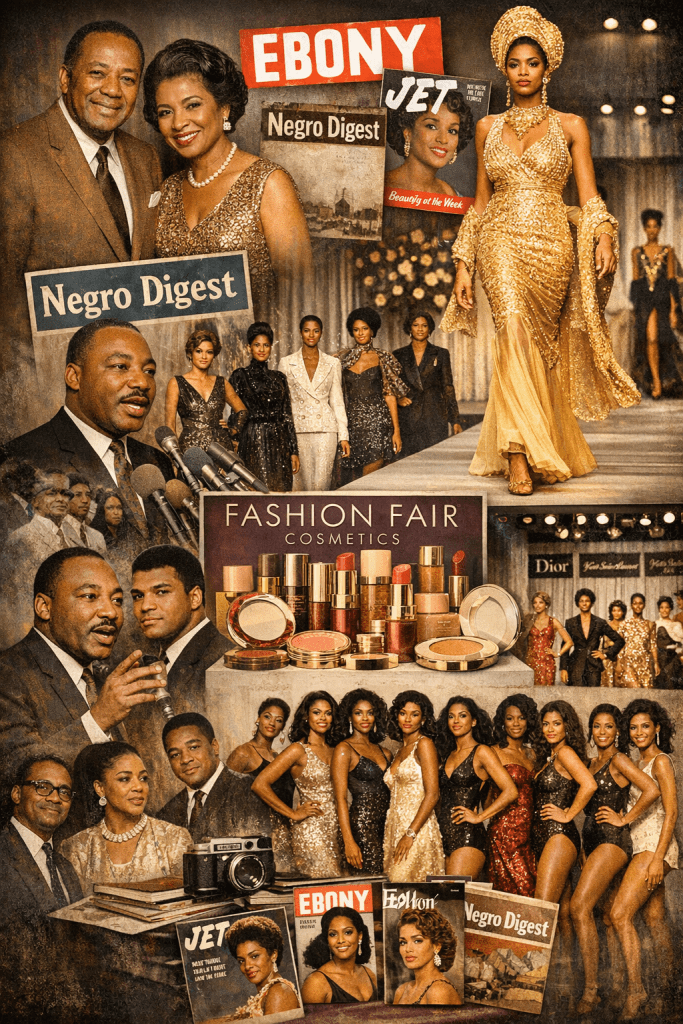
Black History: Ebony, Jet, Negro Digest, Ebony Fashion Fair & Fashion Fair Cosmetics.

Building the Black Standard of Beauty, Intelligence, and Power.

The story of Ebony, Jet, Negro Digest, Ebony Fashion Fair, and Fashion Fair Cosmetics represents one of the most important cultural revolutions in Black history. These institutions did far more than publish magazines or sell beauty products; they created a complete Black world—one in which Black people could finally see themselves reflected with dignity, intelligence, luxury, and divine beauty. At a time when American society systematically erased or distorted Black identity, this media and beauty empire boldly declared that Black people were not inferior, invisible, or marginal, but central to history, culture, and global excellence.

This revolutionary movement was founded by John H. Johnson, one of the most influential Black businessmen and publishers in American history. Born in 1918 in Arkansas and raised in Chicago, Johnson understood that representation was not simply about images, but about psychological power. In 1942, he launched the Johnson Publishing Company, which would grow into the largest Black-owned publishing company in the world. Johnson believed that Black people needed more than civil rights; they needed cultural authority, self-definition, and platforms that affirmed their humanity.

Standing alongside him was his wife, Eunice Johnson, a visionary entrepreneur, fashion editor, and cultural architect. Eunice Johnson was not merely a supportive spouse—she was the creative engine behind the Black beauty and fashion revolution. As the fashion director of Ebony, she reshaped how Black women were represented in style, luxury, and global elegance. Together, the Johnsons did something unprecedented in American history: they created a complete Black cultural mirror, one that allowed Black people to see themselves not through the distorted lens of racism, but through their own truth.

Founded in 1945, Ebony was created as the Black answer to Life magazine. Its mission was simple yet radical—to portray Black people as successful, educated, cultured, and aspirational. Ebony featured Black doctors, lawyers, professors, entrepreneurs, and political leaders. It showcased Black families, marriages, homes, and generational wealth. It highlighted African royalty, global Black leadership, and diasporic excellence. At a time when mainstream media associated Blackness with poverty, crime, and pathology, Ebony unapologetically presented Black affluence, Black intellect, and Black dignity. The magazine created what can be described as a visual theology of Black excellence, teaching Black people that they belonged in luxury, history, and greatness.

In 1951, Johnson expanded this vision with the launch of Jet, known as The Weekly Negro News Digest. Smaller in size but massive in cultural impact, Jet became the visual pulse of Black America. It documented the Civil Rights Movement in real time, including police brutality, racial violence, and social injustice that mainstream media often ignored. It also celebrated everyday Black life—weddings, graduations, church events, and community milestones—proving that Black life was worthy of documentation and historical memory.

One of Jet’s most powerful contributions was its iconic “Beauty of the Week” feature. This single section revolutionized global beauty standards by consistently centering Black women of every complexion, body type, and background. Dark-skinned women, light-skinned women, natural hair, Afro-textured beauty—Jet made visible what the world had erased. Long before diversity became a marketing trend, Jet declared that Black women were not exceptions to beauty, but the standard of beauty itself.

Before Ebony and Jet, Johnson also launched Negro Digest, later renamed Black World. This publication became the intellectual backbone of Black consciousness in America. Negro Digest published Black scholars, historians, theologians, and political thinkers who addressed African history, racism, colonialism, Pan-Africanism, and Black psychology. It served as a philosophical and political platform during the rise of Black Power and global liberation movements. Through Negro Digest, Johnson proved that Black media was not only aesthetic, but deeply intellectual and revolutionary—it nurtured the Black mind.

Across all these platforms, a single unspoken message echoed powerfully: “Look at Black people.” Not as slaves. Not as criminals. Not as stereotypes. But as stylish, educated, intelligent, wealthy, cultured, and global. These publications functioned as psychological counter-propaganda to white supremacy. They repaired centuries of racial misrepresentation by producing positive Black mirrors. They did not simply inform Black audiences; they healed identity and reprogrammed self-perception.

One of the most extraordinary extensions of this cultural revolution was the creation of the Ebony Fashion Fair, founded by Eunice Johnson in 1958. The Ebony Fashion Fair was a traveling luxury fashion show that brought Paris haute couture directly into Black communities across America. For the first time in U.S. history, Black women exclusively modeled designs from elite fashion houses such as Dior, Givenchy, and Yves Saint Laurent. At a time when the fashion industry was segregated and excluded Black models, Eunice Johnson forced global fashion to recognize Black women as symbols of elegance, luxury, and high culture. Ebony Fashion Fair transformed churches, auditoriums, and community centers into international runways, allowing Black audiences to see themselves as part of the global elite.

Out of Ebony Fashion Fair emerged one of the most important Black-owned beauty companies in history: Fashion Fair Cosmetics. Founded in 1973 by Eunice Johnson, Fashion Fair became the largest and most successful Black-owned cosmetics brand in the world. It was created because mainstream cosmetic companies refused to make products for darker skin tones. Fashion Fair developed foundations, powders, and lipsticks specifically for Black undertones and deep complexions. It was sold in major department stores such as Macy’s and became the official makeup brand for Black models and professional fashion shows.

For the first time, Black women could walk into luxury retail spaces and find makeup designed for their skin—not approximations of whiteness, but products made with Black beauty in mind. Fashion Fair Cosmetics sent a revolutionary message: Black women did not need to lighten, hide, or dilute their appearance. They were not a niche market. They were the standard.

Together, Ebony, Jet, Negro Digest, Ebony Fashion Fair, and Fashion Fair Cosmetics created the most powerful Black cultural ecosystem in modern history. This empire produced Black news, Black beauty, Black fashion, Black intellect, Black luxury, and Black self-worth. It set global beauty standards, built Black middle-class identity, preserved Black historical memory, created Black celebrity culture, and rewired Black self-esteem.

Ebony: The Black Answer to Life Magazine

Founded in 1945, Ebony was created to showcase Black people the way white magazines showcased white America—successful, educated, aspirational, and human. Ebony featured:

  • Black doctors, lawyers, professors, and CEOs
  • Black families, marriages, and generational wealth
  • African royalty and global Black leaders
  • Black entertainers, scholars, and activists

At a time when Blackness was associated with poverty and pathology, Ebony portrayed Black affluence, Black intellect, and Black excellence. It created the visual theology of the Black middle and upper class.

The unspoken message was radical:
Black people belong in history, luxury, and greatness.


Jet: The Visual Pulse of Black America

Founded in 1951, Jet became the heartbeat of Black America. Known as The Weekly Negro News Digest, Jet documented Black life in real time:

  • Civil Rights Movement coverage
  • Police brutality and racial injustice
  • Black celebrities and athletes
  • Weddings, graduations, and community milestones

One of Jet’s most revolutionary contributions was “Beauty of the Week.” This single feature redefined global beauty standards by consistently centering Black women of all shades, textures, and body types—long before diversity was fashionable.

Dark-skinned women, light-skinned women, natural hair, Afro-textured beauty—Jet said to the world:
Black women are the beauty standard.


Negro Digest: The Black Intellectual Renaissance

Before Ebony and Jet, Johnson launched Negro Digest, later renamed Black World. This magazine became the intellectual backbone of Black consciousness.

It published:

  • Black scholars and theologians
  • African historians and Pan-African thinkers
  • Writers on racism, colonialism, and psychology
  • Political philosophy and liberation theology

Negro Digest proved that Black media was not just visual—it was philosophical, theological, and revolutionary. It nurtured the Black mind.


“Look at Black People”: Reprogramming the Black Image

Across all Johnson platforms, one message echoed loudly:

Look at Black people.

Not as slaves.
Not as criminals.
Not as stereotypes.

But as:

  • Stylish
  • Intelligent
  • Educated
  • Wealthy
  • Global
  • Elegant

This media empire functioned as counter-propaganda to white supremacy. It repaired the psychological damage of racism by showing Black people who they really were.

These publications didn’t just inform—they healed identity.


Ebony Fashion Fair: Black Models, Global Luxury

One of Eunice Johnson’s greatest achievements was the creation of the Ebony Fashion Fair, a traveling luxury fashion show that brought Paris couture directly into Black communities.

For the first time in American history:

  • Black women modeled Dior, Givenchy, and Yves Saint Laurent
  • Black audiences saw luxury on Black bodies
  • Black beauty entered the global elite fashion world

This was revolutionary. In a segregated fashion industry that excluded Black models, Eunice Johnson forced haute couture to recognize Black women as luxury incarnate.

She didn’t just put Black women in fashion—
She placed Black women at the center of global elegance.


Fashion Fair Cosmetics: The Largest Black-Owned Beauty Brand

Out of Ebony Fashion Fair emerged one of the most important Black-owned companies in beauty history: Fashion Fair Cosmetics.

Founded in 1973 by Eunice Johnson, Fashion Fair became the largest and most successful Black-owned cosmetics brand in the world. It was created because mainstream brands refused to make makeup for darker skin tones.

Fashion Fair:

  • Created foundations for deep complexions
  • Produced lipsticks and powders for Black undertones
  • Sold in major department stores like Macy’s
  • Served professional Black models and everyday women

For the first time, Black women could walk into luxury stores and find makeup designed for their skin—not approximations of whiteness.

Fashion Fair Cosmetics told Black women:

You do not need to lighten, hide, or dilute your beauty.
You are the market. You are the standard.


The Greatest Black Media Empire Ever Created

Together, Ebony, Jet, Negro Digest, Ebony Fashion Fair, and Fashion Fair Cosmetics created a complete Black ecosystem:

  • Black news
  • Black beauty
  • Black fashion
  • Black intellect
  • Black luxury
  • Black self-worth

This empire:

  • Set global Black beauty standards
  • Built Black middle-class identity
  • Preserved Black historical memory
  • Created Black celebrity culture
  • Rewired Black self-esteem

These institutions functioned as:

  • Cultural archives
  • Psychological liberation tools
  • Visual theology of Black excellence

John H. Johnson and Eunice Johnson did not just build magazines and makeup brands.
They reprogrammed Black consciousness.

They taught generations of Black people how to see themselves:
Not through white validation.
Not through colonial distortion.
But through Black truth, Black dignity, and Black divine beauty.

These institutions were not merely businesses; they were cultural liberation tools, psychological healing systems, and visual archives of Black greatness. John H. Johnson and Eunice Johnson did not simply build magazines and makeup brands. They built a Black world within a society that tried to erase Black humanity. They taught generations of Black people how to see themselves—not through white validation, colonial distortion, or racist ideology—but through Black truth, Black dignity, and Black divine beauty.

This was not just media.
This was nation-building.

References

Johnson, J. H. (1989). Succeeding against the odds. Warner Books.

Autobiography of John H. Johnson detailing the founding of Johnson Publishing, Ebony, and Jet, including philosophy of Black representation.

Johnson, E. (2003). Ebony fashion fair: 50 years of style. Johnson Publishing Company.

Primary source on the history, mission, and cultural impact of Ebony Fashion Fair, written by Eunice Johnson herself.

Smith, J. L. (2004). Becoming something: The story of Ebony magazine. Northwestern University Press.

Scholarly history of Ebony’s role in shaping Black middle-class identity and visual culture.

Byrd, R. P., & Gates, H. L. Jr. (2009). The Black intellectual tradition. Harvard University Press.

Context for Negro Digest and Black World as intellectual platforms.

Davis, A. Y. (2016). Freedom is a constant struggle: Ferguson, Palestine, and the foundations of a movement. Haymarket Books.

Used for cultural and political framing of Black media as resistance.

Weems, R. E. (1998). Desegregating the dollar: African American consumerism in the twentieth century. New York University Press.

Key academic text on Black-owned businesses, including Johnson Publishing and Fashion Fair Cosmetics.

Walker, S. (2002). Style and status: Selling beauty to African American women, 1920–1975. University Press of Kentucky.

Scholarly source on Black beauty culture and cosmetics history.

Craig, M. L. (2002). Ain’t I a beauty queen? Black women, beauty, and the politics of race. Oxford University Press.

Supports analysis of Jet’s “Beauty of the Week” and Black beauty standards.

Bennett, J. (2015). Being property once myself: Blackness and the end of man. Harvard University Press.

Theoretical grounding for psychological impact of representation.

Hine, D. C., Hine, W. C., & Harrold, S. (2014). The African American odyssey (6th ed.). Pearson.

General Black history reference supporting media, civil rights, and cultural institutions.

National Museum of African American History and Culture. (n.d.). Ebony and Jet magazines collection. Smithsonian Institution.

Archival institutional source confirming historical importance and preservation.

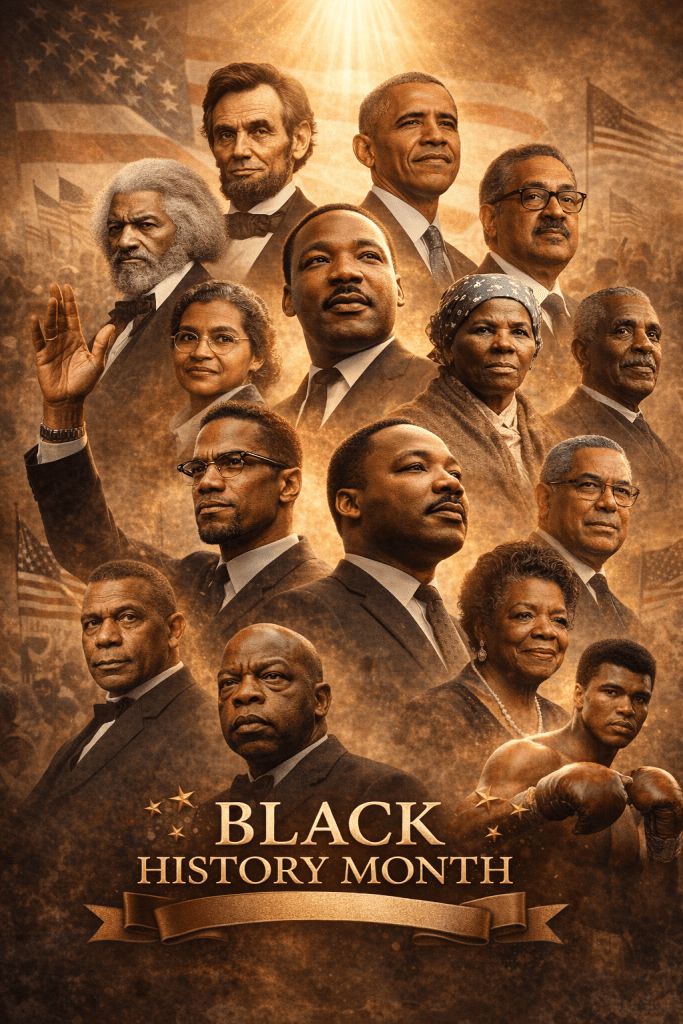
Black History Month: History, Struggle, and Why It Matters.

Black History Month is a nationally recognized observance in the United States dedicated to honoring the history, culture, contributions, and resilience of African Americans. It originated from the work of historian Carter G. Woodson, who established “Negro History Week” in 1926 to counter the exclusion of Black achievements from mainstream historical narratives (Woodson, 1915). The celebration expanded to a full month in 1976, officially recognized by President Gerald Ford, who urged Americans to acknowledge the “too-often neglected accomplishments of Black Americans.”

The importance of Black History Month lies in historical correction. For centuries, Black people in America were either erased from history books or portrayed only through the lens of slavery. This observance restores truth by centering Black voices, experiences, and intellectual contributions that shaped the nation politically, economically, culturally, and spiritually.

One of the foundational experiences Black Americans endured was the transatlantic slave trade, where millions of Africans were forcibly transported, enslaved, dehumanized, and exploited for labor in agriculture, infrastructure, and domestic work. Enslaved people were stripped of language, names, family structures, and legal personhood, treated as property rather than human beings (Berlin, 2003).

After emancipation in 1865, Black Americans faced Black Codes and Jim Crow laws that enforced segregation, restricted voting rights, and maintained economic dependency. Sharecropping replaced slavery with debt bondage, ensuring that many formerly enslaved people remained trapped in poverty (Du Bois, 1935).

Black Americans were subjected to widespread racial terrorism. Thousands were lynched between the late 19th and mid-20th centuries, often publicly, as a tool of social control. These acts were rarely punished and were sometimes encouraged by local authorities (Equal Justice Initiative, 2017).

The struggle for civil rights defined much of the 20th century. Black Americans fought for desegregation, voting rights, and equal protection under the law through movements led by figures such as Martin Luther King Jr., Malcolm X, Rosa Parks, and countless grassroots activists (Morris, 1984).

Despite legal progress, systemic racism persisted through redlining, housing discrimination, employment inequality, and mass incarceration. Black communities were denied access to quality education, wealth-building opportunities, and fair treatment within the criminal justice system (Alexander, 2010).

Black Americans have endured medical exploitation, including the Tuskegee Syphilis Study, where Black men were intentionally left untreated for decades without informed consent, revealing deep ethical violations in U.S. medical history (Brandt, 1978).

Culturally, Black people have faced appropriation, censorship, and marginalization, even as they created some of the most influential artistic forms in the world, including jazz, blues, hip-hop, gospel, soul, and modern dance (Gates, 2014).

Economically, Black Americans were historically excluded from the GI Bill, homeownership programs, and business funding, creating a persistent racial wealth gap that still exists today (Rothstein, 2017).

Psychologically, Black people have endured generational trauma, internalized racism, colorism, and social devaluation, which continue to shape mental health outcomes and identity development (Cross, 1991).

Black History Month is important because it affirms dignity. It reminds Black communities of their resilience, brilliance, and survival in the face of systemic oppression.

It is also important for national accountability. The United States cannot address present inequalities without understanding historical causes. Black History Month provides the context necessary for meaningful dialogue about race, justice, and equity.

The month serves as an educational intervention. Many U.S. school systems still under-teach Black history outside of slavery and civil rights. This observance creates space to explore African civilizations, Black inventors, scholars, scientists, and leaders whose contributions are often ignored.

Black History Month is a tool of empowerment. Representation shapes identity, and seeing Black excellence in history strengthens self-concept, especially for Black youth.

It is also a form of resistance. Remembering is an act of defiance against erasure. Historical memory challenges dominant narratives that portray Black people only through deficit and suffering.

Finally, Black History Month matters because Black history is American history. The United States was built through Black labor, culture, struggle, and innovation. To ignore this is to misunderstand the nation itself.

Black History Month is not about separation, but inclusion. It exists not to isolate Black history, but to correct a system that excluded it for centuries.

The ultimate purpose of Black History Month is truth, healing, and transformation. It invites the nation to confront its past honestly, honor those who endured it, and commit to building a more just future.


References

Alexander, M. (2010). The new Jim Crow: Mass incarceration in the age of colorblindness. The New Press.

Berlin, I. (2003). Generations of captivity: A history of African-American slaves. Harvard University Press.

Brandt, A. M. (1978). Racism and research: The case of the Tuskegee Syphilis Study. Hastings Center Report, 8(6), 21–29.

Cross, W. E. (1991). Shades of Black: Diversity in African-American identity. Temple University Press.

Du Bois, W. E. B. (1935). Black reconstruction in America, 1860–1880. Free Press.

Equal Justice Initiative. (2017). Lynching in America: Confronting the legacy of racial terror.

Gates, H. L. (2014). Life upon these shores: Looking at African American history, 1513–2008. Knopf.

Morris, A. D. (1984). The origins of the civil rights movement. Free Press.

Rothstein, R. (2017). The color of law: A forgotten history of how our government segregated America. Liveright.

Woodson, C. G. (1915). The education of the Negro prior to 1861. G.P. Putnam’s Sons.

Seed of the Promise: How DNA and the Bible Reveal a Chosen People.

Photo by Yan Krukau on Pexels.com

From the beginning of Genesis, the concept of “seed” carries profound meaning. God’s promises to Abraham were not vague blessings, but covenantal assurances tied to his descendants: “And I will establish my covenant between me and thee and thy seed after thee in their generations for an everlasting covenant” (Genesis 17:7, KJV). The “seed of the promise” became a recurring theme throughout Scripture, linking identity, inheritance, and destiny. Today, science provides new tools to understand that promise, as genetics reveals the enduring bloodlines of peoples who have carried covenantal identity across millennia.

DNA, with its intricate coding of ancestry, functions almost like a modern “book of generations.” Haplogroups—clusters of genetic signatures inherited through paternal (Y-DNA) and maternal (mtDNA) lines—trace the migrations of peoples and preserve the record of dispersion. For many within the African diaspora, haplogroups such as E1b1a (E-M2) on the paternal side and L2/L3 on the maternal side establish direct connections to West and Central Africa, regions heavily impacted by the transatlantic slave trade (Tishkoff et al., 2009). Yet beyond geography, these markers symbolize continuity: a seed that could not be extinguished despite enslavement, exile, and systemic oppression.

This intertwining of genetics and Scripture challenges the narrative of erasure. Deuteronomy 28 speaks prophetically of a scattered people, yet Isaiah 44:3 declares, “I will pour my spirit upon thy seed, and my blessing upon thine offspring.” Just as the genetic record testifies to survival through dispersion, the biblical record testifies to divine preservation. The seed remains alive—not only biologically through DNA, but spiritually through covenant.

The revelation here is twofold: science provides evidence of origin, while the Bible provides evidence of purpose. Together they affirm that identity is not an accident of history, but a fulfillment of prophecy. The seed of the promise is both biological and spiritual, pointing toward a chosen people who, though scattered, remain bound by covenant and destined for restoration.


📖 References

  • Holy Bible, King James Version.
  • Tishkoff, S. A., Reed, F. A., Friedlaender, F. R., Ehret, C., Ranciaro, A., Froment, A., … & Williams, S. M. (2009). The genetic structure and history of Africans and African Americans. Science, 324(5930), 1035–1044.

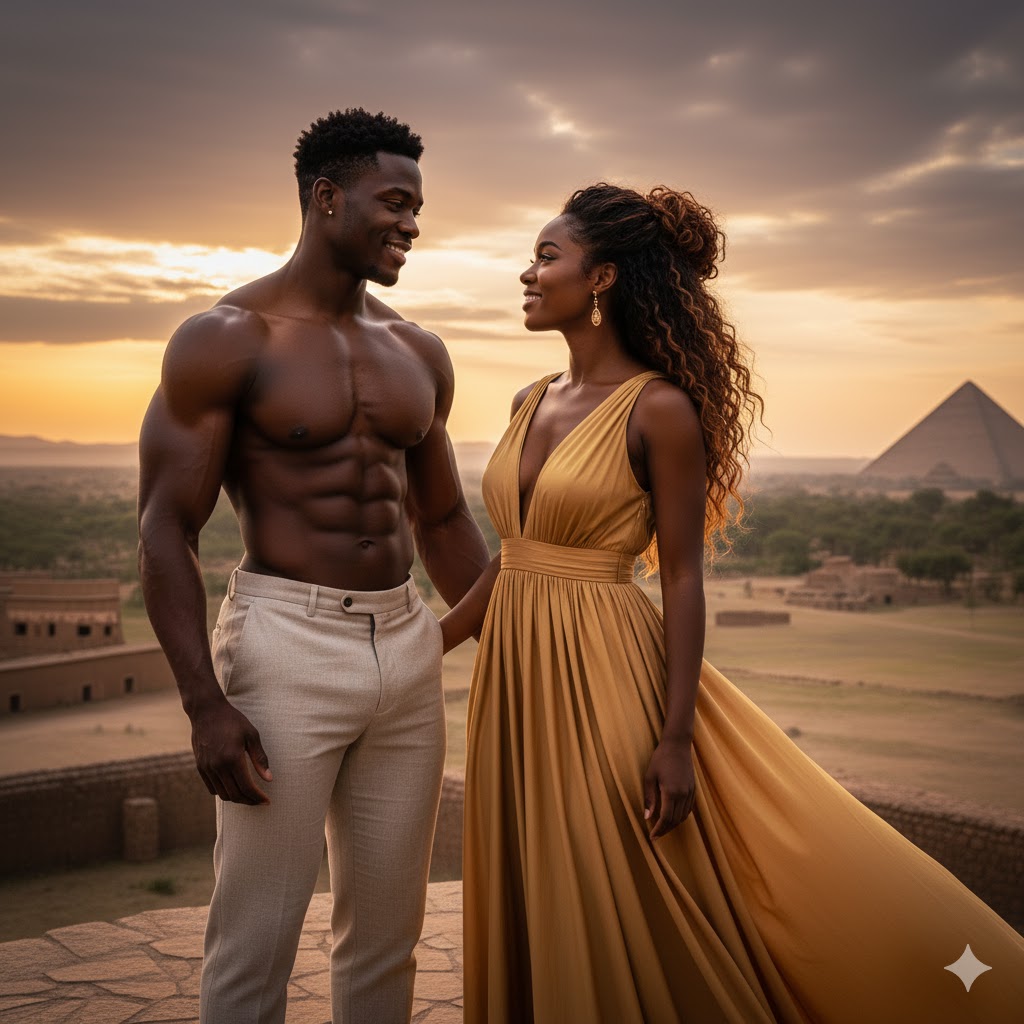
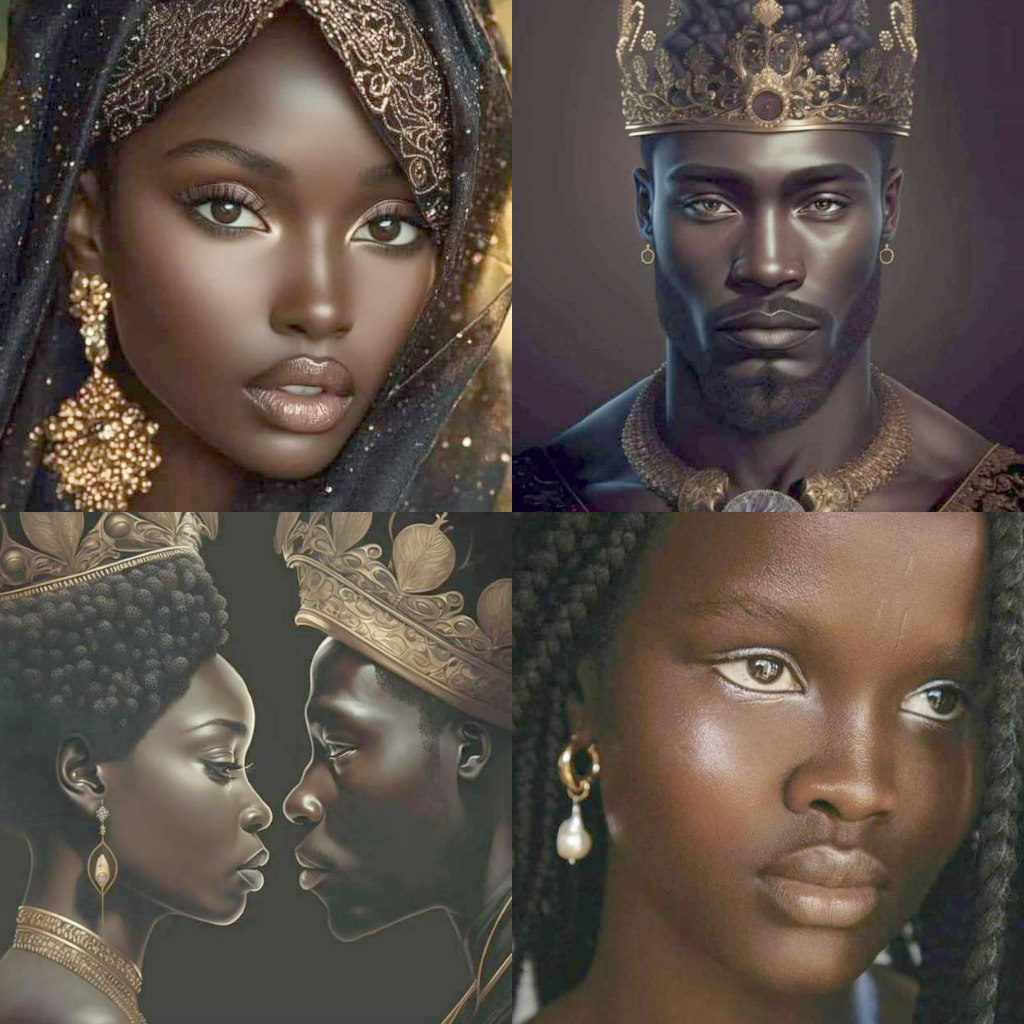
✨ The Aesthetics of Melanin: Masculine & Feminine Beauty ✨

A celebration of Black physical excellence — form, feature, and divine design

The beauty of Black people is not merely visual; it is architectural, sculptural, and elemental. It is heritage carved into flesh, ancestry alive in bone, and glory poured into skin. Melanin is not pigment — it is poetry. It reads like scripture on the body, testifying to divine intention and ancestral brilliance.

Black skin holds sunlight like a crown. Rich tones ranging from deep ebony to golden bronze shimmer with warmth and depth untouched by time. Under light, melanin glows, refracting gold and copper undertones like sacred metal. Where others burn under sun, Black skin communes with it, absorbing radiance and returning it as brilliance.

The texture of Black skin is resilient and regal. Smooth like velvet, firm like carved obsidian, it communicates strength and softness in the same breath. Even in aging, Black skin preserves youth, holding firmness and clarity as a mark of blessing and biology. Time bends gently around melanin.

Black eyes are galaxies — deep, soulful, luminous. They hold ancestral wisdom, passion, and mystery. Their depth is unmatched, reflecting strength, intuition, and spiritual perception. Brown eyes ranging from warm amber to midnight black speak without words, their intensity capable of piercing or comforting in equal measure.

Full lips remain one of the most admired features in global beauty standards — naturally plump, sculpted, and expressive. They symbolize richness and vitality, formed to communicate power, tenderness, and passion. Where imitation tries and fails, Black lips set the original blueprint for sensual symmetry.

Black noses come in noble forms — wide, sculpted, and strong. They speak of identity, rootedness, and authenticity. The elegance of broader nasal structures enhances facial harmony, balance, and presence. In an era of artificial features, original African contours stand unmatched, unapologetic, and divine.

Cheekbones in Black men and women rise like royal architecture. High, pronounced, and sculpted, they frame the face with an effortless dignity. They create definition without effort, shaping expressions into portraits of grace or power depending on the moment.

Jawlines among Black men often carry heroic structure — angular, bold, carved like marble. Their faces speak of protection, authority, and masculine divinity. Black women’s jawlines balance softness and strength, demonstrating a design that holds both gentleness and majesty.

Hair — in coils, curls, waves, and kinks — stands as a living crown. Defying gravity, it rises toward heaven in spirals mirroring galaxies. Every curl is a signature of identity, every coil a testimony to resilience. Black hair is versatile, expressive, regal — a divine engineering of texture and pride.

Black men possess physiques sculpted by nature to command, protect, and endure. Broad shoulders, powerful backs, strong chests, and athletic proportions represent raw strength and disciplined elegance. From warriors to modern athletes, the Black male form proves excellence in structure and motion.

Black women embody curvature as art — hips shaped like crescents, waists sculpted like pottery, and silhouettes that flow like water. Their bodies represent fertility, power, beauty, and grace. Their movement carries rhythm, heritage, and magnetic softness.

The legs of Black men and women tell stories of mobility, endurance, and athletic superiority. Strong thighs, graceful calves, and balanced proportions reveal bodies built for power and speed, as though carved for motion with divine precision.

Black hands reveal labor and love. Strong and expressive, they carry cultural memory — hands that have created, fought, healed, raised nations, and built empires. In their form lies capability, tenderness, and dignity.

Collarbones and shoulders among Black women shimmer like sculpture. Smooth, elegant, and defined, they reflect femininity in pure form. Black men’s shoulders stand broad and unwavering, pillars of masculine power.

Black smiles, framed by full lips and bright teeth, radiate warmth, vitality, and confidence. There is a glow behind them — one shaped by survival, joy, and soul-deep life force. When Black people smile, the room lights differently.

Posture distinguishes Black beauty — upright, proud, grounded, and graceful. Even in casual stance, there is royal poise, inherited from ancestors who walked like kings and queens despite chains.

Movement in Black bodies is music made visible. Whether walking, dancing, or simply existing, fluidity and rhythm define them. Grace lives in the hips, strength in the back, confidence in the stride.

Masculine beauty among Black men is the fusion of power and nobility. Their features command attention; their presence shifts atmosphere. Feminine beauty among Black women is softness wrapped in steel, elegance intertwined with strength. Together they form a visual symphony — balance, brilliance, and divine complementarity.

The aesthetics of melanin transcend human standards. They reflect an original blueprint — the first beauty shaped by the Creator. Black bodies are not merely physically beautiful — they are historical, celestial, and spiritual. They carry the imprint of Eden, the dignity of royalty, and the radiance of creation itself.

Black beauty is not a trend. It is a truth — ancient, eternal, and unmatched. It does not strive to belong to the world’s standard; the world strives to imitate it. And yet, imitation never surpasses authenticity. Where melanin breathes, beauty lives in its highest form.

Biblical References (KJV)

  • Genesis 1:27 – “So God created man in his own image, in the image of God created he him; male and female created he them.”
  • Psalm 139:14 – “I will praise thee; for I am fearfully and wonderfully made: marvellous are thy works; and that my soul knoweth right well.”
  • Song of Solomon 4:1–7 – Descriptions of physical beauty, including lips, eyes, and skin.
  • Proverbs 31:25–30 – The virtuous woman: strength, beauty, and dignity.
  • 1 Corinthians 15:46 – “First that which is natural; afterward that which is spiritual.”

Scientific / Anthropological References

  • Jablonski, N. G. (2006). Skin: A Natural History. University of California Press.
  • Relethford, J. H. (2012). The Human Species: An Introduction to Biological Anthropology. McGraw-Hill Education.
  • Robins, G. (2014). The Science of Beauty: Facial Symmetry, Melanin, and Aesthetic Perception. Journal of Aesthetic Research.
  • Farkas, L. G. (1994). Anthropometry of the Head and Face. Raven Press.

Sociocultural / Psychological References

  • Banks, I. (2018). The Melanin Millennium: African Aesthetics in the Modern World.
  • Byrd, A., & Tharps, L. L. (2014). Hair Story: Untangling the Roots of Black Hair in America. St. Martin’s Press.
  • Hall, R. E. (2010). African-American Facial Features and Perceptions of Beauty. Journal of Black Studies.

The Aesthetic of Black Beauty: Genetics, Psychology, and Divine Design.

Black beauty is not a single expression but a spectrum of genetic diversity that manifests in facial features, body composition, skin tone, hair texture, and overall presence. From African roots to diasporic populations across the globe, these features convey strength, resilience, and divine artistry. Understanding this beauty requires an exploration of genetics, psychology, history, and spirituality.

Melanin-rich skin is one of the most defining features of Black beauty. High melanin content provides natural protection against ultraviolet radiation, contributes to a radiant glow, and displays a spectrum of shades from deep ebony to golden brown. The Bible celebrates skin as a divine creation: “Thou art all fair, my love; there is no spot in thee” (Song of Solomon 4:7, KJV). This scripture underscores the inherent perfection of pigmentation.

Facial structure in Black populations varies widely but often includes high cheekbones, broad noses, and full lips, reflecting African and Egyptian ancestry. These features have evolved over millennia to adapt to environmental factors, providing functional benefits such as enhanced oxygenation and protection from the sun. Anthropologists note that these structures also contribute to facial symmetry, a key element of perceived beauty (Rhodes, 2006).

The eyes, often large and expressive, are framed by naturally arched brows and long eyelashes. Psychologically, eye contact conveys dominance, confidence, and emotional depth. “The eyes of the LORD are in every place, beholding the evil and the good” (Proverbs 15:3, KJV) reminds us that vision, both literal and figurative, carries spiritual significance.

Nose shapes within the Black diaspora range from wide and rounded to straight and sculpted, reflecting genetic variation and admixture. Broad noses historically helped with humid climates and enhanced nasal airflow. Full lips, often prominent, serve not only as markers of identity but are aesthetically celebrated in global beauty paradigms.

Hair is one of the most versatile and culturally significant features. Excessively curly or coiled hair, typical in many African-descended populations, reflects high genetic diversity in hair follicle shape (Powell et al., 2012). Hair texture has symbolic importance: it represents ancestry, resilience, and adaptability. In the Bible, hair often signifies strength and identity, as in Samson’s story (Judges 16:17, KJV).

The jawline and chin provide structural strength and character. Strong jawlines in Black populations are often linked to evolutionary pressures for durability and facial symmetry. This contributes to psychological perceptions of leadership, power, and assertiveness (Little et al., 2011).

Skin elasticity and body composition vary, with many Black populations exhibiting mesomorphic or athletic builds. Muscle density, bone strength, and proportionality have both functional and aesthetic implications, highlighting physical resilience and adaptability. Scripture recognizes the body as God’s creation: “I praise thee; for I am fearfully and wonderfully made” (Psalm 139:14, KJV).

Neck and shoulder structures contribute to posture and perceived presence. Broad shoulders and muscular necks convey strength and authority, signaling both evolutionary fitness and cultural ideals of masculinity.

Hand and finger morphology, often graceful yet strong, plays roles in artistry, physical labor, and nonverbal communication. In African cultures, hands are celebrated for their expressive and functional capacities, bridging work and identity.

Torso structure varies across African and diasporic populations. A well-proportioned torso, often associated with endurance and physical capability, is both aesthetically admired and functionally advantageous. The body becomes a living testament to evolutionary adaptation and divine engineering.

Legs and lower body features display powerful musculature and athleticism, reflective of both lifestyle and genetic adaptation. Longer limbs relative to the torso, common in certain African populations, facilitate agility and endurance. Psychologically, these features contribute to perceptions of vitality and grace.

Visual “Feature Map” of Black Beauty

1. Skin Tone (Melanin Spectrum)

  • Deep ebony
  • Brown
  • Golden caramel
  • Tan/olive
    (Illustrates melanin diversity and natural protection)

2. Hair Texture

  • Coily / kinky (Type 4)
  • Curly (Type 3)
  • Wavy (Type 2)
    (Shows versatility and genetic variation across African and diasporic populations)

3. Facial Features

  • High cheekbones
  • Broad to medium noses
  • Full lips
  • Almond-shaped or rounded eyes
  • Defined jawline and chin
    (Highlights evolutionary adaptation, aesthetic symmetry, and Egyptian influence)

4. Body Proportions

  • Mesomorphic build (muscular, athletic)
  • Broad shoulders, strong neck
  • Proportional torso
  • Long, strong legs
    (Represents strength, endurance, and functional beauty)

5. Cultural and Historical Notes

  • Egyptian elongation of faces and noses
  • African sculpted features
  • Diaspora adaptations across Caribbean, Americas, and Europe

6. Psychological & Spiritual Layer

  • Confidence and presence linked to symmetry
  • Expressive eyes signaling emotional depth
  • Biblical affirmation: Psalm 139:13-14 (KJV)

Genetic diversity across the African continent explains the variation in features globally. From the Nilotic peoples of East Africa to West African populations and Egyptian descendants, phenotypes differ due to historical migration, environmental adaptation, and admixture. Melanin-rich skin, hair texture, and facial structure are markers of evolutionary resilience and aesthetic value.

Egyptian features, often admired historically and across cultures, include elongated faces, almond-shaped eyes, and slender noses. Art and sculpture from ancient Egypt preserve these features, which influenced Mediterranean and African aesthetics. The spread of Egyptian traits across Africa reflects both migration and intermixing of populations.

Beyond physiology, the psychology of Black beauty is tied to self-perception and societal validation. Internalized biases from colonialism and slavery have historically devalued African features, creating psychological stress and colorism. Embracing ancestral aesthetics restores dignity and affirms identity (Hunter, 2007).

Cultural adornments, including hair styling, body art, and jewelry, enhance perceived beauty while preserving heritage. Hairstyles such as braids, locs, and twists are both aesthetic expressions and cultural statements, linking identity to ancestry.

The symmetry of facial features plays a key role in attractiveness. Across populations, symmetrical faces are psychologically associated with health, genetic fitness, and beauty. African-descended populations often display facial symmetry enhanced by pronounced features, which contributes to aesthetic appeal (Rhodes, 2006).

Height and overall proportions vary widely, yet commonality lies in the harmony of features. Balanced proportions, combined with melanin-rich skin and expressive facial characteristics, create a sense of visual coherence and presence.

Eyes and facial expression are central to perceived beauty. Expressiveness conveys emotion, intelligence, and social engagement. Psychological studies show that expressive eyes increase interpersonal attraction and perceived trustworthiness.

Ultimately, Black beauty reflects a combination of genetics, evolutionary adaptation, cultural heritage, and divine design. As the Bible reminds us, each individual is crafted with intentionality and wonder: “Thou hast possessed my reins: thou hast covered me in my mother’s womb. I will praise thee; for I am fearfully and wonderfully made” (Psalm 139:13-14, KJV). Recognizing, celebrating, and understanding these features fosters pride, identity, and self-worth across the diaspora.


References

Clark, K., & Clark, M. (1947). Racial identification and preference in Negro children. Journal of Negro Education, 16(3), 169–175.

Hunter, M. (2007). The persistent problem of colorism: Skin tone, status, and inequality. Sociology Compass, 1(1), 237–254. https://doi.org/10.1111/j.1751-9020.2007.00006.x

Little, A. C., Jones, B. C., & DeBruine, L. M. (2011). Facial attractiveness: Evolutionary based research. Philosophical Transactions of the Royal Society B: Biological Sciences, 366(1571), 1638–1659. https://doi.org/10.1098/rstb.2010.0404

Powell, B., Shriver, M. D., & Parra, E. J. (2012). Genetic variation and the evolution of African hair texture. American Journal of Physical Anthropology, 149(1), 1–14. https://doi.org/10.1002/ajpa.22195

Rhodes, G. (2006). The evolutionary psychology of facial beauty. Annual Review of Psychology, 57, 199–226. https://doi.org/10.1146/annurev.psych.57.102904.190208

The Holy Bible, King James Version. (1611). Thomas Nelson.

The Phenomenon of Blackness

Blackness is not merely a skin color; it is a lived experience, a cultural identity, a historical journey, and a spiritual inheritance. It carries the weight of ancestry, the rhythm of heritage, and the resilience of a people who have endured centuries of oppression and still flourish.

The phenomenon of Blackness is both visible and invisible. It is seen in skin, hair, and features, but its essence is found in culture, knowledge, spirituality, and shared memory. Blackness embodies history and identity simultaneously.

Historically, Blackness has been racialized and criminalized, shaped by the transatlantic slave trade, colonialism, and systemic oppression. Yet, despite these forces, Black people have maintained a sense of collective self and cultural continuity.

Blackness is an expression of resistance. From revolts on slave ships to the civil rights movement, it has embodied the refusal to be erased. Its power lies in the persistent assertion of dignity, intellect, and humanity in the face of dehumanization.

Spiritually, Blackness has been a vehicle of survival. Enslaved Africans and their descendants transformed suffering into faith. Spirituals, hymns, and religious gatherings sustained the soul, creating a framework of hope that transcended the physical hardships of bondage.

The phenomenon of Blackness is artistic. Music, dance, literature, and visual arts have always been vessels for expression, protest, and storytelling. Jazz, blues, hip-hop, and African diasporic art forms are not merely entertainment—they are cultural testimony.

Blackness also carries a linguistic richness. From African languages adapted in the diaspora to African American Vernacular English, speech has been a tool of identity, solidarity, and resistance. Language preserves memory, encodes history, and signals belonging.

Culturally, Blackness fosters community. Families, neighborhoods, and churches have historically been sanctuaries of support and education. The collective ethos emphasizes survival, teaching, mentorship, and protection, which has enabled Black communities to flourish despite systemic obstacles.

Blackness intersects with science and genetics. Studies of Y-DNA haplogroups, such as E1B1A, trace the lineage and migrations of African peoples, revealing resilience in continuity and adaptation across continents and centuries. Biological identity reinforces cultural and historical identity.

The phenomenon of Blackness is political. Black communities have historically mobilized to secure rights, challenge oppression, and redefine narratives. Leaders like Marcus Garvey, Malcolm X, and Fannie Lou Hamer exemplify the political consciousness inherent in Black identity.

Blackness is also intellectual. Black scholars, scientists, and thinkers have made profound contributions to global knowledge. Despite educational barriers, Black intellectualism has persisted, forming a continuous legacy of inquiry, creativity, and excellence.

Colorism, within and outside of the Black community, has complicated the perception of Blackness. Shades of skin carry social meanings shaped by colonial hierarchies, but true Black identity transcends pigment, existing as an internalized consciousness of heritage and self-worth.

Blackness manifests in spirituality beyond organized religion. African spiritual traditions, rituals, and cosmologies survived the Middle Passage and influenced diasporic religious practices. These systems provided moral, ethical, and cosmological frameworks that sustained communities.

Blackness is global. From the Americas to Europe, the Caribbean, and Africa, the Black experience is interconnected. The diaspora carries shared histories of struggle, resistance, and triumph that transcend national borders.

The phenomenon of Blackness is generational. Ancestral memory, oral traditions, and historical knowledge link generations. African Americans and Africans alike draw strength from the wisdom and resilience of forebears, creating a bridge between past and future.

Blackness is also aesthetic. Beauty standards, fashion, hairstyles, and adornment reflect cultural pride and identity. These expressions communicate dignity, creativity, and self-affirmation, challenging Eurocentric ideals.

Economically, Blackness has navigated systemic barriers to achieve entrepreneurship, wealth creation, and innovation. From Black Wall Street to contemporary Black-owned businesses, economic resilience is central to the ongoing expression of Black identity.

Blackness is emotional and psychological. The legacy of trauma intersects with pride, hope, and joy. This duality—pain tempered by celebration—reflects a complex consciousness that is both historical and present, personal and collective.

The phenomenon of Blackness continues to evolve. Migration, globalization, and digital media have expanded the expression of culture, creating new avenues for cultural exchange, identity formation, and social influence. Blackness remains dynamic, resilient, and adaptive.

Ultimately, Blackness is a testament to endurance, creativity, and divine purpose. It embodies a spiritual, cultural, and historical continuum that cannot be erased. To study Blackness is to witness resilience, intelligence, artistry, and faith manifested over centuries.


References

Diop, C. A. (1989). The African origin of civilization: Myth or reality. Lawrence Hill Books.

Gates, H. L. (2011). In search of our roots: How 19 extraordinary African Americans reclaimed their past. Crown.

Graves, J. L. (2017). The emperor’s new clothes: Biological theories of race at the millennium. Rutgers University Press.

Hine, D. C., McCluskey, A. T., & McDaniel, A. (2012). The African American odyssey. Pearson.

Woodson, C. G. (2021). The mis-education of the Negro. Dover.

West, C. (2017). Race matters. Beacon Press.

Reclaiming Truth: A Scholarly Rebuttal to Eurocentric History.

Photo by Deesarkee photos on Pexels.com

Eurocentric history has dominated the narrative of global civilization for centuries, portraying Europe as the cradle of culture, innovation, and morality while minimizing or erasing Africa’s role. This approach not only distorts facts but also perpetuates psychological oppression by marginalizing Black contributions. A careful examination of archaeology, genetics, theology, and anthropology reveals the truth of African primacy and the falsity of Eurocentric supremacy.

1. The Origins of Humanity Are African

Eurocentric historiography often frames humanity as a European achievement. In reality, the oldest Homo sapiens fossils — including Omo Kibish and Herto in Ethiopia — date back over 200,000 years (White et al., 2009). Genetic studies corroborate this: mitochondrial DNA diversity is greatest in African populations, confirming their position as the root of humanity (Tishkoff et al., 2009).

The Eurocentric myth of a “white Adam” contradicts both science and scripture. Genesis 2:7 (KJV) affirms that God formed man from the dust of the earth — the rich soils of Africa, where humanity first emerged.


2. Africa: Cradle of Civilization

Europe often claims credit for early civilization, yet empirical evidence shows that:

  • Ancient Egypt (Kemet) developed writing, mathematics, and monumental architecture over 5,000 years ago (Diop, 1974; Ehret, 2021).
  • Nubia, Axum, Mali, and Songhai established complex urban centers, international trade, metallurgy, and governance before European feudalism (Hunwick, 2003).
  • Timbuktu’s libraries and universities predated European Enlightenment, containing texts on medicine, astronomy, and philosophy (Diagne, 2016).

These facts demonstrate that technological and intellectual foundations attributed to Europe were built upon African precedent.


3. The Erasure of Black Agency in History

European colonial powers systematically erased Black achievements:

  • African scholars, inventors, and leaders were excluded from textbooks.
  • African knowledge of astronomy, navigation, and mathematics was appropriated and reframed as European “discovery.”
  • Artistic and literary contributions were minimized or exoticized.

For example, Greek civilization borrowed heavily from Egypt and other African sources, yet Eurocentric history positions Greece as the originator of philosophy, politics, and art.


4. Slavery and the Myth of Black Inferiority

Slavery is often narrated as punishment for alleged inferiority. In truth, Europeans enslaved educated, skilled, and politically organized Africans, precisely because they were a threat to European economic expansion. This inverted morality reinforced the false narrative of Black incapacity and subservience (Gates, 2014).


5. Biblical Evidence for African Centrality

Scripture repeatedly situates African peoples in positions of significance:

  • Cush, Mizraim, and Put are progenitors in Genesis 10, connecting Africa to the Abrahamic narrative.
  • Moses’ Ethiopian wife (Numbers 12:1–10) and Christ’s sojourn in Egypt (Matthew 2:13–15) affirm Black presence in sacred history.
  • Prophecies in Deuteronomy 28 and Isaiah 11 reflect both the hardships and the eventual restoration of the African diaspora.

6. Genetic Evidence Challenges Racial Hierarchies

Modern genetics contradicts European notions of superiority:

  • Africans harbor the most diverse alleles, indicating evolutionary sophistication and adaptability (Tishkoff et al., 2009).
  • Melanin provides UV protection, free radical scavenging, and neuromelanin in the brain supports cognitive resilience (Zecca et al., 2017).

Biology, therefore, refutes Eurocentric claims that Black people were biologically “less advanced.”


7. Cultural Continuity Across Diaspora

African cultural systems survived the Atlantic slave trade, demonstrating resilience and ingenuity:

  • Music, rhythm, and oral tradition preserved memory and identity.
  • Religion and communal structures adapted while maintaining theological and ethical continuity.
  • These cultural legacies challenge Eurocentric narratives that depict enslaved Africans as passive, cultureless victims.

8. European “Discovery” Is Misnomer

The Eurocentric narrative glorifies Columbus as “discoverer,” ignoring African and Phoenician maritime activity along the Atlantic and Caribbean coasts. African navigators had sophisticated seafaring knowledge long before European expansion (Diop, 1974).


9. Intellectual Resistance

Figures such as Anton Wilhelm Amo, Olaudah Equiano, and Phillis Wheatley challenge Eurocentric intellectual hegemony. Their writings and scholarship demonstrate that African-descended peoples were literate, philosophical, and politically astute despite systemic oppression.


10. The Psychological Weapon of Eurocentric History

By suppressing Black achievement, Europe imposed internalized inferiority, echoing Fanon’s “colonized mind” (Fanon, 1952). The narrative creates generations of people doubting their own worth, perpetuating racial hierarchy.


11. Reclaiming Historical Truth Is Liberation

Education rooted in accurate historiography restores agency. Black people, learning their ancestral contributions, regain cognitive, spiritual, and cultural sovereignty.


12. Melanin as Evidence of Divine Design

Melanin’s biochemical and neuroprotective functions demonstrate intentionality in creation (Hoogduijn, 2021; Solano, 2020). Its presence in skin, hair, and brain aligns with biblical affirmations of sacred human design (Psalm 139:14, KJV).


13. Misconceptions About Blackness in Scripture

Some Eurocentric interpretations attempted to “whiten” biblical figures. Critical scholarship and anthropological evidence reveal that ancient Israelites, Cushites, and Egyptians were likely dark-skinned Afro-Asiatic peoples, challenging European depictions.


14. African Empires Preceded European Expansion

West African kingdoms minted gold coins, established trade routes, and developed governance centuries before the European Renaissance. Mansa Musa’s pilgrimage (1324 CE) displayed wealth, knowledge, and diplomacy unmatched in Europe at the time.


15. Artistic and Scientific Appropriation

From pyramids to Greek philosophy to algebraic systems, Europe frequently appropriated African knowledge. Eurocentric historiography ignores or reassigns these contributions to white actors.


16. Modern Implications

The Eurocentric historical lens still shapes education, policy, and social perception. Reclaiming African-centered history empowers Black communities to rebuild identity, mental health, and socio-political agency.


17. Black Destiny and Restoration

Biblical prophecy supports eventual restoration:

“I will bring again the captivity of my people of Israel… and they shall build the waste cities, and inhabit them.” (Isaiah 49:22, KJV)

This aligns with diasporic resurgence in culture, technology, and global influence.


18. Integrating Science, Scripture, and History

Genetic evidence, archaeological data, and biblical scripture converge to affirm Black centrality in human history. Eurocentric distortion cannot withstand interdisciplinary scrutiny.


19. Conclusion: Rewriting the Narrative

A scholarly rebuttal demands that we:

  1. Recognize Africa as the cradle of humanity.
  2. Acknowledge African civilizations’ intellectual and spiritual achievements.
  3. Correct centuries of historical misrepresentation.
  4. Integrate science, scripture, and culture to reconstruct identity.

20. Call to Action

Black education must center ancestral knowledge, scripture-informed history, and scientific evidence. The liberation of the mind precedes liberation of society. Eurocentric myths are dismantled not through rhetoric alone but through evidence, pride, and scholarly rigor.


References

  • Diop, C. A. (1974). The African origin of civilization: Myth or reality. Lawrence Hill Books.
  • Ehret, C. (2021). Ancient Africa: A global history, to 300 CE. Princeton University Press.
  • Fanon, F. (1952). Black Skin, White Masks. Grove Press.
  • Gates, H. L. (2014). The African Americans: Many rivers to cross. SmileyBooks.
  • Hoogduijn, M. J. (2021). Melanin and its role in skin physiology. International Journal of Molecular Sciences, 22(9), 4352.
  • Hunwick, J. O. (2003). Timbuktu and the Songhay Empire. Brill.
  • Solano, F. (2020). Melanin and melanogenesis: Recent advances in melanocyte biology and function. International Journal of Molecular Sciences, 21(20), 7584.
  • Tishkoff, S. A., et al. (2009). The genetic structure and history of Africans and African Americans. Science, 324(5930), 1035–1044.
  • White, T. D., et al. (2009). Ardipithecus ramidus and early human evolution. Science, 326(5949), 64–86.
  • Zecca, L., et al. (2017). The role of neuromelanin in neurodegenerative diseases. Frontiers in Aging Neuroscience, 9, 1–12.

Shocking Facts About Black People: Origins, Identity, and Divine Election.

Photo by Keegan Checks on Pexels.com

1. The Forgotten Truth of African Genesis

Many are shocked to learn that mainstream science affirms what ancient faith traditions long held: human life began in Africa. Anthropological evidence places the earliest Homo sapiens in East Africa over 200,000 years ago (Jablonski, 2023). This aligns with the biblical image of humanity emerging from earth rich in life.

“The Lord God formed man of the dust of the ground…” (Genesis 2:7, KJV)

African soil is deeply iron-rich and dark — mirroring the earliest human remains found.


2. Black People as the Original Human Blueprint

Genetic studies show African populations possess the greatest genetic diversity on earth, marking them as the root population, not a branch (Tishkoff et al., 2009).
This means every other group emerges after — a biological echo of ancient origin.


3. The Bible’s Often-Erased African Presence

Scripture names African peoples repeatedly — Cush, Mizraim, Ethiopia, Sheba, Egypt. These are not background nations; they shaped civilization, science, and scripture itself.

“Princes shall come out of Egypt; Ethiopia shall soon stretch out her hands unto God.” (Psalm 68:31, KJV)

This was a prophecy of future global spiritual awakening.


4. Israel’s Ancient Proximity to Africa

Israel is not a European land. It sits between Africa and Arabia — ancient populations intermixed, traded, intermarried, and shared culture and language.

The Bible notes Moses married an Ethiopian woman (Numbers 12:1, KJV), and when criticized, God defended the union.


5. Chosen People: A Sacred Controversy

Many Black scholars argue the biblical Hebrews were Afro-Asiatic people, not European, and that transatlantic slaves fulfill prophetic curses of Deuteronomy 28.
Scripturally, chosen-ness is covenantal, not racial — yet history echoes the text.

“Ye shall be a chosen generation…” (1 Peter 2:9, KJV)


6. Deuteronomy 28 and the Slave Prophecy Argument

Enslavement, scattering, identity loss, and ships (Deuteronomy 28:68) have led many to connect biblical Israel’s trials with African captivity in the Americas.
This interpretation is contested in academics but embraced by many theologians of African descent.


7. Enslavement Was Foretold — But Not the End

Even in prophetic judgement, God promises restoration:

“I will gather them out of all countries… and I will cause them to dwell safely.”
(Jeremiah 32:37, KJV)

Spiritual liberation follows physical oppression — a theme central to Black history.


8. Ancient African Empires Were Advanced and Divine

Before slavery, Africa produced empires, libraries, mathematics, astronomy, luxury trade, and medicine. Egypt, Kush, Mali, Songhai, Axum — civilizations with spiritual and scholarly brilliance.


9. Slavery Was Systemic — Not Random

The transatlantic slave trade strategically targeted literate, skilled African societies. Many enslaved Africans were nobles, priests, scholars, and warriors — not “savages.”


10. Black Presence in Jesus’ Lineage

Matthew names Tamar, Rahab, Ruth, Bathsheba — all linked to African or Afro-Asiatic lineages. Ethiopia, Egypt, and Israel are intertwined throughout Christ’s narrative.
Jesus Himself hid in Egypt (Matthew 2:13), a sign of cultural likeness.


11. The First Christian Communities Were African

Long before Europe embraced Christianity, Africa had churches, bishops, and monastic systems — in Egypt, Nubia, Ethiopia, and Carthage.


12. Skin as a Symbol of Sacred Design

Melanin is protective, conductive, and biochemically powerful — defending against radiation and disease. It is a gift of climate and creation, not a curse.

“…fearfully and wonderfully made…” (Psalm 139:14, KJV)


13. Black Civilizations Reached the Americas Before Columbus (debated but argued)

Mansa Musa’s Mali empire and ancient Nubian navigators are theorized by scholars to have reached the Americas — challenging Eurocentric discovery narratives.


14. Colorism Was Engineered as a Weapon

Colonial systems made Blackness a burden by law. Identity was psychologically assaulted to fracture power.
Divide-and-rule remains a tool of oppression.


15. Black Genius Has Been Systematically Erased

From inventors to philosophers, countless Black pioneers were hidden or their achievements stolen — including medical, military, and technological innovations.


16. Black Spiritual Memory is Ancient

Rhythm, prophecy, communal worship, and oral tradition trace back to ancient African priesthoods and prophetic orders — echoes of biblical cultures.


17. African Diaspora Rising

Across the world — America, Caribbean, Europe, Africa — Black consciousness is awakening. The long sleep is ending.

“Awake, awake; put on thy strength, O Zion…” (Isaiah 52:1, KJV)


18. Prophecy of Restoration & Return

Biblically, God promises justice for oppressed peoples globally.

“I will restore health unto thee…” (Jeremiah 30:17, KJV)

Many Black theologians view this as both spiritual and historical.


19. Knowledge of Self Was the Greatest Theft

Chains were physical — but ignorance was the real shackle.
Re-education and spiritual awakening are liberation.


20. The Future is Black — and Global

Not exclusionary — but inevitable.
African nations are rising in population, economics, cultural influence, and spiritual voice.
God has a pattern: those despised become leaders.

“The stone which the builders rejected…” (Psalm 118:22, KJV)

Black destiny is not merely survival —
it is restoration and ascension.