Ladies, first and foremost, remember that your life is in the hands of a loving God. Seek Him first in all things, and pray earnestly for His will to be done in your life. By centering your relationship with Him, you create a foundation that guides your choices, relationships, and personal growth (Matthew 6:33, KJV).
Faith is not just a Sunday ritual; it is a daily practice that informs every decision you make. As women, our spiritual strength sets the tone for our emotional, mental, and social well-being. Engaging with scripture, prayer, and worship equips us to navigate life’s challenges with wisdom and grace (Hebrews 11:1).
Femininity is a divine gift. It is not defined solely by appearance, style, or societal expectations, but by character, poise, and the ability to influence with gentleness and confidence. Proverbs 31:25 reminds us that strength and honor are her clothing, and she rejoices in the days to come. Embracing your femininity means recognizing your inherent worth in God’s eyes.
Understanding your purpose is crucial for shaping your future. Life can present distractions, temptations, and pressure to conform to worldly standards. By remaining anchored in faith, you can discern what aligns with God’s plan versus what is fleeting or superficial (Jeremiah 29:11).
Healthy boundaries are essential in protecting your heart, time, and emotional energy. Setting limits in friendships, romantic relationships, and professional spaces demonstrates self-respect and ensures that your focus remains on growth and godly priorities (Proverbs 4:23).
Education and personal development are acts of stewardship over your God-given talents. Pursue knowledge, skill-building, and experiences that broaden your capacity to serve, lead, and contribute meaningfully to society. Wisdom is more valuable than gold, and a disciplined mind honors God (Proverbs 3:13–14).
Sisterhood is powerful when nurtured with love, encouragement, and accountability. Surround yourself with women who uplift you, challenge you to grow, and inspire you to walk in faith. As iron sharpens iron, supportive relationships strengthen character and purpose (Proverbs 27:17).
Emotional intelligence is a cornerstone of mature femininity. Understanding your feelings, responding thoughtfully, and navigating conflict with grace reflects both wisdom and self-control. Galatians 5:22–23 highlights the fruit of the Spirit, including love, peace, and patience—qualities that sustain healthy interactions.
Self-respect and self-worth begin with recognizing your divine identity. You are fearfully and wonderfully made, created in God’s image (Psalm 139:14). No external validation can replace the confidence that comes from understanding your spiritual value.
Practical wisdom in dating and relationships protects your heart and preserves your future. Seek partners who share your values, respect your boundaries, and pursue godly intimacy. Avoid situations that compromise your integrity or emotional well-being (1 Corinthians 6:18–20).
Financial literacy and independence empower women to steward resources responsibly. Money is a tool to support your goals, generosity, and stability. Proverbs 31:16 describes the virtuous woman as one who considers a field and buys it; wise financial management reflects discernment and preparation.
Health and self-care are spiritual responsibilities as well as physical necessities. Treat your body as a temple of the Holy Spirit, honoring God through nutrition, exercise, and rest (1 Corinthians 6:19–20). Holistic wellness ensures energy, clarity, and longevity for life’s pursuits.
Your voice matters. Express your ideas, dreams, and convictions with confidence and humility. Women who speak with clarity and kindness can influence communities, workplaces, and families, demonstrating the power of godly communication (Proverbs 31:26).
Faith equips you to face trials without despair. Challenges will come, but a prayerful and trusting heart can endure hardship with hope. Romans 12:12 encourages rejoicing in hope, patience in tribulation, and steadfastness in prayer.
Mentorship is invaluable. Seek guidance from older, experienced women of faith, and be willing to mentor younger sisters in turn. This generational exchange strengthens both individual lives and the broader community (Titus 2:3–5).
Creativity and expression honor God when used with intention. Whether through art, music, writing, or entrepreneurship, your talents can inspire others and glorify the Creator. Colossians 3:23 reminds us to work heartily as for the Lord, not men.
Resilience is cultivated through prayer, patience, and perseverance. Life may present setbacks, but steadfast faith and a positive mindset ensure that obstacles become lessons and opportunities (James 1:2–4).
Forgiveness frees the heart. Holding onto bitterness or past hurt limits your potential and blocks God’s plan for your life. Ephesians 4:31–32 calls us to put away anger, bitterness, and malice, and to be kind and forgiving.
Gratitude transforms perspective. Daily recognition of God’s blessings fosters joy, humility, and contentment, shaping a mindset that thrives even in adversity (1 Thessalonians 5:18).
Finally, embrace your future with courage and faith. God’s plans are perfect, and trusting Him allows you to walk confidently into your purpose. Commit your ambitions, relationships, and aspirations to Him, and watch as He orchestrates a life of blessing, influence, and fulfillment (Jeremiah 29:11).
Listen, ladies — it is not wrong for a woman to desire a man who provides for her. My late husband always reminded me that provision is a man’s duty and honor, not a burden. When a man loves a woman, he does not see caring for her needs as a chore but as a privilege that reflects his role as leader and protector.The Bible is clear about this responsibility. First Timothy 5:8 warns, “But if any provide not for his own, and especially for those of his own house, he hath denied the faith, and is worse than an infidel.” This is not a light statement — it means that failing to provide for one’s household is a spiritual and moral failure. When a man provides, he demonstrates sacrificial love, mirroring Christ’s care for the church (Ephesians 5:25–28). He creates an environment where a woman feels safe, secure, and valued, allowing her to flourish in her calling. Provision is not just financial — it is emotional, spiritual, and physical care that establishes stability for the entire family.Women should not feel guilty for expecting this. It is not greed; it is alignment with God’s design for marriage. A man’s willingness to provide reveals his maturity, character, and readiness for covenant commitment.
The modern cultural push for “50/50 relationships” promises fairness and equality between partners, yet many women discover that this model can still leave them emotionally, financially, and spiritually depleted. On the surface, splitting bills, chores, and responsibilities seems fair, but when a man avoids leadership and provision, the relationship quickly becomes unbalanced. The woman may end up carrying the weight of both provider and nurturer, which goes against the biblical design for marriage.
God’s Word establishes a clear picture of headship and provision. Ephesians 5:25–28 commands husbands to love their wives “even as Christ also loved the church, and gave himself for it.” Christ did not share the burden of salvation equally with the church—He bore it entirely. Likewise, a husband’s role is one of sacrificial leadership, taking primary responsibility for the welfare of his wife and household. When a man shirks this responsibility, the woman becomes vulnerable to exhaustion and resentment.
The 50/50 model also creates confusion in roles. When financial and emotional labor is divided down the middle, leadership often becomes negotiable, leading to power struggles or passivity. Scripture does not teach mutual passivity but calls men to lead with humility and love. A man who abdicates this role leaves a vacuum that the woman may feel forced to fill, creating a dynamic that undermines trust and respect.
Psychology sheds light on why such arrangements often fail. Research on learned helplessness shows that when one partner refuses to carry their share of responsibility, the other partner may overfunction, doing more and more to keep the relationship afloat. Over time, this can lead to emotional burnout, anxiety, and even depression. The imbalance of power can create a subtle form of exploitation, where one partner benefits at the expense of the other.
Financially, many women have found themselves paying half the bills, contributing to a man’s dreams, and even funding his education—only to have him leave once he is stable. This pattern is so common that it has been discussed in popular media and relationship studies. The emotional toll is devastating because the woman not only loses the relationship but also feels robbed of the investment she made into his life.
One well-known media example is the breakup of singer Mary J. Blige’s marriage to Kendu Isaacs. During the divorce, it became public that Blige had supported Isaacs financially for years, only for him to allegedly misuse funds and engage in infidelity. This public case highlights the painful reality many women face when they invest financially in men who do not share the same loyalty or commitment (Gonzalez, 2017).
Biblically, men are called to be providers. First Timothy 5:8 warns, “But if any provide not for his own, and specially for those of his own house, he hath denied the faith, and is worse than an infidel.” This is a serious charge: a man who refuses to take responsibility for his household is living in disobedience. A 50/50 arrangement may seem modern and progressive, but if it allows a man to neglect his God-given duty, it ultimately harms the spiritual order of the home.
Women can protect themselves from one-sided emotional labor by establishing clear boundaries early in relationships. If a man expects financial partnership, she must ask whether he is also prepared to lead spiritually, emotionally, and sacrificially. Leadership is not domination; it is service. If he only wants to split bills but not bear the weight of provision, he is asking for partnership without accountability.
Self-protection also means paying attention to patterns of behavior. A man who frequently “borrows” money, avoids discussing finances, or becomes defensive when asked about spending habits may be signaling irresponsibility. Proverbs 27:12 says, “A prudent man foreseeth the evil, and hideth himself.” Women must be vigilant and not ignore early warning signs.
Another safeguard is financial independence before marriage. Women should maintain their own savings, credit, and emergency fund until they are in a covenant where mutual provision is clear. This is not distrustful but wise stewardship. If the relationship ends, she will not be left destitute.
From a psychological perspective, women must resist the trap of overfunctioning. Doing more than your fair share may feel noble, but it fosters resentment and reinforces a man’s avoidance of growth. Boundaries are not punishment; they are invitations for the man to step up. If he does not rise to the occasion, that reveals his character.
Spiritually, women must pray for discernment. James 1:5 promises wisdom to those who ask God. Discernment helps a woman recognize whether a man’s intentions are honorable or self-serving. Godly headship is seen in consistent character, not just charm or romantic gestures.
Teaching men biblical manhood is also part of the solution. Men must understand that provision is not optional but part of reflecting Christ’s image. Churches and mentors should call men to accountability, teaching them to view marriage not as a financial arrangement but as a covenant requiring sacrifice.
For women already in 50/50 relationships, communication is key. Honest conversations about expectations, finances, and future plans can bring clarity. If the man is unwilling to discuss or adjust, she must decide whether the relationship is sustainable long-term.
Emotional labor must also be addressed. Many women carry the emotional weight of the relationship—planning dates, managing household tasks, and maintaining communication—while the man coasts. This imbalance can be corrected by delegating responsibilities or refusing to do tasks he is capable of doing.
Ultimately, the illusion of 50/50 relationships is that they are fair. True fairness is not mathematical equality but mutual giving according to each person’s capacity and role. A godly man will give more than 50% because he loves sacrificially. A godly woman will respond with respect and support, creating a dynamic of harmony rather than competition.
Relationships thrive when both partners embrace their biblical roles. The man leads, provides, and protects. The woman nurtures, supports, and helps. When these roles are honored, there is peace. When they are reversed or neglected, there is confusion and pain.
50/50 Relationship vs. Biblical Covenant Relationship
Negotiated or shared — often leaves a power vacuum or power struggle.
The man lovingly leads, sacrifices, and takes spiritual responsibility.
Provision
Split equally — may leave the woman vulnerable if he withdraws support.
The man provides for his household (1 Tim. 5:8) and prioritizes her well-being.
Emotional Labor
Often falls disproportionately on the woman (planning, nurturing, problem-solving).
Shared — the man takes initiative to care for her emotional needs.
Conflict Resolution
Can become transactional (“I did my half, you do yours”).
Built on grace, humility, and sacrificial love, not score-keeping.
Financial Security
Depends on both parties keeping their share. If one stops, the other is overburdened.
The husband bears the main responsibility so the wife feels secure.
Spiritual Direction
Usually absent or inconsistent; spiritual growth is optional.
The man leads prayer, worship, and sets a Christ-centered tone for the home.
View of Roles
Gender roles are blurred or dismissed.
Roles are distinct yet complementary — the man leads, the woman supports.
Decision-Making
Requires constant negotiation; can breed resentment.
Man leads with humility, consults his wife, and seeks God’s will.
Motivation for Giving
Conditional — “I will give my half if you give yours.”
Unconditional — he loves and gives first, as Christ gave to the church.
Long-Term Stability
Can collapse if one partner stops contributing or loses interest.
Endures through trials because it is built on covenant, not contract.
The call to women is not to settle for half-hearted leadership or a man who uses partnership as an excuse to avoid responsibility. Your worth is too great to finance your own exploitation. Trust God to send a man who reflects Christ’s love—a man who gives, leads, and sacrifices.
References
Holy Bible, King James Version (KJV).
Gonzalez, S. (2017). Mary J. Blige on Divorce: “I’m Gonna Be Just Fine.” Billboard.
Beck, J. S. (2021). Cognitive Behavior Therapy: Basics and Beyond. Guilford Press.
Cloud, H., & Townsend, J. (2017). Boundaries in Dating. Zondervan.
Smith, C. A. (2020). The Psychology of Power Imbalance in Romantic Relationships. Journal of Family Psychology, 34(4), 512–523.
This photograph is the property of its respective owner. No copyright infringement intended
Ladies – The matters of the heart are among the most sacred and sensitive aspects of a woman’s spiritual and emotional life. Many women carry wounds from abandonment, betrayal, rejection, and unmet expectations, often wondering if a man will ever truly love them in a way that heals rather than harms. Yet Scripture teaches that before any man can love us well, we must first understand the nature of God’s love, because all healthy love flows from Him. This series is an encouragement to women to seek not just romance, but restoration, wholeness, and divine alignment with a man who has a heart after God.
A woman gets over a broken heart not by erasing the pain, but by healing through it with truth, time, and transformation. Healing is not denial; it is intentional restoration of the soul, the mind, and the spirit. Biblically and psychologically, heartbreak is a form of grief—you are mourning not just a person, but a dream, an attachment, and a future you imagined. That loss must be processed, not suppressed.
First, she must allow herself to grieve honestly. Many women rush to “be strong” and pretend they are fine, but unprocessed pain becomes emotional scars. Scripture reminds us that even Jesus wept (John 11:35). Tears are not weakness; they are release. A broken heart needs permission to feel before it can heal.
Second, she must detach emotionally and spiritually from what hurt her. This includes cutting unhealthy soul ties, limiting contact, and resisting the urge to revisit memories that reopen wounds. From a psychological standpoint, attachment bonds activate the same neural pathways as addiction—so withdrawal is real. Healing requires space (Proverbs 4:23).
Third, she must rebuild her identity outside of the relationship. Many women lose themselves in love—adopting someone else’s needs, habits, and emotional rhythms. Heartbreak forces a woman to ask: Who am I without him? Healing begins when she reconnects to her own purpose, gifts, and calling (Jeremiah 29:11).
Fourth, she must release forgiveness, not for his benefit, but for her freedom. Forgiveness is not excusing behavior—it is choosing not to let pain control your future. Unforgiveness keeps emotional ties alive. Forgiveness breaks the psychological loop of replaying the trauma (Ephesians 4:31–32).
Fifth, she must renew her mind. The thoughts that follow heartbreak are often distorted: I wasn’t enough. I’ll never love again. Everyone leaves. These are trauma-based beliefs, not truth. Scripture teaches, “Be ye transformed by the renewing of your mind” (Romans 12:2). Healing requires replacing lies with reality.
Sixth, she must return to God as her emotional source. Many women unknowingly turn men into emotional idols—looking to them for validation, security, and self-worth. When the relationship ends, so does the emotional foundation. God restores the heart by becoming the primary source of love again (Psalm 62:5).
Seventh, she must set new boundaries. Heartbreak often reveals patterns—choosing unavailable men, ignoring red flags, over-giving, or tolerating disrespect. Growth comes when pain becomes wisdom. Boundaries are not walls; they are filters for future peace.
Eighth, she must move her body and environment. Trauma is stored in the nervous system, not just the mind. Exercise, sunlight, walking, cleaning, and changing surroundings help regulate emotions and reduce depressive symptoms. Healing is physiological as well as spiritual.
Ninth, she must stop romanticizing the past. The brain tends to remember the good and minimize the harm. This is called selective memory bias. Healing requires remembering the truth, not the fantasy. If it was healthy, it wouldn’t have broken her.
Tenth, she must stop seeking closure from the person who broke her. Closure comes from within, not from conversations, apologies, or explanations. A person who couldn’t love you properly cannot heal what they damaged.
Eleventh, she must invest in supportive relationships—friends, mentors, counselors, and faith communities. Isolation intensifies heartbreak. Safe people provide perspective, accountability, and emotional grounding (Proverbs 11:14).
Twelfth, she must grieve the illusion, not just the person. Many women are hurt more by losing the idea of what could have been than the actual man. Healing means accepting reality, not chasing potential.
Thirteenth, she must reclaim her self-worth. Heartbreak often damages confidence and desirability. But worth does not come from being chosen—it comes from being created by God. “I am fearfully and wonderfully made” (Psalm 139:14).
Fourteenth, she must learn to be alone without being lonely. Solitude builds emotional independence. A healed woman does not fear being alone—she fears being emotionally unsafe.
Fifteenth, she must stop numbing the pain through rebound relationships, substances, overworking, or distractions. Avoidance delays healing. Pain that is numbed returns stronger.
Sixteenth, she must develop emotional discernment. Not every man who is kind is sent by God. Not every connection is alignment. Discernment protects future peace more than attraction ever could.
Seventeenth, she must rewrite the narrative. Heartbreak is not proof she failed—it is evidence she outgrew what could not sustain her. Many relationships end not because you were unlovable, but because you were becoming someone incompatible with dysfunction.
Eighteenth, she must trust time, not urgency. Healing is not linear. Some days feel strong, others feel fragile. This is normal. The nervous system needs time to recalibrate.
Nineteenth, she must believe love is still possible without desperation. A healed woman does not chase love—she attracts it through wholeness. She no longer needs to be chosen; she chooses wisely.
Finally, she must understand this truth: A broken heart is not the end of her story—it is the beginning of her awakening. Pain reveals where she gave too much, tolerated too little, and expected God from a human. When the heart heals, it does not become harder—it becomes wiser, softer, and spiritually stronger.
A woman does not get over a broken heart—she grows through it and emerges as a version of herself who no longer abandons her own needs for someone else’s love.
A broken heart is not merely emotional pain; it is a spiritual injury that affects self-worth, identity, and trust. The Bible acknowledges this reality when it says, “The Lord is nigh unto them that are of a broken heart; and saveth such as be of a contrite spirit” (Psalm 34:18, KJV). God does not dismiss heartbreak—He draws near to it. Healing begins when a woman allows God to mend what people have damaged.
Many women ask, Will he heal my broken heart? Will he make me feel special? Will he love me endlessly? These are not shallow questions; they reflect a deep longing to be seen, cherished, and emotionally safe. However, no man can replace God as the ultimate healer. A man can support the healing process, but only God can restore the soul (Psalm 23:3). When a woman expects a man to do what only God can do, she risks entering relationships rooted in emotional dependency rather than spiritual health.
God’s love is fundamentally different from human love. Scripture defines it as agape love—a selfless, unconditional, sacrificial love that seeks the good of the other (1 Corinthians 13:4–7). God’s love is patient, kind, not abusive, not manipulative, not temporary, and not based on performance. Unlike human affection, God’s love does not fluctuate with mood, appearance, or mistakes (Romans 8:38–39).
A major question many women carry is, How will I know if he really loves me? Biblical love is not proven through words, gifts, or sexual chemistry—it is proven through consistent character, spiritual leadership, protection, and sacrifice (Ephesians 5:25). A man who truly loves you will not rush your body while neglecting your soul. He will desire your holiness more than your availability.
The Bible is clear about sexual boundaries: no fornication. “Flee fornication” (1 Corinthians 6:18) is not a suggestion; it is a command. God restricts sex to marriage not to punish women, but to protect their emotional, spiritual, and psychological well-being. Sex creates soul ties, and when formed outside of covenant, those ties often produce trauma, confusion, and delayed healing.
One of the most dangerous traps is mistaking lust for love. Lust is driven by desire for the body; love is driven by commitment to the soul. Many women are loved physically but not emotionally, desired sexually but not honored spiritually. A godly man will not reduce you to your looks—he will recognize you as a daughter of God, not an object of pleasure.
The Bible warns, “The heart is deceitful above all things, and desperately wicked: who can know it?” (Jeremiah 17:9). This verse reminds women not to rely solely on feelings when choosing a partner. Emotions can lie, attraction can blind, and chemistry can override discernment. Wisdom comes from the Spirit, not from butterflies.
A godly man is defined not by charm, income, or physical appearance, but by character and integrity. He fears God, honors women, keeps his word, practices self-control, and walks in humility (Proverbs 1:7; Galatians 5:22–23). He does not manipulate, ghost, exploit, or emotionally withhold.
Integrity means a man is the same in private as he is in public. He does not perform righteousness; he lives it. His lifestyle aligns with his language. His actions match his promises. He does not lead with ego but with accountability and spiritual discipline.
The Bible also describes a godly man as a provider, not just financially, but emotionally, spiritually, and intellectually. “If any provide not for his own… he hath denied the faith” (1 Timothy 5:8). Provision includes money, yes—but also wisdom, stability, protection, and leadership. A man who cannot manage his own life cannot lead a woman’s heart.
A man heals a broken heart not by being perfect, but by being safe. Safety means emotional consistency, respect for boundaries, honest communication, and spiritual covering. Healing happens when a woman is no longer anxious about abandonment, betrayal, or emotional games.
A healed relationship feels peaceful, not chaotic. It feels secure, not confusing. God is not the author of emotional torment. “For God is not the author of confusion, but of peace” (1 Corinthians 14:33). If a man brings anxiety, instability, and constant doubt, he is not sent by God.
True love does not rush intimacy; it cultivates trust. It allows space for healing, growth, prayer, and self-discovery. A godly man will never pressure a woman to compromise her values to keep him.
Many women secretly ask, Does he want me for my looks? Physical attraction is natural, but it must never be the foundation. Beauty fades, bodies change, but character sustains love (Proverbs 31:30). A man who only praises your appearance will leave when it no longer satisfies his ego.
God’s intention for love is not consumption but covenant. Covenant means commitment, sacrifice, responsibility, and accountability before God. Love is not about being chosen—it is about being covered.
The ultimate goal of dating is not validation, marriage, or companionship—it is alignment with God’s will. A relationship should bring you closer to God, not farther from Him. If you have to disobey God to keep a man, he is not your blessing.
Healing also requires women to stop romanticizing broken men. A woman is not called to be a therapist, savior, or rehabilitation center. You are called to be a daughter of God, not a fixer of wounded masculinity.
A man with a heart of God will pray with you, not prey on you. He will protect your purity, not exploit your vulnerability. He will value your peace more than his pleasure.
In the end, the greatest love story is not between a woman and a man—it is between a woman and God. When God heals the heart first, He attracts the right partner later. Wholeness precedes union. Healing comes before romance.
The true question is not Will he love me endlessly? but Am I rooted in the One whose love never ends? Because when God fills the heart, no man can break it again.
References
The Holy Bible, King James Version. (1769/2017). Cambridge University Press.
Cloud, H., & Townsend, J. (2002). Boundaries in dating: How healthy choices grow healthy relationships. Zondervan.
Chapman, G. (2010). The five love languages: The secret to love that lasts. Northfield Publishing.
Lewis, C. S. (1960). The four loves. Harcourt, Brace & World.
Peck, M. S. (1978). The road less traveled: A new psychology of love, traditional values, and spiritual growth. Simon & Schuster.
Piper, J. (2012). This momentary marriage: A parable of permanence. Crossway.
Stanley, A. (2011). The new rules for love, sex, and dating. Zondervan.
Worthington, E. L. (2005). Relationship repair: Healing the wounds of a troubled marriage. InterVarsity Press.
Wilkinson, B. (2000). The prayer of Jabez. Multnomah Publishers.
Smith, C. (2003). Soul searching: The religious and spiritual lives of American teenagers. Oxford University Press.
Dating is more than finding a partner; it is a spiritual journey of personal growth, preparation, and alignment with God’s will. To cultivate a God-centered relationship, both men and women must focus first on their relationship with God, personal transformation, and spiritual maturity. The King James Bible provides clear guidance for transforming the heart, renewing the mind, and preparing for a wholesome, God-honoring partnership.
1. Seek God First
Before seeking a partner, individuals must prioritize their relationship with God. Matthew 6:33 (KJV) instructs, “But seek ye first the kingdom of God, and his righteousness; and all these things shall be added unto you.” God’s guidance and blessing are foundational; without Him at the center, relationships are prone to imbalance and misalignment with His will.
2. Delight in the Lord
Finding joy and contentment in God strengthens spiritual resilience. Psalm 37:4 (KJV) declares, “Delight thyself also in the Lord: and he shall give thee the desires of thine heart.” Delighting in God aligns desires with His plan, fostering patience and peace while waiting for the right partner.
3. Get Yourself Ready
Preparation is essential. This involves emotional, spiritual, and moral development. 1 Corinthians 6:19–20 (KJV) reminds believers that their bodies are temples of the Holy Ghost. Preparation is not just about external readiness but cultivating character, virtue, and discipline, enabling one to enter a relationship without relying on another for fulfillment.
4. Crucify the Flesh
Self-control is central to spiritual transformation. Galatians 5:24 (KJV) teaches, “And they that are Christ’s have crucified the flesh with the affections and lusts.” Sexual purity, emotional discipline, and resisting worldly temptations are vital to maintaining holiness and honoring God in relationships.
5. Develop a Relationship with God First
A mature relationship with God provides the template for human relationships. John 15:4 (KJV) states, “Abide in me, and I in you. As the branch cannot bear fruit of itself, except it abide in the vine; no more can ye, except ye abide in me.” Intimacy with God equips believers with wisdom, patience, and love—qualities essential for relational success.
6. Be Complete in Yourself
Emotional and spiritual wholeness is essential before entering a relationship. 2 Corinthians 13:11 (KJV) exhorts, “Finally, brethren, farewell. Be perfect, be of good comfort, be of one mind, live in peace; and the God of love and peace shall be with you.” Completeness in oneself reduces dependency on a partner to fill gaps, fostering a healthier dynamic.
7. Transform by the Renewing of Your Mind
Transformation occurs through the renewal of thought and perspective. Romans 12:2 (KJV) teaches, “And be not conformed to this world: but be ye transformed by the renewing of your mind, that ye may prove what is that good, and acceptable, and perfect, will of God.” A renewed mind discerns God’s plan, resists worldly pressures, and cultivates virtues necessary for a God-centered relationship.
8. Cultivate Patience and Discernment
Transformation requires time and discernment. Ecclesiastes 3:1 (KJV) reminds, “To every thing there is a season, and a time to every purpose under the heaven.” Patience ensures decisions are made with wisdom, allowing God to orchestrate the right timing for love and companionship.
9. Pray Continually
Prayer is foundational for guidance and alignment. 1 Thessalonians 5:17 (KJV) instructs, “Pray without ceasing.” Communicating with God in every stage of personal and relational development invites divine insight, protection, and confirmation.
10. Pursue Holistic Transformation
Transformation is not merely spiritual but involves every aspect of life: emotional, mental, physical, and relational. Colossians 3:16–17 (KJV) emphasizes living in God’s word, teaching, admonishing, and doing all in His name. A transformed individual enters relationships with integrity, faith, and clarity.
11. Build Character and Virtue
Character is essential for lasting relationships. Galatians 5:22–23 (KJV) outlines the fruits of the Spirit: love, joy, peace, longsuffering, gentleness, goodness, faith, meekness, temperance. Developing these traits aligns the individual with God’s ideals for relational harmony.
12. Avoid Rushing the Process
Transformation and preparation take time. James 1:4 (KJV) advises, “But let patience have her perfect work, that ye may be perfect and entire, wanting nothing.” Trust God’s timing and avoid settling or compromising standards for immediacy.
13. Engage in Fellowship and Mentorship
Spiritual community provides accountability, support, and perspective. Proverbs 27:17 (KJV) teaches, “Iron sharpeneth iron; so a man sharpeneth the countenance of his friend.” Surrounding oneself with wise counsel strengthens discernment and reinforces godly habits.
14. Commit to Holiness and Purity
Transformation includes moral integrity. 1 Thessalonians 4:3 (KJV) declares, “For this is the will of God, even your sanctification, that ye should abstain from fornication.” Purity honors God and prepares individuals for a covenantal relationship built on trust and righteousness.
15. Reflect Christ in Your Relationships
Every relationship should mirror Christ’s love. Ephesians 5:1–2 (KJV) states, “Be ye therefore followers of God, as dear children; And walk in love, as Christ also hath loved us.” Transforming oneself spiritually equips a believer to extend sacrificial love, grace, and patience to a future partner.
16. Recognize the Transformative Power of God
Transformation is ultimately divine. Philippians 1:6 (KJV) promises, “Being confident of this very thing, that he which hath begun a good work in you will perform it until the day of Jesus Christ.” Trust in God’s process to refine heart, mind, and character.
17. Align Relationship Goals with God’s Purpose
Intentionality ensures that relationships honor God. Jeremiah 29:11 (KJV) assures, “For I know the thoughts that I think toward you, saith the Lord, thoughts of peace, and not of evil, to give you an expected end.” Couples who seek God first align their goals with His divine plan.
18. Embrace Personal Growth Before Partnership
Individual growth enhances relational readiness. Psalm 1:2–3 (KJV) describes a person who meditates on God’s law as a tree planted by rivers of water, fruitful and steadfast. Transformation ensures that a relationship is additive, not compensatory.
19. Celebrate Spiritual Transformation
Recognize and rejoice in progress. 2 Corinthians 3:18 (KJV) declares, “But we all, with open face beholding as in a glass the glory of the Lord, are changed into the same image from glory to glory, even as by the Spirit of the Lord.” Each step toward Christlikeness prepares the heart for a God-honoring relationship.
20. Surrender the Process to God
Finally, transformation is an act of surrender. Proverbs 16:3 (KJV) instructs, “Commit thy works unto the Lord, and thy thoughts shall be established.” Trust God to complete His work in your heart, timing, and future partnership.
Conclusion
True transformation in dating begins within, through a deepening relationship with God, crucifying the flesh, and renewing the mind. By seeking Him first, delighting in the Lord, cultivating purity, and pursuing personal wholeness, both men and women prepare to enter relationships that glorify God. Transformation is ongoing, intentional, and divine; it is the path to a relationship rooted in faith, character, and spiritual completeness.
References
The Holy Bible, King James Version. (1611/1769). Cambridge Edition.
Augustine. (2001). Confessions (H. Chadwick, Trans.). Oxford University Press. (Original work published c. 397)
Jung, C. G. (1969). The archetypes and the collective unconscious (2nd ed.). Princeton University Press.
Wolf, N. (1991). The beauty myth: How images of beauty are used against women. HarperCollins.
Chosen ones, seeking the will of the Most High is the highest calling of a believer’s life, for purpose is not discovered in ambition but in obedience. The world teaches us to chase success, status, and self-fulfillment, but Scripture teaches us to seek God’s will above all things, knowing that His plan is eternal, perfect, and aligned with our true destiny (Romans 12:2, KJV).
God’s will is not hidden in mystery to torment us, but revealed progressively to those who desire Him sincerely. The Most High does not guide the proud, the distracted, or the double-minded; He leads those who humble themselves and hunger for righteousness (Matthew 5:6, KJV).
The first way to seek God’s will is through prayer and communion. Prayer is not merely asking for blessings, but aligning your spirit with God’s mind. Through prayer, the believer learns to listen more than speak, and to submit rather than demand (Jeremiah 33:3, KJV).
The second way is through studying the Word of God. Scripture is the primary revelation of God’s will. If something contradicts the Word, it is not God’s will, no matter how appealing it seems (Psalm 119:105, KJV).
The third way is through fasting and spiritual discipline. Fasting weakens the flesh and strengthens spiritual sensitivity. Many cannot hear God clearly because their flesh is too loud and their spirit too weak (Matthew 17:21, KJV).
The fourth way is through obedience in small things. God does not reveal big assignments to people who ignore small instructions. Faithfulness qualifies you for clarity (Luke 16:10, KJV).
The fifth way is through godly counsel. The Most High often speaks through wise and spiritually grounded people. Isolation breeds deception, but wise counsel brings stability (Proverbs 11:14, KJV).
The sixth way is through patience and waiting. God’s will unfolds in seasons, not instantly. Many people rush into decisions and later pray for God to fix what they never asked Him about (Isaiah 40:31, KJV).
The seventh way is through surrender of personal desires. God’s will cannot be followed while clinging to ego, pride, or personal agendas. True guidance begins where self ends (Proverbs 3:5–6, KJV).
The eighth way is through inner peace and conviction. God’s will brings spiritual peace, even when the assignment is difficult. Confusion, chaos, and anxiety are not the voice of God (Colossians 3:15, KJV).
The ninth way is through observing spiritual fruit. God’s will produces righteousness, humility, growth, and love—not pride, greed, or destruction (Matthew 7:16, KJV).
The tenth way is through aligning your life with service. God’s will is always connected to serving others, not just enriching yourself. Purpose is found in impact, not comfort (Mark 10:45, KJV).
Seeking God’s will requires dying to the culture of self-worship and individualism. The modern world glorifies personal dreams, but Scripture calls believers to die daily and live for God’s glory (Luke 9:23, KJV).
Many people remain spiritually stuck because they want God to bless their plans instead of submitting to His. But God does not exist to serve human ambition; humans exist to serve divine purpose (Job 42:2, KJV).
The will of God often requires separation from people, environments, and habits that no longer align with your calling. Growth always involves pruning (John 15:2, KJV).
God’s will may not always be comfortable, but it will always be meaningful. It may involve sacrifice, rejection, or obscurity, but it will never be empty (2 Corinthians 4:17, KJV).
Those who seek God’s will develop spiritual discernment. They learn to recognize when opportunities are distractions and when closed doors are protection (1 Thessalonians 5:21, KJV).
When you seek God’s will, provision follows purpose. You do not chase resources; resources are assigned to your obedience (Matthew 6:33, KJV).
God’s will is not about becoming famous, wealthy, or admired, but about becoming aligned, obedient, and useful in His kingdom (Romans 8:28, KJV).
The chosen are not chosen for comfort but for calling. They are shaped by trials, refined by waiting, and strengthened by faith (James 1:2–4, KJV).
Those who truly walk in God’s will become spiritually anchored. They are not easily swayed by trends, pressure, or public opinion because their identity is rooted in divine instruction (Galatians 1:10, KJV).
Ultimately, seeking God’s will is seeking God Himself. Purpose is not found in destinations, careers, or titles, but in intimacy with the Creator who formed you before you were born (Jeremiah 1:5, KJV).
To seek the Most High’s will is to choose eternal alignment over temporary pleasure, divine purpose over human praise, and spiritual obedience over worldly success. This is the path of the chosen.
Dating in today’s world often emphasizes immediate gratification, emotional intensity, and physical intimacy before spiritual alignment. For Christians who desire to honor God in relationships, it is essential to approach dating with intentionality, prayer, and a commitment to biblical principles. This guide presents a framework for giving your relationship to God, grounded in the King James Bible, emphasizing purity, patience, and partnership.
1. Begin with God at the Center
A God-centered relationship starts with an individual’s personal walk with God. Proverbs 3:5–6 (KJV) advises: “Trust in the Lord with all thine heart; and lean not unto thine own understanding. In all thy ways acknowledge him, and he shall direct thy paths.” Before seeking a partner, cultivate intimacy with God through prayer, scripture, and obedience. A relationship guided by divine wisdom will reflect His character.
2. Pursue Spiritual Alignment
It is crucial for both partners to share a commitment to Christ. 2 Corinthians 6:14 (KJV) warns, “Be ye not unequally yoked together with unbelievers: for what fellowship hath righteousness with unrighteousness?” Spiritual alignment ensures that both individuals are walking in similar moral and ethical paths, reducing friction and providing a foundation for spiritual growth together.
3. Establish Boundaries Early
Physical intimacy should be reserved for marriage. Hebrews 13:4 (KJV) teaches, “Marriage is honourable in all, and the bed undefiled: but whoremongers and adulterers God will judge.” Waiting until marriage preserves emotional and spiritual integrity. Both men and women must understand that God values purity, and abstinence strengthens trust, respect, and long-term relational stability.
4. Communicate Intentions
Honesty about expectations is crucial. Clear communication prevents misunderstandings and fosters mutual respect. Song of Solomon 2:7 (KJV) advises, “I charge you, O ye daughters of Jerusalem, by the roes, and by the hinds of the field, that ye stir not up, nor awake my love, till he please.” In dating, this principle translates to patience and avoiding premature emotional or physical entanglements.
5. Pray Together and Individually
Prayer is the foundation of discernment. Pray for wisdom, guidance, and protection over the relationship. James 1:5 (KJV) promises, “If any of you lack wisdom, let him ask of God, that giveth to all men liberally, and upbraideth not; and it shall be given him.” Couples should also pray individually to ensure alignment with God’s will and maintain personal spiritual growth.
6. Wait on God to Reveal His Choice
Waiting on God requires trust and patience. Psalm 27:14 (KJV) exhorts, “Wait on the Lord: be of good courage, and he shall strengthen thine heart: wait, I say, on the Lord.” Rather than rushing into a relationship based on emotion or societal pressure, trust that God will orchestrate the timing and person appropriate for your life.
7. Evaluate Character Over Chemistry
Chemistry alone does not sustain a relationship. Focus on the spiritual and moral character of your potential partner. Galatians 5:22–23 (KJV) lists the fruits of the Spirit—love, joy, peace, longsuffering, gentleness, goodness, faith, meekness, temperance—as key indicators of a godly person. A partner who exhibits these traits is more likely to foster a lasting, God-honoring union.
8. Practice Respect and Accountability
Accountability strengthens relationships. Proverbs 27:17 (KJV) teaches, “Iron sharpeneth iron; so a man sharpeneth the countenance of his friend.” Mutual accountability, both to God and to mentors, ensures that the relationship stays aligned with spiritual principles and resists temptation.
9. Cultivate Emotional and Intellectual Connection
A relationship should include shared values, goals, and interests beyond attraction. Proverbs 18:24 (KJV) notes, “A man that hath friends must shew himself friendly: and there is a friend that sticketh closer than a brother.” Emotional intimacy without physical compromise allows couples to develop trust, communication skills, and partnership readiness.
10. Prepare for Marriage, Not Just Dating
Dating in a God-honoring way is preparation for marriage. Ephesians 5:25 (KJV) instructs, “Husbands, love your wives, even as Christ also loved the church, and gave himself for it.” Men and women should approach dating with the mindset of nurturing a covenantal relationship that mirrors Christ’s love, sacrifice, and faithfulness.
11. Guard Against Impatience
Societal pressures often push individuals to rush into intimacy or commitment. Ecclesiastes 3:1 (KJV) reminds us, “To everything there is a season, and a time to every purpose under the heaven.” Recognize that God’s timing is perfect, and impatience can lead to choices that compromise spiritual and emotional integrity.
12. Seek Mentorship and Counsel
Proverbs 15:22 (KJV) states, “Without counsel purposes are disappointed: but in the multitude of counsellors they are established.” Mentors, church leaders, and spiritually mature friends can provide guidance, perspective, and support as couples navigate early dating stages.
13. Serve Together
Shared service reinforces spiritual compatibility. Acts of ministry, charity, or community engagement reveal character and prioritize God’s mission over personal gain. Matthew 20:26–28 (KJV) emphasizes servant leadership, which should be mirrored in relational dynamics.
14. Address Conflict Biblically
Disagreements are inevitable. Matthew 18:15 (KJV) instructs, “Moreover if thy brother shall trespass against thee, go and tell him his fault between thee and him alone: if he shall hear thee, thou hast gained thy brother.” Conflict resolution in dating should be guided by honesty, humility, and biblical principles, not pride or emotion.
15. Maintain Personal Integrity
Even in a committed relationship, maintain personal values and spiritual disciplines. 1 Corinthians 10:31 (KJV) advises, “Whether therefore ye eat, or drink, or whatsoever ye do, do all to the glory of God.” Your behavior, decisions, and boundaries reflect your devotion and respect for God.
16. Discern God’s Leading Through Signs and Peace
God often provides confirmation through circumstances, spiritual conviction, and inner peace. Colossians 3:15 (KJV) teaches, “And let the peace of God rule in your hearts, to the which also ye are called in one body; and be ye thankful.” If doubt or unrest persists, prayerful discernment is necessary before moving forward.
17. Celebrate Purity
Purity in thought, word, and deed strengthens faith and prepares for covenantal marriage. 1 Thessalonians 4:3–4 (KJV) commands, “For this is the will of God, even your sanctification, that ye should abstain from fornication: that every one of you should know how to possess his vessel in sanctification and honor.” Celebrate and honor God through your commitment to purity.
18. Build a Foundation of Friendship
Dating should develop a strong foundation of friendship. Ecclesiastes 4:9–10 (KJV) teaches, “Two are better than one; because they have a good reward for their labour. For if they fall, the one will lift up his fellow.” Friendship cultivates trust, respect, and mutual understanding, essential for lasting relationships.
19. Recognize Relationship as Stewardship
A relationship is a stewardship over emotional, spiritual, and moral resources. Luke 16:10 (KJV) reminds us, “He that is faithful in that which is least is faithful also in much.” Treating dating as stewardship aligns the relationship with God’s purposes.
20. Surrender Outcomes to God
Ultimately, surrendering the relationship to God ensures alignment with His will. Proverbs 16:3 (KJV) encourages, “Commit thy works unto the Lord, and thy thoughts shall be established.” By placing the relationship in God’s hands, couples invite divine guidance, protection, and blessing.
Conclusion
Giving a relationship to God is not a passive act—it requires intentionality, discipline, prayer, and adherence to biblical principles. Both men and women are called to pursue purity, patience, and spiritual alignment, trusting God to reveal the right partner in His timing. By establishing God at the center, prioritizing character over chemistry, and preparing for a covenantal union, dating becomes not just a pursuit of companionship but an opportunity for spiritual growth and glorification of God.
References
The Holy Bible, King James Version. (1611/1769). Cambridge Edition.
Augustine. (2001). Confessions (H. Chadwick, Trans.). Oxford University Press. (Original work published c. 397)
Jung, C. G. (1969). The archetypes and the collective unconscious (2nd ed.). Princeton University Press.
Connell, R. W. (2005). Masculinities (2nd ed.). University of California Press.
The phrase “the kingdoms of this world” evokes both a theological and historical imagination, referring not only to political empires but to systems of power, culture, and identity that shape human civilization. In biblical literature, kingdoms are not merely geographic territories; they are moral, spiritual, and ideological orders that reflect humanity’s relationship to God, authority, and justice. Within this framework, Black kingdoms—both biblical and African—occupy a significant but often marginalized place in world history and sacred narrative.
The Bible presents Africa and African-descended peoples as foundational to early civilization. From the genealogies in Genesis to the empires that shaped the ancient Near East, Black kingdoms appear repeatedly as centers of power, wisdom, and divine interaction. Yet Eurocentric interpretations have historically minimized or obscured these realities, reframing biblical history through a Western racial lens.
One of the earliest Black kingdoms mentioned in the Bible is Cush, identified with Nubia and ancient Sudan. In Genesis 10, Cush is named as the son of Ham and the father of Nimrod, described as the first mighty ruler on earth. Cush is associated with military strength, wealth, and early state formation, positioning Africa at the very origin of post-Flood civilization.
Ethiopia, often synonymous with Cush in biblical texts, appears frequently in the Old Testament as a respected and powerful nation. Psalm 68:31 famously declares, “Ethiopia shall soon stretch out her hands unto God,” symbolizing divine recognition and spiritual significance. Ethiopia was not portrayed as peripheral but as a kingdom with diplomatic relations, armies, and religious authority.
Another major Black biblical kingdom is Egypt, arguably the most influential ancient civilization in human history. Egypt dominates the biblical narrative from Genesis through Exodus, serving as both refuge and oppressor. Abraham sojourned in Egypt, Joseph ruled in Egypt, and Moses was educated in the royal court of Egypt. Egypt is depicted as technologically advanced, philosophically complex, and politically dominant.
The Exodus story itself situates Egypt as the archetype of imperial power. Pharaoh represents not merely a political ruler but a symbolic embodiment of worldly authority opposing divine liberation. Yet Egypt’s greatness is never denied; it is portrayed as the supreme empire of its time, ruling through knowledge, architecture, engineering, and spiritual institutions.
Another significant biblical kingdom is Sheba, commonly associated with regions of Ethiopia, Yemen, and the Horn of Africa. The Queen of Sheba’s visit to King Solomon demonstrates Africa’s role as a source of wealth, wisdom, and international diplomacy. She is described as arriving with gold, spices, and intellectual curiosity, challenging and affirming Solomon’s wisdom.
Sheba’s appearance disrupts Western assumptions about ancient power. The Queen is not subordinate but sovereign, not exotic but intellectual, not marginal but central to the global political network of the ancient world. Her kingdom represents Africa as an epistemic authority, a producer of knowledge and culture.
Libya, known in biblical texts as Put, is another African kingdom involved in ancient warfare and alliances. Put appears in the prophetic books as a military power aligned with Egypt, indicating Africa’s geopolitical influence in the ancient Mediterranean world. These kingdoms were not isolated but deeply integrated into global history.
Beyond the Bible, African history reveals vast civilizations that rivaled and surpassed European empires in wealth, organization, and intellectual development. One of the most famous is the Mali Empire, which flourished in West Africa between the 13th and 16th centuries. Mali controlled trans-Saharan trade routes and became one of the richest empires in human history.
Mansa Musa, the most renowned ruler of Mali, is widely considered the wealthiest individual who ever lived. His pilgrimage to Mecca in 1324 reshaped global economies, distributing so much gold that it caused inflation across North Africa and the Middle East. Mali was not only wealthy but intellectually dominant, with universities in Timbuktu that rivaled medieval European institutions.
The Mali Empire also functioned as a center of Islamic scholarship, law, astronomy, and medicine. Libraries housed thousands of manuscripts, and scholars from across the Islamic world traveled to study there. This directly contradicts colonial narratives that portray Africa as intellectually barren before European contact.
Another major African kingdom was Great Zimbabwe, which flourished between the 11th and 15th centuries in Southern Africa. Its massive stone architecture, complex urban planning, and extensive trade networks demonstrate advanced engineering and political organization. European colonizers initially refused to believe Africans built it, attributing it falsely to Phoenicians or Arabs.
Great Zimbabwe controlled trade routes linking Africa to China, Persia, and India, exporting gold, ivory, and copper. Its very existence undermines the myth that Africa lacked civilization, revealing instead a long tradition of architectural mastery and global economic participation.
These African kingdoms parallel biblical themes of rise and fall. Like Egypt, Cush, and Sheba, Mali and Zimbabwe illustrate how kingdoms operate within divine cycles of power, wealth, justice, and decline. Scripture repeatedly teaches that no empire is permanent and that human authority is ultimately limited.
In the New Testament, Jesus declares, “My kingdom is not of this world,” distinguishing divine sovereignty from worldly empires. Yet Revelation speaks of “the kingdoms of this world” becoming the kingdoms of God, implying that all political systems are subject to spiritual judgment and transformation.
This theological framework invites a reinterpretation of Black history. Black kingdoms were not accidents of geography but expressions of divine order within human civilization. Their suppression through slavery and colonialism represents not natural decline but violent interruption of historical trajectories.
Colonialism functioned as a global reconfiguration of kingdoms, replacing African and Indigenous sovereignty with European imperial systems. These new “kingdoms of this world” restructured knowledge, race, labor, and power, redefining humanity itself through hierarchies of domination.
The erasure of Black kingdoms from mainstream history is therefore epistemological, not accidental. It reflects what scholars call “colonial knowledge production,” where history is written to legitimize conquest. Reclaiming Black kingdoms becomes an act of intellectual and spiritual restoration.
The Bible itself offers a counter-narrative. It consistently situates Africa within sacred history, not as an afterthought but as a foundational space of civilization, prophecy, and divine interaction. Black kingdoms are not footnotes; they are pillars.
Ultimately, “the kingdoms of this world” reveal that power is cyclical, meaning is political, and history is contested. Black kingdoms—biblical and African—demonstrate that Africa has always been central to global civilization, not marginal to it.
To study these kingdoms is not merely to recover lost history but to challenge the philosophical foundations of modernity itself. Black kingdoms remind the world that civilization did not begin in Europe, and that the future of humanity cannot be understood without Africa at its center.
References
Bible. (2011). King James Version. Hendrickson Publishers.
Diop, C. A. (1974). The African origin of civilization: Myth or reality. Lawrence Hill Books.
Fanon, F. (1967). Black skin, white masks. Grove Press.
Gordon, L. R. (2008). An introduction to Africana philosophy. Cambridge University Press.
Ki-Zerbo, J. (1997). General history of Africa, Vol. I: Methodology and African prehistory. UNESCO.
Levtzion, N., & Hopkins, J. F. P. (2000). Corpus of early Arabic sources for West African history. Markus Wiener.
Mudimbe, V. Y. (1988). The invention of Africa: Gnosis, philosophy, and the order of knowledge. Indiana University Press.
Shillington, K. (2018). History of Africa (4th ed.). Palgrave Macmillan.
Toby Green, T. (2019). A fistful of shells: West Africa from the rise of the slave trade to the age of revolution. University of Chicago Press.
Wynter, S. (2003). Unsettling the coloniality of being/power/truth/freedom. The New Centennial Review, 3(3), 257–337.
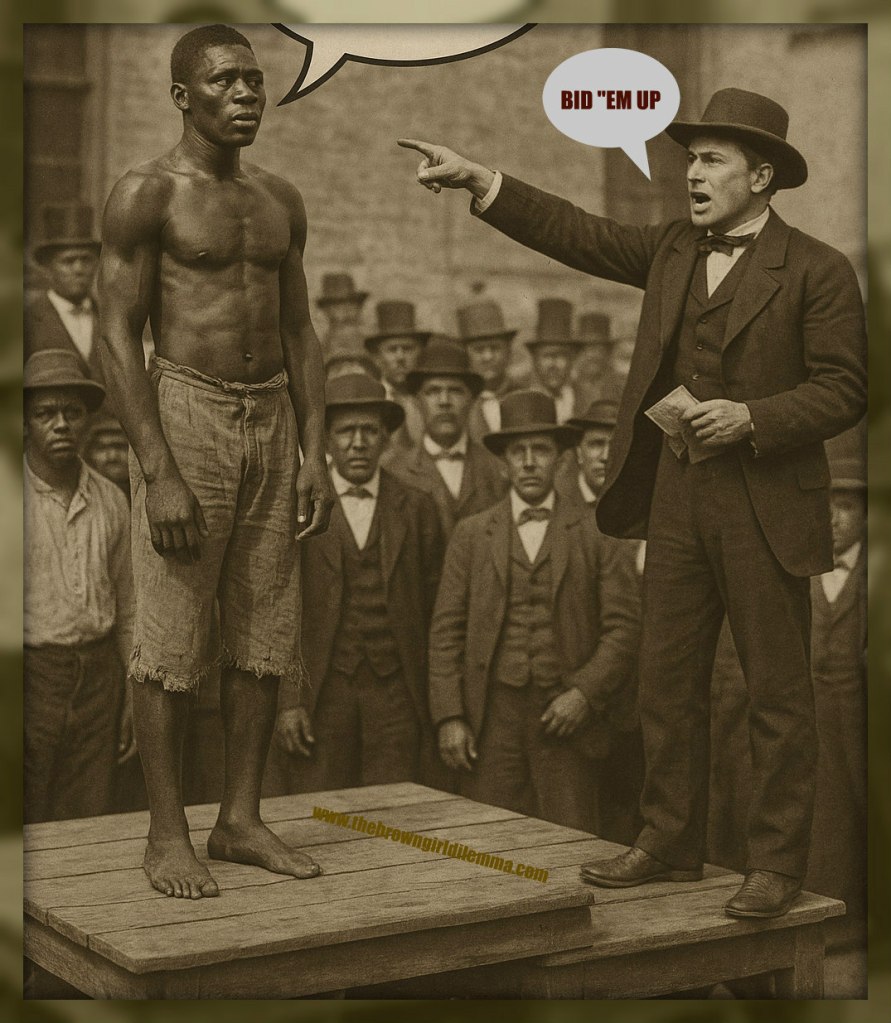
The phrase “Bid ’em up” refers to one of the most dehumanizing practices of the transatlantic slave trade: the process of auctioning African men, women, and children to the highest bidder. It was a command shouted at buyers during slave auctions, urging them to increase their bids as if the people on the block were livestock rather than human beings. This phrase captures the brutality, humiliation, and commercial greed embedded in American slavery.
Slave auctions operated as public markets where enslaved Africans were bought and sold, primarily in the 1700s–1800s, with the largest waves occurring from the early 18th century up to the Civil War in 1861. These auctions were often loud, crowded, and emotionally devastating events. Families were torn apart as husbands, wives, and children were separated, sold to different plantations, and sent to different states based solely on profit margins. “Bid ’em up” was not merely a business tactic—it was a reflection of how deeply racism shaped the economic and social system of the United States.
The auctions often took place in major Southern cities such as New Orleans, Charleston, Richmond, and Savannah. These markets drew slave traders, planters, wealthy merchants, and speculators eager to expand their labor force. In these spaces, the racial hierarchy of America was not hidden or subtle—it was on full display. Black people were forced onto platforms, examined, touched, and evaluated like property. Their bodies were scrutinized for strength, fertility, and obedience.
The enslaved were stripped of humanity through language. Terms like “bucks,” “breeders,” and “hands” reduced people to economic tools. The phrase “Bid ’em up” reveals the cold transactional nature of slavery, where human lives became items in an economic system built entirely on violence and racial domination.
Racism played a central role in justifying these practices. Europeans and white Americans constructed ideologies claiming Black people were inferior, subhuman, or naturally suited for enslavement. These racist beliefs formed the moral foundation for buying and selling millions of Africans. Without racism, the brutality of the slave market could not have been rationalized or sustained.
Slave auctions were not isolated events—they were central to the expansion of American agriculture. The rise of cotton, sugar, and rice industries increased demand for enslaved labor. The years following the 1808 ban on international slave importation saw the rise of the domestic slave trade, where enslaved people were sold from the Upper South to the Deep South in massive numbers.
These auctions were emotional battlegrounds. Many enslaved people prayed, cried, or resisted in small ways as they were forced onto the blocks. Mothers clung to their children, couples begged to stay together, and countless individuals were separated forever. The psychological trauma of these auctions rippled across generations.
The sight of chains, ropes, and shackles haunted the enslaved. Their names were replaced with auction numbers. Their futures were determined not by God or family but by the greed of bidders. The auction block became a symbol of absolute powerlessness.
Even children were not spared. Boys and girls as young as five or six were sold for their future labor value. Infants were sold with their mothers or separated from them, depending on what yielded higher profits. Slave traders calculated the price of innocence.
The practice reached its most infamous moment in 1859 during the largest recorded slave auction in U.S. history: The Weeping Time in Georgia, where over 400 enslaved people were sold over two days. The rain that fell during the event was described as the tears of heaven, mourning the suffering.
The economic impact of these auctions built generational wealth for white families while simultaneously creating generational poverty for Black Americans. Plantations, banks, and insurance companies all profited from human sale and exploitation.
The culture around slave auctions normalized cruelty. Newspapers advertised upcoming sales, listing children alongside horses. Hotels hosted bidders. Judges and sheriffs enforced fugitive slave laws to protect the system. Churches often remained silent, and in some cases participated.
After the Civil War and emancipation, the memory of the auction block became a permanent wound in African American history. It shaped family structures, migration patterns, and the cultural resilience of Black communities. Many African Americans today trace their lineage to ancestors sold on those blocks.
The legacy of “Bid ’em up” exposes how slavery was not just a labor system—it was an industry, a psychology, and a national economic engine grounded in racial violence. Understanding this context helps illuminate the roots of systemic racism in modern America.
The phrase also reminds us of the strength of the ancestors who survived unimaginable pain. Their endurance, faith, and determination laid the foundation for Black progress in the centuries that followed. They were bought and sold, yet they remained unbroken.
Remembering these auctions is not simply an act of historical reflection. It is a testimony to the resilience of a people who were denied humanity but ultimately reclaimed their identity, dignity, and voice. The auction block is a scar, but it is also a monument to survival.
In studying this painful history, we confront the truth of America’s origins. Slavery was not a footnote—it was central. And phrases like “Bid ’em up” force us to acknowledge the systems of racism that endured long after the auctions ended.
This history calls us to honor the ancestors by telling their stories truthfully, challenging systemic injustice, and ensuring that the trauma of the auction block is never forgotten.
References Berlin, I. (2003). Generations of captivity: A history of African-American slaves. Harvard University Press. Fett, S. (2002). Working cures: Healing, health, and power on Southern slave plantations. University of North Carolina Press. Johnson, W. (1999). Soul by soul: Life inside the antebellum slave market. Harvard University Press. Smallwood, S. (2007). Saltwater slavery: A Middle Passage from Africa to American diaspora. Harvard University Press. Smith, C. (2012). The Weeping Time: Slave auctions and the economy of the South. Yale University Press.
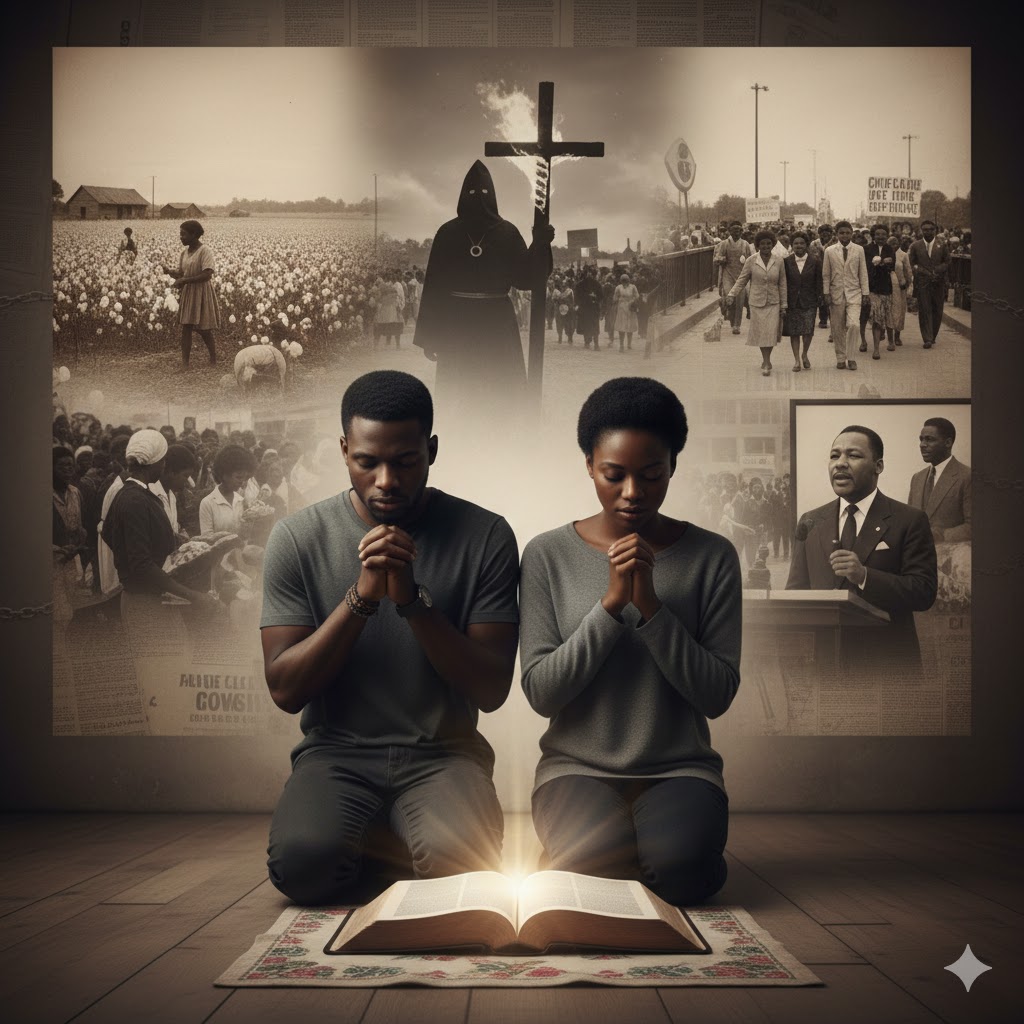
Black history is not merely a sequence of dates or the retelling of oppression; it is sacred terrain. It is a landscape shaped by the footprints of a people who carried faith, culture, dignity, and divine resilience across centuries. To stand in the presence of Black history is to stand on holy ground, because the journey of African-descended people bears witness to a God who walked with them through fire, flood, chains, and liberation.
Black history is holy ground because it begins long before slavery. It stretches back to kingdoms and civilizations where Black people ruled, built, studied, invented, and worshiped. From Nubia to Kush, from Ghana to Songhai, from Kemet to Ethiopia, Africa cultivated intellectual and spiritual traditions that the world still draws from. This heritage elevates Black history beyond pain; it anchors it in glory.
The holiness of this history is also found in its endurance. A people torn from their homeland survived one of the greatest atrocities in human history. They survived not by accident, but by providence. Their survival testifies to a divine hand at work in the shadows of suffering, shaping a remnant that would rise again. Every preserved family line, every song sung in the cotton fields, every whispered prayer in the midnight hour speaks of sacred resilience.
Black history is holy ground because it contains a narrative of faith that never died. Enslaved Africans did not inherit Christianity from their oppressors; they discovered in Scripture a God who understood bondage, deliverance, and covenant. Through the stories of Israel, they recognized themselves. Through the Psalms, they voiced their heartbreak. Through the Gospels, they found a Messiah who stood with the broken. Their faith was not borrowed but reborn.
The holiness of this narrative deepens when we consider the spiritual resistance embedded in Black culture. Spirituals were not just songs; they were coded prayers, liberation messages, and theological declarations. The rhythmic moans of the fields became a liturgy of survival. These traditions laid the foundation for the Black church, a sacred institution that shaped activism, family, and identity for generations.
Black history is holy ground because of its prophets and pioneers. Figures like Harriet Tubman, Frederick Douglass, Sojourner Truth, and countless unnamed leaders operated with a calling that mirrored biblical deliverers. They challenged systems, freed the oppressed, and stood firmly on righteousness. Their bravery was not merely political; it was spiritual warfare.
The holiness of this story extends to the mothers of the movement. Women whose names never made textbooks carried families on their backs. They prayed children into safety, held together broken homes, and passed down wisdom that sustained the community. Their hands were altars, their kitchens sanctuaries, their lives sermons of endurance and love.
Black history is holy ground because it carries the scent of sacrifice. Countless lives were laid down—from the Middle Passage to Jim Crow, from lynching trees to segregated streets. Their blood cries out like Abel’s, reminding the world that injustice is seen by God. Their sacrifices fertilized the soil from which future generations would rise.
That rising continues through the dreamers, scholars, activists, and artists who broadened the path toward freedom. Each breakthrough was a step deeper into holy territory—a reminder that progress is not simply social, but spiritual. Civil rights victories were not just legal milestones; they were manifestations of divine justice.
Black history is holy ground because it illuminates a people who refused to be erased. Despite centuries of oppression, their culture, creativity, and identity could not be destroyed. Instead, they transformed suffering into song, brokenness into brilliance, and hardship into hope. This divine alchemy marks their journey as sacred.
Modern Black life continues this sacredness. Every achievement—from academia to art, from science to business, from ministry to music—is a continuation of a holy lineage. Each accomplishment is a chapter in a story that began thousands of years before American soil ever felt the presence of African feet.
Black history is holy ground because it challenges the world to see humanity through a divine lens. The struggle for justice reflects God’s heart for righteousness. The fight for dignity reflects God’s image within humanity. Every act of resistance is a declaration that Black life is sacred and cannot be diminished.
The sacredness of Black history is also found in its wounds. Healing requires honesty, and Black history invites the world to confront painful truths without running. Yet this truth-telling is not meant to reopen scars but to restore what was lost. There is holiness in remembering, because memory heals and honors.
Black history is holy ground because it holds prophetic power. It warns against repeating the sins of the past, calls nations to repent, and demands transformation. It speaks with the authority of a testimony shaped by centuries of struggle and triumph. It teaches that liberation is a divine mandate, not a political suggestion.
This holiness also lies in the future. Black children today inherit not just a history of suffering but a legacy of brilliance. They stand on the shoulders of kings, queens, scholars, inventors, freedom fighters, and saints. Their existence is a continuation of the sacred promise that a people once enslaved would rise beyond anything intended to destroy them.
Black history is holy ground because it reveals God’s faithfulness. In every generation, He preserved a remnant, raised leaders, empowered movements, and poured creativity into a people who refused to surrender. Their story is evidence of divine purpose. Nothing about their survival is accidental.
To walk through Black history is to walk through a sacred story—one that encompasses creation, covenant, oppression, deliverance, restoration, and glory. It is a story intertwined with Scripture, echoing the journeys of ancient Israel and the hope of future redemption. It is a holy narrative wrapped in melanin and majesty.
Ultimately, Black history is holy ground because it embodies the miracle of endurance. It reveals that no chain is stronger than the human spirit, no system stronger than divine justice, and no hatred stronger than the love planted deep within a people chosen to carry light through centuries of darkness. Black history is not just remembered; it is revered.
And for those who study it, teach it, write it, or live it—it calls them to remove their shoes. For the place where they stand is sacred.
References: Genesis 15:13–14 (KJV); Exodus 3:5; Psalm 68:31; Isaiah 61:1–4; Luke 4:18; Revelation 7:9; Curtin, P. The Atlantic Slave Trade; Gates, H. L. Africa in World History; Raboteau, A. Slave Religion; Franklin, J. H. From Slavery to Freedom.
She was crowned before the world touched her, before language named her skin, before systems decided her worth. Her existence was intentional, authored by God and formed in divine wisdom, not accident or afterthought. Long before society imposed hierarchies, she bore dignity by design (Psalm 139:14, KJV).
The crown she carried was not fashioned of gold, but of purpose. It rested quietly in her spirit, unseen yet immovable. The world would later try to convince her that crowns are earned through suffering, but Scripture reveals that she was crowned at creation (Genesis 1:27, KJV).
Before the gaze of empire found her, she belonged wholly to God. Her identity was not a reaction to oppression but a reflection of divine image. This truth disrupts narratives that define Black womanhood through pain alone.
The world touched her with names that were never hers. It called her excessive, aggressive, invisible, or unworthy, projecting fear and desire onto her body. Yet none of these labels altered the crown she was given before words were weaponized (Isaiah 62:3, KJV).
Colonial beauty standards attempted to dethrone her by redefining beauty through whiteness. Hair, skin, and features became sites of contestation. But Scripture never outsourced beauty to empire; God declared His work “very good” before colonizers existed (Genesis 1:31, KJV).
She learned early that the world polices what it cannot control. Her body became public property in narrative, law, and image. Still, her crown remained untouched, because it was not placed by human hands.
The Bible is filled with women who were crowned before circumstances hardened them. Hagar was seen in the wilderness before society erased her (Genesis 16:13, KJV). Her encounter affirms that divine recognition precedes social rejection.
Like Esther, she was prepared in secret before being revealed in public. Her season of refinement was not punishment, but positioning. The crown comes before the calling, not after the trial (Esther 2:17, KJV).
The world taught her to armor herself, mistaking hardness for strength. Yet God honors softness guarded by wisdom. Meekness, in Scripture, is not weakness but disciplined power (Matthew 5:5, KJV).
She was told survival was her highest calling. But God called her to dominion, stewardship, and rest. Her worth was never dependent on endurance alone (Genesis 1:28, KJV).
The crown signifies authority over self before authority over circumstance. It is a reminder that she governs her mind, body, and spirit under God’s sovereignty. No system can rule what God has already crowned.
Her crown also represents inheritance. She did not begin in lack but in legacy. What was stolen historically does not erase what was granted eternally (Joel 2:25–26, KJV).
The world touched her through trauma, but trauma did not author her. Scripture makes clear that suffering is an experience, not an identity (Romans 8:18, KJV).
Spiritual warfare often targets crowned heads first. When identity is attacked, it is because destiny is present. The enemy never assaults what has no value (Ephesians 6:12, KJV).
To be crowned before the world touched her means she does not need validation from structures that were designed to exploit her. Her worth is pre-social and pre-political.
Her restoration is not about becoming something new, but remembering what she was before distortion. Repentance, healing, and self-love are acts of remembrance.
God crowns not to decorate, but to commission. The crown signals responsibility, vision, and alignment with heaven. She carries not ego, but assignment (Psalm 8:5, KJV).
In reclaiming her crown, she disrupts narratives of deficiency. She stands as evidence that Black womanhood is not an exception to divine favor, but an expression of it.
She is not crowned because she survived. She survived because she was crowned. That order matters.
Crowned before the world touched her, she walks not in apology, but in authority—restored, rooted, and radiant in the knowledge that God finished His work before the world began its lies.









 THE BROWN GIRL DILEMMA