Category Archives: the universal standard of beauty

Eurocentric Beauty Standards VS Black Beauty Standards: The Brown Girl Dilemma

Eurocentric beauty standards have shaped global perceptions of attractiveness for centuries, creating a hierarchy that places whiteness at the top and all other features beneath it. For Black women—especially Brown-skinned and dark-skinned women—this hierarchy produces a dilemma that is both personal and generational. It affects identity, self-esteem, desirability, and even spiritual understanding of self-worth. This essay explores the history and psychology behind Eurocentric ideals—straight hair, light skin, narrow features, blue eyes—and contrasts them with the richness, diversity, and inherent value of Black beauty.

The Origins of Eurocentric Beauty Hierarchy

Eurocentric standards were born from colonialism, slavery, and racial pseudoscience. European colonizers declared their own features—pale skin, straight or wavy hair, slim noses, and light eyes—as “civilized,” “pure,” and “superior.” These traits became the global benchmark, not because they were inherently beautiful, but because they were associated with power, wealth, and dominance. Whiteness became the symbol of privilege.

Slavery and Color Hierarchies

During the transatlantic slave trade, enslaved Africans with lighter skin—often the product of sexual violence—were given preferential treatment. They worked in the house, wore better clothing, and at times received literacy or skilled labor training. This created the “house slave vs. field slave” hierarchy, embedding colorism deep into Black communities. Light skin became associated with safety, access, and acceptance—survival benefits. These dynamics later morphed into social preferences that still influence dating, media, and institutional biases today.

The Psychological Impact of Whiteness as the Default

Psychologists describe Eurocentric beauty standards as a “dominant cultural schema” (hooks, 1992). When one group controls media, education, and social narratives, their features become normalized as the ideal. This creates aesthetic assimilation pressure—the subconscious push to emulate the dominant group to gain approval, opportunity, and perceived worth.

The Brown Girl Dilemma

For Brown-skinned and dark-skinned girls, the psychological conflict is acute. They are often raised to love themselves spiritually, yet conditioned socially to see their features as less desirable. This creates cognitive dissonance:

  • “Why don’t I look like the women celebrated on TV?”
  • “Why is lighter skin described as beautiful, classy, or desirable?”
  • “Why do I feel too dark or too ‘ethnic’?”
    This tension affects self-esteem, dating prospects, opportunities, and even how young girls see their own reflection.

Hair: A Battleground for Identity

Straight hair has long been praised because it aligns closest to Eurocentric ideals. During Jim Crow and segregation, straightened or pressed hair was viewed as a means to “fit in” and reduce racial discrimination. The psychological message?
Natural coils = unprofessional, wild, unkempt
Straight hair = polished, acceptable, beautiful
This created internalized anti-Blackness, where girls learned that their natural features needed altering to be worthy.

Light Eyes and Light Skin as Social Capital

Blue or light eyes and pale skin carried symbolic power because they aligned with whiteness. The lighter a Black woman appeared, the closer she seemed to whiteness—and the more approval she gained from dominant society. Studies show that lighter-skinned Black women historically received better job opportunities, social mobility, and media representation (Hunter, 2007).
This ingrained the belief that beauty equals proximity to whiteness.

Media Reinforcement

For decades, magazines, movies, and fashion campaigns prioritized white women and lighter-skinned Black women. Black girls grew up with very few images that reflected their features, resulting in what some psychologists call identity starvation. Without representation, children struggle to form healthy self-esteem because they cannot see themselves as beautiful.

Colonial Psychology: The Beauty of the Conquered vs. the Conqueror

Colonialism taught the world that the conqueror’s traits were superior. European missionaries, scientists, and artists depicted African features as “primitive” or “animalistic.” Pseudoscientific works like those by Carl Linnaeus and Johann Blumenbach ranked races by beauty, placing Europeans at the top and Africans at the bottom. This scientific racism became the foundation for beauty discrimination.

Internalized Colorism in Black Communities

Over time, these external hierarchies became internal practices:

  • Favoring lighter-skinned women in family praise
  • Associating dark skin with aggression or masculinity
  • Assuming lighter skin equals innocence or refinement
    This internalization is generational trauma passed down from slavery.

Beauty as a Form of Resistance

The natural hair movement, melanin pride culture, and the resurgence of African aesthetics are forms of rebellion against Eurocentric standards. Black women have reclaimed what was once degraded—afros, braids, dark skin, wide noses, full lips—and declared them beautiful.

The Rise of Black Beauty Consciousness

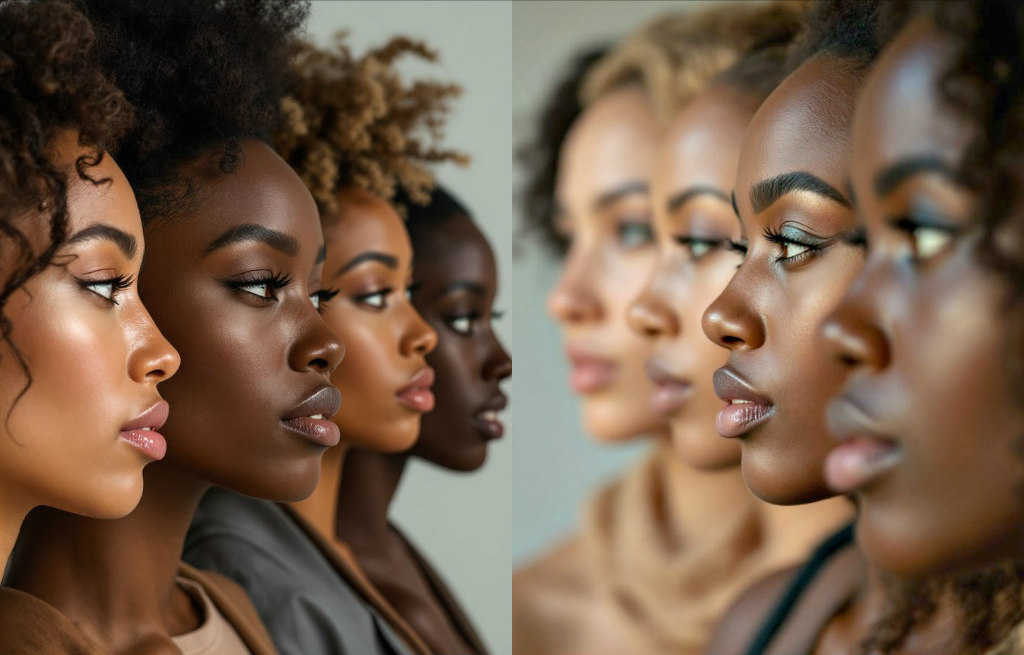
Black beauty is diverse, rich, and multidimensional. Full lips, melanated skin, textured hair, and Afrocentric features are globally admired today—not because beauty standards changed by chance, but because Black women demanded visibility. “Black girl magic” is not a trend—it is a declaration of self-worth.

The Brown Girl’s Healing Journey

Healing from beauty-based trauma requires unlearning internalized biases. It means teaching young girls that their worth is not tied to proximity to whiteness. It means uplifting dark-skinned beauty publicly and consistently. It means dismantling old scripts tied to slavery’s residue.

Biblical Reflection

In Scripture, beauty is never defined by skin tone or European features. Instead, God calls His people beautiful, chosen, and precious.
“I will praise thee; for I am fearfully and wonderfully made” (Psalm 139:14, KJV).
Black women must reclaim this truth as identity—not as aspiration.

Reframing the Standard

Beauty standards are not neutral—they are political. They reflect power structures. To uplift Black beauty, society must redefine beauty in a way that centers inclusivity, diversity, and historical truth.

Colorism in Dating and Relationships

Studies show that lighter-skinned Black women are more likely to be preferred in dating apps and social settings because of centuries-old conditioning (Wilder, 2015). This creates insecurity among Brown girls who feel overshadowed. The imbalance is not personal—it is systemic.

Economic Value of Eurocentric Features

Mainstream industries profit from insecurity:

  • Skin-lightening creams
  • Straightening treatments
  • Colored contact lenses
    These industries make billions by selling whiteness as a product. The psychology: create insecurity → sell the solution.

Breaking the Cycle

Educators, parents, churches, and media creators must consciously highlight Afrocentric beauty. Brown girls need consistent affirmation—visual and verbal.

Honoring the Brown-Skinned Woman

Brown and dark-skinned beauty is unique, powerful, and breathtaking. The richness of melanin, the depth of brown skin tones, the strength of textured hair—all represent spiritual, genetic, and ancestral beauty.

The Future of Beauty

The beauty world is shifting, but the work is ongoing. True transformation requires dismantling the psychological chains inherited from colonialism and slavery. Brown girls deserve to grow up knowing they are enough as they are.

Conclusion

Eurocentric beauty standards are artificial constructs rooted in historical oppression, not truth. Black beauty—rich, diverse, and divine—stands in opposition to centuries of enforced inferiority. The Brown Girl Dilemma can be healed through representation, affirmation, education, and spiritual grounding. Black women must continue rewriting the narrative, reclaiming the beauty that was always theirs.


References

  • hooks, bell. Black Looks: Race and Representation. South End Press, 1992.
  • Hunter, M. (2007). “The Persistent Problem of Colorism.” Sociology Compass.
  • Wilder, J. (2015). Color Stories: Black Women and Colorism in the 21st Century.
  • Russell, K., Wilson, M., & Hall, R. (2013). The Color Complex: The Politics of Skin Color in a New Millennium.
  • Tate, S. (2009). Black Beauty: Aesthetics, Stylization, Politics.
  • Psalm 139:14 (KJV).

The Black Woman: The Barbie Doll Effect

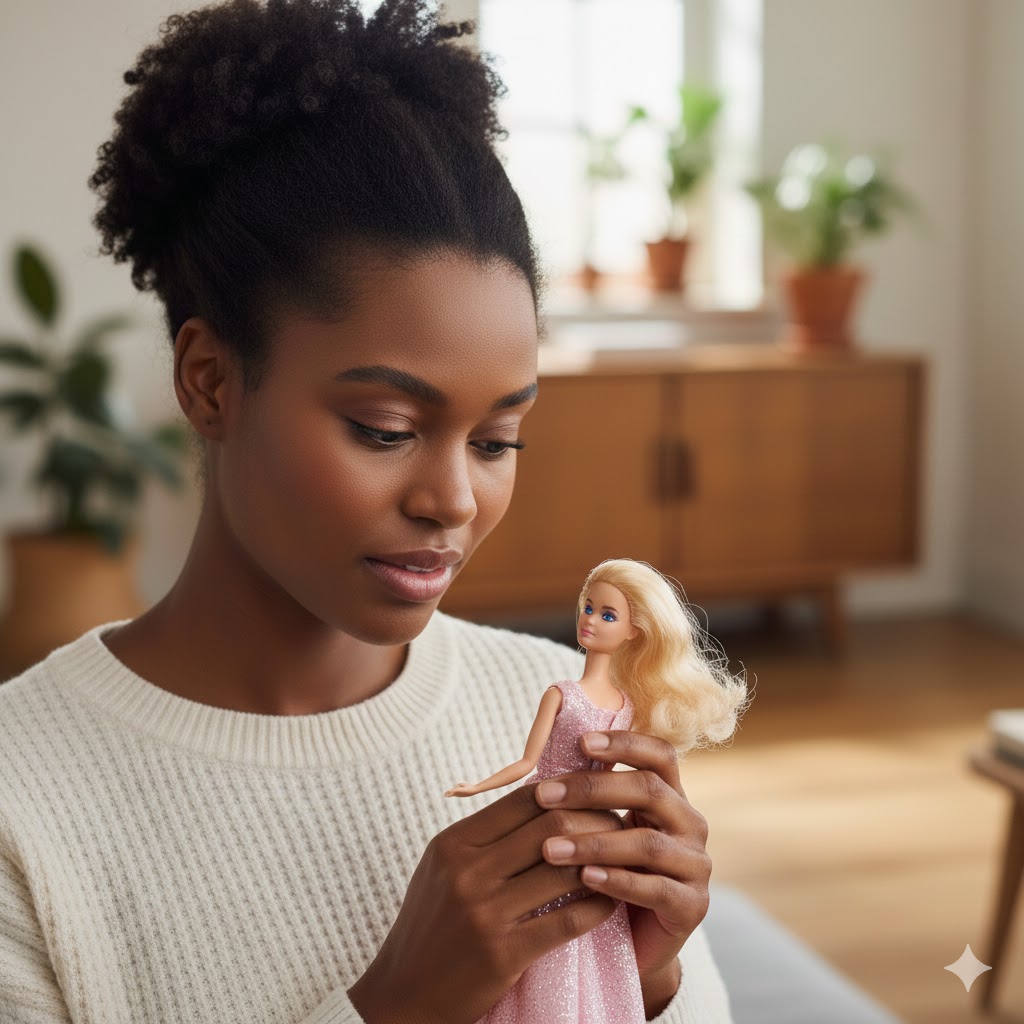
The “Barbie Doll Effect” describes the psychological, social, and cultural pressure placed on Black women to conform to an ideal of beauty that was never designed with them in mind. For generations, society upheld Eurocentric features—straight hair, narrow noses, light skin, thin frames—as the universal standard for femininity. Black women, in turn, were expected to mold themselves into this unattainable blueprint just to be seen as worthy, beautiful, or acceptable.

For many Black girls, the first doll they ever received didn’t look like them. Her hair swung in the wind, her eyes were light, her skin was pale, and her beauty was packaged as the “default.” This early conditioning planted seeds: To be beautiful is to be anything but yourself. The Barbie Doll Effect begins in childhood, but its impact often extends well into adulthood.

As Black women grow, society continues to whisper the same message through media, beauty industries, and Hollywood casting: straighten your hair, lighten your complexion, shrink your body, soften your presence, and quiet your voice. The closer you appear to the “Barbie ideal,” the more you are rewarded—professionally, socially, and romantically. The farther you are from it, the more you must fight unseen battles just to be acknowledged.

This creates a crisis of identity. Black women find themselves torn between self-love and societal acceptance, between honoring their ancestry and performing a version of femininity that dismisses their natural essence. This conflict isn’t superficial; it is deeply emotional. It shapes self-esteem, mental health, dating experiences, and even career opportunities.

In contemporary society, the concept of beauty is often dictated by narrow, Eurocentric standards that dominate media, fashion, and entertainment. Among these ideals, the “Barbie Doll Effect” has emerged as a prominent cultural phenomenon, shaping perceptions of attractiveness, self-worth, and femininity, particularly for Black women. This term describes the social and psychological pressures to embody perfection: flawless skin, slender physique, symmetrical features, and overall “marketable” beauty. While Barbie herself is a toy, her symbolic influence transcends playtime, impacting how young girls and women internalize their value.

Unrealistic Beauty and Colorism

For Black women, the Barbie Doll Effect is compounded by colorism—a preference for lighter skin within communities of color, perpetuated by societal and media portrayals. Darker-skinned Black women often face marginalization and exclusion from mainstream representations of beauty. In contrast, women with lighter complexions or features closer to Eurocentric ideals may be elevated, reinforcing internalized hierarchies of attractiveness. This phenomenon fosters self-doubt and a heightened focus on appearance, even as it undermines authentic identity.

Psychological Implications

The constant exposure to unrealistic images can lead to low self-esteem, body dysmorphia, and disordered eating habits. Research indicates that girls who internalize unattainable beauty standards often experience heightened anxiety, depression, and diminished self-worth (Grabe, Ward, & Hyde, 2008). The Barbie Doll Effect also conditions women to equate their value with their appearance, diverting attention from talents, intellect, and personal growth. For Black women navigating systemic bias, these pressures intersect with societal oppression, magnifying the psychological toll.

Media and Representation

Television, film, and social media amplify the Barbie Doll Effect by repeatedly showcasing idealized versions of Black femininity. Celebrities, influencers, and fashion icons are frequently curated to fit a specific aesthetic: smooth skin, exaggerated features, and slim bodies. While some Black women celebrate their beauty and achieve visibility, the overall narrative reinforces a narrow, homogenized ideal, often excluding darker skin tones, natural hair textures, or fuller body types. This limited representation affects how Black women perceive themselves and how society validates their beauty.

Beauty Standards vs. Authenticity

The pressure to conform to these ideals often leads Black women to alter their natural features through skin-lightening, hair straightening, cosmetic surgery, or extreme makeup routines. While personal choice plays a role, the underlying motivation is frequently social approval rather than self-expression. Rejecting the Barbie Doll Effect requires intentional cultivation of self-love, celebrating natural beauty, and fostering spaces where Black women see themselves represented authentically and holistically.

Societal Shifts and Empowerment

Despite pervasive pressures, there is a growing movement of empowerment. Black women are embracing natural hair, diverse body types, and culturally resonant fashion, challenging Eurocentric dominance in beauty standards. Organizations, social media campaigns, and influencers are redefining what beauty looks like, emphasizing resilience, intellect, and heritage alongside appearance. The message is clear: beauty is multifaceted, and self-worth cannot be measured solely by conformity to a doll’s proportions or societal ideals.

Conclusion

The Barbie Doll Effect illustrates the complex interplay between media, societal expectations, and personal identity. For Black women, it highlights the intersection of beauty standards, colorism, and systemic pressures. Breaking free from this effect requires acknowledgment of these pressures, intentional self-celebration, and a cultural shift that embraces diverse forms of beauty. By reclaiming narratives of worth, Black women can transcend superficial ideals and cultivate confidence rooted in authenticity, heritage, and individuality.

The Barbie Doll Effect also perpetuates colorism, where lighter skin is praised and darker skin is scrutinized. It fosters a beauty hierarchy that wounds Black women emotionally, dividing them into categories—“pretty for a dark-skinned girl,” “exotic,” “acceptable,” “too Black,” or “too ethnic.” These labels are weapons, not compliments, and they echo the painful legacy of colonization and slavery.

But despite these pressures, Black women continue to redefine beauty in their own image. From natural hair movements to melanin-positive campaigns, from darker-skinned models on magazine covers to actresses proudly wearing locs on red carpets, Black women are slowly reclaiming visibility and rewriting the standard. The world is watching—and following.

The Barbie Doll Effect is losing its power, not because the world suddenly changed, but because Black women refused to. They refused to shrink themselves to fit narrow beauty boxes. They refused to mask their features, mute their culture, or bleach away their heritage. Instead, they created their own lane—bold, regal, and authentically divine.

Today, the Black woman is not chasing the Barbie ideal; she is the standard. Her features have been copied, commercialized, and coveted. Full lips, curves, coils, melanin—everything once mocked is now monetized. But the true power lies not in being imitated, but in being unapologetically yourself.

The Barbie Doll Effect taught Black women to compare themselves to a plastic fantasy. But this generation is teaching the world that true beauty is not manufactured—it is inherited. It is ancestral. It is complex. It is alive.

The Black woman is not a doll—she is a blueprint.

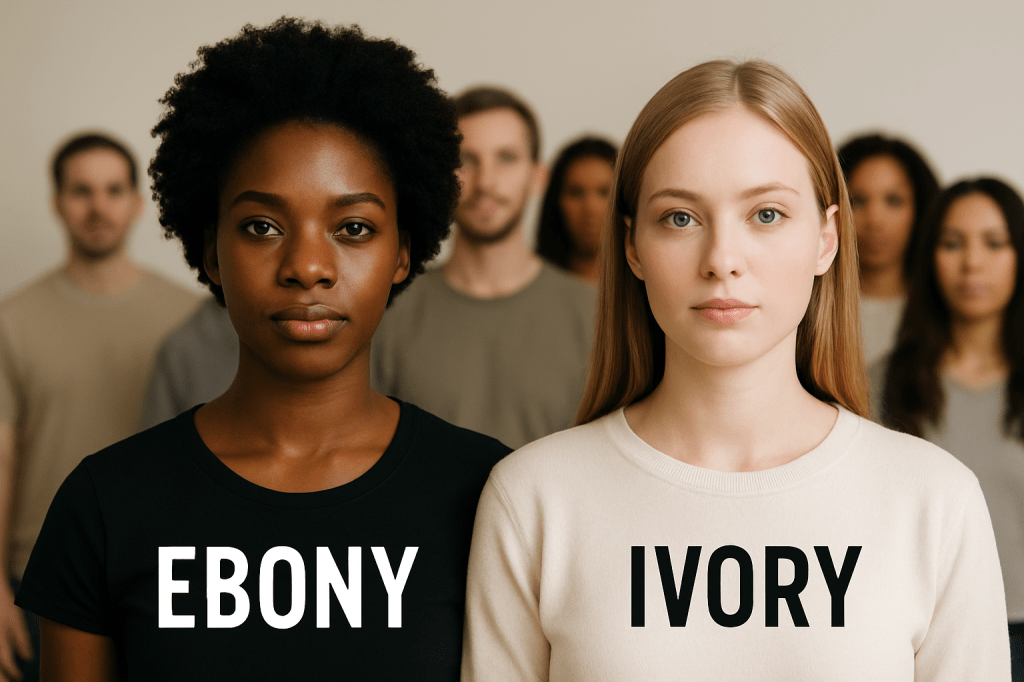
Ebony and Ivory: Two Shades, One Standard of Beauty.

From the dawn of civilization, beauty has been both a mirror and a weapon—reflecting ideals shaped by power and privilege, and wielded to define worth within social hierarchies. Within the globalized gaze of modernity, the politics of skin color continue to influence how femininity and desirability are perceived, especially among women of African descent. The notion of “Ebony and Ivory” evokes more than just color; it symbolizes the ongoing dialogue between light and dark, between acceptance and exclusion, and between the internalized and externalized standards of beauty that shape identity (hooks, 1992).

The idea of “two shades, one standard” captures the paradox of colorism: the simultaneous elevation and devaluation of Blackness within the same racial group. While “ivory” tones have historically been exalted as closer to Western ideals, “ebony” skin has often been marginalized, caricatured, or fetishized. Both ends of the spectrum, however, are measured against the same Eurocentric barometer that privileges whiteness as the ultimate aesthetic reference (Hunter, 2005).

This phenomenon, deeply rooted in colonialism, reveals how beauty became a tool of control. During the transatlantic slave trade, lighter-skinned enslaved individuals were often granted domestic positions and social proximity to white power structures, breeding intra-racial hierarchies that persist today. These legacies still echo in media representation, where lighter skin is frequently coded as “refined,” while darker tones are portrayed as “exotic” or “primitive” (Craig, 2006).

For many women of color, navigating these coded perceptions can be exhausting. The “brown girl dilemma” emerges when one feels too dark to be celebrated and too light to be considered authentically Black. This liminal existence is both a burden and a revelation—proof that beauty, as defined by Western constructs, remains an unattainable illusion that fractures rather than unites.

Beauty standards, much like colonial borders, were imposed rather than chosen. From the powdered faces of the Victorian era to the filtered glow of Instagram, the valuation of lightness has remained a constant aesthetic undercurrent. Yet, even within African and Afro-diasporic communities, this colonial inheritance continues to dictate preferences in partners, media icons, and even professional opportunities (Glenn, 2008).

In popular culture, colorism is often masked by phrases like “preference” or “type.” However, these preferences are rarely organic—they are sociologically constructed through centuries of imagery that equate lightness with purity and success, and darkness with defiance and struggle. The entertainment industry’s casting choices often reinforce these biases, rewarding lighter skin with visibility while relegating darker complexions to supporting or stereotypical roles (Russell, Wilson, & Hall, 2013).

This bias extends beyond film and television. In the global beauty market, skin-lightening creams generate billions annually, a grim testament to the internalization of Eurocentric ideals (Glenn, 2008). The psychological effects of such products are profound, suggesting that beauty is not only skin-deep but soul-deep, affecting one’s perception of self-worth and belonging.

For Black women, beauty is an act of survival. To adorn oneself becomes an assertion of existence in a world that often demands invisibility. From the regal hairstyles of precolonial Africa to the natural hair movement, Black women have continuously redefined and reclaimed their beauty on their own terms (Byrd & Tharps, 2014).

Yet, this reclamation is not without struggle. Within the Black community itself, hierarchies persist. The glorification of lighter women as more “marriageable” or “acceptable” continues to fracture solidarity. It is an unspoken inheritance of slavery’s psychological residue, perpetuated by both men and women who unconsciously valorize proximity to whiteness.

The darker-skinned woman often bears the weight of invisibility and hypervisibility simultaneously—ignored in spaces of admiration, yet scrutinized as the embodiment of resistance or rebellion. This double-bind mirrors W.E.B. Du Bois’ concept of “double consciousness,” wherein one is forced to see oneself through the lens of a world that refuses full recognition (Du Bois, 1903).

Light-skinned women, conversely, navigate their own complexities. While society may privilege them aesthetically, they are often accused of benefiting from colorism or being “not Black enough.” Thus, both ebony and ivory tones bear distinct forms of cultural alienation, tied together by an oppressive standard neither created (Monk, 2014).

In this context, beauty becomes not celebration but negotiation. Every compliment, every criticism, every casting call, and every social media post reinforces the invisible hierarchy of shade. The struggle is not between dark and light, but against the system that pits them against each other.

Media representation plays a critical role in dismantling or reinforcing these divides. When dark-skinned actresses like Lupita Nyong’o or Viola Davis are celebrated, it signals progress—but also exposes how rare such representation remains. Likewise, the inclusion of mixed-race models in campaigns may appear inclusive, yet often centers features still aligned with Eurocentric beauty (Tate, 2009).

To heal from this color divide, we must first acknowledge that beauty is not a monolith. It is plural, diverse, and spiritually rooted. In the biblical sense, humanity was created “in the image of God” (Genesis 1:27, KJV), meaning all shades reflect divine artistry. The rejection of any hue is, therefore, a rejection of the Creator’s design.

Moreover, Proverbs 31:30 reminds us that “favor is deceitful, and beauty is vain: but a woman that feareth the Lord, she shall be praised.” This verse redirects the gaze from the external to the eternal, urging women to seek validation not from comparison but from divine purpose.

Ebony and ivory are not opposites but complements, each contributing to the symphony of creation. Just as piano keys of contrasting colors produce harmony, so too can diverse complexions coexist in mutual admiration and respect. The beauty of one does not diminish the beauty of the other; together, they reveal the fullness of God’s palette.

True beauty transcends complexion—it emanates from character, compassion, and conviction. In a world obsessed with appearances, spiritual and cultural consciousness must redefine the standard. Beauty should not divide but dignify, not exclude but exalt.

To love one’s shade is to reclaim agency over identity. When Black women, in all their hues, embrace their reflection without apology, they dismantle centuries of aesthetic oppression. “Ebony and Ivory” then becomes more than a contrast—it becomes a covenant of self-acceptance and collective healing.

As we move forward, let beauty be measured not by shade but by soul. For when light and dark come together, they create balance, harmony, and wholeness—the true reflection of divine beauty.


References

Byrd, A. D., & Tharps, L. L. (2014). Hair Story: Untangling the Roots of Black Hair in America. St. Martin’s Press.
Craig, M. L. (2006). Race, beauty, and the tangled knot of a guilty pleasure. Feminist Theory, 7(2), 159–177.
Du Bois, W. E. B. (1903). The Souls of Black Folk. Chicago: A.C. McClurg.
Glenn, E. N. (2008). Yearning for lightness: Transnational circuits in the marketing and consumption of skin lighteners. Gender & Society, 22(3), 281–302.
hooks, b. (1992). Black Looks: Race and Representation. South End Press.
Hunter, M. L. (2005). Race, gender, and the politics of skin tone. Routledge.
Monk, E. P. (2014). Skin tone stratification among Black Americans, 2001–2003. Social Psychology Quarterly, 77(4), 360–379.
Russell, K., Wilson, M., & Hall, R. (2013). The Color Complex (Revised): The Politics of Skin Color Among African Americans. Anchor.
Tate, S. A. (2009). Black Beauty: Aesthetics, Stylization, Politics. Ashgate Publishing.
The Holy Bible, King James Version (KJV). (1611).

Beauty: Is it your Skin Color or your Facial Features that make you beautiful?

These photographs are the property of their respective owners. No copyright infringement intended.

I was oblivious to skin color. People always told me I was beautiful, and I always believed it was my features and not my light café-au-lait skin tone. Growing up, beauty seemed more about the symmetry of one’s face, the way one’s eyes aligned, or how one’s smile illuminated a room. But as I matured and began to understand the social and psychological layers of race and aesthetics, I realized that the question of beauty—particularly for people of African descent—was neither simple nor purely biological. It was a complex interplay between genetics, societal conditioning, colonization, and personal perception.

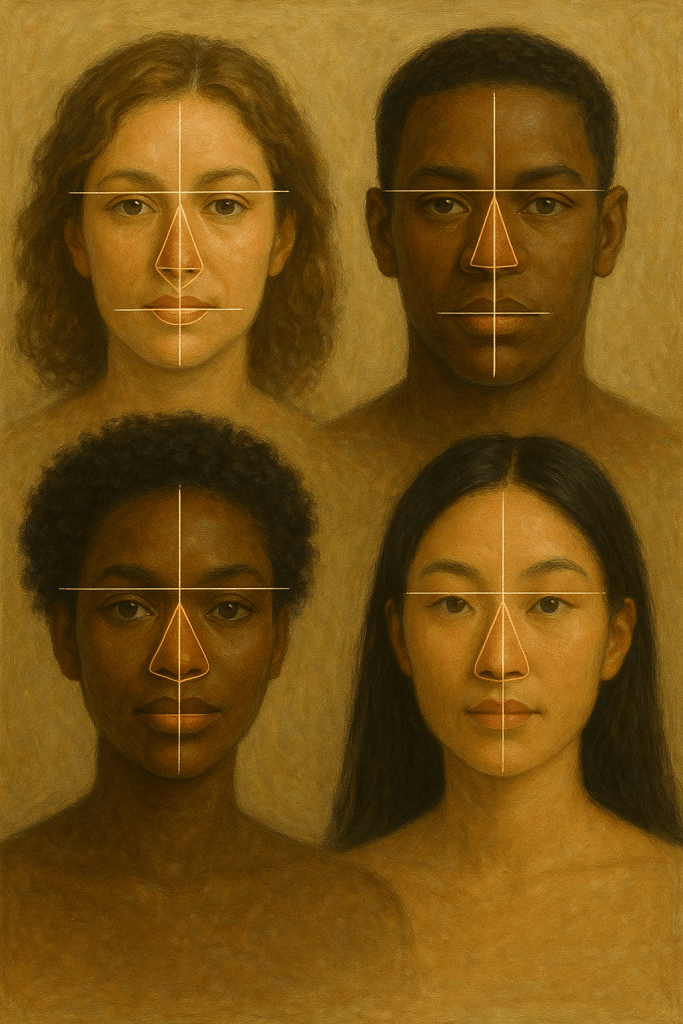
The science of beauty has long sought to define attractiveness through objective measurements. The Marquardt facial mask, developed by Dr. Stephen Marquardt, is one such tool that uses the golden ratio (phi, approximately 1.618) to map ideal facial proportions (Marquardt, 2002). This mathematical construct suggests that beauty lies in balance and symmetry. Yet, while symmetry contributes to perceived attractiveness across cultures (Rhodes, 2006), it cannot fully explain why certain faces—like Halle Berry’s or Idris Elba’s—transcend mathematical formulas to captivate the world.

Genetically, facial features are an orchestra of inherited traits determined by the complex interactions of multiple genes (Jones & Little, 2012). Skin tone, lip shape, and eye spacing are phenotypic expressions influenced by ancestral environments. For instance, fuller lips and broader noses evolved as adaptive features in warmer climates, aiding in temperature regulation (Jablonski & Chaplin, 2000). Yet colonialism rebranded these traits as “undesirable,” constructing Eurocentric beauty standards that favored narrow noses, thin lips, and lighter skin.

This colonial gaze reshaped entire generations’ perception of beauty. During and after slavery, the closer one’s appearance aligned with European features, the more “beautiful” or “acceptable” one was considered. This false hierarchy of aesthetics—rooted in power and racial politics—continues to shape modern beauty ideals, especially in the global media (Hunter, 2005). Thus, many women and men of color wrestle with a dual consciousness: one that recognizes their innate beauty while subconsciously measuring it against Western standards.

When we look at Halle Berry, we see a blend of symmetry, balance, and soft femininity that aligns with global ideals of beauty. Yet what makes her distinct is her expressive eyes, proportionate bone structure, and emotive presence—traits that transcend complexion. Lupita Nyong’o, in contrast, represents a radical reclamation of deep-toned beauty. Her skin radiates with depth and grace, and her high cheekbones and luminous eyes challenge Eurocentric molds, celebrating the richness of African features as equally divine.

Vanessa L. Williams’s beauty carries a classical appeal—a combination of facial symmetry, expressive eyes, and harmony of proportions. Her presence in the entertainment industry during the 1980s broke barriers, representing both elegance and controversy in a time when America still struggled to accept a Black woman crowned “Miss America.” Her beauty was seen through both admiration and prejudice—a reflection of how colorism complicates acceptance even within communities of color.

Among men, Shemar Moore’s charm lies in his smooth facial symmetry, strong jawline, and warm, approachable smile—qualities that align with scientific definitions of attractiveness. Yet, Idris Elba’s beauty feels more elemental. His deep-set eyes, strong features, and commanding presence convey power, charisma, and confidence. His allure, like Lupita’s, resists Eurocentricity; it draws instead on ancestral strength and authenticity.

But what about those whose features don’t fit the “mask”? Beauty in the human experience is not only mathematical but also psychological and cultural. Studies show that individuals are more likely to find faces from their own ethnic group more attractive due to familiarity and cultural exposure (Little et al., 2011). Thus, what one finds beautiful often depends on one’s cultural conditioning, not universal law.

Beauty is, therefore, both objective and subjective. Science can measure facial harmony, but culture shapes what harmony looks like. Western beauty often celebrates sharpness—defined cheekbones, narrow noses—while African aesthetics celebrate fullness, balance, and expression. These differing ideals are not hierarchies but reflections of varied cultural philosophies about life and identity.

The psychological phenomenon of “beauty bias” reinforces societal privilege for those deemed more attractive. This bias influences job prospects, relationships, and self-esteem (Langlois et al., 2000). For people of color, beauty bias intersects with colorism, leading to internalized hierarchies where lighter skin and Eurocentric features are unconsciously prioritized. This is why even those confident in their looks may still feel their beauty questioned by social norms.

Colonization didn’t only enslave bodies—it colonized aesthetics. From missionary schools to Hollywood casting rooms, the European ideal of beauty became synonymous with civilization, purity, and desirability. African features, once revered within indigenous societies as markers of lineage and strength, were ridiculed and suppressed. The result was centuries of aesthetic erasure that many are only now beginning to reverse.

The return to natural hair, deeper skin tones in media, and diverse representation mark a cultural renaissance. This redefinition of beauty reconnects the diaspora to its authentic self. It celebrates faces like Lupita’s not as exceptions but as exemplars of divine variation. It honors dark skin not as “different” but as glorious.

Still, one must ask: if beauty is in the eye of the beholder, who is holding the mirror? Media corporations, advertisers, and colonial institutions have long acted as the beholders, dictating taste and value. But the shift toward self-definition—especially among Black creators, photographers, and scholars—marks a new chapter in aesthetic sovereignty.

Scientifically, certain features—clear skin, bilateral symmetry, facial averageness—are universally preferred because they signal health and genetic fitness (Perrett et al., 1999). However, features like high cheekbones, full lips, or wide noses can be just as aesthetically pleasing when embraced through a culturally affirming lens. The issue is not the feature itself but the framework through which it’s judged.

In psychological terms, humans are drawn to faces that mirror their identity. This “familiarity principle” (Zajonc, 1968) explains why beauty can never be entirely objective. It is influenced by cultural memory and social environment. Thus, the perception of beauty among African-descended peoples carries historical trauma—beauty has been both weaponized and denied.

Genetics, then, provides the blueprint, but society writes the interpretation. One person’s admiration of Halle Berry’s elegance or Lupita’s radiance is not merely about structure—it’s about what those faces symbolize. They represent visibility, validation, and the defiance of centuries of aesthetic marginalization.

To be beautiful in a colonized world is to exist in resistance. Each melanated face, each natural curl, each unapologetic feature, is an act of restoration—reclaiming what history attempted to distort. Beauty, in this sense, becomes a form of protest and prophecy, not vanity.

When I reflect on my own journey, I realize that what I believed to be “just my features” was shaped by more than DNA—it was shaped by social constructs, ancestral memories, and cultural expectations. My beauty was never just mine; it was inherited from generations who carried grace through oppression and dignity through erasure.

So, is it your skin color or your features that make you beautiful? The answer is both—and neither. True beauty transcends the surface. It lives in the harmony of authenticity, confidence, and self-recognition. It is not measured by the golden ratio but by the light you emit when you embrace who you truly are.


References
Hunter, M. L. (2005). Race, gender, and the politics of skin tone. Routledge.
Jablonski, N. G., & Chaplin, G. (2000). The evolution of human skin coloration. Journal of Human Evolution, 39(1), 57–106.
Jones, B. C., & Little, A. C. (2012). The role of facial attractiveness in mate choice. Trends in Cognitive Sciences, 16(1), 33–38.
Langlois, J. H., et al. (2000). Maxims or myths of beauty? A meta-analytic and theoretical review. Psychological Bulletin, 126(3), 390–423.
Little, A. C., Jones, B. C., & DeBruine, L. M. (2011). Facial attractiveness: Evolutionary based research. Philosophical Transactions of the Royal Society B, 366(1571), 1638–1659.
Marquardt, S. (2002). The golden ratio: The beauty mask and the science of human aesthetics. Marquardt Beauty Analysis.
Perrett, D. I., et al. (1999). Symmetry and human facial attractiveness. Evolution and Human Behavior, 20(5), 295–307.
Rhodes, G. (2006). The evolutionary psychology of facial beauty. Annual Review of Psychology, 57, 199–226.
Zajonc, R. B. (1968). Attitudinal effects of mere exposure. Journal of Personality and Social Psychology, 9(2p2), 1–27.

The Beauty Con Game: How Society Manipulated Black Beauty.

Photo by Merlin Lightpainting on Pexels.com

Beauty is one of the most powerful social currencies, yet it has been weaponized against Black women for centuries. Society has dictated what is considered beautiful, often elevating Eurocentric features as the standard while degrading African aesthetics.

From slavery onward, Black bodies were dehumanized, exoticized, and stripped of dignity. Enslaved women were compared to animals, their hair labeled “woolly” and their features mocked (White, 2012). The colonizers’ standard of beauty placed whiteness as the ideal — pale skin, thin noses, and straight hair became the aspirational model. This early propaganda created a deep generational wound, convincing many Black women that their natural state was inferior.

Scripture reminds us that all creation is made in God’s image (Genesis 1:27, KJV). The denigration of Black beauty is therefore not just a social injustice but a spiritual assault — an attempt to distort the Creator’s handiwork and cause people to despise what God called “very good” (Genesis 1:31, KJV).

Psychology supports this understanding, noting that beauty ideals strongly influence self-esteem and identity formation (Cash & Pruzinsky, 2002). When a community is repeatedly told they are ugly, unworthy, or undesirable, it fosters internalized racism, self-hatred, and colorism. Black girls often grow up wishing to look like the models in magazines, who historically were overwhelmingly white.

The con game becomes clear when we see how the beauty industry profits from this insecurity. Billions of dollars are spent annually by Black women on hair relaxers, skin-lightening creams, and wigs designed to mimic Eurocentric features (Hunter, 2011). The market is built on the false premise that Black women must “fix” themselves to be acceptable.

Straight hair became a symbol of respectability during the early 20th century. Madam C.J. Walker, while celebrated for empowering Black women economically, also sold products that encouraged them to conform to Eurocentric ideals. Sociologists argue that this was a survival strategy — assimilating to dominant beauty norms in order to access jobs, education, and social mobility (Gill, 2010).

Colorism — the preference for lighter skin — further divided the Black community. During slavery, lighter-skinned enslaved people were often favored and given domestic work, while darker-skinned people labored in the fields. This legacy persists, with research showing lighter-skinned Black women still receive better treatment in dating, hiring, and media representation (Wilder, 2010).

Scripture, however, affirms the beauty of melanin-rich skin. The Shulamite woman in Song of Solomon boldly declares, “I am black, but comely” (Song of Solomon 1:5, KJV). Her words push back against shame and affirm that dark skin is beautiful and worthy of celebration.

In recent decades, Black celebrities and activists have fought back against this con game. Icons like Nina Simone, Lauryn Hill, Lupita Nyong’o, Viola Davis, and Michaela Coel have publicly affirmed natural hair, dark skin, and African features. Lupita Nyong’o’s speech at Essence’s Black Women in Hollywood awards described learning to see her dark skin as beautiful — a testimony that inspired a generation.

The natural hair movement is one of the most powerful acts of resistance. Black women worldwide have embraced afros, locs, braids, and twists as symbols of cultural pride. This movement rejects the lie that straight hair is “better” and instead celebrates hair in its God-given form. Laws like the CROWN Act (Creating a Respectful and Open Workplace for Natural Hair) are dismantling workplace discrimination against natural styles.

Social media has also amplified representation. Influencers and content creators showcase Black beauty in all its shades, from the deepest ebony to the fairest brown, proving that beauty is not monolithic. This democratization of media allows Black women to define beauty on their own terms rather than through Eurocentric gatekeepers.

Psychologists warn, however, that dismantling centuries of programming takes time. Internalized racism and colorism can linger even within progressive spaces. Healing requires intentional unlearning, affirmations, and re-exposure to positive images of Blackness (Hall, 2010).

Biblically, the call is to renew the mind. Romans 12:2 (KJV) commands believers not to conform to the world but to be transformed by the renewing of the mind. This applies to rejecting false beauty standards and embracing God’s definition of worth. Beauty becomes an inner quality, as 1 Peter 3:3-4 reminds us: “Whose adorning let it not be that outward adorning… but let it be the hidden man of the heart.”

Black women are also reclaiming beauty in fashion and pageantry. The historic moment when Zozibini Tunzi of South Africa won Miss Universe 2019, wearing her natural hair challenged decades of Eurocentric pageant norms. She stated, “I grew up in a world where a woman who looks like me… was never considered beautiful.” Her victory was a global affirmation that the standard is shifting.

Despite these advances, the beauty con game continues through subtle pressures. Media algorithms still over-represent lighter-skinned models. Cosmetic companies still push skin-whitening creams in African and Asian markets. These realities remind us that liberation is an ongoing struggle.

The followers of Christ have a responsibility to participate in this healing by teaching that every shade of melanin reflects the creativity of God. Psalm 139:14 (KJV) declares, “I will praise thee; for I am fearfully and wonderfully made.” Teaching this truth to young girls builds resilience against media lies.

Psychology shows that positive representation can rewire self-perception. Exposure to affirming images of Black beauty has been linked to improved self-esteem and body satisfaction (Frisby, 2004). Representation is not superficial — it is a tool of psychological liberation.

Another critical step is economic empowerment. Supporting Black-owned beauty brands allows women to invest in products that celebrate, not erase, their natural beauty. This shift keeps wealth circulating in the community and challenges global conglomerates that exploit insecurities.

Parents, educators, and mentors must be intentional about teaching children to love their natural features early. Displaying books, dolls, and media with diverse representations of Black beauty helps inoculate children against the lie that they must look different to be worthy.

It is also important to resist idolizing beauty altogether. Proverbs 31:30 (KJV) reminds us, “Favour is deceitful, and beauty is vain: but a woman that feareth the LORD, she shall be praised.” True empowerment comes when beauty is seen as one part of identity, not the sum total of worth.

Healing from the beauty con game is both personal and collective. It requires rejecting lies, affirming truth, and celebrating every expression of African identity. It means speaking life into one another, reminding sisters that they are wonderfully made and worthy of honor.

Ultimately, God has the final word on beauty. His word teaches that we are His workmanship (Ephesians 2:10, KJV). Every curl, coil, and shade of melanin was intentionally designed. Restoring Black women’s self-image is not merely a social project — it is a spiritual act of reclaiming what God has declared good.


References

  • Cash, T. F., & Pruzinsky, T. (2002). Body image: A handbook of theory, research, and clinical practice. Guilford Press.
  • Frisby, C. M. (2004). Does race matter? Effects of idealized images on African American women’s perceptions of body esteem. Journal of Black Studies, 34(3), 323–347.
  • Gill, T. M. (2010). Beauty shop politics: African American women’s activism in the beauty industry. University of Illinois Press.
  • Hall, R. E. (2010). The melanin millennium: Skin color as 21st century international discourse. Springer.
  • Hunter, M. (2011). Buying racial capital: Skin-bleaching and cosmetic surgery in a globalized world. Journal of Pan African Studies, 4(4), 142–164.
  • White, D. G. (2012). Ar’n’t I a Woman?: Female slaves in the plantation South. W.W. Norton & Company.
  • The Holy Bible, King James Version.

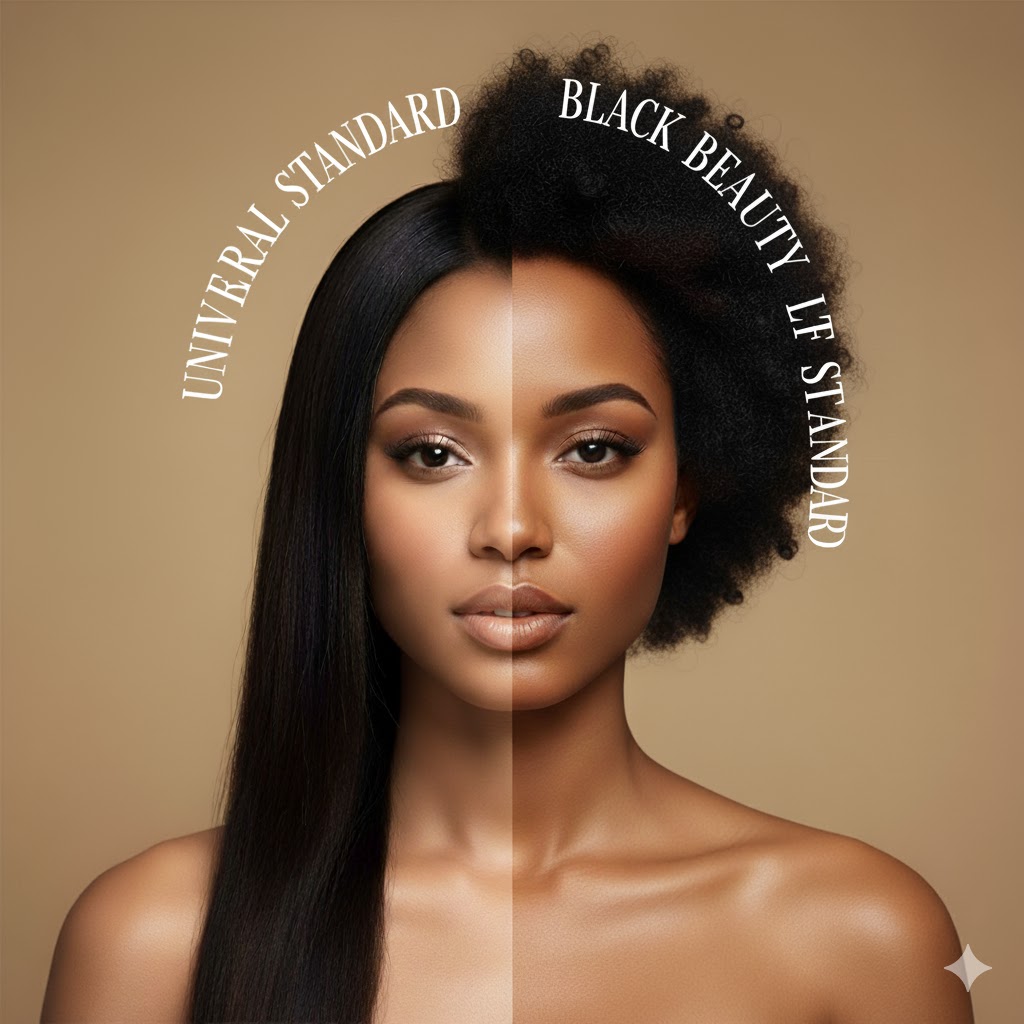
The Universal Standard of Beauty vs. the Black Standard of Beauty.

Photo by SHVETS production on Pexels.com

Beauty is one of the most powerful social currencies across cultures. Yet, it is not universal in practice. What is often called the “universal standard of beauty” tends to reflect Eurocentric ideals—light skin, straight or loosely wavy hair, slim but not too thin figures, sharp noses, and symmetry rooted in Western canons. By contrast, the “Black standard of beauty” celebrates features like deep melanin, textured hair, fuller lips, wider hips, and natural curves—features historically marginalized yet increasingly recognized as both beautiful and powerful. The tension between these two standards creates both cultural conflicts and psychological struggles, especially for women navigating global and racialized definitions of beauty.

The universal standard is heavily influenced by colonial history, globalized media, and Western power structures. Fashion runways, Hollywood, and advertising have long promoted whiteness and European features as the ideal. This creates a narrow box for women worldwide, making lightness of skin and straightness of hair aspirational. The problem is not simply preference but the fact that these standards are presented as “neutral” or “natural,” when in reality they are culturally specific and historically constructed.

In contrast, the Black standard of beauty emerges from African heritage, cultural pride, and the resilience of communities resisting erasure. Features like natural hair, darker complexions, broad noses, and fuller bodies reflect an embrace of authenticity and connection to ancestry. While this standard has not always been celebrated in mainstream culture, movements like Black is Beautiful, Black Girl Magic, and the natural hair revolution have shifted the cultural landscape, creating new appreciation for traits once ridiculed or suppressed.

The problem with universal standards is that they often erase diversity. By elevating one aesthetic above all others, they invalidate the beauty of women who do not conform. Black women, in particular, face colorism, hair discrimination, and media exclusion, leading to lower self-esteem, body image struggles, and even the desire for surgical alterations to “fit in.” The psychological toll is compounded by constant comparisons, where Black beauty is deemed desirable only when exoticized or appropriated.

The Black standard, however, also faces challenges. Within Black communities, colorism and texturism can replicate the very hierarchies imposed by Eurocentric ideals. For instance, lighter-skinned Black women or those with looser curls may be celebrated more readily, leaving darker-skinned women with kinkier textures marginalized even within their own cultural space. Thus, the Black standard of beauty, though liberating, is not free from internal tensions.

Psychology helps explain why the universal standard is so dominant. Humans are naturally drawn to symmetry, proportionality, and what evolutionary psychology calls “averageness.” Yet, culture shapes the interpretation of these features. For example, fuller lips may be universally attractive from a biological standpoint, but in Western contexts, they were historically devalued when associated with Blackness. When white celebrities adopt these features—through surgery or makeup—they suddenly become fashionable. This reveals that the problem is not biology but cultural bias.

So, which standard is better? From a cultural and ethical standpoint, the Black standard of beauty is healthier because it embraces diversity, authenticity, and ancestral pride. The universal standard, by contrast, operates under the illusion of neutrality while enforcing a narrow, exclusionary ideal. However, both standards have their flaws. The truest “universal” standard would recognize and celebrate multiple expressions of beauty, free from hierarchy and colonial residue.

The contrast between Charlize Theron and Kenya Moore illustrates these competing standards. Charlize Theron, a South African-born white actress, embodies the Eurocentric ideal: light skin, blonde hair, sharp facial structure, tall and slender physique. Kenya Moore, an American actress, model, and former Miss USA, embodies the Black standard: rich melanin, high cheekbones, full lips, almond-shaped eyes, and natural curves. Both women are undeniably beautiful, but society’s gaze often places them differently.

Psychologically, Theron represents what Western culture has historically defined as “timeless” beauty—symmetry, slenderness, and lightness. She fits seamlessly into Hollywood’s Eurocentric mold and is often cast as elegant, glamorous, or refined. Kenya Moore, while celebrated in Black communities and crowned in pageantry, faces the double bind of being exoticized by some and dismissed by others because her beauty falls outside Western defaults.

When comparing their features, Charlize’s sharp jawline, narrow nose, and fair skin align with universal standards. Kenya’s full lips, brown skin, hourglass figure, and thick hair align with Black standards. Both share high cheekbones and symmetry, which psychology identifies as universally appealing. However, society esteems Theron more highly because she reflects the Eurocentric beauty hierarchy that dominates mainstream culture.

This hierarchy is evident in global branding. Theron is a face for luxury brands like Dior, while Moore’s opportunities are more culturally specific, tied to Black entertainment or niche markets. This reveals how beauty standards translate directly into economic capital and visibility. Theron benefits from a system that rewards Eurocentric features, while Moore must navigate a world where her beauty is simultaneously celebrated and contested.

Yet, in cultural spaces that embrace Black identity, Kenya Moore’s beauty reigns supreme. Pageants like Miss USA crowned her not only for her physical features but also for her confidence and charisma. In Black communities, her melanin, curves, and boldness embody aspirational beauty. Here, Moore’s beauty challenges universal standards and affirms the richness of the Black aesthetic.

The problem, then, is not that one woman is more beautiful than the other but that society attaches higher value to whiteness. This creates a distorted lens where Theron is elevated globally while Moore is compartmentalized. Psychology calls this halo effect—positive qualities are attributed to those who fit dominant beauty standards, giving them advantages in career, relationships, and social status.

Ultimately, beauty should not be a competition between standards but an expansion of them. The universal standard must evolve to truly include the Black standard, recognizing that beauty is not singular but plural. If society continues to privilege one aesthetic over another, it perpetuates inequality and denies humanity the richness of diversity.

Beauty Standards Comparison Chart

CategoryUniversal (Eurocentric) Standard of BeautyBlack Standard of Beauty
Skin ToneLight, fair, porcelain, often associated with “purity” and elegance.Deep melanin, radiant dark or brown skin, celebrated as strength, richness, and natural glow.
HairStraight, wavy, or silky blonde/brunette textures. Long and smooth styles valued.Kinky, coily, curly, locs, or natural Afro textures. Volume, versatility, and protective styles celebrated.
Facial StructureNarrow nose, sharp jawline, thin lips, angular features.Broad nose, full lips, strong cheekbones, almond eyes.
Body TypeSlim, tall, lean physique; curves downplayed unless subtle.Curvaceous, hourglass shape with fuller hips, thighs, and bust.
SymmetryHigh value placed on geometric symmetry, “delicate” features.Symmetry also prized, but combined with bold and distinctive features.
Cultural AssociationsElegance, luxury, global acceptability, high fashion.Strength, resilience, authenticity, pride in heritage.
Psychological EffectFits dominant media ideals; often boosts confidence through validation.Often marginalized, but growing in pride; empowerment movements (“Black is Beautiful,” “Black Girl Magic”).
Celebrity ExamplesCharlize Theron, Scarlett Johansson, Margot Robbie, Natalie Portman.Kenya Moore, Lupita Nyong’o, Angela Bassett, Kelly Rowland.

Example: Charlize Theron vs. Kenya Moore

  • Charlize Theron: Represents Eurocentric ideals—blonde, fair-skinned, sharp jawline, tall and slim. Universally marketed as elegant and glamorous, especially in luxury beauty industries.
  • Kenya Moore: Represents the Black standard—rich brown complexion, high cheekbones, full lips, voluminous hair, and curvaceous figure. Celebrated in Black spaces as stunning, but less globally esteemed due to systemic beauty hierarchies.

In conclusion, Charlize Theron and Kenya Moore are both stunning examples of beauty, but the esteem they receive reflects systemic bias rather than objective truth. The universal standard favors Theron, while the Black standard affirms Moore. True liberation comes when both women can be equally celebrated without hierarchy, proving that beauty, like humanity, is multifaceted and boundless.


📖 References

  • Etcoff, N. (1999). Survival of the prettiest: The science of beauty. Anchor Books.
  • Hunter, M. L. (2007). The persistent problem of colorism: Skin tone, status, and inequality. Sociology Compass, 1(1), 237–254.
  • Jones, T. (2000). Shades of brown: The law of skin color. Duke Law Journal, 49(6), 1487–1557.
  • The Holy Bible, King James Version. (1769/2017). Cambridge University Press.

👑🤎 Reclaiming the Crown 🤎👑

Photo by Arianna Jadu00e9 on Pexels.com

The Evolution of Black Beauty Standards

Beauty has always been more than skin deep—it is a social and political weapon, a cultural compass, and a reflection of power. For centuries, white beauty standards have dominated global narratives, shaping how attractiveness is measured, marketed, and internalized. This dominance was not accidental; it was a strategic result of colonization, slavery, media influence, and Eurocentric propaganda. Understanding the history of white beauty standards is essential to dismantling them, reclaiming our rightful place, and restoring the global recognition of Black beauty as a standard in itself.


The History of White Beauty Standards

White beauty standards emerged in the context of European imperial expansion. During the transatlantic slave trade and colonial periods, physical features such as pale skin, straight hair, narrow noses, and thin lips were elevated as the “ideal” in contrast to African features, which were dehumanized and stigmatized (Craig, 2002). Pseudoscience such as scientific racism and eugenics reinforced these ideals by associating Eurocentric features with intelligence, morality, and civility, while labeling African features as primitive. The Victorian era further cemented whiteness as a marker of social class and purity, with literature, paintings, and later Hollywood films perpetuating the image of the delicate, fair-skinned woman as the ultimate beauty.


Why This History Matters

Knowing this history is critical because beauty standards shape economies, mental health, and identity. Eurocentric ideals have historically limited economic opportunities for Black individuals through discriminatory hiring practices based on hair texture and skin tone (Hunter, 2007). They have influenced self-esteem, especially in children, leading to colorism, self-hate, and harmful practices like skin bleaching and hair straightening (Russell, Wilson, & Hall, 2013). Without an understanding of how these standards were weaponized, efforts to redefine beauty risk becoming superficial trends rather than a deep cultural revolution.


The Resilience and Evolution of Black Beauty

Despite centuries of erasure, Black beauty has survived through cultural pride, artistic expression, and resistance movements. The Harlem Renaissance celebrated dark skin and African aesthetics in the 1920s. The Black Power Movement of the 1960s popularized natural hair as a political statement, encapsulated in the slogan “Black is Beautiful.” Today, the natural hair movement, increased representation in media, and global celebration of melanin-rich skin continue the fight against Eurocentric definitions of beauty (Byrd & Tharps, 2014).

https://as1.ftcdn.net/jpg/01/74/54/64/1000_F_174546417_vxqxs3GKGjFHIDnNpkxrMwh0ceHPMaK8.jpg
This photograph is the property of its respective owner.
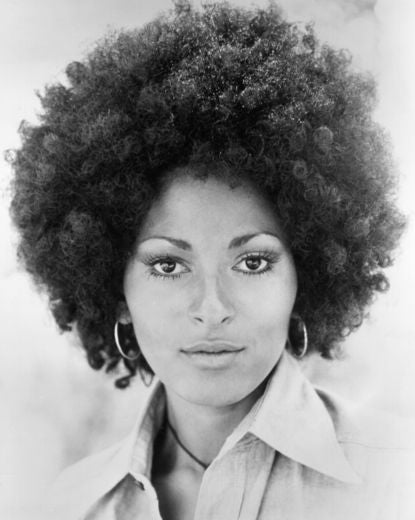
https://www.essence.com/wp-content/uploads/2010/03/images/2010/03/376521-pam_grier.jpg
This photograph is the property of its respective owner.
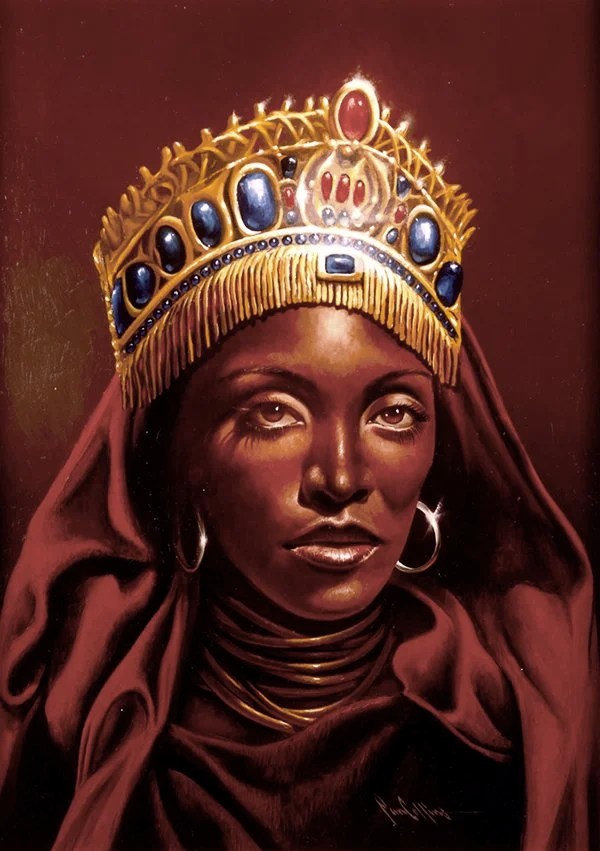
https://the-brown-girl-dilemma.com/wp-content/uploads/2025/08/7d6d7-12bqueen2bof2bsheba2bby2bpaul2bcollins.webp
This photograph/artwork is the property of its respective owner.
https://i.pinimg.com/1200x/ab/62/95/ab62959d7fee3669efd67362c838da82.jpg
This photograph is the property of its respective owner.

Here’s a richly diverse edge image carousel capturing the elegance and allure that embody celebrated Black beauty—portraits evoke radiance, Afrocentric grace, and timeless poise.


The World’s Most Beautiful Black Women in Entertainment.

Contemporary Global Icons:

  • Halle Berry – Arguably the most beautiful woman in the world. A timeless beauty who has mesmerized men since the 1990s, known for her short-cropped hair.
  • Nathalie Emmanuel – Known for her radiant smile and pretty face.
  • Rihanna – Her girlish charm, cafe au lait complexion, and a cosmetic company to boot, she redefines what is considered beautiful.
  • Lupita Nyong’o – Her resplendent skin and captivating natural beauty make her a standout in film.

African Royalty & Beauty Queens:

  • Anok Yai – A South Sudanese-born model whose groundbreaking achievements include opening Prada’s runway and advocating against colorism, making her one of fashion’s most influential figures. oceanonlinenews.comBeauty News
  • Zozibini Tunzi – Miss Universe 2019 from South Africa, celebrated for redefining beauty standards and representing African elegance on the global stage. Wikipedia
  • Chidinma Adetshina – Crowned Miss Universe Nigeria and first runner-up at Miss Universe 2024, her beauty and resilience inspire. Beauty News
  • Tshego Gaelae – Mrs. World 2025 winner from South Africa, blending legal expertise with beauty and leadership in her community. Wikipedia
  • Nomzamo Mbatha – South African actress and humanitarian whose radiant presence and advocacy work have made her an international beauty and cultural ambassador. top 10 on 10

Other Admirable Talents:

  • Gabrielle Union – Renowned for her consistency in beauty, charisma, and advocacy for inclusivity. Lifestyle Net Worth
  • Megalyn Echikunwoke – An actress whose elegance and authentic presence make her stand out both on-screen and off. Lifestyle Net Worth
  • Paige Hurd – Young, radiant, and charismatic, this rising star is making her mark through both talent and beauty. Lifestyle Net Worth
  • Jourdan Dunn – A groundbreaking British model recognized for her fierce runway presence and landmark modeling achievements. The Trend Spotter
  • Viola Davis – A beauty rooted in strength, emotion, and integrity, rising to monumental acclaim through soulful performances. The Trend SpotterVanity Fair

What Black Actors Say About Beauty

While direct quotes from Black actors about other Black women may not always circulate widely, the spirit of admiration is evident through actions and commendations:

  • Kenya Moore, former Miss USA, shared with students that her win helped challenge beauty norms, teaching kids the importance of intelligence, confidence, and Black beauty beyond appearance. People.com
  • Though not celebrity quotes, Leslie Jones delivered powerful commentary on Saturday Night Live, using humor to confront painful truths around Black beauty and stereotypes, highlighting the need for recognition and empathy. TIME

Summary Table: A Snapshot of Celebrated Black Beauty

NameNotability
Halle BerryIconic actress and timeless beauty
Nathalie EmmanuelRadiant presence from Game of Thrones
RihannaBeauty-plus-influence through her brands
Keke PalmerYouthful energy and natural charisma
Anok YaiRunway game-changer and inclusivity advocate
Zozibini TunziMiss Universe who redefined beauty standards
Chidinma AdetshinaNigerian queen rising beyond pageantry
Tshego GaelaeMrs. World merging beauty with accomplishment
Nomzamo MbathaActress & humanitarian with global impact
Gabrielle UnionRadiant advocate for representation
Megalyn EchikunwokeElegant and authentic on-screen presence
Paige HurdYouthful rising beauty
Jourdan DunnLegendary British model and industry trailblazer
Viola DavisDepth, beauty, and emotional authenticity

How We Reclaim Our Position as the World’s Beauty Standard

Reclaiming the crown requires three steps: cultural ownership, global visibility, and systemic change.

  1. Cultural Ownership – Embracing African features as desirable, not “different,” and rejecting beauty practices that harm natural attributes.
  2. Global Visibility – Amplifying Black beauty through fashion, film, art, and social media on a worldwide scale, without apology or dilution.
  3. Systemic Change – Fighting for anti-discrimination laws (such as the CROWN Act) that protect natural hair and skin tone diversity in schools and workplaces.

When we redefine beauty for ourselves and project it unapologetically, the world must adjust its gaze.


Conclusion

The reclamation of Black beauty is not a passing aesthetic trend—it is a restoration of historical truth. Before colonialism, African beauty standards shaped much of the ancient world, from Nubian queens to Ethiopian royalty admired for their dark skin, elaborate hairstyles, and regal presence. By understanding the origins of white beauty standards and actively rejecting them, Black people can once again stand at the center of the world’s definition of beauty—not as imitators of an imposed ideal, but as the original blueprint.

References

  • Byrd, A., & Tharps, L. L. (2014). Hair Story: Untangling the Roots of Black Hair in America. St. Martin’s Press.
  • Craig, M. L. (2002). Ain’t I a Beauty Queen? Black Women, Beauty, and the Politics of Race. Oxford University Press.
  • Hunter, M. L. (2007). The Persistent Problem of Colorism: Skin Tone, Status, and Inequality. Sociology Compass, 1(1), 237–254.
  • Russell, K., Wilson, M., & Hall, R. E. (2013). The Color Complex: The Politics of Skin Color in a New Millennium. Anchor Books.