Category Archives: The Brown Girl Experience

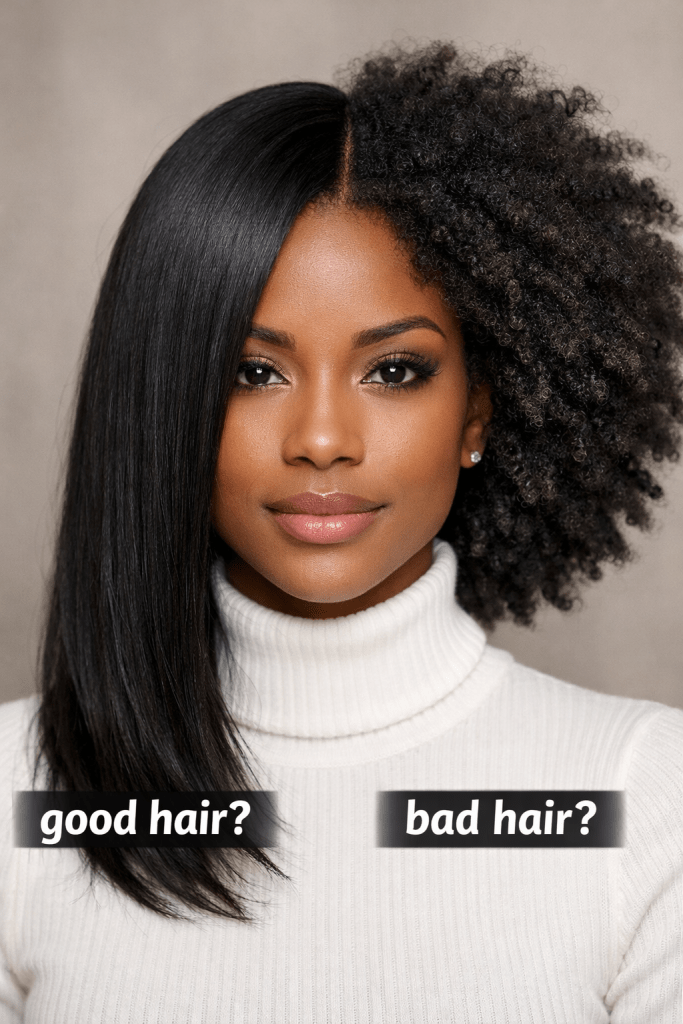
Good Hair Vs Bad Hair

The conversation around “good hair” and “bad hair” has long been a source of tension, pride, and pain within the Black community. The term “good hair” often refers to straighter, silkier textures associated with European standards of beauty, while “bad hair” is used to describe tightly coiled, kinky textures often associated with African heritage. But what does the Bible say about hair, and how can we reclaim a healthy, godly perspective?

The Bible affirms that all hair is good because it is created by God. Matthew 10:30 (KJV) declares, “But the very hairs of your head are all numbered.” This scripture shows the Most High’s care and intentionality regarding hair. There is no biblical basis for labeling one texture as superior to another. Instead, hair is seen as a natural part of God’s design, a symbol of identity, and, in many cases, a spiritual covering (1 Corinthians 11:15, KJV).
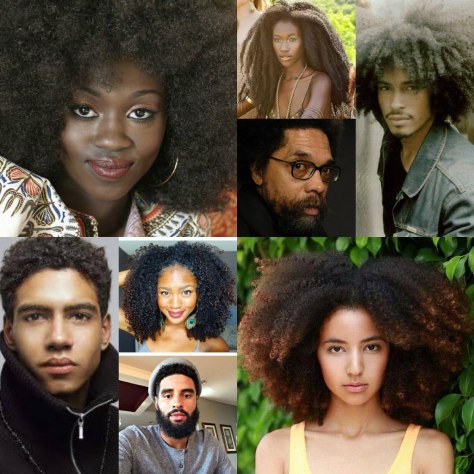
All photographs are the property of their respective owners. No copyright infringement intended.

The notion of “bad hair” largely stems from the legacy of slavery and colonialism. During slavery in America, Africans’ natural hair was often ridiculed and seen as “wild” or “unkempt” by European enslavers. This ridicule was strategic—it sought to strip enslaved Africans of pride in their natural appearance, to convince them that European features and styles were superior.

Psychologically, this produced internalized racism. Over time, many Black people began to associate straight hair with beauty, respectability, and even success. This association was reinforced in media, workplaces, and schools that penalized or banned natural hairstyles. Such systemic discrimination can lead to what scholars call “cultural trauma,” where a group learns to devalue aspects of its own identity.

The term “nappy” historically was used as a derogatory word. It mocked the tight coils and kinks of African hair, equating them with roughness or uncleanliness. The phrase “nappy-headed” became a slur that reinforced the idea that natural Black hair was undesirable. This is a psychological residue of enslavement that still impacts Black self-esteem today.

In truth, there is no such thing as “bad hair.” All hair grows according to the genetic blueprint given by God. Psalm 139:14 (KJV) reminds us, “I will praise thee; for I am fearfully and wonderfully made.” The texture, thickness, and curl pattern of one’s hair is divinely designed, not a mistake.

The love-hate relationship with hair in the Black community also reveals a longing for acceptance. Many Black people invest heavily in hair products, wigs, and chemical treatments to conform to mainstream standards. This is not just vanity—it is often a survival mechanism in a society that discriminates based on appearance.

Hollywood, advertising, and fashion industries have historically promoted Eurocentric beauty ideals, making straight hair the default standard of attractiveness. This has led to generations of Black children growing up believing that their natural hair was unprofessional or unattractive unless it was altered.

The Bible warns against adopting the world’s standard of beauty. 1 Samuel 16:7 (KJV) says, “For man looketh on the outward appearance, but the Lord looketh on the heart.” God is not concerned with whether hair is curly, straight, or coiled—He is concerned with the condition of our spirit.

Hair is also deeply symbolic in the Bible. Samson’s hair represented his covenant with God (Judges 16:17, KJV). The Nazarites were instructed not to cut their hair as a sign of consecration (Numbers 6:5, KJV). These examples remind us that hair has spiritual meaning, but no texture or style makes one holier than another.

Solutions to the “good hair” vs. “bad hair” divide must begin with education and affirmation. Parents can teach children from an early age to embrace their natural hair textures, using affirmations and showing them examples of beauty that look like them. Representation matters.

The natural hair movement has been one powerful response to centuries of hair-shaming. By wearing afros, locs, braids, and twists proudly, Black people reclaim their heritage and reject the lie that straight hair is superior. This movement echoes Romans 12:2 (KJV): “And be not conformed to this world: but be ye transformed by the renewing of your mind.”

Workplaces and schools must also be challenged. Laws like the CROWN Act, which bans hair discrimination, are steps toward justice. Discrimination against natural hair is not merely a fashion issue—it is a civil rights issue rooted in systemic racism.

Spiritually, the solution also involves repentance and deliverance from self-hatred. Generational trauma and the colonial mindset must be broken. Believers can pray for a renewed mind and ask God to restore confidence in His design.

Men must also be part of this conversation. In many cases, Black men have been conditioned to prefer straight hair on women, reinforcing Eurocentric standards. Re-educating men about the beauty and versatility of natural hair is part of community healing.

Media creators and influencers have a responsibility to showcase diverse hair textures positively. When children see actresses, news anchors, and professionals wearing natural styles proudly, it normalizes their beauty. This can shift psychological perceptions over time.

The church can play a role by teaching that hair should not be a source of pride, shame, or division. James 2:1-4 (KJV) warns against showing partiality based on outward appearance. The body of Christ should be the first place where people of all textures feel celebrated.

Healing the Next Generation

The conversation around hair identity must address its impact on children, because early experiences with hair-shaming or affirmation often shape a child’s self-image for life. Developmental psychology teaches that children form a sense of self-worth between ages 3 and 7. If a child repeatedly hears that their hair is “nappy,” “ugly,” or “unprofessional,” those words can leave a deep emotional wound that lasts into adulthood.

Hair bullying is a real issue. In many schools, Black children have been suspended or sent home for wearing braids, locs, or afros—styles that are natural and culturally significant. These incidents teach children that who they are is unacceptable unless they conform to Eurocentric beauty standards. This form of discrimination not only harms self-esteem but also creates anxiety and shame.

From a psychological standpoint, children who internalize negative messages about their hair often struggle with identity development. They may wish they looked different, leading to feelings of inadequacy. Erik Erikson’s theory of psychosocial development identifies this as an “identity vs. role confusion” stage—when children are trying to discover who they are, acceptance plays a critical role.

Biblically, this issue is critical because self-hatred contradicts God’s design. Psalm 8:5 (KJV) declares, “For thou hast made him a little lower than the angels, and hast crowned him with glory and honour.” Every child is made in God’s image (Genesis 1:27, KJV) and should be celebrated as such. Teaching children to love their hair is teaching them to love God’s creation.

Parents play the most important role in reversing the harm of “good hair vs. bad hair” conditioning. Affirmations like “Your hair is beautiful just the way God made it” can help children internalize positive messages. Taking time to gently care for and style their hair with love turns grooming into a time of bonding and affirmation.

Representation in books, toys, and media is also crucial. When children see dolls, superheroes, and princesses with afros, braids, and coils, they learn that beauty comes in many forms. Christian parents can incorporate Bible lessons on diversity and God’s intentional creation to reinforce this truth.
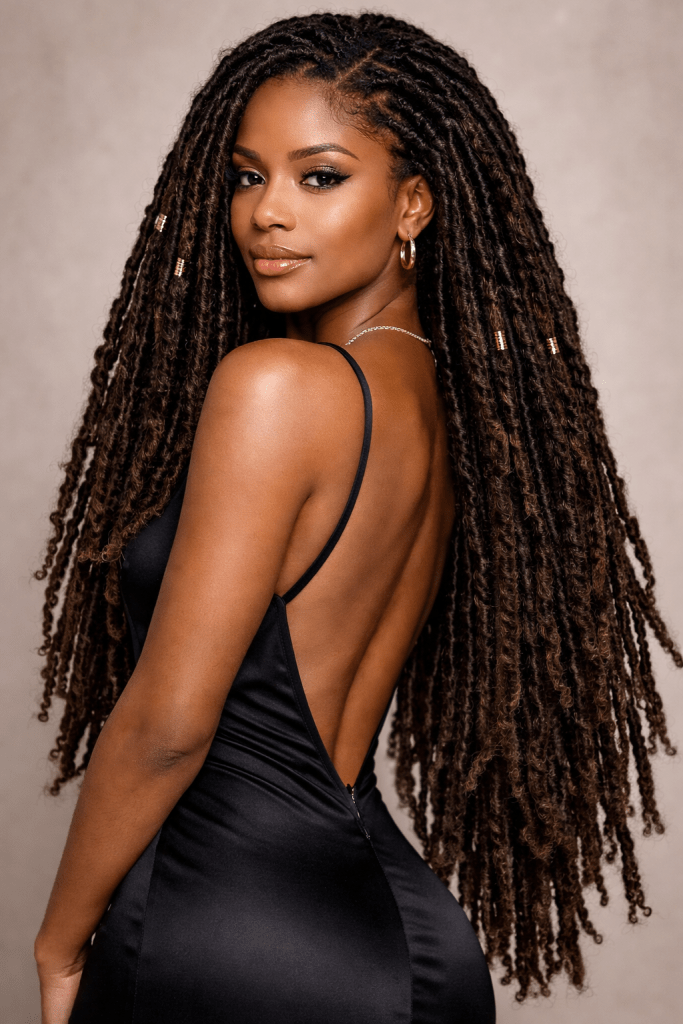
People must create spaces where natural beauty is affirmed rather than criticized. Sadly, some church cultures have pressured women and girls to straighten their hair to look “presentable” for service. Instead, churches should teach that modesty and holiness are about the heart (1 Peter 3:3-4, KJV), not about imitating European hairstyles.

Schools need cultural sensitivity training to prevent hair discrimination. The CROWN Act (Creating a Respectful and Open World for Natural Hair) is now law in several U.S. states and should be advocated for everywhere. This legislation protects children from unfair discipline or exclusion based on hair.

Psychologists recommend early intervention when children experience hair-based bullying. Parents should validate the child’s feelings, teach coping strategies, and involve teachers if necessary. Healing from these experiences prevents long-term damage to self-esteem.

Mentorship programs can also make a difference. When children see older peers or adults proudly rocking natural hair, they have role models to look up to. This helps normalize natural hair and removes the stigma.

Hair care education is another solution. Many parents and teachers simply do not know how to care for natural hair, which can lead to frustration or neglect. Workshops on proper styling, maintenance, and products empower families to care for their hair healthily.

From a community perspective, celebrating natural hair through events like hair shows, heritage days, or social media campaigns can build pride. These events allow children to see that their hair is not just normal—it is special and worth celebrating.

Men and fathers have a special responsibility to speak life into their daughters. A father who compliments his daughter’s natural hair can shield her from seeking validation from harmful sources. Proverbs 18:21 (KJV) reminds us that “death and life are in the power of the tongue.”

Mental health support is also important. If a child’s self-esteem has been deeply harmed, counseling can help them rebuild a healthy self-image. Christian counseling can integrate biblical truths with therapeutic strategies to restore confidence.

The natural hair conversation should also extend to young boys. Boys with locs or afros have been stereotyped as “unprofessional” or even “criminal.” Parents must teach their sons that their hair is not a marker of delinquency but of heritage, creativity, and pride.

Psychologically, embracing natural hair is part of decolonizing the mind. It is a way of rejecting oppressive beauty standards and embracing cultural authenticity. Romans 12:2 (KJV) calls us to “be transformed by the renewing of your mind.” Renewing the mind means unlearning lies that say Blackness must be hidden or altered to be acceptable.

Education on African history is also a solution. When children learn about ancient African civilizations—Egypt, Kush, Mali—and their rich culture, they develop pride in their heritage. This context reframes hair as part of a royal, powerful legacy rather than something to be ashamed of.

Finally, prayer and community support are vital. Families can pray over their children’s self-esteem and ask God to protect them from the spirit of rejection. James 5:16 (KJV) promises that “the effectual fervent prayer of a righteous man availeth much.” Community support groups can also provide encouragement and resources for families committed to embracing natural beauty.

In conclusion, healing the next generation from the trauma of “good hair vs. bad hair” is not just a beauty issue—it is a spiritual and cultural mission. By affirming children early, reforming schools and churches, and providing mentorship and representation, we can raise a generation that celebrates what God has given them. When we teach children that all hair is good hair, we teach them that they themselves are good—fearfully and wonderfully made.

Ultimately, the conversation about “good hair” vs. “bad hair” is about much more than hair. It is about freedom—freedom from colonial thinking, from internalized racism, and from societal pressure to conform. True freedom comes from knowing who you are in Christ and embracing every part of your God-given identity.

In conclusion, all hair is good hair. It is numbered by God, designed with purpose, and worthy of care and respect. The challenge before us is to uproot the lies of slavery, colonization, and white supremacy that taught generations of Black people to hate what God made. Only then can we walk fully in the truth that we are fearfully and wonderfully made—kinks, curls, coils, and all.
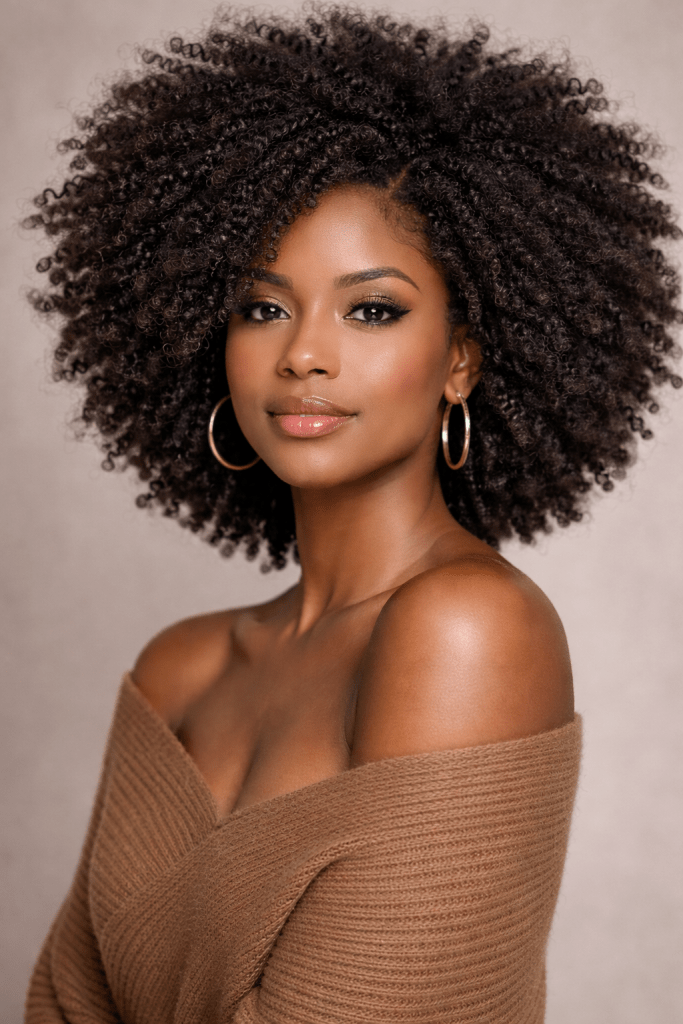
Good Hair? YES


References

  • Banks, I. (2000). Hair Matters: Beauty, Power, and Black Women’s Consciousness. NYU Press.
  • Byrd, A., & Tharps, L. (2014). Hair Story: Untangling the Roots of Black Hair in America. St. Martin’s Griffin.
  • hooks, b. (1992). Black Looks: Race and Representation. South End Press.
  • DeGruy, J. (2005). Post Traumatic Slave Syndrome. Joy DeGruy Publications.

Key KJV Scriptures: Matthew 10:30; 1 Corinthians 11:15; Psalm 139:14; 1 Samuel 16:7; Judges 16:17; Numbers 6:5; Romans 12:2; James 2:1-4.
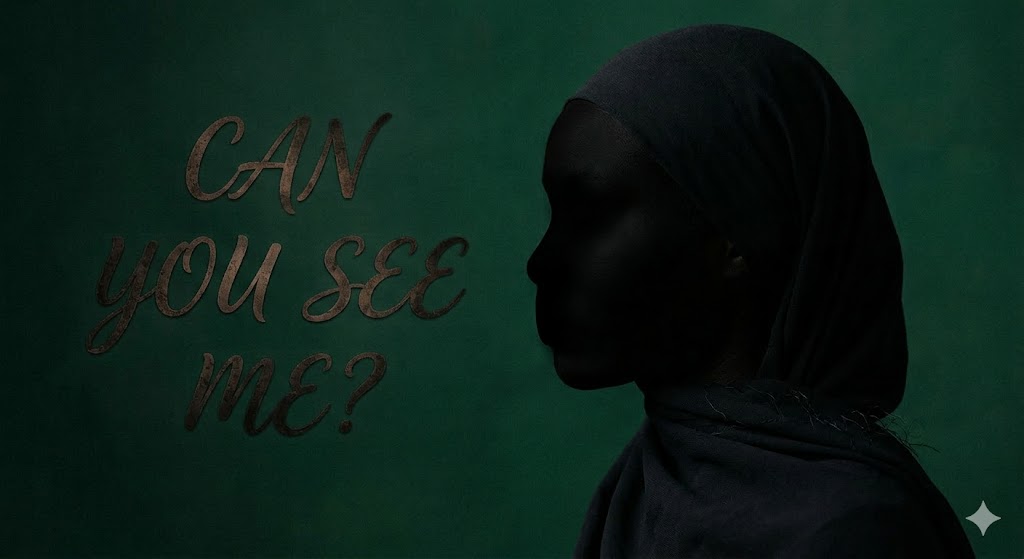

The Unseen Black Woman

The unseen Black woman lives at the intersection of power and pain, shaped by histories that sought to silence her and a world that often refuses to acknowledge her presence. Her story is one of resilience, complexity, and unshakable dignity—a story too often misinterpreted or completely ignored. From the days of enslavement to contemporary society, the Black woman remains both foundational and marginalized, desired yet devalued, visible only when convenient yet erased when truth is required. She is the cultural womb of nations, and yet she continues to battle the shadows of invisibility.

Historically, Black women have been overlooked and unprotected by social structures that elevate others while dismissing their humanity. During slavery, their labor and bodies were exploited without recognition or care, laying the foundation for stereotypes that still persist today. This invisibility is not accidental but systematically produced through institutions that benefit from her silence. Scholars have long noted that the Black woman is rarely seen as the standard of beauty, intelligence, or femininity in mainstream society, despite her profound contributions (Collins, 2000).

Rejection by other races, particularly within a white-dominated beauty and social hierarchy, has created layers of psychological warfare against the Black woman’s self-worth. Colorism—rooted in colonialism—has placed lighter skin on a pedestal while disregarding darker-skinned women. Media representation has amplified this hierarchy, rewarding proximity to whiteness and punishing features deeply tied to African ancestry. The Black woman’s rejection is not just personal; it is structural, echoing across fashion, film, workplace settings, and even healthcare outcomes.

Yet perhaps even more painful is the rejection she often experiences within her own community. Internalized racism and colorism, taught across generations, have led some Black men and women to subconsciously prefer lighter skin or Eurocentric features. This is not natural or innate—it is learned behavior shaped by centuries of conditioning. Enslavers strategically favored lighter-skinned enslaved people for domestic labor and created hierarchies among the enslaved that persist today. These psychological wounds have evolved but not disappeared.

Despite this, the Black woman’s beauty remains unmatched and deeply rooted in cultural, genetic, and ancestral strength. Her beauty defies narrow Western standards and emerges in endless forms—in tightly coiled hair, deep brown hues, high cheekbones, full lips, and regal posture. Studies on global beauty standards are increasingly recognizing the universality of features traditionally associated with African women, challenging outdated paradigms (Wade, 2017). Black beauty has not only survived exclusion; it has reshaped global culture, influencing art, fashion, language, and music.

The unseen Black woman is the backbone of movements, families, and spiritual communities, often leading without acknowledgment. She nurtured children who weren’t her own during slavery. She pioneered movements for civil rights while others received the spotlight. She protected her community, advocated for justice, and birthed cultural revolutions only to be written out of the narrative. Even today, Black women are the most educated demographic in America yet remain underpaid and under-promoted (NCES, 2022). This contradiction shows a society eager to benefit from her labor but unwilling to reward her leadership.

Her invisibility also appears in modern love dynamics. Many Black women face rejection on dating apps, in media pairings, and in social perceptions. Studies reveal that Black women are the most marginalized demographic in online dating algorithms (Hobbs et al., 2019). The social myth that Black women are “too strong,” “too independent,” or “undesirable” is not only untrue but dehumanizing. These narratives shape how the world interacts with Black women and how Black women learn to navigate relationships, often feeling unseen or undervalued.

But the unseen Black woman is not just a victim of rejection. She is a survivor who has learned to adapt, rebuild, and reimagine herself. She creates communities of healing—sister circles, natural hair movements, maternal health activism, and artistic spaces where she can breathe freely. She redefines beauty on her own terms, crafts new languages of empowerment, and challenges the structures that diminish her. She is not waiting for validation from society because she recognizes her worth internally.

Her spirituality has long been a source of strength. From traditional African religions to Christianity and modern spiritual practices, the Black woman’s connection to the divine has given her clarity and purpose. She understands suffering and redemption not as abstract concepts but lived realities. Her prayers have carried families, her faith has sustained movements, and her moral compass has shaped entire communities.

Black women have also served as cultural innovators, setting trends that the world imitates yet rarely credits. Hairstyles, fashion, vernacular, music, and social movements all bear the imprint of Black womanhood. The global appropriation of Black culture, without acknowledgment or respect, further demonstrates how she can be hyper-visible in influence yet invisible in recognition.

The unseen Black woman continues to face stereotypes—angry, loud, aggressive—labels manufactured to control her. These stereotypes mask her real emotions, preventing her from expressing pain, frustration, or vulnerability. They create barriers in workplaces, where she must work twice as hard while navigating biases that others do not face. They silence her in medical settings, where her pain is dismissed, leading to disproportionate maternal mortality rates.

Yet she persists. She continues to rise in academic fields, corporate leadership, entrepreneurship, and political influence. From Kamala Harris to Viola Davis, from everyday mothers to grassroots organizers, Black women are shaping the future. They are rewriting the narrative in real time, proving that invisibility is not destiny but a condition imposed by others.

Despite rejection from society, Black women remain deeply connected to one another. The solidarity found among Black women is powerful, nurturing, and healing. Within these bonds, they see each other fully. They uplift, affirm, and celebrate what the world ignores. In those circles, the unseen Black woman becomes seen again.

This invisibility has generational roots, but modern generations are actively dismantling it. Social media has allowed Black women to tell their own stories, challenge Eurocentric standards, and build platforms that center their experiences. From beauty influencers to scholars, Black women now control narratives once dictated by others.

The unseen Black woman is learning to rest, prioritize her mental health, and unlearn survival mode. She is healing from generational trauma, redefining femininity, and embracing softness without fear. She is discovering that her worth is inherent, not earned through suffering or sacrifice.

She is also demanding accountability—from media, corporations, governments, healthcare, and within her own communities. Black women are no longer silent about colorism, misogynoir, or the ways they have been mistreated. This new era is one of self-advocacy and bold truth-telling.

The unseen Black woman is not unseen because she lacks brilliance or beauty—she is unseen because society refuses to acknowledge what it cannot control. But she is rising, reclaiming her power, name by name, voice by voice. She carries the legacy of ancestors who walked through fire and still birthed nations. Her story is not one of defeat but victory.

Ultimately, the unseen Black woman is becoming the most visible she has ever been. She is taking her place in history and demanding that the world recognize her. Her resilience, beauty, intellect, and spiritual depth are undeniable. She is no longer waiting to be seen—she is choosing to be seen, loudly and unapologetically. And in doing so, she transforms not only her world but the world around her.

References

Collins, P. H. (2000). Black feminist thought: Knowledge, consciousness, and the politics of empowerment. Routledge.
Hobbs, L., Owen, J., & Gerstenberger, K. (2019). Online dating preferences and racial biases. Journal of Social and Personal Relationships, 36(7), 1992–2013.
National Center for Education Statistics. (2022). Status and trends in the education of racial and ethnic groups.
Wade, L. (2017). Beauty standards and race: A sociocultural analysis. Sociology Compass, 11(6), e12482.

The Baby Mama Culture

Baby-mama culture refers to a normalized social framework where motherhood and fatherhood occur outside of marriage, often detached from covenantal stability, economic cooperation, and spiritual accountability (Reid-Merritt, 2016). In many communities, particularly those shaped by historical ruptures in family structure, children are born into relational instability rather than covenantal unity.

The phenomenon begins at its root—sexual relations without marital commitment. Scripture frames sex as sacred and covenant-bound: “Marriage is honourable in all, and the bed undefiled: but whoremongers and adulterers God will judge” (Hebrews 13:4, KJV). The biblical worldview denies neutrality—sexual union creates consequence, whether lifelong or burdensome.

Rather than husband and wife, the terms baby-mama and baby-father replace covenant language with consumer-relationship labels, stripping parental identity from spiritual foundation. Proverbs warns that this erosion begins in the mouth and heart: “Keep thy heart with all diligence; for out of it are the issues of life” (Proverbs 4:23, KJV).

Without marriage, co-parenting often shifts into legal co-management rather than spiritual stewardship, introducing child-support systems as substitutes for shared responsibility. “The borrower is servant to the lender” (Proverbs 22:7, KJV) applies symbolically—dependency on state-enforced support turns family matters into institutional debt.

In many cases, fathers become associated more with financial obligation than household presence. While child support can enforce provision, it cannot enforce fatherhood. The Bible asserts a father is more than a provider—he is a guide: “And ye fathers, provoke not your children to wrath: but bring them up in the nurture and admonition of the Lord” (Ephesians 6:4, KJV).

For many Black fathers today, systemic barriers compound cultural misalignment. The family dislocation introduced through slavery makes this conversation generational—Black fathers historically were denied legal marriage and paternal rights, creating historical precedent for fractured kinship models (Franklin, 2010).

Thus, baby-mama culture is not only moral—it is structural and historical. “The fathers have eaten sour grapes, and the children’s teeth are set on edge” (Jeremiah 31:29, KJV) symbolizes generational consequence, though scripture later clarifies personal accountability is required moving forward.

Child-support culture often traps fathers in economic survival mode, where wages are garnished, employment is limited, and housing or credit is compromised. Deuteronomy prophetically warns what disobedience to the covenant brings: “He shall lend to thee, and thou shalt not lend to him: he shall be the head, and thou shalt be the tail” (Deuteronomy 28:44, KJV).

Many fathers still fight to make it. Some hold multiple jobs, trades, delivery routes, construction shifts, night work, entrepreneurial side hustles, hustling not from irresponsibility but from necessity. Paul affirms provision is required, even without cultural praise: “But if any provide not for his own…he hath denied the faith” (1 Timothy 5:8, KJV).

The pressure on these fathers is immense. They serve as financial pillars but emotional ghosts, absent from many narratives, holidays, school mornings, and prayers at night. This imbalance creates psychological distance even when provision is technically met (Payne, 2023).

Mothers also carry burdens. Raising children without marital structure often forces women into masculine economic roles without masculine protection, reversing divine design. Peter outlines the feminine posture that cultivates peace: “Let it not be that outward adorning only…but a meek and quiet spirit” (1 Peter 3:3-4, KJV).

Many relationships collapse into resentment because they begin without covenant alignment. Jesus clarifies what foundationless unions lack: “For out of the abundance of the heart the mouth speaketh” (Matthew 12:34, KJV). When love is thin, words grow sharp, accusations louder than agreements.

Children become unintended theologians of family dysfunction, internalizing instability as normal. Solomon says training begins early: “Train up a child in the way he should go…” (Proverbs 22:6, KJV). A child trained without a model may grow mastered by the culture that raised him.

Community implications extend beyond the household. When men are isolated from fatherhood identity, they often seek validation in alpha culture, street brotherhood, clubs, charisma, cars, and currency, rather than wives and wisdom (Dyson, 2004).

Paul teaches the danger of ungoverned desire: “Flee also youthful lusts…” (2 Timothy 2:22, KJV). Lust builds children but does not build kingdoms, legacies, or homes. Desire without discipleship produces responsibility without reverence.

Many fathers spiritually collapse not because they reject God but because they reject God’s order first, then wonder why life rejects them back. James warns that disordered living destabilizes every direction: “A double-minded man is unstable in all his ways” (James 1:8, KJV).

Healing begins when men reclaim identity beyond economy and court systems. David prayed for restoration not externally but inwardly: “Create in me a clean heart, O God…” (Psalm 51:10, KJV). Restoration requires spiritual re-centring, not just relationship repair.

Fatherhood also demands discipline over the tongue, accountability in + out of conflict. Solomon says: “Death and life are in the power of the tongue” (Proverbs 18:21, KJV). Fathers must speak identity into children, not hostility into mothers.

Likewise, women must discern love from loneliness to prevent repeating cycles. Ruth found covering before the creation of the legacy. Boaz represented the covenant before the seed (Ruth 4, KJV). Biblical design demands “wife first, then womb”, not womb then warfare.

Child support may ensure bread, but Bible culture ensures blessing. Isaac and Rebekah built a legacy through a covenant, not courts (Genesis 25:20-21, KJV). When covenant governs creation, provision flows naturally, not forcefully.

Many fathers survive—but survival is not scripture’s endgame. God calls men into government, legacy, and lineage: “The glory of children is their fathers” (Proverbs 17:6, KJV). God never said the glory of checks is their fathers ‘ presence, name, guidance, or covering.

To dismantle baby-mama culture, the counterculture must be covenant revival, identity restoration, sexual discipline, shared spiritual stewardship, and fathers elevated beyond economic footnotes into apostolic heads of household again (Malachi 4:6, KJV): “And he shall turn the heart of the fathers to the children, and the heart of the children to their fathers…”


References

Dyson, M. (2004). The Michael Eric Dyson Reader. Basic Civitas.
Franklin, J. H. (2010). From Slavery to Freedom. McGraw-Hill.
Reid-Merritt, P. (2016). Fallen Daughters of Eve. Kensington.
Reid, M., & Cazenave, N. (2023). Black family cultural analysis. Journal of Black Family Studies.
Payne, R. (2023). Economic strain on non-custodial fathers. Urban Social Economics Review.

Healing. Honor. High Value.

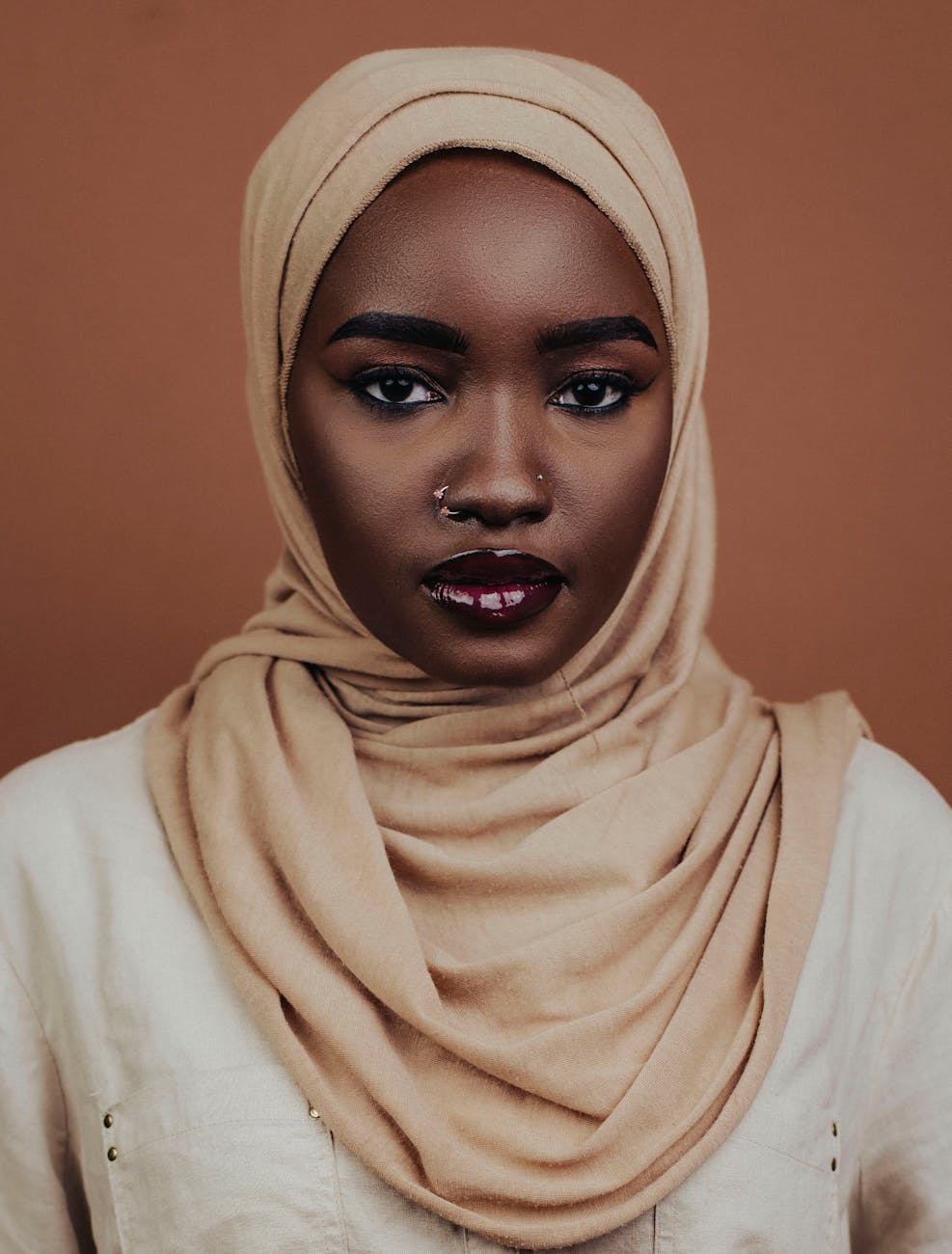
Photo by Abdulkadir muhammad sani on Pexels.com

Healing is the foundation of restoration. Psalm 147:3 declares, “He healeth the broken in heart, and bindeth up their wounds.” Emotional, spiritual, and relational healing allows individuals—particularly women of color—to reclaim their identity, purpose, and voice in a world that often devalues them.

Honor flows from God’s design. Proverbs 3:35 teaches, “The wise shall inherit glory: but shame shall be the promotion of fools.” When a person aligns with God’s truth, they walk in dignity that no worldly measure can diminish.

High value originates in divine creation. Psalm 139:14 affirms, “I will praise thee; for I am fearfully and wonderfully made: marvellous are thy works; and that my soul knoweth right well.” Recognizing intrinsic worth rooted in God’s craftsmanship fosters confidence, resilience, and purpose.

Healing nurtures spiritual growth. James 5:16 exhorts, “Confess your faults one to another, and pray one for another, that ye may be healed. The effectual fervent prayer of a righteous man availeth much.” Community and prayer are vital components in restoration.

Honor shapes relationships. Romans 12:10 teaches, “Be kindly affectioned one to another with brotherly love; in honour preferring one another.” Treating oneself and others with respect reinforces godly influence.

High value guides decision-making. Proverbs 4:7 affirms, “Wisdom is the principal thing; therefore get wisdom: and with all thy getting get understanding.” Awareness of personal worth informs choices that align with God’s purpose.

Healing restores identity. Isaiah 61:1 declares, “The Spirit of the Lord GOD is upon me; because the LORD hath anointed me to preach good tidings unto the meek…” Restoration begins when spiritual truth reshapes perception of self.

Honor manifests in integrity. Proverbs 10:9 teaches, “He that walketh uprightly walketh surely: but he that perverteth his ways shall be known.” Dignity grows when actions align with God’s principles.

High value empowers advocacy. Proverbs 31:26 affirms, “She openeth her mouth with wisdom; and in her tongue is the law of kindness.” Speaking truth and establishing boundaries reflect self-worth and divine guidance.

Healing strengthens resilience. Romans 5:3-4 teaches, “…tribulation worketh patience; And patience, experience; and experience, hope.” Overcoming past wounds develops character and fortitude.

Honor amplifies influence. 1 Peter 2:17 exhorts, “Honour all men. Love the brotherhood. Fear God. Honour the king.” Respect for self and others fosters leadership and legacy.

High value sustains purpose. Colossians 3:23 commands, “And whatsoever ye do, do it heartily, as to the Lord, and not unto men.” Valuing oneself in accordance with God’s standards inspires excellence.

Healing restores voice. Psalm 34:18 declares, “The LORD is nigh unto them that are of a broken heart; and saveth such as be of a contrite spirit.” Emotional restoration empowers expression and authenticity.

Honor reflects divine reflection. Ephesians 4:32 teaches, “And be ye kind one to another, tenderhearted, forgiving one another, even as God for Christ’s sake hath forgiven you.” Treating others with reverence mirrors God’s character.

High value nurtures leadership. Proverbs 31:25 states, “Strength and honour are her clothing; and she shall rejoice in time to come.” Recognizing worth strengthens confidence, influence, and legacy.

Healing requires intentionality. Matthew 11:28 encourages, “Come unto me, all ye that labour and are heavy laden, and I will give you rest.” Seeking restoration through Christ sustains transformation.

Honor sustains relationships. Romans 12:18 teaches, “If it be possible, as much as lieth in you, live peaceably with all men.” Living honorably fosters trust, respect, and collaboration.

High value inspires boundaries. Proverbs 25:28 warns, “He that hath no rule over his own spirit is like a city that is broken down, and without walls.” Recognizing worth ensures protection of self and integrity.

Healing cultivates wholeness. 1 Peter 5:7 exhorts, “Casting all your care upon him; for he careth for you.” Spiritual surrender releases burdens, allowing restoration to flourish.

Ultimately, healing, honor, and high value converge as a blueprint for living authentically and purposefully. Psalm 1:3 promises, “And he shall be like a tree planted by the rivers of water, that bringeth forth his fruit in his season; his leaf also shall not wither; and whatsoever he doeth shall prosper.” Wholeness, dignity, and worth are cultivated in alignment with God’s truth.

Ode to the shades of Brown

Oh, the shades of brown, rich as the earth,
From the deepest mahogany to the honeyed warmth of birth.
You tell stories of ancestry, of kings and queens,
Of rivers crossed and lands unseen.

Your skin, a tapestry woven by God’s own hand,
A palette divine, too vast to understand.
Every tone a hymn, every hue a song,
A testament of resilience, proud and strong.

In sunlight, you shimmer like burnished gold,
A brilliance no lens nor mirror can hold.
In shadow, you speak of depth and grace,
Of sacred histories, time cannot erase.

Oh, chestnut, cocoa, and espresso hues,
Each a reflection of ancient truths.
Each freckle, each mole, a jewel to behold,
A story of courage, of valor untold.

Caramel whispers of warmth and light,
Mocha radiates quiet power in sight.
Amber gleams with a gentle fire,
Chestnut glows with ancestral desire.

The shades of brown, both subtle and bold,
Carry legacies neither bought nor sold.
From slave cabins to palaces, from fields to streets,
Your beauty defies oppression, never retreats.

KJV Truth sings in your radiant skin:
Psalm 139:14 – “I am fearfully and wonderfully made.”
Every shade, every tone, every nuance,
A reflection of God’s artistry, perfect and true.

Celebrate your brown, in all its delight,
From dawn’s soft glow to the velvet of night.
No pigment dictates your worth or your place,
Your brown is divine, imbued with God’s grace.

Oh, the shades of brown, a spectrum so vast,
From subtle taupe to the boldest cast.
You are power, beauty, endurance, and art,
A masterpiece woven straight from God’s heart.

So rise, brown daughters, with pride in your skin,
Let no world’s bias define what’s within.
Your shade is a crown, your hue is a song,
In the orchestra of creation, you alone belong.

The phrase “shades of brown” reflects more than just physical variation in skin tone—it represents a complex social reality shaped by history, power, and perception. Across the African diaspora and other communities of color, differences in skin tone have been given meaning within systems that rank and assign value to people based on how light or dark they appear. This phenomenon, known as Colorism, continues to influence identity, opportunity, and self-perception.

Colorism has deep roots in the history of slavery and colonialism. During the transatlantic slave trade, lighter-skinned enslaved individuals—many of whom were of mixed ancestry—were sometimes given preferential treatment, such as working in the house rather than in the fields. These divisions were not accidental; they reinforced a hierarchy that placed whiteness, and proximity to it, at the top. Over time, these patterns became internalized within communities, creating lasting divisions based on complexion.

The legacy of these practices can still be seen today. Lighter skin is often associated with beauty, success, and desirability, while darker skin is unfairly stigmatized. This bias is reinforced through media representation, where lighter-skinned individuals are frequently overrepresented in leading roles, advertisements, and positions of influence. As a result, societal standards of beauty often reflect a narrow range of features tied to Eurocentric ideals.

From a sociological perspective, colorism operates as a learned norm within Sociology, passed down through generations and reinforced by institutions such as media, education, and family structures. Individuals absorb these messages early in life, shaping how they view themselves and others. Children, for example, may begin to associate lighter skin with positive traits and darker skin with negative ones, even without explicit instruction.

The psychological impact of colorism is significant. Studies have shown that individuals with darker skin tones may experience lower self-esteem, higher levels of discrimination, and reduced access to opportunities in areas such as employment and education. This aligns with Social Identity Theory, which explains how people derive part of their self-worth from how their group is perceived in society. When darker skin is devalued, it can negatively affect individual identity and confidence.

In addition to its psychological effects, colorism also has economic consequences. Research suggests that lighter-skinned individuals, on average, earn higher incomes and are more likely to be perceived as professional or trustworthy. These disparities highlight how deeply embedded color bias is within social and institutional structures.

The concept of “shades of brown” also intersects with ideas of mixed race and racial ambiguity. Individuals with lighter or racially ambiguous features are often treated differently, sometimes receiving privileges not afforded to darker-skinned individuals. However, this can also come with its own challenges, including questions about identity and belonging.

The Media continues to play a central role in reinforcing color hierarchies. Through film, television, and social media, certain looks are elevated while others are marginalized. The lack of diverse representation contributes to a limited understanding of beauty and perpetuates harmful stereotypes.

At the same time, there has been a growing movement to challenge colorism and celebrate darker skin tones. Campaigns promoting inclusivity and representation have begun to shift public perception, encouraging a broader and more authentic definition of beauty. Social media, while part of the problem, has also become a platform for advocacy and empowerment.

Education and awareness are key to addressing colorism. By understanding its historical roots and recognizing its modern impact, individuals and communities can begin to dismantle these biases. Conversations about colorism help to bring attention to an issue that is often overlooked but deeply felt.

Ultimately, the “shades of brown” are a testament to human diversity, not a hierarchy of value. Skin tone variation is a natural result of genetic adaptation and ancestry, not a measure of worth. Challenging colorism requires both individual reflection and collective action to redefine standards and promote equity.

The journey toward dismantling colorism is ongoing, but it begins with recognizing that all shades carry equal beauty, dignity, and significance. By confronting these biases, society can move closer to a more inclusive and just understanding of identity.


References

Hunter, M. (2007). The persistent problem of colorism: Skin tone, status, and inequality. Sociology Compass, 1(1), 237–254.

Keith, V. M., & Herring, C. (1991). Skin tone and stratification in the Black community. American Journal of Sociology, 97(3), 760–778.

Monk, E. P. (2015). The cost of color: Skin color, discrimination, and health among African Americans. American Journal of Sociology, 121(2), 396–444.

Dixon, T. L., & Telles, E. E. (2017). Skin color and colorism: Global research, concepts, and measurement. Annual Review of Sociology, 43, 405–424.

Hall, R. E. (2018). The Bleaching Syndrome: African Americans’ Response to Cultural Domination. Springer.

When Melanin Isn’t Enough

Photo by Daryl Johnson on Pexels.com

To be cloaked in melanin is to carry the history of a people, the beauty of creation, and the strength of survival. Yet for many, that sacred covering has not always guaranteed belonging, protection, or peace. When Melanin Isn’t Enough explores the painful paradox of being richly pigmented in a world that celebrates Black culture but resists Black humanity. It is a confession and a lament—a recognition that melanin, though powerful, cannot shield the heart from systems designed to wound it.

Melanin was meant to be glory. It is the pigment that absorbs sunlight and turns it into strength, a biological brilliance that protects, preserves, and radiates. Yet society, poisoned by racism and colonial beauty ideals, has turned that divine gift into a social marker of inferiority. For centuries, Blackness has been commodified and criminalized—embraced when fashionable, erased when inconvenient. The contradiction leaves many asking: if my skin carries the sun, why must I still fight to prove my worth under its light?

The struggle begins early. In classrooms and playgrounds, darker-skinned children often face ridicule, while lighter tones are subtly praised. These small moments plant seeds of self-doubt that blossom into lifelong insecurities. The child learns that melanin is both identity and liability, and the world’s mixed messages fracture the soul. “Am I too dark to be loved? Too Black to be accepted?” These questions echo long after childhood, haunting the adult who must unlearn the lies planted in innocence.

For the Black woman, melanin becomes both armor and target. She is admired when her features fit aesthetic trends, but dismissed when her authenticity challenges Eurocentric comfort. Her beauty is borrowed by fashion and filtered by media, yet she is often denied the credit for the culture she creates. When melanin isn’t enough, her humanity becomes conditional—validated only when it entertains or conforms.

The Black man, too, feels this contradiction deeply. His melanin, symbolizing ancestral might, is perceived through a lens of fear. His strength becomes threat; his presence, politicized. No matter how articulate, accomplished, or gentle he becomes, his skin too often writes his story before he speaks. He must navigate the exhausting tightrope between pride and safety, power and perception.

Melanin should have been a bridge of unity, but within the Black community, it sometimes becomes a border. Colorism, born from colonial residue, divides sisters and brothers into categories of worth. Light-skinned privilege and dark-skinned pain intersect in cycles of jealousy, guilt, and misunderstanding. This internal division weakens collective power, fulfilling the enemy’s agenda of disunity. Scripture warns, “Every kingdom divided against itself is brought to desolation” (Matthew 12:25, KJV). Healing requires honest reckoning with these inherited wounds.

Spiritually, when melanin isn’t enough, it is because the war is not of flesh but of perception. The world has misnamed Blackness—calling divine what is pale and calling inferior what is holy. Yet the Word declares, “I am fearfully and wonderfully made” (Psalm 139:14, KJV). The Creator, who formed man from the dust of the ground, did not err in His design. Melanin was God’s intentional artistry, not a cosmic afterthought. The error lies not in the pigment but in the gaze that refuses to see it as divine.

The emotional toll of that misperception is immense. Many who are richly melanated still feel unseen—rejected in corporate spaces, romantic relationships, and even faith communities. Society consumes the aesthetic of Blackness but denies its depth. From music to fashion to slang, melanin is celebrated in fragments while its full humanity is ignored. The world wants Black culture without Black people.

In this tension, faith becomes refuge. The believer learns that divine validation transcends social opinion. The Bible reminds us in 1 Samuel 16:7 that “man looketh on the outward appearance, but the Lord looketh on the heart.” When melanin isn’t enough to earn human acceptance, grace becomes the garment that restores identity. The faithful must remember that worth is not measured by shade or status, but by spiritual alignment.

History reveals that melanin alone did not save our ancestors from oppression—but their faith did sustain them. Enslaved Africans sang songs of deliverance even while bound, trusting a God who saw their pain beyond their pigmentation. Their melanin was their mark of identity, but their endurance was their proof of divinity. It reminds us that liberation is both physical and spiritual; the chains on the body can break faster than the chains on the mind.

Modernity presents a new kind of bondage—the bondage of performance. Blackness has become commodified, reduced to trends and tokens. Melanin-rich influencers are celebrated online, but the same society often neglects justice for the oppressed. Aesthetic appreciation without moral accountability is hollow. When melanin becomes a brand instead of a birthright, identity becomes performance rather than truth.

Healing begins with revelation. Melanin is enough—when seen through the eyes of God. It is enough when rooted in purpose, not performance. But it cannot bear the full burden of validation in a world still blind to its worth. The solution lies in balance: to love the skin without idolizing it, to embrace heritage without becoming enslaved to it, and to seek wholeness that begins within.

Community restoration depends on collective healing. When melanin-rich people affirm one another across shades and experiences, they dismantle centuries of divide-and-rule. Love becomes the new language of liberation. “Above all these things put on charity, which is the bond of perfectness” (Colossians 3:14, KJV). Only love—divine and communal—can make melanin more than enough.

Ultimately, When Melanin Isn’t Enough is a call to transcend pigment politics and embrace spiritual purpose. Melanin may be our covering, but it is not our completion. Our identity is not limited to skin but rooted in spirit. We are more than color—we are covenant. More than beautiful—we are chosen. The world may not always recognize that truth, but Heaven already has.

References

  • The Holy Bible, King James Version. (1611).
  • Banks, T. A. (2019). Colorism and the politics of beauty. Journal of Black Studies, 50(3), 243–261.
  • Hunter, M. (2007). The persistent problem of colorism: Skin tone, status, and inequality. Sociology Compass, 1(1), 237–254.
  • Walker-Barnes, C. (2020). Too heavy a yoke: Black women and the burden of strength. Cascade Books.
  • hooks, b. (1992). Black looks: Race and representation. South End Press.
  • West, C. (1993). Race matters. Beacon Press.

The Brown Girl Dilemma: #teamlightskin #teamdarkskin — The Loss of Identity

Photo by kings ent shot on Pexels.com

The conversation around skin tone in the Black community has long been fraught with pain, division, and misunderstanding. The rise of social media hashtags such as #teamlightskin and #teamdarkskin has amplified old wounds under the guise of humor, preference, and cultural pride. Yet beneath these digital expressions lies a centuries-old dilemma—the fragmentation of identity for brown-skinned women navigating the intersections of race, gender, and colorism. This dilemma is not simply about complexion; it is about the loss of identity and the ongoing negotiation of worth in societies shaped by white supremacy and internalized oppression.

Historically, the preference for lighter skin among Black populations is rooted in the legacy of slavery and colonialism. Enslaved Africans with lighter skin were often granted privileges, sometimes working inside homes while darker-skinned individuals endured harsher field labor (Hunter, 2007). These divisions created an internal hierarchy that continues to reverberate in modern times. For the brown girl—often caught in the middle of these divisions—her identity becomes fractured, leaving her struggling to find where she belongs.

The hashtags #teamlightskin and #teamdarkskin perpetuate these divisions by forcing women to align with one category or another. While intended by some as playful banter, they reinforce harmful binaries that pit Black women against each other. For brown girls, who do not neatly fit into either category, these labels become restrictive. They are reminded constantly that their beauty, desirability, and even value are measured not only against whiteness but also within a racialized color hierarchy.

This loss of identity manifests in social, psychological, and relational ways. Psychologically, colorism has been linked to decreased self-esteem, internalized shame, and identity confusion (Keith & Herring, 1991). Brown girls often feel they are “not light enough” to benefit from color privilege and “not dark enough” to claim solidarity with darker-skinned peers. This creates a liminal space of invisibility where their identity feels erased.

In social contexts, these divisions play out in dating preferences, media representation, and peer dynamics. Research has shown that lighter-skinned women are more likely to be idealized in media portrayals and considered more desirable in dating (Monk, 2014). Meanwhile, darker-skinned women are often subject to stereotypes of strength or undesirability. Brown-skinned women, suspended between these polarities, often face erasure—their stories and representations diminished because they do not fit neatly into either category.

Culturally, these divisions are exacerbated by music, entertainment, and social media. Hip-hop lyrics frequently highlight “redbones” or “yellow bones,” reinforcing the desirability of light-skinned women (Stephens & Few, 2007). At the same time, movements celebrating dark-skinned beauty, such as #melaninpoppin, emphasize resistance to colorist standards but can still inadvertently leave brown girls feeling sidelined. This cultural polarization means that the brown girl is constantly negotiating her place in conversations about beauty, desirability, and identity.

Theologically, this dilemma represents a distortion of God’s creation. Scripture affirms that humanity was created in the image of God (Genesis 1:27), and Acts 17:26 (KJV) reminds us that God “hath made of one blood all nations of men.” Yet colorism corrupts this truth, dividing sisters against each other and breeding insecurity. Instead of celebrating diversity in melanin as divine artistry, the #teamlightskin vs. #teamdarkskin divide reduces identity to shade categories that deny the fullness of Black womanhood.

Brown girls often internalize these divisions as pressure to prove themselves. Some attempt to emphasize their lightness in certain contexts while downplaying it in others, depending on the cultural capital of the moment. Others lean toward embracing dark-skinned solidarity to escape accusations of privilege, only to feel dismissed by those who view them as not “dark enough.” This constant shifting creates identity fatigue and emotional exhaustion.

At the heart of this dilemma is the colonial mentality that equates proximity to whiteness with value. Frantz Fanon (1952/2008) argued that colonized people often internalize the desire to embody whiteness, whether through skin tone, hair texture, or cultural assimilation. Brown girls navigating this reality often feel caught between rejecting whiteness and not fully being embraced by Black communities divided by color lines. Their loss of identity, then, is both imposed by society and perpetuated within the community itself.

The effects of this dilemma are intergenerational. Mothers, grandmothers, and peers pass down explicit and implicit messages about skin tone, often reinforcing preferences rooted in colonial history (Russell et al., 2013). Brown girls grow up hearing phrases like “stay out of the sun” or “you’re lucky you’re not too dark,” which embed colorist logic into their sense of self. This inheritance ensures that the dilemma persists across generations unless intentionally confronted and dismantled.

Mental health consequences for brown girls cannot be overlooked. Research links experiences of colorism with depression, body dysmorphia, and even disordered eating (Thompson & Keith, 2001). The constant scrutiny of their skin tone and the pressure to fit into light or dark categories leave brown girls without a stable sense of self. This crisis of identity reflects the trauma of cultural erasure and the weight of impossible beauty standards.

Education and media representation play critical roles in either reinforcing or challenging this dilemma. When classrooms, textbooks, and films predominantly showcase lighter-skinned or Eurocentric standards of beauty, brown girls internalize the message that they are less visible and less valued. Conversely, inclusive representation that highlights the full spectrum of Black beauty can provide affirmation and belonging.

Social media, while often amplifying divisions, can also be harnessed to dismantle them. Hashtags that celebrate all shades of melanin, such as #BrownSkinGirl popularized by Beyoncé, can offer visibility and affirmation to brown girls who otherwise feel invisible. Yet these movements must move beyond aesthetics to address the deeper psychological and structural roots of colorism.

Breaking free from the brown girl dilemma requires intentional identity reconstruction. This means redefining beauty and worth beyond color hierarchies, rooting identity in culture, heritage, and divine value rather than arbitrary shade categories. It also requires challenging internalized colonial logic and choosing solidarity across the Black spectrum rather than competition.

Churches, schools, and families must be proactive in teaching young girls the truth of their worth. Biblical texts such as Psalm 139:14 affirm that we are “fearfully and wonderfully made.” Such affirmations, when reinforced in community, help brown girls resist the lies of colorism. Mentorship programs and intergenerational conversations can also equip them to navigate identity struggles with resilience and pride.

Communal healing also depends on dismantling the false binaries of light and dark. The reality is that Black identity is not monolithic but expansive, encompassing a wide range of shades, textures, and experiences. Celebrating this diversity rather than segmenting it is crucial for rebuilding collective identity. As Audre Lorde (1984) argued, difference should be a source of strength rather than division.

Ultimately, the brown girl dilemma symbolizes a broader cultural crisis—the fragmentation of identity under oppressive systems. By confronting colorism, rejecting shade hierarchies, and affirming every shade of Black beauty, communities can restore what has been lost. The brown girl, no longer forced to choose between #teamlightskin or #teamdarkskin, can embrace her full identity without compromise.

In conclusion, the hashtags #teamlightskin and #teamdarkskin reveal the persistence of colorism in digital spaces but also highlight the urgent need for healing. The brown girl dilemma underscores the psychological, social, and spiritual costs of dividing identity along shade lines. Only through intentional cultural, educational, and spiritual transformation can the loss of identity be restored, allowing brown girls—and all Black women—to flourish in their full humanity.


References

  • Fanon, F. (2008). Black skin, white masks. Grove Press. (Original work published 1952)
  • Hunter, M. (2007). The persistent problem of colorism: Skin tone, status, and inequality. Sociology Compass, 1(1), 237–254.
  • Keith, V. M., & Herring, C. (1991). Skin tone and stratification in the Black community. American Journal of Sociology, 97(3), 760–778.
  • Lorde, A. (1984). Sister outsider: Essays and speeches. Crossing Press.
  • Monk, E. P. (2014). Skin tone stratification among Black Americans, 2001–2003. Social Forces, 92(4), 1313–1337.
  • Russell, K., Wilson, M., & Hall, R. (2013). The color complex: The politics of skin color among African Americans. Anchor Books.
  • Stephens, D. P., & Few, A. L. (2007). Hip hop honey or video ho: African American preadolescents’ understanding of female sexual scripts in hip hop culture. Sexuality & Culture, 11(4), 48–69.
  • Thompson, M. S., & Keith, V. M. (2001). The Blacker the berry: Gender, skin tone, self-esteem, and self-efficacy. Gender & Society, 15(3), 336–357.

Chasing Sunlight: A Brown Girl’s Story

From her earliest memories, the brown girl learned that the world often measured beauty through a narrow lens. Yet even as she navigated these constraints, she discovered that her own radiance came from a deeper, more spiritual source—one that could not be dimmed by society’s expectations.

Growing up, she noticed subtle differences in the way people were treated. Lighter meant better. Paler meant prettier. Straighter hair meant more acceptable. These unspoken rules shaped how she saw herself, but they also birthed questions that would redefine her journey.

She soon realized that colorism—the preferential treatment of lighter skin within and outside the Black community—was not merely personal but historical. It was a legacy of colonialism that still lingered in classrooms, families, and media portrayals (Hunter, 2007).

At school, she felt the quiet sting of invisibility. Teachers praised the girls who looked nothing like her. Boys whispered admiration for complexions far from hers. Yet the brown girl refused to shrink; instead, she learned to observe, analyze, and grow stronger through insight.

Her grandmother became her first source of light. With stories of African queens, biblical women of strength, and ancestral wisdom, she taught the brown girl that her melanin was a sacred inheritance, not a flaw (hooks, 2000).

In adolescence, she began experimenting with beauty rituals—some meant to enhance her features and others designed to change them. The pressure to conform was heavy, but each time she looked in the mirror, she felt a tug toward authenticity.

The turning point came when she noticed that even those who met society’s beauty standards still struggled with insecurity. It revealed a powerful truth: beauty built on comparison is fragile, but beauty rooted in identity is unbreakable (Hall, 1997).

She started seeking images that reflected her. Books by Black women, films with diverse representation, and social movements celebrating melanin-rich beauty began to shift her understanding of self (Banks, 2017).

Her world widened. Lupita Nyong’o’s presence on global stages, the rise of natural hair movements, and conversations about inclusivity in fashion reshaped the cultural landscape in which she lived (Ferguson, 2015).

Even with these changes, she still faced microaggressions—people touching her hair without consent, questioning her heritage, or assuming she was less refined. Each encounter reminded her that representation does not erase bias overnight (Crenshaw, 1991).

Yet she refused to internalize these wounds. Instead, she began documenting her experiences, writing poetry, and sharing her story with others. She discovered that vulnerability could become activism.

As she stepped into adulthood, she noticed how beauty standards shaped professional and social opportunities. Those seen as “more presentable” were often treated with more respect. The brown girl learned to navigate these spaces with grace but also with a sharpened awareness of systemic bias.

Her faith deepened her resilience. Scriptures reminding her that she was “fearfully and wonderfully made” became anchors, grounding her in divine identity rather than societal ranking.

She also discovered a sisterhood among other brown girls—women who shared her struggles, victories, and dreams. Together, they formed communities where their stories were honored and their brilliance celebrated.

In time, she embraced her melanin as a symbol of survival. It held the memory of ancestors who endured displacement, injustice, and generational pain yet still carried glory in their skin.

Her career became another avenue of transformation. Whether she pursued art, leadership, education, or business, she found ways to elevate voices like hers and challenge the beauty hierarchy that once confined her.

She learned that her story was more than personal. It was political, cultural, and spiritual. Her journey illuminated the intersections of race, gender, and color, revealing how they shape identity in a world still learning to see fully.

The brown girl became a woman who no longer chased sunlight to feel seen. She recognized that she carried her own light—one born of resilience, culture, and faith.

Today, she stands boldly in the fullness of her identity. She knows that sunlight does not give her worth; it only reflects what has always been there.

In her triumph, she leaves a path for others—an invitation for every brown girl to embrace her own radiance and rewrite the narrative: you are enough, you are beautiful, and your melanin is a miracle.


References

  • Banks, T. (2017). Representation and beauty in Black media: Celebrating melanin-rich identity. Journal of Black Studies, 48(7), 657–678.
  • Collins, P. H. (2000). Black feminist thought: Knowledge, consciousness, and the politics of empowerment. Routledge.
  • Crenshaw, K. (1991). Mapping the margins: Intersectionality, identity politics, and violence against women of color. Stanford Law Review, 43(6), 1241–1299.
  • Ferguson, R. (2015). Representation matters: African American women in contemporary media. Cultural Studies Review, 21(2), 45–67.
  • Hall, R. E. (1997). Beauty and power: Race, gender, and the visual culture of Black women. Feminist Media Studies, 3(1), 23–45.
  • hooks, bell. (2000). Feminism is for everybody: Passionate politics. South End Press.
  • Hunter, M. L. (2007). The persistent problem of colorism: Skin tone, status, and inequality. Sociology Compass, 1(1), 237–254.

The Brown Girl Dilemma Anthology

Essays on Identity, Faith, and Resilience

Photo by Matheus Henrin on Pexels.com

Introduction: Naming the Dilemma

The story of the brown girl has too often been told by others—distorted by colonial narratives, diminished by Eurocentric beauty standards, and overshadowed by the structures of white supremacy. To be a brown girl is to exist at the crossroads of invisibility and hyper-visibility, of longing and defiance, of burden and brilliance. Yet, it is also to carry within one’s skin, history, and faith an unshakable strength.

This anthology, The Brown Girl Dilemma, weaves together eight reflections that explore the psychological, theological, and cultural experiences of brown girls. Each essay unpacks a layer of her reality: her struggles, her triumphs, her beauty, her biases, her faith, and her crown. Together, they paint a portrait of resilience and hope, testifying that the brown girl’s story is not merely one of survival but of victory.


Beyond the Mirror: Unpacking the Brown Girl Dilemma

Photo by Mwabonje Ringa on Pexels.com

The mirror often reflects not only one’s face but also the stories society has told about it. For brown girls, the mirror has been a site of battle. From childhood, they have been fed images that elevate whiteness as the pinnacle of beauty while positioning melanin as a flaw (Hunter, 2007). Yet beyond the mirror lies the truth: the brown girl is not a mistake but a masterpiece, fearfully and wonderfully made (Psalm 139:14, KJV). Her dilemma, therefore, is not inherent in her skin but imposed by cultural lies. The work of unpacking begins when she refuses to internalize the distortion, reclaiming the mirror as a site of affirmation rather than shame.


Beauty, Bias, and the Brown Girl Battle

Photo by Megwara Favour on Pexels.com

Beauty is not neutral. It is shaped by bias, wielded as a weapon, and coded into systems that privilege certain shades over others. Colorism—bias within communities of color that favors lighter skin tones—continues to affect employment, marriage prospects, and social mobility (Monk, 2014). The brown girl’s battle is not against her reflection but against these structures of exclusion. Yet resilience emerges when she embraces her natural beauty as sacred. Like the Shulamite woman of Song of Solomon, she can boldly declare: “I am black, but comely” (Song of Solomon 1:5, KJV). Her beauty becomes both resistance and revolution.


Sacred Shades: A Theological Look at the Brown Girl Dilemma

Photo by Ivan Samkov on Pexels.com

Scripture affirms the diversity of creation: “And God saw everything that he had made, and, behold, it was very good” (Genesis 1:31, KJV). Her melanin is no accident—it is sacred. Yet theology has been misused, with distorted readings of texts like the “curse of Ham” weaponized to justify slavery and racism (Goldenberg, 2003). A theological re-examination reveals that the brown girl is not cursed but chosen, not marginalized but mighty. Her shades are not blemishes but blessings, woven intentionally into the divine tapestry.


Brown Skin, Heavy Crown: The Weight of Representation

Photo by John Ray Ebora on Pexels.com

Representation is both privilege and burden. The brown girl often carries the pressure of being “the first,” “the only,” or “the token” in schools, workplaces, and media. Research on “tokenism” highlights the psychological toll of being isolated in professional settings (Kanter, 1977). Her crown is heavy because she is asked to stand not just for herself but for her entire community. Yet within this weight lies an opportunity: her very presence disrupts narratives of exclusion. Like Queen Esther, she steps into spaces of power “for such a time as this” (Esther 4:14, KJV), bearing her crown with dignity even when it feels crushing.


Invisible Yet Hyper-Visible: The Brown Girl Paradox

Photo by Jonatan Galvis on Pexels.com

The brown girl’s life is marked by paradox. In many contexts, she is invisible—overlooked in promotions, underrepresented in media, and silenced in public discourse (Collins, 2000). Yet in others, she is hyper-visible—her body fetishized, her features policed, her presence scrutinized. This double-bind echoes W.E.B. Du Bois’ (1903/1994) notion of “double consciousness.” Psychology confirms the strain of such contradictions (Harris-Perry, 2011), but it also testifies to the adaptability born from them. The brown girl learns to navigate invisibility and visibility with wisdom, asserting her presence in spaces that once denied her.


The Skin They Can’t Ignore: Brown Girls in a World of Whiteness

Photo by Bave Pictures on Pexels.com

Despite centuries of erasure, the brown girl’s skin refuses to disappear. From the runways of fashion to the classrooms of academia, from pulpits to parliaments, brown girls are reshaping global narratives (Craig, 2021). Their melanin is a marker of survival, a testimony to ancestors who endured and resisted. The world of whiteness may attempt to silence them, but their skin speaks—a language of resilience, beauty, and truth.


From Colorism to Confidence: Redefining the Brown Girl Dilemma

Photo by Andrea Piacquadio on Pexels.com

The journey from colorism to confidence is neither linear nor easy, but it is necessary. Healing begins when the brown girl rejects society’s scales of worth and embraces her own. Confidence does not erase the pain of exclusion, but it transforms it into power. With each affirmation, each step of self-love, she dismantles the very dilemma that once sought to define her. Psychology shows that affirming racial identity correlates with higher self-esteem and resilience (Sellers et al., 1998). The narrative shifts: she is no longer trapped in the binary of lighter versus darker but liberated in the fullness of her identity.


Shades of Struggle, Shades of Strength: The Brown Girl Experience

Photo by Lucas Pezeta on Pexels.com

The brown girl experience is a tapestry woven with both pain and power. Struggles with racism, sexism, and colorism are undeniable, but so is the strength cultivated through them. History remembers the voices of brown women who transformed struggle into legacy—Sojourner Truth, Audre Lorde, Maya Angelou, and countless unnamed others. Their resilience becomes inheritance, passed down to new generations of brown girls who rise stronger than those before them. Their lives declare that struggle and strength are not opposites but companions.


Conclusion: Rewriting the Dilemma

Photo by Darksight Image on Pexels.com

The brown girl dilemma is not an unsolvable riddle—it is a story in the process of being rewritten. Each essay in this anthology testifies to a different dimension of her truth: beauty, bias, theology, representation, paradox, visibility, confidence, and resilience. Together, they reveal that the dilemma was never truly hers but society’s.

The final word belongs to the brown girl herself. She is more than the reflection in the mirror, more than the burden of bias, more than the paradox of presence. She is sacred, crowned, resilient, and radiant. She is a daughter of the Most High, created in His image, carrying both the weight of her history and the brilliance of her destiny. And in her story, we find not only the struggle of brown girls but the strength of all humanity.


References

Collins, P. H. (2000). Black feminist thought: Knowledge, consciousness, and the politics of empowerment. Routledge.

Craig, M. L. (2021). Ain’t I a beauty queen?: Black women, beauty, and the politics of race. Oxford University Press.

Du Bois, W. E. B. (1994). The souls of Black folk. Dover Publications. (Original work published 1903)

Goldenberg, D. M. (2003). The curse of Ham: Race and slavery in early Judaism, Christianity, and Islam. Princeton University Press.

Harris-Perry, M. V. (2011). Sister citizen: Shame, stereotypes, and Black women in America. Yale University Press.

Hunter, M. (2007). The persistent problem of colorism: Skin tone, status, and inequality. Sociology Compass, 1(1), 237–254. https://doi.org/10.1111/j.1751-9020.2007.00006.x

Kanter, R. M. (1977). Men and women of the corporation. Basic Books.

Monk, E. P. (2014). Skin tone stratification among Black Americans, 2001–2003. Social Forces, 92(4), 1313–1337. https://doi.org/10.1093/sf/sou007

Sellers, R. M., Caldwell, C. H., Schmeelk-Cone, K. H., & Zimmerman, M. A. (1998). Racial identity, racial discrimination, perceived stress, and psychological well-being among African American young adults. Journal of Health and Social Behavior, 39(3), 302–314. https://doi.org/10.2307/2676348

The Holy Bible, King James Version.

From Cotton Fields to Catwalks: The Brown Woman’s Journey to Self-Love.

The story of the Brown woman is one of resilience, rebirth, and reclamation. Her journey from servitude to sovereignty—both internal and external—has been marked by centuries of struggle and transcendence. From the brutal realities of plantation life to the glittering lights of fashion runways, the evolution of her image mirrors a greater spiritual awakening: the rediscovery of her worth, beauty, and divine identity. Her path is not just a chronicle of survival but a testament to the enduring radiance that oppression could never extinguish.

In the cotton fields of America’s South, the Brown woman was both the backbone and the burden of a system designed to exploit her body and silence her voice. Her skin, kissed by the sun, became a symbol of labor and loss. Yet, even as she toiled under inhumane conditions, her strength radiated an unspoken grace. Enslaved women bore the brunt of physical, sexual, and emotional exploitation, yet within them lay the seeds of future generations who would redefine Black and Brown womanhood (Collins, 2000).

Her labor was not only agricultural but existential. Every day, she cultivated survival strategies—songs, prayers, and quiet defiance—that preserved her humanity. Spirituals sung in the fields were coded messages of freedom and hope, expressing an inner beauty that no master could steal. The Brown woman’s endurance was divine resistance, an echo of the Hebrew women in Exodus who “feared God, and did not as the king of Egypt commanded them” (Exodus 1:17, KJV).

As centuries turned, the Brown woman carried her ancestral pain into new forms of identity. The Reconstruction era offered minimal reprieve, yet the cultural memory of servitude continued to shape her self-image. Society imposed new shackles—colorism, Eurocentric beauty standards, and class-based discrimination. Lightness became currency, while darker tones were dismissed as undesirable. The trauma of the cotton fields mutated into the social hierarchies of complexion (Hunter, 2007).

In the early 20th century, Black and Brown women began to redefine beauty on their own terms. The Harlem Renaissance gave birth to a cultural revolution where art, literature, and music celebrated melanin and femininity. Icons like Josephine Baker and Zora Neale Hurston embodied a new consciousness of self-love. They challenged the world’s gaze, asserting that beauty was not confined to whiteness but could emerge proudly from the soil of struggle.

Still, the world continued to commodify the Brown woman’s image. In the age of advertising and media, she was alternately hypersexualized or erased altogether. The Brown woman became both muse and martyr, desired yet devalued. Her body was used to sell products, her curves celebrated only when worn by non-Black bodies. The struggle for representation became an extension of the plantation’s legacy—her labor admired but her personhood denied.

Yet, from this erasure rose a fierce reclamation. The Brown woman began to take control of her narrative, reshaping the lens through which she was seen. The natural hair movement, melanin-positive campaigns, and digital activism became modern-day revolutions. Social media platforms became her new battleground, where she could proclaim unapologetically, “I am my ancestors’ wildest dream.”

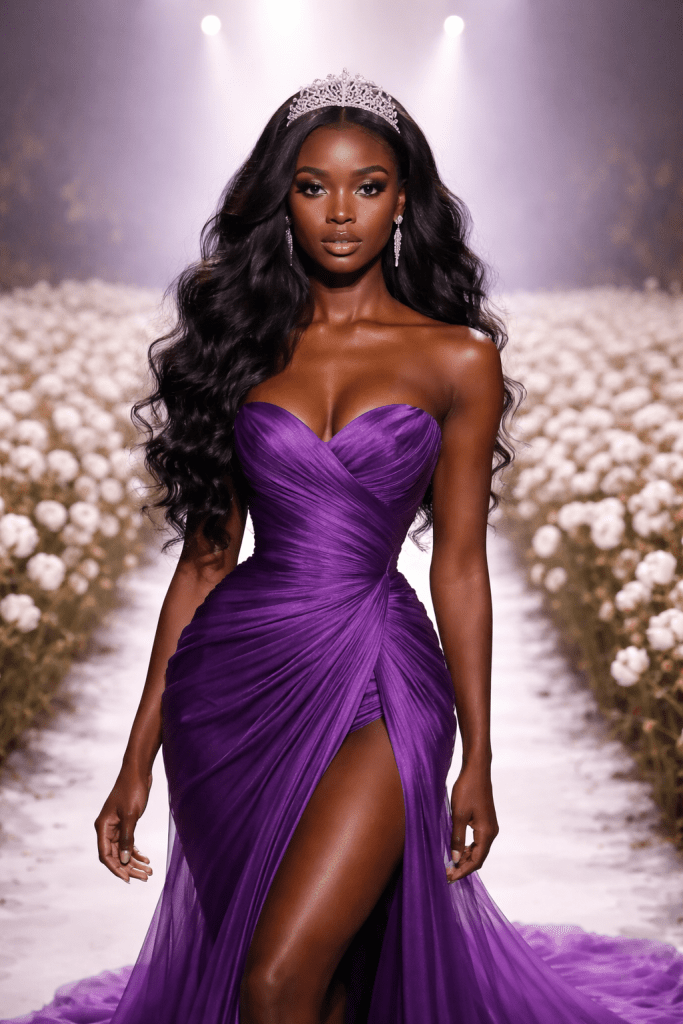
Fashion, once an industry of exclusion, began to shift under the pressure of her presence. The catwalk, a space that once rejected her, now bore witness to her glory. Models like Naomi Campbell, Alek Wek, and Duckie Thot redefined what global beauty could look like. Each stride on the runway became an act of defiance—a declaration that the daughter of the field worker had ascended to the stage of the world.

The symbolism of this transformation is profound. The same hands that once picked cotton now shape couture. The same skin once mocked for its depth of hue now commands admiration under golden lights. It is not simply a story of economic mobility or fashion inclusion, but of spiritual elevation. The Brown woman’s body, once a site of oppression, has become a canvas of divine artistry.

Still, her journey to self-love remains layered and complex. Generational trauma and systemic inequities continue to haunt her psyche. Colorism persists within her own community, and media still struggles to portray her diversity. Yet, the Brown woman’s resilience endures. Her love for herself is not a trend but a spiritual revolution—a return to the truth that she was always enough.

This self-love is radical because it challenges centuries of indoctrination. To love oneself in a world that profits from one’s insecurity is a political act. When the Brown woman looks into the mirror and sees beauty, she dismantles the psychological residue of colonialism. Her reflection becomes a form of resistance—a reminder that her worth was never for sale.

Spiritually, her journey mirrors the biblical narrative of restoration. Like Ruth gleaning in the fields before being elevated to royalty, the Brown woman’s life is marked by divine orchestration. Her pain prepared her for purpose. Her ancestors’ prayers planted the seeds of the empowerment she now harvests. “He hath made every thing beautiful in his time” (Ecclesiastes 3:11, KJV) captures the essence of her evolution.

In embracing her melanin, her curls, her history, and her imperfections, she reclaims her crown. This reclamation is not only external but deeply internal. She no longer measures herself by European standards, but by divine ones. Her beauty, like her spirit, is infinite—rooted in the soil of her ancestors and watered by the tears of generations who refused to disappear.

Education, art, and faith have become her tools of restoration. Through poetry, scholarship, and entrepreneurship, she is rewriting her narrative. From Maya Angelou’s “Phenomenal Woman” to Beyoncé’s Brown Skin Girl, every creative expression becomes a hymn of affirmation. These cultural works reaffirm that self-love is not vanity but healing—an act of remembrance and liberation.

The Brown woman’s presence on catwalks across Paris, New York, and Lagos is more than fashion; it is prophecy fulfilled. The world now watches what God already ordained: that the first shall be last and the last shall be first (Matthew 19:30, KJV). The once-overlooked is now celebrated, yet her power lies not in external validation but in self-realization.

Her journey continues, for the fight for equitable representation, safety, and dignity is ongoing. But each generation rises taller, walking with greater confidence and consciousness. She carries the voices of her foremothers in every graceful step. From the cotton fields to catwalks, her story is a sacred dance between pain and glory, oppression and freedom, despair and divine deliverance.

To love herself fully is to love the God who made her. Her journey is not merely about beauty but about identity—about returning to the sacred truth that she is fearfully and wonderfully made (Psalm 139:14, KJV). The Brown woman’s journey to self-love is, therefore, not an ending but a resurrection—a radiant testimony that from suffering can come splendor, and from bondage can bloom brilliance.

Her crown, once tarnished by history, now gleams with wisdom, faith, and grace. She stands on the shoulders of queens who came before her, not just as a model or icon, but as a miracle. The Brown woman is the living embodiment of triumph, the divine muse of history’s redemption song. Her journey is every woman’s reminder that no matter where the story begins, it can end in glory.


References

Collins, P. H. (2000). Black feminist thought: Knowledge, consciousness, and the politics of empowerment (2nd ed.). Routledge.

Hunter, M. (2007). The persistent problem of colorism: Skin tone, status, and inequality. Sociology Compass, 1(1), 237–254.

Holy Bible, King James Version. (2017). Cambridge University Press.

Hooks, B. (1992). Black looks: Race and representation. South End Press.

Walker, A. (1983). In search of our mothers’ gardens: Womanist prose. Harcourt Brace Jovanovich.

West, C. (1993). Race matters. Beacon Press.