Category Archives: the brown girl dilemma

Galaxies of Gold Presents: The World’s Most Beautiful Woman, a visual phenomenon – A Black Woman’s Story.

A memoir written by © Scientist Arieyah Naseek
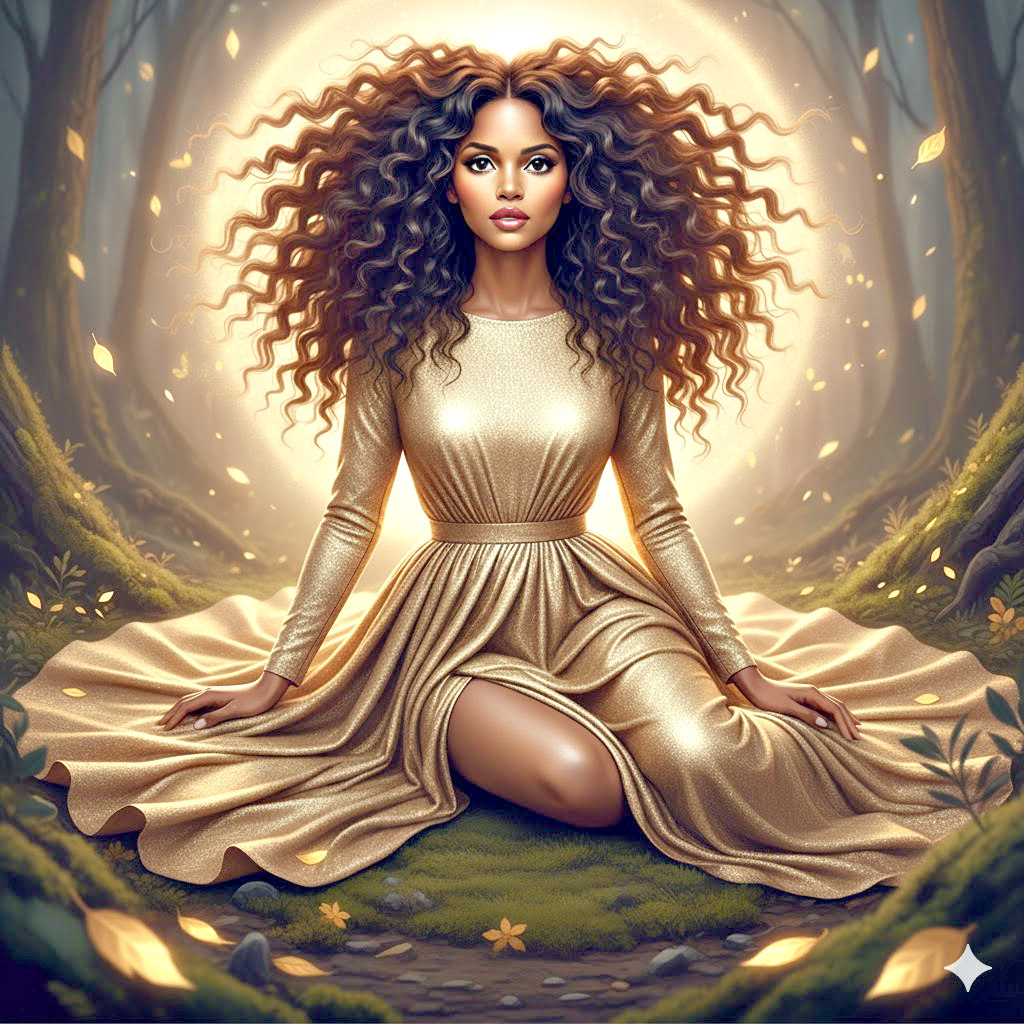
She makes beauty envious, and perfection wants to commit suicide.

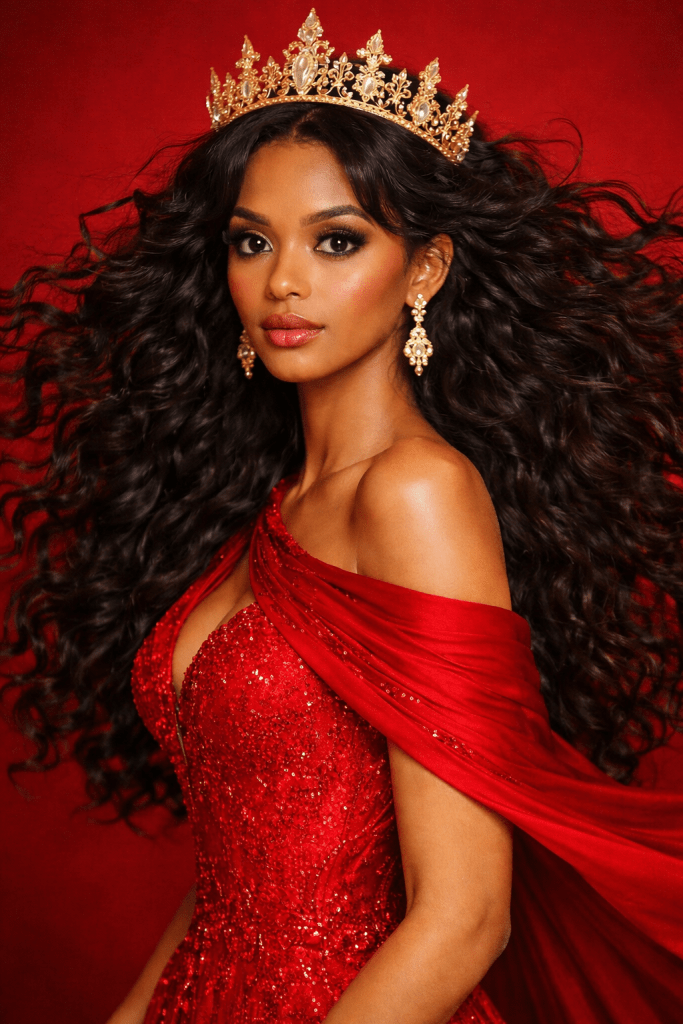
Golden Café Au Lait is the color of her skin. “Beauty” is her name, christened by an African king who once declared that her birth name simply would not do. To him, she was the embodiment of perfection and beauty, the woman who defines what divine beauty could look like in human form. From that day forward, she was known only as Beauty, the woman whose very presence seemed regal yet ethereal, human yet divine. From the time she was a child, the world seemed to pause when she entered a room. Beauty’s aura filled every room, commanding attention without uttering a word. Her light golden skin shimmered like polished bronze infused with honeyed sunlight, and her presence drew admiration as naturally as flowers turn toward the sun.

By adolescence, photographers and artists vied for the chance to capture her likeness. They said her skin tone was “liquid light caramel,” a hue that defied description and reflected every ray of light. She was only sixteen when she appeared in her first major advertising campaign in Germany. The image—a portrait of her smiling softly against a gold backdrop—was sold around the world, inspiring a generation of young Black girls to see beauty reflected in their own skin for the first time.

Everywhere she went, people stared. In college, professors remembered her face before her name. Boys competed for her attention as if her affection were a trophy. Even when she spoke with depth and intelligence, the conversation always circled back to her looks. “You could be a model,” they’d say—never realizing she already was. Her image had graced global billboards, her likeness immortalized in ad campaigns that declared her “the most beautiful woman on earth.”

Her face became both a blessing and a burden. When she entered a room, all eyes gravitated toward her. Teachers remembered her beauty before her brilliance. Classmates praised her appearance but never asked about her dreams. Men admired her, women studied her, and somewhere in between, Beauty lost the comfort of simply being herself.

Her family, especially her grandmother and aunt, adored her beauty and never hesitated to remind her of it. “You’re our precious jewel,” her grandmother would say, smoothing Beauty’s hair. “God must’ve taken His time with you.” Beauty would smile but quietly wonder if being admired meant being understood. Her aunt always stated that she had that kind of beauty that could knock a man to his knees.

There was a time when she became almost protective of her appearance—guarded about who touched her, half-jokingly insisting she didn’t want anyone’s skin to “rub off” on her. It wasn’t arrogance but armor. She had learned how beauty could invite both praise and envy, love and projection. People either worshipped her or resented her—few ever simply saw her.

The men around her had placed her on pedestals and showered her with gifts. Jewelry, flowers, promises—affection often disguised as possession. Later in life came the grander gestures: extravagant marriage proposals and gifts.

Beauty became an international model. Her image adorned billboards around the world. She became the face of the Black Diamond. Yet, even as the world praised her, she remained deeply grounded. When reporters asked what made her beautiful, she often smiled and said, “I am simply who my Creator designed me to be—nothing more, nothing less.”

Even as her modeling career soared—her likeness becoming known to the world—Beauty carried that ache. She could pose for hours, mastering every angle, yet behind the lens, she wondered if anyone cared who she was when the camera stopped clicking. People spoke about her beauty as though it existed separately from her soul.

Behind the flawless photos and radiant smiles was a woman quietly questioning: Is this all they see?

Yet the more people praised her beauty, the more Beauty learned to shrink herself. She noticed how other women tensed around her, how conversations would shift, laughter turn brittle, and compliments become comparisons. So she began to downplay her glow—wearing looser clothes, softening her speech, dimming her confidence—just to make others feel comfortable in her presence. What the world called a blessing often felt like a burden she had to manage carefully.

Beauty’s beauty was not only admired—it was studied. Photographers, sculptors, and scientists alike sought to capture her essence, though many admitted that no lens could ever fully translate the magnitude of her allure. Her face appeared on billboards across continents, representing extraordinary beauty, grace, luxury, and timeless splendor. She was not simply a model; she was a symbol—a vision of Black femininity both celebrated and contested.

For her, beauty was both a crown and a cage. She loved God, studied His Word, and lived by faith, yet the world continued to measure her by her reflection instead of her revelation. No matter how much she achieved—degrees, philanthropy, ministry work—people always returned to her modeling days as though they defined her entirely. It was as if her face spoke louder than her voice.

Her complexion, a rare golden café au lait tone, became her signature, along with her large, mesmerizing eyes, which have a mirror effect to them, small nose, and full lips. Some described it as sunlight kissing caramel; others said it was a color that could only exist in dreams. A male friend said that her beauty is like a sunset. But beyond the admiration lay whispers—jealousy, envy, and critique. Beauty’s rise to the public eye became a mirror reflecting society’s long, complicated relationship with color and beauty within the Black diaspora.

Women were envious of Beauty. She often felt the weight of her own appearance, learning early that her beauty, though praised, was also isolating. “I had to learn to downplay myself,” she once confided in an interview. “Sometimes I’d hide behind plain clothes, no makeup, just to make others feel comfortable.” Her light skin was both her blessing and her burden.

People often said that her success came easily because of her skin tone. “She got this or that because she’s light,” they whispered, reducing her years of effort to the shade of her skin. Yet, even under such scrutiny, Beauty carried herself with humility. She made it her mission to celebrate darker-skinned women, reminding them that their melanin was not a disadvantage but a divine hue in its own right.

In one of her most iconic speeches after being crowned Miss Ultimate Beauty, she addressed the audience directly: “Beauty does not belong to a single shade. Every complexion comes from God.” The crowd erupted in applause, not because of her ethereal face, but because of her truth.

Her reign as Miss Ultimate Beauty made global headlines. Everyone clamored to work with her, seeing in Beauty a living canvas of light and depth. Yet amid the attention, she remained grounded—returning often to her roots in the United States, where she visited schools to mentor young girls about confidence and inner worth.

A group of Scientists and a famous film director, captivated by her ethereal features, began production on a documentary series titled Beauty about her and The Science of Beauty. They described her beauty as “so spectacular she looks unreal—a genetic masterpiece, a visual phenomenon.” The documentary, already in development, aimed to explore not just her life but also the science, art, and sociology behind human attraction. The Documentary Series set to be released in 2028 or 2029.

Beauty’s face became synonymous with the title of “the most beautiful woman in the world” and “Genetic Masterpiece.” She has the kind of beauty that transcends time, evoking comparisons to the great black beauties of this world, yet distinctly her own—look, extraordinary, astonishing, rare, unique, unparalleled, regal, and radiant. Her dark coal curls danced in the wind like liquid fire while cascading down her back like sheets of molasses, and her eyes—large, expressive, hypnotic, piercing, and filled with quiet wisdom—invited the world to see beyond the surface.

Her gold gown, worn at a world foundation gala, became legendary. The fabric rippled like sunlight on water, modest yet magnetic. No skin was exposed, yet all eyes were on her. The designer later confessed, “It wasn’t the dress that shone—it was Beauty herself.”

But Beauty knew beauty was never enough. She wrestled with loneliness, aware that admiration often lacked understanding. “People love what they see,” she said, “but they rarely ask who I am beneath the gold.” Her journals, later published in a book, revealed her deepest dilemmas and her wish to be valued for her soul as much as her beauty or skin.

In private moments, Beauty admitted she sometimes wished to be ordinary—to walk into a room without the echo of awe or envy following her. Yet destiny would not allow her anonymity; she was born to be seen.

Her story became the heart of global conversations about colorism and representation. Scholars cited her as a living paradox—a woman praised for beauty that both challenged and reinforced societal bias. Her beauty sparked debates in articles, classrooms, and beauty forums worldwide.

When asked about her thoughts on colorism, Beauty said, “Lightness does not make me better, darkness does not make you lesser. We are all tones of God’s imagination.” Her words inspired campaigns that began redefining beauty standards across Africa and the diaspora.

Her influence extended beyond modeling. Beauty launched a foundation supporting young women of all complexions in creative industries. She funded scholarships for photographers and artists to challenge color bias through their work.

Years later, at a major art exhibition in Africa, her portrait was unveiled—a depiction of her draped in gold and crowned with sunlight. The Gold Standard of Beauty. Critics called it “The Eighth Wonder of the Modern World.” It wasn’t vanity; it was legacy.

In interviews, she reflected, “If I’m to be remembered, let it not be for my face, but for the love I inspired in those who once doubted their reflection and my love and devotion to the Most High God of Israel.”

Beauty’s name became immortalized, not as an object of beauty, but as a force of healing in the ongoing dialogue of identity and self-worth. Her beauty—golden, astonishing, glowing, godlike—became less about appearance and more about awakening.

In every photo, in every glimmer of light touching her light cafe au lait skin, Beauty’s message remains—beauty is not what you see; this is temporal. True beauty comes from within, and only the things you do for Christ will last.

As her faith deepened, Beauty began to see her reflection differently. The same face that once burdened her became a vessel of purpose. She no longer viewed her features as random genetics but as a deliberate brushstroke from a divine Artist. Genesis 1:27 reminded her: “So God created man in his own image.” That meant her beauty was not hers to idolize or to fear—it was His signature on her soul.

She began to use her platform to speak about inner worth, teaching young women that outward beauty without spiritual grounding is like perfume on an empty bottle—sweet for a moment, but fading fast. Her favorite verse, Proverbs 31:30, became her mantra: “Favour is deceitful, and beauty is vain: but a woman that feareth the Lord, she shall be praised.”

Through faith, Beauty learned to laugh at the irony of her journey—that the woman called “The 8th Wonder of the World” was never truly seeking wonder at all. She was seeking wisdom. And she found it in Christ, who taught her that beauty is not what the world sees, but what Heaven recognizes.

Now, as she walks in purpose, her glow feels different. Her presence unsettles the superficial and awakens the meaningful. It’s not the shimmer of camera lights but the radiance of peace. She is still breathtaking, but not because of her symmetry—because of her spirit. Her beauty no longer introduces her; her light does.

In Beauty’s story, we see that beauty is neither a curse nor a crown—it is temporal. When surrendered to God, even the most admired woman learns that the truest form of grace is not in being seen, but in being sanctified.

Written by © Scientist Arieyah Naseek
What Are You Mixed With? – And Other Microaggressions of Erasure.

A man said to me, “You are the most beautiful woman I have seen. What are you mixed with? You can’t be all Black.” His words were meant to be a compliment, but they struck me like a backhanded slap. In that moment, my identity was reduced to a puzzle he wanted to solve, as though my beauty could not possibly exist within the fullness of Blackness. This is a story many Black women know too well — where admiration becomes interrogation, and affirmation becomes erasure.

“What are you mixed with?” may sound like a harmless question, but it carries a heavy undertone that many Black people instantly recognize. It suggests that their beauty, intellect, or talent must have come from something other than being fully Black. It is rarely asked of white individuals, nor of those whose racial identity matches a dominant group. For Black people, it becomes a subtle interrogation, implying that their very existence must be explained, categorized, or justified.

This question is one of many racial microaggressions — brief and commonplace verbal, behavioral, or environmental slights that communicate hostile, derogatory, or negative racial messages (Sue et al., 2007). Microaggressions are often delivered without malicious intent, yet their cumulative effect on mental health and identity can be significant. Questions about “mixed heritage” often leave the recipient feeling exoticized, tokenized, or “othered,” as if they are a curiosity to be solved.

Historically, this curiosity is rooted in colonial thinking. During slavery, white slaveholders meticulously catalogued the racial percentages of enslaved people — mulatto, quadroon, octoroon — to determine their value and social status (Williamson, 1980). This obsession with blood quantum was less about ancestry and more about control, categorizing Black people in order to decide who would remain enslaved and who might pass into freedom. The modern fascination with “mixedness” is a residue of that system, where proximity to whiteness was privileged and fetishized.

Colorism — the preference for lighter skin within and outside the Black community — is closely tied to this microaggression. Light skin has historically been associated with privilege, beauty, and desirability, while darker skin was demonized (Hunter, 2007). Asking “What are you mixed with?” when someone is light-skinned reinforces the idea that beauty or acceptability is tied to whiteness or foreign ancestry.

Celebrities often face this question publicly. Meghan Markle, the Duchess of Sussex, has shared that her biracial identity was constantly questioned, with people asking, “What are you?” as if they needed to categorize her before interacting (Winfrey, 2021). Zendaya has spoken openly about colorism, acknowledging that her lighter skin tone gives her access and opportunity denied to darker-skinned actresses, and she intentionally uses her platform to amplify those voices (Robinson, 2018).

This constant questioning can have psychological effects. Repeated microaggressions are linked to racial battle fatigue — a state of mental, emotional, and physical exhaustion caused by navigating racism daily (Smith et al., 2011). Being asked about one’s racial makeup forces a person to confront how others perceive them, which can trigger feelings of alienation or anxiety.

Spiritually, these questions can also conflict with the truth of God’s creation. Psalm 139:14 (KJV) affirms, “I will praise thee; for I am fearfully and wonderfully made: marvellous are thy works.” The implication that Blackness must be “mixed with something” to be beautiful denies the inherent dignity God has placed in every person, including those with deep melanin-rich skin and African features.

Microaggressions of erasure go beyond just “What are you mixed with?” They include statements like “You’re pretty for a dark-skinned girl,” “You talk white,” or “I don’t see color.” While they may be meant as compliments, they actually diminish identity. They praise the individual for fitting into a standard that denies their full cultural and racial reality.

The phrase “I don’t see color” is another common erasure tactic. It attempts to signal equality but ultimately refuses to acknowledge the existence of systemic racism and the lived experiences of Black people. As Neville et al. (2013) argue, colorblindness allows racial inequalities to persist because it discourages the recognition of injustice.

“What are you mixed with?” can also sexualize and exoticize. In some cases, it is asked not out of genuine curiosity but as a way to turn identity into a fantasy or a fetish. This is particularly true for women of color, whose bodies and features have been hypersexualized throughout history (Collins, 2004). This type of questioning reduces a person to their perceived racial “ingredients” rather than honoring them as a whole being.

W.E.B. Du Bois (1903) described the phenomenon of double-consciousness — the sense of always looking at oneself through the eyes of others. For many Black people, being constantly asked about their racial makeup deepens this double-consciousness, forcing them to perform or explain their identity to make others comfortable.

Some who ask “What are you mixed with?” may genuinely mean no harm. For them, it is a way to make conversation or express admiration. But intent does not erase impact. Microaggressions accumulate over time, becoming heavy burdens that affect how Black people move through the world — whether they feel accepted, whether they feel seen, whether they feel safe.

Biblically, diversity is not something to erase or explain away. Revelation 7:9 (KJV) describes a heavenly vision where “all nations, and kindreds, and people, and tongues” stand together before God. This suggests that ethnicity and identity are preserved and celebrated in eternity. To erase Blackness or reduce it to a mixture is to work against divine design.

Representation in media has begun to challenge these erasures. Campaigns like #BlackGirlMagic, #MelaninPoppin, and the natural hair movement have helped normalize the beauty of African features and dark skin. Seeing darker-skinned models, actors, and influencers celebrated for their beauty disrupts the idea that only “mixed” or “exotic” Black people are worthy of admiration.

Healing from the harm of these microaggressions requires education. Non-Black individuals must learn the history of racial classification, colorism, and why these questions are not benign. They must understand that curiosity should never come at the cost of someone else’s dignity.

Black individuals, meanwhile, can reclaim their narrative by affirming their identity openly and unapologetically. This may include correcting someone who asks “What are you mixed with?” by simply saying, “I’m Black — and that’s enough.” Such responses help shift the cultural expectation that Blackness must be explained or justified.

The Erasure Complex and Other Microaggressions of Erasure

The Erasure Complex is the cumulative psychological, social, and spiritual effect of living in a world where Blackness is constantly questioned, redefined, and made to prove its legitimacy. It is not merely about blatant racism but about the small, repeated messages that suggest Black identity is insufficient, unattractive, or incomplete unless modified by proximity to whiteness.

One of the most common forms of erasure is the question, “What are you mixed with?” It might sound curious or flattering, but for Black people, it can feel like an accusation — as though beauty, intelligence, or grace cannot come from African roots alone. These moments communicate that being fully Black is something to be doubted, pitied, or corrected.

Microaggressions like this have deep historical roots. In slavery and Jim Crow America, racial classification was an obsession. Words like mulatto, quadroon, and octoroon were invented to measure bloodlines and determine status, privileges, and restrictions (Williamson, 1980). Even freedom could hinge on whether a person could pass for white. That system created a generational wound — a belief that lighter skin or “mixed blood” was better, safer, more desirable.

The Erasure Complex is not limited to questions of ancestry. It also shows up in phrases like, “You talk white,” “You’re pretty for a dark-skinned girl,” or “I don’t see color.” Each of these statements subtly removes part of a Black person’s identity. They praise the individual for being an exception to a negative stereotype while reinforcing the stereotype itself.

Celebrities often experience these erasures publicly. Lupita Nyong’o, for example, has spoken about being told as a child that dark skin was not beautiful and how she longed to be lighter (Nyong’o, 2014). Zendaya, who is biracial, has acknowledged that her lighter skin gives her privilege and access that darker-skinned actresses are denied (Robinson, 2018). Both testimonies expose how deeply embedded these beauty hierarchies remain.

Psychologically, constant microaggressions accumulate to create racial battle fatigue — mental and emotional exhaustion caused by having to navigate these slights daily (Smith et al., 2011). They can lead to anxiety, hypervigilance, and internalized racism, where Black individuals begin to question their own worth and beauty.

Spiritually, the Erasure Complex challenges the truth of creation. Genesis 1:27 (KJV) reminds us, “So God created man in his own image.” To imply that Blackness is insufficient is to deny the fullness of God’s artistry. Psalm 139:14 (KJV) further affirms, “I will praise thee; for I am fearfully and wonderfully made.” There is no divine error in deep melanin, broad noses, full lips, or coiled hair — they are reflections of God’s intentional design.

Colorblind rhetoric, though often well-meaning, also contributes to erasure. When someone says, “I don’t see color,” they deny a person’s racial reality and the systemic oppression tied to it. As Neville et al. (2013) argue, this type of “colorblindness” allows racism to persist because it refuses to name or confront it.

The Erasure Complex also intersects with the policing of Black hair. When Black women wear natural hair, braids, or locs, they may face questions like, “When are you going to do something with your hair?” — implying that the way it naturally grows is wrong. The Crown Act (2022) was passed in several U.S. states precisely to stop discrimination based on natural hairstyles, which reveals just how institutionalized this erasure can be.

Even in religious spaces, erasure can be present. Some churches have historically promoted Eurocentric aesthetics as “holy” or “presentable,” leaving little room for African expression in hair, dress, or worship styles. This creates an unspoken pressure to assimilate rather than to celebrate the diversity that Revelation 7:9 describes, where “all nations, and kindreds, and people, and tongues” are represented before God’s throne.

Media representation is slowly challenging the Erasure Complex. Campaigns like #BlackGirlMagic, #MelaninPoppin, and films like Black Panther have shifted cultural narratives by celebrating the beauty, brilliance, and power of Blackness without dilution. These moments are important not just as entertainment but as acts of cultural restoration.

However, healing is not just about seeing representation. It is also about internal work — rejecting internalized racism and embracing the full spectrum of Black identity. This may mean responding to “What are you mixed with?” by saying unapologetically, “I’m Black — fully, beautifully Black.” Such responses resist the subtle suggestion that Blackness must be explained away.

Education is essential for those outside the community as well. Non-Black individuals must understand why these questions and statements are harmful, even if they are said with good intentions. Learning the history of racial classification, colorism, and microaggressions can equip people to affirm Black identity rather than interrogate it.

The Erasure Complex also thrives in silence. When microaggressions occur, those who witness them have an opportunity to speak up. Being an ally means interrupting erasure when it happens — affirming the dignity of Blackness in public and private spaces.

W.E.B. Du Bois’ concept of double-consciousness remains relevant here. Many Black people navigate the tension of how they see themselves versus how the world sees them (Du Bois, 1903). Erasure compounds that tension, forcing them to constantly explain, defend, and validate their identity. Healing this wound requires both cultural change and self-acceptance.

The ultimate goal is not just to stop erasure but to replace it with affirmation. Isaiah 61:3 (KJV) speaks of God giving His people “beauty for ashes.” For a people whose identity has been systematically erased and distorted, reclaiming Blackness as beautiful, holy, and worthy is a divine act of restoration.

In conclusion, the Erasure Complex is a powerful framework for understanding the subtle but deeply wounding ways that Black identity is questioned and diminished. Microaggressions like “What are you mixed with?” are not simply curiosities — they are echoes of a racial caste system designed to value proximity to whiteness. By naming this dynamic, addressing its historical roots, and affirming the fullness of Blackness, we can dismantle the systems of erasure and move toward wholeness and liberation.


Our communities also have a role to play. Too often, respectability politics within religious spaces have privileged lighter-skinned or Eurocentric beauty standards. By teaching that all skin tones reflect God’s image, churches can help dismantle internalized racism and affirm the beauty of Black identity.

In conclusion, “What are you mixed with?” is not just a casual question — it is a microaggression that reflects centuries of racial hierarchy and erasure. By recognizing its historical roots, addressing its psychological impact, and responding with pride and education, we can move toward a world where Blackness does not need an asterisk, an apology, or an explanation.


References

  • Collins, P. H. (2004). Black sexual politics: African Americans, gender, and the new racism. Routledge.
  • Du Bois, W. E. B. (1903). The souls of Black folk. A.C. McClurg & Co.
  • Hunter, M. (2007). The persistent problem of colorism: Skin tone, status, and inequality. Sociology Compass, 1(1), 237–254.
  • Neville, H. A., Awad, G. H., Brooks, J. E., Flores, M. P., & Bluemel, J. (2013). Color-blind racial ideology: Theory, training, and measurement implications in psychology. American Psychologist, 68(6), 455–466.
  • Robinson, J. (2018, September 4). Zendaya talks about colorism, privilege, and responsibility. Marie Claire.
  • Smith, W. A., Allen, W. R., & Danley, L. L. (2011). “Assume the position… you fit the description”: Psychosocial experiences and racial battle fatigue among African American male college students. American Behavioral Scientist, 51(4), 551–578.
  • Sue, D. W., Capodilupo, C. M., Torino, G. C., Bucceri, J. M., Holder, A. M. B., Nadal, K. L., & Esquilin, M. (2007). Racial microaggressions in everyday life: Implications for clinical practice. American Psychologist, 62(4), 271–286.
  • Williamson, J. (1980). New people: Miscegenation and mulattoes in the United States. Free Press.
  • Winfrey, O. (2021, March 7). Oprah with Meghan and Harry: A CBS primetime special. CBS.

Exotic, But Not Enough: The Politics of Being Seen as ‘Special’

Yet the same specialness that elevates you is often twisted by society into a form of exoticization. To be called “special” because of your Black features is a double-edged sword. It acknowledges beauty but simultaneously separates it from normalcy, making Blackness an object of curiosity rather than a standard to be celebrated on its own terms. This is the politics of being seen as “special” — a liminal space where admiration borders on objectification.

Exoticization has historical roots in the Western gaze. During the colonial period, Africans, especially women, were depicted in art, literature, and anthropology as inherently different — mysterious, seductive, and often hypersexualized. This framing positioned them as objects to be observed and studied rather than fully human, a narrative that persists subtly in contemporary media (Collins, 2004).

In modern society, Black women are frequently described as “exotic” or “unique,” language that seems complimentary but carries implicit othering. To be called exotic is to signal that one is different from the default, which in most Western societies is white. The praise is thus conditional — it only holds value when compared against a Eurocentric standard of beauty.

Being seen as “special” also comes with the invisible burden of performance. Black women are expected to embody this exotic appeal without deviating from societal fantasies. There is pressure to maintain a polished, curated appearance that aligns with someone else’s imagination of “Black beauty,” rather than an authentic self-expression.

Celebrities frequently exemplify this dynamic. Halle Berry, for example, has discussed how her mixed heritage led Hollywood to view her as exotic, opening doors while simultaneously pigeonholing her into roles that emphasized her difference (Berry, 2014). Similarly, Lupita Nyong’o’s rise to prominence was celebrated as a disruption to beauty norms, yet even her acclaim was framed around rarity, the “exceptional” Black woman, rather than the normalization of Black beauty in everyday life.

Exotic, But Not Enough: The Cost of Being the Exceptional Black Woman

I remember the first time I was called “exotic.” I was fourteen, standing in a bookstore, and a man approached me. “You’re beautiful,” he said, “so exotic… I’ve never seen anyone like you.” At that moment, I felt both elevated and invisible. Elevated, because someone recognized my beauty; invisible, because my Blackness was reduced to an adjective, something rare to be admired but never fully understood. That tension — being celebrated and erased at the same time — is the daily reality for so many Black women.

Being called “special” or “exceptional” carries a hidden price. Society frames Black women’s beauty as unusual, as if it exists outside the norm, something that can only be understood through the lens of novelty or difference. This is not admiration without consequence — it is a subtle form of objectification, a lens that separates Black women from ordinariness and imposes expectations of perfection.

Historically, this pattern is rooted in colonial and slave-era ideologies. African women were depicted as mysterious, sensual, and inherently different in European art, literature, and pseudo-science. Their bodies were studied, catalogued, and exoticized, creating a template that continues to influence how Black women are perceived today (Collins, 2004). The message was clear: Black beauty is not the default; it is a spectacle.

In school, this dynamic plays out in classrooms and playgrounds. Girls who are “special” for their looks or mixed heritage often receive attention from teachers and peers, but this attention is conditional. Compliments often carry comparisons — lighter skin, straighter hair, narrower noses — that suggest their beauty is exceptional only when aligned with whiteness. Meanwhile, darker-skinned girls learn that their natural beauty is ordinary, overlooked, or even undesirable.

Celebrities are not immune. Halle Berry has shared that Hollywood initially labeled her as “exotic,” a distinction that opened doors but also confined her to a narrow set of roles emphasizing her difference (Berry, 2014). Lupita Nyong’o’s rise to fame was celebrated as the “exceptional” Black woman, her deep skin and natural features framed as rare, beautiful anomalies. While inspiring, this narrative implies that Black women are only remarkable when they are unusual.

The psychological cost of being seen as exceptional is significant. Black women often internalize the pressure to maintain perfection — flawless skin, a curvaceous figure, impeccable hair — because deviation threatens the fantasy that others have projected onto them. The result is chronic stress, hypervigilance, and anxiety, all in the service of fulfilling someone else’s idea of “special” (Hunter, 2007).

Social media intensifies this effect. On platforms like Instagram, Black women are often celebrated for their rarity — lighter skin, unique hair textures, or particular facial features. While visibility can be empowering, it reinforces a standard where only certain traits are elevated. Many women scroll through feeds feeling both admired and inadequate, unsure if they are enough outside the curated lens of online admiration (Mercer, 2018).

Exoticization frequently intersects with fetishization. Compliments can morph into sexualized attention, where a Black woman’s features are admired but her personhood is overlooked. This transformation of admiration into desire strips agency and places the burden of appeal on her shoulders (Collins, 2004). Being special in this context is not empowering — it is performative and conditional.

Church and faith communities are not exempt. Black women are sometimes told that only Eurocentric features are “presentable” or “holy,” perpetuating an internalized belief that divine beauty aligns with whiteness. This conflicts with scripture, which consistently affirms that God created humanity in His own image (Genesis 1:27, KJV) and that every individual is fearfully and wonderfully made (Psalm 139:14, KJV).

The internalization of these messages leads many Black women to police their own bodies. We straighten our hair, lighten our skin, and sculpt our features to meet expectations. In doing so, we become complicit in a system that values difference over ordinariness and admiration over authenticity. The exceptional Black woman becomes a curated performance rather than a natural, living identity.

Family and community often provide the first lessons in resilience. Older women teach younger women that beauty is not about rarity but about the fullness of who you are. This guidance is essential, reminding girls that they do not need to be exotic to be worthy — that their value is inherent, not contingent on being unusual or extraordinary.

Friendships can complicate the experience. Peer comparisons — “She’s so exotic” or “She’s prettier because she’s mixed” — reinforce hierarchies within the Black community, creating tension and jealousy. The social cost of being “special” is alienation, as admiration from outsiders can distance women from their peers.

Romantic relationships are another arena where this politics plays out. Some men fetishize Black women’s difference, praising them for traits they perceive as rare, while overlooking their personality, intellect, and agency. Being “special” in this context is conditional love — valued for appearance but not always for selfhood.

Education and mentorship are crucial tools for countering the pressure of exceptionalism. Teaching Black girls to see their beauty as inherent, not exceptional, helps dismantle internalized hierarchies and builds self-esteem. Celebrating everyday Blackness — ordinary yet divine — restores balance in a world that constantly tells women they are extraordinary only in comparison to others.

Representation in media must go beyond the exceptional. Stories that normalize Black beauty in all its forms — dark, light, natural, straight, curly — reinforce that Blackness is not a spectacle but a standard. Films, advertisements, and TV shows that showcase everyday beauty help young women internalize a healthy sense of self.

The Erasure Complex compounds the cost of being exceptional. When Black women are admired for being different, it subtly suggests that being fully Black is not enough. The gaze that elevates them simultaneously erases the vast diversity of Black identity, reinforcing conditional admiration rather than universal recognition.

Spiritual grounding offers a counterbalance. Recognizing that one’s beauty and worth are divinely ordained, rather than societally validated, shifts the focus from external approval to intrinsic value. Psalm 139:14 (KJV) reminds us that we are “fearfully and wonderfully made” — unique, yes, but whole and worthy in our natural state.

Community solidarity also heals. By celebrating Black women collectively rather than selectively, society can dismantle the hierarchy of exoticization. From hair and skin to intellect and talent, the normalization of Black excellence fosters a sense of belonging rather than isolation.

Ultimately, being seen as “special” is both an honor and a burden. While it can affirm one’s beauty, it can also confine, objectify, and pressure. True empowerment comes from rejecting conditional admiration, embracing one’s authentic self, and affirming that Blackness — in all its forms — is a universal standard of beauty, not an exception.

In conclusion, the cost of being the exceptional Black woman is real, spanning psychological, social, and spiritual domains. Recognition should not require rarity, admiration should not demand objectification, and beauty should not depend on being extraordinary. To be authentically Black, fully human, and unapologetically oneself is to claim a power and dignity that no external gaze can define. You are special — not because you are rare, but because you are divinely complete.

The psychology of being labeled “special” is complex. While admiration can boost self-esteem, it often comes with heightened scrutiny. Every flaw is amplified because deviation from the constructed standard risks breaking the illusion of perfection that exoticization demands. This creates an internalized pressure to maintain a level of beauty that is unsustainable and emotionally taxing (Hunter, 2007).

Social media amplifies this paradox. Platforms like Instagram and TikTok showcase Black women’s beauty as a form of currency, often highlighting traits that conform to Eurocentric beauty ideals — lighter skin, narrower noses, straighter hair. Even when celebrating natural features, the algorithms often elevate only those deemed “unusual” or “rare,” reinforcing the narrative of being exceptional rather than normal (Mercer, 2018).

Exoticization is closely linked to fetishization, where Black women’s features are sexualized and objectified. The concept of the “exotic woman” transforms admiration into desire, but it strips agency from the individual. Her identity is commodified, admired for how it appeals to someone else rather than for her intrinsic worth or personhood (Collins, 2004).

This pressure is not only external but internalized. Many Black women grow up absorbing messages about what it means to be beautiful, often measuring themselves against a standard that views them as inherently unusual. Internalized colorism and beauty hierarchy become self-policing mechanisms that complicate self-love and identity formation (Hunter, 2007).

In contrast, biblical scripture offers a standard that transcends societal constructs. Genesis 1:27 (KJV) affirms that “God created man in his own image,” which implies that beauty and worth are divinely ordained, not dependent on human hierarchy. Psalm 139:14 (KJV) reinforces this, reminding believers that they are “fearfully and wonderfully made,” with beauty and worth inherent, not contingent on external validation.

The social consequences of being seen as “special” are also significant. Exceptionalism often isolates Black women from their peers, creating distance in communities where solidarity is needed. To be admired primarily for being rare or different can undermine authentic connection, reinforcing the notion that one’s value lies in their difference rather than their humanity.

Exoticization also perpetuates a colorist hierarchy. Lighter-skinned or mixed-race women are often labeled “special,” while darker-skinned women are either ignored or othered differently. This conditional admiration fragments the community, subtly teaching that some forms of Blackness are more palatable or worthy of attention than others (Hunter, 2007).

In the workplace, this dynamic can shape opportunities. Women seen as “exotic” may be promoted for image-based reasons rather than competence, or conversely, pigeonholed into roles that exploit their appearance. Their skills and intellect are overshadowed by the constant framing of their bodies and faces as objects of fascination (Collins, 2004).

Education and mentorship can help counteract these effects. Teaching Black girls that their beauty is both ordinary and extraordinary simultaneously — that they are “special” because they are authentically themselves — can dismantle the internalized pressure to perform for admiration. Celebrating everyday Black beauty as the norm rather than the exception is crucial for mental health and self-acceptance.

Representation matters. Media that portrays Black women in a range of roles, skin tones, and expressions — not only the rare or unusual — helps normalize Black beauty and dismantle exoticization. Films, TV, and advertisements that celebrate Black women for their achievements, intellect, and character, alongside their appearance, provide a more holistic framework for identity (Mercer, 2018).

The politics of being seen as “special” are therefore multifaceted — psychological, cultural, historical, and spiritual. While admiration may feel empowering, it is inseparable from centuries of racialized viewing that objectifies difference. Recognizing this dynamic is the first step toward reclaiming agency over identity.

Ultimately, true empowerment comes from rejecting the conditional praise of the exotic gaze and embracing the full spectrum of Blackness without apology. Being special is not about meeting someone else’s standard or fascination; it is about owning one’s inherent worth and beauty as ordained by God.

In conclusion, the label of “special” carries both admiration and erasure. To be exoticized is to be elevated and confined simultaneously. By understanding the historical and psychological underpinnings of this phenomenon, celebrating authentic Black beauty, and fostering spaces that normalize rather than fetishize, Black women can reclaim the power of their visage. Your FACE is divine, your identity complete, and your beauty is not a curiosity — it is a standard unto itself.


References

  • Berry, H. (2014). Halle Berry interviews on Hollywood and racial identity. Essence Magazine.
  • Collins, P. H. (2004). Black sexual politics: African Americans, gender, and the new racism. Routledge.
  • Hunter, M. (2007). The persistent problem of colorism: Skin tone, status, and inequality. Sociology Compass, 1(1), 237–254.
  • Mercer, K. (2018). Representing Blackness in media: Social media, visibility, and authenticity. Routledge.
  • Genesis 1:27, KJV.
  • Psalm 139:14, KJV.

Smart Brown Girl Series: Introduction

Smart brown girls have always existed in a world that questions their intellect before it celebrates it. From early childhood, many learn that their intelligence must be proven repeatedly, often under scrutiny that their peers do not face. The phrase “smart brown girl” itself challenges stereotypes that have long attempted to separate Blackness from brilliance.

Historically, the intellectual capacities of brown girls were deliberately denied during slavery and segregation, when laws and customs criminalized their education. Yet even under such oppression, Black women taught themselves and others to read, preserved knowledge through oral traditions, and laid the foundations for future scholarship. Intelligence became an act of resistance rather than a luxury.

In modern educational spaces, smart brown girls frequently navigate conflicting expectations. Excellence is praised, but confidence is often misread as arrogance. Curiosity may be labeled as defiance, and leadership interpreted as aggression. These misinterpretations create emotional labor that smart brown girls must manage alongside academic demands.

Research shows that stereotype threat continues to impact Black girls’ educational experiences. When society expects less, achievement can feel isolating rather than empowering. Many smart brown girls learn to downplay their abilities to avoid social penalties, a phenomenon that reflects broader structural inequities rather than individual shortcomings.

Despite these barriers, smart brown girls consistently outperform expectations when given equitable support. Culturally responsive teaching and affirming environments reveal what has always been true: intelligence is not scarce among brown girls, opportunity is. When brilliance is nurtured rather than policed, confidence flourishes.

Media representation rarely reflects the full spectrum of brown girl intellect. Characters are often portrayed as sidekicks, caretakers, or comic relief rather than thinkers, innovators, and visionaries. This absence subtly informs public perception and shapes how brown girls imagine their own futures.

Psychologically, being both smart and brown requires resilience. Constantly navigating assumptions can lead to internalized doubt, even among high achievers. Yet many brown girls develop strong self-awareness and adaptability, skills forged through necessity rather than ease.

Family and community often serve as critical sources of affirmation. Intergenerational encouragement counters societal messages that question worth and capability. Grandmothers, mothers, teachers, and mentors have historically acted as intellectual guardians, reminding brown girls of who they are.

Faith traditions also play a powerful role in affirming intelligence. Scripture consistently associates wisdom with virtue, discernment, and divine favor. The Bible does not present wisdom as gendered or racialized but as a gift from God, accessible to those who seek it.

Proverbs declares wisdom to be the principal thing, emphasizing its supreme value. For smart brown girls, this challenges narratives that prioritize appearance or compliance over thoughtfulness and insight. Their minds are not incidental; they are sacred.

Womanist theology further affirms that Black women’s knowledge emerges from lived experience. Smart brown girls carry cultural, spiritual, and historical intelligence that textbooks often overlook. Their understanding of survival, justice, and care expands what counts as knowledge.

In classrooms, recognizing multiple forms of intelligence is essential. Academic success should not require cultural erasure. When brown girls are allowed to bring their full selves into learning spaces, their engagement deepens and their confidence strengthens.

Socially, smart brown girls are often expected to be strong without support. The “Strong Black Woman” trope can mask the emotional needs of intellectually gifted girls, discouraging vulnerability. True empowerment allows room for rest, curiosity, and joy.

Mentorship plays a transformative role in sustaining intellectual confidence. Seeing women who look like them thriving in academic, scientific, theological, and creative fields reinforces the possibility. Representation, when authentic, disrupts internalized limits.

Economically and politically, investing in smart brown girls yields collective benefit. Education, leadership training, and creative freedom strengthen communities. History repeatedly shows that when Black women advance, entire societies move forward.

Reclaiming the title “smart brown girl” is not about exceptionalism but truth-telling. It refuses deficit-based narratives and asserts that intelligence has always lived in brown skin. This reclamation is both personal and communal.

Self-definition is a radical act. When smart brown girls name themselves, they resist being defined by test scores, stereotypes, or external validation. Their worth is not contingent upon performance but inherent.

Healing involves unlearning the belief that brilliance must be hidden to be safe. Smart brown girls deserve environments where curiosity is welcomed and intellect is celebrated without penalty. Visibility should not require self-sacrifice.

Ultimately, the story of the smart brown girl is one of continuity. She is the descendant of women who learned in secret, taught in defiance, and dreamed without permission. Her intelligence is inherited, cultivated, and enduring.

To affirm smart brown girls is to honor truth. Their minds are powerful, their insights necessary, and their presence transformative. They are not anomalies; they are evidence. Smart brown girls are not becoming intelligent—they have always been so.


References

Collins, P. H. (2000). Black feminist thought: Knowledge, consciousness, and the politics of empowerment (2nd ed.). Routledge.

Crenshaw, K. (1991). Mapping the margins: Intersectionality, identity politics, and violence against women of color. Stanford Law Review, 43(6), 1241–1299.

Fordham, S., & Ogbu, J. U. (1986). Black students’ school success: Coping with the “burden of acting white.” The Urban Review, 18(3), 176–206.

hooks, b. (1994). Teaching to transgress: Education as the practice of freedom. Routledge.

Morris, M. W. (2016). Pushout: The criminalization of Black girls in schools. The New Press.

Muhammad, G. E. (2020). Cultivating genius: An equity framework for culturally and historically responsive literacy. Scholastic.

Steele, C. M. (2010). Whistling Vivaldi: How stereotypes affect us and what we can do. W. W. Norton & Company.

The Holy Bible, King James Version.

Williams, D. S. (1993). Sisters in the wilderness: The challenge of womanist God-talk. Orbis Books.

Cooper, A. J. (1892). A voice from the South. Aldine Printing House.

Pretty Privilege Series: The Shade Hierarchy — Breaking Free from the Color Caste System.

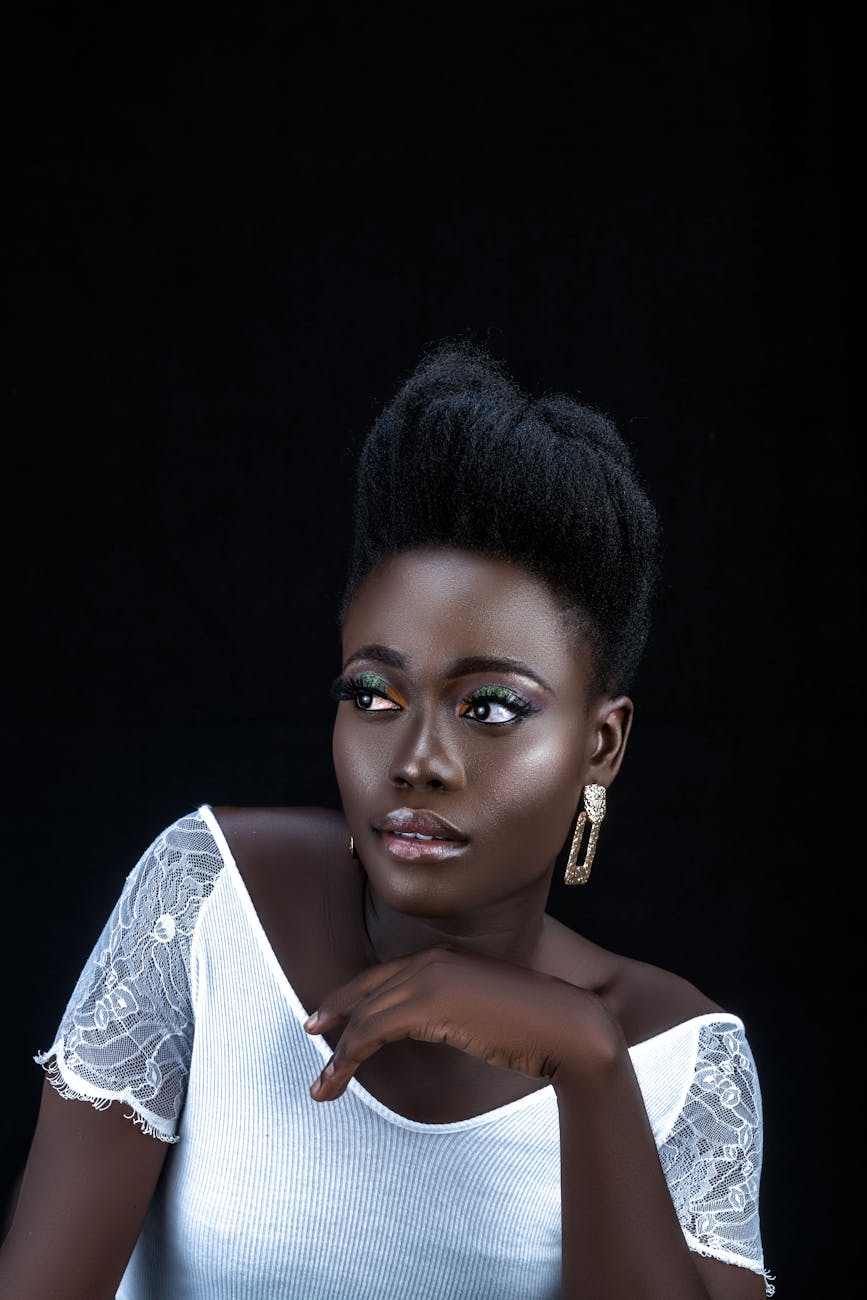
Photo by King Cyril Kalu on Pexels.com

Colorism, often described as prejudice or discrimination based on skin tone, creates a hierarchy within the Black community that values lighter skin over darker shades. This “shade hierarchy” functions like an internal caste system, influencing beauty standards, social acceptance, and economic opportunities (Hunter, 2007).

The origins of this hierarchy are deeply entwined with colonialism and slavery. European colonizers created a system where proximity to whiteness equaled privilege. Lighter-skinned enslaved Africans were often assigned domestic work and given preferential treatment, while darker-skinned individuals labored in the fields, cementing a perception that lighter skin was inherently superior (Williams, 1987).

Media and pop culture perpetuated these notions over centuries. Hollywood films frequently cast light-skinned Black women in romantic or leading roles while relegating darker-skinned women to subservient, villainous, or hypersexualized stereotypes. This not only shaped public perception but also influenced self-image among Black women (Bogle, 2016).

The psychological impact of the shade hierarchy is profound. Dark-skinned individuals often experience lower self-esteem, body image dissatisfaction, and internalized racism. Being told, explicitly or implicitly, that one’s skin is “too dark” to be desirable produces lasting trauma (Hill, 2002).

Dating preferences also reveal the pervasiveness of this hierarchy. Studies show that lighter-skinned Black women are often perceived as more attractive and desirable for relationships, while darker-skinned women are marginalized in the dating market (Wilder, 2010). Men’s internalization of colorist standards reinforces systemic bias.

Colorism extends into education and professional opportunities. Research demonstrates that darker-skinned Black men and women earn less than lighter-skinned peers, even when controlling for education and experience. This colorism wage gap mirrors the historical privileging of lighter skin (Goldsmith, Hamilton, & Darity, 2006).

Schools are microcosms where colorism manifests early. Dark-skinned children are often subject to teasing, social exclusion, or disproportionate disciplinary actions. This reinforces societal hierarchies and internalized biases before adulthood (Monk, 2014).

Family and community can either reinforce or challenge the shade hierarchy. Favoring lighter-skinned relatives in compliments, marriage prospects, or inheritance decisions perpetuates the caste system. Conversely, affirming all shades equally fosters resilience and pride in melanin-rich identities (Russell, Wilson, & Hall, 2013).

Language plays a crucial role in perpetuating colorism. Terms like “redbone,” “high yellow,” and backhanded compliments such as “pretty for a dark-skinned girl” normalize hierarchy and shape self-perception. Challenging and changing this language is essential for liberation (Charles, 2003).

Social media has emerged as both a challenge and a solution. While platforms sometimes reinforce colorism through algorithmic biases and influencer culture, they also provide spaces for celebrating dark-skinned beauty, such as #MelaninPoppin and #DarkSkinIsBeautiful campaigns. These initiatives help counter harmful narratives and create visible representation.

Religious and spiritual frameworks can aid in dismantling the shade hierarchy. Scriptures such as Song of Solomon 1:5 — “I am black, but comely” — affirm that melanin is not a flaw but a feature worthy of pride. Church communities can preach against favoritism and celebrate beauty in all skin tones (James 2:1-4).

Media literacy is another tool. Teaching children and adults to critically assess representations in television, film, and advertising reduces the internalization of harmful beauty norms. Awareness of how light-skinned individuals are often elevated helps viewers resist accepting a biased standard unconsciously.

Empowerment programs targeting youth can directly counter colorism. Workshops that teach self-esteem, beauty appreciation, and historical knowledge about African ancestry encourage young people to embrace their skin tone with pride (Hall, 1992).

Feminist scholars emphasize that dismantling the shade hierarchy is not just about aesthetics; it is about power. Colorism intersects with sexism and racism, creating compounded oppression for dark-skinned women. Addressing these structural inequalities is critical for holistic liberation (Hunter, 2007).

Representation in professional and artistic spaces also matters. Featuring dark-skinned Black men and women in leadership roles, creative industries, and political office challenges societal hierarchies and normalizes their presence in positions of influence.

Black men’s participation is key in dismantling the hierarchy. By affirming dark-skinned women as desirable partners, celebrating them publicly, and rejecting societal pressure to prefer lighter skin, men can help erode internalized colorist standards in the community (Harris, 2015).

Economic interventions are also necessary. Organizations should prioritize diversity in hiring and promotion, ensuring that darker-skinned candidates are not overlooked due to unconscious bias. Equitable opportunities disrupt the cycle of privilege attached to lighter skin.

Education and mentorship programs should include historical context about colorism and practical strategies for resistance. Teaching children about African history, melanin-rich heroes, and cultural pride counteracts centuries of negative messaging about dark skin (Smedley, 1999).

Personal reflection and therapy can help individuals confront internalized colorism. Journaling, counseling, and group discussions offer spaces to unlearn harmful messages and rebuild self-worth, allowing people to embrace their natural complexion fully.

Breaking free from the color caste system requires sustained effort across generations. By challenging social norms, affirming diverse beauty, and creating supportive spaces, the Black community can replace hierarchical thinking with pride, dignity, and unity.


References

  • Bogle, D. (2016). Toms, Coons, Mulattoes, Mammies, and Bucks: An Interpretive History of Blacks in American Films. Bloomsbury.
  • Charles, C. (2003). Skin Bleaching, Self-Hate, and Black Identity in Jamaica. Journal of Black Studies, 33(6), 711–728.
  • Goldsmith, A., Hamilton, D., & Darity, W. (2006). Shades of Discrimination: Skin Tone and Wages. American Economic Review, 96(2), 242–245.
  • Hall, R. E. (1992). Bias Among African Americans Regarding Skin Color: Implications for Social Work Practice. Research on Social Work Practice, 2(4), 479–486.
  • Harris, A. (2015). The Influence of Fathers on the Self-Esteem of African American Daughters. Journal of Black Psychology, 41(3), 257–276.
  • Hunter, M. (2007). The Persistent Problem of Colorism: Skin Tone, Status, and Inequality. Sociology Compass, 1(1), 237–254.
  • Monk, E. P. (2014). Skin Tone Stratification among Black Americans, 2001–2003. Social Forces, 92(4), 1313–1337.
  • Russell, K., Wilson, M., & Hall, R. (2013). The Color Complex: The Politics of Skin Color Among African Americans. Anchor Books.
  • Smedley, A. (1999). Race in North America: Origin and Evolution of a Worldview. Westview Press.
  • Williams, E. (1987). Capitalism and Slavery. UNC Press.
  • Wilder, J. (2010). Revisiting “Color Names and Color Notions”: A Contemporary Examination of the Language and Attitudes of Skin Color among Young Black Women. Journal of Black Studies, 41(1), 184–206.

The Psychology of Colorism: The Light vs Dark Skin.

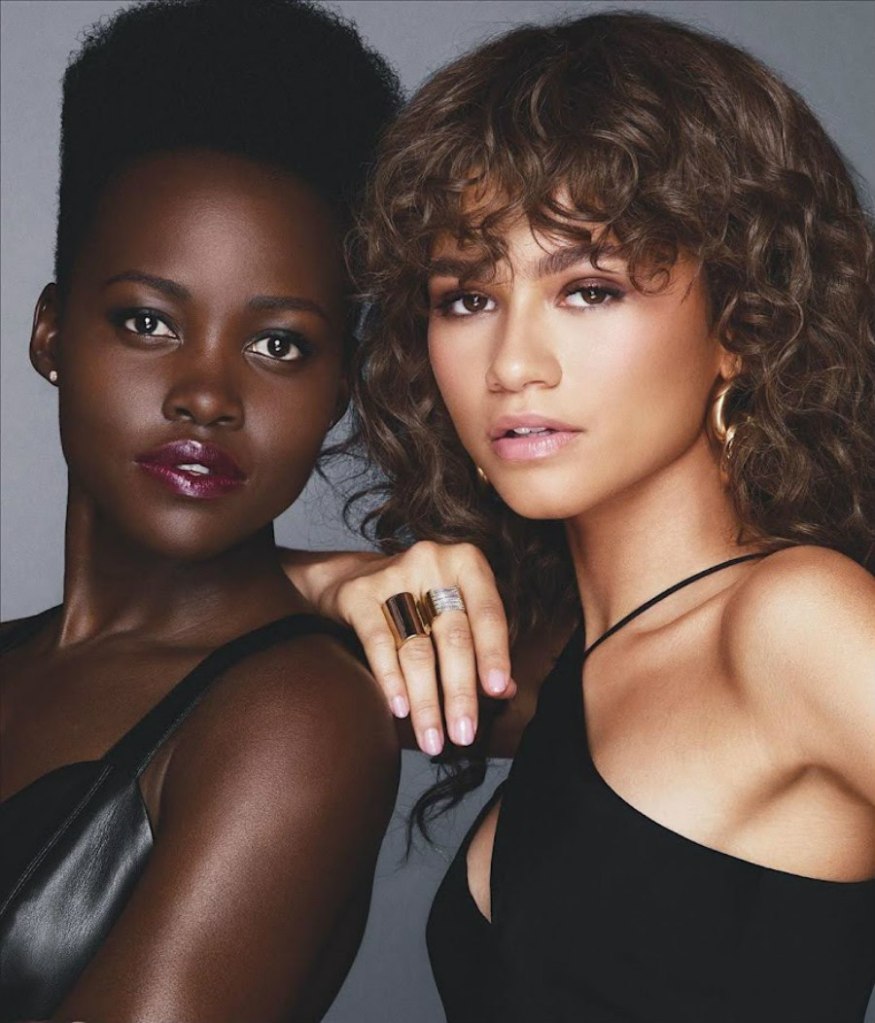
This photograph is the property of its respective owner. No copyright infringement intended.

Colorism is the prejudice or preferential treatment based on skin tone, typically favoring lighter skin over darker skin within the same racial or ethnic group. Unlike racism, which discriminates across different races, colorism operates within a racial or ethnic community, creating hierarchies based on proximity to Eurocentric features. The term was first popularized by Alice Walker in 1983, though the phenomenon has existed for centuries.

Within the Black community, colorism has deep historical roots. It emerged during slavery, when lighter-skinned enslaved individuals—often the children of white slave owners—were given preferential treatment, such as working inside the house rather than laboring in the fields. These house slaves often had access to better food, clothing, and education, whereas field slaves endured harsher conditions (Hunter, 2007). The social stratification created lasting intergenerational psychological effects.

Psychologically, colorism affects self-esteem, identity, and social mobility. Studies show that darker-skinned Black individuals often experience lower self-worth, fewer professional opportunities, and heightened internalized racism compared to lighter-skinned peers (Hunter, 2007; Keith & Herring, 1991). The preference for lighter skin is associated with societal ideals of beauty and success that are tied to European features.

The influence of colorism extends beyond the Black community. In India, the caste system and historical colonization reinforced the belief that lighter skin denotes higher social status, leading to widespread use of skin-lightening products (Tajfel & Turner, 1979). Among Hispanic and Latinx populations, mestizo identity and European ancestry are often valorized over Indigenous or Afro-descendant heritage. Similarly, in East and Southeast Asia, lighter skin has been historically associated with wealth, nobility, and refinement, while darker skin has been linked to laboring in the sun.

Colorism also intersects with gender, disproportionately affecting women. In the Black community, lighter-skinned women have historically been deemed more attractive, more marriageable, and more socially desirable, both by men within and outside the community (Hunter, 2007). This preference can exacerbate divisions and reinforce patriarchal hierarchies, leaving darker-skinned women marginalized and undervalued.

The psychological effects are compounded by media and cultural representation. Hollywood and Western media often present lighter-skinned Black women in leading roles while marginalizing dark-skinned women to background or stereotypical roles. This reinforces internalized colorism, creating a cycle of self-devaluation and desire for features associated with whiteness (Russell-Cole et al., 2013).

Biblically, the issue of valuing outward appearance over inward worth is cautioned against. 1 Samuel 16:7 (KJV) states, “For the LORD seeth not as man seeth; for man looketh on the outward appearance, but the LORD looketh on the heart.” Colorism, in this light, reflects human fallibility in valuing skin tone over character, faith, and spiritual depth.

Historical slavery significantly entrenched colorism in the United States. House slaves—usually lighter-skinned—were sometimes granted privileges unavailable to darker-skinned field slaves, leading to internal hierarchies and divisions within the enslaved community. Lighter-skinned children born to slave owners often had ambiguous status, creating both resentment and survival strategies that persist across generations.

During slavery, lighter-skinned Black women were often sexualized by white men, a tragic legacy that has influenced modern perceptions of beauty and desirability. This history contributes to the psychological phenomenon where Black men may consciously or unconsciously favor lighter-skinned women, associating them with beauty, status, or social capital (Hunter, 2007; Keith & Herring, 1991).

Psychology explains this as a combination of social learning, internalized bias, and reinforcement. Preferences for lighter-skinned partners may reflect both historical conditioning and the influence of media and society. Social Identity Theory (Tajfel & Turner, 1979) suggests that individuals derive self-esteem by favoring traits aligned with dominant societal standards, even within their own ethnic group.

Colorism contributes to intragroup discrimination, where darker-skinned individuals face bias not just from society but from within their own communities. This can manifest in reduced dating prospects, employment bias, or social exclusion. Studies indicate that darker-skinned women are often less likely to marry lighter-skinned men, and darker-skinned men may experience similar disadvantages in partner selection (Russell-Cole et al., 2013).

Globally, colorism intersects with class, wealth, and cultural capital. In India, lighter-skinned individuals are more likely to receive better job offers and marriage prospects. Among Latinx and Asian communities, skin tone can influence perceptions of intelligence, civility, and social mobility. These dynamics show that colorism is a global phenomenon, shaped by historical, economic, and cultural forces.

Changing colorism requires both individual and collective action. Education about the historical roots of skin-based hierarchies is essential. Communities can promote media representation that celebrates all skin tones, and religious or cultural teachings can emphasize inner worth over outward appearance. 1 Samuel 16:7 (KJV) reminds communities to value heart and character above skin tone.

In the Black community, self-affirmation and visibility of darker-skinned leaders, celebrities, and role models can counteract internalized bias. Campaigns that celebrate melanin-rich skin, such as #UnfairAndLovely or #DarkIsBeautiful, provide psychological reinforcement of worth and beauty beyond lightness.

Within family structures, parents can raise children to value character, intelligence, and faith rather than skin tone. Proverbs 22:6 (KJV) states, “Train up a child in the way he should go: and when he is old, he will not depart from it.” By instilling these values early, communities can challenge intergenerational colorist beliefs.

Colorism also intersects with religion and spirituality. Black women who embrace their natural skin often find empowerment in biblical teachings that emphasize inner beauty and God-given identity. 1 Peter 3:3–4 (KJV) instructs, “Whose adorning let it not be that outward adorning of plaiting the hair… but the hidden man of the heart, in that which is not corruptible, even the ornament of a meek and quiet spirit, which is in the sight of God of great price.”

Psychologists emphasize that internalized colorism can be mitigated through cognitive restructuring, affirmations, and representation. Therapy, mentorship, and community engagement can help individuals recognize their inherent value, countering messages from media and historical oppression.

For Black men, confronting preferences that favor lighter-skinned women requires self-reflection and awareness of historical conditioning. Biblical teachings on equality and righteousness, coupled with psychological education, can foster appreciation for all women regardless of skin tone. Galatians 3:28 (KJV) reminds us, “There is neither Jew nor Greek, there is neither bond nor free, there is neither male nor female: for ye are all one in Christ Jesus.”

Ultimately, colorism is not simply a matter of preference; it is a systemic, historical, and psychological issue that affects self-esteem, relationships, and social cohesion. Addressing it requires education, representation, cultural affirmation, and spiritual guidance. Communities must recognize the divisive impact of skin-tone hierarchies and actively work to celebrate all shades of beauty and worth.

The Psychology of Colorism

Title: Colorism: Light vs Dark Skin – History, Psychology, and Social Impact

1. Historical Origins (Slavery & Colonization)

  • House Slaves (Lighter Skin): Privileged treatment, access to education, better food, and closer to slave owners.
  • Field Slaves (Darker Skin): Hard labor, harsher conditions, social marginalization.
  • Impact: Created an intra-racial hierarchy based on skin tone.

2. Psychological Effects

  • Internalized Colorism: Lower self-esteem for darker-skinned individuals.
  • Identity & Self-Worth: Lighter skin associated with beauty, success, and desirability.
  • Behavioral Consequences: Preference for lighter-skinned partners, social mobility advantages.

3. Cultural & Global Impact

  • Black Community: Preference for light-skinned women; media representation reinforces bias.
  • India: Fair skin linked to social status; widespread use of skin-lightening products.
  • Hispanic/Latinx Communities: European ancestry valorized over Indigenous/Afro-descendant heritage.
  • East/Southeast Asia: Lighter skin historically linked to nobility and social class.

4. Gender Dynamics

  • Women: Most affected; lighter-skinned women often deemed more attractive and marriageable.
  • Men: Preferences shaped by history, culture, and media influence; some favor lighter-skinned partners.

5. Biblical & Moral Perspective

  • 1 Samuel 16:7 (KJV): God values the heart, not outward appearance.
  • Galatians 3:28 (KJV): Equality in Christ; skin tone irrelevant in spiritual worth.

6. Solutions & Interventions

  • Education: Teach history and psychological impact of colorism.
  • Media Representation: Highlight darker-skinned individuals in positive roles.
  • Community Affirmation: Encourage pride in melanin-rich skin.
  • Spiritual Guidance: Emphasize biblical truths about inner worth and godly character.
  • Parental Guidance: Raise children to value character and faith over skin tone.

The legacy of slavery, colonialism, and Eurocentric beauty standards continues to shape colorist perceptions today. By acknowledging history, valuing inner character, and promoting inclusivity, communities can gradually dismantle the hierarchy of light versus dark skin. Psychology, cultural studies, and biblical principles converge in emphasizing that true value lies not in complexion but in character, faith, and actions.


References

  • Hunter, M. (2007). The Persistent Problem of Colorism: Skin Tone, Status, and Inequality. Sociology Compass, 1(1), 237–254.
  • Keith, V., & Herring, C. (1991). Skin Tone and Stratification in the Black Community. American Journal of Sociology, 97(3), 760–778.
  • Russell-Cole, K., Wilson, M., & Hall, R. (2013). The Color Complex: The Politics of Skin Color in a New Millennium. HarperCollins.
  • Tajfel, H., & Turner, J. (1979). An Integrative Theory of Intergroup Conflict. In W. Austin & S. Worchel (Eds.), The Social Psychology of Intergroup Relations. Brooks/Cole.
  • The Holy Bible, King James Version (KJV).

The Male Files: Looks vs. Personality — The Battle Between Flesh and Spirit.

In the modern world, men are often accused of being shallow, drawn first and foremost to physical appearance rather than personality. While this stereotype carries truth, the reasons behind it run deeper than vanity. Men are visually wired. From a biological standpoint, the male brain responds quickly to physical stimuli; it is a built-in survival mechanism designed for attraction, reproduction, and the continuation of the species. Yet, the spiritual man operates under a higher calling. The tension between what men see and what they value defines much of the internal conflict in today’s dating culture.

Society tells men that beauty equals worth. From music videos to advertisements, the female form has been commodified and marketed as the ultimate prize. A man’s status is often measured by the attractiveness of the woman he can “get.” This cultural conditioning fuels ego rather than intimacy. Many men pursue beauty not because they love it, but because they crave validation. It becomes a trophy to cover insecurity, not a reflection of true connection.

Biblically, however, man was created to discern beyond the surface. Proverbs 31:30 (KJV) reminds us, “Favour is deceitful, and beauty is vain: but a woman that feareth the Lord, she shall be praised.” Godly men are called to see character, not just curves. True beauty, in the eyes of a godly man, is rooted in virtue, kindness, and spiritual alignment—not in Instagram filters or waist-to-hip ratios.

Worldly men, on the other hand, often chase the image of perfection without understanding its emptiness. The “perfect 10” they desire is rarely about companionship—it’s about conquest. The lust of the flesh blinds the spirit, and in trying to fulfill a fantasy, many men lose their purpose. First John 2:16 (KJV) warns, “For all that is in the world, the lust of the flesh, and the lust of the eyes, and the pride of life, is not of the Father.” The worldly man is driven by impulse; the godly man is led by vision.

Interestingly, many men who demand “perfection” from women are themselves far from perfect. They want a fit, flawless partner while neglecting their own health, appearance, and spiritual discipline. This hypocrisy stems from ego insecurity—the desire to possess beauty as a way to elevate one’s own self-esteem. In psychology, this is called compensatory desire—when a person overvalues traits in others to make up for their own perceived inadequacies.

At its root, this obsession is not about women—it’s about male identity. The modern man has been raised in a culture that equates manhood with dominance, sexual access, and external success. When that is stripped away, many men feel powerless. So, they chase beauty to regain control, mistaking admiration for affirmation. But the truth is, external validation can never heal internal wounds.

A godly man, however, views attraction through the lens of purpose. He recognizes that a wife is not a status symbol but a partner in destiny. Genesis 2:18 (KJV) says, “It is not good that the man should be alone; I will make him an help meet for him.” This implies alignment, not aesthetic. God designed women to complement a man’s calling, not to decorate his ego. A woman’s beauty, therefore, should inspire responsibility, not lust.

Men who walk by the flesh often find themselves unsatisfied. No matter how beautiful the woman, the excitement fades if there is no emotional or spiritual connection. Proverbs 27:20 (KJV) declares, “Hell and destruction are never full; so the eyes of man are never satisfied.” This is why even men who “have it all” continue to wander—because their desires are rooted in emptiness, not wholeness.

True masculinity requires discipline. The ability to admire beauty without idolizing it separates a man of faith from a man of flesh. Lust feeds on fantasy; love grows from foundation. A man who cannot govern his eyes will never govern his home. Matthew 6:22 (KJV) says, “The light of the body is the eye.” What a man focuses on determines the direction of his soul.

In truth, many men were never taught what to look for in a wife. They learned from rap videos, social media, and locker room talk instead of from Scripture and wisdom. The world glorifies quantity over quality, teaching men to chase pleasure rather than purpose. But a godly man seeks more. He seeks peace over passion, loyalty over lust, and substance over spectacle.

The “perfect 10” mentality is also a reflection of comparison culture. Men, like women, are influenced by social media’s curated illusions. Scrolling through endless images of beauty creates unrealistic expectations, making average women seem “less than.” Yet these filtered fantasies are not real—they are projections of desire, not demonstrations of character. In chasing illusion, men lose appreciation for authenticity.

From a spiritual perspective, this obsession with physical perfection mirrors idolatry. When a man places more value on appearance than on godly character, he dethrones God as the source of beauty. The Bible teaches that the fear of the Lord is the beginning of wisdom (Proverbs 9:10 KJV). Therefore, discernment—not desire—should guide his heart.

Moreover, the male ego often equates attraction with achievement. To be seen with a beautiful woman boosts a man’s social standing among other men. But such validation is hollow. It creates relationships based on appearance rather than depth. When life’s trials come—and they always do—beauty alone cannot sustain love.

A godly man recognizes that real attraction grows with intimacy, respect, and shared faith. When a woman prays with him, encourages his purpose, and walks in integrity, her beauty multiplies in his eyes. Physical beauty fades, but spiritual beauty endures. First Peter 3:4 (KJV) describes this kind of woman as one with “the ornament of a meek and quiet spirit, which is in the sight of God of great price.”

Worldly men measure worth by what they can see; godly men measure it by what they can build. The worldly man asks, “How does she make me look?” The godly man asks, “How can we glorify God together?” The difference lies in maturity, not masculinity. One pursues pleasure; the other pursues purpose.

When men learn to lead with discernment, they break the cycle of superficial love. They begin to see women not as possessions but as partners. They understand that true attraction begins in the spirit, not the skin. This is the transformation the modern male psyche desperately needs—to evolve from consumerism to covenant.

In the end, the greatest beauty a man can find in a woman is peace. Proverbs 18:22 (KJV) declares, “Whoso findeth a wife findeth a good thing, and obtaineth favour of the Lord.” That “good thing” is not defined by her looks but by her godliness. For beauty catches the eye, but virtue captures the soul.


References

Holy Bible, King James Version. (n.d.). Bible Gateway. https://www.biblegateway.com

Cloud, H., & Townsend, J. (2018). Boundaries in Dating: How Healthy Choices Grow Healthy Relationships. Zondervan.

Eldredge, J. (2001). Wild at Heart: Discovering the Secret of a Man’s Soul. Thomas Nelson.

Lewis, C. S. (1942). The Screwtape Letters. Geoffrey Bles.

Piper, J. (1993). Desiring God: Meditations of a Christian Hedonist. Multnomah Press.

Threads of Sisterhood

Sisterhood is one of the most powerful yet misunderstood bonds among women. It is not merely friendship, nor is it automatic by shared gender or proximity. True sisterhood is a deliberate weaving of trust, empathy, accountability, and mutual care that strengthens women individually and collectively.

Across cultures and generations, women have survived, healed, and thrived through communal bonds. In many societies, sisterhood functioned as an informal institution—transmitting wisdom, nurturing children, preserving culture, and sustaining emotional health. These bonds were often the quiet backbone of communities.

Within the Black community especially, sisterhood has been both a refuge and a resistance. Enslavement, segregation, and systemic marginalization forced Black women to rely on one another for survival, emotional support, and shared knowledge. Sisterhood was not a luxury; it was a necessity.

Yet sisterhood has also been strained by forces designed to divide. Colorism, competition, scarcity, and internalized oppression have frayed the threads that once held women together. When systems reward comparison over collaboration, unity becomes difficult to sustain.

At its core, sisterhood requires vulnerability. It asks women to be seen fully—strengths, wounds, fears, and flaws included. This vulnerability creates trust, and trust is the thread that holds the fabric together.

Psychologically, sisterhood offers protective benefits. Research shows that strong female social bonds reduce stress, improve mental health, and increase resilience. Women who feel supported by other women are more likely to navigate adversity with confidence and hope.

However, authentic sisterhood is not built on flattery or avoidance of truth. It requires accountability. A sister is one who loves enough to correct, not just comfort. This balance distinguishes healthy bonds from superficial alliances.

Biblically, sisterhood reflects God’s design for communal strength. Scripture teaches that believers are members of one body, each responsible for the care of the other (1 Corinthians 12:25–26, KJV). Though often applied broadly, this principle holds profound relevance for women walking together in faith.

The Bible also affirms the power of unity: “Two are better than one… for if they fall, the one will lift up his fellow” (Ecclesiastes 4:9–10, KJV). Sisterhood embodies this truth through shared burdens and collective healing.

Competition undermines sisterhood by fostering comparison. When women are conditioned to view one another as rivals—for beauty, validation, or opportunity—the fabric weakens. True sisterhood rejects scarcity thinking and affirms that one woman’s success does not diminish another’s worth.

Shadeism and favoritism further strain these bonds. When women internalize hierarchies based on skin tone, class, or proximity to dominant standards, unity fractures. Healing sisterhood requires confronting these biases with honesty and courage.

Sisterhood also demands emotional maturity. Not every woman will occupy the same role or depth in one’s life. Discernment allows for healthy boundaries without bitterness, preserving peace while honoring connection.

Intergenerational sisterhood is particularly vital. When elders and younger women exchange wisdom and perspective, communities gain stability. Scripture encourages this exchange, emphasizing the teaching and nurturing role of mature women (Titus 2:3–5, KJV).

In times of crisis, sisterhood becomes most visible. Women often show up quietly—bringing meals, prayers, childcare, and listening ears. These unseen acts form the strongest threads, binding hearts through service.

Sisterhood is also a space for celebration. Rejoicing together strengthens bonds just as much as mourning together. Shared joy reinforces belonging and counters narratives of isolation.

In a digital age, sisterhood faces new challenges. Social media can create the illusion of connection while deepening comparison. Intentional, embodied relationships remain essential for authentic bonding.

Healing fractured sisterhood requires humility. Apology, forgiveness, and grace repair torn threads. Without these practices, wounds calcify and division persists.

Sisterhood flourishes where safety exists. Women must feel protected from judgment, betrayal, and exploitation. Safe spaces allow authenticity to breathe and trust to grow.

Spiritually, sisterhood reflects divine intention. God often works through collective obedience and shared faith, reminding women they were never meant to walk alone (Hebrews 10:24–25, KJV).

The threads of sisterhood are not self-sustaining; they require care. Neglect leads to unraveling, while intentionality strengthens the weave. Time, honesty, and compassion are the tools that maintain it.

Ultimately, sisterhood is both a gift and a responsibility. When women choose unity over division, healing over harm, and collaboration over competition, they create a fabric strong enough to cover generations. Threads of sisterhood, once woven with purpose, become a legacy of strength, love, and collective restoration.


References

Collins, P. H. (2000). Black feminist thought: Knowledge, consciousness, and the politics of empowerment. Routledge.

hooks, b. (2000). Feminist theory: From margin to center. South End Press.

Taylor, S. E. (2011). Tend-and-befriend: Biobehavioral bases of affiliation under stress. Current Directions in Psychological Science, 20(4), 273–277.

Ecclesiastes 4:9–10 (King James Version). Holy Bible.

1 Corinthians 12:25–26 (King James Version). Holy Bible.

Titus 2:3–5 (King James Version). Holy Bible.

Hebrews 10:24–25 (King James Version). Holy Bible.

Dilemma: Over-familarization with POC and expecting them to teach white people.

Photo by Safari Consoler on Pexels.com

The concept of People of Color (POC) refers to a collective term encompassing nonwhite racial and ethnic groups who have historically experienced marginalization, discrimination, and systemic exclusion under white-dominated structures. The term emerged as an inclusive response to the divisive racial categorizations of the past, aiming to unite Black, Indigenous, Asian, Latinx, and other marginalized communities against the shared experiences of racism and colonial oppression (Aguirre & Turner, 2011). While the phrase was designed to foster solidarity, it has also become a tool that, when misused, can blur the specificity of the Black experience within systems of racial injustice.

In contemporary culture, over-familiarization with POC often manifests as an unconscious entitlement from white individuals who assume they can casually enter or appropriate the cultural, emotional, or intellectual spaces of nonwhite people. This dynamic creates a tension between genuine intercultural understanding and the exploitative demand that POC educate white individuals about racism and identity. The expectation that people of color must serve as teachers of racial awareness imposes an unfair emotional labor burden, forcing them to relive trauma and articulate systemic pain that should be studied and understood independently by those benefiting from privilege (DiAngelo, 2018).

For Black people, this over-familiarization becomes particularly invasive. It often disguises itself as “allyship,” but in reality, it is a form of racial proximity that undermines autonomy. When white individuals overstep into Black spaces under the guise of solidarity, they inadvertently reinforce the same power dynamics they claim to resist. The expectation that every Black person must be a spokesperson or educator erases individuality, turning lived experience into a public classroom rather than a private, human reality.

The purpose of the POC framework was originally to unite marginalized groups under shared struggles, but it has also diluted the unique historical and systemic realities of Blackness. Anti-Blackness operates differently from other forms of racism, rooted in chattel slavery, the transatlantic slave trade, and ongoing dehumanization. When white individuals treat all POC experiences as interchangeable, they fail to grasp the singularity of the Black struggle—a struggle that has shaped the very foundation of Western economies and societies (Coates, 2015).

In educational and workplace settings, Black individuals are often expected to guide diversity efforts or explain microaggressions, even when such roles are unpaid and emotionally exhausting. The expectation becomes a cycle of psychological taxation—where the very people oppressed by racism must also be responsible for dismantling it. This undermines equity by placing the weight of re-education on those who already endure systemic injustice (Sue et al., 2007).

This dilemma extends into social and digital spaces. Online activism has created platforms for awareness, but it has also led to performative allyship, where white individuals engage with POC content superficially—sharing posts or quoting activists—without engaging in the deeper self-reflection required to dismantle racist ideologies. Black creators are often exploited for their intellectual and emotional labor, while white audiences consume and commodify their experiences without reciprocating in meaningful systemic change.

Culturally, this over-familiarization leads to appropriation. The imitation of Black speech, fashion, and music without acknowledgment of its origins reflects a historical continuity of exploitation. What was once penalized or mocked when practiced by Black people becomes celebrated when adopted by white individuals. This cultural theft, though masked as appreciation, perpetuates erasure and reinforces the illusion of equality while maintaining the structures of white dominance (hooks, 1992).

Psychologically, the demand that POC educate others about racism can induce fatigue and resentment. It forces them to manage white guilt and fragility while suppressing their own anger or exhaustion to maintain social harmony. The emotional toll of constantly explaining why racism is wrong deepens the trauma of living under racial oppression and silences the authentic emotional range of Black people (Moses, 2020).

The purpose of racial education should not fall on the oppressed but on those in power. White individuals must actively engage with anti-racist scholarship, history, and personal introspection. Works by scholars like bell hooks, Frantz Fanon, and Ibram X. Kendi offer pathways for understanding without exploiting the lived experiences of Black people. True allyship requires listening, humility, and accountability rather than over-familiarization and intrusion.

Over-familiarization also obscures boundaries. When white individuals presume intimacy with POC—calling them by colloquial names, imitating cultural behaviors, or entering spaces meant for healing—they blur the line between solidarity and dominance. This false sense of comfort reinforces the myth that racial inequities have been resolved, masking the persistent power imbalance that governs interpersonal and institutional relationships.

The expectation that every POC can represent all of their race is dehumanizing. Black individuals are diverse in ideology, class, and experience. Reducing them to educators of race or cultural ambassadors denies their complexity and individuality. It shifts attention away from systemic accountability toward interpersonal comfort for white individuals who wish to feel “included” in anti-racist discourse without surrendering privilege.

This dynamic also reinforces racial capitalism. Black pain and resilience become consumable narratives in media and entertainment. Documentaries, social posts, and academic discussions about racism generate profit and prestige for institutions that rarely redistribute resources to the communities being discussed. Thus, over-familiarization becomes another avenue through which white supremacy sustains itself under a façade of multicultural awareness.

The intersection of over-familiarization and tokenism compounds the issue. Many institutions showcase a handful of Black individuals as representatives of diversity while failing to dismantle exclusionary policies or systemic inequities. The “teacher” role is thus institutionalized, and POC find themselves both celebrated and exploited simultaneously—a contradictory position of visibility without power.

Historically, Black people have always been forced to teach their oppressors humanity—from the abolitionist movements to the Civil Rights era. Yet, centuries later, the demand continues. This suggests that the white conscience prefers comfort over change. Genuine transformation begins when those in privilege stop expecting emotional guidance and start committing to self-education and reparative action.

The effects of over-familiarization are subtle but profound. They erode trust, trivialize lived experiences, and perpetuate a racial dynamic where POC exist for the emotional benefit of white individuals. When white comfort becomes the measure of progress, Black liberation is delayed, and systemic inequities remain untouched beneath the surface of false harmony.

The role of POC should be self-determined, not socially assigned. They are creators, thinkers, and leaders—not tools for moral instruction. The over-familiarization problem stems from a deep societal reluctance to accept responsibility. Until white individuals internalize that learning about racism is their obligation, not a favor extended by POC, the cycle of exploitation will persist.

Community healing among POC requires establishing boundaries and reclaiming autonomy. This involves recognizing when sharing becomes self-harm and when silence becomes resistance. As Audre Lorde (1984) wrote, “The master’s tools will never dismantle the master’s house.” Educating oppressors cannot liberate the oppressed; only collective power and systemic change can.

In conclusion, the over-familiarization of POC and the expectation that they teach white individuals about racism is a modern form of exploitation wrapped in the language of inclusion. It drains emotional energy, obscures systemic issues, and recenters whiteness even within anti-racist spaces. To honor the purpose of the POC framework, society must move from extraction to equity, from over-familiarization to respect, and from learning about people of color to learning from within systems that restore their rightful power and dignity.

References
Aguirre, A., & Turner, J. H. (2011). American ethnicity: The dynamics and consequences of discrimination. McGraw-Hill.
Coates, T.-N. (2015). Between the world and me. Spiegel & Grau.
DiAngelo, R. (2018). White fragility: Why it’s so hard for white people to talk about racism. Beacon Press.
hooks, b. (1992). Black looks: Race and representation. South End Press.
Lorde, A. (1984). Sister outsider: Essays and speeches. Crossing Press.
Moses, M. (2020). Emotional labor and the racial burden: The hidden cost of educating others. Journal of Black Psychology, 46(4), 273–289.
Sue, D. W., Capodilupo, C. M., Torino, G. C., Bucceri, J. M., Holder, A. M. B., Nadal, K. L., & Esquilin, M. (2007). Racial microaggressions in everyday life: Implications for clinical practice. American Psychologist, 62(4), 271–286.

🌸 The Beauty Within: How Character Outshines Appearance in God’s Design 🌸

Photo by Jermaine Ulinwa on Pexels.com

In a society that often equates beauty with physical features, fashion, and external charm, the Word of God reminds us that true beauty flows from within. Proverbs 31:30 (KJV) declares: “Favour is deceitful, and beauty is vain: but a woman that feareth the Lord, she shall be praised.” Outward attractiveness may capture attention, but it is the enduring light of godly character that leaves a lasting impression. God’s design for beauty transcends appearance and reveals itself in virtues such as kindness, humility, and faith.

Psychology supports this biblical truth by showing that people are drawn not only to physical attractiveness but also to personality traits such as warmth, empathy, and integrity. Studies reveal that individuals who display compassion and positivity are perceived as more attractive over time than those with only outward appeal (Little et al., 2011). This confirms the biblical principle that inner beauty outshines physical appearance because it nourishes relationships and fosters genuine connection.

Scripture offers countless examples of women whose beauty was defined not merely by appearance but by faith and character. Esther, though physically beautiful, found favor because of her courage and wisdom. Her willingness to risk her life for her people (Esther 4:16 KJV) demonstrates that true beauty is expressed in sacrificial love and unwavering trust in God. Similarly, Ruth’s devotion to Naomi and her faith in God made her stand out, leading to honor, restoration, and her place in the lineage of Christ (Ruth 1:16 KJV).

The Apostle Peter emphasized this in his letter: “Whose adorning let it not be that outward adorning of plaiting the hair, and of wearing of gold… But let it be the hidden man of the heart, in that which is not corruptible, even the ornament of a meek and quiet spirit, which is in the sight of God of great price” (1 Peter 3:3–4 KJV). Here, beauty is framed as incorruptible when rooted in character. Unlike physical features, which change with time, spiritual virtues grow stronger and more radiant.

Modern psychology echoes this biblical view through the concept of “authentic attractiveness.” People find genuineness, kindness, and reliability more appealing than artificial displays of beauty (Riggio & Widaman, 1984). A woman who exudes inner peace and strength provides stability as a friend, nurturing care as a mother, and respect as a wife. Her role in family and community becomes a living testimony of God’s design for inner beauty.

True beauty also has transformative power. For example, a teacher who leads with patience and compassion may inspire generations of students, not because of her appearance but because of her integrity and encouragement. A nurse who offers care with gentleness brings healing that goes beyond medicine. These real-life reflections mirror Christ’s love and show that beauty shines brightest when it uplifts others.

As a friend, the beautiful woman uplifts; as a sister, she supports; as a mother, she nurtures; as a wife, she loves unconditionally; and as an aunt, she provides guidance. Her impact reaches far beyond herself. Proverbs 31 paints the picture of such a woman—her hands provide, her mouth speaks wisdom, and her children rise and call her blessed (Proverbs 31:26–28 KJV). Her beauty is defined by what she gives to others and how she reflects God’s character.

The moral lesson is clear: physical beauty fades, but inner beauty rooted in faith and character endures. The woman who fears God and walks in virtue reflects His image, blessing her family and community. Her beauty outshines appearance because it is eternal, incorruptible, and aligned with God’s divine design.

Ultimately, the beauty within is not a possession but a practice. It is cultivated daily through prayer, humility, acts of service, and trust in God. In a world that often glorifies outward appearance, God calls His daughters to reflect His light through their hearts. True beauty is not about being admired but about inspiring others to glorify the Creator.


References

  • The Holy Bible, King James Version.
  • Little, A. C., Burt, D. M., & Perrett, D. I. (2011). What is good is beautiful: Face preference reflects desired personality. Personality and Individual Differences, 50(7), 862–866.
  • Riggio, R. E., & Widaman, K. F. (1984). The interrelationships of self-esteem, locus of control, and attractiveness. Personality and Social Psychology Bulletin, 10(2), 241–247.
  • Koenig, H. G. (2012). Religion, spirituality, and health: The research and clinical implications. ISRN Psychiatry, 2012, 278730. https://doi.org/10.5402/2012/278730