Category Archives: the brown girl dilemma book

The White Gaze, the Black Gaze, and Healing & Unity.

The white gaze is a historical and sociological concept that refers to the way white society observes, defines, and judges Black identity. From the transatlantic slave trade to modern mass media, the white gaze has consistently imposed labels and expectations on Black people that serve to uphold systems of power and control. In this view, Black identity is not self-determined, but rather constructed as “the other,” existing in opposition to whiteness.
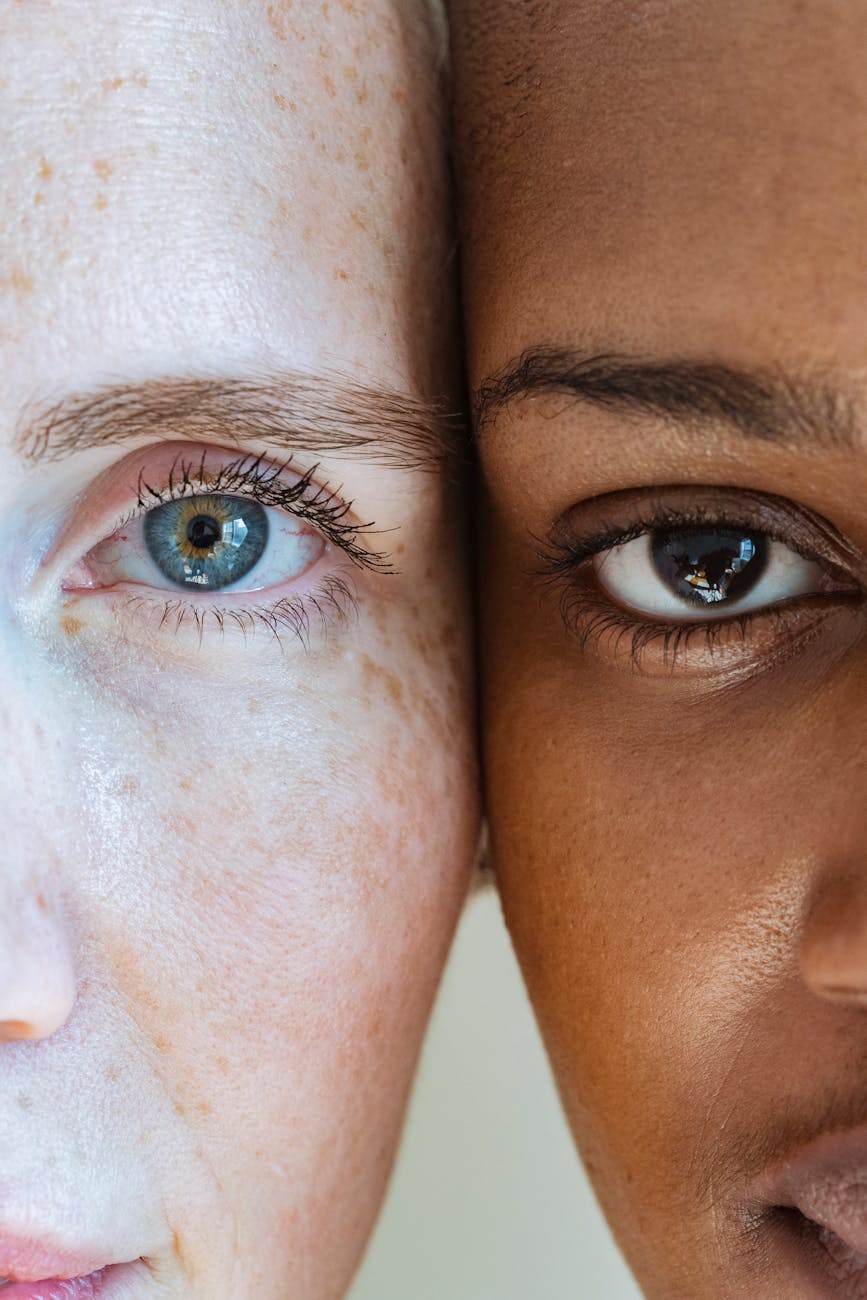
Photo by Angela Roma on Pexels.com

The Black gaze, however, is a complicated internalization of both pride and pain. On one hand, it represents the self-awareness and affirmation of Blackness in defiance of systemic oppression. On the other, it can mirror internalized racism and colorism, as members of the Black community sometimes measure one another by proximity to white standards. The tension between the white gaze and the Black gaze creates an ongoing struggle for authenticity and wholeness.

Under the white gaze, all Black people are lumped into one category regardless of complexion, culture, or background. From slavery’s “one-drop rule” to Jim Crow’s “separate but equal,” whiteness has historically reduced Black identity to an object of suspicion, inferiority, or exoticism. This dehumanization was designed to rationalize inequality and maintain white dominance.

The Black gaze developed in resistance but also in fragmentation. Within Black communities, hierarchies of skin tone, hair texture, and cultural expression have often reproduced divisions. While these divisions are rooted in historical oppression, they nevertheless create cycles of mistrust and judgment. The “brown skin paradox” of being not light enough and not dark enough reflects this painful reality.

To understand the white gaze, one must acknowledge its function as surveillance and control. The white gaze is not neutral—it polices how Black people dress, speak, and behave. Even today, racial profiling, biased policing, and workplace discrimination reflect the persistence of the white gaze in shaping opportunities and consequences.

In contrast, the Black gaze, when rooted in empowerment, serves as a mirror of resilience. Black communities have created beauty, culture, and art that redefine standards outside of whiteness. Music, literature, and fashion have all been tools of resistance, reclaiming dignity from the distortions of the white gaze. Yet, the challenge remains: how to cultivate a gaze that unifies rather than divides.

Colorism complicates the Black gaze. Preference for lighter skin or “good hair” reflects the lingering influence of slavery, when proximity to whiteness often meant access to privilege. These divisions persist in families, dating preferences, and media representation. Such internal hierarchies weaken collective strength and hinder healing.

The Bible speaks directly to division and partiality. James 2:9 (KJV) declares, “But if ye have respect to persons, ye commit sin, and are convinced of the law as transgressors.” Favoritism based on appearance, whether by white supremacy or internal colorism, stands against God’s standard of justice. In Christ, identity is not measured by skin but by spirit.

Healing begins when the lies of both gazes are rejected. For Black people, this means no longer seeking validation through whiteness or competing for approval based on complexion. It requires embracing the truth of Psalm 139:14 (KJV): “I will praise thee; for I am fearfully and wonderfully made: marvellous are thy works; and that my soul knoweth right well.” Every shade is a reflection of divine craftsmanship.

Unity cannot come without truth. John 8:32 (KJV) proclaims, “And ye shall know the truth, and the truth shall make you free.” The truth is that white supremacy has always sought to divide and weaken, and that internalized division only strengthens the oppressor. Recognizing this truth is the first step to dismantling false gazes.

Healing also requires forgiveness, though not in the sense of forgetting history or ignoring injustice. Forgiveness, in this context, means refusing to allow bitterness to define identity. As Ephesians 4:31-32 (KJV) teaches, believers are called to “put away all bitterness, and wrath, and anger” and to “forgive one another, even as God for Christ’s sake hath forgiven you.” Unity comes when past wounds do not dictate future relationships.

Education is a tool for liberation. By learning the history of the white gaze and its impact, Black communities can understand the roots of division and resist repeating them. Teaching children the beauty of all shades and the worth of all features is a radical act of healing. Representation matters, but affirmation within families and communities matters even more.

Economics and justice are also part of healing. Unity requires advocating for equity in schools, workplaces, and the justice system. To confront the white gaze is to challenge systemic racism. To reform the Black gaze is to dismantle intra-community prejudices. Both are necessary for collective progress.

The role of the church is critical. Too often, churches have ignored or even perpetuated colorism and division. Yet the church is uniquely positioned to proclaim Galatians 3:28 (KJV): “There is neither Jew nor Greek, there is neither bond nor free, there is neither male nor female: for ye are all one in Christ Jesus.” The gospel calls for a unity that transcends race and shade without denying the realities of oppression.

Art, music, and storytelling play a role in reshaping the gaze. From gospel music to hip hop, Black creativity has always been a means of healing and protest. These cultural expressions disrupt the white gaze and provide spaces where Black identity is celebrated authentically. They remind the world that Blackness is not a monolith but a mosaic.

Unity requires humility. Healing cannot come if individuals cling to pride or superiority based on shade or proximity to whiteness. Philippians 2:3 (KJV) instructs, “Let nothing be done through strife or vainglory; but in lowliness of mind let each esteem other better than themselves.” This humility is the foundation of reconciliation within the community.

Healing also requires love. 1 Peter 4:8 (KJV) declares, “And above all things have fervent charity among yourselves: for charity shall cover the multitude of sins.” Love must be the lens through which the Black gaze is redefined—not as a competition of shades, but as a celebration of shared struggle, heritage, and destiny.

When the white gaze is dismantled and the Black gaze is purified, unity becomes possible. This unity is not uniformity but strength in diversity. It acknowledges pain but refuses to be imprisoned by it. It reclaims agency and affirms that every shade is essential to the collective story.

Ultimately, healing and unity require centering identity in God rather than in human gazes. To be seen by God, rather than to live under the gaze of man, is true freedom. 2 Corinthians 5:17 (KJV) reminds us: “Therefore if any man be in Christ, he is a new creature: old things are passed away; behold, all things are become new.” A new gaze emerges—God’s gaze—where worth is immeasurable, and unity is divine.


References

  • Hunter, M. (2007). The persistent problem of colorism: Skin tone, status, and inequality. Sociology Compass, 1(1), 237–254.
  • hooks, b. (1992). Black looks: Race and representation. South End Press.
  • Fanon, F. (1967). Black skin, white masks. Grove Press.
  • The Holy Bible, King James Version (KJV).
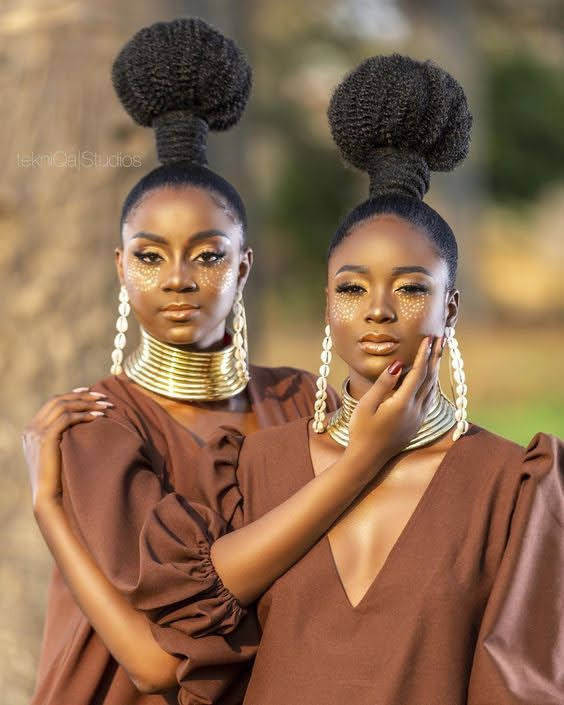
Not Light Enough, Not Dark Enough

This photograph is the property of its respective owners. No copyright infringement intended.

The struggle of identity within the Black community is a painful and persistent issue. One of the most overlooked dimensions of racial identity is the tension that exists between light skin and dark skin among people of African descent. While white supremacy has historically grouped all Black people together as one inferior category, within the Black community itself, a separate hierarchy has emerged—one that privileges certain shades of Blackness while marginalizing others. This creates the paradoxical reality of being “not light enough, not dark enough.”

For centuries, white colonial powers and enslavers classified Black people according to skin shade, hair texture, and physical features. Terms like “mulatto,” “quadroon,” and “octoroon” were not only derogatory but used as social markers to divide people of African descent. The “paper bag test” and other discriminatory practices reinforced the belief that lighter skin granted access to privilege, while darker skin meant rejection and hardship. White society, however, saw no nuance: regardless of tone, Blackness was stigmatized.

From the perspective of white supremacy, “all Black is Black.” The infamous “one-drop rule” in American history defined anyone with any African ancestry as Black. This erasure of diversity among Black people was designed to maintain control and strip away individuality. White America, by and large, treated Black people as a monolithic group—criminalized, marginalized, and dehumanized. Thus, while colorism was weaponized within the Black community, the larger society did not care whether a person was caramel, mahogany, or ebony—they were all subject to racism.

Within the Black community, however, a more complicated story unfolds. Here, color became not just a descriptor but a social currency. Lighter-skinned individuals often received preferential treatment in employment, education, entertainment, and even in dating. Darker-skinned individuals were unfairly stereotyped as more aggressive, less attractive, or less intelligent. This has led to deep wounds of mistrust, resentment, and division that persist to this day.

The painful truth is that Black people, who should be united in solidarity against systemic oppression, sometimes internalize the very biases created by white supremacy. This is evident in beauty standards that favor European features, in families where children of different shades are treated unequally, and in media portrayals that elevate lighter-skinned actors, singers, and models. The oppression from without has been compounded by discrimination from within.

At the heart of the dilemma lies the question: Who gets to define beauty, worth, and identity? The Bible reminds us that true value comes not from outward appearance but from the inward spirit. “But the LORD said unto Samuel, Look not on his countenance, or on the height of his stature; because I have refused him: for the LORD seeth not as man seeth; for man looketh on the outward appearance, but the LORD looketh on the heart” (1 Samuel 16:7, KJV). This verse reminds us that the very measuring sticks of color, shade, and tone are human constructions, not divine truths.

However, despite this spiritual truth, the earthly reality of colorism causes tangible pain. Many brown-skinned women, for example, express feeling invisible—too dark to be considered exotic or glamorous, yet not dark enough to be celebrated for “deep melanin beauty.” Men in similar positions may find themselves caught between stereotypes, never fitting cleanly into societal expectations of attractiveness or masculinity.

This sense of being “in between” breeds confusion in identity formation. Adolescents and young adults often internalize these messages, leading to low self-esteem, identity crises, and even depression. Social psychology research shows that constant invalidation of one’s identity leads to both intrapersonal and interpersonal struggles (Hunter, 2007). Thus, the “not light enough, not dark enough” paradox becomes not just a matter of aesthetics, but of psychological survival.

From the white gaze, Black people are subjected to stereotypes that lump them together: lazy, criminal, hypersexual, or less intelligent. These false narratives have been historically perpetuated through pseudo-science, racist media, and discriminatory policies. From the Black gaze, however, the nuances of complexion become battlegrounds of belonging. This dual oppression creates a unique burden where one can feel simultaneously over-visible to white society and under-valued within their own community.

One of the most tragic consequences of colorism is its impact on family dynamics. In many Black households, siblings of varying shades may be treated differently. A lighter child may be praised for “good hair” while a darker child may be chastised or teased. Such wounds cut deeply and last for generations. This dysfunction reflects the scripture: “Every kingdom divided against itself is brought to desolation; and every city or house divided against itself shall not stand” (Matthew 12:25, KJV). The Black community’s division over shade is one of the tools the enemy uses to weaken unity.

Another issue that arises is how Black men and women perceive each other through the lens of colorism. Research has shown that men often demonstrate preference toward lighter-skinned women in dating and marriage, while women may assume lighter-skinned men are more successful or less threatening (Burke, 2008). These biases play into centuries of social conditioning. Yet, these preferences reinforce division, leaving many feeling unloved and unwanted simply because of their shade.

The entertainment industry has perpetuated these biases. From the casting of actresses in leading roles to the glorification of certain musicians, there is a noticeable pattern: lighter skin is often framed as more marketable. This has left countless talented darker-skinned artists struggling to gain recognition, despite their abilities. Brown-skinned individuals find themselves marginalized as well, rarely fitting the archetype of “beautiful enough” or “authentic enough.”

Education and economics also reflect color bias. Studies have shown that darker-skinned individuals often receive harsher sentences in the criminal justice system, fewer job opportunities, and less pay than their lighter-skinned counterparts (Villarreal, 2010). Brown-skinned individuals again fall into the paradox of invisibility, overlooked in favor of those deemed closer to whiteness or those visibly marked as “other.”

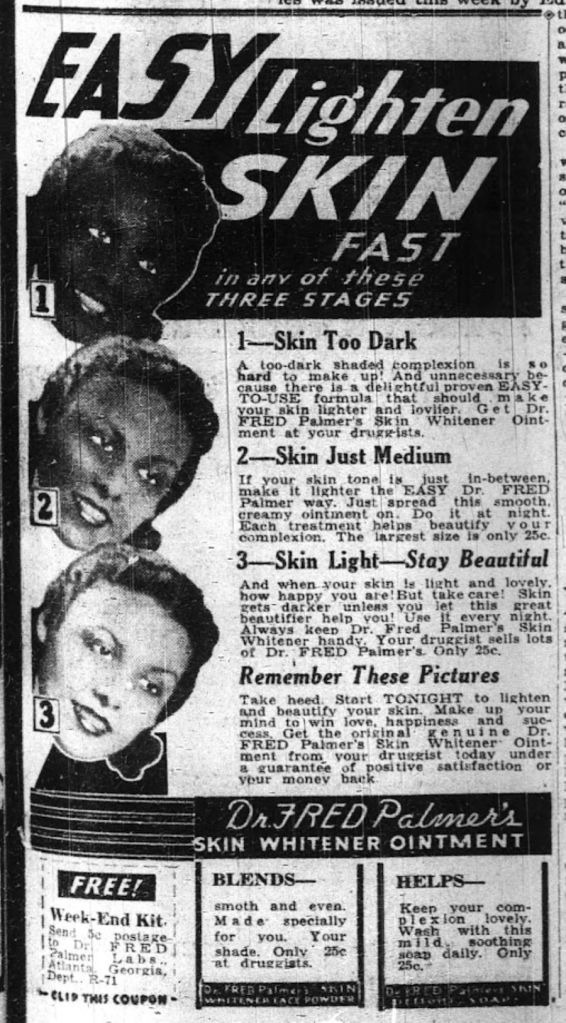
In addition to external discrimination, there are internal struggles of self-love. Many people spend years unlearning negative messages about their hair, their nose, their lips, or their skin. Products like bleaching creams and hair straighteners continue to profit from these insecurities. The Bible warns against this self-hatred: “Thou art all fair, my love; there is no spot in thee” (Song of Solomon 4:7, KJV). To deny one’s natural beauty is to deny the Creator’s design.

Colorism also intersects with class. Historically, lighter-skinned Black people were more likely to be freed from slavery, receive education, or own property. This created a lasting generational wealth gap even within the Black community. Today, economic mobility is still influenced by shade in subtle ways, compounding the cycle of inequality.

Spiritual solutions are necessary to heal these wounds. The Church should play a leading role in dismantling colorism, teaching that all shades of Black are fearfully and wonderfully made (Psalm 139:14, KJV). Yet, churches have not always been free from these biases. It is vital for Christian communities to confront these divisions openly and to re-center identity in Christ rather than complexion.

Another issue worth mentioning is representation in relationships and family. Children raised in homes where one parent is lighter and the other darker may internalize confusion about their own identity. If not guided with love and affirmation, these children can grow up feeling as though they do not belong fully to either side. The danger is raising another generation caught in the cycle of shade hierarchy.

Healing begins with awareness. To break free from the “not light enough, not dark enough” dilemma, the Black community must address the historical roots of colorism and confront the ways it manifests today. This requires honest conversations, re-education, and intentional celebration of all shades of Blackness.

It also requires rejecting the false narratives imposed by white supremacy. The fact remains: whether light, brown, or dark, Black people share the same struggles under systemic racism. Police brutality, mass incarceration, voter suppression, and economic disenfranchisement do not discriminate by shade. To the oppressor, all are Black. Therefore, unity is essential.

At the same time, individuals must commit to personal healing. This means rejecting colorist preferences, affirming the beauty of all shades, and speaking life rather than perpetuating stereotypes. “Death and life are in the power of the tongue: and they that love it shall eat the fruit thereof” (Proverbs 18:21, KJV). Words spoken in families, schools, and communities can either heal or harm.

Ultimately, the dilemma of being “not light enough, not dark enough” is one born out of oppression and sustained by division. Yet, the truth of God’s Word offers freedom: “And ye shall know the truth, and the truth shall make you free” (John 8:32, KJV). The truth is that all shades of melanin are gifts from the Creator, carrying history, resilience, and beauty.

In order for Black people to thrive, there must be a rejection of hierarchies that serve no purpose but to divide. Healing requires a commitment to love, unity, and equality, rooted in both cultural pride and biblical truth. Only then can the scars of colorism begin to fade.


References

  • Burke, M. (2008). Colorism and African American women in the United States. Journal of Black Studies, 39(3), 348–367.
  • Hunter, M. (2007). The persistent problem of colorism: Skin tone, status, and inequality. Sociology Compass, 1(1), 237–254.
  • Villarreal, A. (2010). Stratification by skin color in contemporary Mexico. American Sociological Review, 75(5), 652–678.
  • The Holy Bible, King James Version (KJV).

Girl Talk Series: What are High Value, High Quality Women?

Photo by Elias Momoh on Pexels.com

In an age where superficial beauty, social media status, and materialism are often mistaken for worth, the Bible reminds us that true value in a woman comes from her character and godliness. Proverbs 31:30 declares, “Favour is deceitful, and beauty is vain: but a woman that feareth the LORD, she shall be praised” (KJV). A high-value, high-quality woman is not defined by fleeting externalities but by eternal virtues that please God and enrich the lives of those around her.

The foundation of a high-value woman is her relationship with God. Proverbs 31:10 asks, “Who can find a virtuous woman? for her price is far above rubies” (KJV). Her worth cannot be measured by material standards because her character is grounded in spiritual devotion, prayer, and obedience to God (Keller, 2011).

A high-quality woman embodies wisdom. Proverbs 14:1 declares, “Every wise woman buildeth her house: but the foolish plucketh it down with her hands” (KJV). Her wisdom enables her to nurture stability, resolve conflicts with discernment, and guide her family with godly insight (Ortberg, 2014).

Faithfulness is central to her value. Proverbs 31:11 states, “The heart of her husband doth safely trust in her, so that he shall have no need of spoil” (KJV). She honors her commitments, whether in marriage, friendships, or ministry. High-quality women build trust and loyalty in all relationships (Larson & Holman, 2013).

High-value women are also industrious and resourceful. Proverbs 31:13 affirms, “She seeketh wool, and flax, and worketh willingly with her hands” (KJV). Such women are not idle but productive, turning their talents and efforts into blessings for their households and communities (Ramsey, 2011).

She is a nurturer by nature. Isaiah 66:13 compares God’s comfort to a mother’s love: “As one whom his mother comforteth, so will I comfort you” (KJV). A high-quality woman provides emotional support, encouragement, and strength to those around her, reflecting God’s tender heart (Gilligan, 1993).

High-value women practice self-control and modesty. 1 Timothy 2:9 instructs, “In like manner also, that women adorn themselves in modest apparel, with shamefacedness and sobriety” (KJV). Their dignity is expressed through humility, not through attention-seeking vanity (Cloud, 2009).

A high-quality woman exhibits compassion and kindness. Proverbs 31:20 says, “She stretcheth out her hand to the poor; yea, she reacheth forth her hands to the needy” (KJV). Her generosity makes her valuable, for she embodies Christlike service (Keller & Keller, 2015).

Patience defines her strength. Proverbs 31:25 declares, “Strength and honour are her clothing; and she shall rejoice in time to come” (KJV). She does not crumble under pressure but endures with grace, trusting God’s timing in all things (Schnitker & Emmons, 2013).

High-value women are peacemakers. Matthew 5:9 states, “Blessed are the peacemakers: for they shall be called the children of God” (KJV). Instead of sowing division, they cultivate harmony in relationships, communities, and homes (Gottman & Silver, 2015).

She is disciplined in speech. Proverbs 31:26 says, “She openeth her mouth with wisdom; and in her tongue is the law of kindness” (KJV). A high-quality woman does not gossip or slander but uses her words to heal, uplift, and guide others (Tannen, 1990).

A woman of high value is supportive of her husband or future husband’s vision. Genesis 2:18 affirms, “It is not good that the man should be alone; I will make him an help meet for him” (KJV). Her strength complements his, and together they build a godly partnership (Eldredge, 2001).

High-quality women also value stewardship. Proverbs 31:27 testifies, “She looketh well to the ways of her household, and eateth not the bread of idleness” (KJV). She manages resources wisely, balancing frugality with generosity (Ramsey, 2011).

Discipline in lifestyle is a marker of her worth. Titus 2:4–5 calls older women to teach younger women to be “sober, to love their husbands, to love their children, to be discreet, chaste, keepers at home” (KJV). Such qualities reveal that high-value women live intentionally, shaping the next generation (Cloud & Townsend, 2010).

A high-quality woman also embodies resilience. Ruth exemplifies this by remaining faithful even after loss, declaring, “Where thou goest, I will go; and where thou lodgest, I will lodge” (Ruth 1:16, KJV). Her resilience allows her to overcome trials with unwavering faith (Bonanno, 2004).

Joy and gratitude are trademarks of valuable women. Philippians 4:4 teaches, “Rejoice in the Lord alway: and again I say, Rejoice” (KJV). High-quality women radiate positivity, inspiring those around them by their grateful hearts and hopeful spirits (Schnitker & Emmons, 2013).

They are also women of prayer. Hannah’s faith in 1 Samuel 1:27 exemplifies how prayer shapes destiny: “For this child I prayed; and the LORD hath given me my petition which I asked of him” (KJV). A praying woman is powerful, for her prayers invite God’s intervention in family and community life (Stanley, 2008).

Her humility makes her shine brighter than external beauty. 1 Peter 3:4 exhorts women to cultivate “the ornament of a meek and quiet spirit, which is in the sight of God of great price” (KJV). High-value women walk in humility, allowing their inner beauty to glorify God (Lewis, 2018).

In conclusion, high-value, high-quality women are defined not by superficial beauty or wealth but by their godliness, wisdom, character, and influence. They are women of prayer, compassion, patience, and strength—virtues that make them priceless in God’s eyes. As Proverbs 31:28 declares, “Her children arise up, and call her blessed; her husband also, and he praiseth her” (KJV). She is truly a crown of glory, a reflection of Christ, and a blessing to all.


References

  • Bonanno, G. A. (2004). Loss, trauma, and human resilience. American Psychologist, 59(1), 20–28.
  • Cloud, H. (2009). Integrity: The courage to meet the demands of reality. HarperCollins.
  • Cloud, H., & Townsend, J. (2010). Boundaries in dating. Zondervan.
  • Eldredge, J. (2001). Captivating: Unveiling the mystery of a woman’s soul. Thomas Nelson.
  • Gilligan, C. (1993). In a different voice: Psychological theory and women’s development. Harvard University Press.
  • Gottman, J., & Silver, N. (2015). The seven principles for making marriage work. Harmony Books.
  • Keller, T. (2011). The meaning of marriage. Dutton.
  • Keller, T., & Keller, K. (2015). God’s wisdom for navigating life. Viking.
  • Larson, J. H., & Holman, T. B. (2013). Premarital predictors of marital quality and stability. Routledge.
  • Lewis, R. (2018). The beauty of humility. Harvest House.
  • Ortberg, J. (2014). The life you’ve always wanted: Spiritual disciplines for ordinary people. Zondervan.
  • Ramsey, D. (2011). The total money makeover. Thomas Nelson.
  • Schnitker, S. A., & Emmons, R. A. (2013). Patience as a virtue. Journal of Positive Psychology, 8(4), 247–256.
  • Stanley, C. (2008). Living the extraordinary life: Nine principles to discover it. Thomas Nelson.
  • Tannen, D. (1990). You just don’t understand: Women and men in conversation. Ballantine.

Pretty Privilege Series: Beauty Without Borders — Restoring the Full Spectrum of Blackness.

This photograph is the property of its respective owner. No copyright Infringement intended.

Beauty has always been contested ground, a terrain where power, culture, and identity collide. For people of African descent, the question of beauty is deeply entangled with histories of slavery, colonialism, and white supremacy. The privileging of light skin and Eurocentric features has long marginalized darker-skinned men and women, creating a hierarchy within the Black community itself. “Pretty privilege” is often granted selectively, leaving the richness of Blackness fragmented instead of embraced in its fullness.

The phrase Beauty Without Borders calls us to dismantle these false boundaries. It challenges the lie that only certain shades, hair textures, or facial features are beautiful, while others are devalued. God created the “full spectrum of Blackness,” from the deepest ebony to the lightest brown, from tight coils to loose curls, each carrying divine intention. Scripture affirms, “I will praise thee; for I am fearfully and wonderfully made” (Psalm 139:14, KJV). Any system that denies this truth is a distortion of God’s design.

Historically, pretty privilege in the Black community is a colonial residue. During slavery, lighter-skinned enslaved people were often given roles inside the house, while darker-skinned people were forced to labor in the fields. This artificial division sowed seeds of mistrust and envy that still linger. What began as a tool of control has evolved into a system of internalized bias that shapes dating, employment, and self-esteem.

Psychology recognizes the damaging impact of colorism. Research shows that darker-skinned individuals often face harsher judgments, fewer opportunities, and lower levels of perceived attractiveness compared to lighter-skinned peers (Hunter, 2007). These biases function even within communities of color, revealing how deeply internalized oppression becomes. Beauty, once a gift of identity, is turned into a weapon of division.

At the heart of pretty privilege is authenticity lost. When Blackness is reduced to a narrow ideal, the wide heritage of African beauty is erased. The straightened hair, bleached skin, or surgically altered features testify to a world that demands conformity to white aesthetics. Yet, “Can the Ethiopian change his skin, or the leopard his spots?” (Jeremiah 13:23, KJV). God did not make a mistake in creating Blackness. To deny one’s natural self is to deny a portion of His craftsmanship.

The restoration of Black beauty requires breaking free from envy and competition. Too often, darker-skinned women are told they are “less desirable,” while lighter-skinned women are accused of being “privileged frauds.” Both are victims of the same oppressive system. Instead of fighting each other, the call is to unite, affirming that “the eye cannot say unto the hand, I have no need of thee” (1 Corinthians 12:21, KJV). All shades and textures are essential to the wholeness of Black identity.

Black men also suffer under pretty privilege. Those with darker complexions are often stereotyped as dangerous or hyper-masculine, while lighter-skinned men may be viewed as “softer” or less authentic. These caricatures rob men of individuality and humanity. True liberation allows every man to embrace his God-given identity without the burden of imposed stereotypes.

Another layer is media representation. The entertainment industry frequently elevates a single “acceptable” type of Black beauty, often lighter and closer to European standards. This limited visibility reinforces the idea that only one look is marketable. The body of Christ, however, rejects such favoritism: “But if ye have respect to persons, ye commit sin” (James 2:9, KJV). Favoring one shade over another is a spiritual as well as cultural injustice.

Pretty privilege also intersects with economic systems. Beauty standards often dictate who is hired, promoted, or endorsed. Studies show that skin tone can influence income levels, with lighter-skinned individuals sometimes earning more than darker-skinned peers with similar qualifications (Monk, 2014). In this sense, beauty bias becomes structural racism in disguise.

Theological reflection reveals a deeper wound. When people internalize the belief that only certain forms of Blackness are valuable, they align more with Pharaoh than with God. Pharaoh sought to oppress, to divide, and to strip identity. God, by contrast, affirms freedom, dignity, and beauty. The Song of Solomon reminds us of the beloved who declares: “I am black, but comely” (Song of Solomon 1:5, KJV). Her words reject shame and affirm worth.

Restoring beauty without borders requires healing from envy. Jealousy fuels division, making one sister resent another’s complexion or one brother mock another’s features. But envy corrodes love. Scripture warns: “Wrath is cruel, and anger is outrageous; but who is able to stand before envy?” (Proverbs 27:4, KJV). The fight is not with each other but with the system that taught us to hate ourselves.

It also requires courage to stand against assimilation. To wear natural hair in a workplace, to reject skin-lightening creams, or to affirm dark skin in a culture that worships lightness is a radical act. This courage reflects the biblical call to resist conformity: “Be not conformed to this world: but be ye transformed by the renewing of your mind” (Romans 12:2, KJV).

Education plays a role in this restoration. Children must be taught from a young age that their beauty is not conditional. Dolls, storybooks, and media must reflect the full range of Blackness. Without this affirmation, young girls and boys may grow up doubting their worth, seeking validation in destructive ways.

Community is equally vital. A supportive community celebrates every shade, affirms natural beauty, and challenges colorist jokes or biases. Churches especially have a responsibility to dismantle these patterns, modeling inclusivity and love. After all, the kingdom of God is not divided by shade but united by spirit.

Psychology teaches that affirmations and representation can rewire negative beliefs. Exposure to diverse images of beauty can disrupt the internalized hierarchy of skin tone (Burke, 2019). This aligns with Scripture’s command to renew the mind, for transformation begins with thought.

In practice, restoring beauty without borders means celebrating African features globally. Broad noses, full lips, kinky hair, and dark skin should not only be accepted but exalted as beautiful. These features tell stories of resilience, heritage, and divine artistry. They are markers of identity, not liabilities.

The movement also calls for accountability in industries that perpetuate bias. Fashion, film, and advertising must be challenged to widen their representation. Token inclusion is not enough. Full restoration means full spectrum visibility.

Ultimately, pretty privilege is dismantled not just by redefining beauty but by grounding it in God’s truth. “Man looketh on the outward appearance, but the Lord looketh on the heart” (1 Samuel 16:7, KJV). True beauty radiates from character, integrity, and love. External features, no matter how celebrated or scorned, are only temporary.

The vision of Beauty Without Borders is both cultural and spiritual. It is a call to honor the artistry of God in the Black body. It is a challenge to uproot envy, favoritism, and bias. And it is a promise that restoration comes when we see each other fully, without restriction.

When the spectrum of Blackness is embraced, the community heals. Daughters will grow up knowing they are beautiful as they are. Sons will walk without the burden of stereotypes. And the entire community will reflect the glory of a God who makes no mistakes.

In this way, beauty without borders is not just a concept but a prophetic vision. It restores dignity, dismantles lies, and brings honor back to the full spectrum of Blackness—a beauty that was always complete in God’s eyes.


References

  • Burke, M. (2019). Colorism and the Politics of Skin Tone in the Black Community. Sociology Compass, 13(6), e12693.
  • Hunter, M. (2007). The Persistent Problem of Colorism: Skin Tone, Status, and Inequality. Sociology Compass, 1(1), 237–254.
  • Monk, E. P. (2014). Skin Tone Stratification among Black Americans, 2001–2003. Social Forces, 92(4), 1313–1337.
  • Holy Bible, King James Version.

The Dating Series: Fornication and Physical Touch.

This photo is the property of its respective owner. No copyright infringement is intended.

In a culture that glorifies physical affection outside of covenant, believers must pause and reconsider what Scripture teaches about fornication and physical touch. While the world says “follow your heart,” the Word of God reminds us that “the heart is deceitful above all things, and desperately wicked: who can know it?” (Jeremiah 17:9, KJV). Emotional closeness and physical intimacy are powerful, but without the covering of marriage, they become snares that lead many into sin.

Fornication, in its simplest definition, is sexual intimacy outside of marriage. Paul writes, “Flee fornication. Every sin that a man doeth is without the body; but he that committeth fornication sinneth against his own body” (1 Corinthians 6:18, KJV). This is a direct command, not a gentle suggestion. Unlike other temptations, fornication requires not negotiation but flight. To linger around physical temptation is to play with fire, and Scripture warns, “Can a man take fire in his bosom, and his clothes not be burned?” (Proverbs 6:27, KJV).

Physical touch in dating often begins innocently. Holding hands, hugging, and small displays of affection may seem harmless. Yet these gestures, when left unchecked, can escalate into lustful desires and actions. James reminds us that “when lust hath conceived, it bringeth forth sin: and sin, when it is finished, bringeth forth death” (James 1:15, KJV). What begins as a “little” touch can awaken passions that God designed to be reserved only for marriage.

Lust is a silent destroyer. Jesus declared, “But I say unto you, That whosoever looketh on a woman to lust after her hath committed adultery with her already in his heart” (Matthew 5:28, KJV). This means sin doesn’t begin with the act but in the imagination. When two people in a relationship indulge in lustful touch, they are cultivating sin in their hearts long before it manifests in their bodies. This is why believers must guard not only their actions but their thoughts.

Intimacy is a gift from God, but it is holy only in the right context. “Marriage is honourable in all, and the bed undefiled: but whoremongers and adulterers God will judge” (Hebrews 13:4, KJV). God blesses physical intimacy when it is between husband and wife, but outside of that covenant, it becomes defilement. What the world markets as love and pleasure is often just lust and sin repackaged.

Physical boundaries are necessary in relationships. Paul advises young Timothy, “Flee also youthful lusts: but follow righteousness, faith, charity, peace” (2 Timothy 2:22, KJV). A couple that desires to honor God must agree to maintain purity together. This means avoiding prolonged kissing, intimate caressing, or lying in compromising positions. These actions stir the flesh and make it harder to resist sin.

Fornication also has lasting consequences beyond the spiritual. It damages trust, purity, and emotional stability. Paul explains that when we sin sexually, we sin “against our own body” (1 Corinthians 6:18, KJV). Brokenness, regret, and soul ties often follow acts of fornication. God forgives, but the scars remain, teaching us why His way is always best from the beginning.

In contrast, waiting until marriage builds a foundation of trust, respect, and holiness. Couples who guard their purity demonstrate discipline and faith in God’s timing. Proverbs 3:5–6 (KJV) reminds us: “Trust in the Lord with all thine heart; and lean not unto thine own understanding. In all thy ways acknowledge him, and he shall direct thy paths.” Trusting God in the area of relationships includes honoring His boundaries for intimacy.

The Holy Spirit gives strength to resist temptation. Galatians 5:16 (KJV) instructs, “Walk in the Spirit, and ye shall not fulfil the lust of the flesh.” When believers prioritize prayer, worship, and accountability, they equip themselves to withstand moments of weakness. Purity is not only about abstaining from sex—it is about walking daily in the Spirit, keeping our minds and bodies submitted to God.

Accountability is key for couples. Having trusted spiritual mentors or godly friends to provide guidance helps couples stay on track. Ecclesiastes 4:9–10 (KJV) says, “Two are better than one… For if they fall, the one will lift up his fellow.” Godly accountability protects us from compromise and reminds us that we are not walking this path alone.

Another critical truth is that physical purity glorifies God with our bodies. Paul writes, “For ye are bought with a price: therefore glorify God in your body, and in your spirit, which are God’s” (1 Corinthians 6:20, KJV). To engage in fornication is to misuse what belongs to God. But to walk in purity is to declare that Christ is Lord over every part of our lives, including our relationships.

The danger of fornication is not simply the act but the spiritual blindness it creates. Sin hardens the heart and dulls sensitivity to the Spirit. Hebrews 3:13 (KJV) warns that “the deceitfulness of sin” can harden us. Many who continually indulge in fornication find it harder to hear God’s voice or pursue His purpose. Purity, on the other hand, keeps our hearts soft and open to divine guidance.

Choosing purity also testifies to the world. Romans 12:2 (KJV) urges, “And be not conformed to this world: but be ye transformed by the renewing of your mind.” When couples resist physical temptation, they shine as lights in a culture that worships lust. Their obedience speaks louder than words, pointing others toward Christ’s holiness.

In the end, physical touch and intimacy are not evil—but their timing matters. God in His wisdom created them for the sanctity of marriage. Song of Solomon 2:7 (KJV) advises, “I charge you… that ye stir not up, nor awake my love, till he please.” This verse reminds us to wait until God’s appointed season, where intimacy brings blessing instead of regret.

Fornication is not love; it is lust. True love waits, sacrifices, and protects. Couples who surrender their desires to God honor Him and each other. They walk in a higher calling, proving that purity is possible through Christ. “Now unto him that is able to keep you from falling, and to present you faultless before the presence of his glory with exceeding joy” (Jude 1:24, KJV). God is faithful to keep His children pure if they yield to Him.

50 Hard Truths I Learned from Men and Coaching Women.

Photo by August de Richelieu on Pexels.com

Over years of personal observation, counseling, and coaching women, I have discovered patterns in male behavior that are both sobering and enlightening. These truths have been affirmed through conversation, heartbreak, coaching sessions, and prayer. Men and women often speak different emotional languages, yet there are recurring realities that, once understood, empower women to make wiser relational decisions. These insights are not meant to vilify men but to bring clarity. As Jesus said in John 8:32 (KJV), “And ye shall know the truth, and the truth shall make you free.”


50 Hard Truths

1. Men know what they want early.
Within the first few conversations, most men have decided whether they see you as wife material, girlfriend material, or simply someone they want to sleep with (Finkel et al., 2013).

2. Men lie — often to protect your feelings or their access.
Many men will tell women what they want to hear to avoid conflict or rejection. Proverbs 12:22 (KJV) says, “Lying lips are abomination to the Lord.”

3. Men love to pursue.
Most men are naturally wired for pursuit. When women chase, it can kill attraction (Baumeister & Vohs, 2004).

4. If he wants you, he will make time.
Men show priority by action, not words. If he’s too busy, he likely isn’t interested enough.

5. Men compartmentalize emotions.
Unlike women, men can separate physical intimacy from emotional connection, which can lead to heartbreak if women confuse sex for love.

6. Men respect what they work for.
If everything is given too easily — attention, intimacy, commitment — many men lose respect (Cloud & Townsend, 2002).

7. Men are visual.
Appearance strongly influences men’s attraction, but this does not mean compromising modesty or self-respect. 1 Timothy 2:9 (KJV) reminds women to “adorn themselves in modest apparel.”

8. Men fear rejection deeply.
This is why some hesitate to approach or commit — their ego and self-worth are at stake.

9. Men appreciate feminine energy.
Softness, kindness, and gentleness often inspire them to lead, love, and provide (1 Peter 3:4, KJV).

10. Some men confuse lust for love.
Lust is immediate and selfish; love is patient and self-sacrificial (1 Corinthians 13:4-7, KJV).

11. Men will test boundaries.
If a woman doesn’t hold her standards, some men will push for more than she is willing to give.

12. A man’s character is revealed by consistency.
Watch what he does over time, not just what he says.

13. Men are solution-oriented.
They often want to fix problems rather than just listen, which can frustrate women who seek empathy.

14. Some men enjoy the chase, not the catch.
Once they’ve “won,” interest can fade if they were motivated by conquest rather than connection.

15. Men are territorial.
Even casual partners may display jealousy if they see another man interested — this is not always love but ego.

16. Men often marry when ready, not when in love.
Timing and readiness often determine whether he commits (Glenn & Marquardt, 2001).

17. Men can be intimidated by strong women.
Some fear being emasculated or made to feel unnecessary.

18. A man’s friends reveal his character.
“Be not deceived: evil communications corrupt good manners” (1 Corinthians 15:33, KJV).

19. Men communicate through actions.
If his words and actions don’t match, believe the actions.

20. Men crave respect even more than love.
Ephesians 5:33 (KJV) instructs wives to respect their husbands — it fuels their masculinity.

21. Men love admiration.
Praise from a woman makes a man feel valued and motivated.

22. Some men will waste your time.
If he isn’t serious, he may keep you as an option while seeking someone else.

23. Men struggle with emotional vulnerability.
Cultural conditioning teaches them to hide feelings, which can lead to emotional distance.

24. Men like to feel needed.
When a woman is completely self-sufficient, some men feel unnecessary and withdraw.

25. Men have fragile egos.
Criticism can wound deeply, even if unintended.

26. Some men don’t want commitment — ever.
No amount of convincing will change a man who has no intention of marrying.

27. Men can sense desperation.
Neediness can push them away; confidence is magnetic.

28. Men are not mind readers.
Clear communication is necessary; unspoken expectations lead to disappointment.

29. Men notice emotional security.
Women who manage their emotions attract men seeking peace, not chaos.

30. Men are affected by past hurts.
Heartbreak or betrayal can make them cautious or even avoidant in future relationships.

31. Men love peace.
A contentious spirit in the home drives them away (Proverbs 21:19, KJV).

32. Men will follow a woman’s lead morally.
If she sets a standard of purity, some men will respect and follow it.

33. Men crave physical intimacy in marriage.
Sex is a primary way they feel loved (1 Corinthians 7:3-5, KJV).

34. Men notice loyalty.
A woman who defends him in public but corrects him privately gains trust.

35. Men value submission when mutual respect exists.
Submission is not weakness but order (Ephesians 5:22-24, KJV).

36. Men appreciate support in their purpose.
Helping him fulfill his calling makes him feel partnered, not opposed.

37. Men don’t always process as fast as women.
Patience is often required in decision-making.

38. Some men only want access, not responsibility.
They may pursue intimacy without intention to provide, protect, or commit.

39. Men will compete for a high-value woman.
Healthy competition makes them step up their efforts.

40. Men often fear failure.
If they cannot provide, they may avoid serious relationships.

41. Men appreciate women who inspire them to grow.
Challenge can be healthy if done with respect and encouragement.

42. Men respect women who respect themselves.
Boundaries communicate worth.

43. Men are not perfect leaders.
They need grace as they grow into their role.

44. Men sometimes marry for convenience.
Not every marriage is based on deep love — some are practical decisions.

45. Men value freedom.
Over-controlling or smothering behavior can drive them away.

46. Men notice femininity.
Grace, softness, and warmth inspire them to be masculine.

47. Men are drawn to peace over drama.
The “strong, loud, independent” trope can repel if it communicates combativeness.

48. Men are not projects.
Trying to “fix” a man rarely works and can breed resentment.

49. Men need accountability.
Good men surround themselves with mentors or brothers who sharpen them (Proverbs 27:17, KJV).

50. Men appreciate women who let them lead — but still have a voice.
Partnership is healthiest when both contribute to decision-making.


Conclusion

These 50 hard truths are not meant to discourage women but to equip them. Understanding male psychology, spiritual order, and human nature allows women to discern intentions and protect their hearts. Proverbs 4:7 (KJV) reminds us, “Wisdom is the principal thing; therefore get wisdom: and with all thy getting get understanding.” Knowing these truths helps women make informed choices, set godly standards, and pursue relationships that reflect God’s design for love, respect, and unity.


References

  • Baumeister, R. F., & Vohs, K. D. (2004). Sexual economics: Sex as female resource for social exchange in heterosexual interactions. Personality and Social Psychology Review, 8(4), 339-363.
  • Cloud, H., & Townsend, J. (2002). Boundaries in dating. Zondervan.
  • Finkel, E. J., Eastwick, P. W., & Matthews, J. (2013). Speed-dating as an invaluable tool for studying romantic attraction: A methodological primer. Personal Relationships, 14(1), 149–166.
  • Glenn, N. D., & Marquardt, E. (2001). Hooking up, hanging out, and hoping for Mr. Right. Institute for American Values.
  • Holy Bible, King James Version.

The Beauty Con Game: How Society Manipulated Black Beauty.

Photo by Merlin Lightpainting on Pexels.com

Beauty is one of the most powerful social currencies, yet it has been weaponized against Black women for centuries. Society has dictated what is considered beautiful, often elevating Eurocentric features as the standard while degrading African aesthetics.

From slavery onward, Black bodies were dehumanized, exoticized, and stripped of dignity. Enslaved women were compared to animals, their hair labeled “woolly” and their features mocked (White, 2012). The colonizers’ standard of beauty placed whiteness as the ideal — pale skin, thin noses, and straight hair became the aspirational model. This early propaganda created a deep generational wound, convincing many Black women that their natural state was inferior.

Scripture reminds us that all creation is made in God’s image (Genesis 1:27, KJV). The denigration of Black beauty is therefore not just a social injustice but a spiritual assault — an attempt to distort the Creator’s handiwork and cause people to despise what God called “very good” (Genesis 1:31, KJV).

Psychology supports this understanding, noting that beauty ideals strongly influence self-esteem and identity formation (Cash & Pruzinsky, 2002). When a community is repeatedly told they are ugly, unworthy, or undesirable, it fosters internalized racism, self-hatred, and colorism. Black girls often grow up wishing to look like the models in magazines, who historically were overwhelmingly white.

The con game becomes clear when we see how the beauty industry profits from this insecurity. Billions of dollars are spent annually by Black women on hair relaxers, skin-lightening creams, and wigs designed to mimic Eurocentric features (Hunter, 2011). The market is built on the false premise that Black women must “fix” themselves to be acceptable.

Straight hair became a symbol of respectability during the early 20th century. Madam C.J. Walker, while celebrated for empowering Black women economically, also sold products that encouraged them to conform to Eurocentric ideals. Sociologists argue that this was a survival strategy — assimilating to dominant beauty norms in order to access jobs, education, and social mobility (Gill, 2010).

Colorism — the preference for lighter skin — further divided the Black community. During slavery, lighter-skinned enslaved people were often favored and given domestic work, while darker-skinned people labored in the fields. This legacy persists, with research showing lighter-skinned Black women still receive better treatment in dating, hiring, and media representation (Wilder, 2010).

Scripture, however, affirms the beauty of melanin-rich skin. The Shulamite woman in Song of Solomon boldly declares, “I am black, but comely” (Song of Solomon 1:5, KJV). Her words push back against shame and affirm that dark skin is beautiful and worthy of celebration.

In recent decades, Black celebrities and activists have fought back against this con game. Icons like Nina Simone, Lauryn Hill, Lupita Nyong’o, Viola Davis, and Michaela Coel have publicly affirmed natural hair, dark skin, and African features. Lupita Nyong’o’s speech at Essence’s Black Women in Hollywood awards described learning to see her dark skin as beautiful — a testimony that inspired a generation.

The natural hair movement is one of the most powerful acts of resistance. Black women worldwide have embraced afros, locs, braids, and twists as symbols of cultural pride. This movement rejects the lie that straight hair is “better” and instead celebrates hair in its God-given form. Laws like the CROWN Act (Creating a Respectful and Open Workplace for Natural Hair) are dismantling workplace discrimination against natural styles.

Social media has also amplified representation. Influencers and content creators showcase Black beauty in all its shades, from the deepest ebony to the fairest brown, proving that beauty is not monolithic. This democratization of media allows Black women to define beauty on their own terms rather than through Eurocentric gatekeepers.

Psychologists warn, however, that dismantling centuries of programming takes time. Internalized racism and colorism can linger even within progressive spaces. Healing requires intentional unlearning, affirmations, and re-exposure to positive images of Blackness (Hall, 2010).

Biblically, the call is to renew the mind. Romans 12:2 (KJV) commands believers not to conform to the world but to be transformed by the renewing of the mind. This applies to rejecting false beauty standards and embracing God’s definition of worth. Beauty becomes an inner quality, as 1 Peter 3:3-4 reminds us: “Whose adorning let it not be that outward adorning… but let it be the hidden man of the heart.”

Black women are also reclaiming beauty in fashion and pageantry. The historic moment when Zozibini Tunzi of South Africa won Miss Universe 2019, wearing her natural hair challenged decades of Eurocentric pageant norms. She stated, “I grew up in a world where a woman who looks like me… was never considered beautiful.” Her victory was a global affirmation that the standard is shifting.

Despite these advances, the beauty con game continues through subtle pressures. Media algorithms still over-represent lighter-skinned models. Cosmetic companies still push skin-whitening creams in African and Asian markets. These realities remind us that liberation is an ongoing struggle.

The followers of Christ have a responsibility to participate in this healing by teaching that every shade of melanin reflects the creativity of God. Psalm 139:14 (KJV) declares, “I will praise thee; for I am fearfully and wonderfully made.” Teaching this truth to young girls builds resilience against media lies.

Psychology shows that positive representation can rewire self-perception. Exposure to affirming images of Black beauty has been linked to improved self-esteem and body satisfaction (Frisby, 2004). Representation is not superficial — it is a tool of psychological liberation.

Another critical step is economic empowerment. Supporting Black-owned beauty brands allows women to invest in products that celebrate, not erase, their natural beauty. This shift keeps wealth circulating in the community and challenges global conglomerates that exploit insecurities.

Parents, educators, and mentors must be intentional about teaching children to love their natural features early. Displaying books, dolls, and media with diverse representations of Black beauty helps inoculate children against the lie that they must look different to be worthy.

It is also important to resist idolizing beauty altogether. Proverbs 31:30 (KJV) reminds us, “Favour is deceitful, and beauty is vain: but a woman that feareth the LORD, she shall be praised.” True empowerment comes when beauty is seen as one part of identity, not the sum total of worth.

Healing from the beauty con game is both personal and collective. It requires rejecting lies, affirming truth, and celebrating every expression of African identity. It means speaking life into one another, reminding sisters that they are wonderfully made and worthy of honor.

Ultimately, God has the final word on beauty. His word teaches that we are His workmanship (Ephesians 2:10, KJV). Every curl, coil, and shade of melanin was intentionally designed. Restoring Black women’s self-image is not merely a social project — it is a spiritual act of reclaiming what God has declared good.


References

  • Cash, T. F., & Pruzinsky, T. (2002). Body image: A handbook of theory, research, and clinical practice. Guilford Press.
  • Frisby, C. M. (2004). Does race matter? Effects of idealized images on African American women’s perceptions of body esteem. Journal of Black Studies, 34(3), 323–347.
  • Gill, T. M. (2010). Beauty shop politics: African American women’s activism in the beauty industry. University of Illinois Press.
  • Hall, R. E. (2010). The melanin millennium: Skin color as 21st century international discourse. Springer.
  • Hunter, M. (2011). Buying racial capital: Skin-bleaching and cosmetic surgery in a globalized world. Journal of Pan African Studies, 4(4), 142–164.
  • White, D. G. (2012). Ar’n’t I a Woman?: Female slaves in the plantation South. W.W. Norton & Company.
  • The Holy Bible, King James Version.

When Melanin Becomes a Measure: The Psychology of Skin Tone.

This photograph is the property of its respective owner. No copyright infringement intended.

Melanin is more than pigment; it is a living testament of ancestry, survival, and culture. In societies shaped by slavery, colonialism, and systemic white supremacy, skin tone has been weaponized as a marker of value, beauty, and social mobility. For Black people, colorism — the preferential treatment of lighter skin over darker skin — is a persistent psychological burden that affects identity, self-esteem, and opportunities. Understanding this phenomenon requires examining its historical roots, psychological mechanisms, and strategies for healing.

During slavery, skin tone was a tool of division. Lighter-skinned enslaved individuals were often assigned domestic work inside the master’s house, while darker-skinned Africans labored in the fields. This hierarchy, dictated by proximity to whiteness, created a lasting psychological imprint of internalized oppression (Hunter, 2007). Being lighter was subtly equated with safety, status, and relative privilege.

Colorism persisted after emancipation. Institutions such as Black fraternities, churches, and social clubs sometimes implemented color-based exclusions, exemplified by the “brown paper bag test.” This internalized hierarchy caused a psychological rift within the Black community, as self-worth became linked to skin tone rather than character or talent.

Research confirms the mental health consequences of colorism. Darker-skinned individuals often report lower self-esteem, depressive symptoms, and higher anxiety compared to lighter-skinned peers (Monk, 2014). Early exposure to color preference, as demonstrated in Clark and Clark’s (1947) famous doll studies, showed that Black children internalized societal biases favoring lighter skin, demonstrating that colorism affects identity from childhood.

Media and popular culture continue to reinforce Eurocentric beauty standards. Lighter-skinned actors, models, and influencers are often celebrated, while darker-skinned individuals are marginalized or stereotyped. The underrepresentation of dark skin in media contributes to a sense of invisibility and inadequacy.

The psychology of colorism also affects interpersonal relationships. Studies have shown that lighter-skinned Black women often receive more favorable treatment in dating, employment, and social networks compared to darker-skinned women, a pattern that mirrors historical social hierarchies (Hunter, 2007). Men too experience bias, though differently, often being hypersexualized or criminalized based on skin tone.

The global skin-lightening industry illustrates how deep this issue runs. Products promising “fairer” skin are marketed as pathways to success, attractiveness, and social acceptance. Many consumers engage in dangerous bleaching practices, risking long-term health issues to conform to beauty norms imposed by colonial histories (Charles, 2011).

Colorism can also foster divisions within families and communities. Lighter-skinned individuals may be unconsciously favored, creating tension and jealousy. Psychological theories suggest that this intra-group discrimination exacerbates feelings of inadequacy among darker-skinned individuals (Hunter, 2007).

On a spiritual level, colorism challenges the understanding of divine design. Psalm 139:14 (KJV) declares, “I will praise thee; for I am fearfully and wonderfully made.” Every shade of melanin reflects intentionality and purpose. Internalizing this truth is crucial to healing identity wounds caused by centuries of bias.

Social identity theory offers insight into these dynamics. People categorize themselves and others into groups, which can lead to in-group favoritism and out-group bias. Within the Black community, lighter skin can create a perceived “in-group” of privilege, leaving darker-skinned members feeling marginalized (Tajfel & Turner, 1979).

Psychologists have identified the phenomenon of “colorism stress,” where individuals experience chronic stress due to color-based discrimination. This stress can manifest as anxiety, depression, or identity confusion, impacting academic performance, professional success, and interpersonal relationships (Monk, 2014).

Addressing colorism requires interventions at multiple levels. Psychologically, therapy and counseling can help individuals unpack internalized bias and reclaim self-worth. Group support programs, mentorship, and discussion circles provide safe spaces to challenge color hierarchies and affirm dark skin as beautiful.

Culturally, representation matters. Media, literature, and fashion should celebrate all shades of Blackness. Highlighting dark-skinned leaders, role models, and celebrities combats stereotypes and reinforces positive identity formation.

Educational interventions are also vital. Teaching children about the history of colorism, its roots in slavery and colonialism, and the value of all skin tones can prevent internalized bias from forming in the first place (Hunter, 2007).

Faith-based communities can play a transformative role. Scriptures that affirm God’s intentional creation (Genesis 1:27, Psalm 139:14, KJV) offer a theological counter-narrative to societal bias. Spiritual teaching and community reinforcement of dignity and worth can buffer the psychological impact of colorism.

Interpersonal strategies are also important. Black men and women can practice solidarity and advocacy within their communities, intentionally uplifting those who are darker-skinned. Proverbs 31:8-9 (KJV) reminds believers to speak up for the oppressed and defend the vulnerable.

Self-affirmation practices have psychological benefits. Encouraging young Black people to celebrate their natural skin tone, hairstyles, and features can mitigate the harmful effects of internalized bias. Social media campaigns that normalize dark skin and challenge Eurocentric beauty norms are proving effective.

Mentorship is key for breaking cycles of self-rejection. Older Black adults who embrace their identity can model confidence for younger generations, teaching pride in melanin and heritage. Titus 2:2,6 (KJV) emphasizes the importance of teaching younger members of the community to be sober, sound-minded, and grounded.

Public policy can help combat structural colorism. Anti-discrimination laws, equitable hiring practices, and inclusive beauty standards in advertising reduce systemic bias, giving all shades of Black individuals equal opportunities in professional and social spheres.

Intersectionality must also be considered. Colorism interacts with gender, class, and geography to shape experiences uniquely. Dark-skinned women often face compounded biases, whereas lighter-skinned men may experience complex privileges and burdens simultaneously.

The psychology of skin tone ultimately intersects with identity, opportunity, and spiritual well-being. Healing requires intentional cultural, psychological, and spiritual work to dismantle centuries-old hierarchies and affirm the worth of all Black people, regardless of shade.

In conclusion, melanin should never be a measure of value. Understanding the psychology of skin tone — its historical roots, mental health impacts, and spiritual implications — is essential for reclaiming identity and dignity. By combining therapy, mentorship, representation, spiritual guidance, and advocacy, the Black community can move toward unity, pride, and healing.


References (APA)

Charles, C. A. D. (2011). Skin bleaching, self-hate, and black identity in Jamaica. Journal of Black Studies, 42(1), 43–61. https://doi.org/10.1177/0021934710386749

Clark, K., & Clark, M. (1947). Racial identification and preference in Negro children. Journal of Negro Education, 16(3), 169–175.

Hunter, M. (2007). The persistent problem of colorism: Skin tone, status, and inequality. Sociology Compass, 1(1), 237–254. https://doi.org/10.1111/j.1751-9020.2007.00006.x

Monk, E. P. (2014). The color of punishment: African Americans, skin tone, and the criminal justice system. Sociological Inquiry, 84(3), 401–430. https://doi.org/10.1111/soin.12053

Tajfel, H., & Turner, J. C. (1979). An integrative theory of intergroup conflict. In W. G. Austin & S. Worchel (Eds.), The social psychology of intergroup relations (pp. 33–47). Brooks/Cole.

The Holy Bible, King James Version. (1611). Thomas Nelson.

Lightism: The Elevation of Light Skin and Its Impact on the Black Community.

Lightism, commonly referred to as colorism, is the systemic privileging of lighter skin within the Black community. Unlike racism, which operates across racial lines, colorism functions within the racial group, placing value on lighter pigmentation while devaluing darker skin tones. It manifests socially, economically, and psychologically, shaping perceptions of beauty, intelligence, and status.

Historically, light skin became esteemed due to colonialism and slavery. Enslaved Africans with lighter skin, often mixed-race offspring of enslaved women and European men, were sometimes granted preferential treatment, such as domestic roles instead of field labor. This hierarchy created a social precedent in which lighter skin was associated with proximity to power and privilege.

The legacy of slavery and colonialism established a generational hierarchy within the Black community. Light-skinned individuals were sometimes allowed greater access to education, resources, or social mobility. Over time, these historical inequities translated into cultural norms that valorize lighter skin.

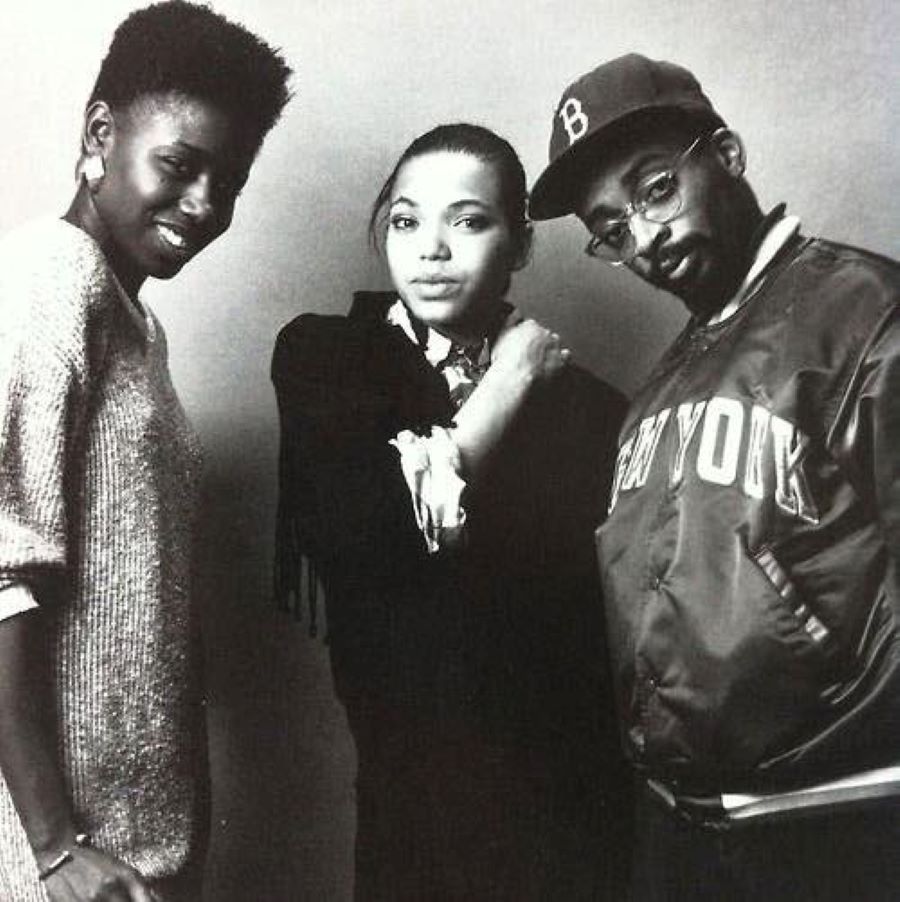
Spike Lee’s film School Daze (1988) explores this phenomenon vividly. Set on a historically Black college campus, the film depicts a divide between light-skinned and dark-skinned students, highlighting intra-racial prejudice, social fragmentation, and internalized oppression. The narrative exposes how colorism affects relationships, self-esteem, and group solidarity.

The message of School Daze is multifaceted. It critiques the ways Black people internalize societal beauty standards, encouraging audiences to recognize and resist internalized lightism. By portraying conflict between “pretty girls” with lighter skin and darker-skinned counterparts, Lee emphasizes the psychological and cultural damage of color-based favoritism.

Social psychology suggests that colorism impacts dating preferences, career opportunities, and media representation. Studies indicate that lighter-skinned Black women often receive more positive attention from peers and employers, perpetuating societal biases and reinforcing the notion that light skin equates to desirability or social capital.

Within the Black male dating paradigm, preferences often reflect internalized colorist ideals. While personal preference varies, research shows a disproportionate attraction to light-skinned women, influenced by media portrayal, historical conditioning, and societal messaging (Hunter, 2011). This preference affects self-perception and romantic dynamics within the community.

Skin-Lightening and Lightismlorism in the Black Community

Skin-lightening, also called skin bleaching, is the practice of using chemical products, creams, or procedures to reduce melanin in the skin. Within the Black community, it often reflects internalized lightism: the belief that lighter skin confers beauty, social status, or economic advantage. Psychologically, this practice is linked to low self-esteem, internalized racism, and social pressure (Hunter, 2011).

Celebrities and ordinary individuals alike have historically felt pressure to conform to lighter-skinned beauty ideals. Skin-lightening can temporarily change appearance but does not address the underlying social and cultural biases. It is also associated with health risks, including skin irritation, scarring, and long-term systemic effects from chemical exposure.

Biblically, true beauty is not skin-deep. Psalm 139:14 (KJV) states: “I will praise thee; for I am fearfully and wonderfully made: marvellous are thy works; and that my soul knoweth right well.” This reinforces that self-worth and beauty come from God’s design, not pigmentation.

Celebrities have long commented on light vs. dark skin tensions. Lena Horne, an iconic performer, spoke openly about the privileges she experienced as a lighter-skinned Black woman and the societal biases she observed against darker-skinned peers. Horne’s reflections highlight the complex interplay of skin tone, opportunity, and discrimination within the Black community.

Vanessa L. Williams and Halle Berry, both light-skinned women who achieved international fame, have also discussed colorism. Berry acknowledged the rarity of dark-skinned lead actresses in Hollywood, while Williams spoke on the pressures to conform to Eurocentric beauty standards, revealing a tension between personal pride and societal expectation.

Lightism Companion Table

CategoryExample / IndividualImpact / PracticePsychological EffectCultural / Media Reference
Celebrity CommentaryLena HorneDiscussed privileges as light-skinned; highlighted colorism against darker peersAwareness, advocacy for darker-skinned equalityInterviews, autobiographies
Celebrity CommentaryHalle BerryAcknowledged rarity of dark-skinned actresses; faced pressure to conform to Eurocentric beautyIdentity negotiation, professional pressurePublic interviews, award speeches
Celebrity CommentaryVanessa L. WilliamsExperienced both acclaim and bias; criticized Hollywood’s narrow beauty standardsStress, advocacy for diversityInterviews, memoirs
Media PortrayalSchool Daze (Spike Lee)Light-skinned vs dark-skinned students; social division on campusLow self-esteem, rivalry, internalized bias1988 film
Historical InfluenceColonial / Slavery EraLighter-skinned enslaved individuals often favoredInternalized hierarchy within the Black communityHall, 2010; Hunter, 2011
Skin-Lightening PracticesGeneral populationChemical creams, cosmetic proceduresTemporary perceived social advantage, long-term self-esteem issues, health risksHunter, 2011; Joseph, 2019
Dating PreferencesBlack men / studiesHigher attraction to light-skinned women in some surveysReinforces color-based desirability hierarchyHunter, 2011; Joseph, 2019
Social HierarchiesWorkplace / mediaLighter skin receives more visibility and opportunityJob access, promotion disparity, perceived intelligenceHall, 2010; Encyclopedia of African-American Society, 2005
Psychological EffectsAdolescents & adultsInternalized colorismDepression, self-consciousness, peer rivalryJoseph, 2019; Hunter, 2011
Counter-MovementNatural hair & melanin prideCelebrates darker skin tones and natural beautySelf-acceptance, cultural prideSocial media campaigns, cultural movements

Light-skinned Black women have offered varied perspectives. Some recognize the privileges light skin confers but advocate for solidarity and consciousness-raising around colorism. Others admit to internalizing societal messages, reflecting the pervasive nature of beauty hierarchies and the difficulty of transcending ingrained biases.

Media and pop culture amplify lightism by consistently favoring lighter-skinned Black actors, models, and singers. This visibility reinforces perceptions of desirability tied to pigmentation, marginalizing darker-skinned individuals and perpetuating social inequities in representation.

Colorism also intersects with economics. Studies indicate that lighter-skinned individuals often earn higher wages and experience more upward mobility than their darker-skinned peers, a phenomenon documented in both the U.S. and globally (Hall, 2010). This reinforces lightism as a systemic issue beyond personal preference.

School Daze illustrates that colorism also affects mental health. Characters experience insecurity, rivalry, and alienation due to skin tone, reflecting real-life experiences where darker-skinned Black individuals internalize negative societal messaging, leading to depression, low self-esteem, or identity conflict.

Psychologically, colorism reinforces intra-racial hierarchies, which can fracture community cohesion. When lighter skin is idealized, it creates an implicit standard of value, marginalizing those who do not conform and perpetuating shame for darker-skinned members.

Biblically, all humans are created in the image of God (Genesis 1:27, KJV). This principle underscores the spiritual equality of all individuals, countering societal messages that link worth to pigmentation. Scriptures remind believers that true beauty is rooted in righteousness and character, not skin tone (1 Samuel 16:7, KJV).

Racism and colorism together compound disadvantage. While racism targets Black people from outside the community, colorism enforces internal stratification, creating layers of oppression that influence education, relationships, and self-perception.

Historically, colorism shaped Hollywood and entertainment industries. Darker-skinned actors were often cast in villainous or subservient roles, while light-skinned performers received leading roles, reinforcing social hierarchies through media narratives.

School Daze also addresses economic implications. Lighter-skinned characters are depicted as more socially and professionally favored, reflecting real-world dynamics where pigmentation can affect employment, income, and status within Black institutions.

Black men’s stated preferences for lighter-skinned women are influenced by media, history, and internalized oppression, but there is also a counter-narrative of embracing darker beauty. Movements like the natural hair movement and campaigns celebrating melanin-rich skin attempt to challenge these biases and uplift all shades of Black beauty.

In conclusion, lightism is a complex cultural, psychological, and historical phenomenon. Its effects permeate self-esteem, interpersonal relationships, media representation, and economic opportunity within the Black community. Addressing colorism requires conscious reflection, cultural awareness, and a return to biblical and ethical principles that affirm the worth of all individuals, regardless of skin tone.


References

References

  • Hall, R. E. (2010). The Melanin Millennium: Skin Color as 21st Century International Discourse.
  • Hunter, M. (2011). Buying Racial Capital: Skin-bleaching and Cosmetic Surgery in a Globalized World.
  • Lee, S. (Director). (1988). School Daze [Film]. Columbia Pictures.
  • Encyclopedia of African-American Society. (2005). Colorism in the Black Community. Sage Publications.
  • The Holy Bible, King James Version. Genesis 1:27; 1 Samuel 16:7; James 2:1–4.
  • Joseph, A. (2019). Black Beauty Standards and Colorism in America. Journal of African-American Studies, 23(4), 456–472.
  • Hall, R., & Hunter, M. (2009). Skin Tone, Identity, and Social Stratification in African-American Communities.
  • The Holy Bible, King James Version. Genesis 1:27; 1 Samuel 16:7; James 2:1–4; Psalm 139:14.
  • Tate, S. (2009). Black Beauty: Aesthetics, Colorism, and Identity in African-American Culture. University Press of Mississippi.
  • Russell-Cole, K., Wilson, M., & Hall, R. (2013). The Color Complex: The Politics of Skin Color in a New Millennium. Anchor Books.
  • Namey, E. (2018). The Psychological Impacts of Colorism on Black Youth. Journal of Multicultural Counseling and Development, 46(3), 180–192.

Girl Talk Series: Let the Older Woman Teach the Younger Woman.

A Biblical Mandate for Holiness, Marriage, and Family

Photo by KATRIN BOLOVTSOVA on Pexels.com

Older women, the charge begins with you. You are called by the Most High to lead the younger women with holiness, dignity, and reverence both for your husbands and for God Almighty. Your lives are to be living epistles, examples of faithfulness and godly character, instructing the next generation in the ways of righteousness. Your speech, your conduct, and even your silence should teach them how to love well, how to honor their covenant in marriage, how to walk in purity, and how to live in a way that magnifies the name of the Lord. The apostle Paul declares in Titus 2:3–5 (KJV) that you must be “in behaviour as becometh holiness,” not given to gossip or excess, but “teachers of good things.” The task before you is sacred — to guide the younger women in loving their husbands, raising their children in the fear of the Lord, and establishing homes that glorify Him.

The call for older women to teach younger women is not merely a cultural suggestion but a divine mandate rooted in Scripture. Titus 2:3–5 (KJV) states, “The aged women likewise, that they be in behaviour as becometh holiness, not false accusers, not given to much wine, teachers of good things; That they may teach the young women to be sober, to love their husbands, to love their children, To be discreet, chaste, keepers at home, good, obedient to their own husbands, that the word of God be not blasphemed.” This passage establishes an intergenerational covenant of wisdom, where mature women guide younger women in the art of godly living. Such teaching preserves family order, strengthens marriages, and nurtures communities rooted in faith.

The instruction to “love their husbands” begins with an understanding that love in marriage is not merely emotional but covenantal. Love is demonstrated through patience, respect, submission, and mutual care (Ephesians 5:22–25, KJV). Older women, having walked through seasons of difficulty, are equipped to counsel younger wives on perseverance during trials and to model forgiveness as a daily practice. This form of love reflects the love of Christ for the church, which is selfless and enduring (John 13:34–35, KJV).

Teaching younger women to love their children includes cultivating an atmosphere of nurture, discipline, and spiritual instruction. Proverbs 22:6 (KJV) commands, “Train up a child in the way he should go: and when he is old, he will not depart from it.” Older mothers can mentor younger mothers in balancing correction with compassion, avoiding harshness while maintaining consistent boundaries. They pass down practical wisdom in child-rearing that integrates spiritual guidance with daily life.

The call to sobriety is both literal and figurative. It points to living with a sound mind, exercising self-control, and avoiding extremes. Sobriety is essential in decision-making, in speech, and in emotional responses. Younger women, who may be more prone to impulsivity, benefit from mentorship that encourages spiritual discipline and emotional maturity (1 Peter 5:8, KJV). Older women can testify to the dangers of recklessness and model calmness even under pressure.

The biblical directive to dress modestly is another key area of mentorship. 1 Timothy 2:9–10 (KJV) admonishes women to adorn themselves “in modest apparel, with shamefacedness and sobriety; not with broided hair, or gold, or pearls, or costly array; But (which becometh women professing godliness) with good works.” Modesty does not negate beauty but places emphasis on inward character over outward display. Older women can guide younger women away from vanity and toward presenting themselves with dignity, reflecting holiness in their appearance.

Discretion is a virtue that requires training, as it is tied to wisdom and timing. To be discreet means to know when to speak and when to remain silent, to handle information responsibly, and to walk with humility (Proverbs 11:22, KJV). Younger women benefit from learning discretion, as it preserves marriages, friendships, and reputations. Older women have often learned through experience the dangers of gossip, rash speech, and indiscretion, making their counsel invaluable.

Being “keepers at home” is a command that affirms the value of homemaking and stewardship. This does not diminish a woman’s intelligence or worth but elevates her role as the heart of the household. Proverbs 31 (KJV) presents the virtuous woman as industrious, wise, and diligent in caring for her family. Older women can teach practical skills such as budgeting, meal preparation, and maintaining a peaceful environment, empowering younger women to see the home as a place of ministry.

Chastity, or sexual purity, remains a cornerstone of biblical womanhood. Hebrews 13:4 (KJV) declares, “Marriage is honourable in all, and the bed undefiled: but whoremongers and adulterers God will judge.” Older women help younger women uphold marital faithfulness, resist temptation, and maintain integrity in thought and action. In a culture that promotes promiscuity, mentorship provides accountability and reinforcement of godly values.

Pleasing one’s husband is not an act of servitude but an expression of love and respect. 1 Corinthians 7:3–4 (KJV) reminds couples that they have mutual obligations to one another, including physical intimacy and emotional support. Older women can demystify intimacy for younger wives, teaching them that sexuality in marriage is holy and designed by God for unity and delight (Song of Solomon 4:9–10, KJV).

Loving the Most High is the foundation upon which all other teachings rest. Deuteronomy 6:5 (KJV) commands, “And thou shalt love the LORD thy God with all thine heart, and with all thy soul, and with all thy might.” Without a strong relationship with God, efforts to love husband and children may falter. Older women can mentor younger women in prayer, fasting, Bible study, and worship, ensuring that their spiritual foundation remains firm.

In addition to these qualities, older women can teach the younger to cultivate patience. James 1:4 (KJV) exhorts believers, “But let patience have her perfect work, that ye may be perfect and entire, wanting nothing.” Marriage and motherhood often require waiting—waiting for growth, waiting for change, waiting for God to answer prayers. Mentorship provides encouragement during seasons of waiting.

Humility is another virtue critical to a woman’s spiritual development. 1 Peter 5:5 (KJV) says, “Yea, all of you be subject one to another, and be clothed with humility.” Older women, who have endured seasons of both pride and humiliation, are equipped to model what it means to submit to God’s will and to walk without arrogance. Humility preserves unity in the home and prevents contention.

Faithfulness must also be imparted to the next generation. Proverbs 20:6 (KJV) asks, “Most men will proclaim every one his own goodness: but a faithful man who can find?” Younger women must learn faithfulness not just in marriage but in their commitments, friendships, and service to God. Mentors demonstrate this faithfulness through consistency and reliability.

Hospitality is a trait encouraged in Scripture, and older women can guide younger women in opening their homes for fellowship, prayer meetings, and acts of kindness. Romans 12:13 (KJV) commands, “Distributing to the necessity of saints; given to hospitality.” Hospitality fosters community and creates an atmosphere where younger women can practice generosity and service.

Teaching younger women about stewardship is also vital. Luke 16:10 (KJV) reminds us that “He that is faithful in that which is least is faithful also in much.” Managing time, finances, and resources wisely prevents strife and promotes peace in the home. Older women can share practical insights from their own successes and mistakes.

Prayer is the lifeline of every believer, and younger women must be instructed to develop a vibrant prayer life. Philippians 4:6 (KJV) says, “Be careful for nothing; but in every thing by prayer and supplication with thanksgiving let your requests be made known unto God.” Mentorship in prayer strengthens faith and brings direction during times of confusion.

Older women also play a crucial role in teaching conflict resolution. Matthew 5:9 (KJV) declares, “Blessed are the peacemakers: for they shall be called the children of God.” Learning how to handle disagreements with gentleness and wisdom can preserve marriages and friendships. Seasoned women who have learned from years of relational challenges can impart strategies for reconciliation.

Another key area is teaching the younger to control their speech. Proverbs 18:21 (KJV) warns, “Death and life are in the power of the tongue.” Words can build or destroy, heal or wound. Mentorship trains younger women to use speech for edification and to avoid murmuring, complaining, and tearing others down.

Teaching gratitude is essential for contentment. 1 Thessalonians 5:18 (KJV) commands, “In every thing give thanks: for this is the will of God in Christ Jesus concerning you.” Gratitude transforms attitudes and fosters joy even in difficult seasons. Older women can lead by example, showing how thanksgiving invites God’s presence.

Mentoring younger women in courage is also necessary. Joshua 1:9 (KJV) exhorts believers to “be strong and of a good courage.” Life brings adversity, but courage allows a woman to endure hardships with faith and dignity. Mentors can inspire bravery through their testimonies of overcoming trials.

Another area often overlooked is teaching younger women financial prudence. Proverbs 31:16 (KJV) shows the virtuous woman engaging in wise investment and stewardship. Older women can guide younger ones on avoiding debt, living within their means, and preparing for the future without fear.

Mentorship must also address emotional regulation. Proverbs 16:32 (KJV) states, “He that is slow to anger is better than the mighty.” Older women can teach younger women how to manage anger, sadness, and anxiety through prayer, Scripture, and healthy coping strategies, thus avoiding destructive patterns.

Teaching forgiveness is central to healing and reconciliation. Colossians 3:13 (KJV) urges believers to forgive as Christ forgave. Older women who have practiced forgiveness can model this to younger women, preventing bitterness from taking root and destroying relationships.

Mentoring younger women in evangelism and service ensures that they fulfill the Great Commission (Matthew 28:19–20, KJV). Older women can encourage younger ones to witness through lifestyle and speech, bringing glory to God and expanding His Kingdom.

Finally, older women must teach the younger to endure persecution and remain steadfast in faith. 2 Timothy 3:12 (KJV) says, “Yea, and all that will live godly in Christ Jesus shall suffer persecution.” Encouragement from mature women strengthens younger women to hold fast to their convictions even in a culture hostile to biblical values.

When older women faithfully teach the younger women, entire households are fortified, and the Word of God is honored. This intergenerational mentorship fulfills God’s design for family, strengthens the church, and produces women who reflect Christ in every aspect of their lives.


References

  • The Holy Bible, King James Version (KJV): Titus 2:3–5; Ephesians 5:22–25; John 13:34–35; Proverbs 22:6; 1 Peter 5:8; 1 Timothy 2:9–10; Proverbs 11:22; Proverbs 31; Hebrews 13:4; 1 Corinthians 7:3–4; Song of Solomon 4:9–10; Deuteronomy 6:5; James 1:4; 1 Peter 5:5; Proverbs 20:6; Romans 12:13; Luke 16:10; Philippians 4:6; Matthew 5:9; Proverbs 18:21; 1 Thessalonians 5:18; Joshua 1:9; Proverbs 31:16; Proverbs 16:32; Colossians 3:13; Matthew 28:19–20; 2 Timothy 3:12.