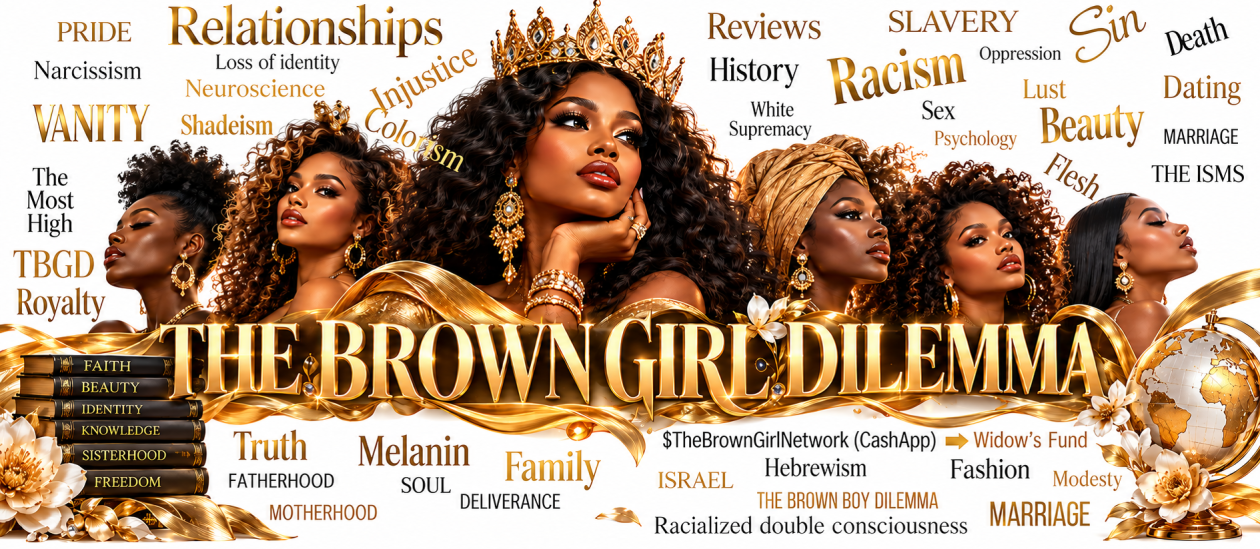

The phenomenon of light-skinned privilege and darker-skinned marginalization, commonly referred to as colorism, represents a pervasive and persistent form of intra-racial bias that significantly shapes social, economic, and psychological outcomes. While racism broadly addresses the oppression of Black and brown communities by predominantly white societal structures, colorism operates within these communities, privileging individuals whose skin tone approximates whiteness and disadvantaging those with deeper melanin-rich complexions (Hunter, 2007). This intra-community hierarchy is both a legacy of colonialism and slavery and a continuing factor in contemporary social dynamics.
Historically, European colonizers instituted hierarchies based on skin tone to maintain social control, favoring lighter-skinned individuals—often the children of mixed-race unions—for roles of relative privilege, while darker-skinned individuals were more harshly oppressed and dehumanized (Fanon, 1967). This distinction not only justified differential treatment under slavery but also laid the groundwork for aesthetic and social biases that persist in modern societies. Lighter skin became associated with beauty, intelligence, and social value, creating a legacy of light-skinned privilege that continues to influence perceptions, opportunities, and social mobility.
Light-skinned privilege manifests across multiple domains. In media, lighter-skinned individuals are more frequently represented, occupying lead roles in film, television, and advertising, which reinforces societal notions of desirability and social acceptance (Craig, 2002). Economically, studies indicate that lighter-skinned individuals often earn higher wages and experience better employment opportunities than their darker-skinned peers, even when controlling for education and experience (Anderson, Grunert, Katz, & Lovascio, 2010). Socially, lighter skin confers advantages in dating, networking, and social visibility, illustrating the pervasive reach of this bias.
Conversely, darker-skinned marginalization manifests as diminished social capital, fewer economic opportunities, and reduced media representation. Darker-skinned individuals are often perceived as less attractive, competent, or socially desirable due to internalized Eurocentric beauty standards (Rhode, 2010). These perceptions are reinforced through cultural norms, media portrayals, and interpersonal interactions, producing what Craig (2002) describes as a “psychic cost” that can erode self-esteem and reinforce feelings of inadequacy.
Hair texture is another dimension of colorism. Historically, European aesthetic ideals favored straight hair, stigmatizing curly, coily, and wooly textures commonly associated with darker skin (Banks, 2000). The policing of hair has tangible social consequences, from employment discrimination to social acceptance, and disproportionately affects darker-skinned individuals, reinforcing the visual markers of privilege and marginalization.
The psychological consequences of this hierarchy are significant. Individuals with darker skin may internalize societal biases, leading to lower self-esteem, identity conflicts, and mental health challenges (Eagly, Ashmore, Makhijani, & Longo, 1991). Meanwhile, lighter-skinned individuals may experience unearned social advantages, often unrecognized or unconsciously accepted, perpetuating the cycle of disparity. Internalized colorism not only affects personal self-worth but also shapes interpersonal relationships, community dynamics, and collective perceptions of beauty and value.
Colorism also intersects with gender. Women are disproportionately affected by light-skin preference, as beauty standards often equate lighter skin with femininity, desirability, and social capital (Langlois et al., 2000). Men, while less scrutinized for beauty in some contexts, are still influenced by skin tone bias in social and professional spaces. The intersectional nature of colorism reveals how historical aesthetics continue to shape contemporary experiences and reinforce systemic inequities.
Reclamation and resistance are key strategies for combating the negative effects of colorism. Movements promoting natural hair, melanin appreciation, and diverse representation in media challenge entrenched biases and empower darker-skinned individuals to embrace their features (Hunter & Davis, 1992). Education on the historical roots of colorism and the social construction of beauty enables communities to recognize and resist internalized hierarchies, fostering cultural pride and self-affirmation.
In contemporary society, media representation remains a crucial tool. Campaigns highlighting the beauty of darker skin, textured hair, and varied facial features not only promote inclusion but also challenge internalized colorism (Feingold, 1992). Representation affirms identity, shifts societal norms, and empowers individuals who have historically been marginalized due to skin tone.
In conclusion, light-skinned privilege and darker-skinned marginalization exemplify the enduring legacy of colonial aesthetics and racialized hierarchies within communities of color. The consequences of colorism span psychological, social, and economic domains, affecting access to opportunities, social perceptions, and self-worth. By acknowledging its historical roots, promoting inclusive representation, and celebrating the beauty of darker-skinned individuals, communities can resist systemic bias, reclaim cultural aesthetics, and foster equity and affirmation for all skin tones.
References
Anderson, T. L., Grunert, C., Katz, A., & Lovascio, S. (2010). Aesthetic capital: A research review on beauty perks and penalties. Sociology Compass, 4(8), 564–575. https://doi.org/10.1111/j.1751-9020.2010.00312.x
Banks, I. (2000). Hair matters: Beauty, power, and Black women’s consciousness. New York University Press.
Craig, M. L. (2002). Ain’t I a beauty queen? Black women, beauty, and the politics of race. Oxford University Press.
Eagly, A. H., Ashmore, R. D., Makhijani, M. G., & Longo, L. C. (1991). What is beautiful is good, but… A meta-analytic review. Psychological Bulletin, 110(1), 109–128.
Feingold, A. (1992). Good-looking people are not what we think. Psychological Bulletin, 111(2), 304–341.
Fanon, F. (1967). Black skin, white masks. Grove Press.
Hunter, M. (2007). The persistent problem of colorism: Skin tone, status, and inequality. Sociology Compass, 1(1), 237–254. https://doi.org/10.1111/j.1751-9020.2007.00006.x
Hunter, M., & Davis, A. (1992). Colorism: A new perspective. Cultural Diversity and Mental Health, 4(2), 25–35.
Langlois, J. H., et al. (2000). Maxims or myths of beauty? Psychological Bulletin, 126(3), 390–423.
Rhode, D. L. (2010). The beauty bias: The injustice of appearance in life and law. Oxford University Press.
Wilson, T. D. (2002). Strangers to ourselves: Discovering the adaptive unconscious. Harvard University Press.
Gafney, W. (2017). Womanist midrash: A reintroduction to the women of the Torah and the Throne. Westminster John Knox Press.


