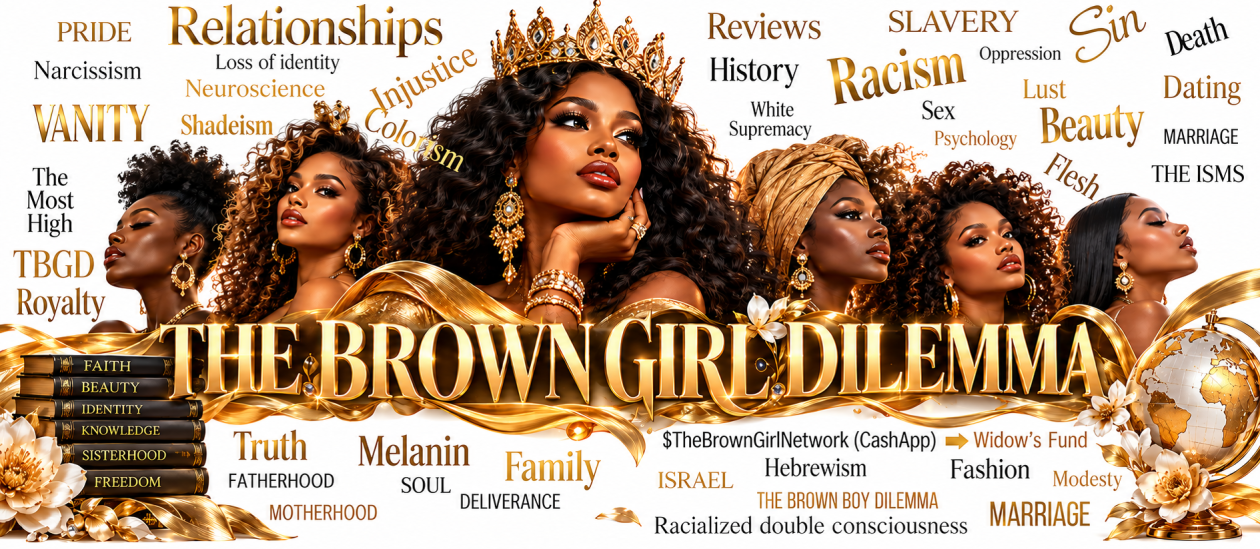

Colorism—prejudice or discrimination based on skin tone within the same racial or ethnic group—is one of the most insidious legacies of colonialism and slavery. Unlike racism, which operates across racial lines, colorism operates within them, fracturing communities from the inside. The dilemma of colorism lies in how it distorts identity and self-worth, privileging lighter skin as beautiful, desirable, and superior while marking darker skin as less valuable or “other.”
The roots of colorism reach deep into history. During slavery, lighter-skinned Black people were often given preferential treatment, working inside plantation houses while darker-skinned people labored in the fields. This racial hierarchy was not accidental—it was engineered to divide and control. The closer one appeared to whiteness, the more “human” they were perceived to be (Hunter, 2007). This system embedded a psychological wound that continues to shape beauty ideals, social mobility, and self-esteem in communities of color.
In the post-slavery era, colorism was perpetuated through social institutions and cultural practices. Exclusive clubs and fraternities in the early 20th century used the infamous “paper bag test” to determine admission: if one’s skin was darker than a brown paper bag, they were denied entry. These acts codified self-rejection, turning proximity to whiteness into a false badge of honor (Russell, Wilson, & Hall, 1992).
Colorism’s effects are particularly damaging among women. Dark-skinned women often face compounded discrimination—both racism and colorism—resulting in fewer opportunities in entertainment, employment, and even dating. Media and beauty industries have historically promoted Eurocentric ideals: straight hair, narrow noses, and fair skin. As a result, darker-skinned women have often been portrayed as aggressive, unattractive, or less feminine compared to their lighter counterparts (Hill, 2002).
The crisis of self-worth begins early. Studies have shown that even young children associate lighter skin with beauty and intelligence. The infamous “doll test,” conducted by psychologists Kenneth and Mamie Clark in the 1940s, revealed that Black children preferred white dolls over Black ones, describing them as “good” and “pretty” (Clark & Clark, 1947). This heartbreaking evidence demonstrated how internalized racism and colorism warp self-perception from childhood.
For men, colorism manifests differently but no less destructively. Light-skinned men are often viewed as more approachable or “safe,” while dark-skinned men are stereotyped as intimidating or dangerous. These perceptions influence job prospects, policing, and romantic desirability. The darker the skin, the more one becomes the object of fear or fetishization rather than acceptance (Hunter, 2005).
Hollywood and global media have long reinforced this bias. From the early days of cinema to modern advertising, lighter skin has been synonymous with success and desirability. Black actresses like Lupita Nyong’o and Viola Davis have spoken openly about the struggle to be recognized as beautiful in an industry that has long celebrated lighter tones. Their success represents not just personal triumph but cultural healing—a redefining of beauty that honors the fullness of Blackness.
Colonialism globalized colorism. Across Africa, Asia, and the Caribbean, lighter skin is still marketed as an advantage. Skin-whitening creams, a billion-dollar industry, prey upon insecurities cultivated by centuries of Eurocentric dominance. In countries like India and Nigeria, “fairness” is often advertised as a prerequisite for marriage, employment, and respect. The colonial message persists: to ascend, one must become less of oneself (Glenn, 2008).
Colorism also thrives in the digital age. Filters, editing apps, and social media trends subtly lighten complexions, reinforcing subconscious biases. The aesthetic algorithms of beauty—crafted largely by Western designers—often favor lighter features, excluding darker skin tones from digital visibility and validation. The new colonizer is not a person, but a pixel.
Spiritually, colorism distorts divine identity. When people internalize inferiority based on skin tone, they reject the image of God within themselves. In biblical context, melanin—the pigment that gives darker skin its color—can be seen as a divine design, a testament to strength, protection, and resilience. As Psalm 139:14 declares, “I am fearfully and wonderfully made.” This verse challenges every ideology that devalues dark skin.
The psychological impact of colorism can lead to anxiety, depression, and chronic insecurity. For many, the quest to be “lighter” becomes a quest for acceptance. But this pursuit only deepens self-alienation, as it demands rejecting the very heritage and beauty that define one’s identity. Healing begins when individuals and communities confront the internalized lies that whiteness equals worth.
Education and representation are key to dismantling colorism. Schools must teach not only about racism but also about the hierarchy of shade that perpetuates inequality. Media must elevate diverse representations of Blackness, from deep ebony to golden brown, as equally beautiful. Each shade tells a story of resilience and identity that deserves visibility and validation.
Colorism also fractures solidarity. When internal prejudice divides the oppressed, the struggle for liberation weakens. True unity within the Black diaspora—and across communities of color—requires acknowledging and addressing this inherited bias. Liberation must include the healing of the mind as well as the body.
Artists, activists, and scholars are reclaiming the narrative. Campaigns like “Dark Is Beautiful” and “Melanin Magic” have redefined global conversations about shade and self-love. Poets, filmmakers, and painters now celebrate the hues once despised, restoring dignity to complexions that history sought to erase. The rise of figures like model Duckie Thot, actress Lupita Nyong’o, and activist Rashida Strober signals a cultural reckoning.
Social healing also demands accountability from within. Families must stop perpetuating colorist language—phrases like “don’t get too dark” or “you’re pretty for a dark-skinned girl.” Churches and communities must replace shame with celebration. Healing begins when love replaces comparison and appreciation replaces envy.
The crisis of self-worth cannot be healed by cosmetics but by consciousness. True beauty emerges when identity aligns with purpose. Dark skin, radiant under the sun, carries the memory of continents and the story of survival. To reject it is to reject ancestry. To embrace it is to reclaim sovereignty.
Colorism’s undoing requires cultural courage—to confront painful truths and to teach new generations that worth is not measured by shade but by soul. As Toni Morrison wrote, “The function of freedom is to free someone else.” In this light, freedom begins when we learn to see beauty where the world taught us to see blemish.
Ultimately, “The Unchosen Shade” is not a curse but a crown. It represents endurance through centuries of erasure, beauty unbought and unaltered. The unchosen shade is chosen by God—crafted in divine melanin, unafraid of the sun, and unapologetically radiant. When we learn to love the unchosen shade, we begin the work of restoring not just self-worth, but collective wholeness.
References
Clark, K., & Clark, M. (1947). Racial Identification and Preference in Negro Children. Journal of Negro Education, 19(3), 341–350.
Glenn, E. N. (2008). Yearning for Lightness: Transnational Circuits in the Marketing and Consumption of Skin Lighteners. Gender & Society, 22(3), 281–302.
Hill, M. E. (2002). Skin Color and the Perception of Attractiveness Among African Americans: Does Gender Make a Difference? Social Psychology Quarterly, 65(1), 77–91.
Hunter, M. (2005). Race, Gender, and the Politics of Skin Tone. Routledge.
Hunter, M. (2007). The Persistent Problem of Colorism: Skin Tone, Status, and Inequality. Sociology Compass, 1(1), 237–254.
Russell, K., Wilson, M., & Hall, R. E. (1992). The Color Complex: The Politics of Skin Color Among African Americans. Harcourt Brace Jovanovich.
Discover more from THE BROWN GIRL DILEMMA
Subscribe to get the latest posts sent to your email.