Category Archives: Beauty

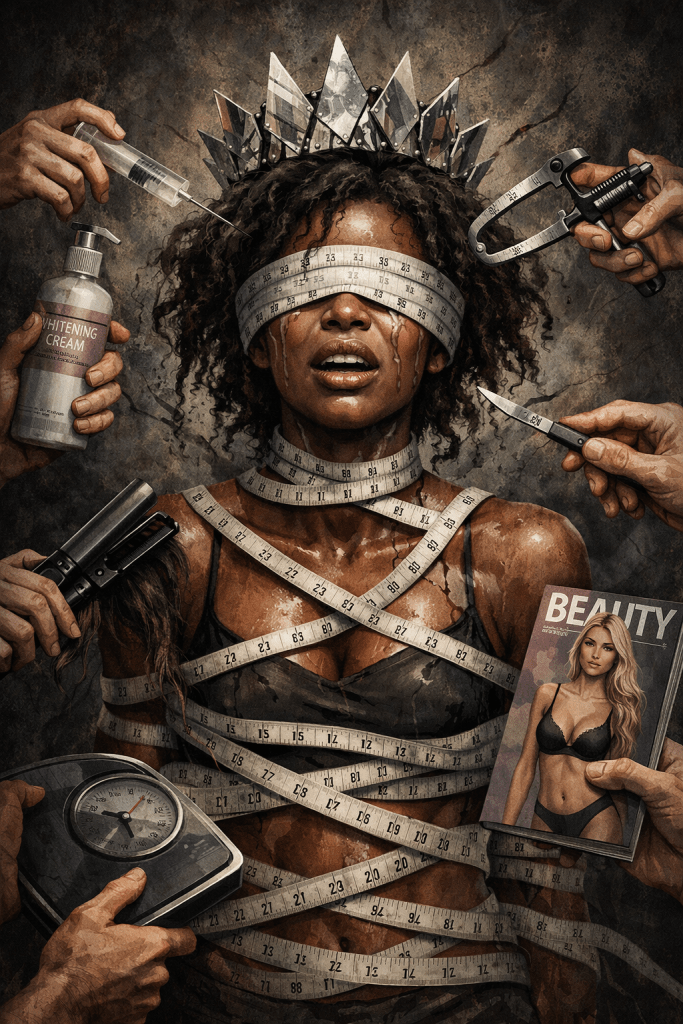
The Violence of Beauty Standards

Beauty standards are often framed as harmless preferences or cultural aesthetics, yet their impact is anything but benign. They operate as a quiet, normalized form of violence—psychological, social, economic, and spiritual—imposed upon bodies that fall outside narrowly defined ideals. This violence is subtle enough to evade accountability and powerful enough to shape life outcomes, self-worth, and social hierarchies across generations.

The violence of beauty standards begins with definition. When a dominant culture determines which features are worthy of admiration and which are to be tolerated or erased, it establishes a hierarchy of human value. These hierarchies do not emerge organically; they are historically constructed through colonialism, slavery, class stratification, and racialized power relations that elevate proximity to whiteness, youth, thinness, and Eurocentric features.

For Black communities in particular, beauty standards have functioned as an extension of racial domination. During slavery and colonial rule, physical features were used to classify, rank, and commodify African-descended people. Lighter skin, straighter hair, and narrower features were rewarded with marginal privileges, while darker skin and African phenotypes were associated with labor, disposability, and dehumanization.

This legacy persists through colorism, a system in which skin tone operates as a social currency within and beyond racial groups. Colorism is not merely a preference; it is an internalized enforcement mechanism that reproduces racial hierarchy without the need for overt racism. Its violence lies in how it fractures communal bonds and assigns worth based on phenotype rather than character or humanity.

Beauty standards also enact violence through psychological harm. Repeated exposure to exclusionary ideals fosters chronic self-surveillance, body dissatisfaction, anxiety, and depression. Individuals learn to scrutinize their faces, hair, weight, and aging as problems to be fixed rather than natural expressions of life. This internalized gaze becomes a form of self-policing that mirrors external oppression.

The economic violence of beauty standards is equally profound. Entire industries profit from manufactured insecurity, extracting billions of dollars through skin-lightening products, cosmetic surgery, anti-aging treatments, and hair alteration. Those who can afford to approximate beauty ideals gain social and professional advantages, while those who cannot are penalized in employment, dating, media representation, and social mobility.

Gender intensifies this violence. Women and girls are disproportionately subjected to aesthetic regulation, with their value often tethered to attractiveness rather than intellect, integrity, or contribution. From childhood, girls are conditioned to equate beauty with worth, learning that visibility and validation are contingent upon meeting external standards that shift with trends yet remain rooted in patriarchal control.

Men are not immune to the violence of beauty standards, though it manifests differently. Rigid ideals of masculinity—height, muscularity, stoicism, dominance—discipline male bodies and emotions, discouraging vulnerability and self-acceptance. Men who deviate from these ideals face ridicule, emasculation, and social exclusion, revealing beauty standards as tools of behavioral conformity.

Media functions as a primary weapon in the enforcement of beauty norms. Through film, advertising, social media, and fashion, a narrow range of bodies and faces is repeatedly elevated as aspirational. Algorithmic amplification further entrenches these ideals, rewarding certain looks with visibility while rendering others invisible or stereotyped.

The violence intensifies in the digital age, where beauty standards are no longer distant images but interactive currencies. Likes, follows, and monetization transform appearance into measurable social capital. This quantification of beauty deepens comparison, fuels self-objectification, and accelerates the commodification of the self.

Beauty standards also operate as moral judgments. Attractive bodies are frequently associated with goodness, discipline, intelligence, and virtue, while those deemed unattractive are implicitly linked to laziness, moral failure, or incompetence. This phenomenon, often described as the halo effect, embeds aesthetic bias into decision-making processes that shape education, employment, and criminal justice outcomes.

The violence of beauty standards extends into spiritual dimensions. When individuals are taught to despise the bodies they inhabit, a rupture forms between self and creation. For faith traditions that affirm humanity as divinely made, beauty hierarchies function as theological distortions, subtly contradicting teachings about inherent worth and sacred design.

Historically marginalized bodies carry the heaviest burden of this violence. Disabled bodies, fat bodies, aging bodies, dark-skinned bodies, and gender-nonconforming bodies are treated as deviations rather than variations of human existence. The insistence on correction or concealment communicates that some lives are less deserving of comfort, desire, and dignity.

Resistance to beauty standards is often dismissed as oversensitivity or lack of self-esteem, yet such resistance is deeply political. To reject imposed ideals is to challenge systems that rely on comparison, insecurity, and consumption. It is an act of reclaiming agency over one’s body and narrative.

Cultural movements that celebrate diverse forms of beauty offer important counter-narratives, but they are not immune to co-optation. Inclusion is frequently aestheticized without dismantling underlying power structures, resulting in superficial diversity that leaves hierarchies intact. True liberation requires structural change, not symbolic representation alone.

Education plays a crucial role in disrupting the violence of beauty standards. Critical media literacy, historical context, and conversations about embodiment can equip individuals to recognize how ideals are constructed and whose interests they serve. Awareness does not erase harm, but it weakens its authority.

Healing from beauty-based violence is both personal and collective. Individually, it involves unlearning internalized contempt and cultivating self-regard beyond appearance. Collectively, it requires building communities that affirm worth independent of aesthetics and challenge discriminatory practices in institutions and media.

The language we use around beauty matters. Compliments, critiques, and casual comments can reinforce or resist harmful norms. Shifting language toward appreciation of character, creativity, resilience, and wisdom helps decenter appearance as the primary measure of value.

Ultimately, the violence of beauty standards lies in their ability to disguise domination as desire. They persuade individuals to participate in their own marginalization, to chase approval at the cost of peace, and to mistake conformity for empowerment. Naming this violence is the first step toward dismantling it.

A more just vision of beauty does not require the abandonment of aesthetics, but their reorientation. Beauty can be expansive, contextual, and humane when divorced from hierarchy and exclusion. In reclaiming beauty from violence, society moves closer to affirming the full dignity of every body.

References

Bordo, S. (2003). Unbearable weight: Feminism, Western culture, and the body. University of California Press.

Collins, P. H. (2004). Black sexual politics: African Americans, gender, and the new racism. Routledge.

Crenshaw, K. (1991). Mapping the margins: Intersectionality, identity politics, and violence against women of color. Stanford Law Review, 43(6), 1241–1299.

Dion, K., Berscheid, E., & Walster, E. (1972). What is beautiful is good. Journal of Personality and Social Psychology, 24(3), 285–290.

Hunter, M. (2007). The persistent problem of colorism: Skin tone, status, and inequality. Sociology Compass, 1(1), 237–254.

hooks, b. (1992). Black looks: Race and representation. South End Press.

Kaw, E. (1993). Medicalization of racial features: Asian American women and cosmetic surgery. Medical Anthropology Quarterly, 7(1), 74–89.

Wolf, N. (1991). The beauty myth: How images of beauty are used against women. HarperCollins.

Beauty Sins: Judged by the Flesh

In modern society, physical beauty operates as both a form of privilege and a source of scrutiny, shaping social interactions, professional opportunities, and relational dynamics. Individuals whose appearances align with conventional standards often receive favorable treatment, whereas those who deviate are marginalized, judged, or denied empathy. This phenomenon, often referred to as “pretty privilege,” has profound psychological, social, and cultural implications (Langlois et al., 2000; Eagly et al., 1991).

The “halo effect” explains why attractive individuals are assumed to possess desirable personality traits, such as intelligence, kindness, or competence (Dion, Berscheid, & Walster, 1972). Conversely, individuals considered less attractive may be unfairly perceived as flawed, lazy, or untrustworthy. These biases, though largely subconscious, perpetuate inequities and social hierarchies rooted in appearance.

Cultural expectations of beauty are gendered and racialized. Women, in particular, face pressures to maintain physical attractiveness, often measured against Eurocentric standards, while men encounter standards that emphasize muscularity or facial symmetry. For Black women, these pressures intersect with colorism and societal stereotypes, creating compounded challenges (Hunter, 2007).

Judgment based on fleshly appearance fosters social alienation and psychological distress. Research demonstrates that individuals marginalized for perceived unattractiveness are more susceptible to anxiety, depression, and reduced self-esteem, affecting both personal well-being and social mobility (Langlois et al., 2000).

The media reinforces appearance-based evaluation through idealized images in advertising, television, and social media. Constant exposure to curated beauty standards creates unrealistic expectations and normalizes judgment based on physical traits rather than character or competence (Wolf, 1991).

Social settings often reveal the stark consequences of beauty bias. Attractive individuals may gain access to social networks, career opportunities, and preferential treatment, while others, equally talented or morally virtuous, are overlooked. These disparities illustrate that beauty functions as a form of currency within contemporary culture (Hosoda, Stone-Romero, & Coats, 2003).

Colorism intensifies the judgment of Black bodies. Lighter-skinned individuals frequently receive positive attention and social advantage, while darker-skinned individuals are systematically devalued in social, professional, and romantic contexts. This inequity underscores how appearance-based biases intersect with racial hierarchies (Hunter, 2007).

In relational contexts, the privileging of beauty influences both romantic and platonic interactions. Attractive individuals often receive increased attention and favorable treatment, reinforcing social hierarchies based on appearance (Eagly et al., 1991). Less attractive individuals may struggle to achieve recognition or empathy, perpetuating feelings of exclusion and invisibility.

Religious and ethical perspectives challenge the primacy of physical appearance. Scripture reminds believers that God values character, virtue, and the heart over outward beauty (1 Samuel 16:7, KJV). Faith traditions encourage evaluating individuals by moral integrity rather than superficial attributes, promoting equity and compassion.

The consequences of beauty-based judgment extend to professional domains. Hiring decisions, promotions, and workplace evaluations are influenced by perceived attractiveness, disadvantaging those who do not conform to societal ideals (Hosoda et al., 2003). This systemic bias perpetuates structural inequities tied to appearance.

Psychological resilience can mitigate the effects of beauty-based discrimination. Developing self-worth independent of societal validation, cultivating supportive social networks, and emphasizing skill, intelligence, and moral character contribute to empowerment and reduced vulnerability to external judgment.

The commodification of beauty amplifies its social power. Cosmetic industries, fashion media, and influencer culture profit from insecurities about appearance, reinforcing the notion that attractiveness equates to social and economic advantage (Wolf, 1991).

Educational environments are similarly affected. Attractive students often receive favorable treatment from educators and peers, while those deemed less attractive may experience marginalization or underestimation of ability, shaping long-term outcomes (Langlois et al., 2000).

Intersecting identities, such as gender, race, and socioeconomic status, compound appearance-based bias. Black women, for example, may face both beauty-based and racialized discrimination, highlighting the layered nature of societal judgment (Hunter, 2007).

Legal outcomes also demonstrate the impact of beauty bias. Studies indicate that attractive defendants are more likely to receive lenient sentencing, whereas those considered less attractive face harsher treatment, revealing the systemic influence of physical appearance (Dion et al., 1972).

Media literacy and critical engagement are essential tools for mitigating the influence of beauty-based judgment. Encouraging diverse representations and challenging narrow beauty ideals fosters awareness and reduces the social and psychological harm of appearance bias (Marwick, 2017).

The ethical implications of judging by the flesh extend to everyday interactions. Valuing character, competence, and relational integrity over appearance promotes fairness, empathy, and social cohesion. Cultivating these values counters the superficiality reinforced by cultural norms.

Public discourse increasingly addresses the societal cost of beauty-based privilege. Awareness campaigns, research, and representation efforts highlight the importance of evaluating individuals beyond surface appearance, fostering equity and inclusivity (Zebrowitz & Montepare, 2008).

In conclusion, beauty sins—judging individuals based on their flesh—perpetuate social inequities, psychological distress, and systemic bias. A conscious shift toward evaluating character, virtue, and competence over outward appearance is necessary to foster fairness, empathy, and genuine human connection.

References

Dion, K., Berscheid, E., & Walster, E. (1972). What is beautiful is good. Journal of Personality and Social Psychology, 24(3), 285–290.

Eagly, A. H., Ashmore, R. D., Makhijani, M. G., & Longo, L. C. (1991). What is beautiful is good, but…: A meta-analytic review of research on the physical attractiveness stereotype. Psychological Bulletin, 110(1), 109–128.

Hosoda, M., Stone-Romero, E. F., & Coats, G. (2003). The effects of physical attractiveness on job-related outcomes: A meta-analysis of experimental studies. Personnel Psychology, 56(2), 431–462.

Hunter, M. (2007). The persistent problem of colorism: Skin tone, status, and inequality. Sociology Compass, 1(1), 237–254.

Langlois, J. H., Kalakanis, L., Rubenstein, A. J., Larson, A., Hallam, M., & Smoot, M. (2000). Maxims or myths of beauty? A meta-analytic and theoretical review. Psychological Bulletin, 126(3), 390–423.

Marwick, A. (2017). Status update: Celebrity, publicity, and branding in the social media age. Yale University Press.

Wolf, N. (1991). The beauty myth: How images of beauty are used against women. HarperCollins.

Zebrowitz, L. A., & Montepare, J. M. (2008). Social perception from the face: Mechanisms and meaning. Social and Personality Psychology Compass, 2(3), 1497–1517.

Holy Bible, King James Version (KJV). 1 Samuel 16:7.

The Idol of Appearance: When Beauty Becomes a God.

Beauty has always held cultural significance, but in modern society, it has quietly crossed the line from appreciation to worship. What was once an aesthetic value has become a moral currency, shaping who is deemed worthy of love, success, protection, and even humanity. When beauty becomes a god, it demands sacrifice—time, money, self-worth, and identity—while offering conditional acceptance in return.

From a psychological standpoint, humans are wired to notice physical attractiveness due to evolutionary associations with health and fertility. However, contemporary culture has exaggerated this instinct into an obsession. Media, advertising, and social platforms reinforce the idea that beauty equals value, creating a hierarchy where appearance determines social capital rather than character.

Sociologists refer to this phenomenon as “lookism” or “beautyism,” a system in which attractive individuals receive unearned advantages while others face discrimination. Research consistently shows that conventionally attractive people are perceived as more intelligent, trustworthy, and competent, even when no evidence supports these assumptions. This bias reveals how deeply beauty has been moralized.

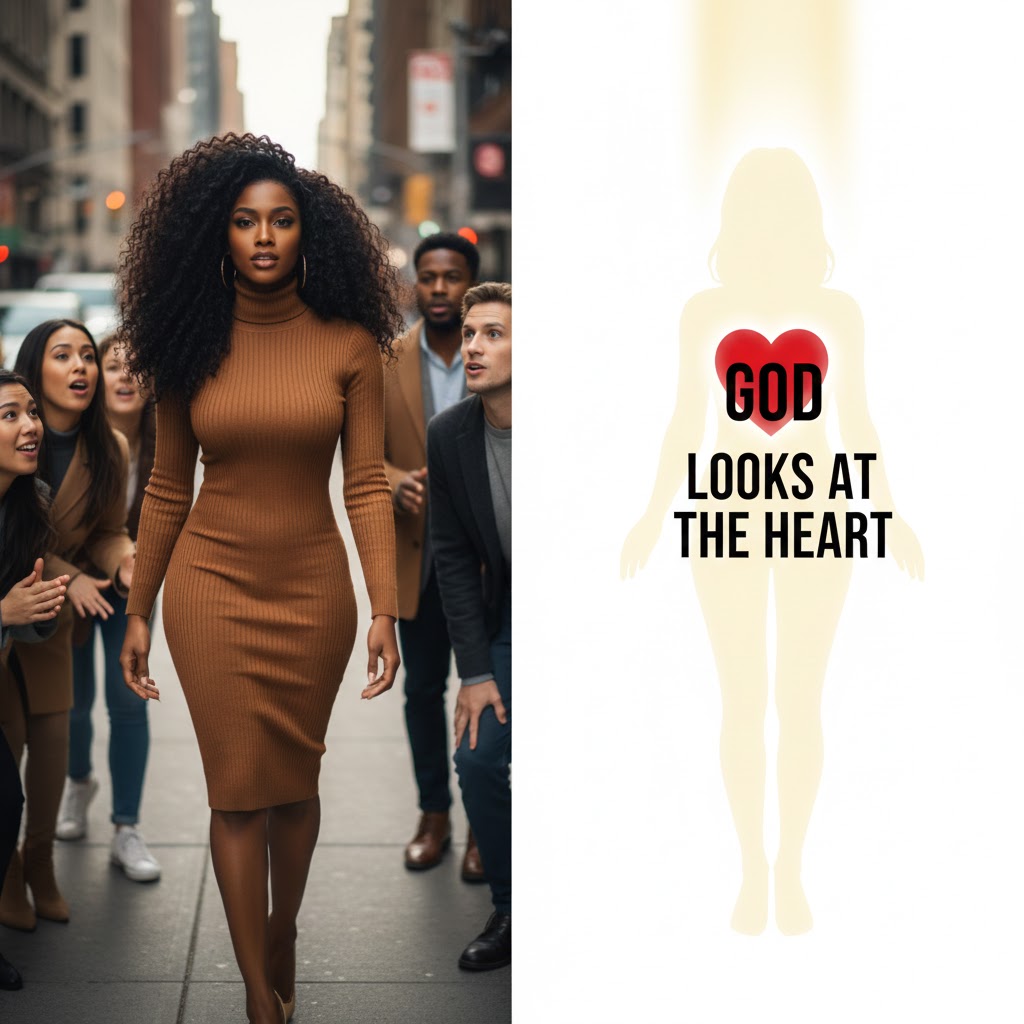
The Bible warns against this distortion. Scripture repeatedly cautions against judging by outward appearance, reminding humanity that God looks at the heart. When beauty becomes the primary lens through which people evaluate themselves and others, it directly contradicts divine standards of worth.

The idolization of beauty thrives on comparison. Social media intensifies this dynamic by presenting curated, edited, and often artificial images as normal reality. Psychological studies link excessive exposure to idealized images with increased anxiety, depression, body dysmorphia, and low self-esteem, particularly among women and adolescents.

Idolatry, biblically defined, occurs when anything takes the place of God as a source of identity, security, or meaning. Beauty becomes an idol when self-worth rises and falls based on appearance, aging becomes a source of fear, and physical imperfection is treated as failure rather than humanity.

The beauty industry profits from this insecurity. Trillions of dollars are generated globally by convincing people they are perpetually inadequate. This economic system thrives on dissatisfaction, reinforcing the lie that the transformation of the body will heal wounds rooted in identity and belonging.

Scripture identifies this pattern as vanity, not in the shallow sense of self-care, but as emptiness and illusion. Ecclesiastes describes vanity as chasing what cannot satisfy. Beauty, by nature, is fleeting, yet modern culture treats it as eternal currency.

Colorism and racialized beauty standards further expose the moral failure of appearance worship. Eurocentric ideals have historically elevated certain features while marginalizing others, particularly within communities of color. This hierarchy did not arise naturally but was constructed through colonialism, slavery, and white supremacy.

Psychologically, internalized beauty standards can fragment identity. When individuals learn that love and affirmation are conditional upon appearance, they begin performing rather than existing authentically. This performance-based identity leads to chronic stress and emotional exhaustion.

The Bible presents a radically different vision of beauty. Proverbs describes beauty without character as meaningless, while Peter emphasizes the beauty of a gentle and quiet spirit. These passages do not dismiss physical appearance but reframe beauty as something that flows from virtue rather than replaces it.

Men are not exempt from appearance idolatry. Increasing pressure on male physiques, height, and status reflects the same commodification of the body. When masculinity becomes visually performative rather than morally grounded, men, too, become enslaved to external validation.

The idol of appearance also distorts relationships. When beauty is treated as a primary qualification for love, relationships become transactional. Partners are valued for how they reflect status rather than how they embody commitment, empathy, and faithfulness.

Spiritually, beauty worship competes with reverence for God. It demands rituals—constant self-monitoring, comparison, cosmetic alteration—and punishes disobedience with shame. Like all idols, it promises fulfillment but delivers bondage.

Aging exposes the fragility of appearance-based worth. Cultures that worship youth often treat aging as decline rather than wisdom. Scripture, however, associates aging with honor, experience, and blessing, revealing how far society has strayed from biblical values.

Healing from beauty idolatry requires a renewal of the mind. Psychology affirms that challenging distorted beliefs about worth is essential for mental health. Scripture echoes this through its call to transformation through truth rather than conformity to the world.

True beauty, biblically understood, is relational. It is expressed through love, humility, righteousness, and self-control. These qualities deepen over time rather than diminish, making them resistant to decay and comparison.

The church bears responsibility in this conversation. When faith communities mirror societal beauty standards—elevating image over integrity—they reinforce the very idol Scripture condemns. Spiritual spaces should be sanctuaries from appearance-based judgment, not extensions of it.

Freedom comes when beauty is appreciated but dethroned. Gratitude replaces obsession, stewardship replaces worship, and identity is rooted in being made in the image of God rather than meeting an aesthetic ideal.

Ultimately, when beauty becomes a god, it dehumanizes. When God is restored to His rightful place, beauty becomes what it was always meant to be—a reflection, not a ruler; a gift, not a god.


References

American Psychiatric Association. (2022). DSM-5-TR: Diagnostic and statistical manual of mental disorders (5th ed., text rev.). APA Publishing.

Bordo, S. (2004). Unbearable weight: Feminism, Western culture, and the body. University of California Press.

Cash, T. F. (2012). Cognitive-behavioral perspectives on body image. Guilford Press.

Etcoff, N. (1999). Survival of the prettiest: The science of beauty. Anchor Books.

Fredrickson, B. L., & Roberts, T.-A. (1997). Objectification theory. Psychology of Women Quarterly, 21(2), 173–206.

Hunter, M. (2007). The persistent problem of colorism. Sociology Compass, 1(1), 237–254.

The Holy Bible, King James Version. (1769/2017). Cambridge University Press.

Twenge, J. M. (2017). iGen. Atria Books.

Van der Kolk, B. (2014). The body keeps the score. Viking.

Wolf, N. (1991). The beauty myth. HarperCollins.

The Gospel of Beauty: For man looketh on the outward appearance, but the Lord looketh on the heart.

In a society increasingly obsessed with physical appearance, the tension between outward beauty and inner virtue has never been more pressing. Scripture repeatedly underscores that while humans are prone to judge based on external features, God evaluates the character and intentions of the heart. The Apostle Samuel’s words in 1 Samuel 16:7 (KJV) illustrate this: “But the Lord said unto Samuel, Look not on his countenance, or on the height of his stature; because I have refused him: for the Lord seeth not as man seeth; for man looketh on the outward appearance, but the Lord looketh on the heart.”

Physical beauty, while celebrated culturally, is transient. Societal standards continually shift, creating pressure to conform to ideals that are both fleeting and often unattainable. This emphasis on outward appearance fosters vanity, envy, and superficial judgment, diverting attention from moral, spiritual, and relational substance.

The Bible consistently contrasts external allure with internal virtue. Proverbs 31:30 (KJV) asserts: “Favor is deceitful, and beauty is vain: but a woman that feareth the Lord, she shall be praised.” Here, the text emphasizes reverence, wisdom, and moral integrity as enduring qualities far surpassing aesthetic appeal.

Men, too, are subject to this cultural fixation. In 1 Peter 3:3-4 (KJV), spiritual instruction guides believers: “Whose adorning let it not be that outward adorning of plaiting the hair, and of wearing of gold, or of putting on of apparel; But let it be the hidden man of the heart, in that which is not corruptible, even the ornament of a meek and quiet spirit, which is in the sight of God of great price.” True beauty emanates from humility, meekness, and spiritual devotion rather than fashion or cosmetics.

Social psychology mirrors this biblical principle. Studies on the “halo effect” show that attractive individuals are often assumed to possess positive traits; however, research also suggests that outward beauty does not predict ethical behavior, compassion, or integrity (Eagly et al., 1991). The wisdom of Scripture anticipates this insight, teaching discernment beyond superficial appearances.

Vanity and obsession with outward appearance can disrupt relationships and spiritual growth. When individuals prioritize beauty over character, they risk fostering pride, insecurity, and shallow social connections. Conversely, cultivating inner virtue promotes resilience, meaningful relationships, and spiritual fulfillment.

The Psalms reinforce the primacy of the heart over appearance. Psalm 51:10 (KJV) pleads: “Create in me a clean heart, O God; and renew a right spirit within me.” God’s concern is not outward perfection but purity of intent, ethical integrity, and contrition, qualities invisible to human eyes yet central to divine evaluation.

Biblical narratives illustrate that God often chooses those overlooked by society. Moses, a reluctant leader with apparent deficiencies in confidence; David, the youngest son of Jesse, overlooked for physical stature; and Esther, a woman of quiet virtue elevated to influence, exemplify God’s attention to character over appearance (Exodus 3, 1 Samuel 16, Esther 2).

Beauty, therefore, is not condemned but reframed. 1 Timothy 2:9-10 (KJV) instructs: “In like manner also, that women adorn themselves in modest apparel, with shamefacedness and sobriety; not with broided hair, or gold, or pearls, or costly array; But (which becometh women professing godliness) with good works.” True adornment lies in righteous actions and godly conduct.

Cultural and technological influences exacerbate the human tendency to equate beauty with value. Social media, advertising, and entertainment industries often perpetuate narrow ideals, while Scripture provides an enduring corrective: God measures worth by moral, relational, and spiritual integrity.

The New Testament further emphasizes the enduring nature of inner qualities. Galatians 5:22-23 (KJV) describes the fruit of the Spirit—love, joy, peace, longsuffering, gentleness, goodness, faith, meekness, temperance—which constitute lasting beauty far beyond physical allure.

Discerning God’s perspective requires intentional cultivation of the heart. Prayer, study of Scripture, and acts of service shift focus from external validation to divine affirmation, reinforcing humility, integrity, and spiritual maturity.

Parents and mentors have a responsibility to teach this principle. Encouraging children to value kindness, diligence, and godly character over appearance fosters resilience against societal pressures and nurtures lifelong spiritual and relational flourishing.

The dangers of valuing appearance above character are also illustrated in narrative warnings. Proverbs 31:25-26 (KJV) praises the virtuous woman: “Strength and honour are her clothing; and she shall rejoice in time to come. She openeth her mouth with wisdom; and in her tongue is the law of kindness.” Strength, honor, wisdom, and kindness surpass transient beauty in both societal and divine evaluation.

In communal life, the prioritization of inner virtue cultivates trust, empathy, and ethical behavior. A society that mirrors God’s evaluation—honoring the heart over the outward appearance—promotes justice, relational depth, and enduring value.

Christian leaders and teachers can model this principle, valuing and affirming individuals for character, service, and spiritual devotion rather than attractiveness or charm, thereby reinforcing a culture that reflects divine priorities.

Ultimately, the Gospel of Beauty calls for a reversal of conventional judgment. Human eyes may favor external traits, but God’s perspective emphasizes eternal qualities. Aligning personal and communal evaluation with this principle fosters moral clarity and spiritual depth.

Believers are reminded to cultivate discernment and humility. 1 Samuel 16:7 (KJV) serves as a perpetual guide: resist superficial judgment, prioritize inner virtue, and honor God’s assessment over societal perception.

In conclusion, while the world celebrates outward beauty, Scripture consistently teaches that God looks at the heart. True beauty is measured in character, integrity, service, and devotion. Aligning life with these principles ensures enduring worth, divine favor, and relational richness beyond the fleeting admiration of human eyes.

References

Eagly, A. H., Ashmore, R. D., Makhijani, M. G., & Longo, L. C. (1991). What is beautiful is good, but…: A meta-analytic review of research on the physical attractiveness stereotype. Psychological Bulletin, 110(1), 109–128.

Holy Bible, King James Version (KJV). 1 Samuel 16:7; Proverbs 31:30; 1 Peter 3:3-4; Psalm 51:10; 1 Timothy 2:9-10; Galatians 5:22-23; Proverbs 31:25-26.

Wolf, N. (1991). The beauty myth: How images of beauty are used against women. HarperCollins.
Langlois, J. H., Kalakanis, L., Rubenstein, A. J., Larson, A., Hallam, M., & Smoot, M. (2000). Maxims or myths of beauty? A meta-analytic and theoretical review. Psychological Bulletin, 126(3), 390–423.

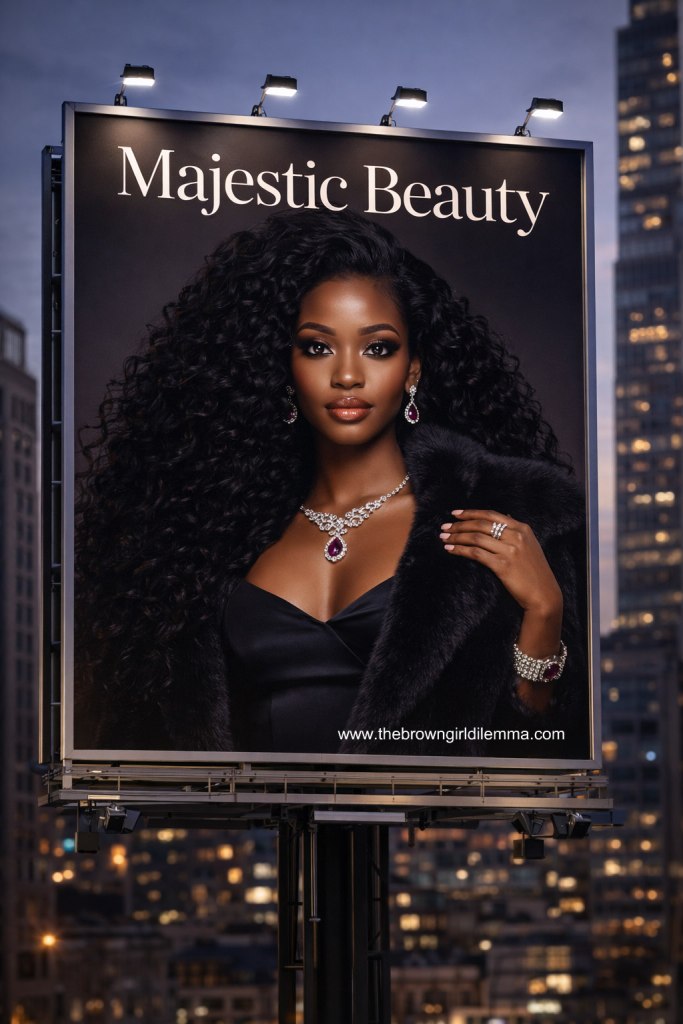
The Commodification of Black Beauty

Black beauty has long existed as a site of contradiction—celebrated for its cultural power while simultaneously exploited for profit. The commodification of Black beauty refers to the process by which Black bodies, features, aesthetics, and cultural expressions are transformed into marketable assets, often detached from the people and histories that created them. This process operates within racial capitalism, where value is extracted from Blackness while Black lives remain devalued.

Historically, Black beauty was framed as inferior under slavery and colonialism. African features were caricatured, exoticized, or erased to justify domination. At the same time, Black women’s bodies were exploited for labor, reproduction, and spectacle. This duality—dehumanization alongside consumption—laid the foundation for modern beauty industries.

In contemporary culture, Black beauty is increasingly visible yet still controlled. Dark skin, full lips, thick bodies, and textured hair are celebrated when separated from Black people themselves. These traits are often deemed fashionable only after being filtered through non-Black bodies, granting profit and praise without the burden of racial stigma.

The global beauty industry profits enormously from Black consumers while promoting standards that marginalize them. Skin-lightening products, relaxers, and cosmetic procedures reinforce the idea that Black features require modification to be acceptable. Even “inclusive” marketing often reproduces hierarchy by privileging lighter skin and Eurocentric features.

Social media has accelerated commodification by turning Black beauty into content. Influencers monetize aesthetics through visibility, sponsorships, and algorithms that reward conformity to dominant standards. Authenticity becomes a brand, and self-expression becomes labor. Black beauty is no longer simply lived; it is performed for consumption.

Colorism remains a central mechanism in this economy. Lighter-skinned Black women are disproportionately chosen as brand ambassadors, romantic leads, and beauty icons. Darker-skinned women, when included, are often exoticized or tokenized, reinforcing a tiered system of value within Blackness itself.

The commodification of Black beauty also distorts self-perception. When worth is measured through market response—likes, sales, attention—identity becomes unstable. Beauty becomes something to manage, maintain, and monetize rather than an inherent expression of self and ancestry.

Gender intensifies these dynamics. Black women bear the heaviest burden of beauty commodification, facing both hypervisibility and erasure. They are expected to embody strength, sexuality, and resilience while remaining palatable to consumer markets that profit from their image.

Resistance emerges through reclamation. Natural hair movements, Afrocentric fashion, and Black-owned beauty brands challenge extraction by centering cultural ownership and self-definition. These movements insist that Black beauty is not a trend but a lineage.

Yet even resistance risks co-optation. Once profitable, counter-aesthetics are often absorbed into mainstream markets, stripped of political meaning. This cycle reveals the limits of representation without structural change.

True liberation requires decoupling Black beauty from market value. Visibility alone is insufficient if it serves consumption rather than dignity. Beauty must be allowed to exist without being sold.

The commodification of Black beauty ultimately reflects a deeper moral failure: a society willing to profit from Black aesthetics while refusing full respect for Black humanity. Undoing this contradiction demands ethical consumption, cultural accountability, and collective self-affirmation.

References

Banks, I. (2000). Hair matters: Beauty, power, and Black women’s consciousness. NYU Press.

Collins, P. H. (2004). Black sexual politics: African Americans, gender, and the new racism. Routledge.

Crenshaw, K. (1991). Mapping the margins: Intersectionality, identity politics, and violence against women of color. Stanford Law Review, 43(6), 1241–1299.

Hunter, M. (2007). The persistent problem of colorism: Skin tone, status, and inequality. Sociology Compass, 1(1), 237–254.

hooks, b. (1992). Black looks: Race and representation. South End Press.

Roberts, D. (1997). Killing the Black body: Race, reproduction, and the meaning of liberty. Pantheon Books.

Tate, S. A. (2015). Black beauty: Aesthetics, stylization, politics. Ashgate.

How Beauty Distorts Justice, Desire, and Morality.

Beauty is often treated as a harmless preference, yet research across psychology, sociology, and law demonstrates that attractiveness functions as a powerful social bias. Rather than merely shaping taste, beauty actively distorts how people assign innocence and guilt, whom they desire and protect, and how they define moral worth. What is perceived as “natural attraction” frequently operates as an unexamined system of advantage.

In matters of justice, beauty bias is among the most consistently documented distortions. Attractive individuals are more likely to be perceived as trustworthy, intelligent, and less culpable, a phenomenon known as the “halo effect.” Studies show that jurors tend to assign lighter sentences to attractive defendants and harsher penalties to those deemed unattractive, even when the evidence is identical. Justice, ideally blind, often sees clearly when beauty is present.

This distortion extends beyond courtrooms into everyday moral judgment. Attractive people are more readily forgiven for transgressions, while unattractive individuals are assumed to possess negative character traits. Moral failure, when paired with beauty, is reframed as a mistake; when paired with unattractiveness, it is treated as proof of inherent flaw.

Beauty also shapes what suffering is believed. Victims who align with dominant beauty standards receive more sympathy, media attention, and institutional support. Those outside these standards—particularly darker-skinned women, disabled individuals, and the poor—are more likely to be doubted, ignored, or blamed for their own harm. In this way, beauty acts as a moral amplifier, determining whose pain matters.

Desire, often defended as purely personal, is deeply socialized through beauty hierarchies. From early childhood, people are taught—through media, advertising, and peer reinforcement—who is desirable and who is not. These lessons harden into preferences that feel instinctive but are in fact learned. Desire becomes less about genuine connection and more about proximity to social approval.

This conditioning shapes romantic and sexual markets in unequal ways. Individuals deemed beautiful are granted an abundance of choice, patience, and generosity. Those deemed unattractive are expected to accept less, endure disrespect, or compensate through labor, humor, or submission. Beauty thus regulates intimacy, deciding who is pursued and who must perform for attention.

Morality becomes entangled with appearance when beauty is mistaken for virtue. Cultural narratives frequently depict good characters as beautiful and evil characters as physically undesirable. Over time, these associations seep into moral reasoning, reinforcing the false belief that appearance reflects ethical substance.

Colorism intensifies these distortions within racialized communities. Lighter skin, looser hair textures, and Eurocentric features are often rewarded with moral credibility and social protection, while darker skin is associated with threat, aggression, or moral deficiency. These biases are not individual failures but legacies of colonial and slave-based hierarchies.

Economic outcomes further expose beauty’s moral distortion. Attractive individuals earn higher wages, receive better evaluations, and are more likely to be hired or promoted. Success is then retroactively framed as merit, masking how beauty quietly tilted the scale. Inequality appears deserved when beauty is mistaken for virtue.

Social media has amplified these effects by monetizing appearance. Algorithms reward faces that align with dominant beauty norms, translating attractiveness into visibility, income, and influence. Moral authority increasingly follows aesthetic appeal, allowing beauty to masquerade as credibility and truth.

The greatest danger of beauty bias is its invisibility. Because beauty is celebrated rather than scrutinized, its influence escapes ethical accountability. People resist naming beauty privilege because it threatens comforting myths about fairness, love, and meritocracy.

Undoing beauty’s distortion requires conscious resistance. Justice must be trained to recognize bias, desire must be interrogated rather than defended, and morality must be separated from appearance. Only when beauty is stripped of moral authority can fairness, love, and truth operate without illusion.

References

Eagly, A. H., Ashmore, R. D., Makhijani, M. G., & Longo, L. C. (1991). What is beautiful is good, but… A meta-analytic review of research on the physical attractiveness stereotype. Psychological Bulletin, 110(1), 109–128.

Hamermesh, D. S. (2011). Beauty pays: Why attractive people are more successful. Princeton University Press.

Hunter, M. (2007). The persistent problem of colorism: Skin tone, status, and inequality. Sociology Compass, 1(1), 237–254.

Langlois, J. H., Kalakanis, L., Rubenstein, A. J., Larson, A., Hallam, M., & Smoot, M. (2000). Maxims or myths of beauty? A meta-analytic and theoretical review. Psychological Bulletin, 126(3), 390–423.

Stewart, J. E. (1980). Defendant’s attractiveness as a factor in the outcome of criminal trials: An observational study. Journal of Applied Social Psychology, 10(4), 348–361.

Wilson, T. D., & Brekke, N. (1994). Mental contamination and mental correction: Unwanted influences on judgments and evaluations. Psychological Bulletin, 116(1), 117–142.

Zebrowitz, L. A. (2017). First impressions from faces. Oxford University Press.

Faces of Favor

Beauty is more than an aesthetic trait; it functions as a powerful social currency that confers unearned advantages, often referred to as “faces of favor.” Those who align with culturally valorized standards of appearance—symmetry, clear skin, proportional features, and often Eurocentric traits—are perceived as more competent, trustworthy, and morally upright. These perceptions influence opportunities in education, employment, relationships, and social networks, granting the physically attractive privileges invisible to those judged less favorably.

Psychological research demonstrates that attractiveness shapes perception through the halo effect, a cognitive bias in which one positive characteristic—such as beauty—is generalized to other unrelated qualities. Dion, Berscheid, and Walster (1972) first documented this phenomenon, showing that attractive individuals are often assumed to possess intelligence, kindness, and integrity. Eagly et al. (1991) later confirmed that these assumptions are pervasive and unconscious, illustrating how appearances can distort social judgment.

Sociologically, beauty operates as a form of capital. Bourdieu (1986) identified multiple forms of capital—social, cultural, and economic—that confer power and influence. Aesthetic capital, or the advantages derived from physical attractiveness, functions similarly. Individuals with aesthetic capital receive preferential treatment from peers, authority figures, and institutions, creating a feedback loop of opportunity and recognition.

Economically, attractive individuals frequently benefit from higher wages, faster promotions, and greater professional visibility. Hamermesh (2011) notes that employers are influenced by appearance when assessing competence, often rewarding those whose physical presence aligns with socially constructed ideals. Conversely, unattractive individuals face subtle penalties: overlooked for leadership, questioned in credibility, and dismissed in social or professional contexts.

Race and colorism further complicate the distribution of aesthetic favor. Hunter (2007) highlights that lighter skin tones, often associated with European features, are disproportionately privileged in social, economic, and cultural contexts. Within and across racial groups, these biases reinforce hierarchies of beauty that intersect with gender and class, shaping who is seen, heard, and valued.

Women are especially impacted by faces of favor. Societal expectations tie female worth to physical appearance, creating an environment where attractiveness determines access to social capital and perceived morality. Attractive women often gain visibility and influence, yet they may also experience objectification, sexualization, and scrutiny. Unattractive women, on the other hand, risk invisibility, exclusion, and marginalization, reinforcing systemic inequities.

Men, while less scrutinized for beauty in some contexts, also experience the effects of appearance-based privilege. Attractiveness affects perceptions of leadership, charisma, and authority, influencing social and professional success. Those who deviate from masculine beauty norms may encounter bias, further demonstrating that faces of favor extend across genders, though with differing social consequences.

The media reinforces and amplifies these biases. Advertising, television, film, and social media platforms normalize narrow standards of beauty, rewarding conformity and marginalizing diversity. Images of attractive individuals dominate public consciousness, shaping cognitive associations between beauty, competence, and virtue. In contrast, those who do not conform remain underrepresented or depicted negatively, perpetuating social invisibility.

Colorism intensifies the hierarchy of favor, particularly within communities of color. Lighter-skinned individuals often receive more recognition, resources, and social mobility, while darker-skinned peers encounter compounded disadvantage. This aesthetic discrimination not only affects social interaction but also contributes to internalized bias, psychological stress, and diminished self-worth.

The halo effect, combined with societal conditioning, produces pervasive moral and social assumptions. Attractive individuals are more likely to be forgiven for transgressions, while less attractive individuals face harsher judgment for identical behavior. This unequal treatment reflects not merit but perception, creating systemic inequity rooted in appearance.

Educational environments are not immune. Teachers may unknowingly favor attractive students in participation, grading, and mentorship opportunities, conferring early social advantages. These biases accumulate over time, shaping career trajectories, social networks, and confidence levels. The long-term consequences of aesthetic favor are therefore both cumulative and structural.

Social networks themselves reinforce faces of favor. Attractive individuals are more likely to be included in social circles, gain influential connections, and receive mentorship, perpetuating cycles of advantage. Those outside these visual norms may be excluded, limiting access to social capital essential for personal and professional development.

In professional contexts, aesthetic privilege operates subtly yet decisively. Employers often equate visual appeal with professionalism, charisma, and capability. Even in roles where appearance is irrelevant to skill, the perception of favor influences hiring, promotion, and evaluation, producing inequitable outcomes that persist regardless of qualifications or performance.

Beauty intersects with wealth and class, further consolidating advantage. Those with resources can access grooming, cosmetic enhancement, and fashion that reinforce socially valued appearances. Consequently, faces of favor are not merely natural traits; they are cultivated and socially mediated, reflecting and perpetuating broader systems of inequality.

Psychologically, the social rewards of attractiveness contribute to increased confidence, assertiveness, and social influence. Conversely, those denied aesthetic favor experience social anxiety, self-doubt, and diminished social agency. These effects highlight how beauty functions not only as perception but as a structural determinant of life outcomes.

Cultural narratives often equate beauty with morality and goodness, perpetuating the notion that attractive individuals are inherently deserving of success. This myth reinforces aesthetic privilege and obscures the role of systemic advantage, creating moral and social illusions about merit and character.

Ethically, the unequal distribution of aesthetic privilege raises questions about justice and fairness. When appearance determines opportunity, recognition, and treatment, society implicitly sanctions discrimination. Such inequities are socially tolerated precisely because attractiveness is perceived as desirable, masking the structural and ethical harm inflicted upon the unattractive.

Historically, aesthetic favoritism intersects with race, class, and gender to reinforce societal hierarchies. Eurocentric features, lighter skin tones, and conventionally attractive facial symmetry have been associated with power, purity, and virtue, while deviation from these ideals often results in marginalization and punishment. Faces of favor are thus inseparable from broader systems of social stratification.

From a biblical perspective, these dynamics stand in contrast to divine valuation. Scripture repeatedly emphasizes that true worth is found in character, heart, and covenantal obedience rather than external appearance. In 1 Samuel 16:7, God reminds Samuel that “man looketh on the outward appearance, but the LORD looketh on the heart,” highlighting the danger of conflating visibility with virtue.

In conclusion, faces of favor reveal the profound influence of physical appearance on human perception, opportunity, and judgment. Beauty functions as both a social lubricant and a structural advantage, conferring privileges often invisible to those who benefit. Understanding the mechanisms, implications, and inequities associated with aesthetic favor is essential to cultivating fairness, equity, and recognition of intrinsic human value beyond appearance.


References

Anderson, T. L., Grunert, C., Katz, A., & Lovascio, S. (2010). Aesthetic capital: A research review on beauty perks and penalties. Sociology Compass, 4(8), 564–575.

Bourdieu, P. (1986). The forms of capital. In J. Richardson (Ed.), Handbook of theory and research for the sociology of education (pp. 241–258). Greenwood Press.

Dion, K., Berscheid, E., & Walster, E. (1972). What is beautiful is good. Journal of Personality and Social Psychology, 24(3), 285–290.

Eagly, A. H., Ashmore, R. D., Makhijani, M. G., & Longo, L. C. (1991). What is beautiful is good, but… Psychological Bulletin, 110(1), 109–128.

Feingold, A. (1992). Good-looking people are not what we think. Psychological Bulletin, 111(2), 304–341.

Hamermesh, D. S. (2011). Beauty pays: Why attractive people are more successful. Princeton University Press.

Hunter, M. (2007). The persistent problem of colorism. Sociology Compass, 1(1), 237–254.

Langlois, J. H., et al. (2000). Maxims or myths of beauty? Psychological Bulletin, 126(3), 390–423.

Rhode, D. L. (2010). The beauty bias: The injustice of appearance in life and law. Oxford University Press.

Webster, M., & Driskell, J. E. (1983). Beauty as status. American Journal of Sociology, 89(1), 140–165.

Wilson, T. D. (2002). Strangers to ourselves: Discovering the adaptive unconscious. Harvard University Press.

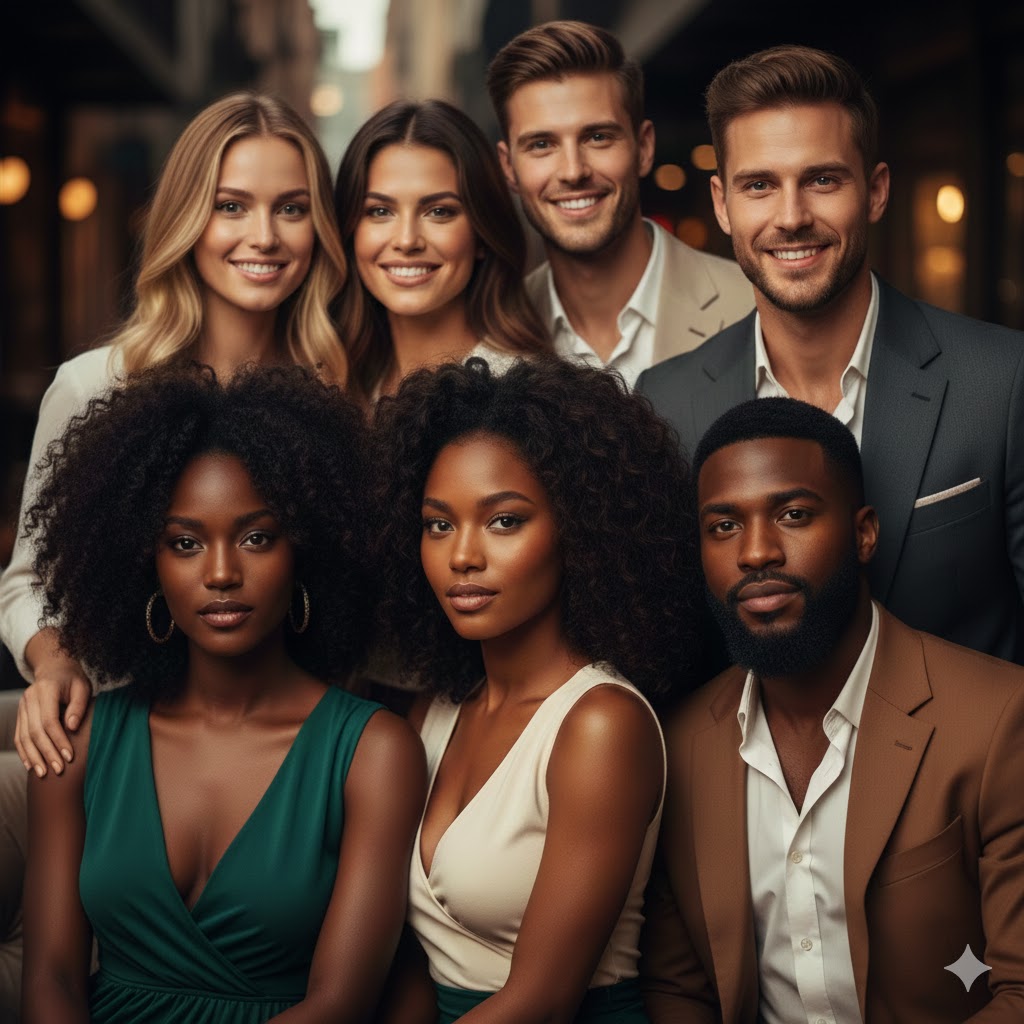
Divided Shades: The Truth About Mixed Race Identity, Color Hierarchies, and Biblical Unity.

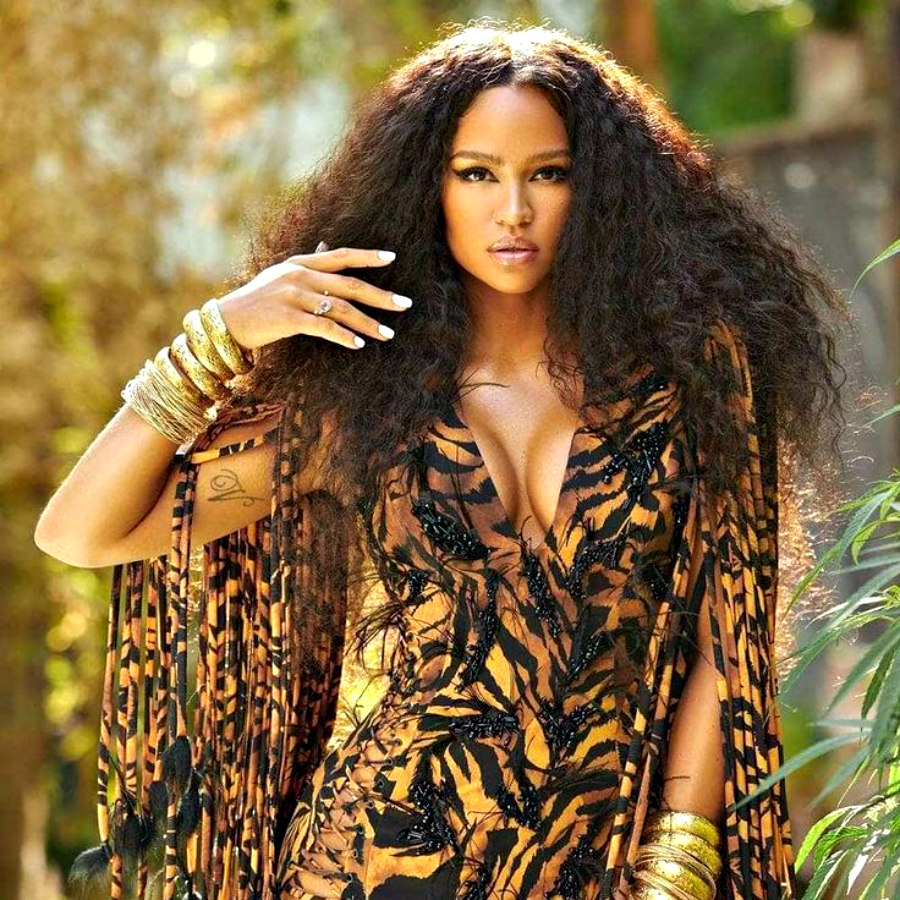
This photograph is the property of its respective owner. No copyright infringement intended.

The conversation surrounding mixed-race identity—especially within the African diaspora—is layered with history, psychology, and theology. To understand its roots, one must trace the origins of racial mixing to colonialism and slavery. During the transatlantic slave trade, European men often exploited enslaved African women, creating generations of mixed-race offspring who were caught between two worlds—belonging fully to neither. These children were used to reinforce racial hierarchies, as their lighter skin often afforded them privileges denied to darker-skinned Africans. The complex legacy of this division continues to shape how mixed-race individuals view themselves and how they are perceived within Black communities.

The origin of mixed-race identity in the Black context is deeply tied to oppression rather than equality. Colonial societies created rigid racial classifications such as “mulatto,” “quadroon,” and “octoroon,” assigning social worth based on proximity to whiteness. This system, known as colorism, weaponized phenotype to maintain control and discord among African-descended people. The lighter one’s skin, the closer they were deemed to “civilization.” Such hierarchies fractured unity among the enslaved, fulfilling the divide-and-rule tactics of white supremacy.

This historical divide evolved into a psychological wound. Many mixed-race individuals internalized superiority due to their European features, while darker-skinned individuals were conditioned to associate beauty, intelligence, and worth with lightness. This perpetuated a silent competition within the Black community, where acceptance often hinged on color rather than character. The psychological scars of colonial classification still bleed into modern Black relationships, culture, and self-perception.

The Bible, however, dismantles all forms of racial hierarchy. Acts 17:26 declares, “And hath made of one blood all nations of men for to dwell on all the face of the earth” (KJV). Scripture affirms that all humanity shares a divine origin—therefore, racial superiority or inferiority is antithetical to God’s design. The divisions birthed from slavery and colonialism are not of God but of man’s rebellion and pride.

Mixed-race identity, while historically exploited, also symbolizes resilience. Despite the injustices of their conception, mixed descendants are living testimonies of survival. Yet, the question remains: how do mixed-race individuals navigate a world that often demands they “choose a side”? Many experience rejection from both Black and white communities—too light for one, too dark for the other. This dual rejection can lead to identity confusion and emotional isolation, especially when racial loyalty becomes politicized.

The treatment of darker-skinned Black people by some mixed-race individuals reflects internalized colonial psychology. Proximity to whiteness can unconsciously breed bias, leading to elitism, exclusion, or disdain toward darker skin tones. This phenomenon, known as color stratification, still affects employment, dating, and media representation. It is a modern manifestation of an ancient wound. James 2:9 warns, “But if ye have respect to persons, ye commit sin, and are convinced of the law as transgressors” (KJV). Partiality based on appearance, therefore, is sin before God.

The internal division among Black people undermines collective progress. While society benefits from multiculturalism, the unresolved trauma surrounding mixed identity can perpetuate division rather than unity. Instead of bridging gaps, colorism often reinforces hierarchies of beauty and worth. This spiritual fracture hinders the restoration of Black dignity and solidarity.

Interracial marriage—another byproduct of global migration and cultural exchange—has long sparked theological debate. Some interpret biblical passages as forbidding such unions, yet the KJV Bible does not condemn marriage between races. Rather, it forbids unions that lead believers into idolatry or disobedience to God’s law (Deuteronomy 7:3–4). The issue is not color but covenant. When two people of different races unite under Christ, their marriage honors God’s design for love and unity, transcending the artificial barriers of race.

Nevertheless, interracial relationships carry historical complexities. In societies still healing from racism, these unions can trigger deep emotions, from resentment to fascination. For some Black individuals, seeing interracial relationships—particularly between Black men and white women—can resurrect feelings of rejection and devaluation. This stems not from hate but from historical pain: the centuries-long erasure of Black women’s beauty and humanity.

The modern glorification of mixed-race aesthetics—curly hair, light skin, ambiguous features—continues to marginalize darker-skinned individuals. Media representation often reinforces this bias, promoting “safe” versions of Blackness that appeal to white audiences. This selective visibility diminishes the diversity of Black beauty. Psalm 139:14 reminds us, “I will praise thee; for I am fearfully and wonderfully made.” God crafted all shades of melanin with divine intent; none are superior or inferior in His sight.

Spiritually, division based on color mirrors the sin of pride. Lucifer himself was cast down for exalting his image above God’s (Isaiah 14:12–15). When human beings exalt lighter skin as “better,” they mirror that same rebellion—valuing creation over Creator. True healing requires repentance from color-based idolatry and a return to divine order, where love, not lightness, defines worth.

The social consequences of colorism within the Black community are profound. Darker-skinned individuals often experience higher rates of discrimination, lower marriage rates, and underrepresentation in leadership. Meanwhile, mixed-race or lighter-skinned individuals may face resentment, misunderstanding, or pressure to “prove” their Blackness. This dynamic fosters tension rather than unity, perpetuating what psychologist Beverly Tatum (1997) calls “intra-racial racism.”

Yet, the gospel calls for reconciliation. Galatians 3:28 declares, “There is neither Jew nor Greek… for ye are all one in Christ Jesus.” The identity of the believer transcends color and heritage. The Church must model this unity, teaching that racial hierarchy is sin and diversity is divine. The mixed-race believer, in particular, carries a sacred opportunity to embody this unity—to be a living testimony that God’s kingdom is multiethnic, yet singular in spirit.

Understanding mixed-race identity through a biblical lens helps dismantle shame and confusion. The enemy thrives in division, but Christ restores wholeness. He redeems what history distorted. The color of one’s skin should never define one’s closeness to God or one’s acceptance among brethren. As 1 Samuel 16:7 teaches, “Man looketh on the outward appearance, but the Lord looketh on the heart.”

Interracial marriages, when rooted in faith, symbolize the redemption of divided bloodlines. What once resulted from oppression can now become a covenant of healing. When two races unite under Christ, they testify that love conquers hatred and unity conquers prejudice. Such unions must, however, remain spiritually grounded to resist cultural pressures and ancestral wounds.

It is vital for mixed-race individuals and interracial couples to understand their spiritual assignment. They are not just participants in diversity—they are vessels of reconciliation. Their existence challenges centuries of division and calls all people back to the biblical truth of shared creation. Their journey, however, requires humility, empathy, and active rejection of color-based superiority.

The Black community must also embrace healing by confronting internalized colorism. This begins with education, love, and scriptural truth. The hierarchy of skin tone must be replaced with the hierarchy of virtue. Proverbs 22:2 reminds us, “The rich and poor meet together: the Lord is the maker of them all.” Similarly, light and dark meet in the Creator’s palette, both radiant in His image.

Ultimately, the evolution of mixed-race identity is a spiritual parable. What began in exploitation can end in redemption. What once divided can now unite. The challenge lies in uprooting the psychological residue of slavery and reestablishing identity upon divine truth.

In God’s kingdom, there are no “half” identities—only whole souls. Every shade, feature, and lineage is crafted for His glory. The world divides by pigment, but Heaven unites by purpose. Revelation 7:9 envisions a multitude “of all nations, and kindreds, and people, and tongues, stood before the throne.” This is the divine end of racial confusion—oneness in the presence of the Creator, where all colors reflect His light perfectly.


References (KJV Bible)
Acts 17:26; Deuteronomy 7:3–4; 1 Samuel 16:7; Proverbs 22:2; Psalm 139:14; Isaiah 14:12–15; James 2:9; Galatians 3:28; Romans 10:12; 1 Corinthians 12:13; Revelation 7:9.

Scholarly References
Tatum, B. D. (1997). Why Are All the Black Kids Sitting Together in the Cafeteria? Basic Books.
Hunter, M. (2007). The Persistent Problem of Colorism: Skin Tone, Status, and Inequality. Sociology Compass, 1(1), 237–254.
Russell, K., Wilson, M., & Hall, R. (1992). The Color Complex: The Politics of Skin Color Among African Americans. Anchor Books.
Ifekwunigwe, J. (2004). Mixed Race Studies: A Reader. Routledge.

The Female Files: Beware of Men Who Flatter You #thebrowngirldilemma

Flattery is one of the oldest and most effective tools of manipulation, especially when directed toward women who desire affection, affirmation, or admiration. While kind words are not inherently wrong, excessive praise that lacks substance or truth can become spiritually and emotionally dangerous. Scripture consistently warns that flattering speech is often a gateway to deception.

In the King James Version, the Bible is clear that flattery is not harmless. “A flattering mouth worketh ruin” (Proverbs 26:28, KJV). Flattery is not designed to build you; it is designed to soften you. It disarms discernment and makes the listener more susceptible to influence.

Men who flatter excessively are often not speaking from conviction, but from strategy. Their words are crafted to get something—attention, access, emotional labor, sex, validation, or control. “With their flattering lips and with their double heart do they speak” (Psalm 12:2, KJV). What sounds sweet may be spiritually toxic.

Flattery thrives because it tells you what you want to hear, not what is true. When a woman is hungry for affirmation, flattery feels like nourishment, even when it is empty calories. “For the lips of a strange woman drop as an honeycomb, and her mouth is smoother than oil” (Proverbs 5:3, KJV). The same principle applies in reverse.

Many women enjoy admiration and mistake it for genuine interest. There is a difference between appreciation and flattery. Appreciation observes character, while flattery exaggerates appearance. One builds esteem; the other inflates ego.

A flattering man rarely asks about your values, your faith, your purpose, or your character. His focus remains external. This is dangerous because God never prioritizes outward beauty over inward substance. “Man looketh on the outward appearance, but the LORD looketh on the heart” (1 Samuel 16:7, KJV).

Biblically, a worthy woman is praised for her fear of the Lord, not her face. “Favour is deceitful, and beauty is vain: but a woman that feareth the LORD, she shall be praised” (Proverbs 31:30, KJV). When a man ignores this standard, it reveals what he truly values.

Common flattering phrases reveal shallow intent. Compliments such as “Baby, you so fine,” “You’re the most beautiful woman in the world,” or “You are BAD” focus entirely on physical attraction. These words are not rooted in discernment but desire.

Statements like “I’ll drink your bath water,” “You drop-dead beautiful,” or “You’re the prettiest thing since sliced peaches” are exaggerated, performative, and often recycled. They are designed to provoke emotion, not demonstrate respect.

Notice that none of these compliments address your mind, your integrity, your faith, or your discipline. They do not affirm your character, your wisdom, or your calling. They reduce you to a visual experience rather than a whole person.

Many women “eat this up” because admiration feels validating, especially in a culture that ties female worth to beauty. But validation rooted only in appearance is unstable and short-lived. When beauty fades, so does the attention.

The danger deepens when women forget that flattering men often say the same things to multiple women daily. Scripture warns of this pattern: “They bless with their mouth, but they curse inwardly” (Psalm 62:4, KJV). Flattery is rarely exclusive.

Flattering men are skilled at creating false intimacy quickly. Their words make you feel chosen, special, and elevated. Yet this is often a tactic to bypass boundaries and gain access without commitment.

Flattery also weakens discernment by appealing to pride. Proverbs warns, “He that flattereth his neighbour spreadeth a net for his feet” (Proverbs 29:5, KJV). What feels like admiration may actually be a trap.

A man of substance will not rush to exalt your beauty before knowing your heart. He understands that attraction without discernment leads to misuse. He looks for inward beauty—your fear of God, your humility, your wisdom, and your fruit.

Peter reinforces this principle, teaching that true beauty is internal, not external. “Let it be the hidden man of the heart… even the ornament of a meek and quiet spirit” (1 Peter 3:4, KJV). A godly man is drawn to this kind of beauty.

Flattery often replaces action with words. A man who flatters heavily but invests little reveals his priorities. Talk is cheap, but consistency is costly. True interest is demonstrated, not declared.

Women must learn to test words by time and behavior. “Beloved, believe not every spirit, but try the spirits whether they are of God” (1 John 4:1, KJV). Discernment requires patience.

Prayer is essential in guarding the heart from flattering deception. Asking God for wisdom exposes motives that are hidden beneath smooth speech. “If any of you lack wisdom, let him ask of God” (James 1:5, KJV).

Ultimately, flattery is dangerous because it trains women to value attention over truth. God’s design is higher. He desires women to be chosen for who they are becoming, not merely how they appear.

A woman grounded in God does not depend on flattery for identity. She knows her worth is rooted in the Most High, not in the mouths of men. When you value inward beauty, flattery loses its power—and only sincerity remains.


References (KJV)

The Holy Bible, King James Version.
1 Samuel 16:7
Psalm 12:2; Psalm 62:4
Proverbs 5:3; Proverbs 26:28; Proverbs 29:5; Proverbs 31:30
1 Peter 3:4
James 1:5
1 John 4:1

The Sexual Economy of Appearance

Appearance operates as a form of currency within modern social life, shaping access to desire, power, and protection. The sexual economy of appearance refers to the system in which physical attractiveness is exchanged for attention, validation, opportunity, and status. This economy is not neutral; it is governed by racialized, gendered, and class-based hierarchies that determine whose bodies are most valued.

Within this economy, beauty functions as capital. Individuals who align with dominant beauty standards are rewarded with romantic abundance, social visibility, and sexual leverage. Those who do not are often rendered invisible or forced to compensate through emotional labor, compliance, or self-sacrifice. Attraction becomes less about mutual connection and more about market positioning.

Gender plays a defining role in how appearance is monetized. Women are socialized to understand their bodies as primary assets, evaluated continuously and publicly. Men, by contrast, are more often judged on status and resources, yet still benefit from partnering with women whose appearance enhances their own social standing.

Race profoundly structures this sexual marketplace. Eurocentric beauty ideals elevate lighter skin, narrower features, and looser hair textures, while darker skin and Afrocentric features are systematically devalued. This hierarchy mirrors colonial and slave-based systems that assigned worth based on proximity to whiteness.

Desire within this system is frequently mistaken for personal preference. In reality, attraction is shaped by repeated cultural messaging that teaches who is “beautiful,” “feminine,” and “worthy.” These lessons are absorbed long before conscious choice, making desire feel natural even when it reproduces inequality.

The sexual economy also governs behavior. Attractive individuals are granted more grace, patience, and forgiveness in romantic interactions. They are pursued rather than required to prove themselves. Less attractive individuals are expected to accept lower standards, tolerate disrespect, or feel grateful for attention.

Social media has intensified this economy by quantifying desirability through likes, followers, and visibility. Appearance now translates directly into economic and sexual capital, rewarding those who conform and punishing those who resist. Algorithms act as gatekeepers, reinforcing existing beauty hierarchies.

Colorism amplifies sexual stratification within marginalized communities. Lighter-skinned women are often perceived as more feminine, approachable, and “wife-worthy,” while darker-skinned women are sexualized, ignored, or cast as less desirable partners. These dynamics fracture intimacy and erode collective self-worth.

Men also navigate this economy, though differently. Physical attractiveness can elevate masculine desirability, yet men are more frequently evaluated on their ability to provide status, protection, or resources. Still, beauty influences whose masculinity is affirmed and whose is questioned.

The moral implications of this economy are significant. When beauty is treated as merit, inequality appears deserved. Sexual success is framed as virtue, while rejection is interpreted as personal failure rather than structural bias.

Resistance begins with naming the system. The sexual economy of appearance thrives on silence and denial. Honest examination disrupts the illusion that attraction exists outside culture, power, and history.

Liberation requires redefining value beyond appearance. Intimacy grounded in mutual respect, shared values, and emotional safety challenges the market logic that reduces people to visual commodities.

Ultimately, dismantling the sexual economy of appearance is not about rejecting beauty but about refusing to let it determine human worth. Desire becomes ethical when it is conscious, reflective, and free from inherited hierarchies.

References

Bourdieu, P. (1986). The forms of capital. In J. Richardson (Ed.), Handbook of theory and research for the sociology of education (pp. 241–258). Greenwood Press.

Collins, P. H. (2004). Black sexual politics: African Americans, gender, and the new racism. Routledge.

Eagly, A. H., Ashmore, R. D., Makhijani, M. G., & Longo, L. C. (1991). What is beautiful is good, but… A meta-analytic review of research on the physical attractiveness stereotype. Psychological Bulletin, 110(1), 109–128.

Hamermesh, D. S. (2011). Beauty pays: Why attractive people are more successful. Princeton University Press.

Hunter, M. (2007). The persistent problem of colorism: Skin tone, status, and inequality. Sociology Compass, 1(1), 237–254.

Illouz, E. (2007). Consuming the romantic utopia: Love and the cultural contradictions of capitalism. University of California Press.

Zelizer, V. A. (2005). The purchase of intimacy. Princeton University Press.