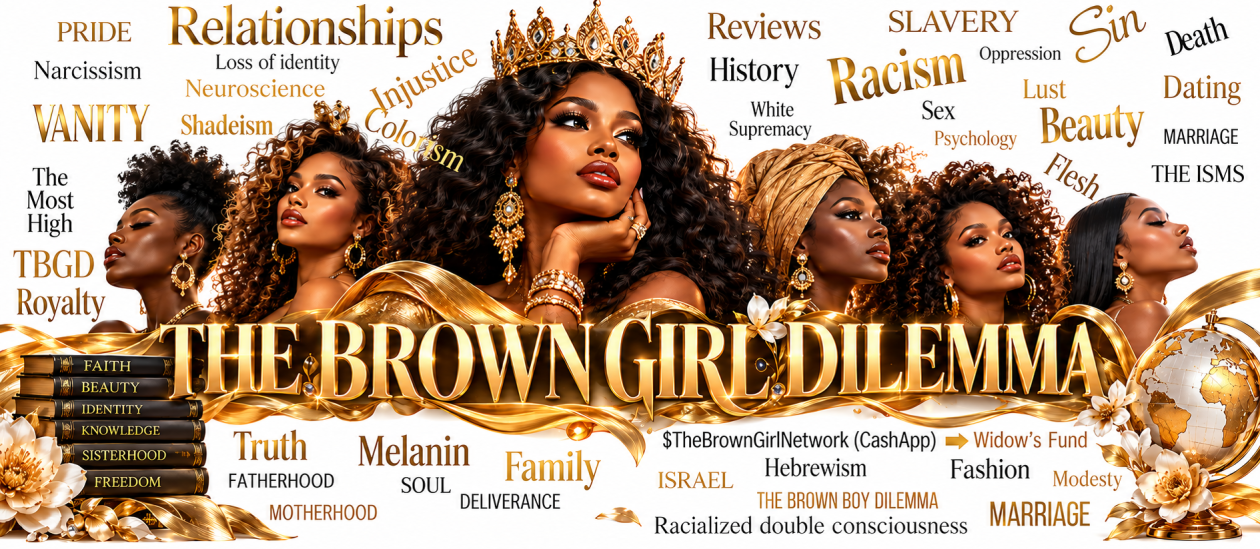


The human face is one of the most complex and visually significant structures in human anatomy. It communicates ancestry, age, emotion, health, identity, and individuality while also influencing how people perceive attractiveness. The science of facial beauty has examined symmetry, proportion, averageness, sexual dimorphism, skin characteristics, and facial distinctiveness. Yet when discussing Black facial beauty, science must be approached with particular care. No single “Black face,” universal Black facial structure, or scientific basis exists to rank one ancestry, complexion, or collection of features as inherently superior to another.
Black facial beauty is best understood through diversity. People of African ancestry represent an extraordinary range of facial characteristics shaped by complex population histories, genetic variation, migration, and individual development. Black women and men may possess dramatically different combinations of facial features while sharing broad ancestral connections. Skin tone, facial width, nose shape, lip morphology, eye shape, cheekbone structure, jaw shape, and hair characteristics can vary substantially among individuals and populations.

The anatomy of the face begins with the underlying skeletal structure. The frontal bone forms the forehead, while the zygomatic bones create the foundation of the cheeks. The maxilla contributes to the middle region of the face, and the mandible forms the lower jaw and chin. Together with muscles, fat distribution, connective tissue, and skin, these structures produce the visible face others recognize. Beauty is therefore not produced by one feature alone but by the relationship among multiple anatomical structures.
Facial proportion has long fascinated artists, scientists, and philosophers. Classical artistic traditions often attempted to identify ideal relationships among the forehead, nose, lips, chin, and other structures. Modern research has similarly examined proportional relationships and their influence on perceived attractiveness. However, proportionality should not be confused with a universal formula for beauty. Human populations display substantial variation, and facial proportions considered attractive in one cultural context may not carry precisely the same meaning in another.

Facial symmetry is frequently associated with attractiveness. Symmetry refers broadly to the degree to which the left and right sides of the face resemble one another. Researchers have found that symmetry can influence attractiveness judgments, although its importance is often exaggerated in popular discussions of beauty. Perfectly symmetrical human faces are uncommon, and subtle asymmetry is a normal part of human anatomy. A distinctive face can be highly attractive precisely because of characteristics that depart from mathematical symmetry (Rhodes, 2006).
Another influential concept is facial averageness. Research suggests that composite faces created by blending multiple faces are often perceived as attractive. One explanation is that average faces may contain fewer extreme deviations from the population mean. Yet this principle does not mean that the most beautiful faces are ordinary or indistinguishable. Many people are considered exceptionally beautiful because of distinctive features, striking combinations, or unusual characteristics that make their appearance memorable (Langlois & Roggman, 1990).
The relationship between facial features is often more important than any individual feature viewed in isolation. A broad nose, full lips, high cheekbones, large eyes, strong jaw, or prominent forehead cannot independently determine whether a person will be perceived as attractive. The visual system evaluates the face as an integrated whole. The proportions among features, the shape of the facial framework, the quality of the skin, and the expression of the individual all contribute to perception.
The nose is one of the most visibly diverse structures of the human face. Its external appearance is influenced by bone, cartilage, soft tissue, and the shape of the nasal aperture. Nose morphology varies widely among populations and individuals, including among people of African ancestry. Broad nasal bases, narrower bridges, varying nostril shapes, and differences in projection are all part of normal human diversity. No particular nose shape is biologically synonymous with beauty.

Historically, however, African-derived facial features were often judged according to European-centered aesthetic standards. Broader noses and fuller lips were sometimes treated as deviations from an imagined ideal rather than as natural examples of human anatomical diversity. Colonial racial ideologies contributed significantly to these hierarchies. A scientific exploration of Black beauty must therefore separate legitimate anatomical study from historical attempts to use physical features as instruments of racial classification and discrimination.
The lips are another defining feature of facial appearance. Lip morphology varies according to the size and shape of the vermilion, the relationship between the upper and lower lips, and the surrounding soft tissues. Full lips have been associated with attractiveness in various contexts, yet their beauty cannot be understood simply through size. Shape, proportion, facial harmony, expression, and individual characteristics all influence how lips contribute to the appearance of the face.
The eyes are among the most expressive structures of human appearance. Eye size, the shape of the eyelids, brow position, orbital anatomy, and the relationship between the eyes and surrounding facial structures contribute to facial identity and attractiveness. Expression can dramatically alter the appearance of the eyes. A confident gaze, a warm smile, curiosity, contemplation, or joy can transform how a face is perceived. For this reason, the anatomy of beauty cannot be separated completely from the living personality behind the face.
Cheekbones contribute significantly to facial contour. The zygomatic bones and surrounding soft tissues influence the width and projection of the midface. High or prominent cheekbones are frequently celebrated in fashion photography and beauty culture, but there is considerable variation in what observers perceive as attractive. Fullness, contour, bone structure, and the transition between the cheeks and lower face all contribute to a person’s distinctive appearance.

The jaw and chin are particularly important to perceptions of facial masculinity and femininity. Sexual dimorphism refers to average physical differences between male and female faces. Male faces, on average, may display characteristics such as greater jaw width or more pronounced brow structures, while female faces may display different relationships among facial width, soft tissue, and lower-face contour. However, these are population-level tendencies rather than rigid rules. Black men and women display tremendous individual variation in facial structure and expression.
Black male facial beauty deserves the same scientific and cultural consideration traditionally given to women’s appearance. A Black man’s face may be perceived as handsome because of a strong jawline, distinctive cheekbones, expressive eyes, facial symmetry, skin quality, beard grooming, or an unusual combination of features. Yet conventional concepts of masculinity can become restrictive when they suggest that every attractive man must possess the same height, physique, jawline, or facial expression. Masculine beauty is as diverse as the men who embody it.
Black female facial beauty is similarly diverse. A woman’s attractiveness may be associated with facial harmony, expressive eyes, skin quality, cheek structure, lips, hairstyle, and countless other characteristics. Yet no single facial template can define the beauty of Black women. Dark-skinned, brown-skinned, and light-skinned women can possess entirely different features and still represent equally compelling forms of beauty.
Skin is perhaps one of the most visually prominent aspects of Black facial beauty. Human skin color is strongly influenced by melanin, particularly the amount, type, distribution, and biological activity of melanin within the skin. Darker pigmentation provides a rich range of visual tones, from deep ebony and blue-black undertones to chocolate, copper, mahogany, caramel, and lighter brown complexions. These descriptions reflect aesthetic language rather than scientific categories, but they illustrate the remarkable visual diversity of human pigmentation.

Skin quality can influence perceived attractiveness independently of skin tone. Texture, hydration, smoothness, evenness of pigmentation, and visible signs of health may affect how observers perceive a face. However, social biases have historically complicated the interpretation of complexion. Colorism has produced unfair preferences for lighter or darker complexions in different social contexts, creating psychological pressures that have little to do with objective measures of beauty.
A scientific discussion of Black beauty must therefore acknowledge that perception is influenced by culture. Human beings are not born with a complete and universal list of preferred facial features. Social environments, family attitudes, media exposure, historical standards, and repeated visual experiences all shape what people learn to consider attractive. Studies of attractiveness across cultures demonstrate both shared patterns and meaningful cultural variation (Rhodes et al., 2001).

The media has played a powerful role in shaping perceptions of Black faces. For generations, many mainstream institutions offered limited representations of Black beauty, often favoring a narrow range of features or complexions. Greater representation has expanded public exposure to the diversity of Black faces, but colorism and feature-based preferences remain influential. The challenge is not to replace one narrow beauty standard with another but to recognize a broader spectrum of Black facial beauty.
Genetics also contributes to facial morphology, although the relationship between genes and appearance is highly complex. Facial features are influenced by many genes rather than a single “beauty gene” or “race gene.” Development, environment, and interactions among biological factors also contribute to the final appearance of the face. Modern genetics demonstrates the complexity of human variation and cautions against simplistic attempts to divide humanity into rigid biological categories.


Africa’s extensive human genetic diversity is especially important when discussing Black appearance. Human populations within Africa have long histories and substantial diversity, and people of African descent throughout the diaspora reflect both African ancestry and, in many cases, additional population histories. Consequently, a discussion of Black facial anatomy must never imply that Black people constitute a biologically uniform group.
Perhaps the most important scientific conclusion is that facial attractiveness is multidimensional. Symmetry may matter, but it is not everything. Proportion may matter, but there is no universal equation capable of identifying the world’s most beautiful face. Skin quality may matter, but complexion itself should never become a hierarchy of human value. Distinctive features may attract attention, while facial harmony may create a sense of balance. Beauty emerges from complex interactions rather than one isolated measurement.
The science of facial beauty becomes even more meaningful when it is liberated from the search for perfection. Black women and men do not need to possess identical facial proportions to be considered beautiful or handsome. A broad nose can be beautiful. Full lips can be beautiful. Deeply melanated skin can be beautiful. Light brown skin can be beautiful. A strong jaw can be handsome, while a softer facial structure can also be handsome. Individuality is not a flaw in human beauty; it is one of its defining characteristics.
Ultimately, the anatomy of Black facial beauty tells a larger story about human diversity. Bone structure, soft tissue, pigmentation, genetics, expression, and cultural perception combine to create faces that are both biologically complex and personally unique. There is no single Black face to celebrate because Black beauty has never existed as a single image.
Beauty personified, then, may be found in the distinctive face that does not resemble anyone else’s. It is found in the Black woman whose features tell her own story and the Black man whose face reflects his own individuality. It exists across the spectrum of complexion, facial morphology, and personal style. Science can help us understand the anatomy of the human face, but it cannot assign a numerical value to the humanity or worth of the person behind it.
© 2027 The Brown Girl Dilemma
Love what we do? Help us continue the work.
Your donation helps support independent content, meaningful storytelling, education, representation, and the continued growth of The Brown Girl Dilemma. Every contribution makes a difference.
Thank you for supporting the vision.
CashApp: https://cash.app/$thebrowngirlnetwork
Make a one-time donation
Make a monthly donation
Make a yearly donation
Choose an amount
Or enter a custom amount
Your contribution is appreciated.
Your contribution is appreciated.
Your contribution is appreciated.
References
Langlois, J. H., & Roggman, L. A. (1990). Attractive faces are only average. Psychological Science, 1(2), 115–121. https://doi.org/10.1111/j.1467-9280.1990.tb00079.x
Rhodes, G. (2006). The evolutionary psychology of facial beauty. Annual Review of Psychology, 57, 199–226. https://doi.org/10.1146/annurev.psych.57.102904.190208
Rhodes, G., Yoshikawa, S., Clark, A., Lee, K., McKay, R., & Akamatsu, S. (2001). Attractiveness of facial averageness and symmetry in non-Western cultures: In search of biologically based standards of beauty. Perception, 30(5), 611–625. https://doi.org/10.1068/p3123
Thornhill, R., & Gangestad, S. W. (1999). Facial attractiveness. Trends in Cognitive Sciences, 3(12), 452–460. https://doi.org/10.1016/S1364-6613(99)01403-5
Wade, T. J. (1996). The relationships between skin color and self-perceived global, physical, and sexual attractiveness, and self-esteem for African Americans. Sex Roles, 34, 31–51.
Windhager, S., Schaefer, K., & Fink, B. (2011). Geometric morphometrics of male facial shape in relation to physical strength and perceived attractiveness. American Journal of Human Biology, 23(6), 805–814.
Wolf, N. (1991). The beauty myth: How images of beauty are used against women. William Morrow.

