All posts by The Brown Girl Dilemma

I welcome everyone— women and men of all nationalities—to read, reflect, and gather insight across the many topics about black people explored here. To the Brown girl and the Brown boy who walk into rooms already carrying history, beauty, and burden—this space is for you. You stand at the intersection of visibility and erasure, desirability and disregard, reverence and resistance, often praised, questioned, desired, dismissed, and debated all at once. In a world that studies your skin more than your soul and distorts what God designed with intention, may truth, healing, and divine purpose meet you here. This is a conversation created to name your journey without silencing your truth, to restore what society has tried to redefine, and to remind you that your worth was never the problem—only the world’s inability to honor it.

Grace Over Glamour: Biblical Lessons on True Beauty in the Age of Eurocentric Pressure.

Photo by JEFERSON GOMES on Pexels.com

The idea of beauty in Western society has long been framed through Eurocentric ideals—fair skin, straight hair, narrow noses, and thin bodies. These standards, rooted in colonialism and white supremacy, continue to shape global perceptions of attractiveness, particularly among women of African descent. For many, the journey toward self-love has required unlearning the belief that divine beauty can only exist through proximity to whiteness.

The Bible reminds us that God’s measure of beauty is vastly different from the world’s. In 1 Samuel 16:7 (KJV), it is written, “For the Lord seeth not as man seeth; for man looketh on the outward appearance, but the Lord looketh on the heart.” This verse dismantles the social hierarchies of appearance that have long privileged Eurocentric features over the diverse expressions of God’s creation.

For centuries, Eurocentric ideals have been weaponized against Black and brown women, creating hierarchies within our own communities. The effects of colorism—favoring lighter skin tones and Euro-featured appearances—echo the psychological scars of slavery and colonization. These systems conditioned people of color to internalize shame about their features, skin, and hair, distorting the divine image within them.

The Apostle Peter’s admonition in 1 Peter 3:3–4 urges believers not to depend on outward adornment but to cultivate “the hidden man of the heart,” which is “of great price” in the sight of God. Yet, modern media continues to bombard women with images that glorify glamour over grace, leading many to chase validation through aesthetics rather than spiritual wholeness.

The global beauty industry profits from insecurity—especially among Black women—by marketing products that promise transformation toward Eurocentric ideals: skin-lightening creams, hair-straightening chemicals, and surgeries to alter African features. These pressures exploit spiritual and emotional wounds, turning self-hate into profit.

In Proverbs 31:30, it is written, “Favour is deceitful, and beauty is vain: but a woman that feareth the Lord, she shall be praised.” This passage reorients the definition of beauty away from social approval and toward godly reverence. The fear of the Lord, not the favor of man, is the foundation of true worth.

Biblical womanhood celebrates strength, dignity, and wisdom. Figures like Deborah, Esther, and Ruth illustrate that influence comes not from appearance but from purpose, courage, and obedience to God’s will. Deborah’s leadership was not enhanced by her beauty but by her discernment and faithfulness—qualities society rarely uplifts in women of color.

Eurocentric pressures have also distorted the psychology of beauty among men, shaping whom they view as desirable. Many have unconsciously absorbed colonial value systems, equating whiteness with purity and status. This internalized bias fractures relationships within the Black community and deepens gender divides.

For Black women, reclaiming divine beauty is an act of spiritual warfare. It requires rejecting false idols of appearance and replacing them with God’s truth. Psalm 139:14 affirms, “I will praise thee; for I am fearfully and wonderfully made.” Each coil, curve, and complexion is intentional, sacred, and reflective of the Creator’s artistry.

Natural hair, once stigmatized under Eurocentric standards, has become a powerful expression of identity and resistance. Wearing one’s natural texture is not merely aesthetic; it is theological. It affirms that God’s design needs no correction to be beautiful or professional.

The pursuit of glamour often masks deeper wounds—feelings of inadequacy, rejection, and alienation. Healing begins with spiritual renewal. Romans 12:2 calls believers to “be not conformed to this world, but be ye transformed by the renewing of your mind.” Freedom from Eurocentric validation starts with changing one’s thoughts about worth and divine design.

Black women’s beauty carries ancestral resonance. It tells stories of survival, innovation, and resilience under systems that sought to erase their humanity. To embrace this beauty is to honor those who came before—women who wore their grace under oppression, who embodied elegance without privilege or praise.

The Church must also confront its complicity in Eurocentric standards. Too often, depictions of biblical figures in Western art portray whitened versions of Christ, Mary, and the Israelites, reinforcing harmful beauty hierarchies. Reclaiming the Hebraic and Afro-Asiatic roots of Scripture restores both historical truth and cultural dignity.

Spiritual beauty is the fruit of the Spirit—love, joy, peace, patience, kindness, goodness, faithfulness, gentleness, and self-control (Galatians 5:22–23). These are qualities that outlast time, status, and fashion. They illuminate the soul in ways that no cosmetic can replicate.

In modern culture, social media amplifies vanity and comparison. Yet, platforms can also be used to affirm the diverse beauty of Black and brown people worldwide. Sharing images that celebrate melanin, natural hair, and authentic features creates digital ministry—testifying to the magnificence of God’s varied creation.

The myth of Eurocentric beauty is powerful because it promises belonging. But true belonging comes from identity in Christ, not conformity to oppressive ideals. When one’s self-worth is anchored in divine truth, glamour loses its grip. Grace becomes the new standard.

For mothers and mentors, modeling self-acceptance is sacred work. Every time a woman chooses authenticity over assimilation, she teaches the next generation to see holiness in their reflection. That spiritual inheritance dismantles centuries of distortion.

Grace over glamour means living with purpose, humility, and gratitude. It is to embody a light that radiates from within—one that cannot be dimmed by prejudice or societal expectation. It is beauty refined by faith, not defined by fashion.

In the end, beauty is not a competition but a calling. To reflect God’s image in all shades, shapes, and textures is an act of worship. The Eurocentric lens may distort, but grace restores clarity—revealing the sacred truth that all God’s creations are “very good” (Genesis 1:31).


References (APA 7th Edition):

  • The Holy Bible, King James Version.
  • Banks, I. (2000). Hair matters: Beauty, power, and Black women’s consciousness. New York University Press.
  • Craig, M. L. (2006). Race, beauty, and the tangled knot of a guilty pleasure. Feminist Theory, 7(2), 159–177.
  • hooks, b. (1992). Black looks: Race and representation. South End Press.
  • Tate, S. A. (2009). Black beauty: Aesthetics, stylization, politics. Ashgate.
  • Wolf, N. (1991). The beauty myth: How images of beauty are used against women. HarperCollins.
  • Wilder, J. (2015). Color stories: Black women and colorism in the 21st century. Praeger.

The Bible Series: The Kiss – Betrayal, Destiny, and the Fulfillment of Prophecy

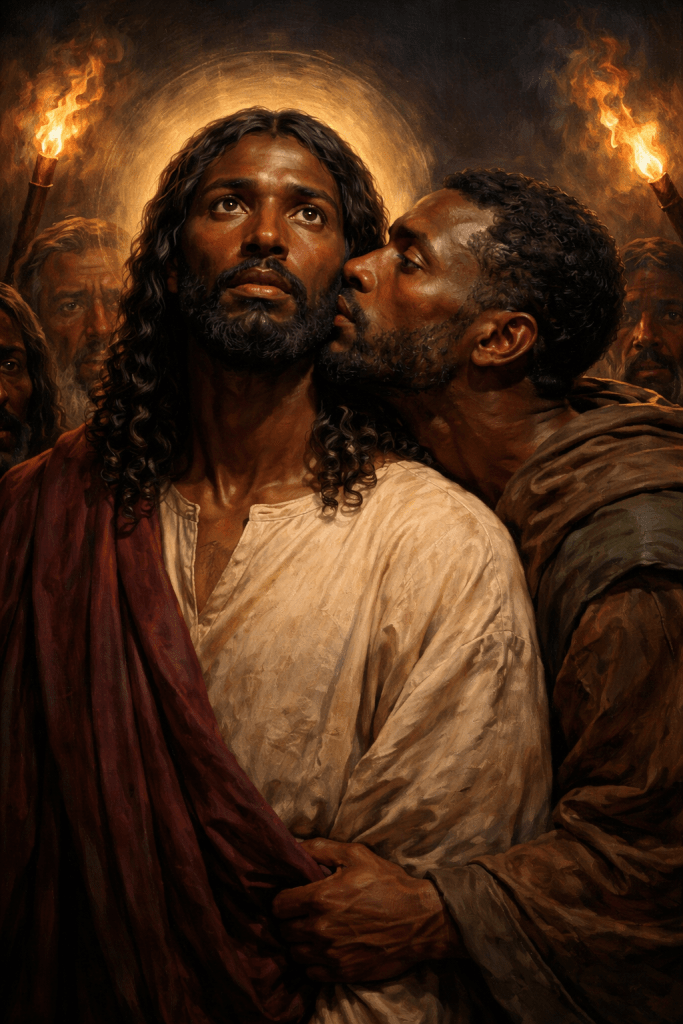
The moment commonly known as “the kiss of betrayal” is one of the most dramatic and spiritually significant events recorded in the New Testament. In the Gospels, the disciple Judas Iscariot identifies Jesus to the arresting authorities with a kiss on the cheek in the Garden of Gethsemane. This act, described in the Gospel of Matthew 26:47–50 and the Gospel of Luke 22:47–48, transformed a gesture of affection and respect into a symbol of treachery. The event has since become an enduring metaphor for betrayal carried out under the appearance of friendship.

Judas Iscariot was one of the original twelve disciples chosen personally by Jesus. The twelve apostles represented the foundational leadership of the early Christian movement, entrusted with spreading Christ’s teachings. According to the Gospel of Mark 3:13–19, Judas was called just like the others—Peter, James, John, and the rest—and he traveled with Jesus during His ministry. Judas witnessed miracles, heard Christ’s teachings, and participated in the communal life of the disciples.

Despite his privileged position, the Gospels portray Judas as having a conflicted character. In the Gospel of John 12:4–6, he is described as the keeper of the disciples’ money bag and is accused of stealing from it. This detail suggests that Judas struggled with greed and personal ambition, weaknesses that eventually contributed to his betrayal. His role among the disciples was therefore paradoxical: a trusted follower who secretly harbored moral corruption.

The betrayal begins to take shape during the final days of Jesus’ ministry in Jerusalem. Religious authorities viewed Jesus as a political and theological threat. His growing influence among the people alarmed the leaders of the temple, who feared unrest and Roman intervention. According to the Gospel of Matthew 26:14–16, Judas approached the chief priests and asked what they would give him if he delivered Jesus to them.

The priests agreed to pay Judas thirty pieces of silver. This amount, referenced in the Gospel of Matthew 26:15, carries symbolic significance because it echoes the prophecy found in the Book of Zechariah 11:12–13, where thirty pieces of silver is the price placed on a shepherd rejected by his people. In ancient Israelite law, this sum also corresponded to the compensation paid for a slave accidentally killed (Exodus 21:32). Thus, the price reflects both prophetic fulfillment and the tragic undervaluation of Christ.

The Gospel writers also emphasize the spiritual dimension behind Judas’s decision. In the Gospel of Luke 22:3, it is written that “Satan entered into Judas.” This phrase suggests that Judas’s betrayal was not merely a human act of greed but part of a larger spiritual conflict between divine purpose and demonic influence. The narrative frames Judas as someone who opened himself to evil through his choices.

Similarly, the Gospel of John 13:27 recounts that after receiving bread from Jesus at the Last Supper, Satan entered Judas again, prompting Jesus to say, “What thou doest, do quickly.” This passage illustrates the tension between human free will and divine foreknowledge. Jesus knew the betrayal was imminent and allowed it to unfold according to the plan that would ultimately lead to redemption.

The betrayal itself occurs in the Garden of Gethsemane shortly after the Last Supper. Judas leads a crowd of soldiers and temple officials to the place where Jesus had gone to pray. To identify Him in the darkness, Judas tells the authorities that the man he greets with a kiss is the one they should arrest. This signal transforms an intimate greeting into an act of deception.

When Judas approaches Jesus, he greets Him respectfully and kisses Him on the cheek. According to the Gospel of Matthew 26:49, he says, “Hail, Rabbi.” Jesus responds with calm awareness, asking, “Friend, wherefore art thou come?” The response reveals both sorrow and understanding. In the Gospel of Luke 22:48, Jesus asks, “Judas, betrayest thou the Son of man with a kiss?”

The kiss, therefore, becomes symbolic of betrayal disguised as loyalty. In the ancient Mediterranean world, a kiss was a sign of respect between a disciple and a teacher. By using this gesture as a signal to arrest Jesus, Judas weaponized trust. The act represents the tragedy of intimate betrayal—being harmed by someone within one’s own circle.

The question of why Judas betrayed Jesus has been debated for centuries by theologians and historians. Some scholars argue that greed motivated him, as suggested by the payment of silver. Others believe he may have been disillusioned with Jesus, expecting a political messiah who would overthrow Roman rule. When Jesus instead spoke of sacrifice and the spiritual kingdom, Judas may have turned against Him.

Another interpretation suggests that Judas attempted to force Jesus to reveal His power. Some scholars speculate that Judas believed arresting Jesus would provoke Him to demonstrate divine authority and establish His kingdom. If this theory holds, Judas’s betrayal may have been rooted in misunderstanding rather than pure malice.

Theologically, Judas also plays a role within the framework of prophecy and divine purpose. Jesus’ betrayal was foretold in passages such as the Book of Psalms 41:9, which says, “Mine own familiar friend… hath lifted up his heel against me.” Early Believers interpreted this as a prophetic foreshadowing of Judas’s actions.

Because of these prophecies, some theologians argue that Judas fulfilled a role necessary for the events leading to the crucifixion. Without the betrayal, Jesus might not have been arrested in the manner described in the Gospels. From this perspective, Judas’s actions became part of the unfolding plan for redemption.

However, the presence of divine purpose does not eliminate personal responsibility. Christian theology generally holds that Judas acted out of his own choices and desires. His betrayal demonstrates how human weakness can align with darker spiritual forces, resulting in tragic consequences.

After Jesus was condemned, Judas experienced deep remorse. According to the Gospel of Matthew 27:3–5, he returned the thirty pieces of silver to the priests, confessing that he had betrayed innocent blood. The priests refused responsibility, leaving Judas overwhelmed by guilt.

Judas then threw the silver into the temple and left. The Gospel account states that he went away and hanged himself. This tragic end illustrates the destructive weight of guilt and the devastating consequences of betrayal.

The chief priests later used the returned money to purchase a field known as the “Field of Blood.” This event again aligns with the prophecy in Zechariah 11:13 and contributes to the narrative symbolism surrounding Judas’s actions.

Despite his betrayal, the story of Judas serves as a cautionary lesson within Biblical teaching. It demonstrates how proximity to truth does not guarantee faithfulness. Judas walked with Jesus, witnessed miracles, and heard divine teaching, yet still chose betrayal.

The message behind the story of Judas and the kiss is therefore multifaceted. It warns against greed, hypocrisy, and spiritual vulnerability. It also emphasizes the sovereignty of God, showing that even acts of betrayal cannot ultimately thwart divine purpose.

Finally, the betrayal leads directly to Jesus’ crucifixion and resurrection, which form the foundation of the followers of Christ. What appeared to be a moment of darkness ultimately became part of the narrative of redemption. The kiss of betrayal, therefore, stands as both a symbol of human treachery and a turning point in the story of salvation.


References

Bauckham, R. (2015). Jesus: A very short introduction. Oxford University Press.

Brown, R. E. (1994). The death of the Messiah: From Gethsemane to the grave. Yale University Press.

Ehrman, B. D. (2014). How Jesus became God. HarperOne.

The Holy Bible, King James Version. (1769/2017). Cambridge University Press.

Wright, N. T. (2012). How God became king: The forgotten story of the Gospels. HarperOne.

The Devil’s Influence

The Devil, known by many names including Satan, Lucifer, Beelzebub, the Evil One, and the Prince of Darkness, is described in the Scriptures as the ultimate adversary of God and man. His existence is attested in numerous passages throughout the Bible, revealing a being whose pride and ambition led to rebellion against the Almighty (Isaiah 14:12-15; Ezekiel 28:12-17).

Originally created as an angel of light, Lucifer was exalted in beauty and perfection. Ezekiel 28:12-15 describes him as the “anointed cherub that covereth,” perfect in his ways from the day he was created until iniquity was found in him. His brilliance and divine position gave him influence and admiration among the heavenly hosts.

The Devil’s sin began with pride. His heart was lifted up because of his beauty, and he corrupted his wisdom through vanity. This pride culminated in the desire to exalt himself above God: “I will ascend above the heights of the clouds; I will be like the most High” (Isaiah 14:14). His ambition to dominate and replace God initiated his fall.

The Devil’s rebellion demonstrates the destructive power of conceit and arrogance. His pride became a pattern that continues to influence humanity. Those who prioritize self-elevation over God’s glory mirror the attitude of Lucifer in subtle ways today, seeking honor, power, and recognition for themselves rather than serving God.

Satan’s betrayal of God was absolute. Once a divine creation, he twisted his original purpose, which was to glorify and serve God, into opposition. Revelation 12:9 calls him “that old serpent, called the Devil, and Satan, which deceiveth the whole world,” showing his intent to lead others into rebellion against the Creator.

The Devil’s influence is evident in the human propensity for sin. He exploits the lust of the eyes, the lust of the flesh, and the pride of life, which are the hallmarks of worldly temptation (1 John 2:16). By appealing to these desires, he draws people away from God and toward destruction.

The temptation of Adam and Eve in the Garden of Eden exemplifies the Devil’s methods. Using deception and subtlety, he persuaded them to doubt God’s word and pursue their own desires (Genesis 3:1-6). Through this act, sin entered the world, demonstrating how the Devil manipulates humanity by appealing to ambition, curiosity, and self-interest.

Scripture also portrays the Devil as a dragon with seven heads and ten horns (Revelation 12:3). This imagery reflects both his authority in the spiritual realm and his intent to establish dominion over the earth. He is a formidable adversary, organized and strategic in opposing God’s kingdom.

The Devil is described as the “prince of the power of the air” (Ephesians 2:2), emphasizing his control over worldly influence and the spiritual atmosphere in which humanity operates. Through lies, manipulation, and corruption, he exerts pressure on society to conform to his false principles.

Satan’s beauty and former glory in heaven demonstrate the danger of pride. While once radiant, he became the embodiment of rebellion and deceit. His example warns against the dangers of self-exaltation and arrogance, reminding humanity that unchecked pride leads to downfall.

The Devil established a false kingdom on earth through idolatry, false religions, materialism, and worldly ambition. By appealing to human desires and corrupting hearts, he creates structures and systems that oppose God’s intended order (2 Corinthians 4:4).

Names like Beelzebub, meaning “lord of the flies,” signify his association with corruption, decay, and spiritual filth. These titles highlight not only his identity but also his method: to defile, distract, and dominate the minds of men.

Satan’s deceit is subtle. He often masquerades as an “angel of light” (2 Corinthians 11:14), presenting temptation in attractive forms. His influence can appear beneficial, appealing, or harmless, yet ultimately leads to destruction for those who follow his path.

The Devil thrives on deception. He corrupts truth, instills doubt, and manipulates perception. His goal is to turn hearts away from God, promoting selfishness, moral compromise, and spiritual blindness. In modern society, this is evident in the glorification of pride, vanity, and worldly success over godly living.

Satan’s rebellion underscores the consequences of ambition unchecked by humility. He desired elevation above God’s throne and was cast down from heaven along with other angels who followed him (Revelation 12:4). His fall serves as a permanent reminder of the dangers of disobedience and arrogance.

Through human history, the Devil continues to assert influence. Wars, injustice, corruption, and oppression often bear his mark, as he seeks to dominate nations and individuals alike. Spiritual vigilance and discernment are essential to resist his schemes (1 Peter 5:8).

The Devil’s interaction with mankind reveals a calculated strategy: he entices through sin, convinces through lies, and enslaves through deception. Those who are unaware of his tactics may unwittingly follow his path, perpetuating cycles of destruction and immorality.

Despite his power, Satan is limited. God’s sovereignty remains supreme, and Scripture assures believers of victory through faith, prayer, and obedience (James 4:7). Recognizing the Devil’s methods allows Christians to resist his influence effectively.

Satan’s pride and beauty before his fall also serve as a warning to the faithful: external excellence or talent is meaningless without humility and devotion to God. The allure of worldly admiration can lead to spiritual ruin if it supersedes reverence for the Creator.

Ultimately, the Devil exemplifies the lust of the eyes, the lust of the flesh, and the pride of life. By studying his tactics, believers can understand the nature of temptation and guard against spiritual deception, cultivating lives of godliness, humility, and resistance to sin (1 John 3:8).

In conclusion, the Devil remains the ultimate adversary, a fallen angel whose beauty, pride, and ambition brought ruin upon himself and influenced humanity. His example serves both as a cautionary tale and a guide to recognizing and resisting evil, reminding the faithful of the importance of obedience, humility, and allegiance to God’s kingdom.

References (KJV):

  • Genesis 3:1-6
  • Isaiah 14:12-15
  • Ezekiel 28:12-17
  • Revelation 12:3-4, 9
  • Ephesians 2:2
  • 2 Corinthians 4:4; 11:14
  • 1 John 2:16; 3:8
  • James 4:7
  • 1 Peter 5:8

Kingdom Love: Raising Black Kings and Queens Together 👑🤎

Photo by August de Richelieu on Pexels.com

Raising children in the Black community is a sacred responsibility, one that shapes not only individuals but also the legacy of generations. Kingdom Love emphasizes the importance of nurturing Black boys and girls as future kings and queens—instilling values of faith, integrity, and resilience.

The foundation of kingdom love begins in the home. Ephesians 6:4 (KJV) instructs, “And ye fathers, provoke not your children to wrath: but bring them up in the nurture and admonition of the Lord.” Both parents, or guardians, play a crucial role in teaching obedience, love, and wisdom while fostering emotional security.

Spiritual grounding is essential. Teaching children about God’s love, purpose, and divine design cultivates identity and self-worth. Proverbs 22:6 reminds us that training a child in the way he should go ensures that when he is older, he will not depart from it. Faith is the compass that guides young kings and queens.

Black history provides role models. From Mansa Musa of Mali to Queen Amanirenas of Kush, historical figures demonstrate intelligence, courage, and leadership. Exposing children to these examples cultivates pride, ambition, and cultural affirmation (Bradbury, 1998; Levtzion, 2000).

Education and literacy are tools of empowerment. Parents who prioritize learning equip children to navigate systemic barriers, build generational wealth, and claim spaces of influence in society. Knowledge is a weapon against oppression.

Emotional intelligence is equally vital. Teaching children to manage feelings, communicate effectively, and resolve conflict fosters relational maturity. Emotional awareness prevents cycles of anger, low self-esteem, and relational dysfunction that often plague communities affected by trauma.

Discipline must be balanced with love. Firm guidance combined with nurturing support teaches responsibility while affirming worth. Discipline without love can provoke resentment, while love without boundaries can foster entitlement or insecurity.

Community plays a supportive role. Mentorship programs, faith-based organizations, and peer networks provide guidance, accountability, and encouragement. Children thrive when they see multiple examples of success, integrity, and relational health.

Cultural identity strengthens self-esteem. Celebrating African traditions, music, art, and ancestry instills pride and resilience. Understanding one’s roots reinforces the dignity of Blackness and prepares children to navigate a world that often devalues them. 🌍🎶

Marriage and partnership model kingdom love. Children who witness healthy, faith-centered unions learn about respect, fidelity, and cooperation. Couples who navigate life together provide a blueprint for relational stability and Godly partnership.

Economic literacy is a form of kingdom love. Teaching children to manage money, save, invest, and plan for the future equips them for independence and leadership, reducing susceptibility to systemic traps like debt and financial instability. 💼💰

Encouraging ambition and purpose empowers children. Every Black boy and girl deserves to envision themselves as a leader, innovator, or creator. Supporting dreams and celebrating achievements builds confidence and perseverance.

Faithful parenting includes prayer and spiritual mentorship. Praying over children, reading scripture together, and teaching moral discernment create a spiritual foundation that guides decisions, relationships, and character.

Forgiveness and grace are crucial. Children will make mistakes; guiding them with patience and teaching repentance mirrors God’s mercy. This instills humility, responsibility, and resilience.

Ultimately, Kingdom Love is a holistic approach to parenting that combines faith, culture, education, and emotional intelligence. Raising Black kings and queens together ensures a legacy of strength, wisdom, and divine purpose. Families rooted in God’s principles cultivate leaders, heal generational wounds, and celebrate the majesty of Black identity. 👑🤎


References

  • Bradbury, R. (1998). The Nubian queens: Ancient African women and power. Oxford University Press.
  • Levtzion, N. (2000). Ancient Ghana and Mali. Africana Publishing.
  • Proverbs 22:6, King James Version.
  • Ephesians 6:4, King James Version.
  • The Holy Bible, King James Version.

Holding Hands With Hope

Dating, when anchored in faith, becomes an act of hope rather than anxiety. It is the quiet belief that God is intentional, that encounters are not random, and that love—when surrendered to Him—unfolds according to divine order. Holding hands with hope means trusting that the Most High is not absent from the process, but actively guiding it.

Hope in dating is not naïveté; it is discernment rooted in trust. Scripture reminds us that “the steps of a good man are ordered by the LORD” (Psalm 37:23, KJV). Each connection is weighed not by emotion alone, but by whether it aligns with God’s purpose and peace.

Many ask, Is this destiny or distraction? Destiny is never rushed. God’s best does not require compromise, secrecy, or pressure. What He ordains unfolds with clarity, patience, and confirmation, often repeated through prayer, counsel, and consistency.

Holding hands with hope means believing that God’s best is worth waiting for. In a culture that promotes instant gratification, biblical hope resists urgency. “He that believeth shall not make haste” (Isaiah 28:16, KJV). Waiting becomes worship when obedience is chosen over impulse.

Purity is central to hopeful dating. Staying pure is not about denial, but protection. Scripture commands believers to “flee fornication” (1 Corinthians 6:18, KJV) because sexual intimacy is covenantal, not recreational. God safeguards the soul by setting boundaries for the body.

Hope-filled dating understands that love grows best in holiness. Physical restraint preserves emotional clarity and spiritual sensitivity. When lust is subdued, discernment sharpens, allowing character—not chemistry—to lead.

Putting God first transforms expectations. Rather than asking, Do they complete me? the faithful ask, Do we glorify God together? “Seek ye first the kingdom of God” (Matthew 6:33, KJV) reorders desire and aligns attraction with assignment.

Destiny relationships are marked by peace, not confusion. God is not the author of chaos (1 Corinthians 14:33, KJV). If a connection produces anxiety, secrecy, or compromise, hope calls for pause—not pursuit.

Hope also guards the heart without hardening it. Dating after disappointment can tempt one toward cynicism, yet Scripture exhorts, “Keep thy heart with all diligence” (Proverbs 4:23, KJV)—not close it, but steward it wisely.

Community confirmation strengthens hopeful discernment. God often affirms His will through trusted counsel. “In the multitude of counsellors there is safety” (Proverbs 11:14, KJV). Isolation breeds deception; accountability nurtures clarity.

Prayer is the language of hope. Inviting God into dating conversations, decisions, and desires transforms romance into reverence. What is prayed over is less likely to be mishandled.

Staying pure also preserves peace if a relationship ends. Obedience eliminates regret rooted in compromise. Hope rests in the assurance that God redeems time and honors faithfulness (1 Samuel 2:30, KJV).

Hopeful dating acknowledges that timing matters as much as compatibility. Even the right person at the wrong time can become a burden. Trusting God’s timing prevents premature attachment and unnecessary pain.

Holding hands with hope means believing that God’s best does not require self-betrayal. Love that demands you abandon convictions is not destiny—it is distraction dressed as desire.

Ultimately, hope is not in the person—it is in God. People are imperfect; God is faithful. When hope rests in Him, dating becomes a journey of trust rather than fear.

Holding hands with hope is choosing faith over frenzy, purity over pressure, and destiny over desire. It is believing that the Most High writes the greatest love stories—and that obedience keeps you in the pages of His best.


References

The Holy Bible, King James Version. (1769/2017).

Cloud, H., & Townsend, J. (1992). Boundaries in dating. Zondervan.

Piper, J. (2009). This momentary marriage. Crossway.

Wheat, E. (2003). How to save your marriage before it starts. Zondervan.

Stanley, A. (2011). The principle of the path. Zondervan.

Dilemma: Barriers to Black Advancement- Discrimination in Employment, Housing, and Access to Credit.

Discrimination in the United States persists as a multifaceted and entrenched phenomenon, extending across domains of employment, housing, and lending. For Black Americans, the impact of discriminatory barriers in these arenas compounds historically embedded disadvantages, reflecting systemic patterns of prejudice, exclusion, and economic dispossession. In examining the hiring process, housing access, and discriminatory lending, we uncover the structural mechanisms that limit opportunity for Black individuals – even those with education – and perpetuate racial wealth gaps and labour‑market segregation.

In the domain of hiring, empirical studies consistently reveal that Black applicants face markedly lower callback and employment rates compared to otherwise equally qualified White applicants. A meta‑analysis of field experiments found that since 1989, White applicants receive on average 36 % more callbacks than African Americans, and 24 % more than Latinos, while controlling for applicant education, gender, method, occupation and local labour market context. PubMed+1

Such findings challenge narratives of progress toward racial equality in employment. Despite decades of civil rights legislation, the level of hiring discrimination against African Americans has changed little. PubMed+1 This means that Black applicants—even those with credentials—face structural barriers at the outset of labour‑market entry that their White counterparts do not.

A large correspondence study of more than 83,000 fictitious applications sent to over 11,000 jobs across 108 major U.S. employers found that Black applicants received approximately 21 fewer callbacks per 1,000 applications than White applicants. Becker Friedman Institute+1 The authors further identified that the discrimination was not evenly distributed: a relatively small group of firms accounted for a large share of the lost opportunities for Black applicants.

From a theological or sociological perspective, these patterns amount to more than individual prejudice—they are manifestations of structural injustice, wherein the “imago Dei” of Black persons is undermined by systems that assign lesser value to their human capital. The fact that educated Black individuals may still be rejected highlights that the barrier is not simply about skills or experience, but about race.

When examining layoffs, job instability and employment insecurity, Black workers are recognised to experience higher vulnerability. According to the Pew Research Centre, 41% of Black workers say they have experienced discrimination or unfair treatment by an employer in hiring, pay or promotions because of their race or ethnicity. Pew Research Centre. While the data on indiscriminate layoffs specific to Black educated workers is sparser, the broader context of racial labour‑market disadvantage forms a backdrop.

The labour‐market disadvantage is compounded by social and spatial isolation, lower networks of opportunity, and cumulative disadvantage of prior schooling, which the Brookings Institution notes as contributing factors in the low employment rates among Black men. Brookings This reveals that even when credentials are comparable, the social context for Black workers diverges from that of White workers.

In addition to blatant discrimination in contacts and callbacks, the phenomenon of “taste‐based” discrimination (employer prejudice) combined with search frictions can reproduce racial gaps across skill levels. One labour‑market model shows that discriminatory hiring can account for 44% to 52% of the average wage gap and 16% of the median wealth gap between Black and White workers. arXiv Thus, hiring discrimination is not only a hiring problem but a wealth‑creation hindrance.

Turning to housing, Black Americans similarly face differentiated treatment in the rental and housing markets. A correspondence study of over 25,000 interactions with rental property managers in the fifty largest U.S. cities found that African American and Hispanic/Latinx renters continue to face significant constraints. Russell Sage Foundation. The study links these constraints to higher levels of residential segregation and lower intergenerational income mobility for Black families.

Moreover, home‑ownership trends for Black households reveal persistent structural obstacles. For example, enforcement of fair‑housing policy correlates positively with growth in Black homeownership from the 1970s through the 1990s, yet the rate has stagnated in recent decades. SpringerLink Even when Black families achieve homeownership, they often pay a “premium” relative to Whites or live in lower‑value neighbourhoods—facts that reflect deeper discrimination beyond mere access. Brookings

In the arena of lending, Black applicants similarly confront systemic discrimination in both small business and consumer credit markets. A study of the Paycheck Protection Program (PPP) found that Black‐owned businesses received loans approximately 50% lower than those of White‐owned businesses with comparable characteristics. PubMed. This disparity existed even after controlling for business size, risk, and geography.

In consumer credit markets, adverse differential treatment emerges clearly. For instance, a study of auto lending combined credit‐bureau records with borrower characteristics and found that Black and Hispanic applicants had approval rates 1.5 percentage points lower than equally creditworthy White applicants, and paid higher interest rates by about 70 basis points—consistent with racial bias. OUP Academic These gaps persist even where risk is controlled, indicating bias rather than purely statistical discrimination.

In mortgage lending, a preprint review of data from 2007‑2016 found that White applicants had higher approval rates than Black applicants with identical financial profiles in 23 of 25 analyzable cells, with disparities of 17–18 percentage points in many groups. Preprints Such substantial gaps in approval reflect discriminatory practices in the mortgage market, which in turn inhibit wealth accumulation via home equity for Black families.

These discriminatory patterns in hiring, housing, and lending do not occur in isolation—they intersect and compound. A Black individual who faces difficulty being hired, lives in a less‑valued neighbourhood, pays higher costs for housing, and is denied equitable lending is locked into a spiral of limited upward mobility and constrained wealth accumulation. From a scriptural lens, this resembles the “cursings” described in Deuteronomy 28, where structural injustice results in generational disadvantage.

On hiring: One subtle aspect of discrimination arises in layoffs and job losses during downturns. Though less studied in field experiments, qualitative and quantitative reports suggest that Black workers are disproportionately the first to be laid off in struggling firms, and face longer spells of unemployment when they lose employment. Investopedia The result is a greater wage‑loss and longer recovery time, further deepening racial economic inequality.

The educational attainment of Black applicants does not always shield them from discrimination. Indeed, research shows that even college‑educated Black applicants suffer callback disadvantages. A classic study by Devah Pager found that Black men without criminal records fared about as poorly in callback rates as White men with felony convictions. While newer data exist, the pattern remains: credentials alone do not eliminate racial hiring gaps. Brookings+1

In housing the consequences of discrimination are both direct and indirect. Directly, Black renters are steered to less desirable units or denied access outright. Indirectly, devaluation of homes in Black neighbourhoods reduces generational wealth building. Brookings reports that homes in majority‑Black neighbourhoods are valued about 23 % less than comparable homes in White neighbourhoods—about $48,000 less per home on average. Brookings Such devaluation reflects systemic discounting of Black neighbourhoods and underscores how housing discrimination inhibits capital formation.

Turning to discriminatory lending for wealth creation: The inability of Black families to access mortgages at the same rate as White families with comparable financial profiles restricts their ability to build home‑equity wealth. Homeownership remains one of the primary channels of wealth generation in the United States. The persistent disparities in approval rates and loan terms therefore contribute to the racial wealth divide. The combination of lower approval rates, higher interest rates, and lower appraised values for properties creates a triple bind for Black borrowers.

It is instructive to consider how competition and regulatory oversight may reduce discrimination. In the mortgage context, a working paper showed that greater bank competition following relaxed branching laws in the 1990s reduced the approval differential for Black versus White borrowers by roughly one quarter. Stanford Graduate School of Business This suggests that policy levers can moderate but not eliminate discrimination entirely.

Given these patterns, the ethical and theological implications are profound. From a faith perspective, the consistent undervaluing of Black human potential and the obstruction of access to opportunity reflect a violation of social justice as rooted in scripture. For example, the biblical imperative to “do justice, love mercy” (Micah 6:8) is compromised when structural systems persist in disadvantaging persons based on race. The persistent barriers faced by Black candidates in hiring, housing, and lending call for remedial as well as restorative responses.

Moreover, the intersectionality of these domains intensifies the problem: many Black individuals face simultaneous workplace discrimination, housing segregation and inferior access to credit. As scholars have shown, residential segregation correlates with lower intergenerational income mobility, and discriminatory housing outcomes amplify labour‑market disadvantage. Russell Sage Foundation+1 Addressing one domain without the others is insufficient for full justice.

In considering the lived experience of educated Black applicants who still cannot secure commensurate employment, one must recognise that the barrier is not simply skills or credentials, but employer perception, network bias, and racialised hiring norms. These are harder to quantify, but the experimental evidence on contact rates confirms their reality. The meta‑analysis cited earlier shows little change in hiring discrimination over time despite improvements in education and credentialing among Black jobseekers. PubMed

The context of discriminatory layoffs and job instability means that even when Black workers are hired, they may occupy more precarious positions, less protected from economic downturns and likely to experience choking effects in career progression. The result is a career path that often stalls, reducing lifetime earnings and inhibiting wealth accumulation. From a material‑justice vantage point, this contributes significantly to the wealth gap and economic marginalisation of Black families.

In housing, the longstanding practice of redlining (and its modern equivalents) has meant that Black neighbourhoods have been systematically starved of capital, banking services, and favourable mortgage access. Qualitative work like “Riding the Stagecoach to Hell” documents how Black borrowers received higher‐cost, higher‐risk loans even when controlling for other relevant risk factors. PMC This amplifies debt burdens and slows wealth building.

In small business and entrepreneurial lending, the PPP evidence underscores that seemingly neutral pandemic programmes still reproduced racial disparities in access. The disproportionate relative disadvantage of Black‐owned businesses in PPP loan size demonstrates how even emergency policy initiatives may fall short of equity unless explicitly designed to overcome structural discrimination. PubMed

When assessing solutions, the evidence suggests multi‑pronged approaches. In employment, audit studies and regulatory enforcement (e.g., through the Equal Employment Opportunity Commission) remain vital. On the lending side, increasing competition among lenders and stricter anti‑discrimination oversight show promise, as the branching competition finding indicates. In housing, stronger fair‑housing enforcement and targeted investment in majority‑Black communities are indicated by the homeownership‐law enforcement correlation.

Nevertheless, structural inertia persists. Hiring discrimination has remained largely unchanged for decades; housing discrimination remains robust; and lending discrimination continues despite regulatory regimes. These patterns underscore that the dilemma is not merely one of individual behaviour but of institutional reproduction of racial disadvantage. The theology of restoration thus must engage systemic transformation, not just individual moral change.

Finally, addressing these interlocking domains has implications for economic literacy, financial inclusion, and community wealth in the Black community. From a capitalist society vantage, when half the talent pool is systematically under‑hired, when entire neighbourhoods are devalued via housing discrimination, and when entire segments are denied credit, the economy suffers from inefficiency, under‑utilised human capital, and stunted growth. From a faith perspective, the prophetic vision of justice demands not only legal equality but substantive parity in opportunity and capital access.

In conclusion, the dilemma of discrimination in hiring, housing, and lending remains one of the most persistent structural injustices facing Black Americans. The evidence is clear: the barriers are measurable, the effects are profound, and the remedies require sustained policy, regulatory, theological and communal commitment. Only by understanding the interconnectedness of employment, housing, and credit discrimination—and their cumulative effect on human dignity and societal flourishing—can we hope to move toward genuine racial and economic justice.

References
Borowczyk‑Martins, D., Bradley, J., & Tarasonis, L. (n.d.). Racial discrimination in the U.S. labor market: Employment and wage differentials by skill. Retrieved from https://ideas.repec.org/p/bri/uobdis/14‑637.html
Brookings Institution. (2023, August 31). For Labor Day, Black workers’ views and experiences of work. Pew Research Center. Retrieved from https://www.pewresearch.org/short‑reads/2023/08/31/black‑workers‑views‑and‑experiences‑in-the‑us‑labor-force‑stand‑out‑in‑key‑ways/
Christensen, P., Sarmiento‑Barbieri, I., & Timmins, C. (2021). Racial discrimination and housing outcomes in the United States rental market. (NBER Working Paper 29516). Retrieved from https://www.nber.org/papers/w29516
Ghoshal, R. (2019). Flawed measurement of hiring discrimination against African Americans. North Carolina Sociological Association. Retrieved from https://nc‑soc.org/articles/flawed‑measurement‑of‑hiring‑discrimination‑against‑african‑americans
Kline, P. M., Rose, E. K., & Walters, C. R. (2021). Systemic discrimination among large U.S. employers. IZA Discussion Paper 14634. Retrieved from https://ideas.repec.org/p/iza/izadps/dp14634.html
Leung, W., Zhang, Z., Jibuti, D., Zhao, J., Klein, M., Pierce, C., Robert, L., & Zhu, H. (2020). Race, gender and beauty: The effect of information provision on online hiring biases. arXiv. Retrieved from https://arxiv.org/abs/2001.09753
Massey, D. S., Rugh, J. S., Steil, J. P., & Albright, L. (2016). Riding the stagecoach to hell: A qualitative analysis of racial discrimination in mortgage lending. City & Community, 15(2), 118‑136. doi:10.1111/cico.12179
Perry, A. M. (2021, February 24). How racial disparities in home prices reveal widespread discrimination. Brookings. Retrieved from https://www.brookings.edu/articles/how‑racial‑disparities‑in‑home‑prices‑reveal‑widespread‑discrimination/
Turner, M. A., Ross, S. L., Galster, G. C., & Yinger, J. (2002). Discrimination in metropolitan housing markets: National results from phase 1 of the Housing‑Discrimination Study. U.S. Department of Housing and Urban Development.
(Additional references for auto‑lending and PPP lending studies as cited above).


The Virtuous Woman Code

Photo by Fotoboy on Pexels.com

The virtuous woman is a reflection of God’s glory and wisdom. She embodies strength, grace, and unwavering faith, serving as a beacon to her family and community. Proverbs 31:30 declares, “Favor is deceitful, and beauty is vain: but a woman that feareth the Lord, she shall be praised.” Her worth is measured not by fleeting appearances but by her devotion to God.

A virtuous woman is a woman of faith. Her life is anchored in trust and obedience to God’s Word. She prays consistently, seeking His guidance in all matters, knowing that her strength comes from Him. Philippians 4:6 exhorts, “Be careful for nothing; but in every thing by prayer and supplication with thanksgiving let your requests be made known unto God.”

She is a woman of integrity. Her actions align with her words, and her character remains steadfast under pressure. Proverbs 11:3 affirms, “The integrity of the upright shall guide them: but the perverseness of transgressors shall destroy them.” Integrity allows her to lead by example, inspiring trust and respect.

A virtuous woman is diligent in her responsibilities. She manages her household, nurtures her family, and contributes to her community with wisdom and skill. Proverbs 31:27 highlights, “She looketh well to the ways of her household, and eateth not the bread of idleness.” Her diligence reflects her commitment to God’s order and purpose.

Humility defines her demeanor. She does not seek acclaim but honors God through service and modesty. James 4:10 reminds, “Humble yourselves in the sight of the Lord, and he shall lift you up.” Humility cultivates wisdom, patience, and relational harmony.

A virtuous woman is compassionate. She extends mercy and kindness to those in need, embodying Christ’s love. Micah 6:8 instructs, “He hath shewed thee, O man, what is good; and what doth the Lord require of thee, but to do justly, and to love mercy, and to walk humbly with thy God?” Compassion strengthens her community and her testimony.

She exercises self-control, governing her emotions and desires with wisdom. Proverbs 25:28 warns, “He that hath no rule over his own spirit is like a city that is broken down, and without walls.” Through self-discipline, she maintains peace and integrity in her personal and family life.

A virtuous woman is wise in counsel. She listens, discerns, and offers guidance rooted in Scripture. Proverbs 31:26 teaches, “She openeth her mouth with wisdom; and in her tongue is the law of kindness.” Her counsel uplifts, corrects, and instructs with love.

She values education and growth, seeking knowledge that strengthens her mind and spirit. Proverbs 4:7 encourages, “Wisdom is the principal thing; therefore get wisdom: and with all thy getting get understanding.” Her pursuit of understanding equips her for leadership and influence.

Faithfulness marks her relationships. She honors her commitments and fosters trust in her marriage, family, and friendships. Luke 16:10 states, “He that is faithful in that which is least is faithful also in much.” Her loyalty reflects her reverence for God and His covenant principles.

A virtuous woman is a steward of her resources. She manages finances and possessions responsibly, ensuring provision for her family and generosity toward others. Proverbs 31:16 reveals, “She considereth a field, and buyeth it: with the fruit of her hands she planteth a vineyard.” Stewardship demonstrates wisdom and foresight.

She exemplifies courage, facing life’s challenges with faith and resilience. Joshua 1:9 encourages, “Be strong and of a good courage; be not afraid, neither be thou dismayed: for the Lord thy God is with thee whithersoever thou goest.” Courage strengthens her spirit and inspires those around her.

Patience is her companion. She understands that God’s timing is perfect and that growth comes through trials. Romans 5:3-4 teaches, “…tribulation worketh patience; And patience, experience; and experience, hope.” Patience enables her to persevere and remain steadfast in faith.

She cultivates purity of heart and mind. Philippians 4:8 instructs, “Whatsoever things are true, whatsoever things are honest, whatsoever things are just, whatsoever things are pure, whatsoever things are lovely…think on these things.” Her thoughts and actions honor God and protect her influence.

A virtuous woman nurtures spiritual growth in others. She mentors younger women, teaches her children, and encourages her peers in righteousness. Titus 2:3-5 instructs older women to guide the young, reflecting a legacy of godly mentorship.

She is confident in her God-given identity. She does not compare herself to others but embraces her unique gifts and purpose. Proverbs 31:25 affirms, “Strength and honour are her clothing; and she shall rejoice in time to come.” Confidence grounded in God produces joy and stability.

Her speech is uplifting, avoiding gossip and negativity. Proverbs 31:26 emphasizes, “She openeth her mouth with wisdom; and in her tongue is the law of kindness.” Words of encouragement and truth build up her household and community.

A virtuous woman is faithful in worship. She prioritizes communion with God through prayer, study, and obedience. Psalm 122:1 declares, “I was glad when they said unto me, Let us go into the house of the Lord.” Worship shapes her character and aligns her heart with God’s will.

She demonstrates perseverance in adversity, trusting God to sustain her through trials. James 1:12 assures, “Blessed is the man that endureth temptation: for when he is tried, he shall receive the crown of life, which the Lord hath promised to them that love him.” Her steadfastness models faith under pressure.

Ultimately, the virtuous woman’s life is a testimony of God’s wisdom, grace, and guidance. Proverbs 31:30 summarizes, “Favor is deceitful, and beauty is vain: but a woman that feareth the Lord, she shall be praised.” Her legacy is eternal, shaped by devotion, integrity, and love.

A Shade Too Much: Surviving Prejudice on Both Sides #thebrowngirldilemma

Photo by Mikhail Nilov on Pexels.com

To be “a shade too much” is to live in a world where skin becomes a battleground. It is to experience prejudice from both sides—discrimination from the larger society for being Black and rejection from one’s own community for not fitting an unspoken standard of acceptability. This is the painful duality of existing in a society obsessed with measuring worth by skin tone.

Colorism, the preference for lighter skin over darker skin within communities of color, has its roots in slavery and colonialism. Enslaved Africans with lighter complexions were sometimes given privileges, such as working in the house rather than the fields, which created a hierarchy that persists today (Hunter, 2007). This has left many dark-skinned individuals feeling stigmatized, while lighter-skinned people are accused of being privileged, “not Black enough,” or disconnected from the struggles of the Black experience.

For a brown-skinned or light-skinned woman, this can mean enduring a lifetime of suspicion, jealousy, or accusations of arrogance. Darker-skinned women often endure microaggressions that suggest they are less feminine or attractive (Hill, 2002). Lighter-skinned women, on the other hand, are sometimes ostracized, accused of thinking they are “better” or of benefiting from color-based favoritism. Both wounds are real, and both are deep.

The pain intensifies when the rejection comes from one’s own community. Internalized racism manifests as horizontal hostility, where oppressed people turn their pain inward and against each other rather than at the system that created the hierarchy in the first place (hooks, 1992). This creates an environment where those who are already targeted by racism must also navigate intra-community competition for validation.

Psychologically, this constant negotiation of identity can lead to identity confusion and lower self-esteem. Research has found that intraracial discrimination can have similar mental health effects as external racism, contributing to anxiety, depressive symptoms, and social withdrawal (Keith et al., 2017). It can also create a hyperawareness of one’s appearance—skin tone, hair texture, and features—making self-acceptance an ongoing battle.

Men are not exempt from this dilemma. Light-skinned men may be stereotyped as weak or “soft,” while dark-skinned men are stereotyped as threatening or aggressive (Monk, 2015). These biases affect dating dynamics, employment opportunities, and how Black men are perceived by law enforcement and media. Thus, “a shade too much” becomes not just a personal issue but a sociopolitical one with life-altering consequences.

The church should have been a refuge, but historically, colorism found its way even into pews and pulpits. During slavery, some congregations separated worshippers by complexion, privileging mixed-race members over darker-skinned members (Cone, 1997). Healing must therefore include a theological reclamation: affirming that all shades are equally made in the image of God (Genesis 1:27) and equally loved by Him.

Surviving prejudice on both sides requires a strong sense of identity. This means decoupling self-worth from shade hierarchies and rejecting the false dichotomy of “too light” versus “too dark.” It means affirming, “I am enough,” whether one is honey, caramel, chocolate, or mahogany. As Psalm 139:14 reminds us, we are “fearfully and wonderfully made.”

Community healing is crucial. Honest conversations about colorism must take place in families, schools, and churches. Mothers and fathers must be careful with the language they use around children, resisting the temptation to praise or shame one shade over another. Representation matters—children must see beautiful, intelligent, successful people across the entire spectrum of Blackness.

Media also plays a role. Dark-skinned women must be cast as heroines, CEOs, and romantic leads. Light-skinned women must be portrayed without always being reduced to exotic love interests or “pretty but empty” stereotypes. Stories must reflect the complexity of Black life beyond color-based tropes.

Spiritually, healing comes from seeing oneself as God sees us. God does not measure beauty by shade but by heart (1 Samuel 16:7). The gospel dismantles hierarchies of worth and declares every person equally valuable. In Christ, there is no “less Black” or “too Black”—there is only beloved humanity.

Surviving prejudice on both sides also requires empathy. Dark-skinned women must understand the privilege lighter-skinned women may carry, while lighter-skinned women must understand the pain and systemic disadvantage darker-skinned women often endure. Solidarity grows when both acknowledge the wound yet refuse to deepen it.

To be “a shade too much” is to reclaim one’s power and refuse to shrink for the comfort of others. It is to stand proudly, saying, “My shade is not too much—it is exactly what God intended.” In this way, survival becomes victory, and the struggle becomes a testimony.

When we heal, we break the cycle for the next generation. Children grow up free to love their skin and each other. The burden of proving one’s worth fades, replaced by collective pride. Then we will no longer ask, “Am I too light?” or “Am I too dark?” Instead, we will declare together: We are enough.


References

  • Cone, J. H. (1997). God of the oppressed. Orbis Books.
  • Hill, M. (2002). Skin color and the perception of attractiveness among African Americans: Does gender make a difference? Social Psychology Quarterly, 65(1), 77–91.
  • hooks, b. (1992). Black looks: Race and representation. South End Press.
  • Hunter, M. (2007). The persistent problem of colorism: Skin tone, status, and inequality. Sociology Compass, 1(1), 237–254.
  • Keith, V. M., Lincoln, K. D., Taylor, R. J., & Jackson, J. S. (2017). Discrimination, racial identity, and psychological well-being among African Americans. Cultural Diversity and Ethnic Minority Psychology, 23(2), 165–175.
  • Monk, E. P. (2015). The cost of color: Skin color, discrimination, and health among African-Americans. American Journal of Sociology, 121(2), 396–444.

Celebrity Spotlight: Jimmy Walker

This photograph is the property of its respective owner.

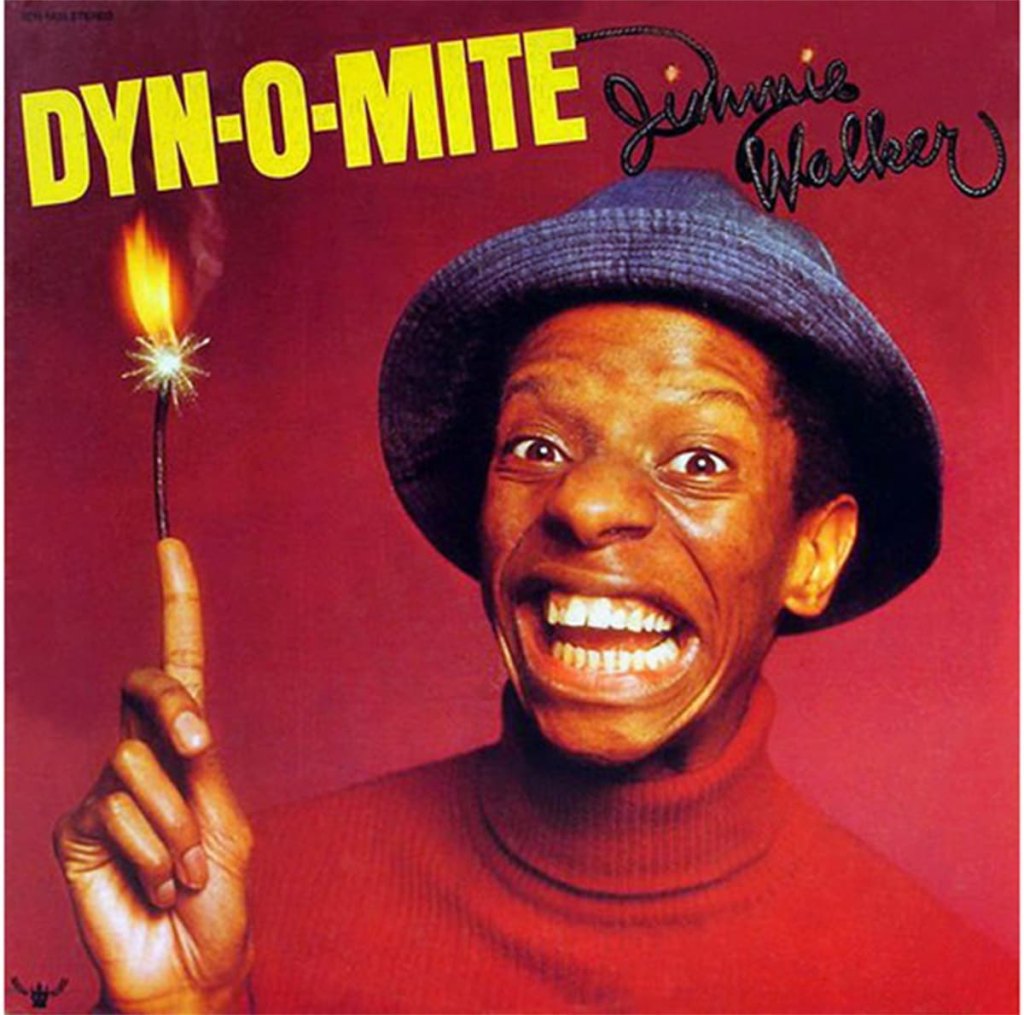
“Dy-no-mite!”

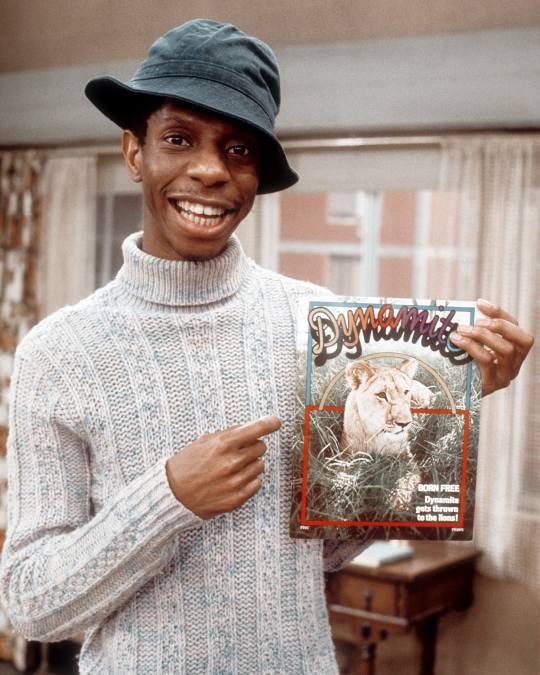
That single word made Jimmy Walker one of the most recognizable faces and voices in American television history. Jimmy Walker, born James Carter Walker Jr. on June 25, 1947, in Brooklyn, New York, rose from humble beginnings to become a pop culture icon through his unforgettable role as J.J. Evans on the groundbreaking sitcom Good Times. His exaggerated energy, comedic timing, and charismatic delivery transformed him into one of the most famous Black comedians of the 1970s.

Walker was raised in the Bronx by a single mother who worked as a housekeeper. Growing up in a working-class environment deeply influenced his comedic style, which often blended humor with observations about urban life, poverty, and social struggle. He attended The Bronx High School of Science and later City College of New York, where he began developing his interest in performance and comedy.

Before television fame, Jimmy Walker built his career through stand-up comedy, performing in small clubs and on college campuses. His big break came when he joined the cast of Rowan & Martin’s Laugh-In as a writer and performer in the late 1960s, one of the most influential comedy shows of the era. This exposure introduced him to national audiences and established him as a rising comedic talent.

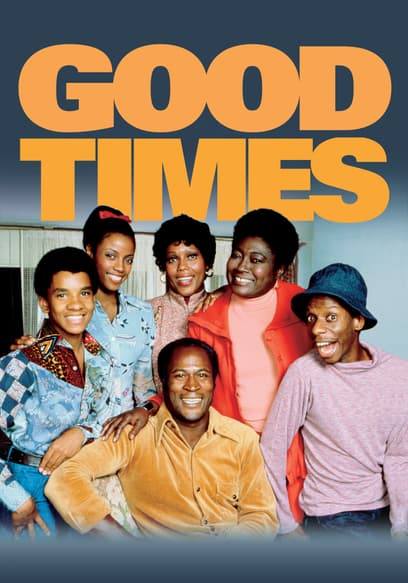
Walker’s defining role came in 1974 when he was cast as James “J.J.” Evans Jr. on Good Times. The show, a spin-off from Maude, followed a Black family living in a Chicago housing project and was one of the first sitcoms to address poverty, racism, unemployment, and systemic inequality from a Black perspective. J.J., the eldest son, was portrayed as a fast-talking, aspiring artist with an infectious personality and a tendency toward exaggerated humor.

This photograph is the property of its respective owner.

Jimmy Walker’s portrayal of J.J. became both legendary and controversial. His character’s over-the-top behavior, wide-eyed expressions, and loud catchphrases made him the breakout star of the show. While audiences loved J.J., some critics and co-stars, including Esther Rolle and John Amos, felt the character drifted into stereotype and comic excess. Walker, however, defended the role, stating that J.J. represented real people he grew up with and that laughter itself was a form of survival in difficult conditions.

“Dy-no-mite!” became one of the most famous catchphrases in television history, rivaling phrases like “Whatchu talkin’ ’bout, Willis?” and “Kiss my grits.” The phrase entered American slang and was used in commercials, cartoons, films, and everyday speech throughout the 1970s and beyond. Walker became a walking brand, instantly recognizable by voice alone.

Despite being the comedic centerpiece, Walker’s role had deeper layers. J.J. was not just a clown; he was a young Black man trying to escape poverty through art, ambition, and creativity. His dreams of becoming a professional artist symbolized the broader struggle of Black youth seeking opportunity within limited social structures.

This photograph is the property of its respective owner.

After Good Times ended in 1979, Jimmy Walker continued acting across television and film. His filmography includes roles in Let’s Do It Again (1975), Airplane! (1980), The Concorde… Airport ’79, Tapeheads (1988), and appearances in cult classics like Repo Man. On television, he appeared in The Love Boat, Fantasy Island, The Tonight Show, Everybody Hates Chris, and Scrubs.

Walker also sustained a long career in stand-up comedy, touring nationally for decades and becoming a staple in comedy clubs, casinos, and Black entertainment circuits. Unlike many sitcom stars, he never abandoned live performance, seeing stand-up as his true artistic foundation.

In terms of personal life, Jimmy Walker has never been married and has no children. He has spoken openly about choosing independence and focusing on his career, lifestyle, and personal freedom. This made him somewhat unique among celebrities of his generation, as he maintained a largely private life outside the spotlight.

Walker’s fame extended beyond television into pop culture symbolism. He appeared in commercials, music videos, cartoons, and even political satire. His persona became shorthand for 1970s Black comedy, referenced in shows like Family Guy, In Living Color, The Simpsons, and Chappelle’s Show.

While Jimmy Walker did not receive major industry awards like Emmys, his cultural achievements are arguably greater. He received the NAACP Image Award recognition, multiple lifetime achievement honors from comedy organizations, and remains consistently listed among the most influential Black TV characters of all time.

Jimmy Walker’s impact lies in his role in expanding Black visibility in mainstream comedy. At a time when few Black actors had leading roles, Walker was one of the most famous faces on American television, crossing racial, class, and generational boundaries through humor.

His career also represents the tension between entertainment and representation. While some critics argue J.J. reinforced stereotypes, others recognize that Walker’s performance reflected authentic urban humor and gave voice to a segment of Black youth rarely seen on television.

This photograph is the property of its respective owner.

Walker himself has stated that his goal was never to be political but to be memorable, relatable, and funny. In that sense, his success is undeniable. He created one of the most iconic characters in TV history and shaped the comedic language of an entire era.

Today, Jimmy Walker is remembered not just for J.J., but for what he represented: the arrival of Black comedy into mainstream pop culture at full volume. His voice, style, and energy helped open doors for future comedians like Eddie Murphy, Chris Rock, Martin Lawrence, and Kevin Hart.

Jimmy Walker’s legacy is the legacy of laughter in the face of adversity. Through J.J. Evans, he turned poverty into punchlines, struggle into performance, and television into a cultural mirror for Black America in the 1970s. Few entertainers can claim to have created a phrase that still echoes across generations—but “Dy-no-mite!” remains eternal.


References

Bogle, D. (2016). Primetime blues: African Americans on network television. Farrar, Straus and Giroux.

Walker, J. J. (2012). Dyn-o-mite!: Good times, bad times, our times—A memoir. Chicago Review Press.

Smith, J. (2003). Black sitcoms and the politics of representation. Journal of African American Studies, 7(2), 33–49.

IMDb. (2024). Jimmy Walker filmography.

Encyclopedia Britannica. (2023). Jimmy Walker biography.

NAACP. (1999). Black television legacy awards.

Gray, H. (2005). Watching race: Television and the struggle for Blackness. University of Minnesota Press.

Beauty Series: When Beauty Becomes a False God.

In contemporary culture, beauty is often elevated to a form of worship. When physical appearance becomes the primary measure of worth, it transforms from an attribute into an idol. Beauty, when prioritized above character, wisdom, and spiritual integrity, can lead individuals to pursue self-glorification rather than meaningful purpose.

The concept of beauty sins arises when aesthetic appeal is used to manipulate, dominate, or deceive. Physical attractiveness becomes a tool for social leverage, economic advantage, or personal validation. Instead of serving as a reflection of God’s creation, beauty is exploited for personal gain.

One manifestation of beauty sins is vanity, where individuals obsess over their appearance to the exclusion of other virtues. Time, resources, and energy are devoted to maintaining an image, often leaving spiritual and emotional development neglected. Scripture warns against such preoccupation, emphasizing that the heart matters more than outward appearance (1 Samuel 16:7, KJV).

Pride is a natural companion to vanity. Those considered beautiful may develop a sense of superiority over others, believing that their worth is inherent and unquestionable. Pride in beauty can alienate friends, distort relationships, and foster isolation. Proverbs 16:18 warns, “Pride goeth before destruction, and a haughty spirit before a fall.”

Idolatry occurs when beauty becomes a false god. Just as the Israelites were admonished to worship God alone, modern idolization of appearance displaces the Creator with the created. Physical attractiveness, in this sense, becomes the ultimate authority, demanding attention, admiration, and devotion.

Beauty sins often involve manipulation. People may use their looks to influence others, secure favors, or gain wealth. Relationships founded on appearance rather than authenticity create dependency, mistrust, and moral compromise. This transactional use of beauty distorts human connection and diminishes both parties.

Narcissism is reinforced by beauty worship. Constant affirmation of appearance can cultivate grandiose self-perception, entitlement, and lack of empathy. Psychological research links excessive focus on looks with narcissistic traits, relational difficulties, and identity fragility.

Plastic surgery and cosmetic enhancement, while sometimes empowering, can become instruments of beauty sins when pursued obsessively or to attain societal approval. Dependence on altering one’s body to secure validation reflects a misplaced sense of worth.

The objectification of self and others is central to beauty sins. Treating the body as a commodity or evaluating individuals primarily on appearance reduces human beings to instruments of visual pleasure or social capital, undermining dignity and moral responsibility.

Social media exacerbates beauty sins. Platforms reward aesthetic performance, encouraging comparison, competition, and self-surveillance. Likes and follower counts become proxies for value, perpetuating insecurity and superficiality even among those deemed conventionally attractive.

Beauty sins often generate envy and resentment. Admiration for physical attractiveness can provoke jealousy, rivalry, and social tension. Cultural emphasis on beauty stratifies communities, creating hierarchies that are arbitrary and destructive.

The spiritual consequences of beauty sins are profound. When individuals place beauty at the center of their identity, they risk spiritual stagnation, misaligned priorities, and moral compromise. True worth becomes dependent on external perception rather than God’s affirmation.

Scripture repeatedly emphasizes the transient nature of beauty. “Favor is deceitful, and beauty is vain” (Proverbs 31:30, KJV). Relying on appearance for validation leads to instability, as youth fades and physical traits inevitably change.

The misuse of beauty also impacts relational dynamics. Romantic, professional, and social interactions can be tainted by superficiality. Those worship for appearance may struggle to form deep, authentic connections, while admirers may be misled into valuing aesthetics over substance.

Overcoming beauty sins requires self-awareness. Recognizing when attraction becomes idolatry allows individuals to realign priorities. Reflection, accountability, and spiritual guidance help maintain beauty in its proper context.

Humility is critical. Understanding that physical appearance is a temporary, God-given trait, rather than an ultimate source of authority or worth, counters pride and vanity. Humble individuals appreciate beauty without making it central to identity.

Discipline complements humility. Limiting obsessive focus on appearance, reducing time on comparison, and prioritizing inner growth redirect attention from external validation to lasting virtues.

Service and empathy provide a counterbalance. By using influence for good rather than self-glorification, individuals shift from self-centered beauty worship to contributing positively to others’ lives. Beauty becomes a tool, not a god.

Faith-based reflection reinforces proper perspective. Prayer, scripture study, and spiritual mentorship help individuals value moral character and divine purpose above temporal aesthetics. True beauty aligns with inner virtue and godly character.

Ultimately, when beauty becomes a false god, it enslaves rather than elevates. Recognition, admiration, and material advantage cannot replace spiritual fulfillment, moral integrity, or authentic human connection. Overcoming beauty sins restores balance and aligns identity with higher principles.

Beauty, when rightly ordered, celebrates creation rather than creating a hierarchy of worth. It can be enjoyed without idolatry, admired without exploitation, and expressed without manipulation. True liberation comes when beauty serves purpose rather than commands devotion.

References

Fredrickson, B. L., & Roberts, T. A. (1997). Objectification theory: Toward understanding women’s lived experiences and mental health risks. Psychology of Women Quarterly, 21(2), 173–206.

Calogero, R. M., Tantleff-Dunn, S., & Thompson, J. K. (2011). Self-objectification in women: Causes, consequences, and counteractions. American Psychological Association.

Twenge, J. M., & Campbell, W. K. (2009). The narcissism epidemic: Living in the age of entitlement. Free Press.

Langlois, J. H., Kalakanis, L., Rubenstein, A. J., Larson, A., Hallam, M., & Smoot, M. (2000). Maxims or myths of beauty? A meta-analytic and theoretical review. Psychological Bulletin, 126(3), 390–423.

Eagly, A. H., Ashmore, R. D., Makhijani, M. G., & Longo, L. C. (1991). What is beautiful is good, but… A meta-analytic review of research on the physical attractiveness stereotype. Psychological Bulletin, 110(1), 109–128.

Hunter, M. (2007). The persistent problem of colorism: Skin tone, status, and inequality. Sociology Compass, 1(1), 237–254.