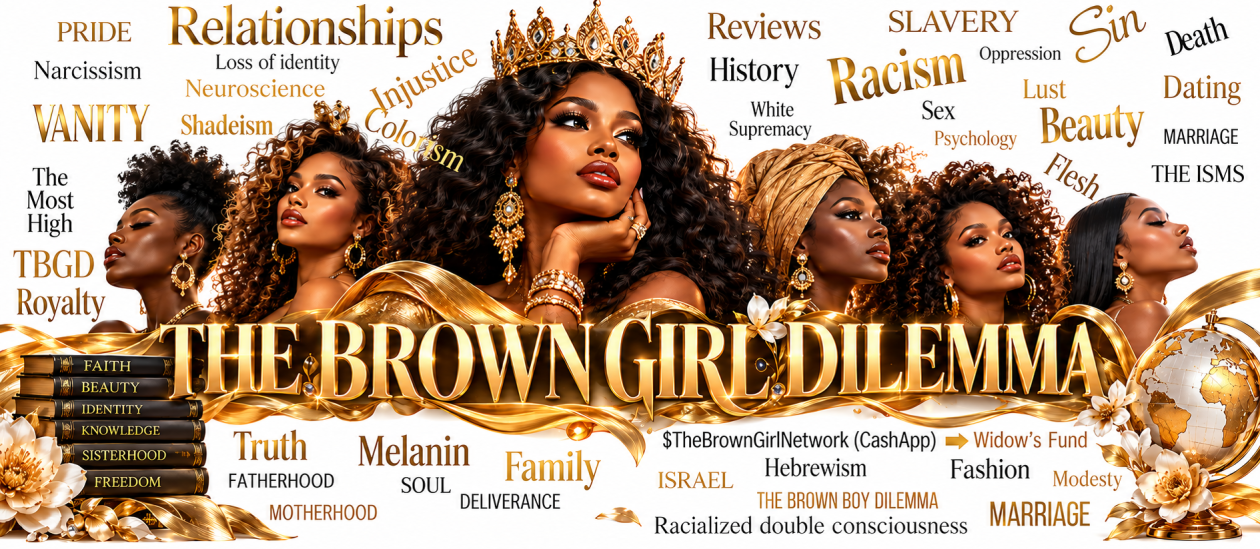
Category Archives: beauty series

Beauty Series: Why Not-so-Attractive Women Are Denied Empathy.

Beauty is often framed as a neutral trait, yet it functions as a powerful social currency, shaping perception, opportunity, and interpersonal treatment. Women who do not conform to dominant beauty standards frequently encounter diminished empathy, harsher judgment, and unequal social and professional outcomes. This phenomenon, sometimes referred to as “lookism” or “aesthetic bias,” underscores the social penalties attached to being perceived as less attractive (Langlois et al., 2000).

Physical attractiveness is culturally mediated, yet across societies, certain features—facial symmetry, clear skin, and proportionality—are privileged. Women who do not meet these ideals are often perceived as less competent, less trustworthy, or less socially desirable, regardless of actual character or ability (Dion, Berscheid, & Walster, 1972).

Empathy is selectively applied. Research shows that observers provide more emotional support, leniency, and positive judgment to individuals deemed attractive. This “beautiful-is-good” stereotype extends beyond admiration, influencing professional evaluations, legal outcomes, and social interactions (Eagly et al., 1991).

The denial of empathy to less attractive women operates both consciously and unconsciously. Social cognition automatically favors aesthetically pleasing individuals, linking beauty to moral and social virtue. This bias reduces the likelihood that less attractive women will receive understanding during conflict, victimization, or stress (Zebrowitz & Montepare, 2008).

Workplace dynamics illustrate the stakes. Attractive women are more likely to be mentored, promoted, and perceived as high-potential. Conversely, less attractive women face undervaluation, fewer leadership opportunities, and harsher critique. Appearance-based bias interacts with gendered expectations, compounding disadvantage (Hosoda, Stone-Romero, & Coats, 2003).

In social relationships, the denial of empathy manifests in interpersonal interactions. Women judged as less attractive may experience dismissiveness, reduced social support, and harsher moral judgments. Even in peer networks, attractiveness biases influence perceived likability and social influence.

Cultural conditioning amplifies these effects. Media, advertising, and celebrity culture continually reinforce narrow beauty ideals, shaping public perception and internalized self-evaluation. Women internalize these standards, often attributing social rejection or neglect to personal failure rather than systemic bias (Wolf, 1991).

Intersectionality further complicates the experience of less attractive women. Race, body size, and age intersect with beauty biases, producing layered disadvantages. For example, women of color may face compounded penalties when mainstream beauty ideals prioritize Eurocentric features (Hunter, 2007).

The psychological consequences are significant. Persistent denial of empathy erodes self-esteem, fosters social anxiety, and can contribute to depression. Women may engage in compensatory behaviors, including overachievement, hyper-grooming, or social withdrawal, to mitigate bias and reclaim agency (Langlois et al., 2000).

Legal and institutional systems are not immune. Studies indicate that appearance-based biases can affect sentencing, juror perception, and professional credibility. Women deemed less attractive are more likely to be judged harshly in legal proceedings, a form of systemic injustice that mirrors broader societal biases (Dion et al., 1972).

Social media magnifies the phenomenon. Platforms that emphasize visual content incentivize beauty performance while marginalizing those who do not conform. Algorithms amplify images aligned with conventional attractiveness, reinforcing visibility, popularity, and empathy inequities (Noble, 2018).

Empathy denial also intersects with gender norms. Society often expects women to embody relational labor and emotional support. Less attractive women, denied visual validation, may paradoxically be punished for failing to meet expectations they are structurally barred from fulfilling (Eagly & Karau, 2002).

The concept of “lookism” situates these experiences within broader social hierarchies. Just as race, class, and gender stratify society, physical appearance operates as a subtle but pervasive axis of advantage and disadvantage (Cash & Pruzinsky, 2004).

Resistance and awareness are possible. Psychological interventions, diversity training, and cultural critique can reduce aesthetic bias. Recognizing that empathy is unevenly distributed according to appearance is a first step toward equitable social interaction.

Media representation matters. Elevating diverse beauty and normalizing variation in appearance challenges stereotypes and reduces the automatic privileging of conventional attractiveness. Representation reshapes social cognition over time, fostering broader empathic engagement (Hunter, 2007).

Community and social support networks buffer the impact of beauty-based bias. Affirming relationships, mentorship, and inclusive spaces provide validation that counters societal penalties, allowing less attractive women to access empathy, opportunity, and psychological well-being.

Education systems must also address bias. Teaching children and adolescents to recognize the arbitrariness of beauty standards and to value competence, character, and relational intelligence can disrupt early socialization patterns that reinforce appearance-based penalties.

The denial of empathy is both a personal and structural problem. Individual prejudice interacts with institutional and cultural reinforcement to create persistent disadvantage. Addressing the issue requires holistic strategies, from personal awareness to systemic reform.

Ultimately, understanding the social penalties attached to non-conformity with beauty ideals highlights the moral and ethical stakes of aesthetic bias. Empathy, fairness, and justice should not be contingent upon appearance, yet research consistently demonstrates that they are, calling for deliberate cultural and institutional change.

References

Cash, T. F., & Pruzinsky, T. (2004). Body image: A handbook of theory, research, and clinical practice. Guilford Press.

Dion, K., Berscheid, E., & Walster, E. (1972). What is beautiful is good. Journal of Personality and Social Psychology, 24(3), 285–290.

Eagly, A. H., Ashmore, R. D., Makhijani, M. G., & Longo, L. C. (1991). What is beautiful is good, but…: A meta-analytic review of research on the physical attractiveness stereotype. Psychological Bulletin, 110(1), 109–128.

Eagly, A. H., & Karau, S. J. (2002). Role congruity theory of prejudice toward female leaders. Psychological Review, 109(3), 573–598.

Hosoda, M., Stone-Romero, E. F., & Coats, G. (2003). The effects of physical attractiveness on job-related outcomes: A meta-analysis of experimental studies. Personnel Psychology, 56(2), 431–462.

Hunter, M. (2007). The persistent problem of colorism: Skin tone, status, and inequality. Sociology Compass, 1(1), 237–254.

Langlois, J. H., Kalakanis, L., Rubenstein, A. J., Larson, A., Hallam, M., & Smoot, M. (2000). Maxims or myths of beauty? A meta-analytic and theoretical review. Psychological Bulletin, 126(3), 390–423.

Noble, S. U. (2018). Algorithms of oppression: How search engines reinforce racism. NYU Press.

Wolf, N. (1991). The beauty myth: How images of beauty are used against women. HarperCollins.

Zebrowitz, L. A., & Montepare, J. M. (2008). Social perception from the face: Mechanisms and meaning. Social and Personality Psychology Compass, 2(3), 1497–1517.

Beauty Series: From Favor to Fetish

Beauty within the Black community carries layers of complexity that intersect with history, culture, and social perception. Favoritism toward lighter skin, often called “colorism,” has roots in colonialism, slavery, and Western beauty standards. Lighter skin is frequently perceived as more attractive or socially advantageous, creating a hierarchy within the Black community itself.

Among Black men, lighter-skinned women are sometimes favored because of internalized colorism, societal pressures, or perceived social mobility. Historical narratives—such as preferential treatment of mixed-race enslaved women by European overseers—have left a lasting impact, shaping perceptions of desirability and social capital. Favor may manifest as attention, romantic pursuit, or elevated status in social circles.

The fetishization of Black women, however, often moves beyond admiration into objectification. Men, regardless of race, sometimes reduce women to physical features, exoticizing skin tone, hair texture, body shape, or facial features. This fetishism can be sexual, cultural, or aesthetic, but it often strips women of agency and humanity, valuing them primarily for appearance.

White men, particularly British men historically, have long expressed fascination with African women, stemming from colonial exploration, imperialist imagination, and exposure to cultural difference. This fascination often focuses on perceived “exotic” traits—skin tone, hair, facial features, or body proportions—rather than individuality or character.

Specific features are fetishized across cultures. For example, hair—especially natural or textured hair—may be fetishized as a symbol of authenticity or novelty. Feet, skin, and body shape can become objects of obsessive admiration, reducing women to parts rather than whole persons. Fetishism often perpetuates stereotypes and reinforces unequal power dynamics.

Black women experience a dual reality: favored within certain communities and fetishized by others. While some attention may feel flattering, it often carries a hidden hierarchy of control or dominance. Favor is relational and nuanced, whereas fetishism is transactional and objectifying, centering desire over respect.

Men of other races also fetishize Black women in ways shaped by historical and social contexts. European, American, and Asian men may exoticize Black women through lenses of colonial imagination, media representation, or cultural stereotypes. Such behavior often ignores the cultural and spiritual significance of Black identity, reducing complex humanity to aesthetic novelty.

British colonial history provides a notable example of this dynamic. African women were often eroticized and idealized within imperialist literature and visual art. Preference for certain features, such as body shape, skin tone, or hair, was reinforced by cultural exposure and romanticized narratives. Fetishization was intertwined with power, conquest, and fantasy.

The fetishization of hair, skin, and body features often intersects with societal assumptions about sexuality, morality, and availability. Black women are simultaneously exoticized and policed, admired yet criticized. This tension can distort self-perception, complicate relationships, and reinforce systemic biases.

Colorism complicates intra-racial dynamics as well. Lighter-skinned women may receive preferential treatment in dating, media, or social status, while darker-skinned women may face marginalization. This internalized bias often mirrors the fetishistic tendencies of outsiders, creating layered pressure and inequity.

Black men sometimes fetishize specific features of Black women, such as lips, curves, or hair texture, often influenced by cultural norms, media representation, or personal preference. While attraction is natural, fetishization occurs when admiration disregards personality, intellect, or autonomy.

White men and men of other races may adopt similar behaviors, often exoticizing the “other” through a lens of desire. Historically, this has roots in colonialism, slavery, and cross-cultural power dynamics. Objectification often follows patterns of dominance and idealization of perceived difference.

Historical media, literature, and art reinforced these tendencies. African women were depicted as exotic, wild, or hypersexualized, shaping perceptions in both colonial and modern contexts. Contemporary media continues to amplify these stereotypes through music videos, films, and advertising.

The line between admiration and fetishization is discernible through intention. True respect acknowledges the entirety of a person—their intellect, spirituality, and agency. Fetishization isolates features or traits, prioritizing physical or racial novelty over human complexity.

Psychologically, fetishization can be damaging. Black women may internalize the gaze, equating attention with worth, or experience objectification, where validation is tied to physical appeal rather than character. This affects self-esteem, mental health, and interpersonal relationships.

Fetishization also intersects with romantic and sexual dynamics. Men may pursue relationships primarily based on physical attraction or stereotype, creating imbalanced power dynamics. Women are pressured to perform according to perceived desire, rather than authentic self-expression.

Recognizing the difference between favor and fetish is essential. Favor may reflect genuine admiration, mutual respect, and spiritual alignment. Fetish is transactional, objectifying, and often linked to power imbalance or exoticism. Awareness allows women to navigate attention wisely and assert boundaries.

Education, historical understanding, and self-awareness provide tools for mitigating the impact of fetishization. By understanding colonial history, colorism, and social dynamics, Black women can contextualize attention, affirm their worth, and demand respect beyond superficial traits.

Ultimately, beauty is a powerful but complex social force. For Black women, navigating favor and fetishization requires discernment, prayer, and alignment with God’s truth. Recognition of objectification, celebration of authentic identity, and adherence to spiritual principles can empower women to claim their value holistically.

Favor and fetish are intertwined yet distinct. Favor acknowledges character and holistic admiration; fetish reduces identity to objectified traits. Understanding this difference equips Black women to engage with the world intentionally, guarding their hearts while embracing their God-given beauty.

References

Hunter, M. (2007). The persistent problem of colorism: Skin tone, status, and inequality. Sociology Compass, 1(1), 237–254.

Eze, E. C. (2013). Fetishization and racialized desire in Western media. Routledge.

Russell, R. (2019). Beauty, colorism, and black femininity: Social dynamics in the diaspora. Palgrave Macmillan.

Twenge, J. M., & Campbell, W. K. (2009). The Narcissism Epidemic: Living in the Age of Entitlement. Free Press.

The Holy Bible, King James Version.

Pilcher, J. (1998). Sexuality, race, and imperialism: A historical perspective. Journal of Social History, 32(2), 235–258.

Beauty Series: When Beauty Becomes a False God.

In contemporary culture, beauty is often elevated to a form of worship. When physical appearance becomes the primary measure of worth, it transforms from an attribute into an idol. Beauty, when prioritized above character, wisdom, and spiritual integrity, can lead individuals to pursue self-glorification rather than meaningful purpose.

The concept of beauty sins arises when aesthetic appeal is used to manipulate, dominate, or deceive. Physical attractiveness becomes a tool for social leverage, economic advantage, or personal validation. Instead of serving as a reflection of God’s creation, beauty is exploited for personal gain.

One manifestation of beauty sins is vanity, where individuals obsess over their appearance to the exclusion of other virtues. Time, resources, and energy are devoted to maintaining an image, often leaving spiritual and emotional development neglected. Scripture warns against such preoccupation, emphasizing that the heart matters more than outward appearance (1 Samuel 16:7, KJV).

Pride is a natural companion to vanity. Those considered beautiful may develop a sense of superiority over others, believing that their worth is inherent and unquestionable. Pride in beauty can alienate friends, distort relationships, and foster isolation. Proverbs 16:18 warns, “Pride goeth before destruction, and a haughty spirit before a fall.”

Idolatry occurs when beauty becomes a false god. Just as the Israelites were admonished to worship God alone, modern idolization of appearance displaces the Creator with the created. Physical attractiveness, in this sense, becomes the ultimate authority, demanding attention, admiration, and devotion.

Beauty sins often involve manipulation. People may use their looks to influence others, secure favors, or gain wealth. Relationships founded on appearance rather than authenticity create dependency, mistrust, and moral compromise. This transactional use of beauty distorts human connection and diminishes both parties.

Narcissism is reinforced by beauty worship. Constant affirmation of appearance can cultivate grandiose self-perception, entitlement, and lack of empathy. Psychological research links excessive focus on looks with narcissistic traits, relational difficulties, and identity fragility.

Plastic surgery and cosmetic enhancement, while sometimes empowering, can become instruments of beauty sins when pursued obsessively or to attain societal approval. Dependence on altering one’s body to secure validation reflects a misplaced sense of worth.

The objectification of self and others is central to beauty sins. Treating the body as a commodity or evaluating individuals primarily on appearance reduces human beings to instruments of visual pleasure or social capital, undermining dignity and moral responsibility.

Social media exacerbates beauty sins. Platforms reward aesthetic performance, encouraging comparison, competition, and self-surveillance. Likes and follower counts become proxies for value, perpetuating insecurity and superficiality even among those deemed conventionally attractive.

Beauty sins often generate envy and resentment. Admiration for physical attractiveness can provoke jealousy, rivalry, and social tension. Cultural emphasis on beauty stratifies communities, creating hierarchies that are arbitrary and destructive.

The spiritual consequences of beauty sins are profound. When individuals place beauty at the center of their identity, they risk spiritual stagnation, misaligned priorities, and moral compromise. True worth becomes dependent on external perception rather than God’s affirmation.

Scripture repeatedly emphasizes the transient nature of beauty. “Favor is deceitful, and beauty is vain” (Proverbs 31:30, KJV). Relying on appearance for validation leads to instability, as youth fades and physical traits inevitably change.

The misuse of beauty also impacts relational dynamics. Romantic, professional, and social interactions can be tainted by superficiality. Those worship for appearance may struggle to form deep, authentic connections, while admirers may be misled into valuing aesthetics over substance.

Overcoming beauty sins requires self-awareness. Recognizing when attraction becomes idolatry allows individuals to realign priorities. Reflection, accountability, and spiritual guidance help maintain beauty in its proper context.

Humility is critical. Understanding that physical appearance is a temporary, God-given trait, rather than an ultimate source of authority or worth, counters pride and vanity. Humble individuals appreciate beauty without making it central to identity.

Discipline complements humility. Limiting obsessive focus on appearance, reducing time on comparison, and prioritizing inner growth redirect attention from external validation to lasting virtues.

Service and empathy provide a counterbalance. By using influence for good rather than self-glorification, individuals shift from self-centered beauty worship to contributing positively to others’ lives. Beauty becomes a tool, not a god.

Faith-based reflection reinforces proper perspective. Prayer, scripture study, and spiritual mentorship help individuals value moral character and divine purpose above temporal aesthetics. True beauty aligns with inner virtue and godly character.

Ultimately, when beauty becomes a false god, it enslaves rather than elevates. Recognition, admiration, and material advantage cannot replace spiritual fulfillment, moral integrity, or authentic human connection. Overcoming beauty sins restores balance and aligns identity with higher principles.

Beauty, when rightly ordered, celebrates creation rather than creating a hierarchy of worth. It can be enjoyed without idolatry, admired without exploitation, and expressed without manipulation. True liberation comes when beauty serves purpose rather than commands devotion.

References

Fredrickson, B. L., & Roberts, T. A. (1997). Objectification theory: Toward understanding women’s lived experiences and mental health risks. Psychology of Women Quarterly, 21(2), 173–206.

Calogero, R. M., Tantleff-Dunn, S., & Thompson, J. K. (2011). Self-objectification in women: Causes, consequences, and counteractions. American Psychological Association.

Twenge, J. M., & Campbell, W. K. (2009). The narcissism epidemic: Living in the age of entitlement. Free Press.

Langlois, J. H., Kalakanis, L., Rubenstein, A. J., Larson, A., Hallam, M., & Smoot, M. (2000). Maxims or myths of beauty? A meta-analytic and theoretical review. Psychological Bulletin, 126(3), 390–423.

Eagly, A. H., Ashmore, R. D., Makhijani, M. G., & Longo, L. C. (1991). What is beautiful is good, but… A meta-analytic review of research on the physical attractiveness stereotype. Psychological Bulletin, 110(1), 109–128.

Hunter, M. (2007). The persistent problem of colorism: Skin tone, status, and inequality. Sociology Compass, 1(1), 237–254.

Beauty Series: The Halo Effect – How Attractiveness Shapes Perception

The concept of the “halo effect” has fascinated psychologists, sociologists, and everyday observers for decades. At its core, the halo effect describes a cognitive bias whereby one prominent positive trait, such as physical attractiveness, influences the perception of other unrelated traits. In other words, when someone appears beautiful, people often assume they are also intelligent, kind, successful, or trustworthy, even without evidence.

The halo effect was first formally studied by psychologist Edward Thorndike in 1920, who observed that commanding officers in the military rated subordinates more positively across unrelated categories if they excelled in one area. While Thorndike’s research did not focus on physical attractiveness, it laid the groundwork for understanding how first impressions can distort judgment across traits.

Later research explicitly explored how beauty generates this cognitive bias. Dion, Berscheid, and Walster (1972) coined the phrase “what is beautiful is good,” showing that physically attractive individuals were perceived as more socially competent, morally upright, and even happier than less attractive peers. Their experiments highlighted the enduring psychological power of appearance.

The halo effect operates unconsciously. People are rarely aware that their assessments are influenced by attractiveness. This automatic bias can affect evaluations in nearly every area of life, from employment decisions and leadership selection to dating preferences and legal judgments.

One of the most striking examples of the halo effect occurs in the workplace. Attractive employees are often assumed to be more competent and capable of leadership, even when performance metrics are identical. Studies show that attractive individuals receive better performance reviews, higher starting salaries, and more promotional opportunities.

In education, teachers may unconsciously give more favorable evaluations to students they perceive as attractive. This subtle form of bias reinforces social inequalities and demonstrates that the halo effect has tangible consequences beyond social perception.

The halo effect is not limited to positive traits. A single negative feature or action can produce a “horn effect,” in which one perceived flaw leads observers to assume other negative qualities. Both effects illustrate the same cognitive shortcut: humans generalize from salient cues to form overall impressions.

Physical attractiveness is closely tied to evolutionary psychology. Humans are wired to perceive health, symmetry, and vitality as indicators of genetic fitness. These evolutionary preferences amplify the halo effect, making beautiful people appear more capable or desirable.

Modern research expands the halo effect to digital spaces. Social media, filters, and photo-editing software amplify attractiveness cues, often creating inflated perceptions of competence, confidence, or social status. Gulati et al. (2024) demonstrate that AI-enhanced beauty can exacerbate the halo effect, influencing online hiring, social influence, and even dating behavior.

Cultural standards of beauty further shape the halo effect. What is considered attractive in one society may differ in another, yet the cognitive bias persists universally. Studies show that while facial symmetry and skin clarity are often valued cross-culturally, attributes such as height, body proportion, and grooming also contribute to halo-based judgments.

Celebrities and public figures benefit disproportionately from the halo effect. Actors, musicians, and politicians who are conventionally attractive often receive amplified media coverage, favorable reviews, and greater public trust, regardless of their actual competence or achievements.

The halo effect also influences judicial outcomes. Research indicates that defendants who are physically attractive receive more lenient sentences and more favorable juror assessments than less attractive defendants. This underscores how subconscious biases can infiltrate systems of justice.

In romantic relationships, attractiveness plays a dual role. Attractive individuals are often assumed to possess positive personality traits, leading to increased attention, dating opportunities, and perceived compatibility. However, these assumptions are not always accurate, and reliance on the halo effect can lead to misjudgment and disappointment.

Educational institutions, workplaces, and legal systems have developed training and awareness programs to mitigate the halo effect. By making evaluators conscious of their biases, organizations aim to reduce the disproportionate influence of attractiveness on decisions that should rely on objective criteria.

Despite its negative consequences, the halo effect can also have positive social functions. It can facilitate smoother social interactions, foster trust, and encourage prosocial behavior when applied unconsciously in small, everyday encounters. The challenge lies in balancing instinctual perceptions with critical assessment.

Media representation further entrenches halo-driven biases. Television, advertising, and film often equate beauty with moral virtue, intelligence, and social desirability, reinforcing societal beliefs about the link between appearance and character. These portrayals perpetuate stereotypes that extend the halo effect beyond personal observation.

The halo effect intersects with gender and race. Studies reveal that attractive women often experience both advantage and heightened scrutiny, while attractive men are perceived as more competent and dominant. Cultural biases also affect how attractiveness is perceived across different racial groups, revealing the interplay between beauty standards and systemic inequality.

Beauty standards evolve over time, yet the halo effect remains consistent. From Renaissance portraits to modern Instagram filters, humans are inclined to generalize from visible cues of beauty to judgments about competence, character, and social value.

Awareness of the halo effect empowers individuals to question first impressions. By actively seeking objective evidence and critically evaluating assumptions, people can reduce the unconscious influence of attractiveness on decisions, creating fairer evaluations in education, employment, and social judgment.

Ultimately, the halo effect demonstrates the profound power of perception in shaping human interactions. Beauty influences how people are treated, what opportunities they receive, and how society interprets their value. Recognizing this bias is a first step toward creating equitable systems that honor true merit over appearance.


References

Dion, K., Berscheid, E., & Walster, E. (1972). What is beautiful is good. Journal of Personality and Social Psychology, 24(3), 285–290.

Thorndike, E. L. (1920). A constant error in psychological ratings. Journal of Applied Psychology, 4(1), 25–29.

Talamas, S. N., Mavor, K. I., & Perrett, D. I. (2016). Blinded by beauty: Attractiveness bias and accurate perceptions of academic performance. PLoS ONE, 11(2), e0148284.

Gulati, A., Martínez-Garcia, M., Fernández, D., Lozano, M. A., Lepri, B., & Oliver, N. (2024). What is beautiful is still good: The attractiveness halo effect in the era of beauty filters. Computers in Human Behavior, 152, 107034.

Fiske, S. T., & Taylor, S. E. (2013). Social cognition: From brains to culture (2nd ed.). Sage Publications.

Nisbett, R. E., & Wilson, T. D. (1977). The halo effect: Evidence for unconscious alteration of judgments. Journal of Personality and Social Psychology, 35(4), 250–256.

Rosen, S., & Grossman, J. (2020). Attractiveness bias: Implications for education, employment, and justice. Social Science Review, 42(3), 112–128.

Beauty Series: Pretty Privilege

Pretty privilege refers to the unearned social advantages granted to individuals who are perceived as physically attractive. These advantages operate subtly yet powerfully, shaping how people are treated in workplaces, relationships, legal systems, and everyday interactions. Beauty, though often framed as subjective, functions as a social currency with measurable outcomes.

From early childhood, attractive individuals are often assumed to possess positive traits such as intelligence, kindness, and competence. Psychologists refer to this as the “halo effect,” where one favorable characteristic influences the perception of unrelated qualities. As a result, beauty becomes conflated with worth.

Pretty privilege affects economic outcomes in profound ways. Studies consistently show that attractive people earn higher wages, receive more promotions, and are evaluated more favorably in hiring processes. This advantage persists even when qualifications are equal, revealing beauty as a silent determinant of success.

In contrast, those deemed unattractive often face bias that mirrors other forms of discrimination. “Ugly” women, in particular, are more harshly judged, penalized for aging, weight, facial features, or nonconformity to beauty standards. Their competence is questioned, their femininity policed, and their presence minimized.

For women, beauty functions as both a blessing and a burden. Attractive women may receive preferential treatment, yet they are also sexualized, objectified, and dismissed as intellectually inferior. Their achievements are often attributed to appearance rather than effort or skill, creating a double bind.

Men experience pretty privilege differently. Attractive men are often perceived as leaders, trustworthy, and confident, while unattractive men are stereotyped as incompetent, socially awkward, or threatening. Masculinity is closely tied to appearance, height, and facial structure, influencing dating and professional opportunities.

Romantic relationships magnify the effects of pretty privilege. Attractive individuals have larger dating pools, more options, and greater forgiveness for negative behavior. Meanwhile, unattractive individuals are often expected to compensate through humor, resources, or emotional labor to be considered worthy of partnership.

Media plays a central role in reinforcing beauty hierarchies. Films, television, and advertising overwhelmingly center attractive bodies as protagonists while assigning unattractive characters to comic relief, villains, or moral lessons. These portrayals teach society who deserves love, power, and happiness.

Beauty standards are not neutral; they are racialized, gendered, and class-based. Eurocentric features, youth, thinness, and able-bodiedness dominate ideals of attractiveness, disproportionately disadvantaging Black women, dark-skinned individuals, disabled people, and those who do not conform to narrow norms.

Colorism intersects with pretty privilege in devastating ways. Lighter skin, looser hair textures, and finer features are often rewarded within and outside Black communities, creating internal hierarchies that replicate white supremacist beauty ideals. This compounds harm for darker-skinned women labeled as “less feminine” or “unattractive.”

The psychological toll of beauty bias is significant. Those consistently marginalized for their appearance experience lower self-esteem, depression, anxiety, and social withdrawal. Chronic rejection teaches people to internalize societal judgments, mistaking bias for personal failure.

Ugly women are often denied empathy. Their pain is minimized, their loneliness mocked, and their standards questioned. Society treats its desire for love as an entitlement while framing attractive people’s desires as natural and justified.

Men who lack conventional attractiveness may also suffer in silence. Cultural expectations discourage emotional expression, leaving them isolated when facing romantic rejection or social exclusion. Their struggles are often dismissed as personal inadequacy rather than structural bias.

Pretty privilege also distorts morality. Attractive individuals are more likely to receive lighter prison sentences, more lenient discipline in schools, and greater benefit of the doubt in conflicts. Beauty becomes confused with goodness, while unattractiveness is associated with guilt or deviance.

In religious and ethical frameworks, this bias reveals a deeper moral failure. Scripture repeatedly warns against judging by outward appearance, emphasizing that true worth lies in character and righteousness rather than form. Yet modern society continues to elevate the external over the internal.

Social media has intensified beauty-based stratification. Algorithms reward conventionally attractive faces with visibility and validation, while others remain unseen. Filters and cosmetic procedures further normalize artificial perfection, raising the cost of being considered acceptable.

Pretty privilege creates resentment and division, not because beauty exists, but because fairness does not. When society refuses to acknowledge this bias, those harmed are gaslit into silence while beneficiaries are told their success is purely merit-based.

Challenging pretty privilege requires cultural honesty. It demands recognizing beauty bias as real, measurable, and unjust. It also requires expanding representations of worth, desire, and competence beyond narrow aesthetic ideals.

Education, media reform, and ethical leadership can help disrupt these patterns. When children see diverse faces valued equally, when workplaces audit appearance bias, and when communities affirm dignity over desirability, healing begins.

Ultimately, beauty is not sinful, but the worship of it is. When appearance determines access to humanity, love, and opportunity, society commits a quiet injustice. True equity begins when people are valued not for how they look, but for who they are.


References

Dion, K., Berscheid, E., & Walster, E. (1972). What is beautiful is good. Journal of Personality and Social Psychology, 24(3), 285–290.

Eagly, A. H., Ashmore, R. D., Makhijani, M. G., & Longo, L. C. (1991). What is beautiful is good, but… Psychological Bulletin, 110(1), 109–128.

Hamermesh, D. S. (2011). Beauty pays: Why attractive people are more successful. Princeton University Press.

Hunter, M. (2007). The persistent problem of colorism. Sociology Compass, 1(1), 237–254.

Langlois, J. H., et al. (2000). Maxims or myths of beauty? Psychological Bulletin, 126(3), 390–423.

Rhode, D. L. (2010). The beauty bias: The injustice of appearance in life and law. Oxford University Press.

The Holy Bible, King James Version. (1611/1987). Cambridge University Press. (1 Samuel 16:7)

Tiggemann, M. (2011). Sociocultural perspectives on body image. Journal of Social Issues, 67(4), 601–616.