Tag Archives: the brown girl dilemma

The Most Hated People: Black People

Photo by nappy on Pexels.com

Throughout history, Black people have endured hatred, oppression, and marginalization on a global scale. This phenomenon is not merely social or political; it has deep spiritual and psychological roots. The Bible, particularly the King James Version, offers insight into why Black people have been hated, how God allows this suffering, and how the forces of darkness exploit it. Understanding these dynamics is essential for empowerment, resilience, and spiritual victory.


Biblical Foundations: Why Black People Are Hated

The hatred toward Black people is hinted at in Scripture as a form of prophetic suffering. Deuteronomy 28:37 states, “And thou shalt become an astonishment, a proverb, and a byword among all nations whither the LORD shall lead thee” (KJV). The Israelites, often linked biblically to Black Africans through E1b1a haplogroups and historical migrations, were marked for suffering as a consequence of God’s covenant and the lessons of obedience. This hatred, though painful, serves as a tool in God’s providential plan to teach, refine, and ultimately elevate His people spiritually.

Scripture also warns of the spiritual adversary behind oppression: “Be sober, be vigilant; because your adversary the devil, as a roaring lion, walketh about, seeking whom he may devour” (1 Peter 5:8, KJV). The devil manipulates human sin and societal prejudice to sow division, hatred, and despair, targeting Black people as part of a larger plan to weaken God’s chosen people.


Psychological Dimensions of Hatred

From a psychological perspective, the hatred of Black people is rooted in fear, envy, and the need for domination. Social psychology explains this as in-group/out-group bias, scapegoating, and internalized superiority complexes. Historical trauma, such as slavery and colonization, reinforced narratives that dehumanized Black people, creating generational cycles of oppression. Modern psychology identifies implicit bias, colorism, and structural racism as extensions of these long-standing prejudices, perpetuated unconsciously in societies worldwide.

The psychological impact of being hated manifests as internalized oppression, lowered self-esteem, and hyper-vigilance. Yet the Bible offers resilience strategies: “Fear thou not; for I am with thee: be not dismayed; for I am thy God” (Isaiah 41:10, KJV). Faith, identity in God, and historical consciousness serve as buffers against the toxic effects of hatred.


The Role of the Devil

Satan’s involvement in the hatred of Black people cannot be understated. He works to divide, oppress, and distort identity. As John 10:10 warns, “The thief cometh not, but for to steal, and to kill, and to destroy” (KJV). By promoting false narratives, enslavement, and systemic oppression, the devil aims to suppress Black excellence, spiritual awareness, and societal influence. Recognizing this spiritual warfare is critical to understanding that hatred is not merely human sin but also a tool of darkness.


The Meaning of Blackness

Blackness is more than skin color; it represents resilience, divine heritage, and a reflection of God’s creative diversity. Psalm 139:14 states, “I will praise thee; for I am fearfully and wonderfully made” (KJV). Black identity, therefore, is sacred and intentional. Historically, Black people have been leaders, prophets, and nation-builders, and their cultural and spiritual contributions reflect God’s favor and purpose, even when society hates them.


How to Overcome Hatred

Overcoming hatred requires a combination of spiritual, psychological, and practical strategies:

  1. Faith in God’s Sovereignty: Trusting that God can turn suffering into blessing (Genesis 50:20).
  2. Community and Mentorship: Strengthening ties within Black communities to resist isolation and despair.
  3. Education and Awareness: Learning history, understanding systemic oppression, and reclaiming identity.
  4. Spiritual Warfare: Prayer, fasting, and studying Scripture to resist the devil’s schemes (Ephesians 6:11-12).

How Black People Can Deal with Hatred

Dealing with hatred requires resilience, wisdom, and spiritual discernment:

  • Identity Affirmation: Embrace biblical and historical truths about heritage.
  • Psychological Healing: Engage in therapy, counseling, or group support to process generational trauma.
  • Advocacy and Leadership: Transform experiences of hatred into activism, mentorship, and leadership.
  • Forgiveness and Wisdom: Maintain a biblical posture of righteousness without compromising self-respect (Romans 12:17-21).

Conclusion

The hatred of Black people is both a historical and spiritual reality, sanctioned at times in Scripture for refinement, exploited by human sin, and magnified by Satan’s schemes. Yet Blackness carries divine meaning, and God equips His people to overcome hatred through faith, resilience, and wisdom. Understanding the interplay of biblical principles, psychological realities, and spiritual warfare empowers Black individuals and communities to thrive despite oppression. The journey from suffering to victory is both personal and communal, guided by Scripture, history, and divine purpose.


References

Biblical References (KJV)

  • Deuteronomy 28:37
  • 1 Peter 5:8
  • Isaiah 41:10
  • John 10:10
  • Psalm 139:14
  • Genesis 50:20
  • Ephesians 6:11-12
  • Romans 12:17-21

Secondary Sources
Fanon, F. (1967). Black Skin, White Masks. Grove Press.

Grier, W. H., & Cobbs, P. M. (1968). Black Rage. Basic Books.

Harris, S. (2015). The Psychological Effects of Racism on African Americans. American Psychological Association.

West, C. (1993). Race Matters. Beacon Press.
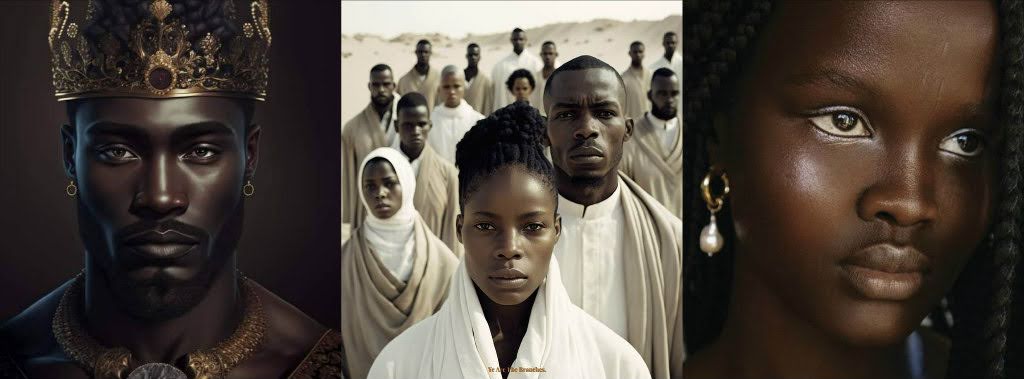
The Bible’s Secrets About Black People That Were Hidden.

These photographs are the property of their respective owners. No copyright infringement intended.

For centuries, the presence of Black people in the Bible has been minimized or obscured through Eurocentric interpretations of Scripture. Yet, the King James Version (KJV) and the Apocrypha contain numerous references to African nations, dark-skinned peoples, and the true identity of the children of Israel. These connections reveal that Black people were not only present but central to the biblical narrative.


Cush, Ham, and the African Lineage

The Bible traces much of the African world back to Ham, the son of Noah. Genesis 10 (the Table of Nations) records: “And the sons of Ham; Cush, and Mizraim, and Phut, and Canaan” (Genesis 10:6, KJV).

  • Cush refers to Ethiopia (modern Sudan/Ethiopia).
  • Mizraim refers to Egypt (Kemet).
  • Phut refers to Libya/North Africa.
  • Canaan refers to the land that Israel later inhabited.

This genealogy directly places Africans at the root of early civilization, showing that people of dark skin were present in the earliest biblical times.


The Israelites and Their Appearance

Many hidden scriptures reveal the physical appearance of Israel. Contrary to the Eurocentric depictions, the Bible describes Israel as a people of dark skin.

  • Jeremiah 8:21 (KJV): “For the hurt of the daughter of my people am I hurt; I am black; astonishment hath taken hold on me.”
  • Lamentations 5:10 (KJV): “Our skin was black like an oven because of the terrible famine.”
  • Song of Solomon 1:5-6 (KJV): “I am black, but comely, O ye daughters of Jerusalem, as the tents of Kedar, as the curtains of Solomon. Look not upon me, because I am black…”

These passages show that Israelite figures, including prophets and kings, were described with dark skin, connecting them to African and Afro-Asiatic peoples.


Egypt, Ethiopia, and Black Royalty

The Bible honors Ethiopia and Egypt as powerful nations:

  • Amos 9:7 (KJV): “Are ye not as children of the Ethiopians unto me, O children of Israel?” – God directly compares Israel to Ethiopians, emphasizing their shared heritage.
  • Jeremiah 13:23 (KJV): “Can the Ethiopian change his skin, or the leopard his spots?” – highlighting the natural dark complexion of Africans.
  • Acts 8:27 (KJV): The Ethiopian eunuch, a royal servant of Candace, queen of Ethiopia, was one of the first Gentiles baptized, showing Africa’s early role in the spread of the Gospel.

The Apocrypha and Hidden Identity

The Apocrypha, often removed from modern Bibles, holds more insight into the suffering and scattering of Israel.

  • 2 Esdras 6:54-56 (Apocrypha): Describes Israel as God’s chosen people above all nations, though later scattered.
  • 2 Esdras 13:40-45 (Apocrypha): Describes the migration of the ten tribes of Israel into distant lands—interpreted by many as part of the scattering into Africa and eventually the Americas during slavery.
  • Baruch 2:29-30 (Apocrypha): “If ye will not hear my voice, surely this very great multitude shall be turned into a small number among the nations, where I will scatter them.”

This aligns with Deuteronomy 28, where curses were placed upon Israel for disobedience, including being taken on ships into slavery:

  • “And the LORD shall bring thee into Egypt again with ships… and there ye shall be sold unto your enemies for bondmen and bondwomen, and no man shall buy you” (Deuteronomy 28:68, KJV).

This prophecy eerily parallels the Transatlantic Slave Trade, where millions of Africans—descendants of Israel—were sold into bondage.


The Revelation of Christ’s Image

One of the most concealed truths involves the description of Christ Himself:

  • Revelation 1:14-15 (KJV):“His head and his hairs were white like wool, as white as snow; and his eyes were as a flame of fire; and his feet like unto fine brass, as if they burned in a furnace.”
    • Hair like wool = texture associated with Black people.
    • Feet like burned brass = a dark, brown/black complexion.

This description directly challenges Eurocentric images of a pale-skinned Christ.


Conclusion

The Bible contains profound truths about Black people that were long hidden through translation bias, colonialism, and Eurocentric theology. From the line of Ham and Cush to the descriptions of Israel’s skin color, from the curses of Deuteronomy 28 to the Apocryphal accounts of scattering, the evidence shows that Black people are deeply woven into the story of Scripture. The hidden truth is that the people of the Bible were not European, but Afro-Asiatic—people of color, many of whom would be recognized today as Black.


References

  • Holy Bible, King James Version.
  • The Apocrypha (2 Esdras, Baruch, Ecclesiasticus).
  • Ben-Jochannan, Y. (1993). African Origins of the Major Western Religions. Baltimore: Black Classic Press.
  • Windsor, R. (1969). From Babylon to Timbuktu: A History of Ancient Black Races Including the Black Hebrews. Atlanta: Windsor’s Golden Series.

Things You Never Do for a Narcissist

Photo by thorl5 on Pexels.com

Narcissism is one of the most damaging personality traits a person can encounter, both in personal relationships and in spiritual life. Psychology defines narcissism as an inflated sense of self-importance and a deep need for admiration, often accompanied by a lack of empathy (APA, 2013). The Bible, however, warns of the same spirit long before psychology named it: “For men shall be lovers of their own selves, covetous, boasters, proud…” (2 Timothy 3:2, KJV). This essay will explore what narcissism is, the types identified by psychology, biblical parallels, and why boundaries are essential when dealing with narcissistic individuals.


What is Narcissism?

Narcissism originates from the Greek myth of Narcissus, who became so obsessed with his reflection that he wasted away by the water’s edge. Psychologically, this reflects an excessive preoccupation with the self. Spiritually, it represents pride, vanity, and rebellion against humility. The Bible speaks clearly: “God resisteth the proud, but giveth grace unto the humble” (James 4:6, KJV).

Modern psychology considers narcissism to exist on a spectrum, from healthy self-esteem to pathological narcissism. While a measure of self-confidence is necessary for functioning, narcissistic personality disorder (NPD) is destructive, leaving behind broken relationships, emotional abuse, and cycles of manipulation (Campbell & Miller, 2011).


Types of Narcissism

  1. Grandiose (Overt) Narcissism
    • Traits: arrogance, entitlement, exploitation of others, constant demand for admiration.
    • Biblical example: King Nebuchadnezzar, who exalted himself until God humbled him (Daniel 4:30-33).
    • Scripture: “Pride goeth before destruction, and an haughty spirit before a fall” (Proverbs 16:18, KJV).
  2. Vulnerable (Covert) Narcissism
    • Traits: insecurity, hypersensitivity, passive-aggression, resentment when unrecognized.
    • Biblical example: King Saul, whose insecurity about David’s success drove him to jealousy and rage (1 Samuel 18:8-9).
    • Scripture: “Wrath is cruel, and anger is outrageous; but who is able to stand before envy?” (Proverbs 27:4, KJV).
  3. Malignant Narcissism
    • Traits: a combination of narcissism, antisocial behavior, aggression, and paranoia; often destructive without remorse.
    • Biblical example: Herod the Great, who killed even his own family to maintain power (Matthew 2:16).
    • Scripture: “The heart is deceitful above all things, and desperately wicked: who can know it?” (Jeremiah 17:9, KJV).
  4. Communal Narcissism
    • Traits: portraying oneself as moral, spiritual, or selfless for admiration, while lacking genuine humility.
    • Biblical example: The Pharisees, who performed good deeds publicly to be praised rather than to serve God (Matthew 23:5).
    • Scripture: “Woe unto you… for ye are like unto whited sepulchres, which indeed appear beautiful outward, but are within full of dead men’s bones” (Matthew 23:27, KJV).

Things You Never Do for a Narcissist

Dealing with narcissists requires wisdom, boundaries, and discernment. Both psychology and scripture caution against enabling their behavior.

  • Never sacrifice your identity for their approval.
    • Narcissists often erode self-worth. Yet the Bible reminds us: “I will praise thee; for I am fearfully and wonderfully made” (Psalm 139:14, KJV).
  • Never excuse or enable their sin.
    • Justifying manipulation keeps the cycle alive. Proverbs 17:15 says: “He that justifieth the wicked, and he that condemneth the just, even they both are abomination to the Lord.”
  • Never place them above God.
    • Idolatry of people is dangerous, especially when they demand devotion. Exodus 20:3 declares: “Thou shalt have no other gods before me.”
  • Never expect reciprocity.
    • Narcissists give conditionally, always expecting return. Jesus, however, taught sacrificial love: “It is more blessed to give than to receive” (Acts 20:35, KJV).
  • Never remain in bondage to their control.
    • Psychology calls this “narcissistic abuse syndrome,” where victims internalize blame and fear. The Bible affirms liberty: “Stand fast therefore in the liberty wherewith Christ hath made us free” (Galatians 5:1, KJV).

Psychology and Scripture in Agreement

While psychology explains narcissism as a personality disorder rooted in insecurity and developmental wounds, the Bible diagnoses it as pride and rebellion against God. Both perspectives converge on the same truth: unchecked narcissism destroys relationships, exploits the vulnerable, and leads to personal downfall.


Top 10 Things You Never Do for a Narcissist

1. Never Sacrifice Your Identity to Please Them

  • Narcissists will try to reshape you into what benefits them.
  • Scripture: “Be not conformed to this world: but be ye transformed by the renewing of your mind” (Romans 12:2, KJV).
  • Psychology Insight: Maintaining your authentic self is key to resisting narcissistic control.

2. Never Excuse or Justify Their Sinful Behavior

  • They will rationalize manipulation, lying, or arrogance. Don’t become their enabler.
  • Scripture: “He that justifieth the wicked… even they both are abomination to the Lord” (Proverbs 17:15, KJV).
  • Psychology Insight: Excusing abuse creates a cycle of reinforcement and deepens narcissistic traits.

3. Never Expect Empathy or Reciprocity

  • Narcissists struggle to give genuine compassion.
  • Scripture: “The merciful man doeth good to his own soul: but he that is cruel troubleth his own flesh” (Proverbs 11:17, KJV).
  • Psychology Insight: Expecting reciprocity sets you up for disappointment and further emotional harm.

4. Never Place Them Above God

  • Their need for worship can turn into idolatry.
  • Scripture: “Thou shalt have no other gods before me” (Exodus 20:3, KJV).
  • Psychology Insight: Elevating someone unhealthy above your faith and values creates spiritual and emotional bondage.

5. Never Believe Their False Narratives About You

  • Narcissists project their flaws onto others through gaslighting.
  • Scripture: “Ye shall know the truth, and the truth shall make you free” (John 8:32, KJV).
  • Psychology Insight: Recognize projection for what it is—self-defense mechanisms, not truth.

6. Never Stay Silent About Abuse

  • Silence only empowers control.
  • Scripture: “Open thy mouth for the dumb in the cause of all such as are appointed to destruction” (Proverbs 31:8, KJV).
  • Psychology Insight: Speaking up and seeking support are vital steps in breaking free from narcissistic abuse.

7. Never Rely on Them for Validation

  • They withhold affirmation to control your self-worth.
  • Scripture: “I will praise thee; for I am fearfully and wonderfully made” (Psalm 139:14, KJV).
  • Psychology Insight: Build self-esteem through healthy relationships and inner healing, not their approval.

8. Never Think You Can Change Them

  • Many hope love or patience will transform a narcissist.
  • Scripture: “Can the Ethiopian change his skin, or the leopard his spots? then may ye also do good, that are accustomed to do evil” (Jeremiah 13:23, KJV).
  • Psychology Insight: True change requires deep self-awareness and therapy—something narcissists rarely pursue.

9. Never Stay in Constant Conflict

  • Narcissists thrive on drama and control through chaos.
  • Scripture: “It is an honour for a man to cease from strife: but every fool will be meddling” (Proverbs 20:3, KJV).
  • Psychology Insight: Refusing to engage in endless arguments protects your peace and mental health.

10. Never Forget to Guard Your Soul and Boundaries

  • Boundaries are not selfish; they are protective.
  • Scripture: “Keep thy heart with all diligence; for out of it are the issues of life” (Proverbs 4:23, KJV).
  • Psychology Insight: Boundaries prevent exploitation and create space for healing and freedom.

Summary: Both psychology and the Bible agree—narcissists thrive on control, manipulation, and pride. Your job is to safeguard your identity, maintain boundaries, and place God above all human relationships.

Conclusion

To deal with narcissists wisely, one must neither enable nor idolize them. Instead, the believer is called to humility, discernment, and boundary-setting. Psychology provides strategies for self-protection, while the Bible provides the spiritual foundation to resist manipulation. Ultimately, healing comes through recognizing one’s identity in Christ and refusing to be enslaved by the destructive patterns of narcissistic people.


References

  • American Psychiatric Association. (2013). Diagnostic and statistical manual of mental disorders (5th ed.). Washington, DC: Author.
  • Campbell, W. K., & Miller, J. D. (2011). The handbook of narcissism and narcissistic personality disorder: Theoretical approaches, empirical findings, and treatments. Hoboken, NJ: Wiley.
  • Holy Bible, King James Version.

The Strategic Plots Against Black Women

Biblical Warnings and Psychological Realities

Photo by TRIPLE LENS PHOTOGRAPHY on Pexels.com

Throughout history, Black women have faced systemic plots designed to diminish their worth, distort their identity, and weaken their families. These strategies are not new; they echo the biblical pattern of oppression against God’s chosen people. Psalm 83:3 (KJV) declares, “They have taken crafty counsel against thy people, and consulted against thy hidden ones.” Black women, as the backbone of their families and communities, have often been targeted in these “crafty counsels” through slavery, media portrayals, institutional racism, and cultural stereotypes. Psychology reveals that such constant attacks on identity create long-term generational trauma, eroding self-worth while forcing resilience.

One of the most persistent plots against Black women is the distortion of beauty and femininity. Western society has historically elevated Eurocentric beauty standards, pressuring Black women to alter their natural hair, skin, or bodies to fit into systems of acceptance. 1 Peter 3:3–4 (KJV) reminds women that true beauty is “not that outward adorning…but the hidden man of the heart.” Yet psychologically, being excluded from dominant standards of beauty leads to internalized racism, body dysmorphia, and feelings of inferiority. By undervaluing natural Black beauty, society strategically undermines confidence and creates divisions within the community.

Another plot is the economic and familial destabilization of Black women. During slavery and Jim Crow, systemic efforts separated families and denied Black men the ability to provide, leaving women overburdened. Today, mass incarceration and discriminatory job markets continue this cycle. Scripture acknowledges the weight placed on women, noting in Lamentations 5:3 (KJV), “We are orphans and fatherless, our mothers are as widows.” Psychologically, this creates stress disorders, burnout, and the “strong Black woman” stereotype, where Black women are expected to endure excessive hardship without support. While resilience is admirable, the expectation of endless sacrifice without healing is itself a form of oppression.

Media representation forms another powerful plot, shaping how the world perceives Black women. The Jezebel stereotype hypersexualizes them, the Sapphire caricature portrays them as angry, and the Mammy image reduces them to servitude. These portrayals, rooted in slavery, persist in modern entertainment and social media. Proverbs 11:22 (KJV) warns, “As a jewel of gold in a swine’s snout, so is a fair woman which is without discretion.” These stereotypes strip away the dignity of Black women, making them objects of ridicule or desire rather than full human beings. Psychologically, constant negative imagery fosters stereotype threat, where Black women feel pressured to disprove false narratives at the expense of authenticity and peace.

Furthermore, the educational and health care systems reveal systemic neglect. Black women experience higher maternal mortality rates, are often dismissed in medical settings, and face biased disciplinary practices in schools. Hosea 4:6 (KJV) laments, “My people are destroyed for lack of knowledge.” Denial of proper care and knowledge is a modern-day plot that not only harms Black women physically but also perpetuates mistrust in institutions. From a psychological lens, such neglect leads to chronic stress, mistrust of authority, and intergenerational health disparities.

Quick Guide: 10 Strategic Plots Against Black Women

Biblical Truths and Psychological Insights

  1. Distortion of Beauty Standards
  • 1 Peter 3:3–4 (KJV) – True beauty is inward, not outward.
  • Eurocentric ideals pressure Black women to alter hair, skin, and body, leading to internalized racism and body-image struggles.
  1. Hypersexualization (Jezebel Stereotype)
  • Proverbs 11:22 (KJV) – Beauty without discretion is devalued.
  • Media reduces Black women to sexual objects, fostering harmful stereotypes and damaging self-worth.
  1. Angry Black Woman (Sapphire Stereotype)
  • James 1:19 (KJV) – Be “slow to wrath.”
  • Stereotyping Black women as hostile discourages authentic emotional expression and silences their voices.
  1. The Mammy Narrative
  • Ecclesiastes 3:7 (KJV) – There is a time to serve, and a time to keep silence.
  • Black women are reduced to caretakers for others, neglecting their own well-being.
  1. Economic Oppression
  • Lamentations 5:3 (KJV) – Families broken, mothers burdened.
  • Wage gaps, job discrimination, and economic instability place undue weight on Black women.
  1. Family Destabilization
  • Malachi 4:6 (KJV) – Turning hearts of fathers to children is key.
  • Mass incarceration and systemic barriers remove fathers, forcing women into overextended roles.
  1. Medical Neglect
  • Hosea 4:6 (KJV) – Lack of knowledge destroys.
  • Black women face high maternal mortality and medical dismissal, creating mistrust in healthcare systems.
  1. Educational Bias
  • Proverbs 4:7 (KJV) – Wisdom is the principal thing.
  • Black girls are disproportionately disciplined, stunting academic confidence and opportunity.
  1. Psychological Burden of “Strong Black Woman” Myth
  • Matthew 11:28 (KJV) – “Come unto me… and I will give you rest.”
  • Society expects Black women to endure without rest, leading to burnout, stress, and mental health struggles.
  1. Erasure of Spiritual and Cultural Identity
  • Psalm 83:3 (KJV) – Enemies take “crafty counsel against thy hidden ones.”
  • Black women’s Hebraic, African, and cultural roots are suppressed, disconnecting them from identity and heritage.

In conclusion, the strategic plots against Black women are both historical and ongoing, rooted in systemic oppression, distorted imagery, and institutional neglect. Yet, the Bible affirms their worth, resilience, and divine role in God’s plan. Proverbs 31:25 (KJV) declares, “Strength and honour are her clothing; and she shall rejoice in time to come.” Psychology confirms that reclaiming identity, healing trauma, and nurturing self-worth are essential strategies of resistance. Recognizing these plots equips Black women and their communities to resist deception, reclaim beauty, and walk in the power and dignity given by God.


📚 References

  • The Holy Bible, King James Version.
  • Collins, P. H. (2000). Black feminist thought: Knowledge, consciousness, and the politics of empowerment. Routledge.
  • hooks, b. (1992). Black looks: Race and representation. South End Press.
  • Steele, C. M. (1997). A threat in the air: How stereotypes shape intellectual identity and performance. American Psychologist, 52(6), 613–629.

Beauty, Bias, and the Brown Girl Battle. #thebrowngirldilemma

Photo by Norma Mortenson on Pexels.com

The battle for beauty is one of the most enduring struggles for brown-skinned women. It is not simply about cosmetics or fashion, but about history, identity, and survival in a society that has long privileged Eurocentric standards. The phrase “brown girl battle” encapsulates this conflict—where beauty and bias intersect, shaping not only how women are seen but also how they see themselves. To understand this battle is to understand the interplay of race, gender, and culture across centuries.

Beauty as a Social Construction

Beauty is not universal; it is constructed through cultural norms and political power. The idea that lighter skin, straighter hair, or thinner noses are inherently more attractive was not born naturally but manufactured through colonialism, slavery, and racial ideology (Painter, 2010). These constructions continue to influence who is deemed beautiful, desirable, and worthy of opportunities. For brown girls, beauty is not simply about preference but about systems of validation and exclusion.

The Colonial Legacy of Bias

The roots of this bias reach into the colonial era, when European conquerors imposed hierarchies that equated whiteness with superiority and Blackness with degradation. Colonized peoples were taught to despise their own features and strive toward European ideals. The scars of this indoctrination remain visible in societies where light skin continues to be prized in marriage markets, media, and labor economies. The brown girl battle is thus not a personal insecurity but a historical inheritance.

Slavery and the Politics of Shade

During slavery in the Americas, skin tone often determined one’s labor and treatment. Lighter-skinned enslaved women, often the result of sexual violence, were more likely to be placed in domestic roles, while darker-skinned women were forced into backbreaking fieldwork (Hunter, 2007). These practices entrenched colorism within communities of African descent, reinforcing the association of lighter skin with privilege. This historical stratification still shapes perceptions of beauty today.

Colorism Within Communities

One of the most painful aspects of the brown girl battle is that it exists not only between races but within racial groups. Families, schools, and social spaces often reinforce the preference for lighter skin, creating divisions among women who share the same heritage. This intra-community bias can be more wounding than external prejudice, as it corrodes solidarity and deepens insecurities.

Media Representation and Erasure

The media has long been complicit in the brown girl battle. For decades, television and film rarely showcased brown-skinned women as romantic leads or beauty icons. Instead, roles often relegated them to the margins—maids, aggressors, or comic relief. When women of color were celebrated for their beauty, they were frequently of lighter complexion or racially ambiguous. This “brown girl gap” in representation reinforced the bias that brownness was less desirable.

The Rare Visibility of Brown Beauty

When figures like Viola Davis, Lupita Nyong’o, and Gabrielle Union gained visibility, they disrupted these narratives. Lupita’s 2014 Oscar win, paired with her grace and elegance, represented a cultural breakthrough. She openly acknowledged the pain of growing up unseen and the healing power of representation for younger girls who looked like her. Their visibility did not erase the bias, but it began to shift the cultural imagination of beauty.

The Psychological Toll of Bias

Psychological research has shown that repeated exposure to biased standards of beauty can harm self-esteem, body image, and mental health (Thompson, 1996). For brown women, the battle is internal as much as external. The mirror becomes a contested space, reflecting not only their features but also the societal rejection attached to those features. Many grow up questioning their worth, wondering if they will ever be deemed beautiful without modification.

Hair as a Battleground

Hair has become one of the most politicized aspects of the brown girl battle. Eurocentric norms often pressure women to straighten or chemically alter their natural hair to be seen as professional or attractive. Natural hair movements resist this bias, affirming that curls, kinks, and coils are not defects but crowns. Yet, the need for legislation such as the CROWN Act in the United States shows that the policing of Black hair remains a structural problem.

Features Under Scrutiny

Beyond hair and skin, facial features are often judged against Eurocentric standards. Broader noses, fuller lips, and darker eyes were historically devalued, even as cosmetic industries later profited from imitating these same features. The irony of brown women being shamed for their natural features while those features are celebrated when surgically acquired by white women reflects the depth of bias in beauty culture.

Faith as Liberation from Bias

Spiritual traditions provide a counter-narrative to beauty bias. The Bible affirms the worth of women regardless of skin tone or appearance. Song of Solomon 1:5 proclaims, “I am black, but comely” (KJV), boldly affirming beauty in blackness. 1 Peter 3:3–4 reminds women that true beauty lies not in adornment but in “the hidden man of the heart.” Faith, therefore, provides brown women with a spiritual foundation to resist external lies and embrace divine affirmation.

Ancestral Pride and Heritage

For centuries, African societies celebrated brown and dark skin as symbols of strength, wisdom, and fertility. Sculptures, rituals, and traditions affirmed melanin-rich bodies as divine gifts. Reclaiming this ancestral pride allows modern brown women to combat internalized inferiority. By embracing the beauty once honored by their ancestors, they resist colonial erasure and affirm their sacred heritage.

Intersections of Gender and Race

The brown girl battle is intensified by the intersection of gender and race. While all women face pressures from beauty standards, brown women contend with racialized expectations layered on top of gender roles. They are often expected to embody strength without softness, competence without femininity, and beauty without visibility. These contradictions make their battle uniquely complex.

Global Dimensions of the Battle

Around the world, brown women confront the same biases in different forms. In India, the skin-lightening industry thrives on the message that lighter is better. In the Caribbean and Latin America, color hierarchies determine social mobility. In Africa itself, colonial legacies persist in beauty marketing and media representation. The brown girl battle is thus not confined to one geography but is global in scope.

Social Media and Reclamation

Social media has become both a battlefield and a tool of liberation. On one hand, filters and algorithms often reinforce Eurocentric beauty ideals. On the other, movements like #BlackGirlMagic and #MelaninPoppin create digital spaces where brown women affirm their beauty on their own terms. Online, they build communities that counter mainstream bias and celebrate diversity of shade, hair, and features.

Representation as Revolution

Representation is not cosmetic; it is political. When brown women are centered in media, politics, and fashion, it challenges centuries of bias. Michelle Obama’s visibility as First Lady, for instance, offered an unprecedented redefinition of elegance and grace in brown skin. Each act of representation is a strike against erasure, proving that beauty cannot be monopolized by one standard.

Intergenerational Cycles of Bias

The battle is also fought across generations. Mothers who were told they were “too dark” may unintentionally pass insecurities to their daughters. Breaking these cycles requires intentional affirmation, teaching brown girls to see themselves as beautiful and worthy from a young age. This intergenerational healing is vital to dismantling the deep roots of bias.

Collective Resistance and Healing

Healing requires more than individual self-love; it requires collective resistance. Communities must challenge colorism, expand representations, and dismantle systems that perpetuate inequality. Schools, media, and workplaces must normalize beauty in every shade. Collective affirmation ensures that no girl grows up questioning her worth because of her skin.

Beyond Beauty: Full Humanity

Ultimately, the brown girl battle is not only about being recognized as beautiful. It is about being seen as fully human. Beauty bias is a symptom of deeper racial inequality. When society affirms the beauty of brown women, it is also affirming their dignity, intelligence, and value. The battle for beauty is therefore inseparable from the broader struggle for justice.

Conclusion: Winning the Battle

The battle is ongoing, but it is not unwinnable. Brown women continue to resist bias through faith, heritage, representation, and community. By naming and confronting the structures that create the bias, they reclaim power over the narrative of beauty. To declare that brown is beautiful is not vanity—it is an act of survival, defiance, and liberation. The brown girl battle, though forged in oppression, is ultimately a story of victory, where beauty becomes not just reflection but revolution.


References

  • Hunter, M. (2007). The persistent problem of colorism: Skin tone, status, and inequality. Sociology Compass, 1(1), 237–254.
  • Monk, E. P. (2014). Skin tone stratification among Black Americans, 2001–2003. Social Forces, 92(4), 1313–1337.
  • Painter, N. I. (2010). The history of White people. W.W. Norton & Company.
  • Thompson, C. (1996). Black women, beauty, and hair as a matter of being. Women’s Studies, 25(6), 667–678.
  • The Holy Bible, King James Version.

Suicide: Understanding, Prevention, and Hope.

Psychology, Biblical Perspective, and Practical Guidance

Photo by Thought Catalog on Pexels.com

Suicide is the act of intentionally ending one’s own life, often resulting from overwhelming emotional pain, hopelessness, or mental illness. Psychology identifies suicide as a complex phenomenon influenced by depression, anxiety, trauma, and feelings of isolation (Joiner, 2005). Biblically, life is sacred: “Thou shalt not kill” (Exodus 20:13, KJV), which includes oneself. Understanding the root causes of suicidal thoughts and offering support can save lives.

Those considering suicide often feel hopeless and trapped. They may perceive their problems as insurmountable and believe that death is the only escape. Psychologists emphasize that suicidal ideation is frequently a sign of treatable mental health conditions, including depression, bipolar disorder, or severe anxiety (American Psychiatric Association, 2013). Scripture provides hope and encouragement: “Why art thou cast down, O my soul? and why art thou disquieted within me? hope thou in God” (Psalm 42:11, KJV). Loss of hope can be addressed through counseling, spiritual guidance, and community support.

If someone expresses suicidal thoughts, it is critical to act immediately. Encourage them to speak openly, listen without judgment, and validate their feelings. Professional help should be sought urgently. In the United States, individuals can call or text 988, the Suicide and Crisis Lifeline, available 24/7. Internationally, hotlines vary, but local mental health services or hospitals can provide immediate support.

Talking someone out of suicide involves empathy, presence, and reassurance. Avoid minimizing their feelings or giving simplistic solutions. Ask questions like, “Would you tell me what’s causing you to feel this way?” or “Can we find help together?” Show them that they are valued and not alone. Psychological research demonstrates that active listening, emotional validation, and connecting individuals to professional care significantly reduce risk (Gould et al., 2012).

Suicide carries severe emotional, social, and spiritual consequences for the individual and those left behind. Survivors often experience guilt, grief, and trauma. Even temporary thoughts of suicide are dangerous and require immediate attention. Biblical encouragement reminds us: “The LORD is nigh unto them that are of a broken heart; and saveth such as be of a contrite spirit” (Psalm 34:18, KJV). Life is precious, and hope can be restored.

Tragically, suicide affects people across all walks of life, including celebrities. Examples include Robin Williams, an acclaimed actor and comedian, who died by suicide in 2014, reportedly after battling depression and Lewy body dementia. Their deaths highlight that fame and success do not prevent despair and underline the urgency of awareness, intervention, and mental health care. Their stories can serve as a reminder to watch for warning signs in ourselves and others.

The solution to preventing suicide involves support, counseling, medical care, and spiritual encouragement. Encourage therapy, psychiatric evaluation, or support groups. Cognitive-behavioral therapy (CBT) and dialectical behavioral therapy (DBT) are evidence-based approaches that reduce suicidal ideation (Linehan, 1993). Spiritual guidance through prayer, mentorship, and faith communities can also restore hope. Scriptures such as Jeremiah 29:11 (KJV): “For I know the thoughts that I think toward you, saith the LORD, thoughts of peace, and not of evil, to give you an expected end” affirm that life has purpose and hope.

How to Help Someone Considering Suicide

1. Recognize the Warning Signs

  • Talking about wanting to die or kill oneself.
  • Expressing hopelessness or feeling trapped.
  • Withdrawing from friends, family, or activities.
  • Extreme mood swings or reckless behavior.
  • Psalm 34:18 (KJV): “The LORD is nigh unto them that are of a broken heart; and saveth such as be of a contrite spirit.”

2. Take It Seriously

  • Never dismiss their feelings or assume they’re seeking attention.
  • Acknowledge their pain and validate their emotions.
  • James 1:19 (KJV): “Let every man be swift to hear, slow to speak, slow to wrath.”

3. Ask Directly

  • Questions like: “Are you thinking about killing yourself?” or “Do you have a plan?”
  • Research shows asking about suicide does not increase risk and opens dialogue (Gould et al., 2012).

4. Listen Without Judgment

  • Offer empathy, patience, and understanding.
  • Avoid criticism or offering simplistic solutions.
  • Romans 12:15 (KJV): “Rejoice with them that do rejoice, and weep with them that weep.”

5. Encourage Professional Help

  • Connect them with trained counselors, therapists, or psychiatrists.
  • Evidence-based therapies like CBT and DBT reduce suicidal ideation (Linehan, 1993).

6. Provide Crisis Resources

  • U.S. National Suicide & Crisis Lifeline: Call or text 988 (24/7).
  • Encourage immediate help if danger is imminent.
  • For international numbers, consult local mental health services or hotlines.

7. Remove Immediate Means of Harm

  • Safely secure medications, firearms, or sharp objects.
  • Reducing access can prevent impulsive attempts and save lives.

8. Offer Hope and Spiritual Encouragement

  • Remind them that life has purpose and that help exists.
  • Jeremiah 29:11 (KJV): “For I know the thoughts that I think toward you, saith the LORD, thoughts of peace, and not of evil, to give you an expected end.”
  • Prayer, fellowship, and consistent support reinforce hope.

9. Follow Up and Stay Connected

  • Check in regularly, maintain contact, and continue support.
  • Consistent presence reduces isolation and strengthens coping.

10. Take Care of Yourself

  • Supporting someone in crisis can be emotionally challenging.
  • Seek guidance from professionals, mentors, or faith leaders to maintain your own well-being.

In conclusion, suicide is preventable. Awareness of the signs, compassionate intervention, professional support, and faith-based encouragement are crucial. If you or someone you know is considering suicide, call 988 in the U.S. or reach out to local mental health services immediately. Life is sacred, hope is real, and help is available. Encouraging words, listening ears, and professional care can save lives and restore purpose even in the darkest moments.


References

  • American Psychiatric Association. (2013). Diagnostic and statistical manual of mental disorders (5th ed.). Arlington, VA: APA.
  • Gould, M. S., Greenberg, T., Velting, D. M., & Shaffer, D. (2012). Youth suicide risk and preventive interventions: A review of the past 10 years. Journal of the American Academy of Child & Adolescent Psychiatry, 51(1), 11–31.
  • Joiner, T. (2005). Why people die by suicide. Harvard University Press.
  • Linehan, M. M. (1993). Cognitive-behavioral treatment of borderline personality disorder. Guilford Press.
  • The Holy Bible, King James Version.
  • Suicide & Crisis Lifeline. (n.d.). Call or text 988 (U.S.) for immediate assistance.

Dilemma: Slavery – Chains Across the Waters: The Transatlantic Slave Trade, Biblical Prophecy, and the Legacy of Black Enslavement

Photo by Thato Moiketsi on Pexels.com

“We Came in the Bottom of Ships”

(A Poem About Slavery)

We came in the bottom of ships, not dreams,
Chained like thunder beneath wooden beams,
Torn from kingdoms kissed by the sun,
From the drums of Dahomey, to the rivers of the Congo run.

We were Igbo, Ashanti, Hebrew, and Ewe,
Mothers of wisdom, warriors of sway,
Fathers of iron, scribes of the scroll,
Our names were gold—but they bartered our soul.

The wind was not freedom but fury and foam,
As they stacked our breath in a floating tomb.
“Amistad,” “Brookes,” and “Jesus” they sailed,
Yet Christ wept each time those hulls prevailed.

We sang in the dark where no sun reached,
We prayed in a tongue they could not breach.
Deuteronomy cried from the sacred page,
“You shall go into Egypt again”—the prophecy aged.

They whipped us at dawn, and raped through the night,
Took our children, and robbed us of sight.
Taught us to bow and forget who we were,
Yet our blood remembered—we came from the Word.

On blocks we stood like cattle and coin,
Sold by the pound, bruised in the groin.
Names lost—Tamar, Kofi, Yaira, Adebayo—
Now called Jack, or Belle, or Uncle Sam’s shadow.

We built this land—its wealth, its walls,
With cotton-picked hands and freedom’s calls.
We bled in silence, we ran, we fought,
We learned to read, though they said we could not.

They broke our backs, but not our will,
For Harriet moved by the Spirit still.
And Frederick wrote fire with a bleeding pen,
While Nat Turner rose like a lion again.

Now we dance in Juneteenth’s flame,
Remembering each forgotten name.
From chains to chants, from songs to speech,
Still reaching the freedom they dared not teach.


Closing Lines

So when you ask where our story begins,
It does not start in chains or sins—
But in a garden, in a scroll, in ancient breath—
Slavery was a shadow. But we are not death.
We are prophecy walking. We are Judah’s drum.
We are the voice that says: “Let my people come.”

.


The transatlantic slave trade remains one of the darkest stains in human history—marked by over four centuries of systemic oppression, brutality, and the forced migration of millions of African men, women, and children. Black people were enslaved in the Americas for approximately 246 years, from 1619 to 1865, and the aftershocks of this atrocity continue to reverberate in modern society. The origin, scale, and spiritual context of this historical trauma require a deep examination—of not only the ships and auction blocks but also the prophetic echoes found in Scripture, particularly Deuteronomy 28.


Origins of African Slavery: Historical and Spiritual Roots

The transatlantic slave trade began in the late 15th century, with European powers—especially Portugal, Britain, Spain, France, and the Netherlands—establishing trading posts along the western coasts of Africa. Africans were kidnapped or sold by rival tribes, many through warfare or debt bondage, and transported across the Atlantic Ocean in horrific conditions.

According to Deuteronomy 28:68 (KJV):

“And the Lord shall bring thee into Egypt again with ships, by the way whereof I spake unto thee, Thou shalt see it no more again: and there ye shall be sold unto your enemies for bondmen and bondwomen, and no man shall buy you.”

This verse is widely cited in Hebraic Israelite theology as a prophetic reference to the transatlantic slave trade, wherein descendants of the biblical Israelites—believed by many to be the so-called African Americans—would be carried in ships to a new “Egypt” (a house of bondage).


Slave Ports and African Origins

Most of the enslaved Africans came from West and Central Africa, regions that include modern-day:

  • Ghana
  • Nigeria
  • Benin
  • Senegal
  • Angola
  • Sierra Leone

The major slave embarkation points were on the Ivory Coast, Gold Coast, Slave Coast, and Bight of Biafra.

There is evidence that Shemites—descendants of Shem, one of Noah’s sons—lived in parts of Africa, particularly among Hebrew-speaking tribes such as the Igbo of Nigeria, the Akan of Ghana, and others who retained oral traditions, circumcision practices, and laws similar to ancient Israel (Hotep, 2016).


Slave Ships and Death at Sea

The names of infamous slave ships included:

  • The Brookes
  • The Henrietta Marie
  • The Jesus of Lübeck (ironically owned by Queen Elizabeth I)
  • La Amistad

Conditions aboard these ships were inhumane. Africans were shackled, stacked tightly in cargo holds with little air, and barely fed. It is estimated that at least 1.8 million of the 12.5 million enslaved Africans died during the Middle Passage (Eltis & Richardson, 2010).

The story of La Amistad (1839) stands out as one of resistance. Enslaved Mende Africans, led by Sengbe Pieh (Cinqué), rebelled against their Spanish captors. The case reached the U.S. Supreme Court, which ruled in favor of the Africans’ freedom—marking a rare legal victory for Black resistance.


Slavery in America and the World

Slavery existed globally, but the transatlantic slave trade was uniquely brutal and racialized. Other nations that held African slaves included:

  • Brazil
  • Cuba
  • The Caribbean colonies
  • Spain
  • Portugal
  • France
  • The Netherlands

In North America, enslaved people were forced into:

  • Plantation labor (cotton, sugar, tobacco)
  • Domestic service
  • Skilled crafts
  • Childbearing (as a source of wealth)

They were often sold at public slave auctions, stripped naked, examined like livestock, and renamed with European or Anglo-Christian names. Most were forced to abandon their original Hebrew names, cultural identities, and languages, such as Ewe, Igbo, Wolof, Yoruba, and Akan.


Sexual Violence and Psychological Warfare

Slavery in America was not only physical but psychological and sexual. “Buck breaking” was a barbaric method where enslaved Black men were raped or publicly humiliated to break their spirit and deter rebellion. It is hard to quantify, but tens of thousands of Black women were also raped by white slave masters, often forced to bear children who were legally still enslaved under the status of the mother (partus sequitur ventrem).


The Abolition of Slavery

Slavery in the United States was abolished in 1865 with the ratification of the 13th Amendment, pushed forward by the efforts of abolitionists like Frederick Douglass, Harriet Tubman, and William Lloyd Garrison, as well as President Abraham Lincoln‘s Emancipation Proclamation (1863).


Slave Narratives and Overcoming

One of the most famous narratives is that of Harriet Jacobs, author of Incidents in the Life of a Slave Girl, who detailed her harrowing experiences as a sexually abused enslaved woman.

Another is Frederick Douglass, who escaped slavery, taught himself to read, and became one of the greatest orators and writers in American history. His book Narrative of the Life of Frederick Douglass (1845) exposed the cruelty of slavery and helped ignite the abolitionist movement.


Modern Black Celebration and Resilience

Today, Black Americans honor their ancestors and freedom through:

  • Juneteenth (June 19th, the date when the last slaves in Texas were freed in 1865)
  • Black History Month
  • Kwanzaa
  • Passover Celebrations (among Hebrew Israelites)

Is the Condition of Black People Better Today?

While legal slavery is abolished, systemic racism, mass incarceration, police brutality, and economic disparities persist. Nevertheless, the resilience, innovation, and cultural power of Black people have reshaped nations—from political powerhouses like Barack Obama to cultural icons like Maya Angelou and Malcolm X.


Conclusion

Slavery was not merely a historical event; it was a fulfillment of biblical prophecy, a global enterprise fueled by greed and racial supremacy, and a foundational trauma in the American story. Understanding its full scope—both physically and spiritually—allows us to honor those who perished, those who resisted, and those who still rise today.


References

  • Berlin, I. (2003). Generations of Captivity: A History of African-American Slaves. Harvard University Press.
  • Deuteronomy 28:68. (n.d.). The Holy Bible, King James Version.
  • Eltis, D., & Richardson, D. (2010). Atlas of the Transatlantic Slave Trade. Yale University Press.
  • Douglass, F. (1845). Narrative of the Life of Frederick Douglass, an American Slave. Boston: Anti-Slavery Office.
  • Jacobs, H. (1861). Incidents in the Life of a Slave Girl. Boston: Thayer & Eldridge.
  • Hotep, D. (2016). The African Hebrews: Biblical Israelites in Africa. Afrikan Mind Publishing.
  • Lovejoy, P. E. (2000). Transformations in Slavery: A History of Slavery in Africa. Cambridge University Press.

The Power of Silence: Three Things to Keep to Yourself.

Photo by lascot studio on Pexels.com

In both biblical wisdom and psychological insight, silence emerges as a form of power. The Scriptures warn against careless speech, teaching that words carry the ability to build up or destroy. Proverbs 21:23 (KJV) declares, “Whoso keepeth his mouth and his tongue keepeth his soul from troubles.” This counsel reveals a timeless truth: what we choose to reveal or conceal can determine the course of our lives. Likewise, psychology highlights that self-disclosure, while necessary for intimacy and trust, can also leave one vulnerable to manipulation, judgment, or betrayal. Thus, discernment in speech is not suppression, but a strategic form of self-preservation.

One of the first areas the Bible and psychology agree we should guard is our personal plans and future goals. Ecclesiastes 3:7 (KJV) reminds us there is “a time to keep silence, and a time to speak.” Announcing ambitions prematurely may expose them to discouragement, sabotage, or envy. Psychologists note that speaking about goals can create a false sense of accomplishment, reducing motivation to achieve them (Gollwitzer, 2014). Therefore, silence protects not only the integrity of one’s vision but also the mental drive to pursue it diligently.

The second matter to keep private is personal struggles and weaknesses. The Bible counsels, “Give not that which is holy unto the dogs, neither cast ye your pearls before swine” (Matthew 7:6, KJV). This scripture illustrates the danger of exposing one’s vulnerabilities to those who may not handle them with care. From a psychological standpoint, self-disclosure can build empathy, but it also risks exploitation when shared with the wrong audience. Those who weaponize another’s weakness can inflict long-lasting emotional harm, a phenomenon often observed in toxic relationships and workplace politics. By reserving some struggles for prayer, trusted counsel, or professional guidance, individuals protect their inner strength.

Thirdly, private acts of generosity or spirituality should remain hidden. Jesus taught, “But when thou doest alms, let not thy left hand know what thy right hand doeth” (Matthew 6:3, KJV). This principle emphasizes humility, reminding believers that some deeds are meant for God’s recognition, not human applause. Psychology echoes this, suggesting that constant validation-seeking undermines intrinsic motivation and fosters dependency on external approval. Keeping spiritual practices or charitable deeds private cultivates authenticity, ensuring that one’s character, not one’s reputation, remains the anchor of identity.

Silence, then, is not weakness but wisdom. Psychological research demonstrates that restraint in speech promotes emotional regulation, prevents conflict, and strengthens self-control. The Bible describes this quality as prudence: “Even a fool, when he holdeth his peace, is counted wise” (Proverbs 17:28, KJV). Thus, knowing when to withhold information is both a divine principle and a psychological strategy for survival and success.

Ultimately, silence protects the sacred—our dreams, our vulnerabilities, and our spiritual integrity. In a world obsessed with oversharing, restraint becomes an act of rebellion and empowerment. By aligning with biblical wisdom and psychological insight, individuals can cultivate a life marked by discernment, strength, and peace. What we choose not to say can, at times, speak louder than any words we could utter.


📚 References

  • Gollwitzer, P. M. (2014). Weakness of the will: Is a quick fix possible? Motivation and Emotion, 38(3), 305–322.
  • The Holy Bible, King James Version.

The Burden of Beauty: Brown Skin in a Colorist World. #thebrowngirldilemma

Photo by EZEKIXL AKINNEWU on Pexels.com

Beauty has always been both a blessing and a burden, especially for brown-skinned women navigating societies structured by colorism and white supremacy. The burden of beauty for the brown girl lies not only in external perceptions of her skin but also in the internalized struggles she must confront in affirming her own worth. In a world where lighter skin is often equated with superiority, desirability, and privilege, brown skin becomes a site of both fascination and rejection—desired for its exotic appeal yet devalued in the hierarchy of social status.

Historically, this burden is rooted in colonialism and slavery, where skin tone was weaponized as a measure of proximity to whiteness. Lighter-skinned women were often afforded marginal privileges, while darker-skinned women were relegated to harsher labor and harsher stereotypes (Hunter, 2007). This historical legacy continues in modern media, where Eurocentric beauty standards dominate, casting brown women as either hypersexualized or invisible. Such distortions create psychological weight, forcing many brown women to wrestle with feelings of inadequacy, envy, or invisibility.

Yet, paradoxically, the brown girl’s beauty is undeniable. Her skin is rich in melanin, biologically designed to protect and preserve, defying aging in a way the world calls “Black don’t crack.” Her hair grows in crowns of coiled resilience, testifying to strength and uniqueness. Still, the blessing of this natural beauty becomes a burden when society simultaneously covets and condemns it. For example, fashion and beauty industries often imitate brown features—full lips, curves, tanned skin—while marginalizing the very women who embody them naturally (Tate, 2016).

From a theological perspective, this burden of beauty is not merely social but spiritual. Scripture reminds us that beauty is not defined by outward appearance but by the inward spirit: “Whose adorning let it not be that outward adorning of plaiting the hair, and of wearing of gold… But let it be the hidden man of the heart, in that which is not corruptible, even the ornament of a meek and quiet spirit” (1 Peter 3:3–4, KJV). The brown girl’s true beauty rests not in meeting a colonial standard but in embracing her God-given design. Her worth is eternal, sealed by divine purpose, and not diminished by earthly bias.

Psychologically, carrying this burden often leads to both trauma and transformation. Studies on colorism reveal that women of darker complexions face greater discrimination in employment, relationships, and media representation (Keith & Herring, 1991). Yet, those who reclaim their identities often experience heightened resilience and self-definition. The process of unlearning colorist ideologies is itself an act of resistance—a reprogramming of the mind to embrace authenticity over assimilation.

Culturally, movements such as #MelaninMagic, #BlackGirlMagic, and natural hair revolutions signify collective rejection of imposed beauty hierarchies. They are testimonies that brown girls are no longer passive recipients of definition but active authors of their beauty narrative. Representation of dark-skinned actresses like Viola Davis, Danai Gurira, and Lupita Nyong’o has further chipped away at barriers, providing mirrors for young girls who previously saw none.

The burden of beauty, therefore, becomes an opportunity for liberation. Brown skin is not a curse but a crown; its richness tells the story of survival, endurance, and divine creativity. The true challenge lies not in the brown girl’s skin but in the world’s distorted lens. To confront colorism is to confront an entire system that profits from insecurity. When brown girls embrace their reflection, they transform the burden of beauty into a banner of pride, healing not only themselves but generations to come.

The brown girl dilemma, in this context, is not about being beautiful—it is about surviving the weight of being beautiful in a world that struggles to accept her as she is. Her power rests in remembering that her worth predates colonial hierarchies and transcends human judgment. Her beauty is eternal, rooted in divine creation, and no longer a burden when she learns to see it through God’s eyes.


References

  • Hunter, M. (2007). The Persistent Problem of Colorism: Skin Tone, Status, and Inequality. Sociology Compass, 1(1), 237–254.
  • Keith, V. M., & Herring, C. (1991). Skin tone and stratification in the Black community. American Journal of Sociology, 97(3), 760–778.
  • Tate, S. (2016). Skin Bleaching in Black and Brown Communities: Connected to Colorism and Colonialism. Palgrave Macmillan.
  • The Holy Bible, King James Version.

Melanin Matters: Embracing Your Natural Glow.

Photo by Angela Roma on Pexels.com

Melanin is more than the pigment that determines skin color—it is a symbol of heritage, resilience, and beauty. For people with melanin-rich skin, embracing this natural glow is both an act of self-love and cultural affirmation. In a world that has long privileged lighter skin, recognizing the value of melanin transforms perceptions of beauty, identity, and confidence.

The Science of Melanin

Melanin is a natural pigment responsible for skin, hair, and eye color. It provides protection against ultraviolet radiation and contributes to the skin’s radiant appearance. Beyond its biological function, melanin has cultural and aesthetic significance, symbolizing ancestral pride and a connection to history. Recognizing its importance fosters appreciation for the uniqueness and strength inherent in melanin-rich skin.

Melanin Matters: Embracing Your Natural Glow

1. Celebrate Your Shades

Visual: Gradient spectrum of melanin-rich skin tones from deep espresso to light caramel.
Message: Every shade is radiant, unique, and beautiful.


2. Affirm Your Beauty

Daily Affirmations:

  • “My melanin is my power.”
  • “I shine in my natural skin.”
  • “My glow is a reflection of my heritage.”
    Visual Idea: Typography-based graphic with glowing letters over skin-tone-inspired backgrounds.

3. Embrace Natural Hair and Features

Tips:

  • Celebrate curls, coils, braids, and waves.
  • Honor natural facial features as part of your heritage.
    Visual Idea: Illustrations or images of diverse hairstyles paired with radiant skin tones.

4. Skin Care with Pride

Tips:

  • Use sunscreen to protect your glow.
  • Hydrate and nourish your skin.
  • Embrace minimal and natural beauty routines.
    Visual Idea: Skincare icons over shades of brown with subtle shine effects.

5. Engage with Representation

Tips:

  • Follow influencers and media celebrating melanin-rich beauty (#MelaninPoppin, #BrownSkinGirl).
  • Support brands that offer inclusive products.
    Visual Idea: Collage of influencer photos with glowing skin tones and branded visuals.

6. Community Celebration

Tips:

  • Share your glow online with supportive communities.
  • Participate in melanin-positive challenges and campaigns.
    Visual Idea: Network or mosaic of selfies across shades of brown, connected by hashtag banners.

Cultural Significance

Historically, melanin-rich skin has been undervalued due to colonialism, slavery, and colorism. Despite this, communities across the African diaspora and beyond have celebrated melanin as a marker of identity, power, and beauty. Embracing melanin is a reclamation of heritage and a rejection of Eurocentric beauty ideals. Figures like Lupita Nyong’o, Adut Akech, and Tracee Ellis Ross exemplify how melanin can be celebrated as a source of pride and influence.

Psychological Benefits

Embracing melanin has measurable psychological benefits. Research indicates that individuals who celebrate their natural skin tone experience higher self-esteem, improved body image, and greater resilience against societal bias (Hunter, 2007). Affirming one’s melanin-rich skin reduces internalized colorism and reinforces a positive sense of identity, particularly for young women navigating social and media pressures.

Practical Ways to Embrace Your Glow

  1. Celebrate Natural Beauty: Embrace hair textures, skin tones, and features without altering them to fit imposed standards.
  2. Engage with Representation: Follow media, brands, and influencers that affirm melanin-rich beauty.
  3. Skin Care with Pride: Protect and nourish your natural glow with sun protection, hydration, and self-care rituals.
  4. Affirm Daily: Use positive affirmations like, “My melanin is my power,” or “I shine in my natural skin.”
  5. Community Celebration: Join online and offline spaces that celebrate melanin, such as #MelaninPoppin or #BrownSkinGirl.

Conclusion

Melanin is a gift, a cultural legacy, and a defining feature of natural beauty. Embracing your natural glow is a declaration of self-love, confidence, and cultural pride. By celebrating melanin, individuals honor their heritage, resist colorism, and redefine beauty on their own terms. Every shade of melanin matters, and every glow deserves recognition. Melanin is a legacy, a gift, and a defining feature of natural beauty. Embrace every shade, celebrate your glow, and affirm your worth daily. Your melanin matters—your glow deserves recognition.


References

  • Hunter, M. (2007). The Persistent Problem of Colorism: Skin Tone, Status, and Inequality. Sociology Compass, 1(1), 237–254.
  • The Holy Bible, King James Version. (1611). Song of Solomon 1:5.