Tag Archives: the brown girl dilemma

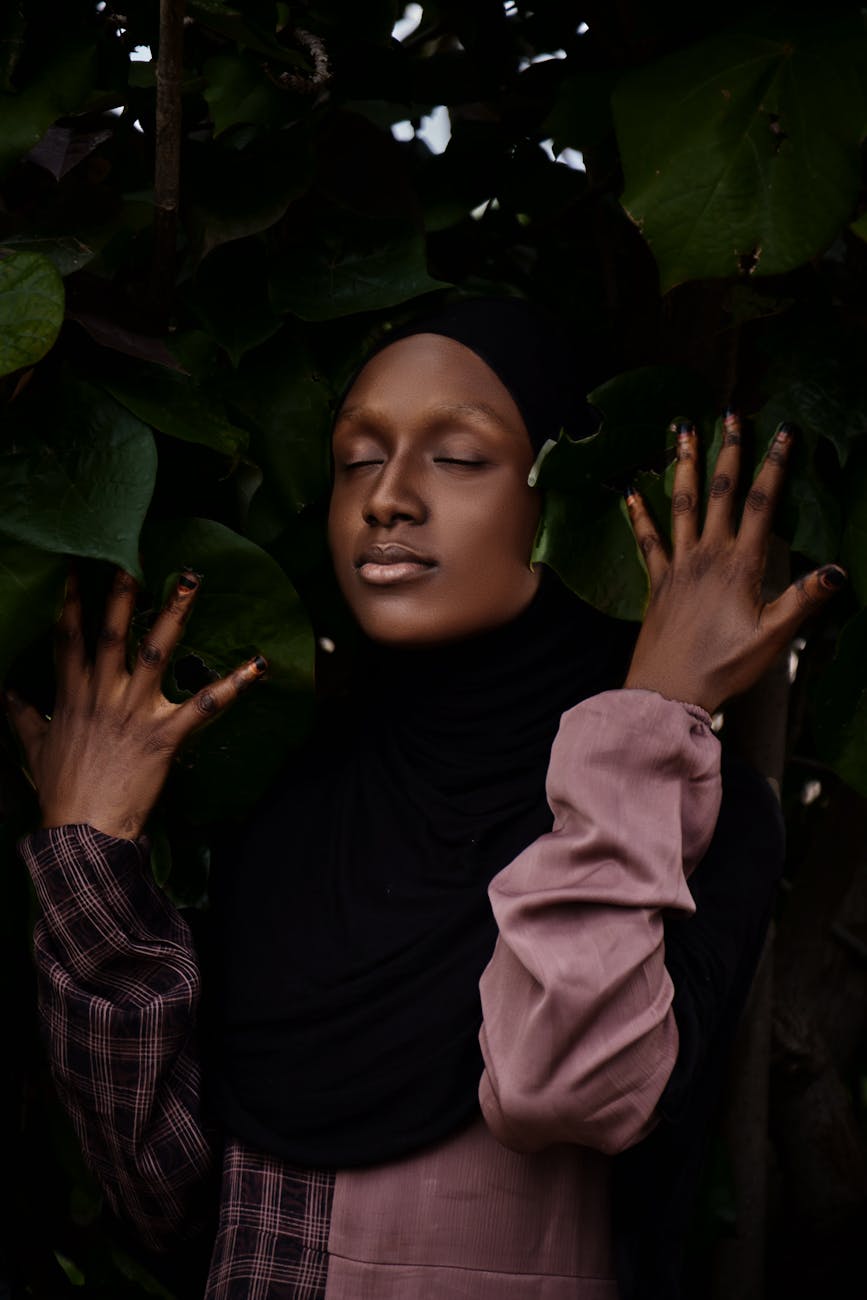
The Brown Girl #thebrowngirldilemma

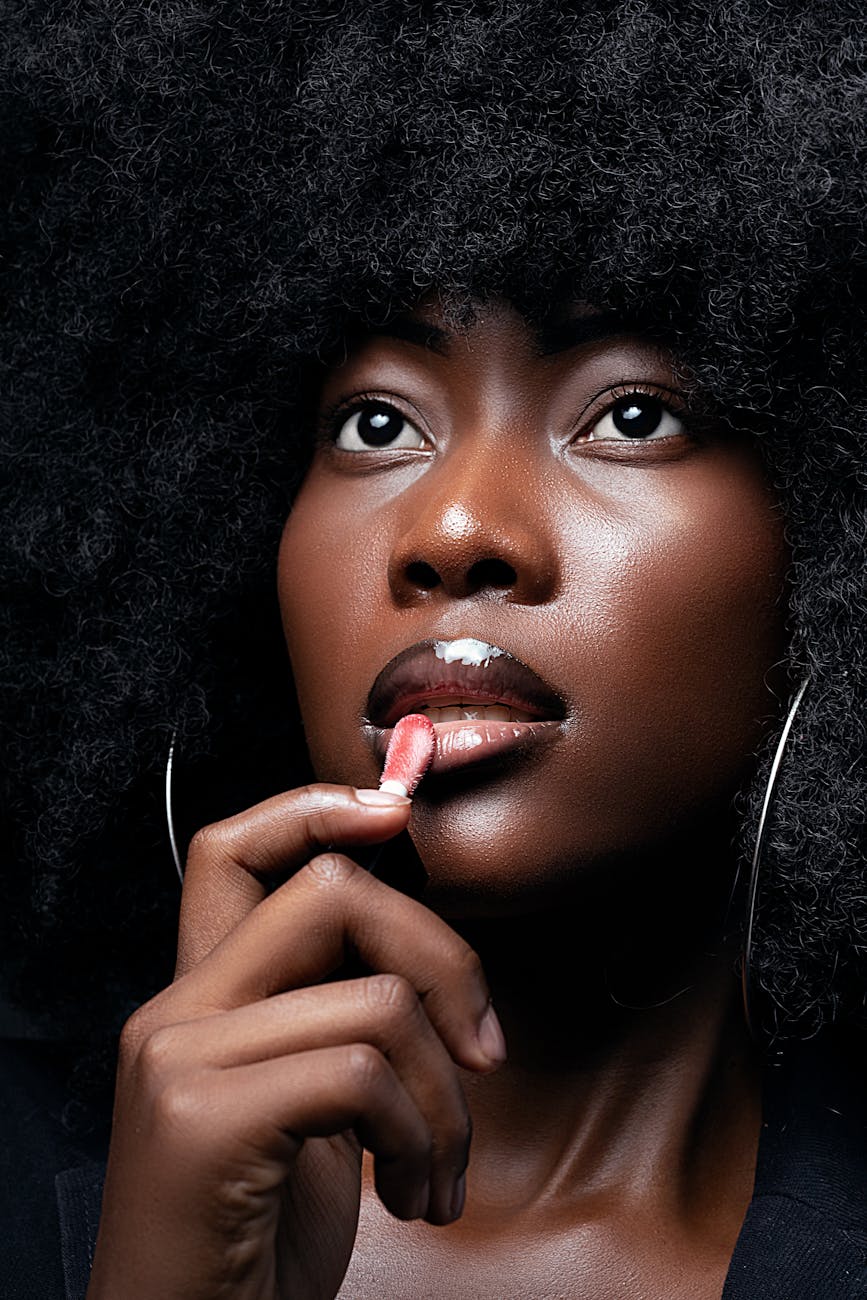
Photo by Jonatan Galvis on Pexels.com

A Journey Through Struggle, Faith, and Resilience
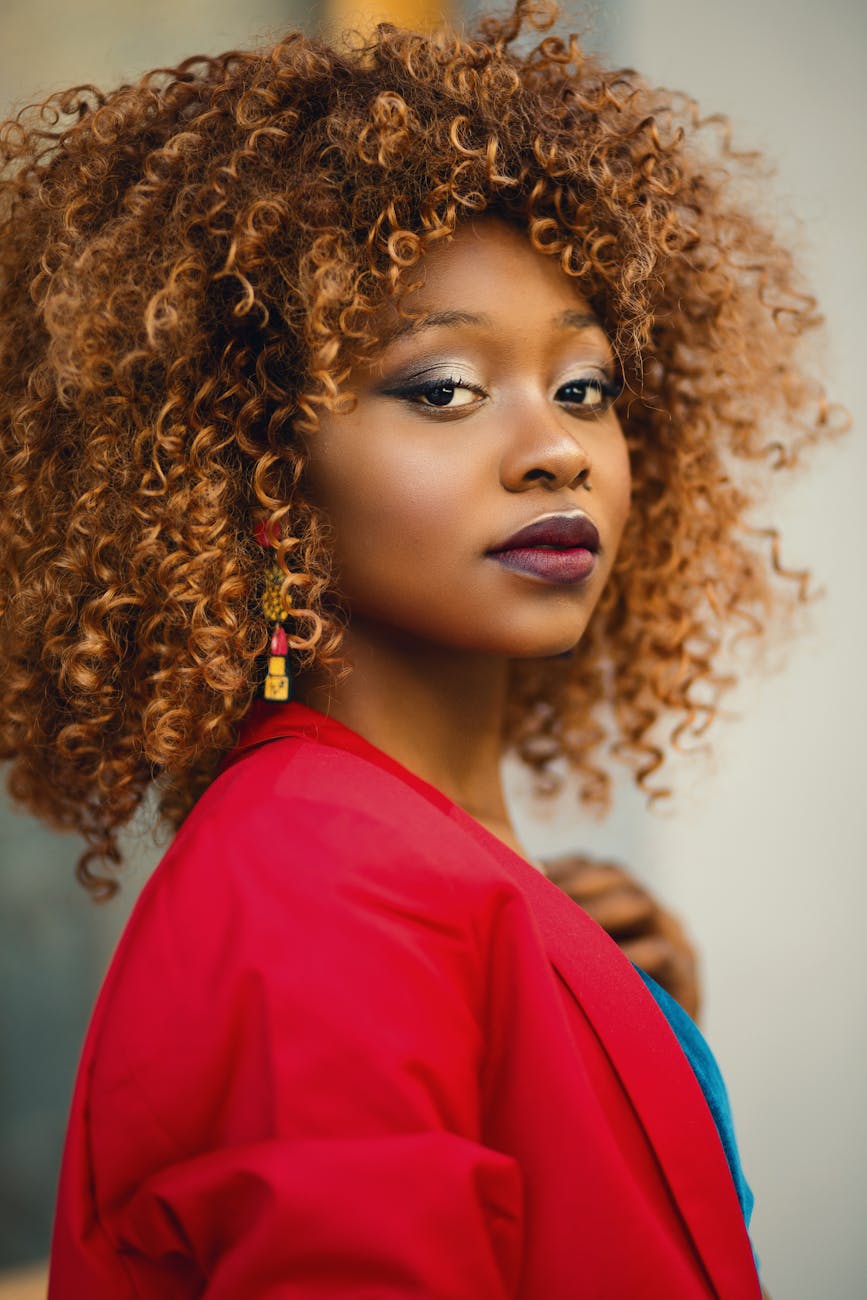
Photo by Godisable Jacob on Pexels.com

The Weight and Wonder of Brownness

Photo by nappy on Pexels.com

To be a brown girl in a world that has long worshiped whiteness is to live within a paradox. She is both invisible and hyper-visible, overlooked yet over-scrutinized, diminished and yet desired. Her skin tells a story before she even speaks, a story marked by colonial history, racial hierarchies, and cultural misrepresentation. But her melanin also tells another story—one of divine design, resilience, and sacred inheritance.

This manuscript, The Brown Girl Dilemma, seeks to unpack the layered experiences of brown girls across eight lenses: beauty, faith, psychology, representation, and resilience. Each essay acts as both a mirror and a window—reflecting the inner struggles of brown girls while revealing their undeniable strength to the world.


Beyond the Mirror: Unpacking the Brown Girl Dilemma
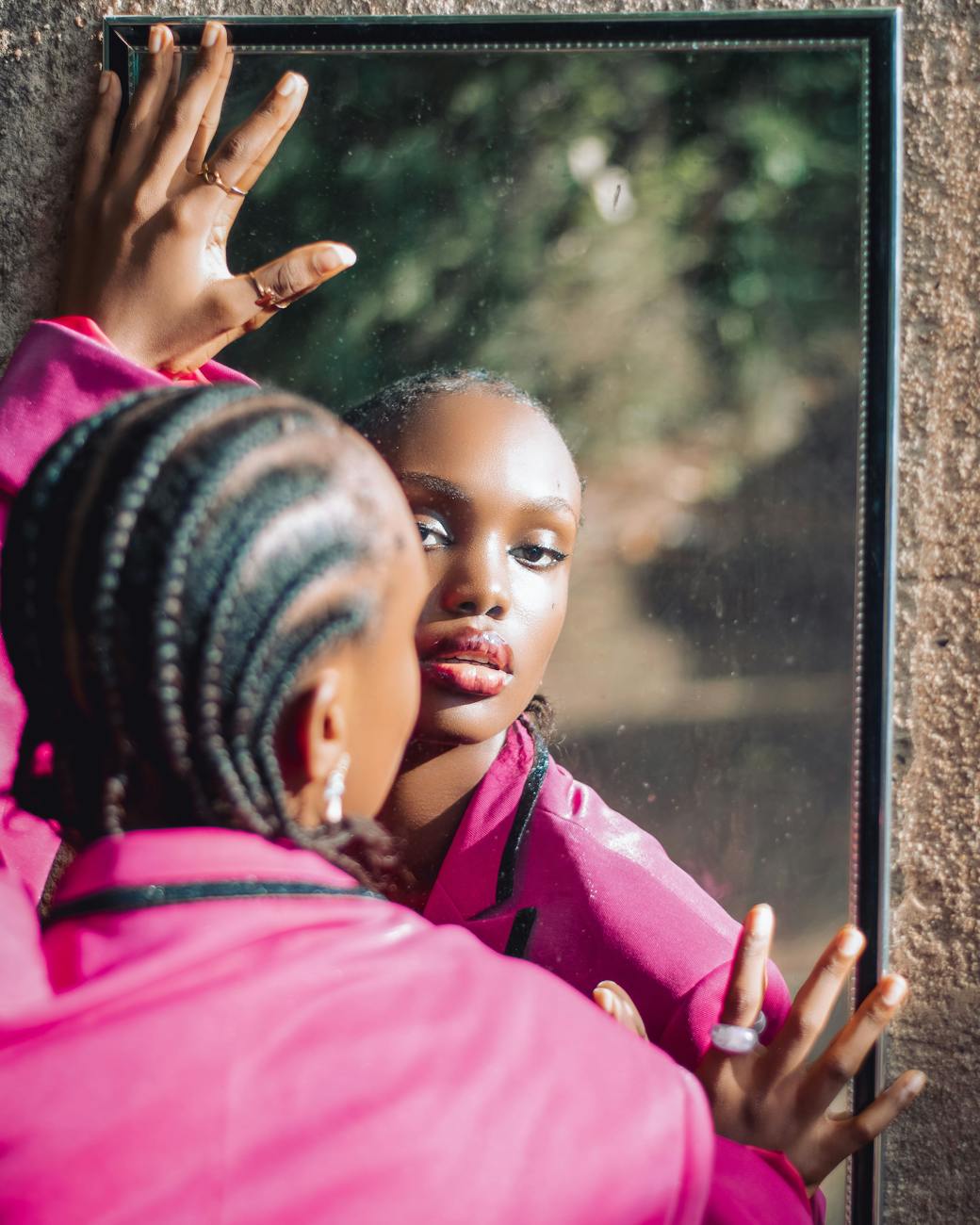
Photo by Bigshow Lamar Campton on Pexels.com

The mirror often becomes a battleground for the brown girl. Staring back at her is not only her reflection but centuries of imposed ideals that privilege lighter skin and Eurocentric beauty standards. In this space, the question of worth arises: Is she beautiful enough? Desirable enough? Human enough?

Yet, beyond the mirror lies truth: she is not defined by imposed ideals but by divine design. Psalm 139:14 reminds her that she is “fearfully and wonderfully made.” The brown girl dilemma, then, is not truly about her inadequacy but about the world’s blindness. Beyond the mirror, she rediscovers herself—not as broken, but as whole, chosen, and radiant.


Beauty, Bias, and the Brown Girl Battle

Photo by Marcelo Dias on Pexels.com

The brown girl’s beauty is often weaponized against her. Colorism, both outside and within her community, creates hierarchies that distort identity. Lighter skin is praised, darker shades are devalued, and the cycle perpetuates insecurity. This bias is reinforced by media, where brown girls are either erased or cast into stereotypical roles.

But this battle is not fought in vain. Brown girls resist by embracing natural hair, celebrating melanin, and refusing to shrink. They redefine beauty on their own terms, proving that their worth is not determined by bias but by boldness. Like the Shulamite woman who declared, “I am black, but comely” (Song of Solomon 1:5, KJV), the brown girl learns to affirm her own beauty in the face of cultural denial.


Sacred Shades: A Theological Look at the Brown Girl Dilemma
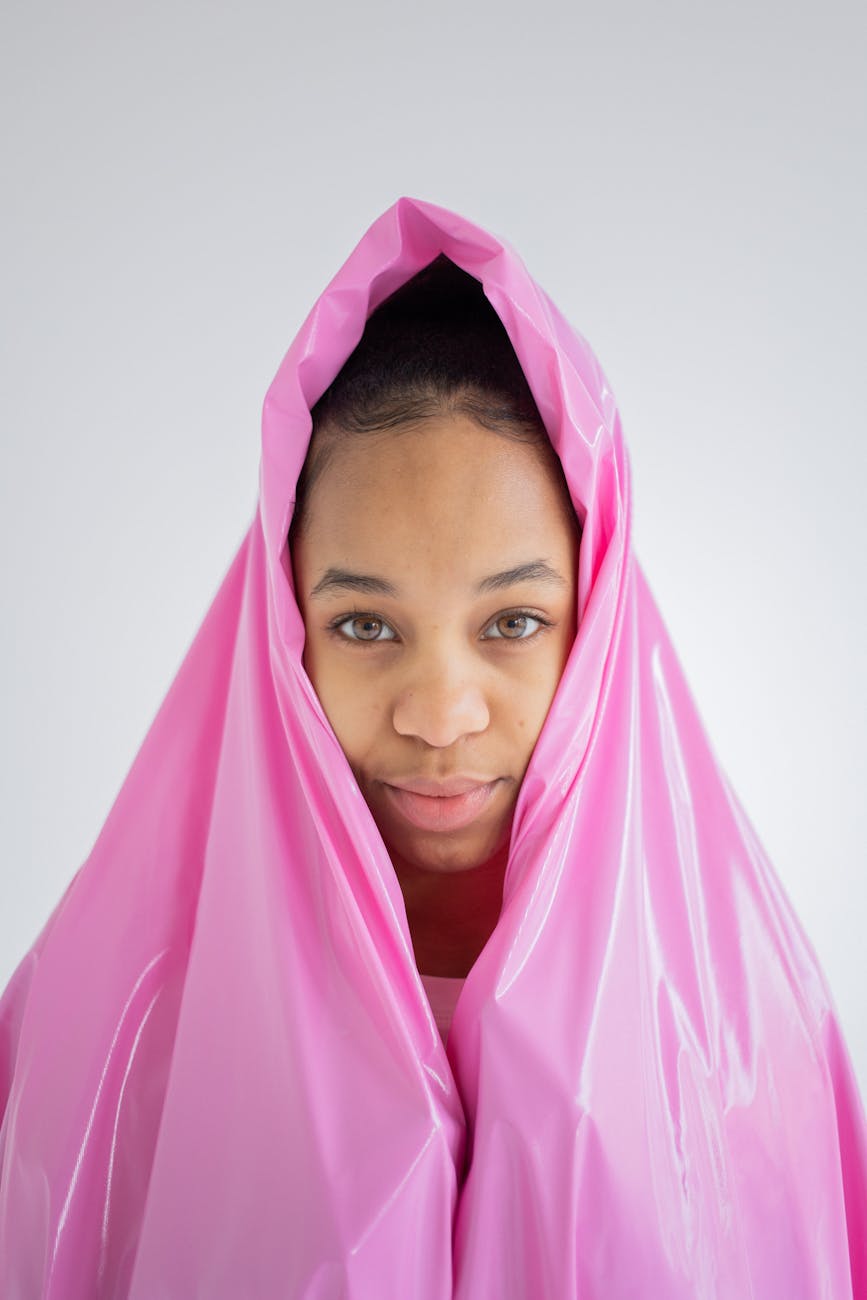
Photo by Monstera Production on Pexels.com

Faith offers the brown girl an anchor. Theology, when read through her lens, reveals the beauty of her creation and the dignity of her calling. The Bible affirms her worth: she is God’s workmanship, a vessel of divine glory. Too often, theology has been weaponized to justify slavery, segregation, and sexism. But a liberating theology restores her identity as a daughter of Zion, beloved and chosen.

In reclaiming sacred shades, the brown girl learns that her melanin is not a curse but a crown. Her skin is not incidental but intentional—woven into her being by the Creator Himself. Theological reflection allows her to shift from shame to sacredness, from seeing her brownness as a burden to embracing it as a blessing.


Brown Skin, Heavy Crown: The Weight of Representation

Photo by Guilherme Almeida on Pexels.com

Representation is both privilege and pressure. For the brown girl who “makes it” into spaces of visibility—whether Hollywood, academia, politics, or business—her presence carries the weight of her entire community. She is expected to perform flawlessly, lest her mistakes be generalized onto all who look like her.

This heavy crown is both exhausting and empowering. It exhausts because it demands perfection, but it empowers because it signals that she is breaking barriers. The brown girl bears this weight with grace, reminding the world that she does not merely represent her community—she represents excellence, resilience, and possibility.


Invisible Yet Hyper-Visible: The Brown Girl Paradox

Photo by Mikhail Nilov on Pexels.com

One of the most painful dilemmas is the paradox of invisibility and hyper-visibility. In professional and social settings, brown girls are often overlooked—passed over for promotions, excluded from conversations, their voices minimized. Yet, in other contexts, their bodies are over-scrutinized, hyper-sexualized, or exotified.

This paradox creates a psychological tug-of-war. But the brown girl learns to navigate it with strategic resilience—raising her voice where silence is imposed, reclaiming her body where objectification occurs. She refuses invisibility and rejects hyper-visibility, instead demanding authentic visibility—to be seen for who she truly is.


The Skin They Can’t Ignore: Brown Girls in a World of Whiteness

Photo by Godisable Jacob on Pexels.com

In societies where whiteness is normalized as the standard, the brown girl cannot fade into the background. Her skin announces her difference before she speaks. This difference has historically made her a target of exclusion, discrimination, and violence. Yet, paradoxically, this same difference becomes her power.

Her skin, the one thing the world cannot ignore, becomes her testimony. It is the evidence of survival, the shade of heritage, and the hue of strength. What was once used to marginalize her now becomes a mark of distinction. She stands unapologetically brown in a world that demands assimilation, embodying both resistance and pride.


From Colorism to Confidence: Redefining the Brown Girl Dilemma

Photo by Yury Oliveira on Pexels.com

The journey from struggle to strength is never linear. For the brown girl, healing requires confronting colorism—the internalized wounds of comparison, rejection, and exclusion. It also requires unlearning the false narratives whispered by society.

Confidence is cultivated through affirmation, community, and faith. As she grows, the brown girl redefines her dilemma: it is no longer about whether she fits into society’s mold, but about how she chooses to shatter it. Her confidence is not arrogance but liberation—the freedom to exist without apology, to celebrate her skin without shame.


Shades of Struggle, Shades of Strength: The Brown Girl Experience

Photo by Ante Emmanuel on Pexels.com

The brown girl experience is a tapestry of both burden and blessing. She carries the struggle of systemic racism, sexism, and colorism, yet she transforms these struggles into sources of strength. Her resilience is not accidental but ancestral, inherited from women who endured and overcame.

Her shades of struggle are inseparable from her shades of strength. They coexist, shaping her into a woman of wisdom, compassion, and courage. She is not merely surviving the brown girl dilemma—she is rewriting it, turning wounds into wisdom, battles into breakthroughs, and silence into song.


Conclusion: From Dilemma to Destiny

The brown girl dilemma is not the end of the story—it is the beginning of transformation. Each essay in this collection testifies that the brown girl is not defined by her struggles but refined by them. She is both the question and the answer, both the wound and the healing.

In a world that often misunderstands her, she emerges as a living paradox of power: invisible yet undeniable, burdened yet unbreakable, questioned yet chosen. She carries within her the reflection of divine creativity and the legacy of unyielding resilience.

The brown girl dilemma, then, is not her curse. It is her canvas. And on it, she is painting a masterpiece of survival, beauty, and destiny.

References

Collins, P. H. (2000). Black feminist thought: Knowledge, consciousness, and the politics of empowerment. Routledge.

Cone, J. H. (2010). A Black theology of liberation. Orbis Books.

Craig, M. L. (2006). Race, beauty, and the tangled knot of a guilty pleasure. Feminist Theory, 7(2), 159–177. https://doi.org/10.1177/1464700106064415

Glenn, E. N. (2008). Yearning for lightness: Transnational circuits in the marketing and consumption of skin lighteners. Gender & Society, 22(3), 281–302. https://doi.org/10.1177/0891243208316089

Harris, A., & Khanna, N. (2010). Black is, Black ain’t: Biracials, middle-class Blacks, and the social construction of Blackness. Sociological Spectrum, 30(1), 99–120. https://doi.org/10.1080/02732170903495892

hooks, b. (1992). Black looks: Race and representation. South End Press.

Hunter, M. (2016). Colorism in the classroom: How skin tone stratifies African American and Latina/o students. Theory Into Practice, 55(1), 54–61. https://doi.org/10.1080/00405841.2016.1119019

King, D. K. (2005). Multiple jeopardy, multiple consciousness: The context of a Black feminist ideology. Signs: Journal of Women in Culture and Society, 14(1), 42–72. https://doi.org/10.1086/494491

Russell, K., Wilson, M., & Hall, R. (2013). The color complex: The politics of skin color in a new millennium. Anchor Books.

Williams, D. S. (2013). Sisters in the wilderness: The challenge of womanist God-talk. Orbis Books.

Wingfield, A. H. (2019). Flatlining: Race, work, and health care in the new economy. University of California Press.
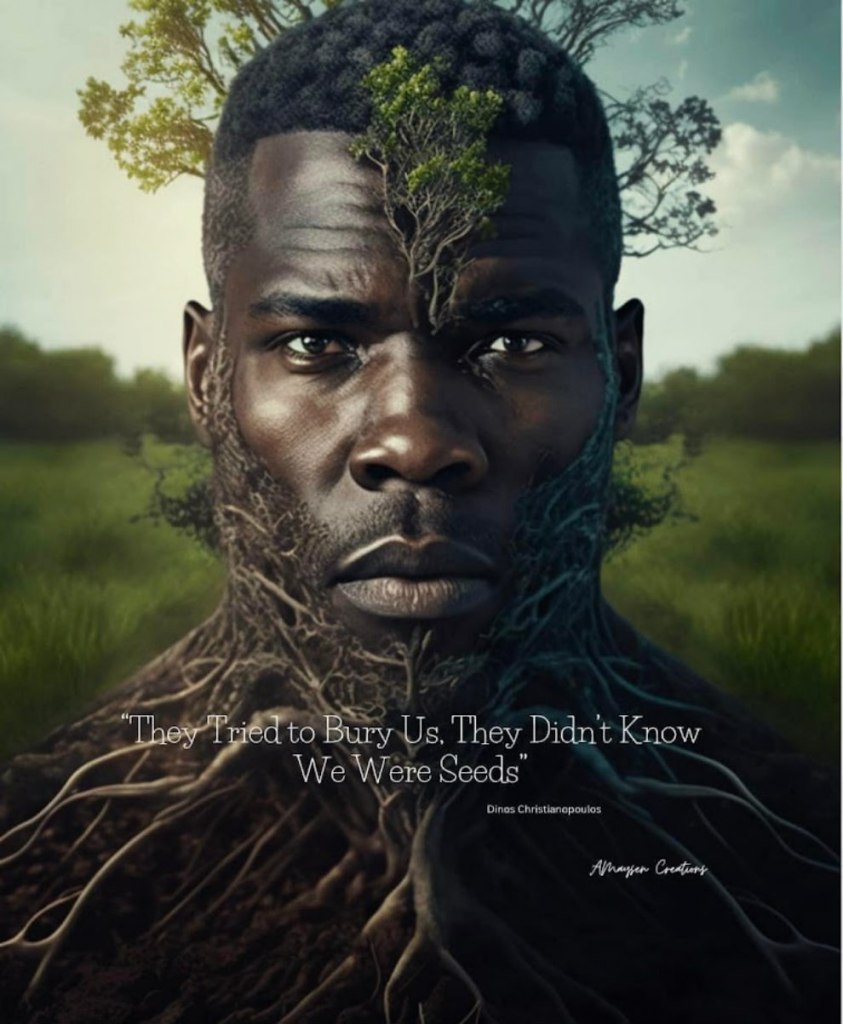
The Seeds of the Promise.

This artwork is the property of its respective owner. No copyright infringement intended.

The story of God’s chosen people is deeply rooted in Scripture, prophecy, and history. Deuteronomy 28 (KJV) outlines blessings for obedience and curses for disobedience, serving as both a covenant promise and a prophetic warning. Many within the African diaspora identify their struggles and resilience with these verses, seeing themselves as the “seeds of the promise,” scattered across the earth yet preserved by God’s hand. Like trees planted by rivers of living water, they endure oppression, displacement, and hardship while continuing to grow, flourish, and bear fruit.

The Seeds and the Promise
Seeds carry potential and continuity. Spiritually, the descendants of Israel are seeds of the covenant God made with Abraham (Genesis 17:7, KJV). Psychologically, seeds represent identity and generational transmission. Black people, despite systemic oppression, have carried cultural, spiritual, and intellectual seeds across continents, preserving language, rhythm, faith, and resilience. These seeds testify to survival against all odds.

Deuteronomy 28 and the Black Experience
The curses in Deuteronomy 28:15–68 resonate profoundly with the history of Black people. Enslavement, scattering across nations, oppression by enemies, and loss of identity parallel the transatlantic slave trade and subsequent struggles of the African diaspora. Verse 68 speaks of returning to Egypt “again with ships,” a striking image that mirrors the ships that carried millions into bondage. Many interpret these prophecies as evidence that Black people are part of God’s chosen covenant people.

Trees Planted by Living Water
Psalm 1:3 (KJV) describes the blessed man as being “like a tree planted by the rivers of water, that bringeth forth his fruit in his season.” This metaphor speaks to endurance and divine sustenance. Despite centuries of slavery, segregation, and systemic oppression, Black communities have remained rooted in faith, producing leaders, artists, scholars, and prophets who have blessed the world. The psychology of Black resilience reveals a deep wellspring of spiritual and cultural resources that mirror this biblical imagery.

Psychologically, Black people have carried generational trauma from enslavement, colonization, and racism. Yet, alongside trauma exists resilience—expressed through music, oral tradition, communal bonds, and faith in God. Na’im Akbar (1984) noted that African-descended people maintain strength by reclaiming identity, resisting oppression, and drawing on spirituality. This resilience is evidence of the “living water” that sustains God’s chosen, nourishing them in the face of systemic attempts to uproot them.

The history of Black people stretches far beyond the African continent. Evidence of African presence is found in ancient Israel, Mesopotamia, and early Christian communities. African contributions shaped global civilizations through science, mathematics, philosophy, and theology. From the Kingdom of Kush to the Moors in Spain, Black history reveals a legacy of leadership and brilliance that extends into the Americas, the Caribbean, and beyond. These contributions reveal a scattered yet resilient people, reflecting the biblical narrative of God’s chosen seed dispersed among nations.

Being chosen does not mean privilege without responsibility; it means bearing the covenant of obedience. Deuteronomy 7:6 (KJV) declares, “For thou art an holy people unto the LORD thy God: the LORD thy God hath chosen thee to be a special people unto himself, above all people that are upon the face of the earth.” This chosenness is marked not only by blessings but also by trials meant to refine and bring the people back to God. Black people’s journey through slavery, segregation, and systemic oppression mirrors this refining fire.

The transatlantic slave trade attempted to erase identity, yet language, song, and spirituality preserved the covenant consciousness of the people. Spirituals like “Go Down, Moses” encoded biblical identity, likening the plight of enslaved Africans to the Israelites in Egypt. This connection shows how deeply the promise of God was embedded in the psychology of Black communities, even in the darkest times.

Conclusion
The seeds of the promise remain alive in God’s chosen. Though scattered, bruised, and oppressed, they continue to grow like trees planted by the rivers of water, sustained by the living Word of God. Black history—beyond Africa and into the Americas, Europe, and beyond—bears witness to the fulfillment of prophecy and the preservation of a covenant people. To live as God’s chosen is to embrace both identity and responsibility, walking in obedience, resilience, and faith. The story of the seeds of the promise is not only a history lesson—it is a living testimony of God’s hand upon His people.


References

  • Akbar, N. (1984). Africentric Social Sciences for Human Liberation. Journal of Black Studies.
  • The Holy Bible, King James Version (KJV).

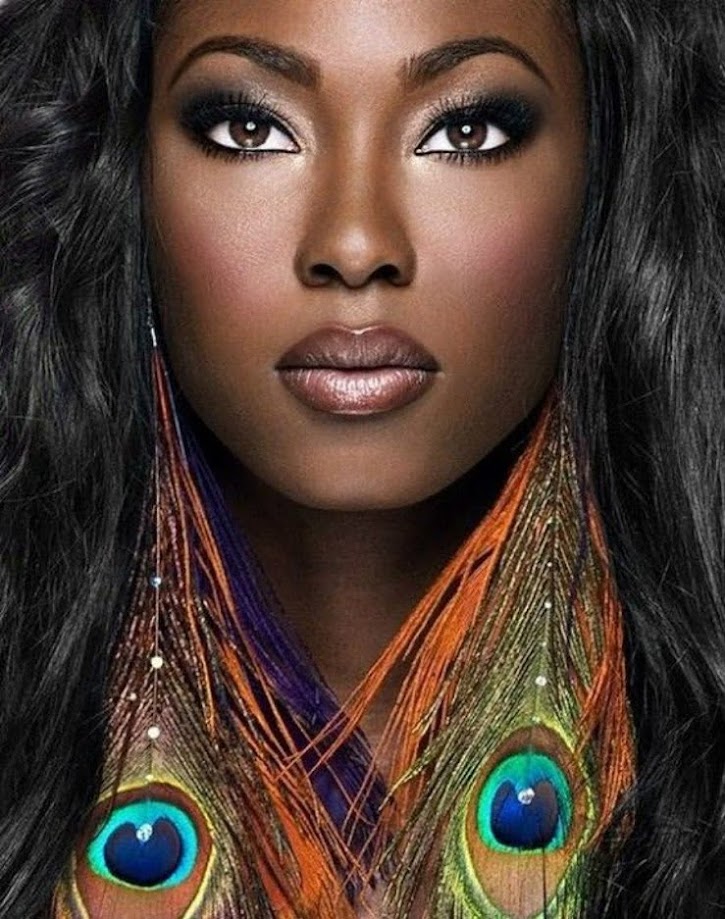
Beauty Personified: The History of the Black Aesthetic.

This photograph is the property of its respective owner. No copyright infringement is intended.

Black beauty has always been a reflection of resilience, identity, and cultural heritage. Long before colonial influence and Eurocentric beauty ideals, African peoples celebrated diverse features, skin tones, and hair textures as markers of pride and identity (Byrd & Tharps, 2014). Beauty was never simply aesthetic; it was political, spiritual, and social.

In ancient Africa, beauty standards varied across regions but consistently emphasized harmony with nature and individuality. Facial symmetry, body proportions, and elaborate adornments were expressions of status, spirituality, and lineage. Scarification, body paint, and jewelry communicated wealth, maturity, and tribal identity (Banks, 2000).

Biblically, beauty carries spiritual significance. In 1 Samuel 16:7 (KJV), God instructs, “For the LORD seeth not as man seeth; for man looketh on the outward appearance, but the LORD looketh on the heart.” This verse underscores that Black beauty is multidimensional: outwardly expressive yet inwardly spiritual.

Hairstyles have historically been central to Black beauty. Cornrows, braids, and locs served as both artistic expression and social communication, reflecting age, marital status, and even spiritual allegiance (Roach, 2018). Hair was, and remains, an essential component of identity and aesthetic.

Skin tone was celebrated within African societies, with varying hues symbolizing status, tribe, or seasonal adaptation. While European colonization attempted to devalue darker skin, pre-colonial Africa embraced a spectrum of melanated beauty (Thompson, 2009).

Facial features such as full lips, wide noses, and high cheekbones were considered attractive and emblematic of lineage and strength. Sculptures, masks, and paintings from ancient African civilizations, including Egypt and Mali, reflect admiration for these traits (Diop, 1987).

Adornment and clothing further expressed beauty. Beaded jewelry, headwraps, and patterned textiles were not only aesthetic but signified intelligence, creativity, and societal role. A well-adorned individual reflected personal and communal pride.

With the advent of slavery, Black beauty faced systemic devaluation. Enslavers imposed European standards, ridiculing African features and promoting straight hair, lighter skin, and narrower noses as ideals. This caused intergenerational psychological and social trauma (Byrd & Tharps, 2014).

Despite this, enslaved Africans maintained beauty practices as a form of resistance. Braiding patterns preserved African heritage, and adornments symbolized hope, dignity, and communal identity (Painter, 2006). Beauty became an act of defiance.

The Harlem Renaissance marked a renaissance of Black beauty and culture. Artists, writers, and performers celebrated Black features, skin tones, and hair textures as central to American identity, countering racist narratives (Huggins, 1971).

In the 1960s and 1970s, the natural hair and “Black is Beautiful” movements elevated African features as symbols of pride and resistance. Afros, locs, and braids became political statements, asserting self-love and cultural reclamation (Craig, 2002).

Black women and men used fashion, makeup, and hair to reclaim aesthetic sovereignty. Iconic figures like Cicely Tyson, Nina Simone, and Angela Davis redefined mainstream perceptions of beauty, highlighting authenticity and heritage over assimilation.

Hollywood and the media often misrepresented Black beauty, favoring Eurocentric standards. Nevertheless, contemporary artists, models, and public figures have increasingly embraced and normalized natural textures, darker skin, and African features in global spaces (Banks, 2000).

Cosmetic entrepreneurship has played a vital role in celebrating Black beauty. Madam C.J. Walker, Annie Malone, and modern beauty brands empower communities while creating products specifically for Black skin and hair, affirming beauty in its natural form (Walker, 1910).

Colorism, a residual effect of colonialism, remains a challenge. Preferences for lighter skin and European features still influence perceptions of attractiveness within Black communities, revealing the ongoing negotiation of identity and self-esteem (Hunter, 2007).

Social media has reshaped beauty discourse, enabling Black creators to challenge standards, share hair and skin care tips, and celebrate diverse aesthetics. Platforms have become modern-day salons and classrooms, fostering education and empowerment (Twine, 2010).

Beauty intersects with spirituality in Black communities. Proverbs 31:30 (KJV) states, “Favor is deceitful, and beauty is vain: but a woman that feareth the LORD, she shall be praised.” Black beauty is thus not only physical; it is entwined with moral character, resilience, and divine favor.

The global influence of Black beauty is evident in fashion, music, and popular culture. African features inspire designers, musicians, and artists worldwide, reshaping perceptions of elegance, style, and power (Henderson, 2008).

In conclusion, Black beauty is multidimensional—historically rooted, culturally expressive, and spiritually significant. From pre-colonial Africa to contemporary global spaces, Black people have navigated oppression while reclaiming, redefining, and celebrating their natural features. Beauty is not merely skin deep; it is identity, resilience, and glory personified.


References

  • Banks, I. (2000). Hair matters: Beauty, power, and Black women’s consciousness. NYU Press.
  • Byrd, A., & Tharps, L. (2014). Hair story: Untangling the roots of Black hair in America. St. Martin’s Press.
  • Craig, M. L. (2002). Ain’t I a beauty queen?: Black women, beauty, and the politics of race. Oxford University Press.
  • Diop, C. A. (1987). The African origin of civilization: Myth or reality. Chicago Review Press.
  • Henderson, C. (2008). Black aesthetics and culture: The evolution of African American beauty standards. Journal of African Cultural Studies, 20(2), 115–134.
  • Huggins, N. (1971). Harlem Renaissance. Oxford University Press.
  • Hunter, M. (2007). The persistent problem of colorism: Skin tone, status, and inequality. Sociology Compass, 1(1), 237–254.
  • Painter, N. I. (2006). Exodusters: Black migration to Kansas after Reconstruction. Knopf.
  • Roach, M. (2018). Hair and identity in the African diaspora. Journal of Black Studies, 49(5), 435–456.
  • Thompson, C. (2009). Black women, beauty, and hair: How hair matters in identity formation. Women’s Studies Quarterly, 37(3/4), 101–123.
  • Twine, F. (2010). A white side of Black Britain: Skin tone, identity politics, and the “good” vs. “bad” Black girl narrative. Sociology, 44(5), 903–920.
  • Walker, M. C. J. (1910). Secrets of success. Independent Business Publisher.

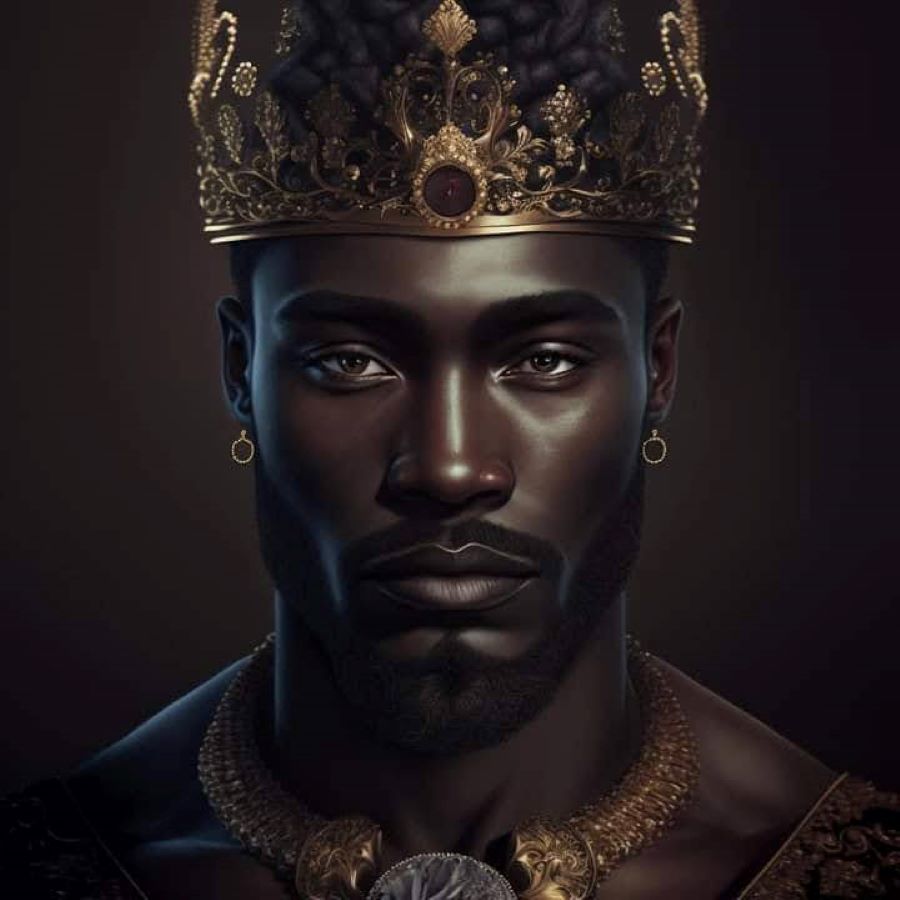
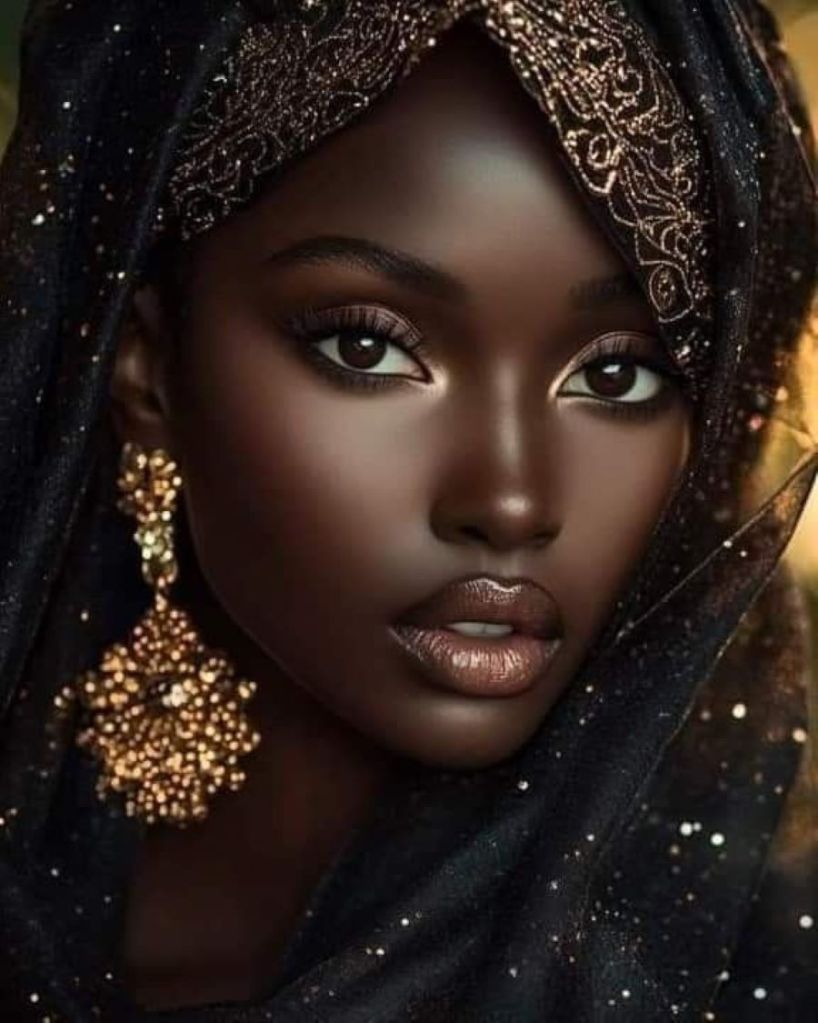
✨ The Aesthetics of Melanin: Masculine & Feminine Beauty ✨

A celebration of Black physical excellence — form, feature, and divine design

The beauty of Black people is not merely visual; it is architectural, sculptural, and elemental. It is heritage carved into flesh, ancestry alive in bone, and glory poured into skin. Melanin is not pigment — it is poetry. It reads like scripture on the body, testifying to divine intention and ancestral brilliance.

Black skin holds sunlight like a crown. Rich tones ranging from deep ebony to golden bronze shimmer with warmth and depth untouched by time. Under light, melanin glows, refracting gold and copper undertones like sacred metal. Where others burn under sun, Black skin communes with it, absorbing radiance and returning it as brilliance.

The texture of Black skin is resilient and regal. Smooth like velvet, firm like carved obsidian, it communicates strength and softness in the same breath. Even in aging, Black skin preserves youth, holding firmness and clarity as a mark of blessing and biology. Time bends gently around melanin.

Black eyes are galaxies — deep, soulful, luminous. They hold ancestral wisdom, passion, and mystery. Their depth is unmatched, reflecting strength, intuition, and spiritual perception. Brown eyes ranging from warm amber to midnight black speak without words, their intensity capable of piercing or comforting in equal measure.

Full lips remain one of the most admired features in global beauty standards — naturally plump, sculpted, and expressive. They symbolize richness and vitality, formed to communicate power, tenderness, and passion. Where imitation tries and fails, Black lips set the original blueprint for sensual symmetry.

Black noses come in noble forms — wide, sculpted, and strong. They speak of identity, rootedness, and authenticity. The elegance of broader nasal structures enhances facial harmony, balance, and presence. In an era of artificial features, original African contours stand unmatched, unapologetic, and divine.

Cheekbones in Black men and women rise like royal architecture. High, pronounced, and sculpted, they frame the face with an effortless dignity. They create definition without effort, shaping expressions into portraits of grace or power depending on the moment.

Jawlines among Black men often carry heroic structure — angular, bold, carved like marble. Their faces speak of protection, authority, and masculine divinity. Black women’s jawlines balance softness and strength, demonstrating a design that holds both gentleness and majesty.

Hair — in coils, curls, waves, and kinks — stands as a living crown. Defying gravity, it rises toward heaven in spirals mirroring galaxies. Every curl is a signature of identity, every coil a testimony to resilience. Black hair is versatile, expressive, regal — a divine engineering of texture and pride.

Black men possess physiques sculpted by nature to command, protect, and endure. Broad shoulders, powerful backs, strong chests, and athletic proportions represent raw strength and disciplined elegance. From warriors to modern athletes, the Black male form proves excellence in structure and motion.

Black women embody curvature as art — hips shaped like crescents, waists sculpted like pottery, and silhouettes that flow like water. Their bodies represent fertility, power, beauty, and grace. Their movement carries rhythm, heritage, and magnetic softness.

The legs of Black men and women tell stories of mobility, endurance, and athletic superiority. Strong thighs, graceful calves, and balanced proportions reveal bodies built for power and speed, as though carved for motion with divine precision.

Black hands reveal labor and love. Strong and expressive, they carry cultural memory — hands that have created, fought, healed, raised nations, and built empires. In their form lies capability, tenderness, and dignity.

Collarbones and shoulders among Black women shimmer like sculpture. Smooth, elegant, and defined, they reflect femininity in pure form. Black men’s shoulders stand broad and unwavering, pillars of masculine power.

Black smiles, framed by full lips and bright teeth, radiate warmth, vitality, and confidence. There is a glow behind them — one shaped by survival, joy, and soul-deep life force. When Black people smile, the room lights differently.

Posture distinguishes Black beauty — upright, proud, grounded, and graceful. Even in casual stance, there is royal poise, inherited from ancestors who walked like kings and queens despite chains.

Movement in Black bodies is music made visible. Whether walking, dancing, or simply existing, fluidity and rhythm define them. Grace lives in the hips, strength in the back, confidence in the stride.

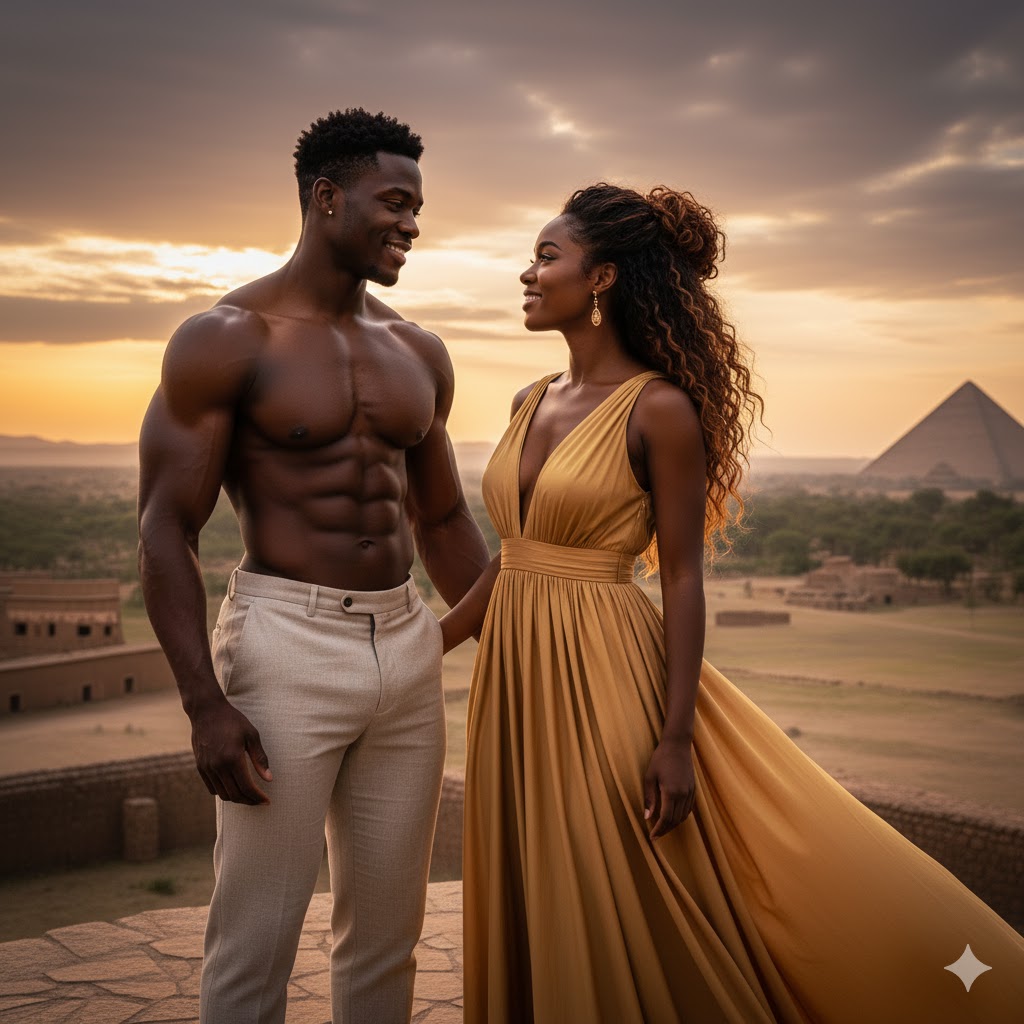
Masculine beauty among Black men is the fusion of power and nobility. Their features command attention; their presence shifts atmosphere. Feminine beauty among Black women is softness wrapped in steel, elegance intertwined with strength. Together they form a visual symphony — balance, brilliance, and divine complementarity.

The aesthetics of melanin transcend human standards. They reflect an original blueprint — the first beauty shaped by the Creator. Black bodies are not merely physically beautiful — they are historical, celestial, and spiritual. They carry the imprint of Eden, the dignity of royalty, and the radiance of creation itself.

Black beauty is not a trend. It is a truth — ancient, eternal, and unmatched. It does not strive to belong to the world’s standard; the world strives to imitate it. And yet, imitation never surpasses authenticity. Where melanin breathes, beauty lives in its highest form.

Biblical References (KJV)

  • Genesis 1:27 – “So God created man in his own image, in the image of God created he him; male and female created he them.”
  • Psalm 139:14 – “I will praise thee; for I am fearfully and wonderfully made: marvellous are thy works; and that my soul knoweth right well.”
  • Song of Solomon 4:1–7 – Descriptions of physical beauty, including lips, eyes, and skin.
  • Proverbs 31:25–30 – The virtuous woman: strength, beauty, and dignity.
  • 1 Corinthians 15:46 – “First that which is natural; afterward that which is spiritual.”

Scientific / Anthropological References

  • Jablonski, N. G. (2006). Skin: A Natural History. University of California Press.

  • Relethford, J. H. (2012). The Human Species: An Introduction to Biological Anthropology. McGraw-Hill Education.
  • Robins, G. (2014). The Science of Beauty: Facial Symmetry, Melanin, and Aesthetic Perception. Journal of Aesthetic Research.
  • Farkas, L. G. (1994). Anthropometry of the Head and Face. Raven Press.

Sociocultural / Psychological References

  • Banks, I. (2018). The Melanin Millennium: African Aesthetics in the Modern World.
  • Byrd, A., & Tharps, L. L. (2014). Hair Story: Untangling the Roots of Black Hair in America. St. Martin’s Press.
  • Hall, R. E. (2010). African-American Facial Features and Perceptions of Beauty. Journal of Black Studies.

The Brown Girl Speaks: Truths Behind the Tone. #thebrowngirldilemma

Photo by Turaki Photography on Pexels.com

There is a power that comes from living in brown skin—a power the world often misunderstands, mislabels, or diminishes. To be a brown girl is to walk through life both seen and unseen, celebrated and silenced, loved and judged through the lens of color. Every shade tells a story, and every story carries the weight of survival, beauty, and truth. This is the testimony of tone—the unspoken language of melanin that has shaped our identity and the way the world perceives us.

Being brown is not a uniform experience; it is a spectrum of existence. Between light and dark lies an entire geography of complexion, each shade bearing its own burden and blessing. Brown girls stand at the crossroads of colorism, where acceptance can depend on just how much light the skin reflects. Our tone becomes both mirror and battleground, measuring us against ideals we never created but were born to challenge.

From an early age, many brown girls are taught to navigate the politics of appearance. Family members may speak in coded language: “She’s a nice color,” “Don’t stay in the sun too long,” or “You’re getting darker.” These comments, wrapped in love, are heavy with internalized fear—a fear passed down from generations marked by colonial rule and racial stratification. They echo a past where lighter skin meant proximity to privilege and darker skin meant proximity to pain.

Colorism, a child of racism, thrives quietly within communities of color. It separates sisters, ranking beauty on a scale rooted in European aesthetics. In classrooms, in workplaces, and in dating choices, the tone of a woman’s skin can shape how she is valued. Studies continue to show that lighter-skinned women are perceived as more competent, approachable, and desirable (Hunter, 2007). These unspoken hierarchies leave brown and dark-skinned women fighting for validation in a world that still equates fairness with worth.

The brown girl grows up learning the art of adaptation—how to smile softly enough not to seem intimidating, how to lighten foundation, straighten hair, or use filters to “blend in.” Society calls it beauty; psychology calls it survival. Behind every curated image lies a quiet fatigue from performing palatability for a gaze that refuses to see the fullness of her humanity.

But beneath that fatigue is fire. When the brown girl speaks, she does not whisper. She speaks the truth that beauty was never meant to be confined to a color chart. She declares that her tone is not a limitation but a lineage, a living record of ancestry written in pigment. Every shade of brown is a monument to those who endured, created, and thrived despite the violence of erasure.

The truth behind the tone is that brownness holds memory. It remembers the sun of Africa, the soil of the Caribbean, the warmth of Latin America, and the mysticism of South Asia. It is global, sacred, and connected. Colonialism tried to fragment that unity by teaching the colonized to despise their reflection, to compete rather than commune. Yet the brown girl’s skin remains a testament—it absorbs light and transforms it, just as her spirit absorbs pain and turns it into art, activism, and faith.

Media representation has often failed to capture the depth of brownness. When it does, it frequently sanitizes or fetishizes it. Lighter tones dominate screens, while darker ones are typecast or ignored. The result is psychological distortion—a message that beauty and desirability exist on a gradient tilted toward whiteness. For many brown girls, representation becomes a hunger, a longing to see oneself reflected with dignity rather than diluted for consumption.

But the modern brown girl is rewriting that narrative. Through film, music, literature, and social media, she tells her own story—raw, unfiltered, and unapologetic. Movements like #MelaninPoppin and #UnfairAndLovely have become digital revolutions, pushing back against centuries of exclusion. Visibility becomes liberation. Speaking becomes healing.

Emotionally, the journey toward self-acceptance is layered. It requires peeling back the lies taught by both society and family, confronting the ways we’ve internalized comparison. It means forgiving ourselves for believing that lighter was better, for chasing a reflection that was never truly ours. Healing begins when we stop asking for permission to be beautiful and start defining beauty through our own lens.

The tone of brown skin is not just visual—it is spiritual. It carries the energy of endurance, creativity, and divine craftsmanship. In biblical symbolism, the earth is brown, the first human was formed from dust, and creation itself was birthed from color. To be brown is to resemble the ground that sustains all life. Our tones are sacred, kissed by creation, and ordained with purpose.

Yet the world still measures women through lenses of desirability rather than dignity. The brown girl challenges that measurement. She demands to be seen not just as beautiful but as brilliant, complex, and whole. Her tone does not beg for approval; it commands respect. She is the embodiment of contrast and harmony, light and shadow coexisting in one divine design.

The truth behind the tone is also historical. Colonization redefined color as currency, turning complexion into a social passport. Post-slavery societies upheld these hierarchies through institutions that rewarded “fairness” and punished “darkness.” From the paper bag tests of the early 20th century to the casting biases of today, colorism has remained a subtle weapon of division. The brown girl carries that legacy but refuses to be bound by it.

Psychologically, this rebellion is revolutionary. To love one’s brown skin in a world that profits from bleaching creams and filters is to defy centuries of conditioning. It is to reclaim the body as sacred ground, not a site of shame. It is to rewire the mind from scarcity to abundance, from comparison to celebration.

The brown girl’s tone also speaks of resilience. It tells of women who raised children, led revolutions, built nations, and healed communities while being overlooked. It speaks of grandmothers who wore their darkness like armor, mothers who protected their children from the sting of prejudice, and daughters who now demand to be seen in full light.

Culturally, brown women have always shaped the world’s rhythm—through language, art, food, and faith. Their influence transcends borders, yet their contributions are often minimized. To reclaim the truth behind the tone is to center those voices, to remind the world that the global South, the brown nations, have always been the heartbeat of civilization.

Still, confession remains part of the journey. Many brown girls admit that even as they preach self-love, they are still learning it. Healing is not linear; it is layered like our tones. It is saying, “I love my skin,” even on days when the world does not. It is wearing brown not as burden but as blessing.

When the brown girl speaks, she speaks for generations. Her voice carries the hush of grandmothers, the hymns of mothers, and the hope of daughters yet to come. She speaks for every shade of brown silenced by shame and every hue still fighting for visibility. Her tone is truth, and her truth is freedom.

The tone of brown is not just color—it is culture, consciousness, and calling. It reflects the light of every sun that has ever kissed this earth. It is the hue of legacy, of life, of love that endures. The brown girl no longer asks to be seen; she commands to be remembered. And when she speaks, her words paint the world in truth.

References

Fanon, F. (1952). Black skin, white masks. Grove Press.

hooks, b. (1992). Black looks: Race and representation. South End Press.

Hunter, M. (2007). The persistent problem of colorism: Skin tone, status, and inequality. Sociology Compass, 1(1), 237–254.

Russell, K., Wilson, M., & Hall, R. (1992). The color complex: The politics of skin color among African Americans. Anchor Books.

Tate, S. A. (2016). Black beauty: Aesthetics, stylization, politics. Routledge.

Crowning Confidence: Celebrating Dark Beauty in a Light-Skinned World.

Photo by Abenezer Shewaga on Pexels.com

Beauty has long been racialized and hierarchized, with Eurocentric and light-skinned ideals dominating media, fashion, and cultural representation. Lighter skin has often been associated with elegance, refinement, and desirability, giving rise to systemic biases that valorize women like Yara Shahidi, Salli Richardson, and Mari Morrow. These women are celebrated for their features, poise, and charm, yet the broader narrative has historically marginalized darker-skinned women, deeming their beauty less desirable despite its richness, depth, and cultural significance.

Dark-skinned women, however, embody a powerful and resilient form of beauty that defies these narrow societal standards. Lupita Nyong’o, Kenya Moore, and Issa Rae represent a celebration of melanin-rich skin, diverse features, and cultural pride. Lupita’s radiant skin and delicate facial symmetry have been hailed as a “modern masterpiece,” earning her acclaim on red carpets and in film alike. Kenya Moore’s high cheekbones, full lips, and commanding presence have made her a standout in the pageant and reality TV worlds, while Issa Rae’s authenticity and radiant complexion have inspired countless young women to embrace their natural beauty.

While light-skinned beauty continues to dominate mainstream media, the representation of dark-skinned women is gradually increasing, challenging long-held biases. Yara Shahidi, Salli Richardson, and Mari Morrow exemplify elegance and style within lighter-complexion parameters, but their visibility contrasts with the historical underrepresentation of darker-skinned women. This disparity underscores the importance of highlighting figures like Lupita, Kenya, and Issa, whose successes demonstrate that beauty is not bound by shade but by confidence, talent, and presence.

Facial features play a critical role in this narrative. Dark-skinned women often possess unique and striking attributes—full lips, broad noses, defined jawlines, and high cheekbones—that have been historically undervalued. Lupita Nyong’o’s delicate facial symmetry and luminous skin redefine red carpet standards, while Kenya Moore’s sculpted features and radiant smile showcase the allure of dark-skinned aesthetics. Issa Rae combines natural texture, expressive eyes, and a warm, rich complexion to exemplify how authenticity enhances beauty. These features remind us that aesthetic appeal is diverse and culturally embedded.

Cultural and historical context is essential in understanding the challenges dark-skinned women face. For centuries, colonial and Eurocentric beauty standards privileged lighter skin as an aspirational ideal, relegating darker tones to marginal status. Media reinforcement of this hierarchy contributed to colorism, internalized bias, and social exclusion. By celebrating dark-skinned icons, society begins to dismantle these limiting narratives, validating beauty in all shades and promoting a more inclusive understanding of attractiveness.

Psychologically, representation impacts self-esteem and identity. Visibility of dark-skinned role models fosters confidence and resilience, counteracting the effects of colorism and societal marginalization. When young girls see Lupita, Kenya, and Issa celebrated for their melanin-rich skin and natural features, it reinforces the notion that their beauty is valid, desired, and powerful. This affirmation nurtures self-love, pride, and the courage to embrace natural aesthetics in the face of prevailing biases.

Fashion and personal style amplify the power of dark-skinned beauty. Lupita Nyong’o is known for her bold, colorful ensembles that complement her rich skin tone, while Kenya Moore often employs glamorous, classic styling that emphasizes her elegance. Issa Rae embraces chic, modern attire that highlights her unique features and authenticity. These women demonstrate that confidence is expressed not only through physical traits but through presentation, poise, and individuality.

The broader cultural impact of celebrating dark-skinned beauty extends to media, entertainment, and social movements. #BlackGirlMagic and #UnapologeticallyBlack emphasize the power, intelligence, and allure of dark-skinned women. Celebrating these figures challenges ingrained hierarchies, creates space for diverse representation, and educates society on the value and beauty of all skin tones. By centering dark-skinned icons, cultural narratives are reshaped to reflect authenticity, heritage, and resilience.

In conclusion, crowning confidence involves redefining societal standards to celebrate dark beauty in a world that historically prioritized lighter skin. Figures like Lupita Nyong’o, Kenya Moore, and Issa Rae exemplify this celebration through talent, poise, and unapologetic pride in their features and complexion. While light-skinned icons like Yara Shahidi, Salli Richardson, and Mari Morrow remain influential, the elevation of dark-skinned women challenges colorism, promotes inclusive beauty standards, and empowers a generation to embrace melanin-rich aesthetics with confidence, pride, and grace.


References

Hunter, M. (2007). The persistent problem of colorism: Skin tone, status, and inequality. Sociology Compass, 1(1), 237–254.

Byrd, A. D., & Tharps, L. L. (2014). Hair Story: Untangling the Roots of Black Hair in America. New York, NY: St. Martin’s Press.

Fardouly, J., Diedrichs, P. C., Vartanian, L. R., & Halliwell, E. (2015). Social comparisons on social media: The impact of Facebook on young women’s body image concerns and mood. Body Image, 13, 38–45.

Rhodes, G. (2006). The evolutionary psychology of facial beauty. Annual Review of Psychology, 57, 199–226.

Soulful Sister Talks…. Episode 1 (Understanding Men, Love, and Godly Relationships)

The journey of understanding men, relationships, and desire is often filled with questions, curiosity, and at times, confusion. Soulful Sister Talks is designed to provide clarity, spiritual guidance, and practical wisdom for women seeking to navigate the complexities of love, attraction, and intimacy. These conversations honor the experiences of women while grounding discussions in faith and discernment.

One common question is: Why do some men seem to prefer light-skinned women? Colorism is deeply rooted in societal and historical constructs. Studies have shown that media representation, colonial legacies, and cultural conditioning influence perceptions of beauty, often favoring lighter skin tones. Men, like women, are affected by societal messages. Understanding this helps women recognize that such preferences are often superficial and culturally driven, not a reflection of personal worth or value.

Another reality is that men often think about sex. Sexual desire is a natural human impulse, and men tend to experience visual and physical stimulation more frequently. However, understanding biology does not excuse immoral behavior. Scripture reminds us in 1 Corinthians 6:18 (KJV): “Flee fornication. Every sin that a man doeth is without the body; but he that committeth fornication sinneth against his own body.” God calls men to self-control and women to discernment in navigating relationships.

Ghosting, or suddenly withdrawing from communication, is a phenomenon many women experience. Men may ghost for reasons ranging from fear of confrontation to emotional immaturity. While painful, recognizing patterns and protecting emotional well-being is essential. A woman must cultivate self-respect, patience, and discernment, trusting God to bring clarity and intentional relationships. Proverbs 4:23 (KJV) instructs, “Keep thy heart with all diligence; for out of it are the issues of life.” Guarding your heart is spiritual as well as emotional.

Recognizing a good or godly man is central to soulful sister talks. A godly man is patient, faithful, responsible, and spiritually aligned. 1 Timothy 3:2-7 (KJV) outlines qualities such as self-control, hospitality, and integrity. Signs of a godly man include consistency in character, devotion to God, accountability, and the ability to honor, respect, and protect women without coercion or selfish motives.

Lust is another topic many women question: Do all men struggle with it? The short answer is that men, like all humans, experience temptation, but struggle does not define character. Spiritual maturity, accountability, and self-discipline determine how a man manages desire. James 1:14-15 (KJV) reminds us that temptation, when yielded to, leads to sin, but resisting it with wisdom, prayer, and counsel strengthens character.

Soulful sister talks also address discernment in relationships. Women are encouraged to seek men whose actions align with words, whose faith mirrors values, and whose intentions are pure. Proverbs 31:30 (KJV) reinforces that beauty is vain, but the fear of the Lord produces lasting value. Aligning with a man of God ensures that love, attraction, and companionship are rooted in purpose and mutual respect.

Healthy communication is essential. Discussing boundaries, desires, and expectations helps prevent misunderstandings and promotes emotional intimacy. Women are empowered to voice needs clearly and to recognize red flags, including inconsistency, dishonesty, or a lack of spiritual alignment.

Soulful sister talks also encourage reflection on personal patterns. Understanding what attracts one to certain types of men, and how to cultivate self-worth, can prevent cycles of disappointment. Women are reminded that self-love, prayer, and spiritual discernment are prerequisites for attracting the right partner.

Ultimately, understanding men is part of understanding relationships and oneself. Soulful Sister Talks emphasizes grace, wisdom, and patience. By combining spiritual insight with practical advice, women learn to navigate attraction, desire, and love with discernment, protection, and purpose.


Discussion Table: Understanding Men and Godly Relationships

TopicInsight / Scripture Reference (KJV)Reflection / Guidance
Preference for light-skinned womenCultural conditioning and colorism influence perception; value is not determined by skin toneHow do societal standards impact my view of myself and men’s attraction?
Men and sexual desire1 Corinthians 6:18 – sexual impulses are natural but require self-controlHow can I protect my heart while understanding men’s biology?
Ghosting and withdrawalProverbs 4:23 – guard your heart with diligenceHow do I respond to emotional unavailability without compromising self-worth?
Recognizing a godly man1 Timothy 3:2-7 – integrity, faith, accountability, self-controlWhat qualities in a man reflect godliness and alignment with my values?
Do all men deal with lust?James 1:14-15 – temptation is universal; discipline and accountability matterHow can I discern a man’s maturity in handling desire?
Signs of a healthy relationshipProverbs 31:30 – character over appearance; mutual respect and spiritual alignmentAre my relationships purposeful, respectful, and spiritually grounded?

Soulful Sister Talks Guide: Understanding Men, Love, and Godly Relationships

Purpose:
This guide is designed to help women navigate relationships, attraction, and understanding men with wisdom, spiritual discernment, and self-respect. Each section includes reflection prompts, practical exercises, and scripture-based insights.


1. Understanding Attraction: Why Some Men Prefer Light-Skinned Women

  • Insight: Preferences for lighter skin are often influenced by societal and cultural conditioning, not personal worth. Colorism has deep historical roots that affect perceptions of beauty.
  • Scripture: Psalm 139:14 – “I will praise thee; for I am fearfully and wonderfully made.”
  • Reflection Prompt: How do societal beauty standards influence my view of myself and others?
  • Exercise: List three qualities in yourself that you value most. Meditate on these attributes daily.

2. Men and Sexual Desire

  • Insight: Sexual thoughts are natural, but men are called to self-control. Understanding this helps navigate intimacy without compromising spiritual or emotional integrity.
  • Scripture: 1 Corinthians 6:18 – “Flee fornication. Every sin that a man doeth is without the body; but he that committeth fornication sinneth against his own body.”
  • Reflection Prompt: How can I protect my heart while understanding male desire?
  • Exercise: Set personal boundaries in dating or friendships. Write them down and practice communicating them clearly.

3. Ghosting and Emotional Withdrawal

  • Insight: Ghosting often reflects emotional immaturity or fear of confrontation. Women should protect their hearts and recognize red flags.
  • Scripture: Proverbs 4:23 – “Keep thy heart with all diligence; for out of it are the issues of life.”
  • Reflection Prompt: How do I respond to emotional unavailability without compromising my self-worth?
  • Exercise: Reflect on past experiences. Identify patterns where your boundaries were ignored and write ways to reinforce them in future relationships.

4. Recognizing a Godly Man

  • Insight: A godly man demonstrates faith, integrity, accountability, patience, and respect. Actions reveal character more than words.
  • Scripture: 1 Timothy 3:2-7 – qualities of a man of God.
  • Reflection Prompt: What qualities in a man are non-negotiable for me?
  • Exercise: Make a “Godly Man Checklist” of traits you desire, ensuring alignment with biblical principles.

5. Understanding Lust and Temptation

  • Insight: Men, like all humans, experience temptation. Spiritual maturity and self-discipline determine how they handle desire.
  • Scripture: James 1:14-15 – temptation, when acted on, leads to sin.
  • Reflection Prompt: How can I discern whether a man is spiritually disciplined and trustworthy?
  • Exercise: Observe actions over time. Are words and deeds consistent in resisting temptation and honoring relationships?

6. Signs of a Healthy Relationship

  • Insight: Healthy relationships are built on respect, communication, shared values, and spiritual alignment, not solely attraction or convenience.
  • Scripture: Proverbs 31:30 – “Favor is deceitful, and beauty is vain: but a woman that feareth the LORD, she shall be praised.”
  • Reflection Prompt: Are my relationships purposeful, respectful, and spiritually grounded?
  • Exercise: Journal a list of qualities and behaviors in your current or past relationships. Highlight which align with Godly principles.

7. Conversation Prompts for Sisterhood Circles

  • Share a time when societal standards influenced your self-perception. How did you overcome it?
  • How do you define a godly man in your life today?
  • Discuss strategies for maintaining boundaries while dating or forming friendships.
  • Reflect on moments of temptation—how did prayer or faith guide your decisions?

8. Practical Daily Exercises

  • Morning Affirmations: Speak your worth and God-given value aloud.
  • Boundaries Journal: Daily note of emotional or spiritual boundaries you maintained or need to reinforce.
  • Scripture Meditation: Select a verse each week (e.g., Proverbs 31:30, Psalm 139:14) and write personal reflections on how it applies to your relationships.
  • Accountability Partner: Pair with a trusted sister to discuss challenges, prayer, and progress in discernment.

Conclusion:
Soulful Sister Talks empowers women to navigate love, attraction, and relationships with wisdom, discernment, and grace. By combining spiritual guidance, practical exercises, and reflection, women cultivate self-respect, clarity, and alignment with God’s plan for relationships. Each conversation and reflection strengthens emotional intelligence, faith, and relational discernment—helping women walk boldly as chosen daughters of God.

Girl Talk Series: Ephesians 5 Man

As women, we often make lists of qualities we desire in a partner—handsome, successful, funny, charming. Yet beyond our lists and checkboxes, one question remains: who truly meets God’s standard for a husband? The Ephesians 5 man is loyal to God, disciplined in his faith, and committed to walking in righteousness. Before we choose with our hearts or eyes, we must first ask: What does God say about the man we should marry? True discernment begins not with desire, but with alignment to God’s Word and purpose.

In a world where character often takes a backseat to charm or appearance, the Ephesians 5 man stands apart. He is a man committed to God, walking in holiness, and striving to love as Christ loves the church. His purity, discipline, and devotion make him a partner worthy of respect and trust.

The foundation of an Ephesians 5 man is faith. He places God at the center of his life, seeking guidance through prayer, scripture, and obedience. “Husbands, love your wives, even as Christ also loved the church, and gave himself for it” (Ephesians 5:25, KJV). His love is not superficial; it is sacrificial and intentional.

Purity is non-negotiable. He keeps himself morally and spiritually clean, guarding his heart, eyes, and actions. By remaining disciplined in thought and deed, he honors God and his future wife. “Flee fornication. Every sin that a man doeth is without the body; but he that committeth fornication sinneth against his own body” (1 Corinthians 6:18, KJV).

An Ephesians 5 man understands responsibility. He is accountable for his words, actions, and decisions, recognizing that leadership in the home begins with integrity and self-control. Proverbs 20:7 teaches, “The just man walketh in his integrity: his children are blessed after him” (KJV).

Faithful men protect and provide—not merely financially, but spiritually, emotionally, and relationally. Their presence fosters security, trust, and encouragement. “But I would have you know, that the head of every man is Christ; and the head of the woman is the man; and the head of Christ is God” (1 Corinthians 11:3, KJV).

Discipline is a hallmark of godly manhood. He exercises self-control in speech, conduct, and desires. By keeping the flesh under subjection, he avoids sin and remains focused on God’s purpose. “But I keep under my body, and bring it into subjection: lest that by any means, when I have preached to others, I myself should be a castaway” (1 Corinthians 9:27, KJV).

An Ephesians 5 man values covenant relationships. He does not enter lightly into marriage or commitments but understands the sacred responsibility of leadership, loyalty, and lifelong devotion. Malachi 2:14–15 underscores the importance of honoring covenant love.

Respect is integral to his interactions. He treats women with honor, patience, and kindness, reflecting the love Christ shows the church. “Likewise, ye husbands, dwell with them according to knowledge, giving honour unto the wife” (1 Peter 3:7, KJV).

He is proactive in spiritual growth. Daily prayer, scripture study, and church participation strengthen his relationship with God, which directly impacts his ability to lead and love. “Study to shew thyself approved unto God, a workman that needeth not to be ashamed, rightly dividing the word of truth” (2 Timothy 2:15, KJV).

An Ephesians 5 man does not compromise under pressure. He resists societal temptations, peer pressure, and personal desires that would lead him away from purity or righteousness. His steadfastness demonstrates integrity and discernment.

He understands the power of accountability. Surrounding himself with godly men, mentors, or spiritual guides ensures he remains grounded in truth. Proverbs 27:17 states, “Iron sharpeneth iron; so a man sharpeneth the countenance of his friend” (KJV).

Humility marks his leadership. He does not dominate or control but serves, listens, and nurtures. Christ-like leadership is rooted in sacrifice, empathy, and servant-heartedness. Philippians 2:3–4 teaches, “Let nothing be done through strife or vainglory; but in lowliness of mind let each esteem other better than themselves” (KJV).

Patience and perseverance strengthen his character. Trials refine his faith and his capacity to love faithfully. “Knowing this, that the trying of your faith worketh patience” (James 1:3, KJV). A man who endures builds trust and security for his partner.

An Ephesians 5 man is emotionally mature. He communicates effectively, processes emotions responsibly, and nurtures relational health, rejecting toxic patterns of anger, pride, or immaturity.

He prioritizes spiritual and emotional intimacy over superficial attraction. The connection he seeks is anchored in God’s Word and shared devotion, not fleeting desire or lust. “Flee fornication…glorify God in your body” (1 Corinthians 6:18–20, KJV).

Selflessness is central. He seeks the welfare of his partner, lifting her up spiritually, emotionally, and practically. Love is demonstrated in action, not just words. “Husbands, love your wives…as Christ also loved the church” (Ephesians 5:25, KJV).

Integrity shapes his reputation. His actions align with his words, and he models accountability, honesty, and trustworthiness in all areas of life. Proverbs 10:9 teaches, “He that walketh uprightly walketh surely: but he that perverteth his ways shall be known” (KJV).

He respects boundaries—his own and others’—ensuring that relationships develop with care, patience, and holiness. Boundaries protect purity and honor God’s design for relationships.

Ultimately, the Ephesians 5 man reflects God’s love in every area of life. By remaining pure, disciplined, faithful, and servant-hearted, he models the standard for biblical manhood. Women who seek such men are encouraged to recognize, affirm, and align with God’s design for relationships.

Being in the presence of an Ephesians 5 man is transformative. Men who walk in holiness, love sacrificially, and keep themselves pure inspire respect, admiration, and partnership. This is the man who elevates, protects, and cherishes—a true reflection of God’s heart.


References

The Holy Bible, King James Version. (1769/2017). Cambridge University Press.

Cloud, H., & Townsend, J. (1992). Boundaries: When to say yes, how to say no to take control of your life. Zondervan.

Eggerichs, E. (2004). Love & respect: The love she most desires; the respect he desperately needs. Thomas Nelson.

Hunter, M. A. (2010). The masculinity of faith: Biblical principles for Black men. Journal of African American Studies, 14(3), 215–230.

Proverbs 31 Woman

The Proverbs 31 woman is an enduring biblical archetype of strength, wisdom, and godly character. Her influence extends beyond her household into her community, reflecting the integration of faith, diligence, and compassion in everyday life. She embodies what it means to be a woman after God’s heart.

She is virtuous and capable. “Who can find a virtuous woman? for her price is far above rubies” (Proverbs 31:10, KJV). Her value is not measured by beauty alone but by integrity, wisdom, and the impact she has on those around her.

Hard work defines her character. She rises early and labors diligently to care for her household, manage resources, and contribute to her family’s well-being. “She riseth also while it is yet night, and giveth meat to her household” (Proverbs 31:15, KJV).

The Proverbs 31 woman is financially wise. She invests thoughtfully, engages in trade or business, and ensures stability and provision. “She considereth a field, and buyeth it: with the fruit of her hands she planteth a vineyard” (Proverbs 31:16, KJV).

Strength and honor are her clothing. She faces challenges with courage and confidence, embodying dignity and resilience. “Strength and honour are her clothing; and she shall rejoice in time to come” (Proverbs 31:25, KJV).

Her wisdom guides her household. She instructs her children in faith and morality, and she manages her home with discernment and order. “She openeth her mouth with wisdom; and in her tongue is the law of kindness” (Proverbs 31:26, KJV).

She is compassionate and generous. The Proverbs 31 woman extends care to the poor, the marginalized, and those in need, reflecting God’s heart through action. “She stretcheth out her hand to the poor; yea, she reacheth forth her hands to the needy” (Proverbs 31:20, KJV).

Faith anchors her life. Her trust in God shapes her decisions, her interactions, and her priorities. She fears the Lord above all else, understanding that reverence is the foundation of her strength. “The heart of her husband doth safely trust in her” (Proverbs 31:11, KJV).

She exemplifies dignity in speech. Her words uplift, guide, and encourage. She does not engage in gossip or empty talk but speaks with purpose and grace. “She openeth her mouth with wisdom; and in her tongue is the law of kindness” (Proverbs 31:26, KJV).

Time management and diligence are her allies. She balances responsibilities with precision, ensuring her household, work, and spiritual life are aligned. “She looketh well to the ways of her household, and eateth not the bread of idleness” (Proverbs 31:27, KJV).

Her beauty is both internal and external. While she takes care of her appearance, her inner strength, humility, and godliness shine brighter than jewels. “Her price is far above rubies” (Proverbs 31:10, KJV).

She earns respect from her family and community. Her consistent character, reliability, and integrity make her a role model for younger women and an anchor for her household.

Her husband benefits from her wisdom and partnership. He can trust her guidance, counsel, and judgment in managing household and financial matters. “The heart of her husband doth safely trust in her” (Proverbs 31:11, KJV).

She demonstrates courage in business and decision-making. She is proactive, discerning, and bold when investing in resources or taking steps to grow her household.

Her faith inspires joy. Even in trials, she maintains hope, laughter, and optimism, influencing her family and community positively.

She is adaptable. Life’s challenges do not overwhelm her; she adjusts strategies, manages crises, and continues forward with resilience.

The Proverbs 31 woman practices humility. Though capable and accomplished, she acknowledges God as the source of her strength and success. “She is not afraid of the snow for her household: for all her household are clothed with scarlet” (Proverbs 31:21, KJV).

She nurtures relationships. Family, friends, and community members experience her care, wisdom, and generosity. Her life demonstrates the balance between ambition and empathy.

She leaves a lasting legacy. Her children and community witness a model of virtue, strength, and faith that continues through generations. “Many daughters have done virtuously, but thou excellest them all” (Proverbs 31:29, KJV).

Ultimately, the Proverbs 31 woman embodies the ideal of godly womanhood. She is strong, compassionate, wise, and diligent, with faith guiding her every decision. Modern women can aspire to this standard, not for perfection, but to walk faithfully, serve others, and honor God in every area of life.


References

The Holy Bible, King James Version. (1769/2017). Cambridge University Press.

Collins, P. H. (2000). Black feminist thought: Knowledge, consciousness, and the politics of empowerment. Routledge.

Brown, T. N., & Taylor, S. (2019). Faith and feminine strength: Applying Proverbs 31 in contemporary life. Journal of Biblical Studies, 23(2), 145–162.

Hobbs, R. (2018). Women of virtue: Lessons from Proverbs 31. HarperCollins.

Narcissism and Toxic Relationships: Protecting Your Mental Space.

Relationships can be sources of joy, growth, and spiritual unity, but they can also become breeding grounds for manipulation, abuse, and emotional harm. Among the most destructive dynamics is involvement with a narcissistic individual, whose patterns of entitlement, lack of empathy, and control erode the well-being of their partner. Protecting one’s mental space in such relationships is essential not only for psychological health but also for spiritual wholeness.

Photo by Joshua Bull on Pexels.com

What Is Narcissism?

Psychology defines narcissism as a personality style marked by an inflated sense of self-importance, a deep need for admiration, and a lack of empathy for others (American Psychiatric Association, 2013). Narcissistic Personality Disorder (NPD) represents the extreme of this spectrum, but even subclinical narcissistic behaviors can poison relationships.


Traits of Narcissistic Partners

  • Grandiose sense of superiority
  • Lack of accountability
  • Exploitative behaviors
  • Emotional manipulation (gaslighting, guilt-tripping)
  • Excessive need for control and admiration
  • Devaluation of their partner after idealizing them

These traits are not always obvious at first, as narcissists often begin with charm and charisma, a tactic known as love-bombing.


The Cycle of Narcissistic Abuse

Psychologists describe the cycle as:

  1. Idealization – overwhelming affection and praise.
  2. Devaluation – criticism, withdrawal, and blame.
  3. Discard – abandonment or emotional detachment.

This cycle leaves the victim confused, self-doubting, and emotionally drained.


Biblical Warnings Against Narcissism

The Bible warns against pride and selfish ambition. “This know also, that in the last days perilous times shall come. For men shall be lovers of their own selves, covetous, boasters, proud…” (2 Timothy 3:1–2, KJV). Narcissistic behavior is contrary to the spirit of humility, love, and sacrifice that God commands.


The Psychological Toll of Toxic Relationships

Research shows that prolonged exposure to narcissistic abuse can lead to anxiety, depression, post-traumatic stress symptoms, and erosion of self-esteem (Campbell & Miller, 2011). Victims often question their sanity due to gaslighting and may develop trauma bonding, where intermittent affection keeps them tied to the abuser despite harm.


Protecting Your Mental Space

Protecting your mental and spiritual health involves:

  • Recognizing patterns instead of excusing them.
  • Setting clear boundaries (Proverbs 25:17).
  • Refusing to internalize blame for someone else’s toxicity.
  • Seeking wise counsel from mentors, therapy, or faith leaders.

The Role of Boundaries

Boundaries act as protective walls around one’s mind and heart. They are not walls of isolation, but gates of discernment. Scripture affirms: “Keep thy heart with all diligence; for out of it are the issues of life” (Proverbs 4:23, KJV). Establishing limits on communication, emotional investment, and access prevents manipulation from dominating one’s life.

🛡️ Protection Plan: Guarding Your Mental & Spiritual Space

1. Recognize and Name the Behavior

  • Learn the patterns of narcissism (gaslighting, blame-shifting, love-bombing, silent treatment).
  • Call it what it is—don’t minimize or excuse it.

2. Set Firm Boundaries

  • Communicate clearly: “This behavior is not acceptable.”
  • Limit time and access when boundaries are violated.
  • Remember Proverbs 25:17 — “Withdraw thy foot from thy neighbour’s house; lest he be weary of thee, and so hate thee.”

3. Guard Your Mind

  • Journal your experiences to stay grounded in truth.
  • Replace toxic words with God’s Word (Romans 12:2).
  • Use affirmations: “I am fearfully and wonderfully made” (Psalm 139:14).

4. Protect Your Emotions

  • Don’t engage in endless arguments—withdraw from power struggles.
  • Refuse to internalize guilt for someone else’s choices.
  • Practice mindfulness and self-care daily.

5. Strengthen Your Spirit

  • Begin and end each day with prayer.
  • Read Scriptures that affirm peace, wisdom, and protection (Philippians 4:7, Psalm 91).
  • Surround yourself with Christ-centered community for encouragement.

6. Build a Support System

  • Share with trusted family, friends, or a counselor.
  • Seek therapy to heal trauma bonds and restore self-worth.
  • Lean on mentors or spiritual leaders for guidance.

7. Maintain Independence

  • Keep financial independence where possible.
  • Preserve hobbies, friendships, and spiritual practices.
  • Never let someone isolate you from your God-given identity.

8. Use Questions as a Filter

  • Do I feel drained or uplifted after interactions?
  • Is this person respecting my “no”?
  • Am I free to serve and worship God openly?
  • Does this relationship bear the fruits of the Spirit (Galatians 5:22–23)?

9. Exit Safely if Necessary

  • If manipulation or abuse escalates, prioritize safety.
  • Seek legal, pastoral, or professional help if needed.
  • Remember: forgiveness is possible without reconciliation.

10. Anchor in God’s Love

  • Your worth is not defined by another’s approval.
  • God promises protection: “The Lord shall fight for you, and ye shall hold your peace” (Exodus 14:14).
  • Rest in the truth that God’s love never manipulates—it liberates.

Daily Reminder: Protecting your mental space is not selfish. It is stewardship of the mind, body, and spirit that God entrusted to you.


Questions to Ask Yourself

  • Do I feel drained rather than uplifted after interactions?
  • Does this relationship push me closer to God or away from Him?
  • Am I constantly apologizing though I did nothing wrong?
  • Does this person respect my “no”?

The Danger of Spiritual Manipulation

Some narcissists misuse Scripture, authority, or religious language to justify control. This is a form of spiritual abuse. Yet Christ Himself warned against wolves in sheep’s clothing (Matthew 7:15). Believers must test every relationship against the fruits of the Spirit (Galatians 5:22–23).


Healing After Leaving a Toxic Relationship

Breaking free requires both psychological care and spiritual restoration:

  • Therapy to rebuild self-worth.
  • Prayer and meditation to renew the mind (Romans 12:2).
  • Supportive friendships and community.
  • Time to heal before entering another relationship.

Forgiveness Without Reconciliation

Forgiveness is a biblical command (Matthew 6:14–15), but it does not require continued access. Protecting mental space may mean forgiving a narcissistic partner in your heart while refusing to re-enter a destructive relationship.


God as the Anchor of Identity

A key strategy in protecting mental space is rooting one’s identity in God rather than in human validation. The psalmist declares: “I will praise thee; for I am fearfully and wonderfully made” (Psalm 139:14, KJV). When worth is grounded in divine truth, manipulation loses its power.


Tips for Daily Protection of Mental Space

  • Begin each day with prayer and affirmations.
  • Limit exposure to toxic communication.
  • Journal thoughts to clarify emotional patterns.
  • Replace self-doubt with Scripture.
  • Practice mindfulness and self-care.

Turning Pain into Wisdom

Painful experiences with narcissism can become lessons that sharpen discernment. Instead of fostering bitterness, survivors can grow in wisdom, resilience, and empathy for others. “And we know that all things work together for good to them that love God” (Romans 8:28, KJV).


Conclusion

Narcissism and toxic relationships are real dangers to the mind and spirit. Recognizing the signs, setting boundaries, and centering one’s identity in God are crucial steps in protecting mental space. Healthy love does not manipulate, degrade, or exploit—it uplifts, respects, and reflects the selfless love of Christ. Choosing peace and protection over chaos and control is not weakness; it is wisdom and obedience to God’s will.


References

  • American Psychiatric Association. (2013). Diagnostic and statistical manual of mental disorders (5th ed.).
  • Campbell, W. K., & Miller, J. D. (2011). The handbook of narcissism and narcissistic personality disorder. Wiley.