Tag Archives: racism

The Elephant in the Room: Racism

Racism remains the elephant in the room—visible, disruptive, and damaging—yet persistently denied or minimized in public discourse. It is not merely a collection of individual prejudices but a system of power that organizes opportunity, value, and belonging along racial lines. Its endurance lies not only in overt hostility but in silence, deflection, and the refusal to name it plainly.

Historically, racism was constructed to justify conquest, enslavement, and exploitation. European colonial expansion required an ideology that could reconcile Christian morality with economic brutality. Race became that justification, transforming human difference into a hierarchy of worth and rationalizing domination as destiny.

In the United States, racism was institutionalized through slavery, segregation, and discriminatory law. Even after formal barriers fell, the architecture of inequality remained intact. Housing policy, education funding, labor markets, and policing continued to reproduce racial disparity without explicit racial language.

One of racism’s most effective strategies is normalization. When inequality is framed as natural or cultural, responsibility disappears. Outcomes are blamed on behavior rather than barriers, allowing systemic harm to persist without accountability.

Psychologically, racism operates by shaping perception. Implicit bias research shows that people absorb racial stereotypes regardless of intent. These unconscious associations influence decisions in hiring, discipline, medical care, and sentencing, often without the decision-maker recognizing the bias at work.

Racism also fractures identity. W. E. B. Du Bois described this as double consciousness—the internal conflict of seeing oneself through the eyes of a society that devalues you. This fracture exacts a psychological toll that compounds across generations.

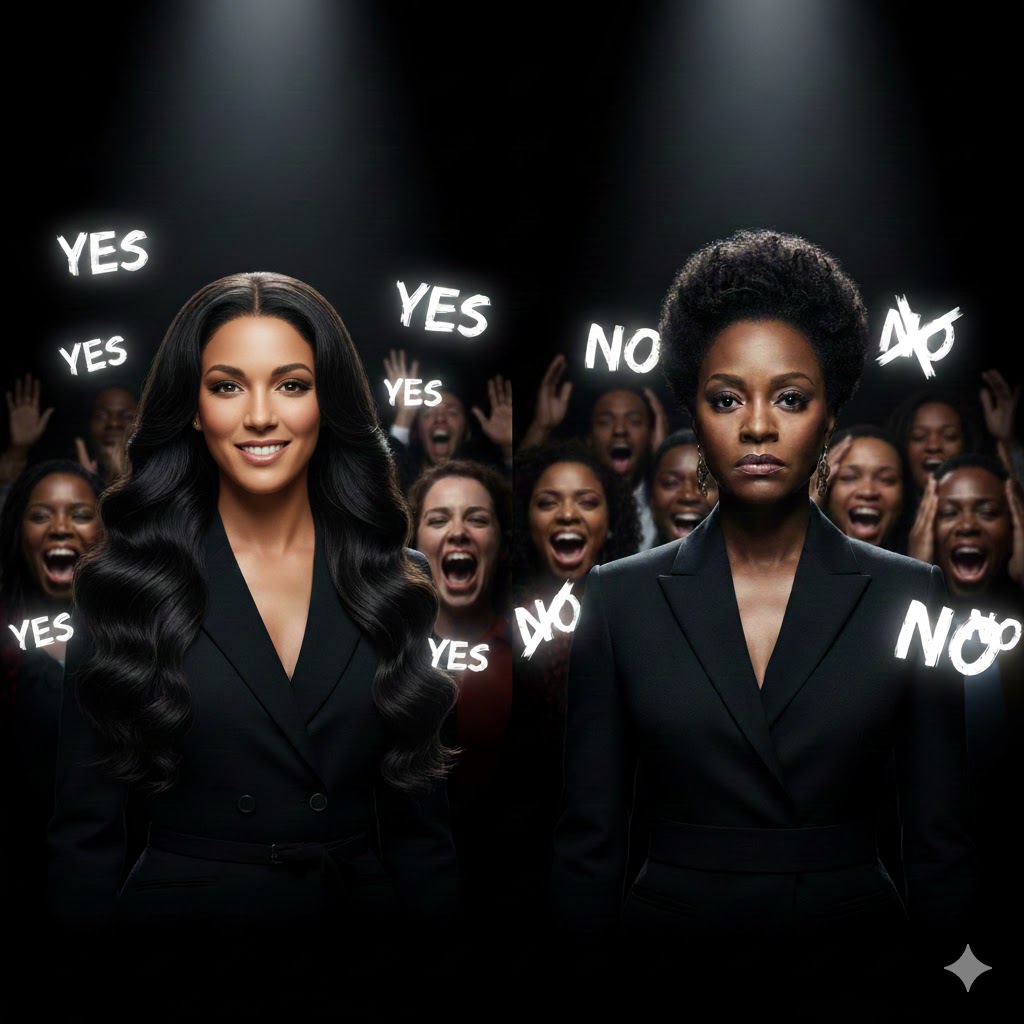
Colorism functions as racism’s internal extension. By privileging proximity to whiteness within communities of color, it reproduces hierarchy without external enforcement. This internalization demonstrates how deeply racism penetrates social life and self-concept.

Economically, racism concentrates disadvantage. Racial wealth gaps are not the result of spending habits but of historic exclusion from asset-building opportunities such as homeownership, education access, and fair wages. These gaps persist because policy choices continue to protect accumulated advantage.

In the criminal justice system, racism manifests through surveillance, sentencing disparities, and differential use of force. Black and Brown communities experience policing not as protection but as occupation, a reality documented across decades of empirical research.

Education systems mirror these inequalities. Schools serving marginalized communities are underfunded, overpoliced, and underestimated. Expectations shape outcomes, and racism lowers the ceiling long before potential can be demonstrated.

Healthcare outcomes reveal another dimension. Racial bias contributes to higher maternal mortality, undertreatment of pain, and reduced access to quality care. These disparities are not biological but structural, rooted in unequal treatment and mistrust born of history.

Media representation reinforces racial narratives. Whiteness is normalized as universal, while Blackness is often framed through pathology or exception. Repetition turns stereotype into common sense, shaping public opinion and policy priorities.

Faith communities are not exempt. Scripture condemns partiality, yet churches have often mirrored racial segregation and silence. James warns that favoritism is sin, not culture (James 2:1–9, KJV), calling believers to repentance rather than rationalization.

The Bible confronts racism at its root by affirming shared humanity. “And hath made of one blood all nations of men” (Acts 17:26, KJV) dismantles every racial hierarchy. Racism is therefore not only social injustice but theological error.

Resistance to naming racism often masquerades as calls for unity or civility. Yet unity without truth is denial. Healing requires confession, and confession requires naming harm without euphemism.

Psychologically, confronting racism provokes discomfort, particularly for those who benefit from the status quo. Defensiveness protects identity but stalls progress. Growth demands the humility to listen without centering oneself.

Structural change is essential. Individual goodwill cannot substitute for policy reform. Fair housing, equitable education funding, healthcare access, and accountable policing are necessary to dismantle systemic harm.

Education that tells the full truth is also critical. Sanitized history sustains ignorance, while honest history equips societies to avoid repetition. Memory is a moral responsibility.

Hope lies not in denial but in courage. Communities that confront racism directly build stronger solidarity and more durable justice. Silence fractures trust; truth repairs it.

Ultimately, racism persists because it is tolerated. What is unchallenged becomes tradition. Scripture teaches that justice is not optional but required: “What doth the Lord require of thee, but to do justly, and to love mercy, and to walk humbly” (Micah 6:8, KJV).

The elephant in the room will not leave on its own. It must be named, confronted, and removed. Only then can societies move from performative concern to transformative justice, grounded in truth, accountability, and shared humanity.


References

The Holy Bible, King James Version. (1611). Various passages.

Du Bois, W. E. B. (1903). The souls of Black folk. A. C. McClurg & Co.

Fanon, F. (1952). Black skin, white masks. Grove Press.

Alexander, M. (2010). The new Jim Crow: Mass incarceration in the age of colorblindness. The New Press.

Wilkerson, I. (2020). Caste: The origins of our discontents. Random House.

Bonilla-Silva, E. (2017). Racism without racists. Rowman & Littlefield.

Pager, D., & Shepherd, H. (2008). “The sociology of discrimination.” Annual Review of Sociology, 34, 181–209.

Williams, D. R., & Mohammed, S. A. (2013). “Racism and health I.” Behavioral Medicine, 39(2), 47–56.

The Skin They Can’t Ignore: Brown Girls in a World of Whiteness. #thebrowngirldilemma

Photo by Bash Mutumba on Pexels.com

Brown skin has always carried a meaning that transcends the surface. In a world structured around whiteness as the dominant social, cultural, and economic standard, brown girls are both a threat and a testimony. Their very presence challenges hierarchies of beauty, power, and worth. Unlike invisibility or erasure, their skin is something that cannot be ignored. It is marked, politicized, and constantly in conversation with systems designed to uphold whiteness as the default. This tension defines the lived experience of the “brown girl dilemma.”

The Construction of Whiteness as Standard

Whiteness functions not merely as a racial category but as an invisible yardstick against which all others are measured. In Eurocentric societies, beauty standards idealize pale skin, straight hair, and narrow features, rendering darker skin tones as deviations (Hooks, 1992). Brown girls are raised in a world where whiteness is positioned as the default image of femininity and desirability, forcing them into a constant negotiation between self-love and societal rejection.

The Colonial Inheritance of Skin Politics

The privileging of whiteness is not accidental; it is the result of colonial history. Colonizers created color hierarchies to maintain control, privileging lighter skin as closer to European ideals while casting darker skin as inferior. This legacy persists globally, from Latin America to South Asia to the African diaspora, where skin-lightening industries thrive. Brown girls, carrying the deep hues of ancestry, inherit not only beauty but also the burden of colonial prejudice.

Hyper-Visibility of Brown Skin

Despite attempts to marginalize them, brown girls’ skin is inescapable to the world around them. It is fetishized in music, commodified in fashion, and policed in schools and workplaces. Curly hair, full lips, and curves—once mocked—are now profitable when marketed on non-brown bodies. This hyper-visibility is not affirmation but appropriation, where features of brown girls are celebrated only when detached from the bodies that carry them.

Invisibility in Institutions

Yet, paradoxically, while their skin is hyper-visible, their humanity is often invisible. Brown women are underrepresented in media, overlooked in corporate leadership, and ignored in policymaking. The very skin that cannot be ignored becomes the justification for exclusion: too dark, too ethnic, too “other” to belong. This institutional invisibility reflects what Du Bois (1903) called “double consciousness,” the constant tension between self-perception and how one is perceived under whiteness.

The Burden of Representation

Because brown skin is so visible, brown girls often carry the weight of representation. In classrooms, workplaces, or public platforms, they are expected to “speak for all” or embody a flawless image. Mistakes are magnified, success is tokenized, and mediocrity is not an option. Their skin, already politicized, makes them symbols before they are seen as individuals. This burden creates both exhaustion and resilience.

The Psychology of Skin and Self-Worth

Psychologically, growing up in a world of whiteness shapes how brown girls see themselves. Studies reveal that children of color often internalize colorist messages, associating lighter skin with intelligence, beauty, and social acceptance (Russell, Wilson, & Hall, 1992). The result is an identity negotiation where brown girls must learn to reclaim the skin that society teaches them to devalue. Self-love becomes not merely emotional but political—a radical act of survival.

Scriptural Counter-Narratives

While society diminishes brown skin, scripture affirms it. In the Song of Solomon 1:5, the woman declares, “I am black, but comely, O ye daughters of Jerusalem.” This verse resists cultural stigmas, affirming that darkness is not deficiency but beauty. Similarly, Psalm 139 reminds every believer that they are “fearfully and wonderfully made.” For brown girls, these verses act as counter-narratives, dismantling whiteness as the sole standard of worth.

Cultural Resistance through Beauty Movements

The rise of natural hair movements, melanin-positive campaigns, and brown-skinned influencers represents a collective resistance against whiteness. Hashtags such as #MelaninMagic and #BlackGirlJoy reframe brown skin as divine, radiant, and unignorable. These movements not only celebrate aesthetic diversity but also dismantle internalized shame, allowing brown girls to embrace the very skin once weaponized against them.

Global Dimensions of Brownness

The struggle of brown girls extends beyond U.S. borders. In India, dark-skinned women face exclusion from marriage markets; in Brazil, Afro-descendant women face racialized violence; in Africa, skin bleaching is normalized as a ticket to opportunity. These global dimensions highlight that the issue is not isolated but systemic—brown skin is a global site of struggle against the idol of whiteness.

Liberation through Self-Definition

Ultimately, the skin they cannot ignore becomes the skin that redefines itself. Liberation for brown girls lies not in seeking approval from a world of whiteness but in reclaiming the power of their skin as heritage, beauty, and resistance. Each affirmation of melanin, each refusal to conform to Eurocentric standards, is a declaration: brown skin is not marginal, it is central.

Conclusion

In a world where whiteness dominates, brown girls live with the paradox of being unignorable yet unvalued. Their skin is the canvas upon which colonial legacies, beauty standards, and societal fears are projected. Yet, that same skin holds resilience, beauty, and divinity that whiteness cannot erase. To live in brown skin is to bear a heavy inheritance, but also to embody an undeniable truth: the skin they cannot ignore will always speak, resist, and shine.


References

  • Collins, P. H. (2000). Black feminist thought: Knowledge, consciousness, and the politics of empowerment. Routledge.
  • Du Bois, W. E. B. (1903). The souls of Black folk. A.C. McClurg & Co.
  • Hooks, B. (1992). Black looks: Race and representation. South End Press.
  • Russell, K., Wilson, M., & Hall, R. (1992). The color complex: The politics of skin color among African Americans. Harcourt Brace Jovanovich.
  • The Holy Bible, King James Version.

Shades of Power: How Colorism Functions as a Hidden Caste System

Colorism operates as an unspoken caste system within racialized communities, privileging proximity to whiteness while punishing darker skin. Unlike racism, which is imposed externally, colorism thrives internally, making it both more difficult to confront and more psychologically destructive. It functions quietly, shaping social outcomes while masquerading as “preference” or “aesthetic.”

Historically, colorism was engineered during slavery, where lighter-skinned enslaved people were granted marginal advantages such as indoor labor or literacy access. These privileges were not benevolence but strategy—designed to fracture solidarity and create internal hierarchies that mirrored white supremacy. Over generations, these imposed distinctions calcified into social norms.

The Bible warns against such partiality, stating, “But if ye have respect to persons, ye commit sin” (James 2:9, KJV). Colorism is precisely this sin—assigning value based on appearance rather than character or righteousness. When communities internalize this hierarchy, they replicate the logic of their oppressors.

Psychologically, colorism distorts self-concept. Darker-skinned individuals often internalize shame, while lighter-skinned individuals may experience conditional acceptance tied to appearance rather than identity. This dynamic reinforces anxiety, comparison, and alienation, aligning with Fanon’s analysis of racialized inferiority complexes (Fanon, 1952).

Sociologically, colorism influences hiring, sentencing, marriage markets, and media representation. Studies consistently show that lighter skin correlates with higher income and social mobility within Black populations (Hunter, 2007). These outcomes expose colorism as structural, not merely personal bias.

Spiritually, colorism contradicts the doctrine of creation. Scripture affirms that humanity is made in God’s image, not graded by shade (Genesis 1:27, KJV). Any hierarchy of skin tone is therefore a theological error, not a cultural quirk.

Until colorism is named as a system—rather than an attitude—it will continue to operate invisibly. Liberation requires dismantling not only white supremacy, but its internalized offspring.

References

The Holy Bible, King James Version.
Fanon, F. (1952). Black skin, white masks.
Hunter, M. (2007). “The persistent problem of colorism.” Sociology Compass.

The Blue Vein Society

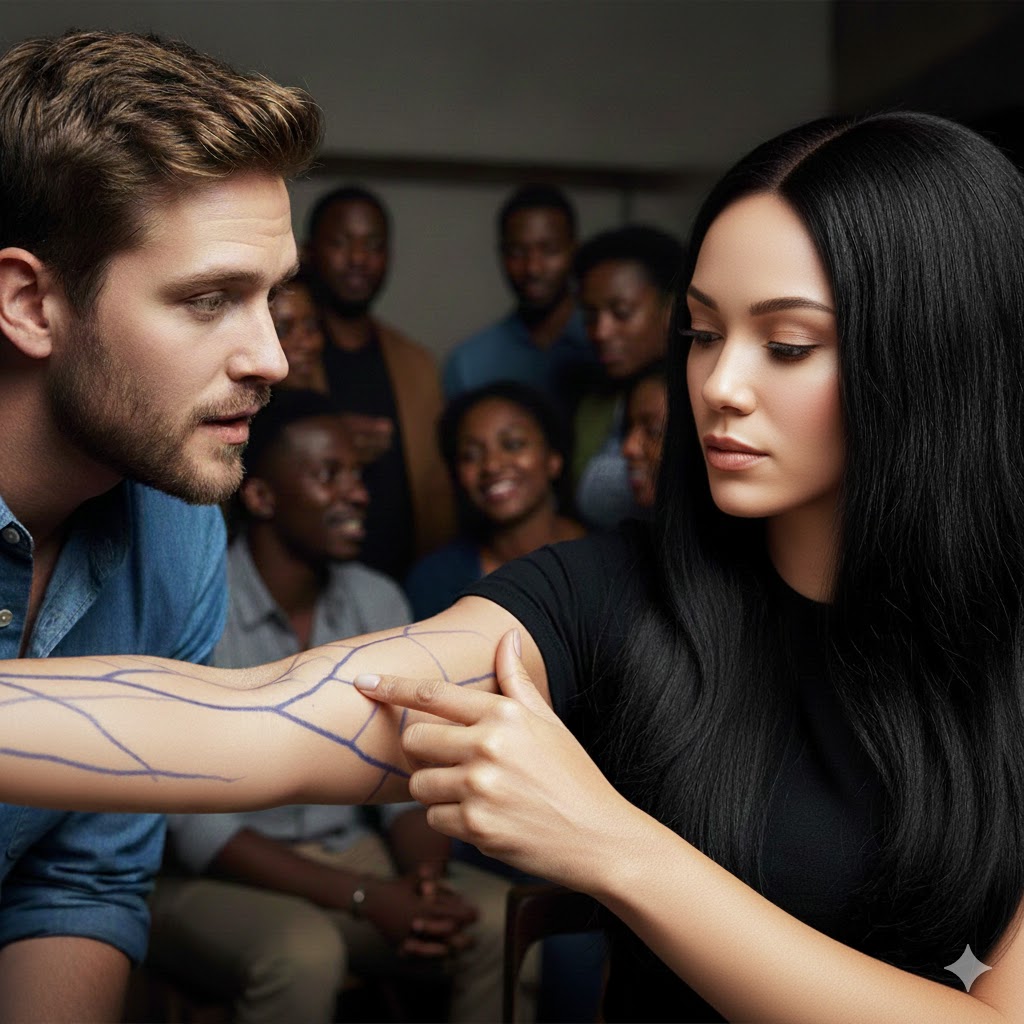
The Blue Vein Society refers to a color-based social hierarchy that emerged within Black communities, privileging lighter skin tones—particularly those through which veins were visibly apparent—over darker complexions. This phenomenon did not originate organically from African societies but was instead a byproduct of slavery, colonialism, and racial caste systems imposed by Europeans in the Americas. It represents one of the most enduring psychological and social legacies of white supremacy, internalized and perpetuated within oppressed communities long after formal systems of bondage ended.

The roots of the Blue Vein Society trace back to chattel slavery in the United States, where proximity to whiteness often determined one’s survival, labor conditions, and access to marginal privileges. Enslaved Africans with lighter skin, frequently the result of sexual violence by slave masters, were more likely to be assigned domestic labor rather than fieldwork. Over time, these distinctions became codified into informal social classes, creating divisions that mimicked the racial hierarchies established by white enslavers.

After emancipation, these hierarchies did not disappear. Instead, they were repackaged within Black social institutions such as churches, fraternities, sororities, social clubs, and marriage norms. The Blue Vein Society emerged as a literal and symbolic gatekeeping mechanism, where light skin functioned as social capital. The ability to pass the “blue vein test” became shorthand for perceived refinement, intelligence, and respectability—values defined by Eurocentric standards.

Psychologically, the Blue Vein Society reflects internalized racism, a condition in which oppressed people absorb and reproduce the values of their oppressors. Frantz Fanon famously described this process as the colonization of the mind, where Black people come to see themselves through white eyes (Fanon, 1952). Skin tone became a visible marker through which worth was assigned, reinforcing a false hierarchy that contradicted both biological reality and spiritual truth.

The impact on Black people has been profound and generational. Darker-skinned individuals—especially women—have historically faced disproportionate discrimination in employment, marriage prospects, media representation, and social mobility. Colorism fractured Black unity, redirecting communal energy away from collective liberation and toward internal competition. This division weakened resistance to systemic oppression by fostering mistrust and resentment within the community.

The Bible speaks directly against such partiality. Scripture states, “My brethren, have not the faith of our Lord Jesus Christ, the Lord of glory, with respect of persons” (James 2:1, KJV). The Blue Vein Society stands in direct opposition to this command, elevating physical appearance over righteousness, character, and obedience to God. In doing so, it replaces divine standards with worldly hierarchies rooted in sin and pride.

White supremacy played a central role in the creation and maintenance of colorism. European colonizers constructed racial categories that equated whiteness with purity, civility, and intelligence, while associating darkness with savagery and inferiority. These ideas were reinforced through pseudo-scientific racism, Christianized slavery, and legal systems that privileged lighter-skinned Black people as buffers between white elites and darker masses (Painter, 2010).

White women, in particular, were instrumental in policing racial boundaries. Historical records show that white women often weaponized accusations of impropriety or assault against Black men while simultaneously enforcing rigid beauty standards that upheld whiteness as feminine ideal. Their role in shaping social norms further entrenched color hierarchies that Black communities later internalized and replicated.

The psychology behind the Blue Vein Society is rooted in survival trauma. Under slavery and Jim Crow, proximity to whiteness could mean reduced violence, better treatment, or access to education. What began as a coerced adaptation eventually hardened into a belief system. Over time, trauma responses became cultural norms, passed down as “preferences” rather than recognized as wounds.

Biblically, this distortion mirrors the sin of esteeming the outward appearance over the heart. “But the Lord said unto Samuel, Look not on his countenance…for the Lord seeth not as man seeth; for man looketh on the outward appearance, but the Lord looketh on the heart” (1 Samuel 16:7, KJV). Colorism violates this principle, substituting skin tone for spiritual discernment.

The Blue Vein Society also distorted Black theology. Eurocentric depictions of Christ, angels, and biblical figures reinforced the idea that holiness itself was light-skinned. This imagery shaped religious consciousness, subtly suggesting that proximity to God required proximity to whiteness. Such theology alienated darker-skinned believers from seeing themselves fully reflected in the divine image.

Sociologically, colorism functioned as a form of social control. By fragmenting Black communities along shade lines, white supremacy ensured that collective resistance would be weakened. Divide-and-conquer strategies did not end with emancipation; they evolved into psychological warfare, where Black people policed one another on behalf of an oppressive system.

Modern manifestations of the Blue Vein Society persist in media, dating culture, and beauty industries. Skin bleaching, preferential casting, and algorithmic bias all reflect the same hierarchy under new names. Though less explicit, the underlying message remains unchanged: lighter is better. This continuity reveals that the problem is structural, not merely individual.

Healing requires both historical truth-telling and spiritual repentance. The Bible calls God’s people to tear down strongholds, including mental ones: “Casting down imaginations, and every high thing that exalteth itself against the knowledge of God” (2 Corinthians 10:5, KJV). Colorism is one such stronghold that must be confronted as sin and deception.

Education plays a critical role in dismantling these beliefs. Understanding African history prior to European contact reveals societies where beauty, leadership, and divinity were not defined by lightness. Reclaiming this knowledge helps restore dignity to those marginalized by colonial aesthetics.

Collective healing also requires rejecting white validation as the measure of Black worth. The Blue Vein Society thrives where whiteness is still seen as the standard. True liberation demands redefining value through Black-centered, God-centered frameworks rather than Eurocentric approval.

Scripture affirms the unity and equal worth of all people descended from Adam. “And hath made of one blood all nations of men for to dwell on all the face of the earth” (Acts 17:26, KJV). This verse dismantles every color-based hierarchy, declaring them contrary to God’s design.

The dismantling of the Blue Vein Society is not merely a social project but a moral and spiritual imperative. It requires courage to confront uncomfortable truths, humility to unlearn inherited biases, and faith to believe that restoration is possible. Black unity cannot be achieved without addressing the internal fractures caused by colorism.

Ultimately, the Blue Vein Society stands as evidence of how deeply white supremacy penetrated the Black psyche—but it also testifies to the possibility of healing. By exposing its origins, rejecting its lies, and returning to biblical truth, Black communities can move toward wholeness, dignity, and collective strength rooted not in skin tone, but in divine identity.


References

Fanon, F. (1952). Black skin, white masks. Grove Press.

James, W. (2005). The souls of Black folk. Barnes & Noble Classics. (Original work published 1903)

Painter, N. I. (2010). The history of white people. W. W. Norton & Company.

Russell, K., Wilson, M., & Hall, R. (1992). The color complex: The politics of skin color among African Americans. Anchor Books.

The Holy Bible, King James Version. (1611). Various passages.

Wilkerson, I. (2020). Caste: The origins of our discontents. Random House.

Du Bois, W. E. B. (1935). Black reconstruction in America. Free Press.

Dilemma: Forced Diaspora

The dilemma of forced diaspora stands as one of the most defining and devastating realities in human history, particularly for African-descended peoples whose displacement reshaped the modern world. This rupture was not merely geographic but spiritual, psychological, and generational, severing people from land, language, kinship systems, and sacred memory.

Diaspora, in its truest sense, implies scattering. Forced diaspora, however, denotes violent expulsion—movement without consent, carried out through domination, coercion, and terror. The transatlantic slave trade exemplifies this condition, transforming human beings into cargo and redefining captivity as commerce.

Within the Hebrew Bible, displacement functions as both a consequence and a warning. Deuteronomy 28 in the King James Version presents blessings for obedience and curses for disobedience, culminating in exile, captivity, and foreign domination. The chapter is not abstract theology; it is historically grounded prophecy rooted in covenantal law.

Deuteronomy 28 begins with prosperity and national elevation, but the latter portion details systematic collapse. Hunger, poverty, loss of sovereignty, and enslavement emerge as consequences when a people fall under divine judgment. These themes recur throughout biblical history, particularly in the experiences of Israel.

Verse 48 declares that the people would serve enemies “in hunger, and in thirst, and in nakedness, and in want of all things,” while verse 68 foretells transportation into bondage by ships. This specific imagery has drawn sustained attention in diasporic biblical interpretation.

The reference to ships in Deuteronomy 28:68 is striking, as captivity in the ancient Near East was typically overland. The verse’s maritime language suggests a future mode of enslavement distinct from earlier Assyrian or Babylonian exiles, intensifying its interpretive gravity.

The Middle Passage, spanning the fifteenth through nineteenth centuries, involved the forced shipment of millions of Africans across the Atlantic Ocean. Conditions aboard slave ships included extreme overcrowding, disease, starvation, and death, reflecting the dehumanization described in Deuteronomy’s curses.

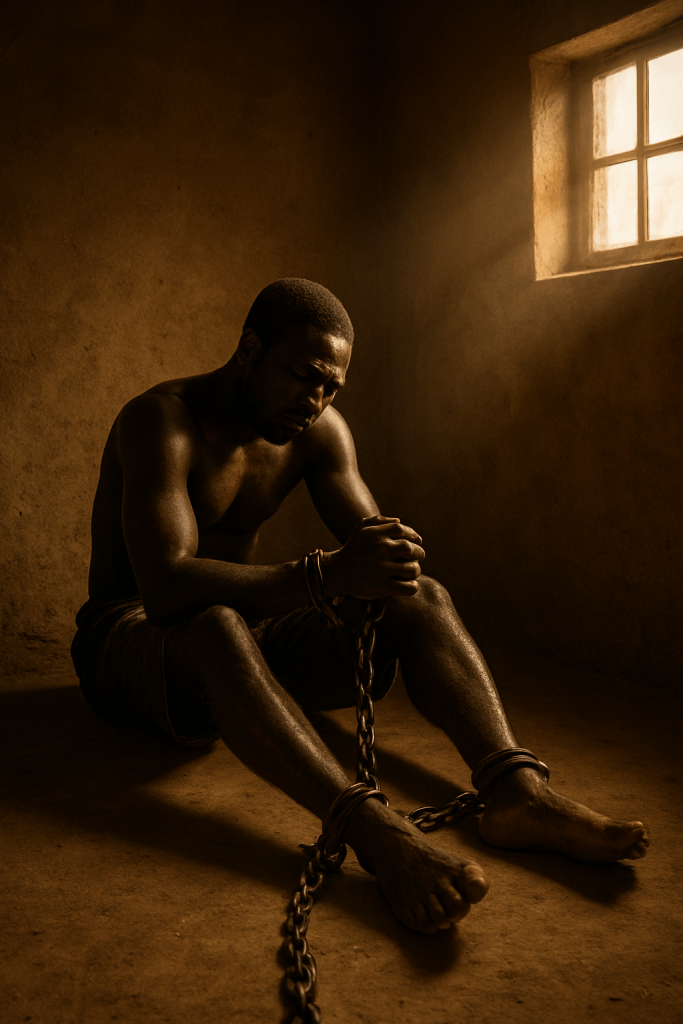
Men, women, and children were chained in holds, stripped of identity, and reduced to inventory. The loss of names, languages, and familial ties parallels the biblical language of becoming “a byword and a proverb” among nations, as stated in Deuteronomy 28:37.

The Middle Passage was not an isolated event but the center of a global economic system dependent upon forced labor. European empires extracted wealth through plantations, mines, and infrastructure built upon the backs of enslaved Africans.

Forced labor in the Americas mirrored the biblical description of unrelenting servitude. Enslaved people labored without rest, legal protection, or compensation, echoing Deuteronomy 28:65, which describes no ease, trembling hearts, and failing eyes.

The plantation system institutionalized violence, sexual exploitation, and family separation. Children were sold away from parents, marriages were unrecognized, and kinship networks were deliberately destroyed to prevent resistance.

This systematic breaking of family structures resonates with Deuteronomy 28:32, which warns that sons and daughters would be given to another people, with no power to rescue them. The verse reflects a loss of agency that defined chattel slavery.

Forced diaspora also produced cultural amnesia. African cosmologies, languages, and governance systems were suppressed, replaced by imposed identities rooted in racial hierarchy. Yet fragments survived through music, oral tradition, and spiritual practice.

The introduction of Christianity to enslaved Africans occurred within contradiction. While Scripture was used to justify bondage, enslaved people discerned liberation themes within the text, identifying with Israel’s suffering and hope for deliverance.

Biblical narratives of exile—from Egypt to Babylon—offered frameworks for understanding suffering without surrendering dignity. The God who judged also promised restoration, a tension deeply embedded in Deuteronomy 30’s assurance of return.

Forced diaspora produced a transnational Black identity forged through shared trauma. Though stripped of homeland, African-descended peoples formed new cultures across the Caribbean, South America, and North America.

Resistance took many forms, including revolts, maroon societies, work slowdowns, and spiritual endurance. These acts challenged the totalizing power of forced labor systems and affirmed retained humanity.

Economic exploitation under slavery laid the foundation for modern global capitalism. Wealth extracted from forced labor financed industrialization, universities, banks, and nation-states, while the enslaved inherited poverty.

The end of legal slavery did not end the conditions described in Deuteronomy 28. Sharecropping, convict leasing, segregation, and mass incarceration functioned as continuations of forced labor under new legal frameworks.

Psychological captivity followed physical captivity. Generations internalized narratives of inferiority imposed to rationalize enslavement, fulfilling Deuteronomy 28:34, which speaks of madness for the sight of one’s eyes.

The forced diaspora fractured identity, producing questions of origin, belonging, and purpose. Many descendants of the enslaved continue to search archives, DNA, and Scripture for an ancestral connection.

Theological interpretations linking Deuteronomy 28 to the African diaspora remain contested, yet their persistence reflects an attempt to reconcile history with sacred text. For many, Scripture becomes a map through trauma.

The curse language of Deuteronomy is inseparable from covenant responsibility. In biblical theology, judgment is never arbitrary; it functions as correction rather than annihilation.

Importantly, Deuteronomy 28 does not conclude Israel’s story. Later prophets promise regathering, healing, and restoration, emphasizing divine faithfulness beyond punishment.

Forced diaspora, while devastating, did not erase African-descended peoples. Survival itself stands as testimony to resilience under conditions designed to destroy.

Cultural contributions born from displacement—music, language, theology, and political thought—have reshaped global civilization, often without acknowledgment of their origins.

Memory remains central to healing. To remember the Middle Passage is to resist erasure and affirm the humanity of those who endured it.

Scripture, when read with historical awareness, becomes a site of reckoning rather than oppression. Deuteronomy 28 challenges readers to confront how power, obedience, and justice intersect.

The dilemma of forced diaspora persists in contemporary inequalities, reminding the world that history is not past. The echoes of ships, chains, and fields remain embedded in modern systems.

Yet the biblical narrative insists that captivity is not the final word. Justice, restoration, and truth remain integral to divine order.

Forced diaspora stands as both a warning and a witness—a warning against unchecked power and a witness to the enduring strength of a people who survived the unthinkable.


References

The Holy Bible, King James Version. (1611/1769). Deuteronomy 28–30.

Curtin, P. D. (1969). The Atlantic slave trade: A census. University of Wisconsin Press.

Gomez, M. A. (2005). Reversing sail: A history of the African diaspora. Cambridge University Press.

Smallwood, S. E. (2007). Saltwater slavery: A middle passage from Africa to American diaspora. Harvard University Press.

Williams, E. (1944). Capitalism and slavery. University of North Carolina Press.

Healthcare Inequity: Why Black Lives Are Still at Risk in the Medical System?

Photo by Pixabay on Pexels.com

Despite advancements in medical science and technology, Black Americans continue to face significant disparities in healthcare access, quality, and outcomes. These inequities are deeply rooted in historical and systemic racism, manifesting in various aspects of the healthcare system. This essay explores the multifaceted nature of healthcare inequity affecting Black communities, examining factors such as access to care, quality of treatment, and the broader social determinants of health.


Historical Context of Healthcare Disparities

The legacy of slavery, segregation, and discriminatory policies has left an indelible mark on the healthcare experiences of Black Americans. From the exploitation of Black bodies in medical experimentation to the establishment of separate and unequal healthcare facilities, the history of medicine in the United States is fraught with racial injustice. These historical injustices have contributed to a mistrust of the medical system within Black communities, further exacerbating existing disparities.


Access to Healthcare Services

Access to healthcare is a fundamental determinant of health, yet many Black Americans encounter significant barriers. Factors such as lack of health insurance, transportation challenges, and the scarcity of healthcare providers in predominantly Black neighborhoods contribute to limited access. In urban areas, Black-majority census tracts are more likely to be located in trauma care deserts, with residents facing longer distances to emergency medical services .Wikipedia


Quality of Care and Patient-Provider Relationships

Even when Black patients access healthcare services, the quality of care they receive is often subpar. Studies have shown that Black patients are less likely to receive pain management, have their symptoms taken seriously, or be treated with the same respect as their white counterparts. A survey found that 55% of Black adults reported at least one negative experience with healthcare providers, including being treated with less respect or having to speak up to receive proper care .Pew Research Center


Implicit Bias and Structural Racism

Implicit bias among healthcare providers plays a significant role in perpetuating disparities. Unconscious stereotypes can influence clinical decisions, leading to misdiagnoses, delayed treatments, and inadequate care for Black patients. Structural racism within healthcare institutions, such as discriminatory policies and practices, further entrenches these inequities .PMC


Social Determinants of Health

Beyond clinical care, social determinants such as education, employment, housing, and environmental factors significantly impact health outcomes. Black Americans are more likely to experience poverty, food insecurity, and substandard housing, all of which contribute to poorer health. These social inequities are compounded by systemic racism, creating a cycle of disadvantage that is difficult to break .


Maternal and Infant Health Disparities

Black women face disproportionately high maternal and infant mortality rates. In 2024, Mississippi declared a public health emergency after its infant mortality rate surged to 9.7 deaths per 1,000 live births, nearly double the national average. This alarming rise is attributed to disparities in access to healthcare, systemic racism, and socioeconomic inequalities .The Economic Times


Chronic Diseases and Preventive Care

Chronic conditions such as hypertension, diabetes, and heart disease are more prevalent among Black Americans. Access to preventive care and early intervention is crucial in managing these diseases; however, disparities in healthcare access and quality hinder effective management. The American Heart Association has highlighted that disease management is less effective among African Americans, contributing to higher mortality rates .Pfizer


Mental Health and Healthcare Access

Mental health is often overlooked in discussions about healthcare disparities. Black Americans face challenges in accessing mental health services due to stigma, lack of culturally competent care, and economic barriers. These challenges are compounded by systemic racism, leading to untreated mental health conditions and a lack of support within the healthcare system.


Healthcare Workforce Diversity

The lack of diversity among healthcare providers contributes to disparities in care. With only 5% of doctors identifying as Black, there is a significant underrepresentation of Black professionals in the medical field. This lack of representation can affect patient-provider relationships and the cultural competence of care provided .TIME


Policy and Systemic Reforms

Addressing healthcare inequities requires comprehensive policy reforms. Recommendations include expanding access to health insurance, increasing funding for healthcare services in underserved communities, implementing anti-racism training for healthcare providers, and promoting diversity within the healthcare workforce. The Commonwealth Fund’s report on advancing racial equity in U.S. healthcare provides a framework for such reforms .Commonwealth Fund


Community-Led Health Initiatives

Community organizations play a vital role in addressing healthcare disparities. Initiatives such as mobile health clinics, health education programs, and community health workers help bridge gaps in care and empower Black communities to take control of their health. These grassroots efforts are essential in creating sustainable change and improving health outcomes.


The Role of Technology in Reducing Disparities

Telemedicine and digital health tools have the potential to expand access to care, particularly in underserved areas. However, disparities in internet access and digital literacy must be addressed to ensure that Black Americans can benefit from these technologies. Equitable access to digital health resources is crucial in reducing healthcare disparities.


Education and Health Literacy

Health literacy is a critical factor in managing health and navigating the healthcare system. Educational disparities and language barriers can impede understanding of medical information and adherence to treatment plans. Improving health literacy through community education and accessible resources is essential in empowering Black patients.


Research and Data Collection

Accurate data collection is fundamental in identifying and addressing healthcare disparities. However, underreporting and misclassification of race and ethnicity in medical records can obscure the extent of inequities. Standardizing data collection and ensuring accurate representation are necessary steps in addressing disparities .PMC


Advocacy and Public Awareness

Raising public awareness about healthcare disparities is crucial in driving change. Advocacy efforts by organizations and individuals can influence policy decisions and promote accountability within the healthcare system. Public awareness campaigns can also reduce stigma and encourage individuals to seek care.


Conclusion

Healthcare inequity remains a pressing issue for Black Americans, rooted in historical and systemic racism. Addressing these disparities requires a multifaceted approach, including policy reforms, community engagement, and systemic changes within the healthcare system. By acknowledging and actively working to dismantle the structures that perpetuate inequities, society can move toward a more equitable healthcare system for all.


References

  • “Racism, Inequality, and Health Care for African Americans.” The Century Foundation. The Century Foundation+1
  • “Understanding and Addressing Racial Disparities in Health Care.” National Center for Biotechnology Information. PMC
  • “Health Disparities in Black or African American People.” Centers for Disease Control and Prevention. CDC
  • “Advancing Racial Equity in U.S. Health Care.” Commonwealth Fund. Commonwealth Fund
  • “Implicit Bias and Racial Disparities in Health Care.” American Bar Association. American Bar Association
  • “Healthcare Disparities Among African Americans.” Pfizer. Pfizer
  • “How Recognizing Health Disparities for Black People is Important for Change.” Kaiser Family Foundation. KFF+1
  • “Medical Deserts in the United States.” Wikipedia. Wikipedia
  • “He Was Shot by a Stranger but Treated Like a Criminal When He Reached the ER.” Time. TIME
  • “Why Infant Death Rates Have Doubled in Mississippi and Are Rising Across the US.” Economic Times. The Economic Times
  • “Pregnancy is Deadlier in the US Than in Other Wealthy Countries. But We Could Fix That.” Live Science. PMC+4Live Science+4Pew Research Center+4
  • “Green Spaces Are Key to Combating Record Heat in Marginalized Communities.” Associated Press. AP News
  • “Institutional Racism in Historical and Modern US Health Care

The Mirror and the Myth: Somali Identity, Colorism, and the Question of Blackness

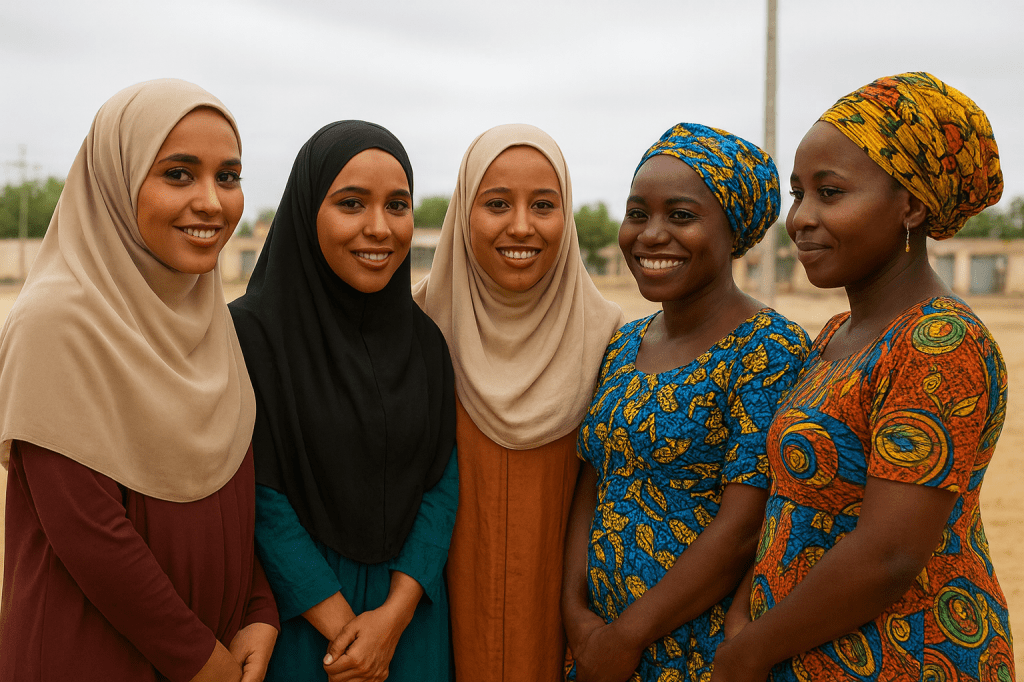
Somali identity sits at the crossroads of Africa, the Middle East, and the Indian Ocean world, shaped by centuries of migration, trade, and cultural blending. Because of this complex history, conversations about how some Somalis perceive Black people—and even how they perceive themselves—carry emotional, historical, and sociological weight. While it is inaccurate to claim that all Somalis dislike Black people, anti-Black attitudes indeed exist in parts of Somali society, much like in many cultures around the world influenced by colonialism and colorism.

The foundational issue is identity. Many Somalis see themselves not simply as “Black Africans,” but as Cushitic people, a linguistic and cultural group indigenous to the Horn of Africa. This Cushitic identity predates modern racial categories and often separates Somalis from other African ethnic groups in their own cultural memory. For some, this difference becomes a way to claim uniqueness rather than sameness.

Another layer is the historical Arabian connection. For over a thousand years, the Horn of Africa was tied to the Arabian Peninsula through trade, religion, and intermarriage. Somali clans trace parts of their lineage to Arab traders and Islamic scholars, especially after the spread of Islam in the 7th century. While genetic studies show that Somalis are overwhelmingly East African, the presence of some Arabian ancestry became culturally emphasized over time.

This emphasis contributed to a racial hierarchy that elevated proximity to Arab identity. Arab societies historically developed their own colorist and caste-like distinctions, and these ideas traveled back across the Red Sea. Within this framework, darker-skinned Africans were placed at the bottom, while “Arab-adjacent” identities were seen as more respectable. These beliefs influenced Somali beauty standards and self-perception.

Another contributing factor is colonialism. Italian and British powers reinforced racial categories that separated Somalis from other African groups. The more colonizers insisted Somalis were “not like other Africans,” the more some Somali elites embraced this distinction. Colonialism often amplifies preexisting anxieties, and racial hierarchy became a painful legacy that survived long after independence.

In many Somali communities, especially among diaspora youth, the tension around Black identity emerges from confusion rather than malice. Many grow up hearing conflicting narratives: that they are African, but not “Black”; that they are different, but not superior; that they should distance themselves from Blackness, yet they are racially profiled as Black everywhere they go outside Somalia. This creates an identity crisis.

Colorism further complicates the story. Lighter skin is often praised in Somali society, while darker skin may be stigmatized. These views are not unique to Somalis—they appear throughout Africa, the Middle East, and Asia due to global beauty standards shaped by colonialism, slavery, and media. In this system, “beauty” becomes racialized, and some people internalize the idea that proximity to Arab or Eurasian features is more desirable.

Because of these influences, some Somalis adopt an anti-Black worldview even while they themselves are viewed as Black in Western racial structures. This contradiction produces internalized tension and sometimes open prejudice. Yet, at the same time, there are many Somalis who identify proudly as Black, who celebrate African culture, and who reject colorism entirely. Somali societies are not monolithic.

Another significant factor is clan and ethnic hierarchy. Somali culture is deeply clan-oriented, and these hierarchies sometimes extend into attitudes toward neighboring African groups. Historically, pastoral communities often viewed agricultural or hunter-gatherer groups as socially inferior. Over time, these attitudes sometimes merged with racial ideas introduced through Arab societies and colonial rule.

The diaspora experience reshapes Somali identity in new ways. Young Somalis in the West often become more aware of race because they face the same racism as African Americans and other Black people. Many begin to question the old narratives and reject anti-Blackness, choosing instead to embrace broader Black solidarity. Others, however, cling to ideas of distinction as a coping mechanism for racism.

When people ask why some Somalis “think they are beautiful,” the deeper issue is that global beauty standards themselves are warped. Many societies have been conditioned to associate beauty with specific features—lighter skin, looser hair, narrow noses—because these were historically tied to social status and power. In Somali communities, beauty is often associated with a blend of Cushitic, Afro-Arab, and East African phenotypes. This has nothing to do with superiority and everything to do with cultural conditioning.

Moreover, Somali beauty is frequently celebrated within the global modeling and fashion world. This external validation reinforces cultural pride but can also unintentionally deepen colorist tendencies. When beauty becomes linked to specific features rather than the full spectrum of Somali diversity, it fuels exclusion and competition.

The question of “what is going on with them?” cannot be answered with a single explanation. Instead, Somali attitudes toward Blackness are shaped by layers of history—Arab influences, colonial classifications, clan structures, colorism, migration, and modern media. These forces shape self-perception, sometimes in harmful ways, but they are not fixed or universal.

There are many Somalis who actively challenge anti-Blackness, educate their communities, and advocate for unity with the broader African diaspora. Activists, scholars, and artists within Somali communities speak openly about dismantling these internalized biases. They argue that Black identity is not something to avoid, but something to honor and embrace.

At the same time, it is important to recognize that conversations about Somali identity must be nuanced. No ethnic group is uniformly prejudiced or uniformly enlightened. Just as some Somali individuals hold anti-Black beliefs, many others are deeply committed to solidarity, justice, and cross-cultural understanding.

It is also essential to avoid narratives that paint Somalis as uniquely problematic. Anti-Blackness is a global phenomenon—found in Arab countries, Asian countries, Latin America, Europe, and even among some Africans. Somali society reflects this global influence, not an inherent flaw.

Ultimately, the relationship between Somalis and Black identity is a story of internal conflict shaped by external forces. It reflects a broader truth: colonization, racial hierarchy, and colorism have left deep scars across the world. Healing requires honest dialogue, historical literacy, and intentional unlearning.

When Somalis embrace the fullness of their East African heritage, they challenge the myth of separation. When they reject colonial beauty hierarchies, they dismantle the internalized shame that feeds colorism. When they stand in solidarity with other Black communities, they reclaim a shared history of resilience, faith, and cultural pride.

In the end, identity is not just what one inherits—it is also what one chooses. And many Somalis today are choosing a narrative of unity rather than division, truth rather than myth, and empowerment rather than stigma.


References

Abdi, C. M. (2015). Elusive Jannah: The Somali Diaspora and Borderless Muslim Identity. University of Minnesota Press.
Lewis, I. M. (2002). A Modern History of the Somali. James Currey.
Samatar, A. I. (1994). The Somali Challenge: From Catastrophe to Renewal? Lynne Rienner.
Hassan, M. (2017). “Anti-Blackness in the Arab and Horn Regions.” Journal of African Studies, 44(2), 215–231.
Harper, K. (2019). Colorism and the Horn of Africa: Historical Roots and Modern Realities. Routledge.
Ali, N. (2021). “Somali Identity in the Diaspora: Negotiating Blackness, Islam, and Migration.” Diaspora Studies, 14(1), 55–73.

Dilemma: Black Skin

The dilemma of Black skin is not biological—it is psychological, historical, and inherited through trauma. A pigment that should signify life, lineage, and divine creativity was weaponized into a mark of subjugation and dehumanization, though scripture never framed hue as inferiority. “I am black, but comely” (Song of Sol. 1:5, KJV).

Slavery altered more than labor systems; it attempted to rewrite identity itself. Black skin became a symbol falsely associated with divine rejection, though the Bible affirms that God formed all mankind intentionally. “The Lord hath made all things for himself” (Prov. 16:4, KJV).

The transatlantic slave trade kidnapped the body, but racism imprisoned the mind. Europeans repainted the theology of beauty with whiteness centered at the altar, planting a spiritual lie that melanated bodies were errors, not divine authorship. Yet God is the original designer. “Thine eyes did see my substance, yet being unperfect” (Psa. 139:16, KJV).

Negativity surrounding Black skin was not seeded in scripture but in propaganda. Colonizers inverted Ham’s lineage in Genesis into a false theology of skin-based curses, though the Bible speaks no such thing. The curse in Genesis was upon Canaan’s servitude, not complexion (Gen. 9:25, KJV).

Africa was the first cradle of human expansion. Ham’s sons—Cush, Mizraim, Put—are founders of African nations (Gen. 10:6, KJV). This means Black presence was at creation, migration, and worship’s dawn, not its aftermath.

Racism engineered theology into hierarchy. Whiteness monopolized the image of God, angels, and salvation, even though scripture gives cosmic freedom in who God calls by name. “Princes shall come out of Egypt; Ethiopia shall soon stretch out her hands unto God” (Psa. 68:31, KJV).

Colorism is racism’s domestic offspring. When a system wounds a nation long enough, the wounded begin competing in hue rather than healing in humanity. But God’s salvation is soul-deep, not skin-deep. “For man looketh on the outward appearance, but the Lord looketh on the heart” (1 Sam. 16:7, KJV).

Dark skin was mislabeled as labor-grade, not beauty-laced. The marketplace economy of slavery placed price tags on phenotype: lighter brought economic advantage, darker brought harsher labor assignment. This distortion still echoes in modern Black cultural psychology.

Black children grew up watching the world praise fairness while punishing richness. This interior conflict creates a dilemma: loving the color you wear while living in a society that still worships the opposite.

Racism convinces Black women that beauty requires editing Blackness itself. From skin bleaching to hair humiliation, the world teaches Black women to apologize for melanin instead of honoring it. Yet scripture reverses the shame of appearance. “He hath made every thing beautiful in his time” (Eccl. 3:11, KJV).

Black men carry the burden of being feared because of their shade and frame. Their complexion was interpreted socially as aggression rather than image-bearer dignity, though the Bible describes strength without equating it to moral corruption. “Be strong and of a good courage” (Josh. 1:9, KJV).

Negativity surrounding Black skin created a spiritual orphaning. Many Blacks converted into religions that used the Bible to comfort them but never used theology to defend their identity’s sacred legitimacy.

Melanin became a theological insecurity rather than a cultural crown. Black skin was reinterpreted into a social problem instead of a sacred narrative of ancestral resilience, divine endurance, and survival.

Scripture affirms that God stands with the suffering and oppressed, not the complexion they are suffering in. “He shall judge the poor of the people, he shall save the children of the needy” (Psa. 72:4, KJV) makes it clear that injustice draws God’s advocacy, not His agreement.

Christianity as preached on plantations tried to pacify revolt while ignoring identity theft. But scripture tells another story: God delivers the oppressed into restored dignity, not silent submission. “Let my people go” (Exo. 5:1, KJV).

Black skin was the canvas on which oppression attempted to permanently paint shame. But the Bible shows that suffering does not rewrite chosenness. “If ye endure chastening, God dealeth with you as sons” (Heb. 12:7, KJV).

Colorism wounded Black women into ranks of attractiveness based on gradients. The dilemma of pigmentation hierarchy taught Black mothers to desire lighter children, reflecting trauma rather than preference.

Racism built entire institutions to oppose Black elevation. Still, scripture promises divine reversal in seasons of suffering. “And the Lord thy God will turn thy captivity… and have compassion upon thee” (Deut. 30:3, KJV).

Black skin is now undergoing reclamation. The dilemma remains, but so does restoration theology. “Be renewed in the spirit of your mind” (Eph. 4:23, KJV) suggests transformation is mental liberation first.

The world tried to make Blackness symbolic of sin, foolishness, servitude, and ugliness. But scripture gives voice to beauty where culture denied it. “I will make mention of Rahab and Babylon to them that know me: behold Philistia, and Tyre, with Ethiopia; this man was born there” (Psa. 87:4, KJV).

The dilemma of Black skin is therefore a theological confrontation: rejecting the doctrine of racial inferiority, dismantling internalized oppression, calling melanin beautiful without apology, and reclaiming skin not as dilemma but testimony.

Black identity was not born in chains, curse, or erasure—it was born under heaven’s architecture, exiled through suffering, yet promised redemption. “For I know the thoughts that I think toward you, saith the Lord, thoughts of peace, and not of evil” (Jer. 29:11, KJV).

The final transformation is from shame to sacred remembrance. The original mark of identity was not color—but creation intent. And creation intent cannot be rewritten by captivity. “The gifts and calling of God are without repentance” (Rom. 11:29, KJV).


References

The Holy Bible, King James Version. (1611). Cambridge University Press.
Douglass, F. (1845). Narrative of the Life of Frederick Douglass, an American Slave. Anti-Slavery Office.
Hunter, M. (2007). “The Persistent Problem of Colorism.” Sociology Compass, 1(1), 237-254.
Walker, A. (1983). In Search of Our Mothers’ Gardens. Harcourt.

Dilemma: Introduction to Colorism — The Field Negro and the House Negro.

Colorism did not begin as a social preference or a beauty hierarchy. It began as a weapon. The moment enslavers divided African people by skin tone, the seeds of generational fragmentation were planted. This system of racialized favoritism did not emerge from African communities but from the brutality and strategic manipulation of chattel slavery in the Americas. Colorism was engineered to weaken solidarity among enslaved people, to create distrust, to manufacture false hierarchies, and to keep them psychologically controlled.

During slavery, the division between the “house Negro” and the “field Negro” became one of the earliest and most destructive manifestations of colorism. Enslavers created these categories intentionally, assigning different duties, privileges, and punishments based on appearance. Those with lighter skin—often the result of rape, coercion, and abuse by white slaveholders—were more likely to be placed inside the slaveholder’s home. Those with darker skin tones were more frequently relegated to the grueling labor of the fields. This division birthed a social hierarchy that still impacts Black communities today.

To understand the emotional depth of this dilemma, one must examine why certain slaves were placed inside the house. Light-skinned enslaved women were often the victims of sexual abuse. Their proximity to the slaveholder was not privilege; it was violation. Their lighter children became a physical reminder of the violent mixing of oppression and power. Because they resembled the master, they were considered easier to control, more “civilized,” or more acceptable within the home environment.

The field Negro lived under conditions of extraordinary brutality. They labored from sunrise to sunset in scorching heat, cutting sugarcane, picking cotton, or cultivating tobacco. Their bodies bore the scars of whips, chains, and exhaustion. Their work was physically punishing, and their living quarters were typically small, overcrowded cabins with poor sanitation. Yet, despite the harshness of their environment, the field Negro was often seen as mentally and spiritually resilient, unfiltered, and unbroken by proximity to the master’s household.

By contrast, the house Negro was seen as more privileged, but this privilege came with psychological chains. They lived under constant surveillance, forced politeness, and proximity to danger. They had to navigate the emotional volatility of their enslavers, protect their children from being sold, and maintain an appearance of loyalty even while suffering silently. Their clothing, food, and tasks were different—but they were still enslaved, still property, still unfree.

The treatment of each group created emotional fractures that enslavers deliberately exploited. In the house, enslaved people were sometimes given clothing, verbal favors, or lighter workloads—not as kindness, but as manipulation. In the fields, enslaved people viewed those inside with suspicion, believing they were aligned with the master. The house and the field were crafted to be enemies, not allies, and this division became a direct pipeline to colorism.

The purpose of this division was not only physical but psychological. If enslaved people distrusted one another, they would be less likely to organize rebellions, plan escapes, or unite against their oppressors. The slave system relied on internal conflict to maintain external control. The lighter enslaved person, closer to the master’s environment, was conditioned to adopt certain mannerisms, speech patterns, and behaviors that seemed to elevate them in the eyes of the oppressor. The system rewarded assimilation while punishing authenticity.

The darker enslaved person, laboring outdoors, embodied the strength and rawness of African identity. Their deeper skin tone was stigmatized because it symbolized an unbreakable connection to their roots. Slavery punished them more harshly for this. Whipping, backbreaking labor, and deprivation were used to reinforce the lie that darker skin was inferior, dangerous, or less deserving of humane treatment.

The house Negro stereotype later became associated with cooperation with white society, while the field Negro became a symbol of resistance. This dichotomy was famously described by Malcolm X, who used the terms metaphorically to highlight differences in mindset, identity, and resistance within the Black community. These categories still influence how Black people view one another today—through complexion, hair texture, and perceived proximity to whiteness.

Colorism grew as an internalized belief passed down through generations. Lightness became associated with safety, with reduced punishment, with proximity to privilege. Darkness became associated with hardship, danger, and rebellion. These internalized beliefs spread through families, shaping everything from beauty standards to marriage preferences to socioeconomic assumptions.

The legacy of the house-field division deeply influenced Black identity formation. Children born of the master often received special attention not because they were valued, but because they were reminders of the master’s dominance. Their slightly elevated status placed them in the crossfire of envy, resentment, and painful expectations. Meanwhile, darker children were taught strength and survival early because their punishment was more immediate and their labor more severe.

The house Negro often faced psychological trauma that is rarely discussed. They witnessed the master’s private life, endured constant scrutiny, and lived with the threat of sudden violence. They were expected to maintain the household’s emotional balance, sometimes acting as surrogate caregivers, nurses, cooks, or concubines. Their pain was often invisible, dismissed under the myth of “privilege.”

In the fields, pain was more visible. Brutality was public, and suffering was communal. Yet there was also a deep sense of connection, unity, and shared experience. The field Negro carried the collective heartbeat of the community. Their songs, rituals, and traditions preserved African culture in ways the house environment sought to erase.

As the generations progressed, these divisions morphed into color-based discrimination within Black communities. After slavery, lighter-skinned Black people were more likely to be hired, educated, and socially accepted by white institutions. This gave colorism additional fuel, leading to intra-racial discrimination that still shapes identity, relationships, and self-esteem.

The roots of colorism are not accidental—they are engineered. The slave system used complexion as a tool of division, and those wounds did not disappear with emancipation. They became embedded in the social fabric, passed down quietly through families who equated lighter skin with opportunity and darker skin with struggle.

Understanding this history is essential for undoing its damage. The dilemma of colorism is not merely about appearance; it is about identity, trauma, power, and legacy. To heal, Black communities must recognize how deeply slavery shaped perceptions of worth based on skin tone. The field and the house were never natural divisions—they were created by oppression.

Even today, the remnants of these categories influence how people see themselves and each other. Healing begins with confronting the origins of these divisions and refusing to carry forward the hierarchies slavery created. Unifying Black identity requires acknowledging these wounds, rejecting the false narratives of superiority, and reclaiming a collective sense of worth rooted in truth, history, and God’s design.

In Scripture, God declares that all humans bear His image (Genesis 1:27). There was no hierarchy in His creation—only dignity. Recognizing that truth is a crucial step toward dismantling the scars of colorism. The field and the house were systems of bondage, not identity. Understanding their historical purpose allows modern communities to rise above them.

Modern Colorism: A Psychological and Biblical Analysis

Colorism did not end with the plantation; it was modernized, repackaged, and woven into the cultural fabric of the Black experience across the diaspora. Its contemporary expressions can be found in media representation, employment discrimination, dating preferences, beauty standards, and socioeconomic advantages tied to complexion. Although enslavement created the hierarchy, modern institutions continue to reward lighter skin in subtle and measurable ways. In the workforce, research shows that lighter-skinned African Americans often receive higher wages and are perceived as more “professional” compared to darker-skinned counterparts, even with equal qualifications. This reflects the internalized residue of slavery that still shapes perception, value, and opportunity.

Social media has intensified this hierarchy. Filters, photo-editing apps, and beauty algorithms frequently lighten skin, sharpen features, and promote Eurocentric aesthetics as the universal definition of beauty. Colorism becomes normalized in the subconscious because beauty is rewarded with likes, visibility, and digital validation. This reinforcement affects self-esteem, particularly among young girls who internalize the belief that darker skin is a disadvantage to femininity, desirability, or social acceptance. The psychological impact is long-term, deeply emotional, and often unspoken.

Romantic relationships reflect another battleground of colorism. Preferences that appear “personal” are often shaped by societal conditioning. Studies show that both men and women may associate lighter skin with softness, elegance, and femininity, while darker skin is associated with strength, aggression, or hypersexuality. These stereotypes are direct remnants of the slave plantation: the “house” perceived as delicate and desirable, and the “field” viewed as rugged and worn. Though the physical plantation ended, the mental plantation still operates in the subconscious mind.

Women bear the heaviest burden of colorism in modern culture. Beauty is still a form of currency, and society frequently measures worth by appearance. Dark-skinned women often face harsher policing of their tone, attitude, confidence, and femininity. Their beauty is acknowledged reluctantly, conditionally, or only when exoticized. Meanwhile, lighter-skinned women may be celebrated more quickly, assumed to be more approachable or charismatic, and receive privileges that have nothing to do with character. This generational wound shapes sisterhood, self-perception, and community dynamics.

Psychologically, colorism creates identity fractures within the Black community. It produces insecurity in some, superiority in others, and distrust in many. These dynamics weaken unity, creating an internal battleground where people fight over proximity to whiteness instead of reclaiming the richness of their own image. Colorism becomes a device of division, mirroring the same tactics enslavers used to keep the oppressed from rising in collective strength. The trauma persists because systems have not fully dismantled the biases that birthed it.

From a trauma-informed lens, colorism is a form of intergenerational psychological conditioning. The mind learns what it repeatedly sees, and when beauty, intelligence, or success are consistently associated with lighter skin, the subconscious registers this as truth. Healing requires more than awareness—it demands intentional unlearning. Cognitive restructuring, positive representation, cultural education, and community affirmation are necessary steps to breaking the psychological hold of complexion-based hierarchy.

A biblical perspective reveals that colorism is inconsistent with God’s design. Scripture affirms that humanity is made in the image of God, with no hierarchy of value based on physical features. “So God created man in his own image…” (Genesis 1:27, KJV). This means every shade of melanin reflects divine artistry, not a system of worth. The Bible consistently condemns partiality, calling it sin. “But if ye have respect to persons, ye commit sin…” (James 2:9, KJV). Colorism is a form of partiality, a man-made ranking that God never authored.

The Bible also acknowledges the beauty of dark skin. Solomon’s beloved declares, “I am black, but comely…” (Song of Solomon 1:5, KJV), affirming that complexion does not diminish beauty or worth. Yet society reversed this truth, weaponizing skin tone to oppress the very people God adorned with richness and depth. Restoring a biblical perspective allows the community to challenge the lies of colorism with scriptural truth and reclaim identity through God rather than societal perception.

From a spiritual lens, colorism is an attack on purpose. Anything that diminishes self-worth ultimately diminishes potential, confidence, and calling. When people internalize inferiority, they subconsciously limit themselves, shrink before opportunity, or settle for less than what God intended. Colorism becomes not only a social issue but a spiritual barrier to identity and destiny. Healing requires spiritual realignment—seeing oneself not through the gaze of society, but through the eyes of the Creator.

Unity is essential in confronting the residue of the house-versus-field divide. Christ taught that a kingdom divided cannot stand (Mark 3:24–25). The Black community cannot rise while internal fractures persist. Healing colorism requires transparent conversation, generational accountability, and willingness to dismantle inherited mindsets. It also requires celebrating the beauty and diversity of Black skin in all its shades, recognizing each as a reflection of God’s intentional creativity.

Modern colorism will not disappear overnight, but awareness, healing, education, and spiritual grounding create a pathway forward. When the community rejects inherited lies and embraces the fullness of its identity, the plantation in the mind collapses. The descendants of both the “house” and the “field” rise together—not as divided categories, but as one people walking in truth, restored dignity, and renewed understanding.

References

Alexander, M. (2010). The new Jim Crow: Mass incarceration in the age of colorblindness. The New Press.

Billingsley, A., & Caldwell, C. H. (1991). The social roles of Black men and women in the family. Journal of Family Issues, 12(1), 3–25.

Glenn, E. N. (2008). Yearning for lightness: Transnational circuits in the marketing and consumption of skin lighteners. Gender & Society, 22(3), 281–302.

Hunter, M. (2007). The persistent problem of colorism: Skin tone, status, and inequality. Sociology Compass, 1(1), 237–254.

Monk, E. P. (2014). Skin tone stratification among Black Americans, 2001–2003. Social Forces, 92(4), 1313–1337.

Neal, A. M., & Wilson, M. L. (1989). The role of skin color and features in the Black community: Implications for counseling. Journal of Counseling & Development, 67(6), 54–57.

Walker, A. (1982). In search of our mothers’ gardens. Harcourt Brace.

King James Bible. (1769/2023). Cambridge Edition.

Biblical (KJV)

Genesis 1:27
Exodus 1:12
Psalm 139:14
Proverbs 22:2Boyd, T. (2008). The African American experience. Greenwood Press.
Hunter, M. (2007). The persistent problem of colorism: Skin tone, status, and inequality. Sociology Compass, 1(1), 237–254.
Painter, N. (2023). The history of white people. W. W. Norton.
Williamson, J. (1980). New people: Miscegenation and mulattoes in the United States. LSU Press.
Wilder, C. S. (2010). In the shadow of slavery: African Americans in New York City, 1626–1863. University of Chicago Press.

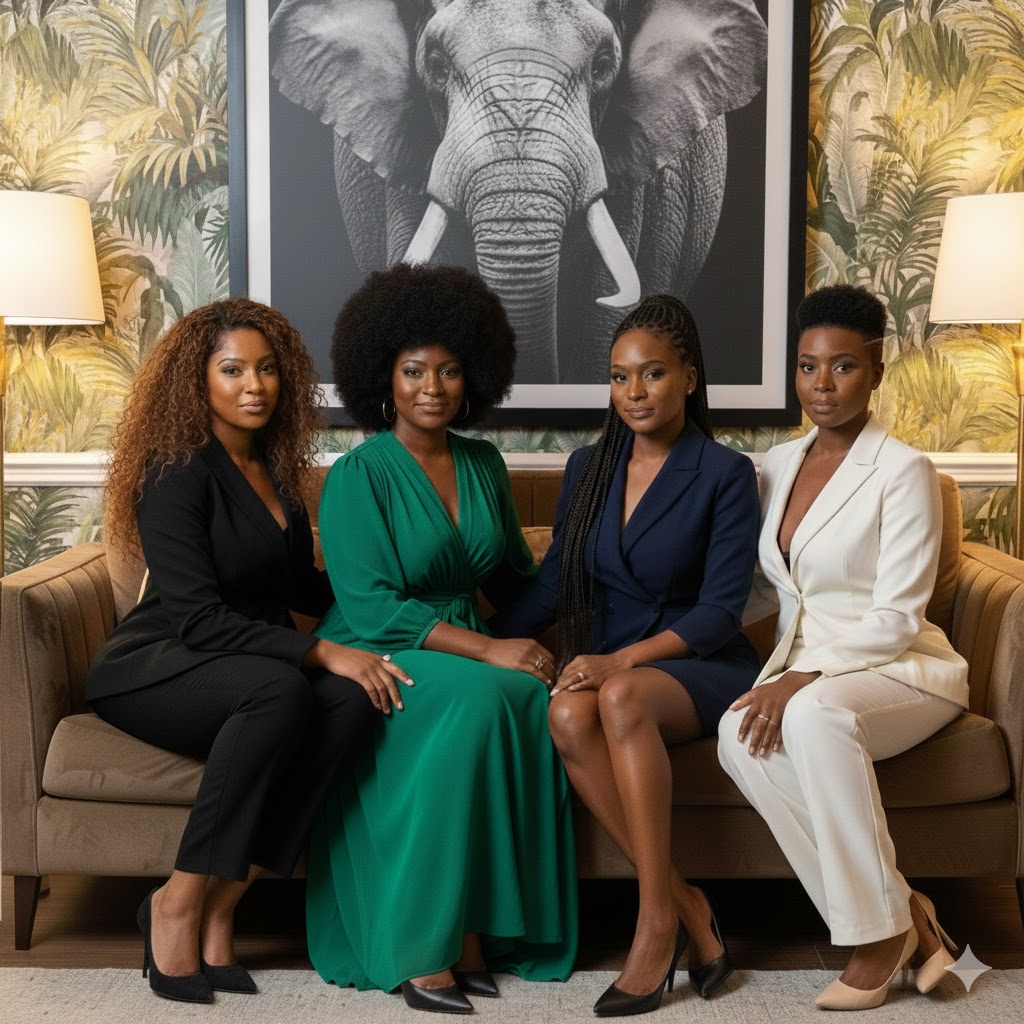
How Colorism Influences Attraction and Marriage Patterns.

Photo by cottonbro studio on Pexels.com

Colorism, the system of discrimination that privileges lighter skin tones over darker ones within the same racial or ethnic group, has deep and lasting effects on personal relationships, particularly in the realms of attraction and marriage. Rooted in slavery, colonialism, and Eurocentric beauty ideals, colorism continues to shape how individuals perceive desirability, compatibility, and social status in romantic relationships. These biases not only affect who people date and marry but also reinforce systemic inequities across generations.

Historically, the origins of colorism in America can be traced back to slavery, when lighter-skinned enslaved people—often the offspring of white slave owners and Black women—were given preferential treatment, including less physically demanding work and occasional access to education (Hunter, 2007). This distinction laid the foundation for associating lighter skin with privilege, desirability, and higher social standing. These values, rooted in white supremacy, carried over into post-slavery society and became embedded in ideas of beauty and mate selection.

Attraction, often seen as a deeply personal and subjective experience, is not immune to these social hierarchies. Numerous studies have shown that lighter-skinned individuals are frequently perceived as more attractive, feminine, or masculine in socially acceptable ways (Hill, 2002). In media and popular culture, lighter-skinned Black women are often cast in roles of love interests or wives, while darker-skinned women are more likely to be portrayed as aggressive, hypersexual, or undesirable. These portrayals reinforce biases that influence dating preferences across racial and cultural lines.

For men, colorism influences partner selection by shaping perceptions of status and desirability. Men who select lighter-skinned partners may be viewed as having achieved higher social standing, as these choices align with Eurocentric standards of beauty and social capital (Monk, 2014). Conversely, women with darker skin tones often report being overlooked, rejected, or fetishized in the dating market, facing unique struggles in establishing romantic relationships that validate their worth.

The Influence of Skin Tone on Attraction and Marriage Patterns

Section 1: Dating Preferences by Skin Tone

Skin TonePerceived AttractivenessDating Market OpportunitiesNotes
LightHighMore options, higher social mobilityOften favored in media and social circles (Hunter, 2002)
MediumModerateModerate optionsMay face mixed perceptions in social and professional settings
DarkLower (due to societal bias)Fewer options, often fetishized or overlookedPsychological effects include lower self-esteem, feelings of invisibility (Keith & Herring, 1991)

Section 2: Marriage Patterns by Skin Tone

Skin ToneLikelihood to MarrySpouse Socioeconomic StatusNotes
LightHigherOften higher SES partners“Marriage market capital” based on social perceptions (Goldsmith et al., 2007)
MediumModerateMixed SES partnersVaries by social circle and geographic location
DarkLowerOften lower SES partnersColorism influences social and economic outcomes; may experience delayed marriage or less partner choice

Section 3: Psychological & Spiritual Impacts

  • Dark-skinned women: Increased risk of low self-esteem, body image dissatisfaction, internalized colorism, and rejection in dating.
  • Light-skinned women: Higher social capital but may experience imposter syndrome or pressure to maintain image.
  • Spiritual perspective: KJV Bible emphasizes God looks at the heart, not outward appearance (1 Samuel 16:7).
  • Community impact: Need for affirmations, media representation, and celebration of all skin tones (#MelaninMagic, #BlackGirlMagic).

Section 4: Key Takeaways

  • Colorism is a systemic influence shaping dating and marriage patterns.
  • Light skin often provides social advantages, while dark skin faces bias even in elite or professional circles.
  • Internalized biases affect self-esteem, relationships, and life choices.
  • Spiritual and community affirmation are essential tools to counteract colorism.

Marriage patterns reflect the cumulative impact of these biases. Studies have found that lighter-skinned women are more likely to marry, and they tend to marry partners with higher socioeconomic status compared to their darker-skinned counterparts (Goldsmith, Hamilton, & Darity, 2007). These trends suggest that skin tone operates as a form of “marriage market capital,” where lighter-skinned individuals are afforded more opportunities for upward mobility through marriage. For darker-skinned individuals, limited marriage prospects can exacerbate social and economic inequality.

Colorism also affects interracial marriages. Black women with lighter skin tones are statistically more likely to marry outside their race compared to darker-skinned Black women, in part because lighter skin is perceived as more aligned with mainstream beauty ideals (Hunter, 2002). This trend reflects how racialized beauty hierarchies shape romantic choices not only within the Black community but also in broader society.

Case Study 1: Beyoncé and Jay-Z

Beyoncé, often cited as one of the most powerful and admired Black women in the world, is light-skinned with a caramel complexion. Her marriage to Jay-Z, who himself comes from a slightly lighter-skinned African American background, reflects a dynamic where skin tone and status intersect. While their union is also grounded in shared values and artistic collaboration, some scholars note that lighter skin and societal beauty standards likely amplified Beyoncé’s social capital, increasing her visibility, desirability, and access to elite circles (Hunter, 2007).

Case Study 2: Lupita Nyong’o and Relationships

Lupita Nyong’o, a darker-skinned actress who gained international acclaim for her role in 12 Years a Slave, has spoken about facing colorism within Hollywood and dating circles. Her experience highlights how darker-skinned Black women often encounter fetishization or erasure in romantic contexts. Despite her global recognition, societal biases still shape the perception of desirability, illustrating that colorism is not limited to casual dating but extends into perceptions of high-status partners.

Case Study 3: Michael B. Jordan and Dating Preferences

Actor Michael B. Jordan, who is lighter-skinned compared to some of his peers, has often been paired romantically with women in Hollywood who are either lighter-skinned or mixed-race. Media narratives around these pairings frequently emphasize their beauty and perceived “marketability,” underscoring how skin tone remains a silent influencer in high-profile relationships. Such pairings demonstrate colorism’s subtle but persistent influence on attraction even among successful Black individuals.

Psychologically, these patterns create damaging effects on self-esteem and self-worth. Dark-skinned women often internalize rejection as a reflection of their inherent value, leading to feelings of invisibility, unworthiness, or bitterness toward the dating process. Conversely, lighter-skinned women may grapple with imposter syndrome, questioning whether their desirability is based on genuine love or simply their proximity to whiteness. Both experiences reflect the way colorism undermines authentic human connection in relationships.

Spiritually, colorism directly contradicts biblical teachings on love and marriage. Scripture emphasizes that love is not based on outward appearances but on the heart and character: “But the Lord said unto Samuel, Look not on his countenance, or on the height of his stature; because I have refused him: for the Lord seeth not as man seeth; for man looketh on the outward appearance, but the Lord looketh on the heart” (1 Samuel 16:7, KJV). Likewise, Proverbs 31 highlights the value of a virtuous woman over fleeting physical attributes. These verses affirm that God’s standard for attraction and marriage is rooted in righteousness and inner beauty, not skin tone or social status.

To break free from colorism’s hold on attraction and marriage patterns, both individuals and communities must confront their internalized biases. Media must continue diversifying portrayals of love and beauty, ensuring that darker-skinned individuals are celebrated as desirable, worthy partners. Within Black communities, fostering affirmations that embrace the full spectrum of melanin can help dismantle generational hierarchies. Spiritually, returning to God’s standard of love and marriage can provide healing, as couples root their unions not in skin tone but in faith, commitment, and character.

In conclusion, colorism continues to shape attraction and marriage patterns in profound ways, reinforcing inequities and damaging self-perceptions. By acknowledging these influences, embracing self-worth, and prioritizing character and faith, individuals can create relationships that reflect true love, equality, and divine worth.


References

  • Goldsmith, A. H., Hamilton, D., & Darity, W. (2007). From dark to light: Skin color and wages among African-Americans. Journal of Human Resources, 42(4), 701–738.
  • Hill, M. E. (2002). Skin color and the perception of attractiveness among African Americans: Does gender make a difference? Social Psychology Quarterly, 65(1), 77–91.
  • Hunter, M. (2002). If you’re light you’re alright: Light skin color as social capital for women of color. Gender & Society, 16(2), 175–193.
  • Hunter, M. (2007). The persistent problem of colorism: Skin tone, status, and inequality. Sociology Compass, 1(1), 237–254.
  • Monk, E. P. (2014). Skin tone stratification among Black Americans, 2001–2003. Social Forces, 92(4), 1313–1337.
  • The Holy Bible, King James Version.