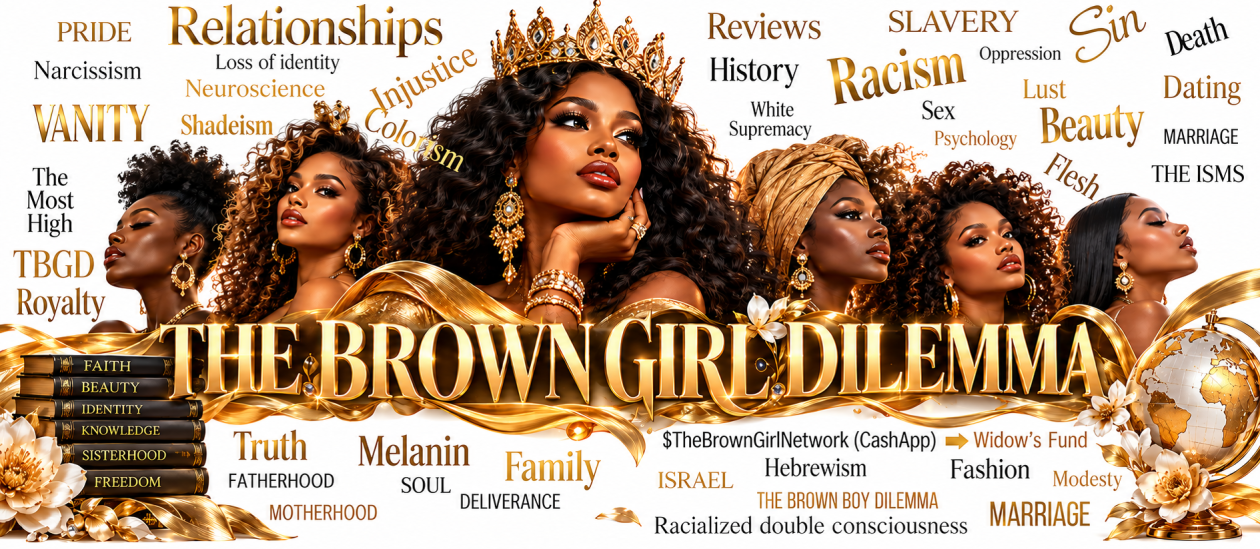


Beauty is often discussed as though it were a simple matter of personal opinion, yet people have repeatedly tried to understand why certain faces, bodies, and physical characteristics are widely perceived as attractive. The beauty of Black women deserves examination through a broader framework that incorporates anatomy, facial proportions, symmetry, skin characteristics, body morphology, cultural history, and individual variation. No single physical formula defines a beautiful Black woman. Black women represent extraordinary biological diversity, and their beauty cannot be reduced to one complexion, facial structure, hair texture, body type, or aesthetic ideal. Scientific inquiry can identify patterns associated with attractiveness, but it cannot transform those patterns into a universal definition of beauty.

The anatomy of the human face provides the physical foundation upon which individual beauty is perceived. Facial structure includes the forehead, brow, eyes, nose, cheeks, lips, jaw, and chin, together with the underlying bones and soft tissues that determine facial contours. Proportions among these structures influence how the face is perceived as an integrated whole. Facial attractiveness is therefore not determined by one isolated feature. A beautiful face may contain large eyes, a prominent nose, full lips, high cheekbones, a softly rounded jaw, or countless other combinations. What often matters is how these features relate to one another.

Black women possess tremendous facial diversity because African populations contain substantial genetic variation. Africa is the birthplace of modern humanity and contains more human genetic diversity than any other continental population. Consequently, the phrase “Black beauty” encompasses an enormous range of facial forms, skin tones, hair textures, body structures, and ancestral histories. A dark-skinned woman with tightly coiled hair and a broad facial structure and a lighter-skinned woman with looser curls and a narrower facial structure can both represent Black beauty without either being more authentically Black than the other. Diversity itself is an essential characteristic of Black beauty.
Facial symmetry is one of the most frequently discussed characteristics in research on attractiveness. Bilateral symmetry refers to the correspondence between the left and right sides of the face. Humans generally perceive relatively symmetrical faces favorably, and symmetry may provide information related to developmental stability. However, perfect symmetry is neither necessary nor sufficient for beauty. Every human face contains some asymmetry. Small differences between the two sides contribute to individuality and expression. A face that is completely symmetrical in a digital manipulation may even appear less natural than an actual human face.

Facial harmony is therefore more useful than the simplistic idea of perfect symmetry. Harmony concerns the relationships among features and the overall visual coherence of the face. The eyes, nose, lips, cheekbones, jaw, and chin interact to create an individual facial composition. A feature does not have to conform to a universal standard to be beautiful. A broad nose can be harmonious with full lips and prominent cheekbones. A narrow nose can be harmonious with delicate facial proportions. Beauty can emerge from countless combinations of physical characteristics.
Skin is another important dimension of facial beauty. Clarity, evenness, texture, and apparent health influence how the human face is perceived. Healthy-looking skin can reflect hydration, pigmentation distribution, surface texture, and the absence or reduction of visible inflammation or lesions. Scientific research has found that skin homogeneity can influence perceptions of age, health, and attractiveness. These observations are particularly relevant when discussing Black women because darker skin contains higher concentrations of melanin, providing significant protection against ultraviolet radiation while also creating distinctive pigmentation characteristics.

Melanin is not merely a cosmetic characteristic; it is a biological pigment with important protective functions. Melanocytes produce melanin, which contributes to the coloration of the skin, hair, and eyes. Darker skin generally contains greater amounts of eumelanin, which absorbs ultraviolet radiation. The evolution of pigmentation is closely associated with environmental exposure and human adaptation. The rich range of brown and ebony skin tones among Black women therefore represents biological variation rather than a hierarchy of beauty. Every shade exists within the extraordinary spectrum of human pigmentation.
Colorism, however, has historically complicated perceptions of Black beauty. European colonialism, slavery, racial hierarchy, and social systems that associated proximity to whiteness with privilege contributed to the elevation of lighter skin in many societies. Within Black communities, these historical forces sometimes produced internalized preferences concerning complexion, hair texture, facial features, and body shape. Understanding Black beauty therefore requires distinguishing biological variation from socially constructed beauty hierarchies. A darker complexion is not biologically inferior to a lighter complexion, just as a particular nose or hair texture does not possess an objective racial ranking.
The eyes represent another significant element of facial appearance. Eye size, shape, spacing, eyelid morphology, eyebrow structure, and surrounding soft tissue all contribute to facial expression and attractiveness. Large dark brown eyes are frequently celebrated in representations of Black beauty, but Black women possess an enormous variety of eye shapes and sizes. Almond-shaped, round, hooded, deep-set, wide-set, and closely spaced eyes can all create compelling facial compositions. The beauty of the eye is therefore not simply its size; it is the relationship between the eyes and the rest of the face.
The nose is particularly important in understanding racialized beauty standards. Historically, European-centered beauty ideals frequently promoted narrow nasal structures as superior while characterizing broader African-associated nasal forms negatively. Such judgments are cultural rather than evidence of biological superiority. The human nose exhibits tremendous variation in width, length, projection, bridge structure, and nostril configuration. A broad nose can be aesthetically harmonious and striking. The presence of a wider nasal structure does not diminish facial beauty; rather, it represents one of many naturally occurring human forms.
The lips and mouth also contribute substantially to facial aesthetics. Lip volume, shape, symmetry, vermilion exposure, and the relationship between the lips, nose, and chin influence facial appearance. Full lips have become particularly prominent in contemporary beauty culture, yet the historical treatment of fuller lips reveals how beauty standards change over time. Features once stigmatized through racialized stereotypes can later become highly desirable in mainstream fashion and entertainment. This transformation demonstrates that social perceptions of beauty are not fixed biological truths.
The cheekbones, jawline, and chin create much of the structural architecture of the lower and middle face. High cheekbones may produce pronounced facial contours, while softer cheek structures can create a youthful or gentle appearance. Strong jawlines can contribute to a striking or sculptural appearance, whereas rounded jawlines may produce softness and femininity. None of these characteristics is universally superior. Facial beauty often emerges from the interaction of bone structure, soft tissue, skin, expression, and proportion.

Hair is inseparable from the cultural history of Black women’s beauty. Afro-textured hair encompasses an extraordinary spectrum of curl patterns, densities, strand structures, and growth characteristics. From tightly coiled natural hair to locs, braids, twists, afros, pressed styles, wigs, and extensions, Black women have developed an enormous repertoire of aesthetic expression. Hair is not merely an accessory to beauty; it can function as an important component of identity, cultural continuity, creativity, and self-presentation. The history of Black hair also reveals the social consequences of Eurocentric beauty standards.
The body introduces another dimension of beauty that cannot be reduced to facial analysis. Human bodies vary according to genetics, skeletal structure, muscle distribution, adipose tissue distribution, age, hormonal influences, and lifestyle. The familiar categories of hourglass, pear, rectangle or banana, and apple are simplified descriptions rather than strict biological classifications. An hourglass figure generally describes relatively balanced bust and hip measurements with a comparatively narrower waist, while pear-shaped bodies tend to carry proportionally more mass around the hips and thighs. These categories can help describe silhouettes, but they should not become rigid judgments of women’s worth or attractiveness.

The waist-to-hip ratio has received considerable attention in evolutionary psychology and attractiveness research. Some studies have reported associations between lower waist-to-hip ratios and judgments of female attractiveness, although findings depend upon body mass, cultural context, observer characteristics, and other variables. It is therefore inappropriate to claim that one precise ratio universally defines the ideal female body. Human attraction is more complicated than a single measurement. Cultural standards, individual preferences, media exposure, and historical circumstances all influence judgments of physical appearance.
The diversity of Black female bodies is especially important because Black women have frequently been subjected to contradictory stereotypes. Historically, Black women’s bodies were simultaneously sexualized, dehumanized, criticized, and exoticized. Contemporary media can continue this pattern by celebrating particular body shapes while marginalizing others. A healthy understanding of Black beauty must therefore reject the idea that one body type represents the entire population. Tall, short, slender, muscular, curvy, fuller-bodied, athletic, pear-shaped, hourglass-shaped, and other body types all exist among Black women.

Beauty is also profoundly influenced by expression. A mathematically proportioned face can appear entirely different when it smiles, laughs, looks serious, or expresses tenderness. The movement of facial muscles changes the perceived shape of the eyes, mouth, cheeks, and jaw. This is why photographs that capture authentic expression can communicate beauty in ways that static measurements cannot. Facial attractiveness is not merely architecture; it is also animation. Personality appears through the face, and expression can transform the perception of physical features.
Age introduces another essential dimension. Black women do not cease being beautiful as they grow older. Aging produces changes in skin elasticity, pigmentation, facial volume, hair, and body composition, but these changes are part of the natural human life course. Beauty culture frequently places disproportionate emphasis on youth, encouraging women to interpret normal aging as physical failure. A broader concept of beauty recognizes youthful beauty, mature beauty, distinguished beauty, and timeless beauty without requiring women to remain physically unchanged.
Media representation has also shaped contemporary perceptions of Black beauty. Black actresses, models, singers, athletes, and public figures have expanded the range of Black female appearances represented in popular culture. Yet representation can become another form of limitation when only a narrow selection of Black women receives visibility. True representation requires diversity of complexion, facial features, hair textures, body types, ages, and cultural backgrounds. The goal should not be replacing one beauty hierarchy with another but expanding the cultural imagination of what beauty can look like.

Scientific research can help illuminate the biological and perceptual dimensions of beauty, but science cannot establish a universal ranking of women. Researchers can measure facial symmetry, skin characteristics, facial proportions, body morphology, and patterns of perception. They cannot scientifically declare one Black woman more valuable than another because of her complexion, nose, lips, body shape, or facial measurements. Beauty research describes tendencies; it does not establish human worth. This distinction is particularly important when discussing Black women because racialized beauty standards have historically been used to justify discrimination.
Ultimately, the beauty of the Black woman cannot be contained within one formula. Anatomy provides structure, symmetry contributes visual balance, skin reflects pigmentation and health, and form creates the physical silhouette—but beauty emerges from the relationship among these characteristics and from the individuality of the woman herself. The beautiful Black woman is not defined by a single complexion, nose, lip shape, hair texture, facial ratio, or body type. Her beauty exists within an immense spectrum of African-descended human variation. Mathematics can measure proportion; biology can explain pigmentation; anthropology can document variation; psychology can investigate perception; and history can reveal the forces that shaped beauty standards. But none of these disciplines can completely capture the meaning of beauty. Black beauty is biological, aesthetic, cultural, historical, personal, and profoundly human.
References
Bastir, M., Rosas, A., O’Higgins, P., & McIntyre, G. T. (2006). Craniofacial sexual dimorphism in humans: New insights from three-dimensional geometric morphometric analysis. American Journal of Physical Anthropology, 129(4), 493–505.
Fink, B., Neave, N., & Manning, J. T. (2006). Second to fourth digit ratio, body mass index, waist-to-hip ratio, and their relationship with facial attractiveness. Evolution and Human Behavior, 27(2), 110–119.
Fink, B., Grammer, K., & Thornhill, R. (2001). Human facial attractiveness in relation to skin texture and color. Journal of Comparative Psychology, 115(1), 92–99.
Jablonski, N. G., & Chaplin, G. (2010). Colloquium paper: Human skin pigmentation as an adaptation to UV radiation. Proceedings of the National Academy of Sciences, 107(Supplement 2), 8962–8968.
Langlois, J. H., Roggman, L. A., & Musselman, L. (1994). What is average and what is not average about attractive faces? Psychological Science, 5(4), 214–220.
Langlois, J. H., Kalakanis, L., Rubenstein, A. J., Larson, A., Hallam, M., & Smoot, M. (2000). Maxims or myths of beauty? A meta-analytic and theoretical review. Psychological Bulletin, 126(3), 390–423.
Little, A. C., Jones, B. C., & DeBruine, L. M. (2011). Facial attractiveness: Evolutionary based research. Philosophical Transactions of the Royal Society B: Biological Sciences, 366(1571), 1638–1659.
Rhodes, G. (2006). The evolutionary psychology of facial beauty. Annual Review of Psychology, 57, 199–226.
Roberts, S. C., Owen, R. C., & Havlicek, J. (2010). Distinguishing between perceiver and wearer effects in clothing color-associated judgments of facial attractiveness. Evolutionary Psychology, 8(3), 350–364.
Thornhill, R., & Gangestad, S. W. (1999). Facial attractiveness. Trends in Cognitive Sciences, 3(12), 452–460.
Valenzano, D. R., Murphy, E. C., Losin, N., & DeSteno, D. (2006). Human facial attractiveness: Evidence for chromosome-dependent preferences? Evolution and Human Behavior, 27(1), 1–10.
Zaidel, D. W., Aarde, S. M., & Baig, K. (2005). Appearance of symmetry, beauty, and health in human faces. Brain and Cognition, 57(3), 261–263.*

