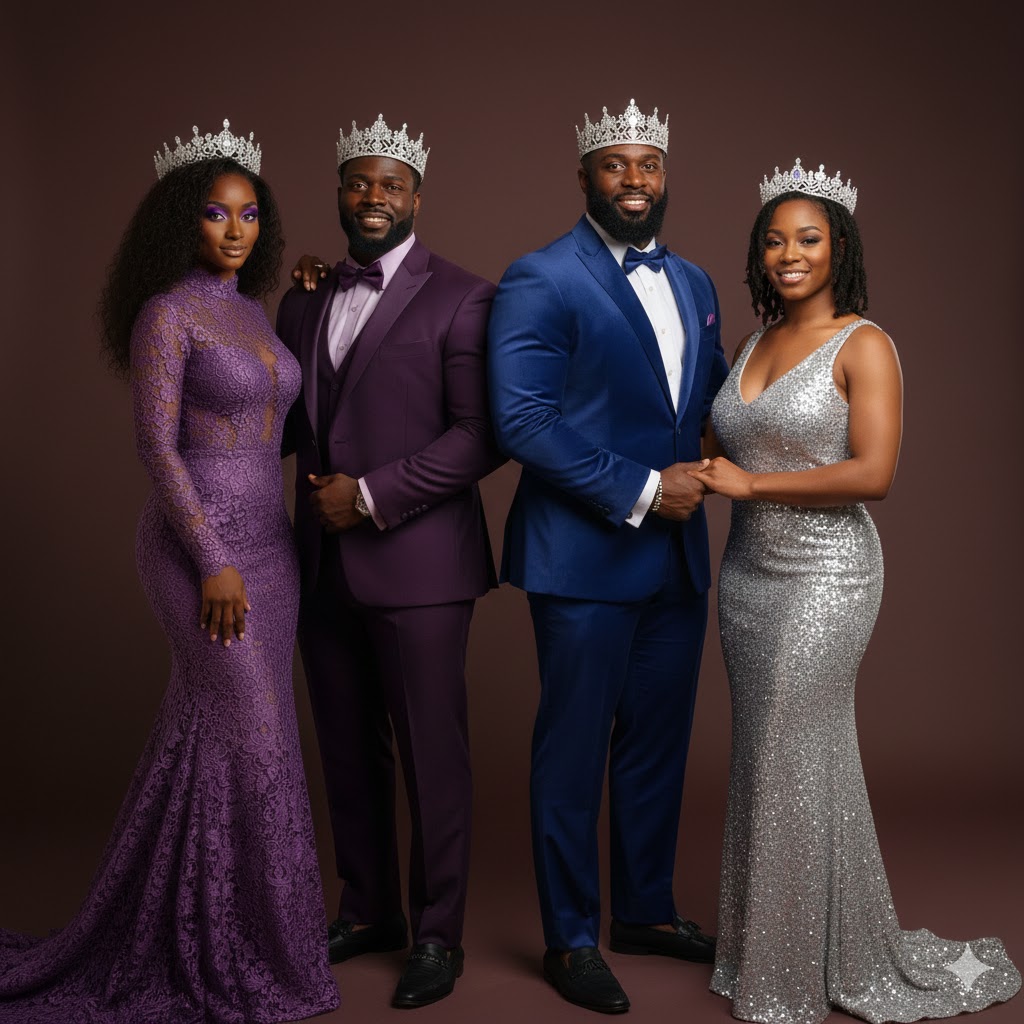
Tag Archives: kings

The Representation of Black

The representation of Black people has never been neutral; it has been shaped by power, history, and ideology. From colonial narratives to modern media, images of Blackness have been constructed to serve political, economic, and psychological agendas rather than truth. Representation functions not merely as visibility, but as meaning-making—determining who is seen as human, valuable, intelligent, dangerous, beautiful, or disposable.

Historically, Western representation of Black people emerged through the lens of enslavement and colonial domination. Early depictions framed Africans as primitive, savage, and inferior, providing moral justification for conquest and exploitation. These narratives were not accidental but foundational to the racial hierarchy that undergirded the modern world-system (Fanon, 1952; Said, 1978).

During transatlantic slavery, Black bodies were represented as labor units rather than persons. Art, literature, and pseudoscience portrayed Black people as biologically suited for servitude, stripping them of complexity, spirituality, and intellect. These portrayals reinforced dehumanization and normalized violence against Black communities (Davis, 1981).

Biblical misrepresentation also played a role. Scripture was selectively interpreted to portray Blackness as cursed, despite no such racial designation existing in the biblical text. This theological distortion shaped Western Christian consciousness and cemented racialized representations that persist today (Haynes, 2002).

Post-emancipation representation did not immediately improve. Minstrelsy, caricatures, and early film continued to depict Black people as comic relief, criminals, or hypersexual figures. These images reassured white audiences of racial superiority while limiting Black social mobility (Bogle, 2016).

The rise of mass media in the twentieth century amplified these portrayals globally. Hollywood became a powerful tool for exporting distorted images of Black life, often disconnected from lived reality. Representation became repetition, and repetition hardened stereotype into assumed truth.

Black women faced a distinct burden within representation. Tropes such as the Jezebel, Mammy, Sapphire, and Welfare Queen confined Black womanhood to narrow, degrading roles. These images justified both sexual exploitation and social neglect while erasing vulnerability and dignity (Collins, 2000).

Black men were similarly constrained through representations of hypermasculinity, aggression, and criminality. Media narratives disproportionately linked Black male identity to violence and threat, shaping public perception and policy, including over-policing and mass incarceration (Alexander, 2010).

Representation also operates through absence. The exclusion of Black people from narratives of intellect, leadership, romance, and innocence communicates inferiority just as powerfully as negative imagery. What is not shown can be as damaging as what is shown.

In response, Black communities have consistently resisted imposed representations. From slave narratives to the Harlem Renaissance, Black creators reclaimed authorship and asserted humanity through literature, music, art, and theology. Representation became a site of survival and self-definition.

The Civil Rights and Black Power movements challenged not only legal inequality but symbolic domination. Slogans like “Black is Beautiful” directly confronted Eurocentric standards and re-centered Black aesthetics and self-worth. Representation shifted from apology to affirmation.

Contemporary media has seen increased Black visibility, yet representation remains contested. Tokenism, colorism, and commodified diversity often replace genuine inclusion. Visibility without power risks reproducing the same hierarchies under new language (hooks, 1992).

Colorism remains a critical issue within representation. Lighter skin, looser hair textures, and Eurocentric features continue to be privileged in media portrayals, reinforcing internalized anti-Blackness and stratification within Black communities (Hunter, 2007).

Social media has democratized representation, allowing Black individuals to tell their own stories outside institutional gatekeeping. However, it has also intensified surveillance, commodification, and performance pressures, complicating authenticity and agency.

Representation affects material outcomes. Studies show that media portrayals shape public opinion, educational expectations, employment opportunities, and criminal justice outcomes. Representation is not symbolic alone—it is structural (Entman & Rojecki, 2000).

Spiritual representation also matters. Depictions of God, holiness, and virtue overwhelmingly coded as white distort theological imagination and alienate Black believers. Reclaiming sacred representation is central to psychological and spiritual liberation.

Authentic representation requires more than inclusion; it demands narrative control. Who writes, directs, edits, funds, and distributes stories determines how Black life is framed and understood. Power behind the image is as important as the image itself.

True representation must reflect complexity—joy and pain, faith and doubt, intellect and emotion. Black people are not a monolith, and any representation that flattens diversity perpetuates harm, even when well-intentioned.

Decolonizing representation involves interrogating whose standards define excellence, beauty, and normalcy. It requires dismantling Eurocentric frameworks and honoring African diasporic histories, epistemologies, and aesthetics.

The future of Black representation depends on sustained cultural literacy, institutional accountability, and community self-definition. Representation must move from reaction to creation, from correction to sovereignty.

Ultimately, the representation of Black people is a moral issue. It reflects how society understands humanity itself. When Black life is represented truthfully and fully, it expands the moral imagination and affirms the dignity of all people.


References

Alexander, M. (2010). The new Jim Crow: Mass incarceration in the age of colorblindness. The New Press.

Bogle, D. (2016). Toms, coons, mulattoes, mammies, and bucks: An interpretive history of Blacks in American films. Bloomsbury.

Collins, P. H. (2000). Black feminist thought: Knowledge, consciousness, and the politics of empowerment. Routledge.

Davis, A. Y. (1981). Women, race & class. Vintage Books.

Entman, R. M., & Rojecki, A. (2000). The Black image in the white mind: Media and race in America. University of Chicago Press.

Fanon, F. (1952). Black skin, white masks. Grove Press.

Haynes, S. R. (2002). Noah’s curse: The biblical justification of American slavery. Oxford University Press.

hooks, b. (1992). Black looks: Race and representation. South End Press.

Hunter, M. (2007). The persistent problem of colorism. Sociology Compass, 1(1), 237–254.

Said, E. W. (1978). Orientalism. Pantheon Books.

How to Meet a Prince: The Modern Woman’s Guide to Love, Position, and Purpose.

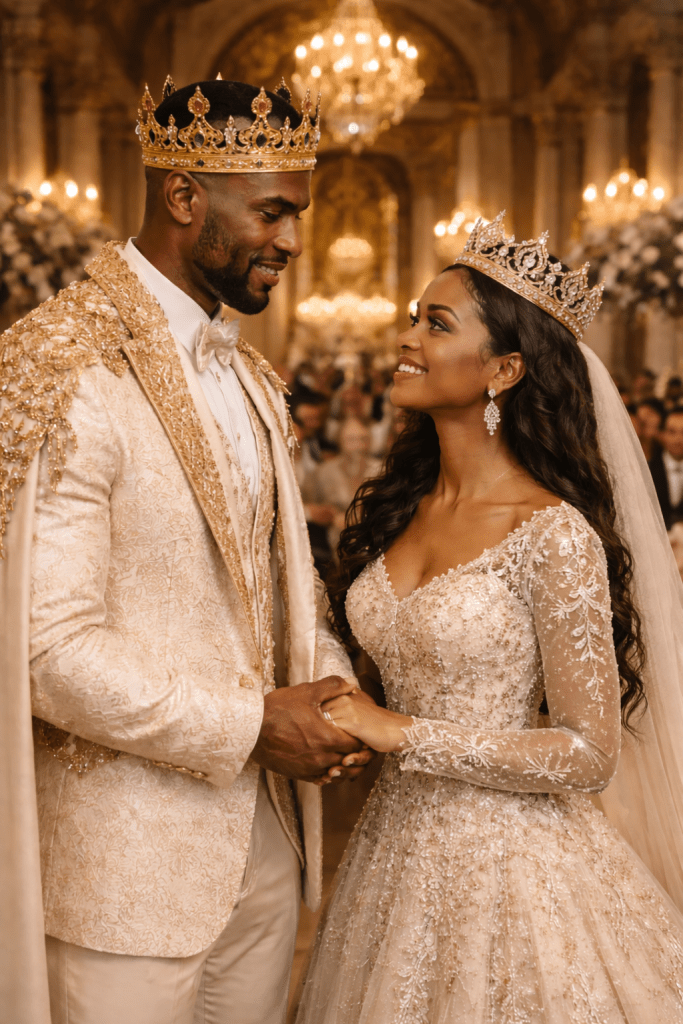
In a world shaped by fairytales, romance films, and social media fantasies, many women quietly ask the same timeless question: How can I meet a prince? The image of a crown, a palace, and a grand love story still captures the imagination. Yet beneath the fantasy lies a deeper truth — meeting a “prince” in the real world is less about chance encounters and more about position, proximity, and preparation.

The modern prince does not always wear a crown. More often, he wears responsibility, discipline, leadership, and purpose. He is a man of character, emotional intelligence, spiritual grounding, and vision. Royalty today is defined not by bloodline, but by how a man builds his life and treats others.

Before searching outward, a woman must first redefine what she is truly seeking. A prince is not simply a wealthy man or a handsome man. He is a man who leads with integrity, protects with strength, provides with wisdom, and loves with intention. Such men are rare, not because they do not exist, but because they are usually focused on building, not browsing.

This brings us to the first practical reality: you meet high-caliber men in high-caliber environments. Exceptional men are rarely found in random spaces or casual settings. They are most often encountered in intentional environments — professional conferences, academic circles, entrepreneurial networks, cultural events, wellness spaces, and purpose-driven communities. For women rooted in faith, strong churches, leadership ministries, and spiritual retreats remain some of the most powerful places to encounter men of depth and moral clarity.

Where you go determines who you meet.
Environment shapes destiny.

However, location alone is not enough. The more important question is not where the prince is? But rather, who is the woman he would choose?

High-level men are drawn to women who carry peace, emotional maturity, discipline, and grace. They seek beautiful women, yes — but also grounded, self-aware, and purposeful. They are attracted to femininity that is soft yet strong, nurturing yet discerning. Not women who chase attention, but women who know how to receive love without begging for it.

This is where fantasy often collapses. Many women are taught to seek a prince, but few are taught how to become a queen.

Esther: The Blueprint for Preparation

The story of Esther gives one of the most powerful spiritual metaphors for this principle. Before Esther ever stood before King Ahasuerus, she underwent twelve months of preparation — six months with oil of myrrh and six months with sweet fragrances and purification (Esther 2:12, KJV).

She did not rush into the king’s presence.
She did not demand access.
She did not rely on beauty alone.

She was refined. Processed. Anointed. Prepared.

And it was only after preparation that she was granted favor.

This is not just a romantic lesson — it is a spiritual one.

In the same way, Esther could not approach an earthly king without purification, we cannot casually approach the Most High without preparation of the heart, mind, and spirit. Scripture repeatedly teaches that God is holy, and those who seek Him must come with reverence, humility, and a transformed heart.

Just as Esther prepared her body and character before meeting the king, believers are called to prepare their souls before approaching God through repentance, prayer, fasting, discipline, and the renewing of the mind.

Esther’s preparation mirrors spiritual preparation:
She purified herself → We cleanse our hearts.
She was anointed → We seek the anointing of the Spirit.
She was instructed → We seek wisdom through Scripture.
She waited → We learn patience and submission to divine timing.

Esther teaches us that access requires alignment.

You do not rush into royalty.
You prepare for it.

And this applies not only to love — but to destiny, purpose, and divine intimacy.

Ruth and Boaz: The Blueprint for Divine Positioning

The story of Ruth and Boaz offers another profound blueprint for divine alignment in love. Ruth did not pursue Boaz with desperation or seduction; she pursued purpose, loyalty, and obedience to God. As a widowed foreign woman, she committed herself to Naomi, worked diligently in the fields, and remained humble in her circumstances.

It was through her labor and faithfulness that Boaz noticed her character before her beauty. Scripture describes Boaz as a “mighty man of wealth” (Ruth 2:1, KJV), yet what drew him to Ruth was her virtue, not her availability.

Their union teaches that kingdom relationships are not formed through chasing, but through faithfulness, service, and divine positioning. Ruth met Boaz not while searching for a husband, but while building a life of purpose — and God aligned her with a man who covered, honored, and redeemed her.

Social Positioning and Divine Alignment

High-level relationships are rarely built through pursuit. They are built through alignment. Socially, most meaningful connections happen through networks — mutual friends, professional circles, mentors, community leaders, and trusted introductions. Royal love stories are not usually random. They are relational, strategic, and organic.

Your circle determines your options.
Your standards determine your outcomes.

From a biblical perspective, this pattern is consistent. Rebekah was found while serving. Ruth was found while working on purpose. Esther was found after preparation and refinement. The Proverbs 31 woman was already established in character, wisdom, and discipline. None of these women was chasing men. They were positioned by God while becoming.

“He that findeth a wife findeth a good thing…” — Proverbs 18:22 (KJV)

The man finds.
The woman prepares.

This principle shifts everything. A woman does not hunt a prince. She cultivates herself into a queen — spiritually, emotionally, intellectually, and physically. She refines her boundaries, her environment, her habits, and her inner world. She becomes selective, not desperate. Peaceful, not performative. Grounded, not anxious.

And something remarkable happens when this shift occurs: royal men begin to recognize royal women.

Not because of crowns.
But because of the presence.
Energy.
Standards.
Self-respect.
And spiritual alignment.

The Real Secret Behind Meeting a Prince

The true secret behind meeting a prince is not luck, beauty, or manifestation rituals. It is positioning, preparation, and proximity. It is upgrading your environment, elevating your standards, nurturing your purpose, and aligning your life with peace and intention.

Here are 10 steps to preparing for a king — emotionally, spiritually, mentally, and practically ( real-life “king energy” meaning a high-value, God-centered man):

  1. Strengthen your relationship with God first
    A true king is led by God, not ego. If you want a Godly man, you must be a Godly woman. Develop prayer, fasting, scripture reading, and spiritual discipline (Matthew 6:33).
  2. Heal your past wounds
    Kings don’t want to compete with your trauma. Heal from heartbreak, abandonment, or daddy issues so you don’t project pain onto a healthy man.
  3. Cultivate inner beauty and character
    A king looks for peace, not chaos. Work on patience, kindness, humility, emotional intelligence, and self-control (Proverbs 31:30).
  4. Refine your femininity
    Femininity is not weakness—it’s grace, softness, wisdom, and emotional strength. Learn how to communicate gently, receive love, and inspire rather than dominate.
  5. Develop self-respect and boundaries
    No fornication, no entertaining bare minimum men, no accepting inconsistency. A queen does not beg—she discerns.
  6. Educate yourself and grow intellectually
    Kings enjoy stimulating conversations. Read, study, build skills, understand finances, culture, and the world.
  7. Become physically healthy and well-groomed
    Not perfection—discipline. Take care of your body, style yourself with elegance, hygiene, fitness, and confidence.
  8. Learn how to be a peaceful partner
    Not argumentative, not combative. Learn conflict resolution, emotional regulation, and how to be a safe place.
  9. Develop your purpose and calling
    A king wants a woman with vision, not dependency. Have goals, a mission, and a life before him.
  10. Prepare to serve, not just be served
    Royal relationships are about partnership. Learn nurturing, hospitality, loyalty, and how to pour into a man who pours into you.

“She openeth her mouth with wisdom; and in her tongue is the law of kindness.” — Proverbs 31:26 (KJV)

In short:
You don’t attract a prince by chasing one — you attract him by becoming a queen. 👑

Fairytales are not built on magic.
They are built on becoming.

And the moment a woman truly becomes a queen in mindset, lifestyle, and spirit, she no longer needs to search for a prince.

Just like Esther, she is prepared for favor.
Just like Ruth, she is positioned for redemption.

And favor always finds the prepared. 👑

.
He will recognize her. 👑

📜 The Male Files: Kings Without Crowns

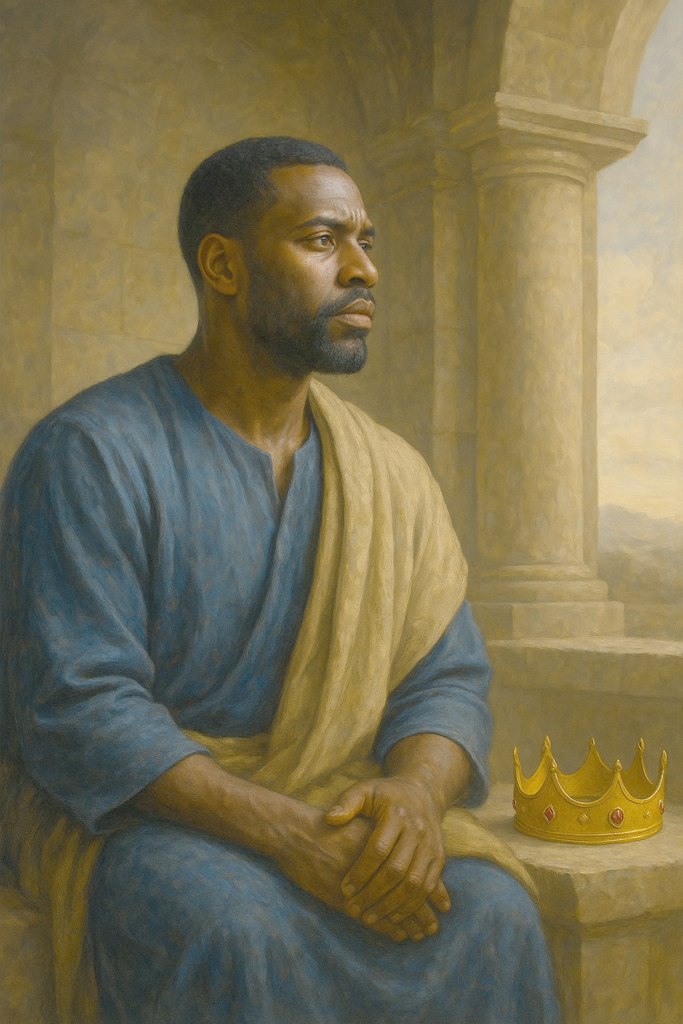
A king without a crown is not a man without power—he is a man without placement. In the digital age, masculinity is promoted as territory to seize, not a role to steward. Scripture defines the male purpose differently: “The steps of a good man are ordered by the LORD” (Psa. 37:23, KJV). A man becomes a king only when God becomes the one ordering his direction—not popularity, ideology, or trend.

Many men know the language of kingship, but few understand the theology of crowning. Crowns in scripture are given, not taken. “I have found David… a man after mine own heart, which shall fulfil all my will” (Acts 13:22, KJV). His kingship began the moment God found him, not the moment humans favored him. Modern masculinity movements reverse this order.

The manosphere tells men to master women, wealth, and dominion, yet scripture calls men to master themselves first. “He that ruleth his spirit is better than he that taketh a city” (Prov. 16:32, KJV). Internal governance is the biblical inauguration of kings, long before social influence ever recognizes them.

A generation of men now seek crowns through controversy, commentary, or charisma. Amplified voices have replaced consecrated ones. Online platforms reward dominance performance more than devotional grounding, shaping men into rhetoricians, not patriarchs (Ging, 2019). This produces kings in vocabulary, but orphans in covenant.

The deepest masculine wound is not irrelevance—it is fatherlessness. Even when fathers are present physically, many sons remain unfathered spiritually and emotionally. Scripture reveals the necessity of generational anchoring: “One generation shall praise thy works to another” (Psa. 145:4, KJV). But inheritance cannot flow where identity was never affirmed.

Many young men trade intimacy with God for brotherhood with echo chambers. These communities offer belonging, but not becoming. Digital masculine networks thrive on social identity formation through grievance-based solidarity (Ribeiro et al., 2020). A man may gain community and still lose self.

The rejection of vulnerability is another missing piece of the crown. The world shames wounded men for bleeding, yet God draws near to men who break without abandoning Him. “The LORD is nigh unto them that are of a broken heart” (Psa. 34:18, KJV). Healing is not a disqualification from kingship—it is often the prerequisite for it.

Without a crown, many men adopt hardness as a throne. They equate emotional restraint with authority and detachment with discipline. Yet scripture rejects emotional amputation as strength. God never calls men to bury emotion—He calls them to submit it.

The social narrative also labels men by dominance rank—alpha, sigma, beta—as though personality category determines divine assignment. Scripture disrupts the taxonomy entirely: “Man looketh on the outward appearance, but the LORD looketh on the heart” (1 Sam. 16:7, KJV). A man may be “quiet” socially and crowned spiritually, or “viral” digitally and bankrupt internally.

Men without covenant begin to idolize conquest as coronation—money, physiques, sexual access, and endorsement from other unhealed men. But crowns in scripture are moral, not muscular. “He crowneth thee with lovingkindness and tender mercies” (Psa. 103:4, KJV). The biblical masculine crown is a heart posture, not a public one.

Modern masculinity movements are also monetized emotional ecosystems. They capitalize on male loneliness, insecurity, identity confusion, and resentment, offering ideology as a prosthetic for unhealed trauma (Marwick & Caplan, 2018). When pain becomes a marketplace, purpose becomes product packaging, not priesthood.

Kingship in scripture is inseparable from service. A man crowned by God eventually carries responsibility toward others, not leverage over them. True biblical masculinity is Christ-modeled servant leadership (hooks, 2004). Jesus never destroyed women to validate manhood, nor discarded disciples to preserve authority.

Many “lost sons” become “loud prophets” online—preaching dominion but rejecting discipleship, declaring kingship but refusing kings, demanding crowns but avoiding correction. Yet scripture insists: “For whom the LORD loveth he correcteth” (Heb. 12:6, KJV). If there is no correction, there is no crowning.

A man without a crown can still become one, but not by digital decree. It happens through surrender, internal rulership, covenantal obedience, father-anchored identity, spiritual accountability, and a re-ordered heart. Kings are formed under covenant, not comment sections.

The tragedy is not that men lack crowns—it is that many no longer recognize the God who gives them. They seek kingdoms without the King who assigns them, becoming sovereigns of self rather than sons under spirit. Biblical kings are not autonomous—they are anointed.

A crowned man is not a perfect man, but an obedient one. He does not rise because he never fell—he rises because God raised him. “Humble yourselves… and he shall lift you up” (James 4:10, KJV). When God lifts a man, no algorithm can replace the mantle.


📚 References

Ging, D. (2019). Manosphere cultures and the rise of digital masculine identity movements. Social Media + Society, 5(2), 1–14.

Marwick, A., & Caplan, R. (2018). Drinking male rage: The monetization of patriarchy on social platforms. Data & Society Research Institute.

Ribeiro, M., Ottoni, R., West, R., Almeida, V., & Meira Jr., W. (2020). The evolution of grievance masculinity networks across the web. Proceedings of the International AAAI Conference on Web and Social Media, 14, 196–207.

hooks, b. (2004). The Will to Change: Men, Masculinity, and Love. Washington Square Press.

American Psychological Association. (2017). Guidelines for Psychological Practice with Boys and Men.

The Male Files: Kings Without Crowns: Restoring the Biblical Role of Men.

In contemporary society, the role of men has become increasingly ambiguous. The pressures of modern life, economic instability, and shifting cultural norms have left many men searching for identity and purpose. Historically, men were seen as protectors, providers, and leaders within their households and communities. Today, however, these roles are often challenged or undervalued, leaving many men feeling powerless and disconnected.

The Bible provides a clear framework for understanding masculinity and the responsibilities of men. From Adam in the Garden of Eden to the patriarchs of Israel, men were called to lead with integrity, courage, and wisdom (Genesis 2:15-17). Leadership in the biblical sense is not about domination but about stewardship: caring for family, guiding with righteousness, and serving with humility.

One of the hallmarks of biblical manhood is responsibility. Men are called to provide for their families materially, emotionally, and spiritually. This provision is not limited to finances but extends to moral guidance and protection from harm. In Proverbs 27:23-24, the importance of knowing and caring for one’s household is emphasized, reinforcing the notion that true leadership requires active engagement.

Spiritual leadership is another core aspect of biblical manhood. Men are expected to guide their households in faith, ensuring that God’s principles shape family decisions and values (Ephesians 6:4). This leadership is rooted in humility and service rather than coercion, reflecting the example of Christ as a servant-leader (Mark 10:45).

Unfortunately, societal pressures have distorted men’s understanding of their roles. The rise of materialism, instant gratification, and shifting gender norms has led many men to equate masculinity with physical strength or financial success alone. This limited view ignores the deeper responsibilities of character, integrity, and spiritual leadership.

Modern men face identity crises exacerbated by media portrayals that often celebrate selfishness, irresponsibility, or emotional detachment as markers of “manliness.” These false narratives contrast sharply with biblical principles, which emphasize self-discipline, accountability, and the pursuit of righteousness (1 Timothy 4:12).

The absence of mentorship and father figures in many communities has compounded these challenges. Without examples of godly leadership, young men struggle to internalize what it means to be responsible, compassionate, and principled. Scriptural wisdom underscores the value of generational teaching, as seen in Deuteronomy 6:6-7, which encourages fathers to guide their children consistently in God’s ways.

Restoring the biblical role of men requires intentionality. Men must embrace their responsibility to lead by example, demonstrating integrity in speech, action, and decision-making. Leadership is cultivated through discipline, prayer, and a commitment to lifelong learning, reflecting the holistic approach to manhood outlined in the Scriptures.

Emotional intelligence is a key component of modern biblical manhood. The Bible portrays men expressing grief, joy, and compassion, suggesting that emotional awareness is not a weakness but a strength (Psalm 34:18; John 11:35). Men who understand and manage their emotions can better lead their families and communities with empathy and wisdom.

Accountability is central to restoring male leadership. Biblical men were often held accountable by peers, elders, or God Himself. Men today benefit from similar structures—mentorship, community, and spiritual fellowship—to ensure their actions align with moral and spiritual principles (Proverbs 27:17).

Service is a defining trait of biblical masculinity. Jesus’ model demonstrates that leadership is inseparable from service (John 13:14-15). Men who prioritize the needs of others, particularly their families and communities, embody the essence of godly leadership. Service fosters respect, trust, and spiritual authority rather than demanding it.

Character formation begins with self-discipline. The apostle Paul frequently exhorts men to control their impulses, pursue righteousness, and cultivate perseverance (1 Corinthians 9:24-27). Discipline in thought, speech, and behavior builds credibility and moral authority—qualities essential for any man seeking to fulfill his biblical role.

Integrity is another critical aspect. Biblical men are called to be honest, reliable, and trustworthy in all areas of life (Proverbs 10:9). Integrity ensures that leadership is not merely positional but earned through consistent demonstration of values, creating a legacy of respect and influence.

Courage, both moral and physical, remains a defining element of biblical manhood. From David confronting Goliath to Daniel standing firm in the lion’s den, courage involves facing fear while upholding truth and justice (Joshua 1:9; Daniel 6:10-23). Modern men must also confront cultural and personal challenges with the same steadfastness.

Men are not intended to operate in isolation. Community involvement, fellowship, and collaboration are integral to the biblical model of manhood. Ecclesiastes 4:9-12 highlights the strength derived from unity, emphasizing that men lead best when supported and accountable to others.

A renewed focus on mentorship can transform generations. Experienced men guiding younger men in faith, character, and practical life skills restore continuity in moral and spiritual leadership. Biblical narratives, including the relationship between Elijah and Elisha, exemplify the power of such mentorship (2 Kings 2:1-15).

Resisting cultural distortion requires discernment. Men must evaluate societal norms against scriptural truth, rejecting notions of masculinity that conflict with God’s design. Critical engagement with culture ensures that men lead with principles rather than conformity to fleeting trends (Romans 12:2).

The restoration of male leadership also entails a renewed understanding of fatherhood. Fathers are called not merely to produce offspring but to nurture, instruct, and exemplify godly living (Psalm 103:13; Proverbs 20:7). Active, loving fatherhood strengthens families and communities alike.

Marriage and partnership reflect the broader call to leadership. Husbands are to love their wives sacrificially, mirroring Christ’s love for the church (Ephesians 5:25-28). Such leadership fosters mutual respect, emotional intimacy, and spiritual growth, dispelling misconceptions that male authority equates to control or dominance.

Finally, the restoration of biblical manhood is a lifelong journey. Men are called to continuous self-examination, growth, and alignment with God’s purposes. By embracing responsibility, service, integrity, and faith, men can reclaim their rightful place as leaders, protectors, and spiritual anchors—kings without crowns, yet empowered to shape families, communities, and generations (Micah 6:8).


References (APA 7th edition)

  • Holy Bible, King James Version. (2000). Thomas Nelson.
  • Deuteronomy 6:6-7.
  • Ephesians 5:25-28; 6:4.
  • Proverbs 10:9; 20:7; 27:17; 27:23-24.
  • Joshua 1:9.
  • Daniel 6:10-23.
  • John 11:35; 13:14-15.
  • Mark 10:45.
  • 1 Corinthians 9:24-27.
  • 1 Timothy 4:12.
  • Micah 6:8.
  • Ecclesiastes 4:9-12.
  • Genesis 2:15-17.
  • 2 Kings 2:1-15.
  • Romans 12:2.
  • Psalm 34:18; 103:13.

The Golden Legacy of MANSA MUSA: Africa’s Emperor of Wealth and Wisdom

Throughout world history, few figures have embodied the fusion of wealth, wisdom, and spiritual devotion like Mansa Musa, the 14th-century emperor of the Mali Empire. Revered as the richest man to have ever lived, Mansa Musa’s legacy goes far beyond gold and grandeur—it encompasses a transformative reign that elevated West Africa to global prominence through trade, scholarship, and religious devotion. His life is not only a celebration of African excellence but a benchmark for leadership that still inspires Africa’s billionaires today.

The Life and Rise of a Golden Monarch

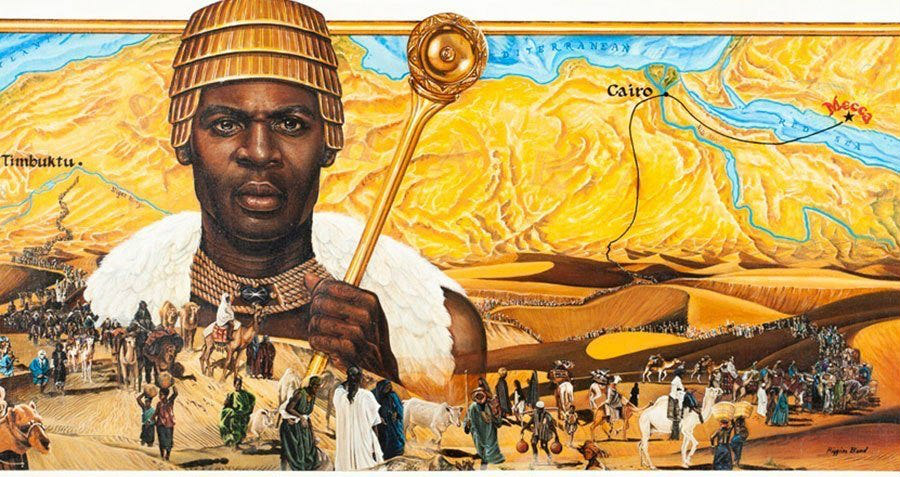
Musa Keita I, known as Mansa Musa, ascended to the throne of Mali in 1312 AD. He inherited power from his predecessor, Abu Bakr II, who is believed to have set sail on an ambitious voyage across the Atlantic Ocean in search of new lands. Musa, a devout Muslim, ruled over an empire that stretched over 2,000 miles, encompassing parts of present-day Mali, Senegal, Gambia, Niger, Nigeria, Guinea, and Mauritania. He was the 10th Mansa, or “King of Kings,” of the Mali Empire and quickly set out to establish a reign that would be remembered for centuries.

Mansa Musa was married to Queen Inari Kunate, and though historical records do not provide exact details of his family, it is known that he had children, including a son named Magha who succeeded him briefly. As a ruler, Musa exemplified not only administrative excellence but a commitment to faith, justice, and community prosperity.

His wealth is legendary. Scholars estimate that, adjusted for inflation, Musa’s personal fortune could have reached as much as $400–500 billion. This would make him richer than today’s tech moguls like Elon Musk or Jeff Bezos. Unlike modern billionaires whose assets are often tied to stock markets, Mansa Musa’s wealth was tangible—gold, land, and control over critical trade routes that moved salt, ivory, slaves, and knowledge across the Sahara.

Mali Under Mansa Musa: The Empire of Learning and Wealth

The Mali Empire thrived under Musa’s leadership, becoming one of the most sophisticated and wealthy civilizations in world history. Its strength was rooted in control of the trans-Saharan trade network, particularly the gold and salt trades. Mali was so rich in gold that the commodity became central to its international image.

One of Mansa Musa’s most remarkable accomplishments was his 1324 pilgrimage to Mecca, known as the Hajj. This journey was not only a religious obligation but a political statement. He traveled with a caravan reportedly consisting of 60,000 men, including 12,000 slaves and 100 camels each carrying hundreds of pounds of gold. His generosity was so overwhelming in places like Cairo and Medina that he caused significant inflation, devaluing gold for a decade in some regions. This pilgrimage placed Mali on the map for European and Arab chroniclers, and Mansa Musa’s name began appearing in global records, including the Catalan Atlas of 1375.

Upon returning to Mali, Musa commissioned the construction of mosques, madrasas (Islamic schools), and libraries. Timbuktu, under his guidance, blossomed into a world-renowned center of Islamic scholarship and trade. The University of Sankoré in Timbuktu attracted scholars from across Africa and the Middle East. Mansa Musa also hired Andalusian architects, such as Abu Ishaq Es Saheli, who introduced new architectural designs, including the Djinguereber Mosque, still standing today.

The Legacy of Wealth and Spirituality

Mansa Musa’s legacy is not simply one of wealth but one of moral and cultural responsibility. He utilized his riches to invest in education, infrastructure, and religious institutions. His reign exemplified the African tradition of communal wealth—what benefits the king must benefit the people. He modeled the ideal that leadership is stewardship.

Although no direct quotes from Mansa Musa survive, the 14th-century historian Al-Umari described him as “a young man of black complexion with a pleasant face and good figure…he spoke rarely, and always with mildness.” This suggests a man of humility and discipline, despite his immense riches. His image—an African king holding a nugget of gold—became an icon in European maps, redefining Western ideas of African civilization and prosperity.

Ancient African Kingdoms of Wealth and Power

Mali was not alone in its splendor. Ancient Africa was home to several other prosperous kingdoms, such as:

  • Ghana Empire – Preceding Mali, rich in gold and trade.
  • Songhai Empire – Successor to Mali, known for military might and scholarship.
  • Benin Kingdom – Famous for bronze artwork and diplomatic relations with Europeans.
  • Great Zimbabwe – A southern African kingdom renowned for its stone cities and cattle wealth.
  • Axum (Ethiopia) – A powerful Christian empire with vast trade routes.
  • Kongo Kingdom – Central African monarchy known for its diplomacy and Catholic conversion.
  • Kanem-Bornu – Islamic empire with military power and trade.
  • Nubia/Kush – Ancient civilization that rivaled Egypt.

These kingdoms were centers of commerce, technology, military strategy, and cultural identity—dispelling the colonial myth of a dark and stagnant precolonial Africa.

Modern Billionaires: Today’s African Kings

In today’s world, African billionaires carry the legacy of wealth and leadership, though in modern industries:

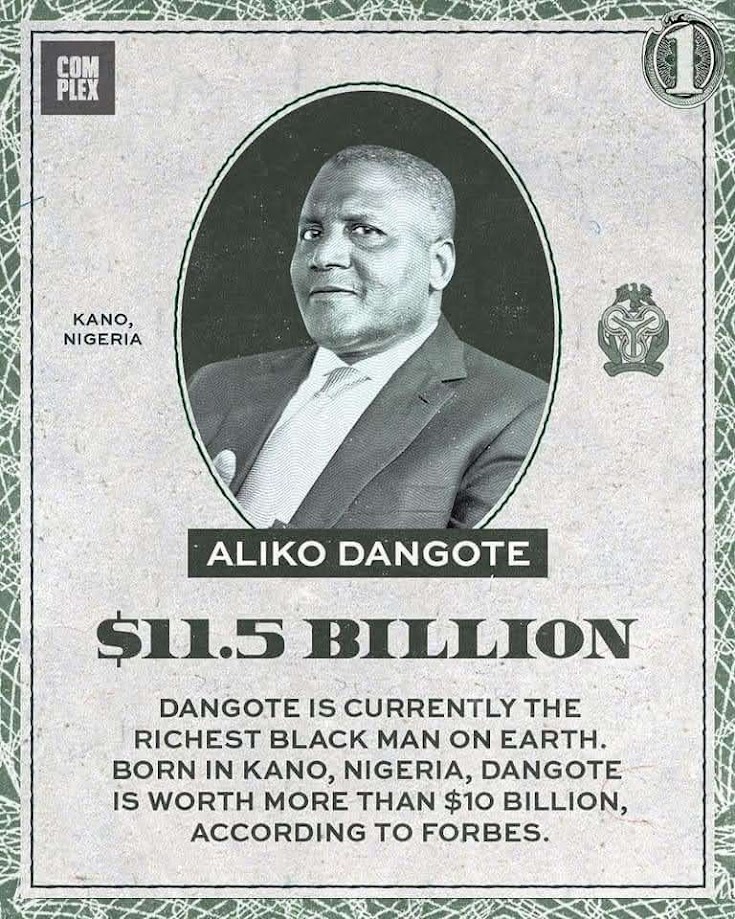
  • Aliko Dangote of Nigeria is Africa’s richest man (net worth ~$13.5 billion). His conglomerate dominates the cement, sugar, and oil industries. His foundation supports education, health, and disaster relief across the continent.
  • Nassef Sawiris of Egypt (net worth ~$9.5 billion) has interests in construction and sports. He represents North African industrial influence.
  • Patrice Motsepe of South Africa, a mining tycoon, was the first Black African on Forbes’ billionaire list. He has pledged much of his wealth to philanthropy through the Motsepe Foundation.

These modern magnates embody a mission to uplift their communities through investment, innovation, and infrastructure—principles that echo the communal values of kings like Mansa Musa.

Comparing Mansa Musa and Elon Musk

Elon Musk, the 21st-century industrialist, has a net worth fluctuating between $230–$250 billion, depending on stock market conditions. His wealth is rooted in futuristic technologies: electric cars, space exploration, and AI. Mansa Musa’s wealth, by contrast, was more immediate and liquid—gold, territory, and people. Economists suggest Musa’s adjusted fortune may have doubled or even tripled Musk’s, making him arguably the wealthiest individual in human history.

However, the true contrast lies in how their wealth was used. Mansa Musa’s riches fueled religious, intellectual, and social development, whereas modern billionaires often focus on innovation and privatized enterprise.

Conclusion: The Sovereign of Sovereigns

Mansa Musa’s name resounds through history not merely as a wealthy king, but as a beacon of divine kingship, cultural enlightenment, and Pan-African pride. He ruled with a blend of Islamic piety and African rootedness, proving that African civilizations were not only rich in gold but in governance, faith, and vision. His story reminds us that Africa’s greatness is not a myth—it is a memory, and a mandate to reclaim.

In honoring Mansa Musa today, we celebrate not only a king of gold, but a king of purpose. His reign challenges contemporary Africans and the diaspora to return to a model of leadership that centers wealth around wisdom and prosperity around people.


References

Gates Jr., H. L. (2011). The African Americans: Many Rivers to Cross. SmileyBooks.
Hunwick, J. O. (1999). Timbuktu and the Songhay Empire: Al-Sa’dī’s Taʾrīkh al-Sūdān down to 1613 and other contemporary documents. Brill.
Levtzion, N., & Hopkins, J. F. P. (2000). Corpus of early Arabic sources for West African history. Markus Wiener Publishers.
Forbes. (2025). World’s Billionaires List. Retrieved from https://www.forbes.com
World History Encyclopedia. (2023). Mansa Musa. Retrieved from https://www.worldhistory.org/Mansa_Musa_I/